Chiang Mai is the second-largest city in Thailand and, arguably, the most many-sided. Monks, digital nomads, expats and travelers on their way to the mountains all live side by side here. Temples sit next to third-wave coffee shops, markets next to Michelin-listed restaurants, and around the city you'll find jungle, waterfalls and hill-tribe villages. If you're just getting ready for the Land of Smiles, my Thailand travel guide will be useful.
We lived in Chiang Mai for about five months. This guide is my attempt to gather everything important in one place.
Why Chiang Mai Instead of Bangkok or Phuket
Bangkok is the capital of Thailand and a huge city that wins you over with its scale and speed. Phuket is an island with the sea and the infrastructure for a beach holiday. Chiang Mai is a completely different story.
Life here is slower. It's cheaper. There are mountains right outside the city, and you can ride a scooter to a waterfall in an hour. This is the best food in northern Thailand, and it's different from what you'll eat in Bangkok. There are more than 300 temples in one city. And one of the strongest digital nomad communities in Asia has taken root here, with all the infrastructure that comes with it.
If you want "just a beach," this is probably not the place for you. Everyone else should absolutely come.
When to Go to Chiang Mai
The best period is November to February: it's dry and cool (nights drop to +15°C), and visibility is good. November is when Loy Krathong and Yi Peng take place, with lanterns released into the night sky, one of the most beautiful sights in Asia.
March–April is smog season. Farmers burn their fields, and PM2.5 in March reaches 99 µg/m³ and higher. If you have breathing problems or you're traveling with children, it's better to skip this period.
May–October is the rainy season. Everything is green, humid and cheap. Rain usually comes in the evening, with sun in the morning. The mountain waterfalls are especially good at this time.
For more on the weather month by month and the festivals, see the article Chiang Mai seasons.
How to Get to Chiang Mai
By plane is the simplest option. From Bangkok (Suvarnabhumi or Don Mueang) it's about an hour, there are plenty of flights, and tickets start at 800–1,500 baht.
The night train from Bangkok is both romantic and economical. It leaves in the evening from Krung Thep Aphiwat Central Terminal (Bang Sue) and arrives in the morning (~13 hours). There are first- and second-class sleeper compartments, with a fan or air conditioning. Tickets are available on 12go.asia — better to book a week ahead.
The bus from Bangkok takes 10–11 hours, with overnight departures, reclining seats and air conditioning. It leaves from Mo Chit or Sai Tai Mai. It's cheaper than the train but less comfortable.
Transfer from the airport to the city is by taxi or Grab, about 150–200 baht. The red songthaews cost more if you're traveling alone.
Getting Around the City
Chiang Mai is a city for scooters. Without two wheels, it's inconvenient to reach most of the interesting places outside the city.
A scooter or motorbike costs 2,500 to 4,000 baht a month to rent, or 200–300 baht a day. Most rental shops don't check licenses, but insurance and an international driving permit won't hurt. In high season, bikes get snapped up quickly.
Grab taxi works great, and a ride around the city costs 60–150 baht. It's handy in the rain or if you don't have a bike. During rush hour in Nimman, the wait is longer.
Songthaews (red pickup trucks) are Chiang Mai's public transport. A ride costs 30–60 baht. There are no fixed routes: tell the driver where you're going, and he'll either nod or shake his head. It's the most local way to get around.
Tuk-tuk is the tourist option. Negotiate the price before the ride; it's usually 100–200 baht for a short route.
What to See in Chiang Mai
The city and its surroundings are really interesting, and you won't get bored. Below I've gathered the main sights.
Temples of the Old City
The historic center is a square surrounded by a moat, and it's the most convenient place for walking. Within a kilometer there are dozens of temples, and most are free or charge 40–50 baht for entry.
Wat Phra Singh is the city's most significant temple and houses the legendary Phra Singh Buddha statue in the Lanna style. The grounds are beautiful, with a viharn in the traditional northern style. Entry for foreigners is about 40–50 baht (confirm the exact price at the ticket desk).
Wat Chedi Luang is the ruin of a 15th-century temple with a huge half-collapsed chedi. In the evenings, monks hold a monk chat, a conversation with tourists on any topic. It's an interesting experience. Entry for foreigners is about 40–50 baht (confirm the exact price at the ticket desk).
Wat Chiang Man is the oldest temple in the city (13th century). It has white elephants at the base of the chedi and houses important relics. The atmosphere is calm. Entry is free.
Wat Suan Dok is another temple with a monk chat, on Mondays, Tuesdays and Thursdays at 17:30. It's free, with a donation only if you wish.
Doi Suthep
A golden stupa on a mountain right above the city, and Chiang Mai's calling card. At the top is the temple Wat Phra That Doi Suthep, with a panorama over the whole city. You get there by songthaew from Chiang Puak Gate (50 baht one way) or by scooter. At the top, you can take the funicular or climb the 309 steps on foot. Entry to the temple is 50 baht.
On the way to Doi Suthep is the Hmong village of Doi Pui (20 km from the city): a traditional hill village with a museum for 10 baht, a flower garden and local coffee. It's convenient to combine the two.
Night Markets
The Sunday Walking Street on Ratchadamnoen Road is the best in the city for food, souvenirs and crafts. It's best to go around 18:00, before the crowds arrive. The Saturday Walking Street is on Wualai Road, a little smaller and calmer.
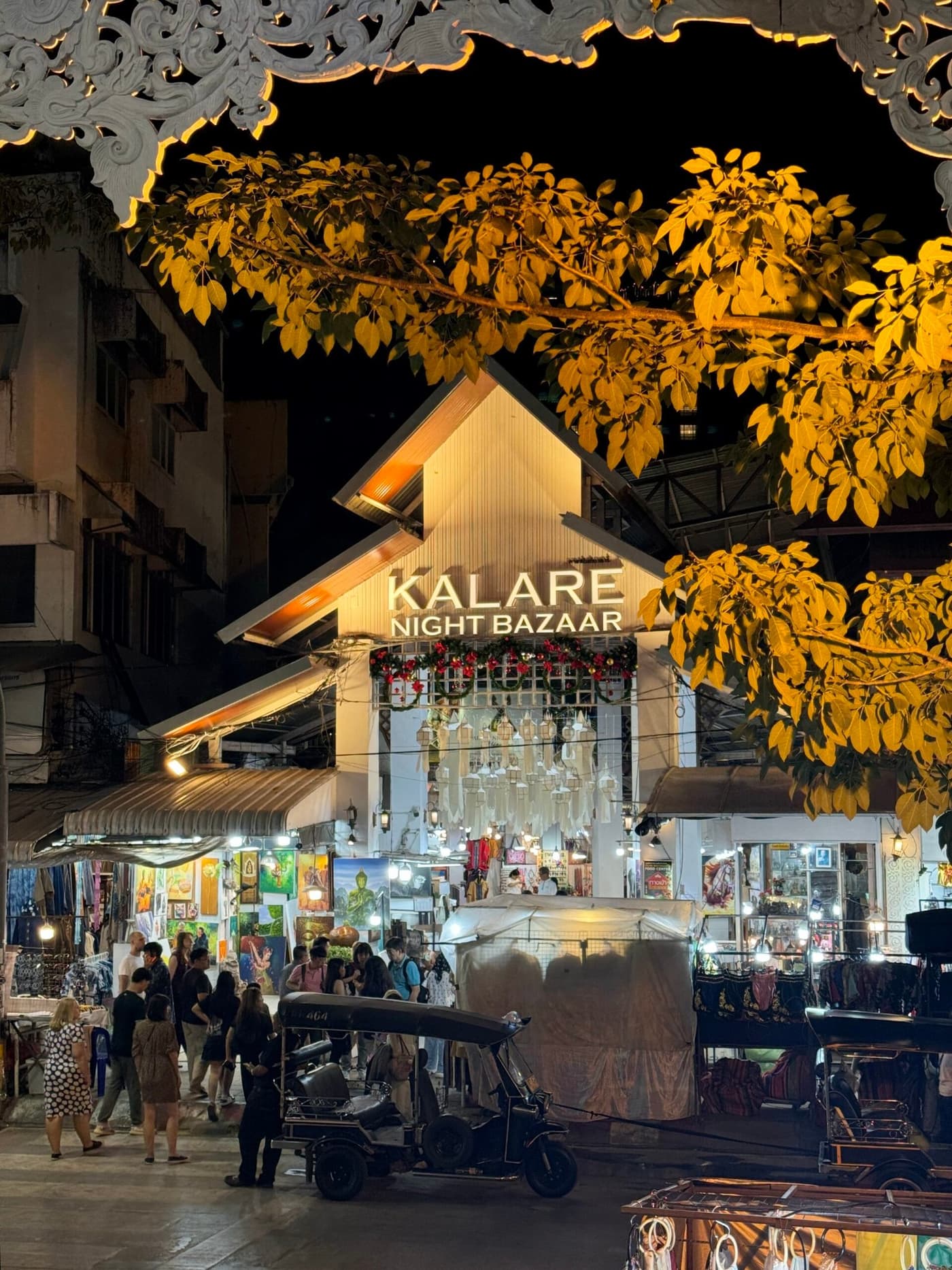
The Night Bazaar on Chang Klan runs every evening. It's touristy, with haggling, street food and sometimes live music.
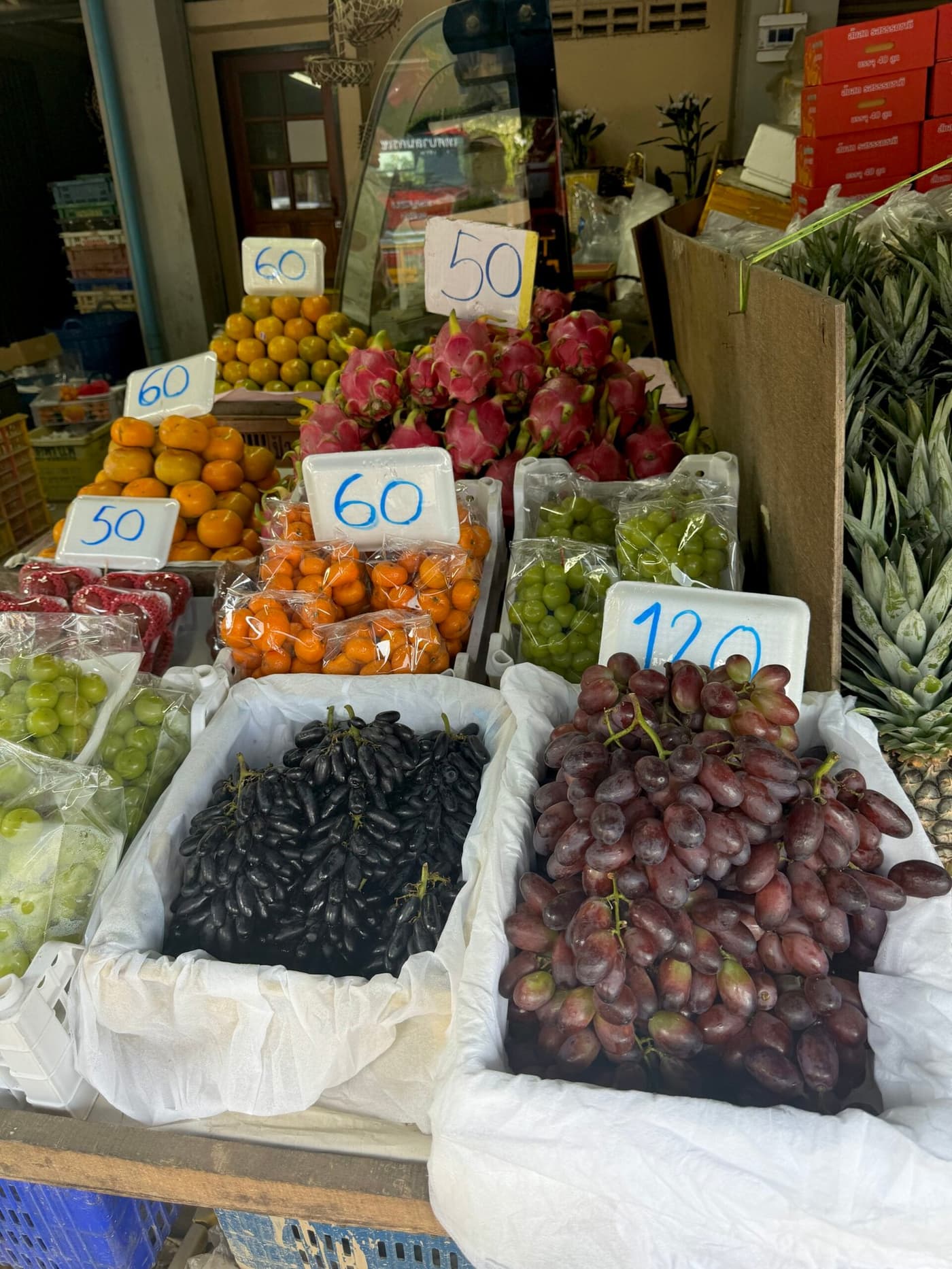
Warorot Market (Kad Luang) is a morning market for fresh fruit, flowers and local color. It's a two-story building and the most "Thai" market in the city.
Other Attractions
Chiang Mai Zoo is a large zoo at the foot of Doi Suthep with pandas, tigers and local wildlife. Entry is 150 baht (pandas cost extra).
Art galleries and the creative quarter — the area around Nimman is packed with galleries. The MAIIAM Contemporary Art Museum (Route 1006, San Kamphaeng) is the best contemporary art museum in northern Thailand, with entry at 200 baht.
Thai boxing arenas — Kalare Thai Boxing and Thaphae Boxing Stadium hold evening fights several times a week. Entry starts at 400 baht.
For a complete guide to all the places, see the article what to see in Chiang Mai.
Activities and Tours
Chiang Mai isn't only about temples. There's everything here, from ethical encounters with elephants to meditation retreats and Muay Thai lessons. Here's what is worth trying and how much it costs.
Elephant Sanctuaries
This is one of the main reasons people come to Chiang Mai. But it's important to choose the right place.
Elephant Nature Park is the best-known ethical sanctuary. The elephants aren't forced to work and don't carry tourists; you can feed them, bathe them and watch them. A full day costs about 2,500 baht. Book in advance, because spots go fast.
Elephant Jungle Sanctuary and Ran-Tong are alternatives with a similar concept, a little cheaper. Always check whether they offer elephant rides, and if they do, don't go: it's cruelty.
A red flag: if the program includes "shows," "painting pictures" or "circus tricks," that's a bad sign.
Cooking Classes
Thai cooking is taught everywhere here, but the quality varies. Thai Farm Cooking School (with a trip to the market and an organic farm) and Zabb-E-Lee are two popular schools with good reviews. A half day costs about 1,000–1,500 baht, including ingredients and the meal.
Thai Massage and Spas
A one-hour Thai massage costs 200–300 baht in an ordinary place and 500–800 baht in a decent one. Old Medicine Hospital offers certified courses for those who want to learn. On Warorot Road there are dozens of massage shops, with different prices and quality.
Thai Boxing (Muay Thai)
Several gyms offer classes for tourists: Lanna Muay Thai, Santai and Top Team. You can sign up for a single class or a multi-week camp. A one-hour class starts at 400–600 baht.
Meditation and Retreats
Wat Suan Dok runs Buddhist meditation classes for anyone who wants to join. Wat Ram Poeng (Tapotaram) offers vipassana programs starting at 26 days. There are also one-day retreats in the mountains.
Day Trips from Chiang Mai
One of Chiang Mai's biggest advantages is logistics. It's easy to make trips out from here in every direction.
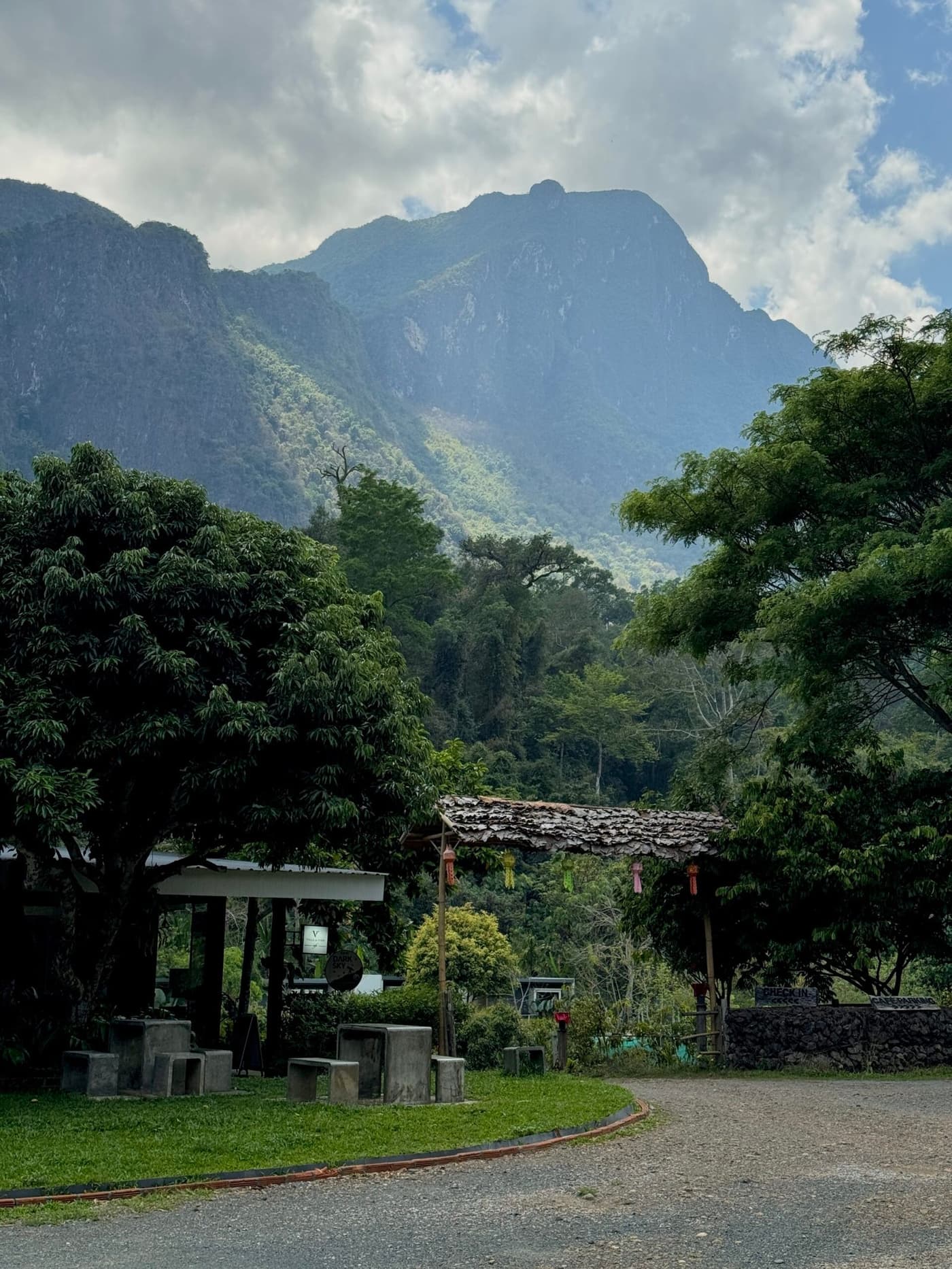
Doi Inthanon is the highest point in Thailand (2,565 m). You'll find Wachirathan Waterfall, the royal pagodas, the Angka trail through the cloud forest, and +13°C near the summit in December. It's about 80 km from the city. Entry is 300 baht.
Pai is a mountain town 130 km and 762 curves from Chiang Mai. It has a canyon, hot springs (200 baht), Mo Paeng Waterfall, a WWII bridge and a hippie atmosphere. By minivan it takes 3–4 hours and costs 150 baht.
Mae Kampong is a very beautiful village 50 km away, one hour by scooter. It has local arabica coffee, a waterfall, the Flight of the Gibbon zipline and The Giant tree cafe. There are no ATMs, so bring cash.
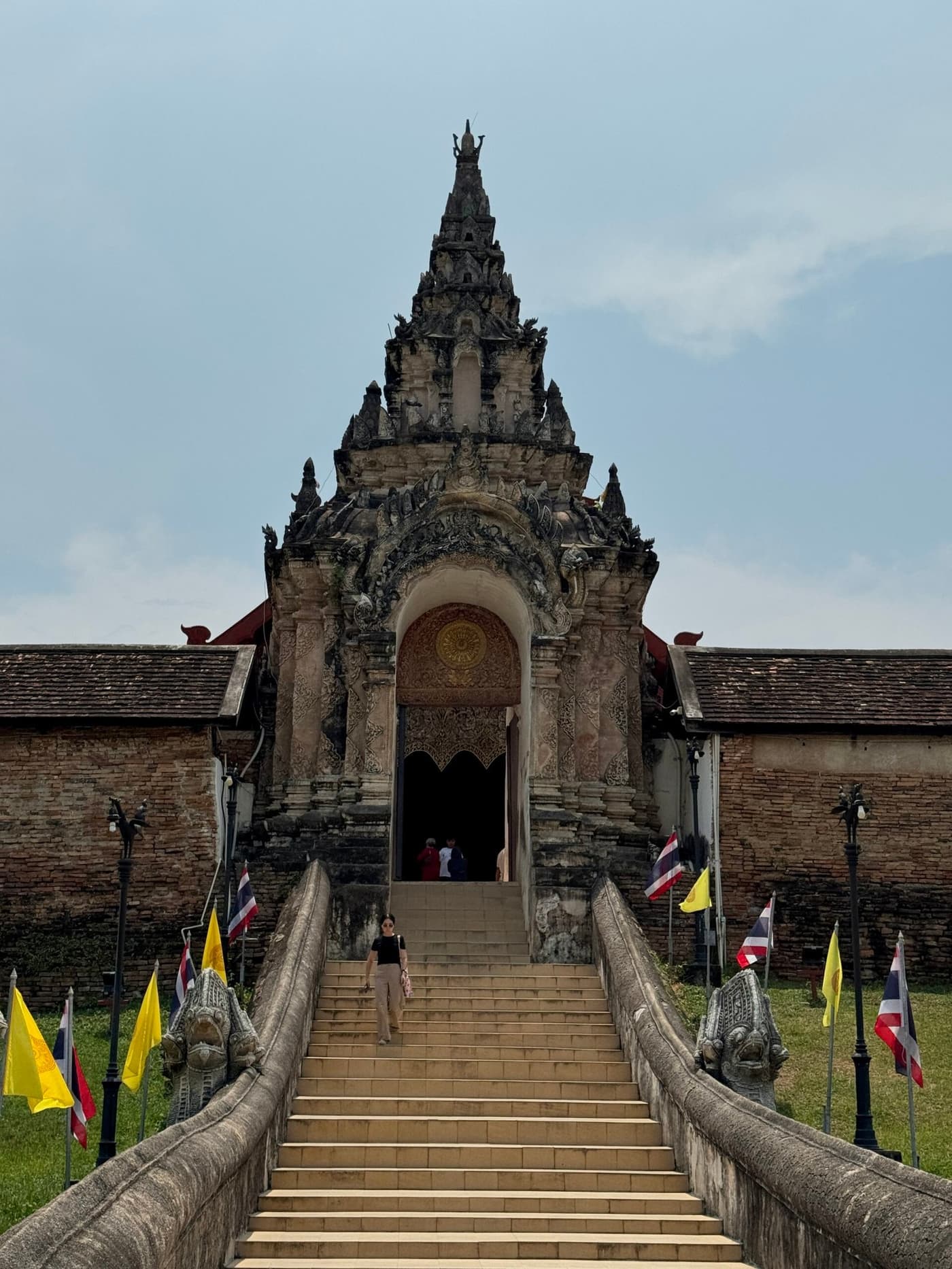
Lampang is 100 km to the south, 1.5–2 hours away. It has horse-drawn carriages, Wat Phra That Lampang Luang, the "flying" stupas of Wat Chalermprakiat, a railway station from 1916 and rooster-pattern ceramics. It's one of the most underrated cities in the north.
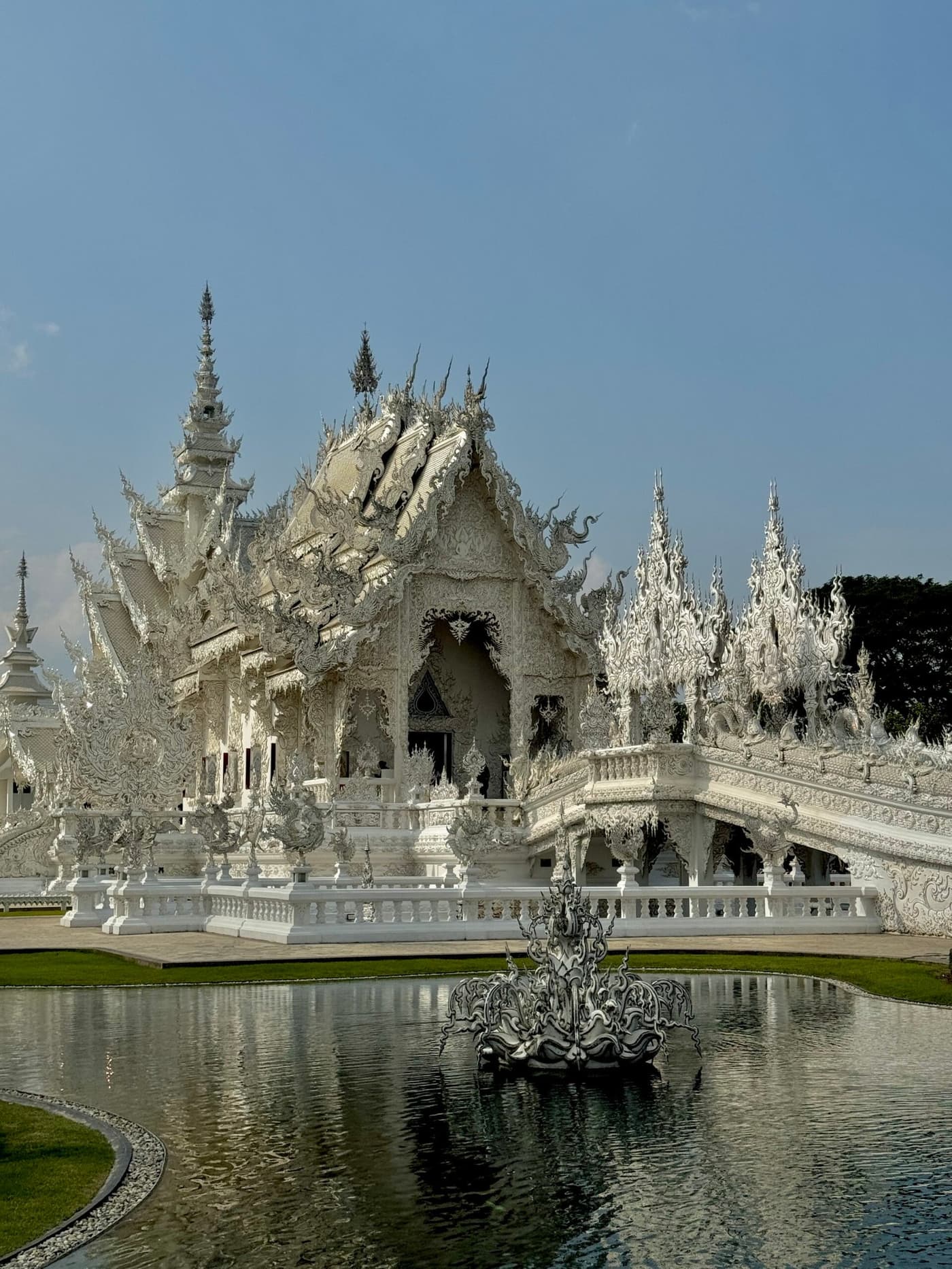
Chiang Rai is 190 km away, about 3 hours. The White Temple, the Blue Temple and the Black House, plus the Golden Triangle, make a full route for one day or with an overnight stay.
Hill Villages
Hmong village of Doi Pui is 20 km away, on the road to Doi Suthep. It has a museum (10 baht), a flower garden and local coffee. Combining it with Doi Suthep is ideal.
Karen long-neck village — the Padaung tribe, with brass rings on their necks. The closest location to Chiang Mai is Baan Tong Luang (30 km). This is a topic with an ethical side, so it's worth understanding the context before you go.
Itineraries: How Many Days Do You Need in Chiang Mai
The question of "how many days do I need" depends on your pace. Below are three planning options, from compact to comfortable.
Chiang Mai in 3 Days
Day 1 — the historic center. Morning: Wat Phra Singh and Wat Chedi Luang, then a walk along the moat. Lunch: khao soi in Nimman. Evening: Walking Street (Sunday or Saturday) or the Night Bazaar.
Day 2 — Doi Suthep + the Hmong village. Leave early by scooter, visit Doi Pui village, and come down via Doi Suthep. In the evening, dinner at THE HOUSE by Ginger.
Day 3 — a day trip. Mae Kampong by scooter (50 km) or a tour to an elephant sanctuary.
Chiang Mai in a Week
Add Doi Inthanon (day 4), Pai with an overnight stay (days 5–6) and Chiang Rai (day 7): three temples and the Golden Triangle. It's a packed week, but doable.
Chiang Mai for a Month or Longer
For a long stay, the city offers everything you need: rental housing, coworking spaces, good food and international-level clinics. The longer you live here, the better you understand why people linger.
Where to Stay: Chiang Mai Neighborhoods
Old City is the tourist heart. Guesthouses, boutique hotels and hostels in the side lanes. Everything is within walking distance. A studio rents from 6,000 baht/month.
Nimman is the hipster district with the best coffee scene, coworking spaces and pricey condos. It's more expensive but more convenient for work. Rent starts from 12,000 baht/month.
Santitham is a residential quarter between the Old City and Nimman. It's quiet and affordable, with local markets. A good fit if you want to live the Thai way without the tourist markup.
Chang Phuak is north of the moat. It's calm, transport access is good, and prices are lower than in Nimman.
Suburbs (Hang Dong, Mae Rim, San Sai) have houses with gardens, pools and parking. They suit families and expats with pets. You'll need a scooter.
For a detailed breakdown of each neighborhood with prices and character, see Chiang Mai neighborhoods.
Where to Eat in Chiang Mai
Northern Thai cuisine isn't the same as Thai food in Bangkok or on the islands. The spices are different, the noodles are different, and so is the curry.
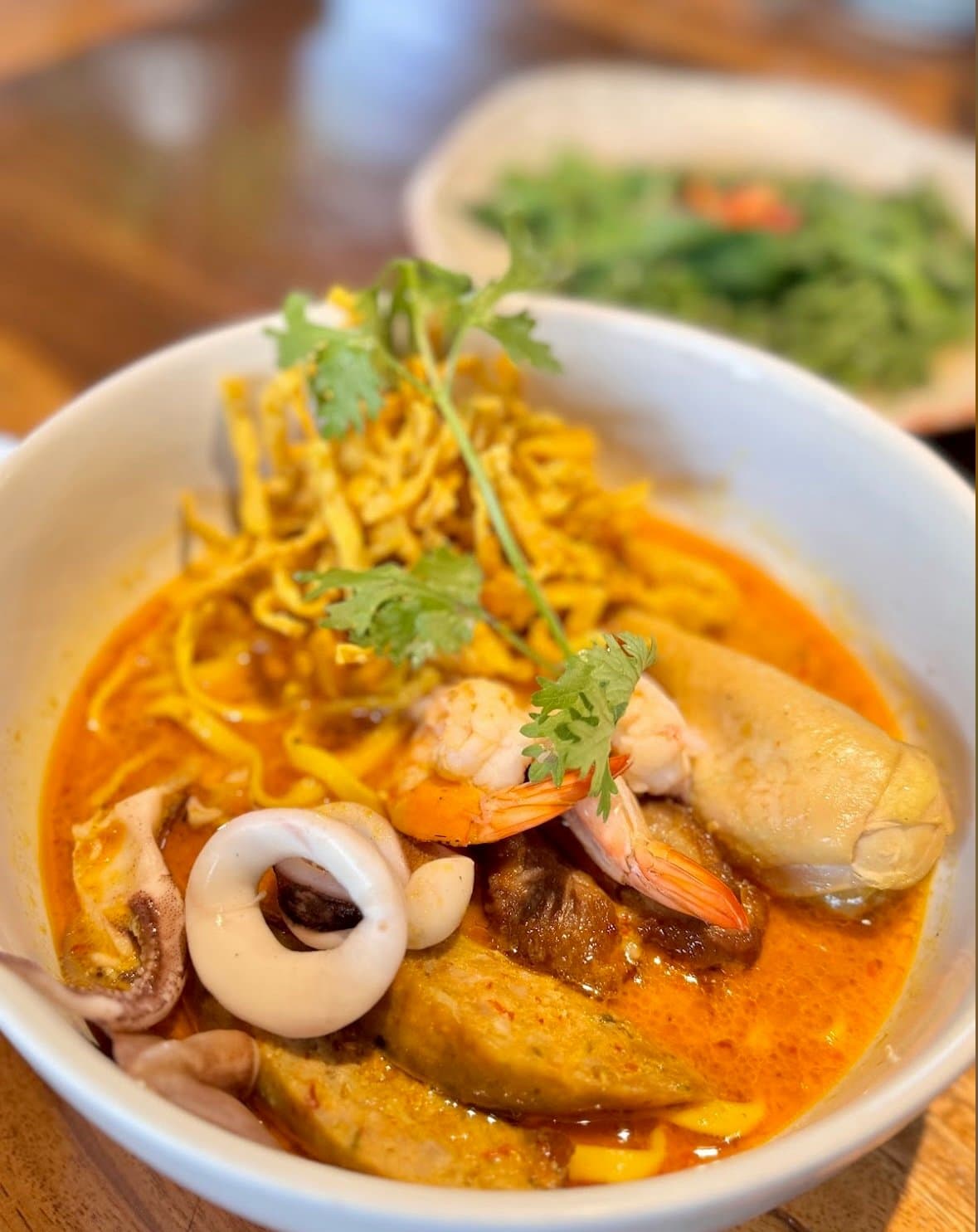
Khao soi is the north's calling card. It's a soup of yellow noodles in a coconut curry broth, topped with crispy fried noodles. The best in the city is at Kao Soy Nimman on Nimmanhaemin.
Sai ua is a northern Thai sausage with lemongrass, kaffir lime leaves and spices. It's sold at markets and in small shops, and costs next to nothing.
Nam prik num is a green spicy dip made from roasted chilies, served with fried pork rinds and raw vegetables.
Mango with sticky rice is a classic, best in mango season (March–July).
Some specific places: Hummus Chiang Mai (Middle Eastern, Old City), Chai n Thai (Indian, big portions), THE HOUSE by Ginger (Thai, in the Michelin guide), and Santitham Pizza from a wood-fired oven (Friday–Saturday only).
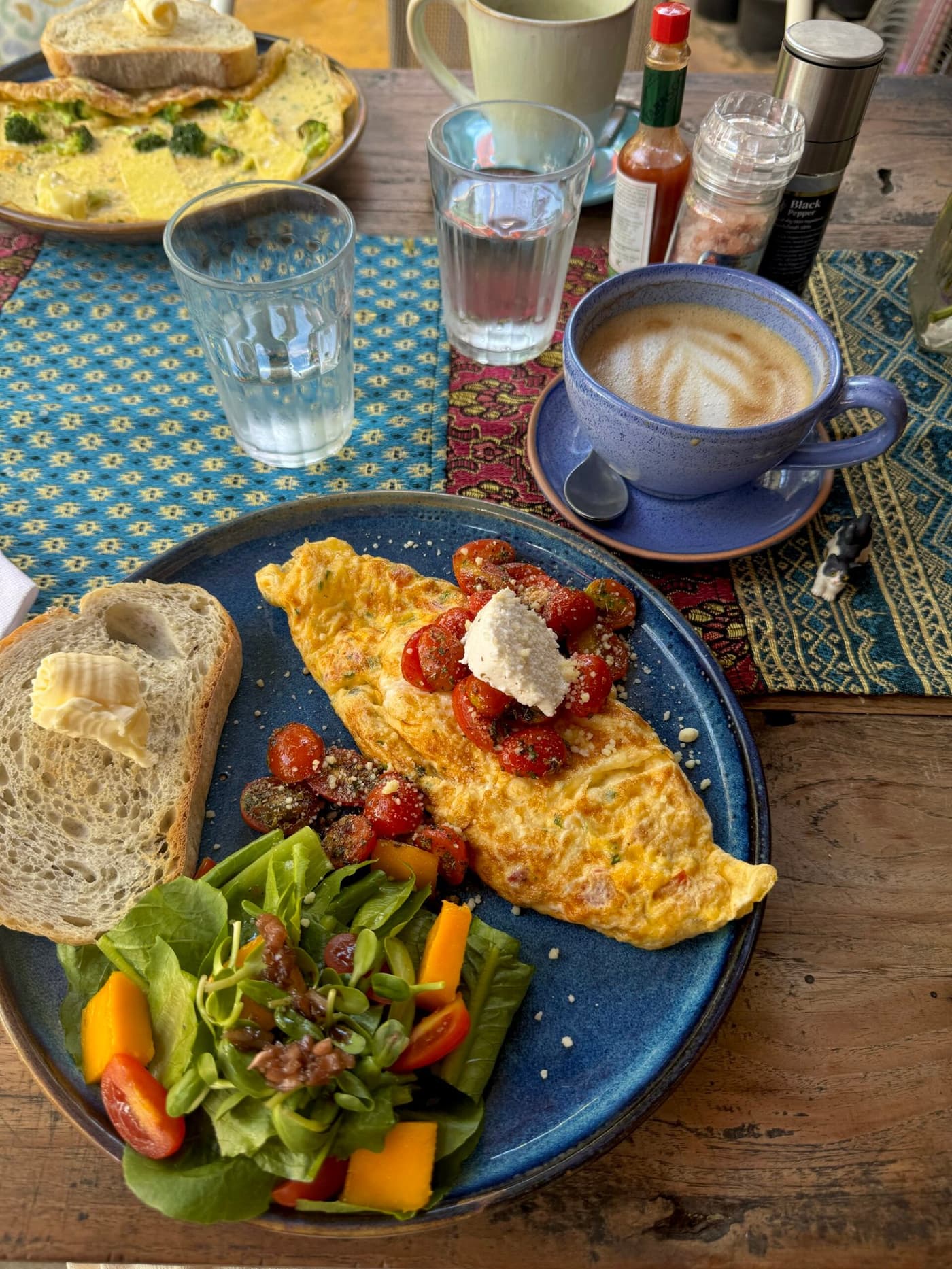
Coffee: Roast8ry Lab is the best-known coffee shop, with latte art. Yelloo is for working. Nine One is for the quality of the beans. Chiang Mai grows its own arabica, and you can taste it.
My personal selection of places is in where to eat in Chiang Mai.
Chiang Mai for Digital Nomads
Chiang Mai ranks in the world's top 5 cities for digital nomads, and that's a fact. Here's why:
Internet is fast and affordable. A home plan costs 400–600 baht a month, with speeds of 100–300 Mbps. Almost every coffee shop has wi-fi, and in most cafes it's fast enough for video calls.
Coworking spaces — CAMP (free, in Maya Mall, open 24/7, you need to buy a coffee), MANA Coworking Space, Yellow, Think Park. A day pass starts at 150–300 baht.
The visa question — a 30-day tourist visa can be extended once or reset with visa runs. Thailand launched the DTV visa for digital nomads for 5 years, so check the current conditions.
Community — Chiang Mai Digital Nomads on Facebook (~65,000 members). There are regular meetups, networking and housing tips. It's one of the main resources when you're moving.
How Much Does Life in Chiang Mai Cost
Chiang Mai is one of the most affordable cities in Southeast Asia for long-term living.
A basic budget for one person starts at 25,000 baht a month (rent in the Old City + markets + a scooter). An average comfortable budget is 35,000–50,000 baht. With a good condo in Nimman and regular restaurant meals, it's 50,000–80,000 baht.
We lived as a couple and spent about 50,000 baht a month, including housing, a scooter, eating out at cafes and occasional trips.
A realistic minimum for a normal life, not just surviving, for two people is $1,000–1,500 a month.
For detailed tables on rent, groceries, transport and eating out, see prices in Chiang Mai.
Practical Information
SIM card — you can buy one at the airport or at 7-Eleven. True Move H and AIS are the best operators for coverage. A monthly data package costs 200–400 baht.
Money — ATMs are everywhere, and the withdrawal fee is about 220 baht on a foreign card. Kasikorn Bank (KBank) and Bangkok Bank have low conversion fees. Visa and Mastercard are accepted in shopping malls and restaurants; markets are mostly cash.
Language — Thai. English is spoken in tourist areas and in the cafes of Nimman. Beyond those, basic Thai phrases will help: "ao" (want), "thao rai" (how much), "khop khun kha/khrap" (thank you).
Health — Chiang Mai Ram Hospital and Lanna Hospital are international clinics with English-speaking staff. Insurance is a must: medical costs for serious cases are high. Insurance comparison sites: Cherehapa and Tripinsurance.
Clothing in temples — long pants or a skirt, with shoulders covered. At the entrance of most temples there are disposable cover-ups.
I have a great video from Chiang Mai
Chiang Mai FAQ
How many days do you need in Chiang Mai?
At least 3–4 days to see the temples, get to Doi Suthep and try the food. A week if you want one or two trips into the surrounding area. A month if you want to live here and understand why it's so hard to leave.
Is Chiang Mai safe?
Yes. It's one of the safest cities in Thailand. Standard precautions apply: watch your step (mopeds), don't leave your things unattended at markets, and bike insurance is a must.
Do you need a visa for Thailand?
Entry rules depend on your passport. When we checked in October 2026, visitors with eligible passports could enter visa-free, and since September 15, 2026 the tourist entry stamp has been issued for 30 days. Confirm the current rules for your own passport with Thai immigration or the nearest Thai embassy before you book.
When is the best time to go?
November–February: dry, cool, no smog. In March–April there's smog, and in April comes Songkran with its water fights. The rainy season (May–October) is green and cheap.
Can you live in Chiang Mai on $500 a month?
In theory you can cut costs hard and get by on $500, but it is better to plan on a minimum budget of $700. A realistic comfortable budget for one person starts at $1,000.
Is it better to go to Chiang Mai or Bangkok?
They're different cities for different purposes. Bangkok is a megacity with shopping, nightlife and world-class museums. Chiang Mai is slower, greener and cheaper, with mountains nearby. Most people who come to Thailand for a long stay do both.
Is it worth renting a bike in Chiang Mai?
Yes, if you plan to go beyond the center. Without a bike you're limited to the Old City and Nimman. With a bike, the mountains, waterfalls and hill villages are an hour's ride away.
Is there a sea in Chiang Mai?
No. The nearest beach is several hours away by plane or a long drive south. Chiang Mai is a mountain city, but there are waterfalls where you can swim if you like.