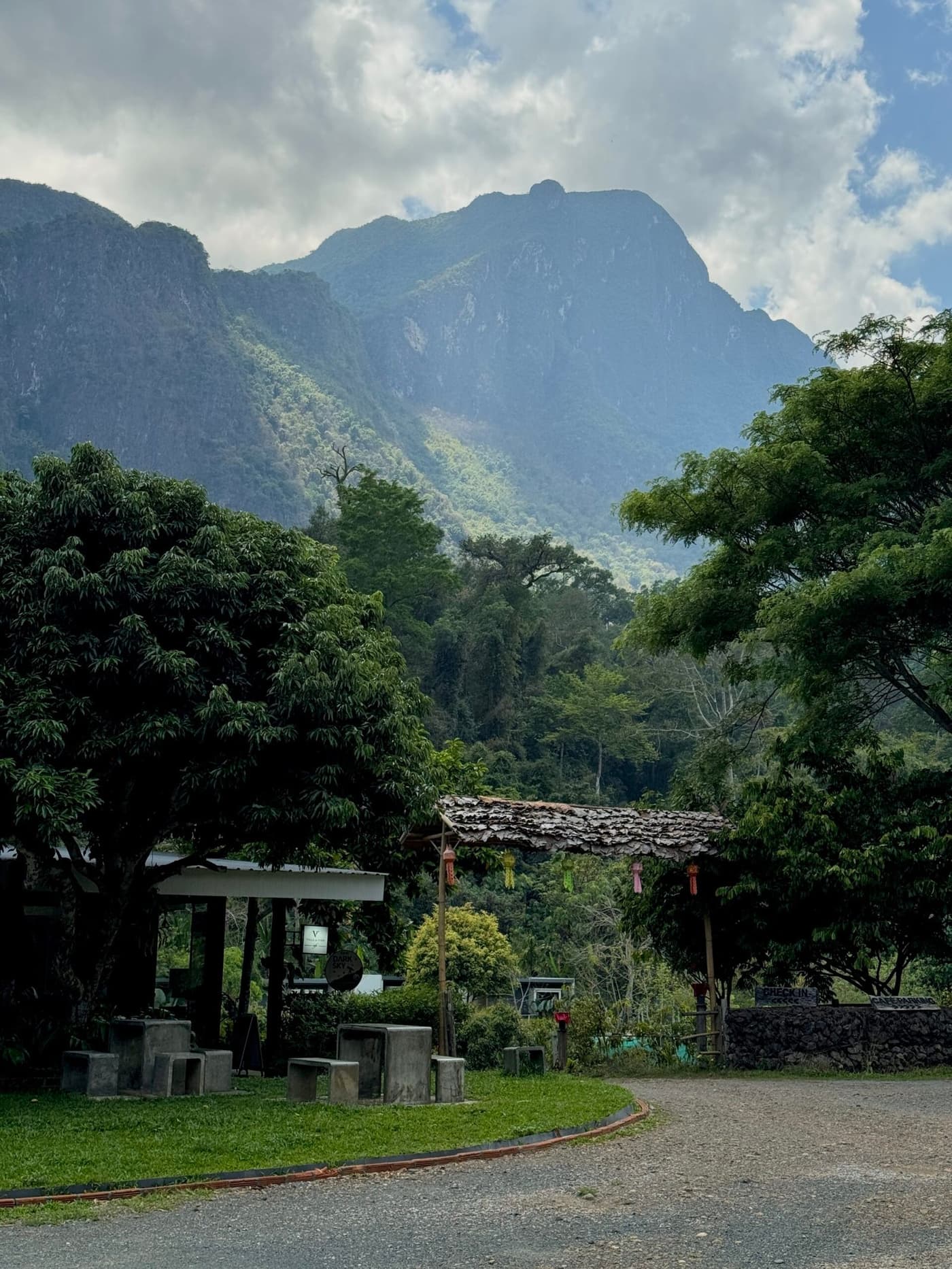
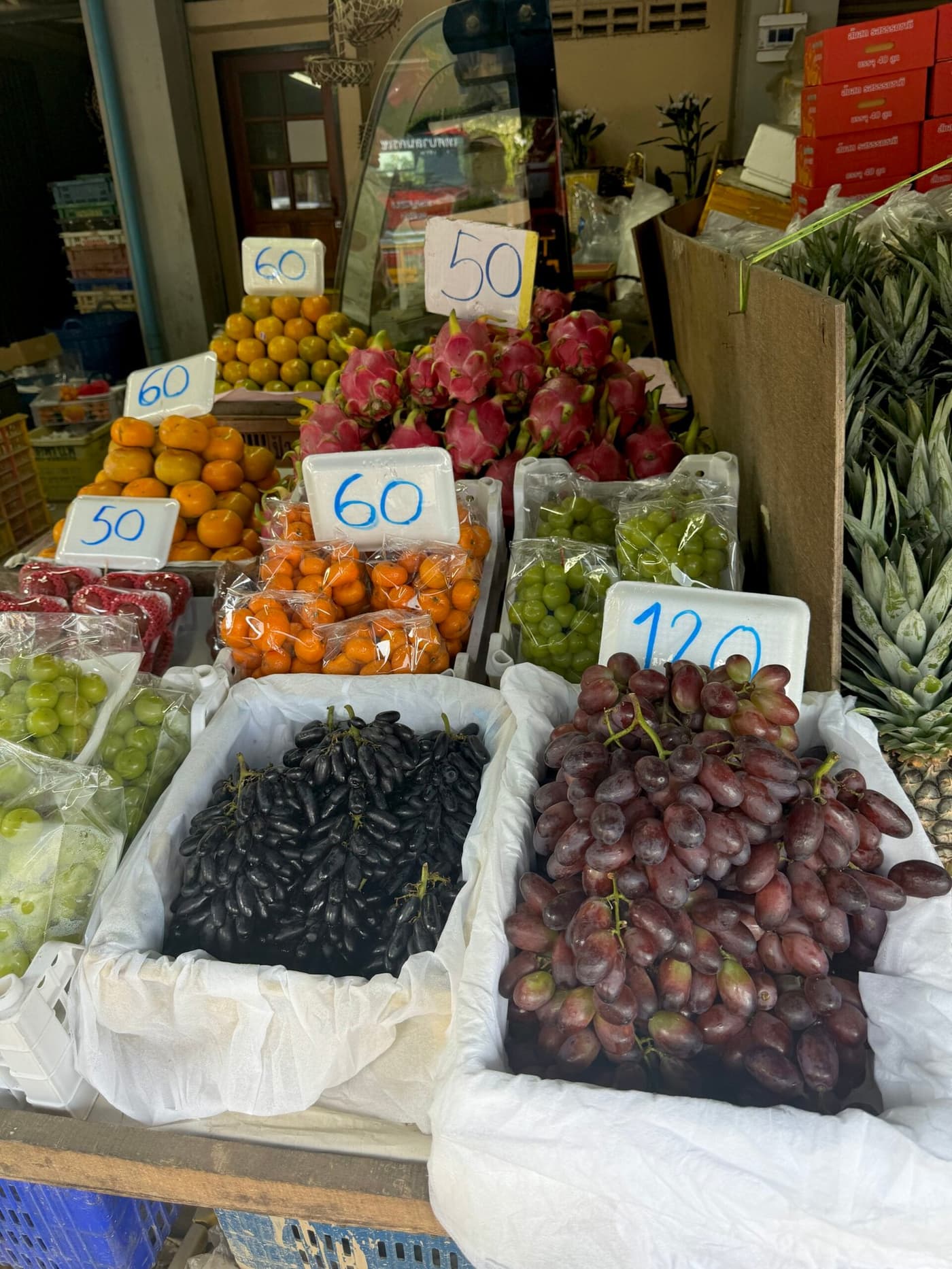
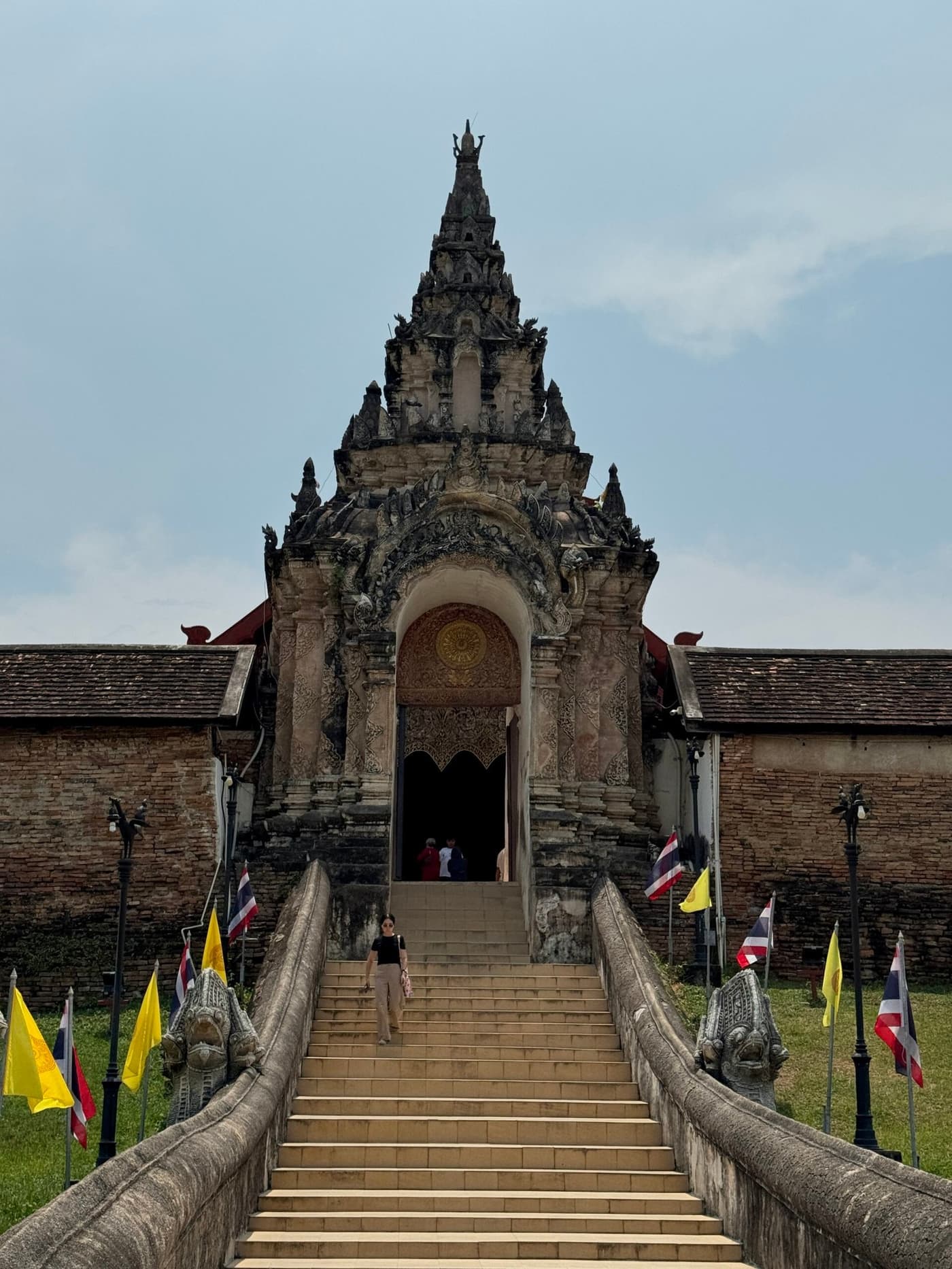
Pai is a small town in the mountains of northern Thailand, 130 km from Chiang Mai. They say the road there has 762 curves, and it's true: the serpentine is no joke. But when you arrive, you land in a completely different world: green hills, wooden cottages, yoga retreats, vegan cafés and an atmosphere where there's no need to hurry anywhere.
We came for two days and could barely leave. Pai doesn't try to be liked, it just is what it is: a little hippie, a little rural, very green.
How to get to Pai from Chiang Mai
Minivan is the most popular option. It leaves from the Arcade bus station in Chiang Mai several times a day (from 8:00 to 15:00). It costs about 150 baht and the ride takes 3–4 hours. A warning: 762 curves is not just a figure of speech. The serpentine road can make you seriously carsick, especially in the back row. Take motion sickness pills (Dramamine/Bonine) and buy them in advance at a pharmacy.
By motorbike is the best way if you're confident in your mountain riding skills. It takes about 3 hours in good weather. The road is scenic, and you can stop wherever you like. Important: in the rainy season (May–October) some sections of the road get slippery and fog cuts visibility, so slow down on descents and don't overtake in the curves.
Bus is available, but it is slower than the minivan and less comfortable.
Pai sits at an altitude of about 500–600 meters above sea level. In the evening it is noticeably cooler here than in Chiang Mai, especially in winter, so bring a light jacket.
What to see in Pai
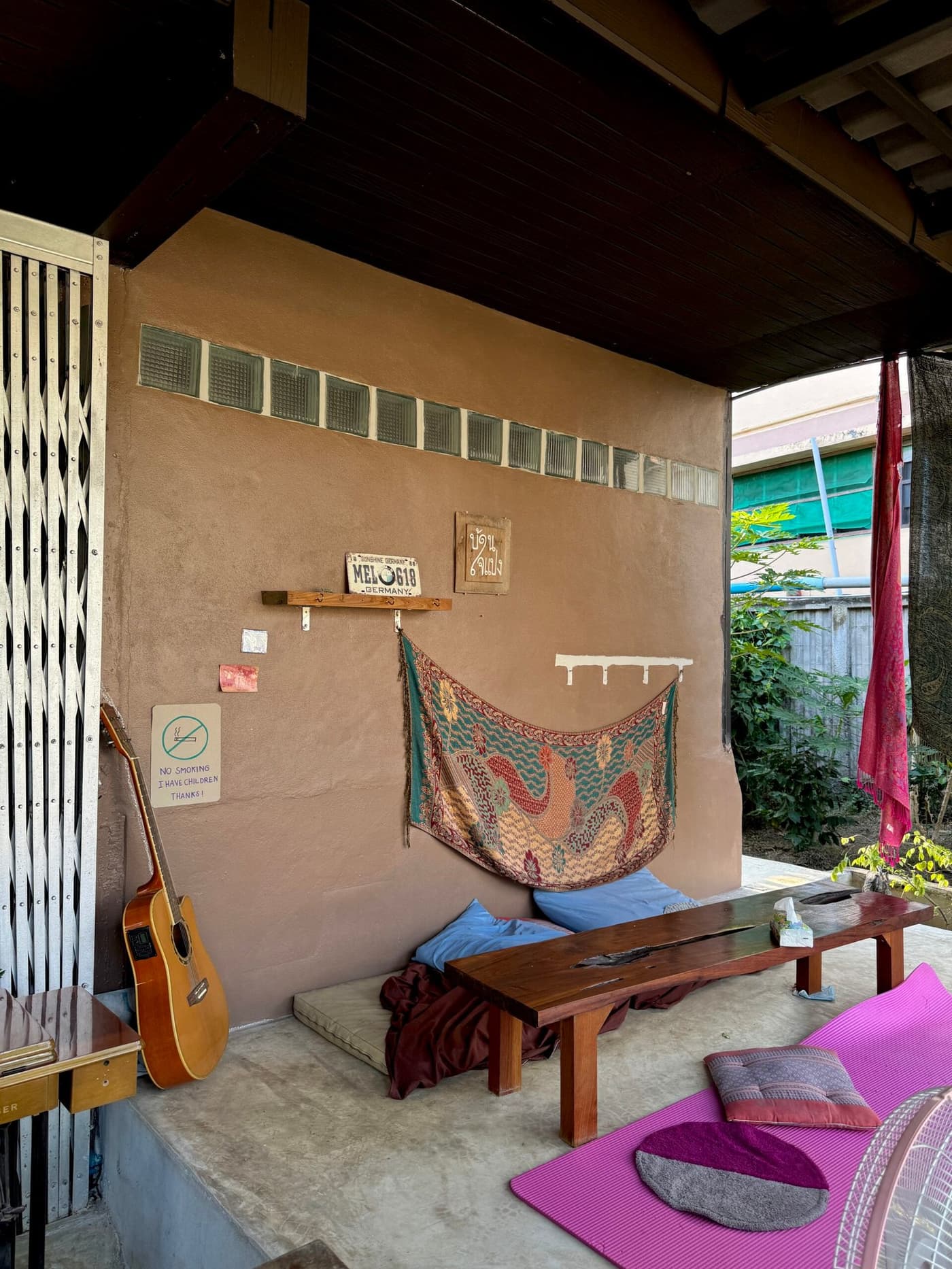
Pai has no single "main" attraction. It works as a set of small places, each taking half an hour to an hour. The easiest way is to tour them all on a motorbike in one day: everything lies within 8–10 km of the center.
Pai Canyon
Narrow sandy ridges with views over green valleys and mountain rice fields. You can walk right along the ridges; in some places the trail is only about a meter wide, with a drop of 10–15 meters on both sides. It is safe if you move carefully. It's especially striking in the morning and at sunset, when the light falls at an angle and the shadows are long. Entry is free. It is 8 km from the center of Pai, on the road toward Chiang Mai. Pai Canyon location on Google Maps.
Pai Hot Springs
Several thermal springs in the forest. At the popular Sai Ngam Hot Springs the water is around 30–40°C, with tubs and small pools for soaking; entry is 200 to 400 baht (according to sources in October 2026, the price has changed, so check on site). Other springs in the area (for example Tha Pai) have very hot sections, so check the water temperature before getting in. It feels great after a long journey or a trek. It is 7 km from the center. Pai Hot Springs location.
Mo Paeng Waterfall
A small but pretty cascading waterfall in the jungle. It's great for a hot day, and you can swim in the lower pool, where the water is refreshing. We came in winter and didn't dare to swim, but on a summer visit I definitely would. It is 8 km from Pai, and entry is about 20 baht. Mo Paeng Waterfall location in Pai.
White Buddha (Wat Phra That Mae Yen)
A large white Buddha statue on a hill with a panoramic view of the Pai valley. The climb is 353 steps and takes about 15 minutes. The sunset from here is one of the best in town: the valley, the mountains, the rice fields. Entry is free. It is 1 km from the center. Wat Phra That Mae Yen location in Pai.
World War II Memorial Bridge (Pai Memorial Bridge)
The first, wooden bridge was built by Japanese troops during the occupation of Thailand in 1942, but it was burned during their retreat in 1944. The present bridge is made of steel (a steel truss installed here in 1975–1976). The place is calm and free of crowds, and you can stand for a while, listen to the river and think about history. It is 3 km from the center, near the village of Mok Cham Pae. Pai Memorial Bridge location.
Karen Long Neck Village
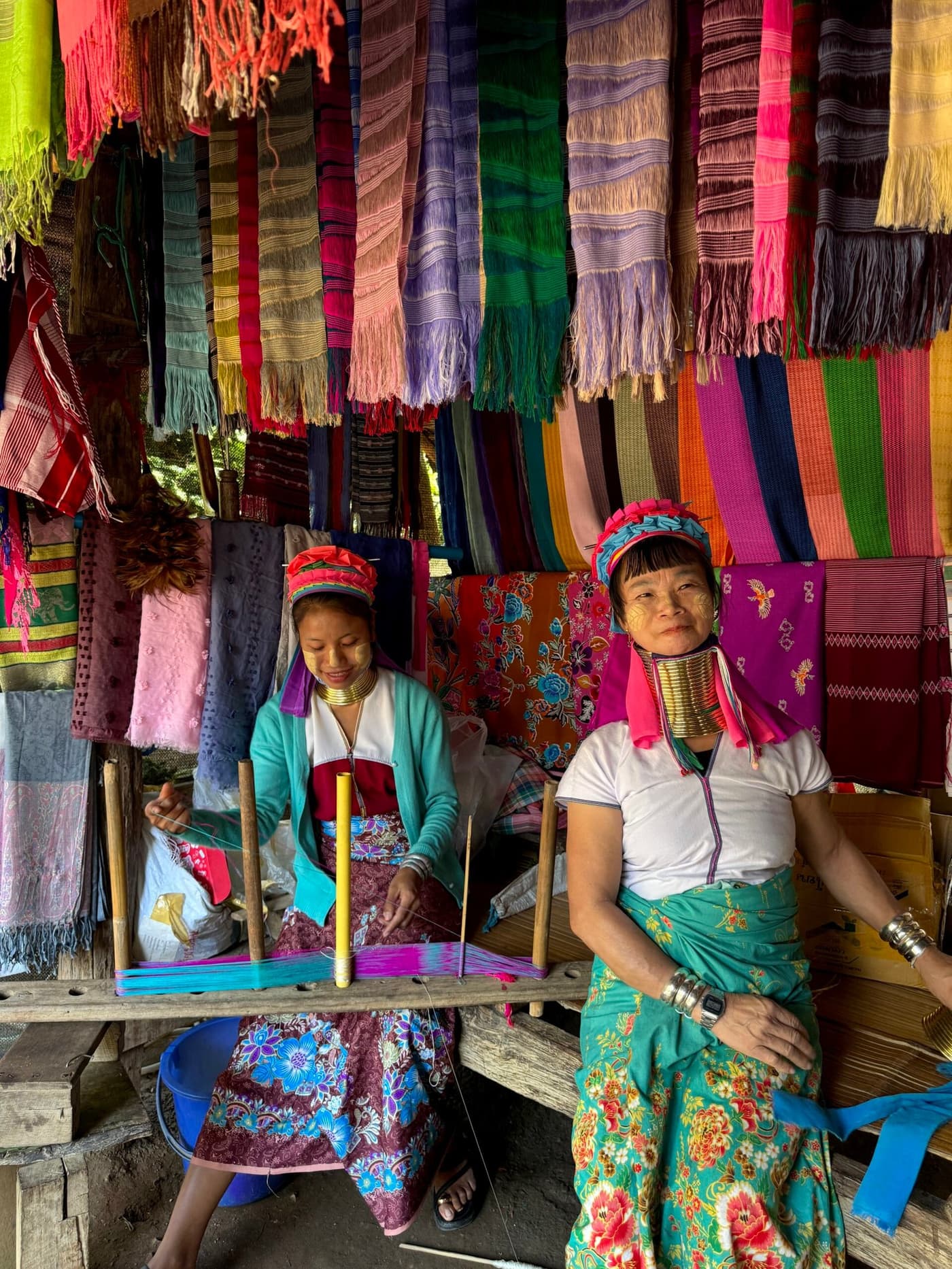
The Karen Long Neck Village is one of the most unusual and controversial sights near Pai. The Karen tribe lives here, and from childhood the women wear heavy brass rings around their necks, visually elongating them. We hesitated for a long time about whether to go, as opinions are divided: for some it's a chance to get to know a culture, for others it's a show for tourists. If you decide to go, approach the visit with respect. You can reach the village by motorbike or take a tour. Karen Long Neck Village location near Pai.
Chinese village of Yunlai (Yunlai / Santichon)
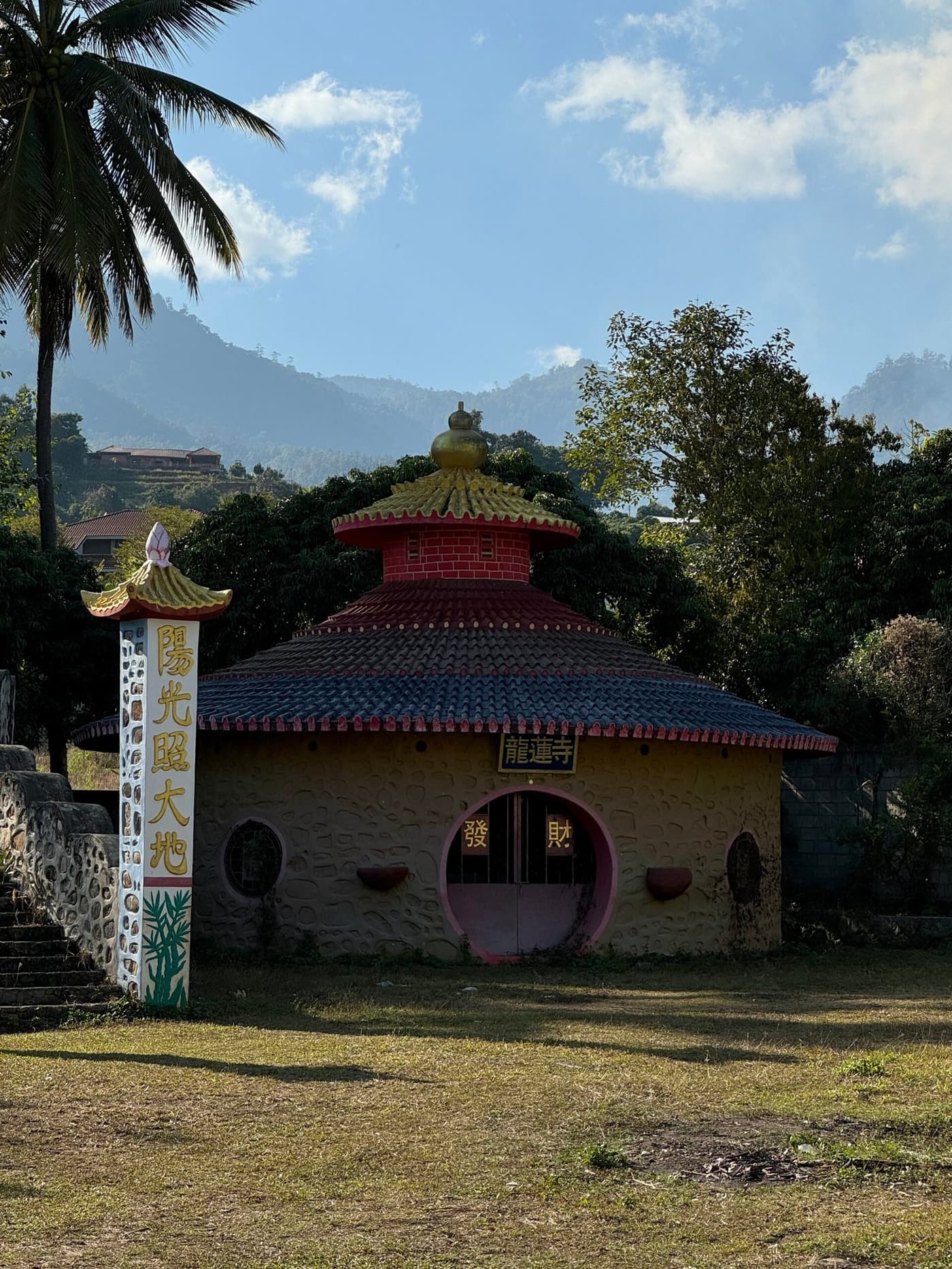
Four km from Pai is a village of Chinese settlers, founded by descendants of former Kuomintang soldiers who fled to Thailand after 1949. The village is called Yunlai or Santichon (Mae Aw / Ban Rak Thai is another well-known counterpart, but the one closest to Pai is Yunlai).
The architecture, food and way of life here have been preserved from Yunnan, a Chinese province. Yunnan tea is produced here, rice wine is made, and the cafés serve Yunnan noodles. There are red lanterns, wooden buildings and mountain views. Entry is about 30–50 baht.
It's easy to combine with a trip around Pai: just turn off on your way from the canyon or the hot springs.
Route: one day in Pai on a motorbike
Pai is easy to see in one full day on a motorbike. Here is a workable sequence.
Start the morning with the White Buddha (a short stop, with views over the valley). Then the canyon, best in the first half of the day or before sunset, though there are fewer tourists in the morning. The hot springs are good in the middle of the day, when it's hot. The World War II Memorial Bridge is a quiet spot, 10 minutes. Mo Paeng Waterfall, if you want to swim. The Chinese village on the way.
In the evening, Walking Street from 18:00: street food, craftspeople, live music.
The total distance for the day is about 40–50 km, which is comfortable on a motorbike.
Things to do in Pai
Pai isn't only about sights. There's a lot here that is both active and relaxed.
Rafting and kayaking — on the Pai River. Season: June–October (high water). The price is about 500–800 baht for a few hours.
Motorbike and bicycle — a bicycle rental costs 50–80 baht a day, a scooter 150–250 baht. Riding through rice fields and nearby villages is one of the best things to do here.
Yoga and retreats — several centers right in town. A single yoga class costs 300–500 baht. Some centers offer multi-day programs.
Thai massage — 150–250 baht an hour. It's cheaper than in Chiang Mai and often just as good.
Trekking — routes in the surrounding mountains to waterfalls and hill tribe villages. One-day tours with a guide start at 800 baht.
Where to eat in Pai
Pai is a surprisingly good place to eat. A large expat community is concentrated here, so besides Thai cuisine there are lots of vegan cafés, bakeries and international options.
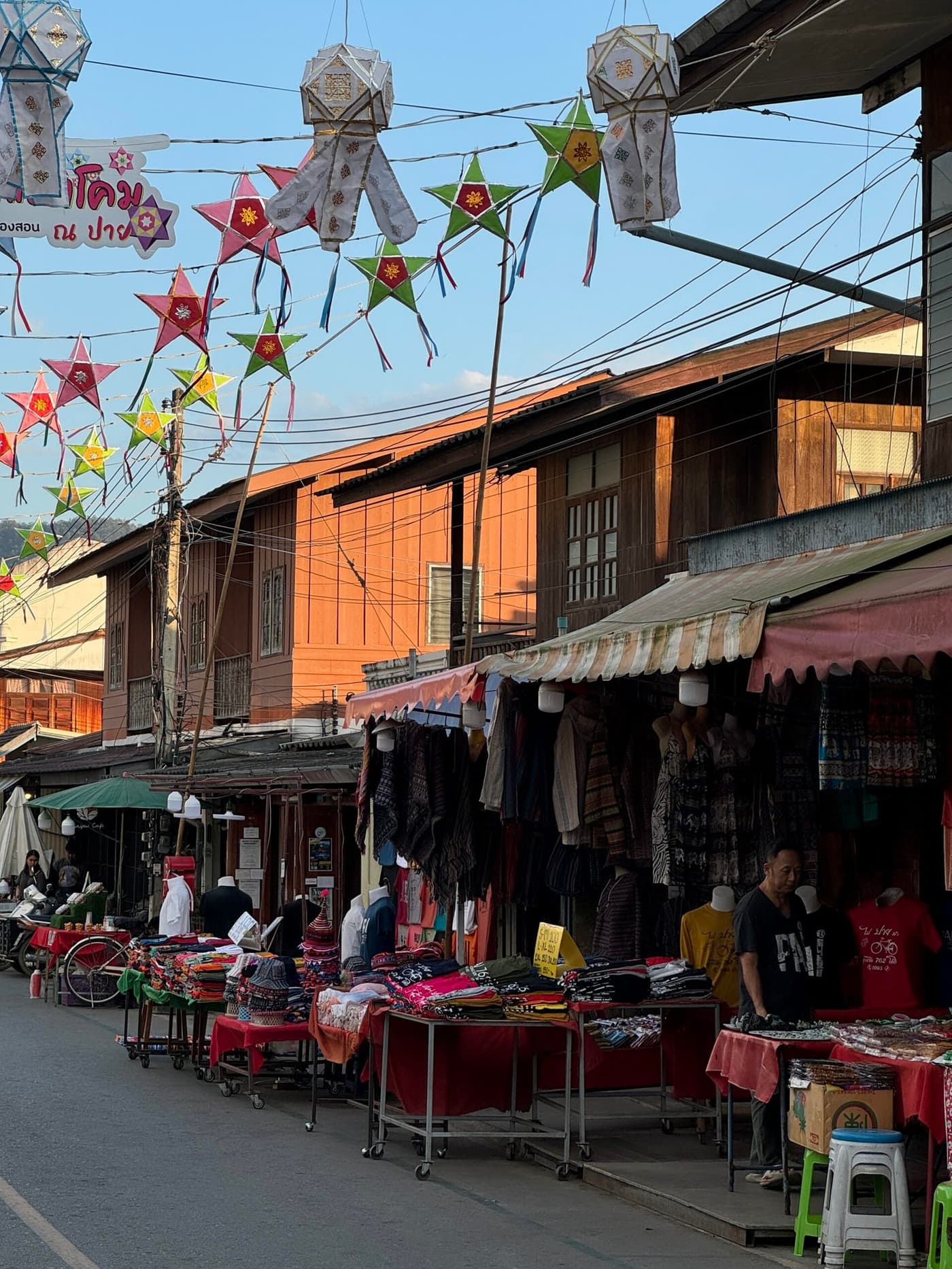
Walking Street — a pedestrian street in the center that comes alive in the evening from 18:00. Street food, handmade goods from local craftspeople, live music. It's dinner and a stroll in one.
Khao Soi is good here too. Look for small Thai cafés away from the tourist street: the portions are bigger and the prices lower (40–60 baht versus 80–100 in tourist spots).
Coffee — several places serve local arabica, some with mountain views.
Coffee shops and food beyond Walking Street
Walking Street is great, but it's not the only place to eat in Pai. The town has developed a small but high-quality coffee scene.
All About Strawberries — a garden café with strawberry desserts and breakfasts. It opens in the morning and is popular with Thai tourists.
Witching Well — a small café with good filter coffee, quiet and different from the flashy places. Good for working or a calm morning.
Na's Kitchen — Thai home cooking with no tourist markup and big portions. It's near the main street but off to the side of the main flow of people.
The food market by the bus station is open in the morning, from 6:00. Local breakfasts: fried rice, rice pancakes, soup. 30–50 baht each. It's the best way to eat like a local rather than a tourist.
Where to stay in Pai
The choice is huge: hotels, guesthouses, bamboo bungalows by the river, homestays in the villages. Prices range from 200 baht for a hostel bed to 2,000–4,000 baht for a boutique villa with a pool.
If you want quiet, choose a place 1–2 km from the center, by the rice fields or the river. If being close to cafés and Walking Street matters, look in the center.
Book in advance in the high season (November–February): Pai is popular with Thai travelers during this period, rooms go fast and prices rise.
When to go to Pai
November–February — the best time. It's cool and dry, visibility is good and nature is clean. It's the busiest season, but also the most beautiful.
May–October — the rainy season. The fields are green, the waterfalls are powerful and rafting is at its peak. Mountain roads can be slippery and closed after heavy rains, so keep an eye on the weather.
March–April — smoke season in northern Thailand. It's better in the mountains than in Chiang Mai, but visibility is still worse.
What to buy in Pai
Pai is a decent place to buy hill tribe crafts. Shops along the main street and on Walking Street sell Hmong, Akha and Karen textiles and jewelry: embroidered wallets, scarves and bags with traditional patterns. Prices are lower than in Nimman in Chiang Mai. Gentle bargaining is fine.
Among local specialties are coffee from nearby mountain plantations (80–150 baht per 100 g), handmade peanut butter, and strawberries and strawberry jam in season (January–March). The market by the bus station has all of this from the morning.
Among souvenirs with character are wooden jewelry pieces by local craftspeople who work right in open workshops on the main street. You watch how they're made and buy with a different feeling.
Pai and its atmosphere: why people stay
Pai began turning into a tourist destination in the 1990s, when Thai and foreign hippies discovered these mountains. Now it has gone mainstream: in high season Thai students, tourists from China and digital nomads all come here. But something of that original laid-back feeling remains.
Maybe it's the geography itself: mountains on all sides, a valley of rice fields, a small center where everything is within walking distance. Or the fact that nobody rushes here. Cafés work slowly, food takes a long time to prepare, and everyone says hello.
The local community is one of the most diverse in northern Thailand: Thais, Hmong, Tai Yai (Shan from Myanmar), and expats who came for a week and stayed for years. You can see it in the food, in the architecture, in the range of the shops.
I filmed how we spent our time in Pai in a short YouTube episode.
Frequently asked questions (FAQ) about Pai, Thailand
Where is Pai and how do you get there?
Pai is in the mountains of northern Thailand, about 130 km from Chiang Mai. You can get there by minivan, bus, or a rented motorbike or car. The road is scenic but winding, with more than 700 curves.
How many days should you spend in Pai?
Ideally 3–4 days. That's enough time to soak up the atmosphere, visit the main sights and rest a little.
What to see in Pai?
- Pai Canyon
- Pai Hot Springs
- Mo Paeng Waterfall
- White Buddha (Wat Phra That Mae Yen)
- World War II Memorial Bridge (Pai Memorial Bridge)
- Karen Long Neck Village
- Tham Lod Cave
- Bamboo Bridge (Boon Ko Ku So)
- Chinese village of Santichon
Can you get to Pai by motorbike?
Yes, it's a popular way. But the road takes experience: the curves are sharp and there are sometimes potholes. If you're not sure, take a minivan.
Is there accommodation in Pai for every budget?
Yes, Pai has a good choice of places to stay, from budget bungalows to designer eco-hotels. But you need to book in advance, especially in high season (November–February).