Chiang Mai is one of the most affordable cities in Southeast Asia for long-term living. But "affordable" is relative. We lived here for about five months and tracked our spending. Below are the current numbers for all the main expense categories.
I recorded these prices in 2026. Inflation in Thailand is low, so the data should stay relevant for several years.
Rent in Chiang Mai
Housing is the biggest expense. Prices depend heavily on the neighborhood, the condition of the place and the length of the rental: the longer you stay, the cheaper it gets. For details, see which area of Chiang Mai to choose.
Apartments and condos
| Area | Studio / month | 1-bedroom / month |
|---|---|---|
| Old City | 6,000–9,000 ฿ | 9,000–13,000 ฿ |
| Nimman | 12,000–15,000 ฿ | 18,000–25,000 ฿ |
| Chang Phuak | 6,000–10,000 ฿ | 10,000–15,000 ฿ |
| Central Festival | 10,000–14,000 ฿ | 12,000–18,000 ฿ |
| Suburbs (Hang Dong, Mae Rim) | from 12,000 ฿ (house) | from 15,000 ฿ (house) |
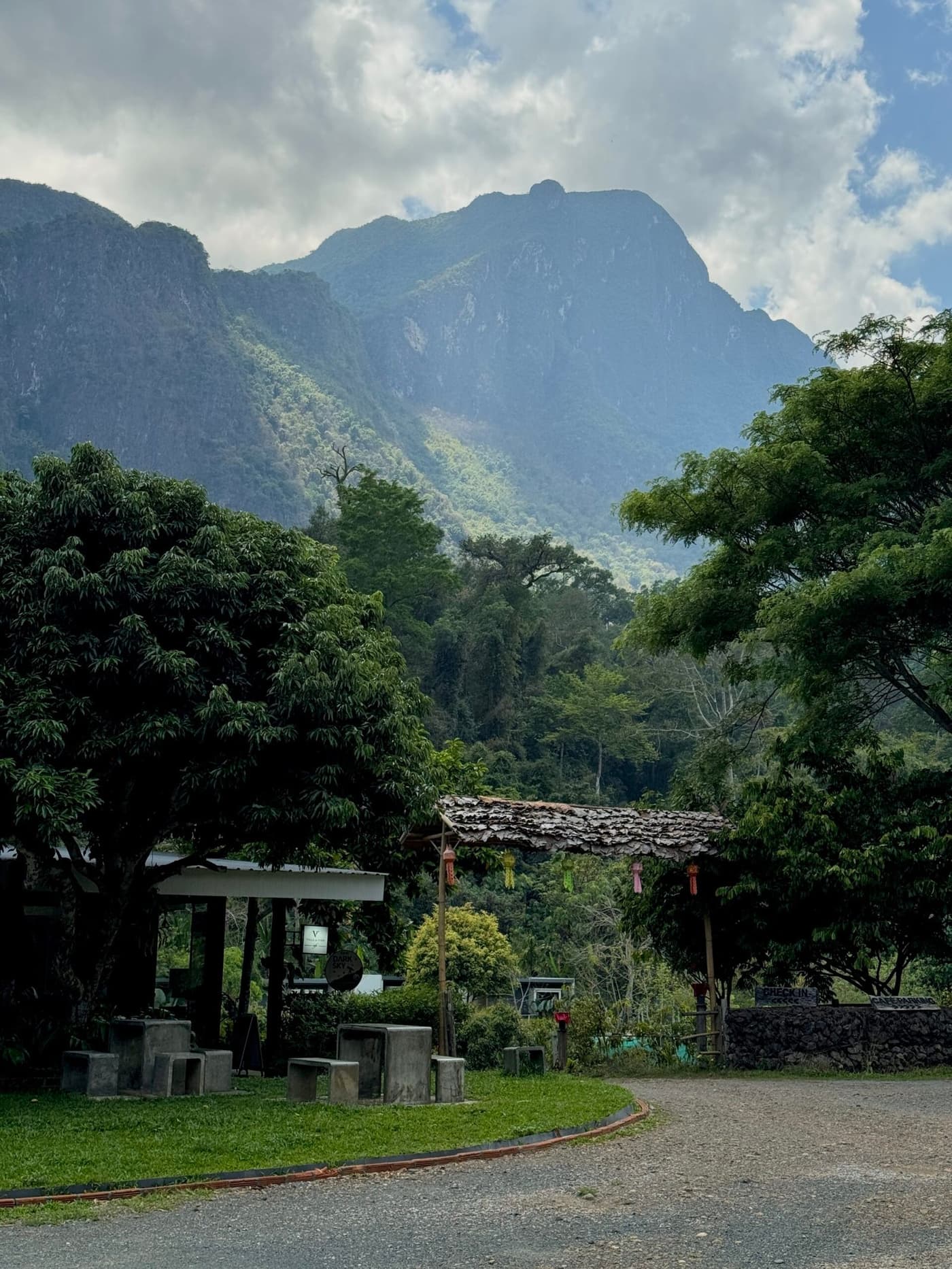
We stayed at Flora House apartments in the Chang Phuak area: a spacious two-room unit with a balcony and a mountain view for 15,000 baht a month plus utilities. The deposit was 5,000 baht, and we got it back with no questions asked.
Renting a house
A house with 2–3 bedrooms, a garden and parking in the suburbs costs 15,000 to 40,000 baht a month, depending on its condition and location. It's the best option for families with pets or anyone who wants more space. For more on the neighborhoods, see the article on Chiang Mai areas.
Utilities and internet
| Service | Amount / month |
|---|---|
| Electricity (with moderate air conditioning use) | 800–2,000 ฿ |
| Water | 100–300 ฿ |
| Internet (home) | 400–600 ฿ |
| Mobile plan with data | 200–400 ฿ |
The biggest electricity hog is the air conditioner. In the cool season (November to February) you can do without it entirely and save 500–1,000 baht a month.
Tap water is not safe to drink. It's better to drink bottled water or use refill stations, where water costs about 1 baht per liter.

Grocery prices in Chiang Mai
The main chains are Rimping (the best choice, a bit pricier), Tops, Lotus's and Makro (wholesale). Local markets are 1.5–2 times cheaper than supermarkets.
| Product | Price |
|---|---|
| Rice (1 kg) | 40–60 ฿ |
| Chicken breast fillet (1 kg) | 182 ฿ |
| Eggs (10) | 45–55 ฿ |
| Mango (1 kg, in season) | 30–60 ฿ |
| Avocado (1) | 60–100 ฿ |
| Milk (1 L) | 55–70 ฿ |
| Cheese (imported, 200 g) | 150–250 ฿ |
| Drinking water (1.5 L) | 12–18 ฿ |
Imported goods (cheese, nuts, good fish) are noticeably more expensive because of import duties. Local fruit and vegetables at the markets, on the other hand, are very affordable.
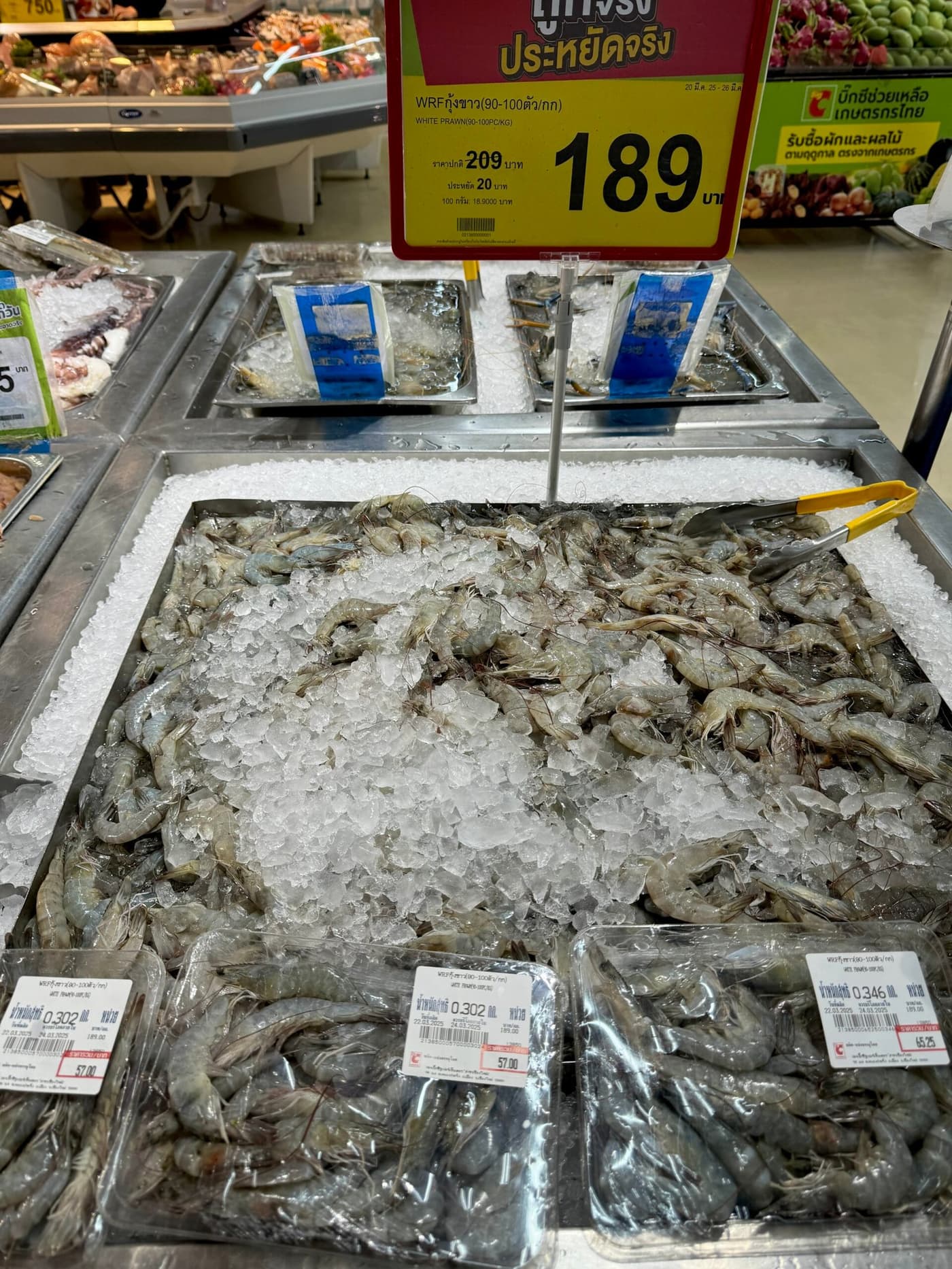
| Product | Quantity / weight | Price (฿, baht) |
|---|---|---|
| Grade 1 eggs | 10 | 55 ฿ |
| Grade 0 eggs | 10 | 77 ฿ |
| Chicken breast fillet | 1 kg | 182 ฿ |
| Chicken drumsticks | 1 kg | 110 ฿ |
| Crab | 1 kg | 210 ฿ |
| Tilapia | 1 kg | 75 ฿ |
| Pangasius | 1 kg | 329 ฿ |
| Salmon (fillet, in blocks) | 1 kg | 1,590 ฿ |
| Salmon (soup set) | 1 kg | 699 ฿ |
| Gouda cheese | 200 g | 145 ฿ |
| Coconut water | 1 L | 59–75 ฿ |
| Coconut milk | 1 L | 85 ฿ |
| Organic coconut oil | 250 ml | 188 ฿ |
| Brown rice | 1 kg | 53 ฿ |
| Carrots | 1 kg | 16 ฿ |
| Pumpkin | 1 kg | 27 ฿ |
| Tomatoes | 1 kg | 42 ฿ |
| Onions | 1 kg | 35 ฿ |
| Sweet potatoes | 1 kg | 79 ฿ |
| Potatoes | 1 kg | 50 ฿ |
| Cucumbers | 500 g | 22 ฿ |
| Yellow pomelo | 500 g | 119 ฿ |
| Red pomelo | 500 g | 99 ฿ |
| Pomelo (whole) | 1 | 200 ฿ |
| Dragon fruit (pitaya) | 1 kg | 69 ฿ |
| Papaya | 1 kg | 59 ฿ |
| Guava | 1 kg | 69 ฿ |
| Mango | 1 kg | 30–60 ฿ |
| Mangosteen | 1 kg | 99 ฿ |
Imported goods (especially cheese, fish and nuts) cost noticeably more because of import duties and logistics. Local vegetables, fruit and meat at the markets, meanwhile, can be 1.5–2 times cheaper.
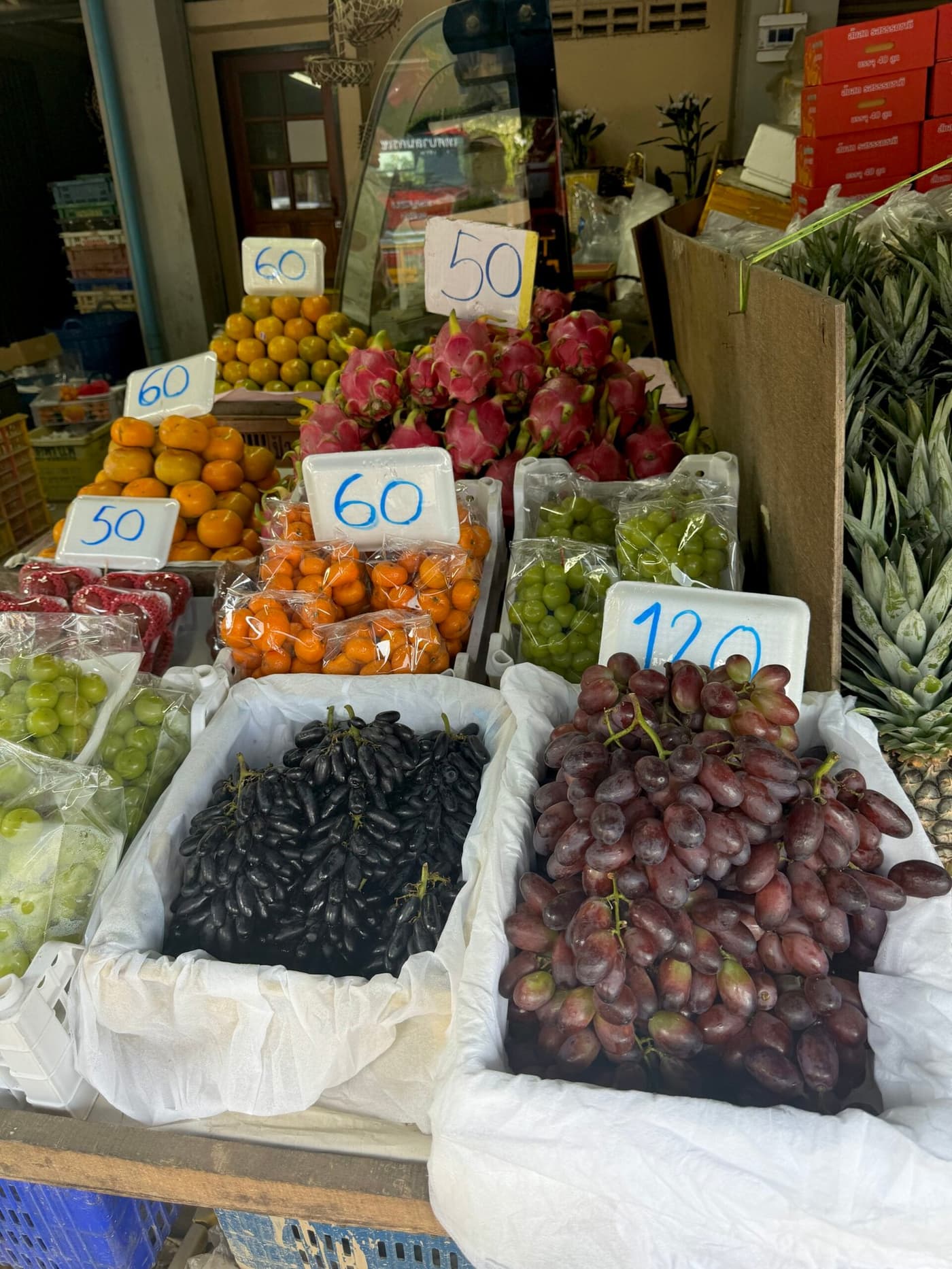
| Product | Quantity / weight | Price (฿, baht) |
|---|---|---|
| Papaya | 1 kg | 59 ฿ |
| Avocado | 1 pc. | 60–100 ฿ |
| Mandarins | 1 kg | 60 ฿ |
| Guava | 1 kg | 69 ฿ |
| Dragon fruit (pitaya) | 1 kg | 69 ฿ |
Fruit prices in Chiang Mai depend on the season. During the harvest, fruit (mango, mangosteen, longan, lychee) is 1.5–2 times cheaper, while in the off-season the price can almost double.
Tap water in Thailand is not safe to drink. I recommend buying bottled water or using refill stations, which are cheaper than buying lots of small bottles.
Prices in Chiang Mai cafes and restaurants
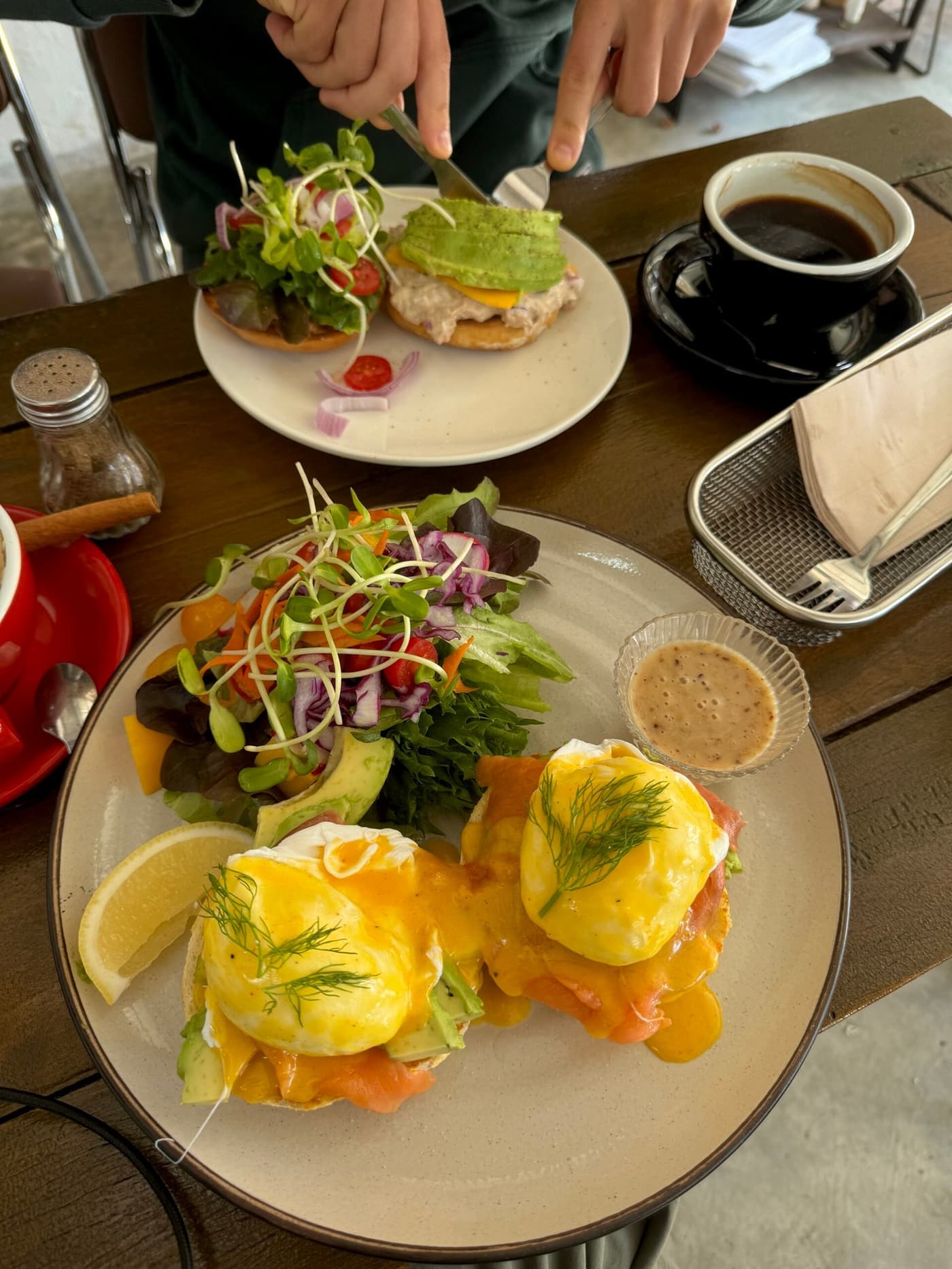
Chiang Mai has cafes and restaurants for every taste and budget, from street food to stylish places serving Western cuisine. I've left recommendations for specific places in the article on where to eat in Chiang Mai.
Below are rough guidelines for what to expect to pay in different types of places.
| Type of place / dish | Approximate price |
|---|---|
| A dish at an inexpensive local restaurant | ~65 ฿ |
| Lunch at a cafe | ~200 ฿ |
| Dinner for two at a mid-range restaurant (3 dishes) | ~625 ฿ |
| Cappuccino / coffee at a cafe | ~60 ฿ |
| Street food | 30–100 ฿ |
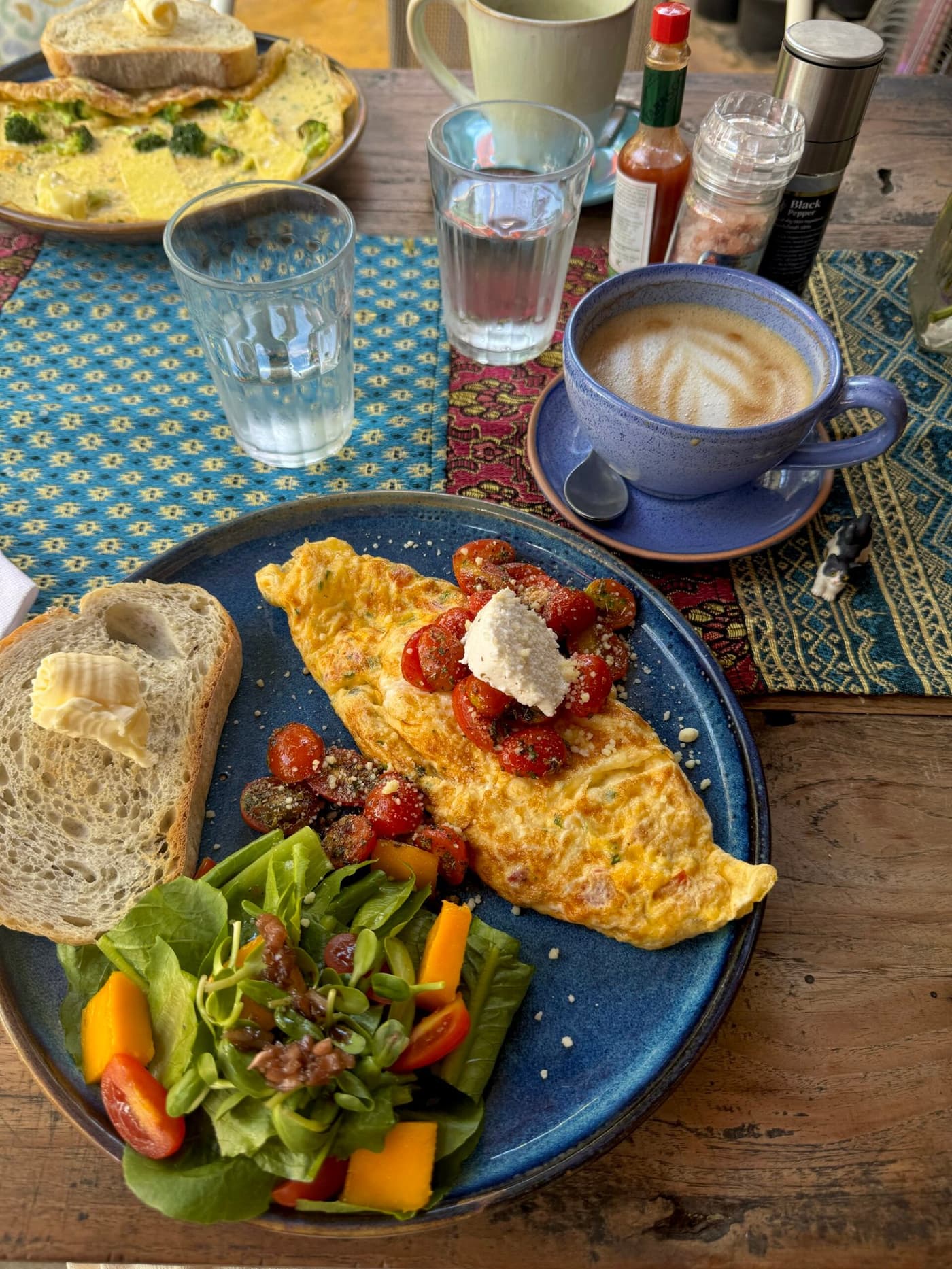
| Breakfast / cafe with Western food | 100–250 ฿ |
Street food and markets are the best way to save money and try authentic Thai cuisine. And cafes away from the tourist streets are cheaper than places near popular attractions.
Transport and scooter rental in Chiang Mai
In Chiang Mai you can use public transport, the "red trucks" (songthaew) and tuk-tuks, or rent a scooter or motorbike. We always rented a scooter. I wrote a separate article on how to get a Thai driver's license, and my husband Kirill filmed a detailed video guide.
| Type / model | Approximate price per day (฿) | Approximate price per month (฿) |
|---|---|---|
| Basic scooter (for example, Honda Click 125cc) | 150 – 300 ฿ / day | 2,000 – 3,500 ฿ / month |
| Mid-range models (Honda, Yamaha and others) | 250 – 500 ฿ / day | 3,000 – 5,000 ฿ / month |
In the high season (roughly November to February) demand for scooters is higher, and prices can be a little higher too. I wrote a separate article about the seasons in Chiang Mai and the best time to visit.
Tips:
- For a long-term rental, the price is much lower than the daily rate.
- You need an international or Thai driver's license and a deposit.
- Check the condition of the scooter, the paperwork and whether a helmet is included.
Taxis and public transport
Chiang Mai doesn't have classic street taxis like Bangkok, but the Grab and Bolt apps work here.
| Type of transport | Average price (฿) |
|---|---|
| Songthaew (red trucks) | 30 ฿ within the city |
| Tuk-tuk | 50–80 ฿ for a short trip |
| Motorbike taxi | 40–70 ฿ for 2–4 km |
| Grab / Bolt (car) | 100–130 ฿ for 3–5 km |
| From the city center to the airport | 120–180 ฿ |
Gas prices in Chiang Mai
As of October 2025 (data from PTT and GlobalPetrolPrices).
| Fuel type | Average price |
|---|---|
| Gasohol 95 (the main type for scooters) | 41–43 ฿ / L |
| Gasohol 91 | 40–42 ฿ / L |
| Diesel | 35–37 ฿ / L |

Monthly budget for living in Chiang Mai
Below are spending guidelines for different lifestyles: basic / mid-range / comfortable. These prices are approximate and may change depending on the area, your lifestyle and the season.
| Expense | Basic (budget) | Mid-range | Comfortable |
|---|---|---|---|
| Rent (1-bedroom apartment, furnished) | 8,000 – 12,000 ฿ | 12,000 – 18,000 ฿ | 18,000 – 30,000+ ฿ |
| Groceries and food | 3,000 – 6,000 ฿ | 6,000 – 10,000 ฿ | 10,000 – 15,000+ ฿ |
| Transport (scooter rental / rides) | 1,000 – 2,000 ฿ | 2,500 – 4,000 ฿ | 4,000 – 8,000+ ฿ |
| Utilities, internet, phone | 1,000 – 2,000 ฿ | 2,000 – 4,000 ฿ | 4,000 – 6,000+ ฿ |
| Other expenses (entertainment, personal care, small purchases) | 1,000 – 2,000 ฿ | 2,000 – 5,000 ฿ | 5,000 – 10,000+ ฿ |
| Estimated total | ≈ 14,000 – 24,000 ฿ | ≈ 24,500 – 41,000 ฿ | ≈ 41,000 – 69,000+ ฿ |
Examples from other sources
- According to Expatistan, one person's monthly expenses (not including rent) in Chiang Mai are ≈ 32,484 ฿ (October 2025) Expatistan, cost of living comparison
- According to World of Condos, housing in Chiang Mai (a studio) can cost 8,000 – 15,000 ฿, and utilities plus internet 2,000–4,000 ฿ worldofcondos.com
- The Across Every Border review says budget travelers can get by on $600 / month, while a comfortable level falls in the range of $800–1,100 / month (≈ 20,000 – 35,000 ฿) Across Every Border
Personally, while living in Chiang Mai we spent about 50,000 ฿ for the two of us. That included housing, scooter rental, food, entertainment, and buying vitamins and clothes. Before you head to the city, I recommend reading my detailed Chiang Mai guide.
Frequently asked questions about prices in Chiang Mai
Can you live in Chiang Mai on $500?
In theory, yes: housing in the Old City from 6,000 baht and market meals from 100 baht a day. But comfort will be minimal. A realistic budget for a normal life is $700–900 a month.
How much does it cost to live in Chiang Mai per month?
From 14,000 baht (basic) to 69,000+ (comfortable). The average digital nomad spends 35,000–50,000 baht.
How much does rent cost?
A studio runs from 6,000 baht (Old City) to 15,000 baht (Nimman). A one-bedroom runs from 9,000 to 25,000 baht.