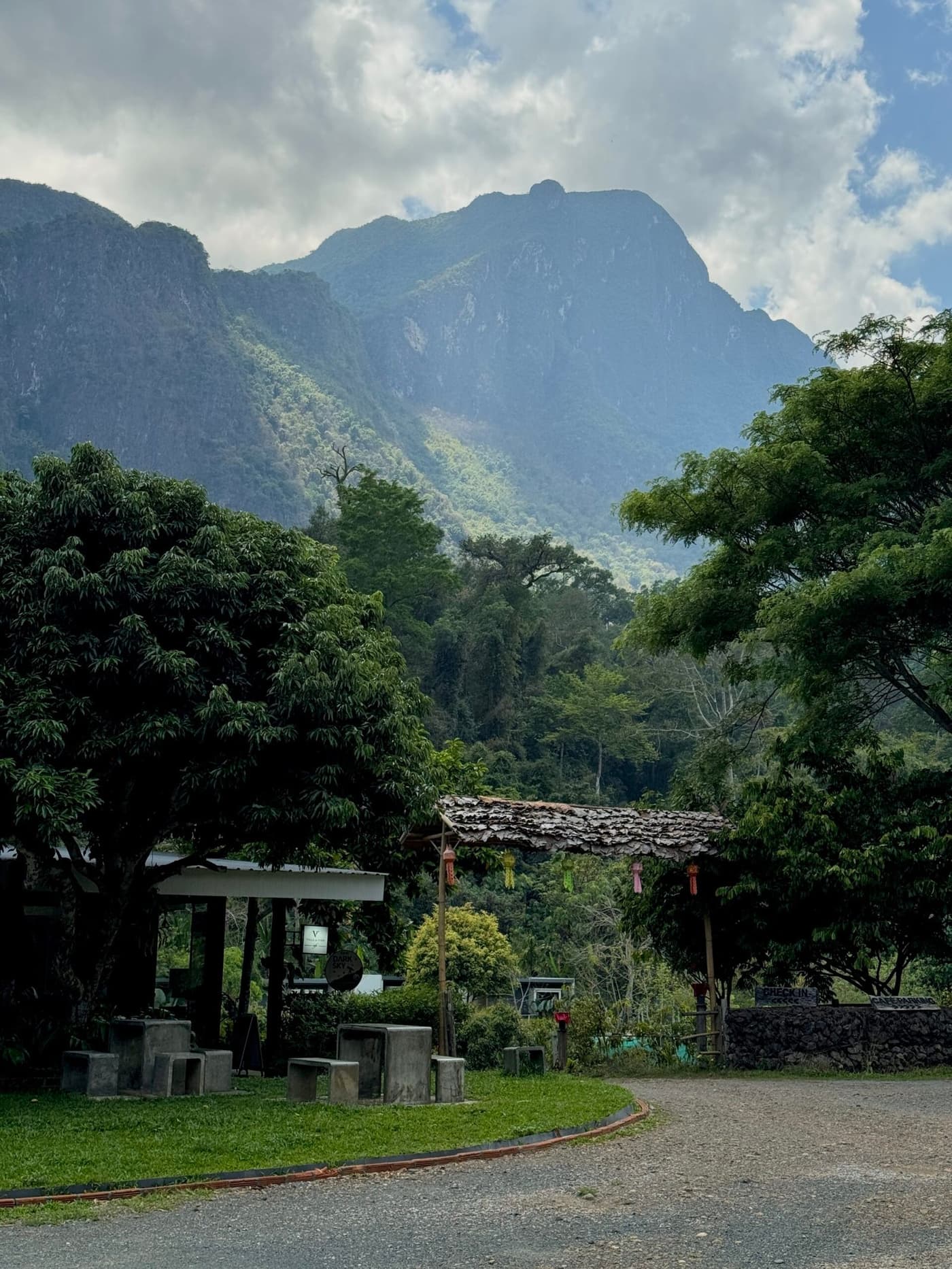
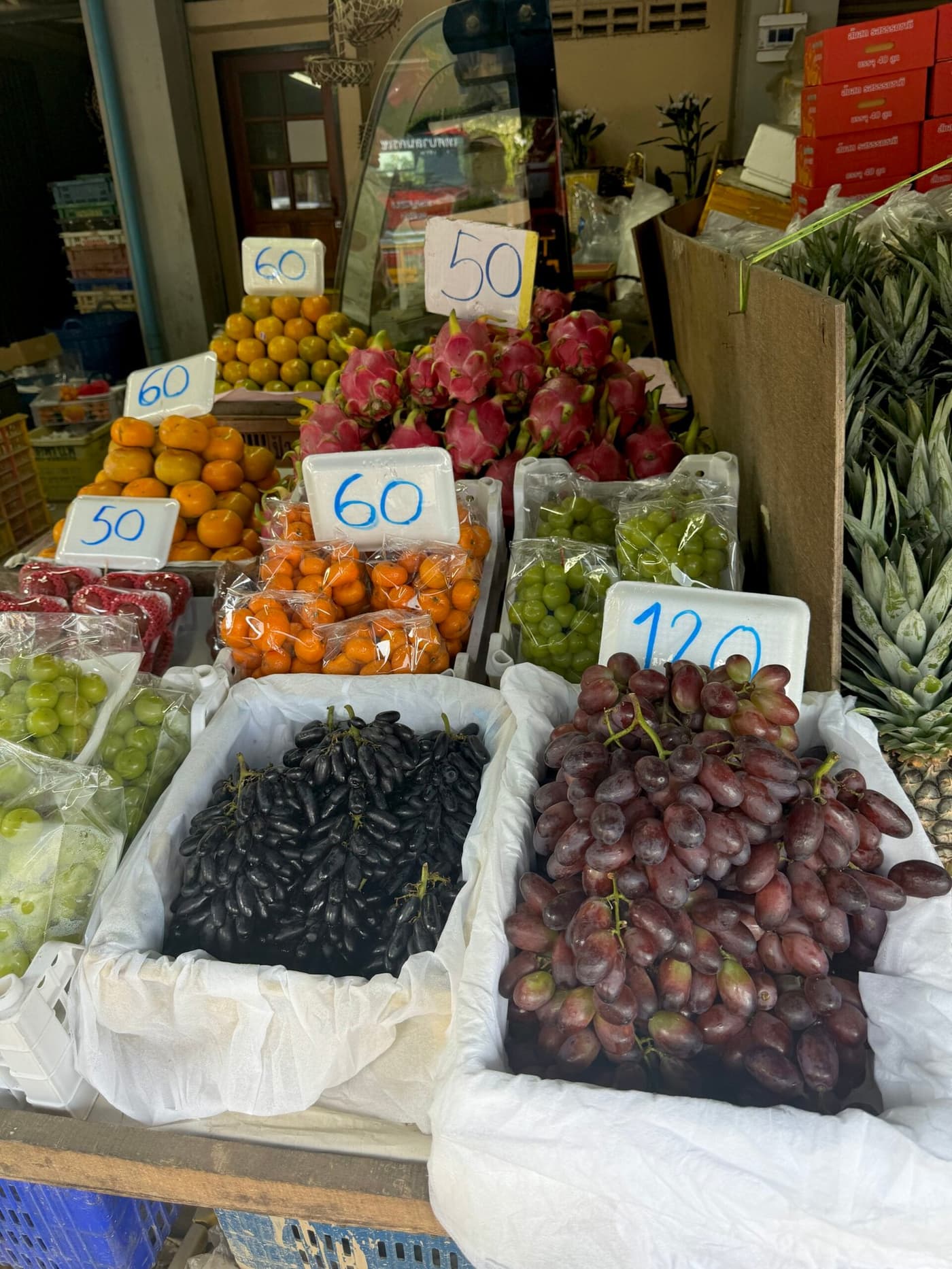
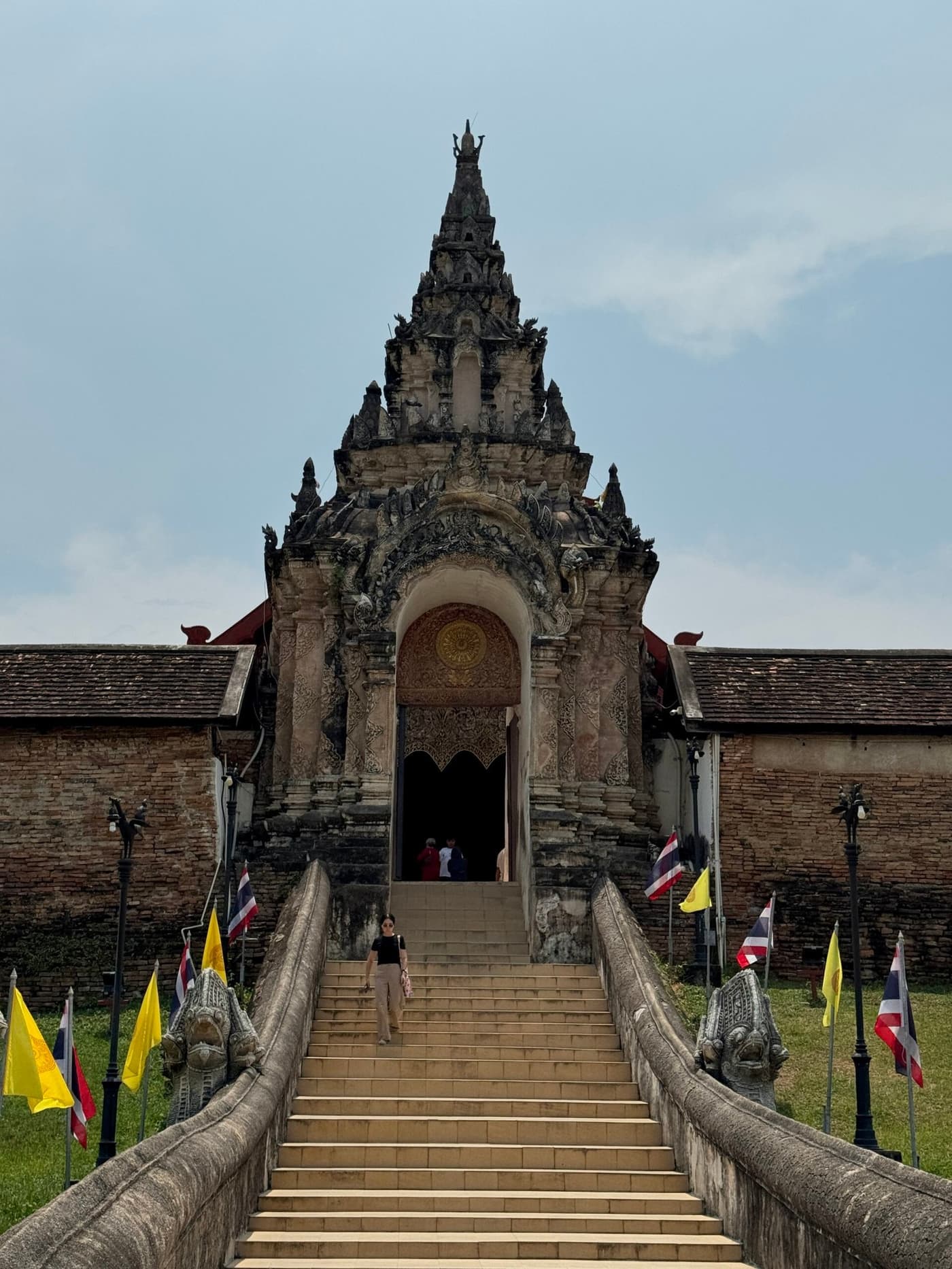
Chiang Mai is the northern capital of Thailand, surrounded by mountains. The climate here is very different from the beach-lined south: there are three seasons with truly different conditions, so "when should I go?" is a question worth taking seriously. We lived in Chiang Mai for almost a year and caught it all: the best season, the smog and the rains. Our detailed Chiang Mai guide on what to see, when to go and how much it costs is in a separate article.
Chiang Mai's Three Seasons at a Glance
| Month | Temperature (day/night) | Rainfall | Air | Tourists |
|---|---|---|---|---|
| November | 29°C / 17°C | minimal | clean | many |
| December | 28°C / 14°C | none | clean | very many |
| January | 25–28°C / 10–14°C | none | clean | many |
| February | 28–32°C / 16°C | none | starting to get hazy | moderate |
| March | 36°C / 20°C | none | smog (PM2.5 up to 99 µg/m³) | few |
| April | 38–42°C / 23°C | rare | smog (PM2.5 up to 74 µg/m³) | few |
| May | 35°C / 24°C | starting | improving | few |
| June | 32°C / 24°C | moderate | clean | few |
| July | 31°C / 24°C | moderate | clean | few |
| August | 31°C / 24°C | peak (~217 mm) | clean | few |
| September | 31°C / 23°C | heavy | clean | few |
| October | 31°C / 22°C | tapering off | clean | moderate |
Sources: Weather Spark, IQAir, Climate-data.org
Cool Season (November to February): The Best Time to Go
This is peak tourist season, and deservedly so. The air is clean, the temperature is comfortable and there is almost no rain. This is when to go if good weather and long walks are your priority.
November: Loy Krathong, Yi Peng and the Start of the Season
November is my favorite month in Chiang Mai. On the full moon of the lunar calendar, the Loy Krathong and Yi Peng festival takes place: thousands of paper lanterns are released into the sky right above the city. It is not a tourist attraction but a real Thai holiday, and in Chiang Mai it is bigger than anywhere else in the country. The dates change every year, so check them against the lunar calendar: it is usually in November, sometimes at the end of October.
There are already plenty of tourists in November, but not yet as many as in December. Accommodation prices start to climb.
December: Perfect Weather
We first came to Chiang Mai at the beginning of December and were surprised. At night the temperature drops to 13–15°C, and in the morning you really do need a jacket. It is warm and sunny during the day, but in the mountains it can be properly cold in December and January. Shorts and a tank top are for daytime only. A light jacket or hoodie is a must.
December is the busiest month. Hotels get more expensive and the good cafes in Nimman are packed, especially over the New Year holidays. If you want a balance between weather and prices, choose November or January.
January: Colder Than You Expect
The climate is like December. It is the coldest month in Chiang Mai: 10–14°C at night and 25–28°C during the day. It is a great time for Doi Inthanon and mountain routes, with morning fog in the mountains and fresh air.
At the end of January or the beginning of February, the Flower Festival takes place. Expect parades, decorated floats, and exhibitions of orchids, roses and chrysanthemums. It is one of the most beautiful festivals in the north.
Who it suits: people who like cool weather and mountain trips.
February: Festivals
It is still lovely: warm, sunny and green. Temperatures start to rise to 28–32°C during the day. There are slightly fewer tourists than in December and January, but prices hold up.
Chinese New Year falls in early February (the date changes). In areas with a Chinese community you will see decorations, lanterns and special dishes.
The Flower Festival in February
On the first weekend of February, Chiang Mai hosts the Flower Festival: a parade of decorated floats, exhibitions and processions. It is a small but beautiful reason to come in February specifically.
Hot Season and Smog (March to May): Go or Not?
The honest answer: it is better not to come in March and April. This goes double if you have breathing problems, allergies or small children.
March, With a Caveat
The hot season begins. Temperatures reach 35–40°C. And the main problem is smog. The rural areas around Chiang Mai start burning crop stubble after the harvest, and the smoke builds up in the valley.
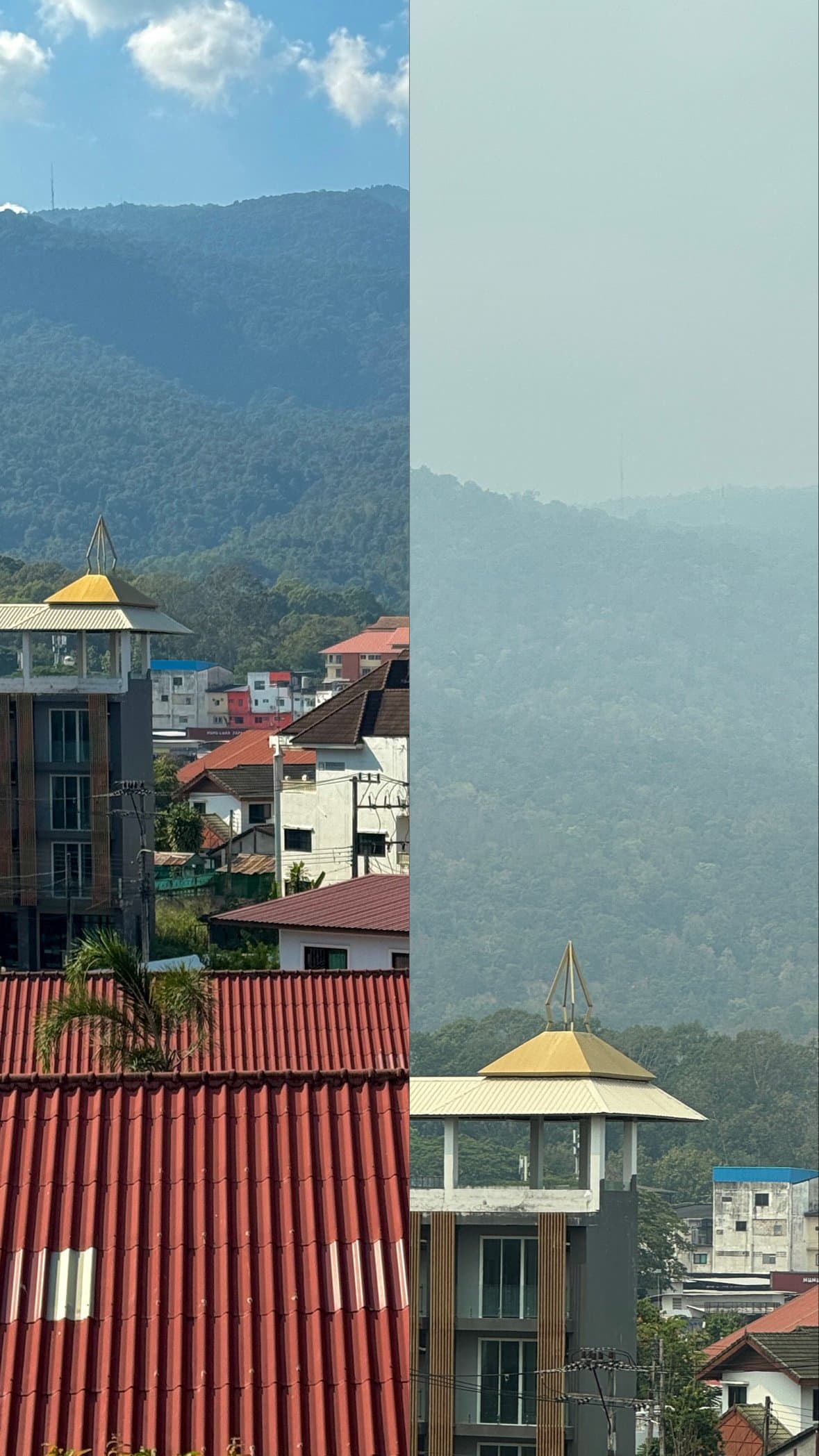
In bad years, air quality drops to an AQI of 200+, which is the "very unhealthy" level. The mountains vanish behind the haze. You can hardly see the sky.
Songkran, the Thai New Year with its water fights, comes only in April.
April: A Tough Month
Smog and heat both peak at once. April is the hardest month in Chiang Mai. Temperatures are 38–42°C, the smog does not clear, humidity is low and your skin dries out.
Songkran officially runs on April 13–15. It is an important Thai holiday: water fights, family gatherings and festive processions. The atmosphere is lively, but physically it is hard going.
After April 20–25 the first rains arrive and the smog gradually goes away.
Who should not come in April: people with asthma, allergies or respiratory problems. Older people. Families with small children.
Who can: young, healthy people who are deliberately coming for Songkran and are ready for the heat.
May: A Transition Month
It is a transition month. The first rains wash out the smog and the air improves sharply. Temperatures are still high (33–38°C), but you can breathe. There are few tourists, as it is low season.
Rain in May is short, usually in the evening. The mornings are sunny. The waterfalls start to fill up.
The upside of this season is that hotels and accommodation are 20–40% cheaper than in peak season.
Why Chiang Mai Has Smog and When It Starts
Smog is the result of burning agricultural waste in the fields of northern Thailand, Laos and Myanmar. In the dry season farmers burn their fields, and the smoke covers the whole northern part of the country. The mountains around Chiang Mai work like a bowl, and the smoke has nowhere to go.
The first signs appear in February. The peak falls in March. April gradually gets better, and in May, with the first rains, the air becomes even cleaner.
The Numbers: How Bad the Air Gets
To put it in perspective, the WHO guideline for PM2.5 is 15 µg/m³. In Chiang Mai:
- February: about 47 µg/m³
- March: about 99 µg/m³ on average, and significantly higher on peak days
- April: about 74 µg/m³
On the worst days Chiang Mai ranks among the cities with the dirtiest air in the world. You can follow air quality in real time at aqicn.org and IQAir.
How to Survive Smog Season: From Personal Experience
We ended up in Chiang Mai at the end of March and saw the full horror of the smog firsthand. For comparison, from the very same balcony in December we saw mountains and blue sky, and in March a white wall of smoke.
What helped: we ordered an air purifier with a HEPA filter and a humidifier (the purifier dries the air out a lot). We wore N95 masks outdoors, and I mean real ones with a 95% filtration rating, not masks that just look like N95/KN95. We kept the windows closed and set the air conditioner to recirculation. We worked from home most of the time, though some coffee shops also run air purifiers. I covered this in a separate article on where to get coffee and eat in Chiang Mai.
On the plus side, there are almost no tourists, the coffee shops are empty and rent is cheaper. I wrote about prices in Chiang Mai and what it costs to live in northern Thailand in a detailed article.
Rainy Season (June to October): Cheap and Green
The rainy season is no reason to cancel a trip. For many people it is the best time: nature is at its peak, prices are at their lowest and there are few tourists. But you need to understand what exactly awaits you.
June: The Start of the Rainy Season
The rainy season is in full swing. It is warm at 28–33°C. Rain usually lasts 1–3 hours a day, more often in the evening or at night. Days when it pours from morning to night are rare.
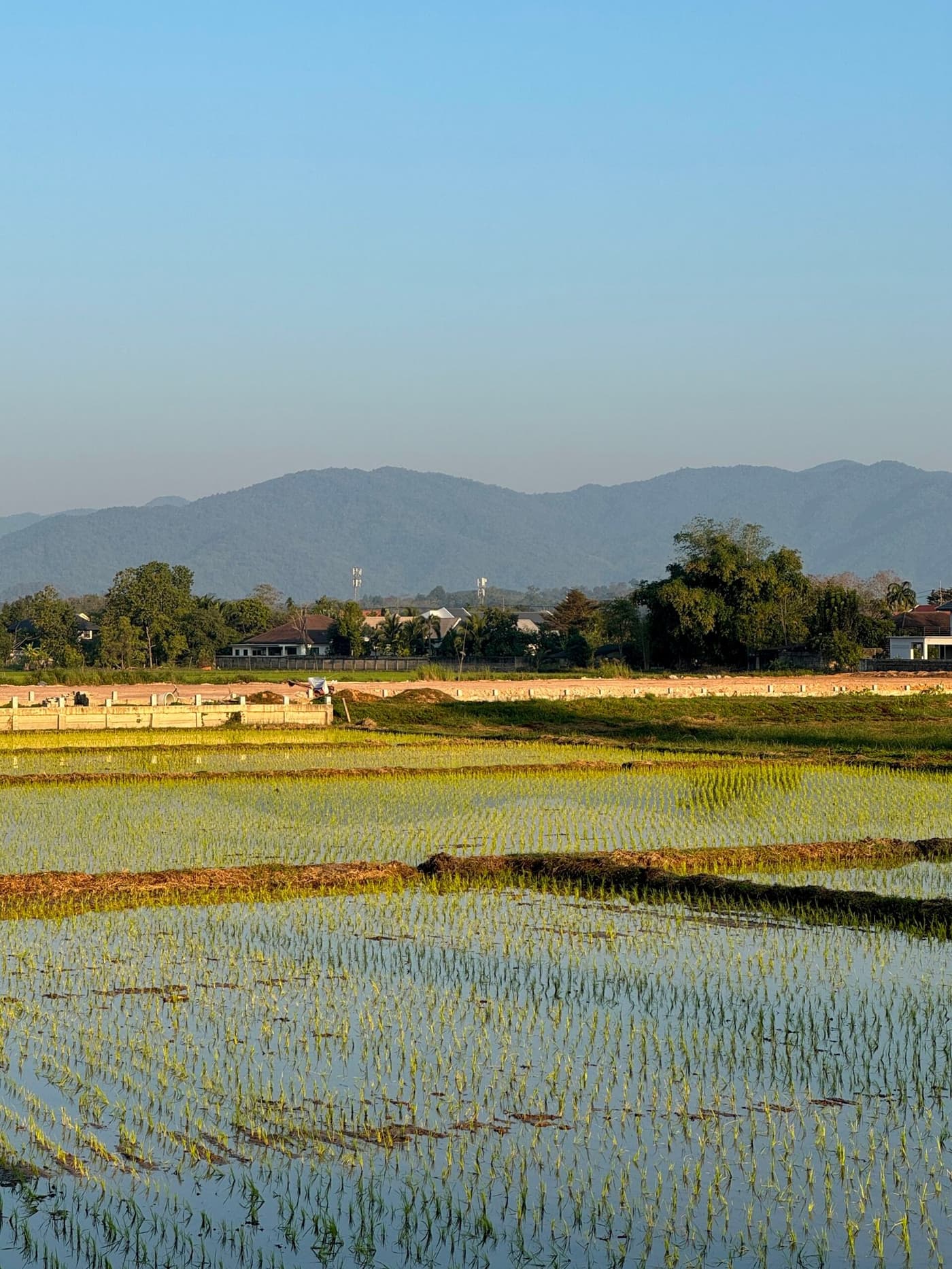
The greenery is lush, the air is clean and the rice fields are planted. Mountain villages are swallowed up in green. The waterfalls on Doi Inthanon are in full flow.
July: The Middle of the Rainy Season
It is similar to June. The rains are regular but not catastrophic. In some years July is drier than August. There are few tourists.
Khao Phansa, the Buddhist Lent, begins in July. Monks retire to their monasteries for three months. It is an interesting time to observe Buddhist life in the city.
August: The Height of the Rainy Season
It is usually the rainiest month. There is more rainfall, the rivers are full, and there is sometimes flooding in low-lying areas. Mountain roads can be slippery.
Even so, August is a beautiful month: lush nature, rice fields in bloom and morning mist over the mountains.
September: The Budget Month
The rains continue, but September is often calmer than August. It is the quietest month for tourists, prices are at their lowest and there are no queues.
The Vegetarian Festival (usually late September to early October) means 9 days of vegetarian food, street processions and rituals. It is a vivid and unusual spectacle.
October: The Most Beautiful Month
The rains are on the wane. By the end of October there is little left. The waterfalls are still full and the greenery has not yet turned yellow. The tourists have not arrived yet.
This is when Chiang Mai is especially good: still green, no longer rainy and not yet crowded.
In October there are Ork Phansa (the end of the monks' Lent) and Thawng Kathin, Buddhist ceremonies all over the city.
What the Rain in Chiang Mai Is Like
Most people picture endless downpours, but that is not always the case. Rain mostly falls in the afternoon or at night. The morning is usually clear. A typical day looks like this: sun in the morning, clouds after 3 p.m., an hour or an hour and a half of heavy rain, then it clears up again. For trips and walks it is quite bearable if you check the forecast.
August is the rainiest month (about 217 mm of rain). There is sometimes flooding in low-lying parts of the city. More on Chiang Mai's neighborhoods.
The Upsides of the Rainy Season
Nature is gorgeous at this time: the mountains are green, the waterfalls are full and the air is fresh after every rain. Accommodation and flight prices are at their lowest. There are few tourists. If you are going trekking in the mountains or want to rent a place for a long stay at a good price, the rainy season is an excellent option.
Calendar: When to Go for Your Goals
| Trip goal | Best months |
|---|---|
| Perfect weather | November, December, January, February |
| Yi Peng lanterns | November (the date depends on the lunar calendar) |
| Flower Festival | Late January to early February |
| Mountain routes and Doi Inthanon | November to February |
| Songkran | April (13–15) |
| Green nature and waterfalls | July to October |
| Lowest prices | May to September |
| No tourists | May to October |
| Definitely no smog | November to February, June to October |
I made a great YouTube episode about Chiang Mai. Give it a like and subscribe 🙂
Chiang Mai Seasons FAQ
I have gathered the questions people ask most often before a trip, with short, honest answers.
When is the best time to go to Chiang Mai?
November and January are the best balance: the weather is good, the air is clean and there are slightly fewer tourists than in December. December is the most popular month, but also the most expensive. If festivals matter to you, come in November for Yi Peng.
When is smog season in Chiang Mai and how dangerous is it?
Smog season runs from February to April, peaking in March. The PM2.5 level in March averages about 99 µg/m³, which is roughly 6 times the WHO guideline. On bad days Chiang Mai ranks among the most polluted cities in the world. For healthy adults it means discomfort and the smell of smoke. For children, people with asthma and people with cardiovascular disease it is a real risk. Better to avoid it.
Does Chiang Mai ever get cold?
Yes, and it surprises many people. In December and January the nighttime temperature drops to 13–15°C, and lower in the mountains. In the morning you need a jacket or hoodie. It is warm and sunny during the day, but shorts and a tank top are for midday only.
Can you visit Chiang Mai in the rainy season?
You can, and you should if rain does not scare you. It mostly falls in the afternoon or at night. The morning is usually sunny. Nature is beautiful at this time, prices are at their lowest and there are almost no tourists. August is the rainiest month, with occasional flooding in low-lying parts of the city.
When is the Yi Peng festival in Chiang Mai?
On the full moon of the lunar calendar, usually in November and sometimes at the end of October. The exact dates change every year, so check them in advance. It is one of the biggest festivals in the country: thousands of paper lanterns are released right above the city. I wrote about what to see and do in Chiang Mai in a separate article.
When does Chiang Mai have the fewest tourists?
The fewest tourists come in March and April (because of the smog) and from June to September (the rainy season). If you want empty coffee shops and cheap accommodation, June to August is ideal, but you have to accept the rain.
How can I track air quality in Chiang Mai?
In real time, on aqicn.org and IQAir. They show the AQI and the PM2.5 level hour by hour. In smog season it is worth checking every day before you go out.
Do I need a visa for a long stay in Chiang Mai?
It depends on your nationality and passport. When we checked in October 2026, eligible passports were given 30 days on arrival by entry stamp and 60 days on a tourist visa. For a longer stay (3 to 12 months), different visa types are used depending on your situation. Please confirm the current rules for your own passport with Thai immigration authorities before you book.