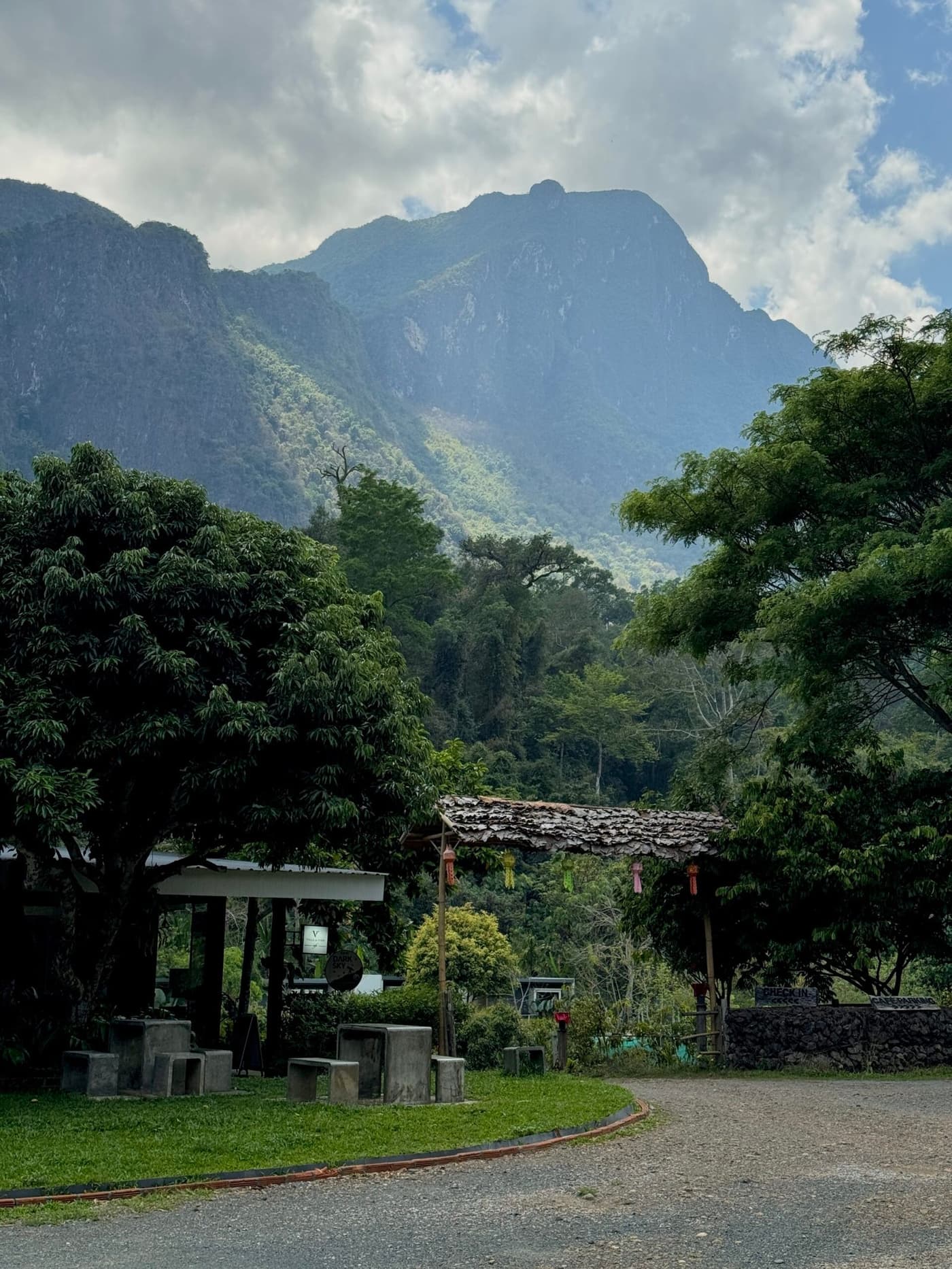
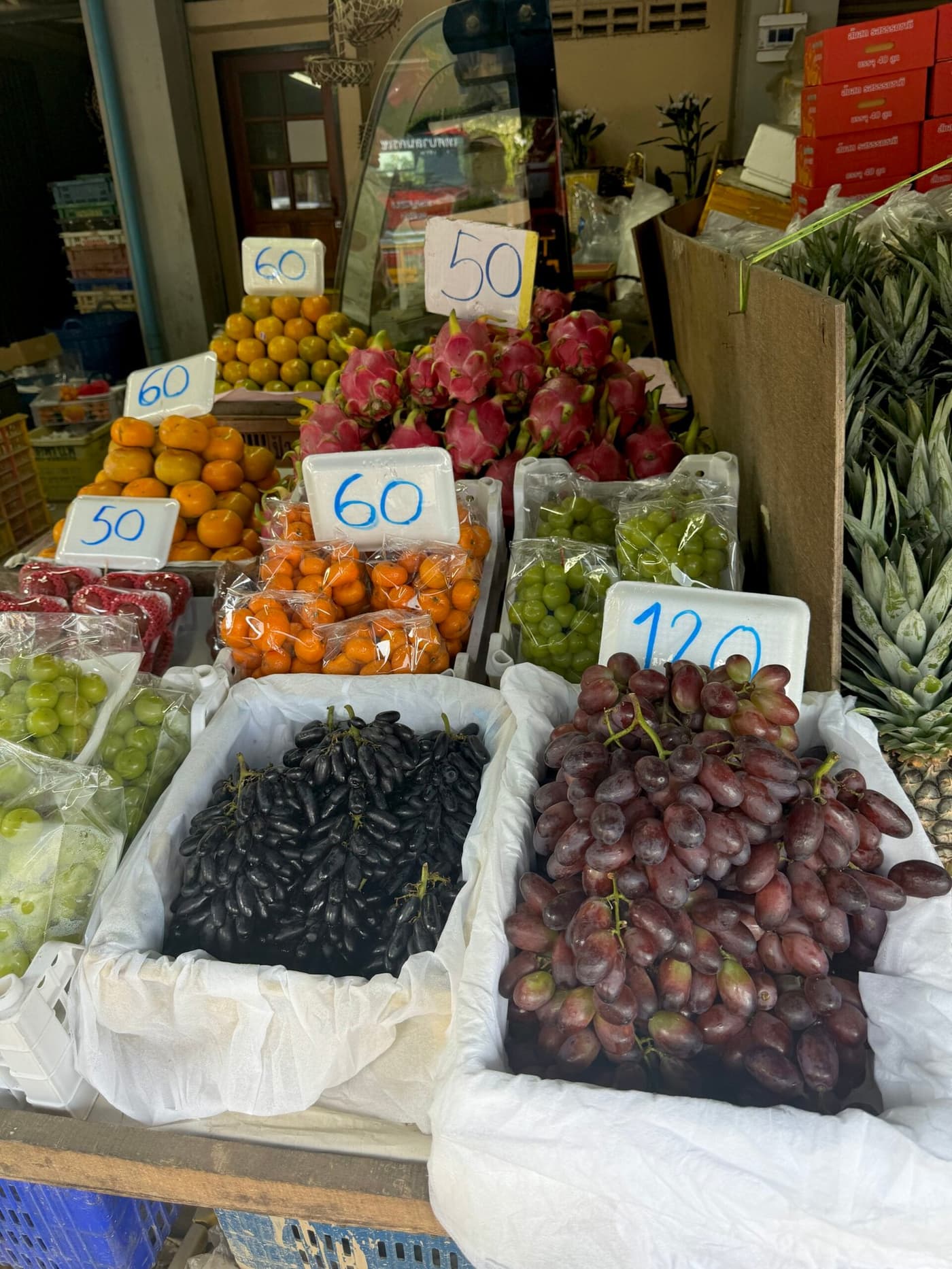
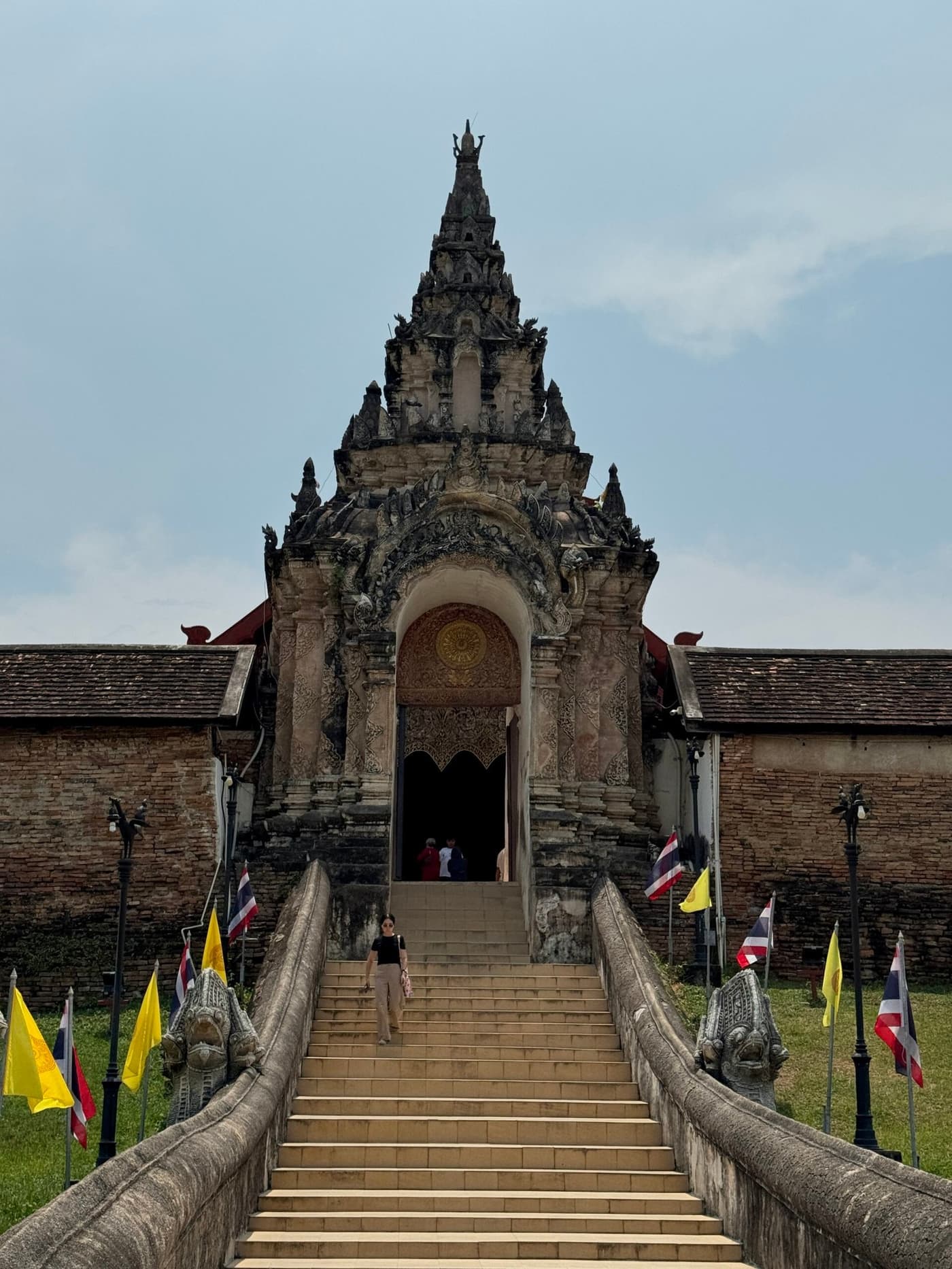
Chiang Mai is the former capital of the Lanna kingdom, and you can feel it: more than 300 Buddhist temples, ancient city walls, craft markets and a cuisine all its own. Outside the city you'll find mountains, national parks, waterfalls and hill villages. You can spend a week here and never repeat yourself. I wrote a detailed Chiang Mai guide with everything you need to know before your trip in a separate article.
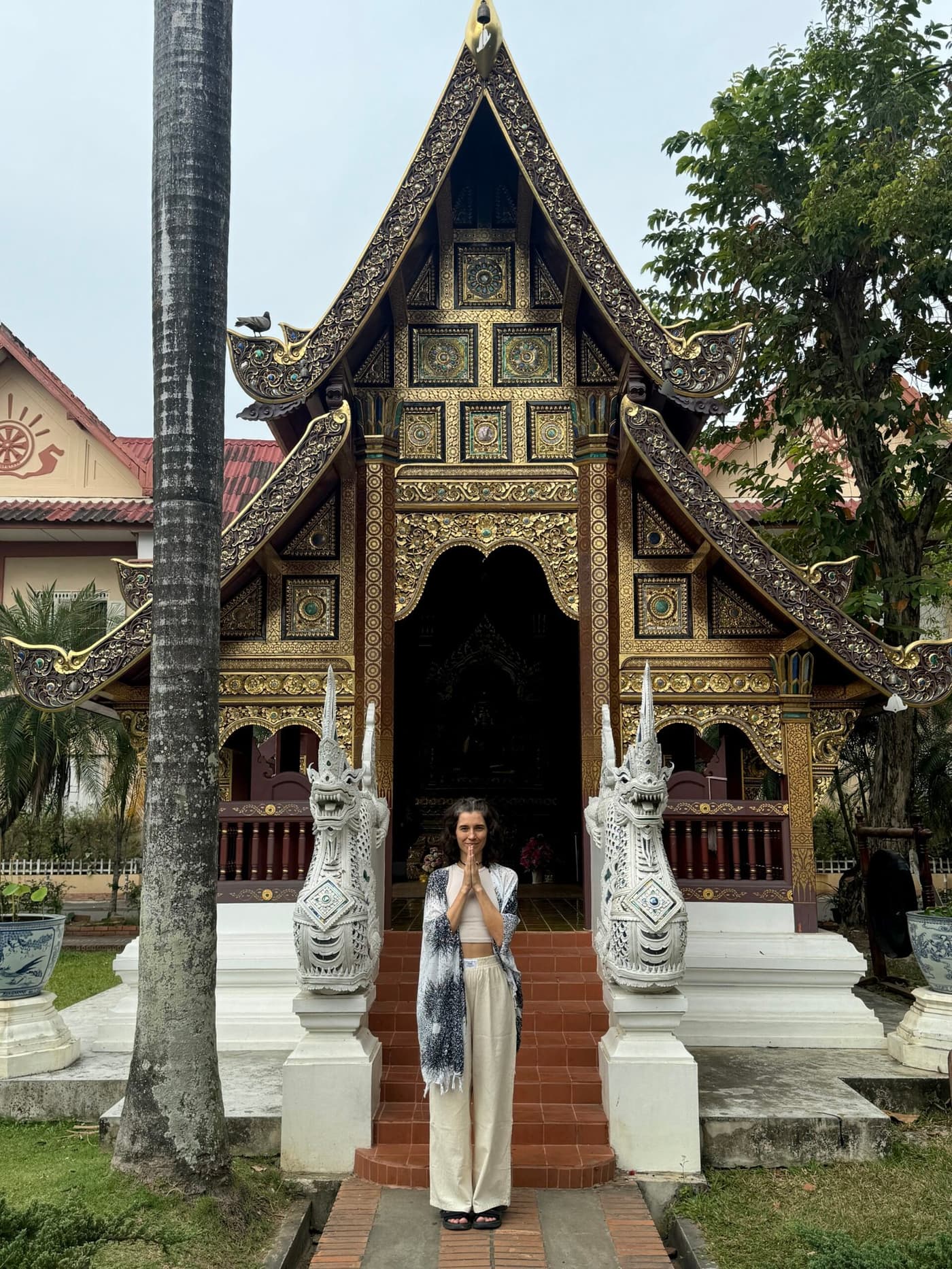
What to see in Chiang Mai itself
Most of the main sights are concentrated in the Old City and within 10–15 km of it. These are the places to visit first.
The Old City and its temples
The Old City is a square of about 2.5 sq km, surrounded by a moat and the remains of 14th-century fortress walls. It's the best place for a walk: narrow lanes, coffee shops in old houses and a temple on every corner. Most of the main sights are right here.
Wat Phra Singh is the city's main temple, built in 1345. It houses the revered Phra Singh Buddha statue in the Lanna style. The architecture of the viharn is a model of northern Thai style: carved wooden gables, gilding and mirror mosaics. Entry is 50 baht. Wat Phra Singh location.
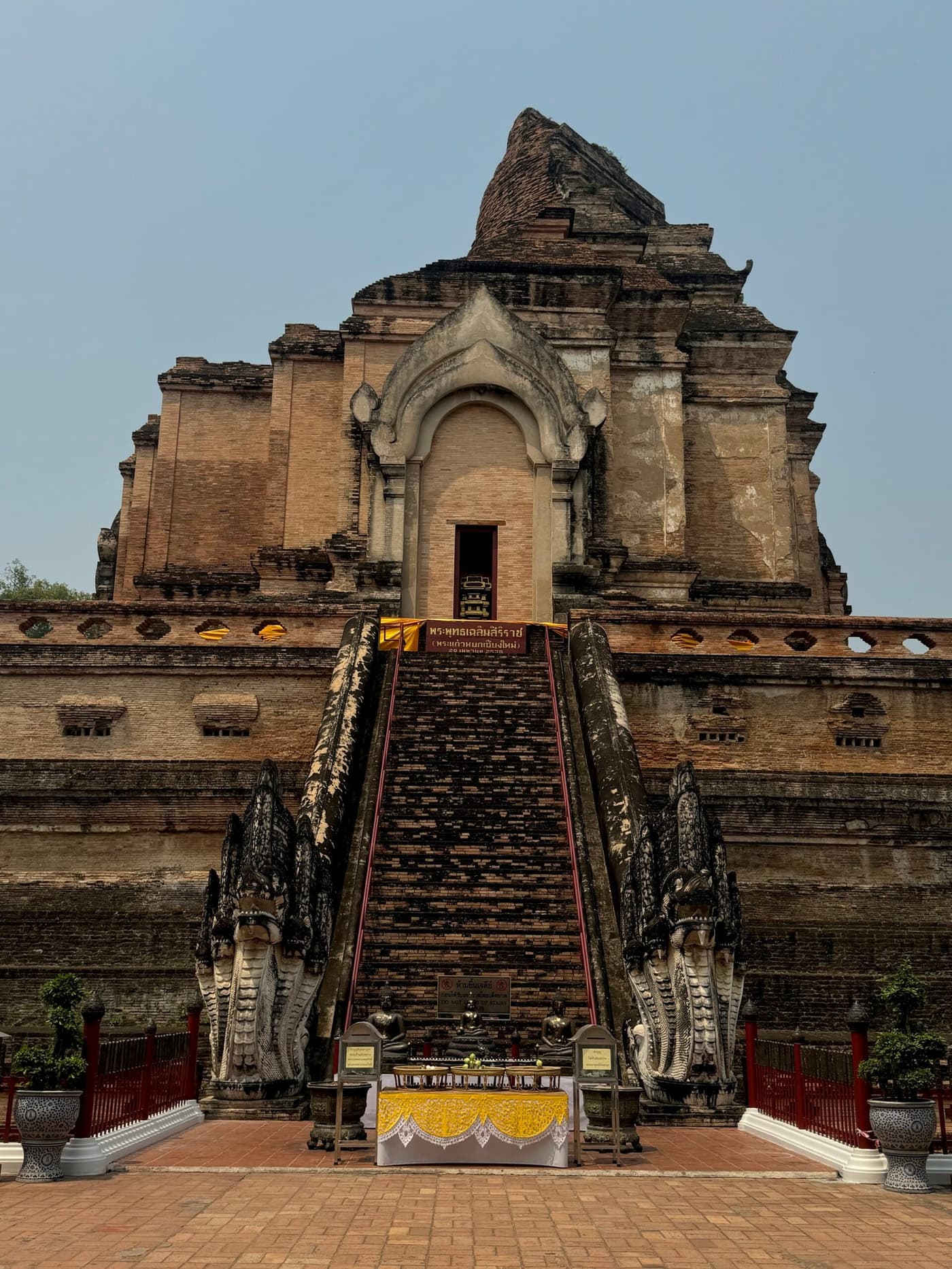
Wat Chedi Luang is a huge, partly ruined 15th-century chedi and the most impressive structure in the Old City. The Emerald Buddha originally sat at a height of 60 meters; it is now in Bangkok, and a copy stands here. There is a working monastery next door, and in the evenings the monks chat with tourists (monk chat). Entry is 50 baht. Wat Chedi Luang location.
Wat Chiang Man is the oldest temple in the city, built in 1296 by Chiang Mai's founder, King Mengrai. It holds two especially revered Buddha statues: the Crystal Buddha (Phra Sae Tang Khamani) and a marble Buddha with 2,500 years of history behind it. The atmosphere is calm, and there are fewer tourists than at the two temples above. Entry is free. Wat Chiang Man location.
Wat Suan Dok is the "temple in a flower garden," founded around 1370. It has a large white chedi surrounded by smaller white stupas holding the ashes of royal family members. Monk chat takes place on Mondays, Tuesdays and Thursdays at 5:30 pm. Entry is free. Wat Suan Dok location.
Wat Sri Suphan is known as the "Silver Temple" because its facade and interior are decorated with silver plates. It is one of the most unusual temples in Chiang Mai. It sits just outside the Old City square, but not far. Entry is paid, 50 THB per person. Wat Sri Suphan location.
Just by wandering around the Old City you'll stumble on dozens more temples, many without tourist crowds and with their gates open.
Doi Suthep: the temple above the city
The golden stupa on the mountain right above the city is Chiang Mai's main calling card. You can see it from anywhere. The temple itself, Wat Phra That Doi Suthep, stands at 1,070 m, and the viewing platform gives you a panorama of all of Chiang Mai and the valley.
To get up, take the 309 steps decorated with nagas (guardian serpents) or the funicular (20 baht round trip). Temple entry is 50 baht. Getting there: a scooter or car along the winding road, a songthaew from the foot of the mountain (~40–60 baht), or Grab.
It's better to go in the morning: by 10–11 am there are a lot of tourist buses. On a clear day, early morning has the best views.
Nimman: modern Chiang Mai
The Nimmanhaemin area isn't a sight in the classic sense, but this is where people go for the best coffee, atmosphere and modern design. The concentration of stylish coffee shops per square meter is one of the highest in Thailand. Roast8ry Lab (latte art), Yelloo and Nine One Coffee are three coffee shops I keep coming back to.
Central Nimmanhaemin Road has galleries, boutiques from local designers and restaurants. Inside Maya Mall there is a handy coworking space, CAMP (free with a coffee purchase, open 24/7). More about the areas of Chiang Mai.
Museums
Chiang Mai Arts and Cultural Centre is in a historic building from 1924 in the center of the Old City. The permanent exhibition covers the history of the Lanna kingdom, from the founding of the city to the present day. It has good interactive areas. Entry is 90 baht.
MAIIAM Contemporary Art Museum is one of the best contemporary art museums in Southeast Asia. It has a permanent collection and temporary exhibitions of Thai and international artists. The building is an architectural landmark in itself. It's in the San Kamphaeng district (122 Moo 7), about a 20–30 minute drive from the center. Entry is 200 baht.
Chiang Mai National Museum is a classic museum with a collection of Lanna cultural artifacts. It's next to Wat Chet Yot. Entry is 100 baht.
Night markets
Sunday Walking Street (Ratchadamnoen Road) is the main market for souvenirs and street food, open on Sundays from 5:00 pm. You'll find silver jewelry, silk, embroidered goods and wooden crafts. If you're buying souvenirs, it's cheaper here than at the Night Bazaar and the selection is richer. All about prices in Chiang Mai.
Saturday Market (Wualai Road) runs on Saturdays and is a bit less crowded. Same street, different day.
Night Bazaar on Chang Khlan is open every evening. It's more touristy, with live music, bars and street food.
Warorot Market (Kaad Luang) is a covered market, open in the morning. Fresh fruit, flowers, local spices and clothes at Thai prices. It's the least "touristy" of the markets listed. A detailed breakdown of where to eat in Chiang Mai is in another article.
Things to do in Chiang Mai
Temples and markets are great, but Chiang Mai offers much more. Here you can spend time with elephants, learn to cook Thai food, train in Muay Thai or get a massage every day for pennies. These are the main activities, with prices.
Elephant sanctuaries
This is one of the main reasons people come to Chiang Mai. It's important to choose an ethical place: no riding, no shows and no forced tricks.
Elephant Nature Park is the best-known ethical sanctuary. You can feed and bathe the elephants and watch them going about their natural rhythm. A full day costs about 2,500 baht, a half day 1,500 baht. Book in advance on the official website.
Elephant Jungle Sanctuary is an alternative with a similar concept and several locations. A half-day program costs about 1,500–2,000 baht.
Cooking classes
Thai Farm Cooking School is one of the best. It starts with a trip to the market and an organic farm, and then you cook 4–5 dishes. Half a day, about 1,000–1,200 baht per person.
Zabb-E-Lee and Asia Scenic Thai Cooking also have good reviews. Most schools include a trip to Warorot Market.
Thai boxing (Muay Thai)
Kalare Thai Boxing and Thaphae Boxing Stadium hold evening fights several times a week. Tickets start at 400–500 baht. If you want to train, the gyms Lanna Muay Thai and Santai offer classes from 400–600 baht per session.
Thai massage
An hour of classic Thai massage costs 200–300 baht at standard places and 500–800 baht at good spas. Old Medicine Hospital is the oldest school in the city and offers both training courses and sessions. There are dozens of massage shops on the streets of the Old City.
What to see around Chiang Mai
One of Chiang Mai's big advantages is logistics. Within 100 km of the city there is so much that you can make a day trip in a different direction every day and never repeat yourself.
Doi Suthep Temple and the Hmong village
On the way to Doi Suthep is the pleasant Hmong village of Doi Pui (20 km from the center): a market with handmade goods, a museum (10 baht), a flower garden (10 baht) and local coffee. In January–February the cherry blossoms bloom in the village of Khun Chang Khian, a bit farther on.
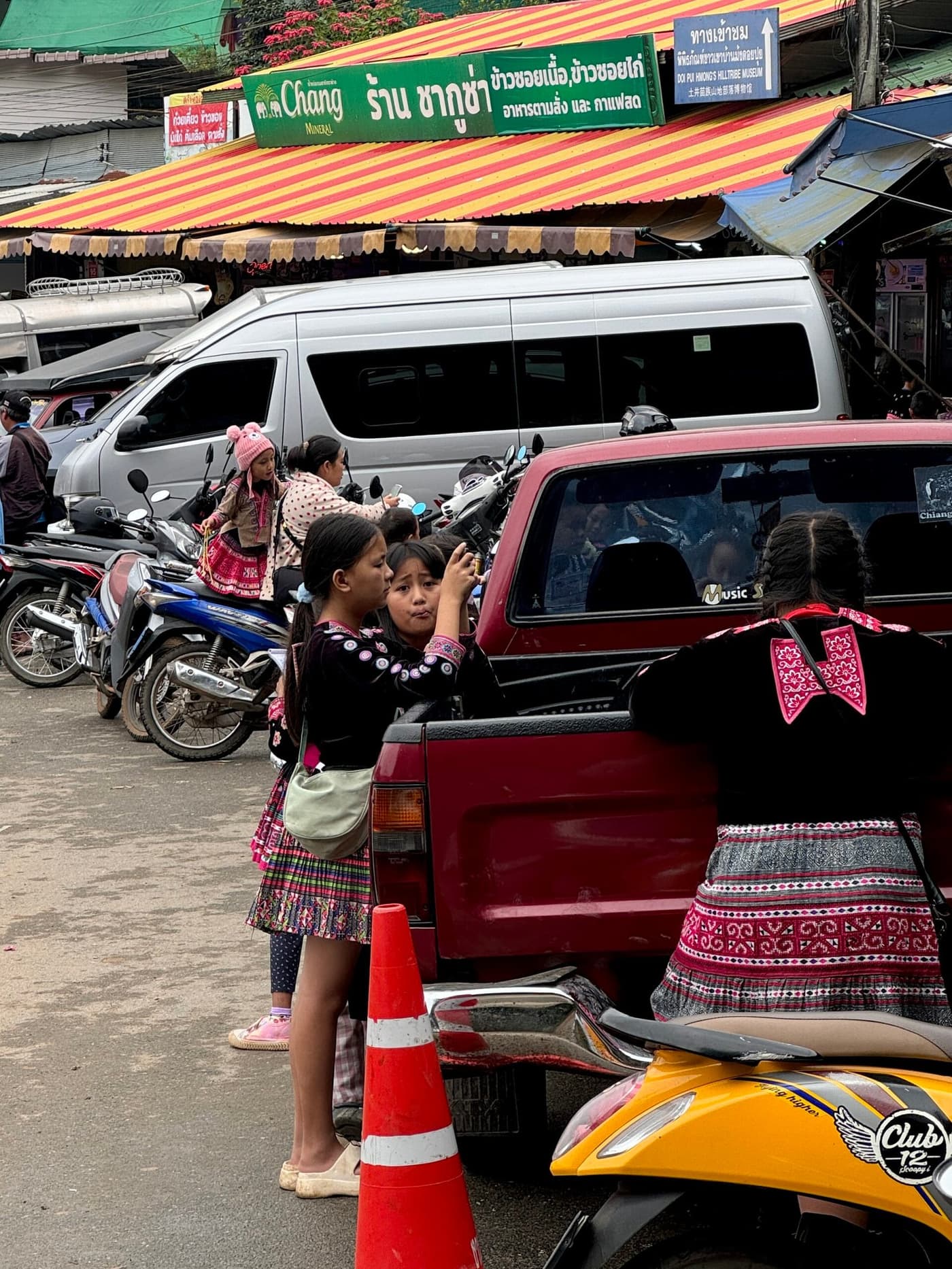
The Hmong are an ethnic group with ancient roots, originating in China but later migrating to Vietnam, Laos and Thailand. Today their descendants live in the mountain regions of these countries.
The village has authentic wooden houses with carved roofs and locals in traditional dress. You can, and should, try Hmong national dishes, stroll through the tea and coffee plantations and enjoy the scenic mountain views.
I really loved the Hmong village. We went there in winter, when the weather was cold and foggy, which gave the place a special atmosphere. This is a spot you definitely shouldn't miss. Detailed guide to the Hmong village.
Doi Inthanon National Park
The highest point in Thailand, at 2,565 m. There are two waterfalls (Wachirathan and Siriphum), a mossy cloud forest, the royal pagodas and trekking on the Kio Mae Pan trail. Entry is 300 baht, and the park is about 100 km from Chiang Mai. It's best to go for a full day. In winter it's +5–13°C at the summit, so a jacket is a must. Detailed guide to Doi Inthanon.
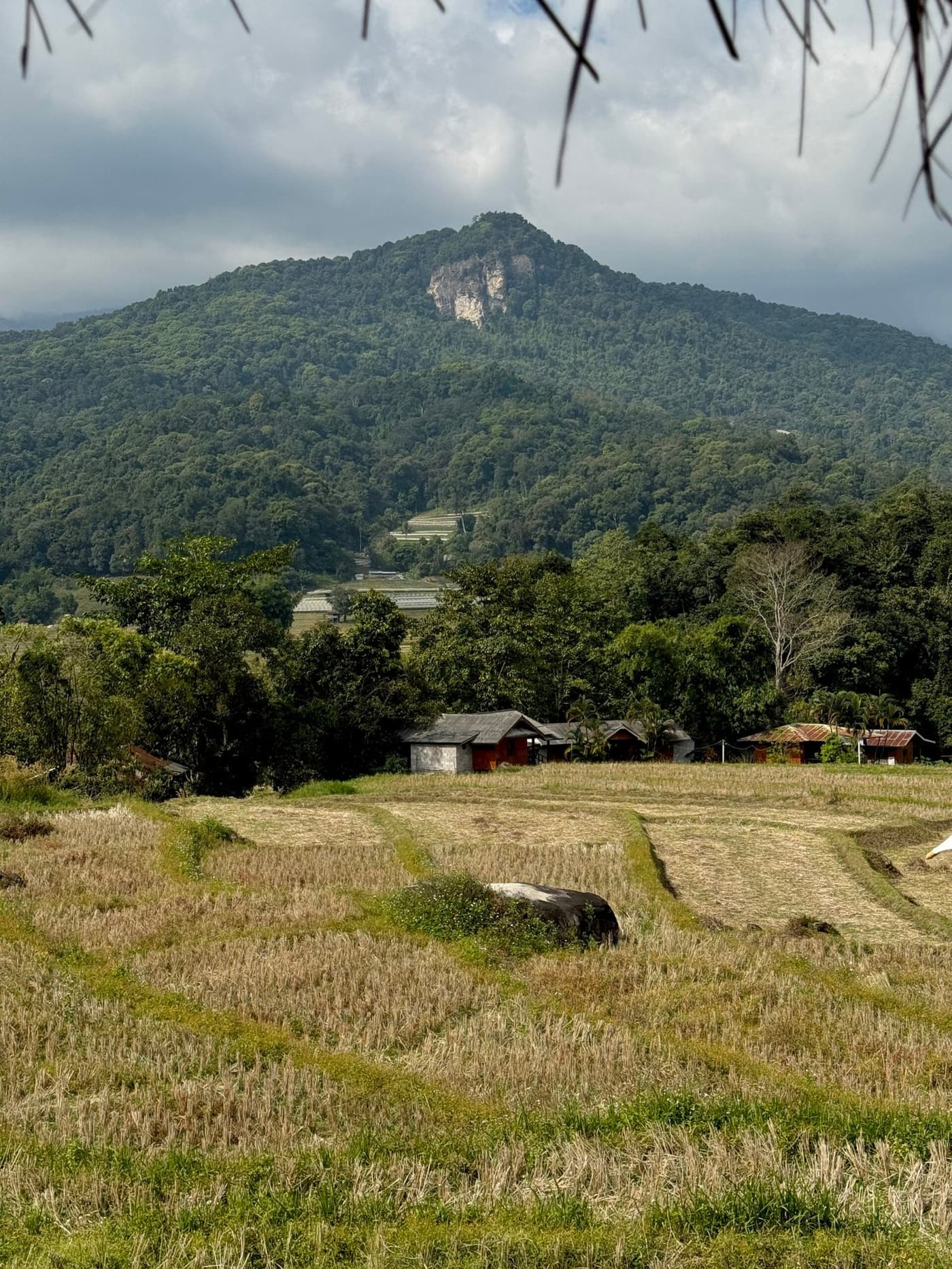
The royal pagodas are worth seeing: two majestic stupas built in honor of the King and Queen of Thailand. Wachirathan Waterfall is one of the most beautiful in the country. There are also tropical forests and viewpoints with stunning views.
The park is far from Chiang Mai, so it's better to rent a scooter or car, or take a tour. Ideally, go with an overnight stay so you can properly explore the national park and enjoy the nature.
Mae Kampong village
About 50 km from Chiang Mai is a cozy mountain village with houses above a river, local coffee and a waterfall. The tree-house cafe The Giant Chiangmai is one of the most atmospheric places in the area. The Flight of the Gibbon zipline costs roughly from 3,000 baht (according to tour operators; check the current price before you go).
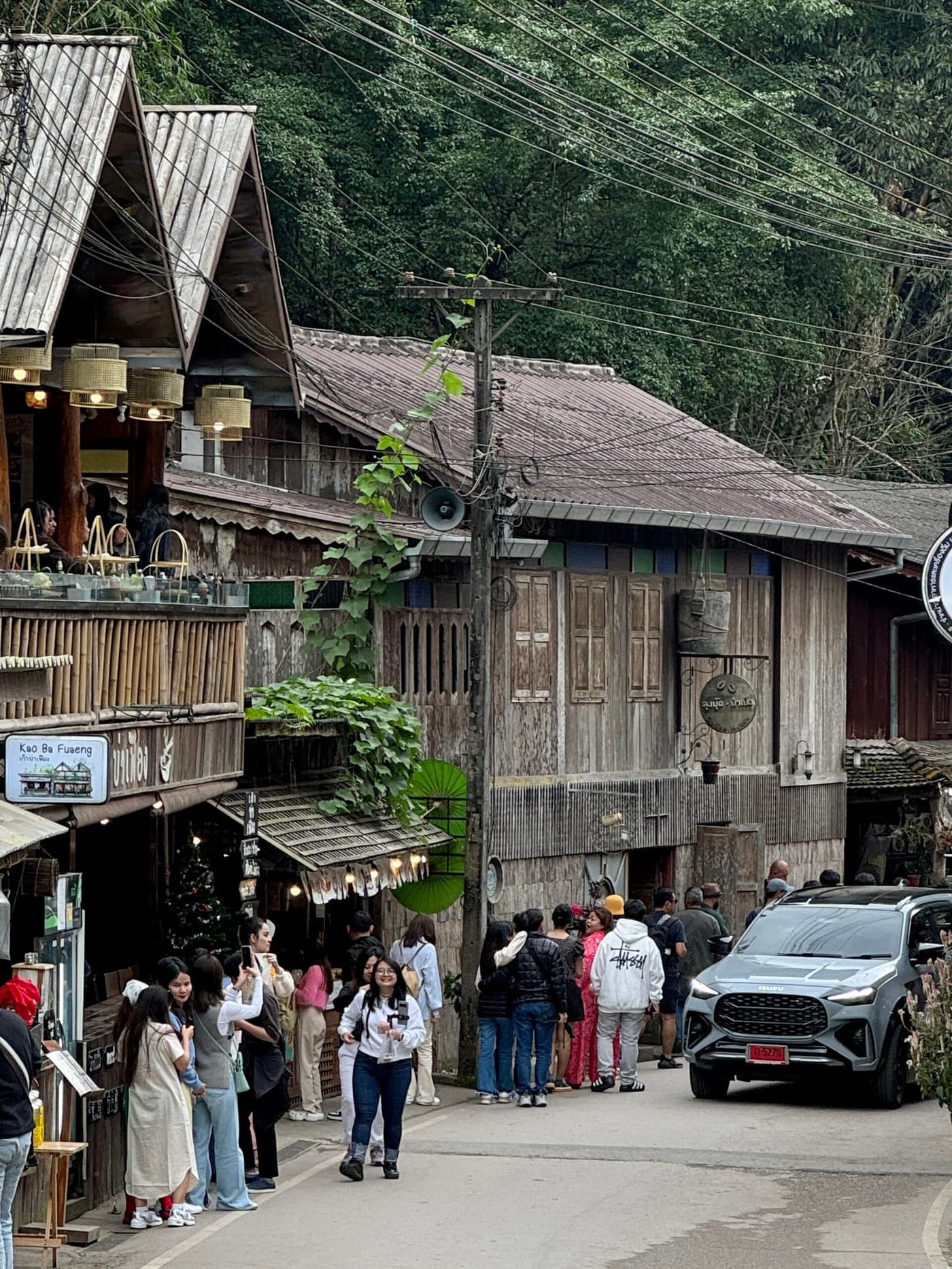
The village sits among mountains and tea plantations. It's cool and very beautiful, and you can follow trekking routes, stroll around and admire the traditional wooden houses. Have a cup of quality coffee grown right there, and try the cuisine of northern Thailand.
It's a great place for ecotourism and a break from the noisy city. We did a day trip from Chiang Mai to Mae Kampong village.
Bua Tong Sticky Waterfall
One of the most unusual waterfalls in Thailand. The limestone makes the rocks non-slippery, so you can walk up the waterfall right through the water. It's about 70 km from Chiang Mai, with entry of around 20 baht. A good half-day trip.
Pai
A mountain town 130 km and 762 turns from Chiang Mai. It has a canyon, hot springs (200 baht), the White Buddha, a World War II bridge and a hippie atmosphere. By minivan it takes 3–4 hours and costs 150 baht. Detailed guide to Pai.
Chiang Rai and the three temples
Chiang Rai is a city about 190 km from Chiang Mai, roughly 2.5 hours by car. It's one of the richest day-trip routes in the north of the country: three completely different art sites, each created by a separate artist with a separate concept.
The White Temple (Wat Rong Khun)
This is an art project by the artist Chalermchai Kositpipat, who has been building it since 1997 with his own money. It's snow-white and mirrored, with a bridge over the "hands from hell" and Batman on the walls inside. Entry to the ubosot is 200 baht for foreigners (since 1 January 2026), and it opens at 8:00 am. Detailed guide to the White Temple.
The Blue Temple (Wat Rong Suea Ten)
The temple was built by a student of Kositpipat and is done entirely in deep blue. Entry is free and it's open until 8:00 pm, the only one of the three you can visit in the evening. Detailed guide to the Blue Temple.
Baan Dam (the Black House)
This is an art museum, not a temple. It has 40 dark buildings with exhibits made of animal bones and skins, created by the artist Thawan Duchanee over forty years. Entry is 80 baht, and it's open until 5:00 pm. Detailed guide to Baan Dam.
The best order for the route: White (from 8:00 am) → Blue (around 10:00 am) → Baan Dam (until 5:00 pm). You need a full day for all three temples. If you leave Chiang Mai at 6:00–7:00 am, you'll be back by evening. If you go, I recommend my full Chiang Rai guide with all the sights.
Lampang
A stopover 100 km from Chiang Mai on the way south. It has horse-drawn carriages like in the 19th century, Wat Phra That Lampang Luang (13th century, one of the best examples of Lanna architecture), a beautiful 1916 train station and the factories of the famous rooster ceramics. There are almost no tourists, so the atmosphere is completely different. Detailed guide to Lampang.
How many days do you need in Chiang Mai
For the city itself, with the key temples, Nimman and the markets, plan 2–3 days. With activities (elephants, a cooking class, massage), add another day or two. With day trips to places like Doi Inthanon, Mae Kampong, Pai and Chiang Rai, allow at least a week, or 14 days if you don't want to rush. I explained when to go to Chiang Mai and what the seasons are like in detail in another article.
I filmed a great video on YouTube about how we spent our time in Chiang Mai
Frequently asked questions about Chiang Mai sights
How many days do you need in Chiang Mai?
2–3 days minimum for the city. A week if you want day trips to the mountains and different activities.
Which temples are a must?
Wat Phra Singh, Wat Chedi Luang and Wat Chiang Man. They're all in the Old City and can be covered on foot in 2–3 hours.
How do you get to Doi Suthep?
A scooter on your own, a songthaew from the foot of the mountain (~40–60 baht), or Grab.
Where are the best views of the city?
From Doi Suthep (1,070 m) is the classic. Some coffee shops in Nimman also have views of the mountain skyline.
Which natural places are worth visiting?
Doi Inthanon (the highest mountain), Mae Kampong (a mountain village) and Bua Tong (the sticky waterfall). For active travelers, Flight of the Gibbon and trekking in Doi Suthep-Pui National Park.
Is it worth going to an elephant sanctuary?
Yes, if you choose an ethical one. Elephant Nature Park is the best option. Book a few days ahead.
What should you bring back from Chiang Mai?
Coffee from local producers, silver jewelry (Chiang Mai is a center of silver crafts), silk, lacquerware, and tea and spices from Warorot Market.
How do you get to Chiang Mai?
A flight from Bangkok (~1 hour), an overnight train (~13 hours) or a bus (~10–11 hours).
Do you need a visa?
When I checked in October 2026, citizens of eligible countries could enter Thailand without a visa, and since September 15, 2026 the tourist entry stamp has been issued for 30 days. Rules depend on your passport, so confirm the current requirements for your own passport with Thai immigration authorities before you travel.