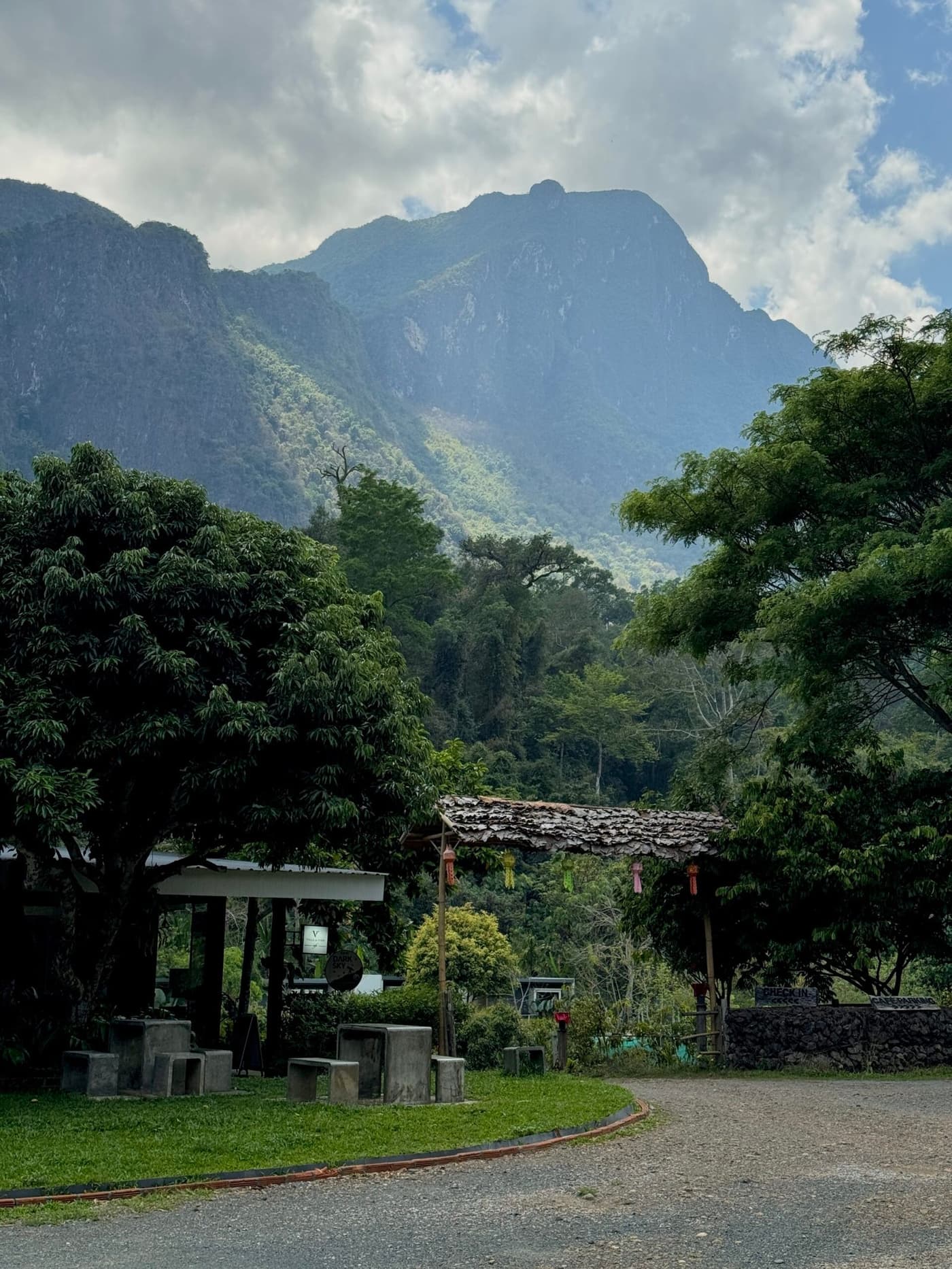
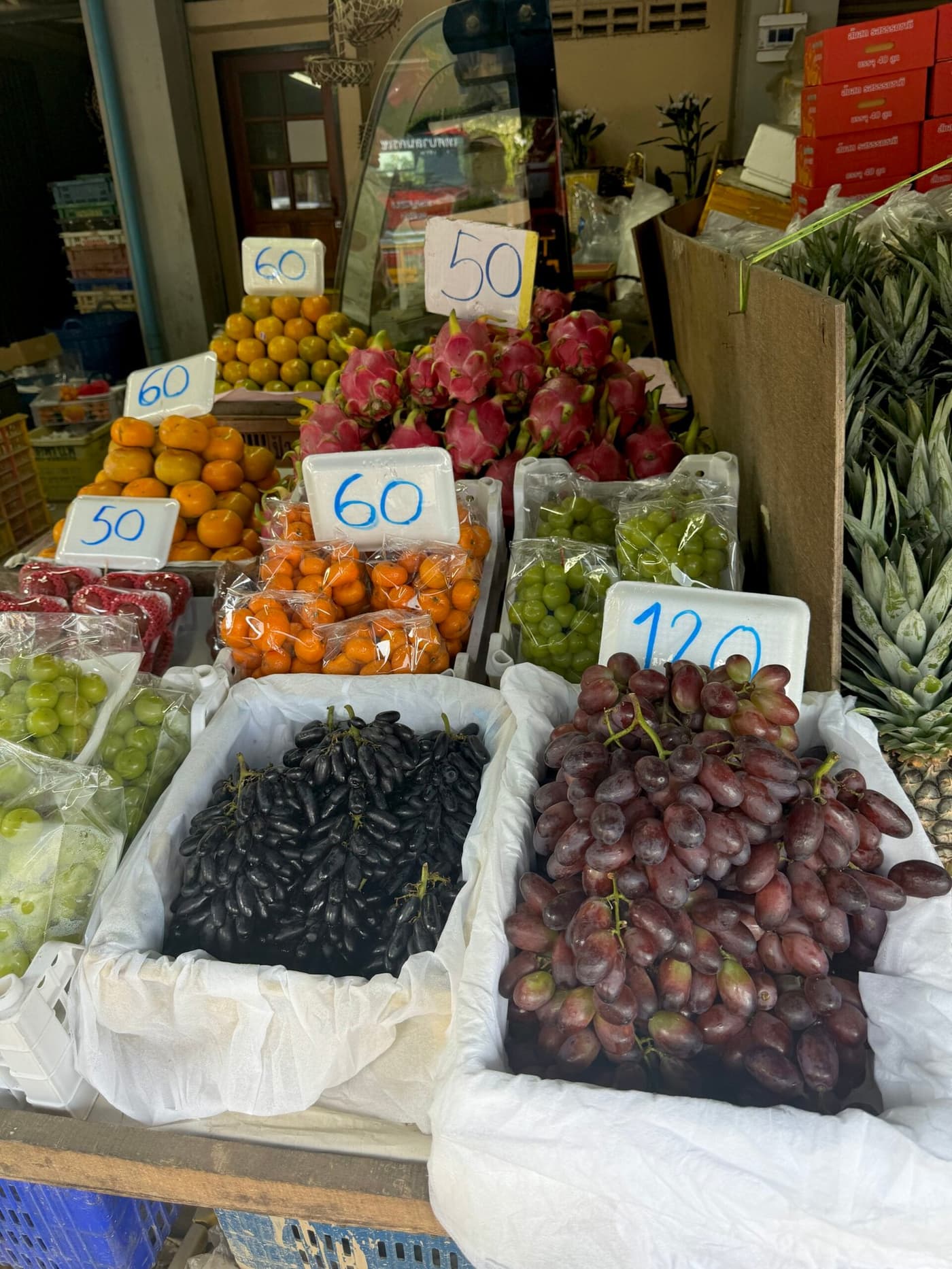
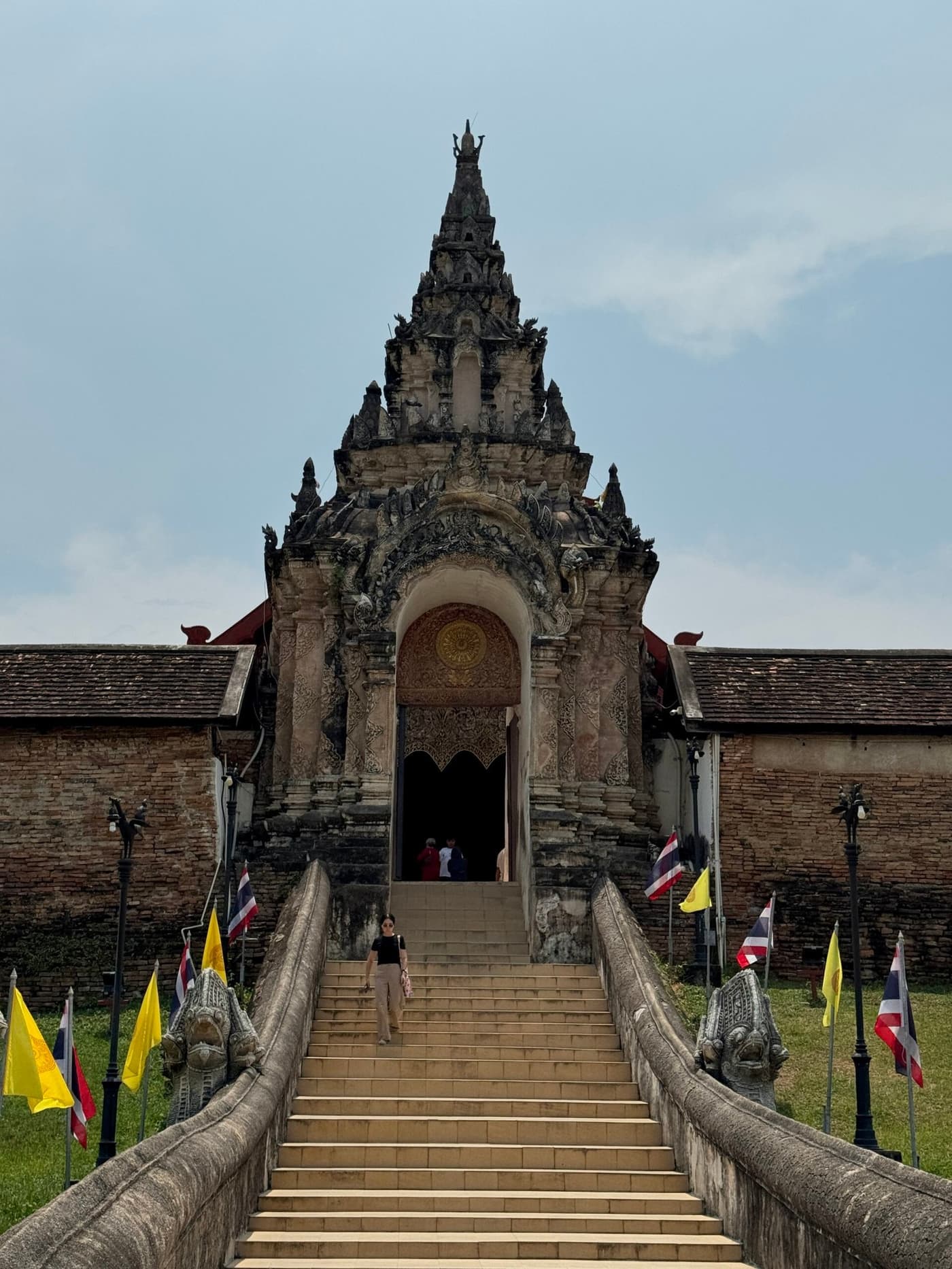
Doi Pui is one of those places near Chiang Mai that you visit not for "authentic" Instagram shots but to really understand who the Hmong are and how they live. The village is small and touristy, yet it doesn't feel plastic: the locals are calm, the stalls aren't pushy, and they grow their own coffee, which is good.
We rode there by scooter in winter, drove into a cloud on the switchbacks, got cold, and were still happy we went. Below is everything you need to know before the trip.
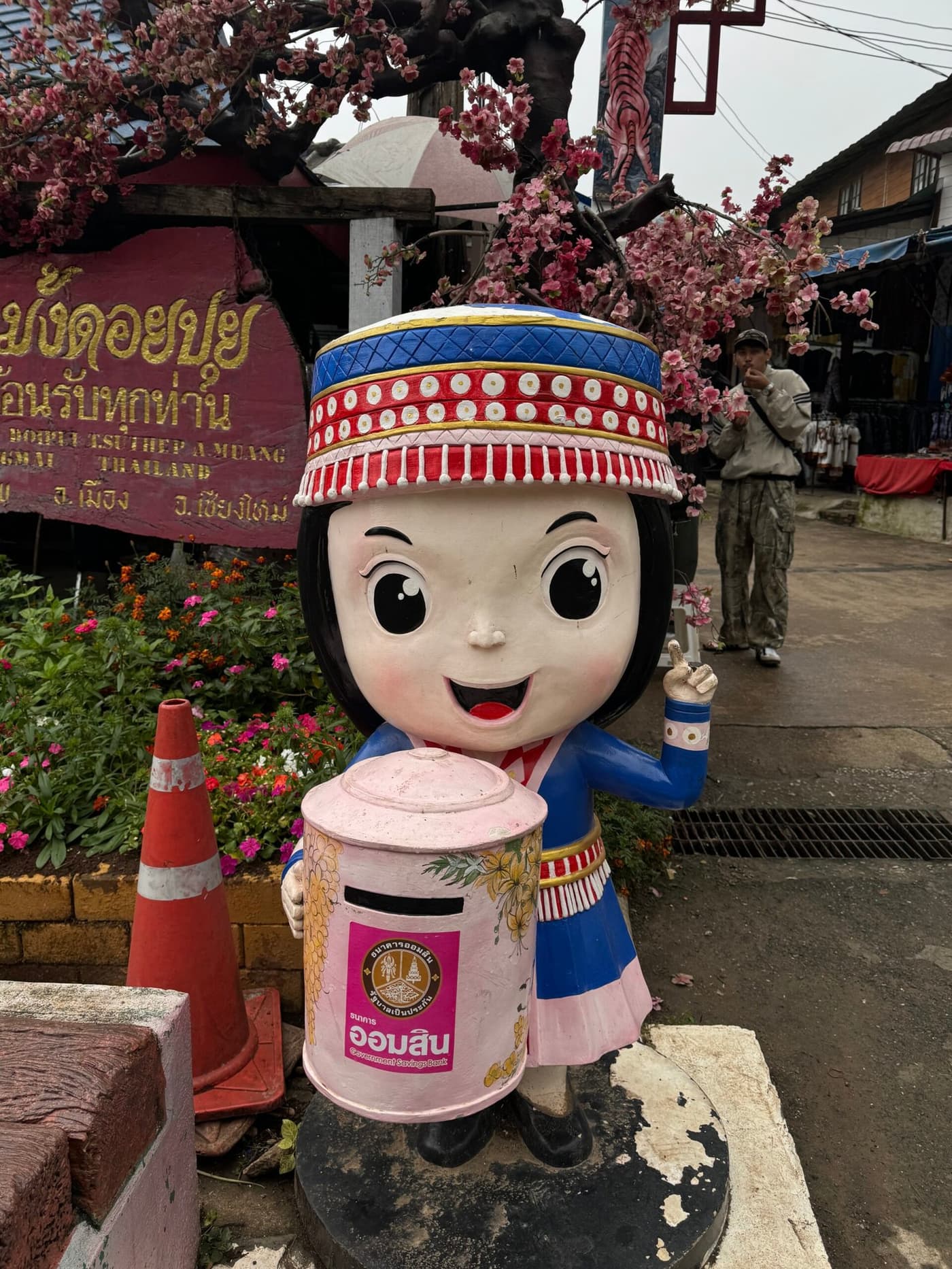
Who the Hmong Are
The Hmong are an ethnic group originally from China. A few centuries ago they migrated to the mountainous areas of Vietnam, Laos and Thailand.
The Hmong in Laos and Vietnam fought against the local communist governments. After the Vietnam War, thousands of Hmong fled to Thailand, and others sought political asylum in Western countries.
Some Hmong in Thailand still live without full citizenship. In 2024 the government announced it would grant citizenship to almost 500,000 long-term residents, most of them members of ethnic minorities, including the Hmong.
Where It Is and How to Get There
Hmong Doi Pui Village sits inside Doi Suthep-Pui National Park, about 20 km from the center of Chiang Mai. If you are only planning your trip to northern Thailand, I recommend our detailed Chiang Mai guide. The easiest way to get there is by scooter. The road winds uphill along scenic switchbacks and takes about 30–40 minutes.
On the way you will pass Wat Phra That Doi Suthep, one of the main symbols of Chiang Mai. After the temple it is roughly another 20 minutes uphill to the village.
Without a scooter: songthaews (local shared pickup taxis) run from Doi Suthep to the village. It is better to confirm the price on the spot; it is usually about 30–50 baht per person one way.
Taxi / Grab: a workable option, but more expensive. It is handy if you are traveling in a group or don't want to risk the switchbacks yourself.
Important in winter: from December to February it is really cold in the mountains. We went in January and literally drove through a cloud. A jacket is a must, especially on a scooter. At 1,000–1,200 m the temperature is 10–13 degrees lower than in Chiang Mai: if it is +25°C in the city, expect about +12–15°C at the village.
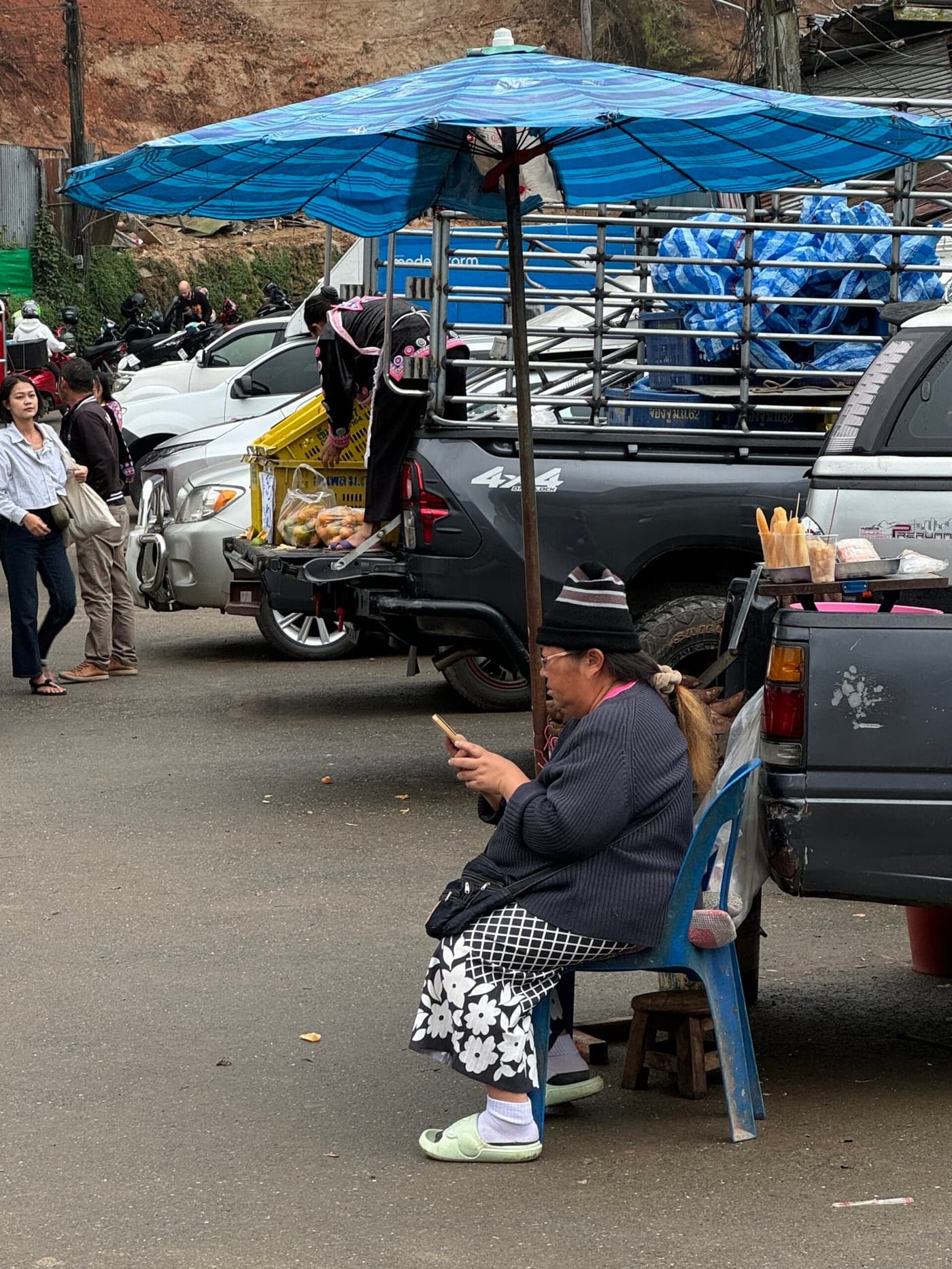
What to See in the Village
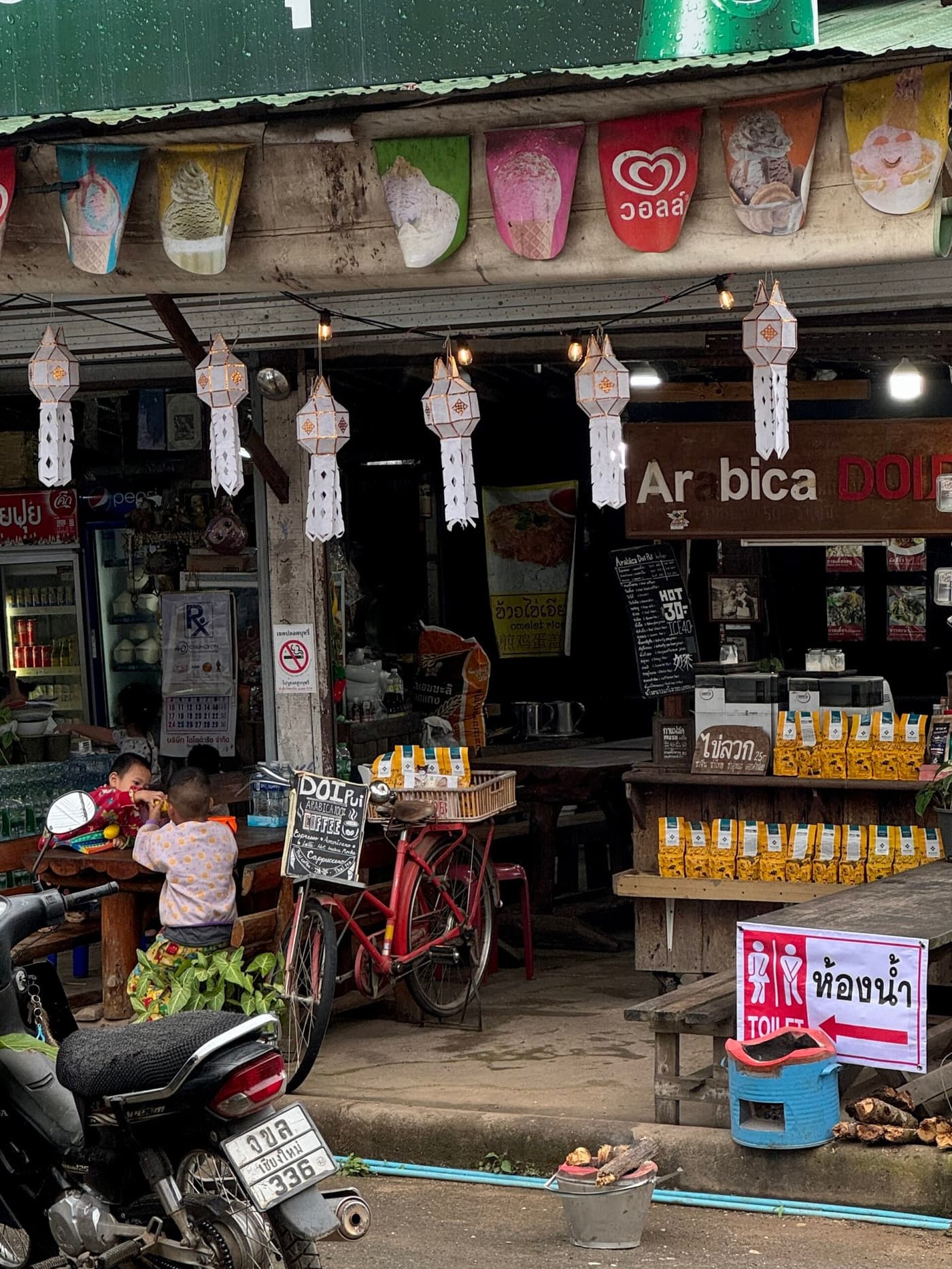
The village is small, and you can see everything in 1–2 hours without rushing. The main spots are the ethnographic museum, the flower garden and the market with local coffee. The village starts with a free parking lot. Beyond it you will find rows of stalls with handicrafts, a couple of cafés with mountain views, the ethnographic museum and a small flower garden.
Ethnographic Museum (Ban Hmong Doi Pui Museum)
A small but clear exhibition: a traditional Hmong house, clothing, kitchen utensils and household items. There are English signs but no guide, so you walk around on your own. Entry is 10 baht. It takes about 20–30 minutes but gives a good sense of the Hmong way of life.
The traditional embroidery deserves special attention: for the Hmong it is not just ornament but a way of passing on history and identity. Every pattern has a meaning. Nearby stalls sell modern items with the same motifs, and quality souvenir embroidery here is cheaper than in Nimman.
Flower Garden
Small but very photogenic. Sunflowers, chrysanthemums, dahlias, swings and viewpoints. Entry is 10 baht. It is best from November to January, when the most flowers are in bloom and the air has that cool mountain freshness.
Market, Coffee and Stalls
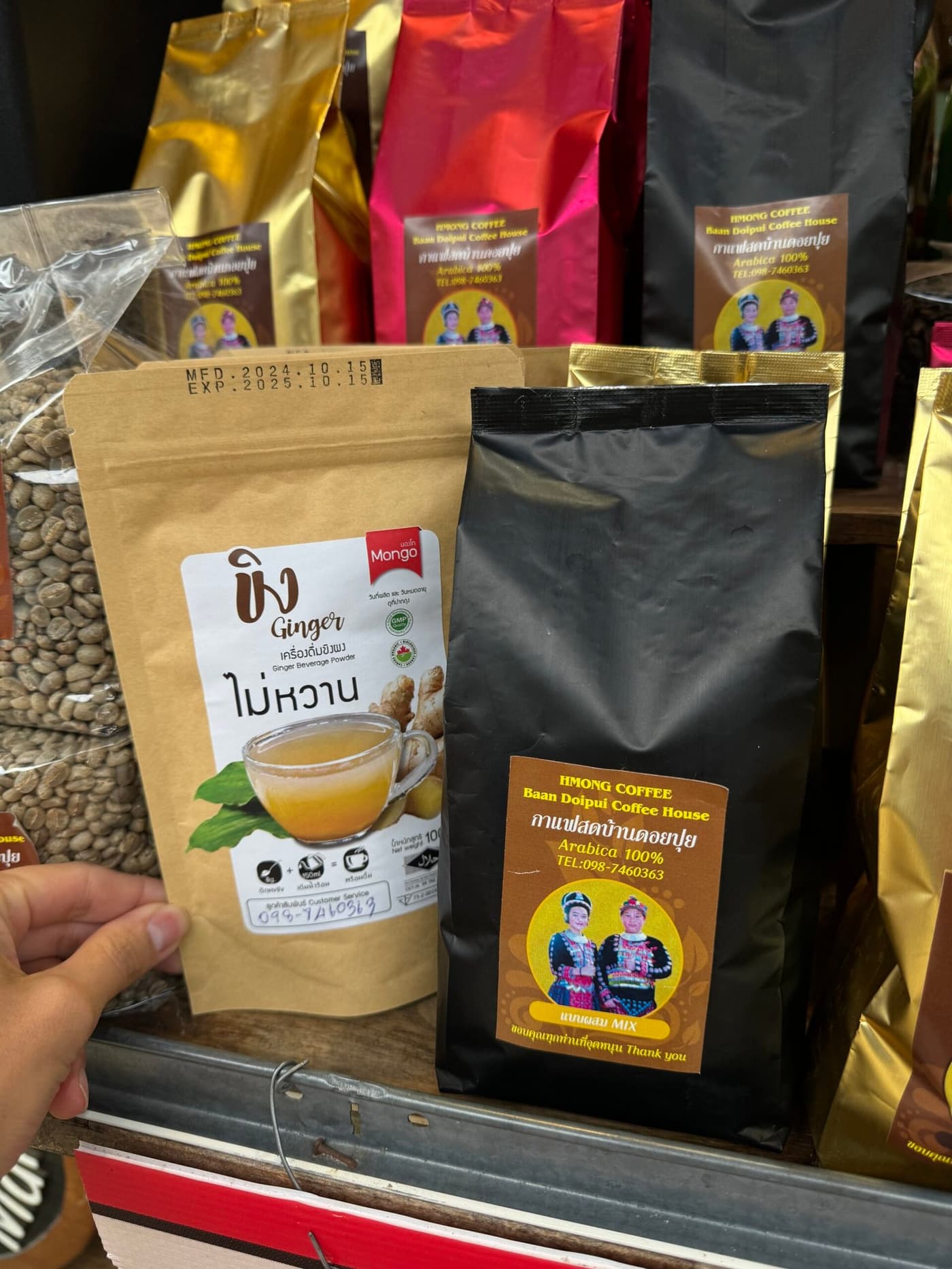
This is the main reason to linger. Locals sell clothing, jewelry, herbs, spices and coffee of their own production. The coffee is grown in the surrounding mountains: Arabica at 1,000–1,200 meters. We bought ground coffee to take home: 100–150 baht for a small 100 g pack. The taste is noticeably different from city brands: herbal, without the sourness. We also picked up ginger powder for tea.
The vendors aren't pushy, and you can bargain, but without pressure. Taking photos is allowed without any fuss.
Bonus: Khun Chang Khian Village
If you drive a little farther along the same road, you will reach another small settlement, Khun Chang Khian, known for its strawberries and cherry blossoms. When we visited (January), the cherry blossoms hadn't bloomed yet; we were told the peak is usually in late January to February. There were strawberries, tasty and cheap: 40–60 baht per cup.
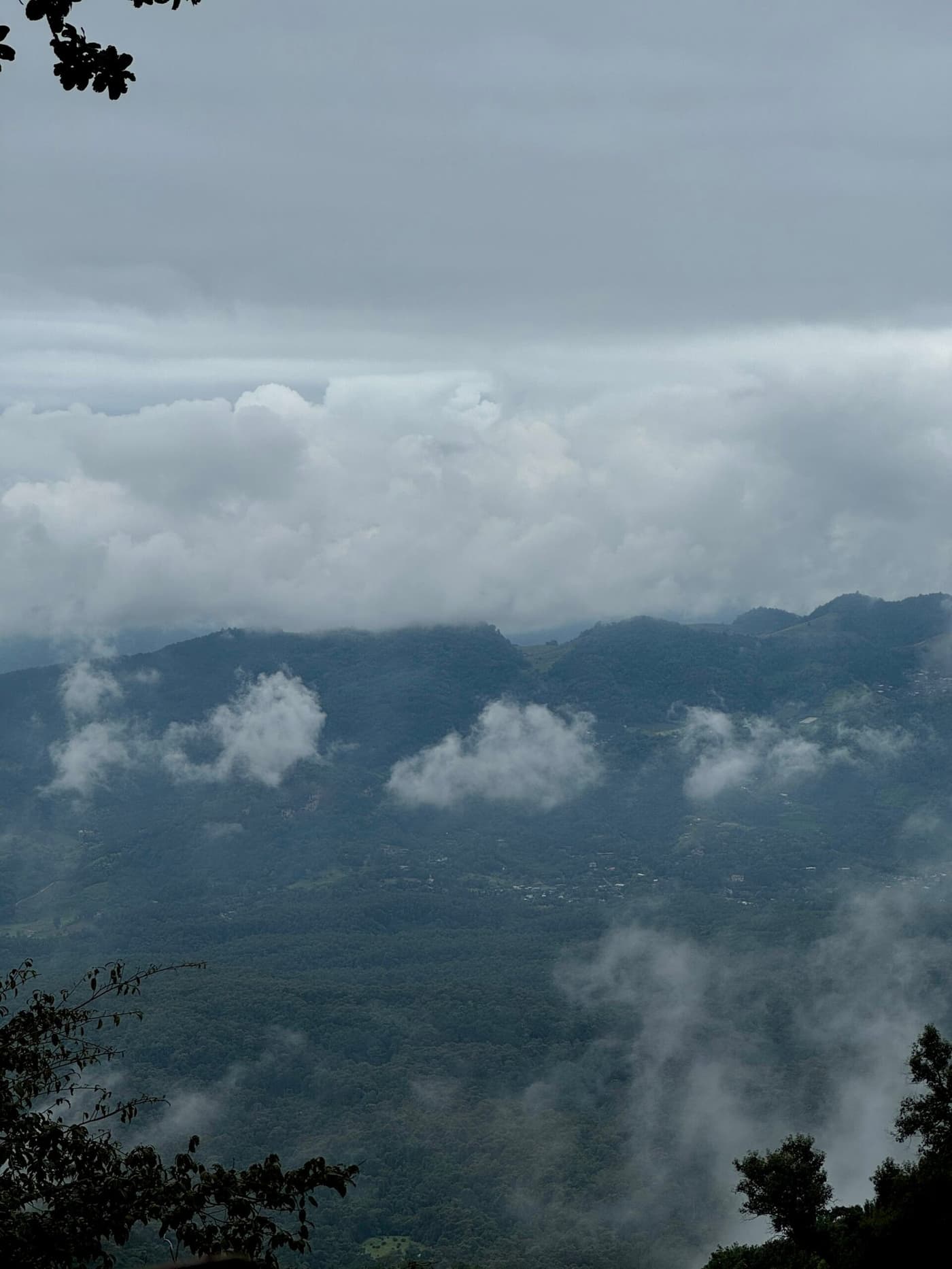
Route: Doi Suthep + the Hmong Village in One Day
This is the most logical combination. Leave Chiang Mai in the morning by scooter, stop at Doi Suthep (2–3 hours), then climb the switchbacks higher to the Hmong village (1–2 hours) and, if you have the energy, continue to Khun Chang Khian. You are back down by lunchtime. The total distance is about 60–70 km.
What to bring: a jacket (a must in winter; in other seasons a light cardigan won't hurt), cash (not everywhere takes cards) and water. At the top, tea or coffee in the mountain cafés costs about 50–80 baht.
Trekking and Trails in the Park
Doi Suthep-Pui National Park is not only the road to the temple and the village. The park has hiking trails of various lengths through jungle and bamboo groves. Easy trails start from the village, and you can head into the mountain forest for 1–2 hours and come back without a guide. More serious treks (3–6 hours) are better done with a local guide, so ask in the village.
The park is home to muntjac (small deer), wild boar, macaques and many birds, and birdwatchers come here specifically.
Traditional Hmong Clothing and Embroidery
The traditional Hmong costume is one of the most recognizable in Southeast Asia. Women wear dark blue pleated skirts of hemp or cotton fabric, decorated with embroidery and silver jewelry. Men wear more modest dark shirts with distinctive cuffs. For festivals people put on especially elaborate costumes with silver coins, headdresses and colorful pom-poms.
For the Hmong, embroidery is not decoration but a system of meanings. Traditionally, patterns were used to pass on family stories, to mark membership in a particular group and to tell of important events. Each region has its own patterns: Hmong from Laos, Vietnam and Thailand differ in the details of the ornament. In Doi Pui village they sell modern embroidery with traditional motifs, and it is one of the few souvenirs that carries real cultural context rather than just a generic "Thai pattern."
Doi Suthep-Pui National Park: What Else to Know
Doi Pui village lies inside Doi Suthep-Pui National Park, one of the largest in Chiang Mai Province. The park covers about 261 sq km, with elevations from 400 m to 1,685 m (the summit of Doi Pui).
More than 360 bird species and about 2,000 plant species have been recorded in the park. For birdwatchers it is one of the best places in Thailand: some species here are found nowhere else in the country, and at this altitude the climate approaches subtropical montane. For an ordinary tourist it is simply beautiful jungle where you can hear birds in the morning.
There is no separate park fee when you enter via the village. Since October 2025, foreigners pay a park fee (100 baht per adult, 50 baht per child) only at certain points: the Pha Lat trail, Huay Kaew Waterfall and Doi Pui. At Wat Phra That Doi Suthep by the main road there is no park fee (only the entrance to the temple itself). The road to the Hmong village continues higher, already within the park.
The Hmong and Politics: Context the Guidebooks Skip
The Hmong in Thailand are a complicated topic. After the Vietnam War, when thousands of them fled from Laos and became refugees, relations with the Thai state were tense. Some Hmong cooperated with the CIA, and some fought on different sides. Their political status in Thailand remained uncertain for a long time.
In 2024 the Thai government announced a program to grant citizenship to almost 500,000 long-term residents without documents, most of them hill peoples, including the Hmong. This is an important step after decades of legal uncertainty.
This history doesn't get in the way of a pleasant trip to the village, but it helps you understand that the people you see live in a specific historical context. And that a visit here is a little more than just "looking at a village."
Is It Worth Visiting?
Yes, if you want to spend half a day outside the city and see something other than temples. The place is calm, uncrowded, with a lively mountain atmosphere. It is an ideal format for a short trip from Chiang Mai, especially paired with Doi Suthep.
What to Buy and How Much It Costs
The village is a good place to buy embroidered goods directly from the makers. In Nimman the same items cost 1.5–2 times more.
Coffee from the park's mountains: 100–150 baht for 100 g of ground coffee, with a distinctive herbal taste and no pronounced sourness. The packs are small and easy to carry home. Ginger powder and dried spices: 30–60 baht per bag. Traditional bags with Hmong embroidery: from 200 baht. Scarves and tops with traditional patterns: 300–600 baht.
The vendors are calm and not pushy. You can bargain politely, but not aggressively; prices are low anyway.
Sunrise and Morning in the Village: Should You Stay?
Doi Pui village is at an elevation of about 1,200 m, and on winter mornings, from November to February, fog hangs over it. It is not a nuisance but part of the experience: the village is literally in a cloud, quiet and cool, with visibility of 10–15 meters.
Officially you cannot spend the night in the village itself. But Doi Suthep-Pui National Park has a campground and a few guesthouses where you can stay overnight and go up to the village at sunrise. That is a different experience: not a tourist stroll but a mountain sunrise in the clouds.
If your goal is simply to see the village, you don't need this. But if you want something completely different, it is worth looking into overnight options in the park in advance.
The trip and the visit took us about 3 hours, which is perfect for a short outing.
I wrote about more things to see in Chiang Mai in another article.
We filmed how we explored Chiang Mai's main sights in a video on YouTube. A like and a subscribe from you would be great 🙂
Frequently Asked Questions
How much does it cost to enter the village?
The main entrance is free. The museum and the flower garden are 10 baht each. That makes a minimum of 20 baht for everything.
Can I get there without a scooter?
Yes. Songthaews run from Doi Suthep temple (30–50 baht), and you can take a Grab or a taxi from Chiang Mai.
How much time do I need for the village?
1–2 hours: a quick walk around, or a slower visit with the museum, the coffee and the market.
When is the best time to go?
In the cool season (November to February): blooming gardens, comfortable temperatures, and cherry blossoms in Khun Chang Khian in January and February. In the smoky season (March to April) the mountains are better than the city, but visibility is still worse.
Are there cafés?
Yes, a few stalls with food, mountain tea and coffee. Drinks cost about 50–80 baht.
Is it cold in winter?
Yes. At the village's elevation (+1,200 m) it is about +12–15°C in January and February. A jacket is a must, especially if you are riding a scooter.
What should I buy in the village?
Locally roasted ground coffee (100–150 baht per 100 g), embroidered items, spices and ginger powder. Cheaper and more authentic than souvenirs in Chiang Mai.
Can I go with children?
Yes. The road within the village is flat and nothing is dangerous. The switchbacks on a scooter with children require experience; with kids it is better to go by car or taxi.