Phuket is Thailand's most popular island and one of the main beach destinations in Southeast Asia. People come for the warm Andaman Sea, long sandy beaches, well-developed infrastructure, and the fact that a trip here can be put together in almost any format, from a quiet family vacation to an active one with surfing and nightlife.
The island works equally well for a first trip to Thailand and for a long winter stay. At the same time, Phuket is noticeably different from mainland resorts like Pattaya and from the neighboring islands in its scale, atmosphere and range of things to do.
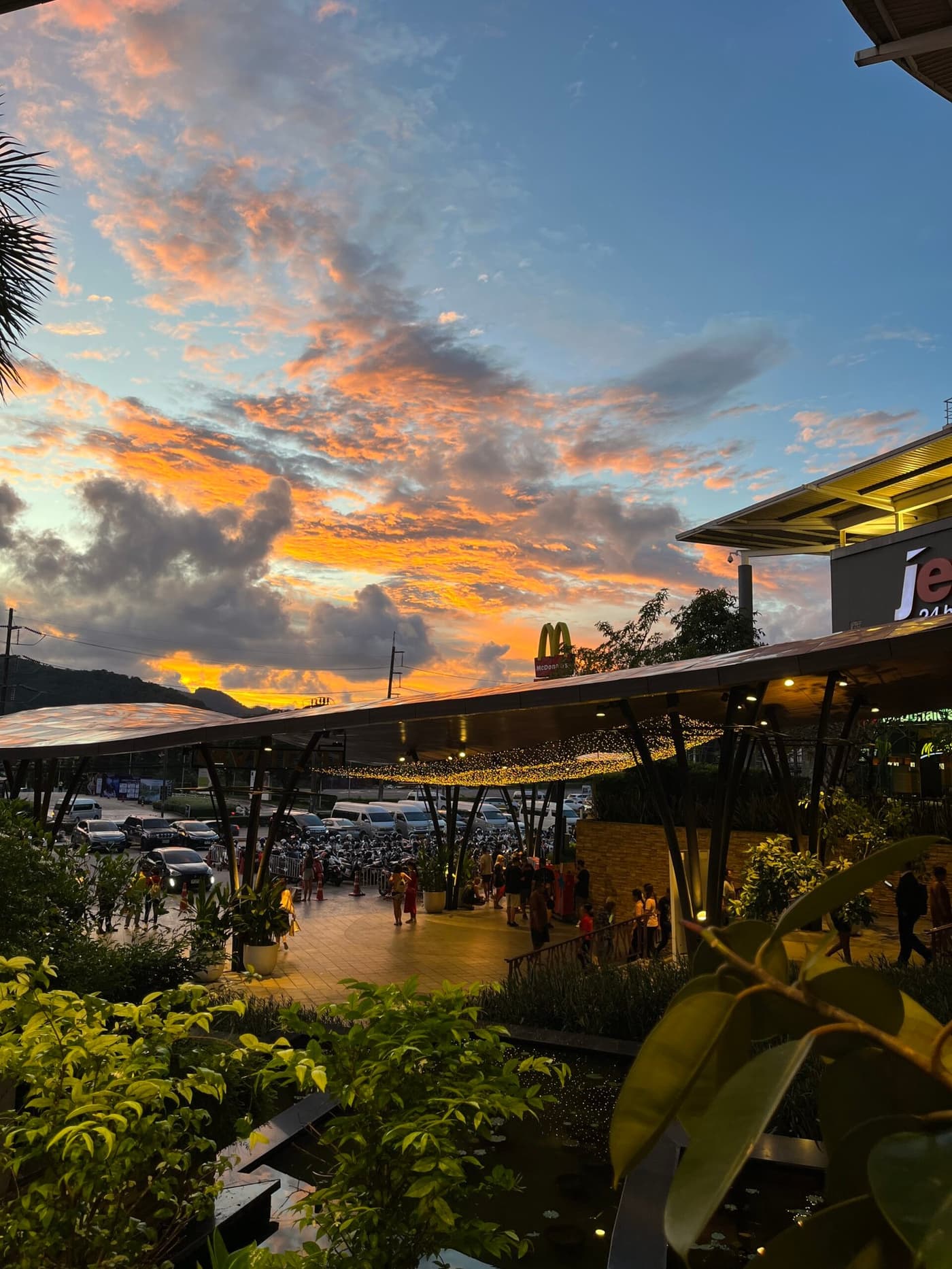
I visit Thailand often and spend long stretches on Phuket. We lived in the Phuket Town area, not far from Central Festival. It's easy to get to any part of the island from there, and housing and food cost noticeably less than by the sea. If you're only getting ready to visit the country, read my Thailand travel guide.
In this article I've gathered everything a traveler needs to know before the trip: where the island is, which sea surrounds it, when to go, which beaches and areas to choose, how much a vacation costs, and what to expect overall.
Where Phuket is located
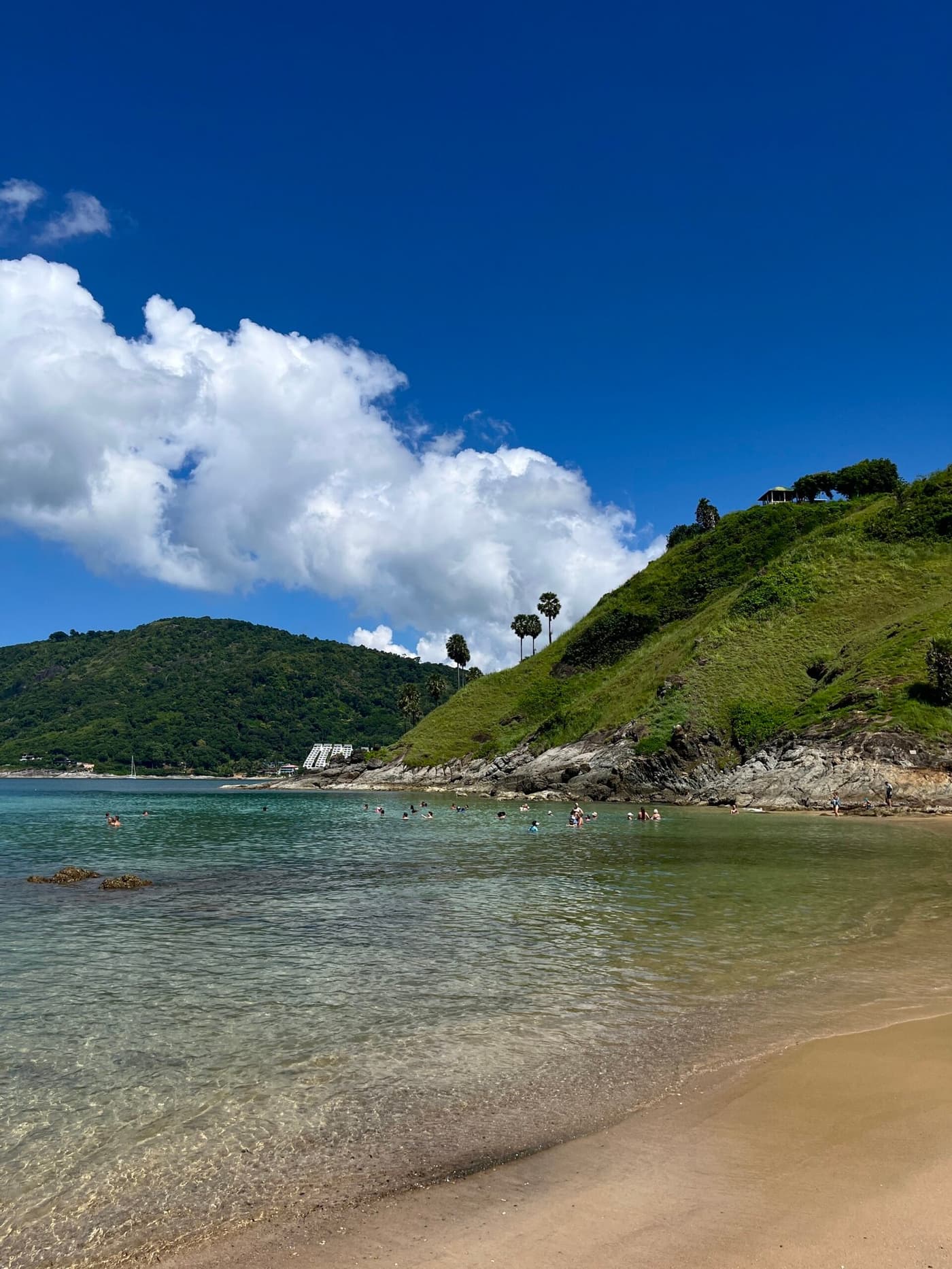
Phuket lies in southwestern Thailand, on the coast of the Andaman Sea, which is part of the Indian Ocean. Geographically, the island belongs to the southern part of the country and sits about 863 km from Bangkok.
It is the largest island in Thailand, with an area of about 543 km², not counting the small islets around it. For comparison, that's about a quarter smaller than Singapore. The island is about 48 km long from north to south and about 21 km wide, and its coastline stretches for roughly 70 km.
Even though Phuket is an island, it isn't cut off from the mainland. The Sarasin Bridge connects it by road to Phang Nga province, so you can get here not only by plane but also by land. Phuket International Airport (HKT) is one of the busiest in the country after Bangkok's two airports, which makes the island one of the most accessible resorts in Thailand.
In administrative terms, Phuket is an island, a province and a city of the same name (Phuket Town) all at once.
What sea is Phuket on
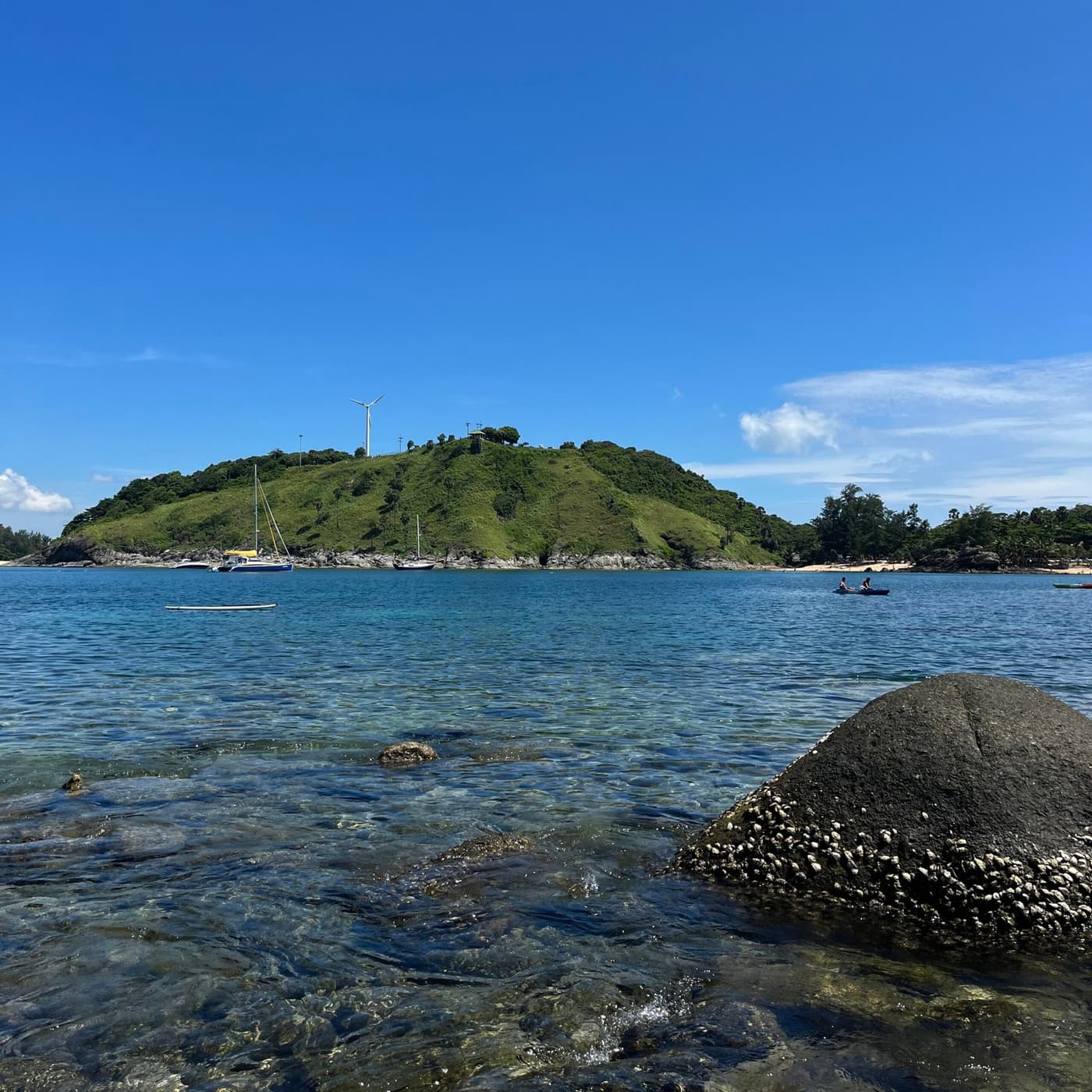
The island is washed by the Andaman Sea, part of the Indian Ocean. The sea shapes the climate, the seasons and the character of a beach vacation: waves, water clarity and swimming conditions change depending on the time of year.
In the dry season the water is calm and clear. In the rainy season, waves pick up on the west coast, and most beaches turn from swimming spots into surfing spots. I cover water temperature by month, swimming safety and jellyfish in a separate article, what sea Phuket is on.
When is the best time to go to Phuket
The island has a tropical monsoon climate. There are no major temperature swings: the air stays around +28…+32 °C (82–90 °F) all year, and the water is warm at roughly +28…+29 °C (82–84 °F). The seasons are defined not by cold but by rainfall, winds and the state of the sea.
Dry season: November to April
The dry season is considered the best time to visit. There's little rain, the sea is calm, the water is clear, and conditions for beach days and boat trips are ideal. The most stable months are January and February, with about 3–4 rainy days a month and 7–8 hours of sun a day.
This is the high tourist season, so accommodation and plane tickets are noticeably more expensive. The steepest price peak falls between December 20 and January 5, when hotels often add a 100–200% markup to the usual high-season price for Christmas and New Year.
Rainy season: May to October
The rainy season is often called the "low season," but in practice that doesn't mean downpours all day long. More often it's short tropical showers in the morning or toward evening, with sun in between. The main downside is the waves on the west coast and occasional swimming bans because of currents (lifeguards warn about this with red flags).
On the other hand, Phuket is noticeably cheaper at this time: accommodation prices fall by 30–60% from the peak, and there are fewer people on the island. Surfers come here precisely then, since the main waves run from May to September.
The rainiest month is September. If this is your first visit and you want a guaranteed beach vacation, it's best to avoid it. November and March–April, though, are the "golden middle": the weather is already (or still) dry, prices are below the peak, and there are fewer tourists.
For more on weather by month, water temperature and the best dates for different goals, see the separate article when to go to Phuket.
Do you need a visa for Phuket in 2026
When we checked in October 2026, Thailand allowed visa-free entry for up to 30 days for eligible passports. If needed, the visa-free stamp can be extended by another 30 days, but only once a year. Entry rules depend on nationality and change from time to time, so confirm the current rules for your own passport with Thai immigration or the nearest Thai embassy before you book.
The extension is processed at an immigration office (there is one in Phuket). The service costs 1,900 baht, and you'll need a passport, a photo, a TM30 form from your landlord and a return ticket.
What you need to have at entry:
- a valid passport (airlines may require at least 6 months of remaining validity),
- a return ticket, or a ticket out of Thailand within 30 days,
- proof of accommodation for the whole length of your trip.
If you plan to stay on the island for more than 60 days, you'll need a tourist visa, a student visa or the new DTV for remote workers. For all the options and the details of extending a tourist visa, see my separate article.
Time zone
Phuket, like all of Thailand, is on UTC+7. Thailand doesn't observe daylight saving time, so the offset stays the same in summer and winter.
How to get to Phuket
The most convenient way is a direct flight. Phuket Airport (HKT) receives flights from Europe and Asia. Connecting flights run all year through Bangkok, Dubai, Doha, Istanbul or Kuala Lumpur.
From Bangkok you can get to Phuket:
- by plane: 1.5 hours, the fastest and most convenient option;
- by bus: 12–14 hours, budget-friendly but tiring;
- by train to Surat Thani station, then a bus or minivan to the island.
If you're traveling in Thailand for a month or two and want to see the country, the overland route is a great way to combine the journey with sightseeing. For a short trip, the plane is clearly the better choice.
From the airport to the resort areas, a transfer or taxi is the most convenient: the ride to Patong takes about an hour, and to Kata or Nai Harn a little over an hour. The Smart Bus public bus runs too, but with luggage and after a long flight it isn't the best option.
Phuket beaches: which to choose
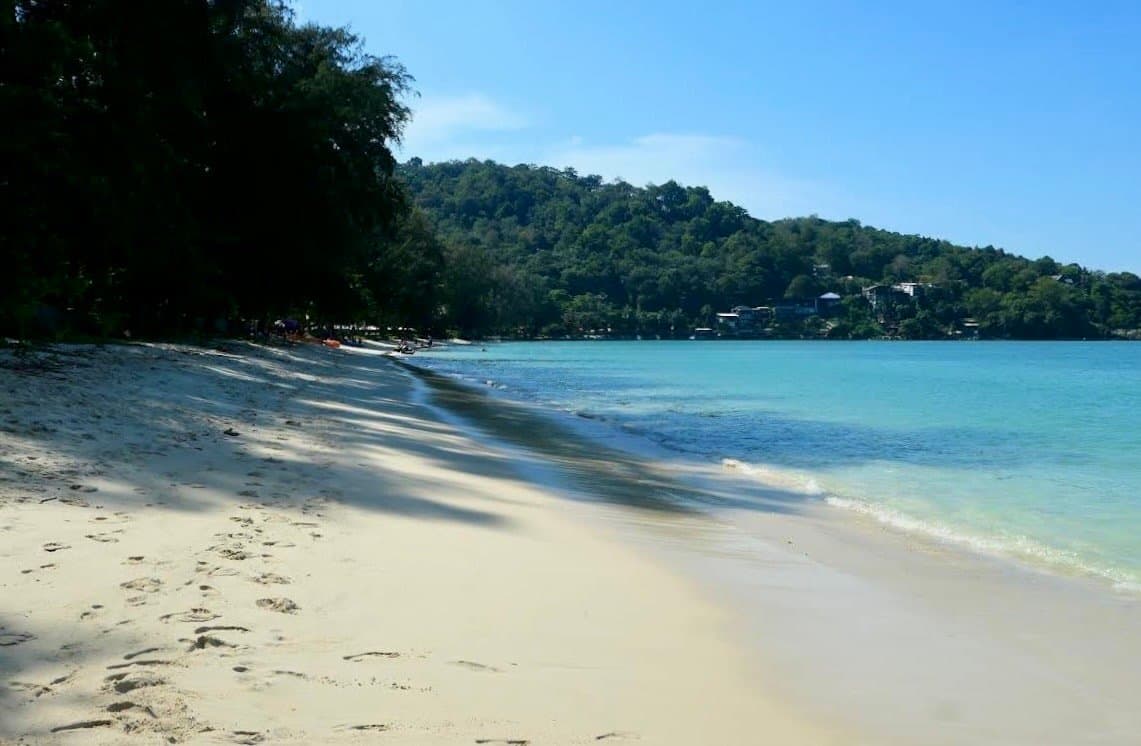
Beaches are the main reason people come here. The coastline stretches for dozens of kilometers, and the beaches differ a lot from one another: some are crowded and noisy, others quiet with almost nobody around; some have calm shallows for kids, others have waves for surfing.
Most of the popular beaches are on the west coast of the island, which is where you'll find clean sea, white sand and well-developed tourist infrastructure. The east coast is mostly shallow with a muddy bottom and isn't used for beach vacations. I wrote about all the beaches of Phuket and how to choose one in a separate article. Below is a short overview of the main ones.
Patong Beach
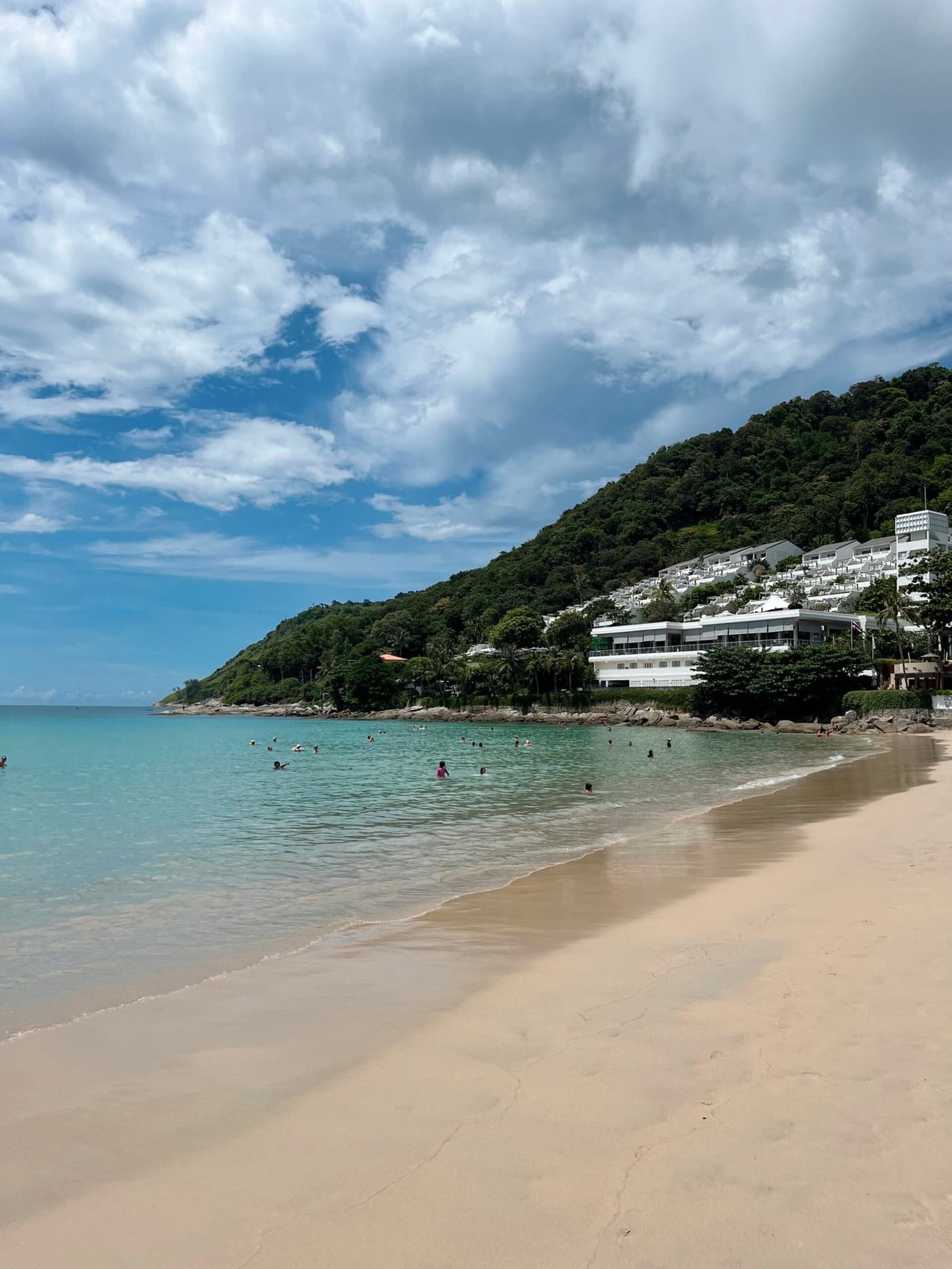
The island's best-known and liveliest beach. Hotels, bars, shopping malls (Jungceylon, Central Patong) and the famous Bangla Road with its nightlife are all concentrated here. The sea is often cloudy because of the many boats and jet skis, so travelers go to neighboring beaches for perfect swimming. It suits people who come for the action rather than the quiet. Before your trip, I recommend reading the Patong Beach guide.
Karon Beach
Karon is a long beach of about 4 km, one of the longest on the island. It has clean golden sand, clear water, and well-developed but not overloaded infrastructure. The atmosphere is calmer than in Patong, yet everything you need is within easy reach. It's often chosen for a first trip.
Kata Beach
One of the most versatile beaches on Phuket. It suits families with kids, couples and anyone visiting Thailand for the first time. In high season the sea is calm, and in summer waves arrive for surfing, with several surf schools nearby. The infrastructure is well developed, with lots of cafés and inexpensive local restaurants. If you're interested, I have a detailed review of Kata Beach.
Kata Noi
The small "younger sister" of Kata, in the neighboring bay. It stands out for its cleanliness, clearer water and calm atmosphere, and there are noticeably fewer people. A good option for a relaxed stay without the noise. Photos and details are in the Kata Noi Beach review.
Nai Harn Beach
My personal favorite on the island. The bay is surrounded by hills, there's a freshwater lake nearby, the water is clear and the entry into the sea is gentle. In the morning it's nice to go for a run along the beach or through the park by the lake, then swim, and afterward stop at one of the many pleasant cafés nearby. There really are lots of them around Nai Harn and Rawai, for every taste.
In early December, Nai Harn becomes the center of the Phuket King's Cup Regatta, a prestigious sailing regatta that draws yachts from around the world. Read more about the beach in my Nai Harn guide.
Yanui Beach
A small, cozy bay next to Nai Harn. It's an ideal spot for snorkeling in the dry season: the water is clear, there are reefs, and you can rent a mask or a kayak. The atmosphere is calm and there aren't many people. Read more in the Yanui Beach review.
Mai Khao
The longest beach on Phuket, about 11 km. It's in the north, next to the airport, and is known for planes landing right over it. There's no dense development and infrastructure is minimal, so Mai Khao is chosen by lovers of quiet and seclusion, as well as guests of large resort hotels like the JW Marriott. The full review is in the article about Mai Khao Beach.
These aren't all the beaches on the island. There are also Surin, Bang Tao, Kamala, Rawai, Freedom Beach and dozens of smaller bays.
Phuket areas: where to stay as a traveler or winter resident
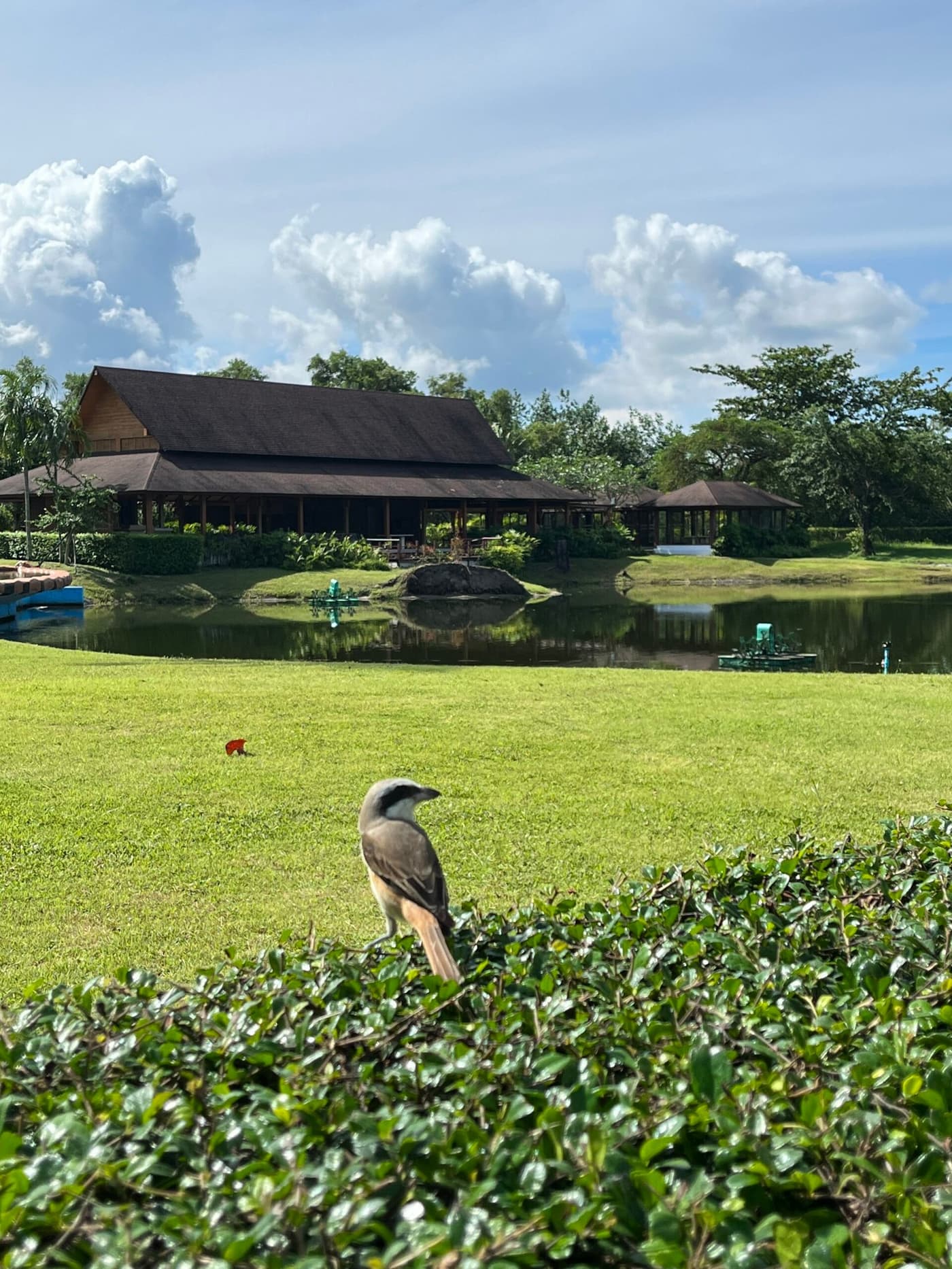
Your choice of area directly affects the kind of vacation you'll have. The island is large and varied, and moving just two kilometers can completely change the character of your trip. I deliberately separated the descriptions of beaches and areas: a beach is about the sea, the sand and the infrastructure by the water; an area is about what it's like to live there.
Patong: for partygoers and active travelers
The most touristy area on the island, with bars, nightclubs, shopping malls, restaurants for every budget and night markets. Accommodation is varied, from budget guesthouses to five-star hotels. The downsides are noise, crowds, above-average prices and a not-so-clean sea. It suits short trips for the action, not families or anyone who comes for quiet.
Karon and Kata: the all-round choice
Two neighboring areas on the west coast that strike the best balance between infrastructure and calm. They have everything you need (shops, cafés, pharmacies, surf schools) without the chaos of Patong. They're often chosen for a first trip and for family vacations. Karon is a bit quieter, Kata a bit livelier.
Nai Harn and Rawai: calm and the expat community
The south of the island, where a significant share of winter residents and long-term expats live. The atmosphere is relaxed, and housing prices are more moderate than in Patong. Rawai has Phuket's best fish market and a pier with boats to Coral Island. There are many cafés with European cuisine, fitness clubs and coworking spaces. The downside is that Rawai's own beach is shallow and not for swimming, but Nai Harn is 5 minutes away by bike.
Bang Tao and Surin: the premium segment
The northwest coast, an upscale zone with villas, five-star resorts and the Laguna Phuket complex, a "city within a city" with golf courses, spas and high-end restaurants. People come here for the level of service and the peace, and they're ready to pay for it.
Kamala: a quiet family area
Between Patong and Surin. Quieter than Patong and cheaper than Surin. A good option for families and for anyone who wants the sea close at hand without the parties.
Phuket Town: for long-term stays
This is the island's administrative and cultural center, not a beach area. It has an old town with Sino-Portuguese architecture, markets, local cafés with authentic southern Thai food, and the Central Festival shopping mall. Housing and food prices are noticeably lower than by the sea, and the infrastructure for everyday living is the best on the island.
We lived right here, next to Central Festival. The pluses: everything is within walking distance, the food is authentic, and there's no tourist markup. The minuses: the sea is 20–30 minutes away by bike. If you're coming for 1–2 weeks and want the sea every day, this area won't suit you. But for a long stay and remote work, it's one of the best options on the island.
Mai Khao: seclusion and resorts
The north, next to the airport. A long, uncrowded beach, minimal development and a calm atmosphere. It suits a stay in large resort hotels and anyone who wants to disconnect completely.
A detailed guide to the areas, with photos, prices and comparisons, is in a separate article about the areas of Phuket.
What to see and do in Phuket
Phuket isn't just about the beach. Even in two weeks you won't manage to see it all.
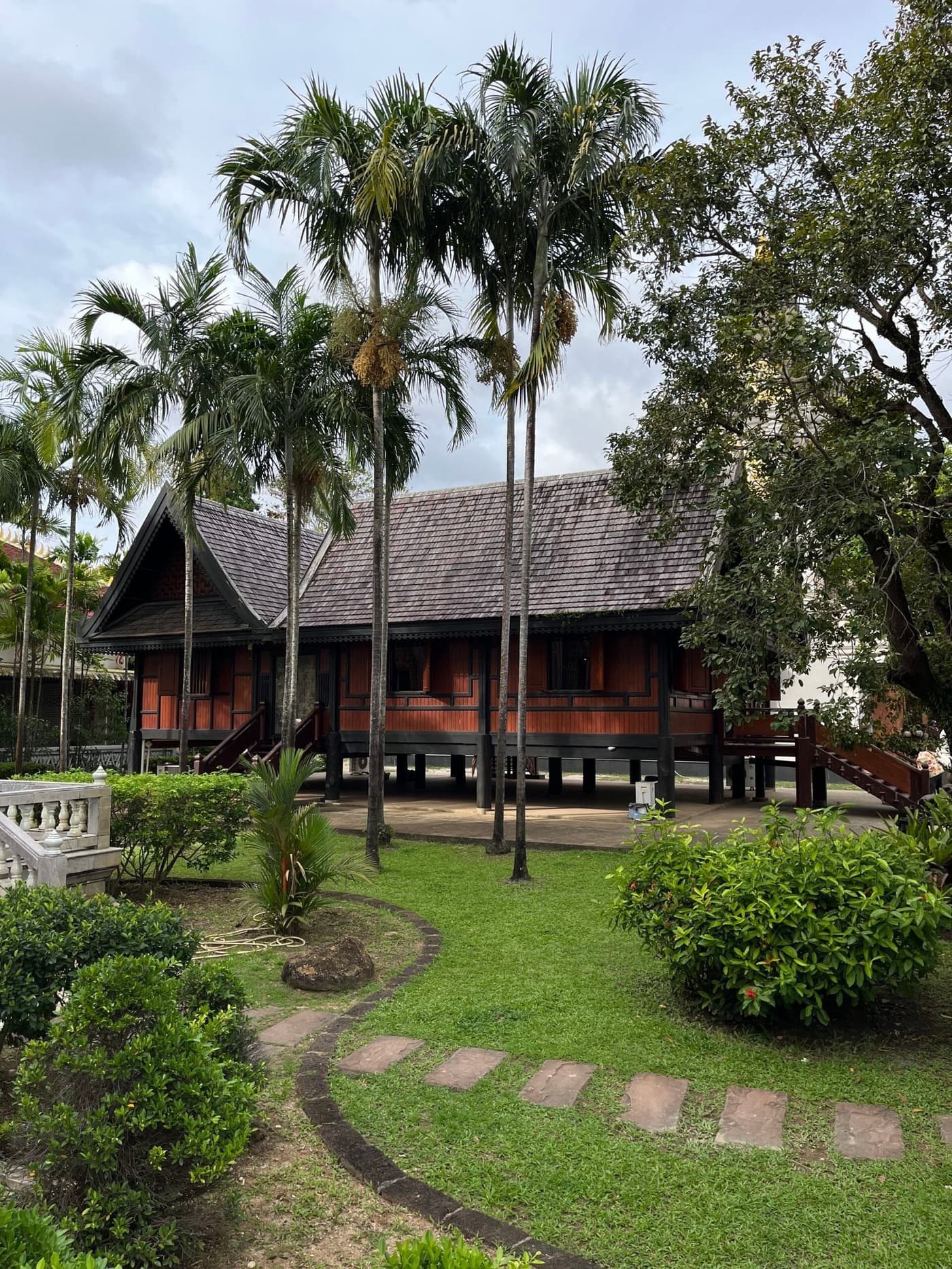
Sights. The Big Buddha (a 45-meter statue on a hill with panoramic views), Wat Chalong temple, Phuket Town's old town with Thalang and Dibuk streets, known for their Sino-Portuguese architecture, the Promthep viewpoint with its sunset view, Laem Singh Cape and the Ban Pae waterfall.
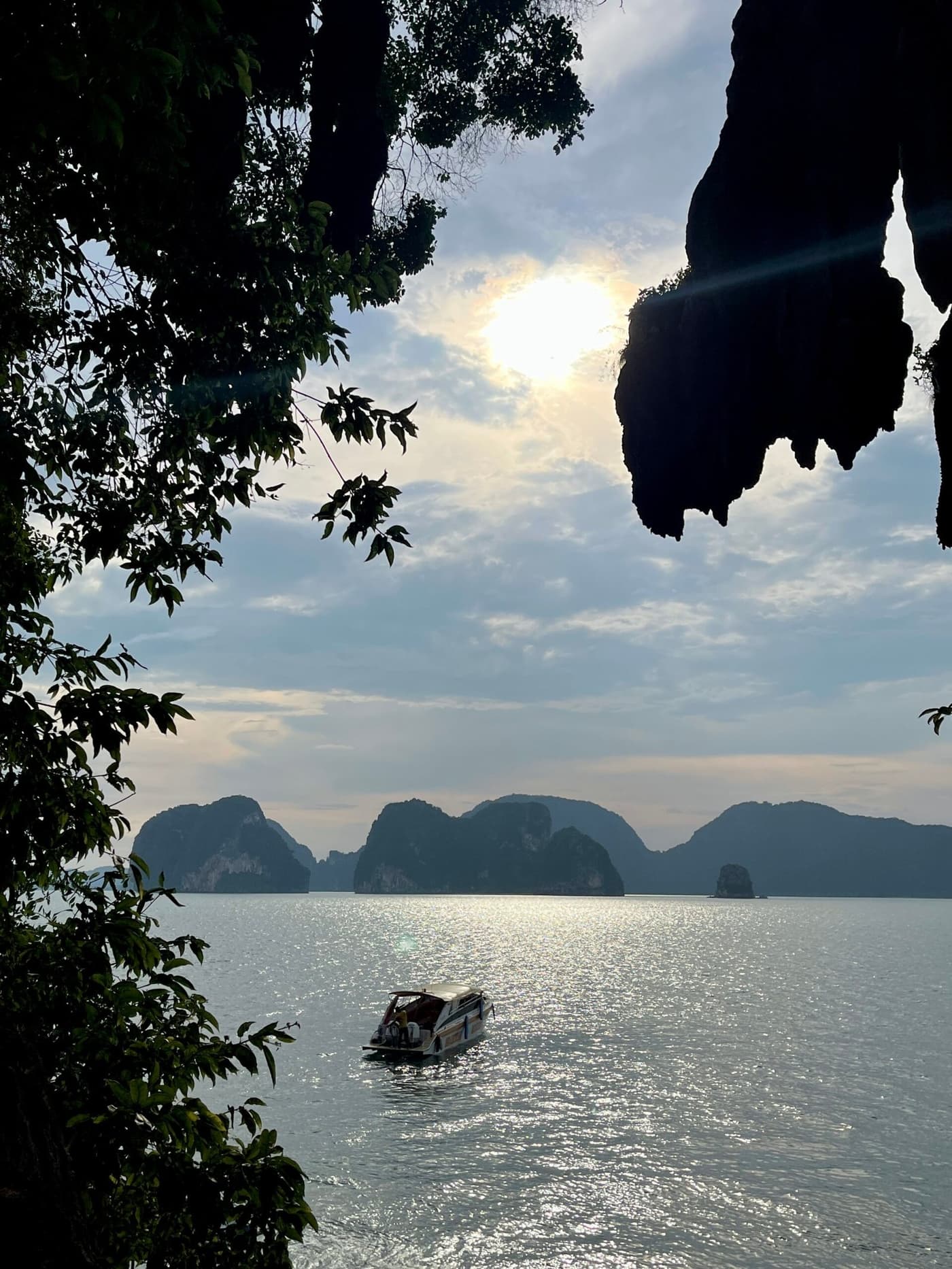
Boat trips. The main must-do is a trip to the Phi Phi Islands (the very ones from "The Beach" with DiCaprio) and to Phang Nga Bay with James Bond Island. Closer to Phuket are Coral Island, Racha and Maiton with clear water and snorkeling. Divers head to the Similan Islands, where the national park is open from October 15 to mid-May.
Active vacation. Diving and snorkeling, surfing in wave season, hill trekking, ziplining and caves, Thai boxing at the stadium in Patong, cooking classes, spa and Thai massage.
Shows and entertainment. Phuket FantaSea is a big themed show with Thai flavor, then there's Carnival Magic, Andamanda (the island's largest water park) and the Phuket Trickeye Museum.
A detailed guide with routes, prices and my recommendations is in the article about Phuket's attractions. And on YouTube I made a video, "What to do in Phuket besides the beaches." Come and watch.
Thai food in Phuket: what you have to try
Food is a reason to visit Thailand all on its own. Phuket Town received UNESCO City of Gastronomy status in 2015, and Peranakan (Baba-Nyonya) cuisine, the legacy of Chinese and Malay immigrants, is strong here.
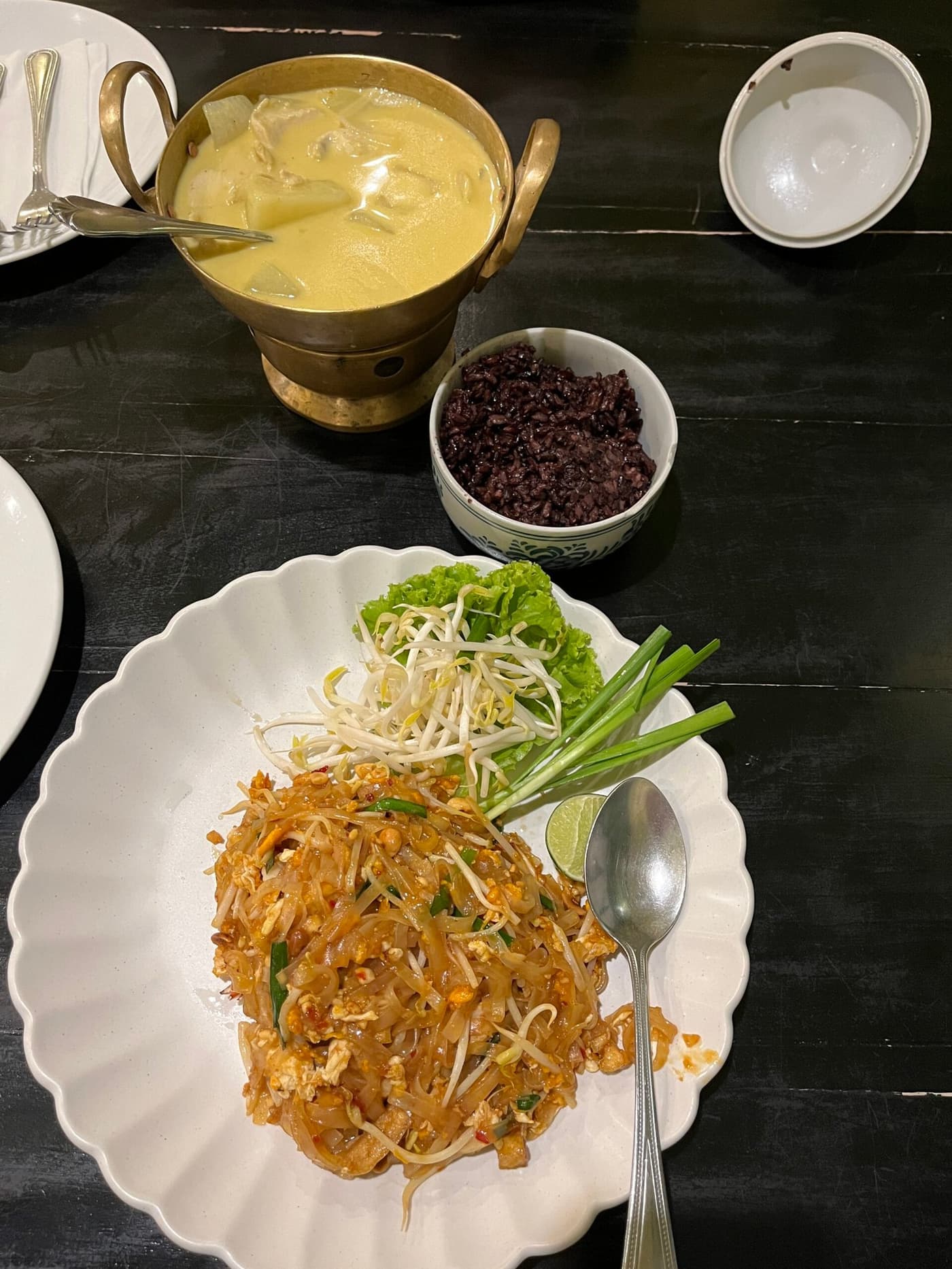
What you have to try. Tom yum (a sour, spicy soup with shrimp), pad thai (stir-fried rice noodles), som tam (green papaya salad), massaman curry (a mild curry with Indian influence), khao man gai (chicken with rice cooked in chicken broth), moo ping (grilled pork skewers), mango sticky rice (a dessert of sticky rice with mango).
Local Phuket dishes. Kanom jeen (rice noodles with curry, eaten for breakfast), mee Hokkien (local-style yellow noodles), o-tao (a fried oyster omelette with taro), nasi kerabu. You'll hardly find these dishes in tourist restaurants, so you need to go to Phuket Town for them.
Where to eat. Street food is the cheapest and often the tastiest: moo ping 10–20 baht, a plate of pad thai 60–100 baht. Local cafés cost 150–250 baht per dish. Tourist restaurants on the beaches start at 200 baht and up. For seafood, go to Rawai, where the fish market lets you pick a fish and have it cooked at a café next door.
A detailed food guide with addresses, prices and my favorite places is in the article on where to eat in Phuket.
Mobile and internet in Phuket
4G/5G coverage on the island is excellent, especially in the tourist areas. Wi-Fi is available in most hotels, cafés and restaurants and is usually free.
The most convenient option for a traveler is an eSIM. You can buy one in advance through Airalo and activate it right on the plane. For a long stay, a local physical SIM is a better deal: AIS, TrueMove or DTAC, sold at the airport, at operator offices and in 7-Eleven. Unlimited monthly packages start at 600–1,000 baht.
In the rainy season there can be internet outages in rental housing. If you work remotely, check the speed yourself with Speedtest before you move in.
Money, prices and vacation budget in Phuket
The official currency is the Thai baht (THB). Exchange rates change, so check before your trip.
Cash and cards. Bring some cash in dollars or euros and exchange it on the spot. ATMs are everywhere, but they charge a fee of 220–250 baht per transaction, so it's better to withdraw larger amounts.
How much a vacation costs. Approximate high-season prices for 2026:
- Accommodation: a guesthouse 800–1,500 baht/night, a mid-range hotel 2,500–5,000 baht, premium 7,000+ baht. For a month, an apartment in Phuket Town or Rawai starts at 15,000 baht, and by the sea at 25,000–35,000 baht.
- Food: street fast food 50–100 baht, lunch at a local café 150–250 baht, dinner at a mid-range restaurant 600–1,000 baht per person.
- Transport: bike rental 200–300 baht/day, a Bolt taxi around the island from 150 to 800 baht, a car from 1,000 baht/day.
- Excursions: a boat tour to Phi Phi 1,500–3,000 baht, an elephant park 1,000–2,500 baht, the FantaSea show 2,000–3,500 baht.
A detailed budget breakdown is in the article about prices in Phuket in 2026.
Getting around Phuket
The island is big, and it's hard to manage without transport. Public transport is limited: there are songthaews (tuk-tuks in the form of minibuses) between Phuket Town and the beaches, and the Smart Bus along the west coast.
Taxis and Bolt. Bolt and Grab operate on the island and are much cheaper than regular taxis. Street taxis and tuk-tuks often demand inflated prices, especially in Patong, so it's better to book through an app.
Renting a bike is the most popular option among travelers and winter residents. It starts at 200 baht/day, and 3,000–5,000 baht for a month. You'll need an international driving license with category A (without it, you risk a fine or a bribe request at police checkpoints). A helmet is mandatory.
Renting a car is more convenient for families and long stays: you can get around the island independent of taxis and songthaews. It starts at 1,000 baht/day. An international license is required.
For all the ways of getting around, trusted rental companies and driving tips, see the article on transport in Phuket.
Safety in Phuket
Phuket is a safe resort. Serious crime against tourists is rare, but there are a few things to know.
What to know. Be careful swimming in the rainy season: when the flag is red, you must not enter the water, and drownings happen every year. Always wear a helmet on a bike and don't ride without a license, since the police regularly run checks on tourists. Be wary of "free" offers on the street: taxi drivers may take you to jewelry stores or to guide agencies with a markup. Prices for food and souvenirs in tourist areas are 2–3 times higher than what locals pay, and bargaining is normal.
Medical care. Phuket has international hospitals (Bangkok Hospital Phuket, Vachira) with a standard no worse than in Europe, though the prices match. Without insurance, a doctor's visit can cost from 1,500 baht, and hospitalization tens of thousands. Travel insurance is a must, especially if you plan to ride a bike, dive or go on boat trips.
Drinking water. You can't drink tap water. Use bottled water for drinking and brushing your teeth. Hotels and apartments often have coolers with purified water.
Who a Phuket vacation suits
Phuket is one of the few resorts that works equally well for very different needs.
For first-timers, the island is convenient, safe and easy to understand even without experience traveling in Asia. English is spoken everywhere, the infrastructure is well organized and transport is available.
For families with kids, beaches with a gentle entry fit best: Karon, Kata, Kamala, Bang Tao. There are many kids' clubs, a water park, safari parks and shows.
For young people and partygoers, there's Patong with its Bangla Road, festivals, nightclubs and pool parties.
For winter residents and remote workers, there's a mild climate, developed infrastructure, affordable long-term apartments, fast internet, coworking spaces and an expat community. The best areas are Rawai, Nai Harn, Chalong and Phuket Town.
For those looking for quiet, there's Mai Khao, Kamala, Nai Harn and individual villas in the north. The atmosphere here is completely different from the tourist centers.
Frequently asked questions about Phuket
When is the best time to go to Phuket?
The best time is from November to April: it's dry, the sea is calm and there's lots of sun. The most stable months are January and February. If you want to save money and aren't afraid of the occasional rain, pick November or March–April: the weather is almost the same and prices are 20–30% lower.
Can you swim all year round?
You can swim all year, but in summer there are often waves and currents on the west-coast beaches. At some beaches swimming is banned at that time, so watch for the lifeguards' flags. The calmest places in the rainy season are sheltered bays: Yanui, Nai Harn in the morning hours, and the east coast.
Do you need a visa for Phuket in 2026?
When we checked in October 2026, eligible passports could enter visa-free for up to 30 days. Entry rules depend on nationality, so confirm yours with Thai immigration before you travel. Once a year the stay can be extended by another 30 days through immigration for 1,900 baht. If you're going for longer, you'll need a tourist visa.
Is a vacation in Phuket expensive?
It depends on the format. A budget week means a guesthouse, street food and a minimum of excursions; a comfortable vacation costs more, and premium has no upper limit. See the approximate prices in baht in the budget section above.
Where is the best place to stay in Phuket the first time?
For a first trip, Karon or Kata are ideal, with a balance of infrastructure, clean sea and calm. Patong is only right if you're coming specifically for the action, and Nai Harn if you want quiet from the start.
What sea is Phuket on?
Phuket is washed by the Andaman Sea, which is part of the Indian Ocean. The water is warm all year, up to +28…+29 °C (82–84 °F). Clarity and waves depend on the season: from November to April it's calm and clear, and from May to October there may be waves on the west coast.
How do you fly to Phuket?
Phuket Airport (HKT) receives flights from Europe and Asia, with connecting flights all year through Bangkok, Dubai, Doha, Istanbul or Kuala Lumpur. From Bangkok the flight takes about 1.5 hours.
What time zone is Phuket in?
Phuket is on UTC+7, the same as the rest of Thailand. The offset doesn't change during the year.
Is Phuket safe?
Overall, yes. The island is considered one of the safest in Southeast Asia. The main risks involve the sea (currents in the rainy season) and the road (bike accidents). There's little crime against tourists, but pickpockets and small scams do turn up on touristy streets.
Can you drink tap water?
No, tap water isn't safe to drink in Phuket or in Thailand in general. For drinking, use bottled water or filtered water from coolers.
Which is better: Phuket or Samui?
Phuket is bigger, more varied in beaches and infrastructure, and more convenient for a first trip and for long-term living. Samui is smaller and calmer, with a more "island" feel and palm trees on the beaches. Phuket's rainy season is more pronounced, while Samui's is shorter and falls in October–December. A detailed comparison is in a separate article.
Which beach is the most beautiful?
There's no single answer; it depends on what you want. For natural beauty, people usually name Nai Harn, Freedom Beach and Kata Noi. For length and infrastructure: Karon and Bang Tao. For surfing: Kata and Kalim. For seclusion: Mai Khao.
Do you need insurance for a trip to Thailand?
Technically no, you can enter without it. In practice, it's essential. Medical care in Thailand is paid, and without insurance even a simple injury can cost a lot. Insurance matters especially if you plan to ride a bike, dive or do other active things: standard policies don't cover such risks, so you need an extended one.
This article will be updated.