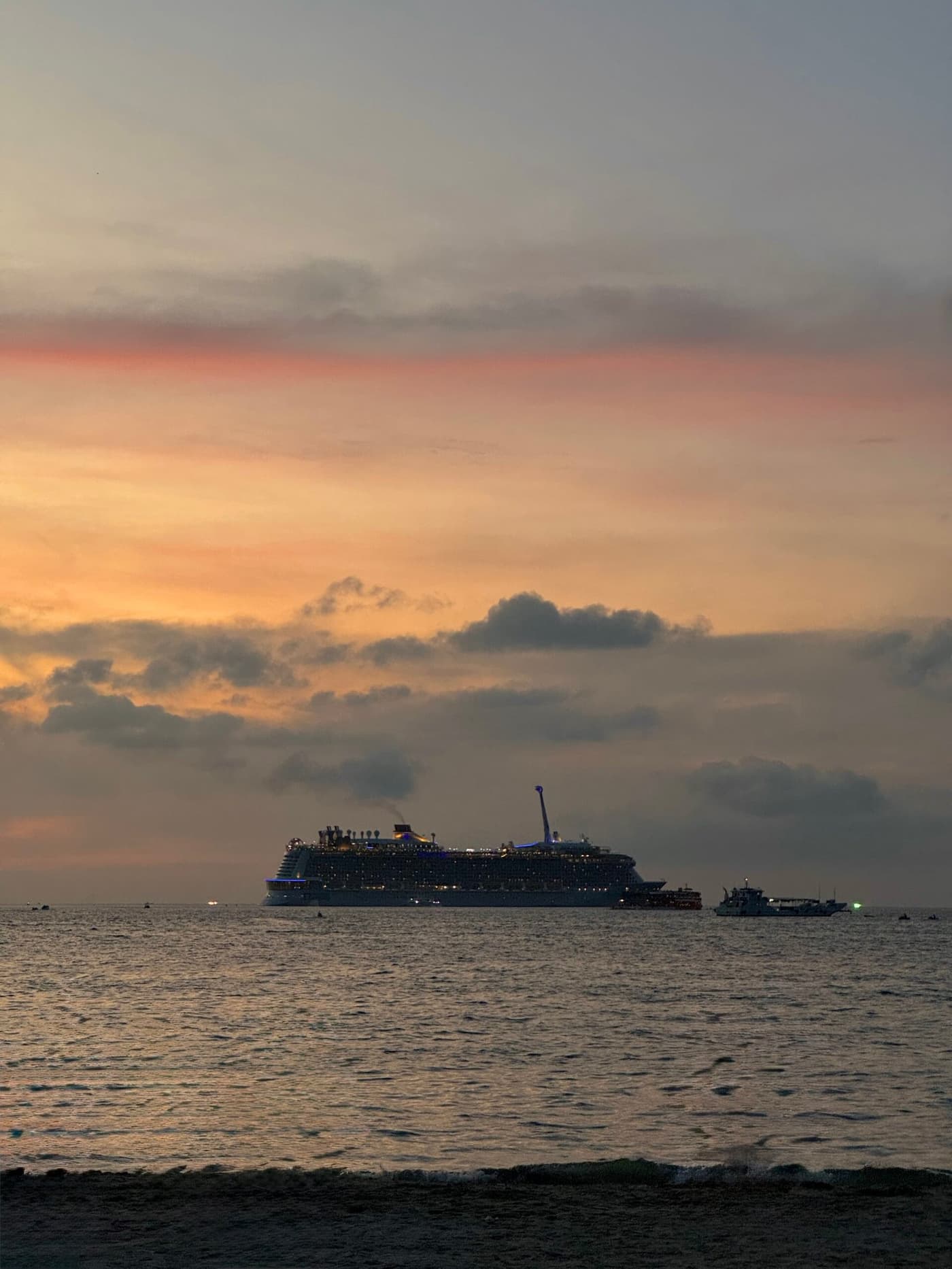
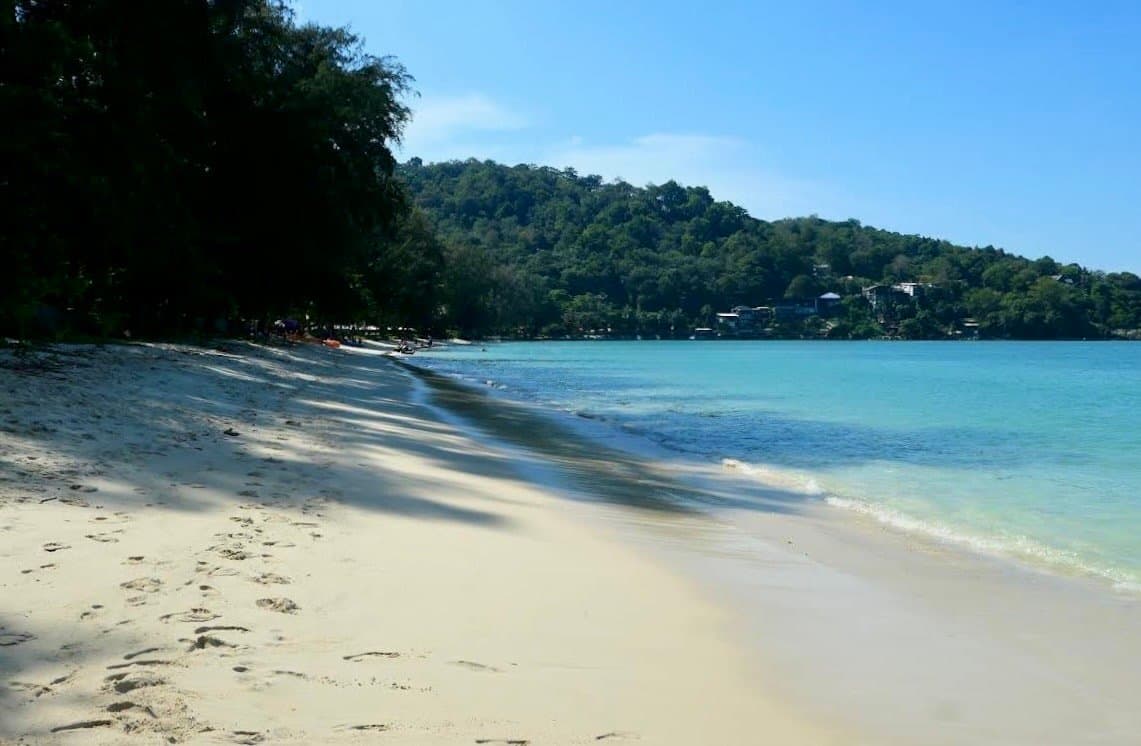
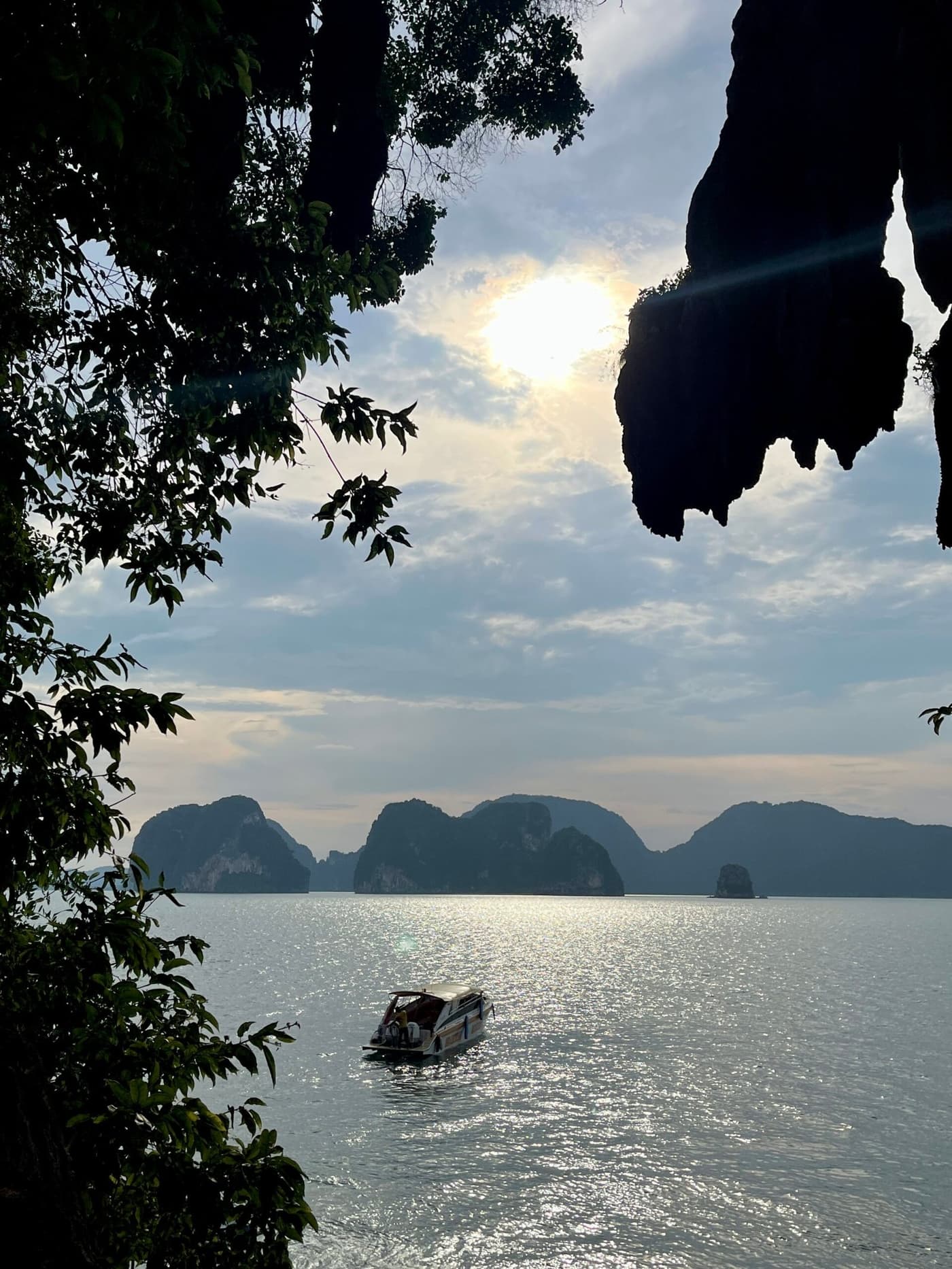
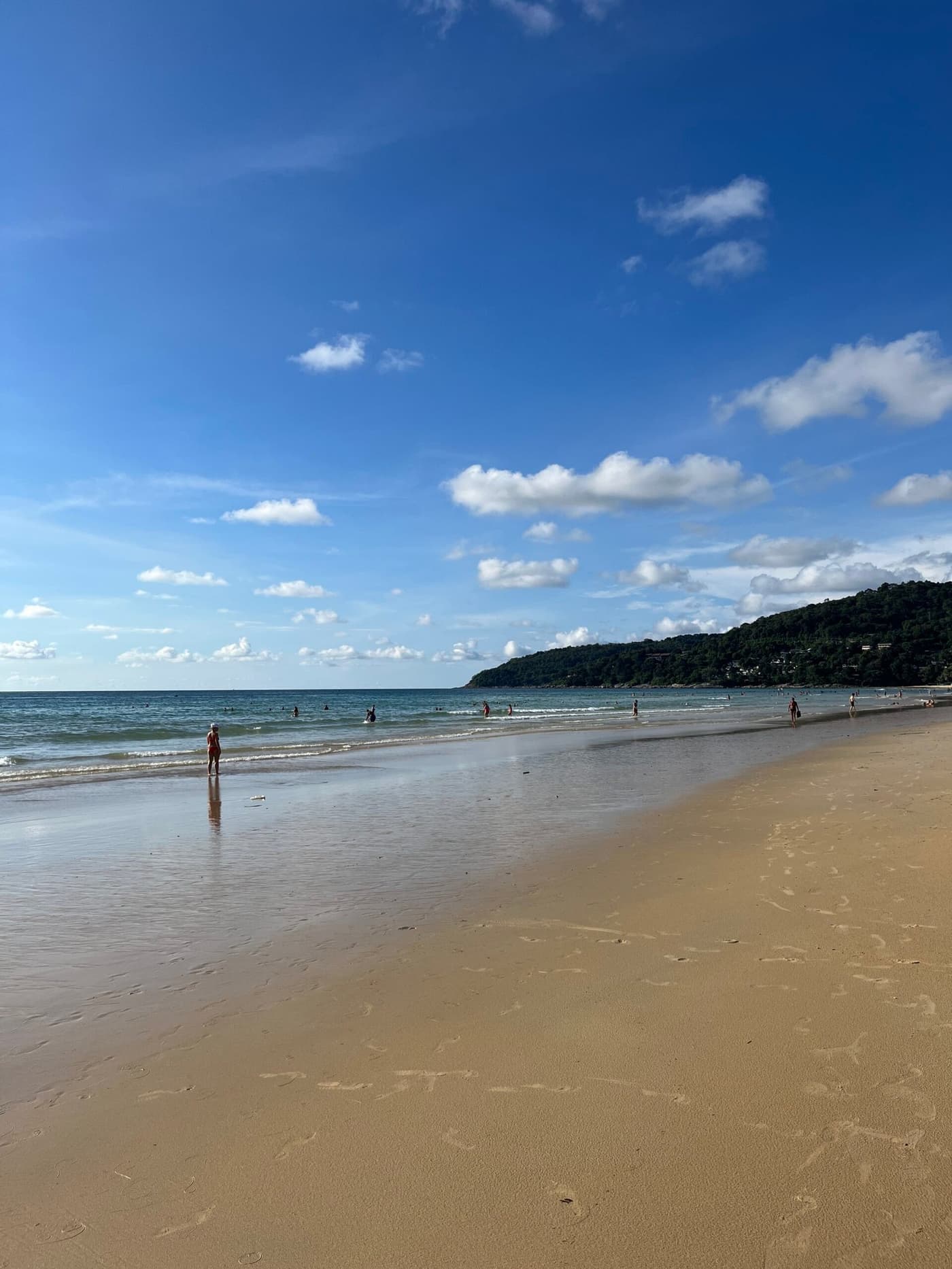
Phuket sits on the Andaman Sea, part of the Indian Ocean. That is why the water here looks the way it does on every postcard: turquoise, clear, with a light emerald tint near the shore. The water temperature stays between 27 and 30°C (81–86°F) all year round, so swimming is comfortable in any month, although the seasons here are more pronounced than at the resorts on Thailand's eastern coast. If you want to know more about the Land of Smiles, I recommend my Thailand travel guide.
I visit Phuket regularly, in different seasons, and I have swum at different beaches. So I can tell you from experience when the sea is calm and clear, when it gets rough, what you should really watch out for and where to find the most beautiful water on the island.
If you are just planning your trip and want to understand the whole island, start with the complete Phuket guide.
The Andaman Sea: What It Is and Where It Is
The Andaman Sea is a semi-enclosed sea in the northeastern part of the Indian Ocean. It lies between the Malay Peninsula to the east, Myanmar and Thailand to the north, and the Andaman Islands to the west. It washes the entire west coast of Phuket, from Mai Khao Beach in the north to Cape Promthep in the south.
The Andaman Sea is not the Pacific Ocean and not the South China Sea. This is an important point, because it explains why the water in Phuket looks and behaves differently than in Pattaya or on Samui.
Area, Depth and Features of the Andaman Sea
The Andaman Sea covers about 800,000 km² (about 309,000 sq mi). Its average depth is around 1,000 meters (3,300 ft) and its maximum reaches 4,200 meters (13,800 ft). Off the coast of Phuket the depth is far more modest: 1–3 meters (3–10 ft) in the swimming zone and 5–15 meters (16–50 ft) farther from shore. The seabed is mostly sandy, with coral in places.
An important feature of the Andaman Sea is its tectonic activity. It was here that the devastating tsunami struck in 2004. Today buoys with seismic monitoring operate 1,000 km from the coast and transmit data by satellite. There is an early warning system, but you should know about tsunamis if you plan to live on the island.
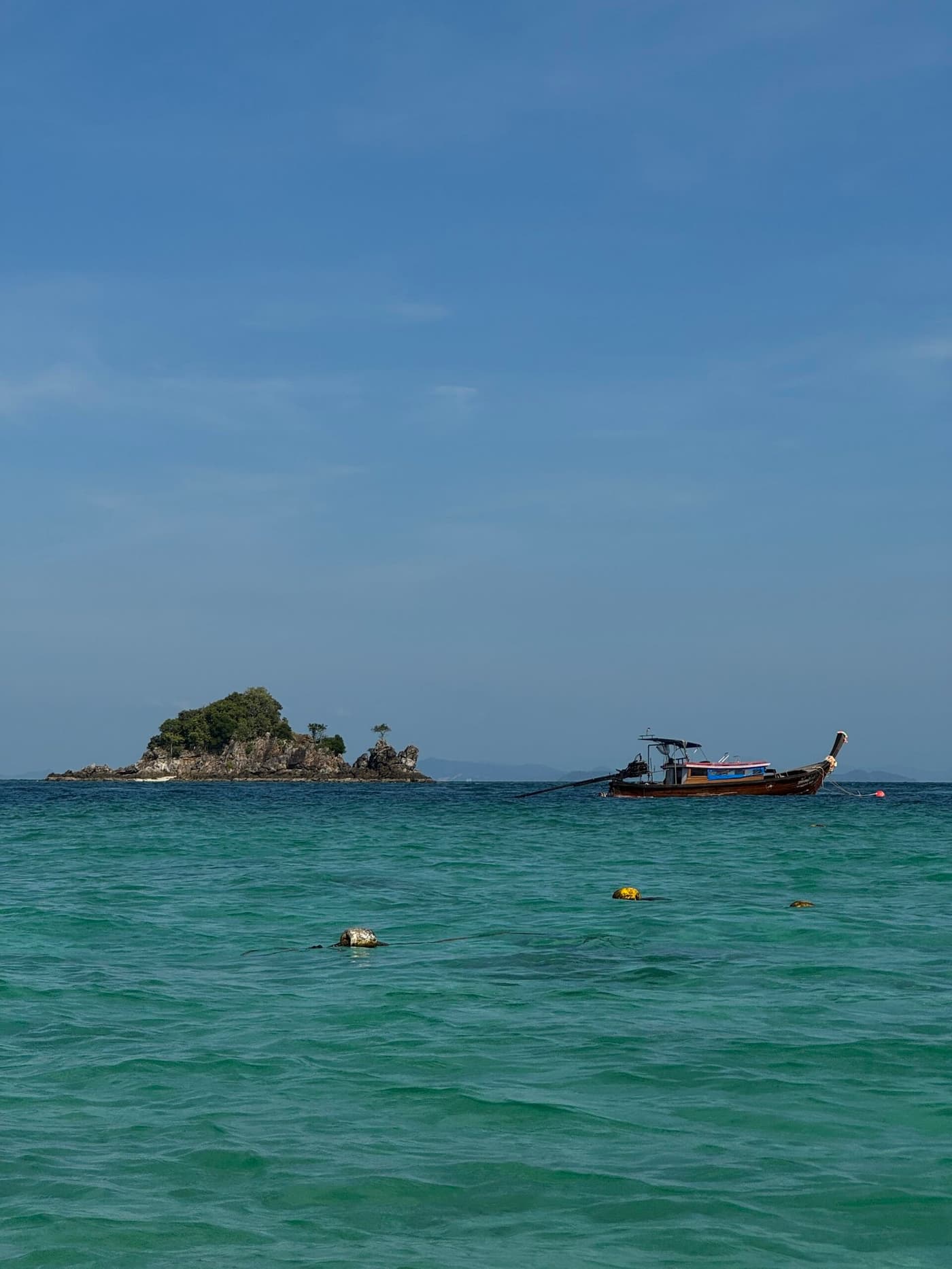
How the Sea in Phuket Differs From the Gulf of Thailand: Phuket vs. Pattaya
This is one of the most common questions, and the difference really is significant.
| Parameter | Phuket (Andaman Sea) | Pattaya (Gulf of Thailand) |
|---|---|---|
| Belongs to | Indian Ocean | South China Sea / Pacific Ocean |
| Water color | Turquoise, emerald | Grayish green, often murky |
| Visibility | Near the shore, up to 10–15 m in season | 2–5 m at best |
| Seasonality | Pronounced: dry / rainy | Milder, no sharp transitions |
| Waves | Yes, from May to October | Rare, sheltered bay |
| Jellyfish | May–October, box jellyfish | Less common, less dangerous |
| Diving | One of the best in the world | Weak, people go to the islands |
| Beaches | White sand, picturesque | Weak in the city, better on the islands |
If the beauty of the water matters to you, Phuket wins hands down. If you are willing to put up with the color of the water in exchange for milder seasons and closeness to Bangkok, Pattaya is also an option. But the "postcard picture" is definitely about the Andaman Sea.
Phuket Water Temperature by Month
The sea in Phuket is warm all year, and that is a fact. But there is a difference between "warm" in January and "warm" in May, and you feel it physically.
| Month | Water temperature | Air temperature | Swimming conditions |
|---|---|---|---|
| January | 27°C (81°F) | 31°C (88°F) | ✅ Excellent: calm, maximum visibility |
| February | 28°C (82°F) | 32°C (90°F) | ✅ Excellent: the best month of the year |
| March | 29°C (84°F) | 33°C (91°F) | ✅ Good: hot, but the sea is calm |
| April | 30°C (86°F) | 34°C (93°F) | ✅ Good: the warmest sea, waves begin |
| May | 30°C (86°F) | 32°C (90°F) | ⚠️ Be careful: start of the rainy season, waves |
| June | 30°C (86°F) | 31°C (88°F) | ⚠️ Be careful: waves, some beaches closed |
| July | 29°C (84°F) | 30°C (86°F) | ⚠️ Be careful: surfer season |
| August | 29°C (84°F) | 30°C (86°F) | ⚠️ Be careful: waves, warning flags |
| September | 29°C (84°F) | 30°C (86°F) | ❌ Difficult: strong wind, storms |
| October | 29°C (84°F) | 31°C (88°F) | ⚠️ Improves in the second half |
| November | 29°C (84°F) | 31°C (88°F) | ✅ Good: start of the high season |
| December | 28°C (82°F) | 31°C (88°F) | ✅ Excellent: calm sea, lots of tourists |
When the Sea in Phuket Is Warmest and Calmest
The peak of the season is November to February. The sea is flat, visibility is at its best, and you can see the bottom at 10–15 meters (33–50 ft). A water temperature of 27–29°C (81–84°F) is ideal for swimming and snorkeling. This is also the period when the island has the most tourists and accommodation prices are higher.
The warmest sea is in April and May (30°C / 86°F). But this is already a transitional period: April is still good, while the first stormy days start in May. March and April are an excellent choice if you want both a warm sea and fewer crowds than in January. I wrote about the weather in Phuket by month in a separate article.
The Sea in the Rainy Season: Can You Swim in Phuket in Summer?
We lived in Phuket during the rainy season and did not regret it. But you need to understand what it is like.
From May to October the southwest monsoon whips up waves on the island's west coast. Red flags go up on some beaches, which means no swimming. In September there are storms, when the sea becomes truly rough.
That said, the rain is not constant. Most often it is a short tropical downpour in the second half of the day, after which the sun comes out again. We were there in July: a few days out of two weeks were completely rainy, and the rest of the time was fine. But some areas did get flooded.
The main rule: watch the flag, not the sky. If the flag is red, do not go into the water, even if the waves look small. Most accidents happen on exactly such days.
A plus of the rainy season is surfing. Kata Beach turns into a real surf spot, accommodation prices drop by 30–40%, and the island without crowds of tourists is a completely different experience.
Water Clarity and Color: Why the Sea in Phuket Is So Turquoise
The first time you see the water at Nai Harn or Yanui, you realize that all the photos were not lying. It really is that color.
Where does it come from? There are several reasons: the light sandy and coral bottom reflects light well; the Andaman Sea is fairly clean, with no industry nearby; and finally, the angle of the sun in the tropics gives that turquoise-emerald shade we are used to seeing in advertising photos.
Water clarity:
- In the high season (November–April): visibility of 10–15 meters (33–50 ft), and even more at undeveloped beaches like Yanui
- In the transitional period (October, May): 5–8 meters (16–26 ft)
- In the rainy season: 3–5 meters (10–16 ft) because of suspended particles and waves
The clearest water is at the small, wild beaches in the south of the island: Yanui, Nai Harn and Kata Noi. At big tourist beaches like Patong the water is a bit murkier because of the crowds and the constant movement of boats.
Swimming Safety in the Sea in Phuket
The Andaman Sea is beautiful, but not harmless. It is worth knowing about the dangers in advance, not to be afraid but to behave sensibly.
Jellyfish in Phuket: Which Ones Live There and When They Are Dangerous
Jellyfish are the most real danger for swimmers, especially in the rainy season from May to October.
Species you should know about:
Box jellyfish are almost transparent and practically invisible in the water. The sting is very painful and in severe cases life-threatening. They are found near the shore and like murky water and strong currents.
The sea wasp is a close relative of the box jellyfish. It is active during the day and prefers coastal waters. I know people who were stung by one in Phuket: a burn across the whole back and several days out of action. This is serious.
Comb jellies are small transparent creatures up to 10 cm (4 in) that do not sting. They are often mistaken for jellyfish, and people get scared for nothing.
What to do if you get stung by a jellyfish:
- Get out of the water immediately
- Do not rub the sting with your hands
- Rinse with vinegar (lifeguards keep it at the big beaches)
- See a clinic, especially if a large area is affected
Protection: special jellyfish-repellent lotions (available at Boots and some minimarts) and lycra suits for snorkeling. Do not go into the water at night: in the dark you cannot see jellyfish or anything else dangerous.
Sharks in Phuket: Is There a Real Danger?
There are sharks in the Andaman Sea. But there has not been a single documented attack on a tourist at Phuket's beaches.
At the popular beaches (Patong, Karon, Kata, Bang Tao, Kamala, Nai Harn) the chance of meeting a shark in the swimming zone is negligible. There are no shark nets here, simply because there is no need for them.
What you might meet: small reef sharks at depth near the corals, which are not dangerous to people. Whale sharks come in February to April, huge, slow-moving plankton eaters. Swimming near them is every diver's dream.
The real dangers, which are far more likely to sting you: jellyfish, sea urchins, stonefish and biting plankton. Think about those, not about sharks.
Rip Currents: How to Recognize Them and What to Do
This is the most underrated danger at Phuket's beaches. Rip currents kill both tourists and locals every year.
What a rip current looks like from the shore:
- A strip of darker or murkier water heading from the shore out to sea
- Fewer waves in that area than next to it
- Foam and debris moving away from the shore
- Sometimes ripples running across the waves
What to do if you are caught in a current:
- Do not swim against the current toward the shore, you will use up all your strength
- Swim parallel to the shore, since the current is usually narrow (10–30 meters / 33–100 ft)
- Once you are out of the flow, turn toward the shore
- If you are tired, lie on your back, wave your arm and call for help
If you see Rip Current signs, stop. The absence of a sign does not guarantee safety.
Beach Flags in Phuket: What Red, Yellow and Green Mean
| Flag | Meaning | What to do |
|---|---|---|
| 🟢 Green | Swimming is safe | You can swim |
| 🟡 Yellow | Swim with caution | Do not swim far out |
| 🔴 Red | Swimming prohibited | Do not enter the water |
| 🔴🔴 Two red | Beach closed | Do not enter the water |
Flags are not decoration. Lifeguards raise them based on real data: the state of the sea, the presence of currents, reports from other swimmers. If tragedy strikes after ignoring a flag, the swimmer is legally responsible.
Other Dangers: Sea Urchins, Stonefish and Biting Plankton
Sea urchins live near rocks and corals. It is easy to step on one, especially at reef beaches. The spines break off in the skin. What to do: do not pull them out, soften the area (vinegar or urea) and go to a clinic. Snorkeling shoes greatly reduce the risk.
Stonefish are masters of camouflage and lie on the bottom near rocks. They have venomous spines on the back. The pain is severe. Treatment is essential. Wear coral shoes.
Biting plankton is invisible and appears unpredictably. It feels as if something is pinching you all over your body. It usually passes quickly, and allergic reactions are rare. When there is plankton at one beach, the neighboring one may have none at all.
The Underwater World of the Andaman Sea: Corals, Fish and Whale Sharks
The Andaman Sea is one of the best places on the planet for diving. This is not a tourist cliché but a fact confirmed by divers from all over the world.
What you can see with a regular mask near the shore: bright tropical fish around the coral formations, starfish and sometimes small rays.
What opens up when diving: coral reefs with hundreds of fish species, reef sharks, moray eels, sea turtles, Napoleon fish and giant manta rays. At deeper dive sites there are sunken ships.
Whale sharks come to the shores of Phuket in February to April, during the plankton bloom. They are the largest fish on the planet and completely safe for humans. Meeting one underwater is one of the most powerful experiences I know.
The best time for diving and snorkeling is November to April: calm water, less plankton, and visibility at dive sites is usually 20–30 meters (65–100 ft); near the shore, off the beaches, it is 10–15 meters. Mantas turn up throughout the season, most often toward its end, in February to April. In the rainy season visibility is worse, and the Similan Islands are closed to visitors from roughly mid-May to the end of October.
The Similan Islands, 100 km (62 mi) from Phuket, are considered one of the top five dive sites in the world. One-day and multi-day tours leave for them straight from the island.
Where Is the Most Beautiful Sea in Phuket? Which Beach to Choose
Phuket has many beaches, and the sea at each one is a little different. The choice depends on what matters most to you.
For a detailed overview of all the beaches with a map and descriptions, see the article which beaches in Phuket to choose. Here it is only about the water.
Nai Harn: The Most Picturesque Sea in Phuket
Nai Harn Beach sits in a sheltered bay surrounded by hills. That is what makes it special: the bay protects you from waves even when the sea is rough at neighboring beaches. The water here is turquoise, with white sand, and this is my personal favorite on the island.
In the high season it is ideal for swimming and snorkeling. In the rainy season it is one of the few beaches where the sea stays relatively calm.
Yanui: The Perfect Sea for Snorkeling
Yanui Beach is small and secluded, with the clearest water, in the south of the island. There is almost no infrastructure, but the corals near the shore are among the best in Phuket within walking distance. If you want snorkeling without a boat, this is the place.
Kata and Kata Noi: Calm Sea for Families With Children
Kata Beach is long, with a gentle entry into the water and clean sea. In winter it is ideal for swimming with children: it is shallow near the shore, there are no sharp waves, and you can see well.
Kata Noi is a compact version of Kata right next to it. It is a little quieter, in a slightly more enclosed bay. The water here is a little clearer, and this beach is considered one of the most beautiful on the island.
In summer both beaches host surfers, and the waves here are pleasant for beginners.
Karon: Spacious Sea Without the Crowds
Karon Beach is one of the longest beaches on the west coast. Even in the high season you feel the space. The sea is just as beautiful as at Kata, but there are noticeably fewer tourists. It is a good choice if you want both water quality and relative peace.
Patong: The Best-Known Beach With Developed Infrastructure
Patong is the busiest beach on the island. The sea here is beautiful too: the same Andaman Sea, the same water. But because of the constant movement of boats and the large number of people, the clarity is a bit lower than at the southern beaches. On the other hand, all the infrastructure, restaurants and nightlife are right on the shore.
Mai Khao: Wild Sea in the North of the Island
Mai Khao Beach is a long beach in the north of the island where there are almost no tourists. The sea here is clean and the entry is gentle, but in the rainy season there can be strong waves. People mostly come here for dramatic photos of planes coming in to land right overhead.
The sea in Phuket is one of the main reasons this island attracts millions of tourists every year. The Andaman Sea really is beautiful. Turquoise, warm, with a rich underwater world and gorgeous beaches.
But it demands respect: there are jellyfish, rip currents and a wave season. Knowing this means relaxing safely and getting from the sea exactly what people come here for.
I filmed a short video overview of Phuket's beaches for my YouTube channel. Enjoy watching!
Frequently Asked Questions About the Sea in Phuket
What sea is Phuket on?
Phuket sits on the Andaman Sea, which is part of the Indian Ocean. This sets it apart from the resorts on Thailand's east coast (Pattaya, Samui), which lie on the Gulf of Thailand, a part of the South China Sea.
What is the water temperature in Phuket?
The water in Phuket is warm all year: from 27°C (81°F) in January to 30°C (86°F) in April and May. It is coolest in January and February and warmest from April to June. It is comfortable for swimming in any month.
Are there dangerous jellyfish in Phuket?
Yes. Box jellyfish and sea wasps are found mainly from May to October. If you get stung, rinse with vinegar and see a clinic. At big beaches the lifeguards have vinegar and basic first aid.
How is the sea in Phuket different from Pattaya?
In every way that matters. The Andaman Sea is clearer (up to 15 m versus 2–5 m), turquoise in color, with a rich underwater world. Pattaya is on the Gulf of Thailand, where the water is greenish and murky but more predictable when it comes to waves. For a beautiful sea, go to Phuket. For closeness to Bangkok and budget prices, go to Pattaya.
When is the sea in Phuket calmest?
November to February: flat water, maximum visibility, minimal waves. That is when most tourists come. March and April are good too, but it is already hotter and the first signs of the rainy season appear.
Are there sharks at Phuket's beaches?
Reef sharks live in the Andaman Sea, but no attacks on tourists have been recorded in the beach zones. At popular beaches sharks are practically never seen. Whale sharks, huge and harmless, come in February to April.
Is the sea in Phuket clear?
Yes, especially in the high season. At the wild southern beaches (Yanui, Nai Harn) visibility reaches 10–15 meters (33–50 ft). In the rainy season clarity drops to 3–5 meters (10–16 ft).
Can you swim in Phuket in June, July and August?
With caution. Red flags go up at some beaches, which means swimming is prohibited. You have to obey the flags. If the sea is calm and the flag is yellow or green, you can swim, but do not go far out. The rainy season is for surfers, not beachgoers.
Are there rip currents in Phuket?
Yes, and they are the most real danger at the local beaches. They are especially relevant in the rainy season. If you are caught in a rip current, swim parallel to the shore, not against the current. Watch for Rip Current signs.