Georgia is a small country in the South Caucasus that combines mountains, sea, wine and some of the best trekking routes in the region. When we checked in October 2026, visitors with eligible passports could enter visa-free and stay for up to 365 days. Entry rules depend on your passport, so confirm them with Georgia's border police before you book.
Georgia is mountains three hours from the capital, wine from clay jugs, khinkali, ancient monasteries perched above cliffs and cities where Soviet architecture lives next to modern graffiti.
My husband, our cat and I lived in Georgia for a year, and in this guide I've gathered the essentials: what Georgia is, when to go, how to get there, what it costs, what to see and where to head.
What Is Georgia: The Country in Brief
Georgia is a small country in the South Caucasus, squeezed between Russia to the north, Turkey and Armenia to the south, Azerbaijan to the east and the Black Sea to the west. Its area is about 70,000 km². The population is about 3.7 million, according to the National Statistics Office of Georgia. That's an important number: the country is small, but exceptionally diverse, both in nature and in culture.
The capital, Tbilisi, is home to almost a third of the country's population. The second-largest city is Kutaisi, in the west. The Black Sea resort of Batumi sits almost at the Turkish border. The official language is Georgian, with its own unique alphabet (Mkhedruli) that is about 1,500 years old. It is so distinctive that UNESCO has included the Georgian script on its list of intangible cultural heritage. The currency is the Georgian lari (GEL). The main religion is Orthodox Christianity, one of the oldest in the world: Georgians adopted it in the 4th century, and the Georgian Orthodox Church is autocephalous and among the oldest in the Christian world.
Georgia has officially declared a course toward joining the European Union, and the country is changing fast while somehow keeping a character you wouldn't mistake for any other. It's a country with a vast history and incredible food, and it knows how to be modern without losing itself.
A Little History: Why Georgia Is the Way It Is
Georgia's history explains a lot about the country's character. At its peak (12th–13th centuries), under Queen Tamar, the Georgian kingdom controlled territory from the Black Sea to the Caspian. Then came Mongol invasions, Persian wars and Turkish expansion. In the 19th century Georgia became part of the Russian Empire, and later the USSR. Independence came in 1991, followed by civil wars in Abkhazia and South Ossetia and the war with Russia in 2008. All of this left its mark on the architecture, the psychology and the attitude to life.
Georgians are people who know how to enjoy life no matter what. Hospitality here is not just a tradition, it is something deeply rooted. A guest in a Georgian home is an almost sacred idea. Refusing help to a traveler is nearly unthinkable.
Why People Go to Georgia
There are several reasons, and every traveler has their own.
Some come for the food and wine. Georgian cuisine is one of the most distinctive in the region: it's like nothing else, uses ingredients you won't find in European cooking, and is still approachable and delicious from the first bite. Kakheti, with its qvevri winemaking, is one of the oldest wine regions in the world, and orange Georgian wines are riding a wave of global interest right now.
Others come for the mountains. Kazbek with the Gergeti church above the clouds, Svaneti with its medieval towers, Gudauri for the ski season, hiking in the Chaukhi range. Georgia is one of the best trekking destinations in Eurasia, with decent basic infrastructure.
A third group comes for history: Georgia has several UNESCO sites, monasteries from the 6th–12th centuries, and cave towns and fortresses that have stood for literally thousands of years.
Then there are those who came for a month and stayed for a year. Since 2022 Georgia has become one of the main relocation destinations for remote workers and expats. Visa-free entry for up to 365 days (for eligible passports), simple business registration, and a 1% tax for small entrepreneurs (the "Virtual Zone" status). I've written about this in more detail in another article, Georgia for digital nomads.
Visa and Entry to Georgia
When we checked in October 2026, citizens of many countries could enter Georgia without a visa and stay for up to 365 days in a year. The list of eligible passports is set by Georgia, so confirm the rules for your own passport with Georgia's border police or foreign ministry before you travel.
Since January 1, 2026, health insurance with coverage of at least 30,000 lari (about $11,000) has been required on entry, under Government of Georgia Decree No. 602 of 26 December 2025. Patrol police officers may check it at border crossing points, so print it out or keep it on your phone.
Since March 1, 2026, working for Georgian companies as an employee requires a work permit (PTD), under the Law of Georgia on Labour Migration. Freelancers and remote employees of foreign companies who work from Georgia aren't covered by this requirement, and visa-free entry is still enough for them.
Georgia's National Tourism Administration says travellers from most countries need a passport valid for at least 6 months beyond the date of entry (georgia.travel). Border control became stricter in 2026. On entry you may be asked about the purpose of your visit, your source of income and where you're staying. It's best to have proof of accommodation at hand: a hotel booking or a rental agreement.
Entry across the Russia–Georgia border (the Upper Lars checkpoint on the Russian side / Kazbegi on the Georgian side) is technically possible, but the border is periodically closed because of weather or the political situation. Check current information before you go.
How to Get to Georgia
Flying is the most common way. Tbilisi International Airport (TBS) receives direct flights from Istanbul, Dubai, Warsaw, Tel Aviv, Yerevan and dozens of other cities. The airport is 18 km from the city center. From the airport: express bus no. 337 (1 lari) to Station Square in the city center, or a taxi for 35–50 lari via Bolt. More in the article about Tbilisi Airport.
Batumi also has an international airport (BUS) with direct flights from Istanbul, Warsaw and Minsk. It's convenient if you're heading straight to the Black Sea coast.
Overland from Russia: the Upper Lars checkpoint (Russian side) / Kazbegi (Georgian side). The road is open in the warm season and sometimes closes in winter. Minibuses and taxis run regularly. In high season there can be queues of several hours.
From Armenia — the Sadakhlo / Bagratashen checkpoint. Yerevan — Tbilisi minibuses take about 6–7 hours. It's a handy route for anyone traveling around both Caucasus countries.
From Turkey — the Sarpi checkpoint near Batumi. It's open around the clock. From Trabzon it's 2 hours by minibus. It's popular for visa runs from Batumi to Turkey and back.
Getting Around Georgia
The easiest ways to get around the country are minibuses (marshrutkas), taxis and a rental car. There are trains between big cities, but the schedule is limited.
In Tbilisi you have the metro (2 lines, 2 lari per ride), buses and Bolt/Yandex Go. The metro is the fastest, Bolt the most convenient. A ride around the city costs 5–15 lari.
Between cities, minibuses leave from two main bus stations: Didube (northern direction — Kazbegi, Kutaisi, Telavi) and Ortachala (southern — Akhaltsikhe, Borjomi, Adjara). The main routes:
- Tbilisi — Mtskheta: 1.5–2 lari, 30–40 minutes.
- Tbilisi — Kazbegi: 15–20 lari, 3–3.5 hours.
- Tbilisi — Batumi: 35–45 lari, 5 hours (minibus) or the night train for 30–70 lari.
- Tbilisi — Kutaisi: 15–20 lari, 3.5–4 hours.
- Tbilisi — Telavi: 10–15 lari, 2.5 hours.
- Tbilisi — Borjomi: 15–20 lari, 2.5–3 hours.
The Tbilisi — Batumi train is one of the most comfortable ways to get between the capital and the sea. The night train (departs around 23:00, arrives in the morning) costs 30–42 lari for a third-class berth and 45–70 lari for a compartment. The daytime express costs about 25 lari and takes 5 hours. I covered how to get from Tbilisi to Yerevan in a separate article.
Renting a car is best for trips to the mountains, Kakheti and David Gareja. It starts at 80–120 lari a day for a basic car. For Svaneti and mountain roads you need an SUV.
Money, Cards and Banks
The currency is the Georgian lari (GEL). The rate changes, so check the current rate before you go.
Cards from Georgian and foreign banks are accepted everywhere in the cities: in restaurants, supermarkets, hotels and cafés. You need cash for markets, street bakeries, minibuses and in villages. In the mountains, it's wise to have cash as your main way to pay.
If you plan to stay for a long time, opening an account at a Georgian bank is the best solution. TBC Bank and Bank of Georgia (BoG) open accounts in person with a package of documents. Credo Bank is more lenient and opens an account with just a passport for almost everyone. For details on banks and cards, see the guide Georgia for digital nomads.
Currency exchange is available in banks and exchange offices all over Tbilisi. The best rates are at exchange offices on Pushkin Street or at the Dezerter Bazaar, not at the airport.
TBC and BoG ATMs are all over Tbilisi and in other large cities. The fee is 3–8 lari per transaction, so withdraw larger amounts. In Kazbegi and mountain areas there may be only one ATM for the whole village, so it's better to arrive with cash.
How Much a Trip to Georgia Costs
Georgia has become noticeably more expensive since 2022. Housing in Tbilisi has gone up 1.5–2 times, restaurants and taxis by 30–50%. But compared with Europe it's still affordable.
Approximate prices for 2026:
| Category | Price |
|---|---|
| Lunch at a local café | 15–25 lari |
| Khinkali (1 piece) | 1.5–2.5 lari |
| Coffee (cappuccino) | 4–8 lari |
| Khachapuri | 10–16 lari |
| Dinner at a mid-range restaurant | 50–90 lari per person |
| Taxi around the city | 5–15 lari |
| Metro | 2 lari |
| Apartment per night, Tbilisi (center) | $50–100 |
| 3* hotel | $60–120 |
| Guesthouse in the mountains | 50–100 lari for two |
| Glass of wine at a bar | 10–20 lari |
| Wine at a shop | 15–50 lari per bottle |
Daily budget: traveling independently, sleeping in a guesthouse and eating at local cafés, $40–60 a day. A comfortable style (a good hotel, restaurants) is $90–150 a day.
For detailed prices across all categories, see the article Prices in Tbilisi.
When to Go to Georgia: Month by Month
Georgia has different regions with different climates, so the "best month" depends on what exactly you want. On the Black Sea coast, Batumi runs on a subtropical calendar, Tbilisi on a continental one, and the mountain areas on their own.
January–February. Ski season in Gudauri (2,200 m) and Bakuriani (1,700 m). Tbilisi in winter is +2–6°C, with occasional snow. Batumi is around +8–10°C, with almost no tourists. Accommodation prices are at their lowest. A good time for a cheap trip without crowds.
March–April. Early spring. March is still cool, but by April cherry blossoms and almonds bloom in Tbilisi, and the mountains around the city turn green with flowers. The weather is changeable: rain and sun take turns. A good time for Mtskheta, Kakheti and your first walks.
May. An excellent month. Tbilisi is +20–25°C, mountain routes open after winter, Kakheti turns green, and the sea is still cool (+18–20°C) but you can already swim. It's one of my favorite months: few tourists, and nature at its peak.
June–August. Peak season. The sea in Batumi is warm (+24–27°C), the mountains are fully open, and hiking in Kazbegi and Svaneti is at its height. Tbilisi is hot, +33–40°C in July. Walk around the old town in the morning before 11:00 and in the evening after 17:00. Book accommodation in advance.
September–October. My favorite months. Rtveli (the grape harvest) in Kakheti is a whole tradition you can join in. The mountains change color, Kazbek is more often clear, and there are fewer clouds in autumn. The sea in Batumi stays warm (+22–24°C) until mid-October. There are noticeably fewer tourists, the weather is steadier, and everyone's mood is better.
November. A transitional month. Still decent, but already unpredictable. A good time for city trips: Tbilisi, Kutaisi, while mountain routes begin to close.
December. New Year in Tbilisi is a story of its own. The city is decorated, markets open, and the atmosphere is rich. Also, the ski season in Gudauri begins in December.
Cities of Georgia: A Quick Overview
Georgia is small but diverse. Here are the main cities and their character, so you can decide what to include in your route.
Tbilisi
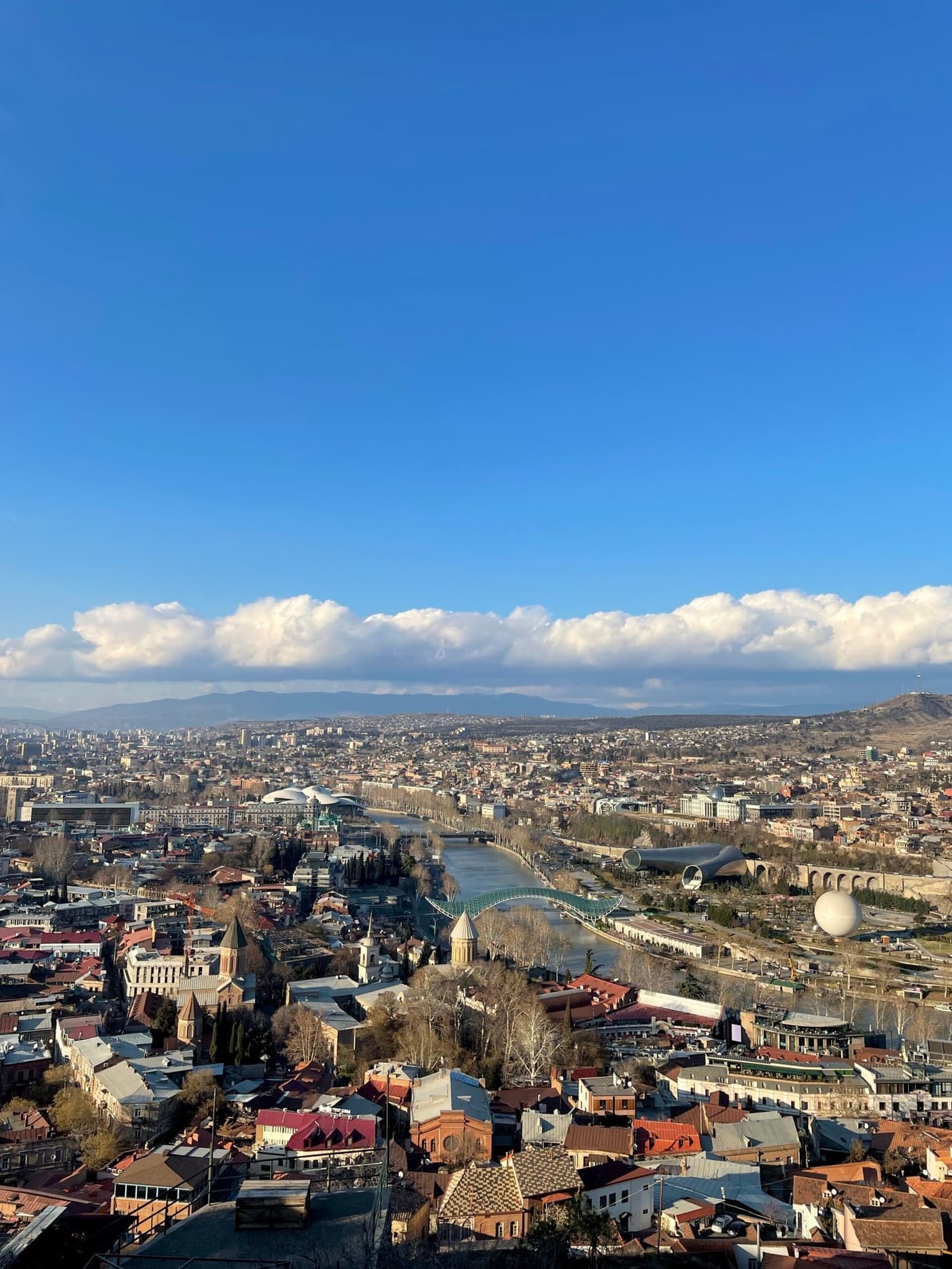
The capital and the main stop for most tourists. The Old Town with the sulfur baths in Abanotubani, Narikala Fortress above the city, Rustaveli Avenue with its theaters and museums, the market by the Dry Bridge, nightclubs and restaurants. Tbilisi is a layered city, where Persian, Turkish, Soviet and post-Soviet layers exist side by side, and it works.
One day isn't enough here; you need at least two or three to even feel the character. The sulfur baths in Abanotubani are a must-do: a private room for an hour costs 50–100 lari. The market by the Dry Bridge has Soviet antiques, old coins, jewelry and paintings. Bassiani is one of the best clubs in Europe. Café Littera in the Writers' House serves high-end Georgian food with a lively atmosphere.
The full list of sights is in the article What to See in Tbilisi. For neighborhoods to stay in, I recommend the article Tbilisi neighborhoods.
Batumi
A Black Sea resort with a subtropical climate. A pebble beach, palm trees on the promenade, a lively old town with Turkish traces, a Botanical Garden 9 km from the center with sea views, and the Adjara mountains an hour's drive away. Batumi is about contrasts: Soviet high-rises next to casinos, an Orthodox cathedral across the road from a mosque, bazaar bustle next to trendy coffee shops.
In summer it's crowded and loud; in winter it's quiet, cheap and homey. For more on Batumi as a place to live and visit, I recommend the complete Batumi guide. The sights are covered in the article What to See in Batumi. And if you can't decide, I have a comparison: Batumi or Tbilisi: Which to Choose.
Kutaisi
The second-largest city in the country, undeservedly bypassed by tourists. Gelati Monastery (UNESCO, 12th century), Prometheus Cave 20 km away, Sataplia with its dinosaur footprints, and a lively eastern market. It's cheaper than Tbilisi, quieter than Batumi, with plenty of local character and no tourist gloss.
More in the article Kutaisi: An Underrated City.
Telavi
Telavi is the main city of Kakheti, the "land of wine". Batonis Tsikhe Fortress, a 900-year-old plane tree, the 11th-century Alaverdi Monastery with a view over the valley, family wineries, and Sighnaghi 40 km away. Telavi is the best base for trips around the wine region.
Sighnaghi
A small fortress town in Kakheti with a view over the Alazani Valley. A favorite place for romantic trips. Registry offices open around the clock (yes, really, you can get married here at three in the morning), homemade wines, and Bodbe Monastery 2 km away. A detailed guide to Sighnaghi.
Regions and Natural Attractions
Georgia fits several climate zones into its territory: subtropics (Adjara), mountain ecosystems (Svaneti, Kazbegi), steppes and semi-deserts (David Gareja), vineyards (Kakheti) and volcanic landscapes (Truso Valley). It's astonishing variety on an area the size of a small European country.
The Georgian Military Road
A highway from Tbilisi through the mountains to Kazbegi and the Russian border. Along the way you'll find Mtskheta, Ananuri Fortress above the Zhinvali Reservoir, the ski resort of Gudauri and panoramas of the Greater Caucasus. One of the best routes for a one- or two-day trip from Tbilisi. The full Georgian Military Road route.
Kazbegi (Stepantsminda)
A mountain village at an altitude of 1,700 meters. The 14th-century Gergeti church above the clouds with the five-thousander Kazbek behind it, one of the most recognizable views in Georgia. Hiking from easy to challenging, authentic mountain villages, the Truso Valley with its volcanic scenery, the village of Juta and the trek over the Chaukhi Pass to the Abudelauri Lakes. A detailed Kazbegi guide: route, how to get there, where to stay.
Svaneti
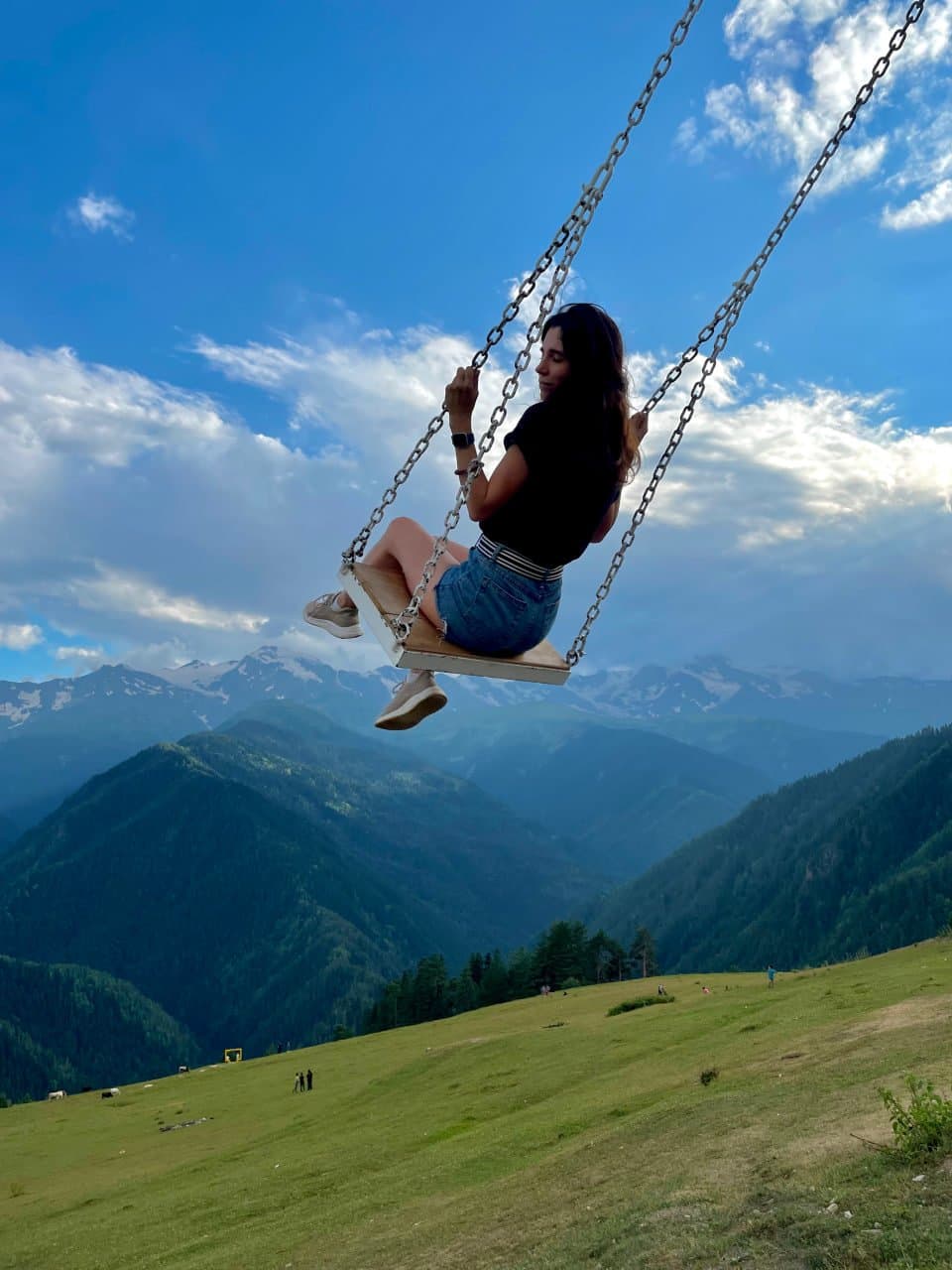
A high-mountain region in the northwest. Medieval towers right among the villages, glaciers, the Mestia — Ushguli trek (45 km, 3–4 days), and views of four-thousanders. It's one of the few places in Georgia that isn't easy to reach, requiring a flight from Tbilisi or a long drive, but it's definitely worth it. Full guide: Svaneti: Mestia and Ushguli.
Kakheti
The country's main wine region. Vineyards, family marani (wine cellars), the Alaverdi and Nekresi monasteries, and David Gareja, a 6th-century cave monastery in the semi-desert near the Azerbaijan border. Sighnaghi as a romantic base, Telavi as the center of the region.
Borjomi and Bakuriani
Borjomi is a small town in a gorge with a natural mineral water spring, the very one from the green bottles, and a national park. Bakuriani is a family ski resort 35 km away that you can reach by narrow-gauge railway, which is an attraction in itself. Guide to Borjomi and Bakuriani.
Mountainous Adjara
There is more around Batumi than the sea. 30 km into the mountains you'll find the Mahuntseti waterfall and the medieval Queen Tamar Bridge, Mount Gomismta with its chairlift, and authentic Adjaran villages. A good day trip from Batumi.
Georgia's Top Attractions
If you want to prioritize what to see first, here are the key points.
Mtskheta is the ancient capital of Georgia, 25 km from Tbilisi. The 11th-century Svetitskhoveli Cathedral, and Jvari Monastery on a cliff above the confluence of the Kura and Aragvi rivers. Half a day from the capital and you're in the place where the country adopted Christianity. More in the article what to see in Mtskheta.
Ananuri Fortress is on the way to Kazbegi, above the Zhinvali Reservoir. A 17th-century complex with towers reflected in the blue water. An ideal stop on the Georgian Military Road. More on Ananuri Fortress.
David Gareja is a 6th-century cave monastery in the semi-desert by the Azerbaijani border. From the ridge above the monastery you see multicolored desert hills and the valley. One of the most unusual landscapes in Georgia. 70 km from Tbilisi. More about the monastery in David Gareja and the colored desert.
Uplistsikhe is an ancient cave town from the 1st millennium BC, carved into the rock. About 80 km (roughly 1.5 hours) from Tbilisi, near Gori. More about the Uplistsikhe cave town.
The Batumi Botanical Garden is one of the best in the region. 110 hectares, 5,000 plant species and a view of the Black Sea. 9 km from the center of Batumi. Entry is 15–20 lari.
Gelati Monastery near Kutaisi is a masterpiece of 12th-century Georgian architecture. A UNESCO site. Mosaics, frescoes and the tomb of King David the Builder.
The stone heads in the Sno Valley are sculptures of Georgian historical figures carved by the local master Merab Piranishvili right into mountain boulders. An unusual stop on the way to Kazbegi.
Food and Wine in Georgia: What to Try and Where
Georgian cuisine is one of the reasons people come back. It's not just shashlik and khachapuri; it's a complex, distinctive tradition with dozens of regional dishes.
Khinkali are Georgian dumplings with broth inside. There is a special way to eat them: hold the dumpling by the "tail," bite a little, drink the juice, then eat the meat. The "tails" stay on the plate, and they're used to count how many you've eaten. Fillings: meat (beef + pork), mushrooms, potato with cheese. The best khinkali are in the mountains (Kazbegi style, with thick dough) and in old Tbilisi khinkali houses.
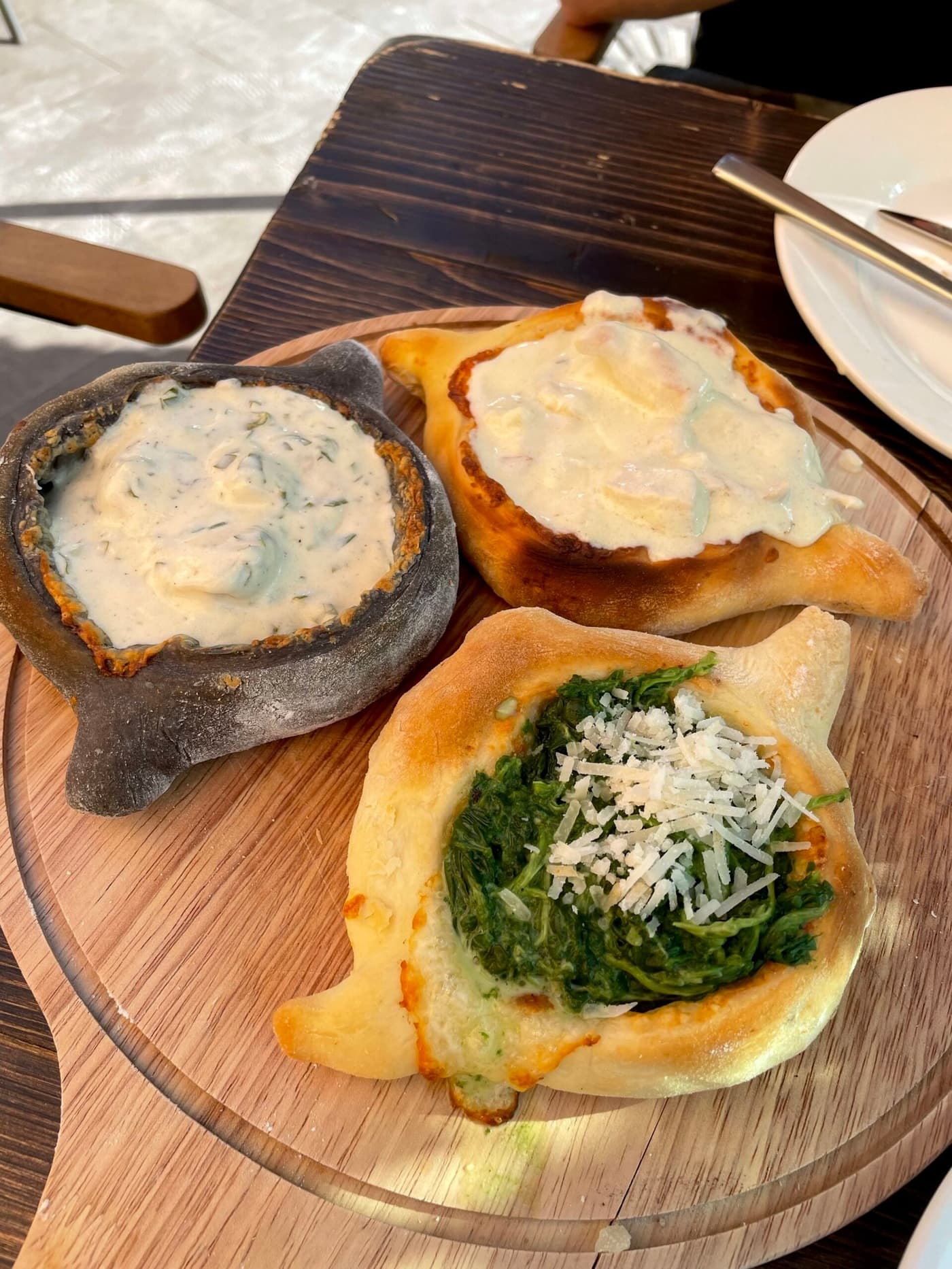
Khachapuri is cheese bread, and it's not just a "cheese pizza." Imeretian (closed, round, the most common). Adjarian, boat-shaped with an egg and butter, eaten by dipping the crust into the melted cheese. Megrelian, with cheese inside and on top. Gurian, a half-moon with egg and cheese.
Mtsvadi is Georgian shashlik cooked over grapevine branches. The special aroma and tenderness of the meat come from exactly this kind of wood. It has nothing in common with Central Asian shashlik.
Pkhali is a cold appetizer of boiled vegetables (spinach, beet, beans) with walnut, garlic and spices. It's always served as little balls with a pomegranate seed on top.
Chkmeruli is chicken in a creamy garlic sauce, cooked in a pan. It comes from the village of Shkmeri in Racha, which gave the dish its name. One of the most tender poultry dishes in Georgian cuisine.
Lobiani is bread stuffed with beans. A classic street food, especially in the mountain regions.
Georgian wine is a story of its own. About 500 indigenous grape varieties, the qvevri method (a clay jug buried in the ground for several months), orange white wines with tannins, something you won't find anywhere else in the world. The main varieties: Rkatsiteli and Mtsvane (white), Saperavi (red), Kindzmarauli (semi-sweet red, the very Soviet-era wine). The best places for tasting in Tbilisi: Vino Underground (independent winemakers) and 8000 Vintages (a huge selection). In Kakheti, family marani welcome tourists for tastings at 15–40 lari.
The full food guide: What to Try in Georgia.
Georgia or Armenia: If You're Choosing
A common question: fly to Georgia or to Armenia? Both are in the Caucasus, with mountains and history, good food and welcoming people, and both are easy to enter for many travelers (check the rules for your own passport).
In short: Georgia is richer in natural diversity (sea + mountains + semi-desert in one country), Georgian cuisine is more varied, and there's incomparably more wine. Armenia is more intimate, its history deeper and more tragic, and it has fewer tourists. With two weeks, the best option is to choose both: the Tbilisi — Yerevan minibus takes 6–7 hours. A detailed comparison is in a separate article, Georgia or Armenia: Where to Go.
Practicalities: What to Know Before You Go
SIM card and internet. Magti and Silknet are the two main operators. A starter package with data costs 15–25 lari at the airport or in any mobile shop. The internet is fast in cities and unstable in the mountains. Download offline maps (Maps.me with Georgia) in advance, which is especially important for hiking in Kazbegi and Svaneti.
Dress code in monasteries. In working churches and monasteries, shoulders and knees must be covered for everyone. Most entrances have wraps and skirts, but not all. If you bring a long scarf, it covers everything at once. It's respect for a place that is still in use, and Georgian monks appreciate it when tourists follow the rules.
Tipping. It isn't considered mandatory, but leaving 10% in restaurants is customary. You don't tip in Bolt and Yandex Go. Not at the market or on minibuses either.
Bargaining. At markets (the Dry Bridge, Dezerter in Tbilisi), bargaining is appropriate and part of the process. In shops, cafés and restaurants, prices are fixed.
The Georgian feast (supra). If locals invite you to a feast, it's an honor. The tamada makes toasts by tradition: the first to God, then to the country, to the host of the house, to the guests, to the departed. People drink in a certain order. It's not polite to refuse food or drink. Eat, drink, listen to stories. It's one of the liveliest experiences Georgia offers.
Language. Georgian is hard to learn, a completely different language family with its own alphabet. In tourist areas you can get by in English, and young people speak it very well. A few Georgian words please the locals: "gamarjoba" (hello), "madloba" (thank you), "gaumarjos" (cheers, a toast at the table), "ara" (no), "ki" (yes).
Booking accommodation. In Tbilisi, aggregators such as Booking and Agoda work well, and there are apartments on Airbnb. In the mountains it's often easier to message hosts directly on Facebook or ask the owners of another guesthouse. In high season (July–August), book 2–3 weeks ahead.
Safety
Georgia is a safe country for tourists. Street crime is low and pickpocketing is rare. Tourists feel at ease in Tbilisi and in small towns.
A few things to keep in mind. In the mountains the weather changes very fast, so always bring a warm layer, a waterproof jacket and water, even if the sun was shining in the morning. On the roads the driving style is unpredictable, so be careful behind the wheel. At David Gareja part of the territory borders a disputed zone, so check the current access status before you go.
Health insurance has been mandatory on entry since 2026. Medical care in Georgia is paid, and in the big cities it's not bad.
Georgia Itineraries: Where to Start
A few ready-made formats depending on the length of your trip.
A weekend trip (3–4 days) — Tbilisi in full: the Old Town, Narikala, the sulfur baths, the Dry Bridge market, and one good dinner at a restaurant. A day trip to Mtskheta (30 minutes from Tbilisi).
One week: Tbilisi (2–3 days) + the Georgian Military Road with a night in Kazbegi (2 days) + Kakheti: Telavi, Sighnaghi, wine tasting (2 days).
Two weeks: Tbilisi → Mtskheta → Kazbegi → Kakheti (Telavi, Sighnaghi) → David Gareja → Kutaisi (Gelati, Prometheus Cave) → Batumi. Or instead of Batumi, head to Svaneti if you want mountains rather than sea.
A month or more: Tbilisi as a base + gradually exploring the regions: Borjomi, Svaneti, Adjara, Racha, Mtskheta-Mtianeti. Digital nomads choose this format, and Georgia suits it perfectly. I described it in another article: Georgia for digital nomads.
Georgia for Different Types of Travelers
The country is versatile, but everyone gets their own Georgia.
If you're going for food and wine: Tbilisi (Café Littera, Barbarestan, the Dezerter Bazaar), Kakheti (Telavi, Sighnaghi, family marani), Kutaisi (the market, home-style restaurants).
If you're going for mountains and active travel: Kazbegi (Gergeti, Juta, Truso Valley), Svaneti (Mestia, Ushguli, trekking), Gudauri in winter (skiing).
If you're going for history and monasteries: Mtskheta (Svetitskhoveli, Jvari), David Gareja (6th century), Gelati near Kutaisi (12th century, UNESCO), Uplistsikhe (cave town), Alaverdi in Kakheti.
If you're going for the sea: Batumi and Kobuleti.
The best months: June and September. July–August are warmer and busier.
If you're going for quiet and no tourists: Kutaisi (unfairly uncrowded), the Sno Valley, mountainous Adjara (Khulo, Shuakhevi), Racha.
What to Pack: A Practical List
A few things that will really come in handy. A waterproof jacket or windbreaker, since the weather in the mountains and in Batumi changes fast. Comfortable walking shoes, since Tbilisi is hilly and in places has uneven cobblestones. Trekking boots if you plan to hike in Kazbegi or Svaneti. Cash in lari, as some places don't accept cards. An offline map on your phone (Maps.me or OsmAnd). Sunscreen, since you burn quickly in the mountain and sea sun. A scarf or shawl for monasteries.
Georgia FAQ: Answers to Common Questions
Do you need a visa for Georgia?
It depends on your passport. When we checked in October 2026, citizens of many countries could enter visa-free and stay up to 365 days a year, but confirm the rules for your own passport with Georgia's border police before you travel. Since 2026, health insurance with coverage of at least 30,000 lari (about $11,000) has been required on entry.
When is the best time to go to Georgia?
April–May and September–October are the best time for most routes. July–August is peak season: the sea is warm, but it's hot. In winter there is skiing in Gudauri.
How much does a trip to Georgia cost?
A budget independent route: $40–60 a day (guesthouse + local cafés + minibuses). Mid-range comfort: $90–120 a day. With no real limits on spending, from $150 a day.
How do you pay in Georgia?
Cards from Georgian and foreign banks are accepted in the cities, and you need cash for markets, minibuses and villages. If you're staying long, the best option is to open an account at Credo Bank or TBC Bank in person. Details are in the digital nomad guide.
What food should you definitely try?
Khinkali, Adjarian khachapuri, mtsvadi, pkhali, chkmeruli. Orange qvevri wine is a must, at least to taste. I covered it in more depth in the guide What to Try in Georgia.
Can you go to Georgia with kids?
Yes. Georgia is safe and welcoming, and people are very warm toward children. The beach in Batumi, Prometheus Cave and the Botanical Garden are good spots with kids. The main thing is to account for altitude on mountain trips.
Is Georgia dangerous?
Crime is low, and tourists feel safe. The main risks are mountain weather and road conditions. Health insurance has been mandatory since 2026.
How is Georgia different from Armenia?
Georgia is more diverse in nature: sea + mountains + semi-desert. The cuisine is richer and there's more wine. Armenia is more intimate, and its history is more tragic.
How much time do you need for Georgia?
A week is the minimum for Tbilisi and one or two other places. For a proper introduction to the different regions, 2–3 weeks. For living and working there, a month gives you a completely different feel for the country.
Is there internet and mobile coverage in Georgia?
Yes, and it's good. There is 4G in the cities and fast Wi-Fi everywhere. In the mountains it's unstable. Buy a SIM card at the airport or in any mobile shop (Magti or Silknet) for 15–25 lari.