Batumi is Georgia's second-largest city, a subtropical resort on the Black Sea 370 km from Tbilisi. Soviet-era apartment blocks stand next to skyscrapers, palm trees line the waterfront, and from anywhere in the center it's about a five-minute walk to the sea. Casinos, construction cranes, cheap rent and the mildest winter in Georgia are the reasons people come here.
I lived here for several months. Batumi either pulls you in or leaves you slightly puzzled. It all depends on whether you want a resort rhythm or something calmer.
In this guide I cover neighborhoods and rental prices, the sea and when to swim in it, logistics, and what life here is really like. If you are still planning your trip, I also recommend reading the complete Georgia travel guide.
What kind of city is Batumi
Batumi is the capital of Adjara, an autonomous republic in southwestern Georgia on the border with Turkey. The population is around 160,000. It sits on the Black Sea coast and is surrounded on three sides by the mountains of the Lesser Caucasus.
The city's history is complicated, and you can see it in the architecture. Batumi was part of the Ottoman Empire until 1878, and the Turkish influence is most noticeable in the old town, the mosque and the character of some neighborhoods. Then it became a Russian Black Sea port, important for exporting Caucasian oil. Then a Soviet resort with sanatoriums and wide avenues. And finally a post-Soviet experiment with casinos, skyscrapers and "architectural landmarks": the Alphabetic Tower, the Ali and Nino statues, hotels in the style of Dubai apartment towers.
The result is a city of contrasts. Just around the corner from a 19th-century mosque there is a hotel with a giant aquarium in the lobby. You either find that annoying or delightful. I gradually came to see that this is exactly what makes Batumi special: you can never call it boring.
The climate is subtropical, humid and warm. Snow in the city is rare. In summer it's +28–33°C with humidity that makes the heat feel heavier than in Tbilisi at the same temperature. In December and January it's around +10°C, and the palm trees stay green. Annual rainfall is about 2,500 mm, which makes it one of the wettest cities in the whole Caucasus.
The sea in Batumi: when to swim and what to expect
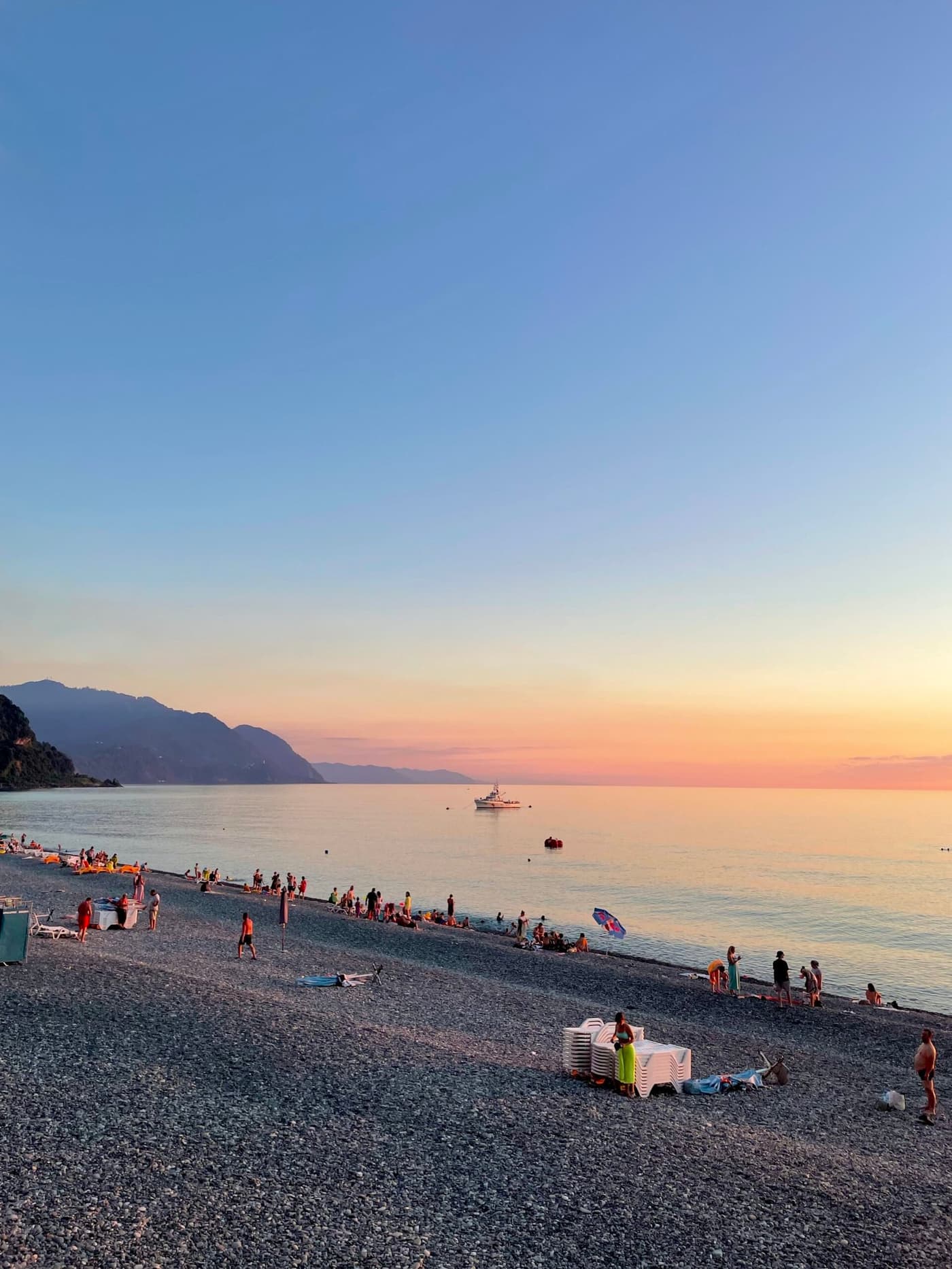
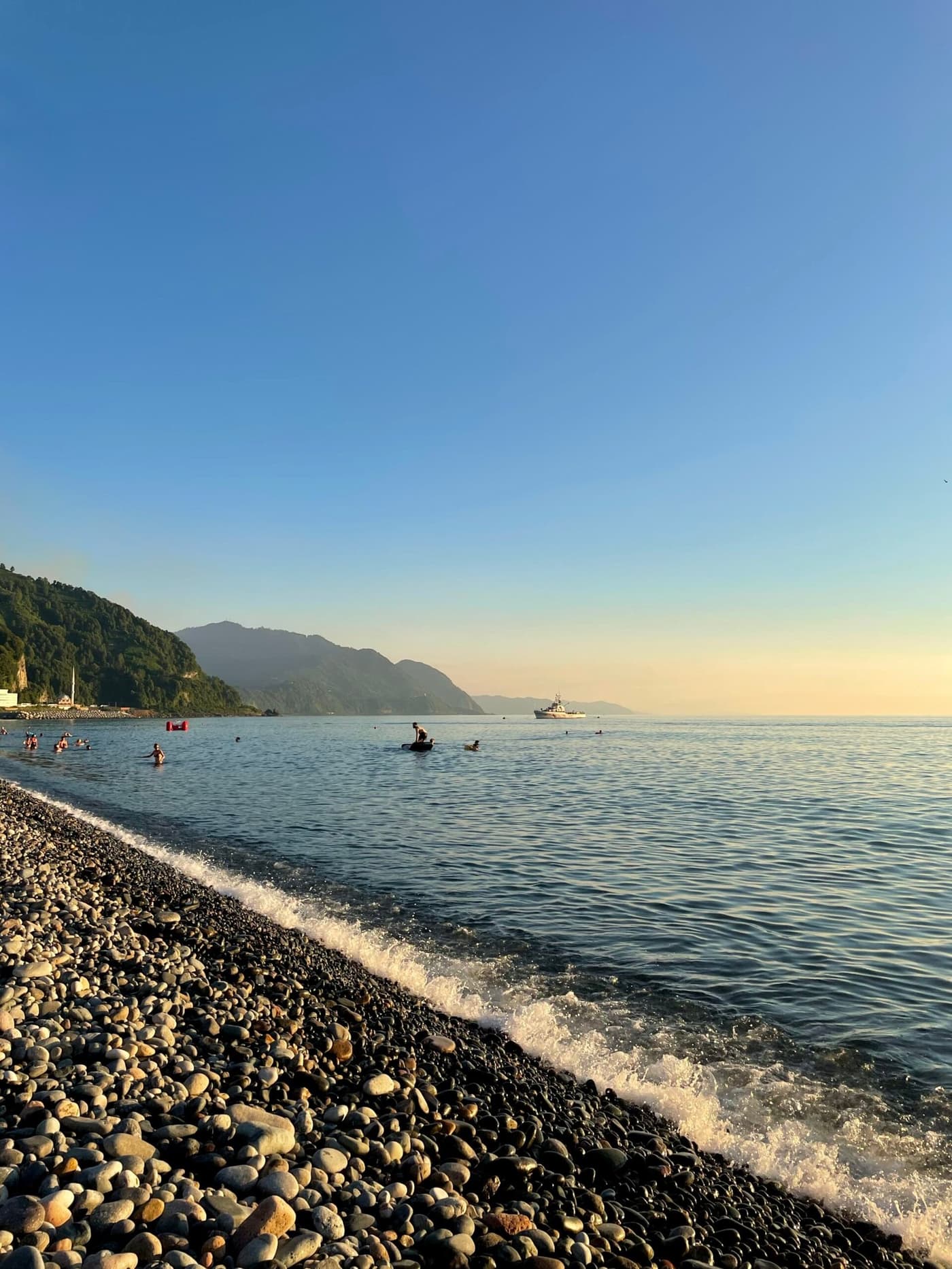
The main thing to know before you go: the beach in Batumi is pebbly. Not sand, but small and medium-sized pebbles. It's uncomfortable to walk on barefoot, so buy beach shoes right here, they are sold near the beach for 10–15 GEL. On the plus side, the sea is clean, the waves are good and you can see the bottom.
The swimming season opens around mid-May for those who don't mind +18–20°C. The main season runs from June to September. In June the water is +21–24°C, which most people already find comfortable. July and August are the peak: +25–28°C, and everyone goes in. September is one of the best months: fewer people, the water stays warm (+23–25°C) and the weather is stable. In the first half of October you can still swim.
The city beach is free and stretches along the entire waterfront. Paid sections with sun loungers and umbrellas cost 20–30 GEL per set. The nicest stretches are in the Riviera area, in the center and in Makhinjauri (6–7 km to the north), where there are slightly fewer people and the water is cleaner.
One important caveat: at the peak of the season the central beach is packed. If you want to swim without the crowds, go on a weekday morning or choose Makhinjauri.
Batumi neighborhoods: where to stay
Batumi is compact, and everything important fits within 3–4 km of the center. But every neighborhood has its own atmosphere, and your choice shapes how you experience the city.
Old Town
The most atmospheric place in Batumi, and also the most compact. The quarter is roughly 500 by 700 meters: narrow streets, 19th-century houses with Italian, French and Turkish influences in the architecture, Europe Square with its town hall, the Orta Jame mosque, and small cafes and restaurants.
It's pleasant to stay here: everything is within walking distance and the atmosphere is authentic. But it's noisy in season. Apartments cost $40–70 per night, or $400–700 per month.
Main streets: Gorgiladze, Memed Abashidze, and Piazza, a reconstructed square with cafes.
Waterfront (Seaside Boulevard)
Six kilometers along the sea: palm trees, amusement rides, fountains, a bike path and restaurants with water views. It's touristy and noisy, but being close to the sea makes up for it. Some of the most expensive sea-view apartments are here.
Sea-view apartments cost $60–120 per night in season and $25–50 in the off-season. Monthly rent is $600–1,200.
New Boulevard and the center (between the Old Town and the waterfront)
Residential blocks where locals live: supermarkets, pharmacies and cafes without tourist markups. A good choice for those who come for a long stay. The sea is a 10–15 minute walk away.
Rent is $300–600 per month. The best balance of price and convenience.
New Batumi (the Radisson and skyscraper area)
The northern part of the waterfront: casino hotels, Radisson, Hilton, the Alphabetic Tower. In the evening it's bright and noisy, with the atmosphere of a resort-town Las Vegas. For a few days it's an interesting experience. For living here permanently, it's a matter of taste.
Makhinjauri
A suburb 6–7 km north of the center, reached by city bus No. 10 or a walk of about an hour along the waterfront. It's quieter, the beach is better, it's less crowded and prices are lower. Popular with people who come for a month and want less tourist noise.
Rent is $250–450 per month. An ideal place if you want to live by the sea without overpaying.
What to see in Batumi
Batumi has places without which your picture of the city would be incomplete. Below is my list of what is worth seeing if you find yourself in Batumi.
Old Town
The main sight. A walk from Europe Square along Gorgiladze Street to the mosque takes an hour if you don't rush. Peek into the courtyards: grapevines, cats, old balconies. The best way to feel the city is simply to wander this quarter without a goal.
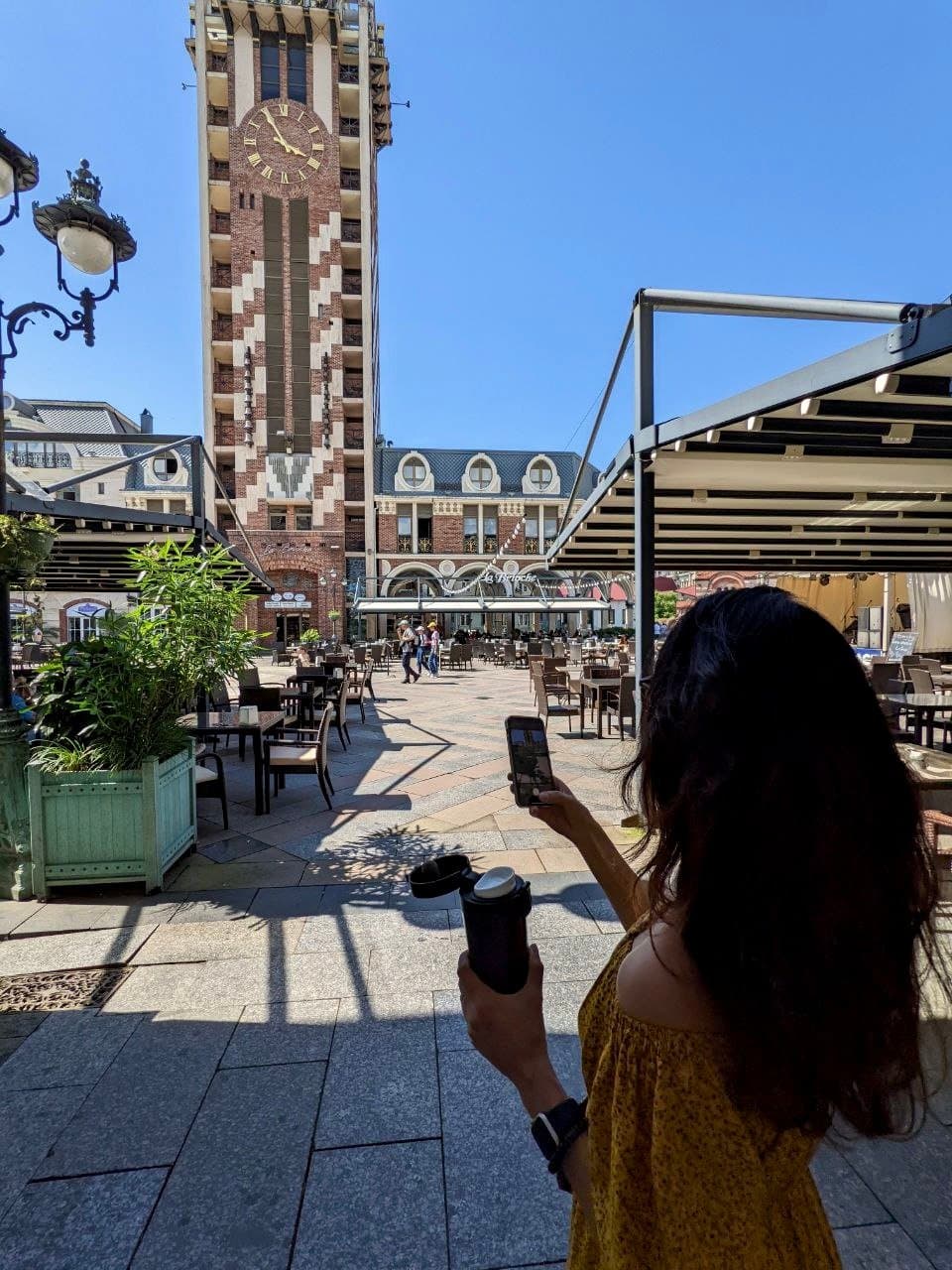
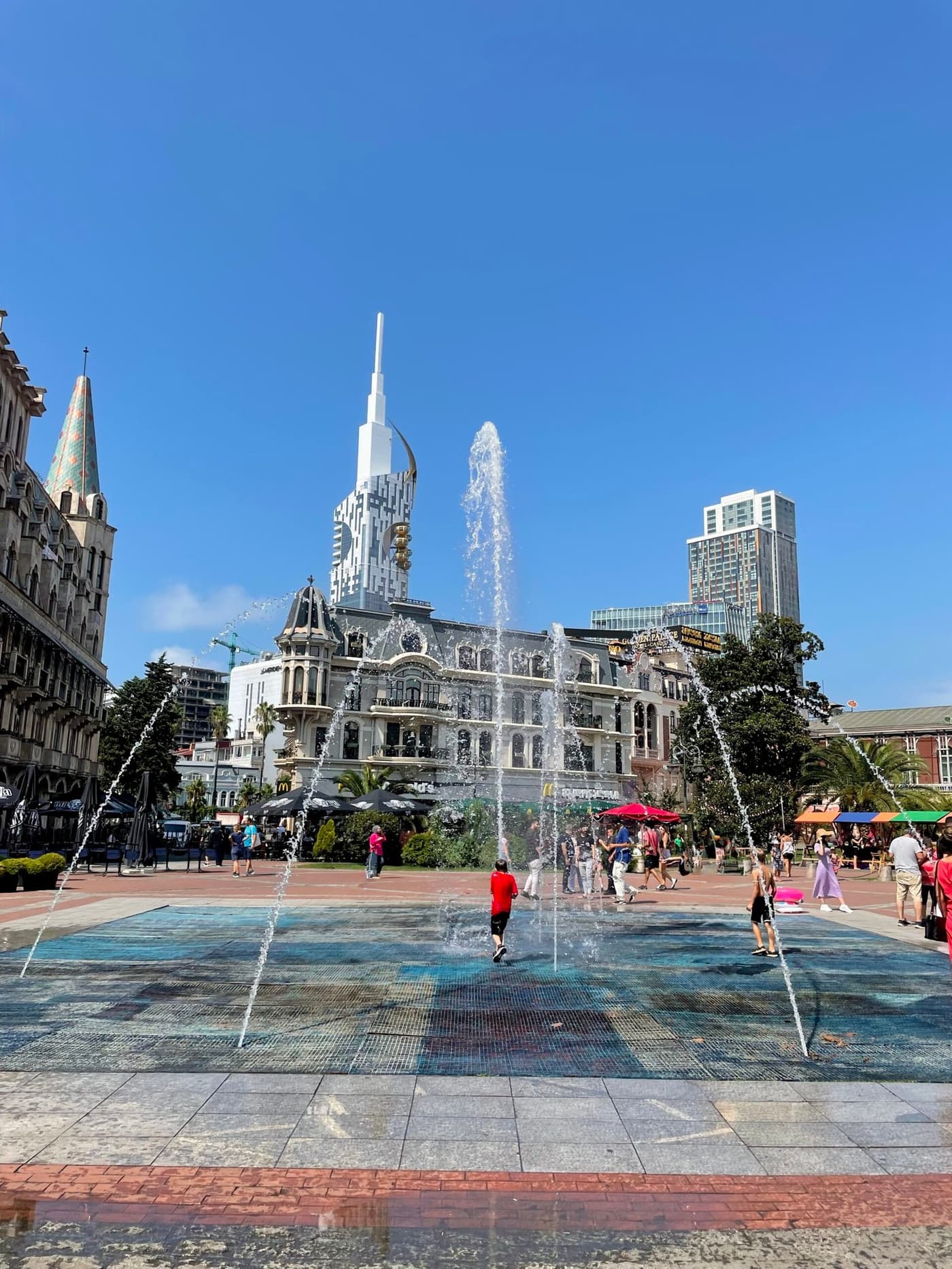
Europe Square is the center of the Old Town. A fountain, an Italian Renaissance-style town hall and several open-air cafes. In the evening both locals and tourists gather here.
The Orta Jame mosque (19th century) is active, small and atmospheric. A visible trace of the Ottoman past. Visitors must follow the dress code.
Piazza is a reconstructed square in the Italian style. Cafes, restaurants and live music in the evenings. Touristy, but pleasant to sit in.
Botanical Garden
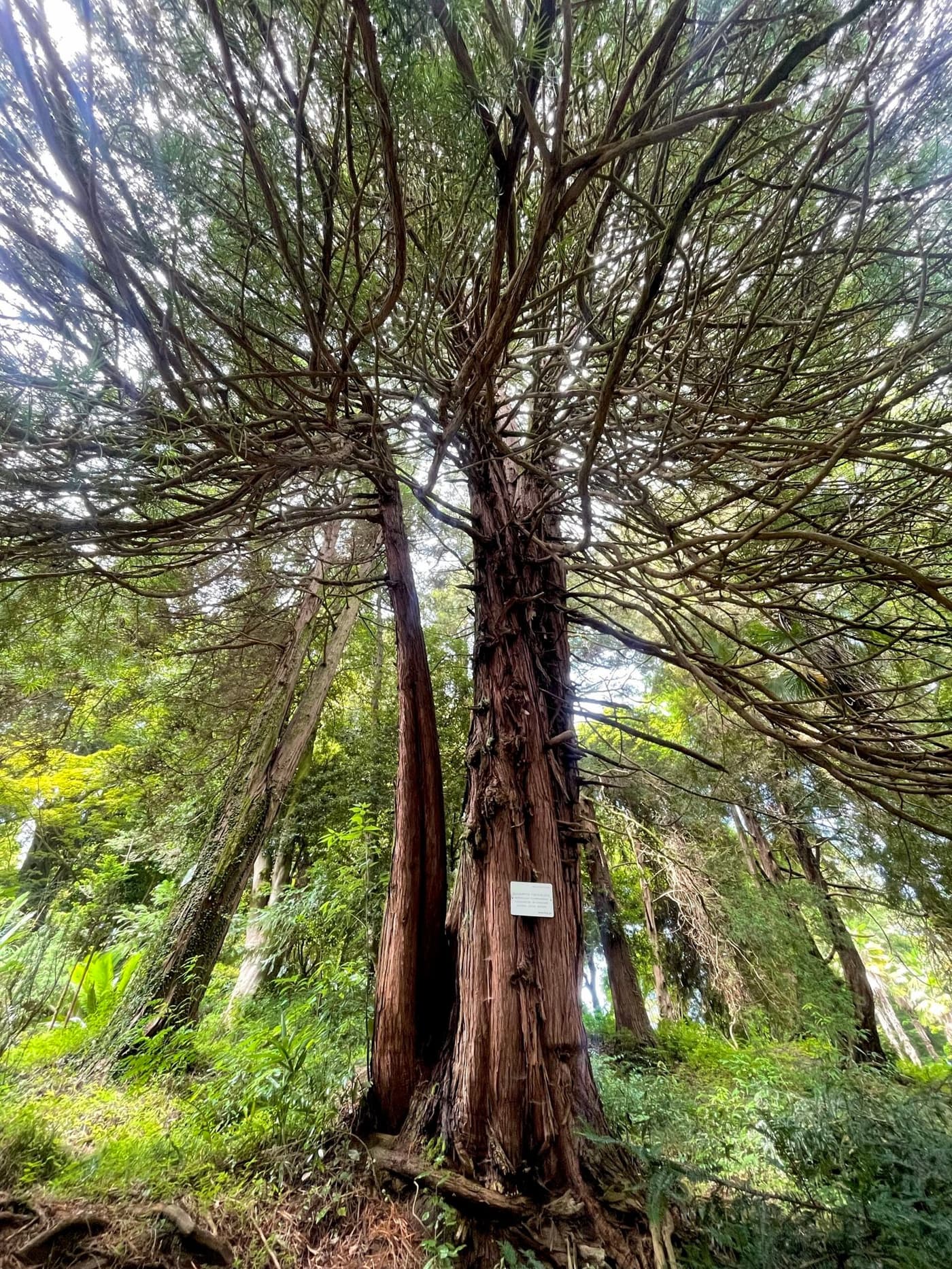
9 km from the center, in the village of Green Cape. One of the largest in Georgia: 113 hectares of subtropical plants on a mountain slope above the sea. Bamboo groves, a Japanese garden, a cactus section, magnolias and eucalyptus. Several points offer views of the Black Sea.
Entry: 20 GEL. Electric bus ride around the garden: 10 GEL per person. Opening hours: in the summer season (May to September) the garden is open from 09:00 to 19:30, sometimes until 20:00 on the longest days. In the autumn and winter period (October to March) it's open from 10:00 to 18:00.
Minibus No. 31 from Europe Square costs 1 GEL and takes about 30–40 minutes. A taxi costs 15–20 GEL.
It's better to come in the morning, when it's cooler and there are fewer people. Plan for at least 2–2.5 hours. Wear comfortable shoes, as there are many uphill stretches.
Waterfront and architectural landmarks
Seaside Boulevard is for an evening stroll. After sunset the lights come on, the fountains switch on (one performs a dance near the "Rainbow"), and the outdoor cafes open.
The Alphabetic Tower is a steel structure covered with letters of the Georgian alphabet. There is an observation deck at the top, and the elevator is paid. A controversial landmark, but an iconic one for Batumi.
The Ali and Nino statues are eight-meter metal sculptures that slowly move and periodically merge. The work of Georgian sculptor Tamara Kvesitadze, inspired by the famous novel about an Azerbaijani man and a Georgian woman. Watch them in motion for about 10 minutes, the length of a full cycle.
Funicular
From the Old Town, a funicular rises to a height of about 200 meters above the city. At the top there is a viewpoint with views of Batumi, the sea and the mountains. The cost is about 5 GEL round trip. It runs from 11:00.
Mountainous Adjara: what to see outside the city
Most tourists see only Batumi and skip what begins right behind it. Mountainous Adjara is a subject in its own right, and in one day from Batumi you can see several places unlike anything else.
Makhuntseti Waterfall and Queen Tamar Bridge
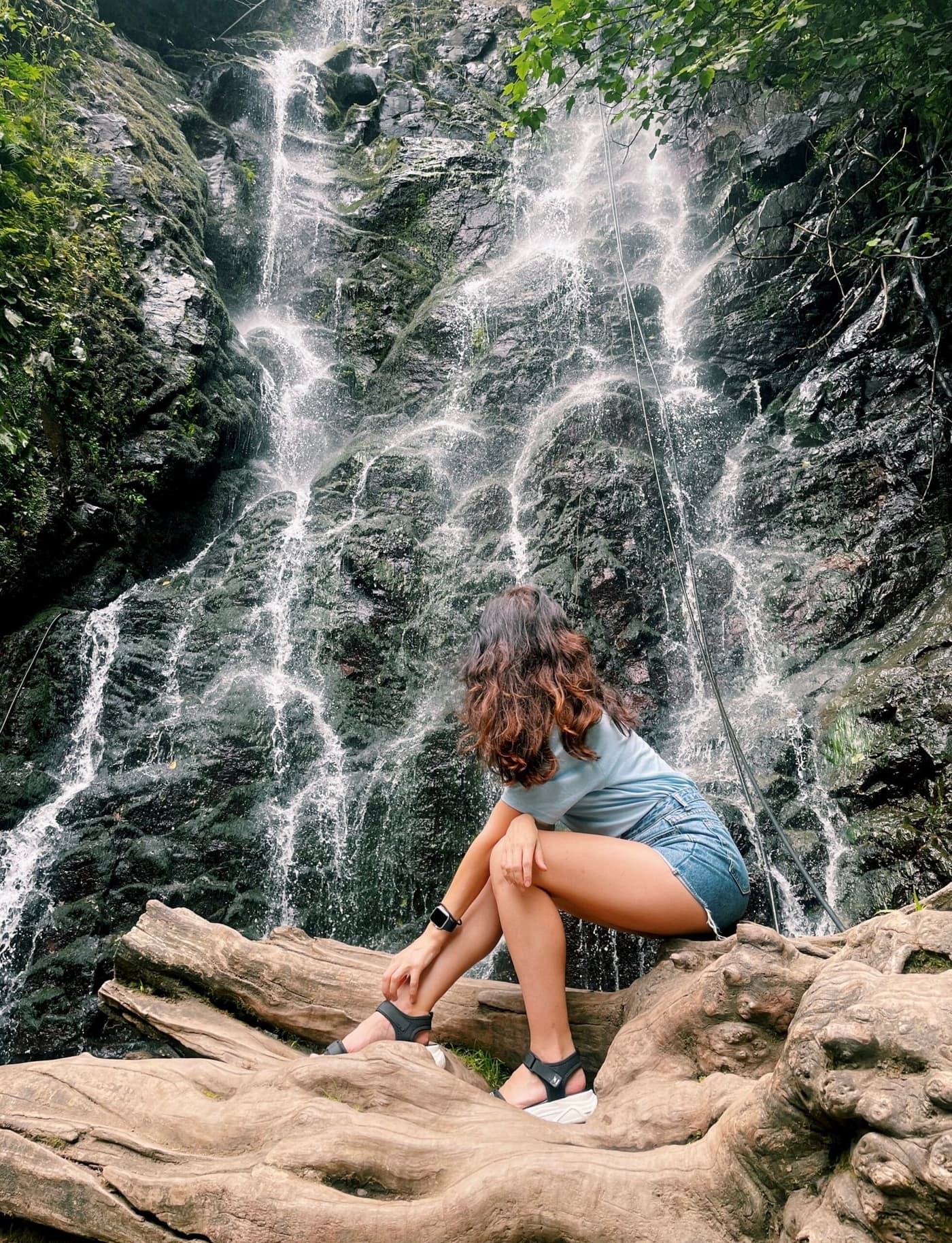
30 km from Batumi (about an hour's drive). An arched bridge from the 11th–12th century over the Adjaristskali River, one of the best examples of medieval Georgian engineering, stands right above the mountain river. Nearby is the Makhuntseti waterfall, where people swim right beneath it in a special pool.
Take a minibus from Batumi or a taxi (20–30 GEL one way). It's better to hire a taxi with waiting time, so you can see both sights and come back.
Gomismta
A mountain resort at an altitude of about 2,000 meters, 60 km from Batumi. In winter it's a small ski resort (simpler and cheaper than Gudauri). In summer there's a viewpoint with the sea and the mountains in sight at the same time. One of the few places where you see both elements in one frame.
It's about 1.5–2 hours by car to Gomismta. It's harder to get there by minibus, and a rental car or taxi is more convenient.
Sarpi and the Turkish border
15 km from Batumi is the Sarpi checkpoint, the border with Turkey. The crossing is open around the clock. From Trabzon to Batumi it's about 3–4 hours. Many people use it for a visa run (resetting the visa-free stay): they go to Trabzon for a couple of days and come back.
Kobuleti
25 km north of Batumi, a small resort town with a wider beach and fewer tourists. The minibus costs 1–2 GEL and takes 30 minutes. If you want a beach without the Batumi crowds, this is a good option.
Active leisure: the sea and beach activities
Batumi isn't only about "lie by the sea and look at the horizon." On the beach and along the waterfront there are several things worth trying at least once.
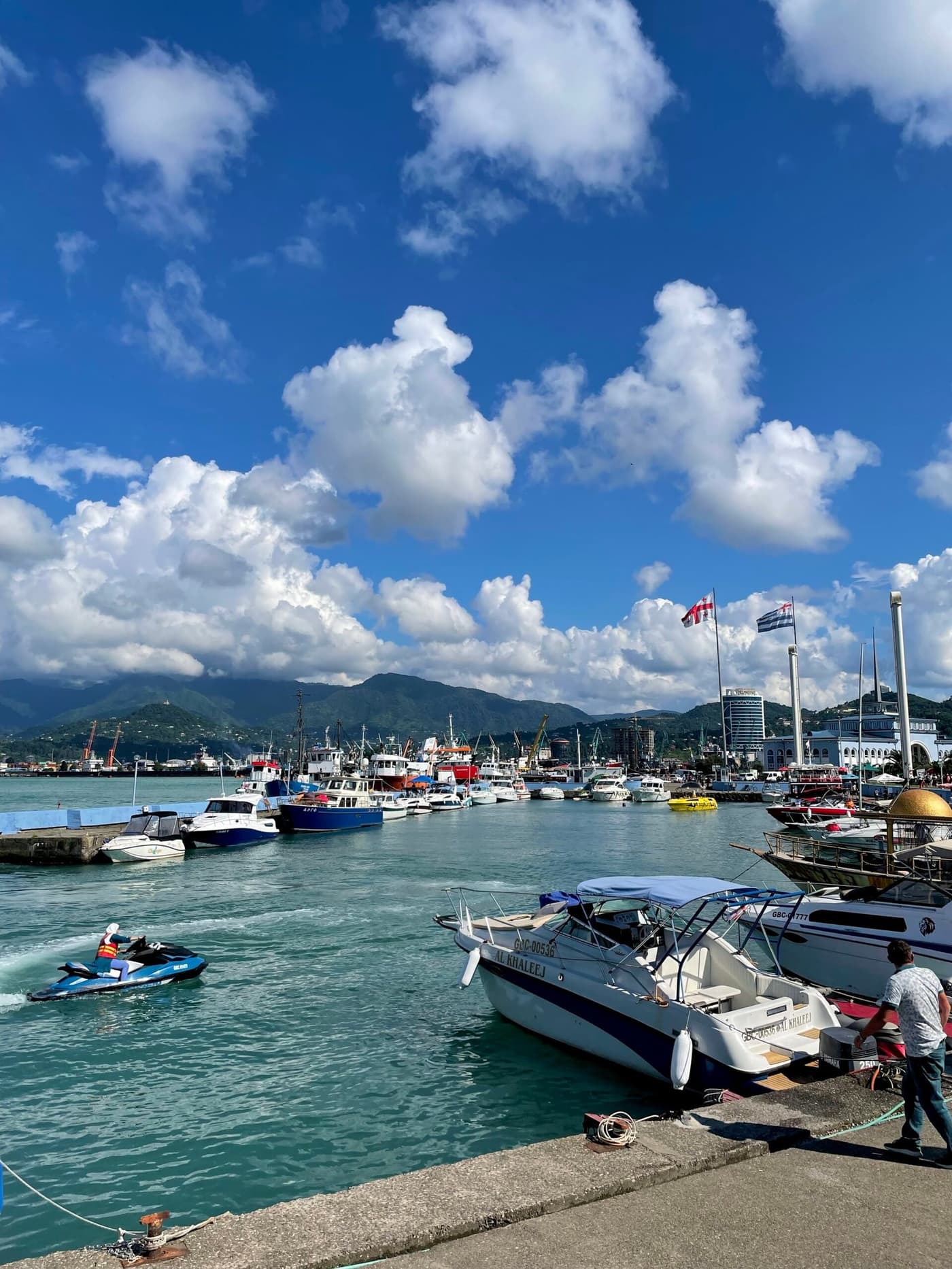
Water sports are concentrated in the central part of the beach, roughly opposite Seaside Boulevard. Here you can go jet skiing for about 40–60 GEL for 10 minutes, parasailing for 50–70 GEL, and banana boat or tube rides for 15–25 GEL. Bargaining is quite possible, especially on a weekday or in the first half of the day.
Kayak and paddleboard rental has appeared in recent years, at about 20–30 GEL per hour. For paddleboarding it's better to choose the morning: by 11:00 the wind picks up and waves start. Batumi's morning water is clear and calm, and you can see the bottom even half a meter down.
A bike path runs from the Old Town north through New Boulevard to Makhinjauri, about 6–7 km one way. Bike rental at the entrances to Seaside Boulevard starts at 5 GEL per hour. In the evening everyone rides along the waterfront: locals with children, tourists, teenagers. It's the most Batumi thing to do after eating khachapuri.
Fishing from the shore or a boat is a local tradition. In the evening there are always anglers on the pier by the port. Watching them is interesting in itself, and sometimes they offer you a chance to cast a line yourself. Organized sea trips cost about 50–80 GEL per person, and you can ask right on the waterfront or at tourist offices.
Food in Batumi
Batumi is an Adjaran city, and the local cuisine differs a little from Tbilisi's.
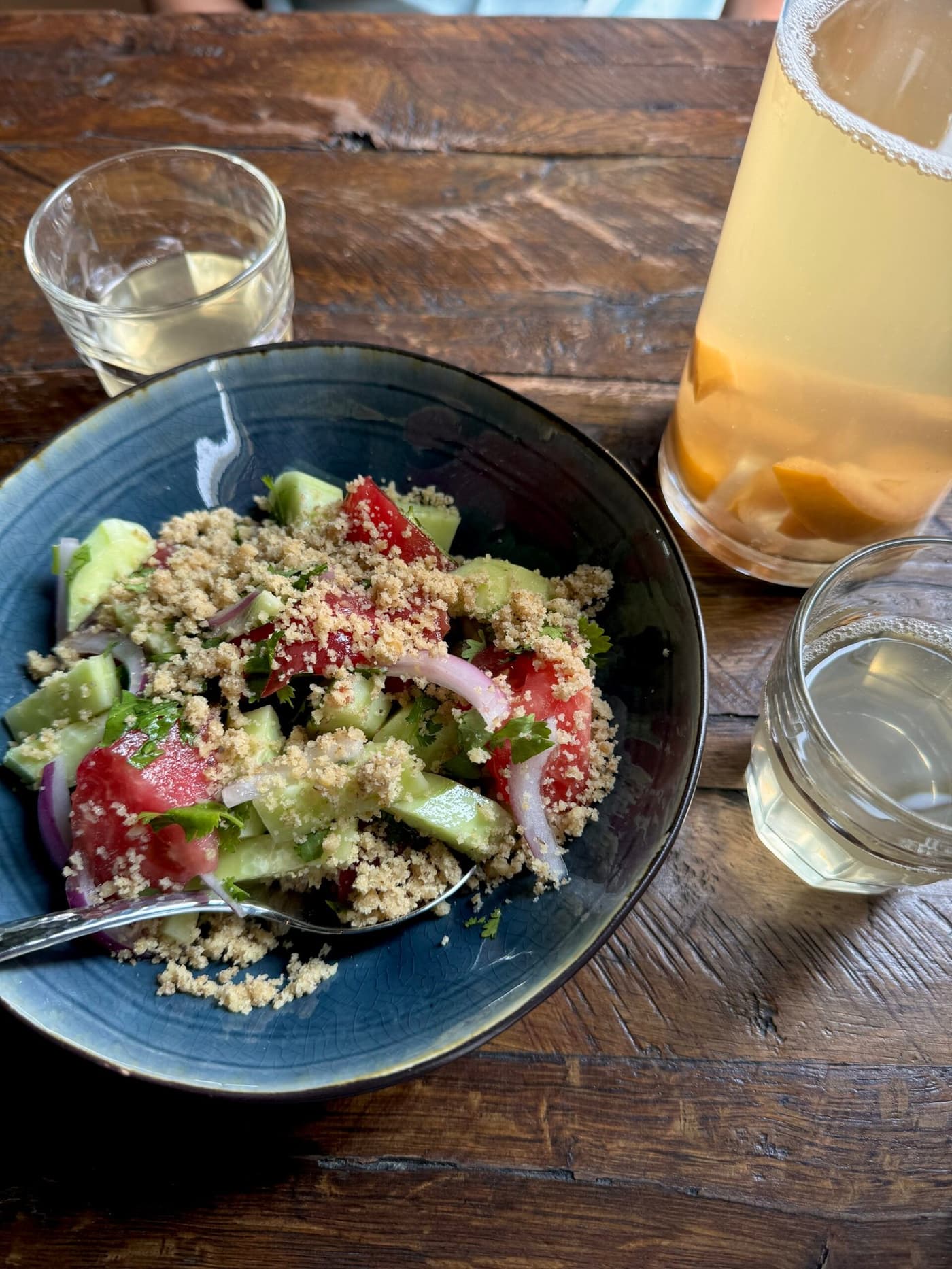
The main difference: Adjaran khachapuri comes from right here. A boat of dough with melted sulguni cheese, a raw egg and a piece of butter, which you stir together and eat while it's hot. The best khachapuri in Batumi is in simple bakeries in residential neighborhoods, not on the waterfront.
Fish: people eat much more of it here than in Tbilisi. Local horse mackerel, bluefish, trout from mountain rivers. At the fish market by the port, which operates from the morning (it's better to come at opening, around 9:00–10:00), you can buy fresh fish and ask them to fry it on the spot.
Adjaruli (local pies) are less well known than khachapuri, but worth trying.
The Turkish influence in the cuisine is noticeable: lots of kebabs, lahmacun, and tea served in armudu (pear-shaped glasses). That makes sense, since the border is 15 km away.
I wrote about what to try in Georgia in detail in another article.
The most important rule: the best food in Batumi is not on the waterfront. On the waterfront you pay a markup for the view: 1.5–2 times more for the same or worse quality. Look for cafes on the streets parallel to the waterfront, such as Khimshiashvili Street and Gorgiladze, and in the side lanes of the Old Town.
Where to eat in Batumi: a few tried-and-true places
Sazandari (78a Zurab Gorgiladze St.) is Georgian cuisine in a retro-style wooden interior, with live music in the evenings. Khachapuri and pkhali, big portions, local prices.
Laguna (18 Zurab Gorgiladze St.) is a cafe open since 1997 that specializes in Adjaran khachapuri. Locals and visitors consistently name it one of the best in the city. In summer at peak hours there can be queues.
The upper station of the Argo cable car has a cafe with panoramic views of the sea and mountains, convenient to combine with the ride up. Cable car ticket: 30 GEL for adults, 7 GEL for children aged 5–12, free for children under 5. Open from 10:00 to 23:00.
Bakeries in residential neighborhoods: the guide is simple, look for the smell and the queue. A hot shoti bread costs about 2 GEL and Adjaran khachapuri 6–10 GEL. That's much cheaper than in tourist cafes, and usually tastier.
The fish market by the port (27 Baku St.) is a small covered market just behind the seaport, with about 10 stalls. Mullet, red mullet, anchovy, flounder, all caught that morning. Come at opening time, around 9:00–10:00 (sources differ slightly on the exact hour): by noon the freshest catch is already gone. You can buy fish and eat it right there, which is an experience of its own.
For more, see my guide to the best restaurants and cafes in Batumi.
Batumi nightlife
Batumi at night and Batumi by day are like two different cities. After ten in the evening the waterfront comes alive: cafes with live music open, the casinos fill up, and the bars in the Old Town get going.
Casinos are a culture of their own in Batumi, and it is the only resort city in Georgia where casinos cluster this densely along the waterfront. Sheraton, Hilton, Radisson and several standalone venues, usually with free entry. Even for those who don't gamble, it's an attraction: the atmosphere, the crowd, free coffee at the entrance.
The bars in the Old Town have multiplied over the last five years. On Piazza and in the lanes there are now small cocktail bars with menus of local wines and chacha. Georgian wine at a bar starts at 8–15 GEL per glass, chacha from 4 GEL. On Fridays and Saturdays there is live music or a DJ.
Batumi is not Tbilisi when it comes to club culture. There is nothing here like Bassiani or Khidi. A Batumi night is a resort night: shashlik by the sea at one in the morning, a long dinner, a stroll under the palms with an ice cream. It's more southern Europe than a Berlin club. And that rhythm suits most visitors just fine.
What to buy in Batumi
Batumi is a good city for shopping if you know what to look for. The tourist shops on the waterfront sell standard souvenirs. That's not what you want.
Adjaran adjika is the main local spice. Not tomato paste, but a hot, aromatic blend of red pepper, garlic and walnut. It's sold at the central market in small jars and keeps for months. The price is 3–6 GEL per jar. In Tbilisi the same adjika costs twice as much.
Hazelnuts and nuts. Adjara is one of the biggest hazelnut-producing regions in Georgia. The market sells them fresh, roasted, in honey and in chocolate. It's better to buy by weight rather than packaged.
Georgian wine in shops: the selection is good and prices are low. The GWS shop and the Smart and Carrefour supermarkets are reliable options. Good Rkatsiteli starts at 15–20 GEL, Saperavi at 18 GEL.
Turkish goods, a reflection of the nearby border. Textiles, spices, Turkish delight, glazed nuts: cheaper than in Tbilisi and more varied. The market in the lower part of the city is closest to this theme.
Churchkhela: buy it at the market or from street vendors, not in supermarkets. At the market it's fresh and soft.
Prices in Batumi
Batumi is more expensive in the tourist season and cheaper in the off-season, and the difference is noticeable.
| Item | July–August (season) | October–May (off-season) |
|---|---|---|
| Apartment per night | $60–150 | $25–50 |
| Lunch at a local cafe | 25–40 GEL | 15–25 GEL |
| Dinner for two with wine | 100–180 GEL | 60–110 GEL |
| Taxi in the center | 5–10 GEL | 5–8 GEL |
| Sun lounger + umbrella (2 pcs.) | 20–30 GEL | — |
| Botanical Garden | 20 GEL | 20 GEL |
Long-term rent: a non-central area $250–500 per month, the center or a sea view $500–1,200 per month. In the off-season (October to May) prices drop by 30–50%.
Overall, Batumi is a little cheaper than Tbilisi out of season and a little more expensive at the peak. I compare the two cities in my article Batumi or Tbilisi.
How to get to Batumi
You can reach Batumi in several ways, and the choice depends on where you are coming from and when.
By plane. Batumi International Airport (BUS) is 2 km from the center. From Istanbul, Turkish Airlines and Pegasus fly daily, and from Warsaw there are seasonal flights. From the airport to the center: buses No. 10 and 10a cost about 0.50 GEL, Bolt costs 5–7 GEL, and a standard taxi with a driver costs 10–15 GEL.
Night train from Tbilisi is the most convenient option. You leave in the evening and arrive at the sea in the morning. Prices depend on the class and season: on average, a third-class bunk from 30 GEL, a compartment from 45 GEL, more in high season. It's better to buy tickets 2–3 days ahead, since night compartments sell out quickly. Official booking is on tre.ge. More in my article: Tbilisi to Batumi by train.
Minibus from Tbilisi leaves from the Didube bus station. The price is from 30 GEL, with departures from morning to evening as seats fill. Real travel time with stops is 6–7 hours: traffic and drop-offs along the way. There is little comfort, but it's cheap and predictable.
By car: the E60 highway, about 370 km from Tbilisi. On a good road it takes 4.5–5 hours. Part of the route is a toll motorway, so check the current sections before your trip.
From Turkey: the Sarpi checkpoint is 15 km from Batumi and open around the clock. From Trabzon to Batumi, allow 3–4 hours on the road by minibus or bus, plus time at the border if there is a queue.
Getting around Batumi
Batumi is compact, and most tourist sights are within a 30–40 minute walk of each other.
Bolt works, and a taxi in the center costs 5–10 GEL. Minibuses cost 1 GEL and run all over the city. To Makhinjauri take city bus No. 10 (the same route that runs from the airport through the center and north along the waterfront) or walk along the waterfront (about an hour). For the Botanical Garden, take minibus No. 31 from Europe Square.
Cycling along the waterfront is pleasant, and there is bike rental by Seaside Boulevard. It costs about 5–8 GEL per hour.
Cards, money and connectivity
TBC Bank and Bank of Georgia have branches all over the city. Credo Bank is here too.
Opening an account at Credo Bank with an in-person visit is the simplest way to solve the banking question.
Local SIM cards: Magti and Silknet at any telecom shop. A starter package with internet costs 15–25 GEL.
Batumi for relocation and long-term living
Batumi is a noticeably more budget-friendly option than Tbilisi, especially if the sea is your priority. A mild winter, the sea nearby, the Turkish border (handy for trips and shopping), and a quiet city outside the season.
Things to keep in mind: summer is crowded and expensive, some venues close in winter, and there are fewer coworking spaces and networking opportunities than in the capital. The climate is humid, which doesn't suit everyone.
There are far fewer coworking spaces in Batumi than in Tbilisi: a few small spaces in the center. On the other hand, in most cafes with an outlet nobody will tell you to leave. Internet in the city center is 4G/LTE, and most cafes have Wi-Fi. That's enough for working online.
In winter Batumi is quiet and cheap, with rent dropping to $250–350 per month for a decent apartment, no queues, and the city getting its local rhythm back. Many of those who came "for the summer" stay for the winter.
Banks and sole-proprietor registration are handled the same way as in Tbilisi. Read more about business registration, residence permits and banking in the article Georgia for digital nomads.
Best time to visit Batumi
I covered every month in detail in my article Weather in Batumi. Here is the short version.
June and September are the best months. The sea is warm, there are fewer tourists than in July and August, and prices aren't at their peak.
July and August are the peak of the season. Everything is open and the sea is at its warmest, but it's crowded and expensive. Book accommodation 2–4 weeks ahead.
April and May: the sea is cold, but it's great for the Botanical Garden and mountainous Adjara.
Winter (November to March) is quiet, cheap, and the palm trees are green. The sea isn't for swimming, but it has a distinctive atmosphere. Some venues close.
FAQ: Answers to questions about Batumi
When is the best time to go to Batumi?
June and September offer the best balance of warm sea, reasonable prices and a moderate number of tourists.
What is the beach like in Batumi?
Pebbly, not sand. The water is clean and the sea is warm from June to September. Be sure to buy beach shoes.
How do I get from Tbilisi to Batumi?
The night train from Tbilisi is the most convenient option: you leave in the evening and arrive at the sea in the morning. A third-class bunk is from 30 GEL and a compartment from 45 GEL, with the price depending on the season and day of the week. It's better to buy tickets in advance on tre.ge. A minibus from the Didube bus station is from 30 GEL, and real travel time with stops is 6–7 hours. By car on the E60 it's about 370 km, 4.5–5 hours. There are also flights to Batumi Airport (BUS), which is 2 km from the center.
Are there casinos in Batumi?
Yes, many. Batumi is one of Georgia's two gambling centers (along with Tbilisi). There are casinos at the Sheraton, Hilton and Radisson, and standalone venues around the city. They operate around the clock.
Can you live in Batumi in winter?
Yes. Winter is mild (+8–12°C) and snow is rare. The city is quiet and prices are low. Some venues close, but the infrastructure works.
What is there to see in Batumi besides the beach?
The Old Town, the Botanical Garden, the Makhuntseti waterfall and Queen Tamar Bridge in mountainous Adjara (30 km from the city), the funicular, and Piazza in the evening.
How is Batumi different from Tbilisi?
Batumi is a seaside, subtropical resort. Tbilisi is a capital with culture, history and variety. I made a detailed comparison in my article Batumi or Tbilisi.
How much does accommodation cost in Batumi?
In summer, $60–150 per night. In the off-season, $25–50. Long-term rent out of season starts at $300 per month.
Is Batumi safe?
Yes. Batumi is one of the safest resort cities in the post-Soviet region. Street crime is rare. Tourists and locals walk along the waterfront and through the Old Town at night. Ordinary city caution is enough.
Do I need insurance to enter Georgia?
As of 2026, yes. Georgia has required tourists to have medical insurance with coverage of at least 30,000 GEL (about $11,000). It's arranged online before the trip and costs from $3–7 per day depending on the insurer.
Do people speak English in Batumi?
Not as widely as you might expect, even in the tourist areas, so a translation app can come in handy in cafes, at the market and in taxis.
What should I do in Batumi when it rains?
Rain is a frequent visitor in Batumi, especially in May–June and October. The Botanical Garden looks especially alive in a light rain. In the Old Town there are coffee shops, bookstores and galleries. The casinos operate around the clock. A trip into mountainous Adjara in the fog has an atmosphere of its own.