Tbilisi is a city that takes time. You can't take a list of ten sights, tick them off in order and say you've seen it. Every neighborhood has its own atmosphere, smell and history. Old courtyards with grapevines and sulfur baths sit one step from Rustaveli Avenue, and just past the corner khinkali cafe the graffiti quarters and artists' studios begin.
I put this route together after walking it myself, for anyone who has come for 2–4 days and wants to really get into the city.
For how much life in Tbilisi costs, which neighborhoods are best to stay in and what the weather is like in each season, see the separate guides. Here it's just the route.
Old Town Tbilisi
Start in the Old Town. It's the heart of Tbilisi, and it's where you understand why people fall in love with it. Everything is compact: from Meidan Square to Narikala it's a 20-minute walk at an easy pace, but nobody walks it that fast, because every alley holds you back.
The route begins at Meidan Square (Gorgasali Square), where the monument to Vakhtang Gorgasali, the founder of Tbilisi, stands. From here, one way leads to the sulfur baths in Abanotubani, the other to steep streets with balconies and the lanes of Sololaki. For a detailed walking route with every turn, see the Tbilisi Old Town guide.
Abanotubani and the sulfur baths
Abanotubani is the sulfur bath quarter. Domed roofs poke straight out of the ground, and beneath them are hot sulfur springs that have been here since the 5th century. According to legend, they gave the city its name, from the Georgian "tbili," meaning warm. Vakhtang Gorgasali came across the springs while hunting and founded his capital here.
From the outside you get the domes, the smell of sulfur and an atmospheric quarter. But it's better to go inside. You rent a private room for 1–6 people, spend an hour in hot sulfur water and, if you like, add a bathhouse attendant with a kessa (a rough exfoliating mitt). A bathhouse in Tbilisi is not a spa. It's a cultural experience that locals practice.
Current prices. Chreli Abano is the best known, also called the Orbeliani Baths (2 Abano St.): a room for 1–6 people costs 200 GEL per hour, open daily 9:00–23:00. Simpler baths run from 50 to 80 GEL per room per hour. The attendant's services are an extra 20 GEL and up. On weekends it's better to call ahead. Bring a swimsuit and slippers; a towel is usually provided, but check when you book.
Leghvtakhevi Waterfall
In the gorge right behind the sulfur baths is a small waterfall about 20 meters high. You can walk down a staircase from Abanotubani, which takes 5 minutes. Nearby there's a cold-water pool and a cafe, both popular with locals. In summer it's a pleasant cool spot ten minutes from the tourist center.
This place is almost free of tourists: most people walk past, not knowing that around the corner there's a gorge of the city's very own.
Narikala
A medieval fortress on the hill above Abanotubani. Different rulers built it between the 4th and 17th centuries: Persians, Arabs, Mongols, Turks and Georgian kings. Most of the walls are in ruins, but that's exactly what makes it beautiful. Inside there's a small working church of St. Nicholas, and entry is free.
There are two ways up: on foot along the path from the sulfur baths (15–20 minutes), or by cable car from Rike Park for 2.5 GEL one way, in cabins for 8 people, with a ride of under two minutes. The cable car runs daily from 10:00 until late in the evening.
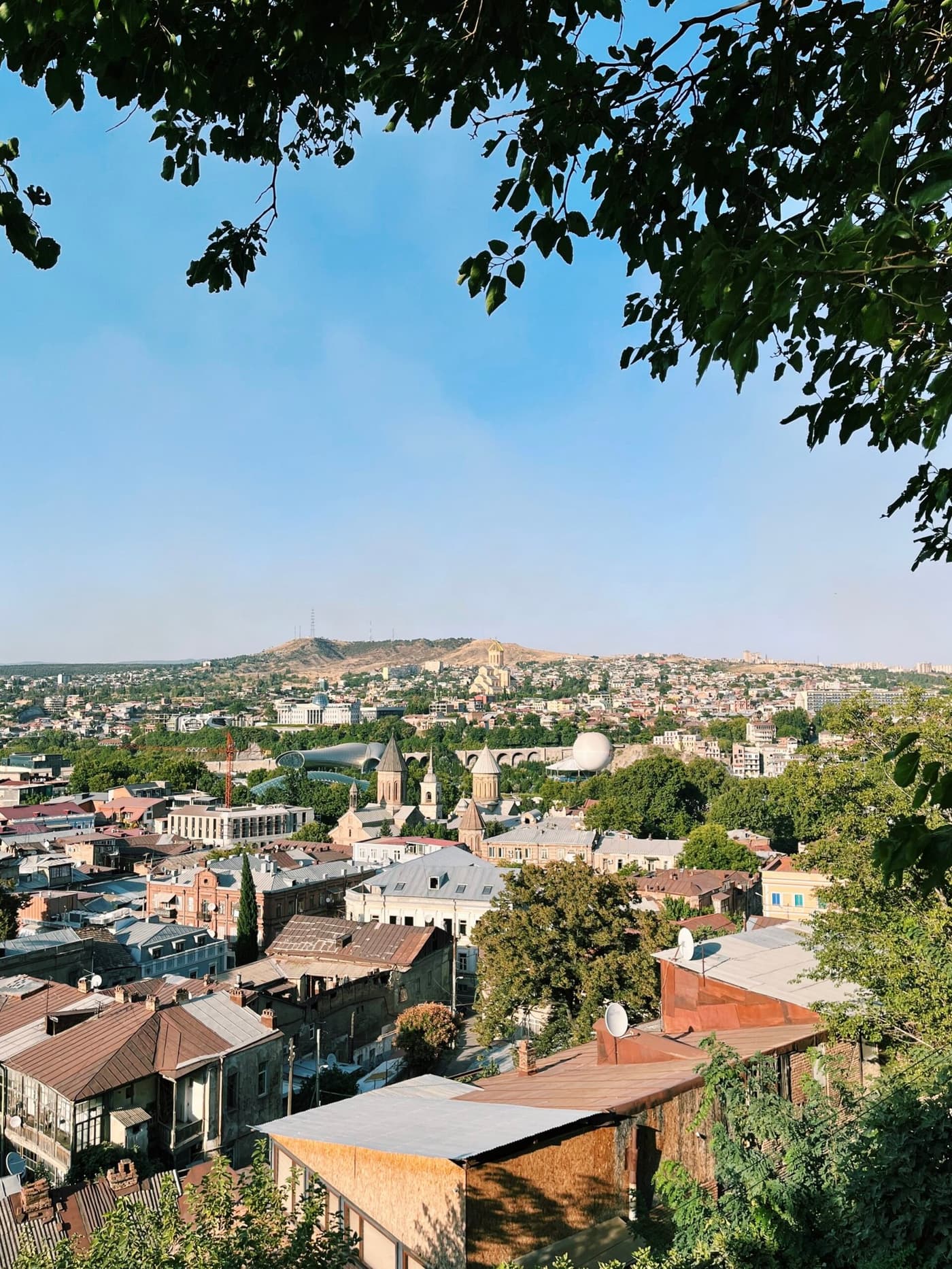
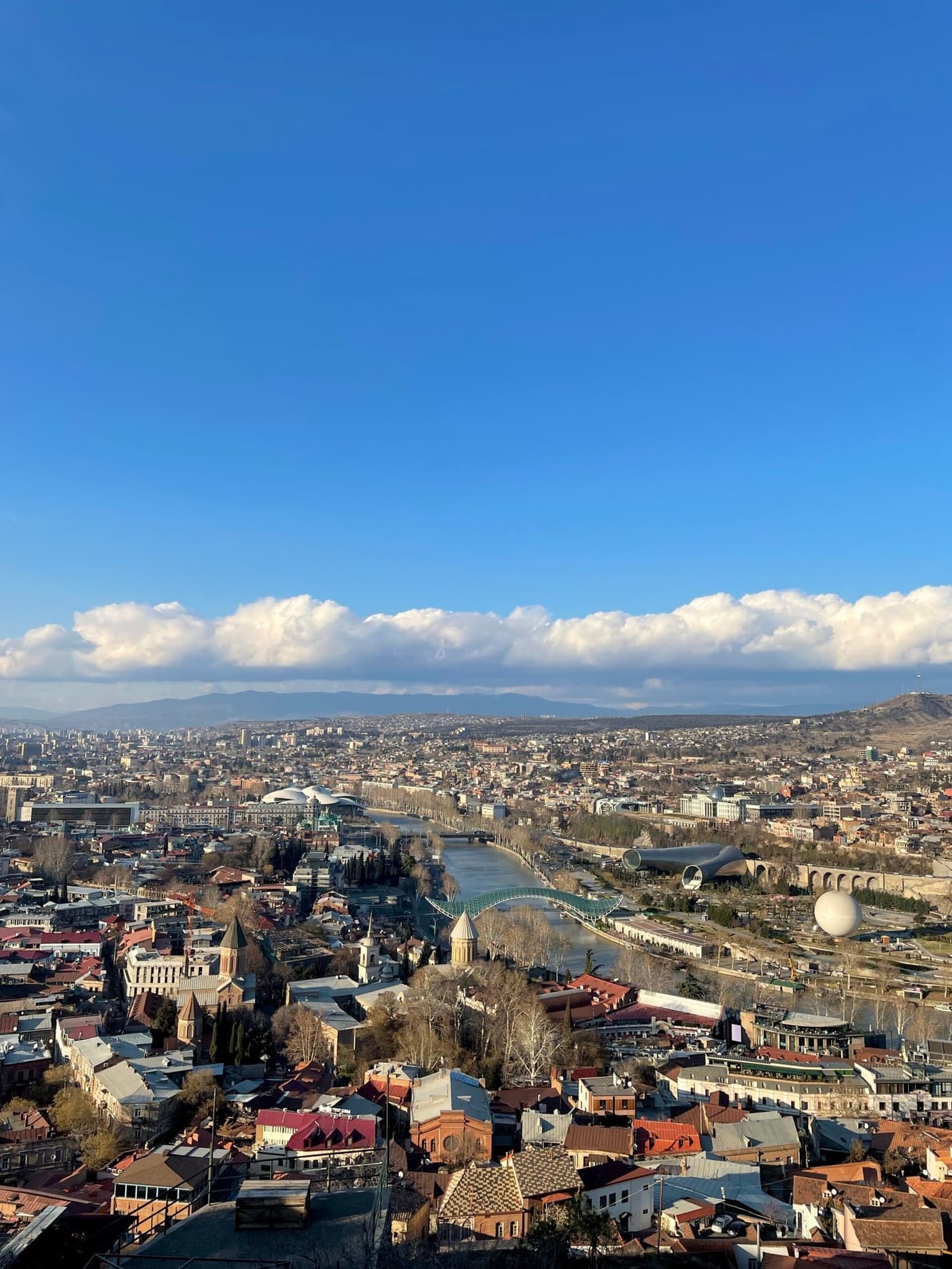
From the top you get a panorama of all of Tbilisi, both sides of the river, Mtatsminda mountain and the haze on the horizon.
Next to the fortress stands the monument Mother Georgia (Kartlis Deda): a 20-meter aluminum statue holding a bowl of wine and a sword. It was erected in 1958. The viewing platform at her feet is free and offers one of the best views of the city.
Metekhi Church and the cliff above the Kura
Metekhi Church stands on a sheer cliff above the Kura River and is one of the main symbols of Tbilisi. The first church here was built in the 5th century under Vakhtang Gorgasali, and the current one in the 13th century under King Demetre II. The view from here of the sulfur baths and Narikala is very beautiful.
Nearby is an equestrian monument to Gorgasali. It's especially nice to come early in the morning, when there are no crowds yet. Entry to the church is free.
At the foot of the cliff, right by the water, is the small chapel of Abo Tbileli. Abo was an Arab perfumer, a young man who converted to Christianity and was executed in Tbilisi in 786. He is the city's main saint, and few tourists know about him.
Sioni Cathedral
On Sioni Street, in the heart of the Old Town, stands Sioni Cathedral, one of the main Orthodox churches in Tbilisi. It was built in the 6th–7th centuries and rebuilt many times. Inside is the cross of St. Nino, a grapevine bound with her hair. For believers it is the main relic of Georgia. The atmosphere is quiet: candles, the gold of the iconostasis, the smell of wax. Entry is free.
Rezo Gabriadze Marionette Theater and the Clock Tower
This is one of the most touching and unusual spots in Tbilisi, and standard guides often don't mention it.
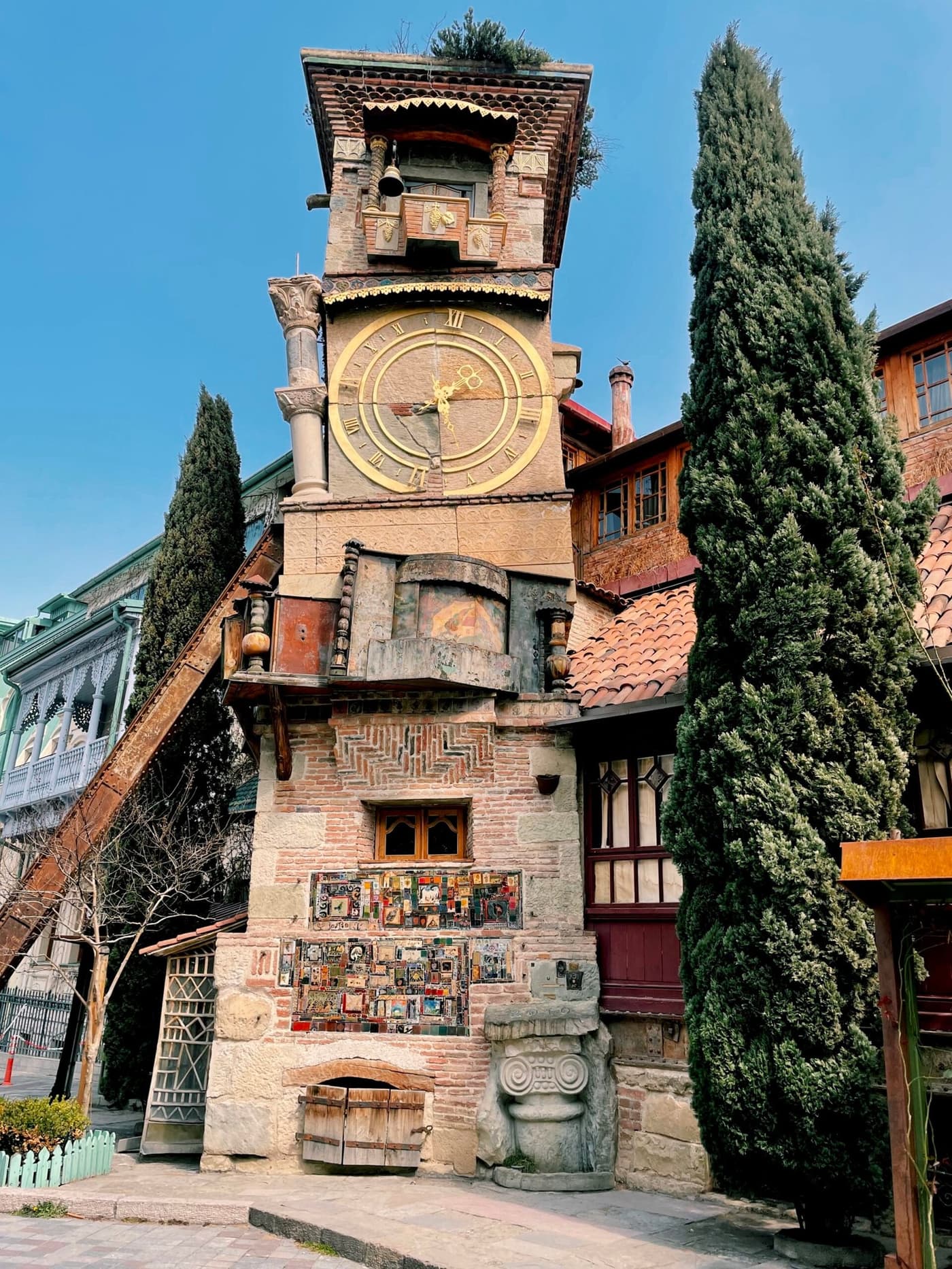
At 13 Shavteli Street in the Old Town stands the small Rezo Gabriadze Marionette Theater and its famous "drunken" clock tower. The tower was built in 2010 and is deliberately crooked, with a crack running through it and a noticeable tilt. Every day at 12:00 and 19:00 an angel emerges from the tower and strikes a bell with a small hammer, starting a three-minute show called "The Circle of Life." Entry is free, and it's worth standing nearby 10 minutes before the chime.
The theater itself stages marionette shows such as "Stalingrad," "Ramona" and "Autumn of My Springtime." Tickets cost about 30–50 GEL and are sold at the theater box office or online. The performances are in Georgian, but the visuals are clear without translation.
A mosque, a synagogue and an Armenian cathedral
In Tbilisi there is a quarter where a mosque, a synagogue, an Armenian cathedral and an Orthodox church stand within 200 meters of each other. It's not a tourist attraction, it's simply Tbilisi as it has been for hundreds of years.
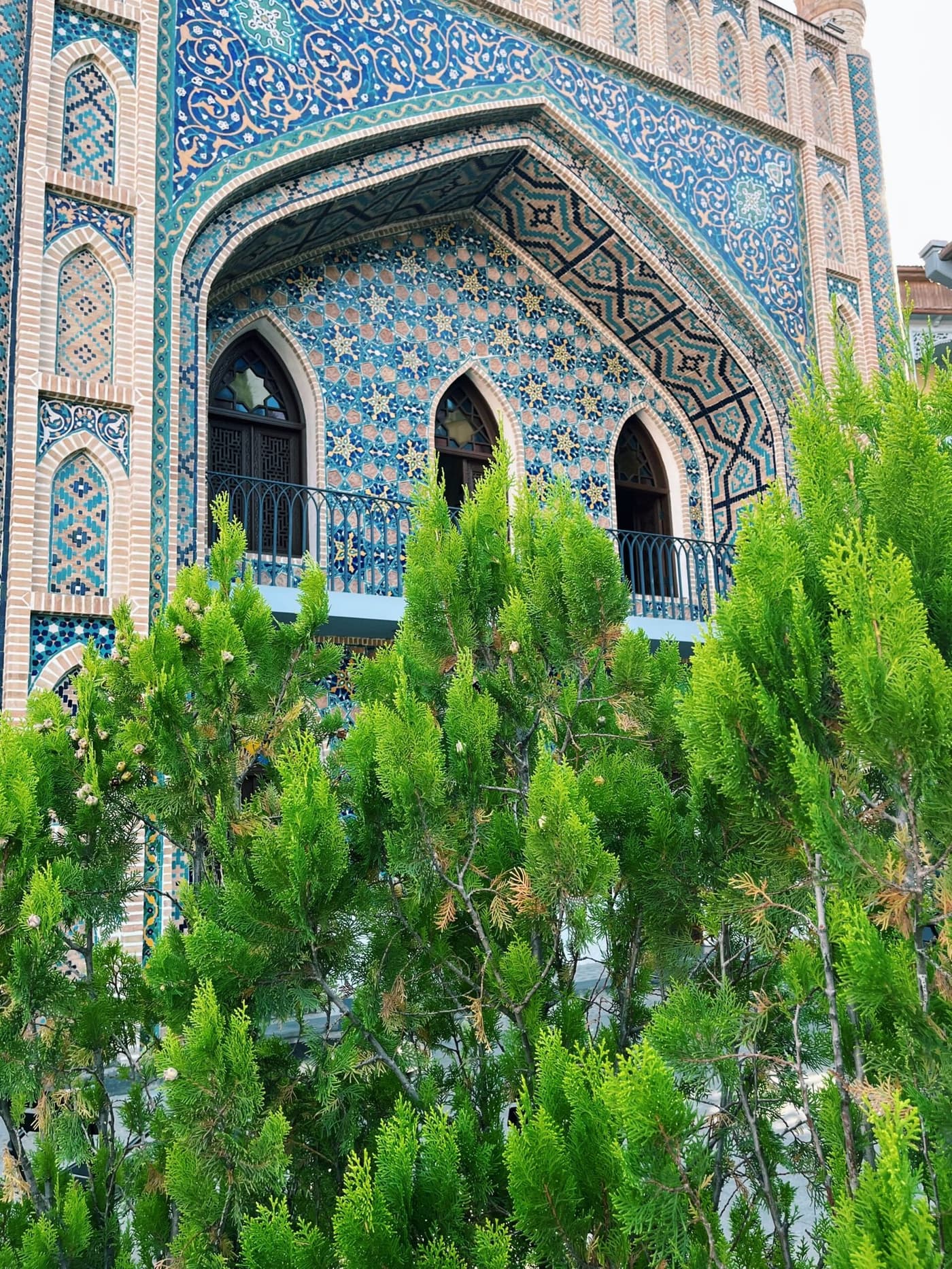
The Tbilisi mosque on Botanical Street is the only one in the city, and the Sunni and Shia communities pray here together. The synagogue on Kote Abkhazi Street (formerly Leselidze) is active and one of the oldest in the Caucasus. You can enter both if you follow the dress code.
Sololaki: the historic quarter
Sololaki is a Tbilisi neighborhood from the late 19th and early 20th centuries, with Oriental-style balconies, ornaments and old courtyards. The intelligentsia, artists and merchants lived here.
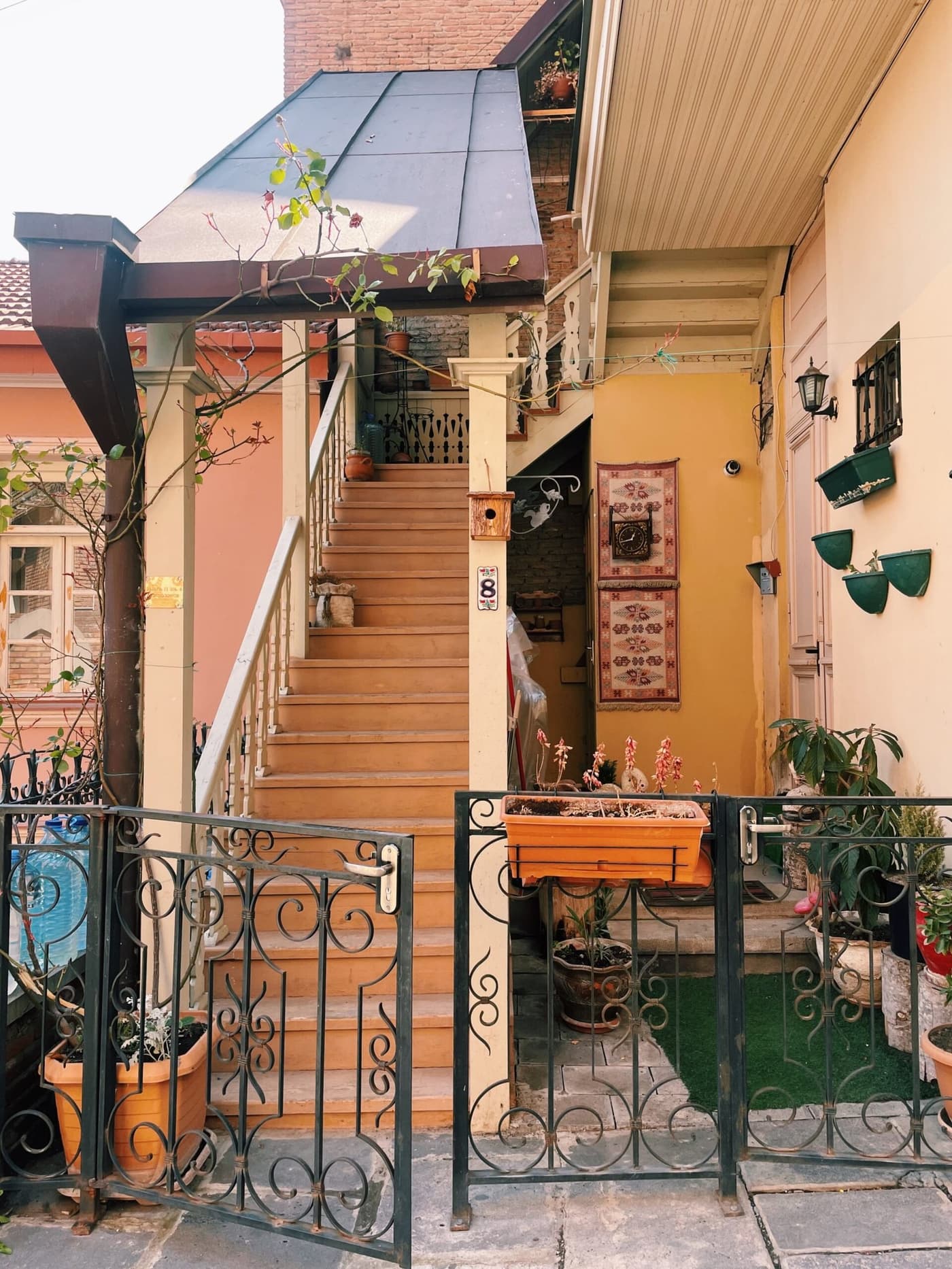
You should wander Sololaki without a route, step into open courtyards, look at the wooden balconies and watch daily life. Sharden Street is touristy, with bars and cafes. Quieter lanes are right nearby, literally around the corner. Sololaki is where people who came for three days most often get hooked and stay much longer.
Avlabari and Sameba Cathedral
Avlabari is one of the oldest quarters of Tbilisi, historically Armenian. Most tourists don't make it here, and that's a shame: this is home to one of the country's main cathedrals and an entirely different atmosphere.
Tsminda Sameba Cathedral (Holy Trinity) stands on St. Elijah's Hill and is visible from most of the city; its golden dome orients you better than any navigator. It is the largest Orthodox cathedral in the Caucasus: 101 meters high, with a total area of over 5,000 sq m, and room for up to 15,000 worshippers. It was built from 1995 to 2004, for the 2,000th anniversary of Christianity in Georgia. Entry is free, and it's open daily from 8:00 to 20:00.
You can walk up to the cathedral from Avlabari in about 15 minutes. By bus, routes No. 91 (from Rustaveli) and No. 122 (from the train station and the Old Town) stop nearby.
In the Avlabari quarter itself you'll find the Petros Adamyan Armenian Theater, the Nor Etchmiadzin church with its khachkars, and a monument to the heroes of the film "Mimino." It's a living neighborhood with a market, bakeries and coffee shops, without the tourist polish.
Rustaveli Avenue and the center
Rustaveli Avenue is the main street of Tbilisi, and it's worth walking along at least once, just to grasp the scale. Soviet and pre-revolutionary architecture is interspersed with modern additions, and it looks organic.
The National Museum of Georgia (3 Rustaveli Ave.) has a comprehensive exhibition from the Paleolithic to the Soviet period. The "Soviet Occupation" hall deserves special attention: harsh, honest, with no embellishment. Current 2025–2026 prices: adults 30 GEL, students and schoolchildren 15 GEL, children under 6 free. Hours: Tue–Sun 10:00–18:00, closed Monday. Allow 1–1.5 hours for a visit.
The Zakaria Paliashvili Opera and Ballet Theater is a Moorish-style building from 1851. It's worth going to a performance even if you aren't especially interested in opera, because the acoustics and interior are worth it. The schedule is on opera.ge.
Freedom Square (Tavisuplebis Moedani) is the central landmark of the city. In the middle is a gilded statue of St. George on a tall column. It's an easy place to get your bearings: Rustaveli runs west and the Old Town lies to the southeast.
The market by the Dry Bridge
The Dry Bridge is a pedestrian bridge over the Kura. Under it and beside it is a daily antiques market: Soviet books and badges, Georgian ceramics, icons, coins, edged weapons, paintings, rugs. Everything is mixed together, under the open sky.
It's best to come in the morning from 10:00. Bargaining is appropriate and expected. The best souvenirs from Tbilisi come from here, not from the shops on Rustaveli. You can spend an hour here or half a day, depending on how much you like digging through other people's stories.
Mtatsminda and the funicular
On Mtatsminda mountain is a pantheon of Georgian writers and cultural figures. Alexander Griboyedov and his wife Nino Chavchavadze are buried here, along with Ilia Chavchavadze and other notable Georgian and Russian figures. Nearby is Mamadaviti Church, founded in the 6th century by the Syrian monk David Gareja.
A little higher up is a Soviet amusement park with carousels and a Ferris wheel, operating since the 1930s. The atmosphere is nostalgic and a little surreal, especially on weekdays.
The funicular rises from Chonkadze Street. To pay you need a Metromoni card (a 2 GEL deposit when you buy it in the metro). A ride costs about 4 GEL one way, 8 GEL round trip. It runs daily from 9:00 to 4:00 a.m. There's an intermediate stop at the pantheon along the way. It takes about 10 minutes to reach the top.
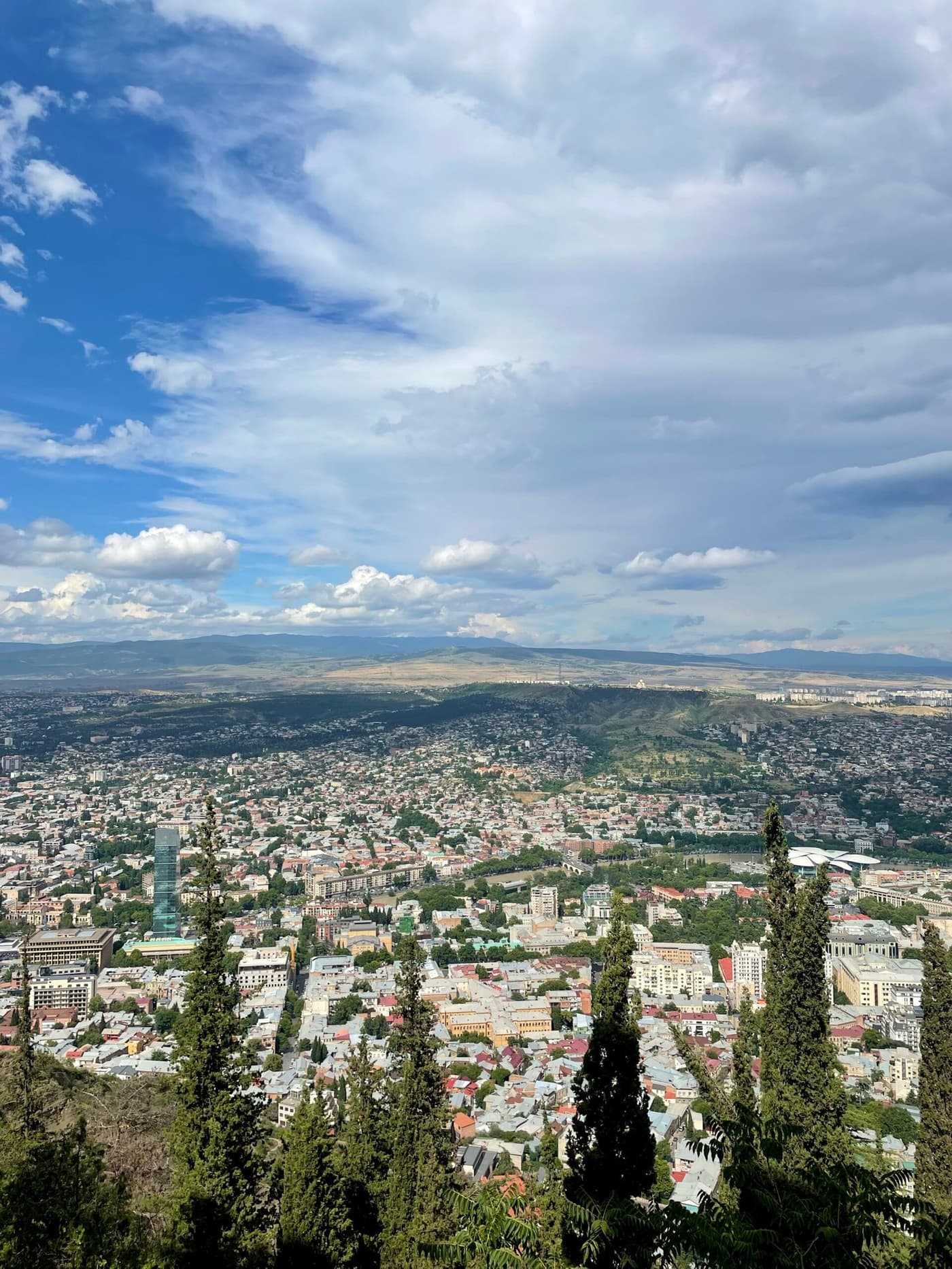
The view from Mtatsminda is one of the best in the city, especially at dusk, when Tbilisi starts turning on its lights.
Peace Bridge, Rike Park and the Kura embankment
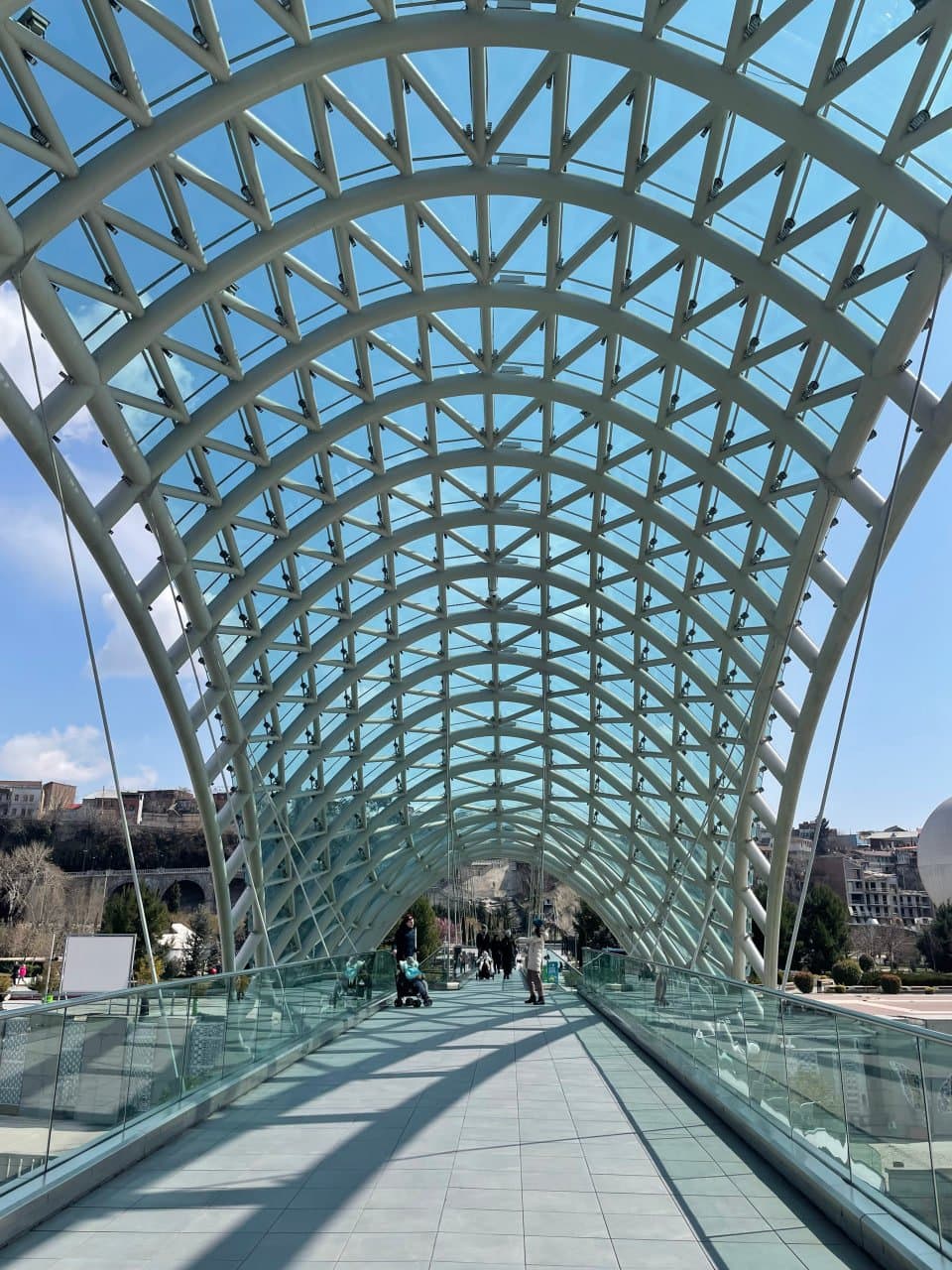
The Peace Bridge is a glass pedestrian bridge over the Kura, built in 2010 to a design by the Italian Michele De Lucchi. The architecture is controversial: a modern object in a historic city. But at night, when the LED lighting is on, it looks striking, and even critics admit it.
Beyond the bridge is Rike Park, laid out on the site of a former industrial riverbank. It's a space for walks, picnics and coffee outdoors. The cable car starts from the park, going straight to the walls of Narikala for 2.5 GEL and 2 minutes.
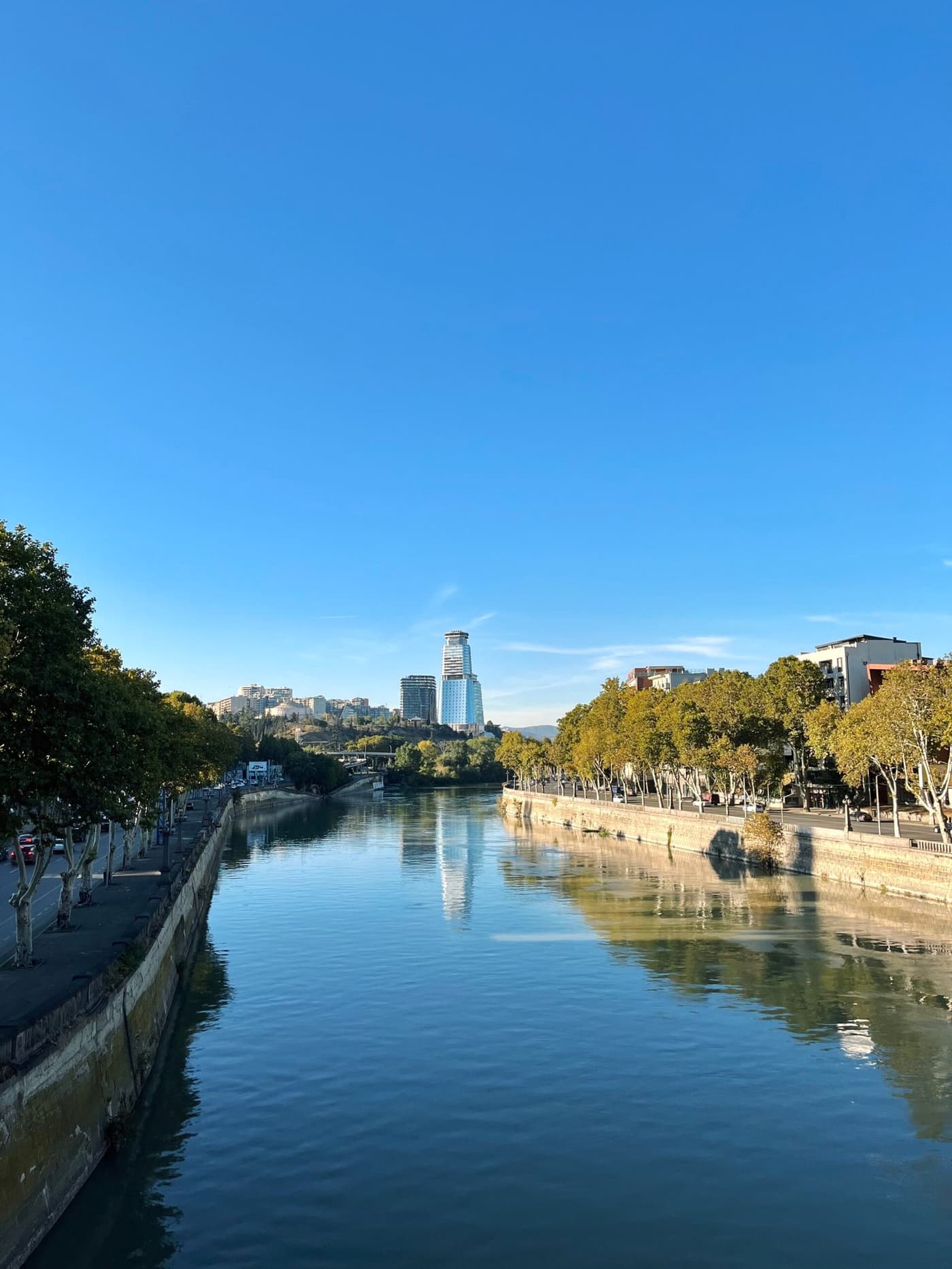
Embankments run along both banks of the Kura. In summer, outdoor cafes and bars open right by the water. A good evening route: from Metekhi Bridge along the embankment to Rike Park, the cable car up to Narikala, and back on foot across the Peace Bridge.
Turtle Lake and Vake Park
Turtle Lake is an unexpectedly pleasant spot about 20 minutes by car from the center, in the upper part of Vake Park. It's a small artificial lake surrounded by forest, with a cafe on the shore, bike paths and boat rentals in summer. Locals come here for picnics and walks with their dogs.
Vake Park has shady alleys, benches and a monument to those who died in World War II. In Soviet times it was the city's main park. It's still popular with families with children on weekend mornings. A taxi from the center costs about 8–12 GEL.
Vera neighborhood
Vera is one of the nicest districts of Tbilisi for a walk. It has quiet streets, century-old plane trees, atmospheric cafes and restaurants, and independent galleries. Georgians "with taste" favored the neighborhood first, and good places with reasonable prices followed.
The main landmark is Lado Asatiani Street and the lanes around it. It's best to stroll here without a route. Eating lunch in Vera is a good deal: there are fewer tourist markups than in the Old Town, and the food is just as good.
Chugureti and Fabrika
Chugureti is a working-class district west of the center that has turned into one of the liveliest neighborhoods in the city over a few years.
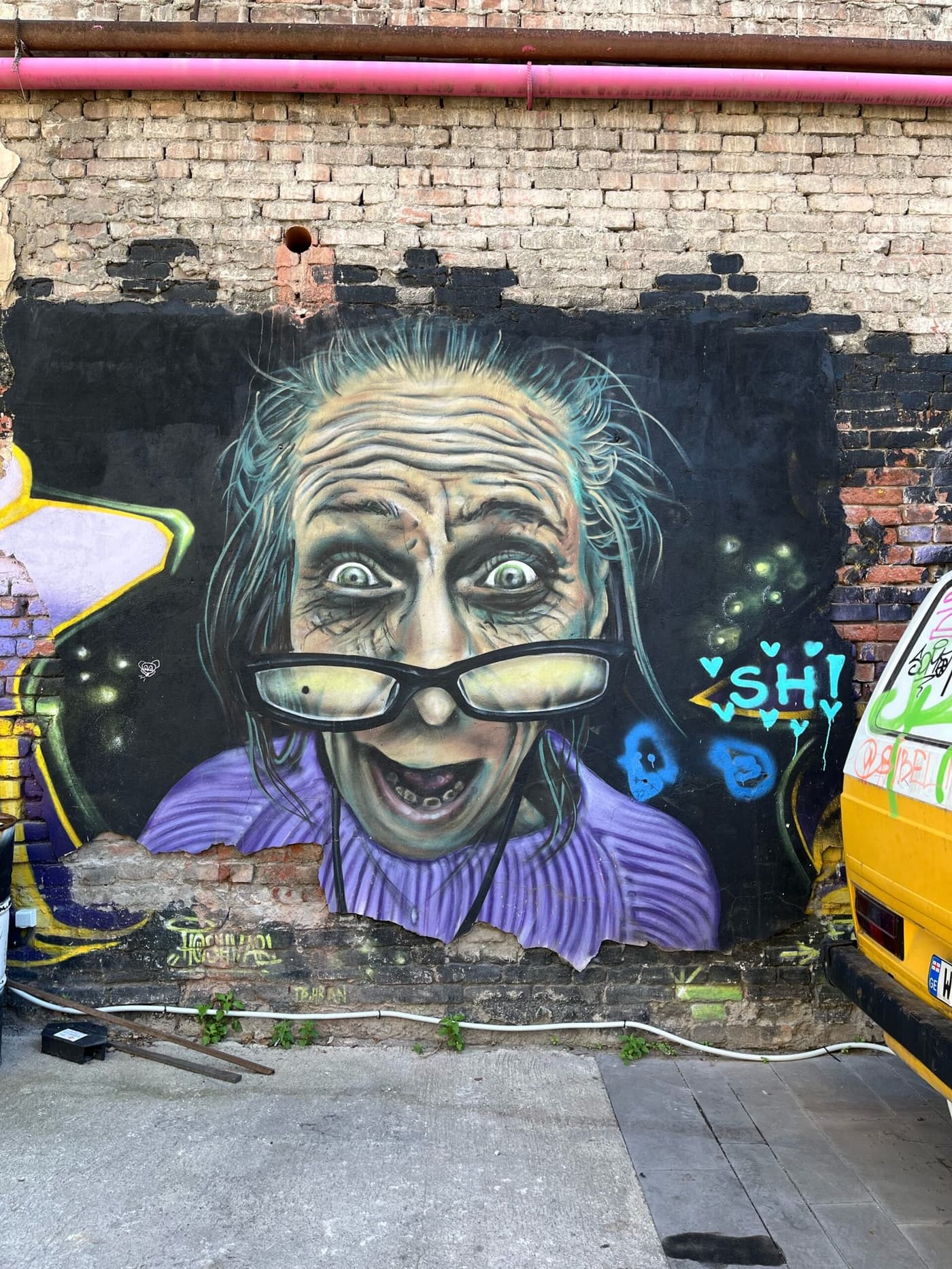
Fabrika (8 Egnate Ninoshvili St.) is a former Soviet sewing factory converted into a multi-format space. It has the Impact Hub coworking, dozens of workshops and little shops, restaurants, coffee shops, bars and a hostel. In the inner courtyard there's street food, a social scene and live music in the evening. Fabrika is open every day.
This is a place where expats, local artists and tourists who know more than the average visitor all cross paths. It's worth stopping by, especially in the evening. Nearby are the lanes of Chugureti with street art and small independent cafes.
If you work remotely or are considering Tbilisi as a place to live, read the digital nomad guide to Georgia.
Dezerter Bazaar
Dezerter Bazaar is Tbilisi's main food market and one of the best in the whole Caucasus. It's located by the Station Square metro station.
You can buy everything here: Imeretian cheese straight from the producer, matsoni in clay pots, fresh herbs, homemade tkemali and satsivi, Svan salt, several kinds of churchkhela, adjika. Prices are lower than in any city supermarket.
The best time is Saturday or Sunday morning, when farmers arrive from the regions. The market is open daily. Bring cash, as some vendors don't accept cards.
For Georgian cuisine and what you must try, see the food guide to Georgia.
Tbilisi at night
Tbilisi is a night city. Restaurants stay open until midnight and later, and clubs start after 1:00 and run until dawn.
Bassiani is in the basement of the former Dynamo stadium (Zurab Avalishvili St.). It is one of the best techno clubs in Europe, and that's no exaggeration, as Resident Advisor, Mixmag and other music media have written. It operates on Friday and Saturday from midnight until morning. There's a line at the door, face control is serious, and photography inside is forbidden. The entry price varies by event, and the current schedule is on bassiani.com. Shorts and flip-flops are not an option.
Khidi is under Metekhi Bridge. Techno in a more alternative format, with the atmosphere of industrial basements by the river. It opens less often in the cold season.
Mtkvarze is by the embankment, a place for summer evenings with live music.
Bars: Sharden in Sololaki is touristy but lively. There's more of a local crowd in Vera, on Marjanishvili and in Chugureti.
About cafes and restaurants in Tbilisi, with addresses and prices, in my food guide.
A 3–4 day Tbilisi itinerary
Tbilisi is convenient because everything is compact: most places in this guide are within 3–4 km of the Old Town. Four days is a comfortable minimum, so you aren't rushing from point to point and have time to sit in a cafe, step into a random courtyard and take a day trip. If you have three days, just combine the second and third days according to your interests. If you have two, take only the first and second.
Day 1: Old Town and Avlabari
Morning: the sulfur baths in Abanotubani (go inside, and book ahead on weekends). Then Leghvtakhevi Waterfall, 5 minutes from the baths. Next, Narikala on foot or by cable car. Lunch in the Old Town. Afterward, Metekhi Church, the view from the cliff, and the chapel of Abo Tbileli by the water. You need to be at the Gabriadze clock on Shavteli before 19:00. In the evening, dinner in Sololaki and a stroll along Sharden.
Day 2: The center, markets and Mtatsminda
Morning: Dezerter Bazaar (9:00–11:00). Then the National Museum on Rustaveli (30 GEL, 1–1.5 hours). Lunch on Rustaveli or in Vera. Afterward, the market by the Dry Bridge. Evening: the funicular up Mtatsminda (8 GEL round trip), with sunset over the city.
Day 3: Avlabari, neighborhoods and night
Morning: the climb to Sameba Cathedral. Afterward, Avlabari and the neighborhood market. Lunch. Then Vera: a walk, coffee, galleries. Evening: Fabrika in Chugureti. Night: Bassiani or live music in a bar.
Day 4: A day trip from Tbilisi
Several options, depending on your mood:
Mtskheta is 25 km away, half an hour. Svetitskhoveli (11th century) and Jvari Monastery on a cliff above the confluence of two rivers. A marshrutka from Didube costs 1.5 GEL. 3–4 hours is enough.
Kazbegi and the Georgian Military Road: leave at 7:30, a full day. Gergeti Trinity Church at 2,170 m with a view of Mount Kazbek. On the way, Ananuri Fortress and the stone heads in the Sno Valley.
Sighnaghi is the "city of love" in Kakheti, 120 km away. Fortress walls, vineyards and tastings.
Telavi is the capital of Kakheti and the center of wine tourism. Alaverdi Monastery and estates with wine cellars.
Food in Tbilisi: where to go
Tbilisi is the gastronomic capital of Georgia, and there's plenty to choose from on any budget.
Khinkali: look for a place with a line of locals. It's the best test of freshness and quality. The price is 1.5–2.5 GEL apiece. At the khinkali place by Marjanishvili metro, they shape them in front of you.
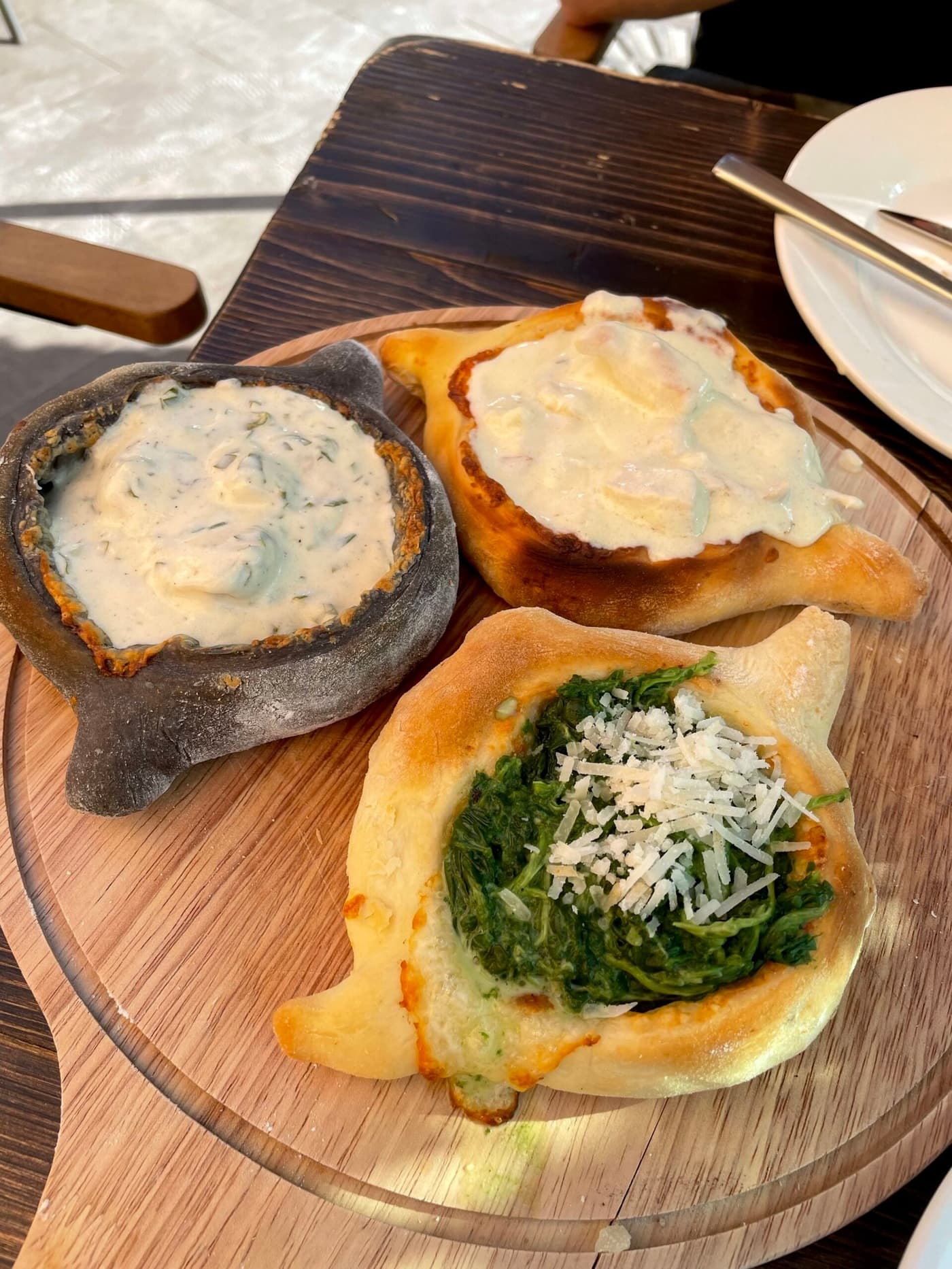
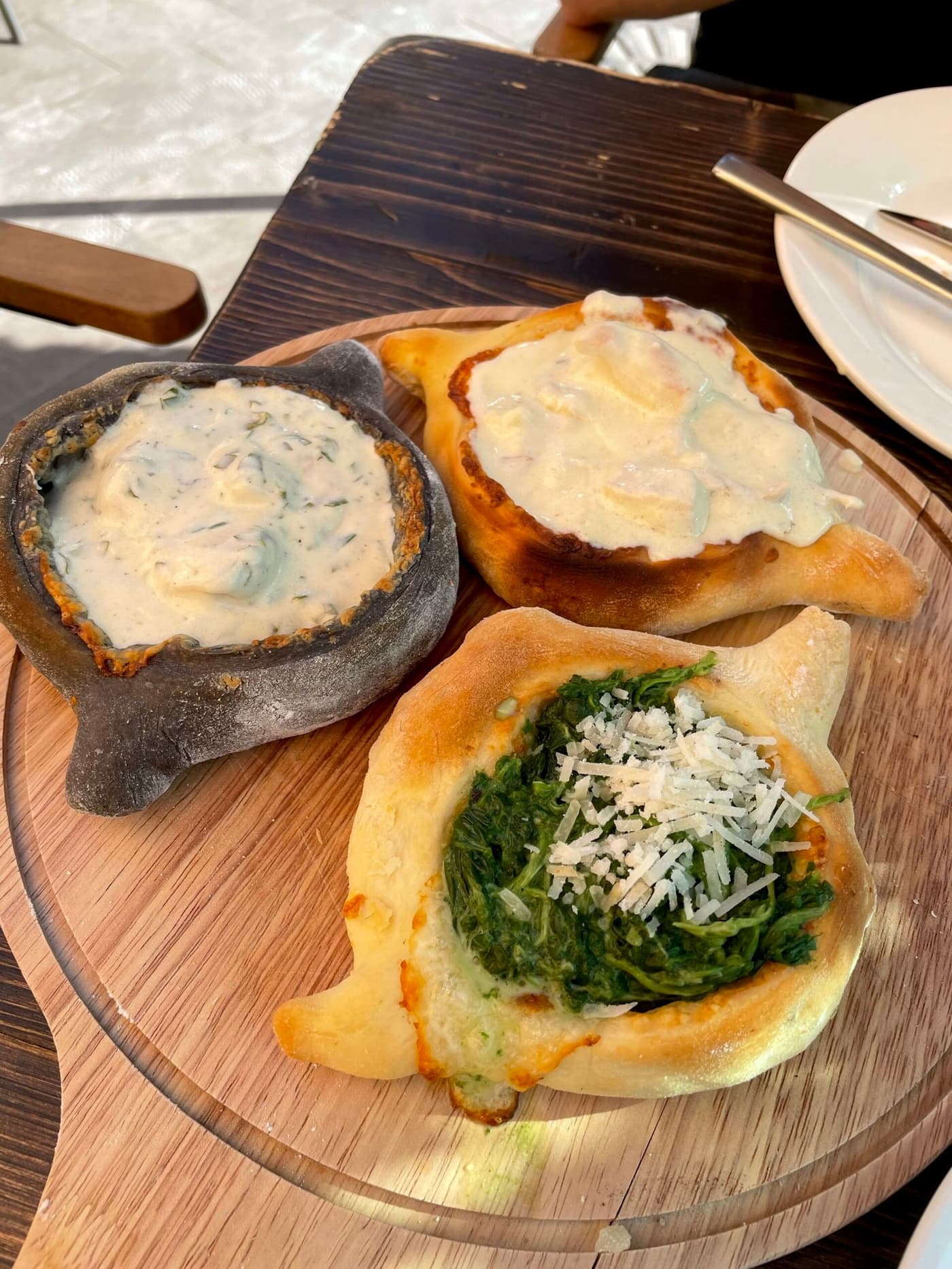
Khachapuri: Adjarian (with egg and butter) at any cafe near Abanotubani. Imeretian (round, with cheese) at Dezerter Bazaar, where it's cheapest.
Wine: Wine Factory on Rustaveli and G.Vino in the Old Town are good options for an introduction to natural qvevri wine with a sommelier. Homemade wine from the barrel at Dezerter Bazaar costs 5–15 GEL per liter.
Breakfast: Entrée cafe has several locations around the city and steady quality. Fabrika in Chugureti is for morning coffee with a laptop.
For detailed addresses, prices and specific dishes, see the guide to cafes and restaurants in Tbilisi.
Around Tbilisi: what to fit into one day
It's easy to do day trips from Tbilisi, since transport links are good.
Mtskheta is the former capital of Georgia, 25 km away. Svetitskhoveli with the relic of the Holy Robe, and Jvari on the mountain above the confluence of the Aragvi and Kura. A marshrutka from Didube bus station costs 1.5 GEL and takes 30 minutes. 3–4 hours is enough.
The Georgian Military Road and Kazbegi make up the most beautiful road in the Caucasus. Ananuri Fortress above the reservoir, the stone heads in the Sno Valley and Gergeti Trinity Church take a full day.
Sighnaghi is a picturesque town in Kakheti. Fortress walls overlooking the Alazani Valley, and wine straight from the marani.
Telavi is the capital of Kakheti, with the 11th-century Alaverdi Monastery and Batonis Tsikhe palace.
If you're heading to Armenia, read about the route from Tbilisi to Yerevan.
If you're planning to stay for a long time or move, I recommend the complete guide to Georgia.
Practical information
Transport. The metro costs 1 GEL per ride and covers the main districts. Bolt and Yandex Go cost 5–15 GEL within the city. The Metromoni card (2 GEL deposit) is needed for the metro, the funicular and buses. Walking around the center and the Old Town is the best option, since the main sights are compact.
Maps. Bolt for taxis, Google Maps for navigation, and Maps.me works offline. Download an offline map of Tbilisi in advance, because the signal in the Old Town's alleys can be unstable.
Money. Cards are accepted in most cafes and shops. You need cash for the market by the Dry Bridge, Dezerter Bazaar, street bakeries and marshrutkas. There are TBC Bank and Bank of Georgia ATMs all over the center, with small fees.
SIM card. Buy one at the airport or at any Magti/Silknet shop. A starter package with a month of data costs 15–25 GEL.
Dress for churches. Shoulders and knees covered. Women should cover their heads with a scarf. Keep a light scarf in your backpack, since the route includes several churches.
For a detailed Tbilisi city guide, see transport, a map and basic logistics.
FAQ: answers about what to see in Tbilisi
What should you absolutely see in Tbilisi in one day?
The sulfur baths in Abanotubani, the climb to Narikala (cable car 2.5 GEL), the view from the Metekhi cliff and a walk through Sololaki. If you have time, the Gabriadze clock on Shavteli at 12:00 or 19:00. That's enough to get a feel for the city.
How many days do you need in Tbilisi?
At least 2–3 days for the main sights. A week if you want to feel the neighborhoods, eat properly and take a day trip to the surroundings. A month is quite realistic for digital nomads.
Where is the best view of Tbilisi?
From Mtatsminda mountain (by funicular) you get a panorama of the whole city. From Narikala you see the Old Town and the Kura. From the Metekhi cliff you see the sulfur baths and the fortress. At the Mother Georgia monument next to Narikala there's a wide view of both banks. Four different characters of one city.
When is the best time to go to Tbilisi?
April–May and September–October are the ideal time. It's warm, there's no summer heat (+35°C), and there are fewer tourists. Winter is rainy, but cheap and cozy. More in the guide to weather and seasons.
How much does entry to the main sights in Tbilisi cost?
Most churches and viewpoints are free. Narikala on foot is free, and the cable car is 2.5 GEL. The National Museum is 30 GEL (adult). The funicular up Mtatsminda is about 8 GEL round trip. Sulfur baths cost from 50–80 GEL (simpler baths) to 200 GEL (Chreli Abano) per room for a group.
When is the best time to walk around Tbilisi?
In the morning before 10:00 and in the evening after 18:00. In summer it's hot at midday, so retreat to cafes or museums. Spring and autumn are the ideal time for walking.
Is Tbilisi safe?
Yes. Tbilisi is a safe city by any standard. Watch your pockets in crowds at the markets; otherwise no special precautions are needed.
Can you walk all of central Tbilisi?
The Old Town, Sololaki and Avlabari are easy on foot. Vera and Chugureti are 20–30 minutes from the center. For Mtatsminda, Vake and Didube it's better to take the metro or Bolt.
Where can you buy good wine in Tbilisi?
Homemade wine from the barrel at Dezerter Bazaar costs 5–15 GEL per liter. For a large selection of bottled wine, go to Wine Factory on Rustaveli. To try qvevri wine served properly, go to G.Vino or Wine Bar Sioni.
What is Fabrika in Tbilisi?
A former Soviet sewing factory (8 Egnate Ninoshvili St.) in the Chugureti district, converted into a multi-format space: coworking, restaurants, shops, bars and a hostel. Open every day.
How do you get from the airport to Tbilisi?
Bolt costs 25–40 GEL and takes 20–40 minutes depending on traffic. Bus No. 37 costs 1 GEL and takes 45–60 minutes, and doesn't run at night. A taxi at the airport counter is more expensive, 50–70 GEL, so negotiate.
Is there anything interesting and free in Tbilisi?
Plenty. Narikala on foot, Sameba, Metekhi Church, Sioni, Rike Park, the Kura embankment, the Peace Bridge, a walk through Sololaki and Avlabari, the Fabrika courtyard: all of it is free. The Gabriadze clock at 12:00 and 19:00 is free too. The antiques market by the Dry Bridge is free to browse, and buying is up to you.