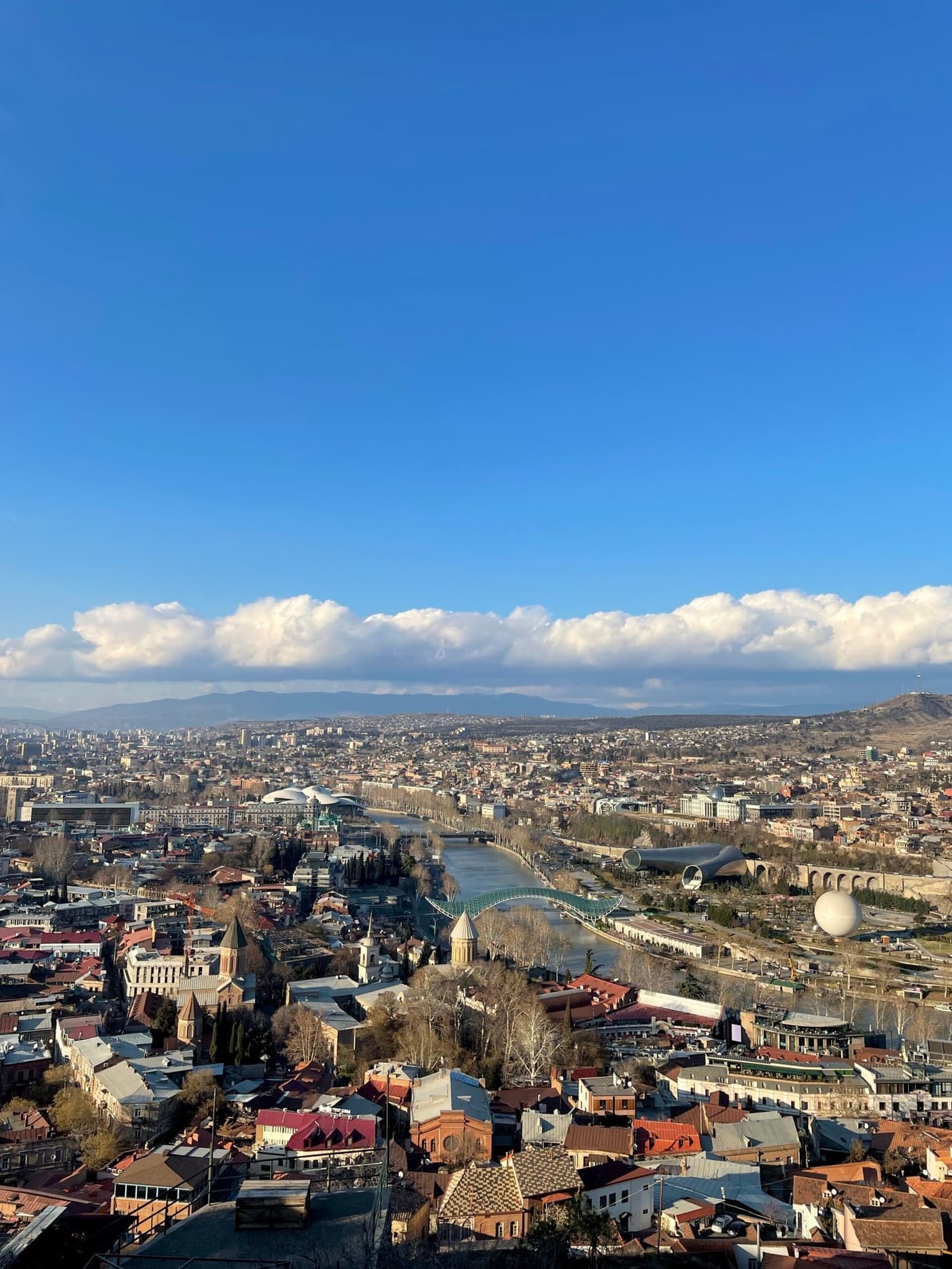
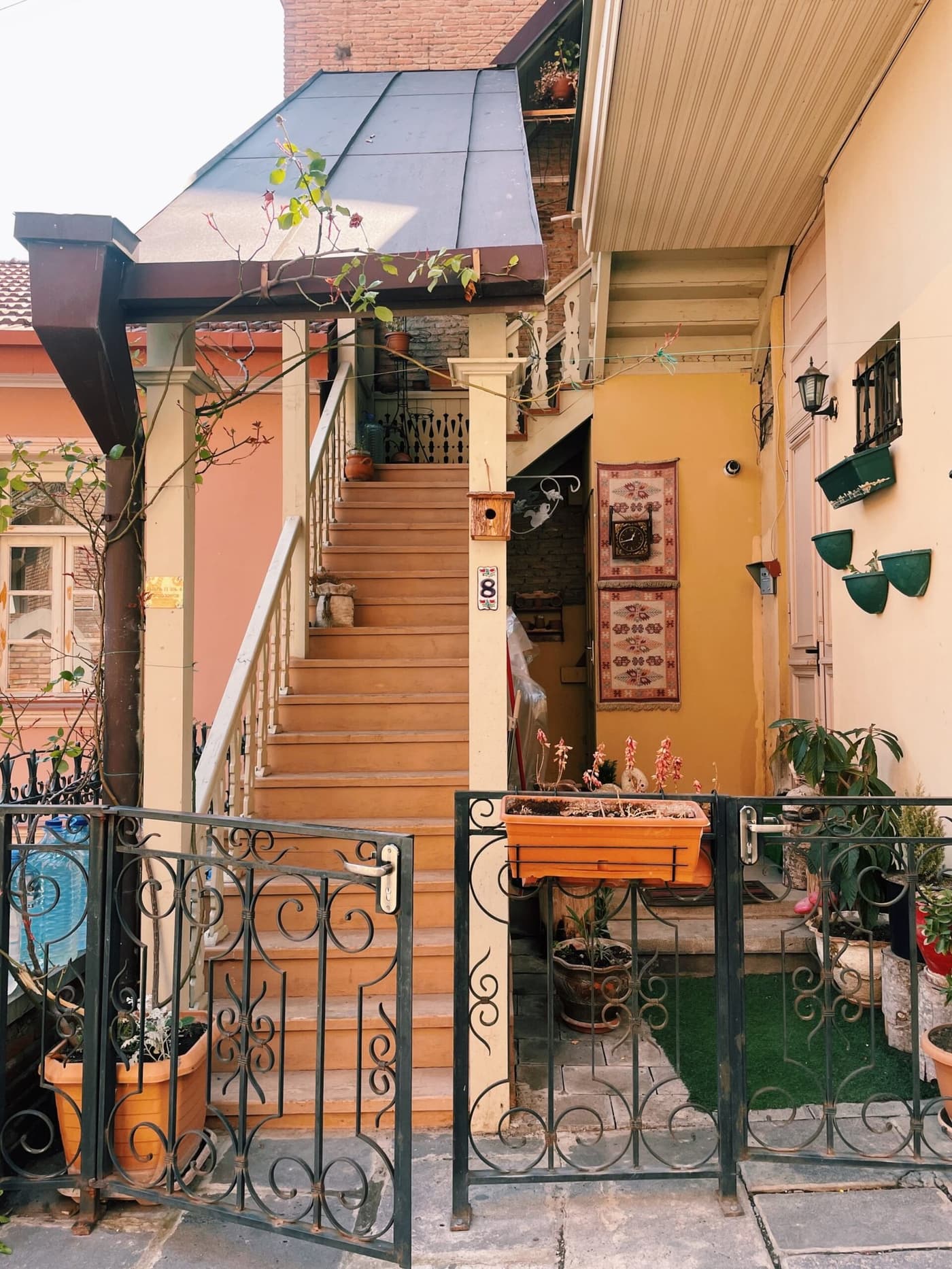
The Old Town is the reason most people come to Tbilisi. Wooden balconies hanging over narrow streets, the smell of sulfur from the baths, a mosque next to a church, and all of it within a radius of two kilometers. I spent a lot of time here and I know how to see the most interesting parts without the rush.
If it's your first time in Tbilisi, I recommend starting your acquaintance with the city right here. The most interesting sights are concentrated in this district, and you can also simply wander without a goal, soaking up the atmosphere and looking around. If you're only planning a trip to the capital of Georgia, take a look at my detailed Tbilisi city guide and the separate guide to Georgia.
What the Old Town of Tbilisi is
The Old Town (Dzveli Tbilisi in Georgian) stretches from Metekhi Square to Narikala Fortress. Historically it is the core around which the modern metropolis grew. Some of the buildings are a thousand years old or more, but most of the houses you see today, with their characteristic wooden balconies, date from the 19th and early 20th centuries.
You can walk here for hours: every alley offers a new view, and every courtyard has its own small story. There are plenty of tourists, but it doesn't get in the way: the district is big enough that you can find quiet streets even in high season.
The easiest way to get here is on foot from Freedom Square or the "Avlabari" metro station, and the walk takes no more than 10 minutes. The entrance to the old part of the city is almost invisible: you simply turn into one of the narrow alleys, and noisy modern Tbilisi instantly gives way to the quiet of old courtyards, wooden balconies and the smell of coffee.
I wrote separately about the other districts of Tbilisi and where to stay.
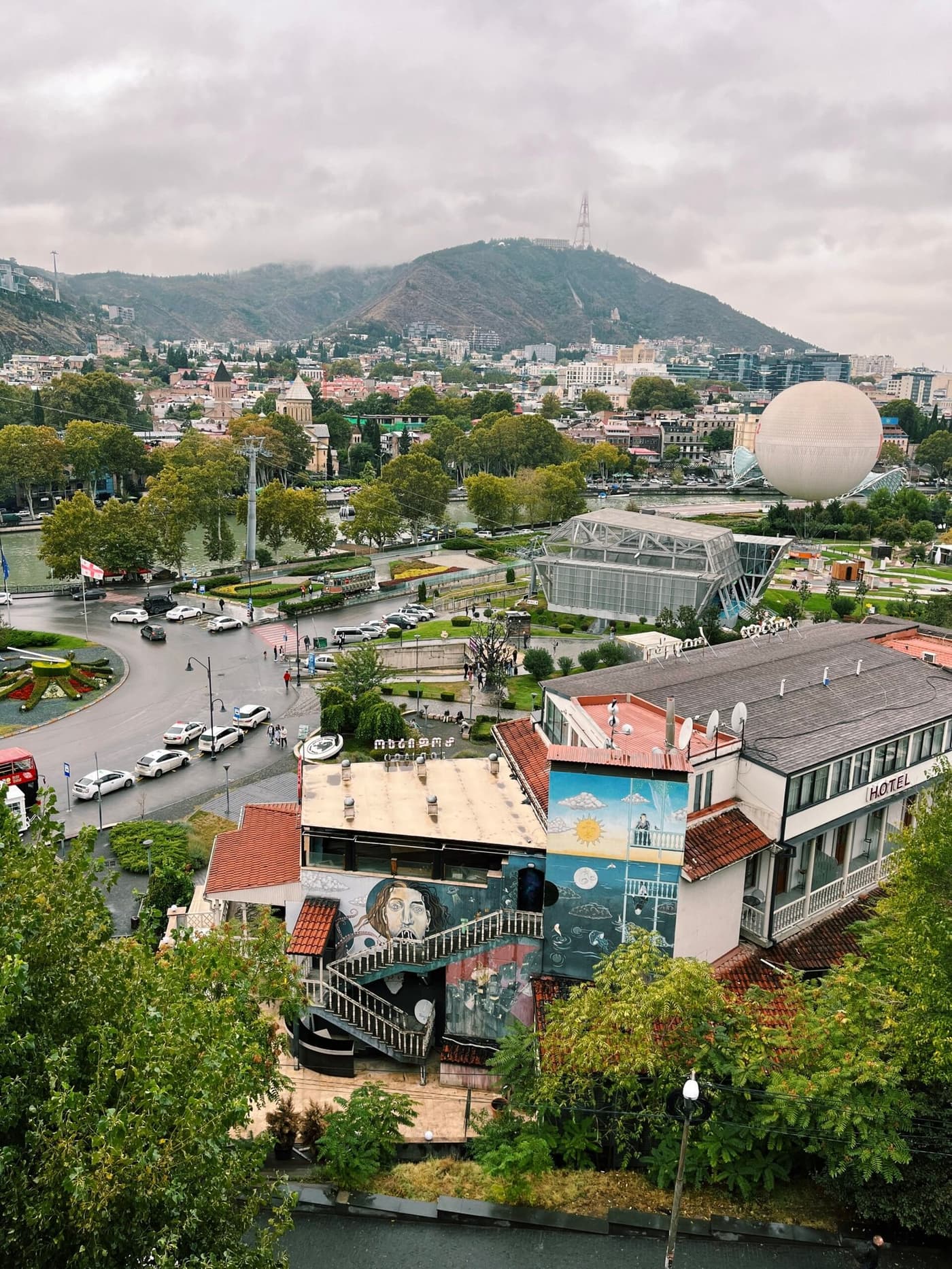
History and architecture of Old Tbilisi
The history of Old Tbilisi is the history of the city itself. According to legend, it was here, by the sulfur springs of the Abanotubani district, that King Vakhtang Gorgasali founded the future capital of Georgia in the 5th century. The spot turned out to be ideal: warm mineral waters, protected slopes and a convenient position on the trade route between East and West.
In those days the entire territory of today's Old Town was surrounded by fortress walls. Tbilisi stayed within these boundaries until the 19th century, when the city began to expand actively.
Old Tbilisi took on its look roughly in the 17th and 18th centuries, under King Rostom and his successors. That was when Narikala Fortress was rebuilt and the sulfur baths were built in their present form. After the fire and the destruction of the city by the Persian army in 1795, Tbilisi was rebuilt almost from scratch, and some buildings from that period have survived to this day.
It's a beautiful and very photogenic district where I once walked a lot and took a huge number of great photos.
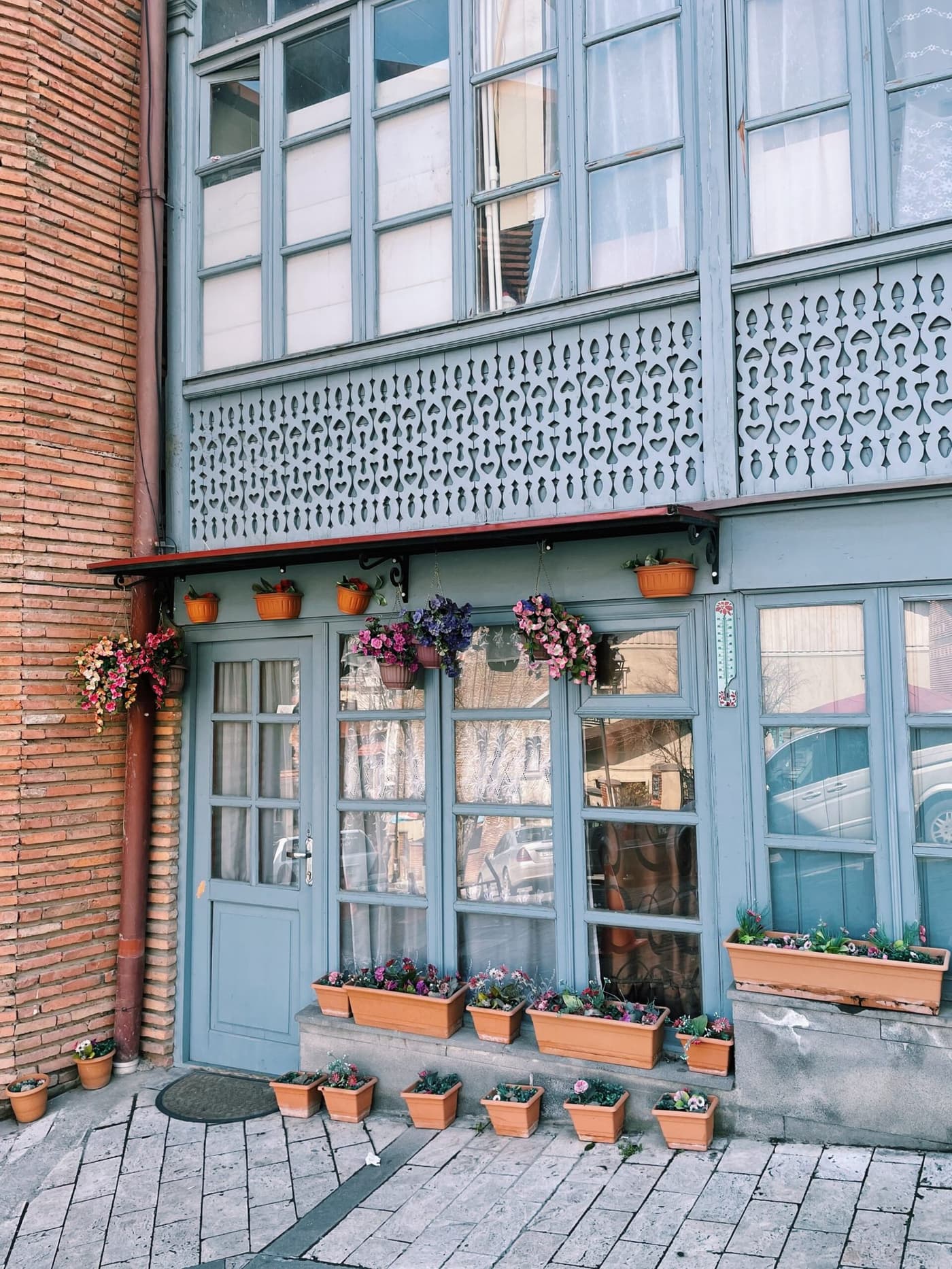
What to see in the Old Town of Tbilisi
Old Tbilisi is a place where everything is close together: the fortress, churches, baths, small cafes and houses with wooden balconies. You can simply wander the streets and keep stumbling upon something interesting. I put together a list of the best-known and most interesting sights.
Narikala Fortress
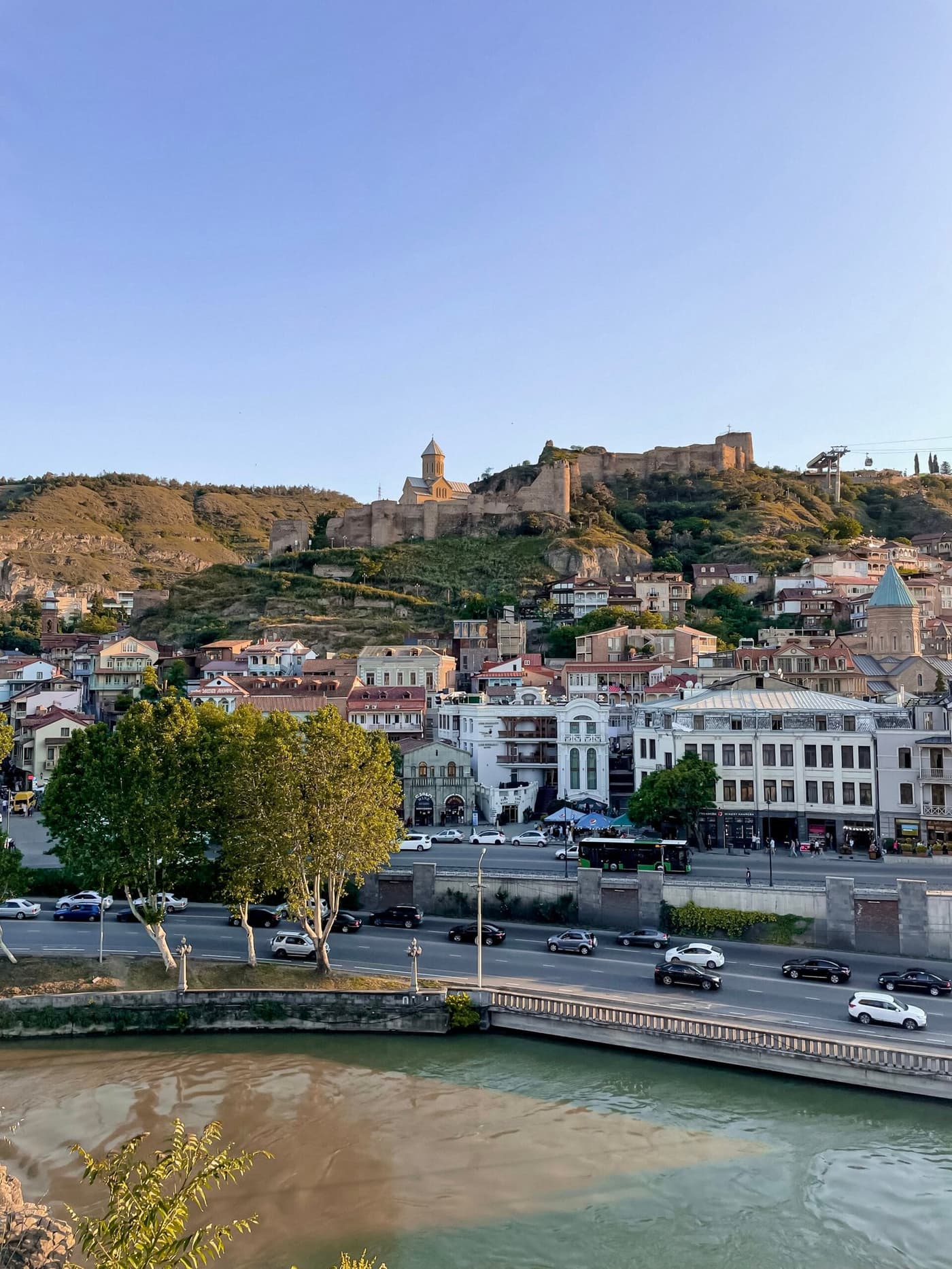
Narikala Fortress is visible from almost anywhere in the city. It has towered over Tbilisi since the 4th century and is considered one of the oldest structures in the capital. The fortress got its present look in the 17th century under King Rostom.
You can get up to Narikala on foot, through the Betlemi quarter and the Kldisubani stairs, or by cable car, which starts right from Rike Park. At the top there is a panorama of the whole Old Town, the Kura River and the hills of Mtatsminda. This is the best place to start getting to know Tbilisi.
Tbilisi Botanical Garden
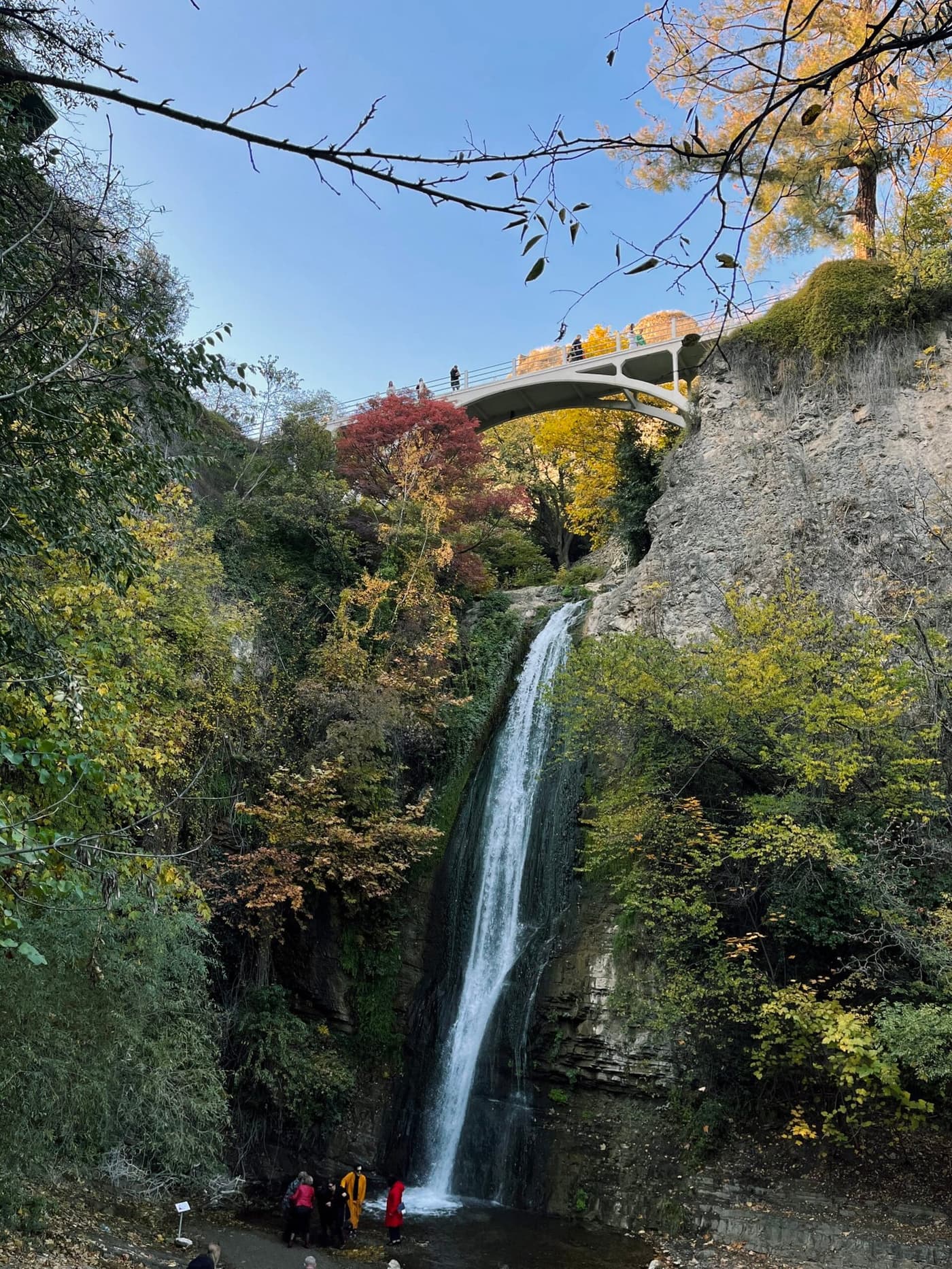
If you walk past Narikala Fortress, the Botanical Garden begins right away: a large, green and unexpectedly quiet place in the middle of the city. A river babbles here, paths wind along the slopes, and the shade of old trees stretches overhead.
This garden was once a royal one, and later became the first public garden in Georgia. Today it is a good place to rest after walking around the Old Town. Inside there are little bridges, viewpoints and even a small waterfall. In summer it's cool here, in spring everything blooms, and in autumn the leaves turn warm shades. It's a great option for a quiet walk or a picnic.
📍 Tbilisi Botanical Garden location
Sulfur baths: a detailed guide
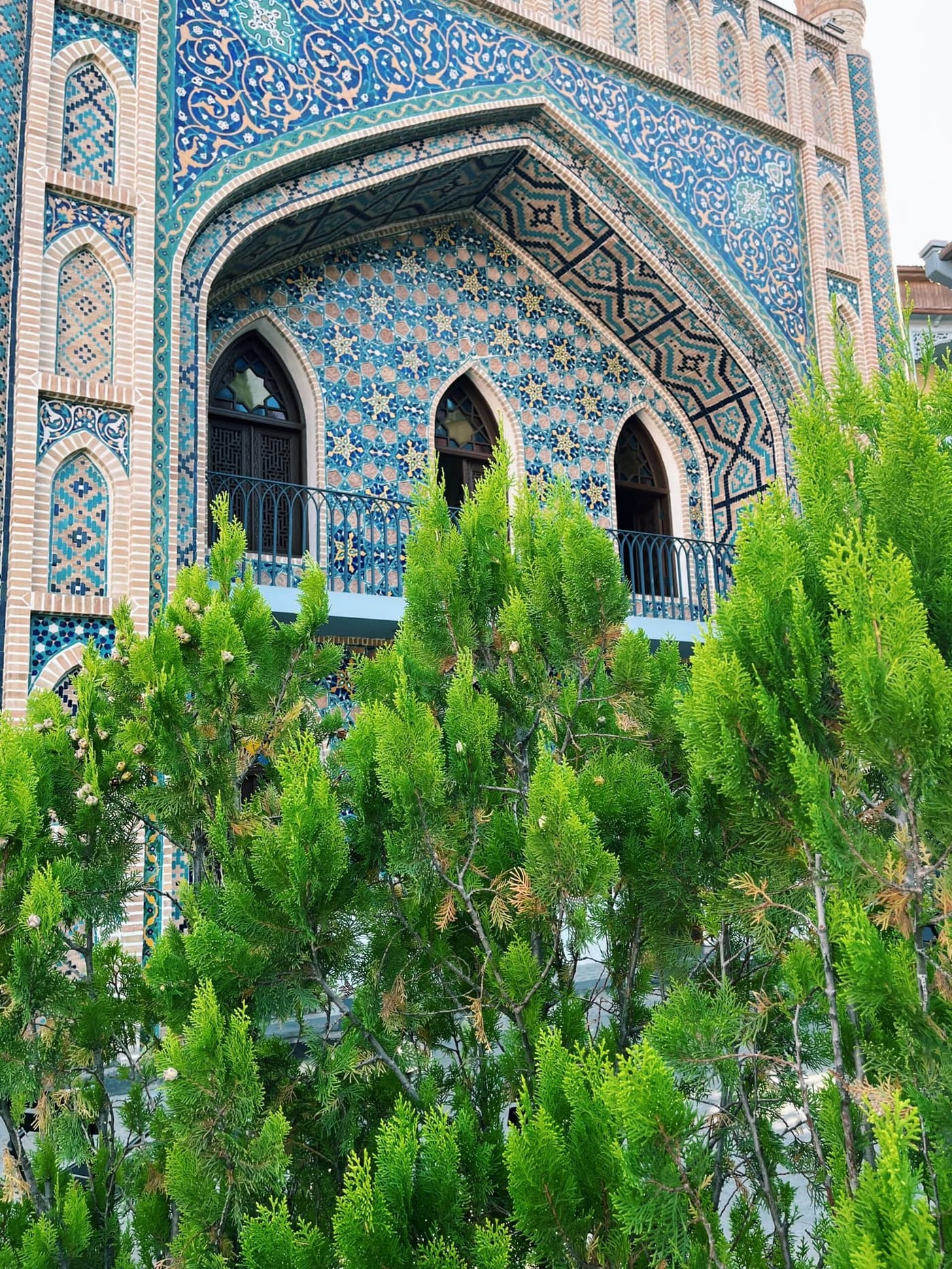
The Abanotubani district is one of the oldest places in Tbilisi. According to legend, this is where Vakhtang Gorgasali found the hot springs and decided to found the city. The domed bath buildings with their characteristic brick roofs are visible right at the foot of Narikala. Inside are working sulfur baths, visited not only by tourists but also by locals. The water temperature reaches +40–50°C (about 104–122°F), and it is believed to be good for the skin and joints. Among the well-known baths are Orbeliani, Tsikhisabane, Bakhmaro and Samepo. Even if you don't plan to bathe, be sure to look inside, because the architecture is impressive.
The baths come in two formats. Public halls: one large shared pool. Usually there are separate men's and women's halls. Soviet in spirit, authentic. Private rooms: a separate room with a bathtub or a small pool, hot water and a place to relax. They cost 20–60 lari per hour, depending on the place. You can bring a group along.
Kise is a traditional massage with a rough kese mitt. The attendant first warms your body in hot water, then comes the scrub, then a soapy massage. It costs an extra 15–25 lari and lasts 20–30 minutes. I recommend trying it at least once.
As for choosing a specific bathhouse, each has its own atmosphere and price category. Here are a few proven options.
The best baths in Abanotubani
- Orbeliani (Bath No. 5): the most beautiful from the outside. A Moorish facade with blue mosaic. It's worth stopping by for the facade alone.
- Chreli-Abano: tourist-oriented, with a modern design. Cleaner than the market average.
- Gulo's Thermal Spa: the most modern and cleanest. It has different room formats and you can book online. More expensive, but more comfortable.
It's better to book ahead for weekends, especially for evening slots.
Sioni Cathedral
Sioni Cathedral (or the Cathedral of the Dormition of the Mother of God) is one of the main holy sites of Georgia. The first church on this spot appeared in the 6th century, but the present building dates from the 12th–13th centuries. The cathedral was destroyed and rebuilt many times after Persian invasions and earthquakes. Inside is kept the cross of St. Nino, the patron saint of Georgia. Sioni Cathedral stands on the street of the same name in the Old Town and is surrounded by cozy courtyards and small antique shops.
Rezo Gabriadze Clock Tower
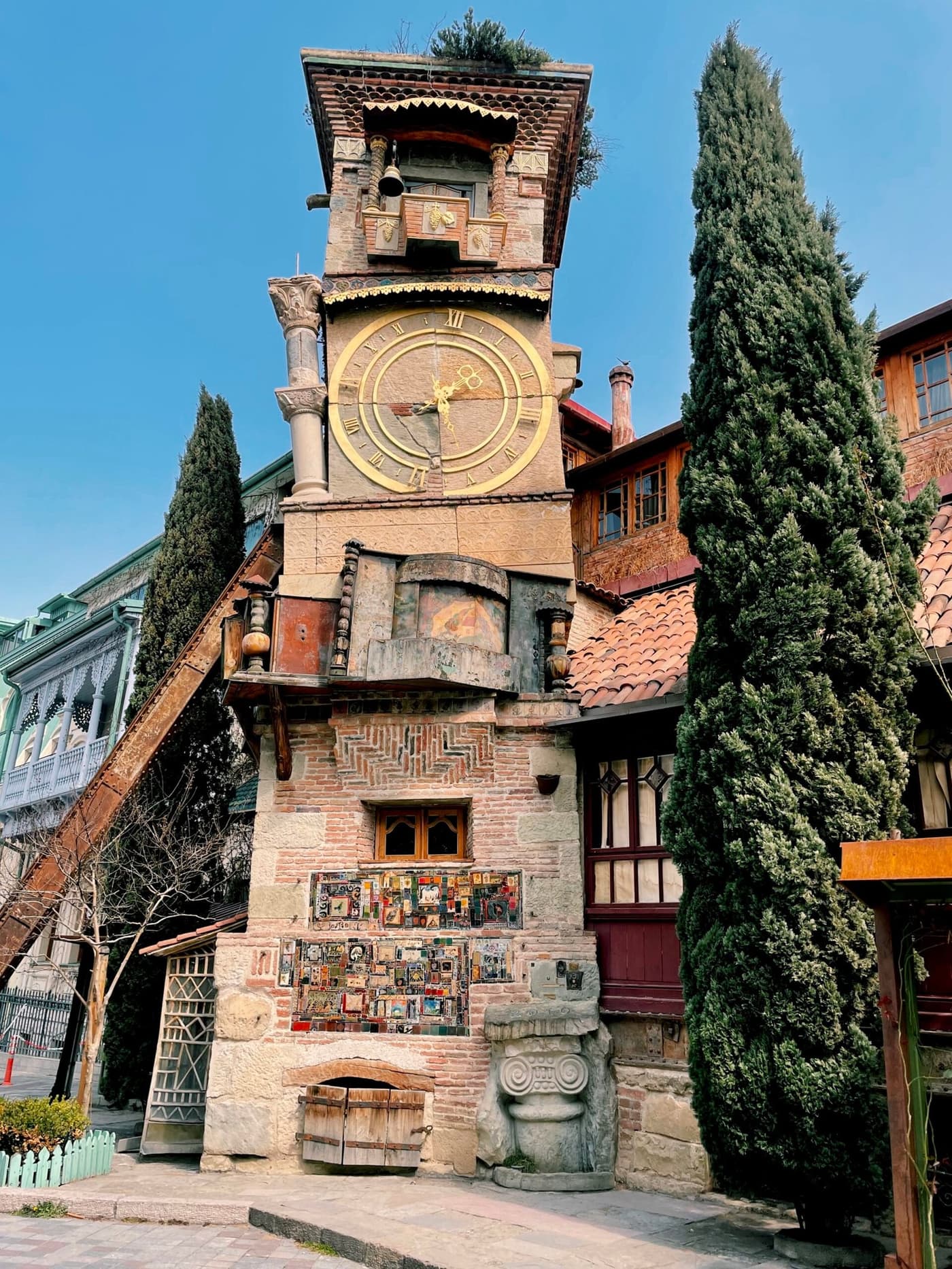
One of the most unusual sights of the Old Town is the clock tower of the Rezo Gabriadze Theater. It is on Shavteli Street, a few minutes from Sioni Cathedral. The tower looks like something out of a fairy tale: uneven, as if assembled from multicolored bricks, and decorated with ceramics and greenery. Every hour a little door opens on it, and an angel appears and strikes the time with a small bell, while at 12:00 and 19:00 a puppet show, “The Circle of Life,” is staged beneath the clock. The show draws dozens of tourists. Next to it are the Gabriadze puppet theater itself and a cozy courtyard cafe.
📍 Clock tower location in Tbilisi
Shardeni Street
Shardeni Street is the liveliest in the Old Town. Craft workshops and trading rows used to be here, and now it is a pedestrian zone with cafes, galleries and restaurants. In the evening Shardeni turns into the real center of Tbilisi life: music plays, wine bars are open, and shop windows glow with warm light.
Bridge of Peace and Rike Park
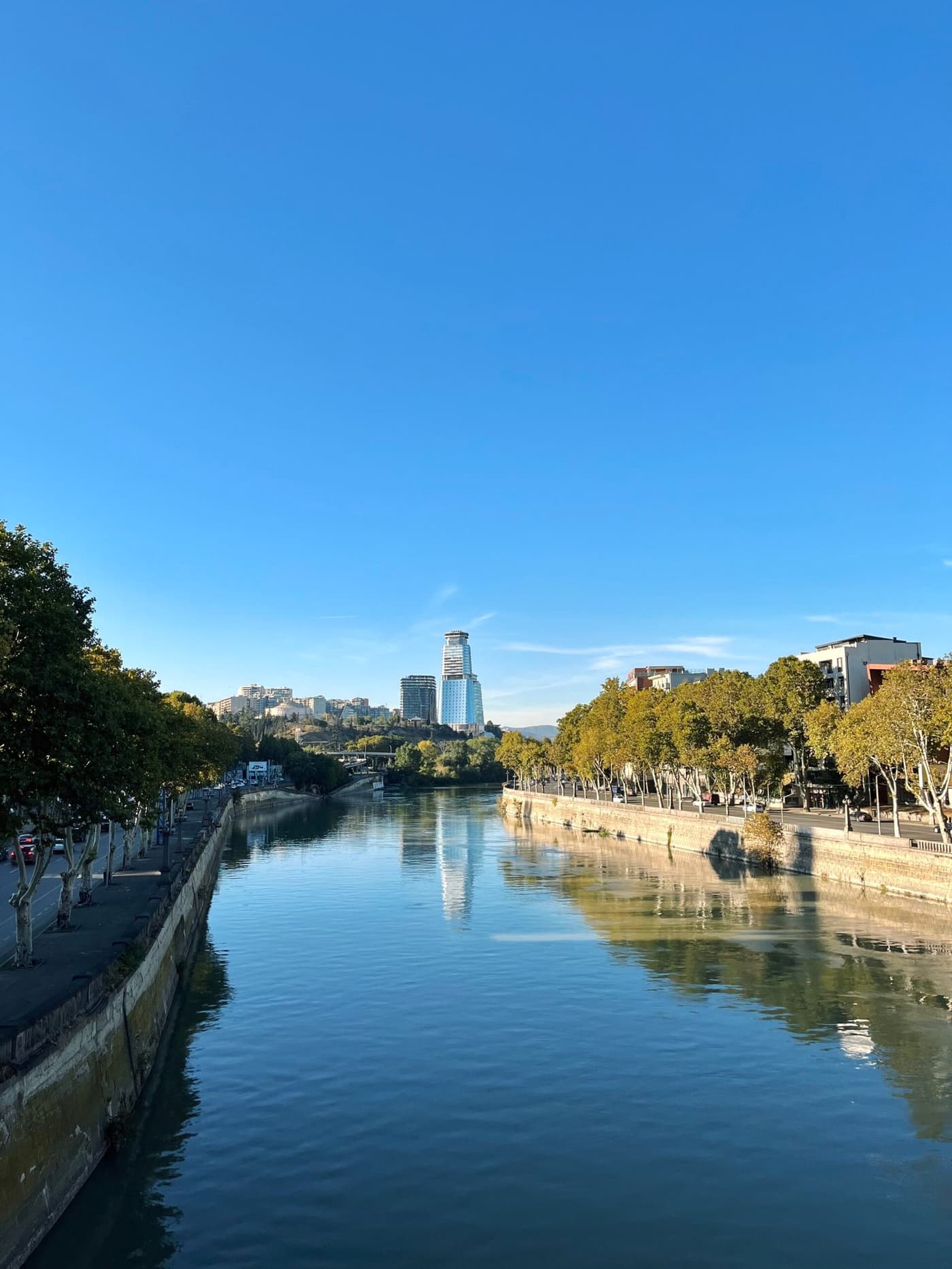
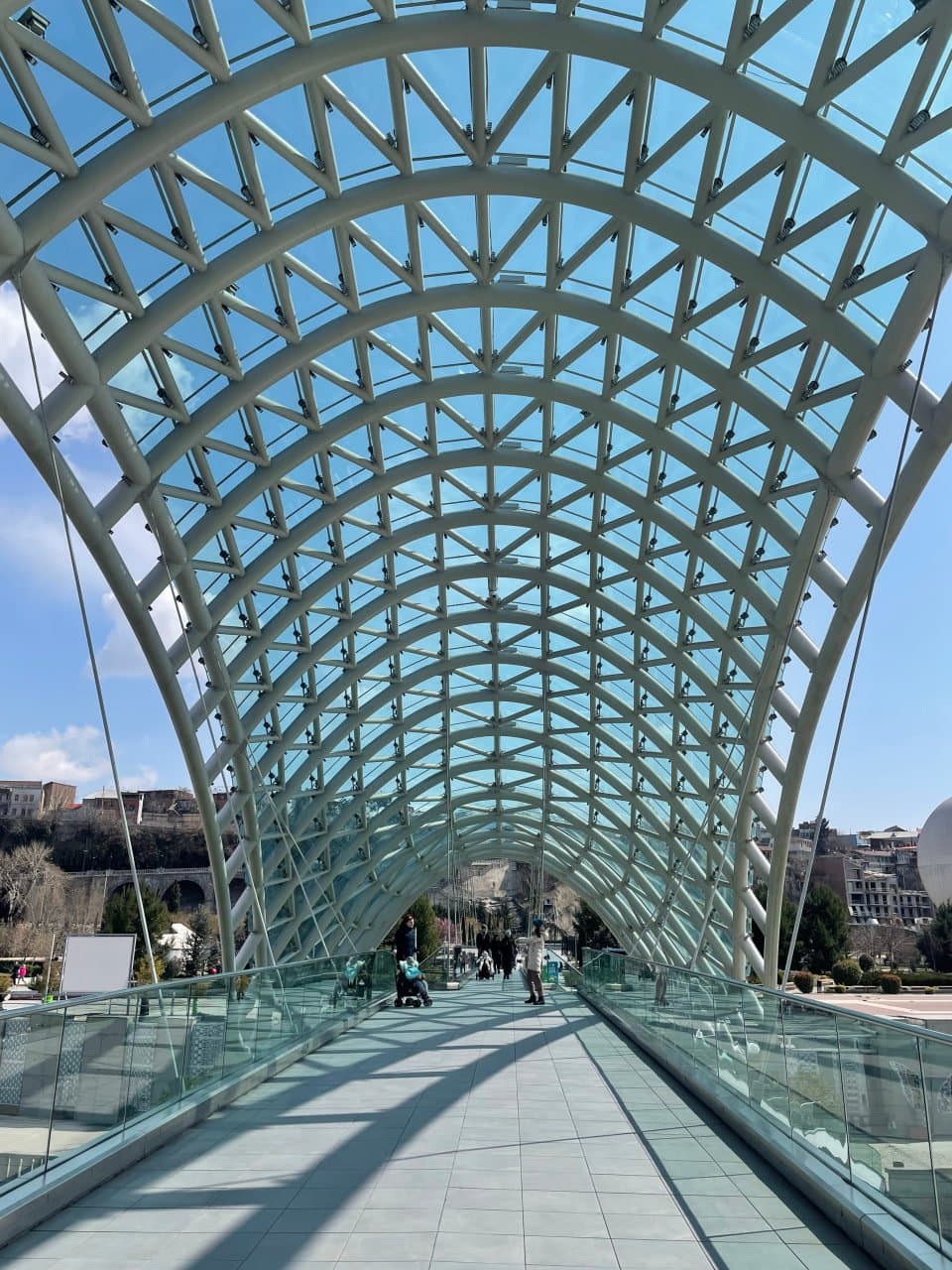
On the border between Old Tbilisi and the new center stands the Bridge of Peace, a modern glass structure linking the banks of the Kura. From the bridge you get one of the best views of Narikala Fortress and the sulfur baths. Nearby is Rike Park, where you can rest, ride the cable car or just sit by the fountain. This place symbolizes the joining of old and new Tbilisi.
Cable car
The cable car connects Rike Park with the hilltop by Narikala Fortress. In a couple of minutes of ascent you can see the rooftops of the old town, courtyards and churches from a bird's-eye view. It's not just a convenient way to reach the fortress but a full-fledged attraction that is worth including in your route through Old Tbilisi.
Beautiful, atmospheric places in Old Tbilisi that are rarely written about
These are places you won't find in a standard guidebook, but they are what make Old Tbilisi even more interesting. Some of them may no longer be what they used to be, but I still want to tell you about them and share photos from these places.
The "Kaleidoscope" entrance hall
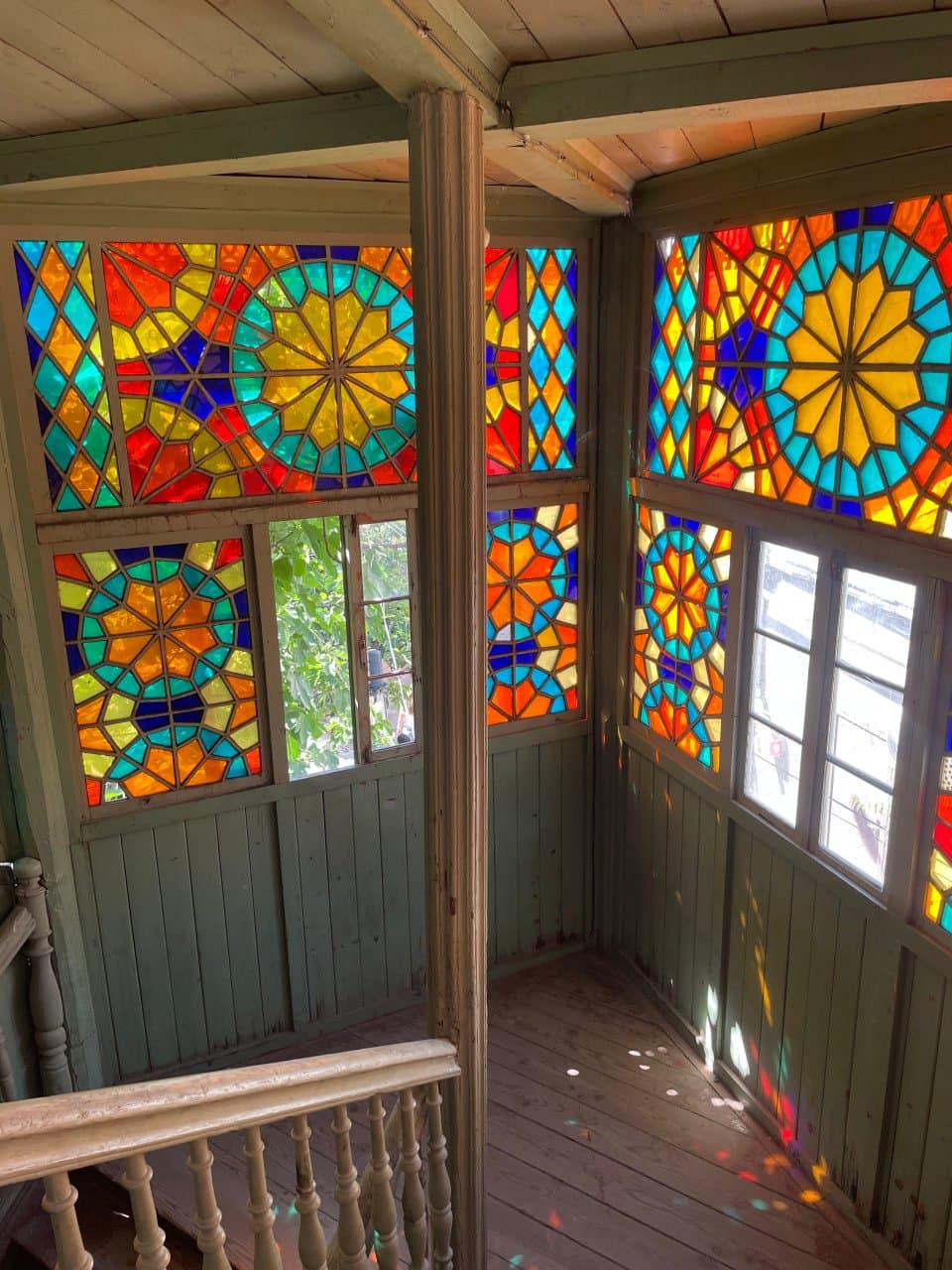
On Betlemi Street, at house No. 3, is the famous "Kaleidoscope" entrance hall, one of the most photogenic places in Tbilisi. A staircase with mosaic walls, stained glass and colorful plaster feels like a portal to the past. It is a residential building, and three years ago the entrance was open to everyone. Now, as far as I know, the building is in disrepair and closed. But you can still photograph it from the outside.
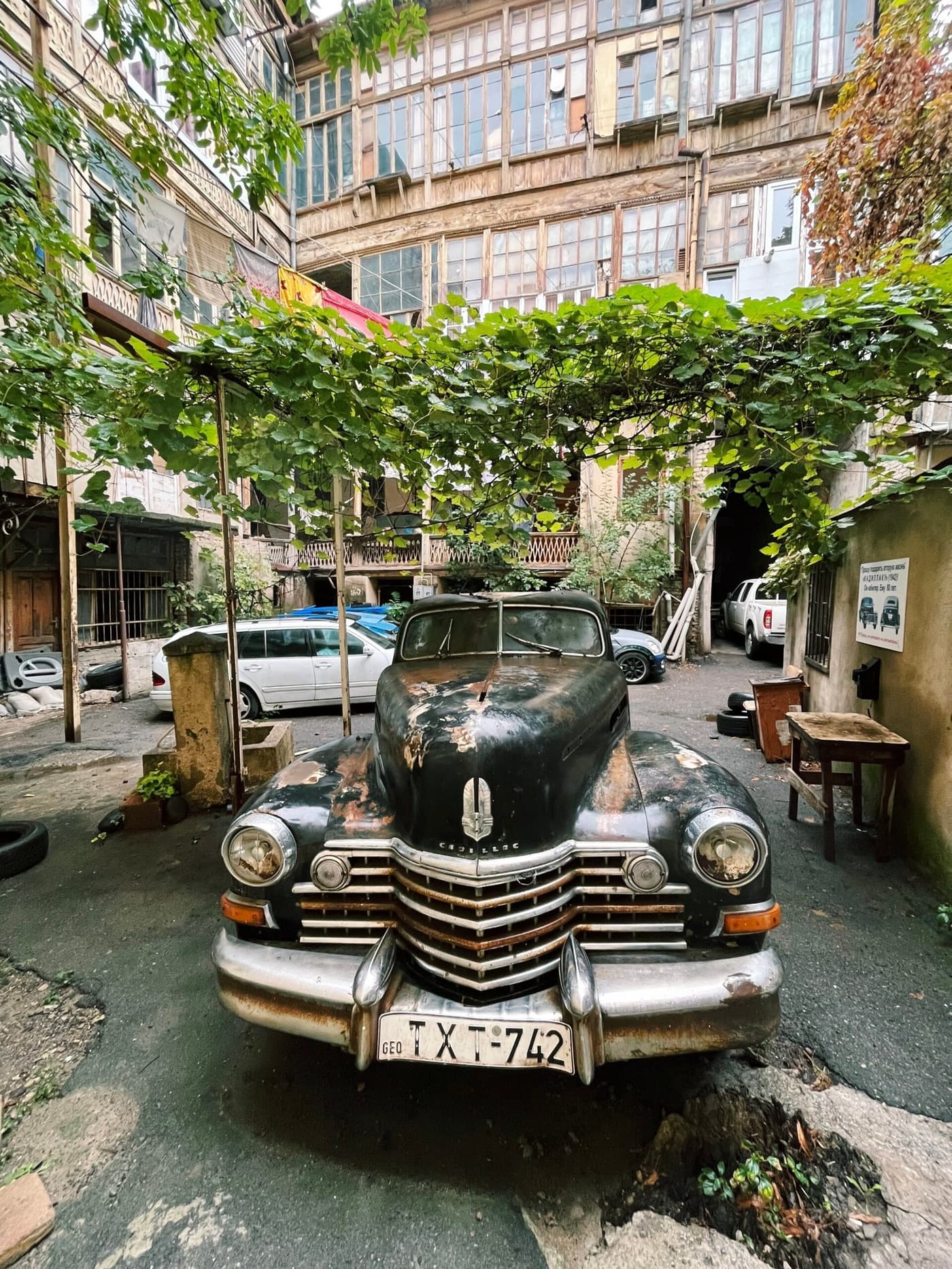
The old "Cadillac" on Gomi Street
Another iconic spot is an American "Cadillac" parked by an old house in the Kldisubani district, not far from the stairs to Narikala. Photographers often shoot it: a vintage car against a backdrop of peeling walls and wooden balconies looks like an art object. It looks much worse now, and some people write that it has even been covered with a tarp.
Fridas Cafe Tbilisi
A cafe with a great interior. The food is mediocre and the prices are high, so I don't recommend eating there, only having a cup of coffee. The cafe has a gorgeous interior and a facade with murals in the style of Frida Kahlo. Bright walls and lots of greenery contrast perfectly with Tbilisi's old stone.

Lado Gudiashvili Square
A small square in the western part of Old Tbilisi, recently restored. It's quiet, green, very beautiful and atmospheric here. Old houses, wrought-iron balconies, a fountain and art galleries.
According to legend, this is where the artist Niko Pirosmani gave his "million scarlet roses." It's a great place for photos or a morning coffee.
Where to eat in the Old Town of Tbilisi
I put together a short selection of places to eat in the old town. I wrote about where and what to eat in Tbilisi in detail in a separate article.
Traditional Georgian restaurants
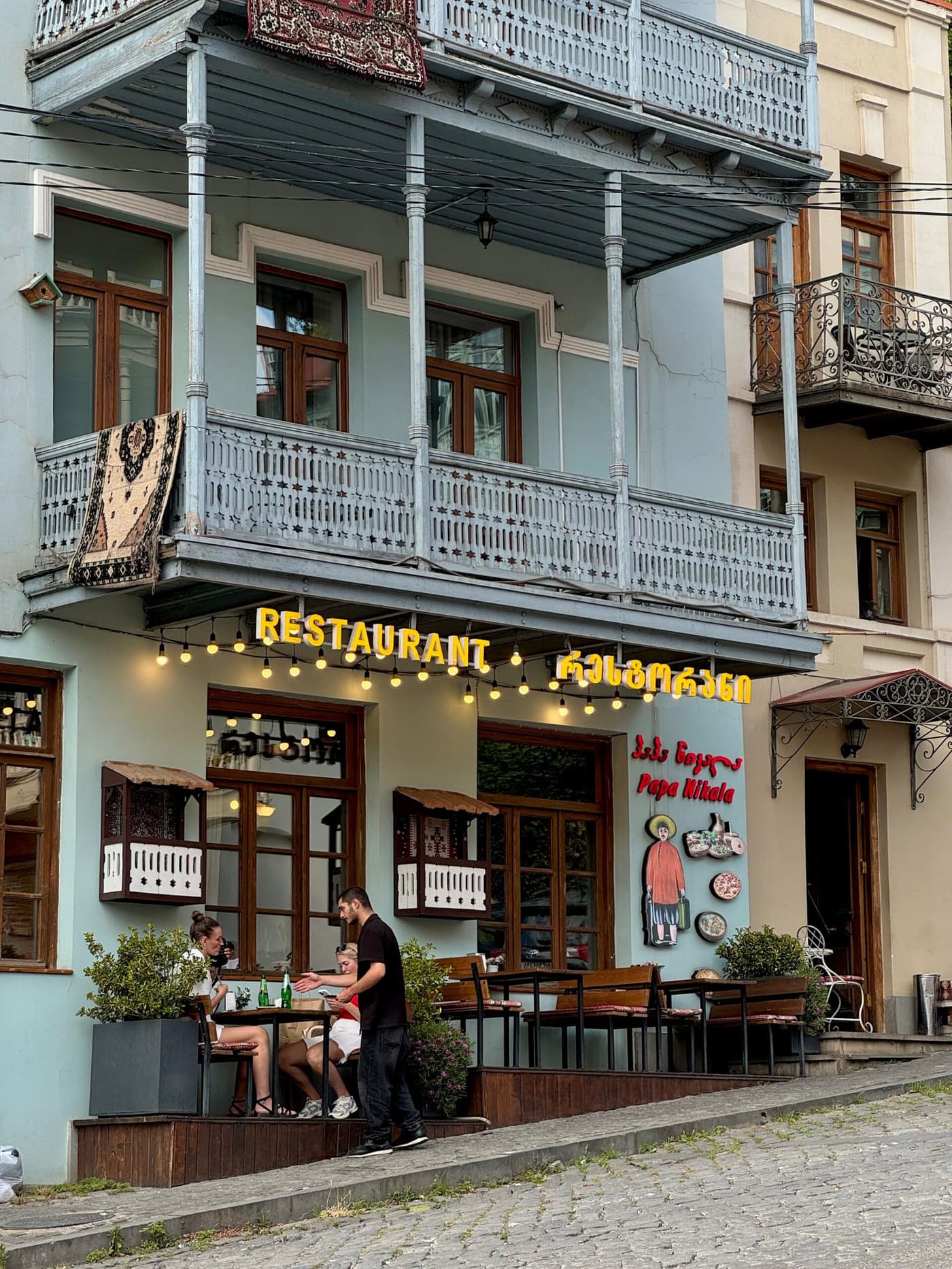
If you want the classics, such as khinkali, khachapuri and homemade wine, head to the traditional taverns. Decent Georgian restaurants in the old town: Khinkali Pub, RESTAURANT HIDE, Khinkali Bar N1
Cafes and wine bars on Shardeni
Shardeni Street (Jan Shardeni St) and the neighboring alleys are full of small cafes and bars. It's a good place to simply stop, order a glass of wine and watch the bustle around you
For those who don't eat meat
In Old Tbilisi it's easy to find vegetarian dishes: vegetable pkhali, salads with walnuts, khachapuri, lobio and matsoni. Or you can go to modern vegetarian cafes, for example Kiwi Vegan Cafe
Coffee shops in the old town
For those who don't drink wine or other alcohol, the old town of Tbilisi has plenty of different coffee shops. Here are a couple of places where you can have a coffee and take a break from walking: SALI, Coffee Place
Old Tbilisi is a city within a city, a very photogenic place where you want to photograph every corner. If it's your first time in Tbilisi, start exploring the city here.
Walking route: 4–5 hours through the old town
A convenient route starts at Freedom Square (the Freedom Square metro station). It is a central point from which the main tourist routes branch out.
Step 1. Freedom Square → Shardeni Street (15 minutes) Walk east along Shardeni Street. It is a pedestrian zone with cafes, galleries and antique shops. This is a good place for your first coffee and to get into the mood for the walk.
Step 2. Sioni Square and Sioni Cathedral (15 minutes) Sioni Cathedral, one of the oldest in Tbilisi, was built in the 6th–7th centuries and was destroyed and rebuilt many times. Inside are icons, frescoes and a quiet atmosphere. Entry is free.
Step 3. Metekhi Bridge and Metekhi Church (20 minutes) Cross the Metekhi Bridge over the Kura. On your left is a rock with Metekhi Church (13th century) and an equestrian statue of the city's founder, King Vakhtang Gorgasali. From here there is a panoramic view of the old town and Narikala Fortress, one of the best photo spots.
Step 4. Abanotubani: the sulfur bath quarter (30 minutes) Go back to the left bank and enter Abanotubani. It is a special quarter with characteristic gray brick domes, and the sulfur baths are hidden beneath them. The smell of sulfur is noticeable here, and that's normal, it's how it should be. Look at at least one dome from the outside, or better yet, go inside.
Step 5. Climb to Narikala Fortress (40–60 minutes) From the baths head uphill, either on foot up the stairs (~20 minutes) or by cable car from Rike Park (2.5 lari one way; in winter it runs roughly 10:00 to 22:00, later in summer; check the schedule on the spot). At the top are the ruins of the fortress from the 4th–17th centuries and the best panoramic view of Tbilisi.
Step 6. Down through the botanical garden or Legvtakhevi Street You can descend via the trail to the Botanical Garden (entry 4 lari) or return to Abanotubani along Legvtakhevi Street, with a waterfall right in the gorge in the middle of the city.
The old town at night
In the evening Tbilisi is completely different. The lanterns come on, the bars open, and the old town switches to night mode. I deliberately saved the evening walk for the second or third day, when you already know the streets and can just walk without a route.
The main stops on the night route: Shardeni Street (bars and live music), the Kura embankment by the Bridge of Peace (beautiful lighting), Fabrika (a former sewing factory turned into a hipster space with a bar, food and concerts), and the bars in the Avlabari district.
Narikala Fortress is lit up and visible from many points, and you can photograph it nicely from the Metekhi Bridge or from the embankment.
I wrote about all the sights of Tbilisi in detail in another article.
Frequently asked questions about the old town of Tbilisi
I collected answers to the most pressing questions
How do you get to the Old Town of Tbilisi?
The Old Town is in the center of Tbilisi, on the bank of the Kura (Mtkvari) River and at the foot of Narikala Fortress. The most convenient way is to walk from Freedom Square or the "Avlabari" metro station. If you are coming from another part of the city, you can take a taxi
How much time should you plan for a walk around the Old Town of Tbilisi?
If you just stroll along the key streets and look into a few sights, 2–3 hours is enough. If you want to include a visit to the baths, climb to Narikala and have lunch in a cafe, plan for a full day.
How much does it cost to enter the sulfur baths of Old Tbilisi, and do you need to book in advance?
Many baths in the Abanotubani district take payment right at the entrance. Rates depend on the type of bath (public or private) and the time of day. I recommend checking opening hours in advance and booking ahead in high season.
Can you find cheap accommodation in the Old Town of Tbilisi?
Yes, the Old Town has budget guesthouses, hostels and apartments. Prices depend on the season and the comfort level. If you choose alleys slightly away from the busiest streets (for example the Betlemi or Sololaki area), you can find better deals.
What is the Old Town of Tbilisi called, and which streets does it cover?
Historically the "Old Town" refers to the Kala district and the adjoining quarters: Abanotubani, Sololaki, Avlabari. Landmark streets: Leselidze (Kote Abkhazi), Shardeni, Betlemi, Pushkin Street, all of them close by.