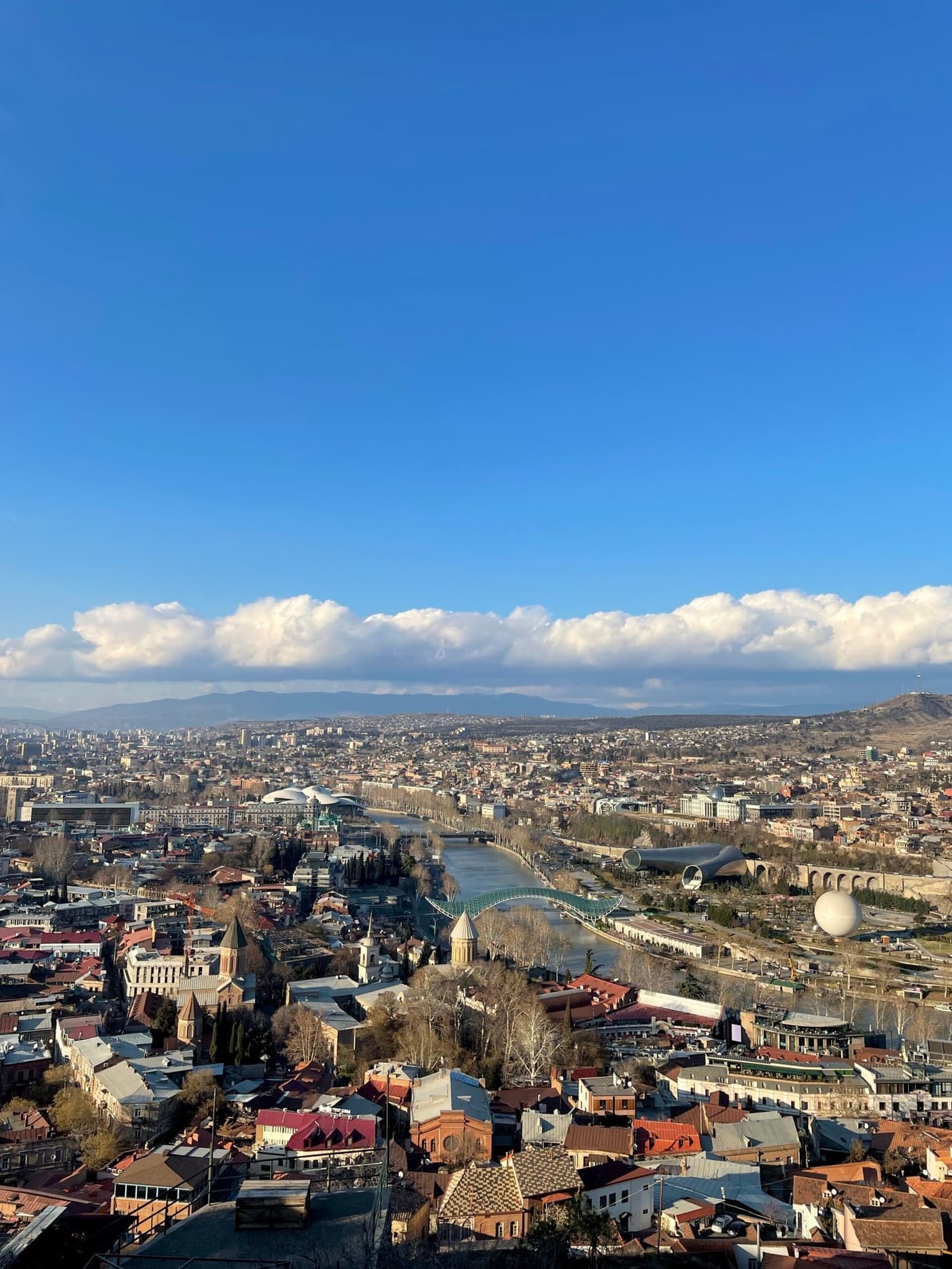
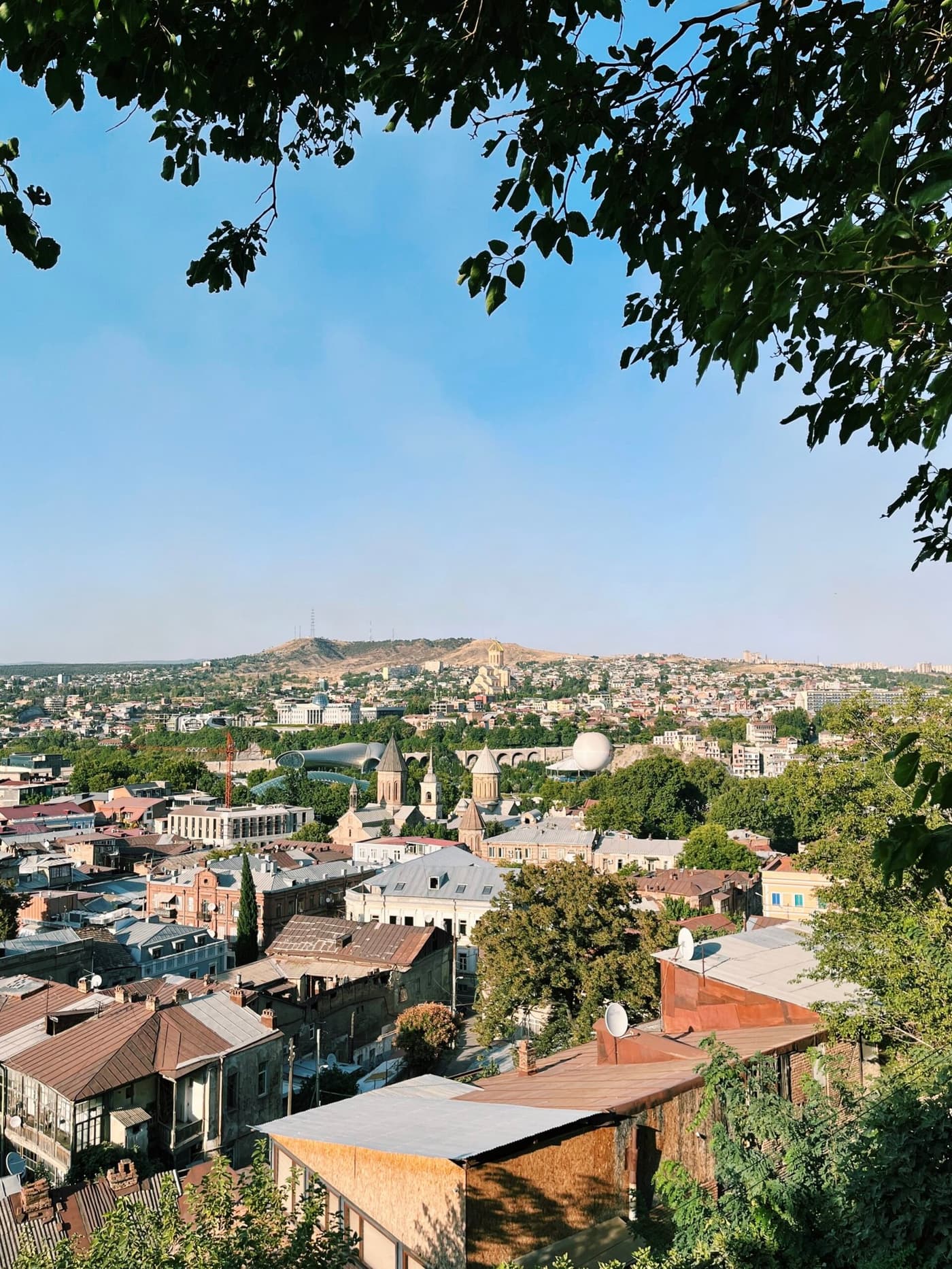
Tbilisi is the capital of Georgia, with a population of about 1.2 million. The city sits on the Kura River, called Mtkvari in Georgian. It is surrounded by low mountains and built in layers of different eras: Persian-style baths dating to the 5th century, Soviet avenues, the glass Bridge of Peace and the wooden balconies of the old town all stand within a few blocks of each other.
I lived in Tbilisi for almost a year and explored the city inside out: on foot, by metro, by taxi and in a rental car. It is one of those cities where you arrive for a week and end up staying a month. It is cheap, warm and beautiful.
This guide has everything you need to know before your trip: neighborhoods, transport, sulfur baths, food, routes and prices. The short version: $50–80 a day covers a tourist, 3 days is the minimum for a first visit, and April–May and September–October are the best months to go.
What Tbilisi Is Like and Why People Come
People come here for many different reasons today. Tourists come for the atmosphere, the wine and the khinkali. Digital nomads come for the prices, the climate and Georgian hospitality. Newcomers come for the visa-free entry that many passports get, the simple business registration and the feeling of a normal life. The city welcomes all of them with equal warmth.
Tbilisi is about 1,500 years old. It was founded by King Vakhtang Gorgasali who, according to legend, was led here by a bird he had shot that fell into a hot spring and was healed. It was the sulfur waters bubbling up from underground that gave the city its name: tbili means "warm" in Georgian.
Compared with Batumi, Tbilisi feels livelier and more authentic: less resort glitz, more real city life. One is about mountains and history, the other about the sea and casinos.
Tbilisi Neighborhoods: Where to Stay
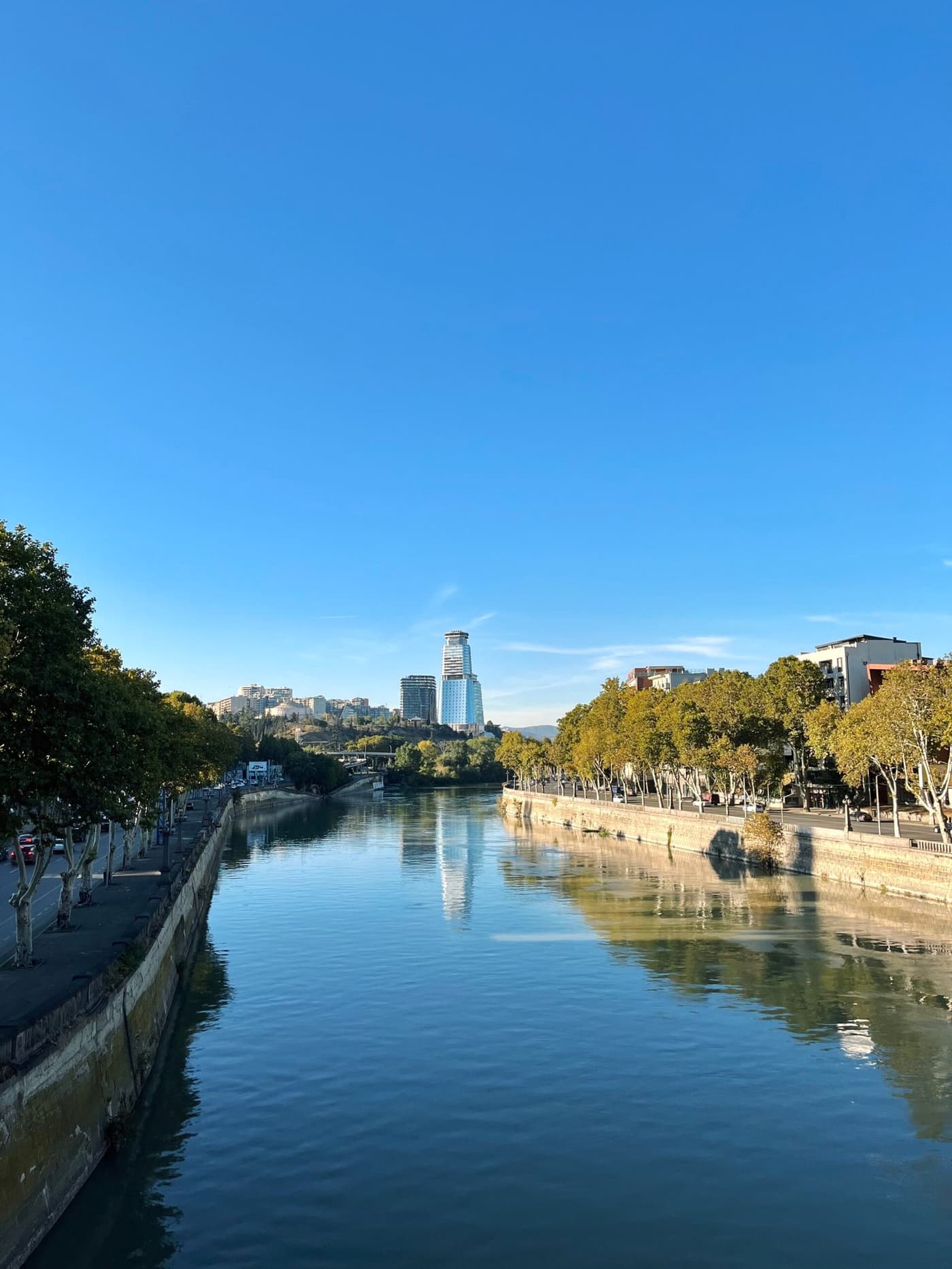
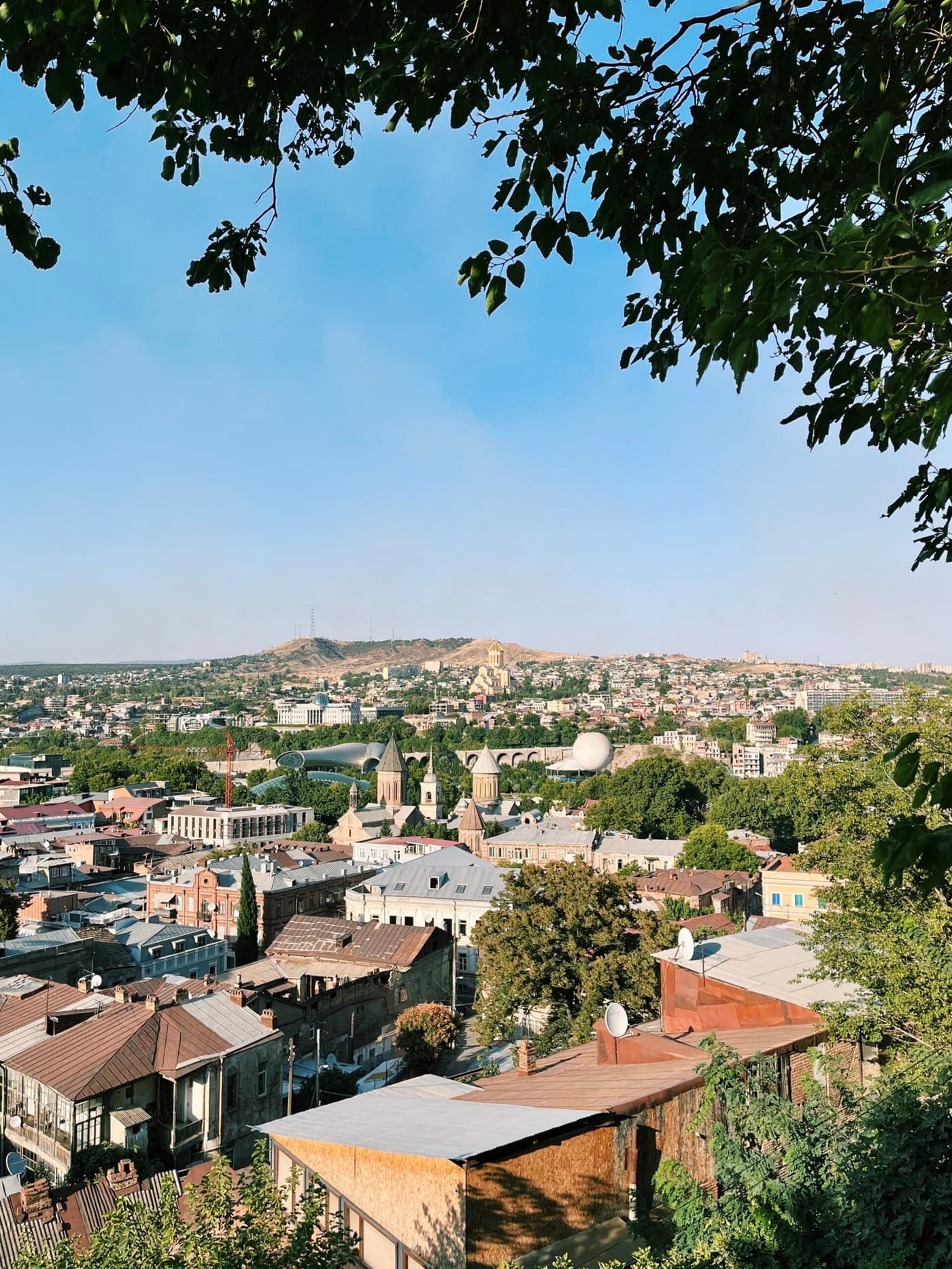
Tbilisi is a long, narrow city stretched along the Kura River. Every district has its own character, and the neighborhood you choose shapes how your trip feels. For a detailed breakdown with rental prices, see the article Best Areas to Stay in Tbilisi; here are the essentials.
Old Town
The most touristy and the most beautiful part of the city. Wooden balconies hang over narrow streets, and you will find the Abanotubani sulfur baths, Narikala fortress and Metekhi church on a cliff above the river. You can wander here for hours without a map, discovering new courtyards, staircases and views.
It is a great place to stay for your first 3–5 days: everything is within walking distance and the atmosphere is at its peak. But it is noisy and expensive. Short-term apartments start at $50–80 a night. Long-term rentals start at $600–900. I wrote about the Old Town in a separate article.
Rustaveli
The central avenue is not a residential district in the usual sense but the city's showpiece. The opera theater, the National Museum, the Parliament and 19th-century shopping arcades are all here. It suits anyone who wants to be right in the center, close to transport and shops.
Short-term rentals start at $40–70 a night. Monthly rentals start at $600–800.
Vera
A quiet, green district west of Rustaveli. It is a favorite of Tbilisi's intelligentsia and of expats. There are cafes, galleries, good restaurants and a market on weekends. You will find fewer tourists and more local life here.
Vazha-Pshavela Street and the side lanes are the main places to stroll. Short-term rentals run $35–60 a night. Monthly rentals run $600–750.
Marjanishvili
A lively, eclectic district on the other bank of the Kura. Aghmashenebeli Avenue is a long pedestrian street with cafes, bars and street musicians. It is young, loud and interesting. The Dezerter Bazaar is nearby.
Rent is cheaper than in the center, at $450–600 a month. It is an excellent base for a stay of about a week.
Saburtalo
A business and residential district popular with long-term expats. It has plenty of coworking spaces, cafes to work from and grocery stores. The metro is nearby and it takes 15–20 minutes to reach the center.
Rent is $500–700 a month. This is the most sensible balance of price and comfort for anyone coming for a month or longer.
Didube and Gldani
Transport hubs in the north of the city. Marshrutkas to Mtskheta, Kazbegi and other regions leave from here. There is not much reason for a tourist to stay here, but you should know about them.
3-Day Tbilisi Itinerary
Three days is the minimum to feel the city rather than just sprint past the top sights. Here is how I would split the time if I were coming to Tbilisi for the first time.
Day 1: Old Town, Narikala and the Sulfur Baths
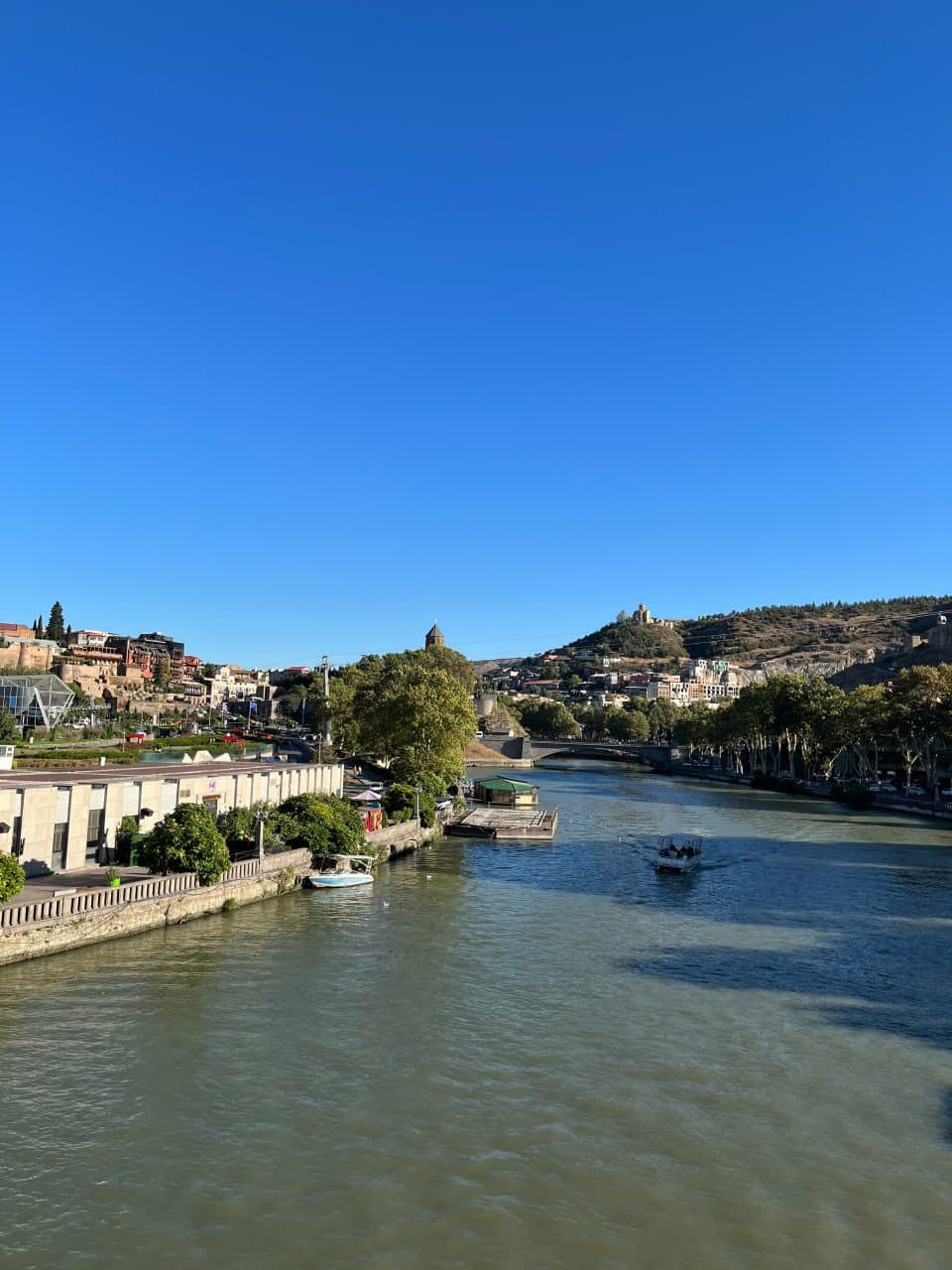
Start with a walk through the Old Town from Freedom Square up Sharden Street, then across the Metekhi Bridge to Narikala fortress. The climb on foot takes about 20 minutes, or you can take the cable car (2.5 GEL from the Kura embankment, at the entrance to the embankment).
The fortress offers the best view of Tbilisi: the old and new city blending together, the domes of Metekhi and the winding Kura. I went up there both at sunrise and at sunset, and both are worth the effort.
After the fortress, visit the sulfur baths in Abanotubani. This is the district with the characteristic domed roofs of gray brick, where the smell of sulfur drifts through the air. The baths are open around the clock. Choose a private cabin; an hour for two costs 30–60 GEL depending on the establishment. I went to Chreli-Abano and to Gulo's Thermal Spa, and both are good. You can add a kisse (a scrub with a rough mitt) for an extra 15–20 GEL.
In the evening, have dinner in the Old Town. Below I have collected some great restaurants in Tbilisi.
Day 2: Mtatsminda, Dry Bridge Market and Vera
Start the morning with the funicular up Mtatsminda mountain. The station is by Mamadavit Church, at the start of the climb to the mountain. A round-trip ticket is about 15 GEL. At the top you will find the Pantheon of Writers, where Griboyedov, Nino Chavchavadze and Ilia Chavchavadze are buried, a Soviet-era amusement park and the best panoramic view of the city.
Next comes the market by the Dry Bridge. It is a daily flea market under the bridge over the Kura, selling Soviet badges, icons, coins, books, jewelry, paintings and rugs. It is best to come in the morning (from 10:00): the selection is better and haggling is easier. You can spend anywhere from 30 minutes to several hours here.
In the afternoon, head to the Vera district for coffee at one of the local cafes, Fabrika or Coffee Lab (both are nearby), and look into a contemporary art gallery.
In the evening, visit the Fabrika space: a former sewing factory turned into a venue with bars, restaurants, hostels and concert spaces. It stays open until late at night. Entry is free.
Day 3: Avlabari, the National Museum and a Day Trip
Start the morning in Avlabari, on the other bank of the Kura, which has the best view of the Old Town from below. Metekhi Monastery (5th–13th century, free entry) stands right on the cliff above the river. Nearby is the monument to Vakhtang Gorgasali on horseback.
After that, head to the National Museum of Georgia on Rustaveli Avenue. It has a gold treasury, finds from excavations and jewelry from the 4th millennium BC, and it is one of the best museums in the region. Entry is 15 GEL, with the gold collection charged separately at another 15 GEL. It takes only 2–3 hours, but it is seriously impressive.
The third day ends well with a day trip. Options: Mtskheta, a town 25 km and 30 minutes by marshrutka from Tbilisi. Visit Jvari Monastery and Svetitskhoveli Cathedral there. You can also drive a short way along the Georgian Military Road with a stop at Ananuri Fortress, or take a trip to Kakheti.
Tbilisi Sulfur Baths: A Complete Guide
The sulfur baths are not just a tourist attraction. They are a living tradition that is a thousand and a half years old. The water comes from natural springs beneath the Old Town at 37–42°C and is rich in sulfur and minerals. The smell is noticeable, but you get used to it quickly and soon start to consider it part of the atmosphere.
The Abanotubani district lies in a hollow at the foot of Narikala, which is where its name comes from (from the Georgian abano, meaning "bath"). The domed roofs of dark brick poke straight out of the ground, as if the baths had grown into the rock.
There are two formats: public baths and private cabins. Public baths are a big pool with mixed or gender-separated bathing. They have a Soviet atmosphere, they are noisy, but they are cheap. A private cabin is a separate room with a tub or a small pool, a shower and benches. It fits 2–6 people and is good for a group.
Best Baths
- Chreli-Abano — one of the oldest complexes, with several cabins of different sizes. Mid-range prices, good condition, kisse available. 2 Grishashvili Street.
- Gulo's Thermal Spa — the most modern baths in the district. Clean and beautiful, with higher prices. If you want comfort, come here. You can also book a massage there.
- Orbeliani Baths — the famous blue mosaic baths on the square of the same name. The facade is beautiful and worth at least a photo from the outside. Inside there are cabins at different levels.
Practical tips: come on a weekday morning for shorter lines. On weekends and in the evening, it is better to book in advance (especially Gulo's, which you can do through the website or WhatsApp). Bring flip-flops, a towel and shampoo. After the kisse your skin feels as if you had a peel, and for a couple of days afterward it simply glows.
Food in Tbilisi: What to Eat and Where
Georgian cuisine is one of the reasons people come back again and again. Here I will talk about specific dishes and specific places, without generalities. I also have a very detailed article about what to try in Georgia.
Khinkali
Georgian "dumplings" with meat broth inside are a culture of eating all their own. You eat them with your hands: pick one up by the knob, bite into the bottom, drink the broth, then eat the rest. The knob is not eaten; it is how the number you have eaten is counted.
The fillings vary: pork with beef (the classic), lamb with herbs (the mountain version), potato with cheese (for vegetarians) and mushrooms. The best khinkali are not in the tourist cafes of the Old Town but in ordinary places for locals.
Where to Try Khinkali in Tbilisi
-
Cafe Daphna. The cafe is at 29 George Atoneli St (not far from the Dry Bridge). Probably the most photogenic, neat and tasty khinkali in the city. It has a bright, modern interior (a rarity for classic khinkali places) and perfectly thin dough. Bonus: you can order different types by the piece, with no minimum of 5 of one kind.
-
Klike's Khinkali. At 1 Shio Chitadze St (in the Mtatsminda / Sololaki area). A tiny semi-basement place "for those in the know". The khinkali are shaped by hand right in front of you. Besides the classic meat ones, be sure to try the khinkali with nadughi cheese (a delicate Georgian curd cheese) or with mushrooms. There are few seats, and in the evening there may be a line.
Khachapuri
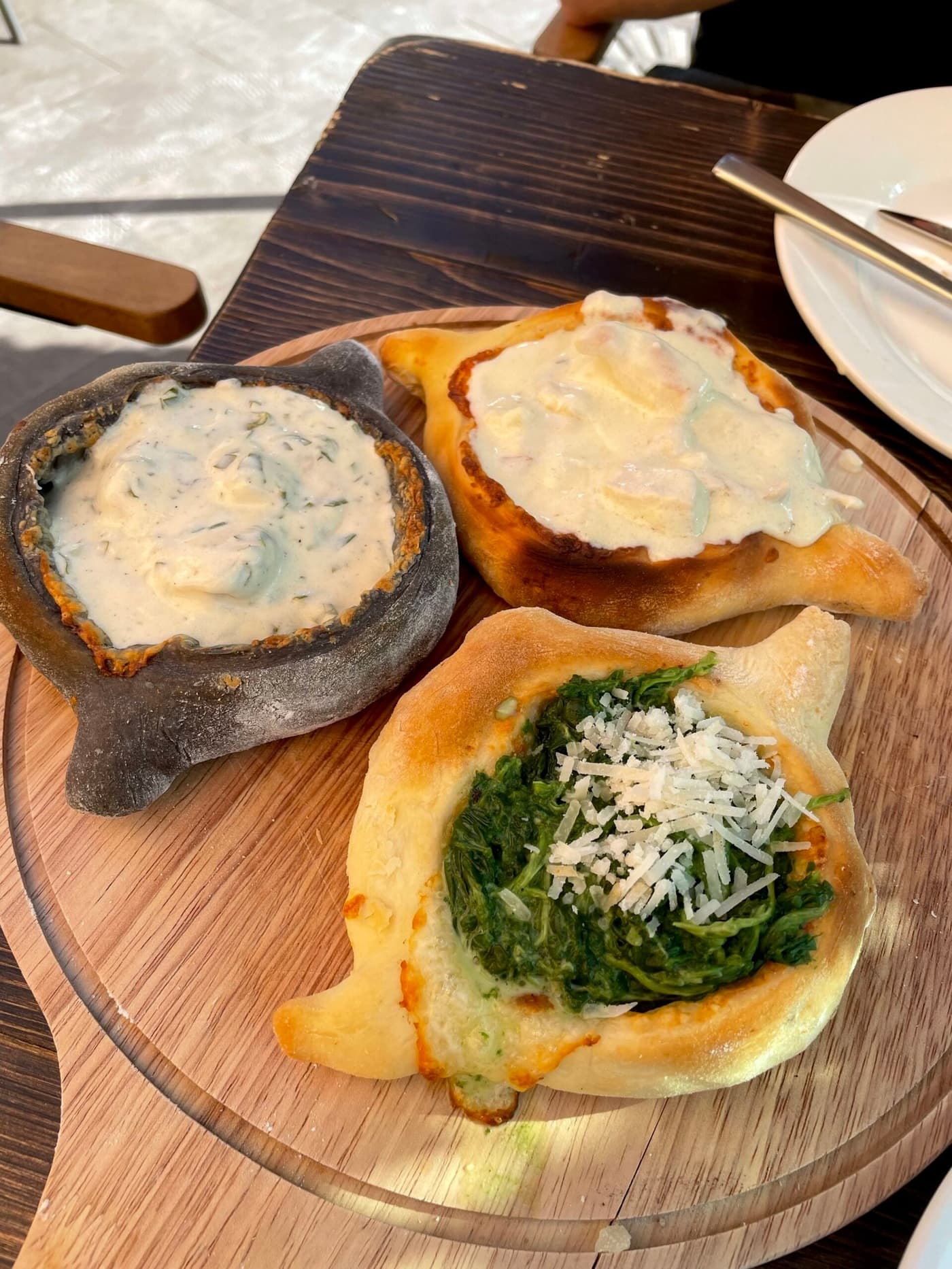
Not one dish but a whole family. Adjarian is a boat of dough with cheese and an egg: mix the edges of the dough into the filling and eat it while hot. Imeretian is a round flatbread with cheese inside. Megrelian has cheese on top as well. Achma is a layered, baked dish.
In an ordinary bakery, Adjarian khachapuri costs 8–14 GEL. In a tourist restaurant it is 18–25 GEL. The best bakeries are not in the center but in residential neighborhoods: look for the smell of bread and a small line.
Mtsvadi
Georgian shashlik, grilled over grapevine charcoal without extra spices, just salt and an onion marinade. Beef, pork or lamb. It is eaten with tklapi (dried sheets of tkemali plum) or narsharab sauce.
Pkhali and Cold Appetizers
Pkhali are balls of cooked vegetables (spinach, cabbage, beet, beans) with walnuts, garlic and spices. Be sure to try them at a Georgian feast or in any Georgian restaurant.
Satsivi is chicken in a walnut sauce with cinnamon, cloves and saffron. It is served cold. The first time it may surprise you, and the second time you will want more.
Tbilisi Restaurants and Cafes With Addresses
-
Salobie Bia. Address: 17 Shota Rustaveli Ave (in the Rustaveli Theatre building, side entrance). A cult spot devoted to Georgia's main comfort food: lobio (thick bean stew served in a clay pot). Here it comes with pickles and crispy cornbread called mchadi. The interior is decorated with art objects and the atmosphere is very Tbilisi. Important: they deliberately do not make khinkali here.
-
Mapshalia. Address: 137 Davit Aghmashenebeli Ave. The best-known and most honest dukan of Megrelian cuisine. It looks like a greeting from the past, with a simple interior and low prices. Come for elarji, a thick cornmeal porridge with a huge amount of suluguni that stretches for yards, and for kupati. A filling lunch costs next to nothing.
A Beautiful Dinner in Tbilisi
-
Shavi Lomi (Black Lion). Address: 28 Zurab Kvlividze St (Chugureti, not far from Fabrika).
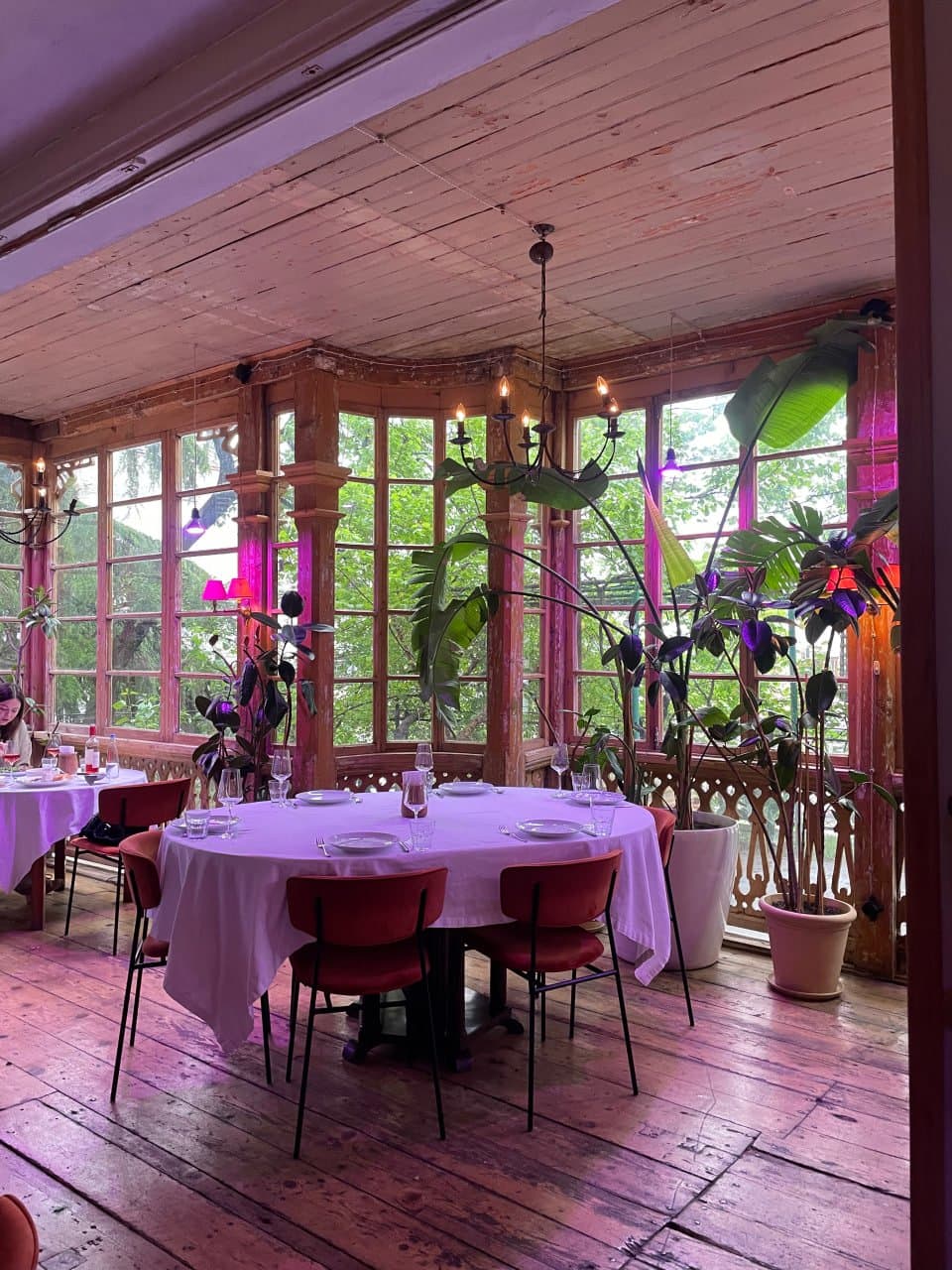
A pioneering restaurant in "vintage Tbilisi" style. It hides behind an unremarkable wooden door. Inside is a stunning shady courtyard carpeted with greenery, and the interior resembles the living room of a Tbilisi intellectual. Order the assorted pkhali, which arrives on a big board, and the beef in walnut sauce.
-
Keto and Kote. Address: 3 Mikheil Zandukeli Dead End (Vera district).
An old mansion hidden in a dead end, with a luxurious terrace that has a view over the city. A very romantic, high-society place with excellent service. They serve the classics: superb khachapuri and satsivi, in a refined restaurant presentation. Ideal for the last dinner of your trip.
Wine
Georgia is the birthplace of winemaking, with more than 8,000 years of history. There are around 500 indigenous grape varieties. What sets Georgian wine apart from the rest of the world is the qvevri method: white wines are aged on their skins in clay jars. The result is an orange color, tannins and a complex flavor. It is not like anything European.
Where to Try Wine in Tbilisi
-
Wine Factory N1. Address: 1 Vasil Petriashvili St (Vera district). The huge grounds of a former winery, turned into a food and drink cluster. Dozens of bars, restaurants (including the excellent restaurant Veriko) and wine shops are gathered under one roof. A great place to come in the evening, hop from bar to bar and drink qvevri orange wine.
-
8000 Vintages. Several branches, the most convenient at 60 Irakli Abashidze St (Vake) and 27 Revaz Tabukashvili St (the center, behind the Opera Theater). A professional wine bar and shop. All the wines go through a blind tasting before they reach the shelf. The sommelier will pick a wine to your taste, from a light biodynamic one to a dense Saperavi, open the bottle right there and offer a gorgeous cheese or meat platter.
There is a full guide to cafes, restaurants and coffee shops in Tbilisi in a separate article.
Getting Around Tbilisi
Tbilisi is compact in the center and sprawling on the outskirts. For a tourist, the metro, Bolt and walking are enough.
The metro has 2 lines: Akhmeteli — Varketili and Saburtalo (Station Square — University), and it covers the main districts. A ride costs 1 GEL. You need a Metromoney card, with a 2 GEL deposit that is refunded when you return it. The metro runs from 6:00 to 00:00. You can top up the card at metro ticket offices, at terminals or through the apps of local banks.
Bolt and Yandex Go are the main taxis. Prices are transparent and there is no haggling. A ride within the center costs 5–12 GEL. From the airport (TBS) to the center is 25–35 GEL. At night the fare is 20–30% higher.
Buses and marshrutkas cost 1 GEL and need the same Metromoney card or payment by QR code. They cover the whole city, but the routes on the map are not always clear, so it is better to check Google Maps.
Walking is the most pleasant way to see the Old Town, Rustaveli and Vera. Between these districts it is 20–30 minutes on foot. But the terrain is hilly, especially in the Old Town.
You need a rental car for day trips to the regions: Kazbegi, Kakheti and David Gareja. Localrent and Discovercars are aggregators with decent prices. Rates start at 100 GEL/day for an economy car. Whether your driving licence is accepted depends on the licence and the country that issued it, so check with the rental company before you book.
Money and Cards in Tbilisi
The local currency is the Georgian lari (GEL). Cards are accepted in most restaurants, supermarkets and shops. You need cash for marshrutkas, markets, small bakeries and in villages.
Whether a card issued abroad works in Georgia depends on your bank and the card network, so check with your bank before you travel. Cards from Georgian banks are the safe option.
The best solution is to open an account at a Georgian bank with an in-person visit. Credo Bank opens accounts on a passport in a single visit. TBC Bank and Bank of Georgia open them if you have proof of income and a set of documents. Requirements can differ by nationality, so confirm them with the bank. I wrote about this in detail in the guide Georgia for Digital Nomads.
TBC and BoG ATMs work throughout the center. Fees are small.
There are many exchange offices in central Tbilisi. The rate is usually 1–3% worse than the bank's. The airport exchange office is 3–5% worse than the city ones, so use it only if you absolutely have to.
SIM Cards and Internet
Magti and Silknet counters are at the airport exit and all over the city. A starter package with data (5–10 GB) costs roughly 15–25 GEL. You need your passport, and setup takes 5–10 minutes.
Mobile internet in Tbilisi is fast. In the mountains and remote areas it is worse. Wi-Fi is available everywhere in cafes and hotels.
Tbilisi Nightlife
Tbilisi is a serious nightlife city.
-
Bassiani (2 Akaki Tsereteli Ave, under the Dinamo Arena stadium). An absolute world legend. The club is located in a huge concrete swimming pool beneath a football stadium. The face control is very strict: dress in dark, simple clothes, and avoid flashy sportswear brands or excessive glamour. There is a strict ban on photos and video, and stickers are put over phone cameras. It is open on Fridays and Saturdays and opens closer to 1 a.m. Tickets at the door usually cost 40–60 GEL.
-
KHIDI (Right Bank embankment, under the Vakhushti Bagrationi Bridge). The second titan of Tbilisi's electronic scene, set right inside the industrial concrete structures of the bridge. It specializes in hard, fast, industrial techno. The atmosphere is dark, powerful and very high quality.
-
Mtkvarze (Nikoloz Baratashvili St, Left Bank). A more soulful, bright and democratic house and techno club in the building of a former Soviet fish restaurant on the bank of the Kura. Two halls, huge panoramic windows onto the water and a great open terrace in warm weather. The face control is softer than at Bassiani.
-
Left Bank (2 Yakob Tsurtaveli St). An intimate, inclusive art space on the grounds of an old bakery. At night it hosts great local parties, and by day vinyl markets, exhibitions and workshops.
-
Mutant Radio (8 Ninoshvili St, by the old elevator). A unique hybrid: a physical bar with a summer terrace, a cultural center and an online radio station. In the daytime and evening, local DJs play ambient, indie and electronic music, and people drink wine outdoors. A place with a very friendly, safe and creative atmosphere.
What to See: The Main Sights
Tbilisi is a city for strolling, not for ticking boxes. But there are a few places everyone should see.
Narikala Fortress is a medieval fortress above the Old Town. It was built from the 4th to the 17th century. Most of it is in ruins, with a small Church of St. Nicholas inside. Entry is free. You can get up by cable car or on foot in about 20 minutes along a path.
Bridge of Peace is a glass pedestrian bridge across the Kura (2010). The architecture is controversial, but the nighttime LED lighting is striking.
Mtatsminda Mountain has a viewing platform and the Pantheon (Griboyedov is buried here). The funicular costs about 15 GEL; walking up is hard, around 40 minutes.
Metekhi is a church from the 5th–13th century on a cliff above the Kura. Entry is free, and the view from the bridge is one of the best in the city.
Dry Bridge Market has antiques, Soviet items and paintings. Open every day from 10:00.
Freedom Square (Tavisuplebis Moedani) is the center of the city, with a gilded St. George on a column. Metro, banks, and a landmark to navigate by.
National Museum of Georgia is at 3 Rustaveli Avenue. A gold treasury, with treasures from the Neolithic to the Middle Ages. Entry is 15 GEL plus 15 GEL for the gold collection.
I wrote in more detail about what to see in Tbilisi in another article.
Day Trips From Tbilisi
Tbilisi is a convenient base for excursions all over Eastern Georgia.
Mtskheta is an ancient town 25 km away, 30–40 minutes. Jvari Monastery above the confluence of two rivers and the 11th-century Svetitskhoveli Cathedral. Half a day.
Georgian Military Road — Ananuri, Gudauri, Kazbegi. A full day, best by car.
Kazbegi (Stepantsminda) — 157 km, 3–3.5 hours. Gergeti Church and Mount Kazbek. A marshrutka from Didube costs 15–20 GEL.
David Gareja — 90 km via Sagarejo. A 6th-century cave monastery in a semi-desert. Colorful desert hills on the border with Azerbaijan.
Uplistsikhe — 100 km, near Gori. A cave city from the 1st millennium BC. Half a day.
Kakheti — Telavi, Sighnaghi and wineries. 130 km, best as a two-day trip with an overnight stay.
Best Time to Visit Tbilisi
Tbilisi is good at any time of year, but each season has its own character. I covered every season in detail in the article Weather in Tbilisi by Month. Here is a quick run-through:
April–May is ideal: the trees are in bloom, temperatures are +18–25°C, and there are still few tourists. The best time for a first acquaintance.
June is hotter (+28–32°C) but bearable. More tourists show up.
July–August is hot (+35–40°C at the peak). Walking is comfortable only before 10:00 and after 19:00. Hotels and apartments cost more. If you are traveling in summer, plan early starts.
September–October is rtveli season (the grape harvest) in Kakheti. It is warm and beautiful, and the city is livelier. My favorite months.
November–March is quiet, inexpensive and has few tourists. Winter is mild (+5–10°C), and snow is rare. If you want to ski, Gudauri is 2 hours away and is in full season.
Safety
Georgia is one of the safest countries in the region. According to the Global Peace Index, it ranks in the top half of the world's safety rankings. Street crime is very low, and nobody will steal your wallet from a cafe table.
A few practical points: in nightclubs, take the standard city precautions. On the roads, keep in mind the local driving style, which is unpredictable, and cross at zebra crossings carefully. In the mountains the weather changes quickly, so bring warm clothes even in summer.
When we checked in October 2026, medical insurance was required on entry from 2026, with coverage of at least 30,000 GEL (about $11,000). Healthcare is paid, and there are good clinics in Tbilisi. Entry rules can change, so confirm the current requirements with the relevant Georgian authority before you travel. If you are only planning your trip, my Georgia travel guide will be useful.
Tbilisi FAQ
Do I need a visa for Georgia?
It depends on your passport. When we checked in October 2026, citizens of eligible countries could enter visa-free for up to 365 days, and medical insurance was required on entry from 2026. Rules change, so confirm the current requirements for your passport with the relevant Georgian authority before you travel.
How much does it cost to live in Tbilisi?
A tourist needs $50–80 a day on average, with lodging, food and excursions. If you rent an apartment and cook at home, it is $900–1,400 a month. Details are in the article Prices in Tbilisi.
Is Tbilisi safe?
Yes. It is one of the safest cities in the region.
Tbilisi or Batumi: where should I go?
It depends on your goal. Tbilisi is history, mountains, culture, wine and city life. Batumi is the sea, the beach and a resort atmosphere. The best option is to visit both: 3–5 days in Tbilisi, 2–3 days in Batumi.
How do I get from the airport to the center?
Tbilisi Airport (TBS) is about 17 km from the center. A Bolt taxi costs 25–35 GEL and takes 20–30 minutes. Bus No. 37 costs 0.5 GEL and takes 45–60 minutes; it does not run at night.
Where can I find accommodation in Tbilisi?
For a short stay, it is best to look at options on Airbnb, Booking and Agoda. For a long stay, look at local sites: Myhome.ge and ss.ge.
Which neighborhood should I pick to stay in?
For 3–5 days, the Old Town or Rustaveli will do. For a week, the Vera district (quieter, cozier, with good restaurants). For a month or longer, choose Saburtalo, which is convenient for living.
Will my bank card work in Tbilisi?
Cards are accepted in most restaurants, supermarkets and shops, but whether a card issued in your country works depends on your bank and the card network, so check before you travel. The best solution is to open an account at Credo Bank or TBC Bank in person.
What food should I be sure to try?
Khinkali, Adjarian khachapuri, mtsvadi, pkhali, satsivi and qvevri orange wine.