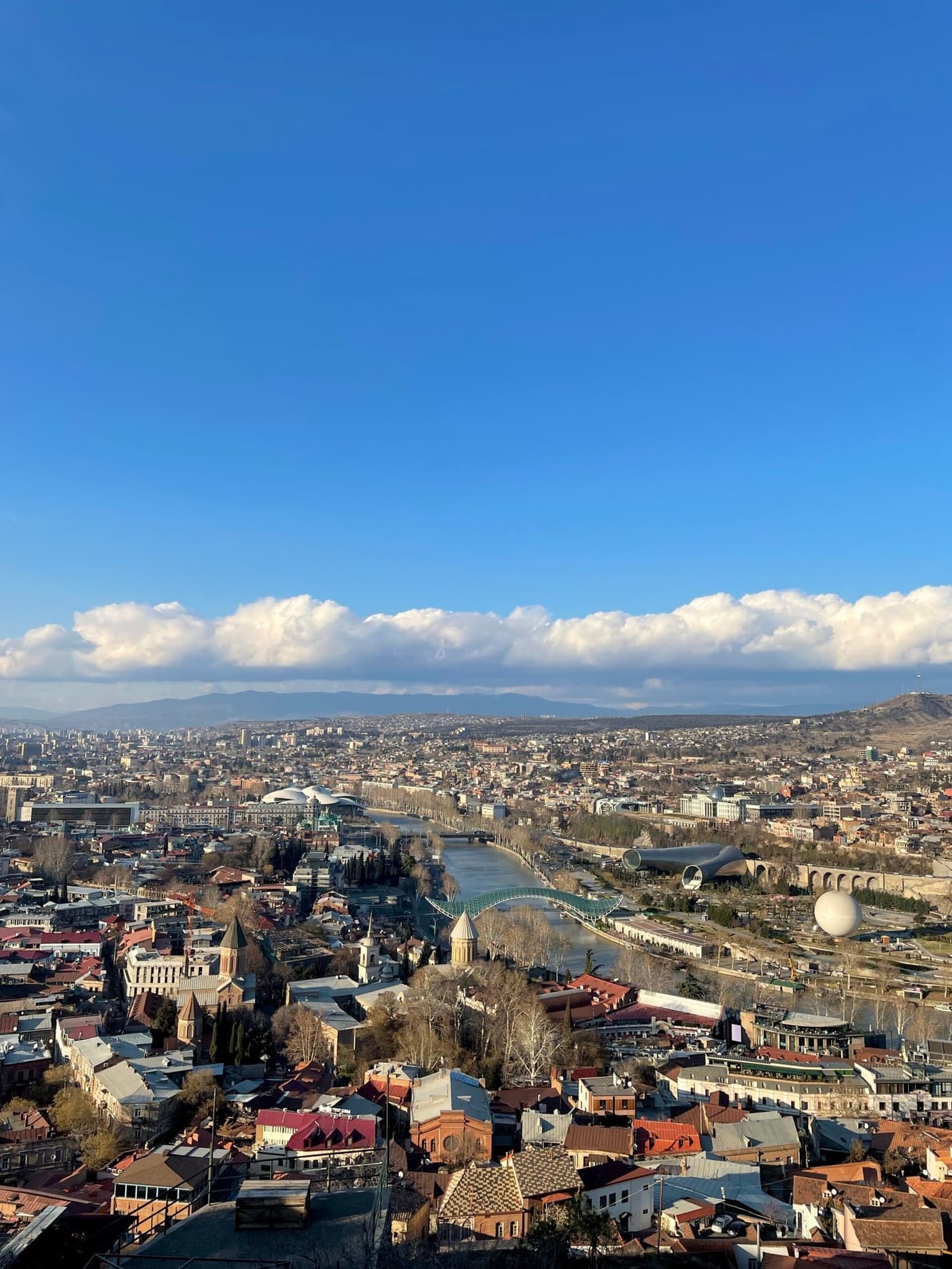
David Gareja Monastery is one of the most unusual places in Georgia. A drive of a few hours into the desert, to a monastery in the rocks with views of Mars-like hills and the territory of two countries at once, is something you remember for a long time.
What is David Gareja
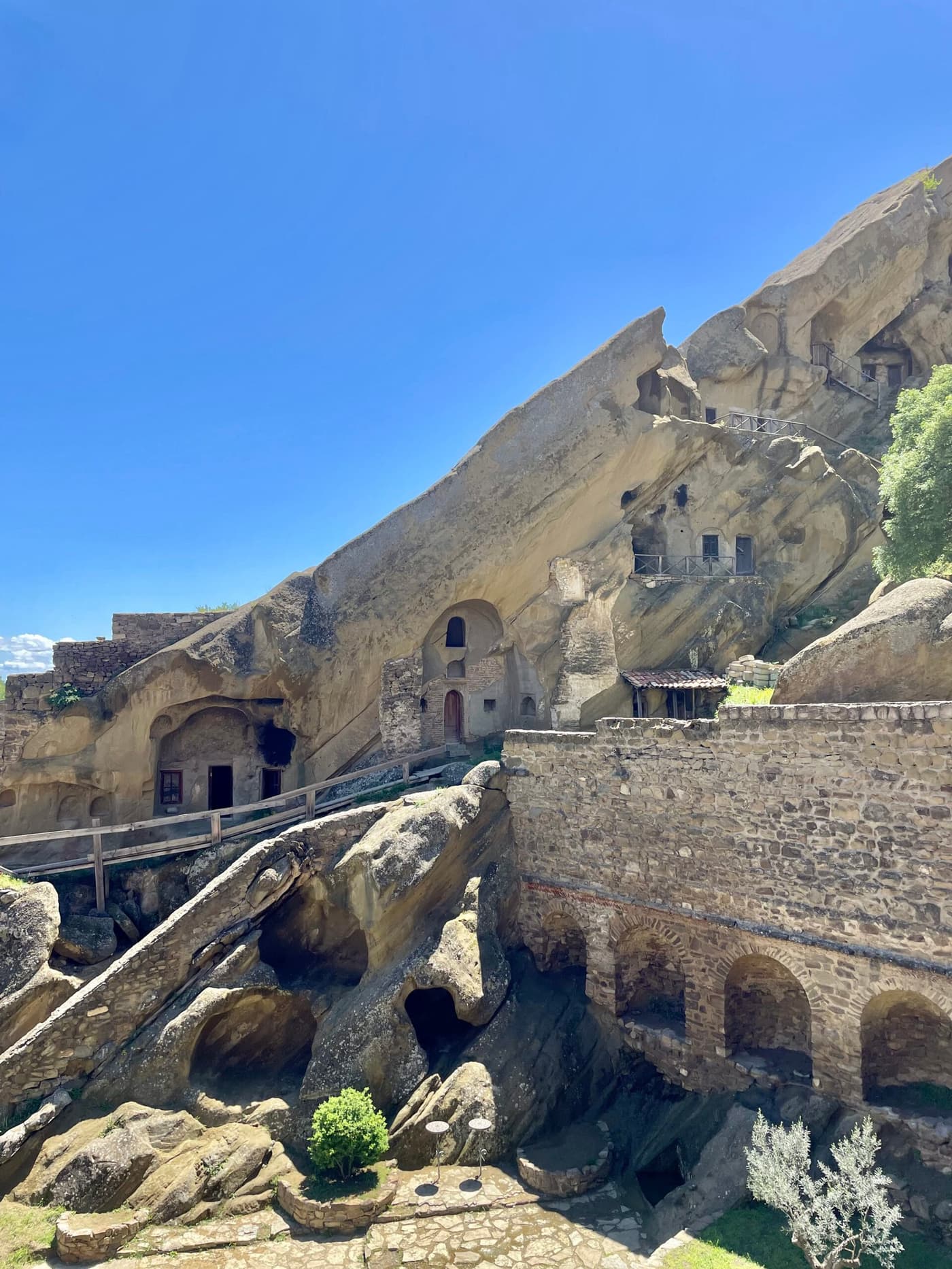
The David Gareja monastery complex is a cave monastery in the cliffs of the Gareja semi-desert in eastern Georgia. It was founded in the 6th century by the monk David, one of the thirteen Assyrian Fathers, Syrian monks who brought Christianity to the Caucasus.
David came here looking for solitude and founded a hermit community right in the sandstone cliffs. After his death the monastery grew into a whole complex of several monasteries: the David Gareja Lavra, Udabno, Natlismtsemeli, Dodo's Rka and others.
Today the Lavra is a working men's monastery. Part of the complex is a historical and architectural reserve. Some of the historic monasteries (above all Udabno) lie in the border zone between Georgia and Azerbaijan, and the status of these territories has not been formally settled.
History of David Gareja Monastery
The history of the monastery begins with the cave where Saint David settled. Over time it grew into a huge monastic complex of more than 20 separate monasteries stretching along the border between Georgia and Azerbaijan.
Already in the early Middle Ages David Gareja became a major spiritual and cultural center. It had schools, scriptoria, churches and monks' cells.
The monastery's heyday and trials in the Middle Ages
During its heyday, especially in the 9th–13th centuries, David Gareja kept expanding. But its geopolitical position on the border of warring states made it vulnerable. The monastery was plundered many times, especially by the Mongols in the 13th century and later by the Persians and Ottomans. Despite the destruction, monastic life here was not interrupted for centuries.
Architecture and frescoes
The main treasure of the monasteries is the cave churches carved straight into the rock. The David Lavra and the Udabno monastery deserve special attention. It is at Udabno that unique frescoes from roughly the 10th to the 13th centuries have survived, showing scenes from the Bible, Georgian saints and even Byzantine emperors.
These frescoes are a true treasure not only of Georgia but of the whole Orthodox world. They impress with their rich colors, the complexity of their compositions and their level of artistic mastery.
How to get there
There are two ways to get here from Tbilisi: one is the normal one, and the other I tried for myself.
If you are only getting ready to visit the Georgian capital, I recommend my Tbilisi city guide.
Via Sagarejo (recommended)
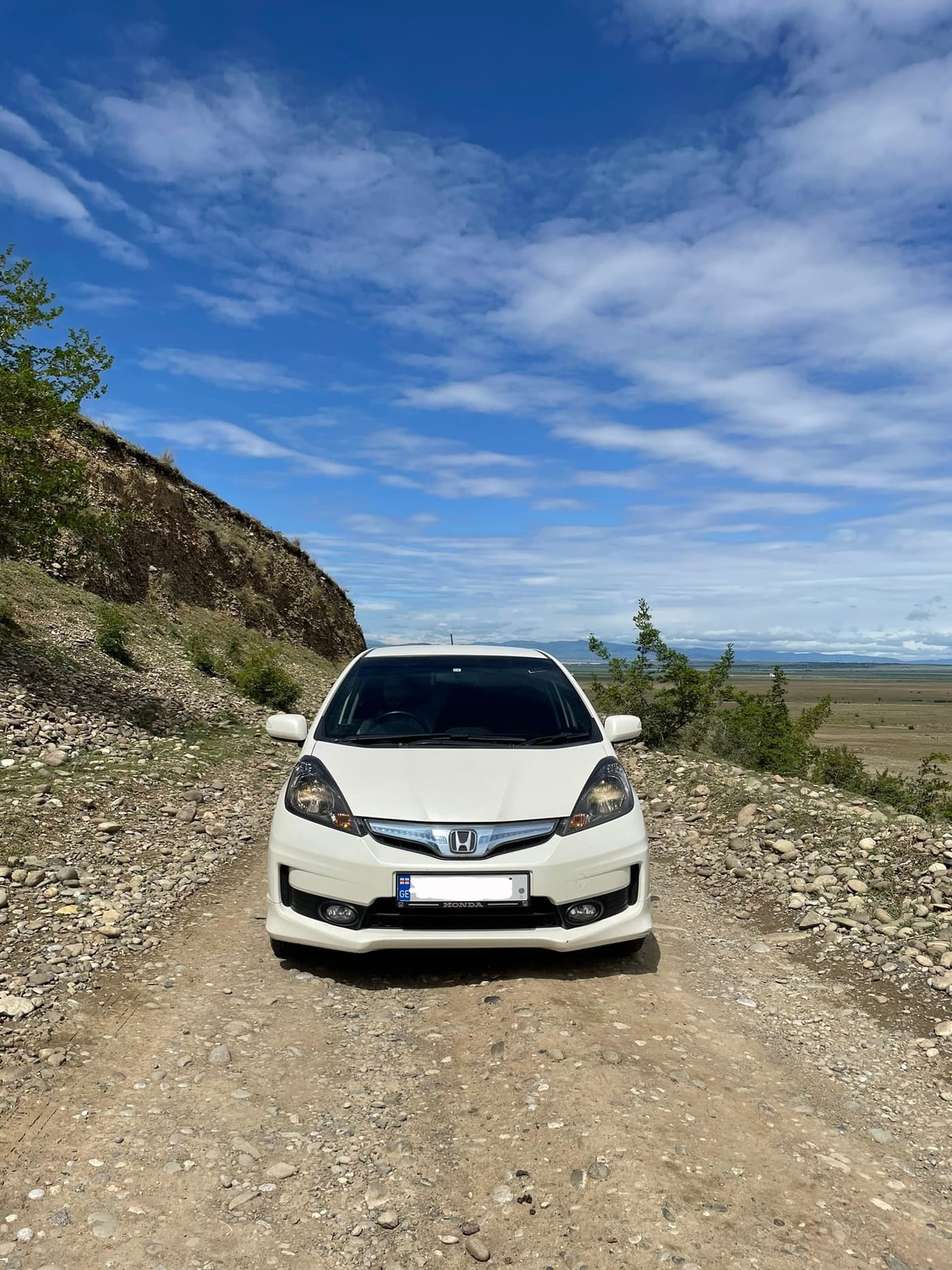
This is the main route. Tbilisi → Sagarejo is about 60 km along the E60 highway, around 1 hour. Sagarejo → David Gareja is another 30 km, of which the last 10–15 km is a dirt road. You can make it in an ordinary passenger car, but slowly. An SUV is more comfortable.
Total distance from Tbilisi: about 90 km. Travel time: about 2 hours.
Via Rustavi (not recommended)
I had heard about another route. I went once to check it out. At some point the road got so bad that I was genuinely scared we would get stuck in the desert. This route is only for a well-prepared SUV with an experienced driver. If you want to rent a car, you can do it on the localrent website or on Getrentacar.
Public transport
There is no direct service from Tbilisi. Take a marshrutka to Sagarejo from the Ortachala bus station (about 5–7 GEL), then a taxi from Sagarejo to the monastery (40–60 GEL one way, or agree on a full day with the driver for 80–100 GEL).
Guided tour
This is the most convenient option if you don't have a car. Group "David Gareja" tours with a guide cost 50–80 GEL per person and leave from central Tbilisi. They are available through travel agencies in the Old Town and on online platforms. A visit to David Gareja is often combined with a trip to Kakheti, the towns of Telavi and Sighnaghi.
The Gareja colorful deserts: the main view
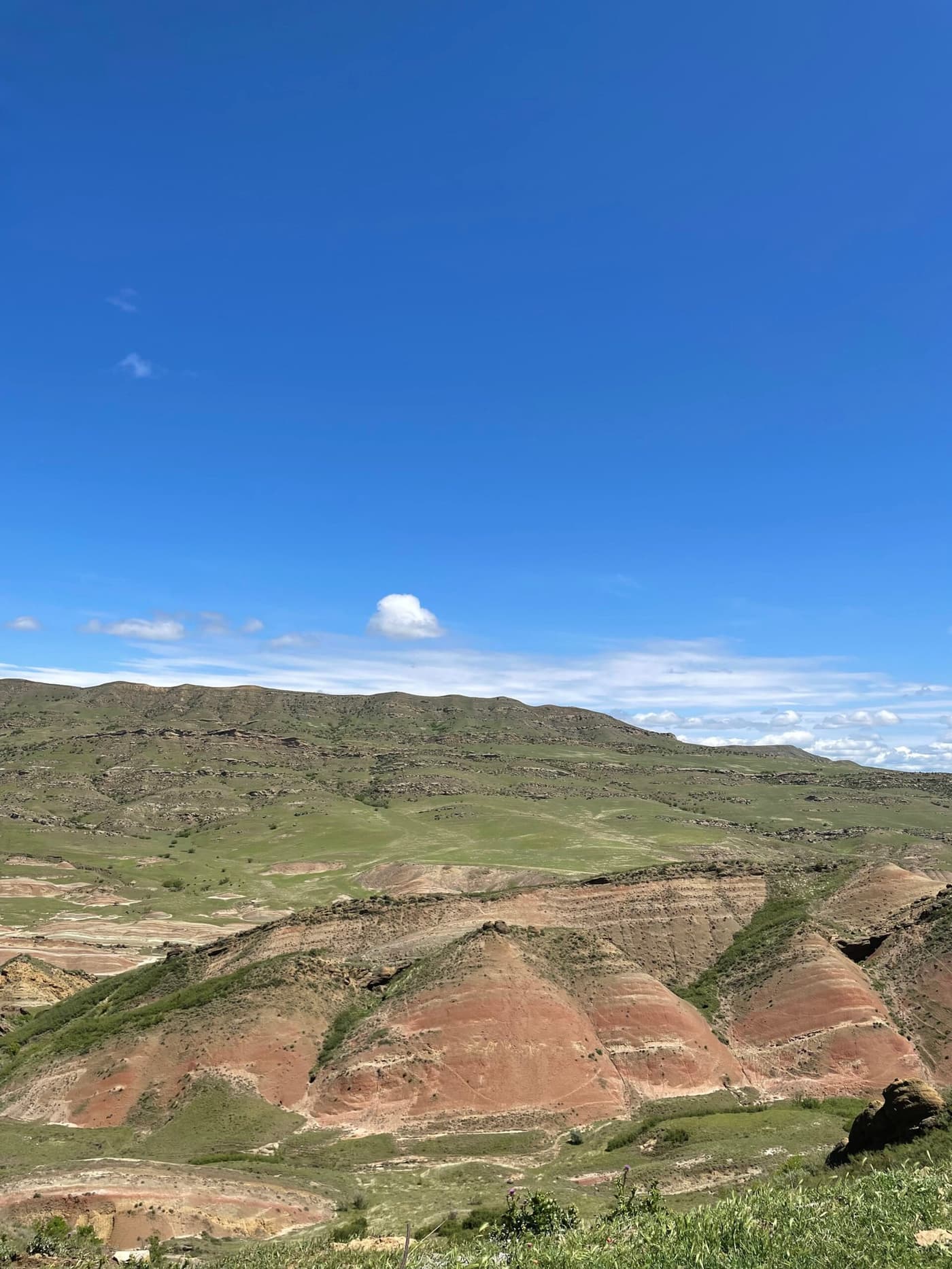
This is what many people come for. A trail leads up from the main monastery to the ridge, and from there opens a view that is hard to put into words.
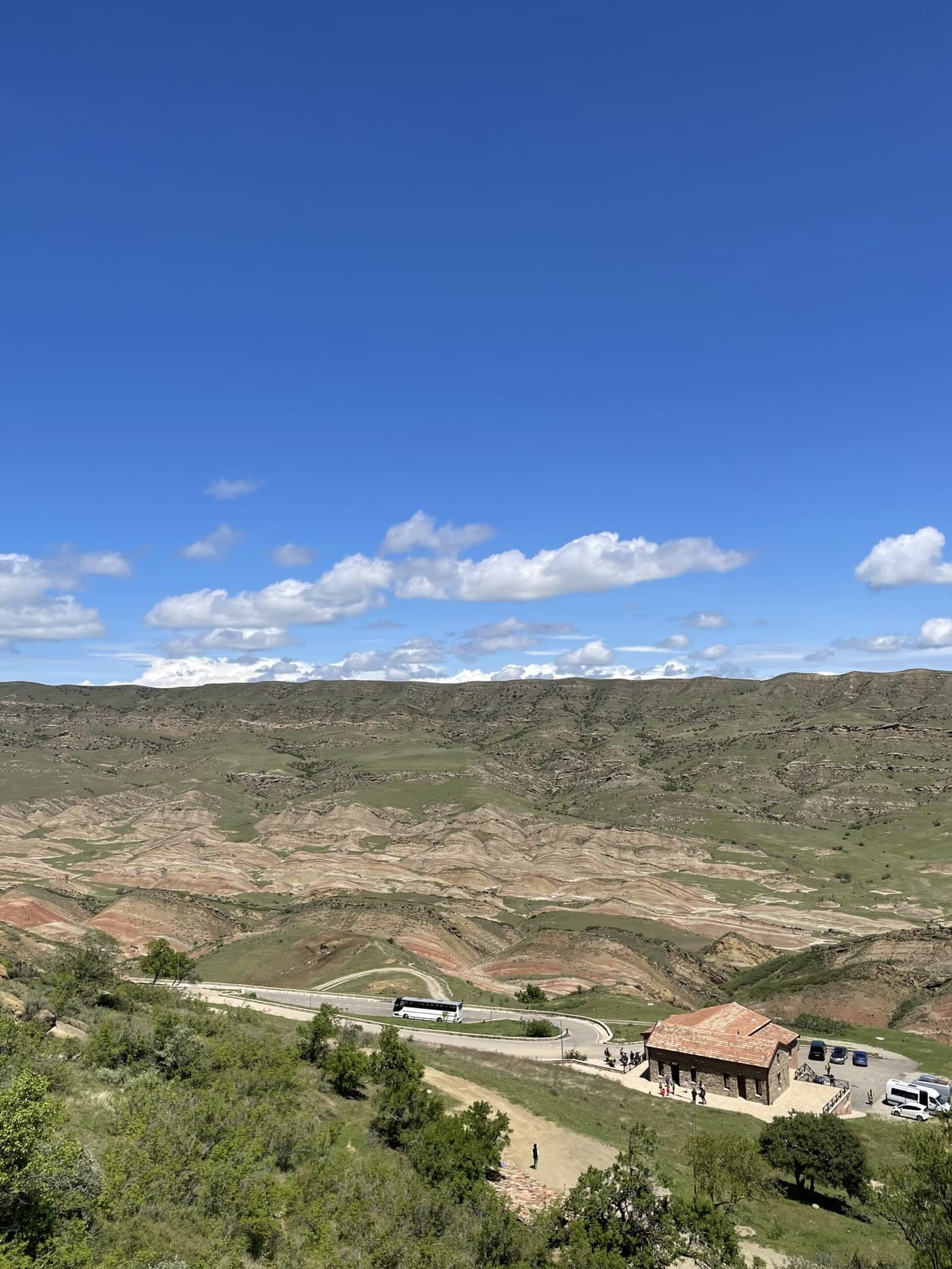
The hills are red, ochre, green and orange, like the weathered surface of another planet. Geologically these are weathered sedimentary rocks (mostly sandstone) with differing mineral compositions. Down in the valley lies Azerbaijan, with mountains in the distance on the horizon.
The view from the ridge is considered one of the most impressive in Georgia. Few tourists know about this place, and the lack of crowds makes the experience special. The climb along the trail takes 20–30 minutes. Shoes with a good sole are a must: the slopes are rocky.
The best time for the views is in the morning, when the light is soft and the hills are lit by slanting rays. At midday the colors look less saturated.
What to see at the monastery
The complex is compact but packed with things to see. In 2–3 hours you can walk around the monastery and climb the ridge.
The David Gareja Lavra
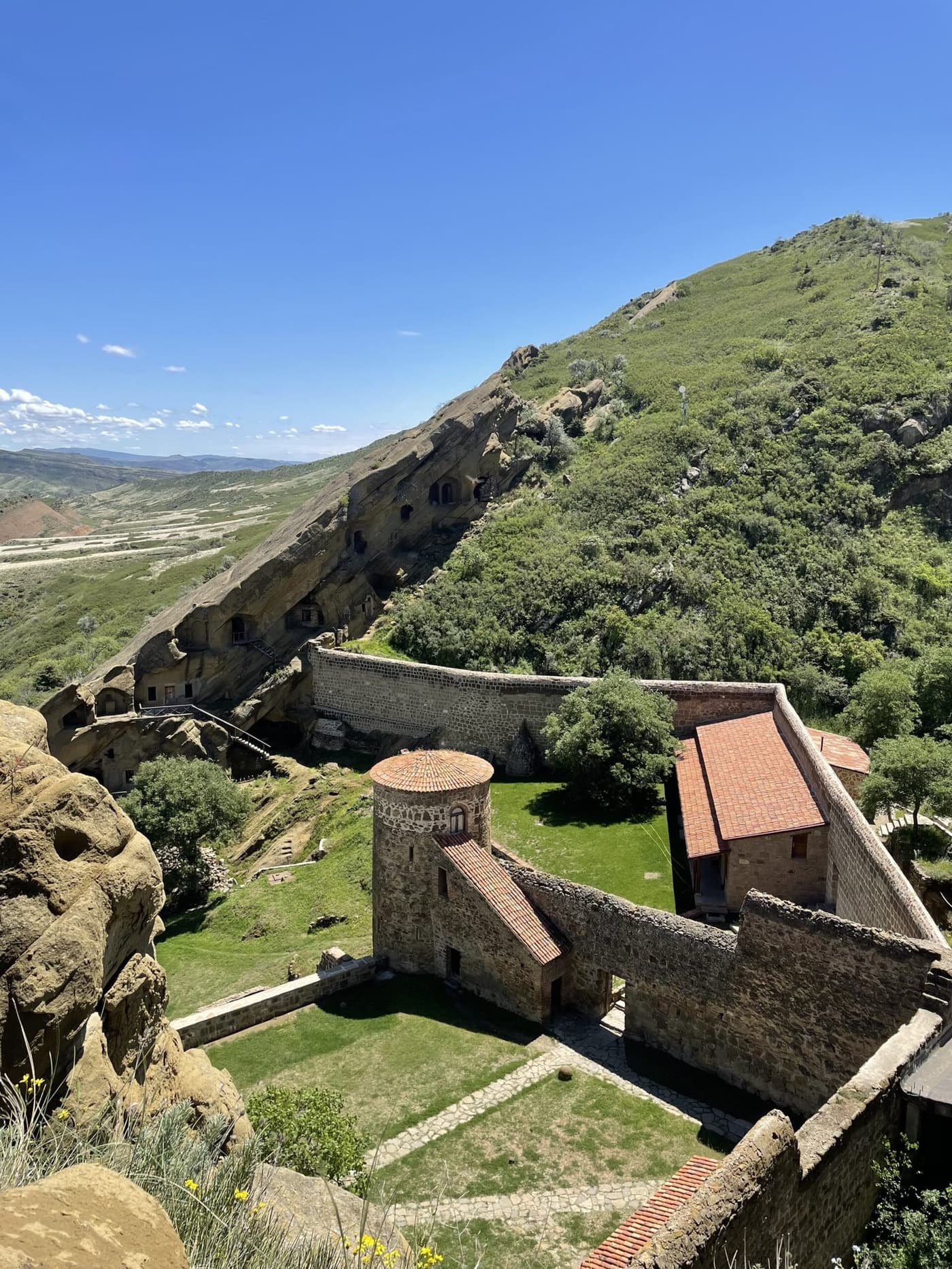
The main monastery is a working one. The grounds have churches, cells and utility buildings. Monks live here all year round, so this is not a museum but a living monastery. Behave accordingly: quietly and with respect for the rhythm of the services.
The main buildings are the main church with frescoes, David's burial chamber and several smaller churches. The central church is the Church of the Transfiguration.
Frescoes in the cave cells
Some of the frescoes have survived. The paints are dull after centuries, but the faces can still be made out: saints, ornaments, scenes from the Gospel. This is a unique example of medieval Georgian painting right in the sandstone rock, painted roughly in the 10th–13th centuries.
The climb up the ridge to Udabno
The trail starts near the main entrance to the Lavra. The climb takes 20–30 minutes. At the top is the Udabno monastery (if it is open at that time) with its preserved frescoes and that very panorama of the colorful deserts.
Udabno is one of the most beautiful sites in the complex: a cave church with frescoes from roughly the 10th to the 13th centuries, carved into the sandstone rock. It sits right on the line of the ridge with a view of both countries.
The spring at the foot of the hill
A small spring near the Lavra. On a hot day it is a lifesaver. The water is drinkable, but bring your own.
What to bring
The list is short but important.
- Water, at least 1.5 liters per person: there are no shops on the way.
- A hat. In summer the heat on the open rock is serious, and there is practically no shade.
- Comfortable shoes with non-slip soles for the rocky trails.
- A light snack, since there is no café at the monastery.
- Clothing for the monastery: covered shoulders and knees. At the gate there are scarves and skirts for women.
Best time to visit
Spring (April–May) and fall (September–October) are ideal. The steppe vegetation is green in spring and golden in fall, and the temperature is comfortable.
Summer (June–August) is very hot. Midday on the open rock at +35°C is a real test. If you go in summer, arrive by 9:00–10:00 a.m. and leave before 1:00 p.m.
Winter (December–February) is cold, and there are no tourists. The monastery is open, the landscape is impressive, and it is deserted in a good way.
The territorial question: what you need to know
The situation around Udabno and part of the ridge is unstable. At different times Azerbaijani border guards have closed access to tourists, sometimes for a season, sometimes for several years. At other times everything is open and people are let through freely.
Before your trip it is worth checking current information at tourist offices in Tbilisi or asking a guide. It takes 5 minutes but will help you avoid disappointment.
Practical information
Opening hours: 9:00 a.m.–6:00 p.m., open daily.
Entry to the monastery: 15 GEL. Some tours with extra services (for example, a talk from the caretaker or a small treat) cost about 20 GEL; what is included depends on the organizer.
Parking: 3 GEL.
Café and water: a small kiosk by the parking lot. Inside there is only the spring.
Arrival time: in the morning, when there are fewer people and the light is best. In the hot summer months this is essential.
Frequently asked questions about David Gareja Monastery
Where is David Gareja Monastery?
The David Gareja monastery complex is in southeastern Georgia, not far from the border with Azerbaijan, in the Kakheti region. You can get there from Tbilisi in about 2 hours.
How do I get to David Gareja from Tbilisi?
The best way is by car or on a guided tour. The recommended route is via Sagarejo: the main highway is good quality, but the last 10–15 km are a dirt road, so an SUV is better in rain and in winter. The road via Rustavi is suitable only for SUVs.
How much does entry to David Gareja cost?
The entry ticket costs 15 GEL. Some tours with extra services cost about 20 GEL; what is included depends on the organizer. Parking is 3 GEL.
What should I see at David Gareja Monastery?
Be sure to visit the David Lavra and the Udabno monastery with its ancient frescoes. It is also worth seeing the Gareja colorful deserts, a unique natural landscape.
Can I go to David Gareja on my own?
Yes, the road is accessible for independent travel. The main thing is to choose the right route (via Sagarejo) and prepare: bring water, food, a hat and comfortable shoes.
When is the best time to go to David Gareja?
The best time is spring (April–May) and fall (September–October), when the temperature is comfortable and the landscapes are especially picturesque. In summer this area is very hot.
Is it safe to visit the area near the Azerbaijan border?
Yes, if you follow the instructions of the local authorities and do not cross into the guarded zone. In some areas there are border guards who may restrict access to certain points.