Telavi is the main city of Kakheti, Georgia's "land of wine." It is not a postcard-perfect tourist stop and not a resort. It is a living regional town with a fortress, a 900-year-old plane tree and dozens of wineries within half an hour's drive.
Kakheti has a different rhythm. Everything here is slower, fresher, quieter. Produce from the family garden, wine from the neighbor's qvevri, monasteries in the fields between the vineyards. It is all worth leaving Tbilisi for, even if only for a couple of days.
In this article I put together a complete guide to the town and explain what to do and what to see in Telavi. If you are only planning your trip to Georgia, my Tbilisi city guide will come in handy.
A Short History of Telavi
Telavi has been known since the 1st–2nd centuries AD. Settlements, trade routes and fortified outposts stood in the Alazani Valley. In the early Middle Ages the town became the center of the Kingdom of Kakheti, one of the Georgian states that emerged after the breakup of united Georgia.
Telavi reached its peak in the 17th–18th centuries under the kings of Kakheti. Batonis Tsikhe fortress was built as the residence of the ruling dynasty. Under King Erekle II, the same king under whom Georgia came under Russian protection in 1783 by signing the Treaty of Georgievsk, Telavi became the political and cultural center of all of eastern Georgia.
In Soviet times the town grew and was built up, and at the same time lost part of its historic architecture. Today Telavi is a cozy provincial town of about 17,000 people, where tourists do come but never crowd you: people come for the wine, the monasteries and the Kakhetian air.
What to See in Telavi
The main sights of Telavi are compact, and you can walk around them in a single day. Start with the historic center and move in a loop.
Batonis Tsikhe Fortress
The main attraction of Telavi. Batonis Tsikhe, literally "the lord's fortress," was built in the 17th–18th centuries as the residence and fortified palace of the Kakhetian kings. Several historic buildings survive inside the fortress walls: Erekle II's palace with its interiors, several towers, and residential and utility buildings.
Today there is a museum inside the fortress. The collection includes weapons, household items, jewelry, documents and portraits of the Kakhetian rulers. The palace hall with the exhibition devoted to Erekle II deserves special attention: he was one of the best-known Georgian rulers, and under him the country balanced between the Persian threat and the Russian protectorate.
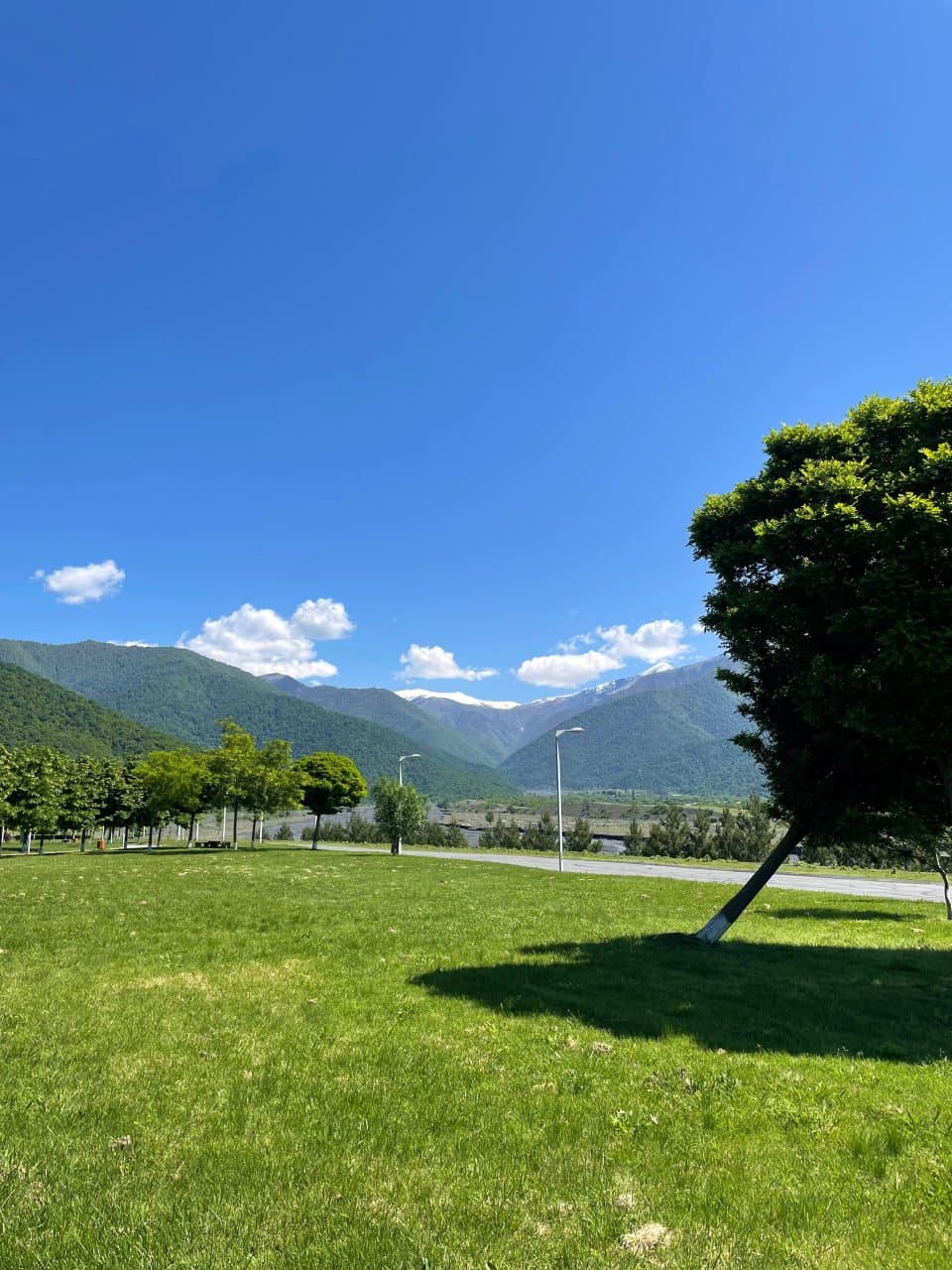
From the upper part of the wall there are views of Telavi and the Greater Caucasus mountains on the horizon. On a clear day the panorama is stunning, with white peaks above the green Alazani Valley.
Museum entry: about 5 GEL. Opening hours: 10:00–18:00, open every day.
The 900-Year-Old Plane Tree
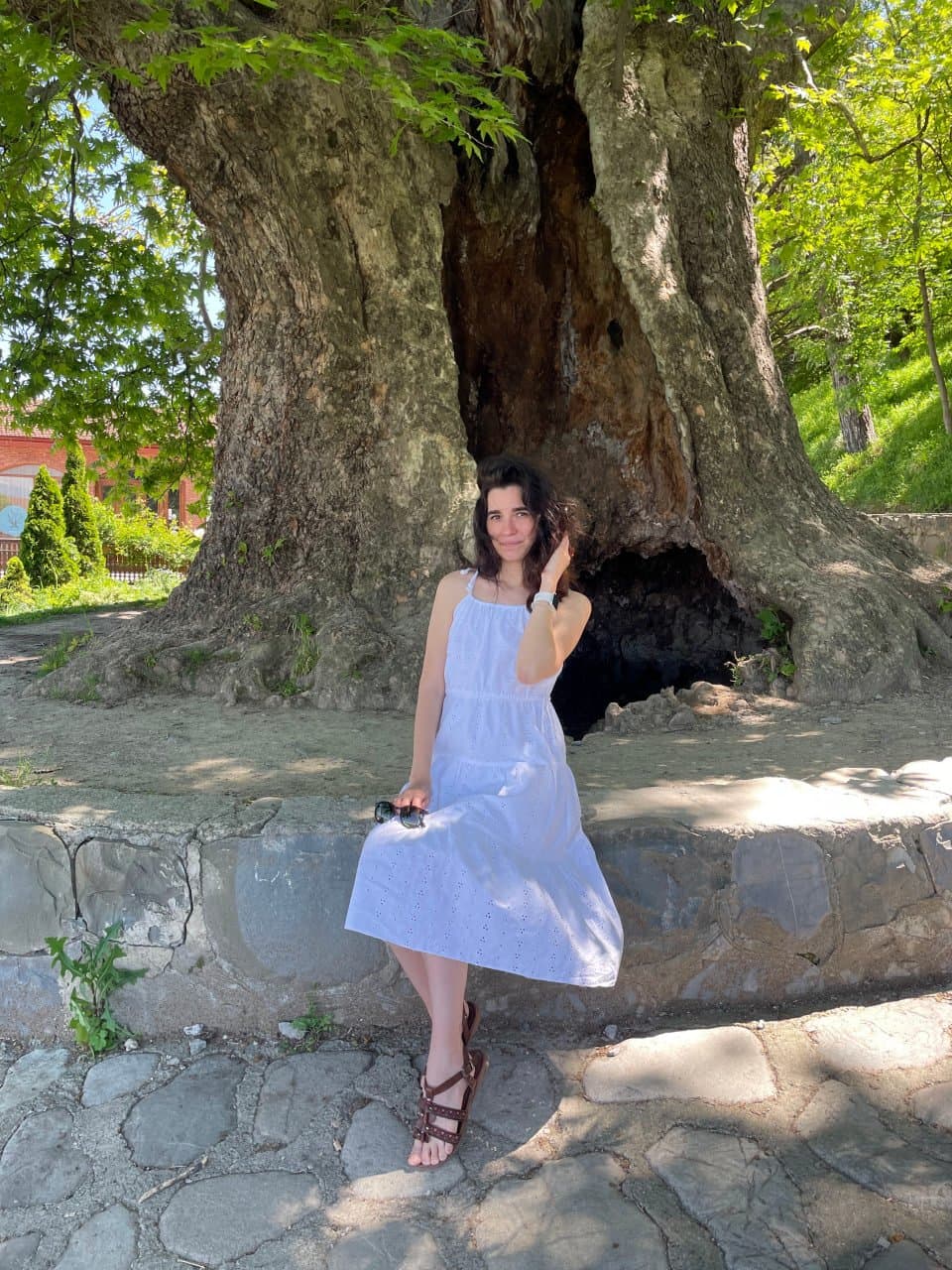
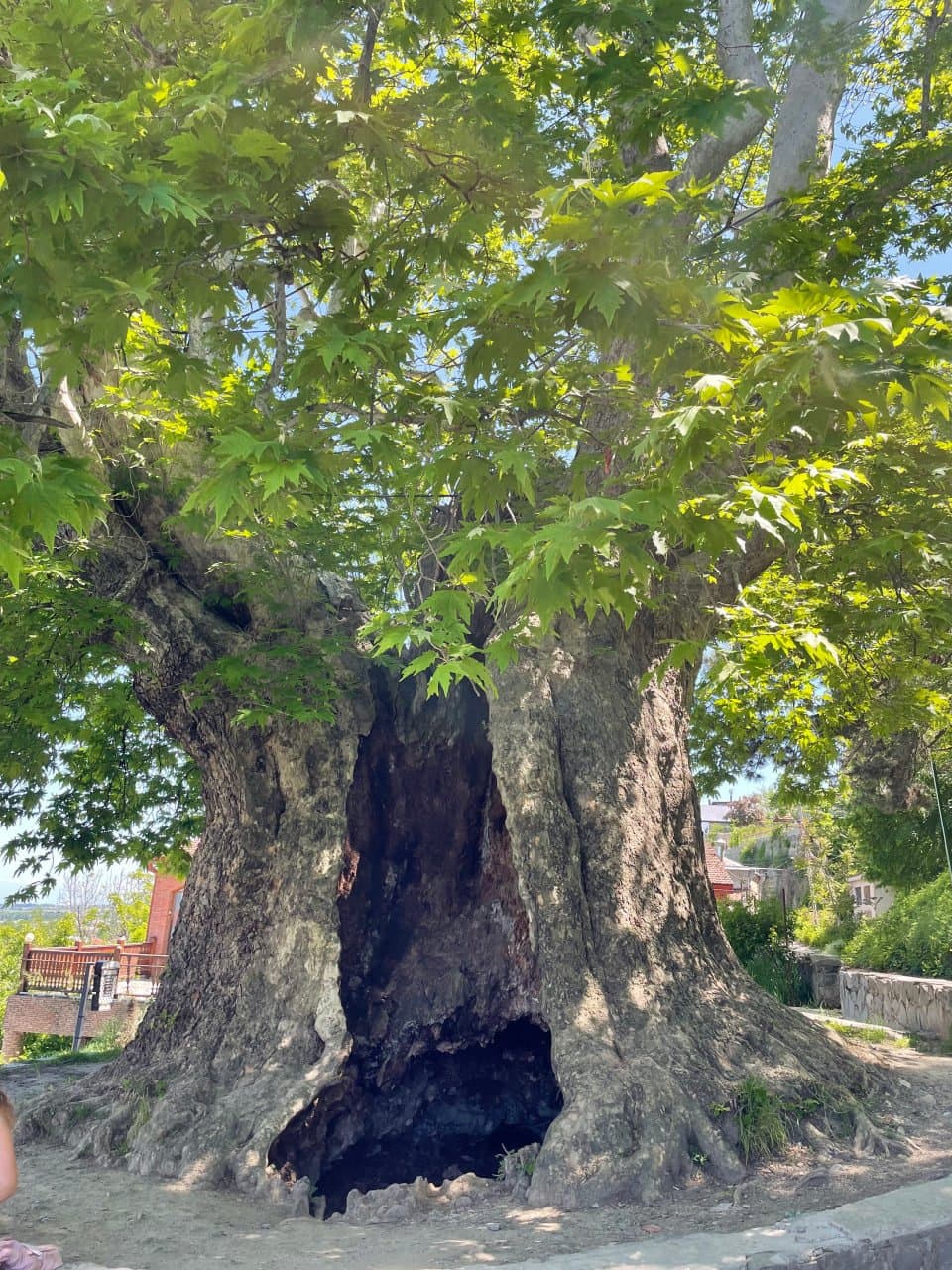
In the very center of Telavi, near the main square, stands a tree that is said to be more than 900 years old. The trunk measures about 11–12 meters around. It is one of the oldest plane trees in Georgia and possibly in the whole Caucasus.
While the Battle on the Ice was being fought and Marco Polo was traveling across Asia, this tree was already standing here. The Kakhetian kings rested under its crown, markets were held beneath it, and townspeople gathered there. Locals joke that if you hug the plane tree, it will share its longevity with you.
The tree has no exact age: dendrochronologists give figures from 700 to 900 years. But even by the lowest estimate it is one of the oldest living trees in Georgia.
Telavi Old Town
Around the fortress and the plane tree are neighborhoods of stone houses, wooden balconies and courtyard vineyards. This is a good place to walk without a plan: peek through open gates, look at the carved facades, sit down for a coffee in a small cafe.
Telavi's main street leads from the fortress to the central square. Along it is a market with homemade wine, fresh cheese, churchkhela and seasonal fruit. It is the best place to buy food for the road and to get your first taste of Kakhetian wine straight from the seller.
Monasteries Near Telavi
Within 50 km of Telavi are several of the most important monasteries in Kakheti, and this is one of the main reasons to come here with a car.
Alaverdi (15–20 km from Telavi)
One of the most majestic cathedrals in Georgia and one of the tallest, at about 50 meters. St. George's Cathedral in Alaverdi was built in the 11th century under King Kvirike III and has stood in the field above the Alazani Valley like a beacon ever since.
The monastery is active. Monks live and work here all year round, including in the monastery vineyards. The monks of Alaverdi have been making wine since 1011: behind the fortress wall stands a monastery winery with qvevri. In September–October, during rtveli, the grape harvest, the monastery is especially beautiful.
Inside the cathedral are frescoes from the 12th–15th centuries, tombs of the Kakhetian rulers and old icons. Some of the frescoes were chipped off in Soviet times, and the surviving ones have been restored to varying degrees. Entry is free. Dress modestly, since this is an active monastery.
Ikalto (12 km from Telavi)
A monastery complex from the 6th–12th centuries with the romantic ruins of an academy. It was in Ikalto in the 12th century that one of the first Georgian academies stood, and Shota Rustaveli, the author of the poem "The Knight in the Panther's Skin," studied here. The ruins of the academy buildings, a semicircular hall, storerooms and utility buildings, survive next to the working church.
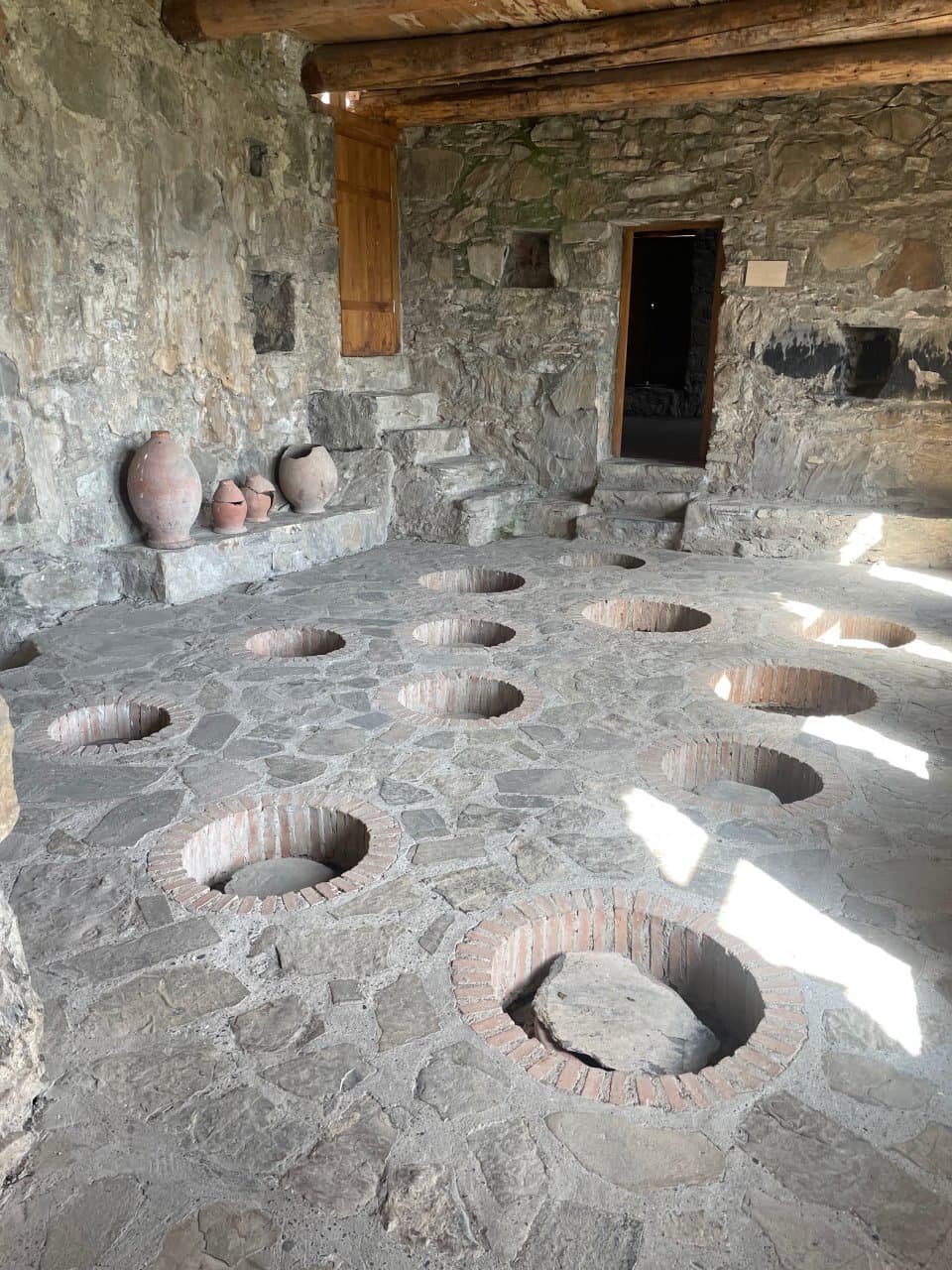
Old trees grow in the monastery courtyard, and stone qvevri jars stand about. It is quiet, there are few people, and the atmosphere is special. Entry is free.
Nekresi (50 km from Telavi)
One of the oldest monasteries in Kakheti, founded in the 4th century. It stands on a mountain slope above the Alazani Valley, and you can get there by car along a serpentine road or on foot in about 30 minutes. The complex includes several churches from different eras, from an early Christian 4th-century one to late medieval buildings.
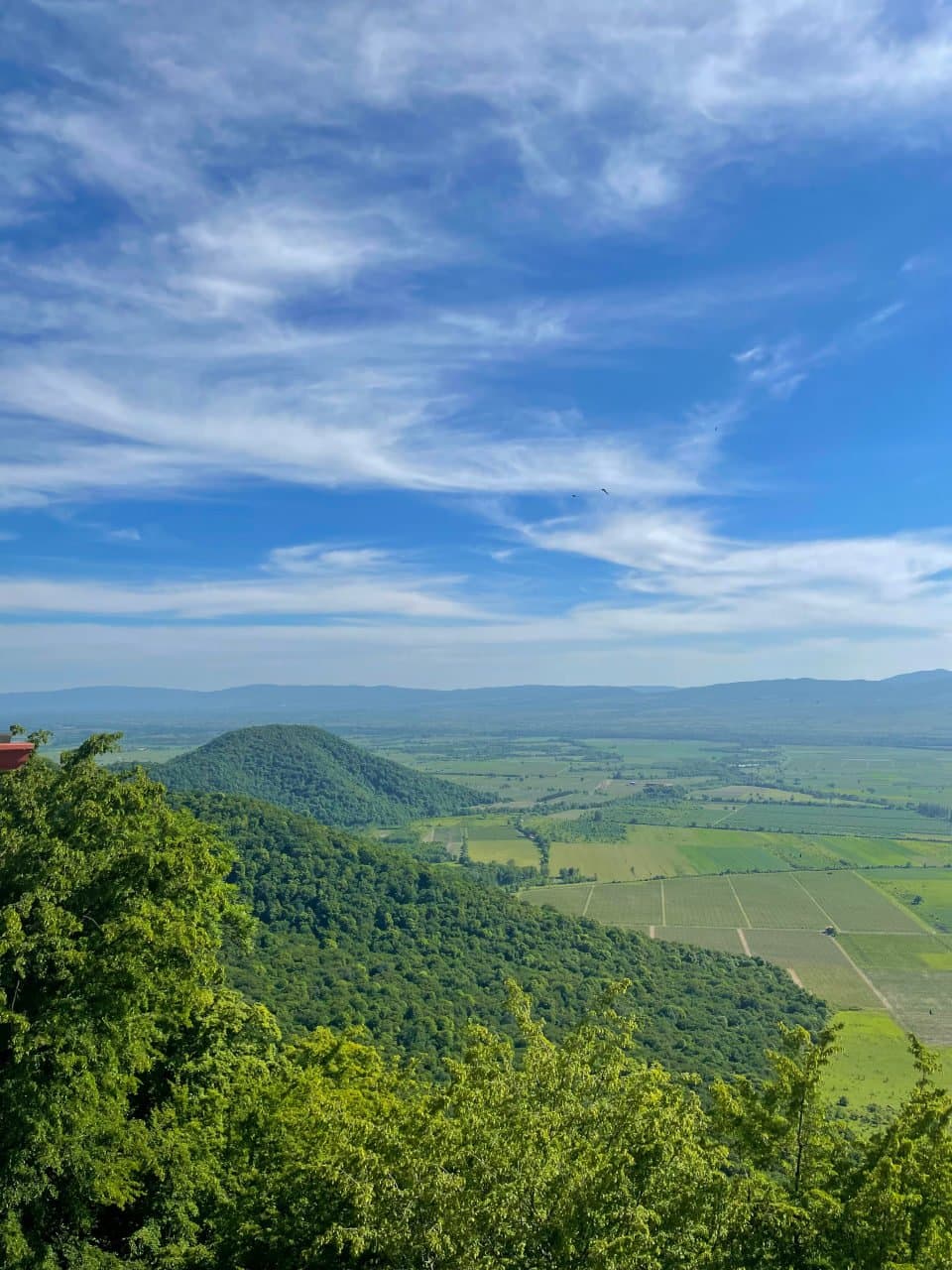
The view from the monastery is a panorama of the Alazani Valley with its vineyards, the river and the mountains of Kakheti. It is the best viewpoint in the region. Entry is free.
Gremi (30 km from Telavi)
The ruins of the capital of the Kingdom of Kakheti from the 16th century. A large trading town on the Silk Road once stood here; what remains is the Church of the Archangels with frescoes and a fortress tower. It was destroyed by the Persians in 1615 under Shah Abbas I (the same one who carried out the massacre at Davit Gareja). There is a small museum next to the ruins. Entry is about 3 GEL.
Sighnaghi: The City of Love
If you have time, be sure to visit Sighnaghi, a small but atmospheric town only about two hours' drive from Telavi. It stands on a hill overlooking the same Alazani Valley, but from the other side. It has cobbled streets, bright houses with balconies and a round-the-clock wedding registry office, which is why it is often called the city of love. I wrote about what to see in Sighnaghi in a neighboring article.
If you are heading to Kakheti and have the time, I recommend stopping by the Davit Gareja Monastery and the colorful desert.
Wine in Telavi: Where to Go for a Tasting
Kakheti produces about 70% of all Georgian wine. Telavi is a convenient base for tastings, both at large producers and on small family farms.
The traditional Kakhetian method is qvevri: a clay jar buried in the ground. White wines ferment together with the skins and seeds, turning out orange, tannic and full-bodied. It is nothing like a European white, so be ready for a surprise. The Saperavi reds are deep and dark, with pronounced acidity.
What to drink in Kakheti: Rkatsiteli and Mtsvane are the classic whites (orange when made in qvevri), and Saperavi is Georgia's main red wine. Start with an orange Rkatsiteli, which is what people come to Kakheti for.
Family Wineries
The best tastings are not in tourist restaurants but at local producers. Many receive guests by appointment.
Among the best known are Telavi Wine Cellar, Family winery Rostomaant Marani and Sesikeli Winery. The wineries are open to tourists: you can take a tour, see how the wine ferments and taste the Saperavi, Rkatsiteli, Kisi and Mtsvane varieties. And, of course, buy a bottle. There are many more wineries, of course, and some are often combined with restaurants or guesthouses that serve homemade dishes and hold tastings with stories about local traditions.
Where to Eat in Telavi
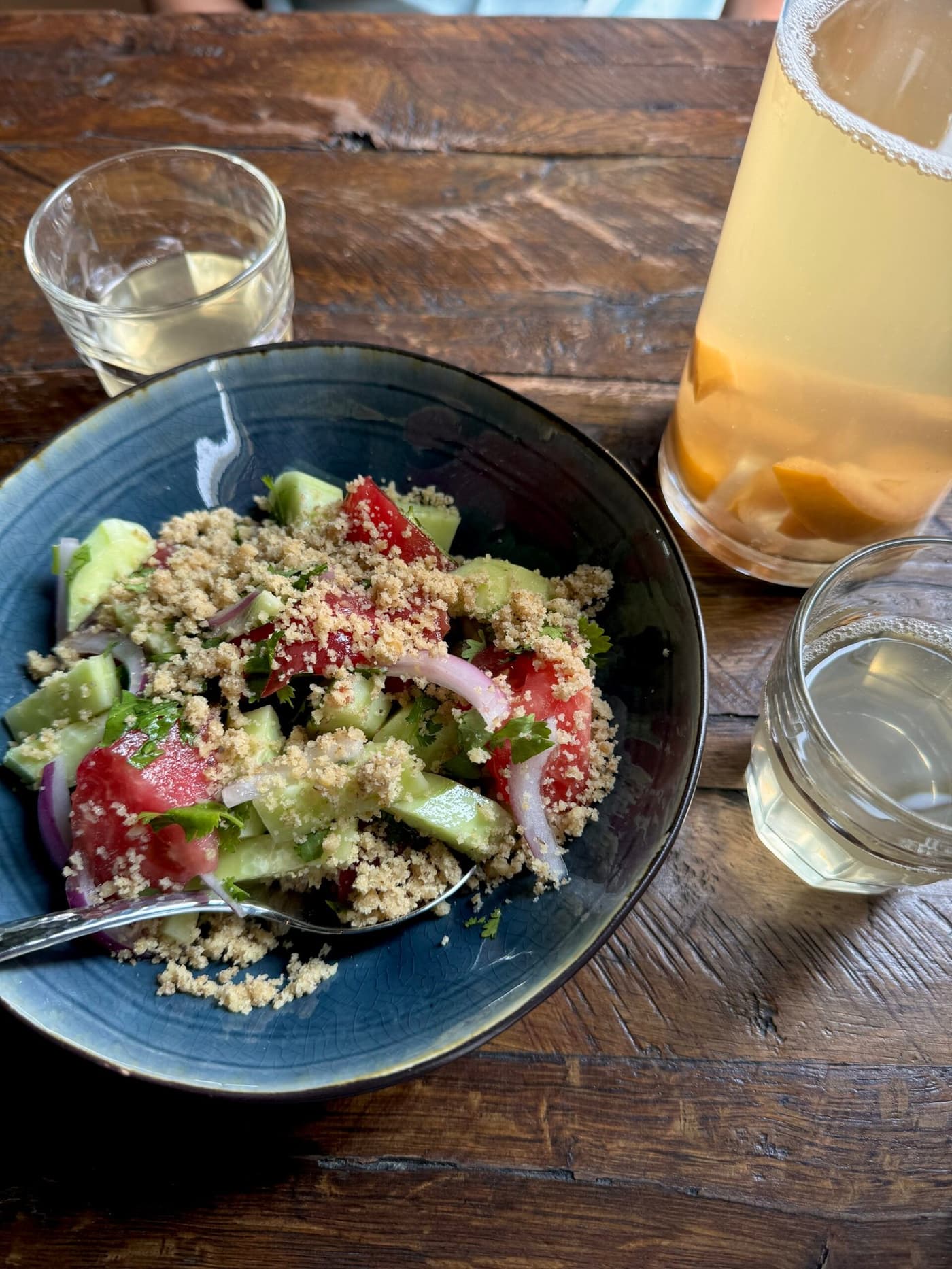
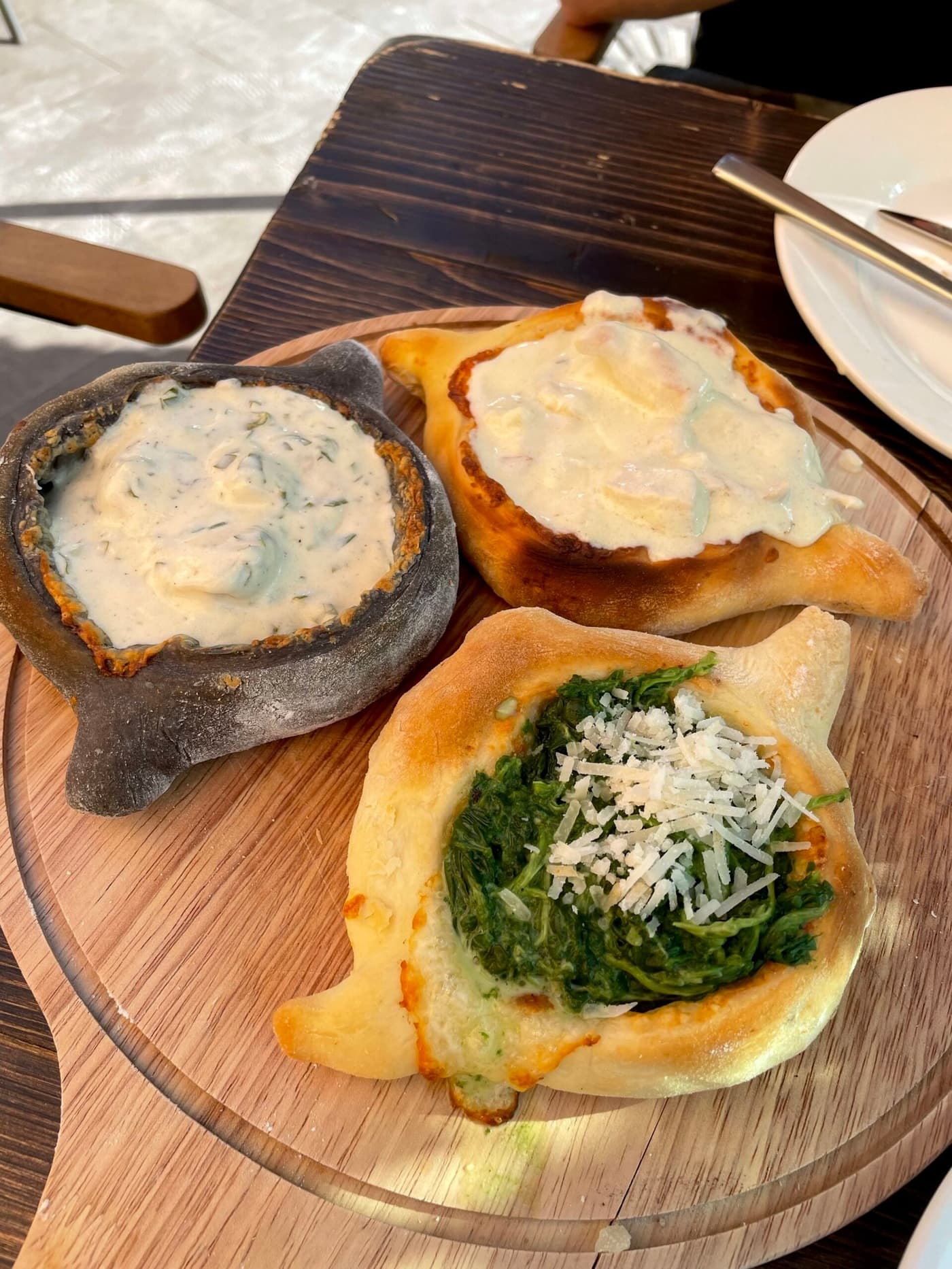
Telavi is a great place to try Kakhetian cuisine. Popular dishes here are mtsvadi, which is pork or beef shashlik, chakapuli (stewed meat with herbs and white wine), kuchmachi (a liver pâté), churchkhela and gozinaki. It is all served in generous portions, with homemade wine and shoti bread baked in a tone oven.
Kakhetian Cuisine
The town has many cozy restaurants and cafes with views of the Alazani Valley. I have picked out a few popular cafes where it may not be as bad as usual:
📍 Chiri Ika — Lkhini Aka — A restaurant with a beautiful inner courtyard. 📍 Badia — An authentic family cafe with an inner courtyard. 📍 Bravo — A popular restaurant in Telavi with a classic Georgian interior. 📍 HB TELAVI — A restaurant with a very beautiful interior and a terrace.
Whichever place you choose in Telavi, almost everywhere you can try house-made wine and dishes made from old recipes.
Telavi Itinerary: One Day
Morning: Batonis Tsikhe fortress, an hour for the museum and the views from the wall. Then the 900-year-old plane tree and a stroll through the old town, coffee at a cafe, the market.
Lunch: the Chiri Ika restaurant or Badia, with Kakhetian wine.
Afternoon: a trip to the monasteries. Alaverdi and Ikalto are within 20 km, and you can see both in 2–3 hours by car. Without a car, a round-trip taxi to Alaverdi costs about 30–40 GEL.
Evening: a tasting at a family winery. You need to book in advance. It is the best way to end a day in Kakheti.
Kakheti Itinerary: Three Days
Day one: Tbilisi to Telavi, 2.5 hours. The fortress and the old town, dinner with wine in the evening. Overnight in Telavi.
Day two: Alaverdi and Ikalto in the morning, Nekresi or Gremi after lunch, and a tasting in the evening. Overnight in Telavi or Sighnaghi.
Day three: Sighnaghi, with its fortress wall, Pheasant's Tears and Bodbe Monastery. Back to Tbilisi in the evening.
How to Get from Tbilisi to Telavi
It is about 130 km from Tbilisi to Telavi, roughly 2.5 hours depending on the transport.
By marshrutka, from the Samgori or Ortachala bus stations. They leave several times a day, and the first one is around 09:00–10:00. The fare is 10–15 GEL and the ride takes about 2.5 hours. It suits those who are going only to Telavi and do not plan to tour the monasteries.
By taxi, the cost is 120–150 GEL one way. You can also agree on a full day with stops at the monasteries for 300–400 GEL per car for the whole day.
By rental car, the most convenient option for Kakheti. Without a car it is hard to get around the monasteries within a 50 km radius. An economy-class rental is 90–120 GEL per day. The road is good and GPS is accurate.
Where to Stay in Telavi
There are plenty of guesthouses and small hotels, often with vineyards in the yard and a breakfast of homemade products.
Guesthouse: 60–120 GEL per night for two. Small hotel: 100–200 GEL. Booking and Airbnb are a good choice; pay attention to the photos of the breakfast and the yard. The best options have a vineyard and a mountain view.
Staying in Telavi and making day trips around Kakheti is more convenient than changing accommodation every day.
When to Go to Kakheti
September–October is the best time.
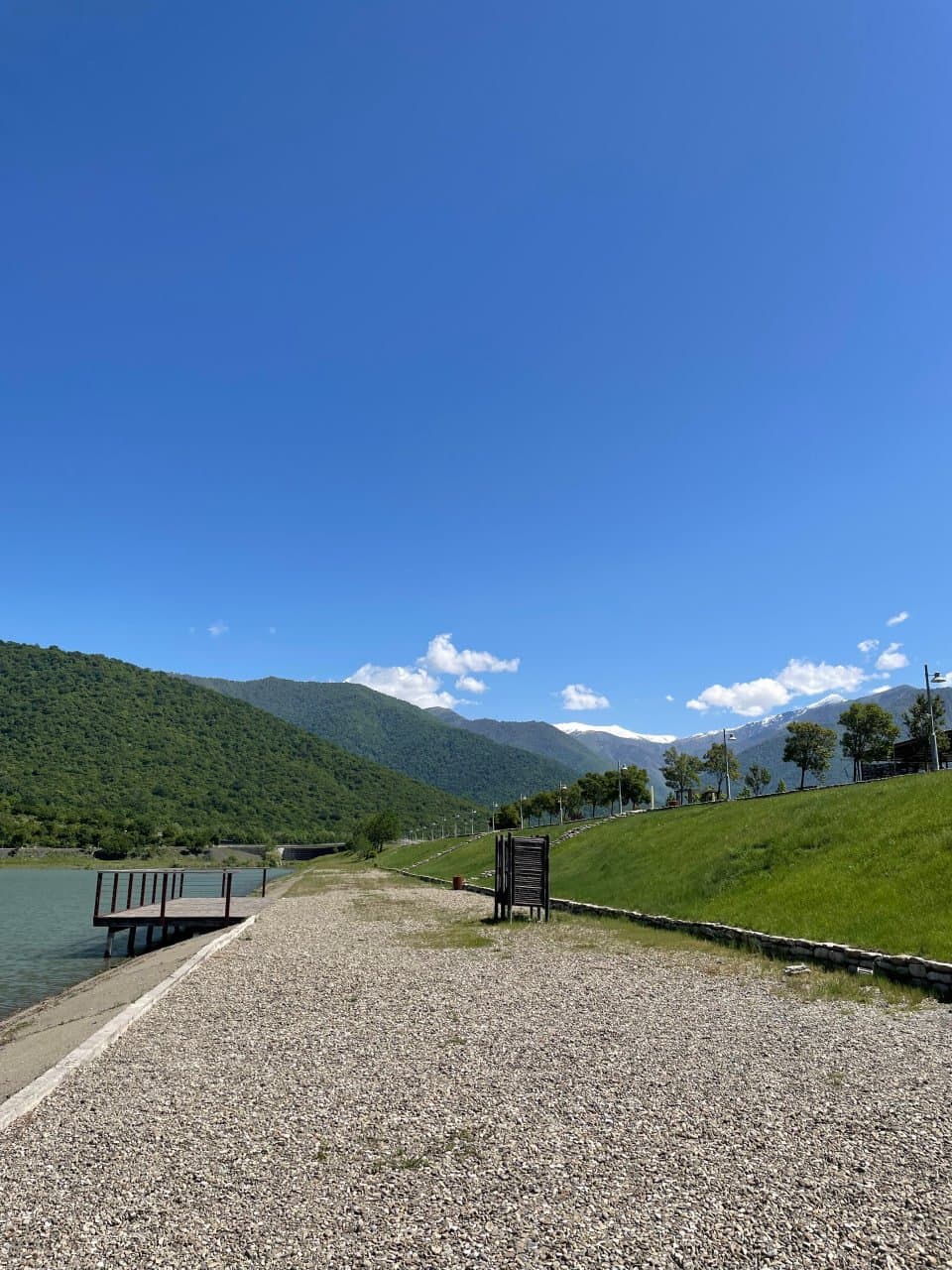
Rtveli is the grape harvest. The vineyards are heavy with clusters, wine is being pressed in the villages, and the monasteries smell of grapes. The Caucasus mountains are dressed in gold. At this time Kakheti has a special atmosphere, lively and joyful.
April–May is the second-best option. The green vineyards are just starting to leaf out, there are fewer tourists, prices are lower and the weather is comfortable.
July–August is hot but bearable. The grapes are still ripening. There are more tourists, and everything is open.
Winter is quiet. The vineyards are bare, and there is nothing new going on at the wineries. The monasteries are empty and especially atmospheric in the snow. For lovers of quiet, it is an interesting option.
I filmed a YouTube episode about how we spent our time in Georgia and Armenia
Frequently Asked Questions About Telavi
Where is Telavi and how do you get there?
Telavi is in the Kakheti region in eastern Georgia. You can get there from the capital, Tbilisi, by car, bus or marshrutka.
How long does it take to get from Tbilisi to Telavi?
From Tbilisi to Telavi the drive takes about 2–2.5 hours. The route goes over the Gombori Pass, a very scenic spot.
What is there to see in Telavi?
Batonis Tsikhe fortress with its museum and mountain views, the 900-year-old plane tree in the center of town, the old town, and the Alaverdi (15–20 km) and Ikalto (about 12 km) monasteries. That makes a full, busy day.
How do you get from Tbilisi to Telavi?
A marshrutka from Samgori or Ortachala costs 10–15 GEL and takes about 2.5 hours. To tour the monasteries and wineries, it is better to rent a car.
How much does a wine tasting in Kakheti cost?
At a family winery it is 20–40 GEL per person for 4–6 wines plus a snack. At Telavi Wine Cellar, a tour costs 15–30 GEL. For the Alaverdi monastery wine, check the terms on site.
Is it worth staying overnight in Telavi, or is a day trip better?
It is better to stay at least one night. The monasteries, vineyards and tastings do not fit into one day without rushing. Two nights is ideal if you want to include Nekresi and Gremi.
When is the best time to go to Kakheti?
September–October is rtveli, the grape harvest season. The vineyards are full and the air smells of wine. April–May brings green mountains and fewer tourists.
What is qvevri and why is Kakhetian wine special?
Qvevri is a clay jar buried in the ground. The wine ferments in it together with the skins and seeds for several months. White wines turn orange and gain tannins. It is a unique method that is 8,000 years old, and it is here in Kakheti that it has been preserved as a living practice.
Can you buy wine directly from the winemakers?
Yes, most family wineries sell wine directly. The price is 2–3 times lower than in Tbilisi shops. Take several bottles, you won't regret it.