Batumi is subtropical. That one word explains a lot: mild winters, a swimming season from June to October, palm trees in December and about 2,500 mm of rain a year, one of the highest figures on the Black Sea coast. Within that big picture, a few details change everything when you plan a trip.
I've been to Batumi at different times of year. In July it's hot and humid, and the promenade is packed. In January the same promenade is empty: fog, green palms, +10°C and nobody around. Both versions work, just for different people and different goals.
Batumi climate: why it's so humid here
Batumi sits on Georgia's Black Sea coast, 15 km from the Turkish border. On every side except the sea, the city is ringed by the Lesser Caucasus mountains, which act like a wall that traps moist air from the sea. That air rises, cools and falls as rain. The result is the wettest climate of any major city in the Caucasus: about 2,500–2,700 mm of rain a year. For comparison, Tbilisi gets around 500 mm.
That means rain is frequent here, sometimes for several days in a row, especially from November to March. Winter is still mild, though: snow in the city is rare, something that happens once every few years. Summer is warm, but not as dry and hot as in Tbilisi, and humidity of 70–80% makes the heat feel stronger than the thermometer suggests.
This is exactly why Batumi is a place of bamboo, tangerines, tea plantations and subtropical vegetation. Just a few dozen kilometers away in the mountains, the Adjarian range already has snow and alpine meadows. It's quite a contrast: sea and subtropics down below, mountains and untouched forests just around the bend.
Humidity: the main catch in Batumi's weather
If you're used to a dry climate, your first days in Batumi in summer can feel uncomfortable. At +28°C and 80% humidity, it feels like a sauna. Your body cools down less well because sweat doesn't evaporate. This matters: +28°C in Batumi feels heavier than +33°C in Tbilisi.
The sea saves you: you step into the water and everything is fine. Air-conditioned cafés and the evening sea breeze on the promenade help too. Humidity peaks in July and August and is lowest (relatively speaking) in May and September.
Weather by month
Below you'll find air and sea temperatures, the number of rainy days and an honest answer to "is it worth going?" The range is wide: from +26°C and warm sea in August to a foggy January with +5°C at night. Summer in Batumi is hot and humid. It's not dry Mediterranean heat, it's the subtropics with all that implies.
January
Temperature: +8–12°C during the day, around +5°C at night. Sea: +9–11°C, so swimming is out. Rain is frequent but not daily. Snow is very rare, once every few years.
There are almost no tourists and prices are at their lowest. The city lives its own life: fishermen on the promenade, locals in cafés, green palms. For people who love quiet and a non-touristy atmosphere, this is an interesting time. Rental housing in January is 40–50% cheaper than summer prices.
February
+9–13°C during the day, around +3–4°C at night. The sea is cold at +10°C. Rain is frequent, and when it rains it pours: about 70 mm for the month. There are 14 sunny days out of 28. February is the cheapest month. The city is empty, the promenade is empty, and housing prices are at their lowest. It suits people who come for the atmosphere of a winter subtropical city rather than the beach. Fog, green palms and almost nobody around.
March
+11–16°C during the day, +4–5°C at night. Sea: +12–14°C. The rainiest spring month, with 8 rainy days and about 78 mm of rain. There are 16 sunny days, but the weather is unpredictable and can change several times a day. March isn't the best choice for a trip. It's cold and damp, with no beach and no steady sun. Unless you're going specifically for mountain Adjara, or you simply want quiet at the lowest price.
April
+15–20°C during the day, around +8–10°C at night. The sea is still cold, +15–17°C, so it's too early to swim. Rainfall is moderate. The rain is usually short, but it's hard to predict.
On the other hand, April is the best month for the Botanical Garden: magnolias and rhododendrons are in bloom, without the summer heat and crowds. The city hasn't woken up for the season yet, housing is cheaper, and the promenade is all yours.
April suits people who come not for the beach but to walk around and see the city.
May
+19–24°C during the day, +13°C at night. The sea has warmed to +18°C. You can get in, but for most people it's still chilly. Still, May is one of the best months for weather: moderate rain and about 23 sunny days out of 31.
May is an underrated month. The heat hasn't set in yet, there are no crowds, and prices are below summer levels. The city is green and the air is clean. It's good for walks, for mountain Adjara and for anyone who isn't chasing hot sea water. The beach season officially opens in June, but in warm years people already swim in May.
June
Temperature: +23–28°C. The swimming season officially opens. Water: +21–24°C, which is quite comfortable. The beach comes to life and cafés set out tables by the water. It's not the peak, you can still find housing without trouble, and prices are 20–30% lower than in July.
June is a good choice: warm, sea, and fewer crowds than in July and August.
July
Temperature: +26–32°C. Peak season. The most tourists and the highest prices. Water: +25–27°C. Humidity of 75–85% makes the heat heavier than in Tbilisi at the same thermometer reading. If you don't handle humid heat well, this month will be uncomfortable. If you're fine with it, the sea is at its best, the promenade is buzzing and evenings are great.
It's best to book housing for July 2–4 weeks ahead. Popular guesthouses in the Old Town fill up.
August
Temperature: +26–32°C. Practically the same as July. The sea is at its peak: +26–28°C, the warmest water of the year. The city is packed. It's the loudest and most expensive month. Go only if you know for sure that you want August specifically; otherwise September is better.
September
Temperature: +22–28°C. One of the best months. There are fewer tourists and prices drop, but the sea is still very warm at +23–25°C. The weather is stable and rain is less frequent. Evenings are comfortable and you can sit outside. A velvet season in every sense of the word.
This is the most sensible choice for anyone who wants the sea without overheating or overpaying.
October
Temperature: +17–22°C. A transition period. The first half of the month is still good: you can swim, everything is open, and the air is clean and often sunny. The second half brings more rain, and the sea cools to +20–21°C. Some tourist attractions start closing for the winter. Prices are low.
November
Temperature: +12–17°C. A lot of rain. Some seasonal places close. Almost no tourists. Empty promenades and an autumn atmosphere, which some people like. For anyone working remotely, this is a great month: quiet and inexpensive.
December
Temperature: +9–13°C. It's winter, but a mild one. Christmas decorations appear in the city. The palms are green. Sometimes it rains for several days in a row. For those who aren't waiting for swimming weather and heat, this is an atmospheric and cheap time.
Monthly summary table
| Month | Air | Water | Rain | Tourists | Best for |
|---|---|---|---|---|---|
| January | +8–12°C | +9–11°C | frequent | few | quiet, cheap |
| February | +9–13°C | +9–11°C | frequent | few | quiet, cheap |
| March | +11–16°C | +12–14°C | frequent | few | walking |
| April | +15–20°C | +15–17°C | moderate | few | Botanical Garden, walking |
| May | +19–24°C | +18–20°C | moderate | medium | start of the season |
| June | +23–28°C | +21–24°C | little | many | sea, not the peak |
| July | +26–32°C | +25–27°C | little | peak | beach (hot, humid) |
| August | +26–32°C | +26–28°C | little | peak | beach (hot, humid) |
| September | +22–28°C | +23–25°C | moderate | many | ★ best month |
| October | +17–22°C | +20–21°C | moderate | few | transition |
| November | +12–17°C | +17–19°C | frequent | few | great for working |
| December | +9–13°C | +12–14°C | moderate | few | atmosphere |
The sea in Batumi: when to swim
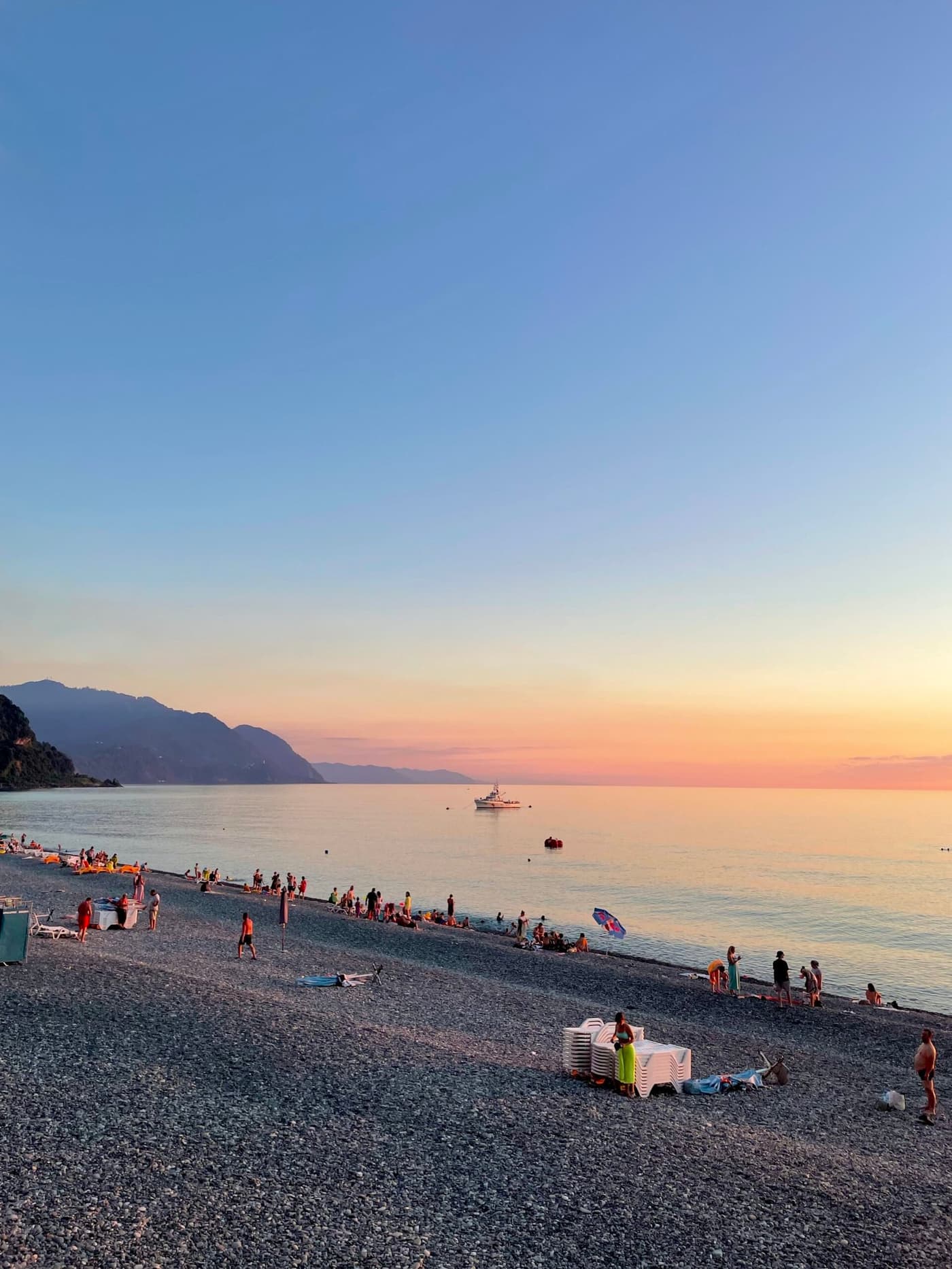
Black Sea water warms up slowly. In spring the sea is colder than the air, and it only reaches comfortable temperatures by June.
The swimming season, roughly: May (+18–20°C) → June–September (+21–25°C) → the first half of October (+20–21°C).
The warmest water is in August: +26–28°C. In September it's often warmer than in June, because the sea holds its heat.
The beach in Batumi is pebbly, and the pebbles are small, so walking on them barefoot hurts. Buy beach shoes from any stall on the promenade (10–15 lari). It's a necessity from day one.
Black Sea jellyfish are a seasonal nuisance. In July and August they turn up along the shore.
What to do in Batumi when it rains
Rain in Batumi is part of life, so there's no point fearing it. A short summer downpour passes in 20–40 minutes. Long autumn rains are a different story.
Good things to do in the rain: sit in a café by the window with a sea view (the Old Town has plenty), visit the fish market by the port, or walk around the Old Town with an umbrella, without the crowds and with a different atmosphere. The Botanical Garden in light rain is unexpectedly beautiful: wet greenery, the smells, few people. Museums and galleries in the center are good for anyone who wants a roof overhead.
In heavy rain with wind, it's better to stay in: the umbrella will flip inside out and there's nowhere to go. Days like that happen in Batumi a couple of times in a few weeks, no more.
Batumi or Tbilisi: the difference in climate
If you plan to visit both cities on one trip, it's important to understand the difference.
Tbilisi has a continental climate: summers are dry and hot (+33–40°C in July), winters are cool (+3–8°C), and there's little rain. Batumi is subtropical: humid all year round, with milder winters (+8–12°C), and summers that are warm but feel heavier because of the humidity.
If you're traveling from Tbilisi to Batumi in July expecting coolness by the sea, don't count on it. Batumi is hot in July too, just humid rather than dry. Many people find that harder to take.
The best time when both cities are good at once: April–May and September–October.
I wrote a detailed overview of the weather and seasons in Tbilisi in another article.
Best time to visit for different goals
- Sea and beach: June or September.
- Botanical Garden and a nature walk: April for the blossoms, or September for quiet and greenery.
- Mountain Adjara: May–October, when the roads are open. June or September is ideal.
- Quiet and budget: January–March. Cheap, an empty city, a mild winter.
- Combining with Tbilisi: April–May or September, when both cities are at their best.
- Remote work: November–March. Quiet, cheap rent, working internet and open cafés. See all the cafés and restaurants in Batumi and where to eat in my food guide to the city.
What to pack by season
Batumi surprises with contrasts: in winter you don't need a heavy parka, and in summer you can get caught in a tropical downpour. The climate is mild but unpredictable, especially between seasons. Below is what I'd bring depending on the time of year.
Winter (December to February)
You can leave the heavy parka and thermal underwear at home. Batumi's winter isn't about frost, it's about dampness. You need a waterproof jacket or a raincoat with a hood, a couple of sweaters and closed shoes with non-slip soles. There's practically no snow, but the humidity and constant rain feel sharper than -5°C in a dry climate.
Spring: March to May
March is the trickiest month: the average daily temperature is around +10°C, and there are 8 rainy days in the month. A waterproof jacket is a must. An umbrella is optional, since the wind often turns it inside out. In April it's already warmer (+15–20°C) and noticeably less rainy, so you can switch to light layers: jeans, a hoodie, a windbreaker. Closed shoes are still relevant.
May is one of the best months: +19–24°C, about 23 sunny days and moderate rain. Light clothes are enough: T-shirts, dresses, shorts. For the evening, bring a thin cardigan, because it gets cooler by the sea after sunset. Pack a swimsuit, although the sea is still cool at around +18°C.
Summer (June to August)
Hot and humid: +26–32°C plus subtropical humidity. Bring light clothes made of natural fabrics, SPF 50+ sunscreen and a hat. It does rain, but usually briefly and warmly, so a compact raincoat or a small umbrella is enough. The beach season is in full swing and the sea warms to +25–28°C.
Autumn (September to October)
September is still almost summer: +24°C, warm sea and fewer people. In October the picture changes: the temperature falls to +18°C and there is more rain. Dress in layers: a T-shirt, a light jacket and something waterproof. November is autumn in the full sense: rain, +14°C, and you'll need a warm jacket.
Batumi in winter: is it worth going?
Winter in Batumi is worth it if you like a non-touristy city. The promenade is empty, restaurants cater to locals, prices are at their lowest, and rental housing in January–February is 40–50% cheaper than in July.
For digital nomads, winter in Batumi is a perfectly good option: quiet, cheap, +10°C and palms outside the window when you open your laptop. The internet works and there are coworking spaces in the center.
The one thing you need to be ready for is rain. November, December and February in Batumi are often rainy. Several days in a row of gray sky and drizzle are part of Batumi's winter life, and it's better to know that in advance. It's not the French Riviera, but it has its own character.
Whatever season you plan to visit, take a look at my complete guide to Batumi, which covers neighborhoods, housing, food and the sea. And if you're considering not just a trip but moving to Georgia, I have a separate detailed article that walks through all the nuances worth knowing. All the articles are based on personal experience: I lived in Georgia for a long time, traveled every corner of the country and dealt with everyday questions myself.
FAQ: Answers to questions about the weather and seasons in Batumi
When is the best time to go to Batumi?
September is the best month: the sea is +23–25°C, there are fewer tourists, and no July heat or overpaying. June is a good alternative for those who want the sea earlier. April–May works if the sea isn't the goal but you want nature and quiet.
When is the swimming season in Batumi?
The main season is June–September. May is for the brave (+18–20°C). In the first half of October you can still swim.
Is Batumi cold in winter?
No, it's mild: +8–12°C. Snow comes once every few years. But it's humid and rainy, and that's the main catch.
Does it rain in Batumi in summer?
Yes, even in July there are short downpours. It's the subtropics. It's best to always have an umbrella, but the rain passes quickly.
What is the water temperature in Batumi in July–August?
+25–28°C, the warmest of the year. Very comfortable for swimming.
How does Batumi's climate differ from Tbilisi's?
Batumi is humid subtropical: mild winters, humid summers and plenty of rain all year round. Tbilisi is continental: dry hot summers, cool winters and little rain. In July, Batumi's +28°C with high humidity feels heavier than Tbilisi's dry +35°C.
Is Batumi's beach sandy or pebbly?
Pebbly, with small pebbles. Be sure to buy beach shoes, otherwise it will hurt.
When does the resort season open in Batumi?
Officially in June, when the water warms to +21–22°C. The first beachgoers show up in May.
When are there the fewest tourists in Batumi?
January–March is the absolute minimum. November–December is also quiet. That's exactly when housing prices are lowest.