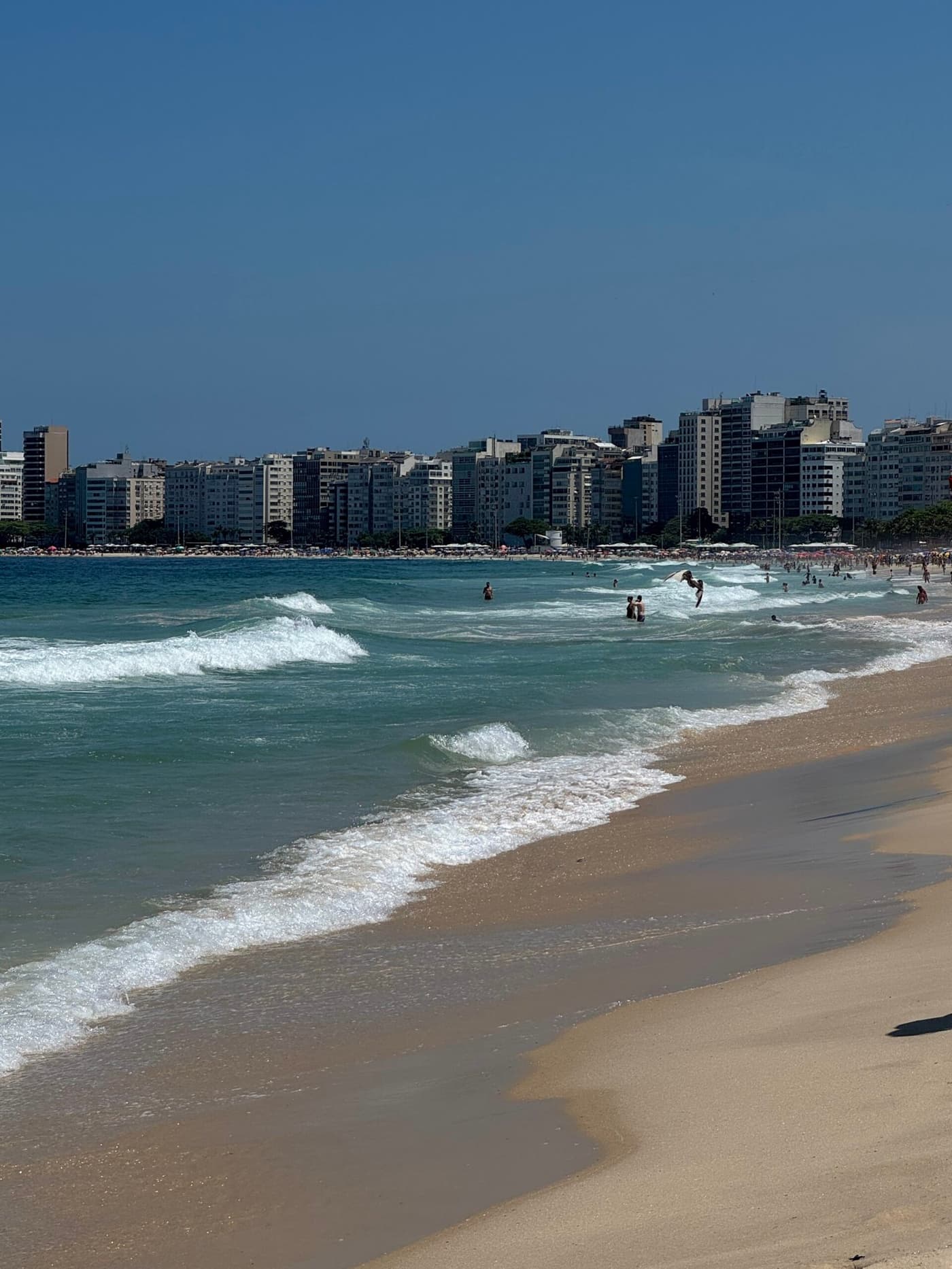
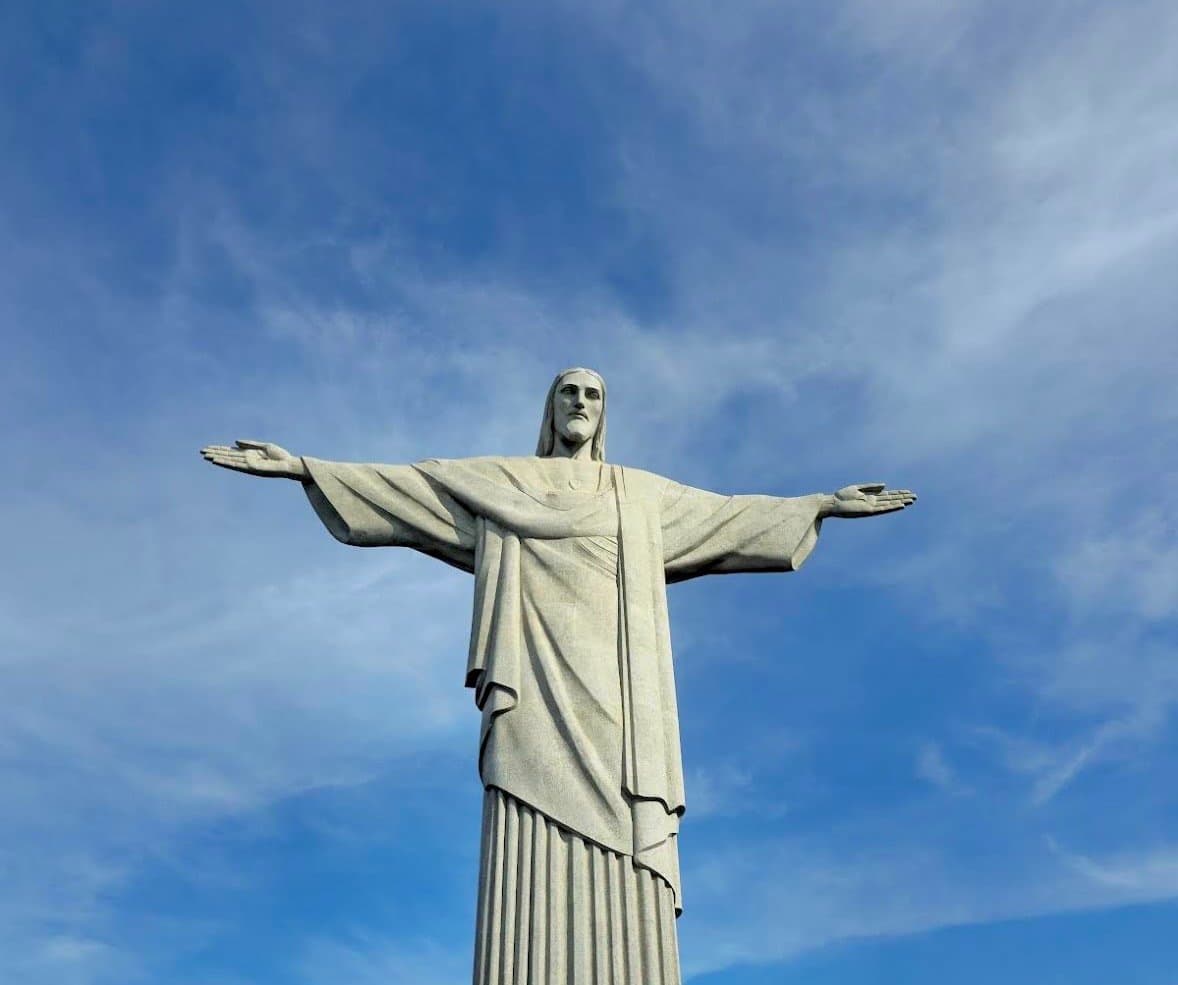
Christ the Redeemer is one of the most recognizable symbols not only of Rio de Janeiro but of all of Brazil. The huge figure of Jesus Christ with outstretched arms towers over the city and is visible from almost anywhere in it, especially from downtown and the coast.
The Christ the Redeemer statue in Rio de Janeiro stands on top of Corcovado Mountain and has long been one of the city's main landmarks. For some it is a religious site, for others an architectural and engineering masterpiece of the early 20th century, and for tourists a must-see stop on any Rio itinerary.
If you are only planning your trip, start with my general guide, Rio de Janeiro: everything you need to know about the city.
In this article I will tell you when and how the statue was built, and share all the practical information: where to buy tickets, how to get there and what to watch out for during your visit.
Where Is Christ the Redeemer in Rio and Which Mountain Does It Stand On
The Christ the Redeemer statue stands on top of the famous Corcovado Mountain in Rio de Janeiro, Brazil, in the very heart of the rainforest of Tijuca National Park. It is one of the largest urban forests in the world and is a protected natural area.
Corcovado rises about 710 meters above sea level, and the Christ the Redeemer monument reaches out from its summit as if over the whole metropolis. From this height you get an impressive panorama of Rio de Janeiro, from the famous Copacabana and Ipanema beaches to the picturesque Guanabara Bay, as well as other natural landmarks such as Sugarloaf Mountain.
History of the Christ the Redeemer Statue in Rio de Janeiro
The idea of building a monumental statue of Jesus Christ above Rio de Janeiro appeared long before it was actually built. The first proposals to put a religious monument on one of the mountains around the city were discussed as early as the second half of the 19th century, but the project was never carried out at the time. The topic returned only in the early 20th century, when Rio was growing fast and taking shape as the main symbol of Brazil.
The decisive moment came in 1921, when the country was preparing to celebrate the centenary of its independence. It was then that Catholic organizations in Rio de Janeiro came up with the initiative to create a large-scale religious monument that would be not only a symbol of faith but also a sign of national unity. A fundraising campaign was soon announced, and thousands of the city's residents took part.
When Was Christ the Redeemer Built
Construction of the Christ statue in Rio de Janeiro began in 1922. The work lasted almost nine years and was completed in 1931. The monument was officially opened on October 12, 1931, a major event in the life of the city and the whole country.
When it was finished, Christ the Redeemer was one of the largest religious monuments in the world and immediately became Rio de Janeiro's architectural landmark.
Why Was the Statue of Christ Built
The main idea was to create a symbol that would stand for protection, peace and spiritual values. Christ's outstretched arms are read as a gesture of blessing and, at the same time, as an embrace that takes in the whole city. For Brazil at that time this was an important image, as the country wanted to emphasize its identity and the role of the Catholic faith in public life.
Who Created Christ the Redeemer: the Architect and the Sculptor
Creating such a large monument took several specialists from different countries. That is why, when answering the question of who created the Christ statue in Rio de Janeiro, it is important to separate the authorship of the architectural design, the engineering solutions and the sculpture.
Who Designed the Christ the Redeemer Statue in Rio de Janeiro
The main author of the idea and the architectural design was the Brazilian engineer Heitor da Silva Costa. He was the one who proposed placing the statue of Jesus Christ on top of Corcovado and who developed the overall concept of a monument with outstretched arms, symbolizing the protection and blessing of the city.
Da Silva Costa oversaw the project at every stage, from the sketches to the coordination of construction. His engineering solution made it possible to put up a huge statue in difficult natural conditions, at a considerable height and in a zone of frequent winds.
The Sculptor and the Engineering Calculations
The sculptural part of the monument was made by the French sculptor Paul Landowski. He created the detailed figure of Christ, working out the proportions of the body, the expression of the face and the characteristic pose with arms spread wide. The first models of the statue were made in Europe, after which the elements were scaled up for the final version.
The structural engineering calculations were done by the French engineer Albert Caquot, known for his work on reinforced concrete structures. Thanks to him, the statue got a strong internal frame able to withstand the strong winds and lightning strikes that are common at the top of Corcovado.
How Christ the Redeemer in Rio Was Built
Building Christ the Redeemer was a serious engineering challenge for the early 20th century. The work took place on top of Corcovado, in a hard-to-reach spot where strong wind, high humidity and frequent thunderstorms were constant risks. Even so, the project was completed without the modern construction technology used today.
Materials and Construction
The statue is built around a reinforced concrete frame, which gave the structure the strength and stability it needed. Soapstone (steatite) was chosen for the outer cladding. This material turned out to be the best choice for several reasons: it resists temperature swings, handles a humid climate well and does not lose its properties over time.
The soapstone was cut into thousands of small triangular tiles that were fixed to the surface of the statue by hand. This technique made it possible to reproduce the complex shape of the figure precisely and gave extra protection from the weather.
How the Pieces Were Delivered to the Top of Corcovado
Most of the structural elements were made outside Brazil, including in France. The finished parts were shipped by sea to Rio de Janeiro and then taken up to the summit on the narrow-gauge railway that had existed on Corcovado since the end of the 19th century.
From the last station the materials were carried by hand or with the simplest lifting mechanisms. This stage was one of the hardest, because the work had to be done on a limited platform and in constant fog.
Height and Size of the Christ the Redeemer Statue in Rio de Janeiro
The scale of Christ the Redeemer is impressive even next to modern structures. Although the statue was built in the first third of the 20th century, in size it is still one of the largest in the world.
Height of the Christ Statue in Rio
The total height of the monument is 38 meters:
- 30 meters for the figure of Jesus Christ itself
- 8 meters for the pedestal the statue stands on
Counting the height of Corcovado, the monument rises about 710 meters above sea level, which is why it is easy to see from different parts of Rio de Janeiro and even from the coast.
Dimensions, arm span and weight
Besides its height, the statue has other impressive characteristics:
| Parameter | Value |
|---|---|
| Arm span | about 28 meters |
| Weight of the structure | more than 1,100 tons |
| Frame material | reinforced concrete |
| Cladding material | soapstone (steatite) |
The wide-spread arms became the key element of the image: on the one hand they emphasize the scale of the monument, on the other they strengthen its symbolic meaning, associated with the protection and blessing of the city.
For comparison, the Christ the King statue in Świebodzin, Poland, is taller, at 36 meters without the pedestal, and the Christ statue in Encantado, Brazil, is 43 meters. But it is Christ the Redeemer in Rio that remains the most recognizable, thanks to its location, its history and its status as a wonder of the world.
In terms of size, the Christ statue in Rio de Janeiro was for a long time considered the largest depiction of Christ in the world and is still one of the most recognizable religious sculptures on the planet.
What Christ the Redeemer Symbolizes
The meaning and symbolism of Christ the Redeemer go far beyond architecture and engineering. From the day it opened, the monument was conceived not just as a religious sculpture but as an image that unites spiritual, cultural and national meanings.
Religious Meaning
In the Christian tradition, the image of Christ the Redeemer symbolizes sacrifice, forgiveness and the salvation of humankind. The statue's outstretched arms are read as a gesture of blessing and acceptance, and also as a sign of protection. That is why the figure of Christ seems to "embrace" Rio de Janeiro as it stands above the city.
For Catholic Brazil, where Christianity plays an important role in public life, the statue became a powerful religious symbol. It is a reminder of faith, mercy and the spiritual values that were especially significant for the country in the early 20th century.
Meaning for Brazil and Rio de Janeiro
Over time, the Christ statue in Rio de Janeiro became one of Brazil's main national symbols. In 2007, Christ the Redeemer was named one of the New Seven Wonders of the World, alongside the Great Wall of China, Machu Picchu and the Colosseum. The vote was open, and millions of people around the world took part. Since then Christ the Redeemer has been not just a religious symbol of Brazil but one of the biggest tourist magnets on the planet.
Today the Christ statue is Brazil's main symbol in the eyes of the whole world. Its image appears on souvenirs, T-shirts, magazine covers and news report title cards whenever the country comes up, just like the Eiffel Tower for Paris or Big Ben for London.
What You Can See From the Viewing Platform
Christ the Redeemer is one of the most photographed monuments in the world. From the ground the statue looks even bigger than in photos. From below, the figure of Christ looks like an almost vertical wall, and the proportions underline the grandeur of the monument. Up close you can clearly see the soapstone cladding and the details of the sculpted face and hands.
From the viewing platform at the foot of the statue there is a 360-degree panorama of Rio de Janeiro. In clear weather you can see the city center and business districts, Guanabara Bay and the Rio–Niterói Bridge, Sugarloaf Mountain, the Copacabana and Ipanema beaches, and the hills and neighborhoods stretching inland.
It is the combination of the monumental statue and the panoramic views that makes a visit to Corcovado one of the most memorable stops in Rio.
How to Photograph Christ the Redeemer
Photographing the statue is a challenge of its own. The monument is huge, and getting all of it in the frame up close is almost impossible, so you need a wide-angle lens. The best shots of the statue itself are taken from a distance: from Sugarloaf Mountain, from the Botafogo area or right from Copacabana beach on a clear day. But take the panoramas of Rio from above right on the platform, because they are stunning in every direction.
Christ the Redeemer at Night
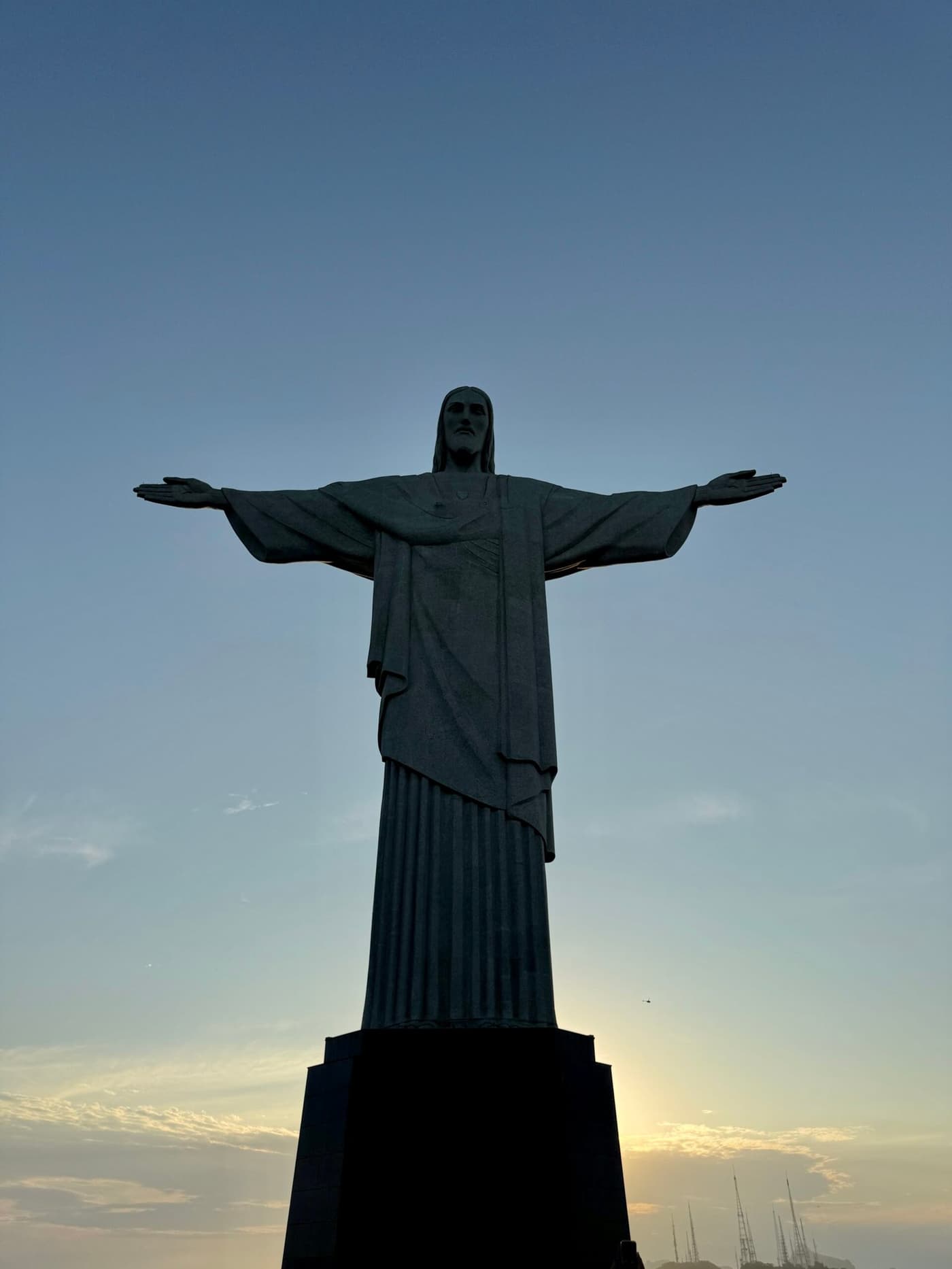
The statue at night is a story of its own. The monument is lit by floodlights and is visible from many parts of Rio even after sunset. You cannot go up at night, as the platform closes at 7:00 PM, but you can admire the lighting from below completely free, for example from the Botafogo waterfront or from the Santa Teresa area.

How to Get to Christ the Redeemer in Rio de Janeiro
A visit to Christ the Redeemer starts with choosing how to get to the top of Corcovado. There are several ways to go up, from the historic train to the official vans and hiking trails, to suit different plans, budgets and fitness levels.
Going Up by Train: Trem do Corcovado
The most popular and scenic way to reach the statue is the Trem do Corcovado train, which climbs from Cosme Velho station through the rainforest of Tijuca National Park.
What to know:
- The train leaves from Cosme Velho station, where you need to buy a ticket or book one online in advance.
- The ride takes about 20-30 minutes, and on the way up you get great views of the forest and of Rio de Janeiro.
- The railway runs daily roughly from 8:00 AM to 6:00 PM, with trains leaving about every 20 minutes (this may change in season, so it is better to check in advance).
From personal experience: I went closer to sunset and that was a mistake. The train was packed, and the air conditioning was either missing or just not working. It was so hot inside that I wanted to get off and walk up. On the way back we stood the whole time, because so many people had squeezed into the car. So prepare yourself mentally, especially if you go at peak hours.
Official Vans
If you do not want to take the train, you can choose official transport, a van that goes up the road through the forest.
Boarding points:
- Copacabana (for example, near Praça do Lido)
- Largo do Machado (next to the metro)
- Paineiras (the starting point closest to the summit)
Advantages:
- The ticket usually includes the ride up and entry to the statue.
- You can buy a ticket with less advance booking than for the train.
- The van is convenient for groups or for anyone staying downtown in Rio.
Hiking Up the Trails
The cheapest way is to hike up the trails of the national park.
Things to know:
- The trail is not safe. Unfortunately, robberies often happen there, including armed ones.
- The trail runs through the rainforest: very scenic, but with no sidewalks and with steep climbs.
- The hike can take several hours, especially in high temperatures.
If you still decide to walk, do not take valuables, bring a map, enough water, comfortable shoes and sun-protective clothing. Never go there after dark or alone.
Taxi, Uber and Bus to the Starting Points
If you start your route from downtown Rio, the Copacabana beaches or your hotel, you can take a taxi or Uber to Cosme Velho or Largo do Machado. Buses also go to the boarding points, for example to Rua Cosme Velho.
If you have not yet decided which area to stay in, read my breakdown of Rio de Janeiro neighborhoods.
From Copacabana to the station or boarding point it takes about 20-45 minutes by taxi or bus, depending on traffic.

Tickets and Cost of Visiting Christ the Redeemer
To visit Christ the Redeemer, the entrance ticket is always tied to the transport to the top, and you cannot just walk onto the platform without the ride. Below I have collected current 2026 prices from official sources.
For a better sense of vacation costs in Rio in general, see my guide, Prices in Rio de Janeiro: how much food, accommodation and entertainment cost.
Ticket Prices
1. Corcovado Train (Trem do Corcovado)
Ticket with the train ride and entry to the statue:
- Adult: ~R$ 134.00
- Students / children (ages 7-11): ~R$ 107.00
- Seniors (60+ with ID): ~R$ 70.00
- Children under ~7: free when accompanied by an adult
Prices are updated regularly depending on the season, and on holidays and peak days the cost may be higher.
2. Official Vans (Vans Paineiras-Corcovado)
- Adult: ~R$ 95-115
- Students / special categories: discounts with documents
It is best to check the exact rates on the official website before buying.
Where to Buy Tickets Officially
I recommend buying tickets in advance, especially if you are traveling in high season, on a weekend, or want a specific time.
- Corcovado train: https://www.tremdocorcovado.rio/
- Official vans: https://www.paineirascorcovado.com.br/
Where Else You Can Buy Tickets
If you want to compare prices or need the option to cancel:
- GetYourGuide and Klook — various ticket and tour options
- Viator — often has "Skip-the-line" tickets
- Tiqets — e-tickets with mobile entry
Tickets through aggregators are usually more expensive than on the official sites, but more convenient for canceling or changing the date.
Important Points When Buying
- Tickets are tied to the departure time, so arrive before the time shown.
- In high season the morning slots sell out quickly.
- There is no separate entry-only ticket, as entry is always tied to the transport.
Christ the Redeemer Opening Hours and Weather Restrictions
The visiting schedule is directly tied to the operating hours of the official operators that take you up.
Opening Hours of Christ the Redeemer in Rio de Janeiro
General visiting hours: daily from 8:00 AM to 7:00 PM. The last ride up is usually 60 minutes before closing.
Trem do Corcovado train:
- Departures: roughly from 8:00 AM to 6:00 PM
- Interval: about every 20 minutes
- Last train up: around 5:00-6:00 PM depending on the season
Official vans:
- First ride up: around 8:00 AM
- Last: around 6:00 PM
Effect of the Weather
Weather plays a key role when visiting Corcovado: in heavy rain, fog or a thunderstorm the rides up may be suspended. That is why I recommend checking the forecast before you go and choosing the morning hours.

Best Time to Visit Christ the Redeemer and Tips for Tourists
Choosing the right time is half the success. It decides whether you will be standing in a crowd with your phone over your head or calmly looking at Rio with a cup of coffee in your hand. Here is what matters.
When Is the Best Time to Go to Christ the Redeemer
The best time is early morning. The first time slots (8:00 to 9:30 AM) are the best for several reasons:
- fewer tourists and shorter lines
- a higher chance of clear weather and good visibility
- soft light for photos
During the day (roughly 11:00 AM to 3:00 PM): the most visitors, haze and clouds appear more often, and the wait for the elevators and escalators is longer.
There are crowds at the statue all the time, and closer to closing time the flow of tourists does not get any smaller, while the risk of fog goes up at that hour, especially in the warm and humid season. I went right before sunset, and honestly, the crowds were huge. There were lines everywhere, the platform was cramped, and taking photos without other people's heads in the frame was a quest of its own. The views are beautiful, but the experience of such a crush is so-so. If you want to see everything in peace, go in the morning.
For more on when to go to Rio and what to expect from the weather in different months, see the article Weather in Rio de Janeiro by month.
Best Days of the Week
- Weekdays (Tuesday-Thursday): the most comfortable option
- Weekends and holidays: maximum crowds, especially at the train
- During Brazilian school vacations and Carnival, the flow of tourists is higher even on weekdays
Seasonality and Weather
- Dry season (May-September): more stable weather and better visibility
- Summer and rainy season (December–March): downpours and fog are more frequent, and access restrictions are possible
It is important to understand that it can be sunny in the city below while there are thick clouds at the top of Corcovado. Always check the forecast specifically for the Corcovado area.
How Much Time to Allow for the Visit
On average, plan on 1.5-2 hours:
- ride up: 20-30 minutes
- time on the platform: 30-60 minutes
- ride down: 20-30 minutes
In high season this time grows because of the lines.
Practical Tips for Tourists
- Arrive strictly for your time slot, especially if you are taking the train
- Bring water and a hat, as there is almost no shade on the platform
- Do not schedule Corcovado "back to back" with other activities, because weather delays are possible
Safety and Important Points When Visiting Christ the Redeemer
Overall, Corcovado is a safe place for tourists, but there are a few things worth knowing in advance so your trip is not spoiled by unpleasant surprises.
General Safety on Corcovado
The viewing platform itself is well organized: there are guards and staff, CCTV is in operation, and the flow of visitors is controlled by tickets and time slots. On the train or the official vans the route is safe and suitable for solo travelers, couples and families with children.
Hiking Routes: What to Know
Hiking up through Tijuca National Park is officially allowed, but it requires caution. Robberies often happen on the trail, including armed ones. Never go there after dark or alone. The trail runs through dense forest, the phone signal can drop, and the climb is physically demanding.
If your goal is simply to visit Christ the Redeemer, the hiking route offers no advantage in time or convenience compared with the train or a van.
Personal Safety and Belongings
- Do not take valuables with you unless you need to
- Avoid showing off gadgets and jewelry
- Keep your backpack and bag under control, especially at peak hours
Visiting With Children and People With Limited Mobility
The train and the vans are suitable for children. At the top there are elevators and escalators, but the route is not completely step-free. With strollers it is easier to come early in the morning.
Frequently Asked Questions About Christ the Redeemer in Rio de Janeiro
How long does a visit to Christ the Redeemer take?
On average 1.5-2 hours: the ride up (20-30 minutes), time on the platform (30-60 minutes) and the ride down. In high season or during the day it takes longer because of the lines.
Do I need to buy tickets in advance?
Yes, it is better to. Tickets are sold for a specific time, and the popular morning slots are often sold out several days ahead, especially in high season and on weekends.
Can I visit Christ the Redeemer for free?
Not completely. Entry to the viewing platform is possible only through the official ride up. The hiking route does not require payment, but access to the summit is still controlled.
Which is better: the train or the van?
For most tourists the Trem do Corcovado train is the best option: a more scenic route, a clear time-slot system, and a historic, atmospheric ride. Vans are a good choice if you live near a departure point or do not want to go to the Cosme Velho area.
Can I walk up to Christ the Redeemer?
Yes, but with caveats. The hiking route goes through the forest, where robberies often happen, including armed ones. The trail is only for physically fit people, and the climb takes 2–3 hours.
What is the best time to visit Christ the Redeemer?
The best time is early morning, right after opening. I came at sunset myself and regretted it: crowds, a stuffy train, and we stood on the way back.
Can I see Christ the Redeemer in bad weather?
In rain or fog visibility can be practically zero. It is important to check the weather forecast before you go.
Is it safe to visit Christ the Redeemer on my own?
Yes, if you use official transport, the visit is safe. There are guards and staff on the platform. The main risks come not from the attraction itself but from the hiking route through the forest.
Can I visit Christ the Redeemer with children?
Yes. The train and the official vans are suitable for visiting with children. At the top there are elevators and escalators, but some steps remain; with strollers it is easier to come early in the morning.
Can you see Christ the Redeemer from the city?
Yes. The statue is clearly visible from many parts of Rio de Janeiro, especially from downtown, Botafogo and the coast. However, the best views and photos are only from the viewing platform on Corcovado.
Can I combine a visit to Christ the Redeemer with other sights in one day?
Yes, but leave extra time. It is best to plan Corcovado as the first activity of the day and the other stops after it. All the main sights of Rio with routes are in my guide, What to see in Rio de Janeiro.
See what we did in Rio de Janeiro in my YouTube video