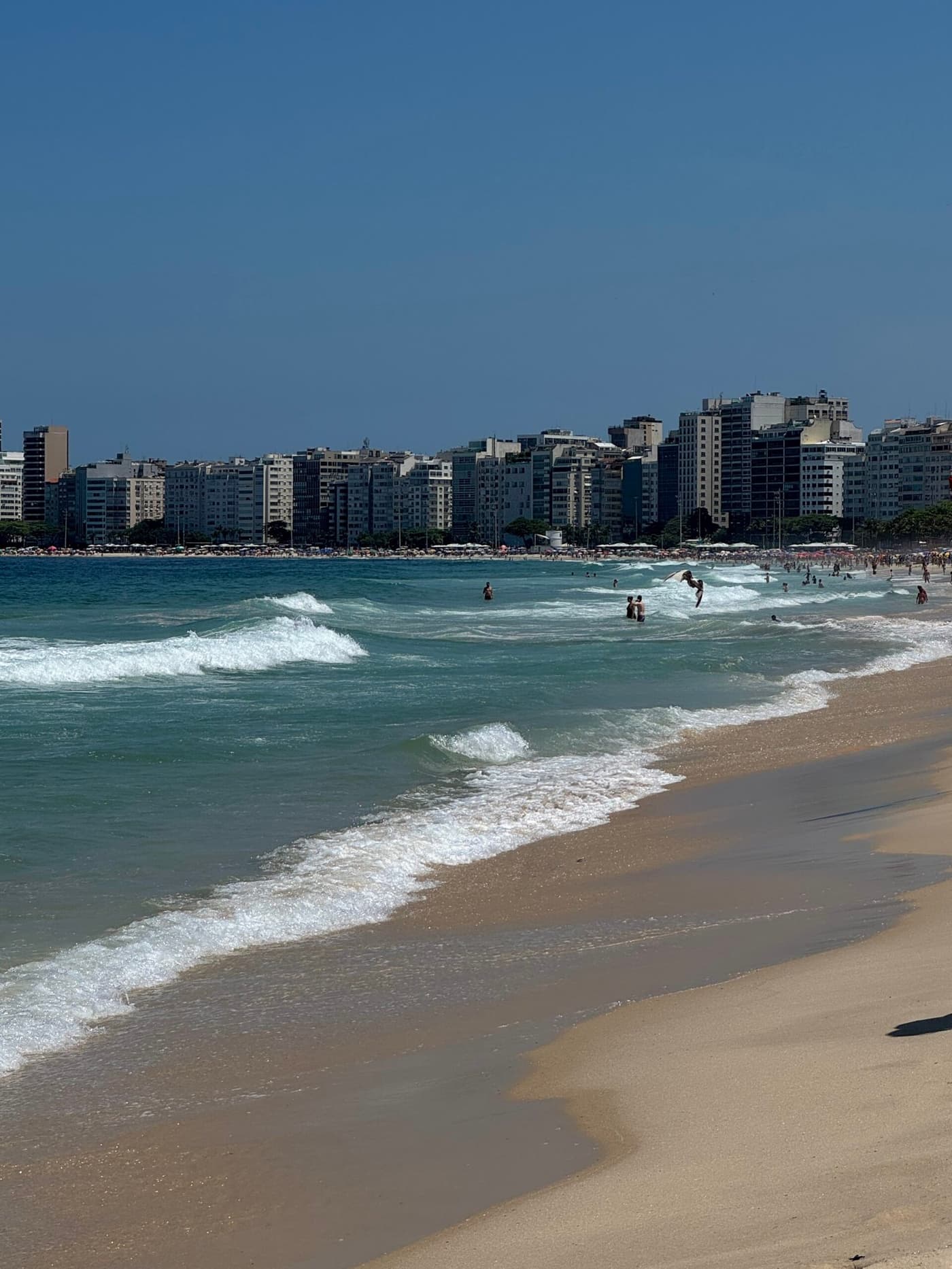
Rio de Janeiro is one of the few cities in the world where the beaches are not just a place to relax but part of the city's culture. The coastline stretches along the Atlantic Ocean and Guanabara Bay, and the beaches of Rio de Janeiro are famous far beyond Brazil. This is where you'll find the legendary Copacabana, upscale Ipanema and laid-back Leblon.
Rio's beaches are on the Atlantic Ocean. There are waves, currents and changeable weather. But that is exactly what gives them their character: wide stretches of sand, sports courts, surfing, sunsets and a culture of life by the ocean.
In this guide I'll walk you through which beaches are considered the best in Rio de Janeiro, how they differ, where it's most comfortable to swim and which beaches are good for walks and photos.

The most famous beaches in Rio de Janeiro
Rio de Janeiro is washed by the Atlantic Ocean, and when travelers ask about the most famous beach in Rio, they usually mean Copacabana. But the city has many more interesting beaches, from loud and lively ones to quiet, scenic ones at the foot of the cliffs.
Copacabana: the most famous beach in Rio
Copacabana is the symbol of the city. It's a four-kilometer arc of white sand, a famous promenade with a black-and-white wave pattern, skyscrapers along the waterfront and a constant sense of movement. It is the beach that most often appears in photos as the beach of Rio de Janeiro.
Copacabana regularly hosts big events: Réveillon New Year's celebrations, concerts by world-famous stars and sporting competitions. This has made it Rio's calling card.
Copacabana is without a doubt the best-known beach in Brazil and the number one beach in Rio.
Ipanema: the upscale beach of Rio de Janeiro
But when it comes to status and atmosphere, Ipanema is considered the more upscale beach.
Ipanema is famous not only for its ocean and wide sandy shore but also for its cultural significance: the well-known bossa nova song "The Girl from Ipanema" was written about it. The beach is known for beautiful sunsets, especially near the Arpoador rock.
So if you're looking for the most upscale beach in Rio de Janeiro, Ipanema is the place.
The atmosphere here is a little calmer than at Copacabana, and the crowd is more varied, from surfers to locals who come to watch the sunset.
Leblon: the quietest and most exclusive beach
The neighboring beach, Leblon, is considered quieter and more exclusive. It continues the line of Ipanema and has fewer tourists. It's often called the most comfortable beach for a relaxed day by the ocean.
So, in short:
- The most famous beach in Rio de Janeiro: Copacabana
- The most upscale and atmospheric: Ipanema
- The quietest: Leblon

The best beaches in Rio de Janeiro: a comparison
Rio de Janeiro has more than 30 beaches of different types, from busy city beaches to almost wild ones with natural landscapes. Below is a short overview of the ones that most often make the lists of the best beaches in Rio de Janeiro, based on travelers' reviews and tourism rankings.
Copacabana: the most famous beach in Rio
A wide strip of sand about 4 km long, well-developed infrastructure, sports courts and restaurants along the promenade. This is the city's main tourist beach and one of the best known in the world.
Ipanema: upscale and scenic
Known for its sunsets and atmosphere. The section near Arpoador is especially popular for surfing and for watching the sun sink into the ocean.
Leblon: calm and exclusive
A continuation of Ipanema, but with a more relaxed atmosphere. It suits anyone who wants less tourist bustle.
Barra da Tijuca: the longest beach in Rio
The beach runs for more than 15 km along the ocean. It's less crowded and has powerful waves, which makes it popular with surfers.
Praia Vermelha: the beach at the foot of Sugarloaf
A small, scenic beach with views of the granite cliffs and the entrance to Guanabara Bay.
Comparing Rio's popular beaches
| Beach | Atmosphere | Waves | Tourists | Best for |
|---|---|---|---|---|
| Copacabana | Lively, touristy | Medium | Many | Photos, walks, sports |
| Ipanema | Stylish, upscale | Medium | Moderate | Sunsets, relaxing |
| Leblon | Calm | Medium | Fewer | Family beach days |
| Barra da Tijuca | Spacious | Strong | Fewer | Surfing |
| Praia Vermelha | Scenic | Calmer | Few | Photos and walks |
Next I'll go through each Rio de Janeiro beach in detail: infrastructure, special features, safety and swimming.
Copacabana Beach
Copacabana is the most famous beach in Rio de Janeiro and one of the most recognizable beaches in the world. It's about 4 km long and shaped like a smooth arc along the Atlantic Ocean.
Copacabana means wide pale sand, open ocean and the iconic Avenida Atlântica promenade with a black-and-white wave pattern inspired by Portuguese pavements. Along the beach you'll find:
- volleyball and soccer courts
- places that rent sun loungers and umbrellas
- kiosks selling coconut water
- showers and lifeguard stations
The beach is divided into informal "sectors" that locals call by the numbers of the lifeguard towers (postos). This helps you find your way around and arrange where to meet.
Can you swim at Copacabana?
Yes, you can swim, but you need to keep the nature of the Atlantic Ocean in mind:
- the waves can be strong
- rip currents are possible
- the water is cooler than in tropical coves
The water temperature usually ranges from 21 to 26 °C depending on the season. On days with heavy surf, flags are raised to warn about sea conditions. It's safer to swim within sight of the lifeguards.
Atmosphere and crowd
Copacabana is the liveliest beach in Rio. There are lots of tourists, street vendors, athletes and locals. In the evenings people come to stroll along the promenade, and on New Year's Eve the beach hosts one of the biggest celebrations in the world.
In short:
- it's the best-known beach in Rio de Janeiro
- it's the most touristy
- it's good for walks, photos and getting a feel for the city.
Next I'll explain how Ipanema differs from Copacabana and why it's considered more upscale.
Ipanema Beach: the upscale beach of Rio de Janeiro
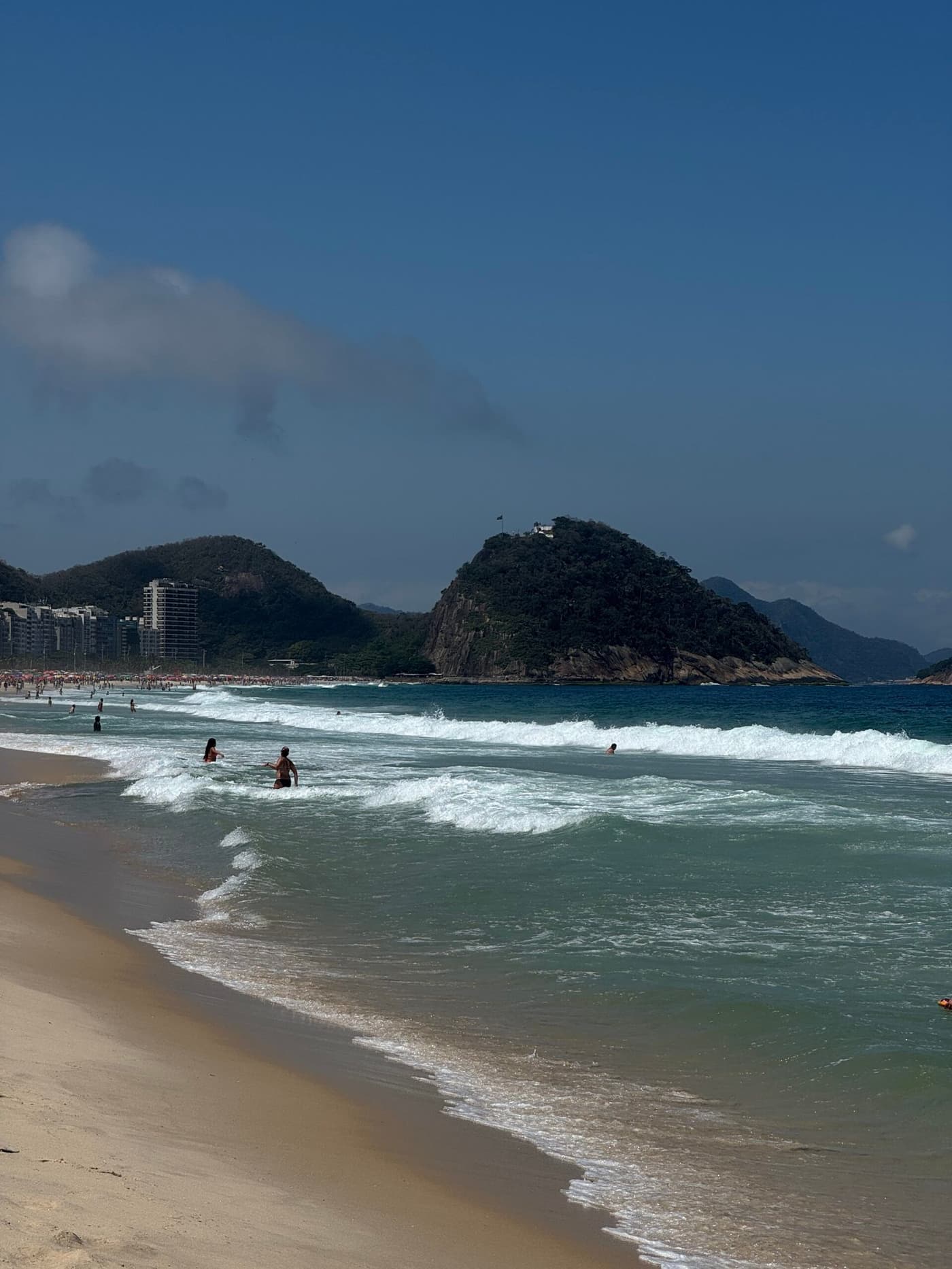
Ipanema is the second most famous beach in Rio de Janeiro after Copacabana, and many people consider it more upscale and atmospheric.
Ipanema is famous not only for its ocean and scenery but also for its cultural significance: the world-famous bossa nova song "The Girl from Ipanema" was written about it and made the name of the beach a symbol of the Brazilian way of life.
How Ipanema differs from Copacabana
Although Ipanema and Copacabana are next to each other, they have a different feel.
- Ipanema feels more open and spacious.
- The crowd here is wealthier, with less mass tourism.
- The sunsets are considered some of the most beautiful in the city.
The area near the Arpoador rock is especially popular. It has a panoramic view of the ocean, and it's where people traditionally applaud the sunset.
If Copacabana stands for symbol and energy, Ipanema stands for style and aesthetics.
Can you swim at Ipanema Beach?
Yes, you can swim, but as at other Rio de Janeiro beaches you need to keep in mind:
- the waves;
- possible currents;
- the weather conditions.
Swimming areas are marked by lifeguard stations. On calm days the water is clear, but when the surf is heavy the waves become powerful.
The water temperature is about the same as at Copacabana, between 21 and 26 °C throughout the year.
Atmosphere and crowd
Ipanema is often called the upscale beach of Rio de Janeiro. Here you'll find:
- lots of young locals
- surfers near Arpoador
- athletes and active-vacation fans
- fewer street vendors than at Copacabana.
The beach is loosely divided into sectors, each historically associated with a different crowd, from families to surfers.
If you're looking for a beautiful Rio de Janeiro beach for photos, walks and sunsets, Ipanema is often the best choice.
Next I'll cover Leblon Beach, the quietest and most secluded stretch of coast next to Ipanema.
Leblon Beach: the calm, exclusive beach of Rio de Janeiro
Leblon is the continuation of Ipanema to the west. Formally it's part of the same long strip of sand, but the atmosphere at Leblon is noticeably different.
Leblon is considered an even more intimate and less touristy beach. Here you'll find:
- fewer street vendors
- fewer large tourist groups
- a calmer crowd
The beach looks the same: wide pale sand, the open Atlantic Ocean and a backdrop of green hills. But there are usually fewer people, especially on weekdays, so Leblon is not only calmer but also more photogenic: fewer people end up in the frame.
Can you swim at Leblon?
Swimming conditions are similar to Ipanema:
- there can be waves
- currents are possible
- it's important to pay attention to the flags and the lifeguards' instructions.
The water temperature stays in the same range, around 21–26 °C throughout the year. Leblon is often chosen by families and by people who want to relax without the bustle.
Atmosphere
If Copacabana is the most famous beach in Rio and Ipanema the most stylish, then Leblon is the most exclusive.
This beach is a good fit if you:
- want less tourist noise
- prefer an unhurried day
- appreciate beautiful views without the crowds.
Next I'll look at some less famous but scenic beaches in Rio de Janeiro: Urca, Flamengo and Botafogo.
Urca Beach (Praia Vermelha): at the foot of Sugarloaf
Praia Vermelha, often called Urca Beach, lies at the foot of the famous Sugarloaf Mountain. It's a small beach at the entrance to Guanabara Bay, sheltered from the open ocean.
- The beach is much smaller than Copacabana and Ipanema.
- The water here is calmer than at the ocean beaches.
- The scenery is especially picturesque: cliffs, green hills and the cable car to the summit.
Because it sits in the bay, the waves are weaker, so swimming is more comfortable on days when the open ocean has heavy surf.
People often choose Praia Vermelha for walks and photos: the view of Sugarloaf makes it one of the most photogenic beaches in Rio.

Flamengo Beach: a city beach with a view of the bay
Praia do Flamengo runs along Guanabara Bay and is different from the ocean beaches.
- The beach stretches along a large city park.
- The water here is calmer, but swimming is officially not recommended because of water quality.
- It's mostly used for walks, sports and picnics.
It's worth being clear that this is more of a promenade area than a proper beach for swimming.
Botafogo Beach: can you swim there?
The answer: swimming is not recommended. Because of the environmental situation in the bay, the water is considered unsuitable for regular swimming.
Still, the beach is popular as:
- a place for walks;
- a spot for exercise;
- a viewpoint for panoramic photos.
Praia de Botafogo is also on Guanabara Bay and is known above all for its view of Sugarloaf.
Which beach should you choose in Rio de Janeiro?
"Which beach is best in Rio?" is one of the most common questions. There's no one-size-fits-all answer: it depends on why you're heading to the ocean, whether to swim, take photos, play sports or simply stroll along the water. I'd also recommend another article of mine, where I went through the areas of Rio de Janeiro and where it's best to stay in detail.
For your first look at Rio
The best choice is Copacabana.
It's the most famous beach in Rio de Janeiro, the one you see most often in movies, on postcards and in travel guides. Here it's easy to feel the atmosphere of the city: the wide promenade, sports courts, street musicians and constant movement.
For beautiful sunsets and photos
The best option is Ipanema, especially the Arpoador area.
The sunsets here are considered some of the most scenic in the city. Ipanema is the beach that most often features in "best beaches in Rio de Janeiro" lists for photography.
For a quiet beach day
Leblon is a good fit.
This beach is less touristy and more laid-back, and it suits anyone who wants to avoid big crowds.
For surfing and waves
Look at Barra da Tijuca.
It's the longest beach in Rio, with more powerful waves and fewer people. It's especially popular with surfers.
For scenic views and calm water
Praia Vermelha (Urca Beach) is a good fit.
It sits at the foot of Sugarloaf and is sheltered from the open ocean, so the water is often calmer here.
Keep in mind that Rio de Janeiro's beaches are on the Atlantic Ocean. Here:
- the waves can be strong
- currents are possible
- swimming conditions depend on the weather.
Before you go into the water, check the flags and the lifeguards' recommendations.

When is the best time to visit Rio de Janeiro's beaches?
Rio has a tropical climate, so there are no sharp seasonal swings. You can swim in the Atlantic Ocean almost all year round, but conditions change noticeably with the season.
Summer in Rio de Janeiro (December to March)
- Air temperature: +30…+35°C
- Water temperature: +24…+26°C
- Frequent short tropical downpours
This is the high tourist season. The ocean is at its warmest, the beaches are lively and the atmosphere is at its most energetic. Keep in mind, though, that it's also the wettest time of year, with regular rain and high humidity.
Fall (April to May)
- The air temperature becomes milder
- The water stays comfortable for swimming
- There are noticeably fewer tourists
Fall is the ideal balance of weather and comfort. The heat eases, there's less rain and the ocean is still warm. It's a good choice if you want to avoid the crowds and the exhausting heat.
Winter in Rio de Janeiro (June to August)
- Air temperature: +24…+27°C
- Water temperature: +21…+22°C
This is the coolest part of the year, but in practice the climate stays mild and pleasant. The ocean gets a little cooler and the waves get stronger, which is why this period is especially popular with surfers.
Spring (September to November)
- Gradually rising temperatures
- Moderate humidity
- Comfortable conditions for a day by the ocean
Spring is one of the most balanced seasons. It's already warm enough for the beach, but there's no summer heat or heavy humidity yet.
When to visit Rio's beaches
In short:
- For warm ocean and a lively atmosphere → December to March
- For comfortable weather without the crowds → April to May and September to November
- For surfing and a quiet beach day → June to August
If you want to pick your travel dates more precisely, based on water temperature by month, rainfall and the features of each period, I recommend my detailed guide: Weather in Rio de Janeiro by month and the best time to go
There you'll find detailed information for every month and can choose the ideal time for your trip.
I showed how we spent our time in Rio de Janeiro in a YouTube episode
Frequently asked questions about Rio de Janeiro's beaches
Which Rio de Janeiro beaches are considered the best for a beach vacation?
- Copacabana is the most famous beach in Rio de Janeiro, with a wide promenade and an energetic atmosphere;
- Ipanema is an upscale beach with beautiful sunsets and a stylish atmosphere;
- Leblon is a calm, less crowded beach;
- Barra da Tijuca is a long beach with great waves for surfing;
- Urca (Praia Vermelha) is a calmer beach with scenic views at Sugarloaf.
Which beach is considered the most beautiful in Rio?
There's no universal answer:
- Classic views and energy: Copacabana
- The best sunsets and style: Ipanema
- Calmer and more photogenic: Leblon
- For natural scenery: Urca (Praia Vermelha).
Can you swim at Rio de Janeiro's beaches?
Yes, you can swim at most of the ocean beaches (Copacabana, Ipanema, Leblon and others), but keep in mind the waves and possible currents typical of the Atlantic Ocean. On days of heavy surf, lifeguards may restrict swimming.
The beaches in the bay, such as Flamengo and Botafogo, are often used for walks and photos rather than swimming.
What is the water temperature at Rio's beaches?
The water temperature at Rio de Janeiro's beaches usually hovers around 21–26 °C throughout the year. It's warmer in summer and cooler in winter, but still comfortable for swimming.
Are Rio de Janeiro's beaches dangerous?
Beaches in tourist areas, especially in the South Zone (Copacabana, Ipanema, Leblon), are considered relatively safe during the day. Still:
- always keep an eye on your belongings and don't leave them unattended;
- avoid isolated stretches and don't walk alone late at night;
- follow the lifeguards' instructions closely.
Renting sun loungers and umbrellas on the beach: how does it work?
On popular beaches such as Copacabana and Ipanema there are often places that rent sun loungers, umbrellas and other beach gear. Prices depend on the season and location.