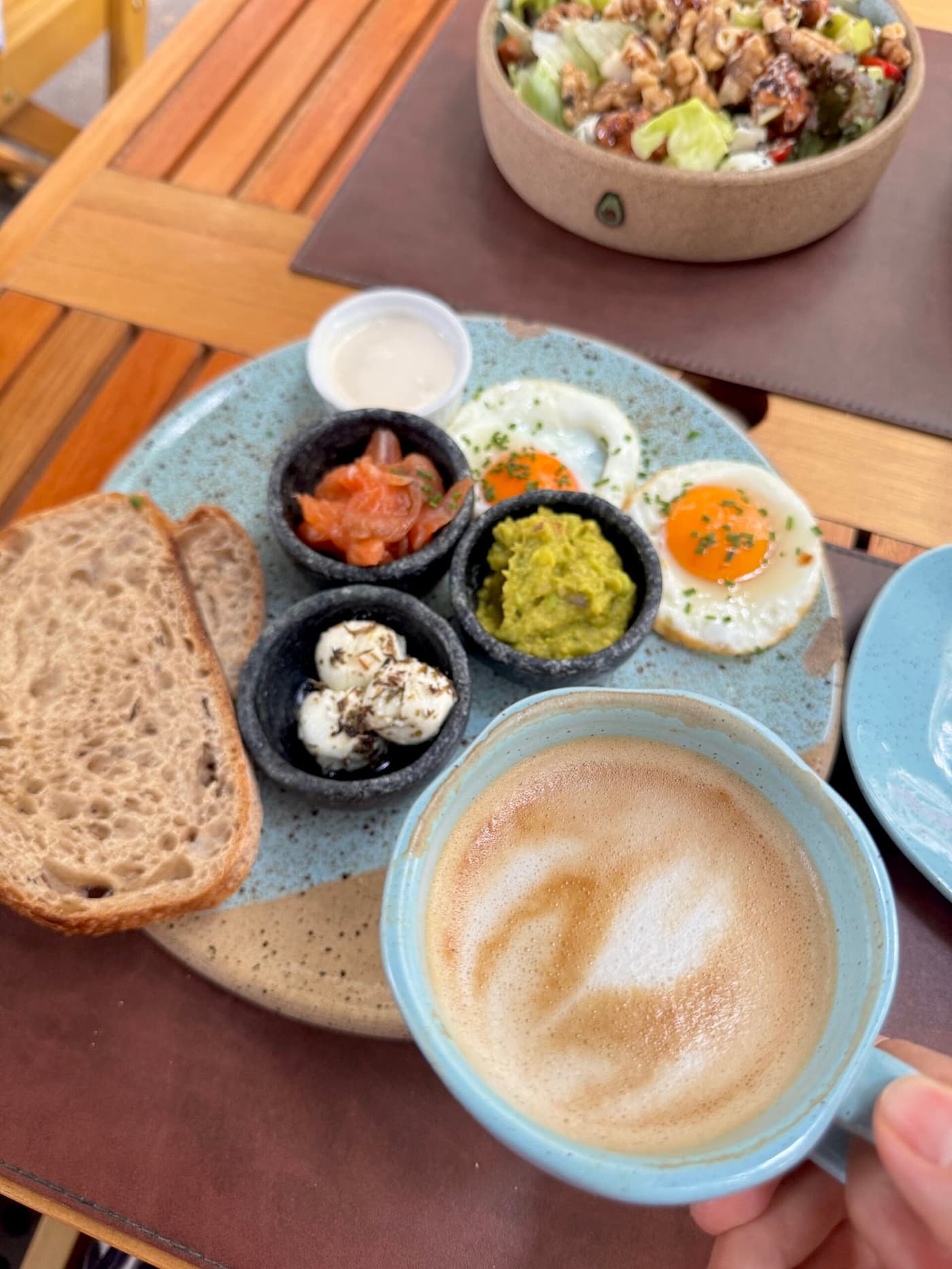
Rio de Janeiro is not only about Copacabana beach and sunsets on Sugarloaf Mountain. It is also about food that every traveler should try. Eating here means tasting history, culture and a mix of Indigenous, Portuguese and African traditions. You can find delicious dishes at street kiosks and in cozy little restaurants alike.
If you are planning a trip to Rio, or you simply want to know what to eat in Rio de Janeiro, this article is for you. I will tell you about the best dishes you should definitely try.
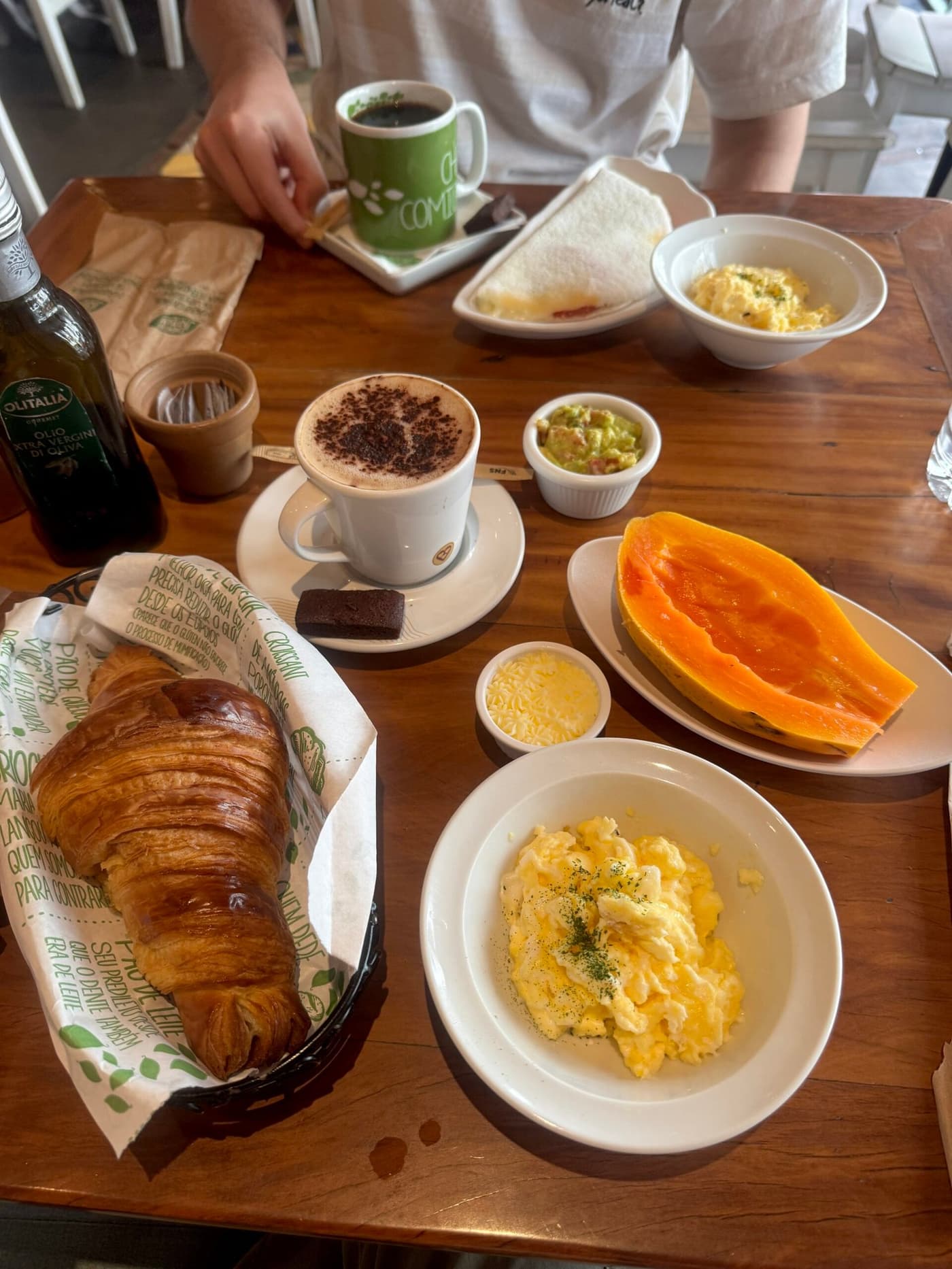
Food in Rio de Janeiro and Brazil: what to know before your trip
The local food of Rio de Janeiro reflects its history and its blend of cultures. Rio's culinary traditions have absorbed Portuguese, African and Indigenous influences, which is why the dishes here are bold, hearty and very memorable.
Many Brazilian dishes are built on simple but filling ingredients: rice and beans, which are served with almost any side dish or meat, along with cassava (manioc) and its derivatives. For centuries these foods were within reach of people from every level of society, and they gave rise to many traditional recipes.
One of the defining traits of Brazilian cuisine, and of Rio de Janeiro in particular, is a love of meat and the grill. The local barbecue, churrasco, is cooked over an open fire, and the variety of flavors comes from different kinds of meat, from beef to sausages and ribs.
Rio is also beaches, markets and street food at every turn. It is easy to find colorful snacks such as cheese bread or fried bean balls, as well as refreshing drinks and desserts that help you get through a hot day on the coast.
So you will never struggle to find something to eat in Rio de Janeiro.
What to know before you try the local food
- Serving traditions. Many dishes, especially those made in local restaurants and cafés, come with sides such as rice, greens or cassava flour (farofa), which adds texture and richness.
- Street food is part of the culture. Street markets and small stalls are the best places to try authentic Brazilian snacks such as coxinha or acarajé.
- Drinks matter too. Besides food, Rio is known for fresh juices, Brazilian coffee called cafezinho and the national cocktail, the caipirinha, which goes beautifully with the rest of the cuisine.
What to eat in Rio de Janeiro: the 11 must-try dishes
In Rio it is impossible to stay hungry. There is plenty of meat, beans, seafood, street snacks and sweets. If you are wondering what to try in Rio de Janeiro, start with these dishes, which are the foundation of Brazilian cuisine.
Feijoada: Brazil's signature dish
If you ask locals what to eat in Brazil first, almost all of them will say feijoada.
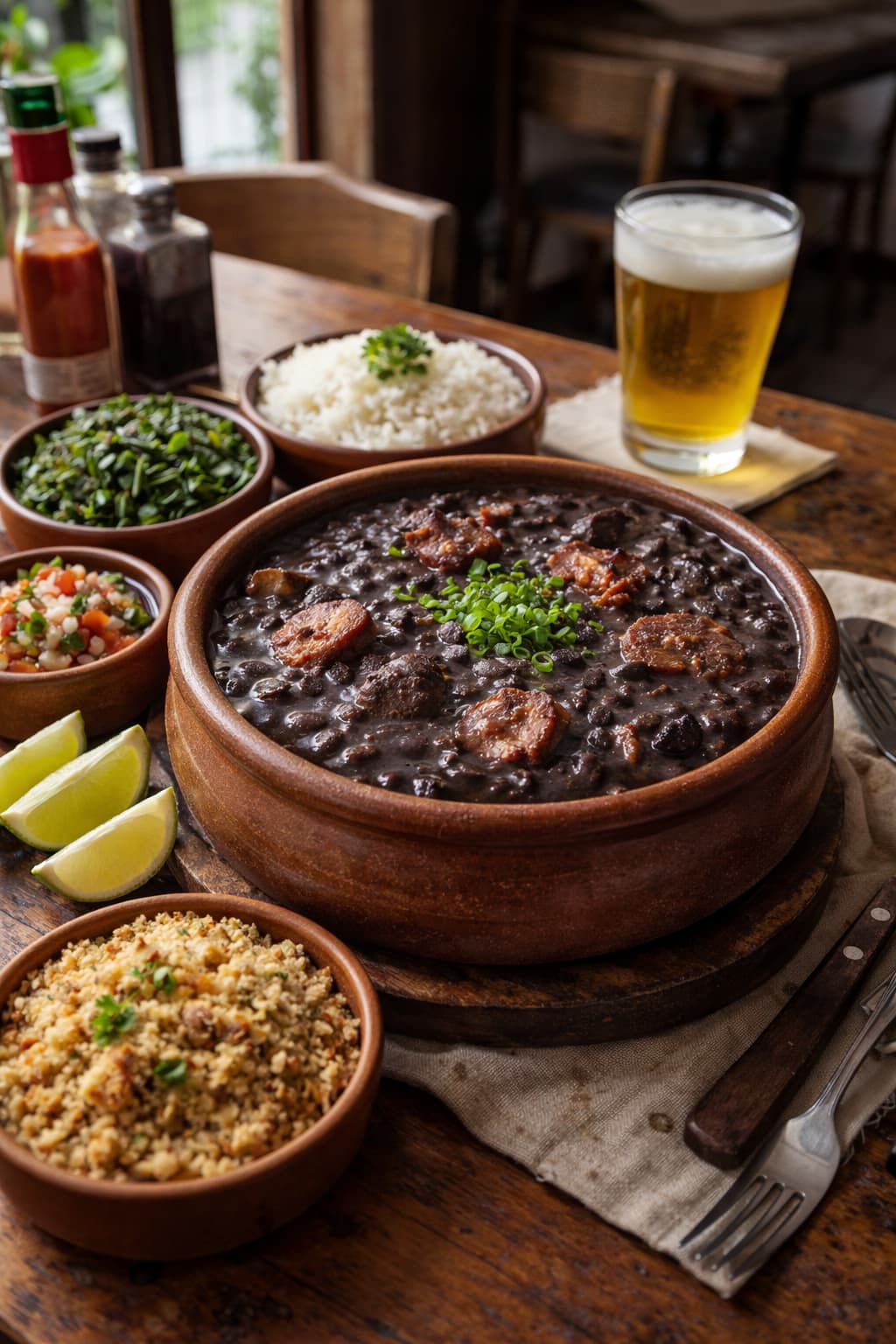
Feijoada is a thick black bean stew with several kinds of meat (usually beef, pork and sausages). The dish dates back to the colonial period and is considered a national symbol of Brazil today. It is very filling, so it is better to plan it for lunch rather than dinner.
It is traditionally served with:
- white rice
- farofa (toasted cassava flour)
- oranges
- braised collard greens
In Rio, feijoada is often cooked on Saturdays, which is a culinary tradition.
Farofa: Brazil's traditional side dish
Farofa is not a dish in its own right but an essential companion to meat and feijoada. It is made from toasted cassava (manioc) flour with butter added, and sometimes bacon, onion or spices.
It tastes slightly nutty and a little dry, but it is exactly what adds texture and makes dishes more satisfying. If you order feijoada or churrasco, farofa will almost always be on the table. It is part of Brazil's national cuisine, and without it local food feels incomplete.
Pão de queijo: Brazilian cheese bread
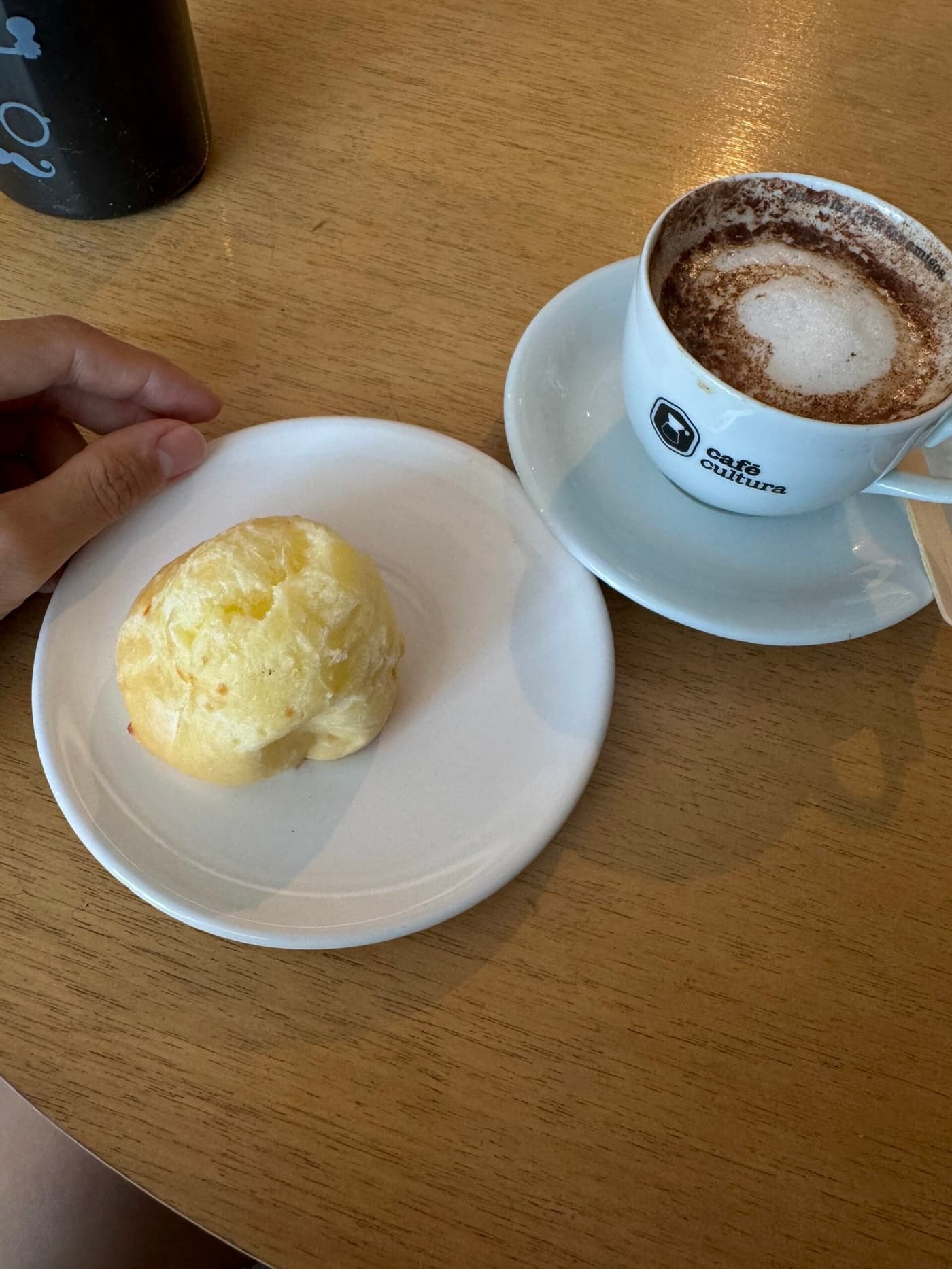
If you are looking for something to snack on between walks, be sure to try pão de queijo.
These are small round rolls made from tapioca flour and cheese. They are crispy on the outside and soft and stretchy inside.
They are sold in bakeries, coffee shops, gas stations and supermarkets. It is one of the most popular snacks in the country. And yes, you will definitely eat more than one.
Coxinha: the most popular street food in Rio
When it comes to street food in Rio de Janeiro, coxinha is the absolute favorite. It is a fried snack shaped like a teardrop, filled with shredded chicken and cream cheese, with a crispy breaded coating. You can easily find coxinha at street kiosks, in small snack bars and at local markets. It is inexpensive and perfect for a bite on the go.
Moqueca: a fragrant seafood dish
Rio is a coastal city, so seafood is a must here. Moqueca is fish or seafood stewed in a sauce of coconut milk, tomatoes, onion and cilantro. The result is very aromatic and delicate.
It is served in a clay pot, usually with rice. If you love seafood and are wondering what to try in Rio, moqueca should definitely be on your list.
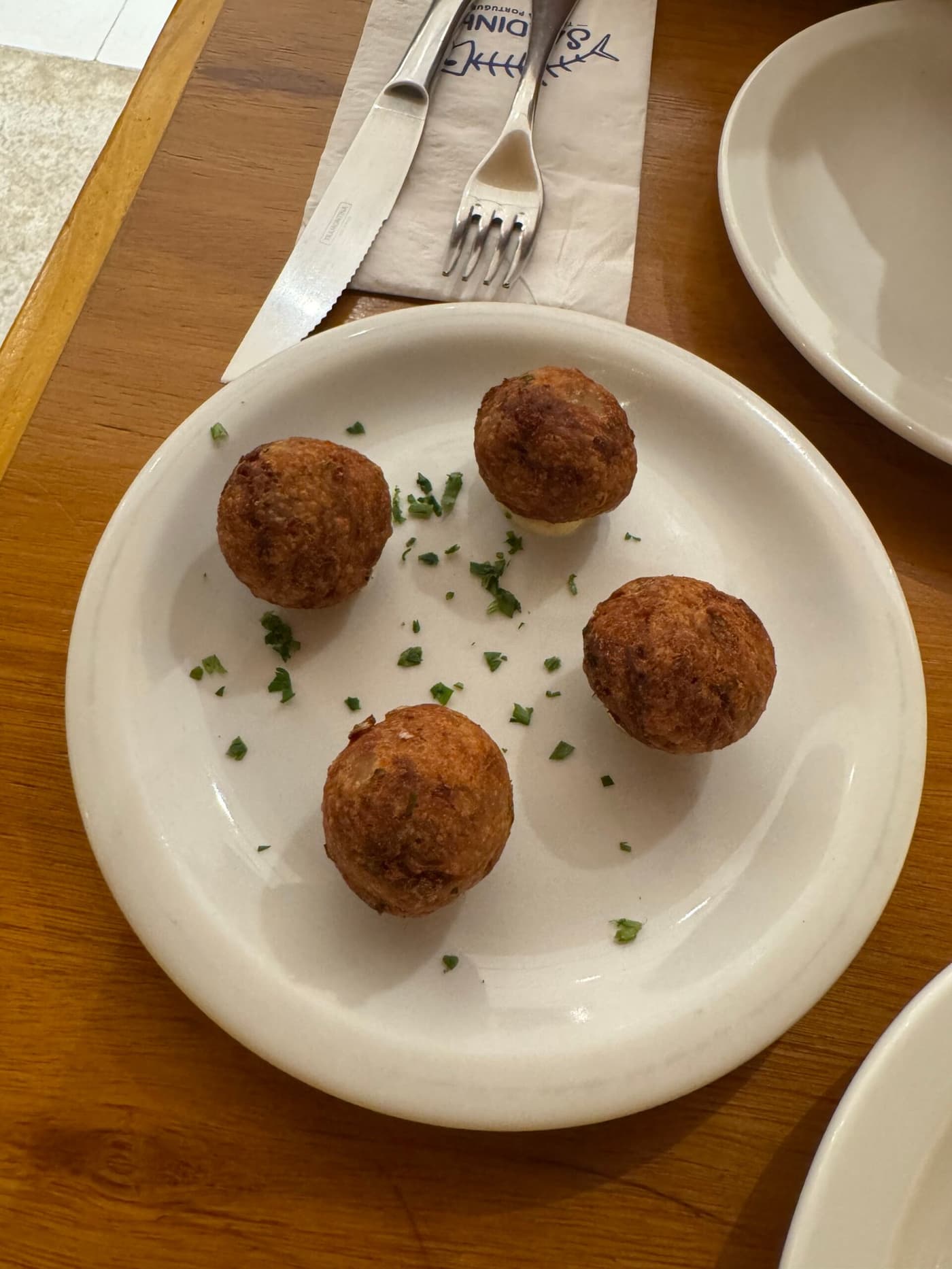
Bolinho de bacalhau: Brazilian-style cod
If you love seafood and are wondering what to try in Rio de Janeiro, be sure to look for bolinho de bacalhau.
These are small fried balls made from salted cod (bacalhau), potatoes, herbs and spices. They have a crispy crust and a soft, flavorful filling.
The dish came to Brazil from Portugal, but in Rio it has become part of the local food culture. It is often served in bars with beer, in traditional restaurants and as an appetizer before the main course.
Churrasco: Brazilian grilled meat
Brazil is paradise for meat lovers. Churrasco is a way of cooking meat over an open fire. In churrascaria restaurants, waiters bring different kinds of meat right to your table and carve it in front of you.
If you want to understand why Brazil is called the meat capital of Latin America, this is the place for you.
Pastel: a crispy street food classic
When it comes to street food in Rio, pastel is one of the most popular options. It is a large fried pastry with a filling. The most popular fillings are:
- cheese
- beef
- chicken
- shrimp
Pastel is especially common at markets (feira), where it is fried right in front of you and comes out as crispy as possible. It is inexpensive and perfect for a quick snack.
Tapioca: an unusual Brazilian "pancake"
Tapioca in Brazil is a white pancake made from cassava starch. It is gluten-free and can be either sweet or savory. Popular fillings are cheese, ham, coconut and condensed milk.
It is a light option for breakfast or a snack. If you want to try something authentic but not too heavy, it is an excellent choice.
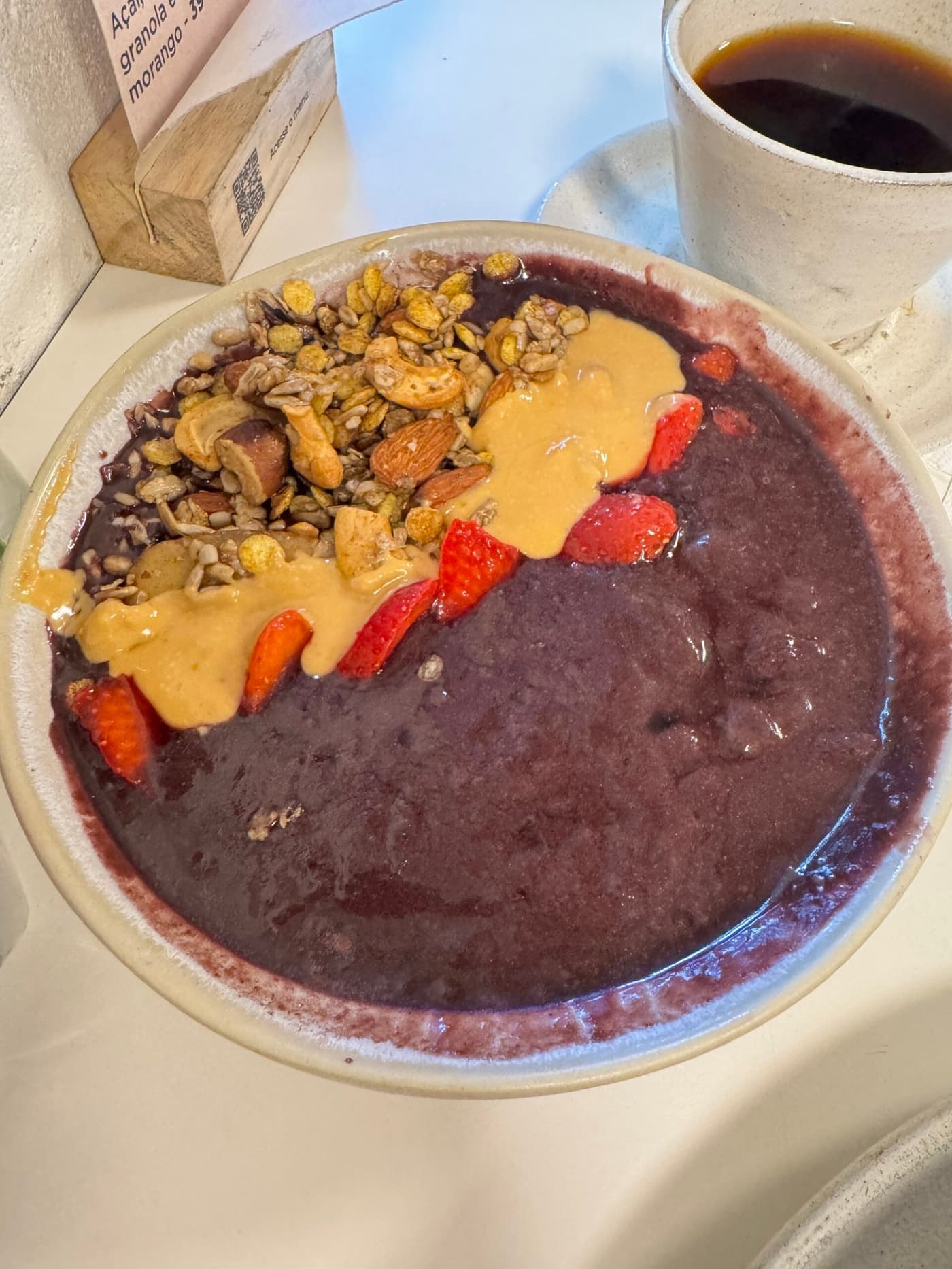
Açaí: the most popular dessert in Rio
If you have been to Copacabana or Ipanema beach, you have definitely seen the açaí kiosks.
Açaí is a thick purée made from the berries of an Amazonian palm. It is served chilled as a cream or smoothie, usually with banana and granola. I got hooked on açaí bowls. In Rio's hot climate it is the perfect way to cool down. It is one of the most popular desserts in the city and across the whole country.
Brigadeiro: Brazilian sweets
Brigadeiros are small chocolate truffles made from condensed milk, cocoa and butter, rolled in chocolate sprinkles.
You can find them in pastry shops, in cafés and at celebrations. Very sweet. Very Brazilian. Gone very quickly.
Street food in Rio de Janeiro: what to try on Copacabana beach
Honestly, in Rio you cannot talk about food without mentioning the beaches. Copacabana and Ipanema are not just places to get a tan, they are also open-air dining rooms.
If you are wondering what to try in Rio de Janeiro that is cheap and truly local, start right here.
What is sold on Rio's beaches
Vendors with portable coolers and carts walk along the sand all day long. Here is what you will meet most often:
Açaí in a cup
Cold açaí purée with banana and granola is the perfect choice in the heat.
Queijo coalho (grilled cheese on a stick)
The cheese is threaded onto a skewer and toasted on a portable grill. It has a golden crust outside and is soft and slightly salty inside.
Boiled corn
Simple, filling and very popular.
Empada and coxinha
Fried snacks with chicken, cheese or meat.
Shrimp skewers
Often sold ready-made, a great option if you are in the mood for seafood.
Is it safe to buy street food?
In tourist areas such as Copacabana and Ipanema, street food is common practice, and locals buy it eagerly themselves.
A few simple rules:
- make sure the food is cooked in front of you
- choose spots with a line
- avoid food that has been sitting in the sun for a long time
If you follow basic precautions, problems are usually rare. Street food is part of Rio's culture: sitting on the sand with an açaí, looking at the ocean and realizing that you are in Brazil.
Where to eat in Rio de Janeiro: restaurants and local spots
In short, in Rio you can eat on any budget, from simple family cafés to restaurants with ocean views. It all depends on what exactly you want to try and which format suits you best. Here are a few reliable types of places to consider if you are wondering where to eat in Rio de Janeiro. I wrote a detailed article, Where to Eat in Rio de Janeiro, where I listed the locations of the best restaurants, cafés, coffee shops and bars.
Where to try authentic feijoada
Feijoada is traditionally served on Saturdays in many of the city's restaurants. It is almost a culinary ritual. It is best to look for:
- traditional Brazilian restaurants (comida brasileira)
- places in the Lapa and Santa Teresa neighborhoods
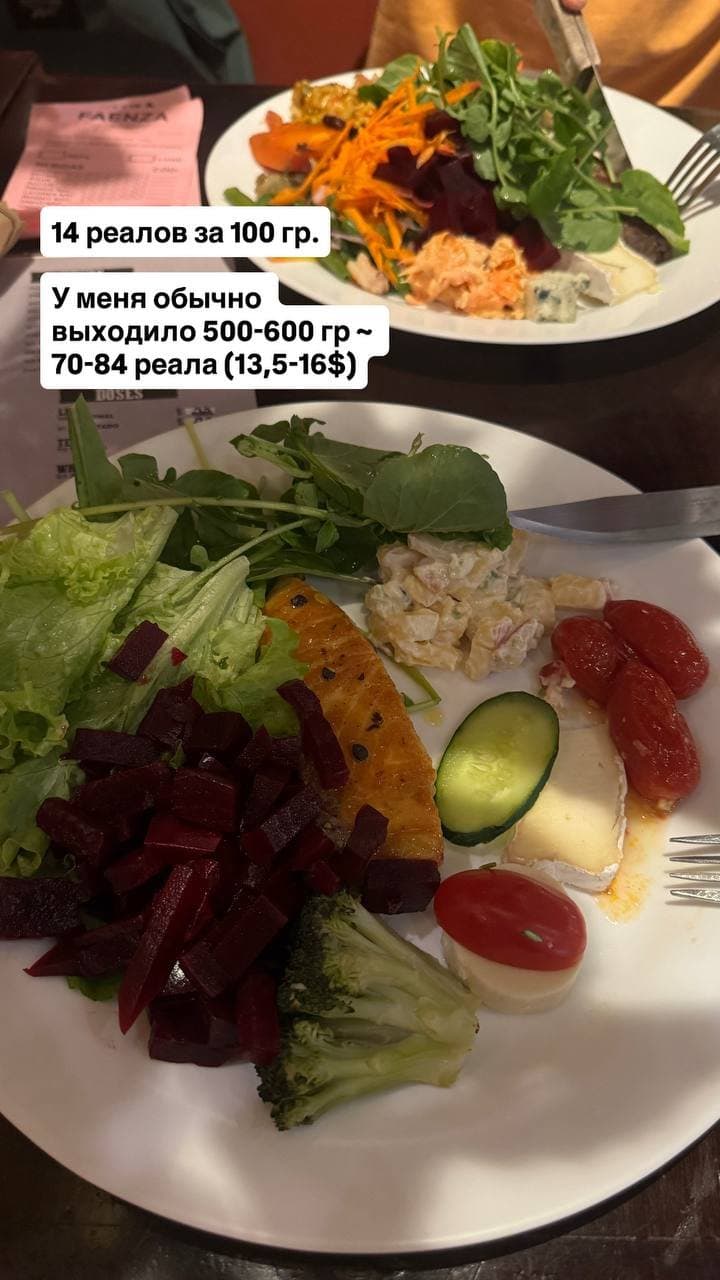
- restaurants with a buffet format (buffet por kilo)
The por kilo format is very popular in Brazil: you serve yourself and pay by weight. It is a great way to try several dishes at once without overpaying.
The best churrascarias in Rio de Janeiro
If you want real churrasco, look for restaurants in the rodízio format, where you are brought different kinds of meat without limit. How it works:
- you pay a fixed price
- waiters bring meat on skewers
- you choose what to try
It is one of the most popular dinner formats in Brazil. My advice: come hungry.
Where to eat near Copacabana and Ipanema beaches
There are many restaurants with ocean views along the seafront promenades. There you can try seafood, moqueca, açaí and freshly squeezed juices.
But keep in mind that prices in tourist zones are usually higher than in less popular areas. If you want to save money, walk a couple of blocks inland.
Budget cafés and pay-by-weight lunches
If you are looking for where to eat cheaply in Rio, pay attention to:
- buffet por kilo
- small family restaurants
- weekday lunch combos
In places like these you can have a hearty lunch without extra spending and try real local food. In Rio there is no problem of "where to eat". The real problem is how to manage to try everything 😄
Food prices in Rio de Janeiro: how much it costs to eat in 2026
When planning a trip, it helps to understand how much food costs in Rio de Janeiro, from street snacks to a restaurant with an ocean view. I have collected price guidelines (in Brazilian reais, BRL, the local currency). I recommend reading this if you want to know what prices in Rio de Janeiro are like.
Main price guidelines
Street food and fast food
- Budget snack (for example, coxinha, pastel): about R$ 10-20 (~2-4 USD).
- Quick lunch near the beach (rice, beans, meat): from R$ 20-30 per dish (~4-6 USD).
Small cafés and inexpensive restaurants
- A dish at an inexpensive café: about R$ 30-50 per person (~ 6-10 USD).
- Combo meal at McDonald's or a similar place: around R$ 35-45 (~ 7-9 USD).
Mid-range restaurants
- Lunch with a drink at a mid-range restaurant: R$ 80-140 per person (~ 16-27 USD).
- Dinner for two at a good restaurant: about R$ 150–300+ (~ 29-58 USD). Of course, it depends on the place and the drinks.
Special formats
- Rodízio (churrasco all-you-can-eat): R$ 120–200+ for a full set of meat (~ 23-38 USD).
- Coffee at a café: about R$ 9–15 (~ 2-3 USD).
- Beer: from R$ 10–20 per bottle (~ 2-4 USD).
How to save money on food in Rio
Tip #1: Pay-by-weight dining (look for buffet por kilo on maps) is the most economical way to eat in Brazil. You pay for the actual weight of your plate, and you can put together a full lunch with rice, beans, meat and salad.
Tip #2: Street stalls on the beaches and in neighborhoods like Lapa or Santa Teresa offer dishes and snacks that are much cheaper than tourist restaurants.
Tip #3: In season you can find fresh fruit from street vendors at very low prices, which is a great option for a light snack.
This range of prices lets every traveler choose food to fit their budget, from budget street food to a pleasant dinner at a seafood restaurant.
I filmed how we spent our time in Rio, where we ate and what we saw, in my YouTube video
Frequently asked questions about food in Rio de Janeiro
What should I eat in Rio de Janeiro?
In Rio, be sure to try traditional Brazilian dishes: feijoada, pão de queijo (cheese bread), churrasco (grilled meat), moqueca (stewed seafood), as well as popular street snacks such as coxinha and pastel.
Which street foods should I try in Rio?
The most popular street foods are coxinha (fried chicken croquettes), pastel (fried pastries), açaí in a bowl, tapioca, as well as fried seafood and cheese snacks. Street food here is very varied and reflects everyday culture.
What do people eat for breakfast in Rio de Janeiro?
For breakfast people most often eat light, quick things, for example: ✔ Pão de queijo, cheese bread ✔ a cup of açaí with fruit ✔ fresh fruit and bowls ✔ tapioca with the filling of your choice
Which drinks should I try in Rio?
Besides food, popular drinks here include fresh juices (sucos), chilled coconut water, the local coffee cafezinho and, of course, the national cocktail, the caipirinha, a refreshing drink made from cachaça, lime and sugar.
Is the food in Rio de Janeiro spicy?
Brazilian cuisine is generally not considered spicy on the chili scale, but the dishes are rich in herbs, spices and bold flavor. If you like heat, you can always add pepper or sauce to taste.
What should I try on Rio's beaches?
On Copacabana and Ipanema beaches, vendors often sell local street snacks: açaí bowls, grilled cheese on skewers, fresh fruit, corn and cocktails. It is a popular way to grab a bite while walking along the coast.
What sweets should I try in Rio de Janeiro?
The most popular dessert is the brigadeiro, soft chocolate truffles that are often served in cafés and pastry shops across the city; they are especially popular at celebrations and treats.