The Sagrada Família is Barcelona's main architectural and cultural landmark, visited every year by millions of tourists from around the world. This church has become a symbol of the city and one of the most recognizable buildings in Spain.
The Sagrada Família in Barcelona is known not only for its unusual look but also for the fact that it has been under construction for more than a century. The project created by Antoni Gaudí brings together architecture, religion, nature and deep symbolism.
I have seen the church in person, and in this article I will go through what the Sagrada Família actually is, where it is located and how to visit. I will cover the history of its construction and Gaudí's role, as well as the architecture and the interior of the church.
What the Sagrada Família is and where it is located
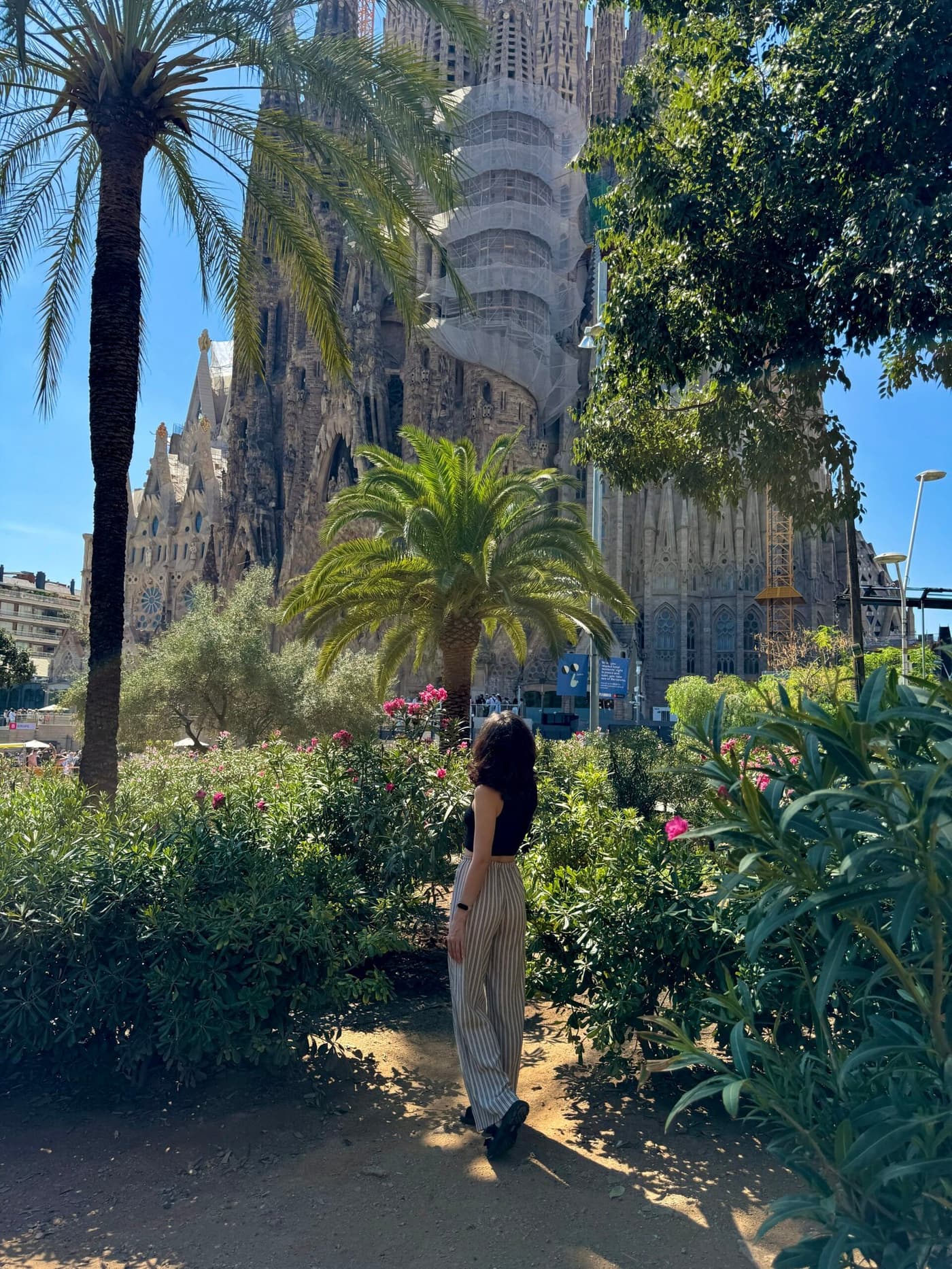
The Sagrada Família is a Catholic church whose official name translates as the Basilica of the Holy Family. Although people often call it a cathedral, in terms of church status the Sagrada Família is a minor papal basilica.
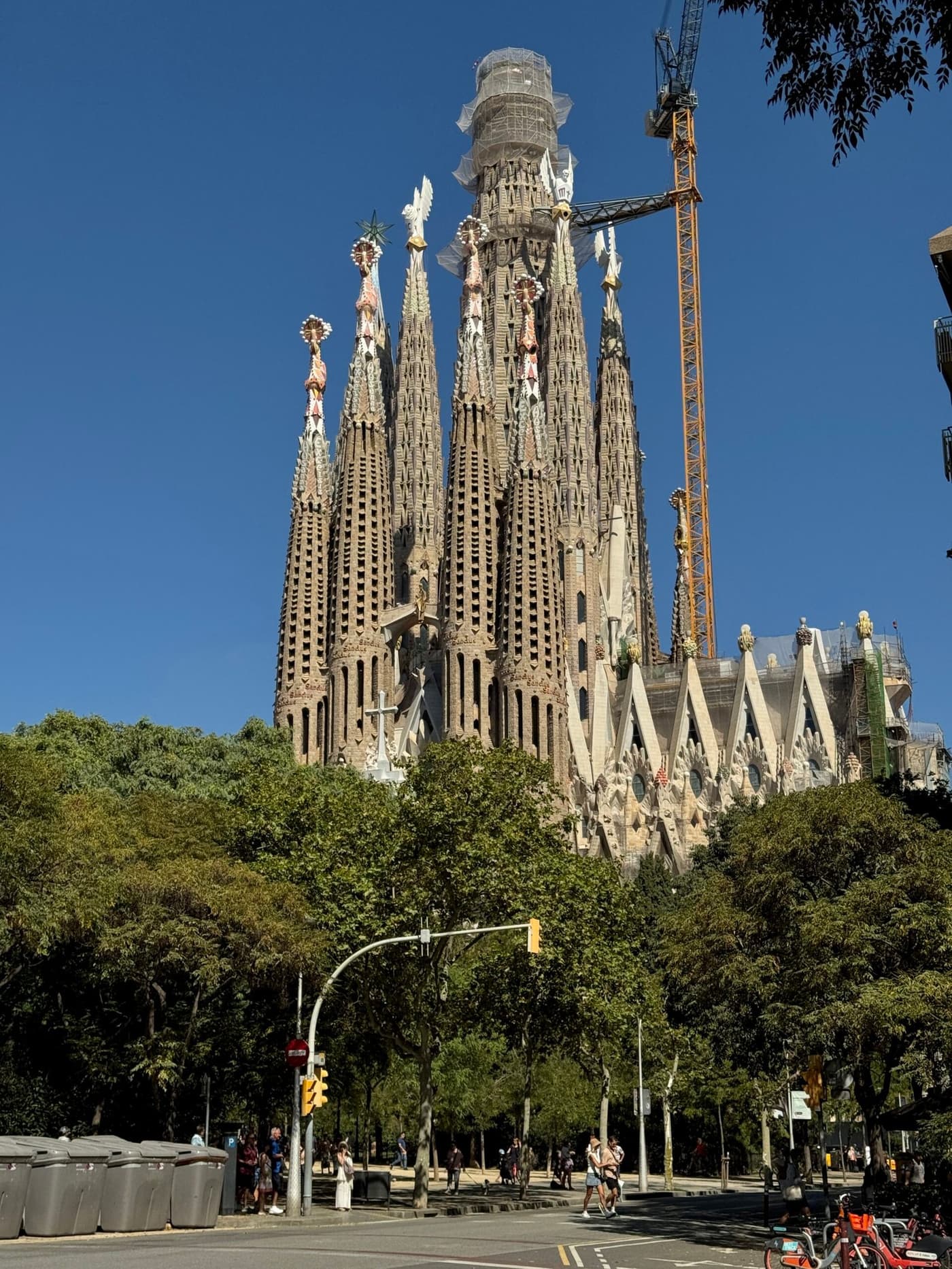
The church stands in the central part of Barcelona, in the Eixample district, and its tall towers make it visible from many points around the city. The Sagrada Família is considered not only a religious site but also a major architectural monument, and it is included in the UNESCO World Heritage List.
Today the Sagrada Família in Barcelona is:
- a working Catholic church;
- one of the most visited attractions in Spain;
- an architectural project with no equivalent anywhere in the world.
The Sagrada Família combines the traditions of Gothic architecture with Antoni Gaudí's personal style, inspired by natural forms and Christian symbolism.
History of the Sagrada Família in Barcelona
Construction of the church began at the end of the 19th century and is still going on, which has made it a symbol not only of the city but of an entire era.
Construction of the Sagrada Família began in 1882. The project was originally conceived as a classic neo-Gothic church, but its concept changed radically at an early stage. The client was a religious organization that financed the construction solely through donations, and that principle still holds today.
By the time he started work on the Sagrada Família, Antoni Gaudí already had experience designing residential buildings in Barcelona. One of his early projects was Casa Vicens, which is where his architectural career effectively began.
Antoni Gaudí and his role in creating the church
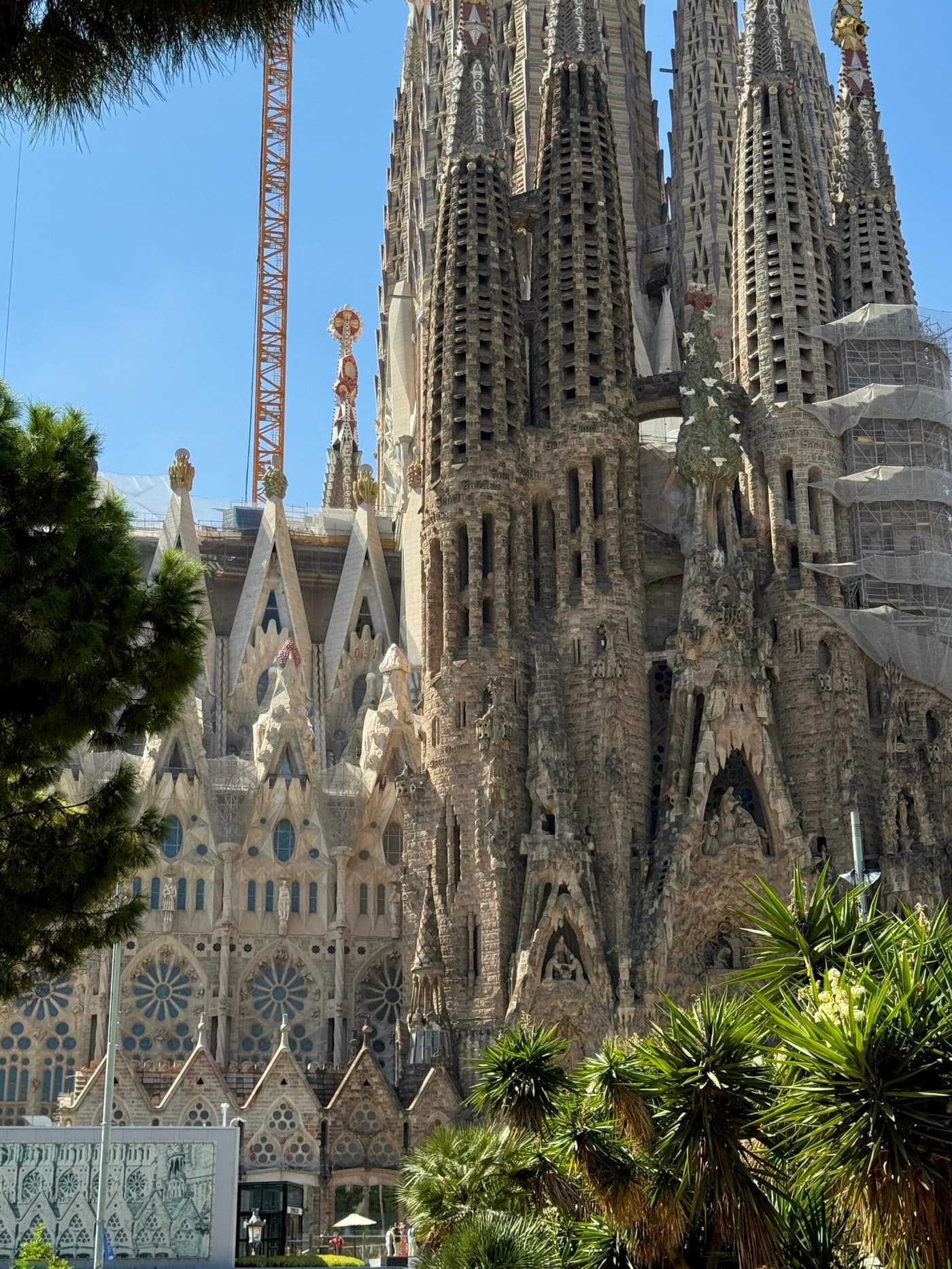
A year after the work began, Antoni Gaudí became the project's chief architect, and his name is now inseparable from the Sagrada Família. He completely reworked the original plan and turned the church into a unique work of architecture.
The Sagrada Família became the main work of the architect's life, but Gaudí's contribution to the look of Barcelona does not end with this project. He created a whole series of landmark buildings that are now considered architectural symbols of the city. I wrote about them in more detail in my article Antoni Gaudí buildings in Barcelona: architecture, houses and masterpieces.
Gaudí devoted more than 40 years of his life to building the Sagrada Família, and in his last years he worked on the project almost without a break. He saw the church as a "Bible in stone," where every detail had to carry religious and symbolic meaning. Only part of the work was completed during the architect's lifetime, including the Nativity Façade.
Why the Sagrada Família is still not finished
One of the main reasons the Sagrada Família was not completed in Gaudí's lifetime is the complexity of the project and unstable funding. After the architect's death in 1926, construction continued from his drawings and models, but a significant share of them was lost during the Spanish Civil War.
In the 20th century the work was repeatedly halted because of political events and technical difficulties. Today's architects use the surviving models, archive materials and digital technology to follow Gaudí's vision as closely as possible.
When the Sagrada Família is expected to be completed
The original plan was to finish construction by the centenary of Gaudí's death, but the deadlines have been postponed several times. Work continues today, and the Sagrada Família is gradually approaching its final form while keeping its status as one of the world's best-known unfinished buildings.
Sagrada Família architecture
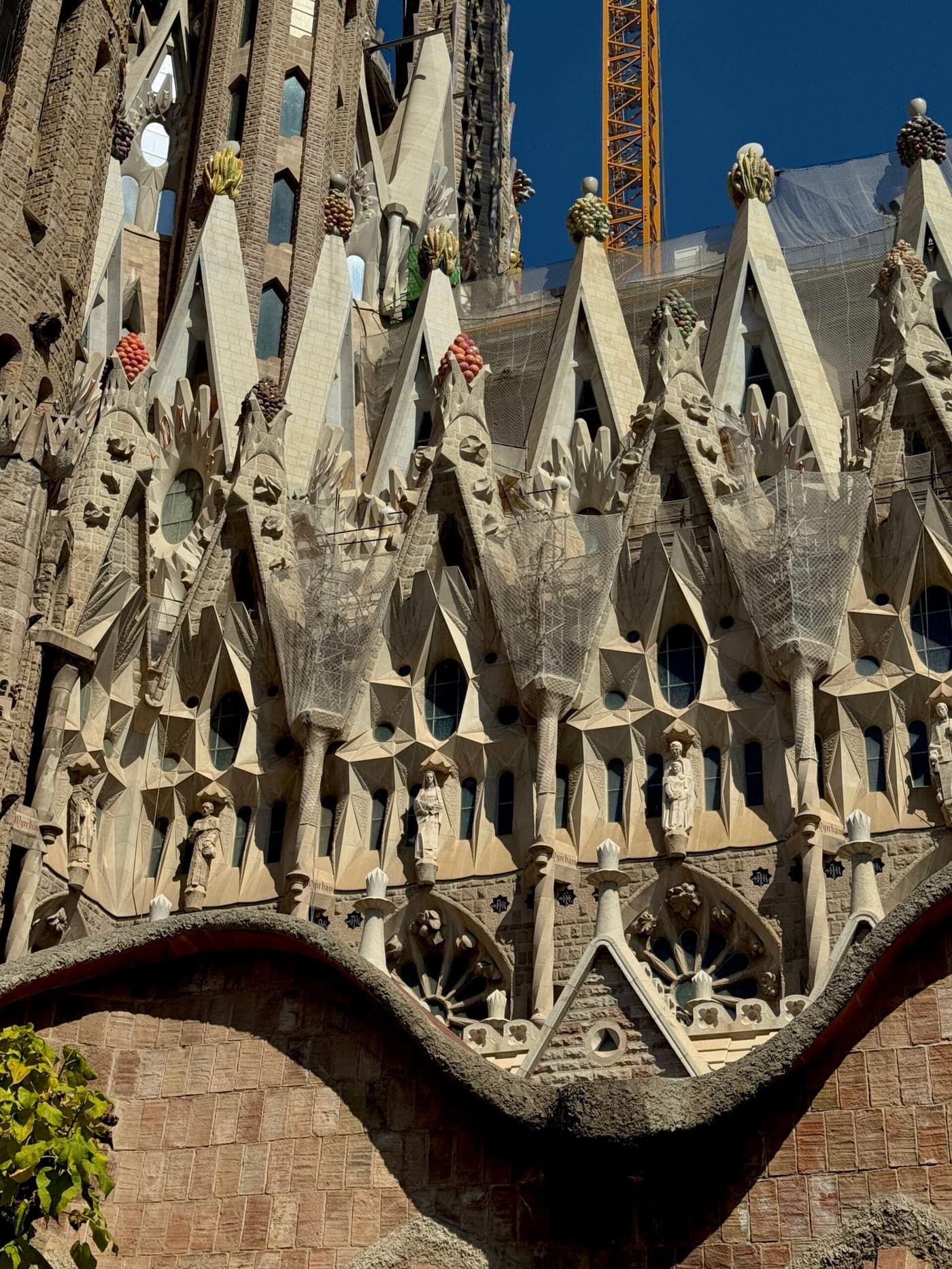
The architecture of the Sagrada Família in Barcelona is considered one of the most unusual and recognizable in the world. This church cannot be assigned to any single style: it combines elements of Gothic, Art Nouveau (Modernisme) and a personal approach shaped by nature, religion and engineering calculation.
The main feature of the Sagrada Família's architecture is that the building was designed as a single symbolic system in which every form and detail has a meaning.
Architectural style of the Sagrada Família
The project is built on neo-Gothic foundations, but the traditional Gothic elements are reinterpreted here. Instead of straight lines and strict symmetry, the design uses:
- organic forms that resemble natural structures;
- inclined columns and arches that distribute the load without external buttresses;
- complex geometric structures calculated with mathematical precision.
This approach produced a church that looks monumental yet feels "alive" and dynamic.
Sagrada Família façades and their meaning
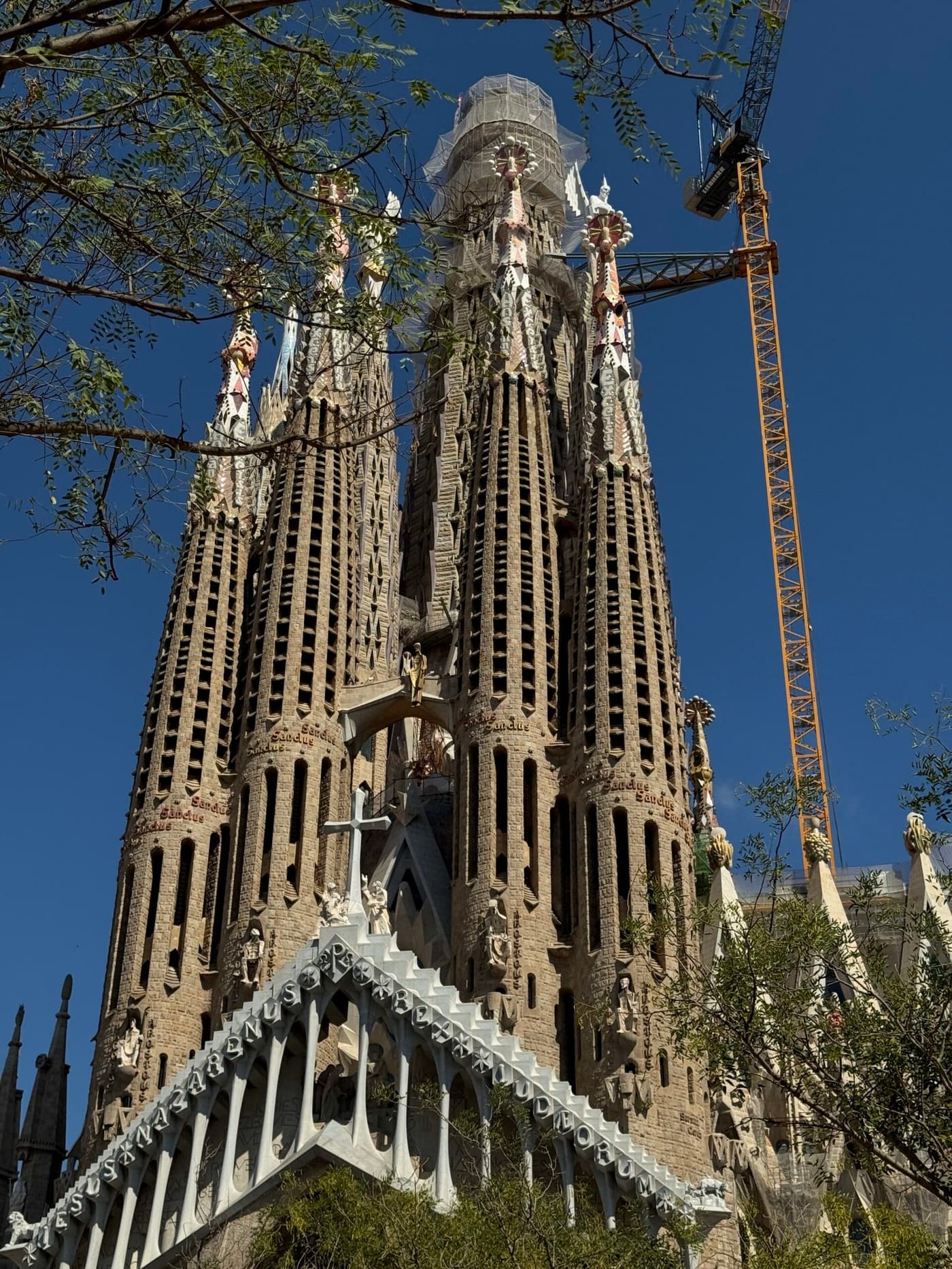
The church has three main façades, each dedicated to a particular stage in the life of Jesus Christ:
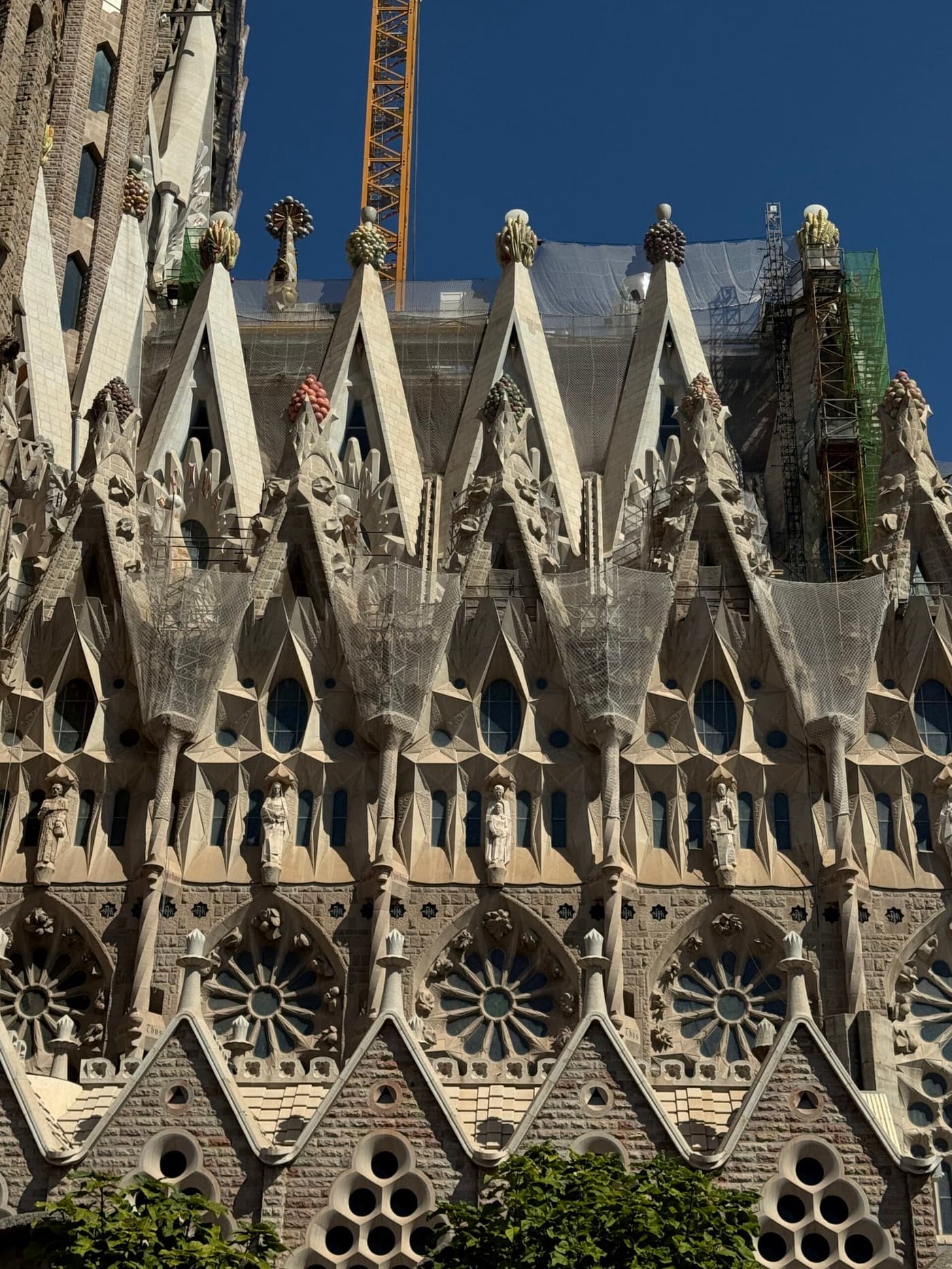
- Nativity Façade — the most decorative and detailed, symbolizing birth and life;
- Passion Façade — more severe and ascetic, reflecting suffering and the crucifixion;
- Glory Façade — the largest, symbolizing a person's path to God and spiritual rebirth.
The façades of the Sagrada Família do not just decorate the church; they also serve an educational purpose, telling Biblical stories through sculptures and symbols.
Sagrada Família towers
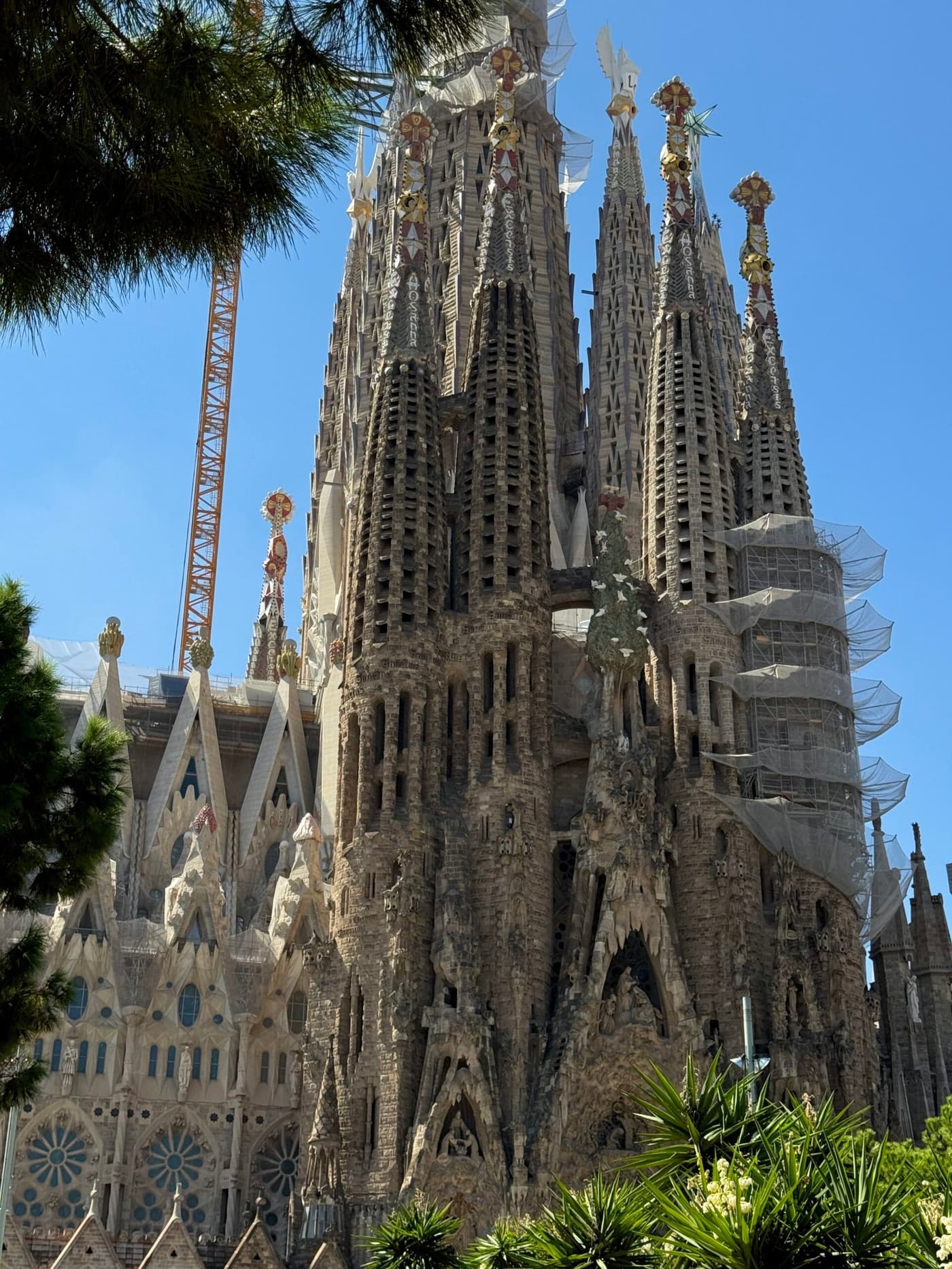
The project includes 18 towers, each with its own meaning:
- 12 towers are dedicated to the apostles;
- 4 to the evangelists;
- 1 to the Virgin Mary;
- the central and tallest one to Jesus Christ.
Once construction is complete, the Sagrada Família will be the tallest church building in the world, yet its height was calculated so as not to exceed the nearby hills, out of respect for the work of nature.
Sagrada Família interior and stained glass
Inside, the church makes a completely different impression from the outside. The columns resemble tree trunks, creating the feeling of a forest made of stone. Light passing through the colored stained glass changes the atmosphere of the space over the course of the day, filling the interior with different shades.
The interior of the Sagrada Família is designed so that a person feels harmony, scale and calm rather than the pressure of massive architecture.
Inside the Sagrada Família: what to see
Visiting the inside of the Sagrada Família is a separate and very important part of getting to know the church. If the outside impresses with its scale and the complexity of its forms, the inside creates a sense of light, space and carefully considered harmony. The interior is designed so that visitors do not just look at the architecture but gradually immerse themselves in the atmosphere of the church.
Main space and columns
The central nave of the Sagrada Família is formed by massive columns that branch out toward the top and resemble tree canopies. This is no accident: Antoni Gaudí wanted to create a space inspired by nature, where architecture follows nature's laws.
The columns differ in shape and material, which highlights the complex structure and at the same time keeps the building stable. Because of this, the interior lacks the feeling of heaviness typical of many Gothic cathedrals.
Stained glass and light in the Sagrada Família interior
One of the most impressive details of the interior is the stained glass. It is positioned so that at different times of day the light fills the space with different colors. In the morning cool shades dominate; during the day and toward evening, warm ones.
This light effect strengthens the experience of the interior and underlines the symbolism of the church. The stained-glass windows of the Sagrada Família do not simply decorate the space; they work as part of the architectural concept.
Altar and central apse
The altar area of the church is located in the apse and is the spiritual center of the building. Above the altar rises a canopy decorated with symbols of the Christian faith. The apse is designed with restraint, which keeps attention on the religious meaning rather than on decorative elements.
Sagrada Família Museum
The complex includes a museum where you can learn more about the history of the church's construction and the work of Antoni Gaudí. It displays:
- original models and drawings;
- photographs of different stages of construction;
- materials explaining the engineering solutions behind the church.
A visit to the museum helps you understand why the Sagrada Família is considered not only a religious but also an architectural masterpiece.
Many of the architectural techniques Antoni Gaudí used in the Sagrada Família can also be seen in his residential projects. Wavelike façades, the rejection of straight lines and natural forms are especially striking in buildings such as Casa Batlló and Casa Milà (La Pedrera).
How to visit the Sagrada Família in Barcelona
The Sagrada Família in Barcelona is one of the most visited attractions in Spain, so organizing your visit matters. To make the visit comfortable, it is worth sorting out the tickets, the format of the tour and the possible ways of visiting in advance.
Sagrada Família tickets: types and prices
You can only visit the Sagrada Família with a ticket. Entry to the church without a ticket is not allowed. There are several main types of tickets:
- a standard ticket for a self-guided visit;
- a ticket with an audio guide;
- a ticket that includes the towers;
- tickets as part of organized tours.
The price of Sagrada Família tickets depends on the chosen visit format and any extra options. Tickets with tower access and guided tours cost more than standard ones.
Where to buy Sagrada Família tickets
To be sure of getting inside at a convenient time, buy Sagrada Família tickets in advance. Visits run on timed slots: your ticket shows a time window during which you need to arrive at the entrance.
Official Sagrada Família website
The most reliable option is to buy tickets on the official website. It states directly that these are the "official ticket vendors" and stresses that there are no commissions or processing fees.
- official and safe;
- a choice of ticket types (regular entry, options with towers or a guide);
- the ability to choose the date and time.
Major aggregators
You can book Sagrada Família tours in Barcelona through large international tour and ticket aggregators such as Klook, GetYourGuide and Viator.
These services act as official partners and ticket resellers and are especially useful when:
- there are no free time slots left on the official Sagrada Família website;
- you want a ticket with a tour or a guide;
- you need an interface and support in your own language;
- it is more convenient to pay for tickets in advance with an international payment system.
Useful tips for buying tickets without problems
- Buy for a specific date and time, which makes it easier to plan your day and lowers the risk of lines. Choose early morning: there will be fewer people, and you will have more chance to take in the details and take beautiful photos.
- In high season tickets can sell out quickly, so it is better to book in advance.
- If your goal is not just to "have a look" but to understand the meaning of the façades and the interior, choose a format with an audio guide or a guide.
Sagrada Família tours
Sagrada Família tours suit those who want a deeper understanding of the architecture and symbolism of the church. During a tour the guide talks about:
- the history of the construction;
- Antoni Gaudí's vision;
- the meaning of the façades, towers and interior elements.
Tours can be private or group, and they are available in different languages.
Sagrada Família on your own or with a guide
Visiting on your own suits those who prefer to see sights at their own pace. In that case an audio guide is a useful addition, helping you find your way around the church.
A guided visit is recommended for those getting to know the Sagrada Família for the first time and wanting structured, in-depth information without having to figure out the details themselves.
Sagrada Família opening hours and visiting rules
Before visiting the Sagrada Família in Barcelona, it is important to take the church's opening hours and current visiting rules into account. This will help you plan your route properly and avoid unpleasant situations at the entrance.
Sagrada Família opening hours
The opening hours of the Sagrada Família change with the season. As a rule, in the high tourist season the church is open longer, and in the winter months the visiting time is shorter. The schedule may also change on days of religious services and holidays.
It is recommended to check the current opening hours before your visit, especially if you plan to go in the morning or evening.
Dress code and entry rules
The Sagrada Família is a working Catholic church, so a dress code applies to visitors. You may be refused entry if your clothing does not meet the rules. The main requirements are:
- covered shoulders;
- skirts and shorts that reach below the knees;
- no transparent or overly revealing clothing.
In addition, the following are not allowed inside the church:
- entering with large backpacks;
- eating and drinking;
- making noise and using a flash when taking photos.
Following the rules helps preserve the atmosphere of the church and keeps things comfortable for all visitors.
How much time you need for a visit
On average, plan 1 to 2 hours for visiting the Sagrada Família. That is enough time to:
- see the interior of the church;
- visit the museum;
- pay attention to the architectural details.
If you plan to climb the towers or take a guided tour, the visit may take longer.
Best time to visit the Sagrada Família
Choosing the right time to visit the Sagrada Família in Barcelona can significantly affect your experience. The church remains one of the city's most popular attractions, so the number of visitors and the viewing conditions depend directly on the season, the time of day and the day of the week.
Best time of day to visit the Sagrada Família
The most comfortable time is considered to be the morning, right after opening. At that hour there are fewer people inside the church, so you can look around the interior calmly and take photos without a large crowd of tourists.
The second good time of day is closer to evening, when sunlight passes through the stained glass and fills the interior with warm shades. At that time the Sagrada Família looks especially impressive inside, although the flow of visitors may be higher than in the morning.
Best time of year to visit the Sagrada Família
The fewest tourists in Barcelona are usually seen:
- in late autumn;
- in winter (except for the Christmas holidays);
- in early spring.
In summer and during school holidays the Sagrada Família is especially busy, so in high season it is recommended to plan your visit and book tickets in advance.
Which days are best for visiting the Sagrada Família
The busiest days are weekends and holidays. If you can, choose weekdays, when it is noticeably calmer inside the church. Also keep in mind the schedule of religious services, during which access for tourists may be restricted.
How to avoid lines at the Sagrada Família
To minimize waiting time:
- plan your visit for the morning hours;
- avoid weekends and holiday dates;
- arrive strictly at the time shown on your ticket.
These simple recommendations will help make your visit to the Sagrada Família in Barcelona more comfortable and memorable.
Interesting facts about the Sagrada Família
The Sagrada Família in Barcelona is surrounded not only by architectural and religious meanings but also by many curious facts that make the church even more unique. Many of them help you better understand Antoni Gaudí's vision and the importance of the church for the city and the whole world.
The Sagrada Família is one of the world's best-known unfinished buildings
Construction of the church has been going on since 1882, and for decades the Sagrada Família has remained a symbol of an unfinished but living architectural project. The work does not stop, and the church is gradually taking on its final form.
Construction is funded by donations
From the very beginning to this day, the Sagrada Família has been built without government funding. The main funds come from donations and ticket sales. That is why the pace of construction depends largely on the flow of tourists.
Gaudí is buried in the Sagrada Família
Antoni Gaudí is buried in the crypt of the church, which underlines his exceptional connection with this project. For the architect the Sagrada Família was not just a job but the work of his life.
The architecture follows the laws of nature
When designing the church, Gaudí hardly used straight lines. He believed they do not exist in nature and sought to create forms that repeat natural structures: trees, branches, shells and skeletons.
The ideas Gaudí embodied in the Sagrada Família were developed further in his other projects. One of the best-known examples is Park Güell, originally conceived as a residential complex but ultimately turned into a public space and a UNESCO World Heritage site.
The Sagrada Família will be the tallest church in the world
After construction is completed, the central tower of Jesus Christ will be the tallest church tower in the world. At the same time, the height of the church is deliberately limited: Gaudí did not want a work of man to surpass a work of nature.
I filmed how we traveled around Spain in a YouTube episode
Frequently asked questions about the Sagrada Família (FAQ)
Can you go inside the Sagrada Família?
Yes, you can go inside the Sagrada Família, but only with a ticket. There is no free entry for tourists. Without a ticket you can only see the church from the outside. To visit the interior, you need to buy a ticket for a specific time in advance.
How many years has the Sagrada Família been under construction?
Construction of the Sagrada Família has been going on since 1882, so the church has been under construction for more than 140 years. This is because of the complexity of the project, funding through donations and the aim of following Antoni Gaudí's vision as closely as possible.
Why is the Sagrada Família still not finished?
The main reasons are:
- the extreme complexity of the architectural project;
- the death of Antoni Gaudí, in whose lifetime the church was not completed;
- the loss of part of the drawings and models;
- funding solely from donations and tickets.
All of these factors slowed the construction process significantly.
Why is the Sagrada Família called that?
The name Sagrada Família translates from Catalan and Spanish as "Holy Family." The church is dedicated to Jesus Christ, the Virgin Mary and Joseph, and was conceived as a symbol of the Christian family and faith.
Is the Sagrada Família a working church?
Yes, the Sagrada Família is a working Catholic church. Services are held here regularly, especially on important religious dates. At other times, however, the church is also open to tourist visits.
How much time do you need to visit the Sagrada Família?
On average, plan 1–2 hours for visiting the Sagrada Família. That is enough time to:
- see the interior of the church;
- visit the museum;
- take a careful look at the architectural details.
If you plan a tour or a climb up the towers, the visit may take longer.
Can you take photos inside the Sagrada Família?
Photography inside the church is allowed, but without a flash. It is also important to keep quiet and respect the atmosphere of a working religious site.
Is there a dress code for visiting the Sagrada Família?
Yes, the dress code is mandatory. Visitors may be refused entry if their clothing does not meet the rules. The following are not allowed:
- bare shoulders;
- short shorts and skirts;
- overly revealing or transparent clothing.
Is the Sagrada Família worth visiting with children?
Yes, you can visit with children. However, keep in mind:
- the large number of visitors;
- the need to keep quiet;
- the length of the visit.
For school-age children the Sagrada Família can be especially interesting thanks to its unusual architecture and interior.
When is the best time to buy Sagrada Família tickets?
It is best to buy tickets in advance, especially in the high tourist season. This lets you choose a convenient visit time and avoid lines at the entrance.