Casa Milà (La Pedrera) is one of Antoni Gaudí's architectural masterpieces and one of the key sights of Barcelona. This unusual apartment building, constructed in the early 20th century, became a striking example of Catalan Modernisme and changed the way people thought about urban architecture for good.
Casa Milà is often called the boldest and most innovative of Gaudí's civic buildings. Its wave-like facade, the absence of straight lines and its carefully engineered solutions made the building not only instantly recognizable but also functionally advanced for its time.
Today, Casa Milà in Barcelona is a full-fledged cultural center open to visitors. People come to see the famous rooftop with its chimneys, to look inside the residential apartments and to understand Antoni Gaudí's philosophy a little better.
What is Casa Milà and why is it called La Pedrera
Casa Milà is an apartment building constructed in 1906–1912 to a design by Antoni Gaudí for the Milà family. The building was originally conceived as a rental property with spacious apartments to let, which was typical for Barcelona in the early 20th century.
Although the official name of the building is Casa Milà, in Barcelona it is far better known as La Pedrera, which in Catalan means "the quarry." The nickname appeared while the house was still being built and quickly caught on among locals.
Casa Milà is only one of the architect's landmark works. You can read more about his other projects in the article Antoni Gaudí's Buildings in Barcelona: Architecture, Houses and Masterpieces.
Where the name La Pedrera comes from
The name La Pedrera has to do with the way the house looks. The massive stone facade, with its uneven shapes that seem carved by nature, reminded the people of Barcelona of a cliff or a quarry. In the early 20th century, this approach to architecture seemed radical and even provocative.
The nickname, which originally had an ironic edge, eventually became the generally accepted name and is now seen as an inseparable part of Casa Milà's history.
Why Casa Milà caused controversy among Gaudí's contemporaries
While it was being built, Casa Milà came in for serious criticism. Townspeople and city officials considered the project too daring:
- a facade without clear geometry disrupted the familiar look of the street;
- the lack of decorative conventions was seen as a rejection of "classical beauty";
- the building was repeatedly the subject of public debate and mockery.
Yet it was exactly these features that later made Casa Milà a symbol of architectural innovation. Attitudes toward the building changed over time, and today La Pedrera is considered one of Gaudí's most significant houses in Barcelona.
Antoni Gaudí and Casa Milà
The Casa Milà (La Pedrera) project became one of the most complex and contradictory works of Antoni Gaudí's career. Unlike many of the architect's other buildings, this house was created not for religious purposes but as a private residential project, which came with certain restrictions and demands from the clients.
In the later period of his career, Antoni Gaudí focused more and more on religious projects, the chief of which was the Sagrada Família Cathedral in Barcelona.
Construction of Casa Milà began in 1906, commissioned by the wealthy businessman Pere Milà and his wife, Roser Segimon. The clients expected a prestigious rental building in one of the best neighborhoods of Barcelona, but Gaudí's creative approach went far beyond traditional ideas of residential architecture.
If Casa Milà is considered the architect's mature and bold project, then Casa Vicens, Antoni Gaudí's First House in Barcelona shows the early stage in the development of his style.
The idea behind the project and the clients
Pere Milà gave Antoni Gaudí a degree of freedom that was rare for the time. The architect could experiment with forms, structures and space without being bound by rigid conventions. This made it possible to create a house in which the exterior and the interior layout were both subordinate to a single artistic idea.
The relationship between the architect and the clients was not an easy one, though. Construction was accompanied by budget overruns and disputes, and while the building was going up, Gaudí repeatedly ran into complaints from the city authorities. Even so, the project was completed and became one of the brightest examples of the architect's personal approach.
Casa Milà's place in Gaudí's work
Casa Milà occupies a special place among Antoni Gaudí's civic buildings. This house became a kind of culmination of his experiments with form and structure in residential architecture. Later, the architect focused more and more on religious projects.
In Casa Milà, Gaudí abandoned straight lines not only on the exterior but also inside the building. The architecture of the house was inspired by natural forms, which became one of the key features of his style. Many of the engineering solutions used here were ahead of their time and were later applied in modern architecture.
It was thanks to Casa Milà that Antoni Gaudí's name was firmly established as a symbol of architectural innovation in Barcelona and of Catalan Modernisme.
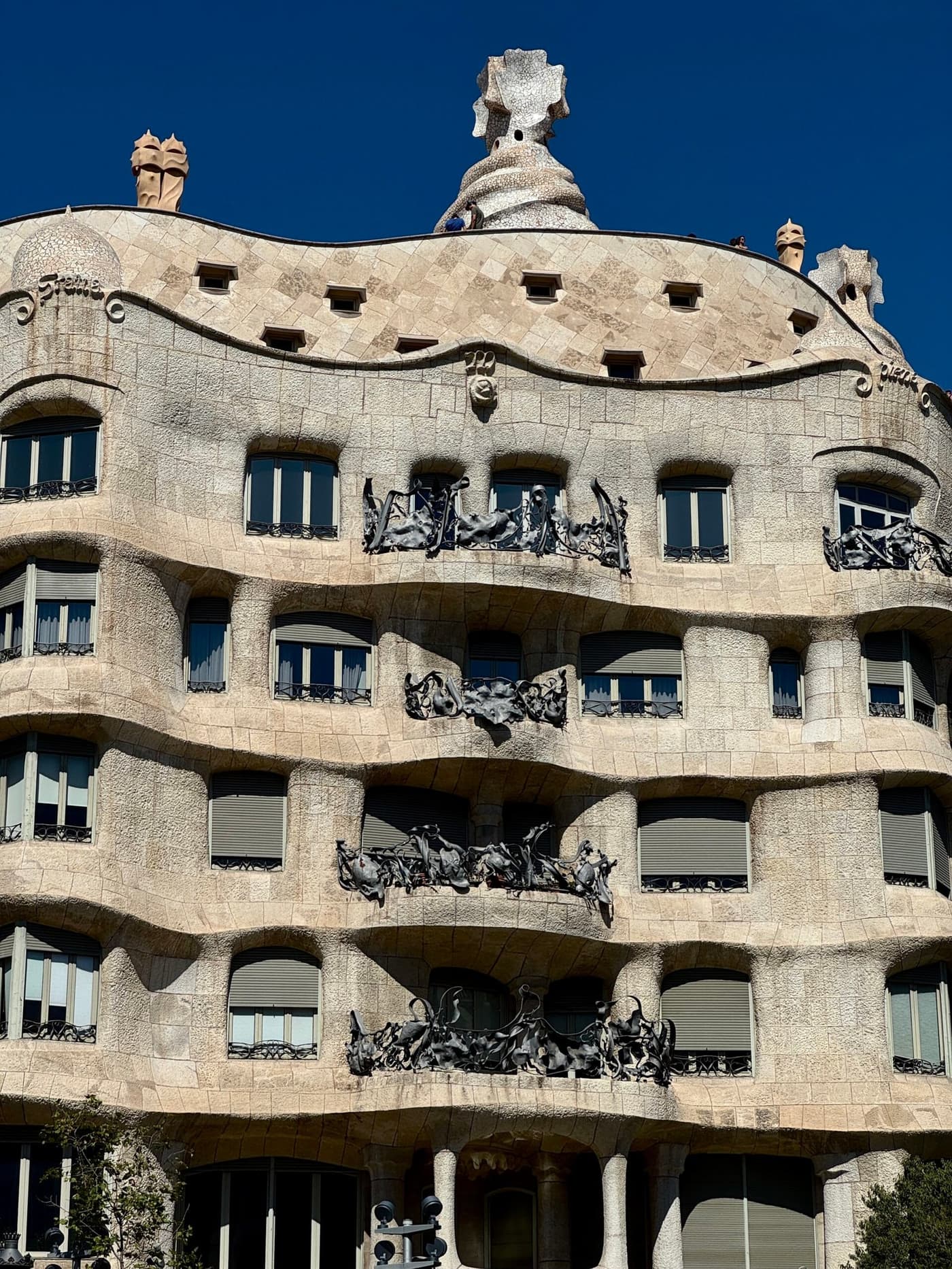
Casa Milà architecture: one of the most unusual houses in Barcelona
The architecture of Casa Milà (La Pedrera) was a real challenge to traditional ideas about residential buildings in the early 20th century. Antoni Gaudí designed the house as a unified organism in which form, structure and function are inseparably linked.
Unlike most buildings of its time, Casa Milà has no clearly defined load-bearing facade. This allowed the architect to work freely with the space and create smooth, organic lines reminiscent of natural forms. That approach made Casa Milà one of the most recognizable architectural landmarks in Barcelona.
The wave-like facade and the absence of straight lines
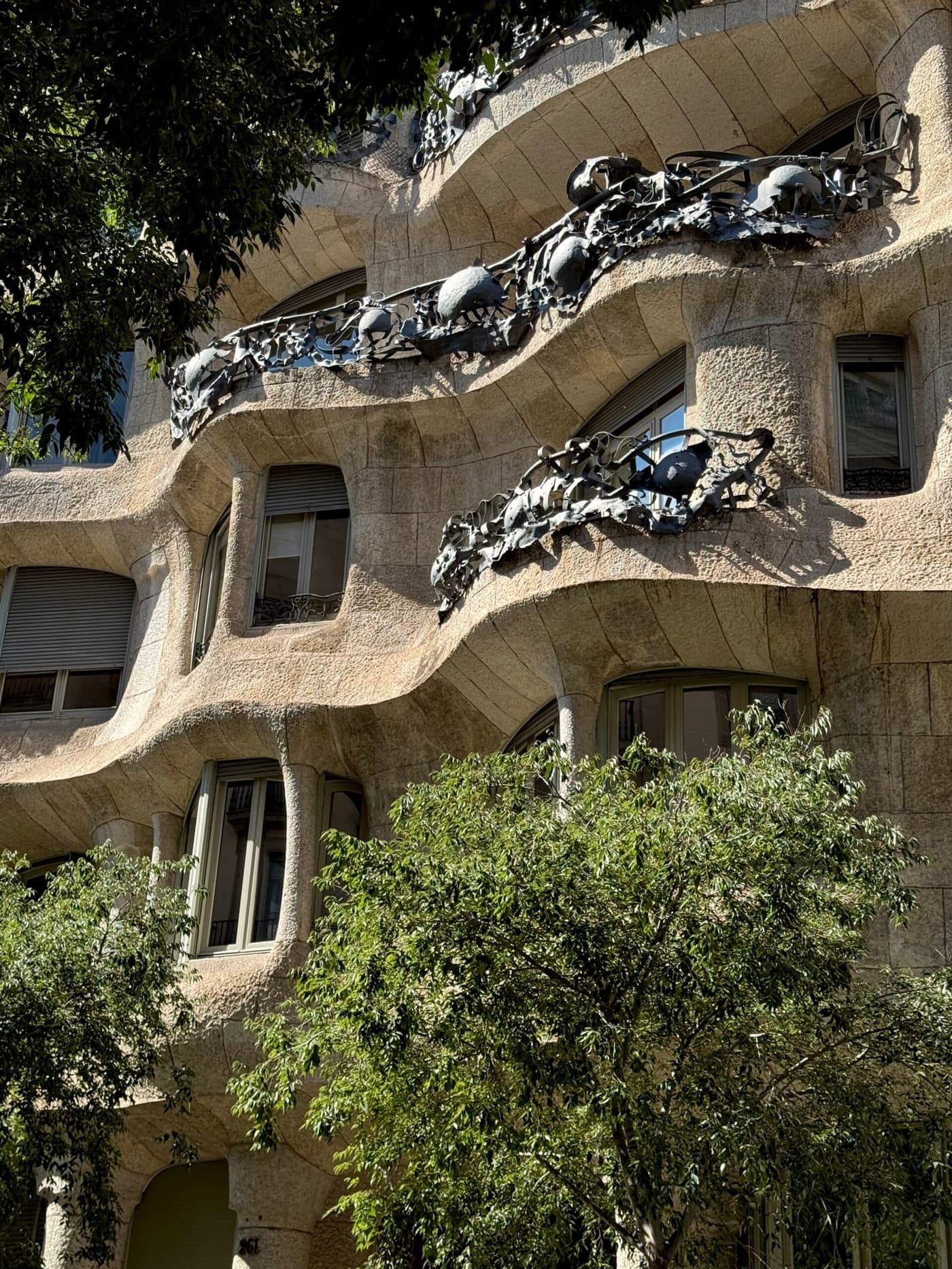
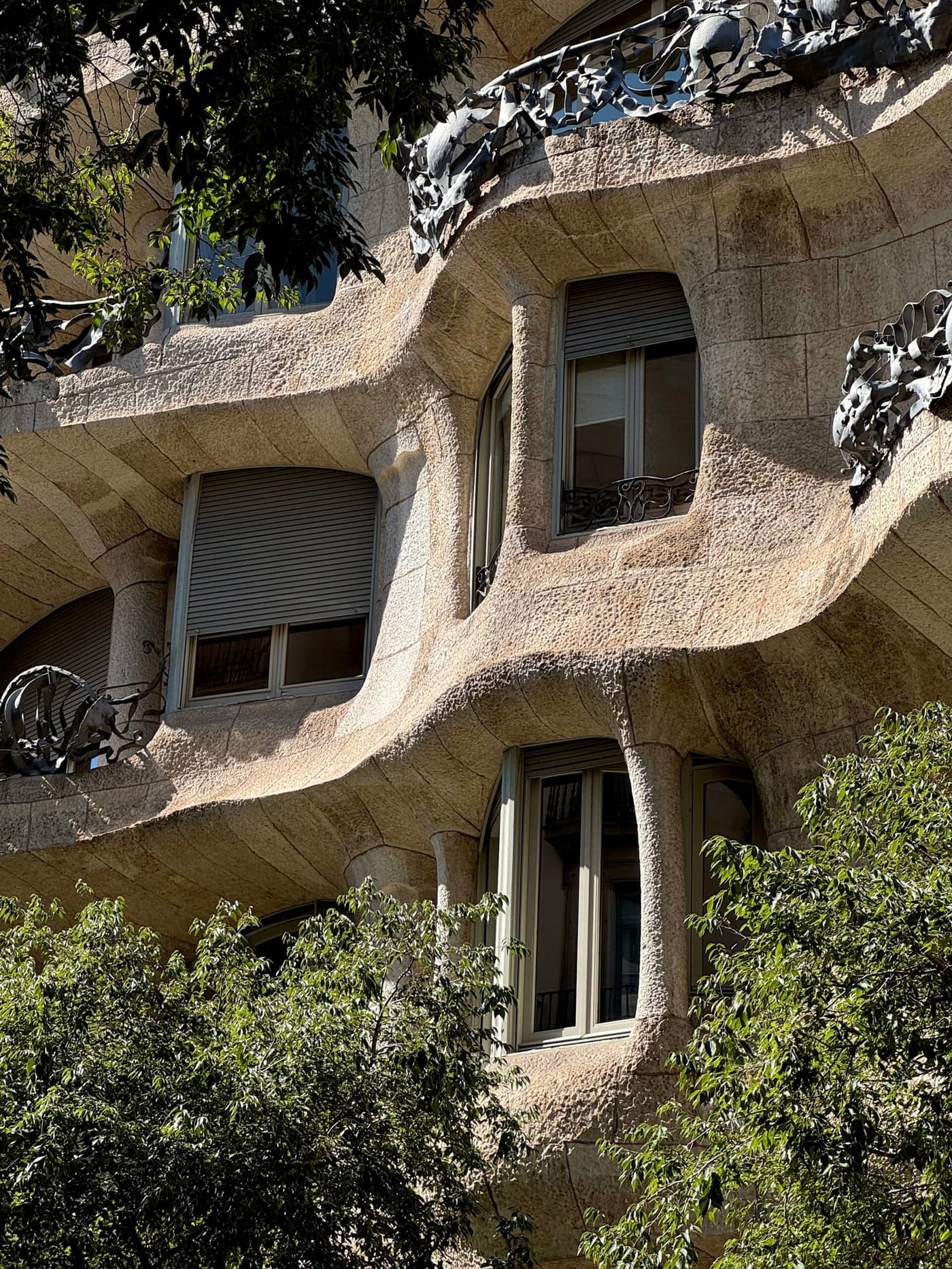
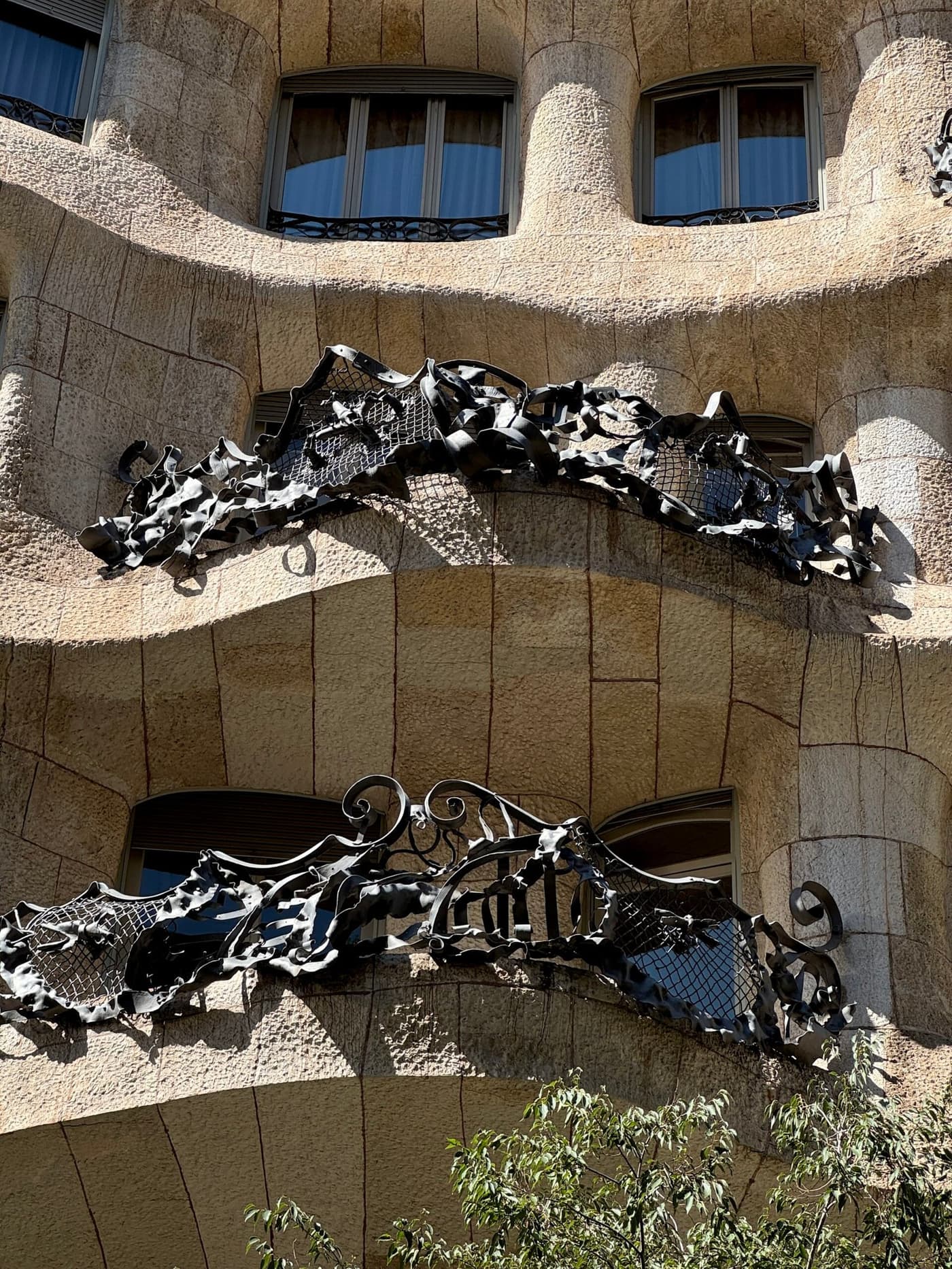
The facade of Casa Milà is made of massive stone blocks and has a distinctive wave-like shape. There are practically no straight lines here, and the surface of the building seems to be in constant motion. The effect is strengthened by the wrought-iron balconies, each with its own unique pattern.
This solution was not only aesthetic but also functional. The stone facade acts as a kind of "shell" that protects the interior from sun and heat, which matters a great deal in Barcelona's climate.
Inner courtyards and natural light
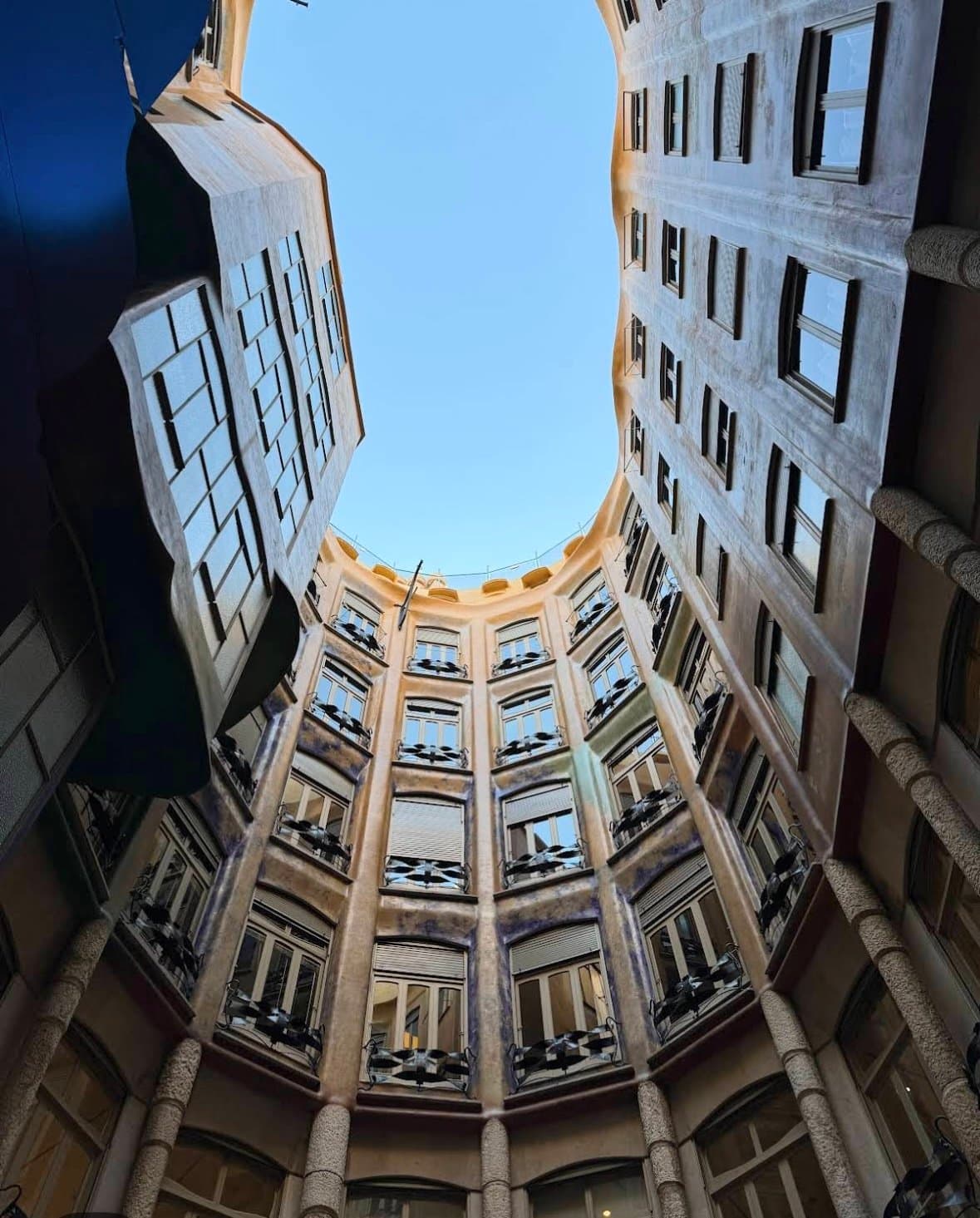
Two large inner courtyards became an important part of Casa Milà's architecture. They provide natural light and ventilation to every apartment, which was considered an advanced engineering solution in the early 20th century.
Gaudí carefully worked out the shape of the courtyards and the color finish of their walls so that light would reach the different floors evenly. Thanks to this, even rooms deep inside the building stay bright and comfortable to live in.
Structural solutions ahead of their time
One of the key features of Casa Milà is its structural system. The interior floors rest on columns rather than walls, which made it possible to change the layout of the apartments freely. This principle is widely used in modern architecture, but in Gaudí's day it was revolutionary.
In addition, the building was equipped with elevators, an underground garage and a well-thought-out ventilation system, which was a rarity for residential buildings in the early 20th century. These solutions confirm that Casa Milà was not just an artistic experiment but a carefully considered and functional project.
The Casa Milà rooftop and its famous chimneys
The rooftop of Casa Milà (La Pedrera) is considered one of the most unusual and recognizable architectural roofs in the world. Antoni Gaudí turned the building's utility space into an independent work of art, which today is seen as a full-fledged Barcelona attraction in its own right.
Unlike traditional roofs, intended purely for practical needs, the rooftop of Casa Milà was conceived as a continuation of the architectural concept of the whole house. Here, functional elements became part of an expressive sculptural design, and practicality became a source of artistic imagery.
The symbolism of the shapes and sculptures
The main feature of the rooftop is its massive chimneys and ventilation towers, made in the form of sculptures. They are often compared to fantastical creatures, warriors in helmets or abstract figures, which underlines the link between Gaudí's architecture and imagination and natural associations.
Each element has its own purpose: the chimneys carry smoke and air away, the ventilation shafts regulate circulation, and the stairwell exits are hidden inside expressive structures. Not a single one repeats exactly, and every shape is unique.
Why the rooftop is considered an attraction in its own right
The rooftop of Casa Milà opens up panoramic views of Barcelona and lets you look at the architecture of the house in a new way. Here, Gaudí's idea that a building should be "alive" and blend organically into its surroundings is especially clear.
Thanks to the rooftop and its sculptural chimneys, Casa Milà is often included on lists of the most unusual houses in the world. For many visitors, this level is the high point of getting to know Gaudí's house and one of the most memorable impressions of a visit to Barcelona.
What you can see inside Casa Milà
The interior of Casa Milà is no less impressive than its exterior. Antoni Gaudí paid particular attention to how a person would interact with the architecture from the inside, so the house's interiors are thought through down to the smallest detail and closely tied to the overall concept of the building.
Today, a visit to Casa Milà lets you see not only Gaudí's architectural solutions but also imagine what life was like in one of the most progressive apartment buildings in Barcelona in the early 20th century.
Early 20th-century apartments
Casa Milà has restored apartments furnished in the style of the era when the house was built. These interiors give an idea of how well-off Barcelona families lived at the beginning of the last century and how Antoni Gaudí saw comfort.
The layout of the apartments draws particular attention. Because there are no load-bearing walls, the space could be adapted to the needs of the residents. The rooms flow smoothly into one another, and natural light enters through the windows and the inner courtyards.
The museum and exhibition spaces
Part of Casa Milà is used today as museum space. The displays here are devoted to the life and work of Antoni Gaudí, as well as to the history of the building itself.
Visitors can see drawings, models and multimedia materials that help them better understand the architect's philosophy and the particulars of his approach to design. The exhibitions are updated regularly, which makes a repeat visit interesting even for those who have been here before.
The attic and engineering structures
The attic of Casa Milà is one of the clearest examples of Gaudí's engineering thinking. It consists of a system of brick arches that create a light yet strong floor structure. These structures made the building reliable and at the same time served as practical space for household needs.
Today the attic is open to visitors and is used as an exhibition area. Here you can see how Gaudí's architectural and engineering solutions were combined with aesthetics and functionality.
Where to buy tickets to Casa Milà and how much they cost
You can visit Casa Milà (La Pedrera) only with a ticket. Because Antoni Gaudí's house is so popular, tickets often sell out in advance, especially in the tourist season, so it is best to plan your visit ahead of time.
The official Casa Milà website
The most reliable way to buy tickets is the official Casa Milà (La Pedrera) website. Buying through the official site has several advantages:
- guaranteed entry with no markup;
- a choice of visit date and time;
- up-to-date information on exhibitions and restrictions;
- the chance to buy special tickets (for example, evening visits).
Buying tickets through aggregators
An alternative is the large international tour and ticket aggregators, such as:
- GetYourGuide
- Viator
- Klook
Aggregators are a convenient way to buy tickets if you:
- are planning a packed program in Barcelona;
- want to combine several attractions into one itinerary;
- prefer an interface and support in English.
Prices on aggregators are usually a little higher than on the official website, but they sometimes include extras such as an audio guide or flexible cancellation terms.
Casa Milà ticket prices
Ticket prices depend on the type of visit and the season. On average, prices look like this:
- Standard adult ticket: 25 to 30 euros
- Discounted tickets (students, seniors): cheaper than standard
- Children's tickets: reduced price, or free for small children
- Night and special visits: more expensive than a standard ticket
Prices can change depending on the time of year and the type of visit, so it is a good idea to check the current price on the official website before you buy.
Casa Milà opening hours
Casa Milà's opening hours change with the season:
- Spring–summer: usually from morning until late evening
- Autumn–winter: shorter hours, with earlier closing
The last entry is generally 30–60 minutes before closing. The schedule may also change on certain days because of events or exhibitions.
The best time to visit Casa Milà
To avoid the biggest crowds of tourists, it is best to choose:
- the morning hours right after opening;
- a late evening visit (if available).
In high season (spring and summer), the daytime hours are the busiest, especially on weekends.
Casa Milà in Barcelona today
Today, Casa Milà (La Pedrera) is an architectural monument of the early 20th century and an important cultural center in Barcelona. The building continues to live and evolve while preserving the historical and artistic value that Antoni Gaudí built into it.
After construction was finished, Casa Milà was used as an apartment building, and that function has partly survived to this day. At the same time, a significant part of the building is open to visitors and plays an important role in the city's cultural life.
A UNESCO World Heritage Site
In 1984, Casa Milà was added to the UNESCO World Heritage list. This status confirmed its exceptional value not only for Spain but for world culture.
UNESCO's recognition is tied to the uniqueness of Gaudí's architectural solutions, the innovative approach to residential construction and the building's significant contribution to the development of Modernisme. Today, Casa Milà is considered a must-see for getting to know Gaudí's work in Barcelona.
Cultural events and exhibitions
Besides its museum role, Casa Milà is actively used as a venue for cultural events. The building regularly hosts temporary exhibitions, lectures, concerts and art projects related to architecture, art and the history of the city.
This format lets you see Casa Milà not only as a historic site but also as a living cultural space that continues to draw the attention of both tourists and Barcelona residents.
Interesting facts about Casa Milà
Casa Milà is surrounded by many facts and details that help you better understand the scale of Antoni Gaudí's vision and how his contemporaries felt about the project. Many of them reveal themselves only when you get to know the history of the building closely.
- Casa Milà was the last civic building designed by Antoni Gaudí. After finishing work on this house, the architect focused almost entirely on religious projects.
- The project caused conflicts with the city authorities. Because it did not comply with traditional building codes, Gaudí was fined several times, and some of the decorative elements had to be reconsidered.
- The facade is not load-bearing. The stone panels serve a decorative function, while the main load is carried by the internal frame, a rare solution for the early 20th century.
- Every balcony is unique. The wrought-iron elements were made by hand from recycled metal, so no two patterns are the same.
- The rooftop was conceived as a place to stroll. Gaudí originally thought of it not as a utility space but as a spot with views over the city.
- The name La Pedrera stuck unofficially. Despite its ironic origin, it is the name used most often today and is known all over the world.
This set of details makes Casa Milà not just an architectural landmark but a complex, multilayered work that combines engineering, aesthetics and the author's philosophy.
Is Casa Milà worth visiting
The question of whether to include Casa Milà (La Pedrera) in your Barcelona itinerary comes up for many travelers, especially if time in the city is limited. The answer depends a lot on your interests, but for most visitors to the city this place really does deserve attention.
Casa Milà is a good fit for anyone interested in architecture, history and the work of Antoni Gaudí. Unlike his churches and parks, here you can see how the architect's ideas were put into practice in everyday city life. The house gives a complete picture of his approach to space, light and form.
If you have already seen Casa Batlló, Casa Milà will seem more restrained on the outside, but it reveals itself much more deeply on the inside.
Compared with Gaudí's other houses in Barcelona, Casa Milà comes across as more restrained on the outside but much deeper on the inside. Visiting the rooftop, the apartments and the museum halls lets you see the different levels of the building and understand why this house is considered one of the most innovative projects of its time.
For those meeting Gaudí's architecture for the first time, Casa Milà will be a good complement to his other works.
For a fuller introduction to Gaudí's work, it is also worth visiting Park Güell, where architecture is closely interwoven with the natural landscape.
How we traveled around Spain, filmed in a YouTube episode
Frequently asked questions about Casa Milà
How much time do you need to visit Casa Milà?
On average, touring the house takes 1.5 to 2 hours. That is enough time to walk the whole route calmly and visit the rooftop and the museum halls.
Can you visit Casa Milà with children?
Yes, you can visit with children. Keep in mind, though, that the route includes stairs and an open rooftop, so small children may need extra attention.
How is Casa Milà different from Gaudí's other houses?
Unlike Gaudí's other well-known houses, Casa Milà is a large-scale residential project with innovative engineering solutions. The rejection of straight lines and traditional structures is especially striking here.
Can you take photos inside?
Photography for personal use is generally allowed. However, the use of tripods and professional shooting may be restricted.
Is Casa Milà a good first introduction to Gaudí?
Yes, the house is a good way to get to know Gaudí's architectural style, as it combines an expressive exterior, a carefully designed interior and clear engineering solutions.