Casa Batlló is one of Barcelona's best-known landmarks and a standout example of Catalan Modernisme. The building stands in the very center of the city, on Passeig de Gràcia, and has long been a symbol of Antoni Gaudí's architectural daring and creative freedom.
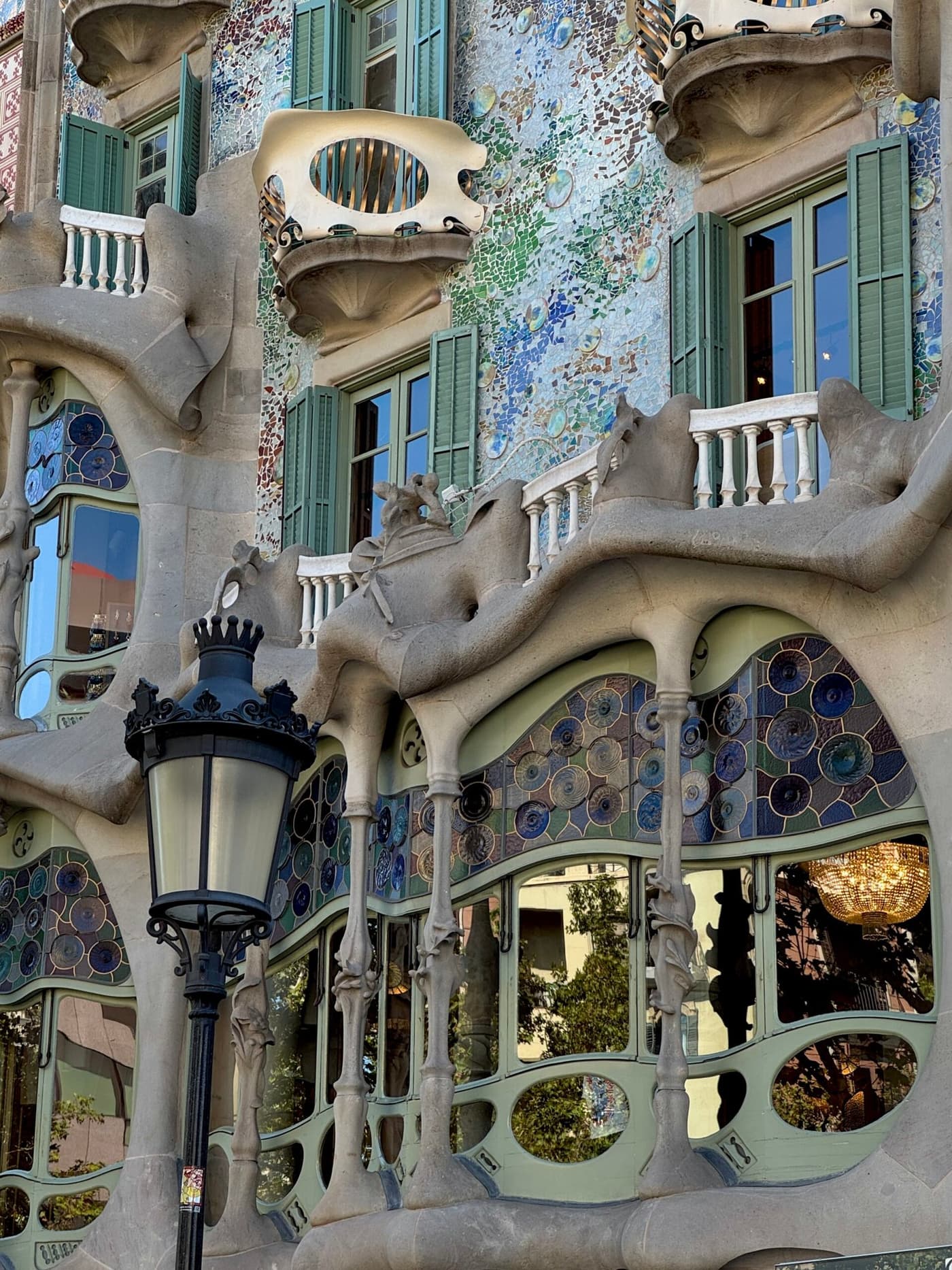
At first glance, Casa Batlló looks like something out of a fairy tale, even a fantasy: a wavy facade, mosaics of colored glass and ceramic, balconies that look like masks, and a roof often compared to a dragon's back. But behind the eye-catching exterior is carefully thought-out architecture, where every detail has both a functional and a symbolic meaning.
Today Casa Batlló is not just an architectural monument but a full-fledged museum and a popular tourist attraction. Visitors can see the building from the inside, walk through the rooms of the former residential house, climb up to the roof and explore modern multimedia exhibits. It is precisely this mix of historic architecture and an up-to-date museum format that makes Casa Batlló one of the most visited places in Barcelona.
In this article I'll tell you what Casa Batlló is, what makes its architecture special, what to see inside, how much tickets cost, what the museum's opening hours are and whether it's worth adding to your itinerary in the city.
What Is Casa Batlló and Why Is It So Famous?
Casa Batlló is a residential building in central Barcelona that was completely remodeled in the early 20th century to a design by Antoni Gaudí. It stands on the prestigious Passeig de Gràcia and is considered one of the brightest examples of Catalan Modernisme.
It's important to understand that Casa Batlló was not built from scratch. The site originally held an ordinary apartment building from the late 19th century. In 1903 the industrialist Josep Batlló i Casanovas bought the building and asked Gaudí to completely change its look. The architect didn't tear it down. Instead, he radically reworked the facade, the interior spaces and the layout, turning an ordinary city house into an architectural masterpiece.
Casa Batlló became widely known for its unusual appearance and the absence of straight lines. Its wavy forms, organic elements and bright mosaics set it sharply apart from the neighboring buildings. That's why Casa Batlló is often called "the most fairy-tale house in Barcelona."
It isn't famous only for its outward beauty. Inside, Gaudí put in place solutions that were advanced for their time: a well-planned system of natural light, ventilation and ergonomic living spaces. Every detail, from the windows to the door handles, was designed individually and followed an overall concept.
Casa Batlló is among the architect's best-known works. I wrote about his other projects in the article Antoni Gaudí's Buildings in Barcelona.
Today Casa Batlló is a UNESCO World Heritage Site and one of Barcelona's must-see sights. It is visited not only by tourists but also by architects, designers and researchers of Gaudí's work from all over the world.
History of Casa Batlló
The history of Casa Batlló is closely tied to Barcelona's heyday at the turn of the 19th and 20th centuries, when the city was growing fast and turning into one of Europe's cultural centers. The building known today as Casa Batlló originally had nothing in common with the fantastic look it is famous for now.
Who Built Casa Batlló and When
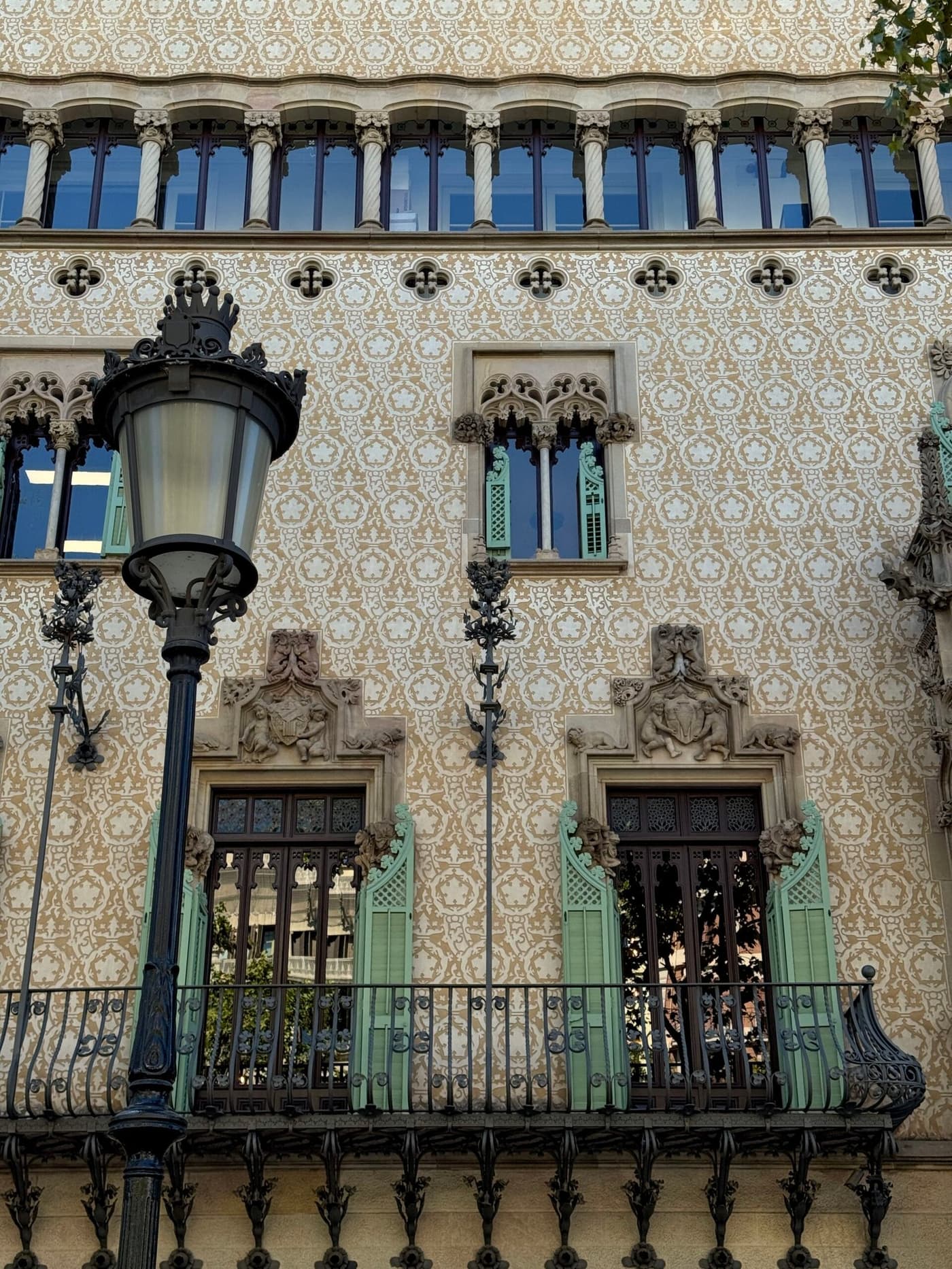
The original house on this plot was built in 1877 by the architect Emilio Sala Cortés. It was a typical apartment building of its time, meant for renting out flats. It blended in well with the buildings along Passeig de Gràcia but didn't stand out from its neighbors in either architecture or decoration.
In the early 20th century the Catalan industrialist Josep Batlló i Casanovas bought the building. Instead of demolishing the old house and building a new one, he decided to change its look completely and turned to Antoni Gaudí, who by then was already known for his bold, unconventional projects.
For comparison, the architect's earliest project is considered to be Casa Vicens, where Gaudí's career in Barcelona began.
Gaudí's Renovation of the Building
The renovation of Casa Batlló ran from 1904 to 1906. During that time Gaudí radically changed the facade, redesigned the interior spaces and completely reworked the building's decoration. In effect, only the load-bearing structure of the original building was kept.
The architect gave up traditional architectural solutions and used organic forms inspired by nature. The facade was covered with a mosaic of glass and ceramic, the windows got flowing outlines, and the balconies came to resemble masks or skulls, which earned the house its unofficial nickname, the "House of Bones."
After the renovation was finished, Casa Batlló became one of the most talked-about buildings in Barcelona. Its look provoked mixed reactions, but over time this very boldness and originality turned Casa Batlló into an architectural icon of the city.
Casa Batlló Architecture: Style, Symbolism and Details
Casa Batlló's architecture is considered one of the most expressive examples of Catalan Modernisme. In remodeling the building, Gaudí abandoned classical architectural canons and created a space with almost no straight lines. All the forms look fluid and organic, as if nature itself had made them.
Casa Batlló is often cited as an example of architecture where aesthetics can't be separated from function. Every decorative choice here also does a practical job, from lighting and ventilation to the ergonomics of the living rooms.
The Casa Batlló Facade and Its Symbolism
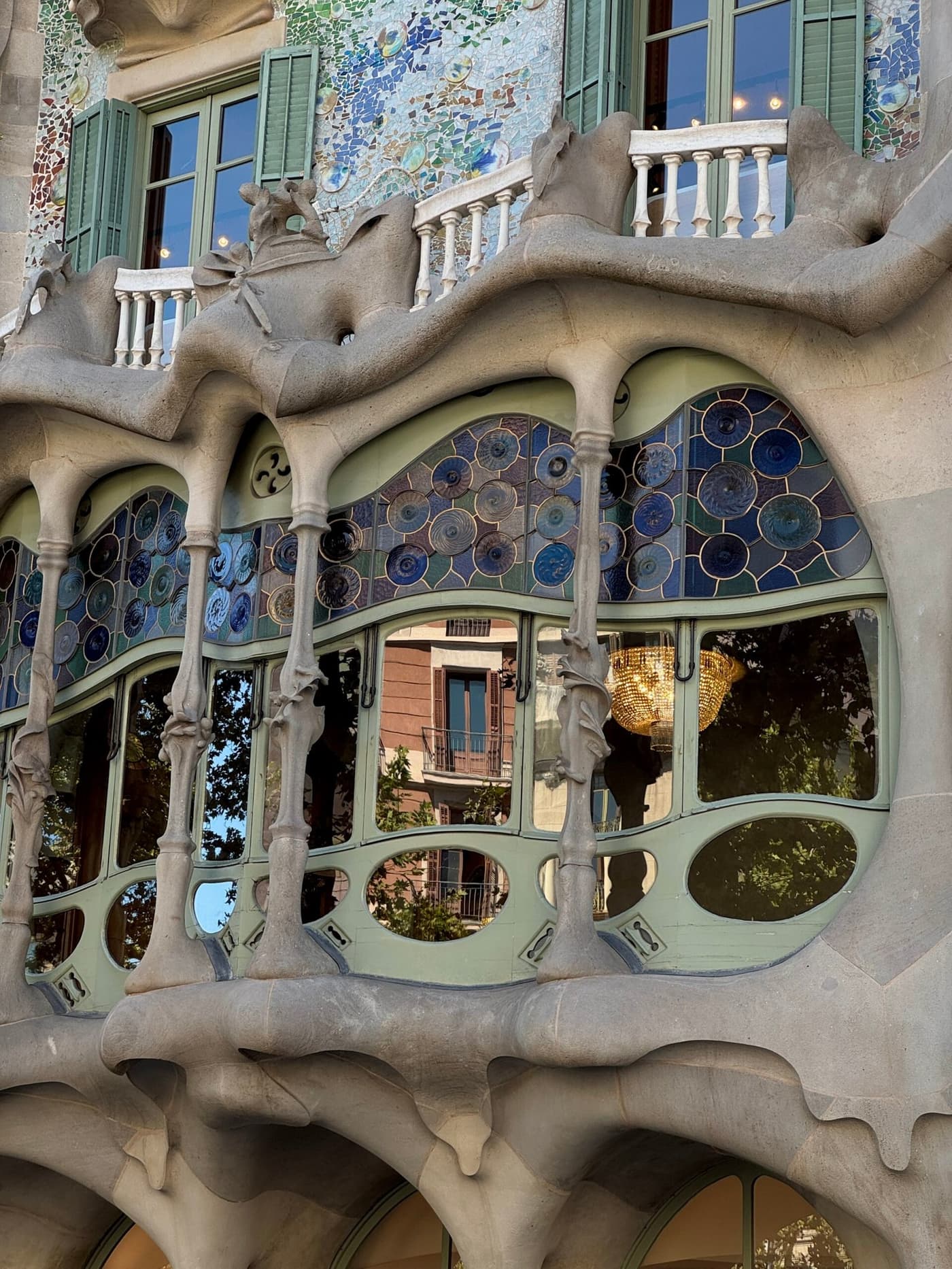
The facade is the most recognizable part of Casa Batlló. It is covered with a mosaic of colored glass and ceramic made in the trencadís technique. Because of this, the surface of the facade changes shades depending on the light and the time of day.
The balconies are shaped like masks or skulls, and the ground-floor columns look like bones. That is how the building got its unofficial name, the "House of Bones." The upper part of the facade flows smoothly into the roof, which is often interpreted as a dragon's back, a reference to the legend of Saint George, the patron saint of Catalonia.
You can see similar natural motifs and organic forms in Park Güell, another landmark project by the architect.
The Interiors and the Central Light Well
The interior of Casa Batlló is planned just as carefully as the facade. The layout was changed completely to bring in as much natural light as possible and to keep the air circulating well. To do this, Gaudí used a central light well whose walls are tiled with a gradual shift from darker shades at the top to lighter ones at the bottom.
The windows, doors and staircases have smooth forms and look like one whole with the interior. Even details such as door handles and railings were designed individually to fit the shape of the human hand, which was rare in the architecture of that time.
Why Casa Batlló Is Called the "House of the Dragon"
The image of a dragon is one of the most popular interpretations of Casa Batlló's architecture. The wavy roof with its ceramic scales is associated with the body of a mythical creature, and the cross on the tower is often read as Saint George's sword plunged into the dragon's back.
Although Gaudí himself left no direct explanation of this symbolism, such allegories fit naturally into his work, where religious and natural motifs often intertwine. It is exactly this layering of interpretations that makes Casa Batlló's architecture especially interesting for researchers and visitors.
What to See Inside Casa Batlló
Visiting Casa Batlló is a chance to see what a residential house of the early 20th century looked like when Gaudí reimagined it down to the smallest detail. The route is laid out so that visitors get to know the architecture, interiors and engineering solutions step by step, moving from the grand rooms to the service areas and the roof.
The Main Rooms and Floors
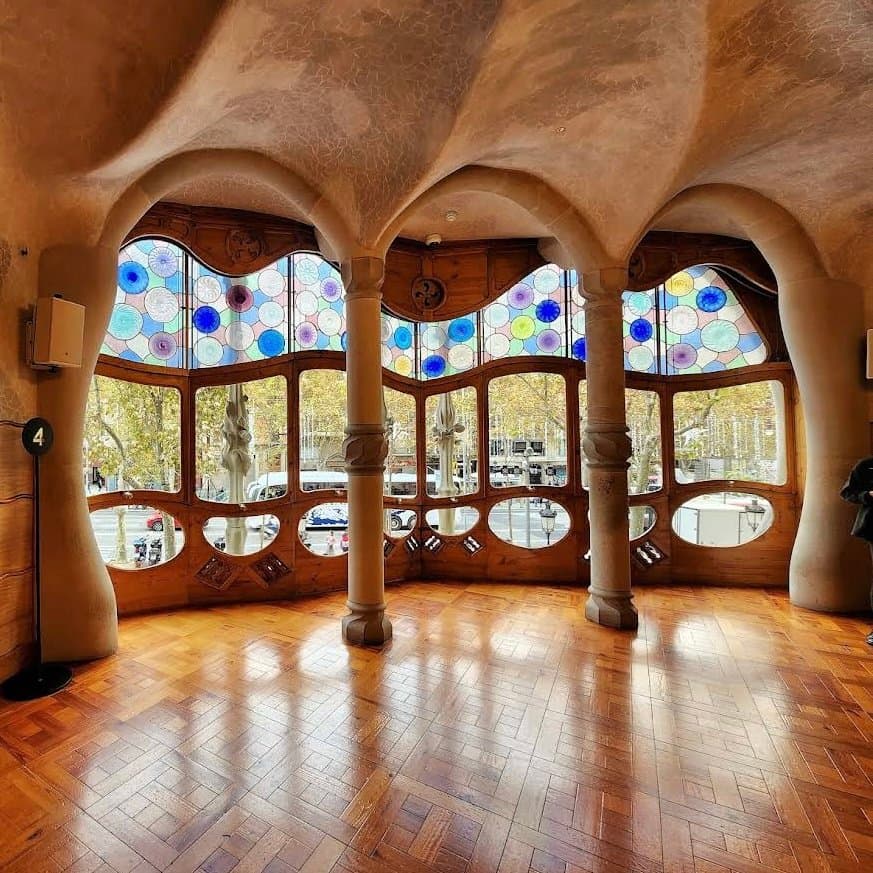
The tour begins at the main entrance and the vestibule, where the attention to form and light is noticeable right away. The staircase and ceilings have smooth, "flowing" lines that create a sense of movement. Next, visitors reach the so-called noble floor (piano nobile), the main living level of the house, where the Batlló family's apartment was located.
Here you can see spacious rooms with large windows facing Passeig de Gràcia, stained glass with natural motifs and original wooden doors. The layout of the rooms emphasizes comfort and function: the rooms connect logically, and natural light plays a key role in how you experience the space.
The Roof and Chimneys
The roof is considered one of the most impressive parts of Casa Batlló. This is where the architect's imagination shows most vividly. The wavy surface covered with colored ceramic tiles recalls scales, and the unusual chimneys look like abstract sculptures.
The roof is not only decorative but also functional. The chimneys are designed to improve the draft and protect the building from backdraft. The roof also offers a view of the surrounding buildings along Passeig de Gràcia, which makes this part of the visit especially memorable.
The Multimedia and Immersive Exhibition
Today Casa Batlló is not just a museum of interiors but also a modern exhibition space. Multimedia is used throughout the building to help visitors better understand the architect's ideas and intentions. Interactive elements and visual projections are available to complement how you see the building.
The immersive exhibition makes the visit clearer and easier to follow, even for people who don't know the history of architecture. It explains how the forms were created, why these particular solutions were chosen and how Gaudí worked with space, light and color.
Casa Batlló Tickets: Where to Buy, Prices and Opening Hours
You can visit Casa Batlló only with a ticket. Because the attraction is so popular, entry is by time slot and the number of visitors is strictly limited. Keep this in mind when planning your visit.
Where to Buy Casa Batlló Tickets
The most reliable and convenient option is to buy tickets online in advance. This lets you:
- choose the exact time of your visit;
- avoid queues;
- be sure of getting in even in high season.
Tickets are sold:
- on the official Casa Batlló website;
- on large international ticket platforms, such as Klook, GetYourGuide and Viator;
- through travel agencies.
You can also buy tickets on site, but in the tourist season (spring and summer, holidays, weekends) there are often no free slots left. So for most travelers, buying online is the best option.
How Much Casa Batlló Tickets Cost
The ticket price depends on the type of visit and the entry time. On average, the cost looks like this:
- Standard ticket: from 29 to 35 euros Includes all the main areas of the building, the roof and a multimedia audio guide.
- Ticket with extended multimedia content: from 35 to 45 euros Suits those who want to dig deeper into the building's architecture and symbolism.
- Priority entry ticket (skip the line): from 39 euros Lets you get inside faster at peak hours.
- Evening and special visits: the price varies These run on certain days and offer a special atmosphere.
Discounted rates are available for children, students and seniors, and young children get in free. It's always best to check current prices before you buy, as they can change with the season.
Casa Batlló Opening Hours
Casa Batlló is open every day, with no days off. The approximate schedule:
- from 9:00 a.m.
- last entry 1 to 1.5 hours before closing
Closing time depends on the season: earlier in winter, later in spring and summer, sometimes until late in the evening. On some days night visits are also available, and they are especially popular. The average visit takes 1 to 1.5 hours, but you can spend longer inside if you like.
Useful Tips Before You Go
- it's best to buy tickets a few days ahead, and in high season a week or more;
- arrive exactly at the time shown on your ticket;
- if you want to avoid crowds, choose the morning hours or late evening.
Best Time to Visit Casa Batlló
When you choose to visit Casa Batlló directly affects your impressions. Even though the number of visitors is limited and entry is by time slot, how busy the museum is changes noticeably over the course of the day.
Morning: Fewer People and More Space
The quietest time to visit is the morning, right after opening. At that time:
- there are fewer tour groups inside;
- it's easier to look at the interiors without rushing;
- it's more comfortable to photograph the rooms and details.
Morning slots are especially good for those who want to focus on the architecture and don't like big crowds.
Daytime: The Biggest Crowds
From midday until late afternoon, Casa Batlló gets the most tourists. That's because most travelers plan their route around central Barcelona for the daytime hours.
A daytime visit is still comfortable thanks to the crowd-control system, but be prepared for the popular rooms to be livelier.
Evening and Special Visits
The evening hours are considered one of the most atmospheric ways to visit. The lighting makes the interiors more expressive, and the overall mood is different from a daytime visit. On some days special evening or night visits are held, and they are in high demand.
This format suits those who have already seen Barcelona's main sights during the day and want a more emotional, unusual experience.
When to Plan Your Visit
- in high season (spring, summer, holidays), it's worth buying tickets in advance;
- in low season there are fewer visitors, but the morning hours are still the quietest option;
- if comfort matters to you, it's best to avoid weekends and public holidays.
Where Casa Batlló Is and How to Get There
Casa Batlló is in the very center of Barcelona, on one of the city's main avenues, Passeig de Gràcia. It's a prestigious district known for its architecture, shops and a high concentration of landmark Modernisme buildings.
Address and Neighborhood
Casa Batlló is located at: Passeig de Gràcia, 43, Barcelona.
Passeig de Gràcia is often called an "open-air architecture museum." Several famous houses created by outstanding architects of the early 20th century stand right here, so a visit to Casa Batlló fits easily into a walking route through the city center.
How to Get to Casa Batlló
Casa Batlló is easy to reach from almost any part of Barcelona:
- Metro: the nearest station is Passeig de Gràcia. It serves several metro lines at once, which makes it one of the most convenient interchange points.
- Bus: many bus routes run along Passeig de Gràcia, linking the center with other parts of the city.
- On foot: if you're strolling around central Barcelona, it's easy to walk to Casa Batlló from Plaça de Catalunya or neighboring sights.
Thanks to its central location, Casa Batlló is often visited as part of a sightseeing walk, combined with other architectural landmarks and a stroll along the avenue.
Interesting Facts About Casa Batlló
Casa Batlló is known not only for its unusual look but also for many details that often go unnoticed on a first visit. These facts help you better understand the architect's intentions and the building's special features.
One of the defining features of Casa Batlló is the complete absence of straight lines. Gaudí believed that perfect geometry doesn't exist in nature, so he tried to echo natural forms such as waves, bones, shells and plants. This idea runs through both the building's exterior and its interiors.
Another interesting fact concerns the colors of the central light well. The tiles there are laid with a smooth gradation of shades: darker at the top and lighter at the bottom. This helped spread sunlight evenly across all the floors of the house and made the rooms brighter without artificial lighting.
Casa Batlló was also one of the first residential buildings in Barcelona to have well-designed ventilation systems. Thanks to the placement of the windows and the shape of the shafts, air circulated freely through the house, providing a comfortable microclimate even in the hot months.
In 2005, Casa Batlló was added to the UNESCO World Heritage List as part of the architectural legacy of Antoni Gaudí. This status confirms its cultural and historical value not only for Barcelona but for the whole world.
Casa Batlló and Gaudí's Other Houses in Barcelona
Casa Batlló is often visited as part of a route through Gaudí's architectural legacy. Other well-known buildings by the architect are within walking distance, which makes Passeig de Gràcia a convenient starting point for exploring Barcelona's Modernisme architecture.
After Casa Batlló, many people head to Casa Milà and then continue exploring the architect's work at the Sagrada Família.
A logical next step after Casa Batlló is Gaudí's other residential houses, which round out the picture of his style and the evolution of his architectural ideas. Walking this route lets you see how the architect's approach changed and how varied his creative language could be.
I filmed how we traveled around Spain in a YouTube episode
Casa Batlló FAQ
Do I need to buy Casa Batlló tickets in advance?
Yes, it's recommended to buy tickets in advance, especially in high tourist season. This guarantees entry at your chosen time and helps you avoid queues.
How long does a visit to Casa Batlló take?
On average, plan 1 to 1.5 hours to see Casa Batlló. That's enough time to walk calmly through all the main areas of the building, use the audio guide and go up to the roof.
Can I take photos inside?
Photography is allowed in Casa Batlló, including with a phone or a camera. The restrictions concern the use of flash and professional equipment without special permission.
Casa Batlló with kids
Casa Batlló is suitable for visiting with children, especially school-age ones. The unusual shapes, bright colors and multimedia make the tour more vivid and interesting.
Are there skip-the-line tickets?
Most online tickets are for a set time slot, which already keeps waiting to a minimum. Priority entry tickets are also available.
Can I visit Casa Batlló in the evening?
Yes, evening and special visits are available on certain days. They have a different atmosphere and are in high demand.
Is Casa Batlló a good first introduction to Gaudí's architecture?
Yes, Casa Batlló is considered one of the clearest and most accessible of Antoni Gaudí's projects, especially thanks to its modern museum format. For a fuller picture of Gaudí's architecture, it helps to follow a route through his main buildings in Barcelona.