Barcelona's Old Town is the natural place to start getting to know the city. Here you'll find ancient streets, medieval squares, iconic cathedrals and the neighborhoods that shaped Barcelona over the centuries. The historic center of Barcelona is not a single neighborhood but several districts, each with its own character, tied together by a shared history and easy walking distances.
When travelers search for what to see in Barcelona's Old Town, they usually mean strolling narrow lanes, taking in Gothic architecture and city squares, and walking out to the sea. Unlike the more modern parts of town, the city feels especially alive here: Barcelona reveals itself not through individual sights but through its atmosphere and rhythm.
The Old Town (often called the old center of Barcelona) is great for self-guided walks. Most of the key places are close to each other, and routes are easy to combine, from the historic quarters all the way to the coast. That is why this area works both for a first visit and for an unhurried return trip when you want to see Barcelona more deeply.
In this article I'll explain what the Old Town of Barcelona includes, which districts count as the main ones, and which places to look at first if your time is limited.
What Is Barcelona's Old Town and Which Districts Does It Include
Barcelona's Old Town is officially called Ciutat Vella, and that is how this area is labeled on maps and in the city's administrative division. It is the oldest part of Barcelona, where the medieval street layout and historic buildings from different eras have survived, from the Roman period to the 19th century.
When people say "the historic center of Barcelona" or "the old center of Barcelona," they almost always mean Ciutat Vella. It's important to understand that this is not a single neighborhood but several different districts, each with its own atmosphere and function.
The Main Districts of Barcelona's Old Town
The Old Town consists of four districts:
- Gothic Quarter — the historic core of the city, with medieval streets, cathedrals and squares. This is where Barcelona took shape as a city.
- El Born — the district of artisans and merchants, next to the Gothic Quarter, with museums, trendy cafes and atmospheric lanes.
- El Raval — a more contrasting, multicultural district where cultural spaces sit alongside everyday city life.
- Barceloneta — a seaside district tied to the city's maritime history and to its best-known city beach.
Despite their differences, all of these districts share one trait: they are compact. You can walk from one end of the Old Town to the other in 20–30 minutes, which makes it ideal for exploring without any transport.
Why the Old Town Is Convenient for Tourists
From a traveler's point of view, Barcelona's Old Town offers:
- a high concentration of sights,
- easy logistics, with no need to keep taking the metro,
- the chance to combine history, culture and time by the sea in a single route.
When you plan a trip, the question "what to see in Barcelona's Old Town" usually becomes the starting point for your whole route through the city.
The Gothic Quarter in Barcelona: The Heart of the Old Town
The Gothic Quarter (Barri Gòtic) is the historic core of Barcelona and the most recognizable district of the Old Town. The city began to form here as far back as the Roman Empire, and in the Middle Ages the quarter became Barcelona's political and religious center.
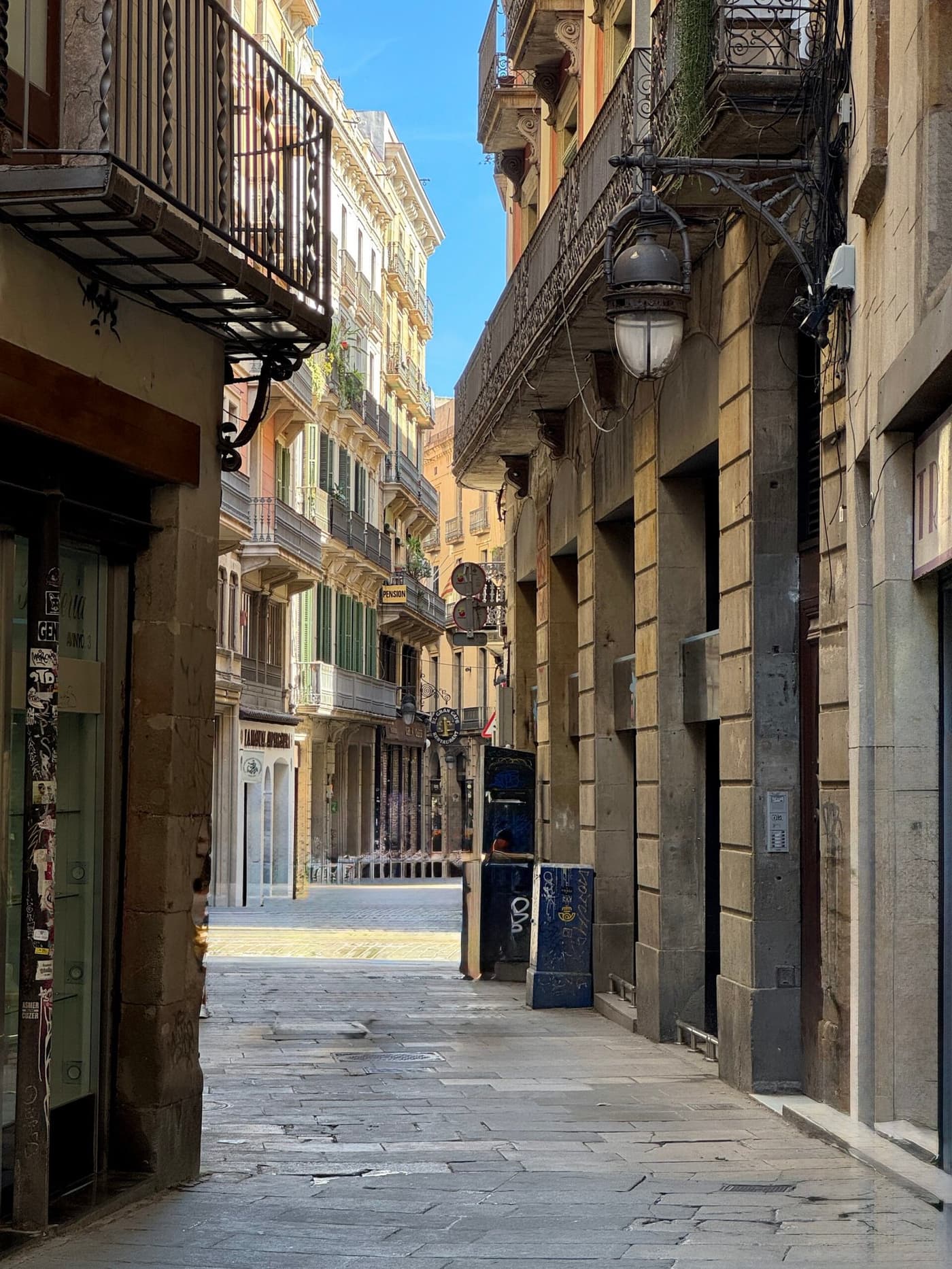
When travelers talk about the Old Town, they most often mean the Gothic Quarter in Barcelona. It is a district of narrow stone streets, small squares and buildings pressed right up against one another. The layout has barely changed since medieval times, so walking here feels more like time travel than a standard city route.
The Gothic Quarter lies between La Rambla and Plaça de Catalunya and stretches toward the sea. Thanks to this location, it combines easily with the other districts of the Old Town and often becomes the starting point for walks.
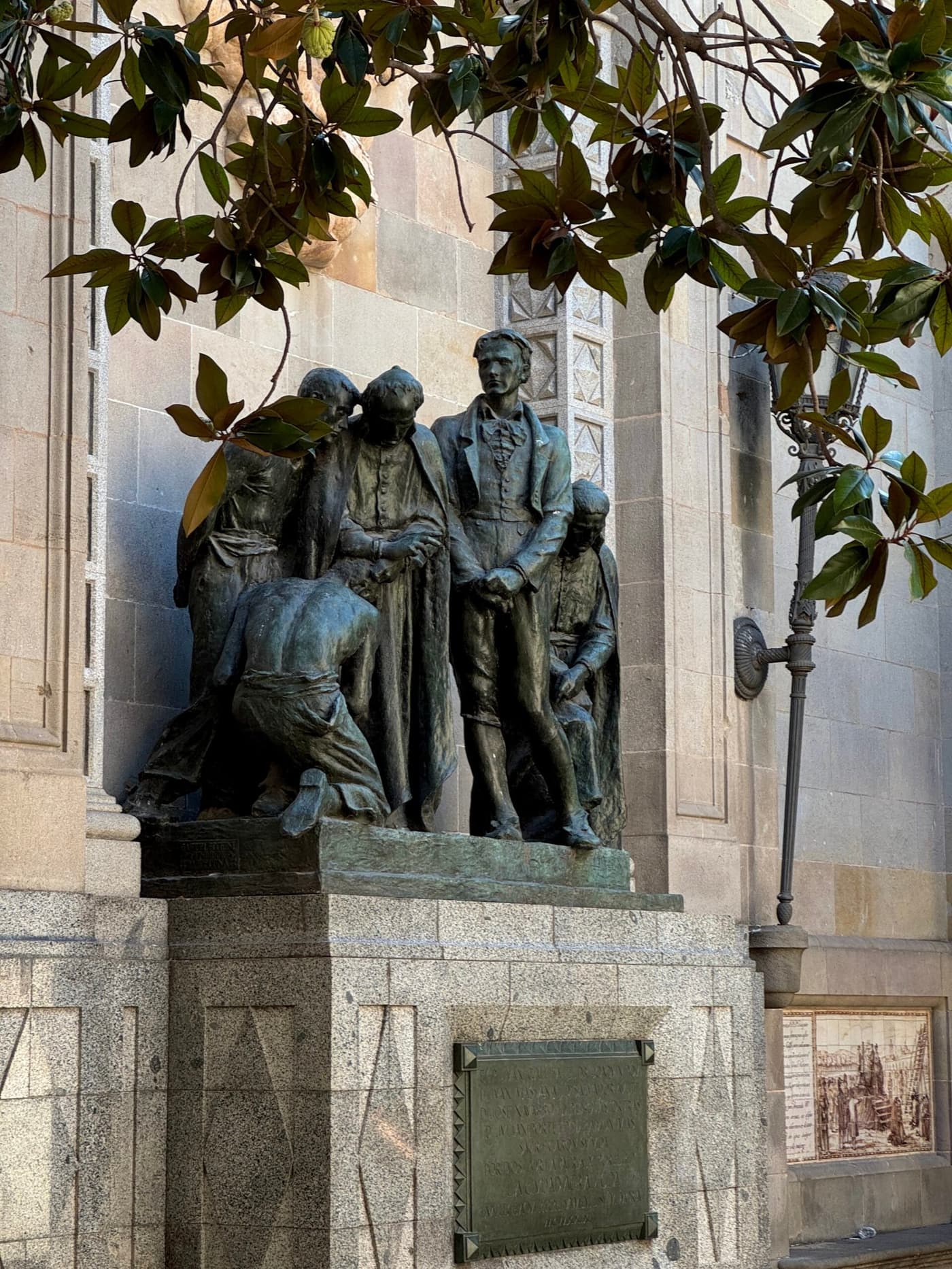
Why the Gothic Quarter Is Considered the Main Part of the Old Town
The Gothic Quarter matters for several reasons at once:
- the Roman city of Barcino, where Barcelona's history began, stood here;
- the quarter is home to key religious and administrative buildings;
- it is where the city's medieval architecture is best preserved.
Unlike other districts of the Old Town, the Gothic Quarter feels not like a set of separate sights but like a single historic space. People rarely go "from point to point" here; more often they simply wander, turning into random alleys and discovering new squares.
Atmosphere and Walking Around the District
A walk through the Gothic Quarter means a slow rhythm, the shade of narrow streets even on a hot day, and the constant feeling that something interesting is waiting around the next corner. Many streets are so narrow that sunlight reaches them only for a few hours a day, creating the play of light and shadow typical of the district.
That is why, when answering the question of what to see in the Gothic Quarter of Barcelona, it's important to consider not only specific places but also the style of the walk itself. This district reveals itself best without rushing and without a strict schedule.
What to See in the Gothic Quarter of Barcelona
The Gothic Quarter is a living historic environment. The district has several key places that help you understand Barcelona's history better and find your way around the Old Town. These are the places travelers search for most often when planning what to see in the Gothic Quarter of Barcelona.
The Cathedral in the Gothic Quarter of Barcelona
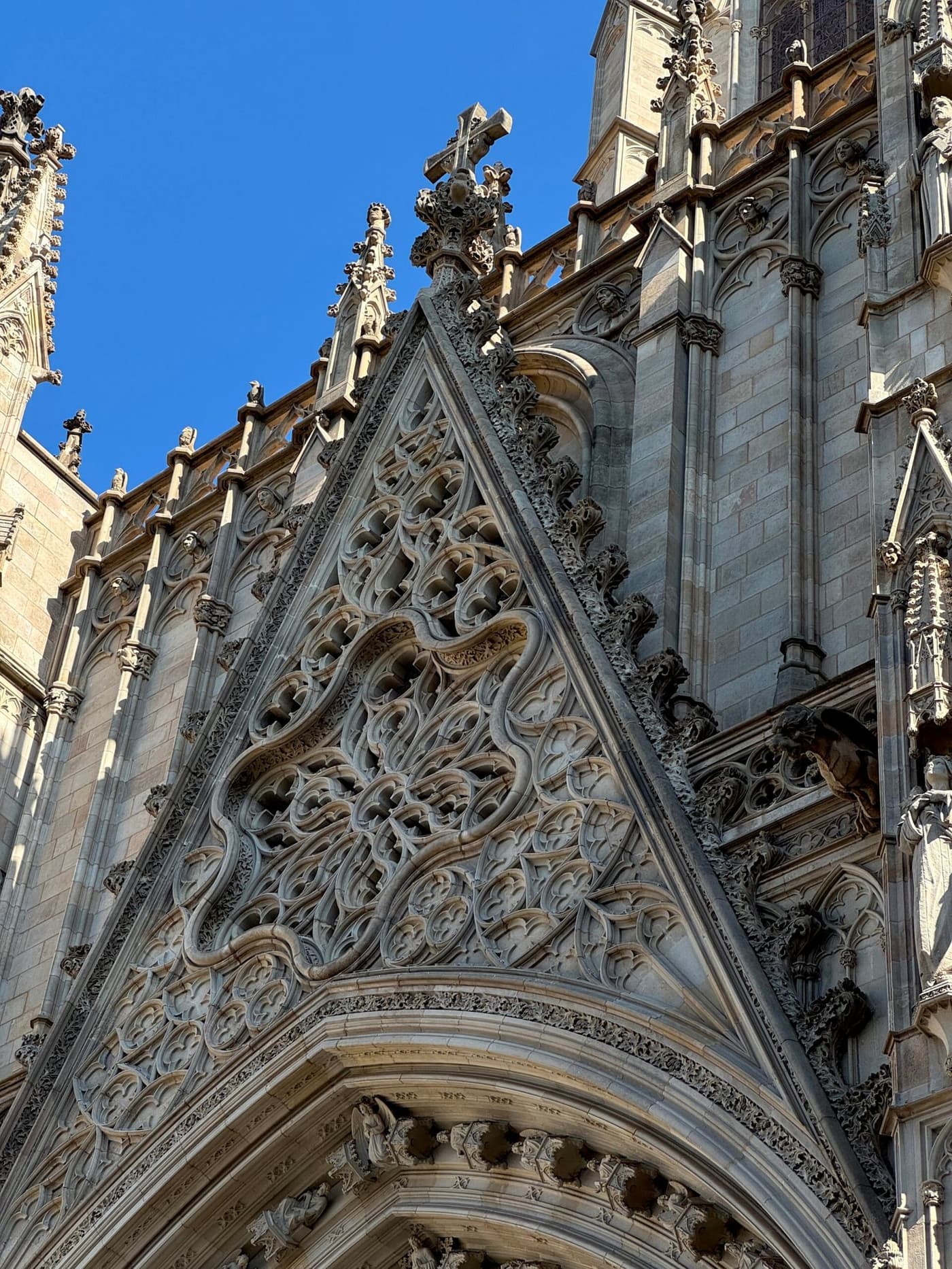
The main architectural landmark of the district is the Cathedral of the Holy Cross and Saint Eulalia, better known as the Cathedral of Barcelona. It stands right in the center of the Gothic Quarter and is considered one of the city's most important religious buildings.
Construction of the cathedral began in the 13th century and went on for several centuries, so the building combines elements of Catalan Gothic from different periods. The facade that tourists see today was completed much later, at the end of the 19th century, but it was built in strict accordance with medieval canons.
The cathedral is known not only for its architecture but also for its inner courtyard with a fountain and white geese, an element often mentioned in guidebooks and part of local tradition. For anyone interested in the city's history, visiting the cathedral helps you better understand the religious and cultural role the Gothic Quarter has played in Barcelona's life.
Squares and Streets of the Gothic Quarter
Besides the cathedral, the district's squares and streets play an important part in how it feels. They create the very image of the Old Town that is most often associated with Barcelona.
One of the best known is Plaça Reial, a lively square with arcades and palm trees, right next to La Rambla. Despite its proximity to the tourist center, it blends naturally into the atmosphere of the Gothic Quarter and often becomes a resting spot during a walk.
Plaça de Sant Felip Neri is more intimate and more emotionally charged. This square is known for its tragic history from the time of the Spanish Civil War and for the bombing marks still visible on the church facade. The historical depth of the district is especially palpable here.
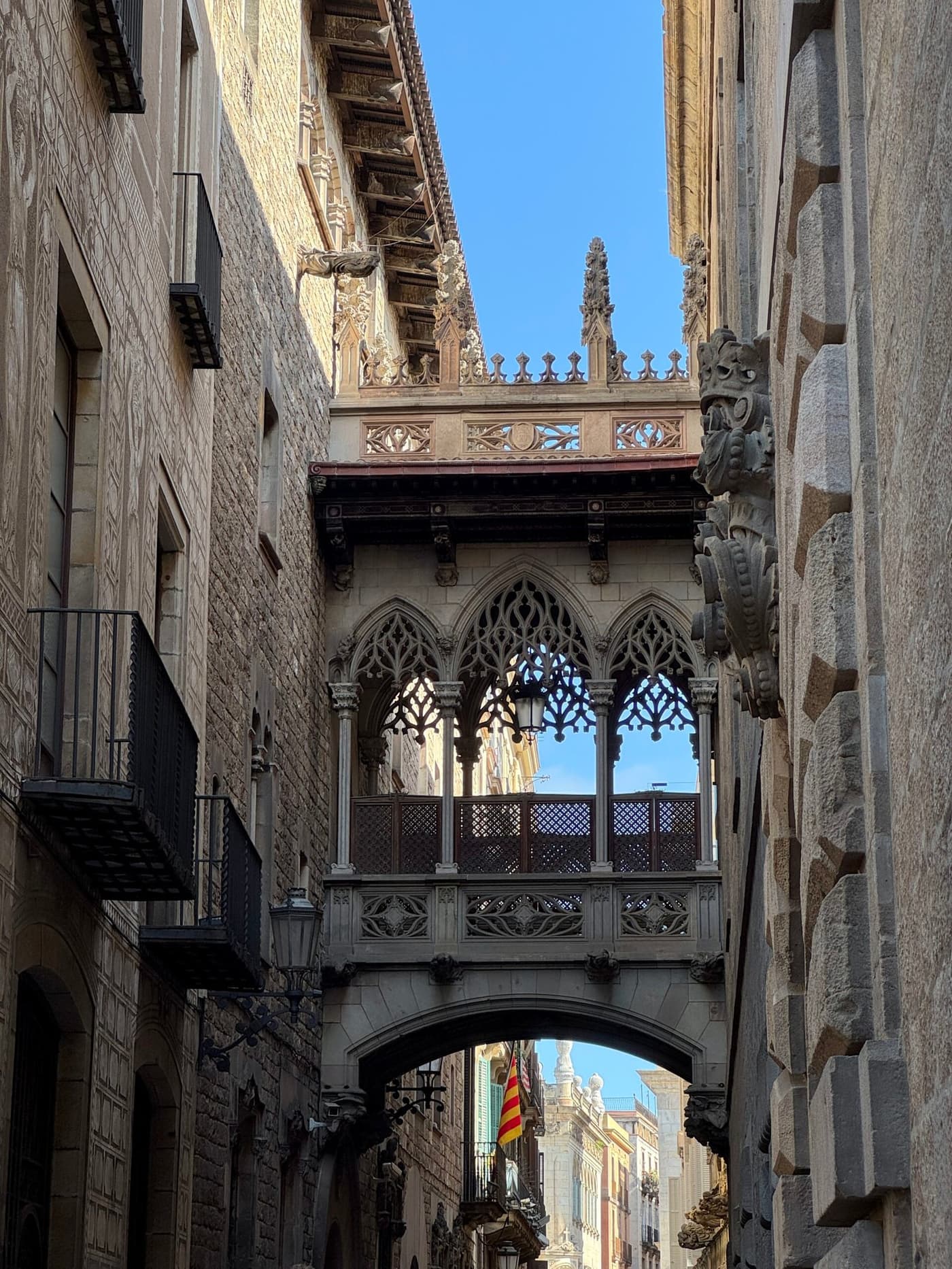
As you stroll the narrow streets of the Gothic Quarter, it's easy to notice that many of them lead to small squares hidden from the main tourist flow. Such places often turn out to be the most memorable, even if they don't appear on the classic lists of sights.
Why You Should Walk the Gothic Quarter Without a Set Route
It's hard to treat the Gothic Quarter of Barcelona as a place that needs a strict plan of movement. Unlike districts with major landmarks, the value here lies not only in specific points on the map but in the walk itself. That is why many travelers say their best impressions of the Gothic Quarter come when the route stays loose.
The district's medieval layout has barely changed for centuries. The streets are narrow and often winding, and the distances between key places are minimal. Even if your goal is to see the cathedral or a famous square, along the way you inevitably come across small courtyards, arches and quiet alleys that you couldn't have planned in advance.
A free-form walk lets you:
- feel the atmosphere of the Old Town instead of just "ticking off" sights;
- get away from the busiest tourist routes;
- see the everyday life of the district, where small shops, workshops and cafes operate alongside historic buildings.
It's also worth noting that the Gothic Quarter is best experienced at a slow pace. It's easy to linger in a square, turn aside, double back, or simply stop to look at the details of facades and balconies. This approach suits especially well those who want not just to learn what to see in the Gothic Quarter of Barcelona but to feel the character of the district.
In addition, the lack of a rigid route helps you move naturally into the neighboring districts of the Old Town. This is how a walk through the Gothic Quarter often continues into El Born or toward the waterfront, where the historic part of the city gradually gives way to a seascape.
Barceloneta in Barcelona: The Seaside District and Beach
Barceloneta is one of the city's most recognizable districts and is most often associated with the sea. But Barceloneta in Barcelona is not just a beach; it is a full-fledged historic district closely tied to the Old Town.
The district appeared in the 18th century as a settlement for fishermen and port workers. Its layout is noticeably different from the chaotic streets of the Gothic Quarter: Barceloneta was designed in a more orderly way, with straight streets and compact blocks. Even so, it fits naturally into the structure of the historic center.
Today Barceloneta feels like a natural continuation of a walk through the Old Town. After the narrow medieval streets of the Gothic Quarter and El Born, stepping out to the sea creates a contrast that many consider one of the strengths of central Barcelona.
The Barceloneta District and Its Features
Unlike the tourist zones created in the 20th century, the Barceloneta district stayed residential for a long time. Everyday city life can still be felt here today: small apartments, local markets, old bars and family restaurants that are not aimed only at tourists.
The main features of the district:
- proximity to the sea and the port;
- compact buildings and short blocks;
- a mix of beach zone and residential streets.
This is what makes the Barceloneta district interesting not only for relaxing by the water but also for walking, especially if you want to see a more "down-to-earth" side of Barcelona.
Barceloneta Beach: The Best-Known Beach in Barcelona
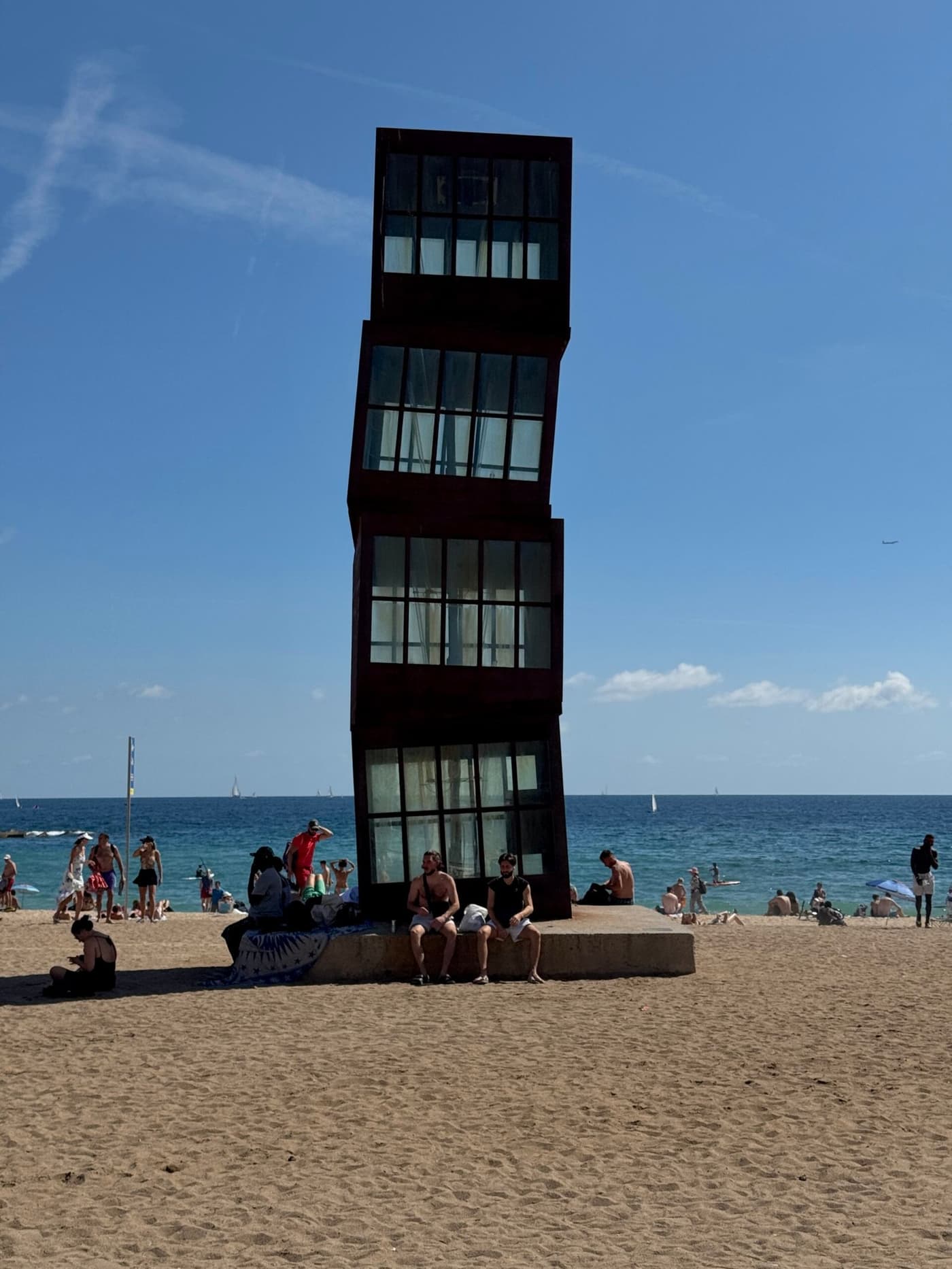
Barceloneta Beach is a popular city beach in Spain. It is within walking distance of the Old Town and fits easily into a walking route without any need for transport.
The beach is known for its long promenade, well-developed infrastructure and year-round activity. In summer people come here to swim and sunbathe, and the rest of the year to stroll along the sea and look out over the port.
Despite its popularity, Barceloneta Beach remains an important part of city life rather than purely a tourist zone. You can see visitors here as well as locals who use the beach for sports, walks and meeting friends.
What to See in Barceloneta Besides the Beach
Although many people associate Barceloneta first of all with the sea, the district is not limited to the beachfront. If you step back from the waterfront into the blocks behind it, you'll notice that Barceloneta in Barcelona has kept the features of an old working-class district with its own history and way of life.
One of the district's characteristic spots is Mercat de la Barceloneta. This local market is aimed first of all at residents of the neighborhood. Here you can see Barcelona's everyday food culture and understand how Barceloneta lives outside the tourist season. For travelers the market is interesting less as a sight and more as a part of the everyday city environment.
Walking through the residential streets, it's easy to spot a distinctive feature of the district's architecture: narrow houses with small balconies. Historically, apartments in Barceloneta were compact, and that has stayed the same to this day. This makes the district visually recognizable and different from other parts of the Old Town.
The Waterfront and the Port Area
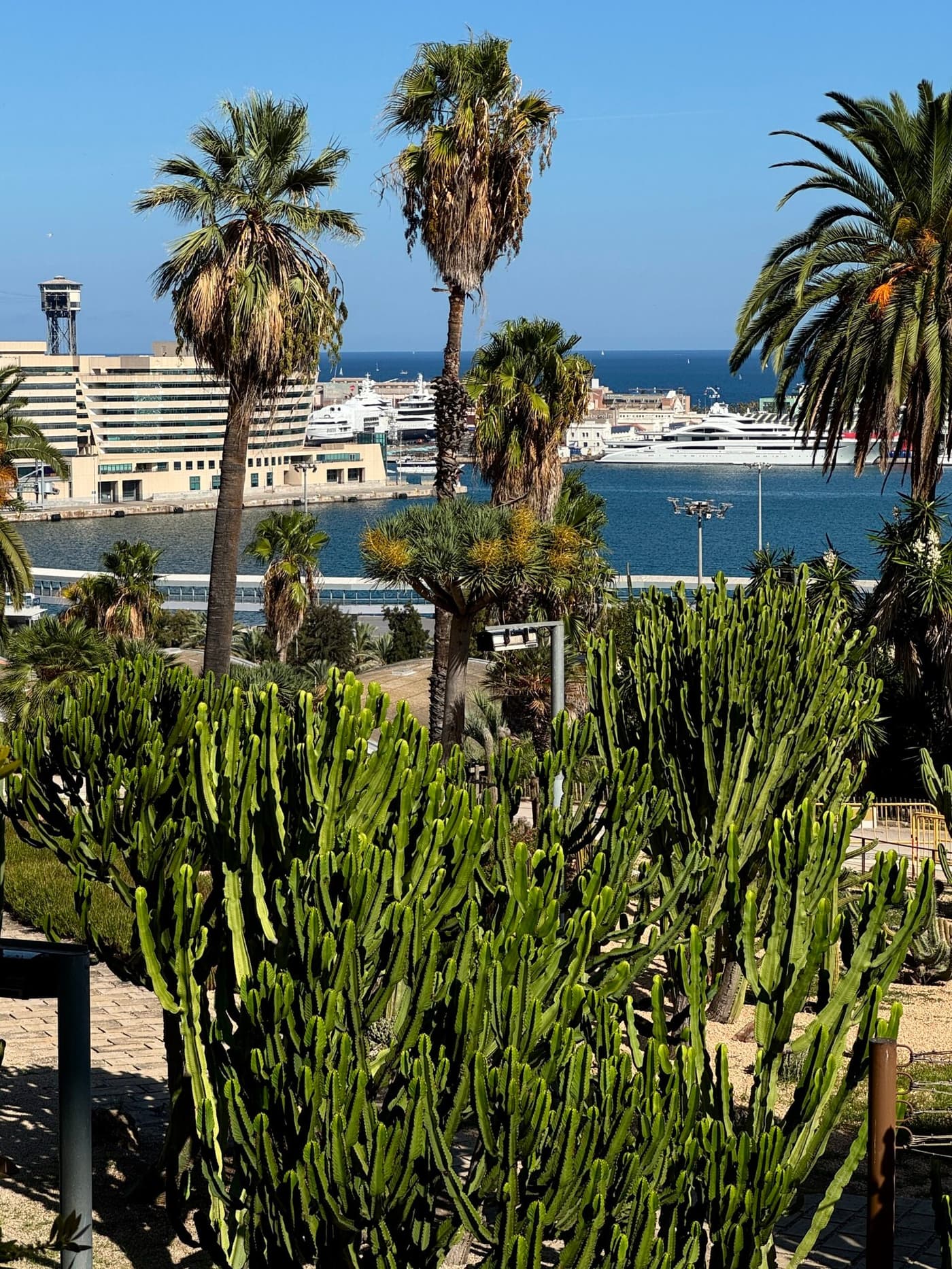
Besides the beach, a walk along the port is worth your attention. The closeness of the sea is felt here not only visually but also functionally: the port, the yachts, the seafood restaurants and the sea air create a special atmosphere.
From Barceloneta it's easy to head toward the more modern part of the waterfront or, the other way around, to walk back to the Old Town. This link makes the district a logical end to a walk through the historic center.
So, when answering the question of what to see in the Barceloneta district, it's important to consider not only the beach but also the district itself as part of Barcelona's urban history. It complements the Old Town and shows another side of the center, less showy but just as interesting.
How the Gothic Quarter and Barceloneta Connect
The Gothic Quarter and Barceloneta form a logical pair within Barcelona's Old Town. Despite the difference in atmosphere and architecture, these districts are close to each other and easily combine into a single walking route. That is why people planning a walk often ask how to combine the old town of Barcelona, the Gothic Quarter and Barceloneta.
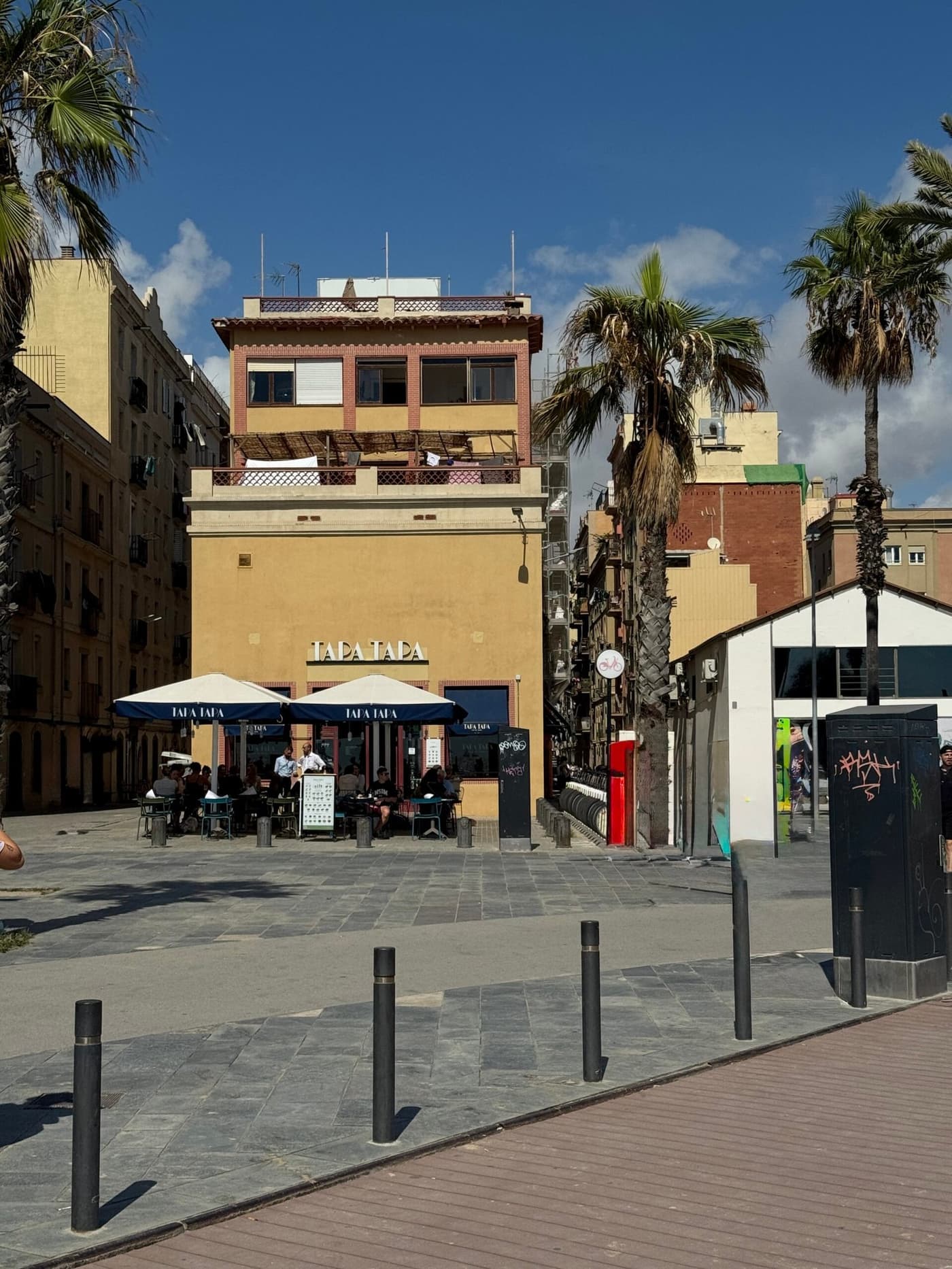
The distance between the central part of the Gothic Quarter and Barceloneta Beach is about 1.5 kilometers. At a relaxed pace the walk takes roughly 20–30 minutes. On the way you can pass through El Born or along the port area, gradually moving from medieval streets to open seaside space.
A Walk from the Old Town to the Sea
The transition from the Gothic Quarter to Barceloneta shows well how varied central Barcelona is. The route starts among dense historic buildings, then opens onto broader streets and, finally, the waterfront.
This route is convenient because it:
- needs no transport;
- lets you vary the length of the walk;
- suits any time of year.
This closeness explains why Barcelona's Old Town and Barceloneta are often seen as a single space for walking rather than separate points on a map.
Why These Districts Are Worth Visiting Together
The Gothic Quarter and Barceloneta complement each other. The first gives you an understanding of the city's history and architecture; the second, a sense of Barcelona's maritime character. Together they show how the city developed from a Roman settlement into a modern coastal metropolis.
For travelers this means the chance to see in a single day:
- the medieval center;
- historic squares and cathedrals;
- the beach and the port area.
This format is especially handy if you don't have much time in the city but want a well-rounded impression of Barcelona.
El Raval: A Contrasting District of the Old Town
El Raval is a district of Barcelona's Old Town with a mixed reputation. It lies west of the Gothic Quarter and differs noticeably from other parts of the historic center.
El Raval is a mix of cultural spaces, residential blocks and street life. There are major museums here, but the district is also noisier and more chaotic. That is why El Raval often leaves mixed impressions.
What to See in El Raval
In the district, pay attention to:
- MACBA, the museum of contemporary art
- pedestrian zones and squares near the museums
- daytime walks rather than late evening ones
- the Boqueria market — be sure to stop by
For tourists, El Raval is best suited to a short visit and daytime walks. In the evening, be more careful here and avoid empty streets.
A One-Day Walking Route Through Barcelona's Old Town
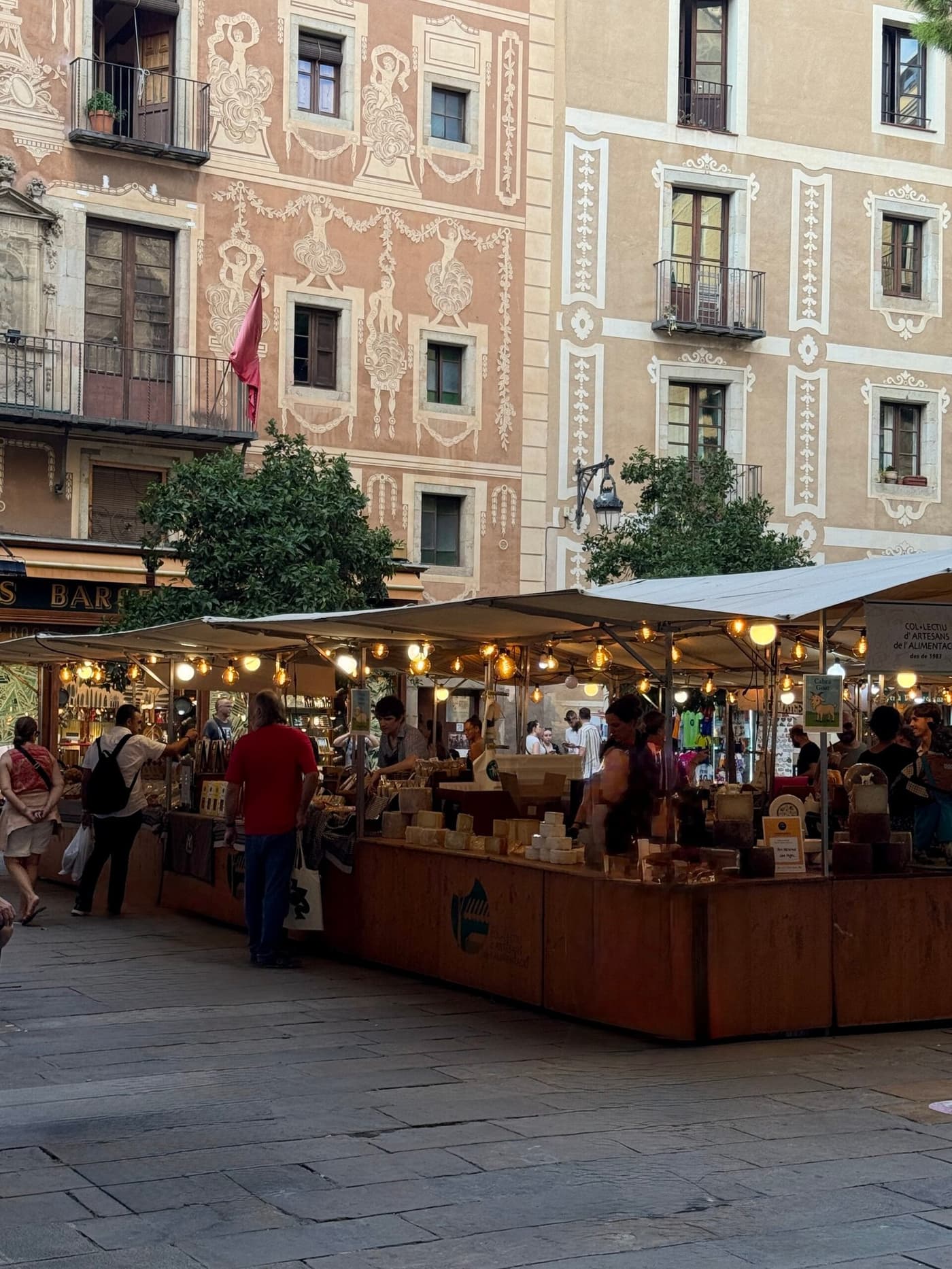
If you don't have much time in the city, the Old Town of Barcelona is easy to explore in the format of one full but not overloaded day. The compact districts let you build a route so that you see the main places without rushing and without constant transfers.
Below is an example of a walk that shows what to see in Barcelona's Old Town in one day while keeping a comfortable pace.
Morning: The Gothic Quarter
The best time to get to know the Gothic Quarter is the morning. In the first hours there are noticeably fewer tourists, and the district looks more authentic. Start your walk in the central part of the quarter, gradually moving into the side streets and small squares.
Morning is a good time for:
- seeing the cathedral and the surrounding streets;
- a calm walk through the historic center;
- getting to know the architecture without crowds.
Even without a set route, the Gothic Quarter is easy to "read" and doesn't need long preparation.
Afternoon: Crossing Through El Born
After the Gothic Quarter, it makes sense to continue toward El Born. It serves as a natural transition between the historic center and the coast. Here you can pause for lunch, drop into a museum or simply stroll along more spacious streets.
This stretch of the route helps you shift smoothly from dense medieval buildings to more open city spaces.
Evening: Barceloneta and the Sea
Barceloneta is a good place to end the day. By evening the district is especially pleasant for walking: it's a good time for the waterfront, the beach and relaxing by the sea. Even if swimming isn't in your plans, an evening walk along the water lets you finish the route at a relaxed pace.
This kind of route shows how a walk through Barcelona's Old Town can end naturally by the sea, without abrupt transitions or logistical hassle.
Useful Tips for Walking Through Barcelona's Old Town
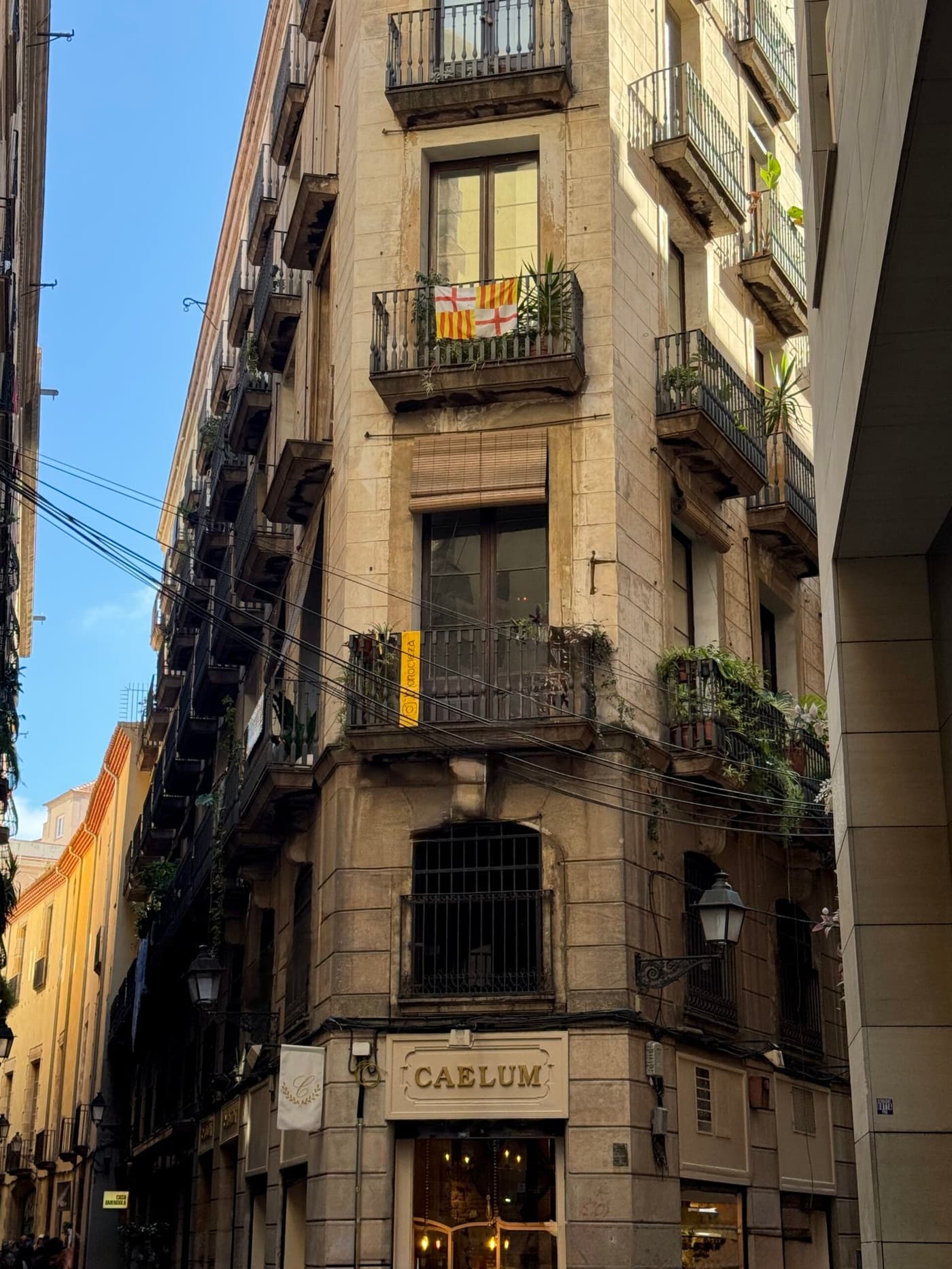
Barcelona's Old Town is great for self-guided walks, but a few practical points will make your visit more comfortable. These tips matter most if you plan to spend a whole day in the historic center.
Wear Comfortable Shoes
Most walking in the Old Town happens on stone streets and paving. In the Gothic Quarter and neighboring districts you'll find uneven surfaces and narrow sidewalks, so comfortable shoes noticeably affect your overall experience.
Plan Your Visiting Time
The best times for walking through the Old Town are the morning and the late afternoon. In the middle of the day, especially in high tourist season, the central streets and squares can get overcrowded. Morning hours suit exploring the historic districts, and the evening suits walks toward the sea and Barceloneta.
Keep an Eye on Your Belongings
As in any popular tourist area, in Barcelona's Old Town you should look after your belongings. This matters most on busy streets, in squares and near La Rambla. Simple attentiveness helps you avoid most unpleasant situations.
Don't Overload Your Route
One of the most common mistakes is trying to see everything in a short time. Barcelona's Old Town is best experienced at a calm pace. It's better to choose a few key districts and leave time for free-form walks than to rush from one point to another.
Explore on Foot
The historic center of Barcelona is made for walking. Many streets are closed to traffic, and the distances between districts are minimal. Exploring on foot lets you feel the atmosphere of the city better and notice details that are easy to miss when you use transport.
Barcelona's Old Town is not just a collection of sights but a living part of the city. In one walk you can see the medieval lanes of the Gothic Quarter, the cozy cafes of El Born, the contrasting spirit of El Raval and the sea atmosphere of Barceloneta. All of these districts are easy to explore on foot, and they flow logically into one another, making a full route without any transport.
When planning your walk, set aside at least half a day for the Gothic Quarter with its squares and cathedrals, then stroll through El Born and finish the day on Barceloneta Beach with a seafood dinner. Even if you see only part of the Old Town, it will still give you a deep sense of Barcelona's character, from its history to the modern life of the old center.
I filmed how we traveled around Spain in a YouTube episode
Frequently Asked Questions About Barcelona's Old Town
What is the Gothic Quarter in Barcelona?
The Gothic Quarter (Barri Gòtic) is the oldest part of Barcelona's Old Town, with narrow medieval streets, squares and historic buildings, where the city of Barcelona was born back in the days of the Roman colony of Barcino.
Where is the Gothic Quarter in Barcelona?
It is in the center of the city, between La Rambla, Plaça de Catalunya and the port area. It is a pedestrian zone with easy access from the metro and the main tourist routes.
What to see in the Gothic Quarter?
The main places: the Cathedral of Barcelona, Plaça Reial, Plaça de Sant Felip Neri, Roman ruins, the Jewish quarter El Call and many picturesque lanes.
Do you have to pay to enter the Gothic Quarter?
The quarter itself is free to walk around. Admission is charged only at museums and specific sites, for example the Cathedral, museums or temporary exhibitions.
How much time do you need to walk the Gothic Quarter?
To calmly see the main points and soak up the atmosphere, 1–2 hours is enough. If you want to go into every museum and cathedral, it's better to set aside half a day.
Is the Gothic Quarter safe?
In general the district is safe for tourists, but as in any popular place, there are pickpockets on busy streets and squares, especially in peak tourist seasons.
What else is there to see near the Old Town?
Besides the Gothic Quarter, in the old center you should look at:
- El Born with its museums and cafes;
- El Raval with contemporary art and an informal atmosphere;
- Barceloneta with its beach and seafood cuisine.
Can you combine a walk through the Old Town and the beach in one day?
Yes. The Old Town is compact enough to walk through the Gothic Quarter and El Born in the morning, then head to Barceloneta Beach in the evening and finish the day with a stroll along the waterfront.