Montjuïc is one of the most unusual places in Barcelona, and it often confuses visitors. People call it a mountain, a hill, a park and even a neighborhood, and in reality it is all of those at once: a natural landscape, historic sites, Olympic heritage and popular tourist attractions.
Montjuïc sits in the southwest of Barcelona and rises about 170 meters above the city. Today it is not just a dot on the map but a large area for walking, relaxing and learning about the city's history. It is home to green parks, viewpoints with panoramic views, Montjuïc Castle, the Olympic Stadium and the famous Magic Fountain.
In this article I explain in detail what Montjuïc really is, why it deserves a place in your Barcelona itinerary, which spots are worth your attention and the easiest ways to get here. It is useful if you are planning your first trip, and also if you have already been to the city but never quite decided whether Montjuïc is worth a separate visit.
Montjuïc: Mountain, Hill or Neighborhood of Barcelona
Montjuïc is called many different things, which creates confusion for visitors. Geographically, Montjuïc is a hill (or a low mountain) about 170 meters high, located in the southwest of Barcelona between the city center and the port area.
Historically, Montjuïc has always been seen as an elevation rather than a residential district. There is almost no ordinary urban development here: the residential blocks, shops and everyday infrastructure typical of Barcelona's neighborhoods are missing. Instead, the whole hill is taken up by parks, gardens, museums, sports facilities and historic monuments.
So why is Montjuïc sometimes called a neighborhood? The reason is simple:
- guidebooks and maps show it as a separate tourist zone;
- many landmark sights are concentrated here, so it is often treated as "a neighborhood to visit";
- visitors spend several hours or even a whole day here, just as they would in full-fledged city districts.
In terms of city structure, it is more accurate to say this: Montjuïc is a hill and a large cultural and park area of Barcelona, not a neighborhood in the classic sense. That is exactly what makes it unique: nature, history and important symbols of the city come together in one place.
Where Montjuïc Is and Why It Matters for Barcelona
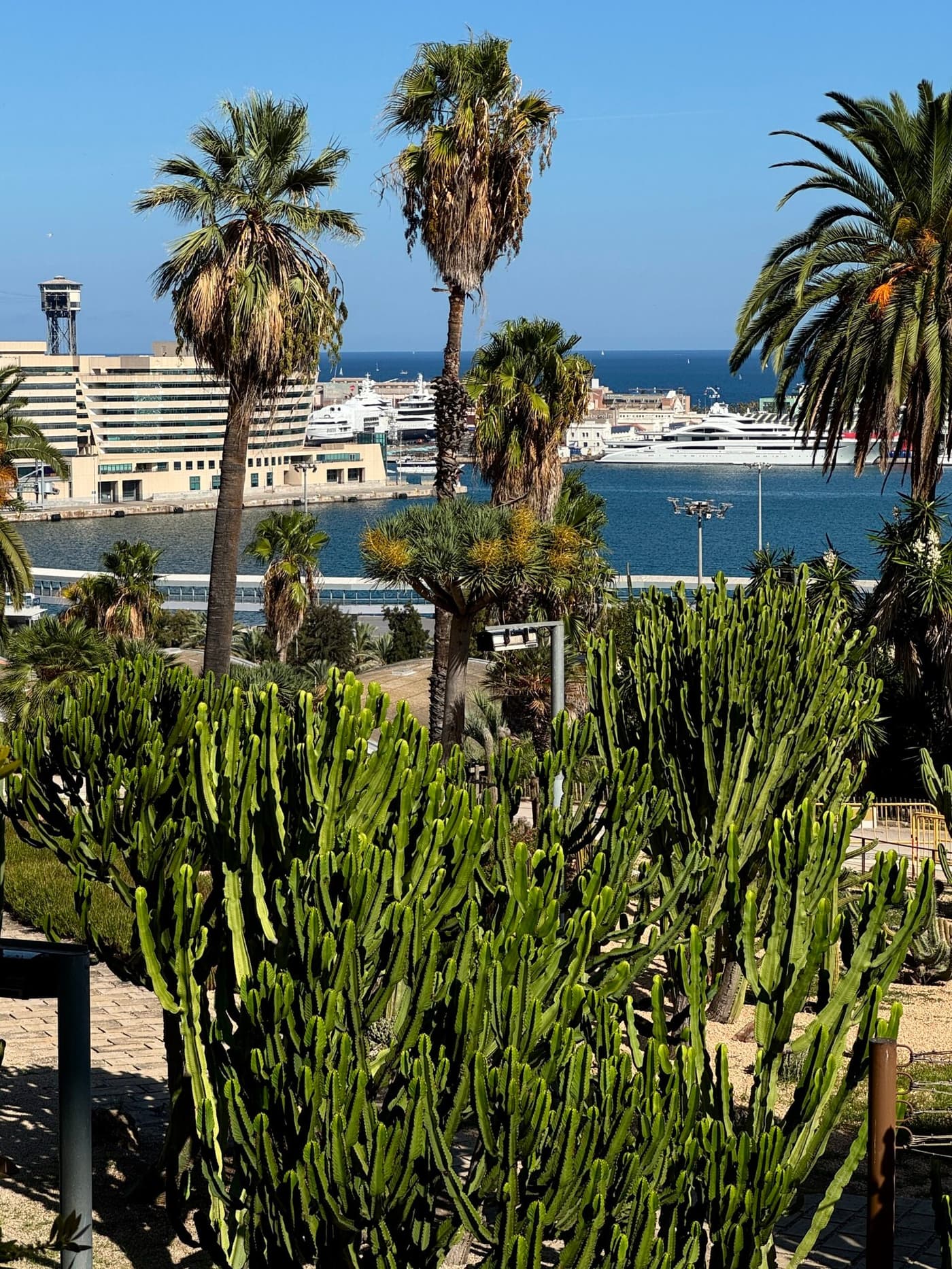
Montjuïc lies in the southwest of Barcelona, not far from the Mediterranean coast and the city port. The hill separates the central districts from the industrial and port zones, and its height makes it easy to spot from many points in Barcelona.
This location has always made Montjuïc strategically important. Since ancient times the hill was used to watch the sea and the approaches to the city, and later for defense. That is why a fortress was built at the top of Montjuïc, and for many years it controlled the port and the coastal part of Barcelona.
Over time the meaning of Montjuïc changed. It turned from a military site into a major public and cultural center. The hill played an especially important role in the 20th century:
- the 1929 World Exposition took place here;
- key venues for the 1992 Olympic Games were built on Montjuïc;
- the area was landscaped and turned into a recreation zone for locals and visitors.
Today Montjuïc is a place where you can see how Barcelona combines nature, history and modern city life. The hill remains an important part of the city's identity and also serves as a green space where people come for walks, views and an atmosphere that is different from the noisy center.
Montjuïc Park and Walks on the Hill
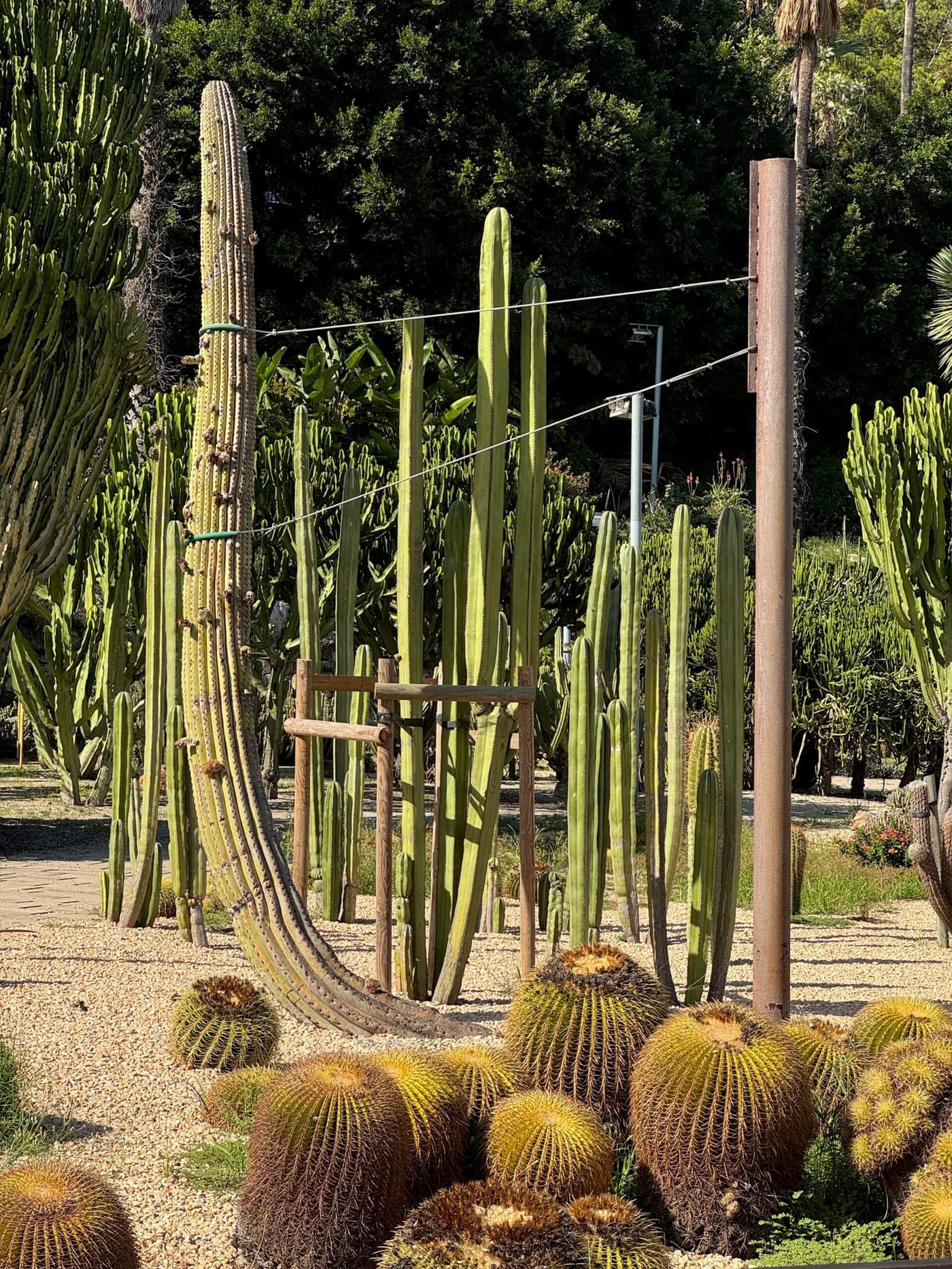
Montjuïc Park is not one specific park but a large green area that covers a significant part of the hill. There are no clear borders and no single entrance: the territory is made up of gardens, alleys, viewpoints and walking routes connected by stairs and paths.
What people value most about Montjuïc Park is the space and the feeling of fresh air. Even in the tourist season it is noticeably calmer here than in the center of Barcelona. Many people come here for the walks themselves rather than for any particular attraction.
What Montjuïc Park Is Like
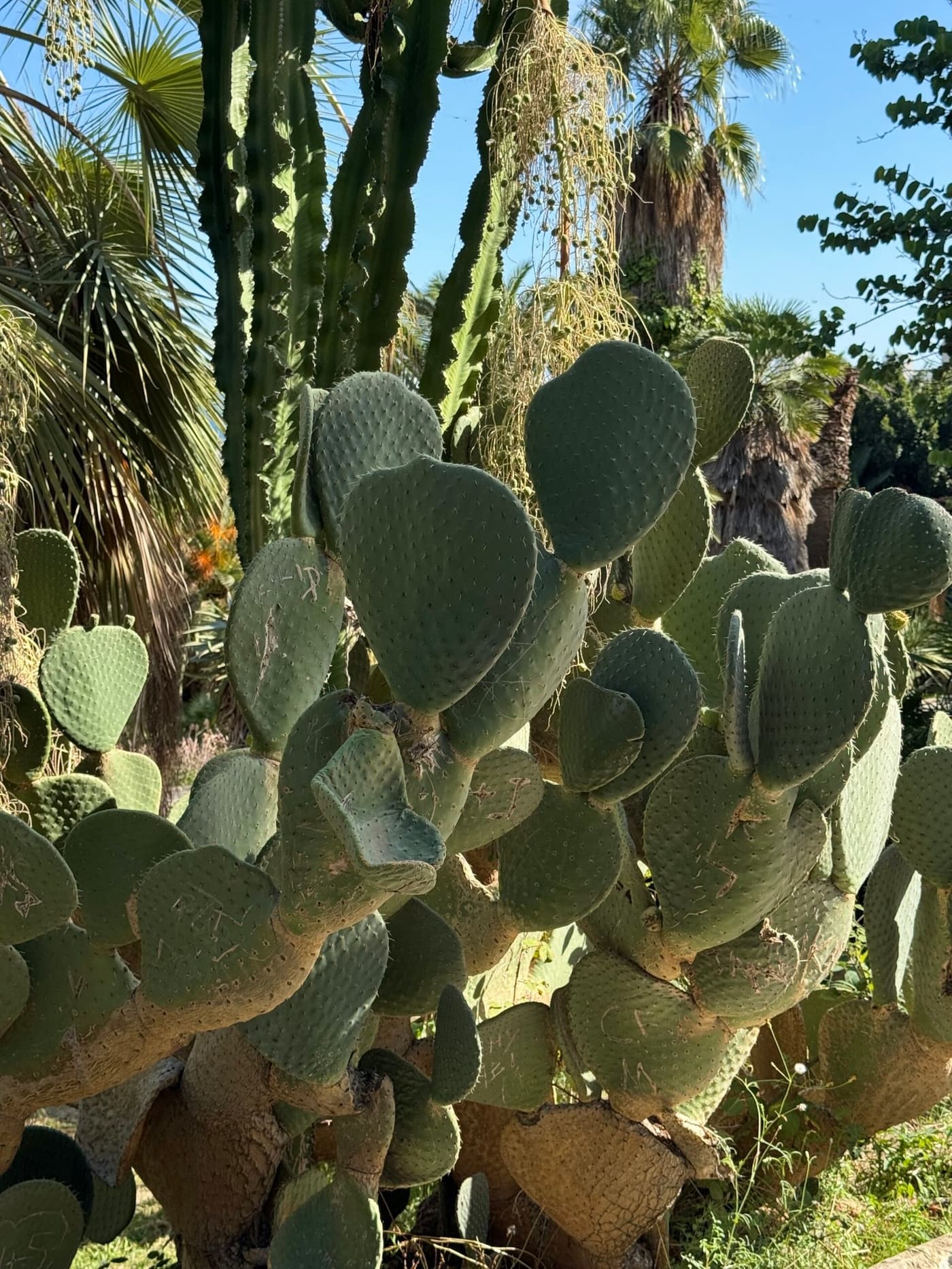
The green zone of Montjuïc developed gradually, especially actively in the first half of the 20th century and after the 1992 Olympics. Today it is a well-kept area with shady alleys, Mediterranean vegetation and viewpoints that look out over the city and the port.
Unlike city parks with a clear layout, Montjuïc feels more like a natural landscape adapted for walking. There are many changes in elevation, so your route often goes up and down, and a walk turns into a small journey.
Best Walking Routes
There is no single universal route around Montjuïc; it all depends on your time and fitness. Most often a walk is combined with visits to individual sights:
- a climb from Plaça d'Espanya toward the park zones;
- a walk between gardens and terraces on the slopes of the hill;
- a descent toward the port or the cable car.
If your goal is a relaxed stroll, choose routes with a gradual climb and stop at the viewpoints.
Viewpoints and City Views
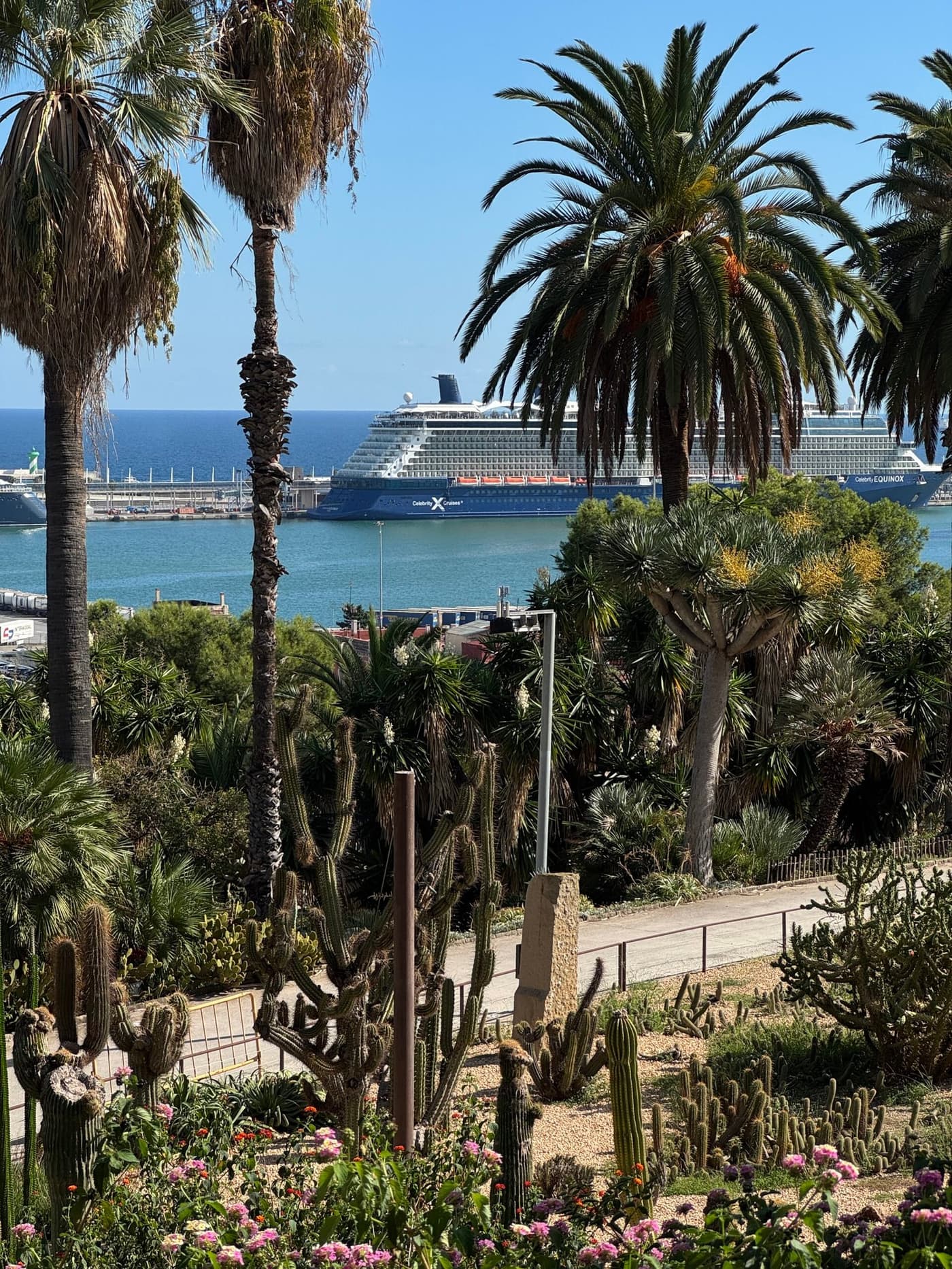
Montjuïc is considered one of the best places in Barcelona for panoramic views. From different points on the hill you can see:
- views of the port and the sea;
- panoramas of the central part of the city;
- sunset views, especially popular with locals.
It is the combination of nature, quiet and viewpoints that makes Montjuïc Park appealing even to those who have already seen the main sights of Barcelona.
Montjuïc Castle and Fortress
One of the main historic sites on the hill is Castell de Montjuïc. Because of the fortress, Montjuïc was long associated not with walks and parks but with military history and control over the city.
History of Montjuïc Castle
The first defensive structures at the top of the hill appeared back in the 17th century. The spot was chosen for a reason: from the heights you could easily see the port, the coast and the approaches to Barcelona. Over time the temporary fortifications grew into a full fortress that was rebuilt and strengthened many times.
Throughout its history Montjuïc Castle was used:
- as a military fortress;
- as a strategic point for controlling the city;
- as a prison, including during difficult periods of Spanish history in the 20th century.
This aspect makes the fortress an important historic site, but it also explains why locals felt ambivalent about it for a long time.
Montjuïc Castle Admission Prices
Admission is paid for Castell de Montjuïc, the historic fortress at the top of the hill.
- Standard ticket: about €12
- Reduced ticket: about €8
- Children under 16: free
Free Admission
- Every Sunday after 3:00 p.m.
- First Sunday of the month: free for everyone
Is Montjuïc Castle Worth Visiting
Today Montjuïc Castle is open to visitors and is seen not as a military site but as a historic attraction and a viewpoint. Visitors come here for several reasons:
- for the panoramic views of Barcelona and the sea;
- to better understand the history of the city;
- as a logical stop on a route around the hill.
Keep in mind that the castle itself is interesting mainly for its context and views, not for an abundance of exhibits. If you are short on time, some travelers just walk around the hill without going inside the fortress.
What You Can See from Montjuïc Castle
From the top of Montjuïc you get some of the widest panoramas in Barcelona. From here you can clearly see:
- the port and the cruise terminals;
- the Mediterranean coast;
- city blocks stretching inland.
It is for these views that many people find the climb to Montjuïc Castle worthwhile, even if the goal of the visit is not a deep dive into history.
Olympic Complex and Montjuïc Stadium
The modern look of Montjuïc was largely shaped by the 1992 Olympic Games. This is where the Olympic complex was created, which became a symbol of Barcelona's renewal and its arrival on the international stage as one of Europe's most attractive cities.
The central venue of the complex is the Estadi Olímpic Lluís Companys, usually called the Montjuïc Olympic Stadium.
The 1992 Olympics and the Role of Montjuïc
Before the Olympics the Montjuïc hill already had real importance, but the preparation for the Games was the turning point. The area was extensively redeveloped:
- parks and walking areas were renovated;
- sports facilities were built;
- transport access was improved;
- the hill became open and convenient for locals.
The 1992 Olympics are considered one of the most successful in history, and Montjuïc was its main spatial center. From then on the hill stopped being associated only with military history and became part of modern Barcelona.
The Montjuïc Olympic Stadium Today
Today the Olympic Stadium is still in use, but no longer exclusively for sport. It hosts:
- large concerts;
- cultural and city events;
- occasional sports events.
Even if you do not go inside, the stadium is often included in a walk around Montjuïc. The spacious square around it, the architecture and the open spaces fit well into the overall rhythm of the hill and give you a pause between walks through the parks.
For visitors, the Olympic complex is interesting not only as a sports venue but also as part of the city's history, showing how Barcelona managed to rethink its space and make it comfortable for living and leisure.
The Magic Fountain of Montjuïc
One of the best-known and most visited attractions at the foot of the hill is the Magic Fountain of Montjuïc. It has long been a symbol of Barcelona in the evening and regularly appears on lists of places visitors are advised to see.
The fountain is located near Plaça d'Espanya, at the start of the climb up the hill, so people often visit it together with a walk around Montjuïc or after exploring the surroundings.
What the Magic Fountain Is
The Magic Fountain was built for the 1929 World Exposition and has been modernized several times since. Today it is a light-and-music fountain that combines jets of water, lighting and musical accompaniment.
During the show the jets of water change height and shape, and the lighting follows the rhythm of the music. The programs are updated regularly, so even on a repeat visit your impressions may be different.
Is the Fountain Show Worth It
The Magic Fountain of Montjuïc is a free show, which makes it especially popular with visitors. A few things are worth keeping in mind, though:
- a lot of people gather for the show, especially in high season;
- it is better to arrive early to get a good spot;
- the impression depends a lot on the weather and the lighting.
If you like atmospheric evening walks and city shows, the fountain is definitely worth adding to your route. If your goal is a quiet visit without crowds, you may be better off sticking to a daytime walk through the parks of Montjuïc.
Best Time to Visit
The fountain show takes place in the evening, on a schedule that changes with the season. Performances are usually held several times a week, and more often in the summer months. Check the current schedule before you go, because in some periods the fountain may not run due to technical or weather conditions.
How to Get to Montjuïc
Montjuïc is quite close to the center of Barcelona, but because of the changes in elevation it is better to choose how you will get around in advance. Depending on your route and goals, you can use public transport, walk or take the lifts.
Metro and Bus
The easiest way to reach the foot of Montjuïc is by metro. Most visitors get off at the stations near Plaça d'Espanya, from where it is convenient to start a route to the fountains and the park zones. City buses also run to the hill, climbing higher and shortening the walk uphill.
This option suits those who plan to walk through the parks or visit the Magic Fountain.
Funicular and Cable Car
To get up the hill you can use the Montjuïc funicular, which connects the lower districts of the city with the upper part of the hill. Higher up, a cable car runs toward Montjuïc Castle. It is especially popular for its panoramic views of the city and the port. This option suits those who want to combine the trip with the sights and save time on the climb.
Montjuïc Cable Car Prices
Telefèric de Montjuïc is a cable car that takes visitors from the middle part of the hill up to Montjuïc Castle.
- One-way ticket: about €12
- Round-trip ticket: about €17-19
- Children under 4: free
- Discounted tickets for children and reduced-fare passengers
The cable car is not included in Barcelona's standard transport ticket and is paid for separately.
On Foot
Walking up Montjuïc is possible, but keep the terrain in mind. The routes include stairs and long uphill stretches, so the walk can be tiring, especially in the hot season.
Most people walk up:
- from Plaça d'Espanya through the park zones;
- along routes with stops at the viewpoints.
If you have enough time and want to explore the area at a relaxed pace, the walk up can be part of the experience. Otherwise, it is more convenient to combine walking with public transport or the funicular.
How Much Time You Need for Montjuïc
How much time to set aside for Montjuïc depends on the goals of your trip and your walking pace. This is not a place to rush through: the hill is large, and the sights are spread out.
A Short Visit: 2-3 Hours
This option works if you:
- want to see the Magic Fountain;
- want to stroll through one of the park zones;
- want to climb to the viewpoints without visiting the museums and the castle.
In this case Montjuïc fits easily into a busy Barcelona itinerary as an extra stop.
Half a Day on Montjuïc
The best option for most visitors. In half a day you can:
- take an unhurried walk through the parks;
- see the Olympic complex and the stadium;
- go up to Montjuïc Castle;
- stop at the viewpoints.
This format lets you take your time and get a full picture of the hill.
A Whole Day
Plan a whole day on Montjuïc if you:
- want to visit several museums;
- prefer long walks and photography;
- plan to combine Montjuïc with the port area or the beaches.
In this case it is better to plan your route and ways of getting around in advance, so you do not waste energy on extra climbs.
Is Montjuïc Worth Visiting
Montjuïc is not a must for a first introduction to Barcelona, but for many travelers it becomes one of the most memorable places of the trip. It all depends on your interests, your travel pace and how much free time you have.
Who Should Go to Montjuïc
A trip to Montjuïc is especially good for those who:
- love walks in nature and open spaces;
- want to see Barcelona from above and take panoramic photos;
- are interested in the city's history and Olympic heritage;
- look for quieter places away from the tourist crowds of the center.
Montjuïc complements the classic Barcelona route well and shows the city from a different side, a less noisy and more measured one.
Who Can Skip It
If you have little time in the city and your priority is the main sights in the center, you can leave Montjuïc for your next visit. The hill may also feel tiring:
- in hot weather;
- on a tight schedule when you cannot set aside half a day;
- if you do not feel like walking a lot.
Montjuïc in Barcelona is a mountain and a large park area that combines nature, history and the modern city. It does not replace the landmark places of the center, but it broadens your impression of Barcelona and lets you see it from another side. If you have some free time in your itinerary and want to go beyond the standard tourist points, a trip to Montjuïc is well worth it.
Here is how we traveled around Spain, filmed in a YouTube episode
Frequently Asked Questions About Montjuïc (FAQ)
What is Montjuïc?
Montjuïc is a hill (or low mountain) in Barcelona that has turned into a large park and cultural area with sights, not a residential neighborhood.
Where is Montjuïc?
The hill is in the southwest of Barcelona, next to the port and Plaça d'Espanya. From the top you get panoramic views of the city and the sea.
Do you have to pay to enter Montjuïc Park?
Entry to Montjuïc Park itself is free. You only pay for the museums, the fortress, the cable car and some other sites.
How much is a ticket to Montjuïc Castle?
Admission is paid for Castell de Montjuïc, the historic fortress at the top of the hill.
- Standard ticket: about €12
- Reduced ticket: about €8
- Children under 16: free
How do you get to Montjuïc by public transport?
The most common way is the metro to Plaça d'Espanya and then the funicular or on foot. You can also take the buses that go higher up the hill.
When are the Montjuïc Magic Fountain shows?
The show usually takes place in the evening on certain days of the week, most often on weekends and in the summer season. The exact schedule changes with the season, so it is best to check in advance.
How much time do you need to see Montjuïc?
For a short walk 2-3 hours is enough, and for a full tour of all the main sights you need half a day or a whole day.
What sights are there on Montjuïc?
The hill has:
- a fortress and viewpoints;
- park zones and gardens;
- the Olympic complex and stadium;
- the Magic Fountain;
- museums and panoramic spots.
Can you walk up Montjuïc?
Yes, you can walk up Montjuïc along the walking routes, but the route takes some fitness because of the changes in elevation. It is better to combine the walk up with the funicular or the cable car.