Barcelona is a city where architecture has become part of its cultural identity. A large share of the credit goes to Antoni Gaudí, an architect whose buildings are now among the most recognizable in the world. His works shape the unique look of the city and attract millions of travelers every year.
Gaudí's architecture in Barcelona is not just Art Nouveau. It blends nature, religious symbolism, engineering experiments and artistic thinking. The houses, churches and parks built from his designs stand out for their flowing forms, mosaics, unusual facades and attention to detail.
In this article I'll go through the Gaudí buildings you can see in Barcelona, how they differ from one another and why these particular structures are considered architectural masterpieces. We'll look at the Sagrada Família, Gaudí's famous houses, Park Güell and the architect's other key creations.
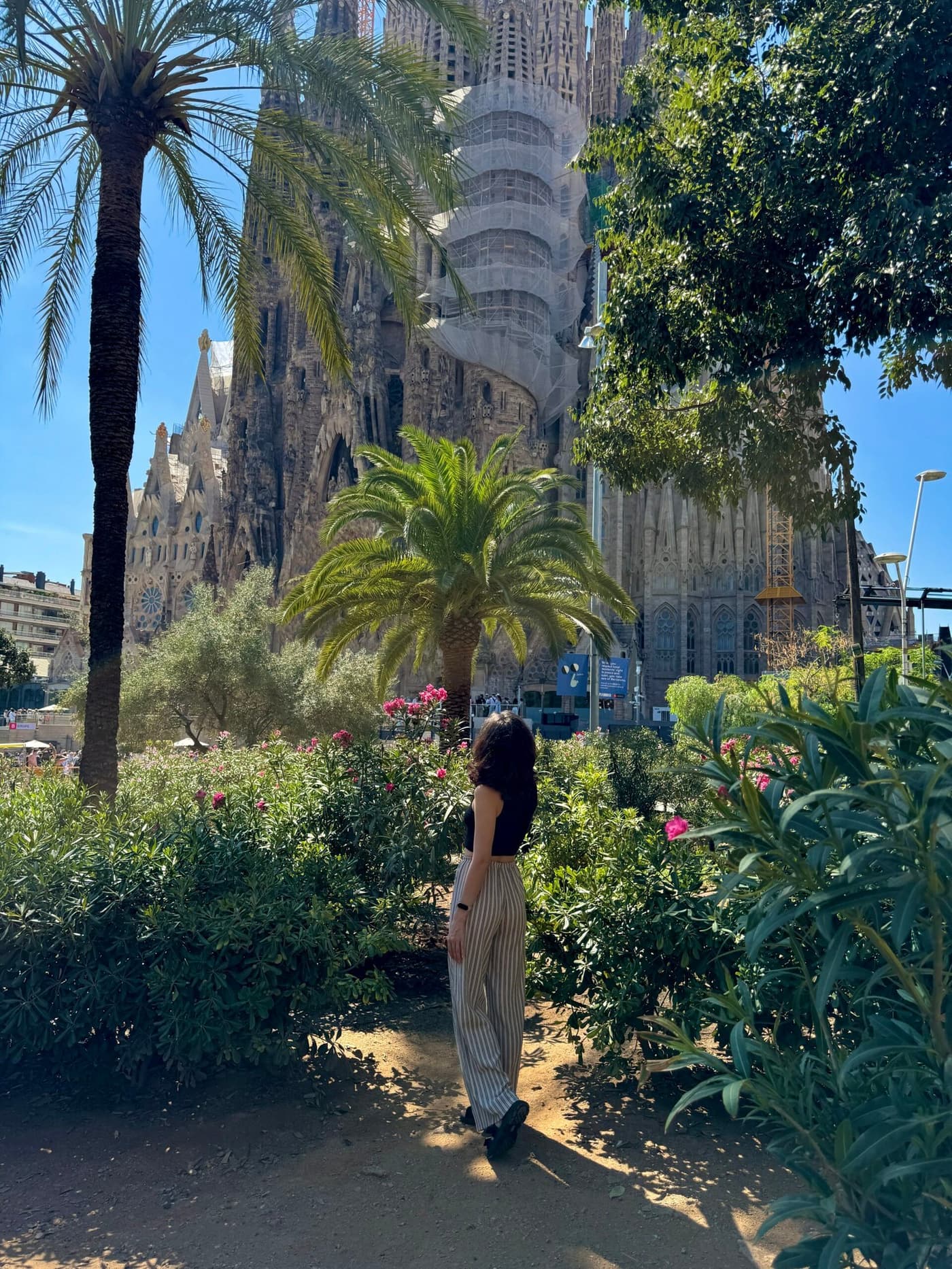
Antoni Gaudí, the architect who changed the face of Barcelona
Antoni Gaudí i Cornet was born in 1852 in Catalonia and devoted most of his life to working in Barcelona. This is where he carried out almost all of his major projects, which is why the city is often called "Gaudí's city" today.
Gaudí is considered one of the leading figures of Catalan Modernisme, yet his style is hard to pin to any single movement. He drew inspiration from natural forms, geometry, religion and traditional crafts, creating buildings that never repeat one another.
Gaudí's architecture in Barcelona: key features
Gaudí's architecture in Barcelona is easy to recognize thanks to several characteristic traits:
- straight lines give way to flowing, "living" forms;
- mosaics and decorative ceramics are used extensively;
- architectural elements borrowed from nature — waves, shells, bones, plants;
- thoughtful engineering: natural ventilation, lighting and ergonomic spaces.
This approach made Antoni Gaudí's buildings not only beautiful but also functional. Many of his ideas were ahead of their time and are still studied by architects around the world.
In the sections below I'll go through the main Gaudí buildings in Barcelona, starting with the architect's best-known and largest project, the Sagrada Família.
The Sagrada Família: Gaudí's greatest masterpiece in Barcelona
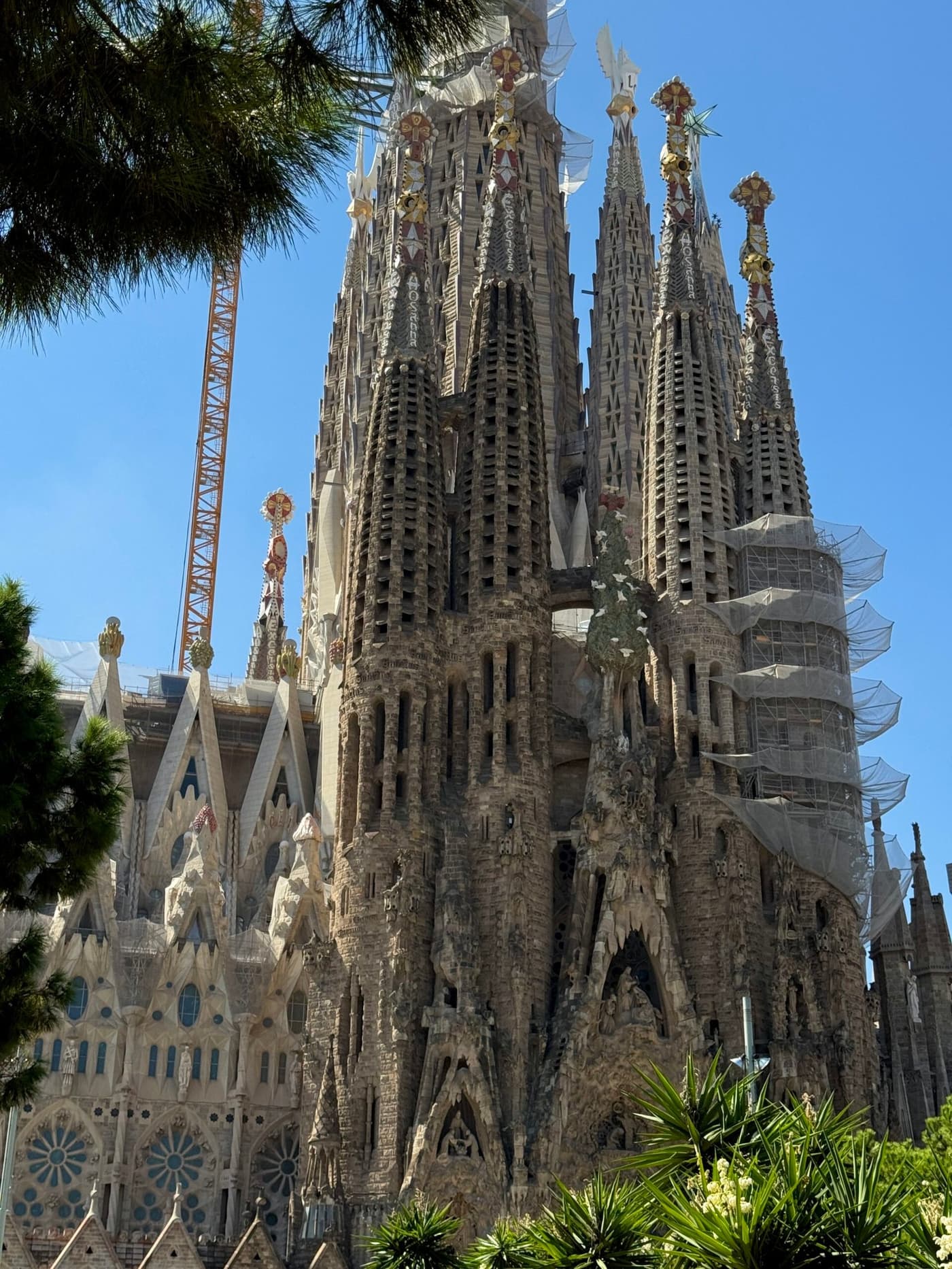
The Sagrada Família, also known as the Church of the Holy Family, is Antoni Gaudí's best-known and largest creation in Barcelona.
I wrote about the Sagrada Família in Barcelona, its architecture, tickets and visiting, in a separate article.
This church has become a symbol of the city and one of the most recognizable architectural landmarks in the world. It is the building most often linked with Gaudí's name and his contribution to Barcelona's architecture.
Construction of the church began in 1882, and Antoni Gaudí took over the project a year later. He devoted more than forty years of his life to the Sagrada Família, focusing entirely on the church in his final years. The project was conceived as a grandiose religious building in which the architecture would convey Christian ideas through form, light and space.
The Sagrada Família: construction history
Work on the Sagrada Família has been going on for more than a hundred years. The church was not finished when Gaudí died in 1926, and the project was halted several times because of historical events, including the Spanish Civil War.
Even so, construction continues today, relying on the architect's surviving drawings, models and notes. Modern technology has sped up the process, yet the architects try to follow Gaudí's original concept as closely as possible.
Architecture and symbolism of Gaudí's church
The Sagrada Família is rich in architectural symbolism. The church has several facades, each dedicated to key stages of Christian history. The shapes of the towers, columns and vaults are inspired by nature: inside, the church resembles a stone forest, with columns that look like tree trunks.
Gaudí paid special attention to light. The stained-glass windows are designed so that the sun's rays fill the space with color and create a sense of spiritual uplift. It is this combination of engineering solutions and artistic vision that makes Gaudí's cathedral in Barcelona unique.
Where to buy tickets:
- the church's official website
- major international marketplaces: Klook, GetYourGuide and Viator.
Ticket prices:
- standard ticket: about €26–36 on average
- an audio guide and tower access cost more (prices depend on the ticket type and the season)
Opening hours:
- daily
- usually from 9:00 a.m.; closing time depends on the season (earlier in winter, later in summer)
Location:
- Eixample district, central Barcelona. Location on the map
- nearest metro: Sagrada Família
Gaudí houses in Barcelona: a list with names
Antoni Gaudí's residential houses in Barcelona are among the brightest examples of Modernisme architecture. Unlike churches and public spaces, it was in his residential buildings that the architect could experiment with forms, facades and the interior layout without being bound by traditional canons.
Gaudí's houses in Barcelona don't look alike, but they share a common approach: no straight lines, close attention to detail and a strong connection to natural forms. Many of these buildings are open to visitors today and rank among the city's main sights.
The best-known Gaudí houses in Barcelona are:
Let's look at each of them in more detail.
Casa Batlló: Gaudí's "House of Bones"
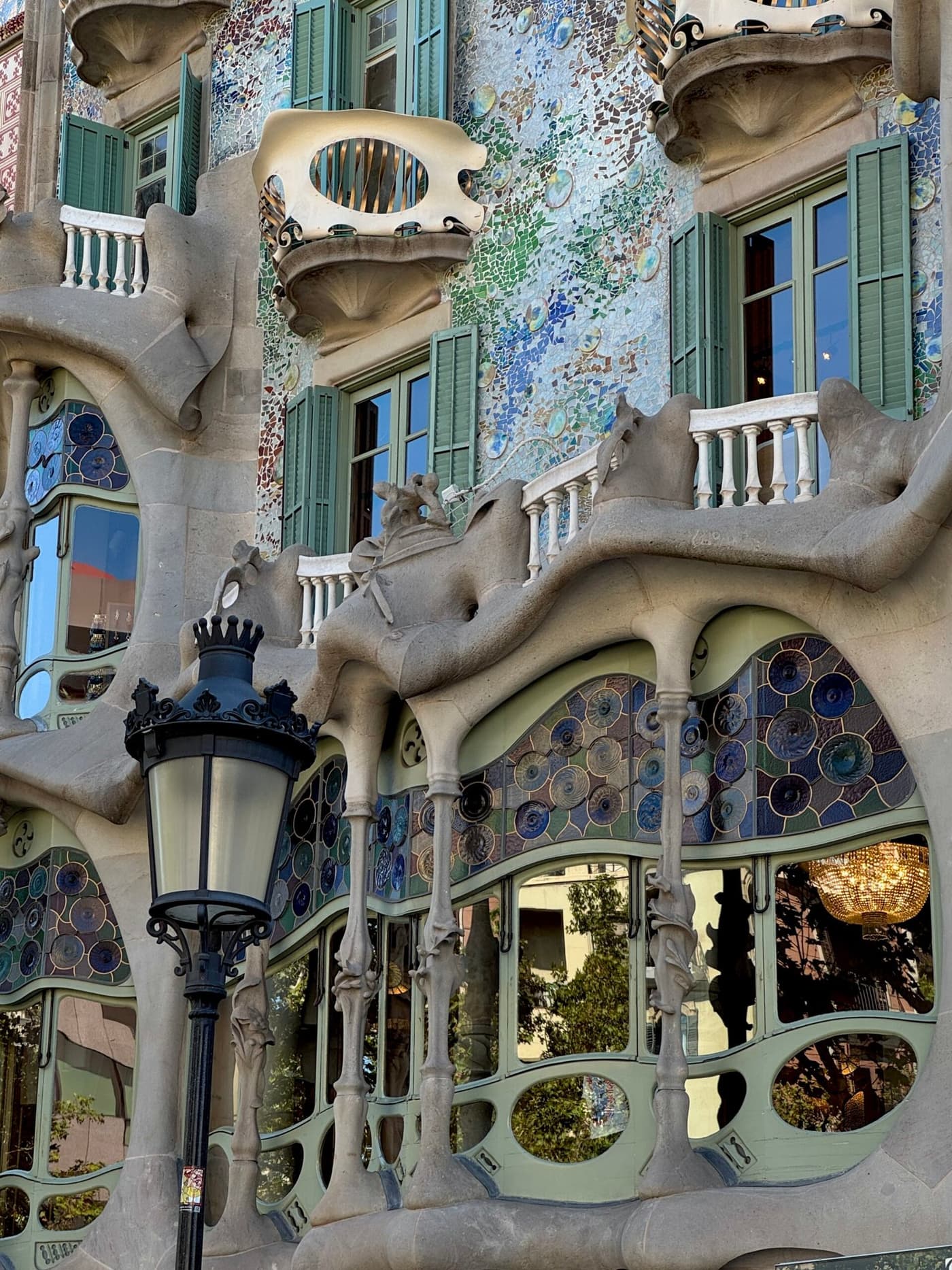
Casa Batlló is one of Antoni Gaudí's most recognizable buildings in Barcelona. The house stands on Passeig de Gràcia and was completely rebuilt by the architect in the early 20th century.
The facade of Casa Batlló looks like a living organism. It is often called the "House of Bones" because the shapes of the balconies and columns recall skulls and bones. The roof is a wave-like surface and is often interpreted as the back of a dragon, an image tied to Catalan legends.
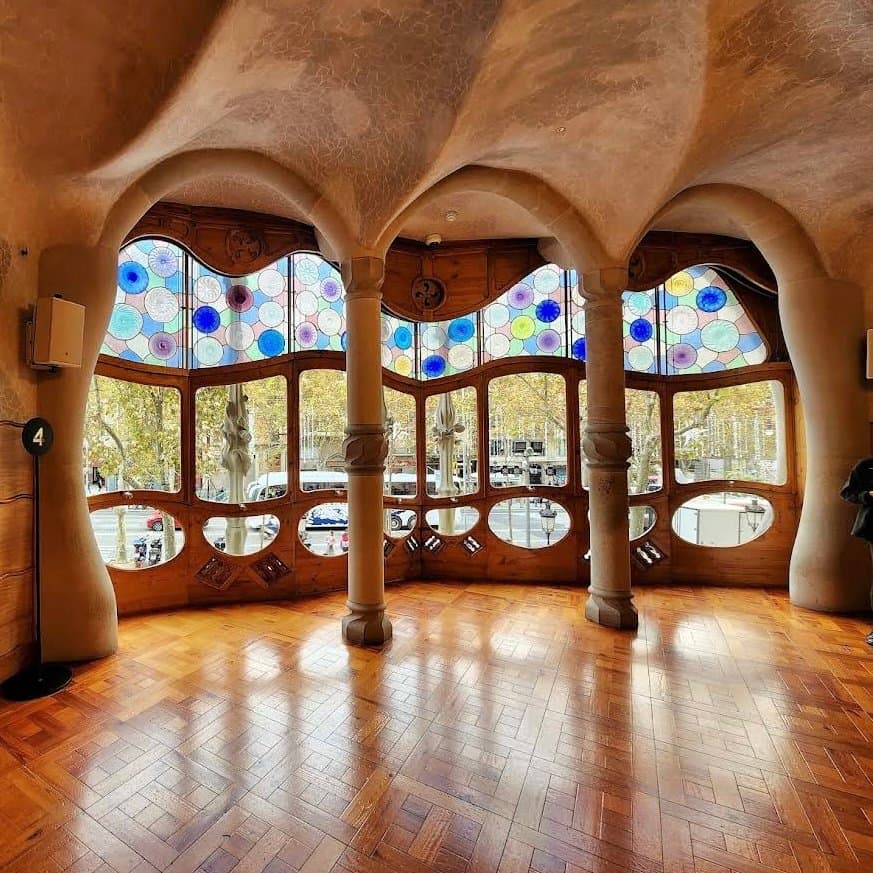
The interiors are just as unusual. Gaudí carefully planned the lighting, ventilation and layout, creating a comfortable living space with no sharp corners or dark rooms. Today Casa Batlló is a museum open to visitors.
Where to buy tickets:
- Casa Batlló's official website
- tourist marketplaces: Klook, GetYourGuide and Viator.
Ticket prices:
- standard ticket: about €30–35
- tickets with extended access cost more
Opening hours:
- daily
- usually from 9:00 a.m. to 6:30–8:00 p.m. (depending on the season)
Location:
- Passeig de Gràcia. Location on the map
- Eixample district
Casa Milà (La Pedrera): Barcelona's stone wave
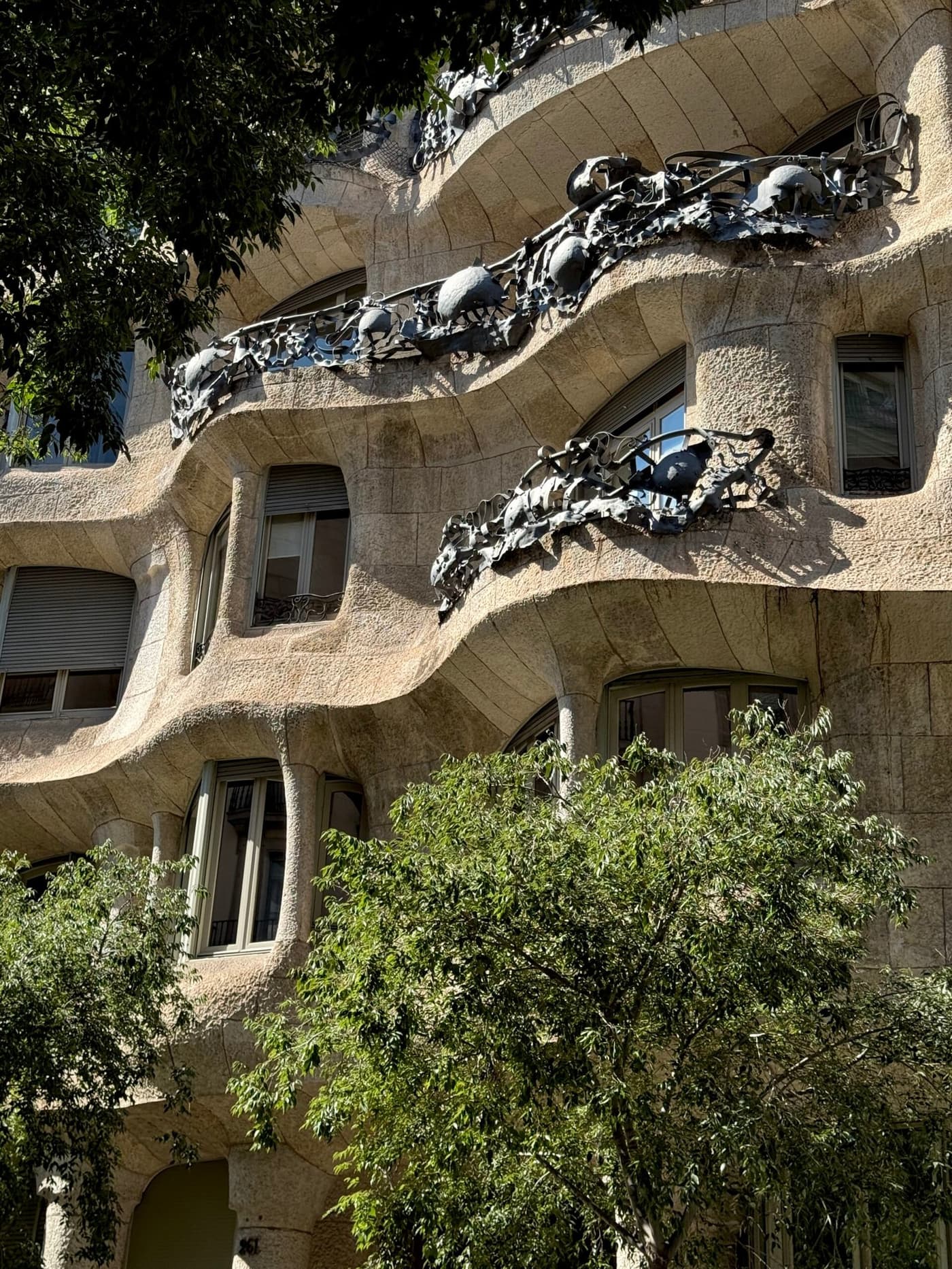
Casa Milà, also known as La Pedrera, was Gaudí's last residential project in Barcelona. The building stands out for its massive wave-like facade, which gave it its nickname: "the quarry."
One of Casa Milà's main features is its roof, with unusual chimneys and ventilation towers. These elements resemble sculptures and are often seen as standalone works of art. The interior is organized around light courtyards, which bring natural light into the apartments.
Today Casa Milà is a UNESCO World Heritage Site and is regarded as an important example of Gaudí's innovative approach to urban architecture.
Where to buy tickets:
- La Pedrera's official website
- tourist services and marketplaces: Klook, GetYourGuide and Viator.
Ticket prices:
- daytime visit: about €25–30
- night tours and special programs cost more
Opening hours:
- daily
- daytime visits usually start at 9:00 a.m.
- evening programs run on a schedule
Location:
- Passeig de Gràcia. Location on the map
- central Barcelona
Casa Vicens and other Gaudí residential buildings
Casa Vicens is one of Antoni Gaudí's early projects in Barcelona. Unlike his later works, it shows a clear influence of Eastern motifs and bright ceramic decoration. Casa Vicens became the starting point for the development of Gaudí's unique architectural style.
Besides these buildings, Barcelona has other residential and commercial buildings by the architect, each reflecting a different stage of his creative path.
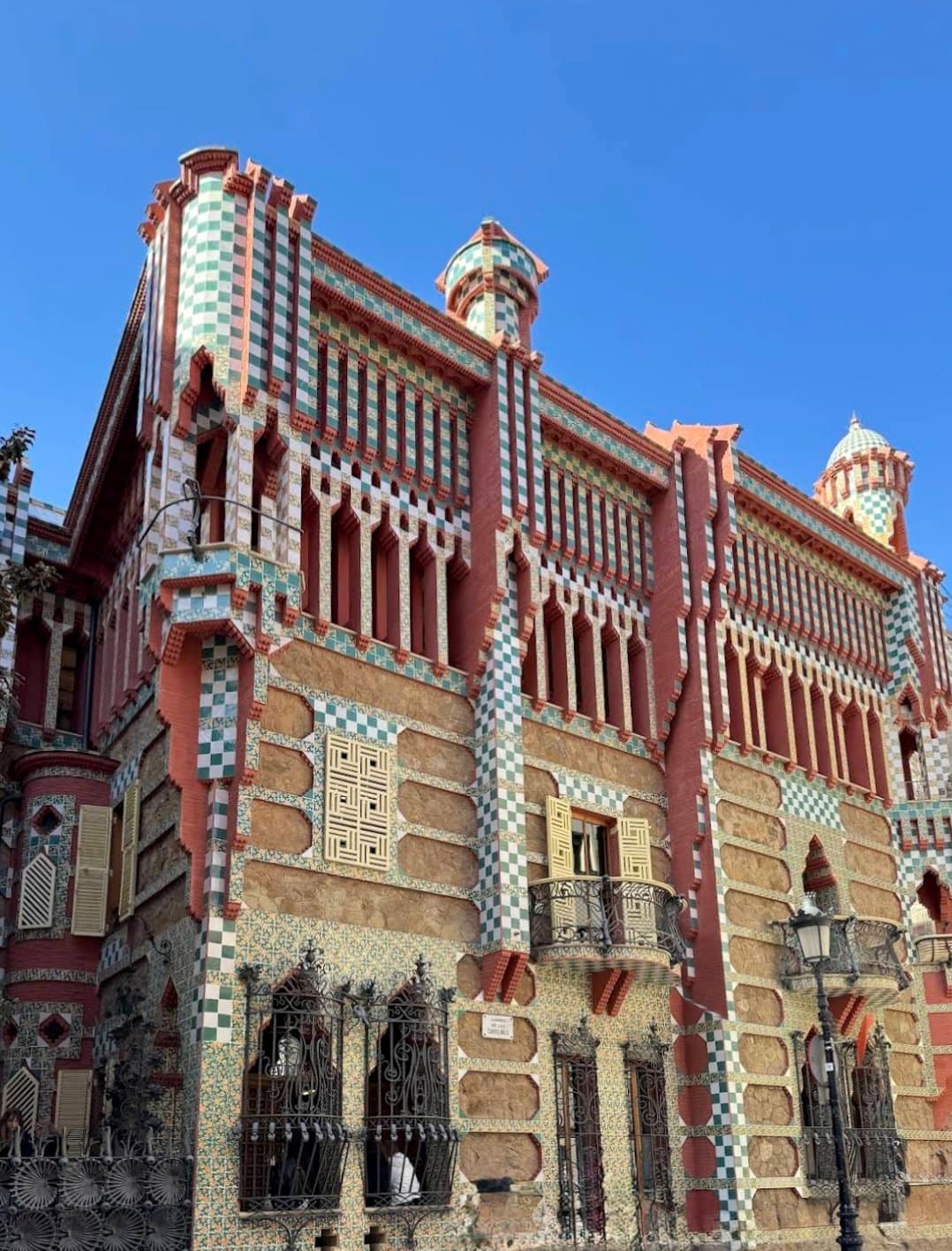
Where to buy tickets:
- Casa Vicens's official website
- international ticket platforms: Klook, GetYourGuide and Viator.
Ticket prices:
- standard ticket: about €16–18
Opening hours:
- daily
- usually from 10:00 a.m.; closing time depends on the season
Location:
- Gràcia district, location on the map
- a bit farther from the tourist center
Park Güell: Antoni Gaudí's park in Barcelona
Park Güell is another unusual and recognizable creation by Antoni Gaudí in Barcelona. The park was conceived as part of a residential complex, but the project was never fully realized. As a result, the site turned into a public space that is now a UNESCO World Heritage Site.
Park Güell clearly shows how skillfully Gaudí worked with the landscape. The architect didn't try to reshape the terrain; instead, he built the architectural elements into the natural setting. Thanks to this, the park looks organic and feels like a continuation of the surrounding hill.
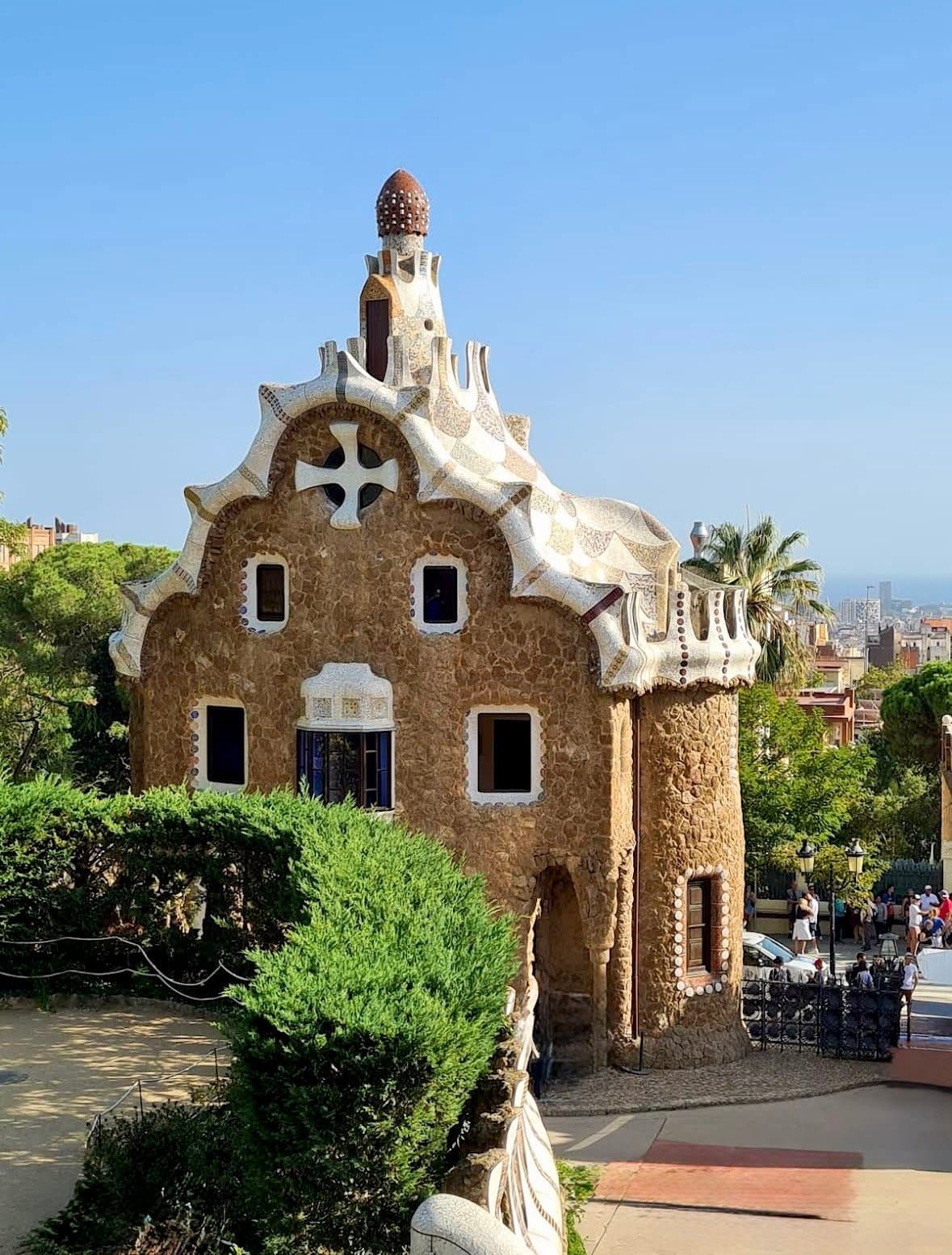
Architecture and idea of Park Güell
In the architecture of Park Güell, Gaudí used the same principles as in his buildings: no straight lines, extensive use of mosaics and inspiration from natural forms. The colonnades resemble tree trunks, while the paths and terraces seem to follow the curves of the terrain.
Among the park's most recognizable features are the so-called "gingerbread houses" by the main entrance. These buildings, with their fantastical roofs and decorative details, create a fairy-tale atmosphere and are often associated with Gaudí's architectural style.
Gaudí's famous bench and mosaics
The central terrace of the park is decorated with a long, wave-shaped bench covered in colorful mosaic. This bench is considered one of the best-known Gaudí works in Barcelona. It is not only decorative but also functional: its shape was designed around the human body, which makes it comfortable to sit on.
The mosaics in Park Güell are made in the trencadís technique, using shards of ceramic and glass. This method became a hallmark of Gaudí's architecture, and he used it widely in other projects.
Park Güell is an example of how architecture, art and nature can coexist in a single space. In the next section we'll look at other Gaudí buildings and creations in Barcelona that often stay in the shadow of his most famous works but are just as interesting architecturally.
Where to buy tickets:
- the park's official website
- tourist marketplaces: Klook, GetYourGuide and Viator.
Ticket prices:
- entry to the Monumental Zone: about €18
- the rest of the park is free
Opening hours:
- daily
- hours depend on the time of year (longer in summer)
Location:
- Gràcia / El Carmel district. Location on the map.
- it sits on a hill, so it's easier to get there by public transport
Other Gaudí buildings and creations in Barcelona
Besides the best-known projects, Barcelona has other buildings by Antoni Gaudí that help explain how his architectural style evolved. These structures aren't always on the main tourist routes, but they play an important part in the architect's legacy.
They include religious, residential and decorative works created at different stages of his career. They already show Gaudí's characteristic techniques: working with form, color, light and structure.
Examples of such works include:
- fence elements and estate pavilions;
- small urban buildings;
- architectural details integrated into the city environment.
Together, these creations give a complete picture of how Antoni Gaudí influenced Barcelona's architecture and its visual image.
The Gaudí house museum in Barcelona
The Gaudí House Museum is located inside Park Güell and lets you get closer to the architect's life and work. Gaudí lived in this house during the last years of his life, and today the building is open to visitors.
The museum displays furnishings, the architect's personal belongings, and furniture and decorative elements made from his designs. The exhibition helps you understand how Gaudí's ideas were applied not only in architecture but also in the design of everyday objects.
Visiting the museum complements your time in Park Güell and gives a fuller picture of the architect as a person.
Gaudí sights in Barcelona: what you shouldn't miss
If you're planning to explore Gaudí's architecture in Barcelona, it's worth including a few key sights on your route. They best reflect the scale and variety of his work.
The main Barcelona sights linked to Gaudí are:
- the Sagrada Família (Church of the Holy Family);
- Casa Batlló;
- Casa Milà (La Pedrera);
- Park Güell;
- Casa Vicens;
- the Gaudí House Museum.
This list lets you see different types of buildings, from religious architecture to residential houses and public spaces.
Antoni Gaudí had an enormous influence on the look of Barcelona and made the city one of the world's main centers of architectural tourism. His buildings are not just landmarks but a coherent artistic system that combines nature, religion and engineering thought.
Gaudí's architecture in Barcelona remains relevant today, drawing the attention of researchers, architects and travelers. Getting to know his works lets you see the city in a new way and understand why Gaudí's name is inseparable from Barcelona.
I filmed how we traveled around Spain in a YouTube episode
Frequently asked questions about Gaudí and Barcelona
How many Gaudí buildings are there in Barcelona?
Barcelona has several dozen sites connected with Antoni Gaudí, including large buildings, decorative elements and architectural details. The best-known ones are on the UNESCO World Heritage list.
Which Gaudí houses can you visit inside?
Casa Batlló, Casa Milà, Casa Vicens and the Gaudí House Museum are open to visitors. Inside you can see interiors restored according to the architect's original designs.
Why is Gaudí's architecture considered unique?
Gaudí's architecture stands out for its organic forms, its inspiration from nature and its combination of artistic vision with engineering solutions. His buildings don't follow traditional architectural patterns and each has its own individuality.
Where are Gaudí's main buildings concentrated?
Most of Gaudí's buildings are in Barcelona, mainly in the Eixample and Gràcia districts, as well as inside Park Güell.