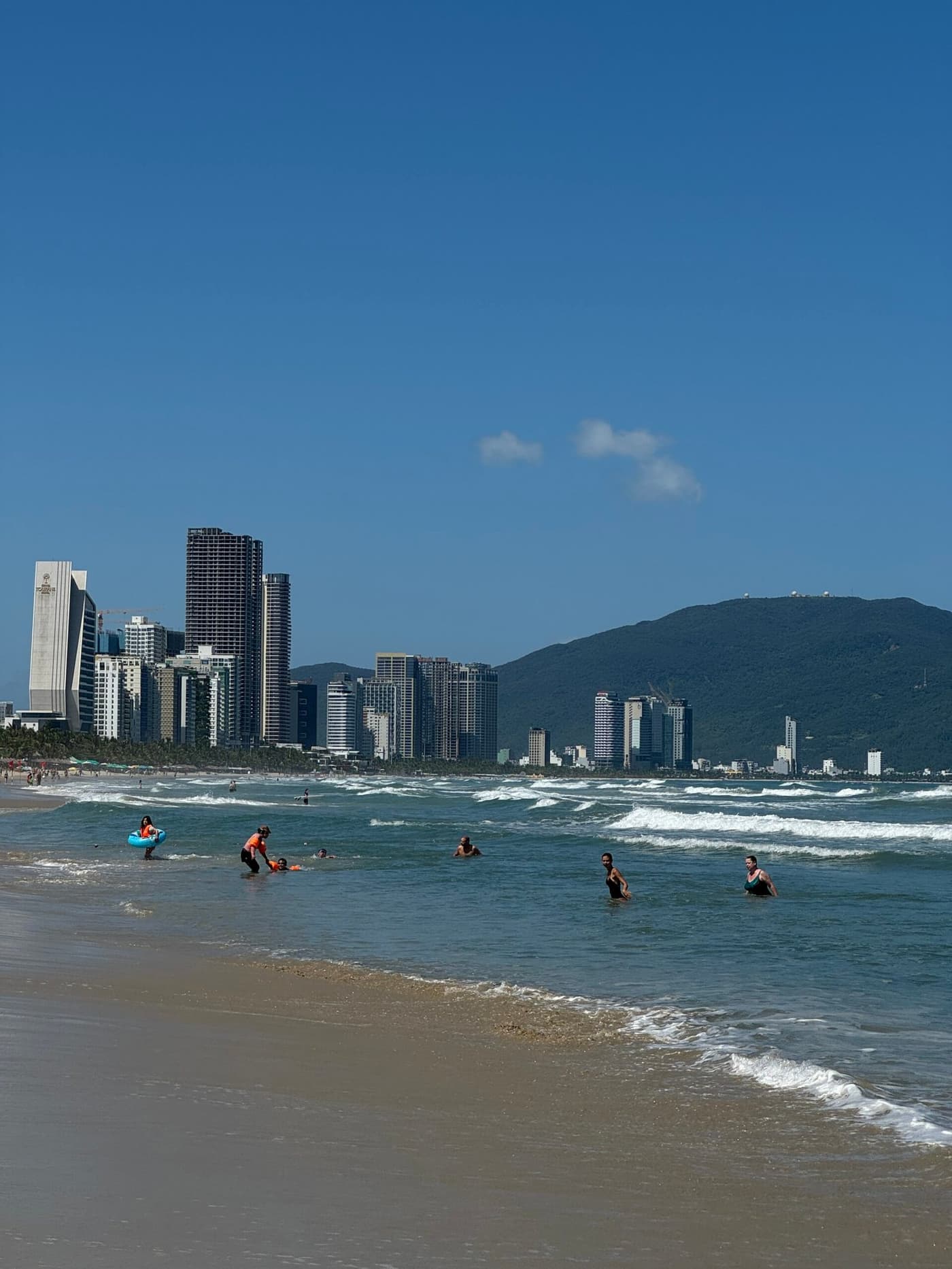
Da Nang is one of the most talked-about cities in Vietnam right now, both for moving abroad and for a beach holiday: the sea, the mountains and full city infrastructure are all 10-15 minutes from each other, which is rare in Southeast Asia. But there is no point in idealizing it. Vietnam is not paradise, and Da Nang is no exception: there is litter on the streets, the traffic is chaotic, the standard of quality is noticeably different in almost everything, and locals have a different idea of personal space. We lived in Da Nang for about 9 months, so I have plenty to tell you.
In this guide I cover everything you need to know about the city: prices, areas, beaches, sights, food, transport and the best time to go.
What kind of city Da Nang is
Before getting into the details, here are a few facts that help explain what Da Nang is like.
Da Nang sits right in the middle of the country: about 760 km from Hanoi in the north and 960 km from Ho Chi Minh City in the south. It is equally easy to travel north or south from here, which makes it an ideal base for exploring all of Vietnam. I wrote about what kind of country Vietnam is in a separate article.
The airport is right in the city, and a taxi to the center takes 10 minutes. That is rare for a large Asian city and genuinely convenient. Hoi An is 30 km away, about 45 minutes by car. The ancient city of Hue is 100 km away along one of the most scenic roads in the country, over the Hai Van Pass.
The city stands on the coast of the South China Sea, with about 30 kilometers of beach. Behind it is a beautiful mountain range and the Son Tra nature reserve. The city itself lies between the beach and the mountain.
In 2026 Forbes put the city on its list of the best destinations in the world for remote work and creative professions, ranking it 4th after Lisbon, Medellin and Chiang Mai, but ahead of Cape Town. The review described Da Nang as "a fast-growing coastal hub with reliable internet, a growing number of coworking spaces, a strong coffee culture and a low barrier to entry for remote workers."
Pros and cons of Da Nang
There are no perfect cities, and Da Nang is no exception.
Pros. The beach and the mountains are within easy reach of each other, the infrastructure is modern by Vietnamese standards, the cost of living is low by global standards, the internet is fast, the airport is within the city limits, street crime is low, there is a large expat community, and it is a convenient base for trips around the country.
Cons. Vietnam's low prices have a flip side: low quality standards in almost everything, from rental housing to service to cleanliness. The city is very dirty in places: there is litter on the streets, and rats are common near the water and the markets. The traffic is chaotic even by Asian standards: traffic lights and road markings are rarely observed, you have to cross the road more or less on luck, and the constant, unbearable honking takes time to get used to. Locals have a different idea of personal boundaries: they may stare at you point-blank or stand right up against you in a queue.
The bottom line: Da Nang is a compromise. If you are ready to put up with imperfect infrastructure and cleanliness in exchange for low prices and the sea, you can live well here. If you are looking for comfort, quiet and order, those are not guaranteed.
Why Da Nang and not Ho Chi Minh City or Hanoi
Ho Chi Minh City and Hanoi are not resorts but metropolises, yet they are still often compared with Da Nang when people choose a city in Vietnam to live in rather than for a beach holiday.
Ho Chi Minh City is a megacity. Huge, noisy, with traffic jams that never end. The food is delicious, the choice of everything is endless and the standard of living is higher. But if you want a beach or even just a breath of fresh air now and then, Ho Chi Minh City is not for you.
Hanoi is beautiful, historic and atmospheric. The Old Quarter is the kind of place where you want to photograph every corner. But Hanoi is in the north, where the climate is different: in winter it can be +15°C with terrible smog, and in summer it is humid and hot. There is no sea nearby, only Ha Long Bay, 4 hours away.
Da Nang is in the middle in every sense. The climate is milder than in the north. Prices are lower than in Ho Chi Minh City. The beach is 10 minutes away. The mountains are 15 minutes away. Hoi An is 45 minutes away. The infrastructure is modern. There are coworking spaces. There are plenty of foreigners, but not so many that you lose the feeling of real Vietnam.
For a beach holiday, for digital nomads and for anyone who wants to live in Asia long term, Da Nang beats both competitors.
Da Nang, Nha Trang or Phu Quoc: how to choose a beach resort
If your goal is specifically a beach holiday, it makes more sense to compare Da Nang not with Hanoi and Ho Chi Minh City but with its two main competitors among the resorts, Nha Trang and Phu Quoc.
The main difference is logistics. Direct flights depend on where you are flying from, and the three destinations have different route networks: Nha Trang is served by Cam Ranh airport, while Da Nang's airport sits right in the city. If you want to fly without connections, check which of the three has a direct flight from your home city.
Nha Trang is Vietnam's classic resort city, with the most developed tourist infrastructure and the familiar tourist packaging. The beach is in the city and runs for a long stretch, but the seafront is crowded in high season. In atmosphere it is more a classic "all-inclusive" resort for 1-2 weeks than a city for living long term.
Phu Quoc is an island. The nature is better preserved, beaches outside the tourist clusters are cleaner and less crowded, but prices are higher too: almost everything has to be shipped to the island. The infrastructure for long-term living is weaker than in Da Nang. The island is geared more toward holidays than toward everyday life.
In this comparison Da Nang is the middle option: prices are lower than on Phu Quoc, the infrastructure is better than in Nha Trang, and it does not feel like a package-tour resort town.
Comparing the three resorts
| Criterion | Da Nang | Nha Trang | Phu Quoc |
|---|---|---|---|
| Direct flights | Depends on your departure city; airport in the city | Depends on your departure city; Cam Ranh airport | Depends on your departure city |
| Type of destination | City with a beach | Resort city | Island |
| Tourist infrastructure | Moderate | The most developed in Vietnam | Growing, but weaker |
| For long stays (a month or more) | Works well | Better for a holiday | Better for a holiday, more expensive |
| Price level | Low | Low | Medium |
The short version: for a short holiday with familiar tourist services, choose Nha Trang. For nature, a beach without crowds and a willingness to pay extra for it, choose Phu Quoc. For a month or longer, with a balance of price, infrastructure and variety nearby, choose Da Nang.
Da Nang with kids
A common question is whether it is worth going to Da Nang with a child. In general, yes, with a few caveats.
The sea around My An and along most of the city beach is calm and shallow near the shore, not open ocean. It is safe to go in even with small children, but in the rainy season (November-March) the waves get stronger and swimming with children is not recommended.
For activities: Ba Na Hills with its amusement park and cable car is an all-day event, and kids love Fantasy Park with the rides inside the complex. Asia Park is within the city, a simpler and cheaper option if you don't want to travel far. The Marble Mountains, with their caves and tunnels, feel like a real adventure to school-age children. Of the areas to stay in with children, Ngu Hanh Son and My An are the more convenient: the beaches are calmer and the infrastructure is close by, including pharmacies, supermarkets and pediatric clinics.
Da Nang areas: where to live and what to choose
Da Nang is not a big city, but its areas are different. Your whole experience depends on which one you stay in.
I covered each area in detail, with rental prices and recommendations, in a separate article: Da Nang areas: where to stay and spend your time.
My An is the center of expat and tourist life, together with neighboring An Thuong. Beach, European cafes, hotels, restaurants. Most people who come to Da Nang for the long term settle here. A one-bedroom apartment for a foreigner costs 14-19 million VND a month (about $540-730), making it the most expensive area in the city, and the foreigner markup is most noticeable here.
Hai Chau is the historic center, with the Han River embankment, the Dragon Bridge and the markets. Good for anyone who wants to live in the heart of the city. The beach is a 10-15 minute ride away, but the atmosphere is urban. A studio costs about 10 million VND (around $380).
Son Tra is the area across the Han River, at the foot of the nature reserve of the same name, with wild beaches and the famous Lady Buddha statue. Quieter and greener than My An. A one-bedroom apartment starts at 10-15 million VND ($385-575), and new buildings by the sea in My Khe 8 start at 14 million VND.
Ngu Hanh Son is the area of the Marble Mountains and beautiful beaches. Popular with surfers and with people who want to combine the sea with excursions. Prices are close to Son Tra.
Thanh Khe is an authentic Vietnamese area without a beach. Housing here is the cheapest. It suits anyone who wants to and can live like a local.
If you want the beach and the expat social scene, choose My An. If you want the city and the river, choose Hai Chau. If you want quiet and nature, choose Son Tra. If you want to save money, head to Thanh Khe.
What to see in Da Nang
I put together a full list with routes, timing and practical tips in the article What to see in Da Nang: the best attractions. Here is a shorter version.
Ba Na Hills and the Golden Bridge
This is what made Da Nang famous. The Golden Bridge, a golden walkway held up by two giant stone hands above the clouds, swept across Instagram in 2018 and has been a symbol of the city ever since.
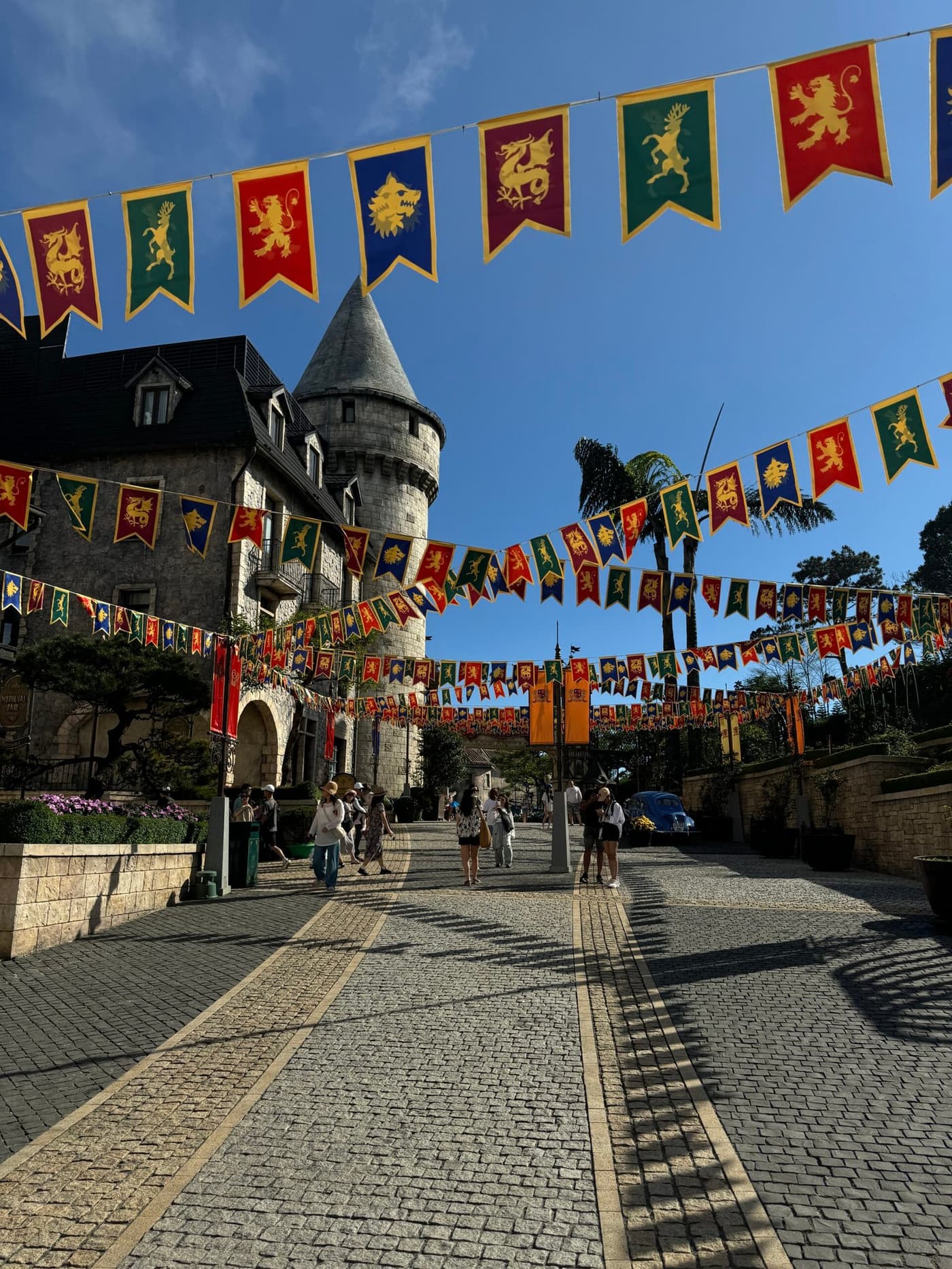
Ba Na Hills is a mountain resort at an altitude of 1,500 meters. It has a French village, an amusement park, viewing platforms and a cable car with world records. The basic ticket (cable car + entry) for foreigners costs 1,000,000 VND (about $38). For Da Nang residents it is cheaper, 650,000 VND (with an ID card); other Vietnamese citizens pay 650,000-700,000 VND depending on the day of the week. A combo with a buffet lunch costs 1,300,000 VND. A useful detail: in 2026 a single ticket can be used for 3 days in a row with FaceID registration. It is expensive by Vietnamese standards, but the place is truly interesting, especially if you go early in the morning before the crowds. I wrote a detailed guide in the article Ba Na Hills: a complete review.
Marble Mountains
Five limestone hills, each named after one of the elements. Inside are caves with Buddhist altars, temples, tunnels carved into the rock and viewing platforms. Entry costs 40,000 VND ($1.5), the elevator ride is another 15,000 VND per trip, and entry to Am Phu cave is a separate 40,000 VND. I wrote separately about the Marble Mountains in Da Nang.
Lady Buddha statue and the Son Tra reserve
The 67-meter statue of the goddess Guanyin stands on the Son Tra peninsula. Entry is free. But the statue is not the only thing of value: the whole peninsula is a nature reserve, home to red-shanked douc langurs, with wild beaches and a winding mountain road with breathtaking views. More on the Lady Buddha statue in Da Nang.
Dragon Bridge and the Han River embankment
The dragon-shaped bridge is one of the symbols of the city. On Fridays, Saturdays and Sundays at 21:00 the dragon breathes fire and water: first a two-minute fire show, then a three-minute water show. It is free and spectacular, and it is best to watch from the opposite bank 15-20 minutes before the start, because the spots fill up fast. The Han River embankment in general is a good place for an evening walk on any day of the week.
Museum of Cham Sculpture
One of the best museums in Southeast Asia on the Champa kingdom. It holds artifacts you won't find anywhere else. Entry is 60,000 VND (about $2.3). If you are interested in history, this is a place you must visit.
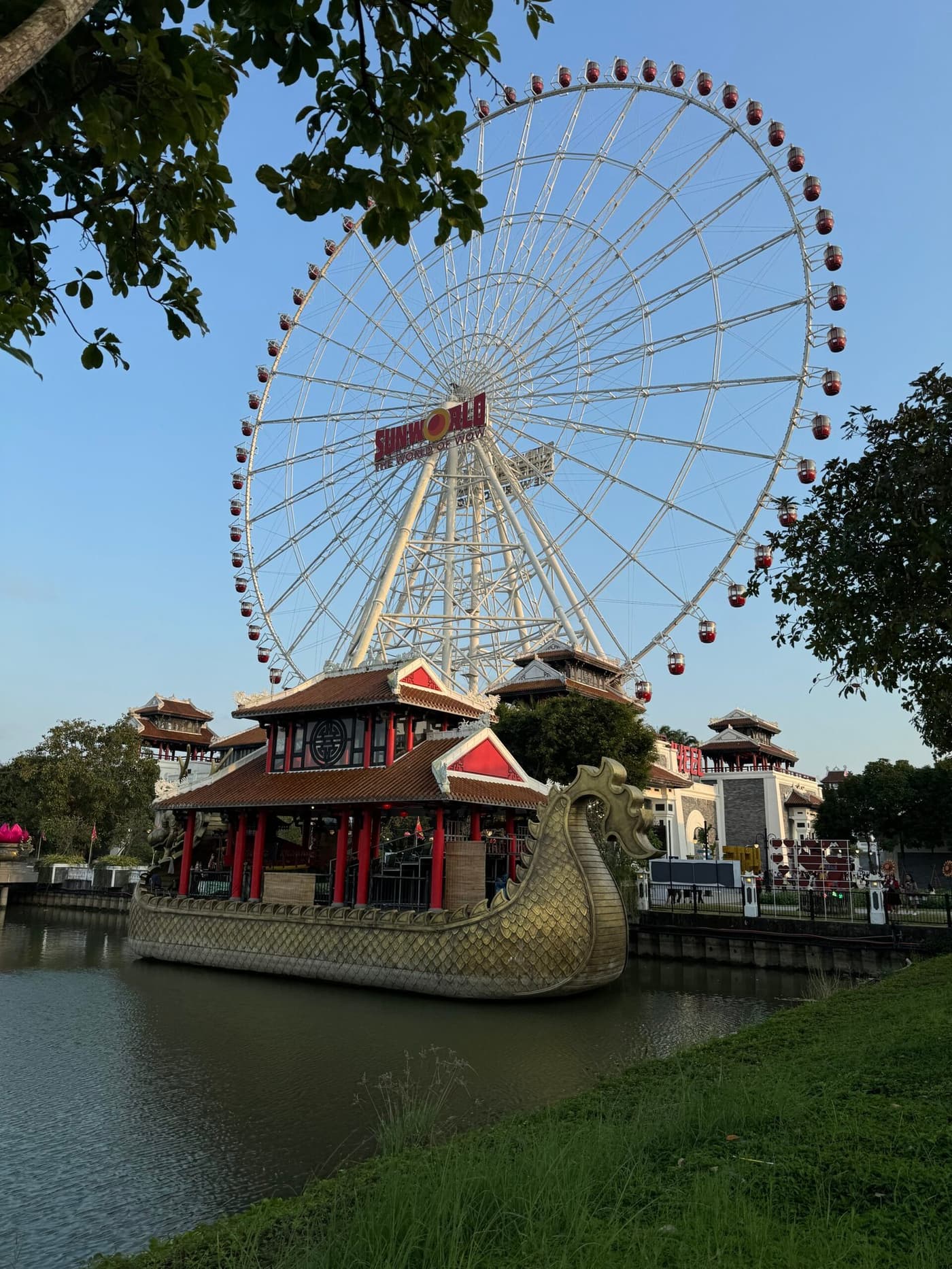
Asia Park
A theme park with the Sun Wheel Ferris wheel and rides, a good half-day option for families with children if you have already seen Ba Na Hills. An adult ticket is 250,000 VND, and for children 1-1.4 m tall it is 125,000 VND.
Ticket summary table:
| Attraction | Price for foreigners | In US dollars |
|---|---|---|
| Ba Na Hills (basic) | 1,000,000 VND | ≈$38 |
| Marble Mountains (entry) | 40,000 VND | ≈$1.5 |
| Museum of Cham Sculpture | 60,000 VND | ≈$2.3 |
| Asia Park (adult) | 250,000 VND | ≈$9.6 |
| Lady Buddha statue | free | — |
| Dragon Bridge | free | — |
Helio Night Market
Open daily from 17:30 to 22:30 on 2/9 Street (Hai Chau district, opposite Lotte Mart). Entry is free, and you pay only for food and drinks: skewers cost 10,000-35,000 VND, beer in the open beer garden 25,000-50,000 VND, and dinner for two with drinks 300,000-500,000 VND. There is live music every evening and a covered area in case of rain. A good place to end a beach day without going far from the center.
Beaches in Da Nang
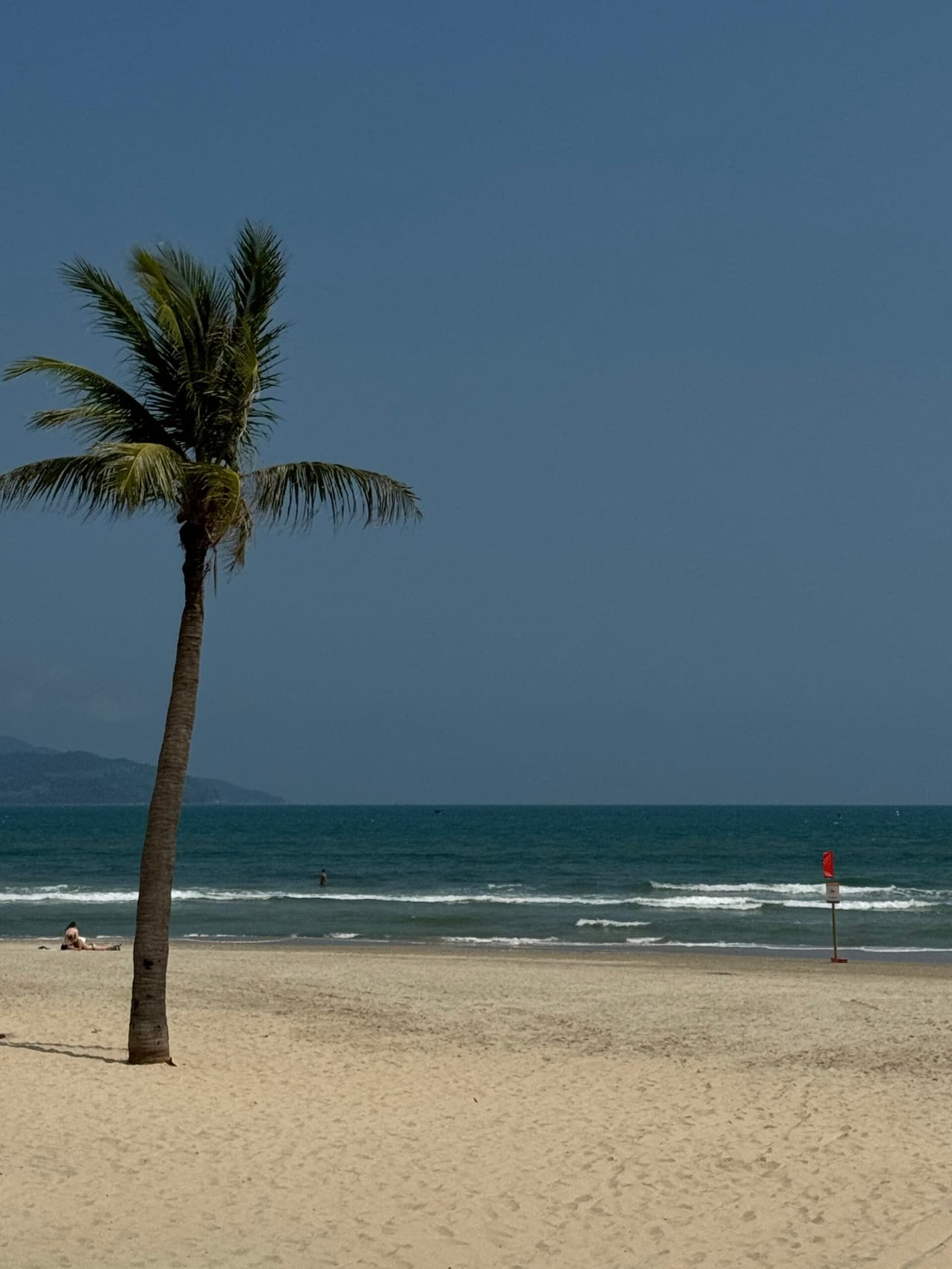
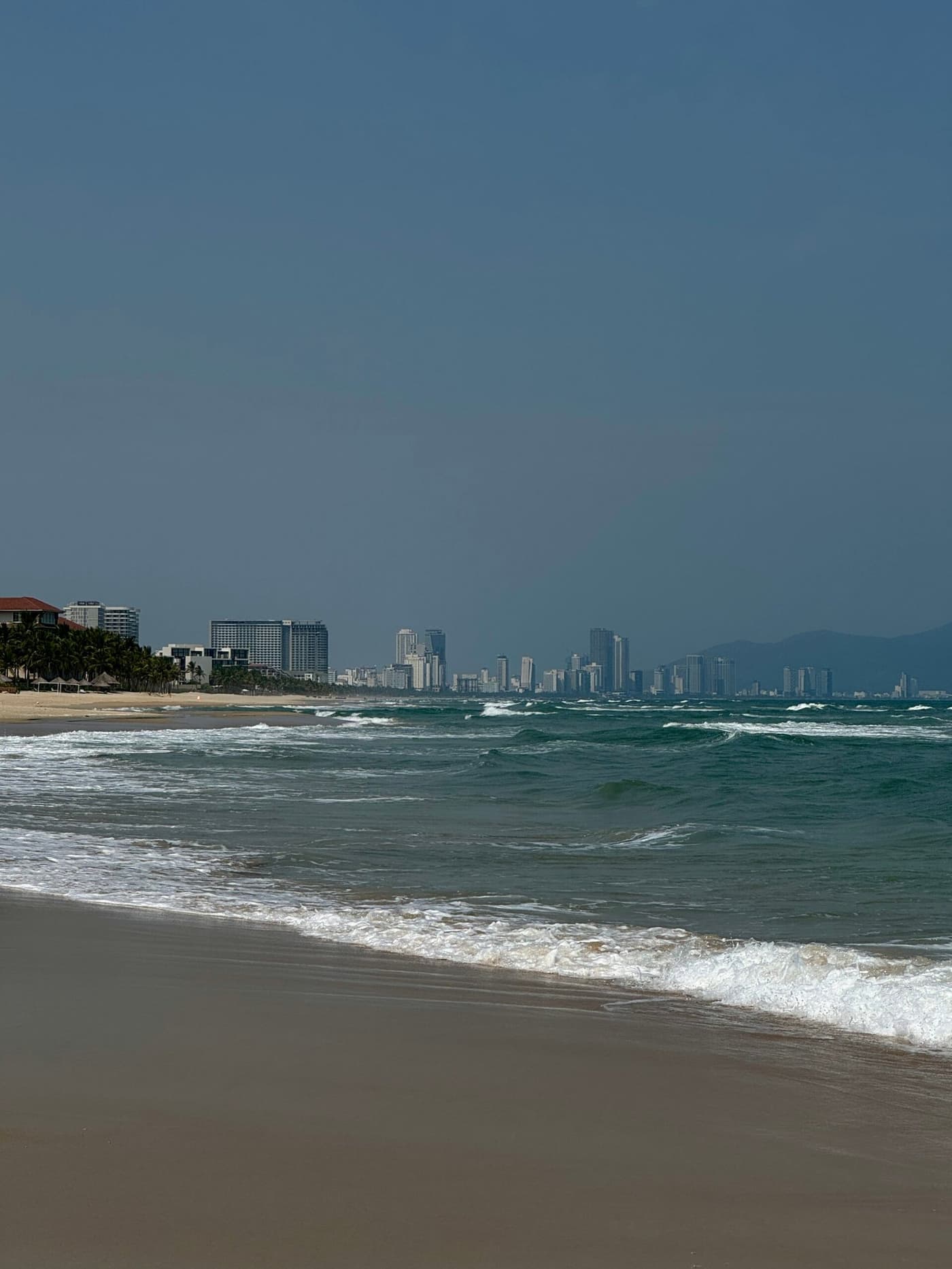
Da Nang is first and foremost a beach city, and 30 kilometers of coastline speak for themselves.
The main beach of the My An area, My An Beach (part of the longer My Khe line), is a long strip of light sand with decent infrastructure: changing cabins, foot-washing taps, sun loungers and cafes. This is where most tourists gather.
A little further south are the beaches of the Ngu Hanh Son area. They are quieter, cleaner and less crowded. The surf zone starts there too.
On the Son Tra peninsula there are wild beaches with no infrastructure but untouched nature. You can only get there by bike.
Lang Co beach (Lăng Cô) is about 45 minutes from Da Nang over the Hai Van Pass. It is long, almost empty, with a view of the mountains. Few people know you can go there for half a day.
For details on what the sea in Vietnam is like and water temperatures by season, read the article Which sea in Vietnam.
Where to eat in Da Nang
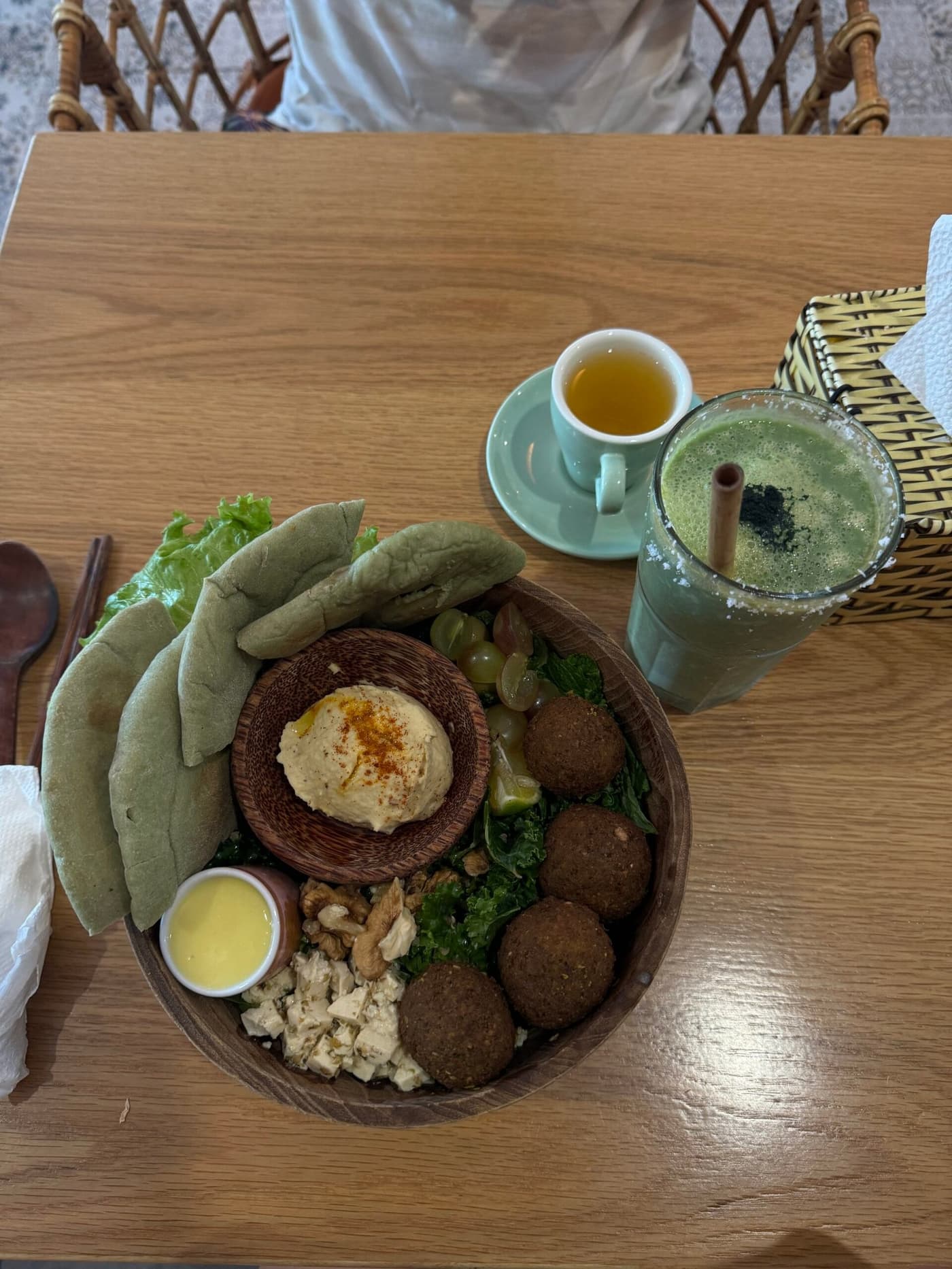
Da Nang is not just a place to swim. It is a rather gastronomic city, with not only Vietnamese cuisine but also decent international cafes and restaurants.
The signature dish of central Vietnam is mi quang (mì Quảng). It is wide rice noodles with meat (most often chicken or pork), herbs, nuts and a small amount of broth, not a soup but almost a salad. It costs 30,000-50,000 VND in local eateries.
Banh mi (bánh mì), the Vietnamese baguette with filling, is also special here. The Hoi An version is better known, but Da Nang has its own legendary spots. Another local favorite is com ga (cơm gà), rice cooked in chicken broth, served with chicken and herbs: a simple but tasty dish.
In the evening, whole rows of stalls with crabs, scallops, oysters and octopus set up on the streets of the Ngu Hanh Son area and near the port. You pick what you like and it is grilled right there. 100,000-200,000 VND per portion.
Coffee in Vietnam is a religion. Vietnamese filter coffee (cà phê phin) costs 20,000-35,000 VND. With coconut milk, with egg (cà phê trứng, a Hanoi tradition), with condensed milk: there are many options.
I collected specific addresses of cafes and restaurants with prices in the article The best restaurants and cafes in Da Nang.
How to get to Da Nang
Below I have gone through all the options.
By plane
How you fly depends on where you start from, and direct routes to Da Nang vary by departure city, so check what is on offer from yours first. If there is no direct flight, you will need a connection.
A common and often cheapest way to connect is through China. China Eastern flies via Shanghai (Pudong airport) and China Southern via Guangzhou. Other connecting hubs include Dubai (Emirates), Doha (Qatar Airways), Abu Dhabi (Etihad) and Istanbul (Turkish Airlines).
In high season (November-January) and when you buy at the last minute, fares go up noticeably, so it pays to book early.
Da Nang airport (DAD) is right in the city, which is rare and very convenient. A Grab taxi from the airport to the My An area costs about 80,000-120,000 VND ($3-5).
Getting around within Vietnam
From Hanoi to Da Nang, the easiest way is by plane. The flight takes 1 hour 15 minutes and a ticket costs $30-50 with VietJet or Bamboo. The train takes 16-18 hours, and a sleeper compartment costs from $20-35, but it is a great option for people traveling with pets. You can also go by overnight bus, which takes 12-14 hours; it is cheaper but less comfortable.
From Ho Chi Minh City: the flight takes 1 hour 25 minutes, and the train takes 17-20 hours.
From Hoi An to Da Nang: a Grab taxi costs about 200,000-250,000 VND ($8-10), a shuttle 80,000-100,000 VND ($3-4), and a bike is free if you have your own.
Getting around Da Nang
Da Nang is a compact city and it is not hard to find your way around.
Grab is the main transport for tourists. GrabBike (motorbike taxi) costs 15,000-30,000 VND ($0.6-1.2) for a ride across the city, and GrabCar 60,000-150,000 VND ($2.3-5.8) depending on distance. It works everywhere, there is no language barrier, and the price is fixed before the ride. Install the app before you leave home.
Renting a motorbike is the standard for anyone planning to stay in Da Nang longer than 2-3 days. A scooter costs $5-8 a day, and up to $100 a month (1-2.5 million VND) depending on the model and rental period. A driver's license is formally required; in practice it is rarely checked, but it is your responsibility. I recommend not riding without a license, because insurance will not apply in the event of an accident.
Local bus is the cheapest option: 5,000-15,000 VND per trip. The routes cover the main points of the city. Handy for people who know where they are going.
Bicycle is realistic only in the central and beach areas; you won't get up into the mountains.
When to go to Da Nang
The best time for a beach holiday is March to October. In these months it is sunny, the sea is warm and calm, and the heat is bearable thanks to the sea breeze. March and October are transitional months, so it depends on your luck with the weather.
The rainy season runs from November to March. In these months there can be several days in a row of non-stop downpours. Once we got caught in a fairly strong typhoon with rain, and there were floods and power outages all around. But this period attracts those who want things even cheaper: housing prices drop by up to 40%.
December-February is cool by Vietnamese standards (+22°C...+25°C), with frequent rain, but you can still go on excursions. Hoi An and Hue are free of crowds at this time.
A full month-by-month breakdown is in the article The best time to visit Da Nang: seasons and weather.
How much money you need in Da Nang
Da Nang is more expensive than an authentic Vietnamese provincial city, but cheaper than Ho Chi Minh City and most of the neighboring countries in the region. According to independent calculations of expat monthly spending, a comfortable budget for one person, with rent in a tourist area, insurance and a motorbike, comes to $1,160-1,440. Without insurance and with more modest housing you can live even more cheaply, but that will be survival (although some people manage to live on smaller amounts).
Housing: a hostel from $6-12 a night, a budget hotel $20-35, a monthly apartment from $350 in Thanh Khe or Hai Chau up to $600-730 in My An and An Thuong.
Food: a local eatery with breakfast $1-2, lunch in a cafe $2-4, dinner in a decent restaurant $15-25, a day entirely on local food about $8.
Transport: Grab around the city $0.6-6 per ride, motorbike rental up to $100 a month.
Utilities and connectivity: electricity $32-100 a month depending on the season, home internet $8-10, mobile internet/SIM $6-10.
Coworking: a hot desk is $50-80 a month or $5-15 a day; in some spaces a fixed desk costs more, up to $150.
Attractions: most are free, such as the beaches, Lady Buddha, the embankment and the Dragon Bridge. Entry to the Marble Mountains costs $1.5, and Ba Na Hills $38.
Health insurance: for a long stay, from $40-60 a month depending on age and coverage. Many people forget to include this item in the budget, which is a mistake.
I covered this in detail in the article Prices in Vietnam 2026.
Approximate monthly budget for one person
| Expense | Budget option | Mid-range option |
|---|---|---|
| Housing | $350 (Thanh Khe, Hai Chau) | $600-730 (My An) |
| Food | $150-200 | $350-450 |
| Transport (bike + Grab) | $50 | $100 |
| Phone and internet | $15 | $20 |
| Coworking | — | $50-80 |
| Insurance | — | $40-60 |
| Total per month | ≈$565-615 | ≈$1,160-1,440 |
Day trips from Da Nang
Da Nang's location is ideal for day trips.
Hoi An is 30 km away, 45 minutes by Grab or transfer. A UNESCO old town, lanterns and great food. It is worth staying overnight if you can. I wrote about the city in detail in a separate article, Hoi An: what to see.
Hue is 100 km away, 2 hours by car or train. A former imperial capital with a citadel, tombs and amazing street food. The best plan is to leave early and come back late.
My Son is 69 km from Da Nang. The ruins of Hindu temples of the Champa kingdom, a UNESCO site. People usually go in the morning, because the heat there is unbearable. Many take a tour from Hoi An that includes My Son and a basket boat ride in Cam Thanh village. By the way, there is a separate article about the Thung Chai basket boats, with an interesting story about why they have that shape.
Lang Co is 45 minutes away over the Hai Van Pass. A long wild beach with almost no tourists. The road over the pass is an attraction in itself, with views of the sea from above.
Da Nang for digital nomads
Da Nang consistently ranks among the top cities in the world for remote work, and in 2026 Forbes confirmed this by placing the city 4th in its global ranking. The city has many coworking spaces and cafes where you can sit with a laptop. You can see the remote-worker community everywhere.
Internet: fiber optic in all modern apartments, and speeds of 100-300 Mbps are normal. A Viettel SIM card with a 30-day 4G package costs 150,000-250,000 VND (about $6-10) in the city. At the airport it will be 20-30% more expensive. There is also an eSIM option that you can buy and activate before you fly, without queuing at a counter. Cafes always have Wi-Fi, even the smallest ones.
There are coworking spaces in different parts of the city. A hot desk costs $5-15 a day or $50-80 a month, and a fixed desk in premium spaces up to $150. The alternative is a cafe with good Wi-Fi and power outlets, and there are dozens of them in the My An and Hai Chau areas.
Community: Da Nang has a large expat community, with chat groups on Telegram, meetups and group trips.
Visa question: when we checked in October 2026, eligible passports could enter Vietnam visa-free for 45 days. For a longer stay you need an e-visa valid for 90 days with multiple entries, which is applied for online on the official website evisa.gov.vn; it costs $50 ($25 for a single entry) and takes about 3 working days on average. Rules depend on your passport, so confirm the current requirements with the Vietnamese immigration authority before you travel.
Safety in Da Nang
In terms of street crime, Da Nang is one of the calmest cities in Vietnam: serious crimes are rare. The main risks are theft on the beach, pushy taxi drivers at the airport and unscrupulous travel agencies.
The main real risk, though, is the road. Traffic lights, signs and traffic rules in Vietnam are not observed, and drivers honk wildly. Oncoming traffic on the sidewalk or running a red light is routine. Cross the road slowly and predictably, and don't run: bikes steer around people who move at a steady pace, not around those who dart about. If you're not used to it, the first days are genuinely stressful, and I never managed to get used to it myself; for me it was always stressful.
Practical information
Currency: the Vietnamese dong (VND). As of August 2026: 1 USD ≈ 26,060 VND (the rate changes, so check the current one before you travel). A handy trick: drop three zeros from a price tag and divide by 26 to get the approximate amount in USD (for example, 100,000 VND: 100 / 26 ≈ $3.8).
ATMs: everywhere. It is better to withdraw at Vietcombank or Techcombank, where the fees are lower. Cards are accepted in big shops and restaurants, but markets are cash only.
SIM card: buy it at the airport or at any Viettel/Vinaphone store. You will need your passport. A 30-day package with internet costs 150,000-250,000 VND, or you can get an eSIM online in advance.
Language: Vietnamese. English is understood in tourist areas, and elsewhere Google Translate and gestures will help.
Power sockets: type A (two flat pins) and C (round) standards. You may need an adapter.
Water: don't drink tap water, only bottled or filtered. A 1.5-liter bottle costs 10,000-15,000 VND and is sold in any shop on every corner.
Tipping: not required, but in tourist restaurants, and for guides and masseurs, 5-10% is appreciated.
Emergency numbers: 112 is the single emergency number (it will connect you to the right service), 113 is the police, 114 is the fire service, 115 is the ambulance. Operators don't always speak English, so it is easier if someone from your hotel or a local is nearby.
Frequently asked questions about Da Nang
Is Da Nang worth visiting on a first trip to Vietnam?
Yes, especially if you want to combine the beach, excursions and an introduction to the culture. It is easy to get from Da Nang to Hoi An and Hue, which makes for a full and interesting trip.
Is Da Nang suitable for families with children?
Yes, quite. The sea is calm (in season), there are theme parks, Ba Na Hills with its rides, and clean beaches. The Ngu Hanh Son area is a good option for families.
How much time do you need in Da Nang?
At least 4-5 days to cover the main sights. If you include Hoi An and Hue, a week is better. If you want to live here rather than just sightsee, a month will pass unnoticed.
Is it safe to rent a motorbike?
It is not the safest place to ride a bike, but if you know how to ride and are careful, you can give it a try. Traffic in Da Nang is not as chaotic as in Ho Chi Minh City, but it is worse than in all the neighboring countries. A helmet and insurance are a must!
Can I pay by card in Da Nang?
In hotels, big restaurants and shopping malls, yes. At markets, street cafes and when renting a bike, cash only.
Do I need a visa for Da Nang?
It depends on your passport. When we checked in October 2026, eligible passports could enter visa-free for up to 45 days. For a longer stay you need a tourist e-visa for 90 days. It costs $25 for a single entry or $50 for multiple entries and is applied for online on the official website evisa.gov.vn. Please confirm the rules for your own passport with the Vietnamese immigration authority before you travel.
When is the best time to go to Da Nang?
March to October is the best beach season. March and October are transitional months, so it depends on your luck with the weather. The rainy season runs from November to March.
How much does it cost to live in Da Nang per month in 2026?
A comfortable budget, with rent in a tourist area, insurance and a motorbike rental, is $1,160-1,440 a month.
I made a detailed review of the city on my YouTube channel