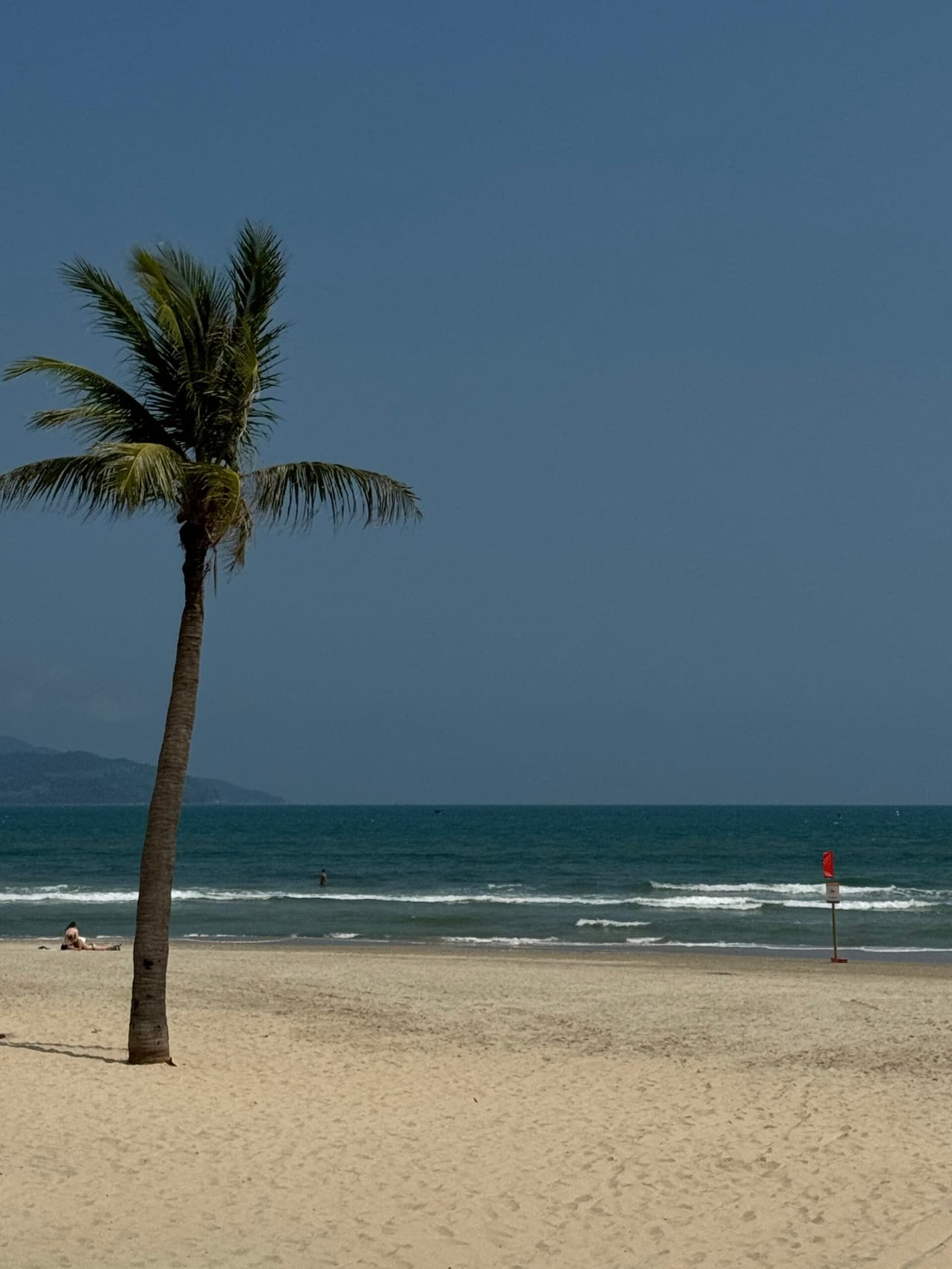
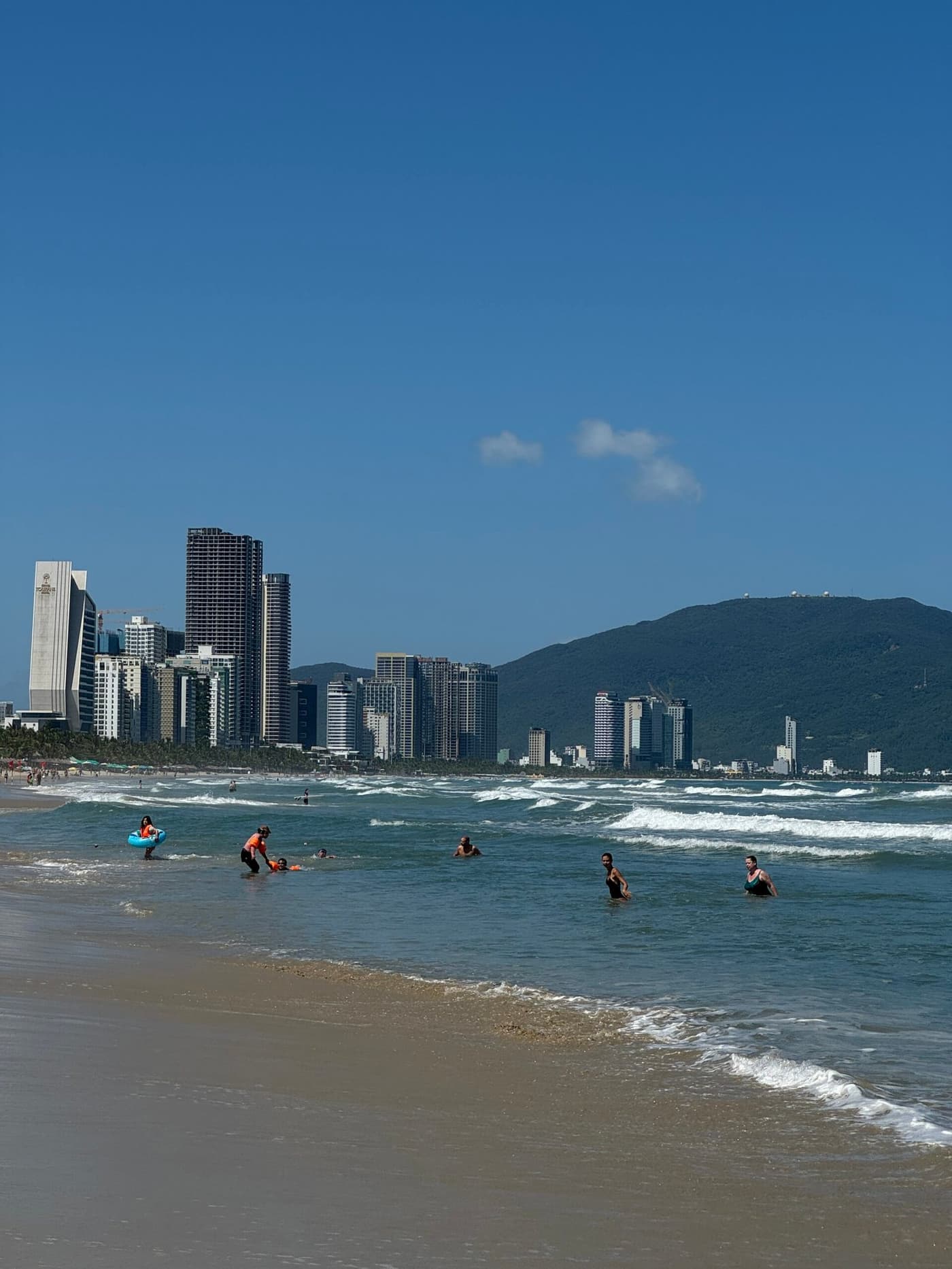
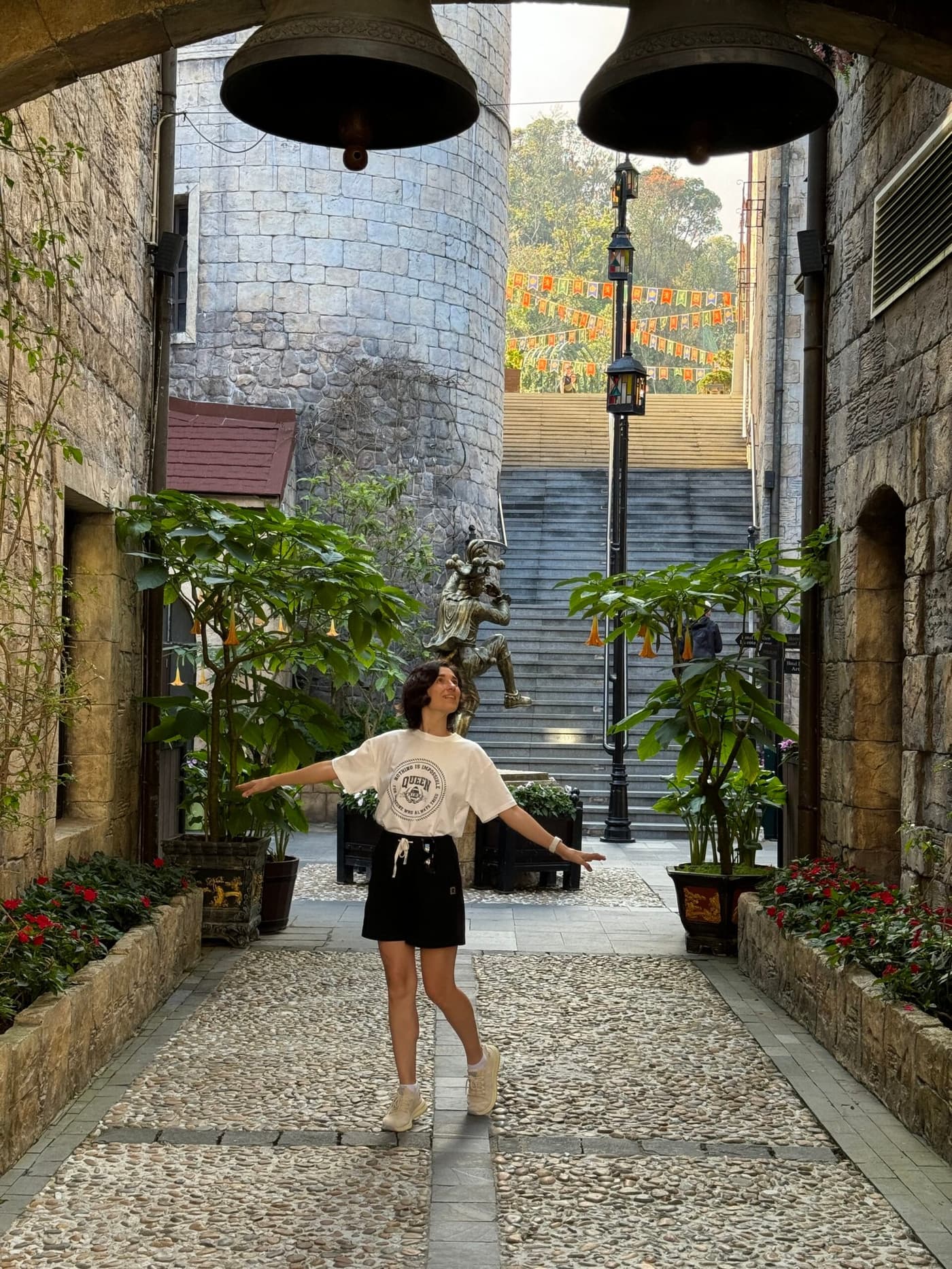
The Marble Mountains (Ngu Hanh Son) are a group of five limestone hills near the coast in central Da Nang. They are more than a natural landmark: this is a place where geology, legends, religion and incredible views of the sea and the city come together.
If you are planning a trip to Da Nang, be sure to put the Marble Mountains on your itinerary. The impressions will stay with you for a long time.
History, legends and origin of the Marble Mountains
Like many iconic places in Asia, the Marble Mountains have their own legend. They say the hills formed from the shell of a giant egg that a mythical dragon hatched from. Later, each hill was named after one of the five elements of Eastern philosophy: water, wood, fire, earth and metal.
The scientific version is a little simpler: the mountains formed about 60 million years ago through tectonic activity and erosion. This area used to be underwater, and the hills rose up like islands. Today they are part of the mainland and a piece of Da Nang's geological heritage.
The mountains are made of limestone and high-quality marble, which was quarried here for centuries and used to build imperial palaces and religious buildings. Over time, marble quarrying was restricted to preserve the mountains.
What to see at the Marble Mountains
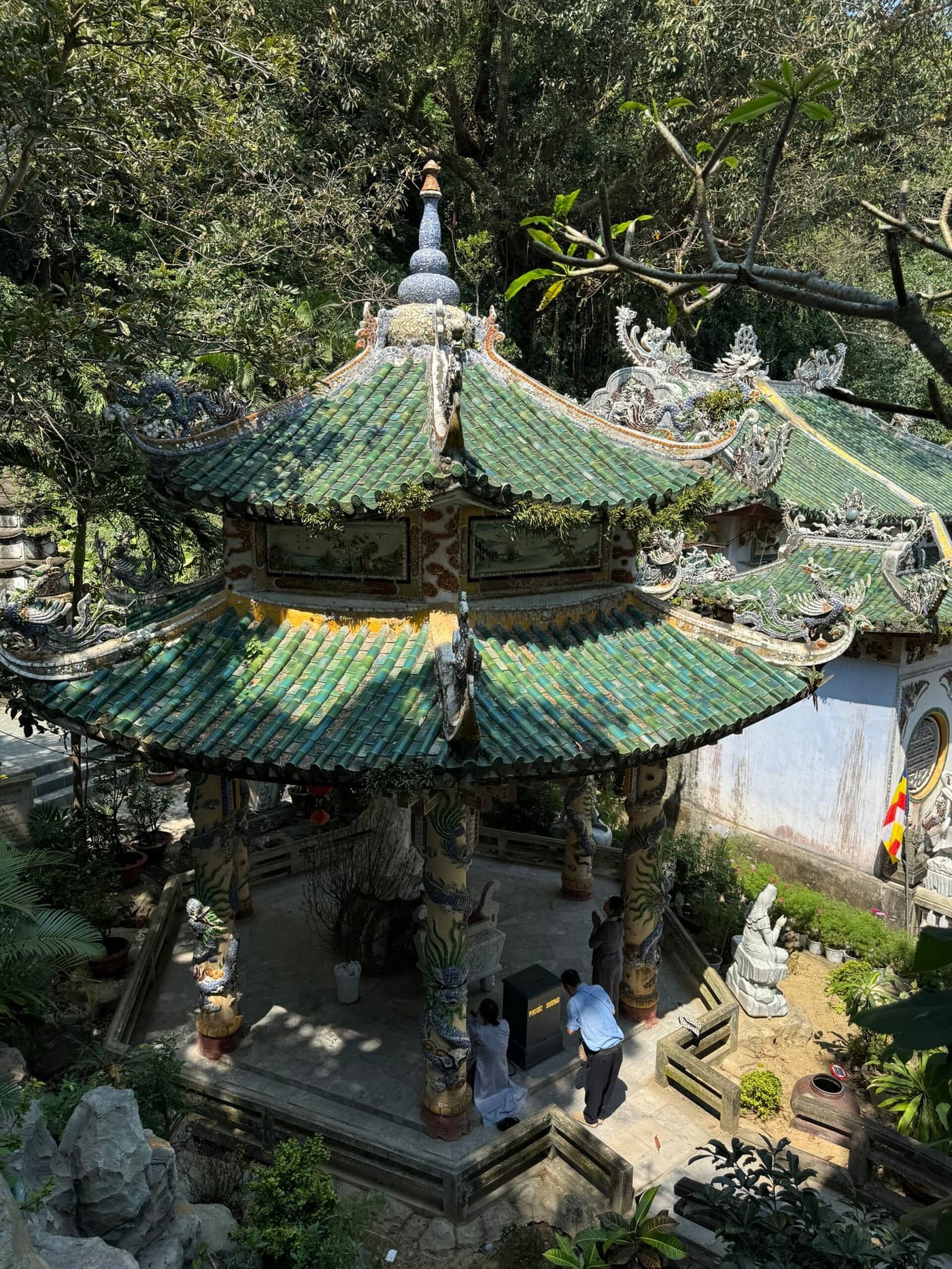
Only one of the five mountains can be visited: Thuy Son, which is the one open to tourists. Its slopes are home to temples, caves and viewpoints. Some of them were built as early as the 17th century.
You can climb up the steps or even take an elevator, but keep in mind that the elevator does not go all the way to the top. In my opinion, the elevator ride makes little sense: the climb is not that high, and on foot you pass a couple of platforms with Buddhas and temples along the way. There is also a huge queue in front of the elevator, so walking up will definitely be faster.
The grounds are quite large and the temple architecture is beautiful. To me, Vietnamese architecture looks similar to Chinese. That is not surprising, since Vietnam spent 1,000 years under Chinese rule, and that could not help but leave a mark on the country's architecture and culture.
Temples and pagodas
- Hoa Nghiem Cave: has a huge stone Buddha inside.
- Huyen Khong Cave: interesting for the light effects of the sun's rays.
- Am Phu Cave: the "hell cave", atmospheric and gloomy.
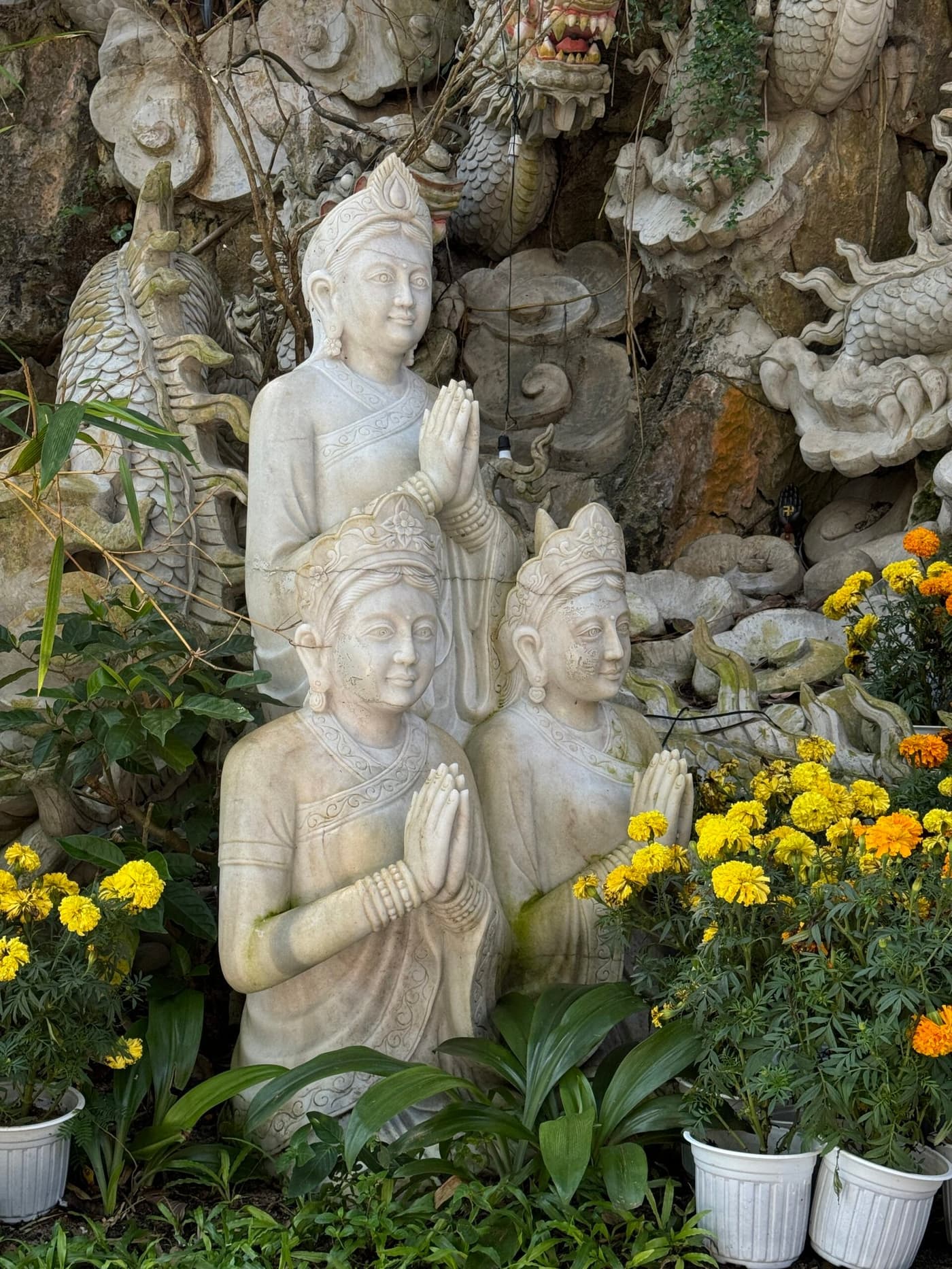
These ancient religious sites hold valuable artifacts: sculptures, ceramics and other works of art.
Viewpoints
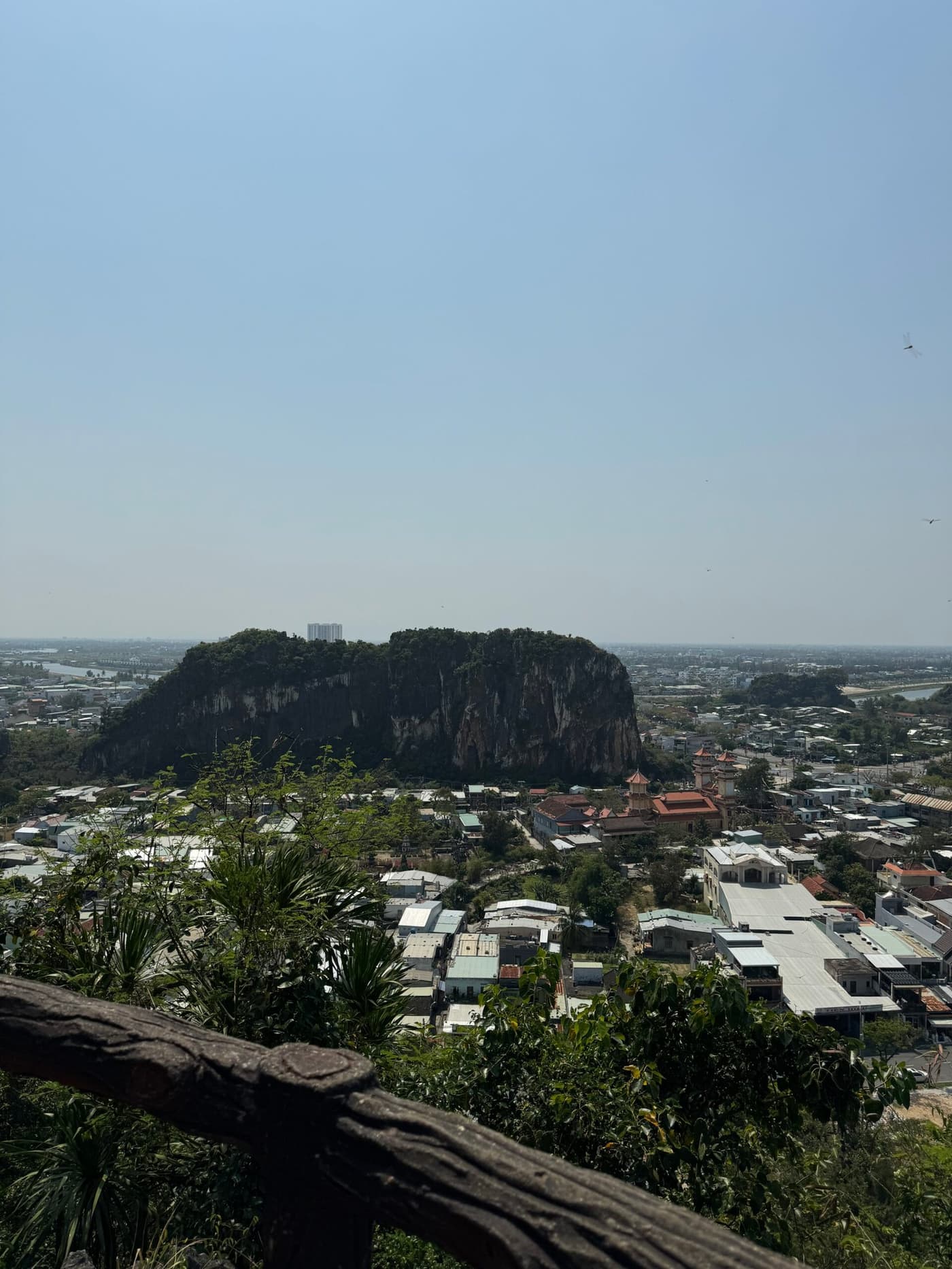
From the top of the mountain you get panoramic views of Da Nang's coastline, the marble workshops, the temples and endless beaches.
What else to do
- Explore the many caves and altars inside
- Study the architectural details of the temples
- Enjoy the views of the city of Da Nang and the South China Sea from the observation deck.
Marble Mountains ticket prices in Da Nang
| Service | Price |
|---|---|
| Entrance ticket | 40,000 VND (≈ $1.5) |
| Elevator (optional) | 15,000 VND (≈ $0.6) |
How to get to the Marble Mountains
- From central Da Nang: you can take a taxi (≈ 10–15 minutes) or rent a motorbike
- From Hoi An: the trip takes about 30 minutes, and it is better to go in the morning.
- Guided tour: you can book one through Klook or local agencies. It is convenient but more expensive.
Best time to visit
The best time is morning or closer to sunset. It can be hot during the day, especially in summer. If you want beautiful photos, choose the morning, when the light is soft and there are still few tourists.
What to see in Da Nang is covered in another detailed article.
I filmed an overview of all of Da Nang's main sights in a YouTube episode. Be sure to watch it, and don't forget to like it, leave a comment and, of course, subscribe to the channel if you haven't yet!
Marble Mountains in Da Nang: frequently asked questions
Where are the Marble Mountains?
The Marble Mountains are in southeastern Da Nang, in the Ngu Hanh Son district, only a 10–15 minute drive from the city center.
How much is the entrance fee?
Entry costs 40,000 dong, and you can also take the elevator for an extra 15,000 dong.
Can you visit all five mountains?
No, only one mountain is open to visitors: Thuy Son. The others are closed or not accessible to tourists.
Is it worth taking the elevator?
The elevator does not go all the way to the summit. It is better to walk so you can see more sights along the way.