Hoi An is a beautiful town on the Vietnamese coast and a UNESCO World Heritage Site. It is a historic place with unique architecture and a blend of Chinese, Japanese and Vietnamese cultures. In this article I'll tell you what to see in Hoi An and how to get there easily from Da Nang.
Hoi An: A Town with a Rich Heritage
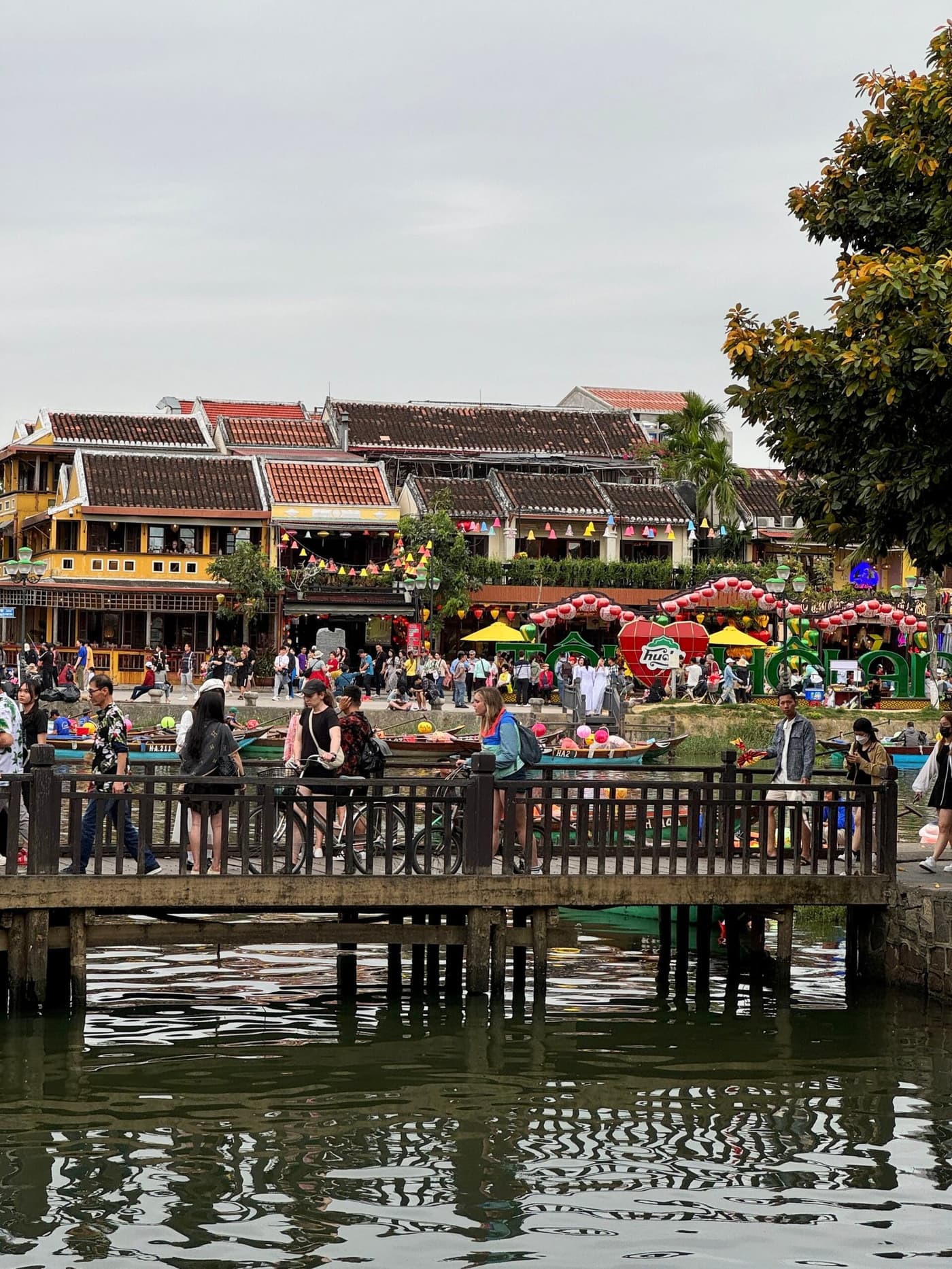
Hoi An is a town where ancient cultures are woven together. Its historic center feels like a living museum. Narrow streets, canals, lanterns and architecture preserved from different eras draw visitors from all over.
The town was once an important port, and its old center remains one of the best-preserved historic districts in Vietnam. Hoi An is a place where Chinese, Japanese and Vietnamese traditions meet.
The whole center of Hoi An is one big sight, and you can simply wander its streets and enjoy the beautiful architecture. The entire town is hung with lanterns of all kinds, both classic Chinese ones and silk Vietnamese ones.
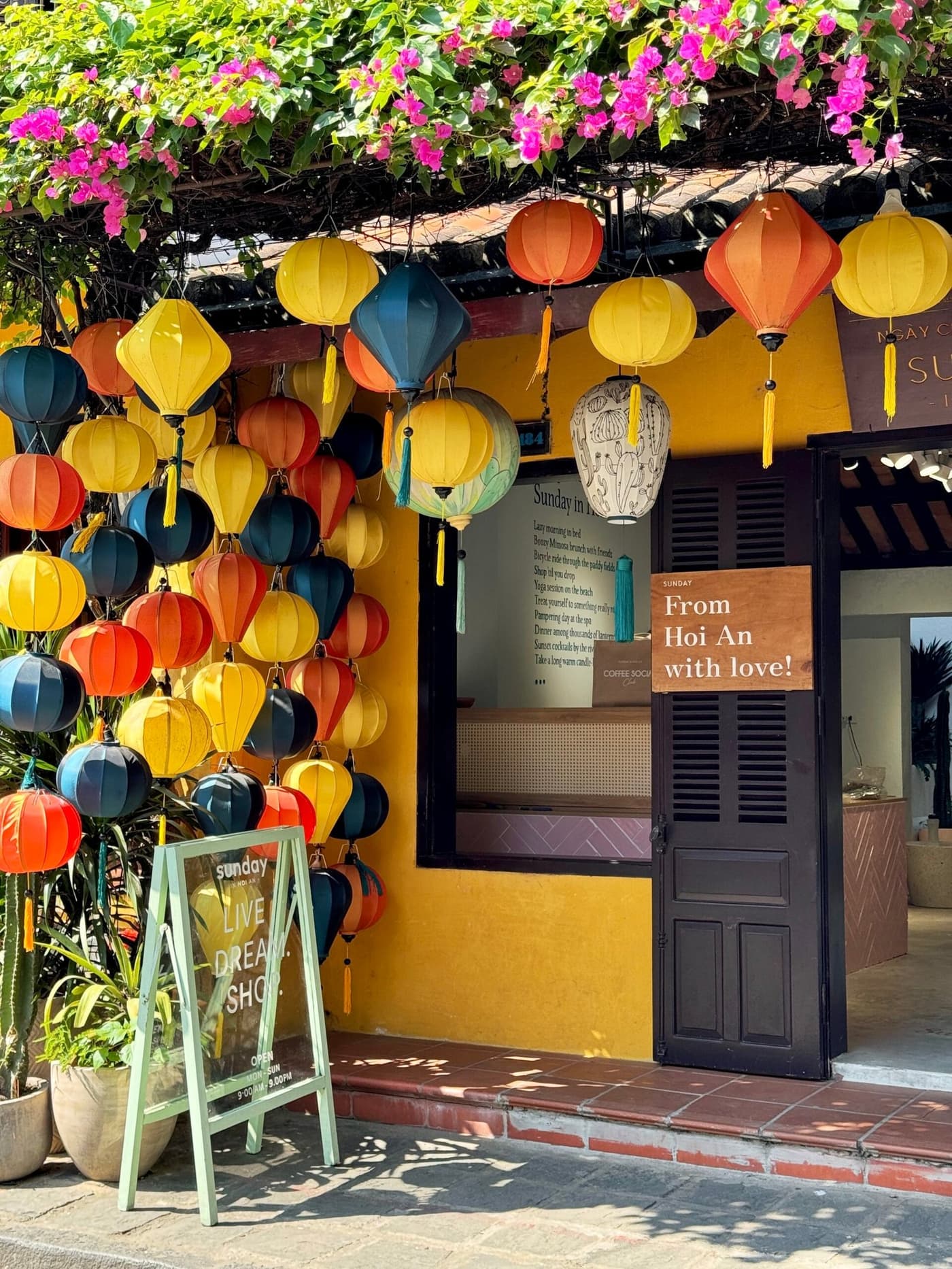
What to See in Hoi An: The Best Attractions
Hoi An is about more than just old architecture. In this town every corner is steeped in history. Its old quarter, threaded with canals, is very well preserved and combines architectural styles shaped by different cultures and time periods.
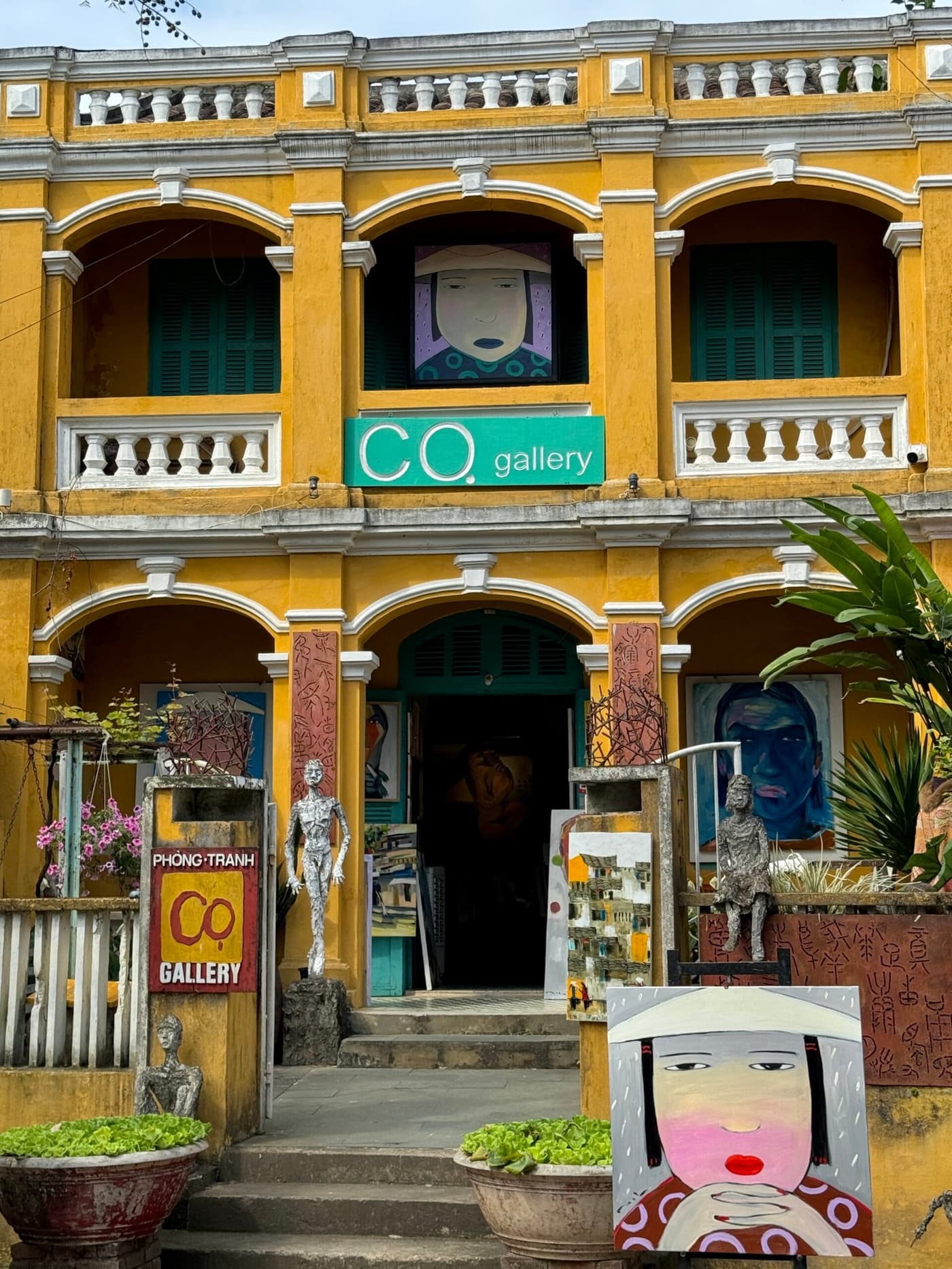
For example, on the streets of Hoi An you can find Chinese-style houses with shops on the ground floor, buildings from the French colonial period, traditional Vietnamese homes, and Japanese structures. The most famous of these is the covered bridge with a pagoda. When we were in Hoi An it was closed for restoration (the work ran from December 2022 to August 2024), and it is now open to visitors again.
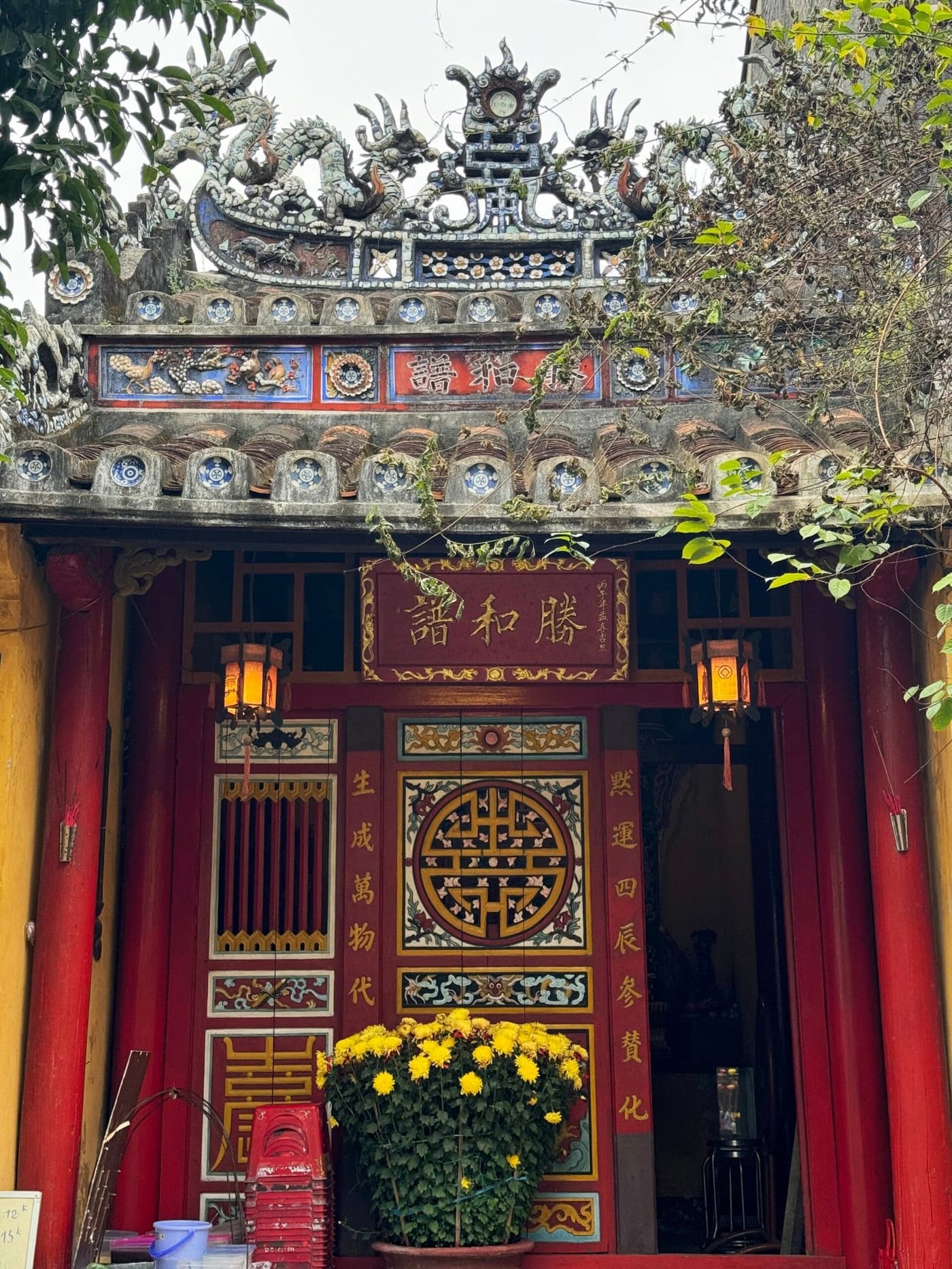
Cam Pho Communal House
Cam Pho was built by the residents of Cam Pho, one of the oldest communities in Hoi An. It was a gathering place and a venue for religious ceremonies for the community. Today Cam Pho is an important historic landmark with traditional Vietnamese architecture and Chinese decorative elements.
It is one of the oldest houses in Hoi An and combines traditional Vietnamese and Chinese architectural elements. Over time the house became a symbol of the cultural and spiritual unity of the Cam Pho community.
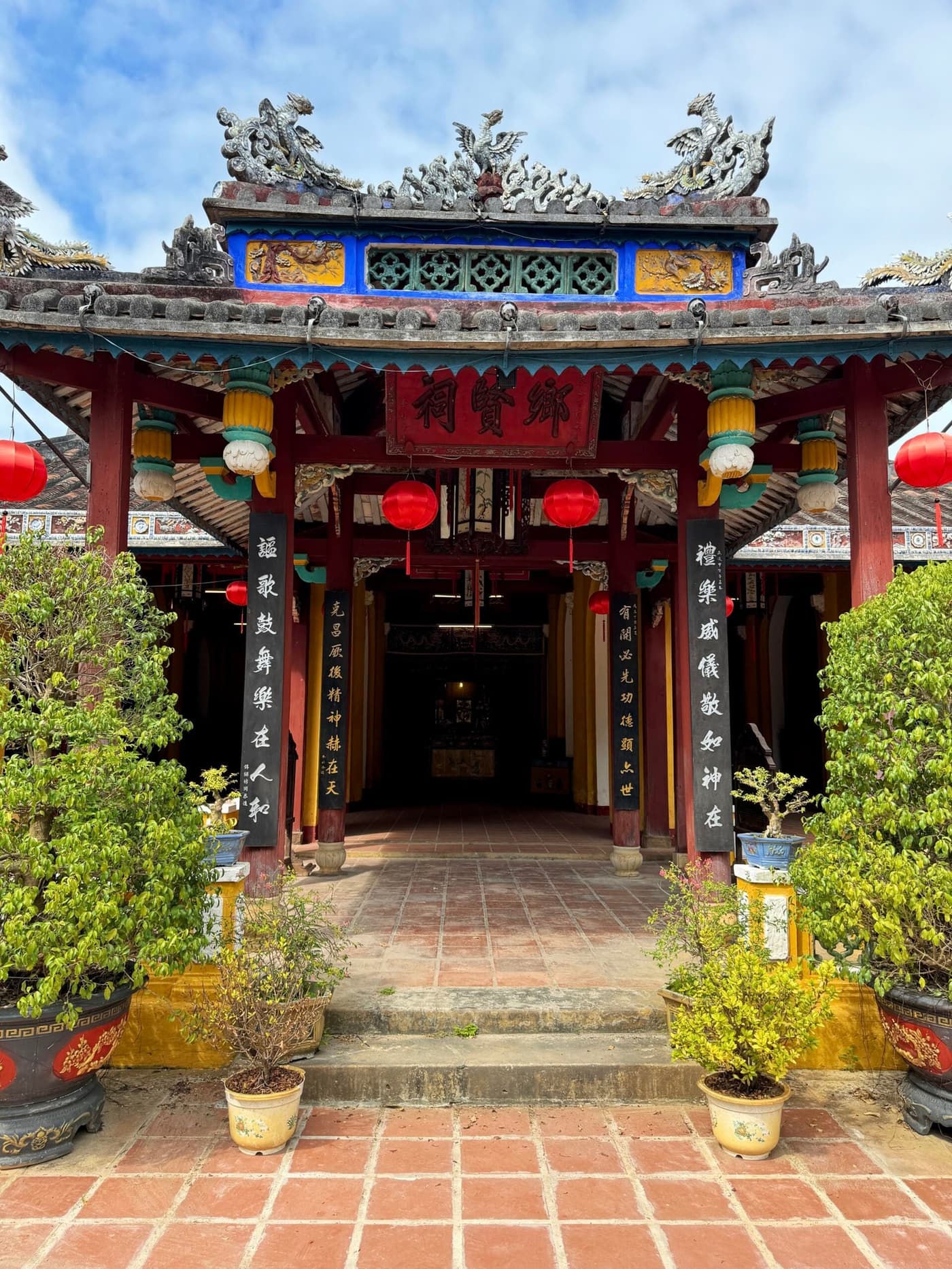
Inside there are several altars dedicated to various deities and ancestors, which underlines its role in the spiritual life of the community. It also plays an important part in traditional festivals and ceremonies such as the Lunar New Year (Tet) and the Mid-Autumn Festival.
Cantonese Assembly Hall
The Cantonese Assembly Hall is decorated with carvings and mosaics in the Chinese style. It served as a meeting place for the Chinese community from Guangdong. The hall is an important cultural site with a lovely inner courtyard and statues.
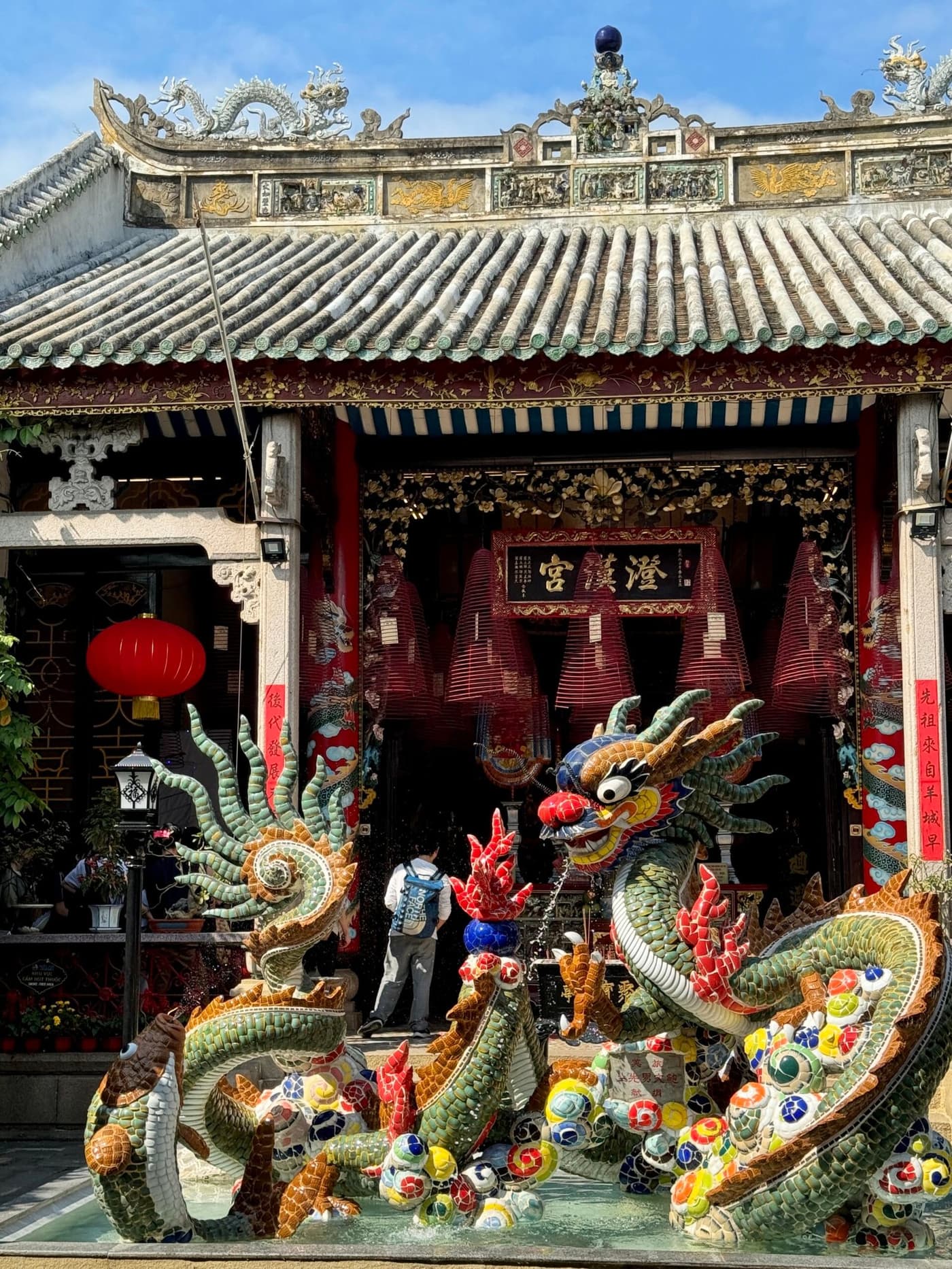
The main building is decorated with intricate carvings, colorful ceramic mosaics and dragons, which symbolize strength and prosperity. Inside, as you would expect, there are altars dedicated to various deities and ancestors, who are revered as part of traditional Chinese beliefs.
Hoi Quan Phuoc Kien Pagoda
We took a look at a beautiful Chinese pagoda, also known as the Fujian Assembly Hall. It was created by Chinese settlers from Fujian province and serves as an important symbol of the cultural heritage of the Chinese diaspora in Vietnam.
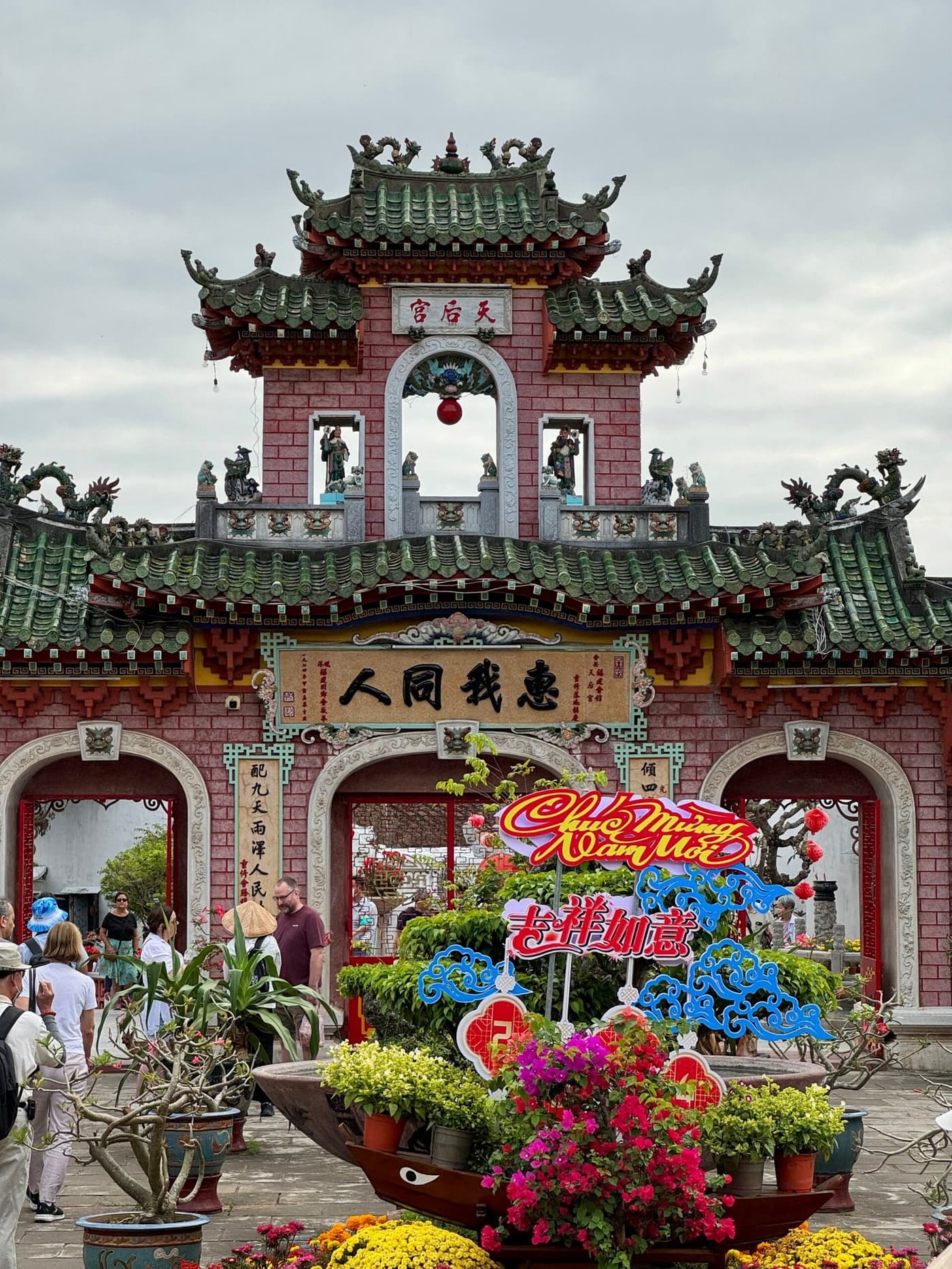
The pagoda was founded in the 17th century to serve Chinese merchants and sailors who came to Hoi An, which was then a major trading port. The building was used not only for religious ceremonies but also as a center of social life for Chinese immigrants.
The architecture of the Hoi Quan Phuoc Kien Pagoda reflects traditional Chinese construction, with bright colors, carved details and roofs shaped like curved dragons, which symbolize luck and prosperity. The entrance is decorated with arches, and in the inner courtyard there is a pretty garden with statues and altars.
Gate of Ba Mu Temple
What I liked most was the facade of Ba Mu Temple. The temple itself is gone and only its gate remains, with a beautiful lotus pond in front of it.
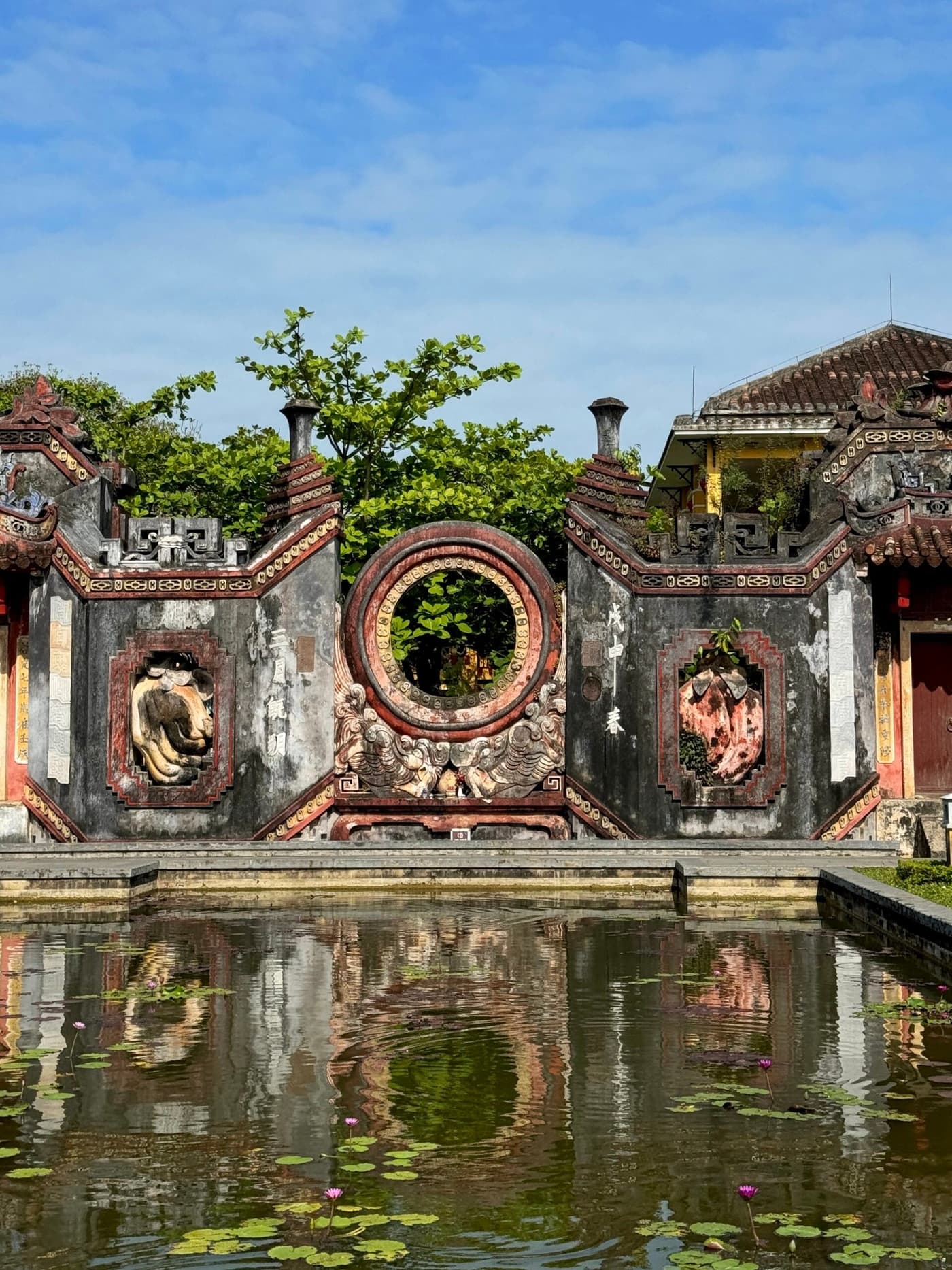
Ba Mu Temple was founded in 1626 by merchants and sailors and was dedicated to Thien Hau (Mazu), the goddess of the sea, and to the twelve midwife deities (Ba Mu).
How Much Tickets Cost and Where to Buy Them
There are so many places to see in Hoi An that a single ticket was created that covers visits to any five sites of your choice!
The ticket has no time limit: you can visit all five sights in one day, or see some of them one day and the rest another day.
We bought our ticket on Klook. Visiting five sites plus a basket boat ride through the coconut forest came to $10 per person. Besides buying online, you can also get tickets at the ticket booths located at each attraction.
How to Get to Hoi An from Da Nang
Hoi An is 30 kilometers from Da Nang. Getting there is easy, and there are plenty of options for every taste and budget.
- By motorbike. This is an option for those who like a bit of risk, since riding in Vietnam is a rather risky business. To drive in Vietnam you will need an international driving permit. Don't forget to wear a helmet and get insurance.
- By bus. Buses in Vietnam are well developed and inexpensive. You can buy tickets on 12go.asia or on Vexere.
- By taxi. Personally, we chose a taxi and booked it through the Grab app. The ride took about 30 minutes and cost 250,000 Vietnamese dong.
Hoi An is a town you have to see. Its old streets, unique architecture and cultural heritage make it a must-visit stop on a trip. Visit Hoi An, and it will give you unforgettable memories!
I filmed our walk around Hoi An and put it on YouTube. Take a look, and don't forget to like, leave a comment and subscribe if you haven't already!
Hoi An FAQ
What is special about Hoi An?
Hoi An is a town where the cultures of China, Japan and Vietnam are interwoven. The town is famous for its architecture, old streets and traditions preserved from different historical eras. Hoi An's historic center, listed as a UNESCO World Heritage Site, is a living open-air museum. The town is also known for its beautiful lanterns and unusual evening walks along the canals.
Is Hoi An worth visiting?
Yes, if you like exploring historic places and soaking up the atmosphere of old towns. Hoi An draws visitors with its cultural heritage, atmospheric streets and lively energy. It is a great place for anyone who wants to learn about traditional Vietnam while also enjoying picturesque scenery.
How do you get to Hoi An?
Hoi An is 30 kilometers from Da Nang, and there are several ways to get there:
- By bus or taxi (the trip takes about 30 minutes).
- By motorbike, for more adventurous travelers.
There are combined attraction tickets that let you visit five sites of your choice and take a basket boat ride through the coconut forest for $10.
Why go to Hoi An?
Hoi An is not only a beautiful town but also a place with a rich history. If you want to see a unique mix of architectural styles and get to know the traditions of Chinese, Japanese and Vietnamese cultures, Hoi An is an ideal destination. The town is also famous for its food and its shopping, where you can buy handmade items such as silk fabrics, wood carvings and ceramics.
What should you bring home from Hoi An?
In Hoi An you can buy plenty of souvenirs that will remind you of this wonderful place:
- Silk. Hoi An is famous for its silk products. Here you can buy not only clothing but also accessories.
- Ceramics. Local artisans make original ceramic items such as cups, plates and figurines.
- Handicrafts. Bright lanterns, wood carvings, bamboo items and traditional Vietnamese jewelry.
- Culinary souvenirs. Spices and sauces typical of Vietnamese cuisine, such as fish sauce and spices for cooking famous Vietnamese dishes.
When is the best time to visit Hoi An?
The best time to visit Hoi An is from February to April. The weather is good then, not too hot, with less rain. In the summer months (June to August) Hoi An can be very hot, and in the fall it often rains.