Vietnam is not a dream destination, but it is the cheapest country I have ever been to. Maybe that is why so many people come here, and we lived here for a while ourselves. The local flavor can drive you a little crazy, but it is also fascinating if you want an off-the-beaten-path trip. I put this guide together for future travelers and digital nomads.
Below you will find the current entry rules (including the 45-day visa exemption for eligible passports and the digital arrival card), where and when to go, how much money to budget and how to organize the trip.
What kind of country is Vietnam
Vietnam stretches for more than 1,650 kilometers from north to south. The climate in the north and the south is completely different, the best time to visit depends on where exactly you are going, and seeing the whole country in two weeks is unrealistic.
The population is about 102 million, the official language is Vietnamese, and it is written in a Latinized alphabet: you can read the street names, but you will not manage to pronounce them correctly on the first try. The currency is the Vietnamese dong (VND).
Buddhism, Confucianism and Taoism are intertwined, and the Vietnamese themselves sometimes struggle to explain which deity they are going to pray to. There are temples on every corner, including tiny home altars at the entrance of a noodle shop.
The food is simple, not spicy, light, and comes with a mountain of fresh herbs: pho, banh mi, bun bo Hue, fresh rice paper rolls. Food costs next to nothing compared with other Southeast Asian countries.
I wrote a separate section about safety below, but in short: Vietnam is not a dangerous country, but it is not a completely safe one either. The main risks to health and life are road traffic and petty theft.
Where to go: the main destinations
Northern and southern Vietnam differ in mood, climate and, a little, in food.
Hanoi
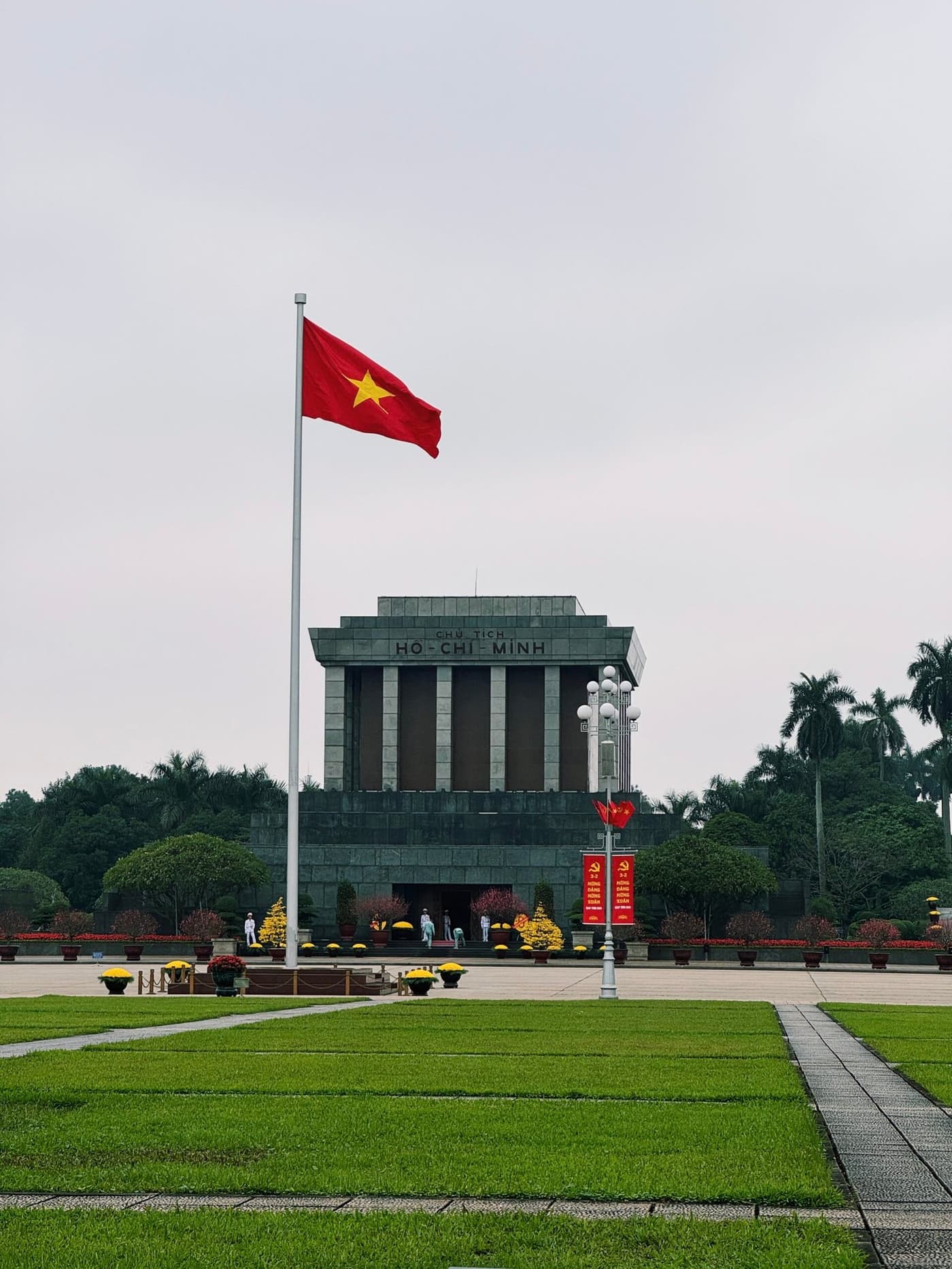
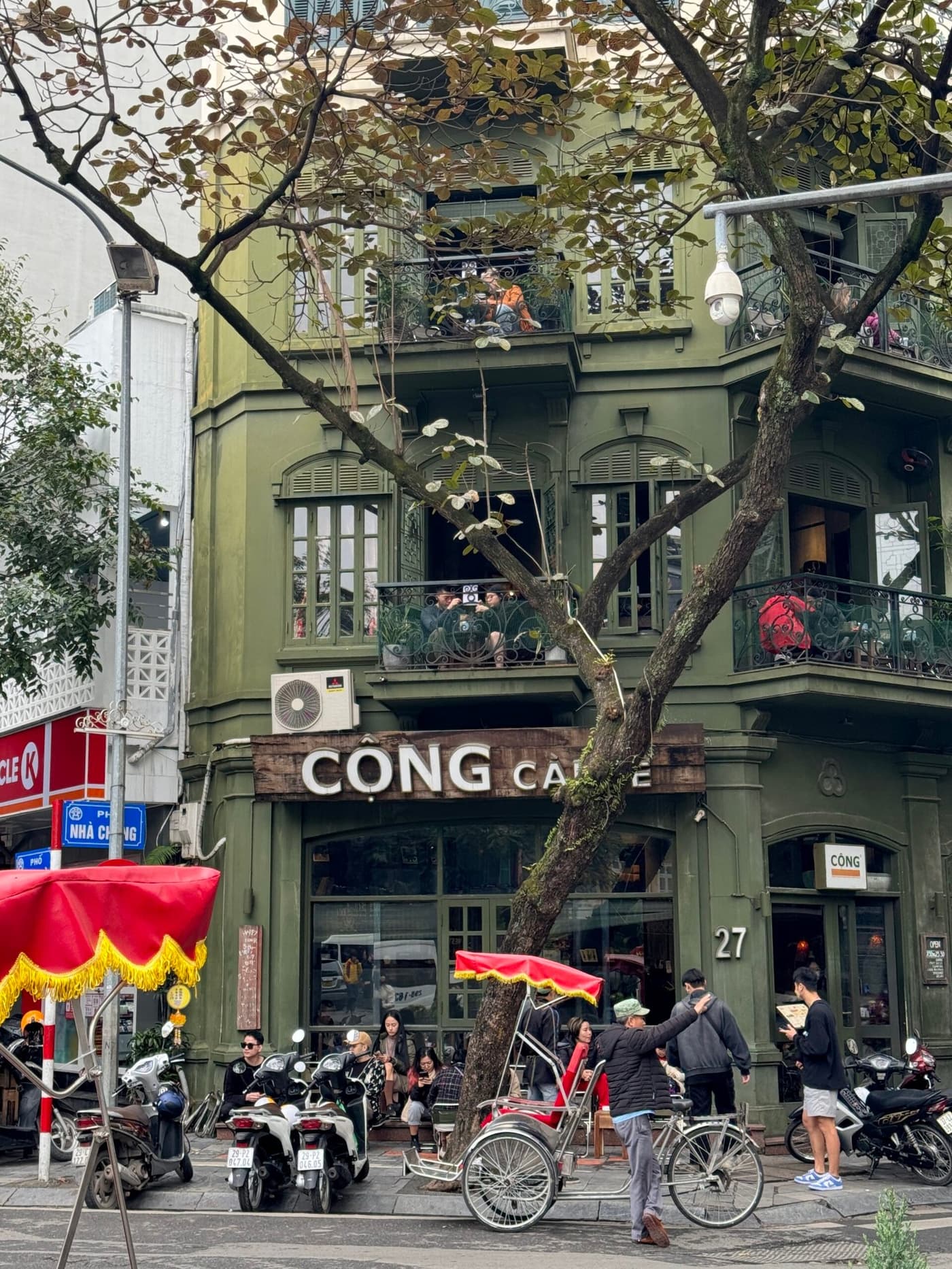
The capital in the north is noisy, chaotic, polluted and photogenic all at once. There is the Old Quarter with hundreds of years of history, Hoan Kiem Lake in the center, and the train street where the tracks run a meter from residential windows. In the evening Ta Hien Street (Tạ Hiện) in the Old Quarter comes alive with a dense row of street bars and noodle stalls. From Hanoi it is easy to reach Ha Long Bay, Ninh Binh, the incredibly beautiful Sapa deep in the north, or to hop on a train heading south.
The capital of Vietnam is rarely chosen as a destination in its own right, and most people pass through. If you are short on time, a fast pace and a planned route let you cover the main sights in a single day. I wrote a separate article about what to see in Hanoi.
Da Nang
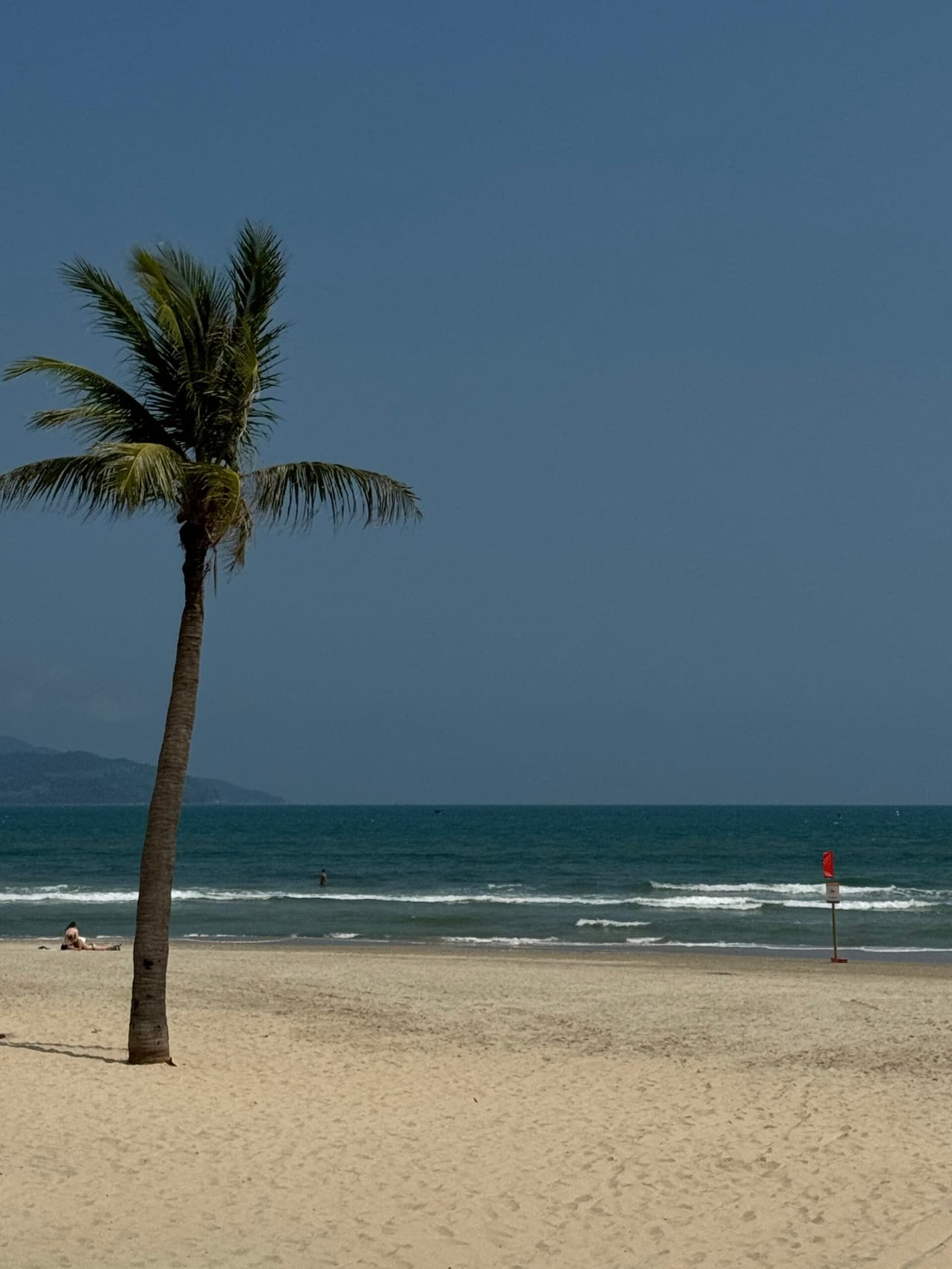
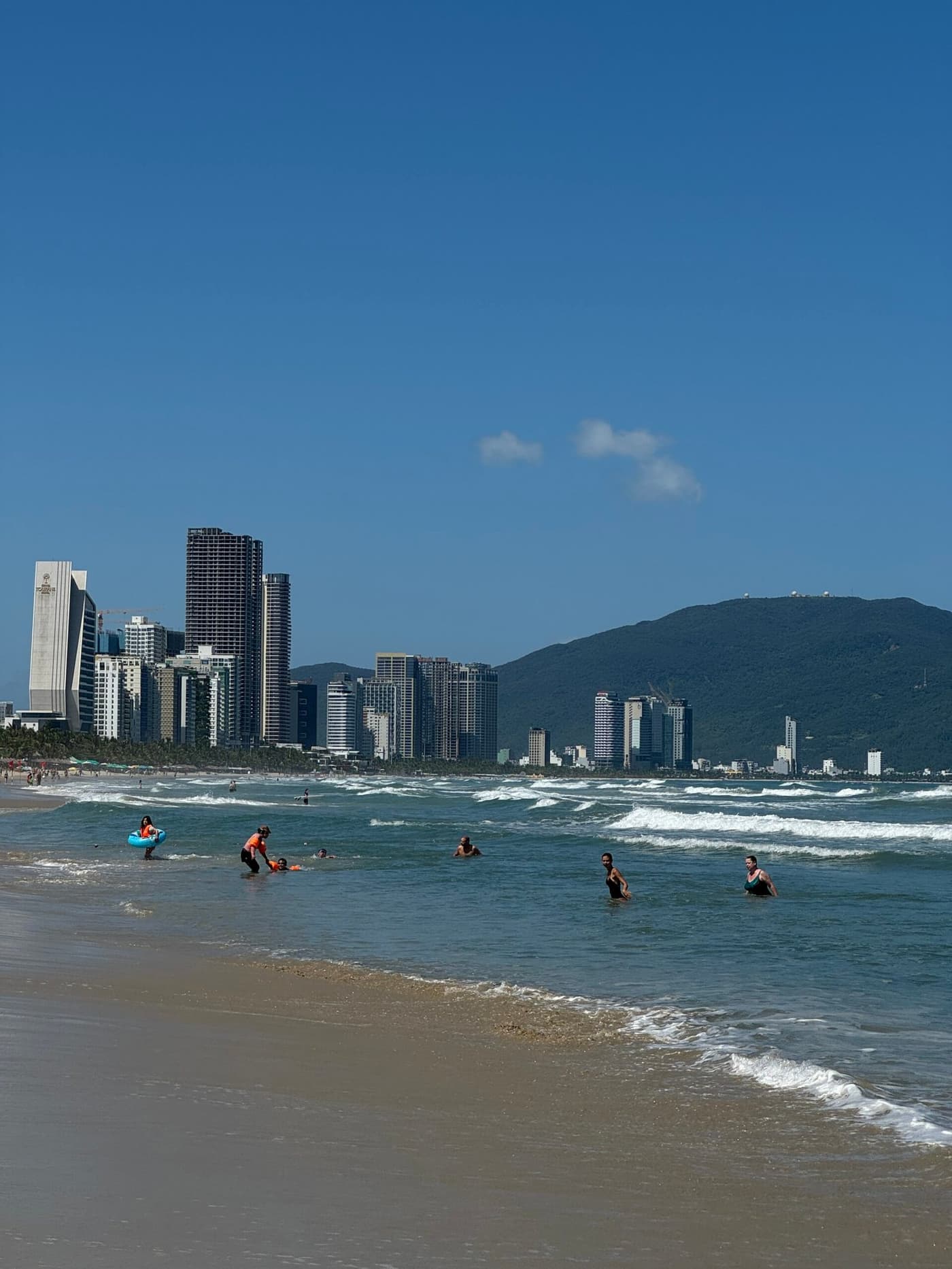
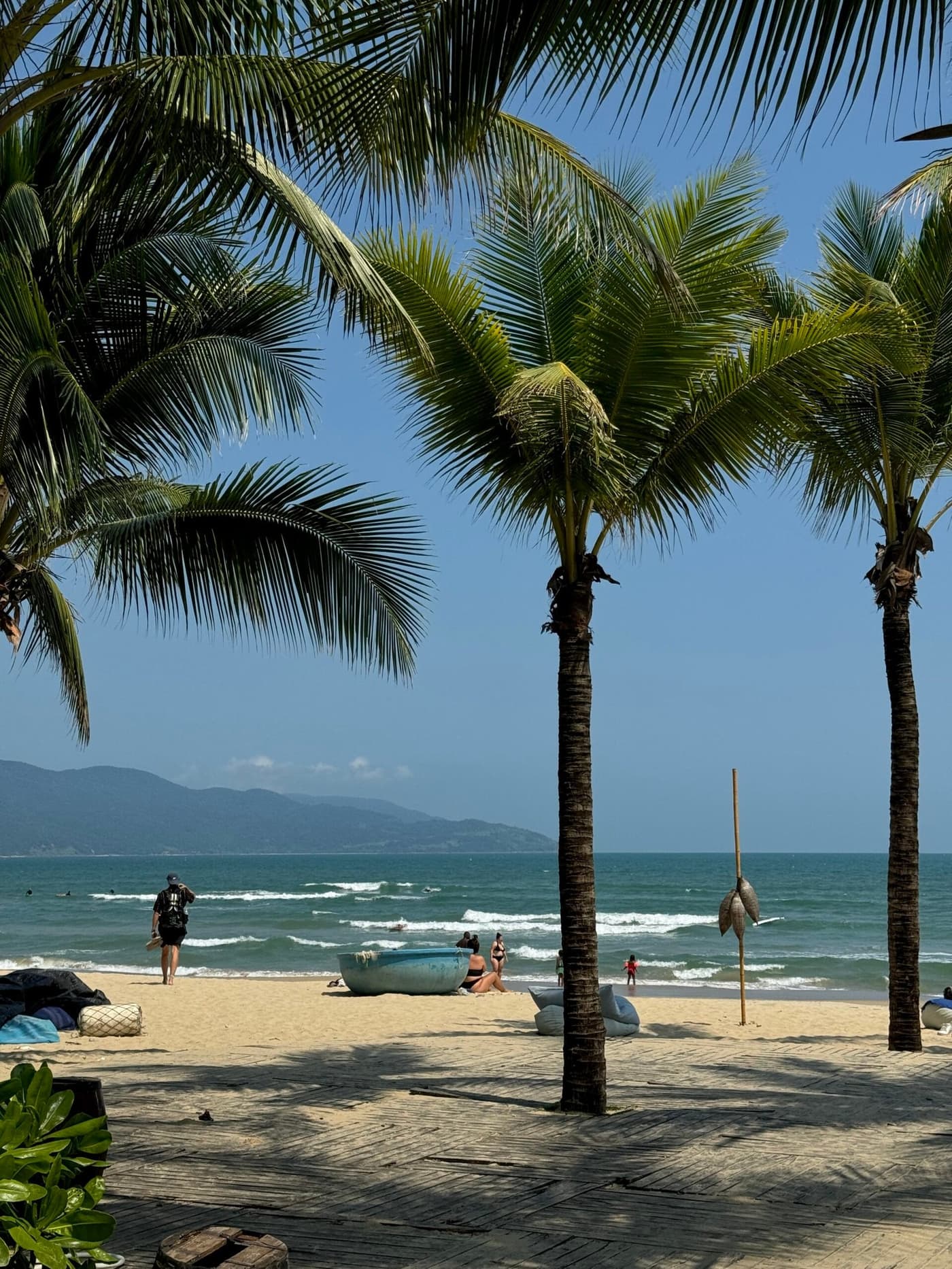
One of the most convenient cities in Vietnam, not only for a short vacation but also for a long stay: long beaches, fairly developed infrastructure and good cafes. It is calmer than Hanoi, and prices are lower than in Ho Chi Minh City. Hoi An is 30-50 minutes away by motorbike, Hue is two hours away, and the My Son mountain sanctuary is an hour and a half away. The city is especially popular with digital nomads precisely because of this mix of price and relative comfort by Vietnamese standards.
We lived in Da Nang ourselves and visited all the sights in and around the city. I wrote a separate Da Nang city guide. I also covered the Da Nang neighborhoods and where to stay, what to see in Da Nang and put together a list of the best restaurants and cafes in Da Nang.
Hoi An
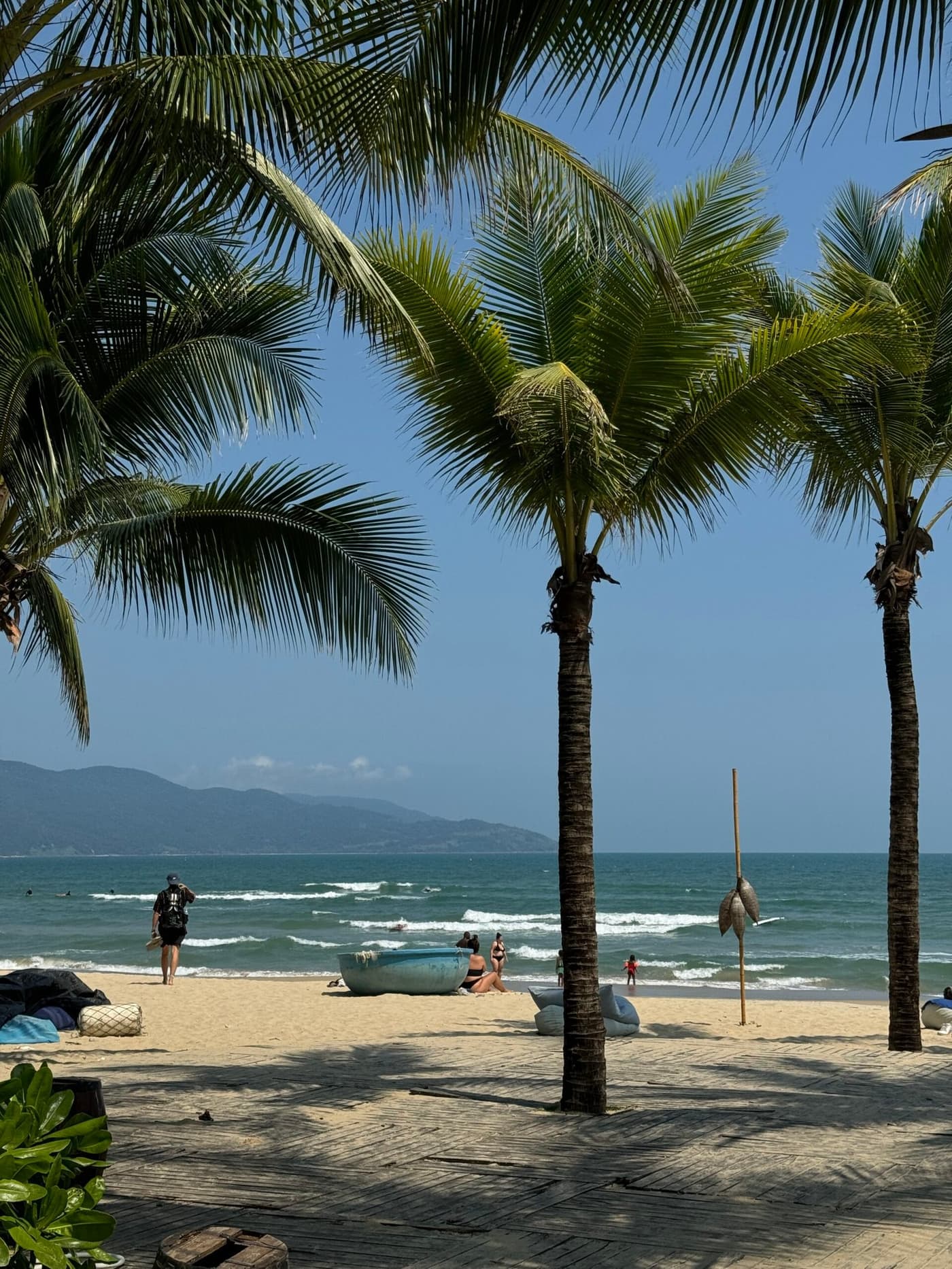
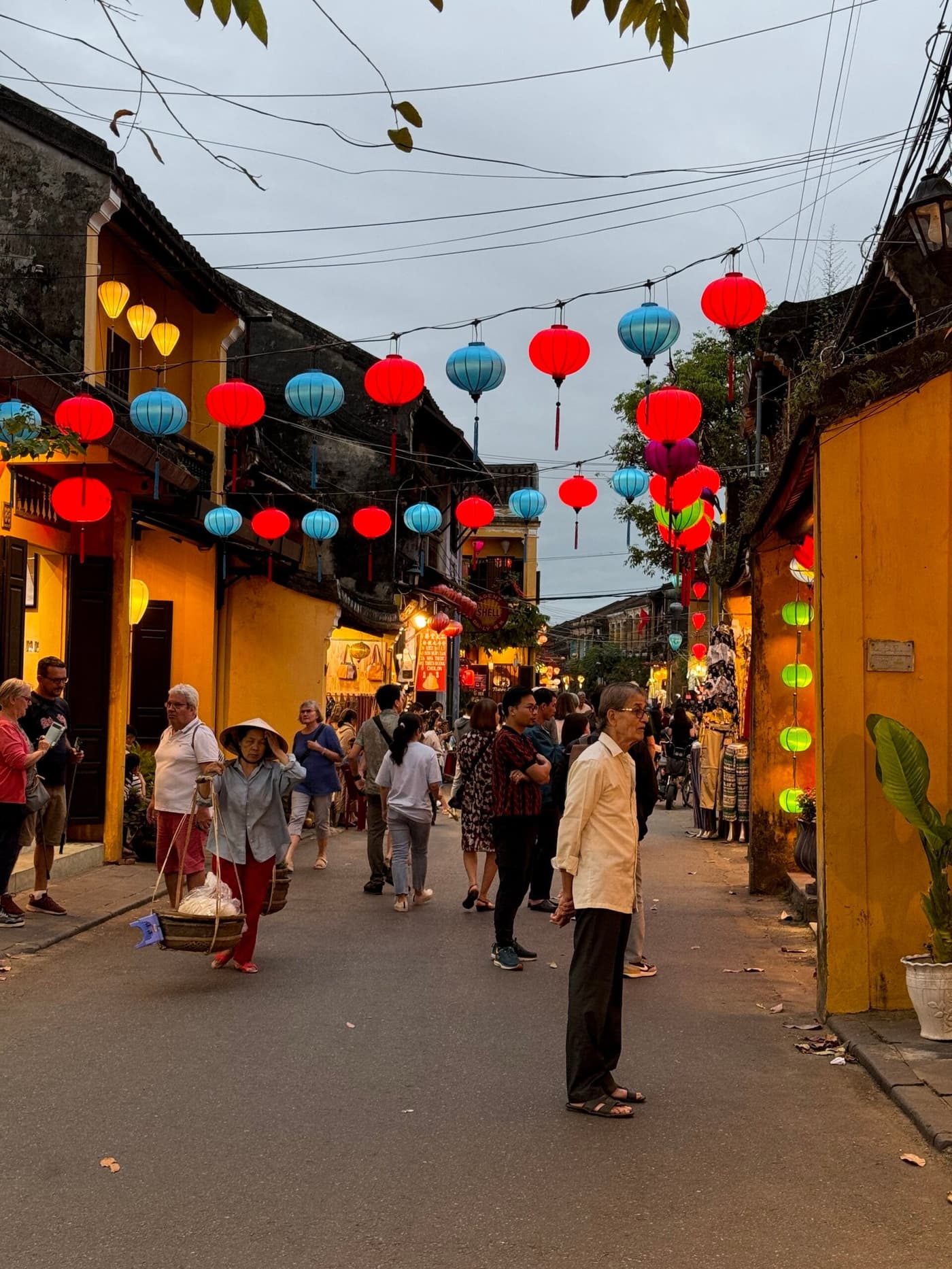
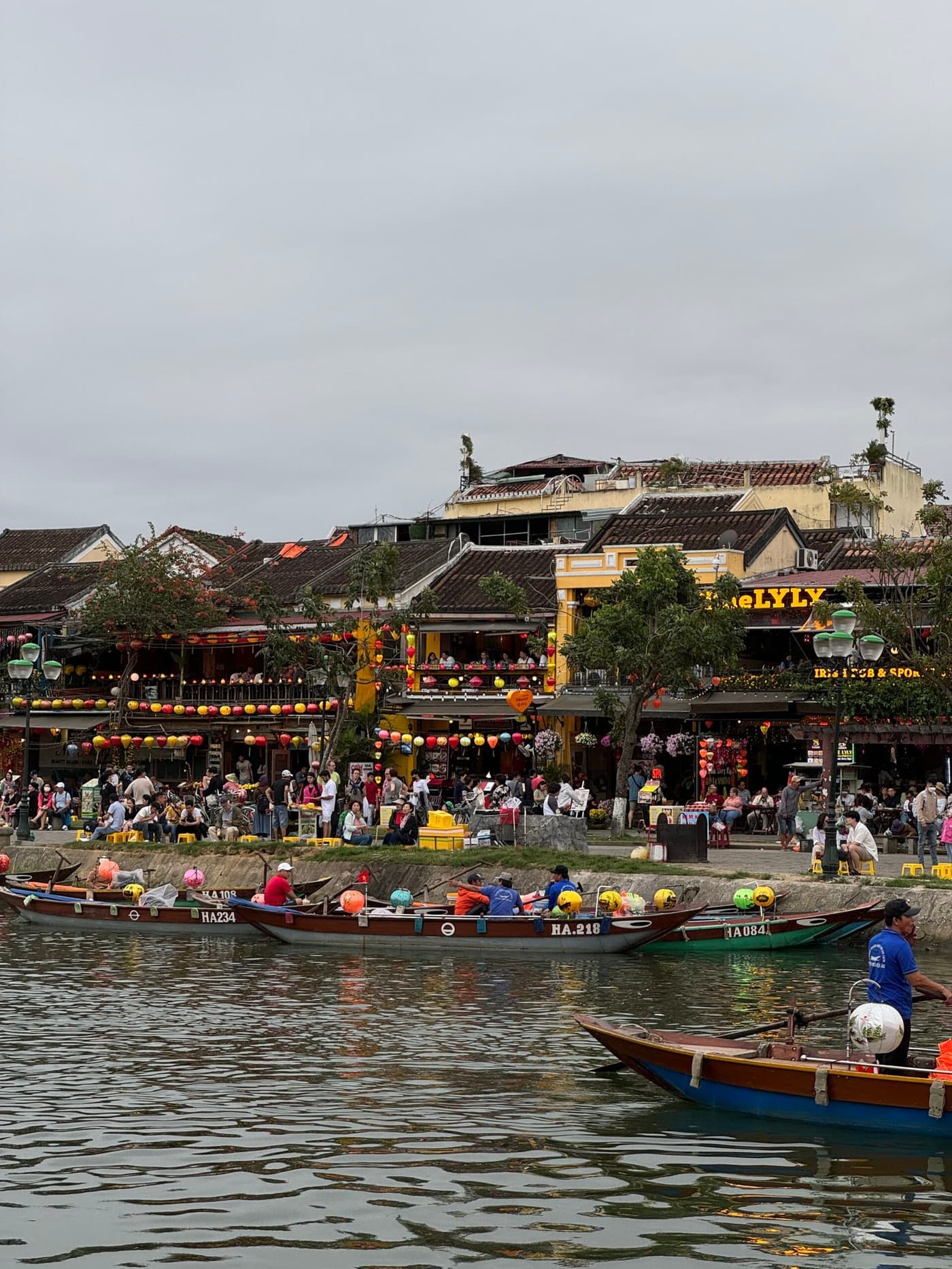
An ancient trading town with wooden facades, lanterns and cobbled lanes, its historic center is a UNESCO World Heritage site. There are many tourists, and the streets are incredibly loud. Nearby, in the village of Cam Thanh, visitors are offered a ride in a round basket boat called a thung chai, which has an unusual origin. We rode them too, and I told the story in detail in where Vietnam's round boats come from. There is more in Hoi An: what to see and how to get there.
Ho Chi Minh City
Formerly Saigon, this is the southern megacity: business-minded, fast and chaotic. It is noticeably more expensive than Da Nang, but the standard of living is a bit higher, and there are museums, colonial architecture, war history and the Cu Chi tunnels. Tourists and expats usually settle in District 1 (the center, with hotels and restaurants but also constant crowds) or in Thao Dien in District 2, which is green and quiet, with international schools and higher prices.
Nha Trang
A classic beach resort with full tourist infrastructure. The archipelago of islands off the coast is best explored outside typhoon season. It suits anyone who wants to relax and not think about logistics, but if you want something more authentic, Nha Trang would be a poor choice.
Phu Quoc
An island in the southwest that has grown in ten years from a fishing village into a resort with an international airport. Long Beach is a sunset beach along the whole west coast of the island, with the most hotels and infrastructure. Sao Beach in the southeast has white sand and turquoise water, but it is farther to get to and has less infrastructure. There are tropical vibes, clean water and coral reefs, and you can choose between a luxury hotel and a budget bungalow.
Vietnam or Thailand: which to choose
It is a common question, and in short: Thailand is a developed destination, while Vietnam is fairly wild in places. Thailand has welcomed foreign travelers for decades, hence the standardized service and convenient, comfortable infrastructure. Vietnam is a younger destination, and you feel it at every step: chaotic traffic with incredible noise and stress, and mediocre service. In the end you pay for Vietnamese cheapness with quality.
The cheapness is real, though: lunch for two at a decent cafe costs about $8 versus $12 in Thailand. Thailand's beaches and sea are cleaner and prettier, with clearer water and whiter sand almost everywhere, except Vietnam's Phu Quoc, which stands apart. For eligible passports, visa-free stays in Vietnam are now longer, 45 days versus Thailand's 30, and for longer trips there is a 90-day multiple-entry e-visa.
Thailand makes more sense if you value predictability and a set standard, and if it is your first trip to Asia, a trip with children, a honeymoon, or any situation where you do not want to deal with local chaos. Choose Vietnam if you have already been to Thailand, if budget is the deciding factor, or if the rough edges are part of what you are traveling for.
When to go to Vietnam: seasons by region
"Best season" is a very relative idea for a country this long. The weather in the north and the south differs a lot in the same month.
North (Hanoi, Ha Long): the best time is April to June and September-October. In winter, from December to February, it is raw and gray: chilly, and not a tropical beach vacation.
Central (Da Nang, Hoi An, Hue): the beach season runs from March to August. From September to November is the rainy and typhoon season, and swimming is unsafe at that time.
South (Ho Chi Minh City, Nha Trang, Phu Quoc): the dry season runs from November to April, and that is when most tourists come.
If you plan the classic Da Nang + Ho Chi Minh City + Phu Quoc route, the best window is December to March: the south is in its dry season and the center is still in decent shape. If you want Da Nang specifically for the beach, go from April to August.
For more on the seasons in central Vietnam, see the separate article: the best time to go to Da Nang
How much money you need in Vietnam
Vietnam is definitely one of the most affordable countries in Southeast Asia.
Street food and simple cafes: a bowl of pho costs 40,000-70,000 dong ($1.5-2.7), banh mi 20,000-45,000 dong ($0.8-1.7), coffee 20,000-35,000 dong ($0.8-1.3). In Da Nang you can find lunch at a local cafe from 30,000 dong ($1.1), cheaper than the national average. A day on street food costs 300,000-500,000 dong per person ($11-19).
Dinner for two at a tourist restaurant with a glass of wine starts at 1,500,000 dong (about $57). Prices depend heavily on the city and the neighborhood, so a single figure for all of Vietnam almost always understates or overstates real spending.
Accommodation: a hostel or guesthouse costs $6-12 per bed per night, a 2-3★ hotel $15-35, and a 4★ hotel $30-70. For long-term studio rentals in Da Nang the range is wide. There is ultra-cheap housing, but more realistic prices are $350-500 for a decent studio and $550-900 for a one-bedroom. In practice it is sensible to budget from $350 for a normal studio in a residential area.
Transport: renting a bike costs 100,000-150,000 dong per day ($3.8-5.7) for an ordinary manual scooter, and 150,000-250,000 dong ($5.7-9.6) for an automatic like the Honda Vision. A Grab taxi costs 30,000-70,000 dong ($1.1-2.7) for a short 5 km ride, and a bus between Da Nang and Hoi An costs about the same. Domestic flights (VietJet, Bamboo Airways, Vietnam Airlines) start from $50.
A rough budget for 10 days for two people, not including flights, at a mid-range level: at least $700 for food, accommodation, transport and a couple of excursions.
I covered this in more detail in another article: prices in Vietnam
How to get to Vietnam
There is no single direct route that works for everyone, so start from where you are flying from. The airport you choose depends on your route: for the center of the country, Da Nang (DAD); for the south, Ho Chi Minh City (SGN) or Nha Trang (CXR, with a connection); for the north, Hanoi (HAN, with a connection).
You can reach Vietnam on your own with a connection at any time of year, for example through Dubai (Emirates, FlyDubai), Doha (Qatar Airways), Istanbul (Turkish Airlines) or Abu Dhabi (Etihad). Total travel time is from 14 to 20+ hours depending on the route.
The most budget-friendly option is a connection through China: China Southern via Guangzhou, China Eastern via Shanghai, Hainan Airlines or Air China via Beijing. Such a ticket is usually 20-40% cheaper than one via Dubai or Istanbul, and the trip is shorter, 13-15 hours with a good connection. China also has a visa-free transit of up to 240 hours (10 days) through 65 border ports (airports, seaports, rail stations) across 24 provinces for eligible passports, so on a long layover you can leave the airport and see the city instead of sitting in the terminal. Transit requires a ticket to a third country, a hotel booking (if you leave the airport) and a passport valid for at least 3 months. Check the current rules for your own passport with the Chinese immigration authority before you book.
Vietnam visa and entry rules 2026
The news is still good, but in 2026 a new electronic arrival card system appeared that many older articles do not mention yet.
When I checked in October 2026, a 45-day visa exemption was in place for eligible passports, confirmed until March 14, 2028. It applies for any purpose of travel: tourism, transit, visiting friends. The documents needed are a passport valid for at least 6 months on the date of entry and two blank pages.
The main change of 2026: from April 15, Vietnam's Immigration Department has been rolling out a digital arrival card with a QR code (the PAI system), first as a pilot at Tan Son Nhat airport in Ho Chi Minh City and then at other airports. According to the official announcements we checked in October 2026, it is recommended rather than mandatory during the pilot, so the rules may change: check the current status with your airline or the portal before you fly. You can complete it for free on prearrival.immigration.gov.vn within 3 days before entry and show the QR code at passport control together with your passport. If you are entering visa-free repeatedly within a short period, keep in mind that after two or three frequent entries a border officer may suspect the exemption is being used in place of a long-term visa, and may stamp a shorter stay or refuse entry altogether. There is no formal ban on visa runs, but there are no guarantees either.
A 90-day electronic visa (e-visa) suits those who plan to stay longer or want to leave and re-enter freely. A single-entry e-visa costs $25, and a multiple-entry one costs $50. Processing takes 3-5 business days through the official immigration portal. Payment is accepted by Visa or Mastercard; the portal does not accept UnionPay.
If you entered visa-free and want to stay longer than 45 days, you can either do a border run (leave for a neighboring country and come back) or get an e-visa in advance for the next period.
Visa-exemption terms depend on your passport and change from time to time, so confirm the rules for your own passport with the Vietnamese immigration authority before you book.
What to know before you go: practical tips
A few practical topics worth knowing about: connectivity, money, transport and safety.
SIM card
Buying a SIM at the airport or in any phone shop is easy and cheap. The main operators are Viettel, Vinaphone and Mobifone. A basic SIM starts at 50,000 dong, a 7-10 day package costs 150,000-250,000 dong, and a 15-30 day package costs 250,000-450,000 dong depending on the data allowance. The internet works well even in the mountains and on the beach.
Money and cards
ATMs are everywhere, but withdrawal fees can be painful, 50,000-100,000 dong per transaction, so it is better to withdraw larger sums. Street food stalls and markets are cash only, while restaurants and hotels more often accept cards.
UnionPay cards are not accepted everywhere: they are accepted at about half of terminals, and cash can be withdrawn at TPBank, BIDV and VietinBank ATMs (limit around 3 million dong per withdrawal).
Changing cash is convenient at banks or jewelry shops. Yes, in Vietnam jewelry shops have historically served as unofficial exchange offices with a good rate.
Getting around the country
Between cities it is easiest to use planes (VietJet, Bamboo Airways, Vietnam Airlines, tickets cost from $50 per flight), express buses and trains. The train from Hanoi to Da Nang takes about 15 hours, but it is an experience in itself: the ride along the coast is worth it. We traveled by train with a cat, and it was quite comfortable.
Within a city, use Grab (the local equivalent of Uber) or rent a bike. The bike is the main form of transport in Vietnam: a manual like the Honda Wave costs 100,000-150,000 dong per day, an automatic (Honda Vision, Yamaha Sirius) 150,000-250,000, and powerful models of 175 cc and up from 500,000 dong per day. For a monthly rental, a Wave costs 1,500,000-2,500,000 dong and a Vision 2,500,000-4,000,000, and on Phu Quoc rentals are more expensive, up to 5,000,000. For a bike you need an International Driving Permit (IDP) in category A or a local Vietnamese A1 license; confirm that your own national license is accepted before you ride. Without a license the fine is 2-4 million dong for bikes up to 125 cc (6-8 million for larger ones), and the bike can be temporarily impounded. Standard travel insurance usually does not cover injuries on a moped, so it is worth paying extra for an active-recreation option. Traffic rules exist but are interpreted creatively, so if you have never ridden a moped in an Asian city, start carefully and on an empty road.

Safety
The most serious real risk in Vietnam is not crime but road traffic: in the first ten months of 2025 about 8,515 people died in road accidents in the country, around 28 deaths a day, and with 45+ million motorbikes on the roads the figure does not look exaggerated.
Do not relax about street crime either, although it mostly comes down to petty theft. Motorcyclists snatch shoulder bags on the move, most often in Ho Chi Minh City and Nha Trang, so carry your bag on the side away from the road. Pickpockets work in markets like Bến Thành in Ho Chi Minh City and Đồng Xuân in Hanoi. There are scams by taxi drivers who drive without a meter and inflate the price three to five times. Swapping banknotes when giving change also happens: 20,000 and 500,000 dong notes look similar, and they are easy to mix up.
Dengue fever is a separate health topic: according to official data, about 110,000 cases were recorded in Vietnam between January and October 2025. It is carried by mosquitoes that bite during the day, not at dusk as many people expect. A vaccine exists but requires a course in advance, so you cannot get it a week before departure.
Even so, Vietnam remains one of the calmer countries in the region. There is no serious organized crime threatening tourists, and Hanoi occasionally appears on lists of safe cities of the world, even if it is unbearably chaotic.
Vietnam route: 2-3 weeks
Below is a short route that I put together, ideal for a first introduction to the country, taking into account the logistics and seasonality covered above.
Days 1-3: Hanoi. Arrive and check in. Explore the Old Quarter on foot, Hoan Kiem Lake, the Jade Mountain pagoda and the Temple of Literature. In the evening try street food on Ta Hien. Set aside one day for a trip to Ha Long Bay, preferably with an overnight cruise. Return to Hanoi and fly to Da Nang.
Days 4-8: Da Nang. Check in, My Khe beach, the Marble Mountains, and the Dragon Bridge in the evening. Be sure to visit Ba Na Hills, which takes a whole day. The Lady Buddha statue on the Tien Sha peninsula.
Days 9-10: Hoi An. A morning bicycle ride through the rice fields, the old town in the afternoon, lantern release and dinner by the river in the evening. It is better to stay overnight.
Days 11-12: Hue. The former imperial capital, the citadel, the emperors' tombs, and bun bo Hue, the local signature version of the soup that differs from what is served in other regions of the country. Return to Da Nang over the Hai Van Pass.
Days 13-17: Ho Chi Minh City. Fly in, Ben Thanh market, the Presidential Palace, the Cu Chi tunnels, and the nightlife of Bui Vien Street.
Days 18-21: Phu Quoc or Nha Trang. A final beach stretch with no plan.
If you have only two weeks, drop either Hanoi (start from Da Nang) or the final beach block. Trying to cover everything in 10 days means spending half your time in airports.
On my YouTube channel I filmed a video in Hanoi, which I recommend watching:
Answers to the most frequently asked questions
Do I need a visa for Vietnam in 2026?
When I checked in October 2026, entry for 45 days without a visa was available for eligible passports, extended until March 2028. Since April 15, 2026, Vietnam has been rolling out a digital arrival card with a QR code (recommended rather than mandatory during the pilot, according to the official announcements), which you complete in advance on the portal prearrival.immigration.gov.vn within 3 days before entry. For a longer stay, get a 90-day e-visa for $25-50. Confirm the rules for your own passport with the Vietnamese immigration authority.
When is the best time to go to Vietnam?
It depends on the region. For Da Nang, March to August. For the south (Nha Trang, Phu Quoc), November to April. For Hanoi, April-June or September-October.
Is Vietnam an expensive country?
It is one of the most affordable in Asia and in the world overall. But prices differ by city. Food and transport cost roughly $12-36 a day per person, and accommodation starts from $6 per hostel bed. More about prices.
How do I get to Vietnam?
Most travelers connect through Dubai, Doha, Istanbul, Abu Dhabi or China. Total travel time is usually 14 to 20+ hours depending on the route.
Is it safe to travel to Vietnam?
Yes, but the main risk is not crime but road traffic: the country has one of the highest road fatality rates in the region. Everyday risks are pickpockets and bag snatching on tourist streets.
Vietnam or Thailand: which to choose?
Vietnam is cheaper but more chaotic, and it suits those who have already been to Thailand or want a more authentic experience. Thailand is a more developed country and more comfortable for a first trip to Asia, for traveling with children or for a honeymoon: it is cleaner, with better service and a calmer pace.
What sea is in Vietnam?
The South China Sea, warm (26-30°C in the beach season). More about the sea in Vietnam
Do people speak English in Vietnam?
In tourist areas it is quite enough to communicate. In small local cafes and villages there is almost none, but you can always use a translator on your phone.