If you only have one day in the capital of Vietnam, don't worry. You can get a real feel for Hanoi in just a few hours. It is a loud, crowded and surprisingly lively city where French colonial architecture, Buddhist pagodas, communist heritage and modern Asia are all woven together.
In this article I've put together the most interesting things to see in Hanoi that you can fit into a single day. The route is logical, with no zigzagging around the city, and it is meant for anyone who likes to combine the atmosphere of the streets with real historical sights.
Hanoi's Old Quarter — Hoan Kiem
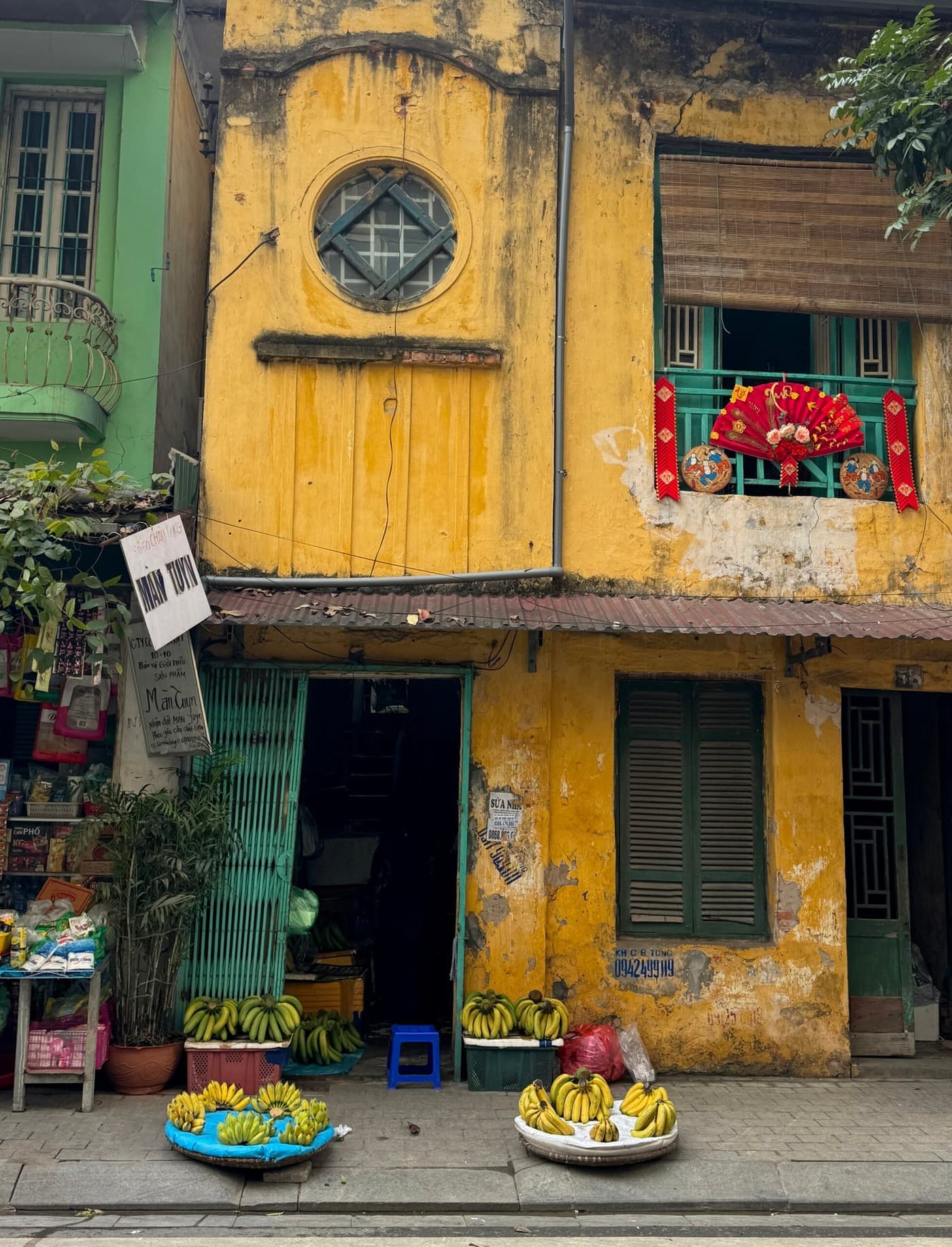
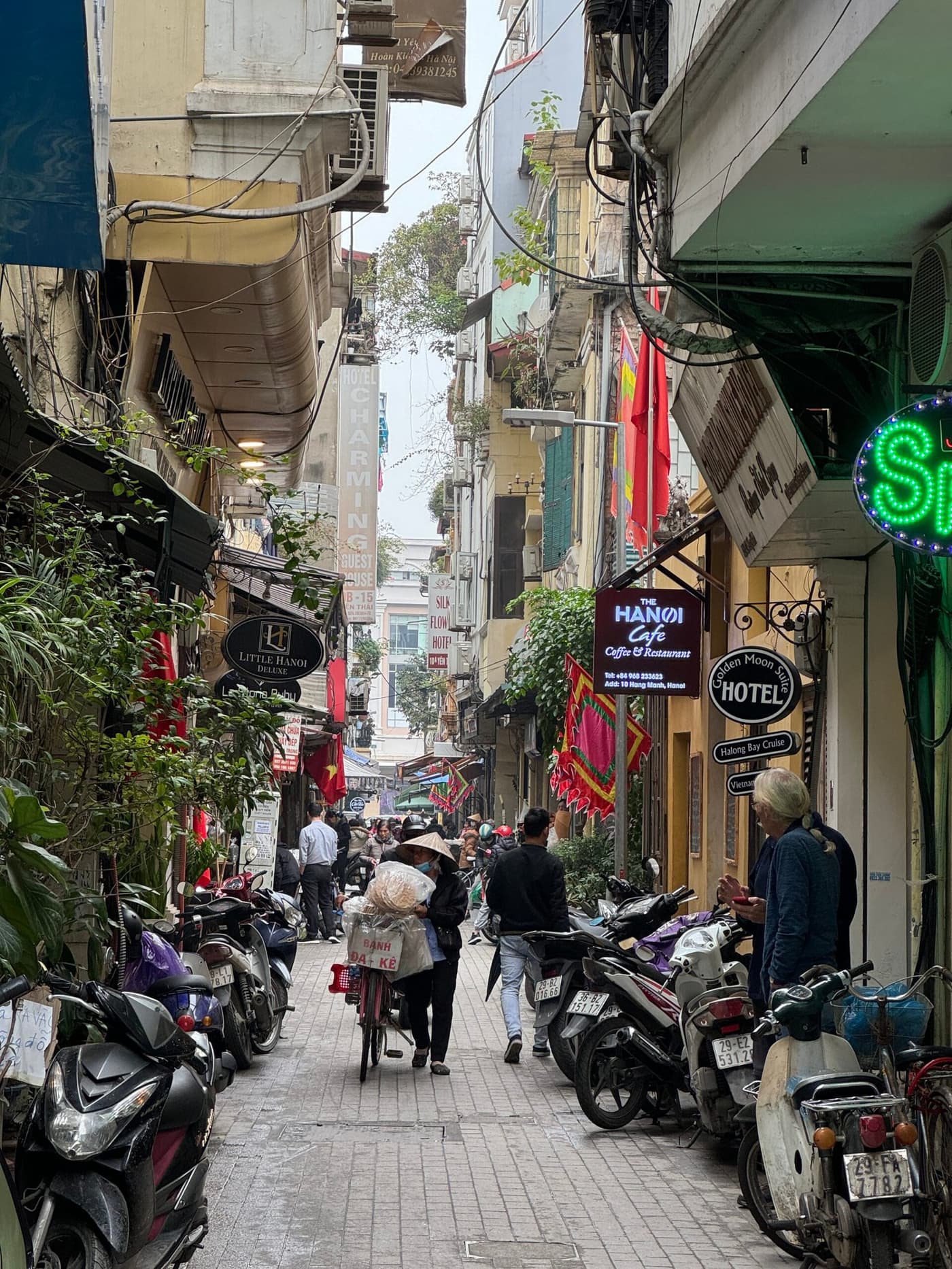
Start your day with a walk through the most authentic part of the city, the Old Quarter. Narrow lanes, building facades with French balconies, the roar of motorbikes, the smell of street food and plastic stools where locals sit with their cups of coffee: this is the real Hanoi.
Look closely at the facades, which literally pile on top of each other here. One building can hold a hostel, a cafe, a shop and an apartment all at once. The atmosphere is a little chaotic, but that is Hanoi all over.
We headed to Hanoi's Old Quarter first thing ourselves.
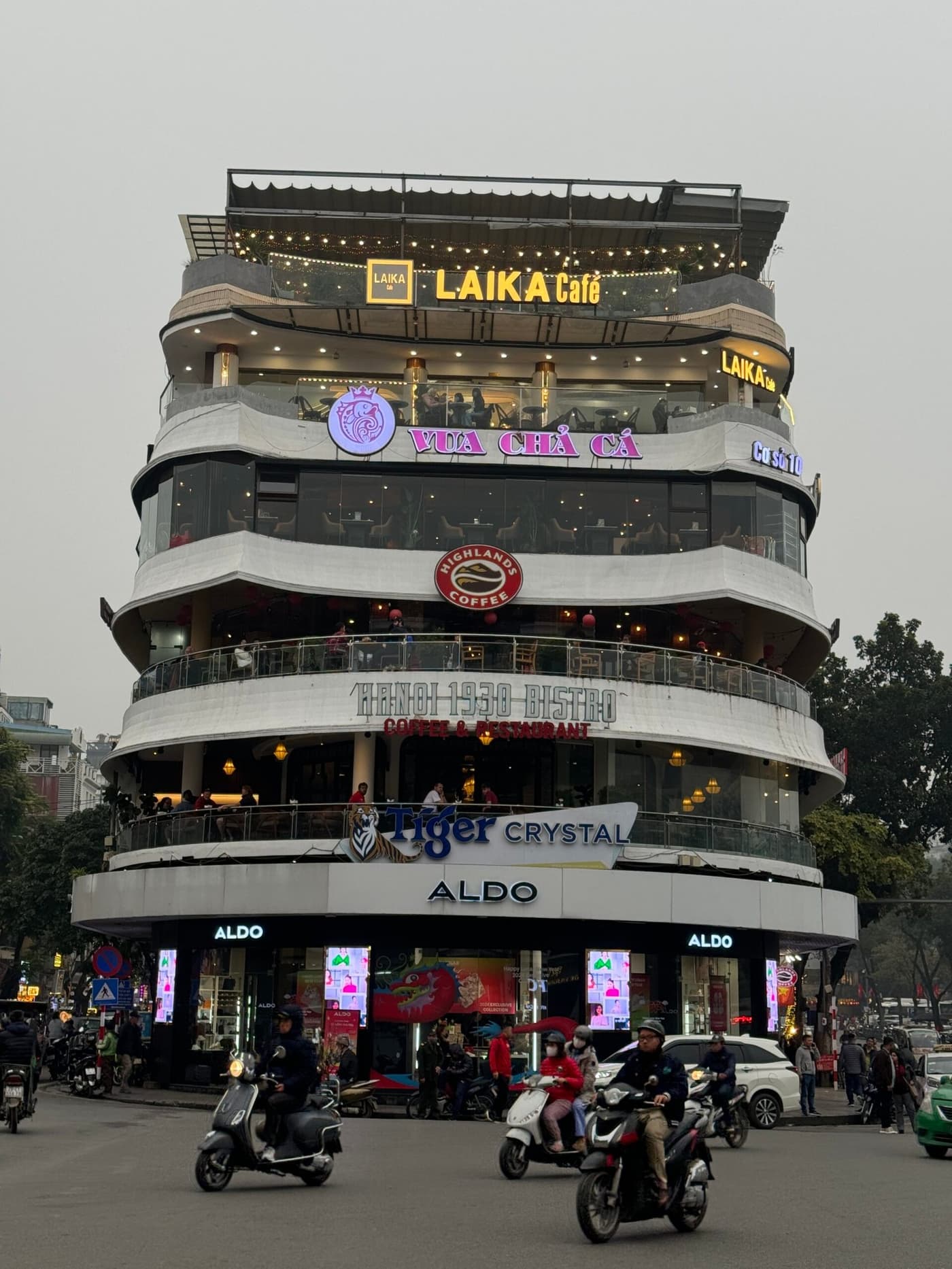
As you wander around the Old Quarter, look out for a building that is completely filled with cafes and restaurants. It stands right in the middle of a busy square, next to the lake. This is quite typical of Vietnam's old quarters, since you can find quite a few buildings like this. To me it looked really unusual and interesting.
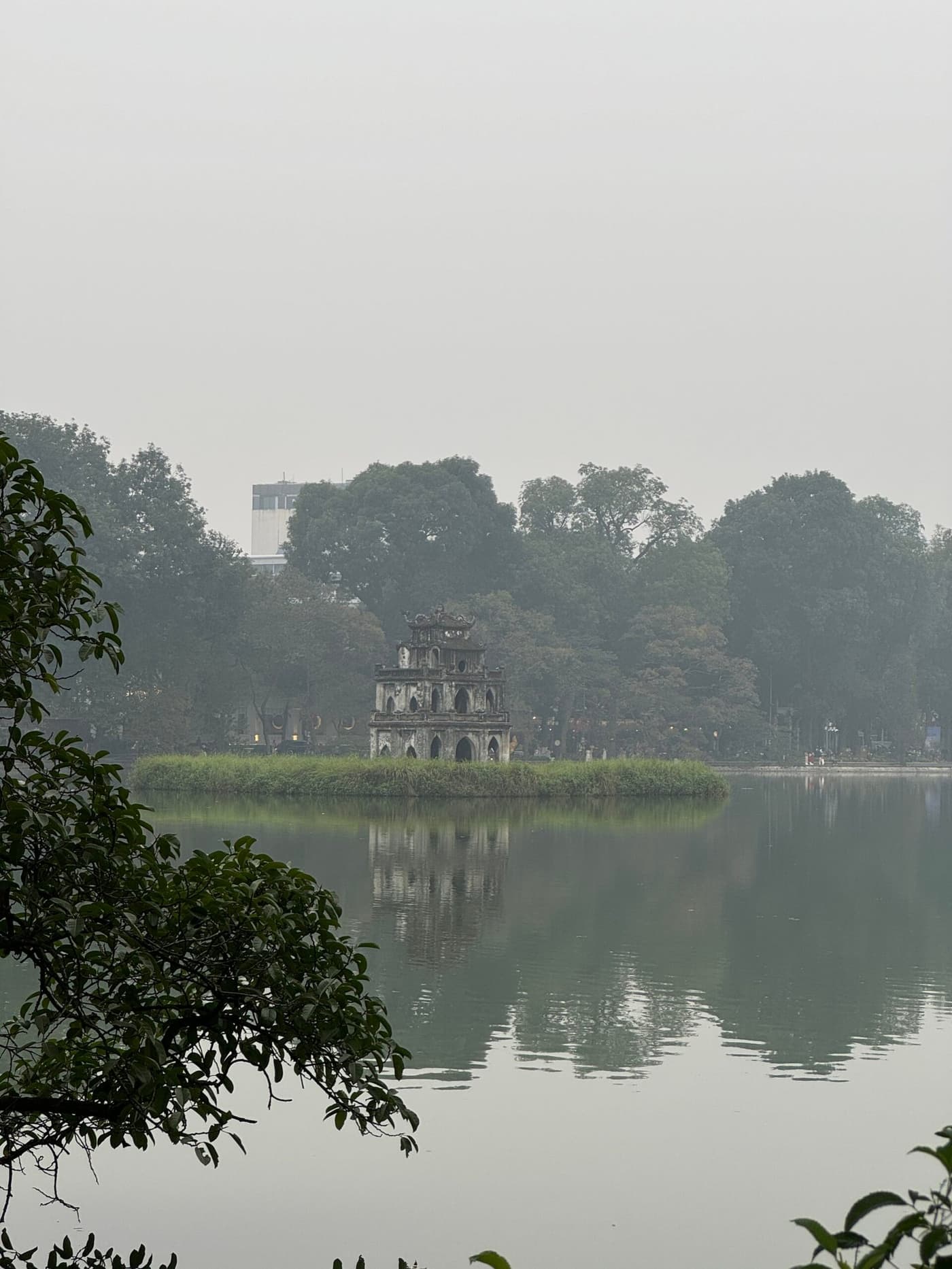
Hoan Kiem Lake (Lake of the Returned Sword)
The central sight of Hanoi is Lake of the Returned Sword, also known as Hoan Kiem. It is the heart of the old city, and every tourist ends up here. There is a park with a footpath around the lake, but it is not a quiet oasis in the middle of a noisy metropolis. It is just as loud, dirty and crowded here as in the rest of the Old Quarter.
Still, it is a historic place, and of course the lake has an interesting legend. The story goes that Emperor Le Loi, who rose up against Chinese rule, received a magic sword from a magic turtle. With this sword he defeated the Chinese army and became the founder of the restored Le dynasty. After the victory the turtle demanded its sword back, and the emperor returned it. The sword is believed to still lie at the bottom of the lake, which gives the place a special, sacred meaning.
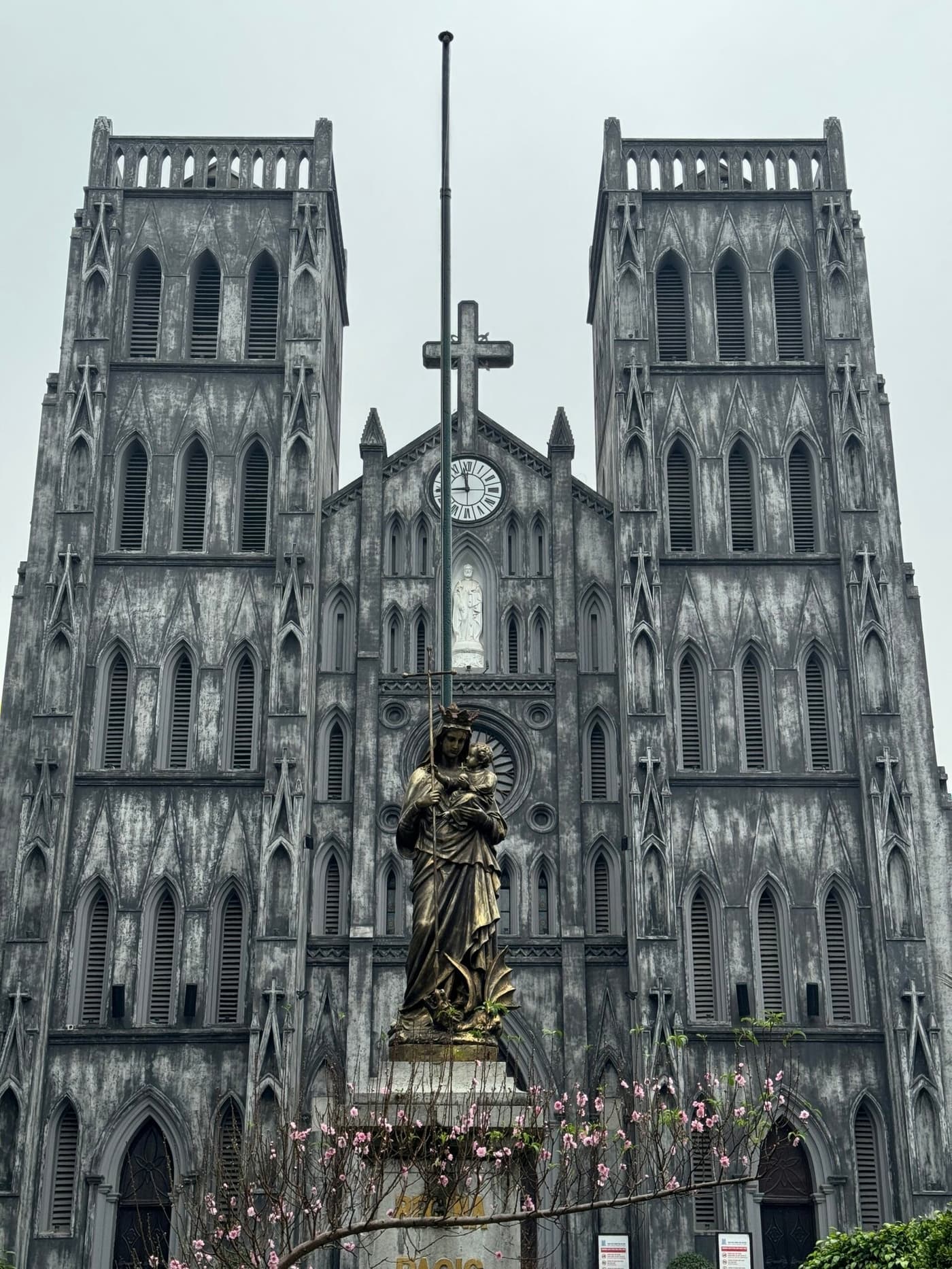
St. Joseph Cathedral
Just a couple of steps from the lake is the Gothic St. Joseph Cathedral, built in the 19th century by the French colonizers. It appears suddenly out of the side streets, and you feel as if you've landed in Europe. It is a working church and one of the most photogenic spots in the city. It is a very unusual and majestic building standing in the middle of all the madness and chaos. By the way, Hanoi has quite a few buildings like this. For example, a bit farther away there is the Roman Catholic Cua Bac Church.
Hanoi Train Street
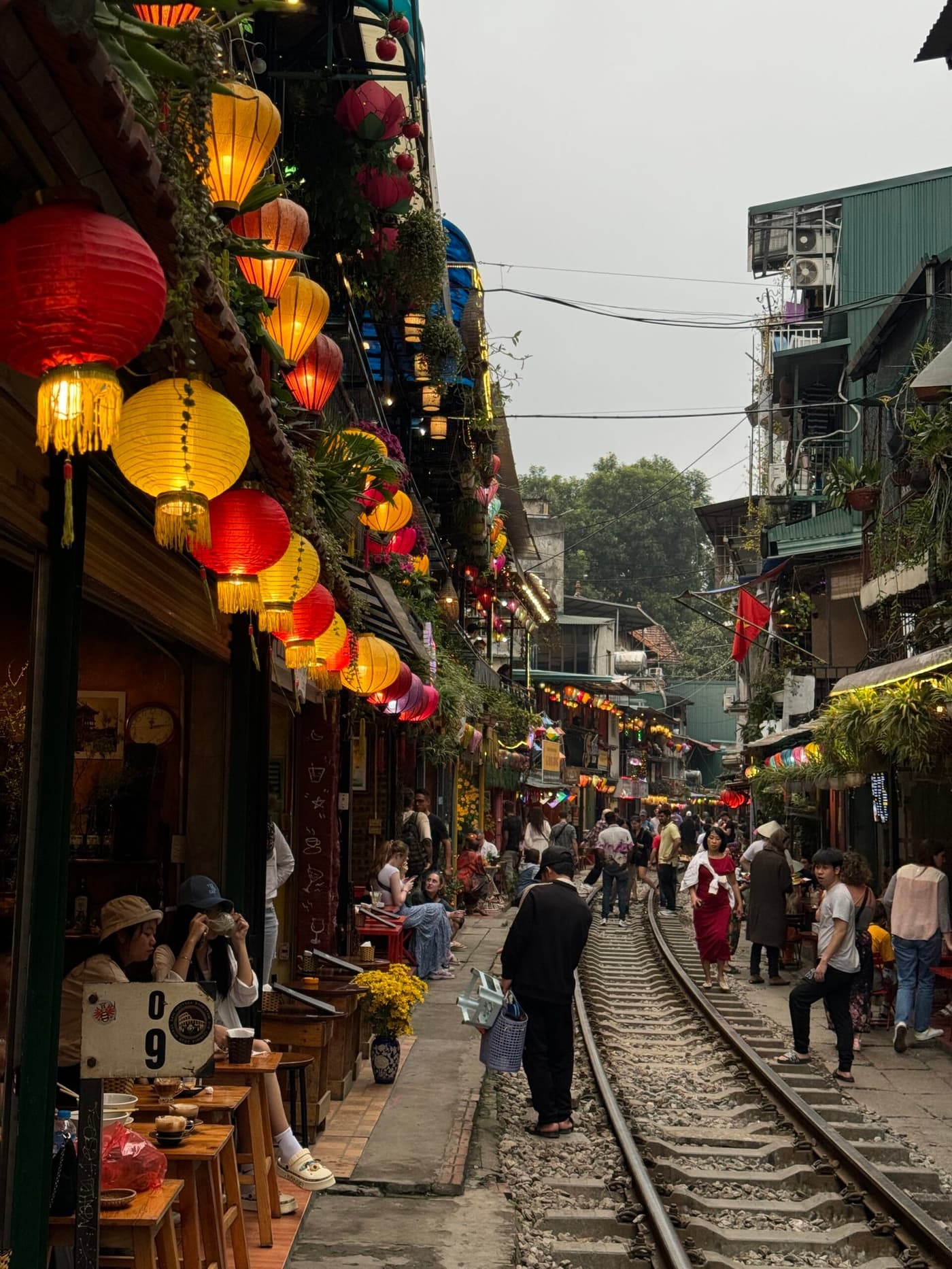
Next, you can drop by the legendary street where the railway tracks run literally between the houses. Train Street is a narrow alley where homes and cafes sit just a few centimeters from the tracks. A guard at the entrance supposedly keeps tourists out because it is not safe. In practice, staff from the various cafes walk around right there and invite you into their places. Besides being a fun and unusual sight, I also loved the atmosphere here. People from all over the world sip coffee and wait for the train to approach, everyone chatting with each other. Everything is decorated with pretty, photogenic lanterns, and vendors walk along the rails offering their goods.
Tran Quoc Pagoda
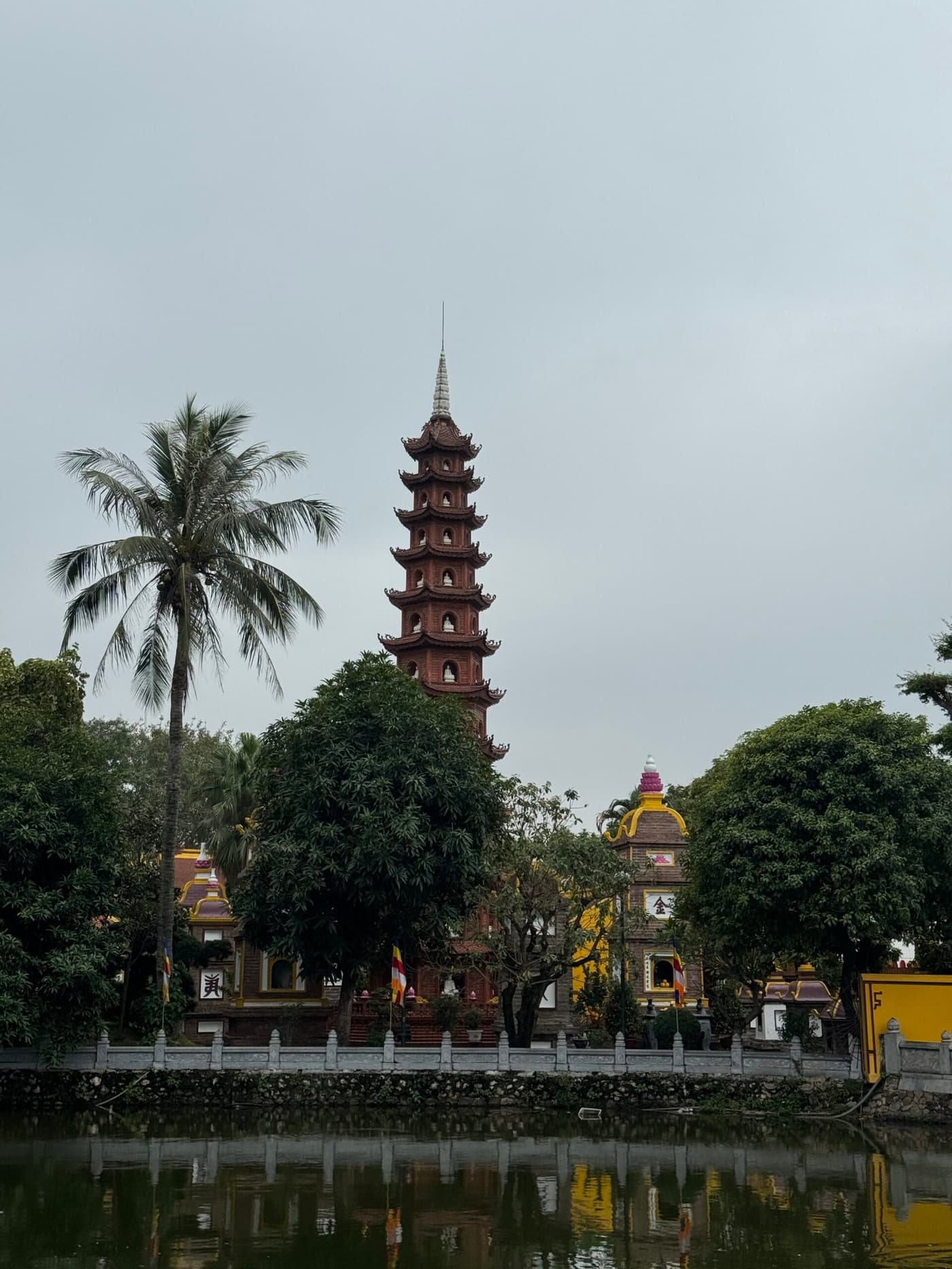
Now we move on to West Lake, and the first stop is Tran Quoc Pagoda, the oldest pagoda in Hanoi. Founded in the 6th century, it sits on a small island surrounded by water. It is one of the most significant and recognizable sights in Hanoi. Like any ancient structure, this pagoda has its own legend: the emperor decided to build it after seeing a golden dragon rising above the spot. The name "Tran Quoc" translates as "Protection of the Country," which symbolizes power and prosperity. The pagoda is not just a beautiful piece of architecture but also an important religious symbol for the Vietnamese people.
Quan Thanh Taoist Temple
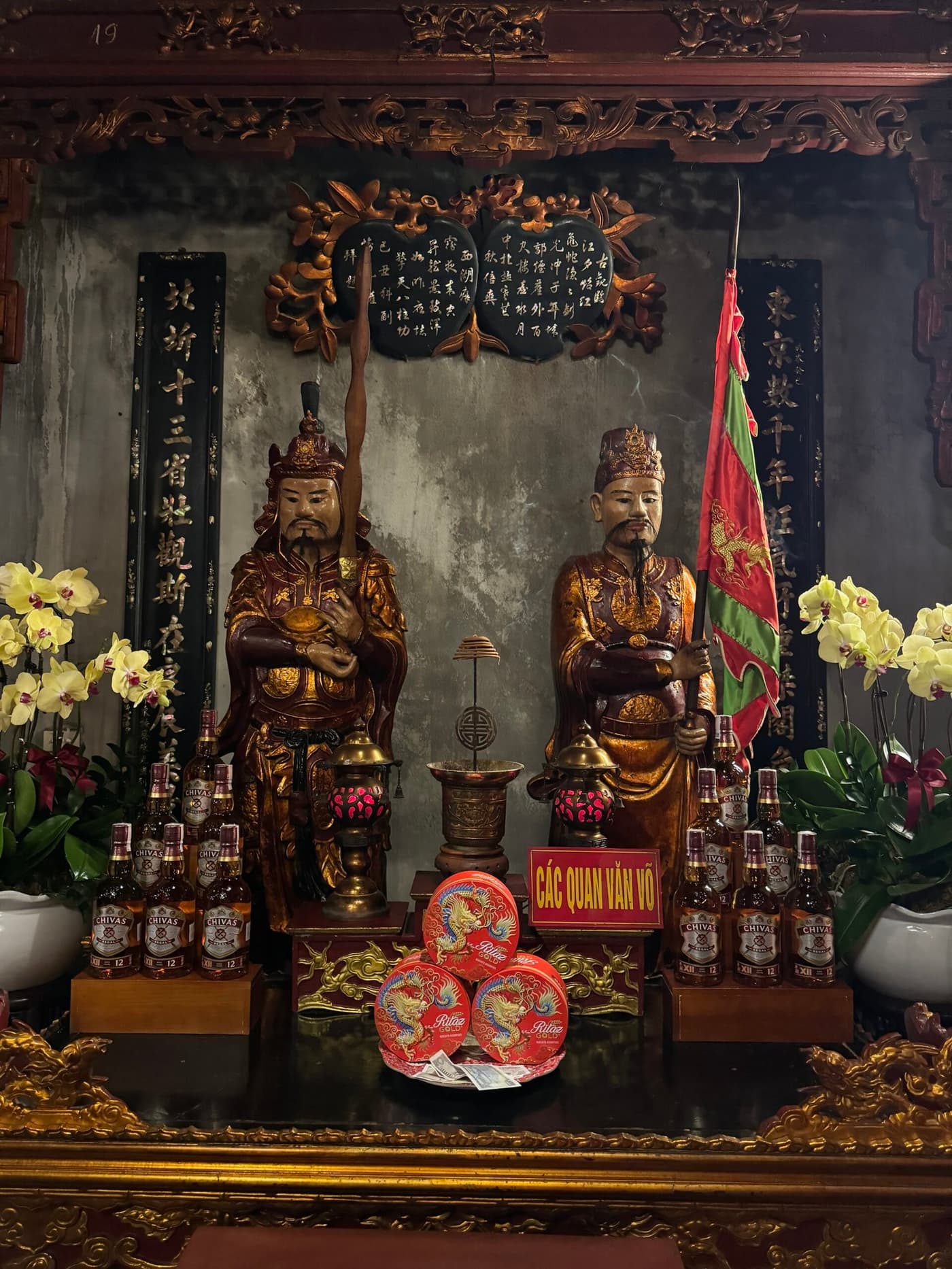
Next to the pagoda stands a small but very cozy Quan Thanh Temple. It is dedicated to a Taoist deity who guards the north of the capital. Despite its modest size, the atmosphere here is deep and calm. Entry to the temple grounds is paid and costs 10,000 dong per person, which is about half a dollar. The temple is beautiful and the grounds are small, but, surprisingly, it was very quiet and pleasant there. Inside the temple stood an altar, and what surprised me personally was the offerings, which were bottles of whiskey.
Ba Dinh Square and the Ho Chi Minh Mausoleum
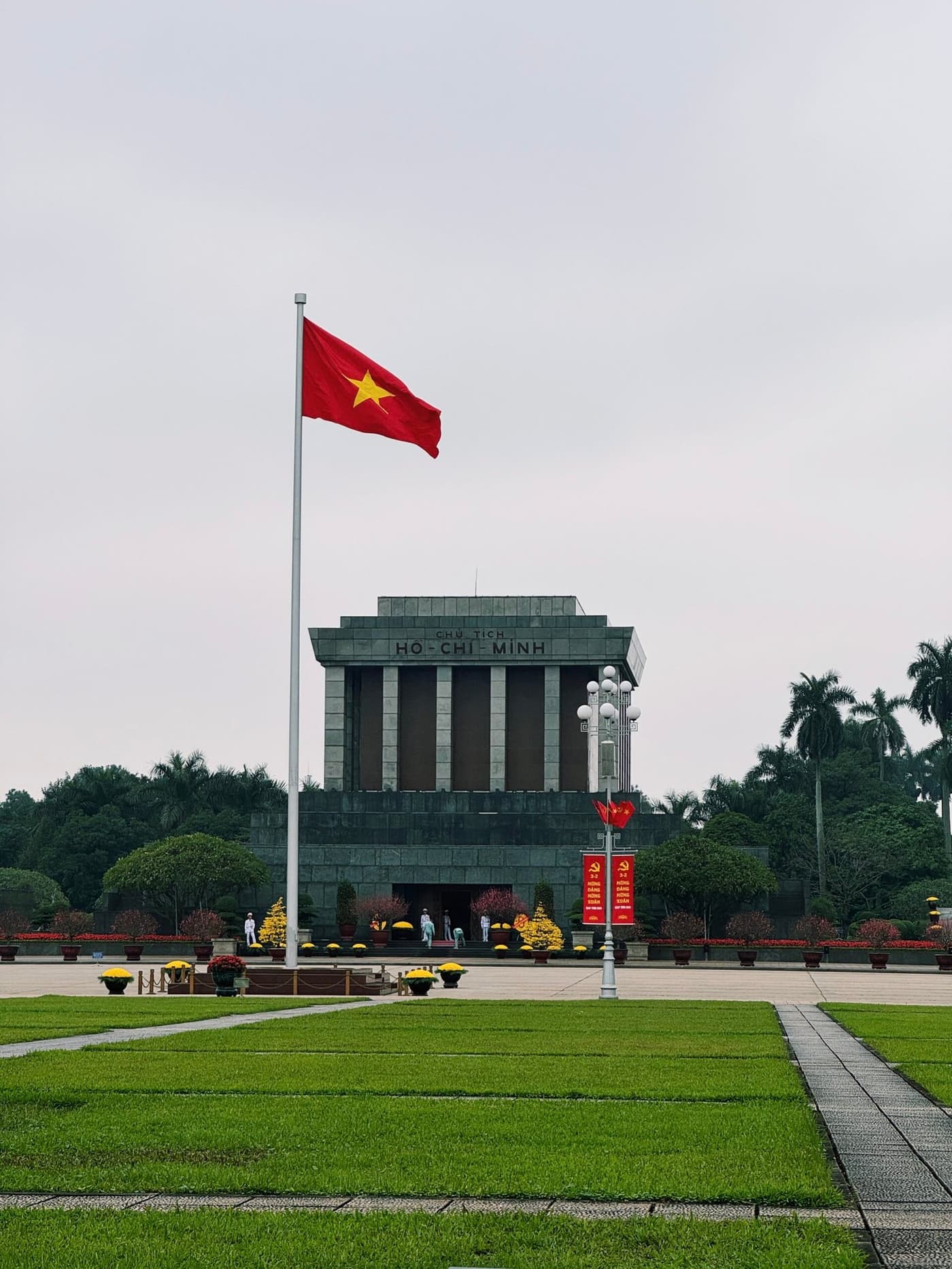
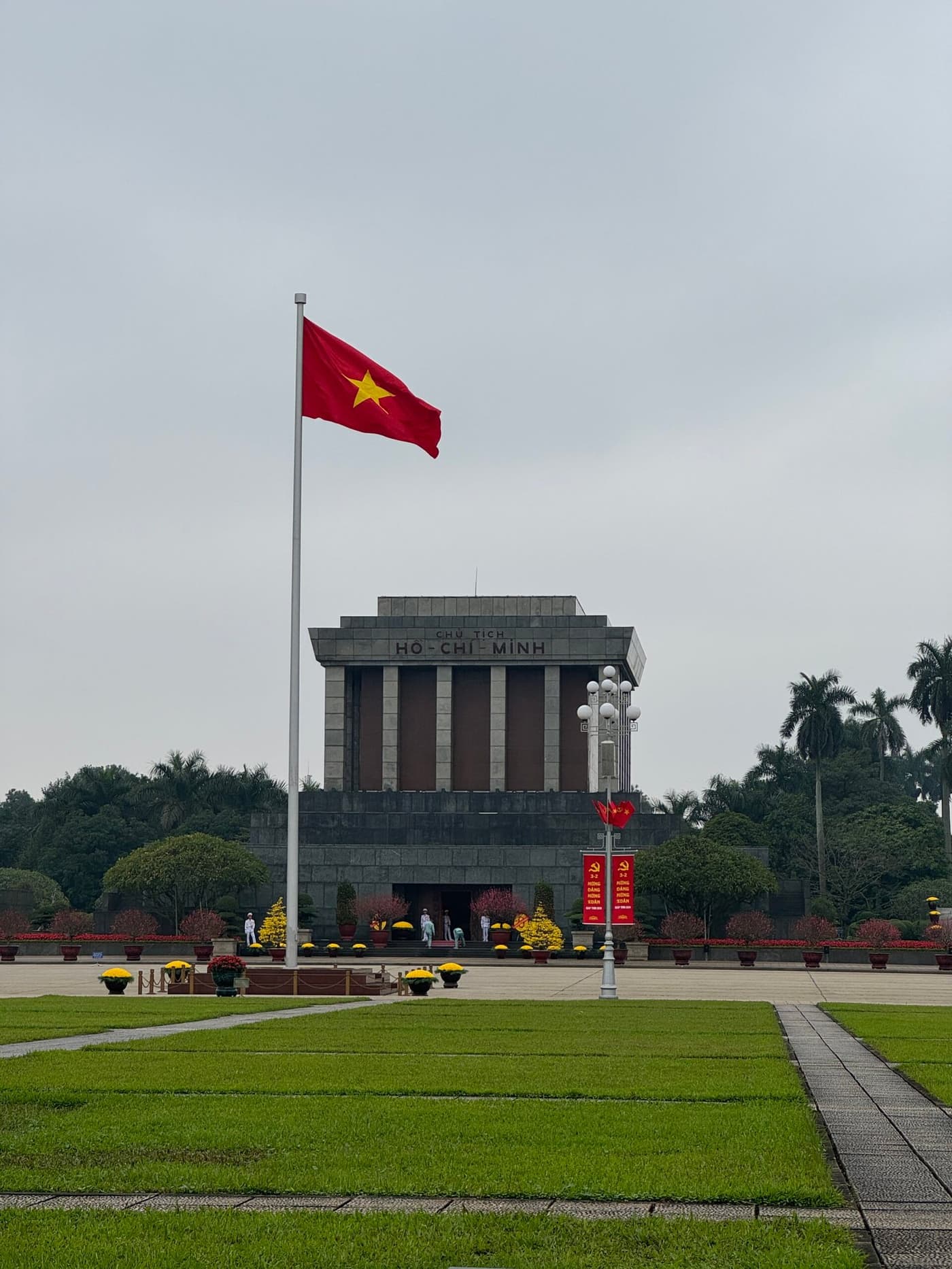
One of the most important historical places in Hanoi is Ba Dinh Square, where Vietnam's independence was proclaimed in 1945. This is where the Ho Chi Minh Mausoleum stands, housing the embalmed body of the country's leader.
The area also includes the Presidential Palace, the Ho Chi Minh Museum and the Assembly Palace. If you are short on time, limit yourself to seeing the mausoleum and strolling through the park.
The Ho Chi Minh Museum is right there too, and you can visit it if you like and have the time.
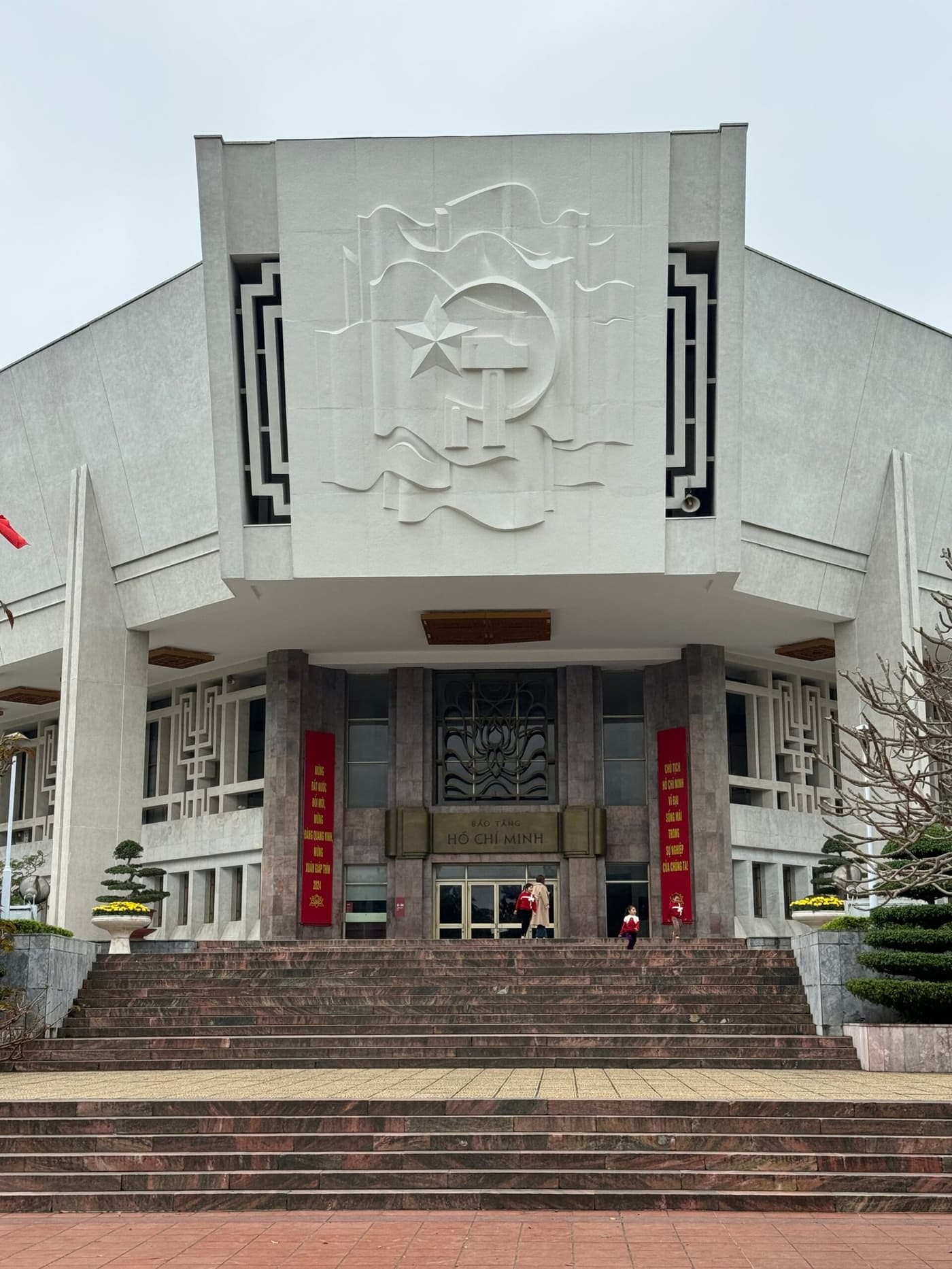
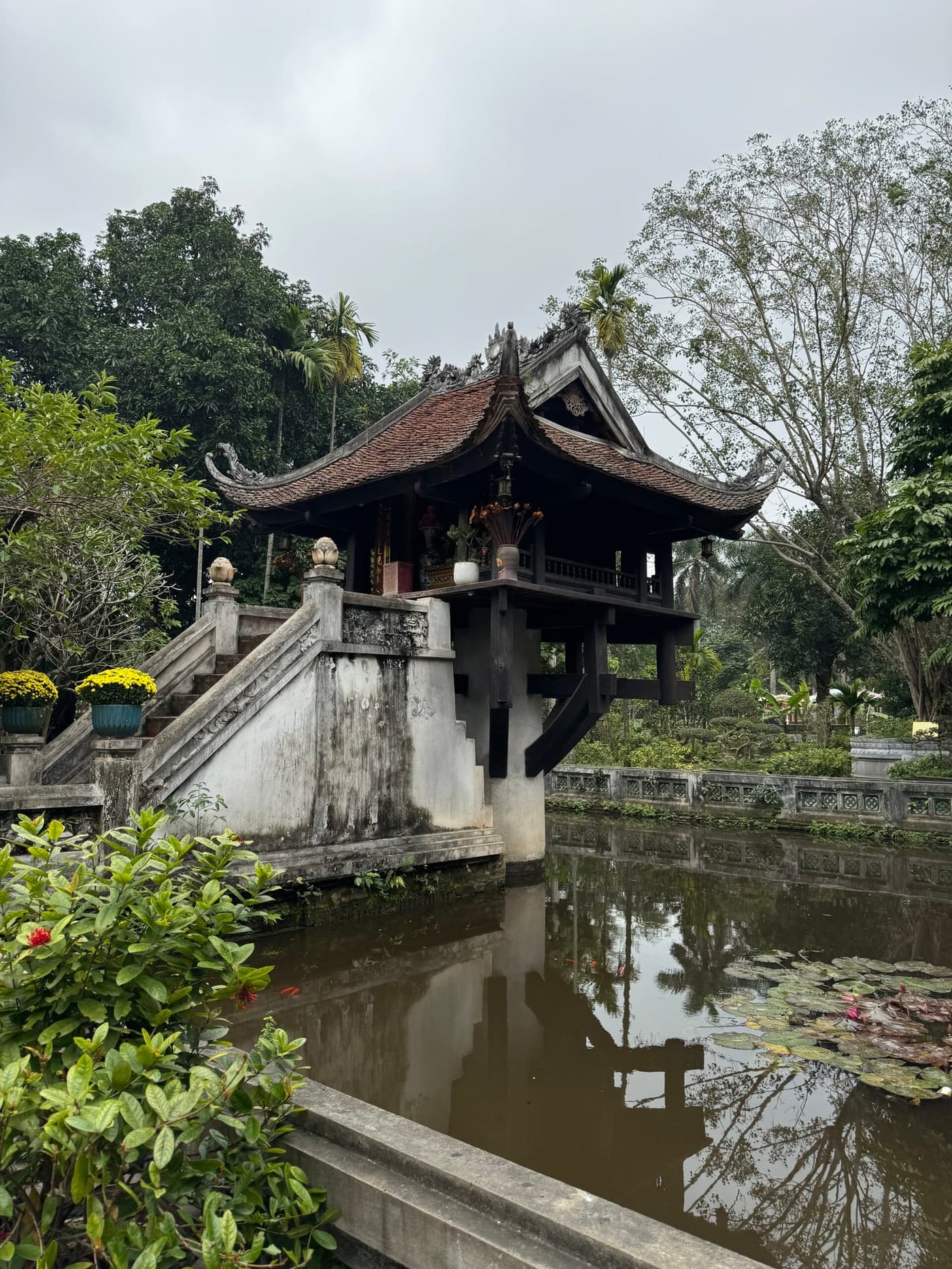
One Pillar Pagoda (Chua Mot Cot)
Right next to the mausoleum is the Chua Mot Cot pagoda, or One Pillar Pagoda. It stands on a single stone pillar shaped like a lotus flower. It is very small but carries great symbolic meaning. The Chua Mot Cot pagoda was founded back in the 11th century and is a striking example of Vietnamese Buddhist art and architecture.
Can you see Hanoi in one day? Yes! Of course, you won't have time to dig deep into every temple and museum, but you can absolutely feel the spirit of the city. A walk through the Old Quarter, Hoan Kiem Lake, colonial buildings, the noise of the street, a train between the houses, ancient pagodas and the Ho Chi Minh Mausoleum will all give you an idea of how varied Vietnam can be.
We spent a week in Hanoi and visited not only these places but also made a trip to the incredible province of Ninh Binh. After that, we took a Vietnamese train to central Vietnam, to the city of Da Nang.
I filmed how we walked around Hanoi, along with my emotions and first impressions, in a YouTube episode. Be sure to watch it, the episode turned out interesting and very emotional!
FAQ: What to See in Hanoi in 1 Day
How much time do you need for a walk around the Old Quarter?
At least 1-2 hours. It's best in the morning, while it's not hot yet.
Is it worth visiting the temple on Hoan Kiem Lake?
Yes, it doesn't take long, it's beautiful and adds to the atmosphere.
Where can you eat in the Old Quarter?
Try the street food, for example bun cha, pho and banh mi. There are cafes on every corner.
How much does it cost to enter the Ho Chi Minh Mausoleum?
It's free. But there is a line, and you need to follow the dress code.
Which pagoda is the most interesting?
Tran Quoc is the most beautiful, and the One Pillar Pagoda is the most unusual.