Bangkok is the city almost everyone passes through on the way to Thailand. A tourist sees it for a couple of days between flights. A digital nomad sees a comfortable base with coworking spaces and fast internet. An expat with a family sees a place with good schools and doctors.
In this article I tried to show the city from several angles, for different kinds of travelers: prices, neighborhoods, where to go, what to see and what it is like to live here.
If you are only planning a trip to the Land of Smiles, I recommend reading the detailed Thailand travel guide. And if you want to spend some time in a warm climate, the sections below on living here long term will be useful.
Bangkok: what you need to know
The population is about 10.7 million, making it the largest and the only true megacity in Thailand. The city sits in the delta of the Chao Phraya River and is split into two unequal parts: the eastern, modern bank, with skyscrapers, the BTS and business districts, and the western bank, Thonburi, which is quieter and more local.
The climate is tropical and monsoonal. There is never a season without heat here, only a difference in rain and in how scorching it gets. The official language is Thai, but in tourist and business areas almost everyone understands English.
The currency is the Thai baht (THB), roughly 1 USD ~ 33-36 baht. Cards are accepted in shopping malls, hotels and most cafes in the central districts, but at markets, in songthaews and from street vendors it is cash only.
Bangkok is not a beach resort. There is no sea here, and the nearest one is two to three hours away in Pattaya. People come to Bangkok not for the sea but for the city itself: the food, the temples, the work and, for many expats, simply because it is the most developed and convenient city for living in Southeast Asia.
How to get to Bangkok
There are plenty of budget options with a connection, usually through China, the Gulf or Turkey:
- Via China (Air China, China Southern, China Eastern, Hainan Airlines and others): your home airport → Beijing, Guangzhou, Chengdu or another Chinese hub → Bangkok.
- Via the UAE (Emirates, flydubai): your home airport → Dubai → Bangkok.
- Via Qatar (Qatar Airways): your home airport → Doha → Bangkok.
- Via Turkey (Turkish Airlines): your home airport → Istanbul → Bangkok.
- Via Central Asia (Air Astana, Uzbekistan Airways): Almaty or Tashkent → Bangkok.
Expect 9 to 20 hours in transit depending on the route. It is best to check prices and connection times on aggregators such as Trip.com or Aviasales.
There are two airports in the city, at opposite ends. Suvarnabhumi (BKK) is the main international airport, and most long-haul flights land here. Don Mueang (DMK) is the second airport, mostly serving budget airlines such as AirAsia, Nok Air and Thai Lion Air, plus domestic flights. If you are changing from one airport to the other within Thailand, allow at least 2-3 hours for the transfer, because they are at opposite ends of the city.
From Suvarnabhumi to the center:
- Airport Rail Link (ARL) — the City Line train to Phaya Thai station, where you can transfer to the BTS. A ticket costs 45 baht, the ride takes about 26 minutes, and trains run from 5:30 to midnight. It is the cheapest option and the most predictable in terms of time, especially at rush hour.
- Taxi — the official taxi desk is in the arrivals hall; you pay by the meter plus a 50-baht airport fee.
- Grab — you can book it right in the terminal, the price is fixed in advance, and it is usually a little more than a street taxi but without surprises.
From Don Mueang to the center: SRT trains run slowly and with transfers, shuttle buses go to BTS Mo Chit, and a taxi to the center costs 350-500 baht.
Getting around Bangkok
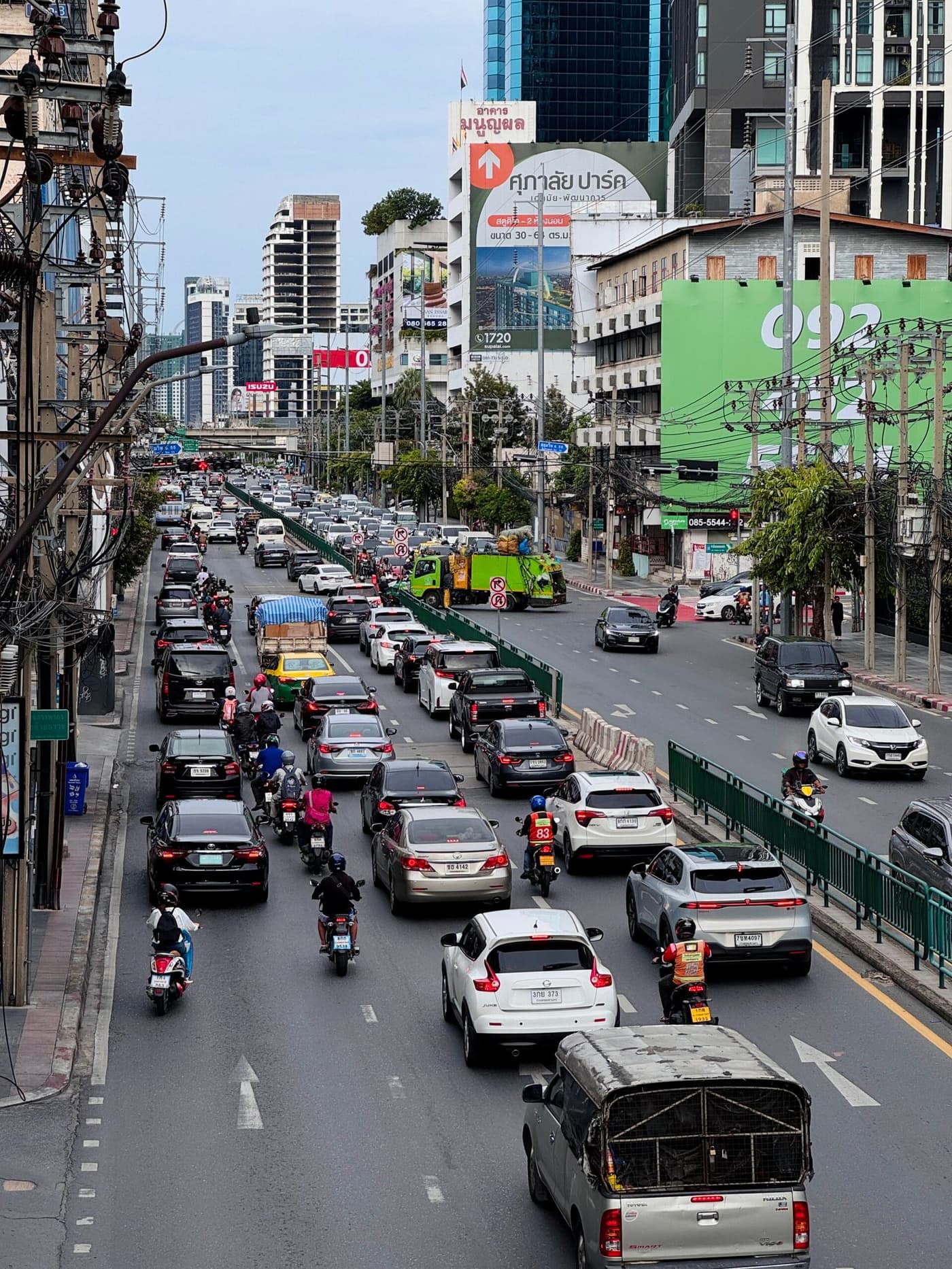
Bangkok is notorious for its traffic jams. The city is fairly well covered by rail, though not always directly between the places you need.
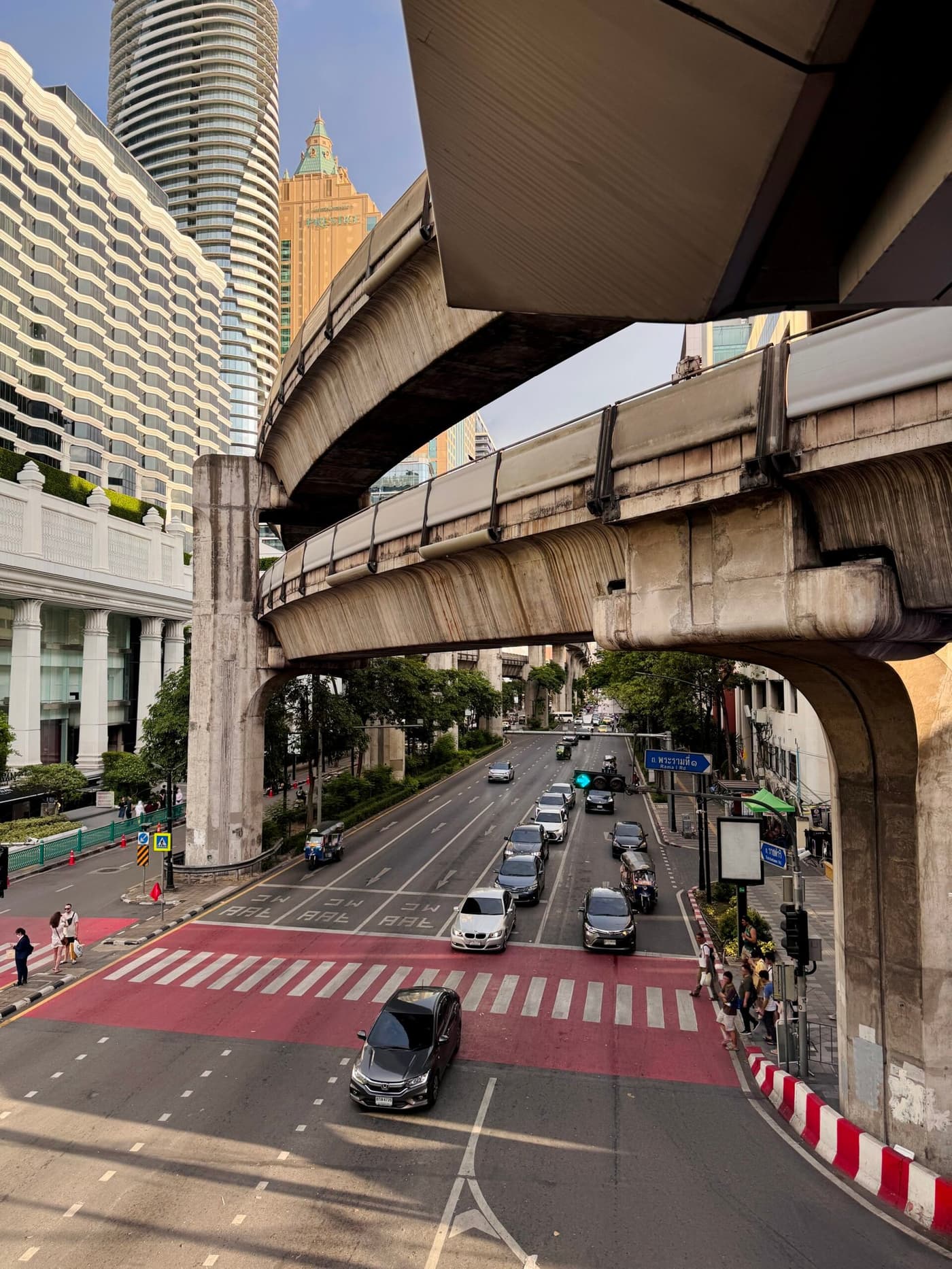
BTS Skytrain is an elevated metro with two lines: Sukhumvit (light green, 47 stations, from Kheha to Khu Khot) and Silom (dark green, from National Stadium to Bang Wa), with a transfer between them at Siam station. A ride costs from 17 to 65 baht depending on distance.
MRT is an underground and partly elevated metro with four lines: Blue (a loop, 38 stations), Purple, and the Yellow and Pink monorail lines built in recent years. A ride costs about 15-45 baht.
The BTS and MRT are run by different operators with different ticketing systems, and there is no single card for both networks. The Rabbit card is handy for the BTS, while for the MRT you use tokens or tap a contactless bank card.
Chao Phraya Express boats are an underrated way to get around and to skip the traffic. An orange flag means a local route at 18 baht per ride. A blue flag means the tourist boat, which stops at the main sights; a single ticket is 40 baht and a day pass costs 150 baht. Sathorn Pier (Central Pier) connects to BTS Saphan Taksin, Tha Chang pier is next to the Grand Palace, and the pier at Wat Arun is, as you would expect, right by the temple.
Taxis run on the meter: the flag fall is 35 baht, then 6.5 baht/km for the first 10 km and slightly more over longer distances. The main problem is that drivers often refuse to turn on the meter for tourists, especially near major sights and on Khao San. If a driver does not want to use the meter, get out and take another car, because there are always plenty of free ones on Bangkok's streets.
Grab is the Thai equivalent of Uber, and the price is fixed in the app in advance. It is more convenient and more transparent than a street taxi, especially in the evening or in the rain, although at rush hour the price goes up because of dynamic pricing. I always use Grab, because it is much clearer and more transparent than street taxi drivers.
Motorbike taxis — the drivers wear colored vests, wait at the entrances to side streets (sois) and skip the traffic quickly. Please do not ride without a helmet; the driver usually has one, and for hygiene it is worth buying a balaclava. The price is negotiable, usually 20-60 baht for a short ride within a district.
Tuk-tuk — the three-wheeled symbol of Bangkok, especially recognizable around Khao San, the Grand Palace and Chinatown. There is no meter and you haggle the price before getting in: for a couple of kilometers they typically charge about 40-100 baht, and near tourist attractions drivers often start at 300 baht. There is also a more official way to ride these iconic tuk-tuks, the MuvMi app. The price and route are fixed in the app in advance with no haggling, and you pay by card or through the built-in wallet. It does not cover the whole city, only certain zones such as the Old Town, Ari, Chula-Samyan, part of Sukhumvit and Silom-Sathorn, so check the current list in the app before your trip.
Bangkok neighborhoods: where to stay as a tourist
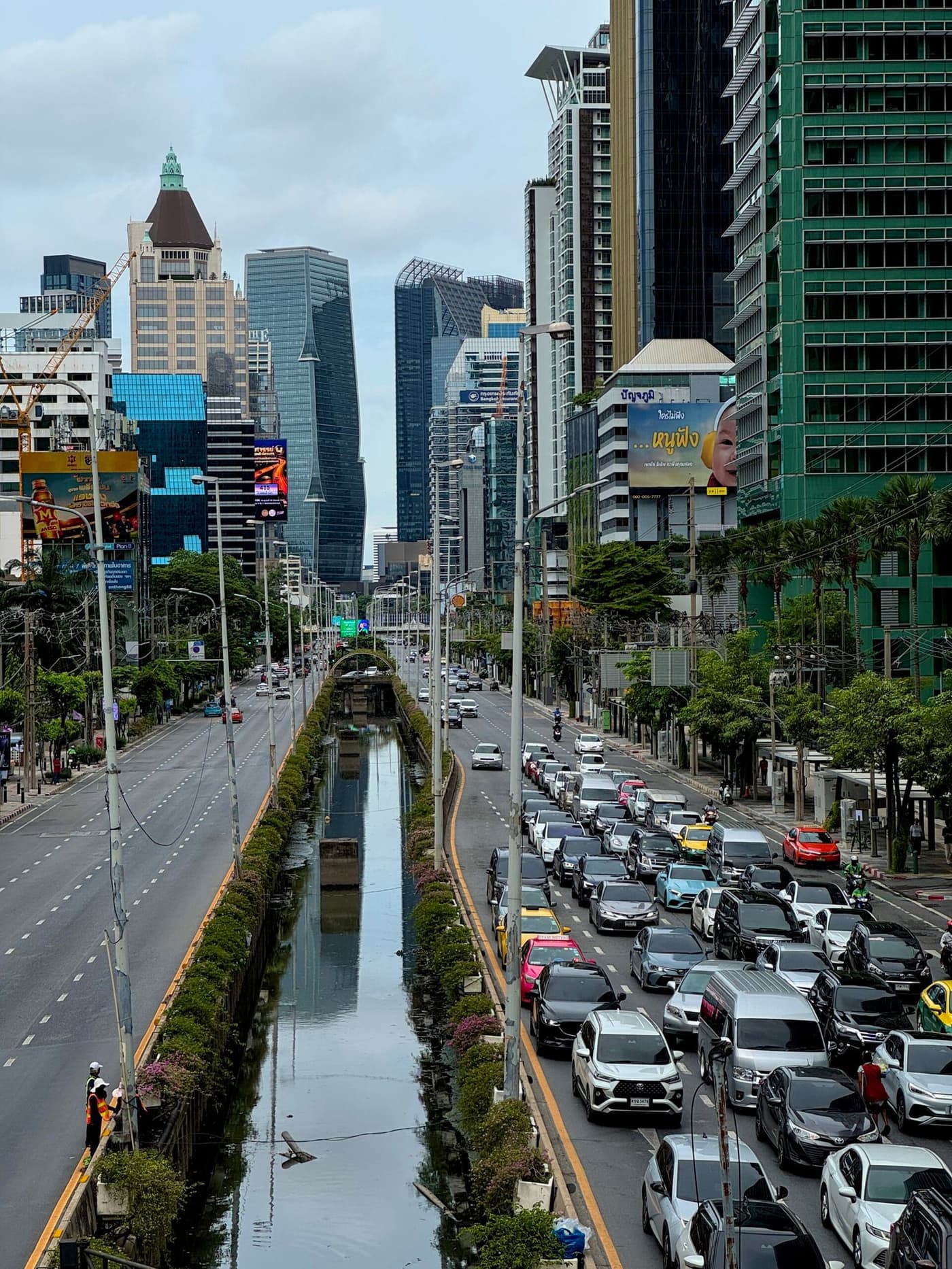
For a short trip two things matter: a BTS or MRT station near your hotel and being close to what you came to see. The city stretches almost 30 kilometers from north to south, and at rush hour a taxi between districts can easily eat up an hour or an hour and a half. Below I go through the five areas where tourists stay most often, from the historic center to the most convenient spots on the BTS line.
Old Town (Rattanakosin) and Khao San
The historic heart of Bangkok: the Grand Palace, Wat Pho, Wat Arun, all within walking distance of each other. The infrastructure is modest, though: the BTS and MRT do not reach here, so you have to get around by taxi, boat or on foot from the nearest piers. Nearby is the legendary backpacker street Khao San Road, with lots of cheap hostels, bars and an active nightlife. Khao San Road is crowded and noisy almost around the clock.
It suits people who come for 2-3 days specifically for the temples and are ready to put up with inconvenient transport, as well as budget travelers and those who enjoy the buzz of Khao San.
Sukhumvit (Asok, Phrom Phong, Nana)
The central artery of the city along the BTS line of the same name. Shopping malls, international restaurants, hotels in every category, nightlife and the best transport connections: from here it is easy to get anywhere by BTS. That is exactly why it is the most popular tourist district, although the sights nearby are mostly shopping and food rather than temples.
With one caveat around Nana. About 300 meters from BTS Nana station, on Soi 4, is Nana Plaza, one of the city's three main red-light areas, along with Patpong, which I cover just below, and Soi Cowboy. This does not affect the everyday safety of the station itself or the neighboring sois, but it does shape the evening atmosphere of that particular spot. Asok and Phrom Phong, further south along the line, are more pleasant, business-like and neutral, without this specific character.
Asok and Phrom Phong suit first-timers in Bangkok who want one calm base with good transport, as well as families and business travelers. Nana is for those who do not mind being next to Nana Plaza and want the same transport connections and hotels slightly cheaper than in Asok.
Silom and Sathorn
The business heart of Bangkok during working hours and one of the nightlife centers in the evening. Office skyscrapers, banks, and next to them Lumphini Park, the largest green island in the center of the city. There is a good connection between the BTS Silom Line and the MRT.
This is also where Patpong is: the oldest and best-known red-light district in Bangkok, with a night market on top of it. By day it is ordinary rows of stalls with souvenirs; in the evening it is the same thing, but with go-go bars and touts. Sathorn, to the south, is a continuation of the same business corridor, but quieter and more respectable. Within walking distance are embassies, luxury condominiums and big hospitals such as Bangkok Hospital and BNH.
Silom and Sathorn suit fans of evening entertainment and rooftop bars. They are also a great fit for anyone who values being close to the park and to clinics.
Siam
The epicenter of the shopping malls (Siam Paragon, CentralWorld, MBK, Siam Center) at the intersection of both BTS lines. It is probably the most convenient location in the city: from here you can get anywhere without changing to a taxi. In terms of atmosphere, though, it is malls and offices rather than the "real" Bangkok, with lots of glass and air conditioning and little local color.
Five minutes' walk away, at the foot of the Baiyoke Tower II skyscraper, is Pratunam, a wholesale clothing market that runs almost around the clock. In the morning buyers come for batches at 50-250 baht per item, and in the evening and at night, roughly from 19:00 to 3:00, vendors sell souvenirs and clothes of every kind one piece at a time.
The area suits shopping fans, anyone for whom transport access matters, and families who want to wait out the midday heat in air-conditioned malls.
Chinatown (Yaowarat)
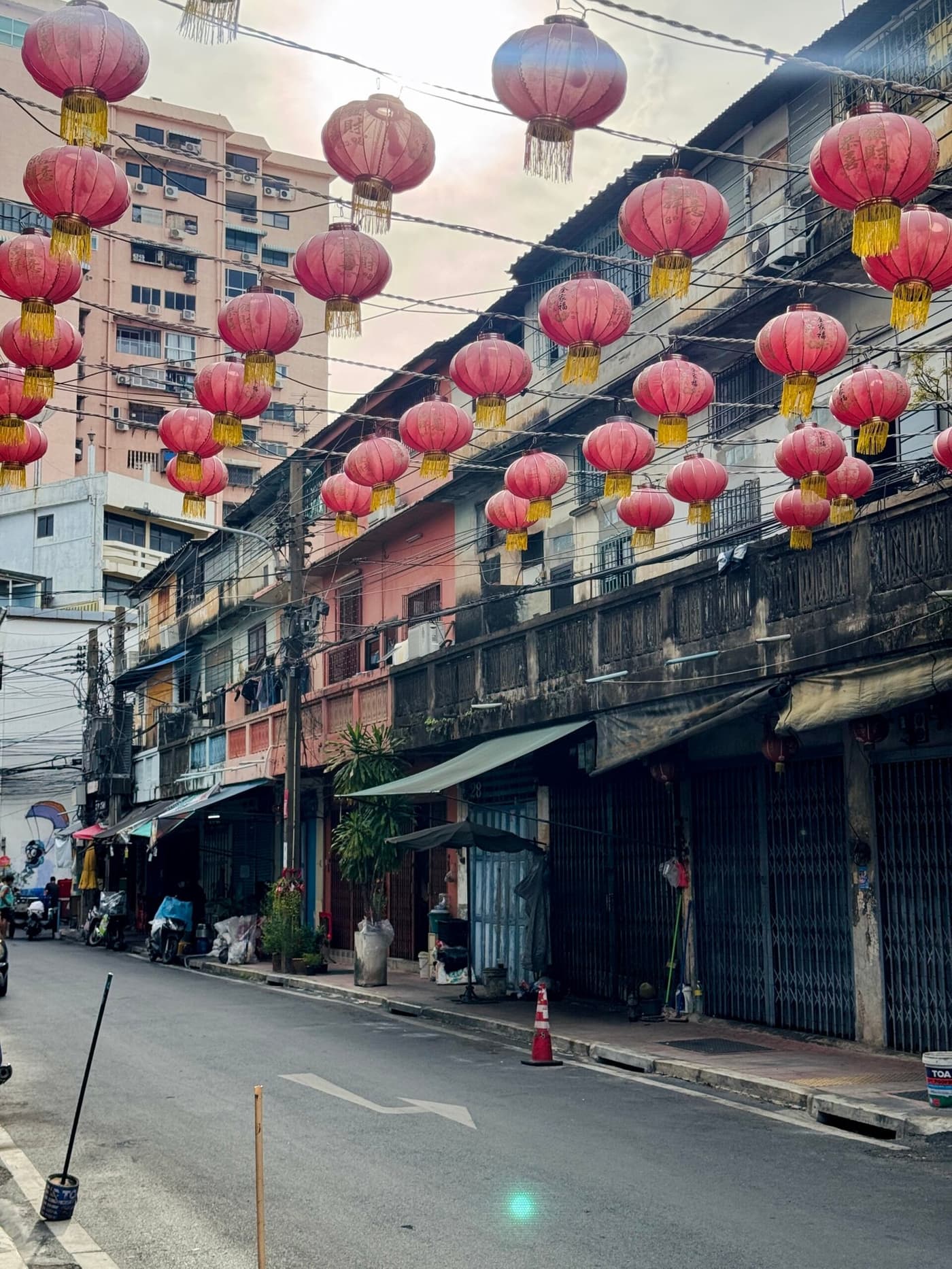
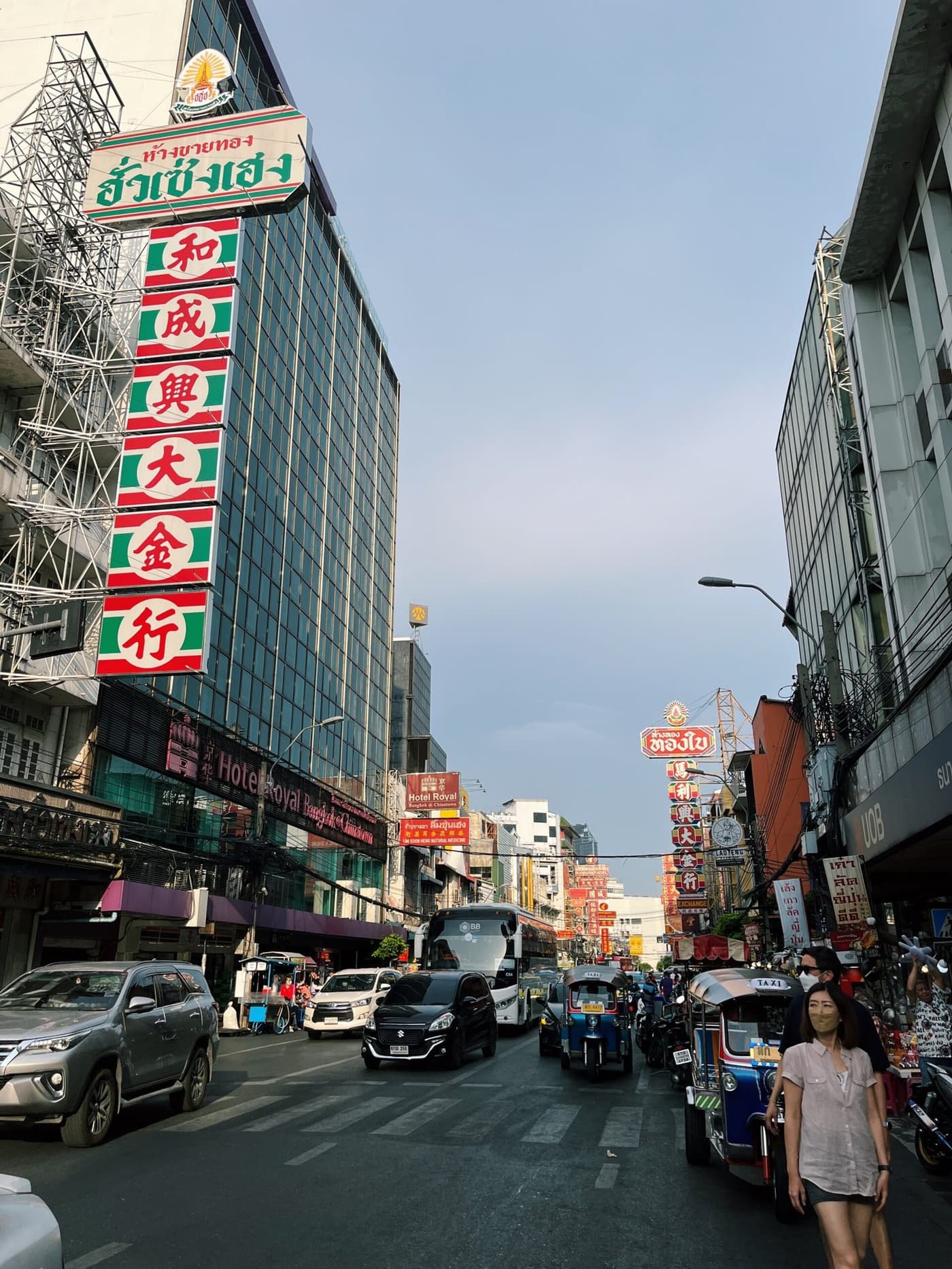
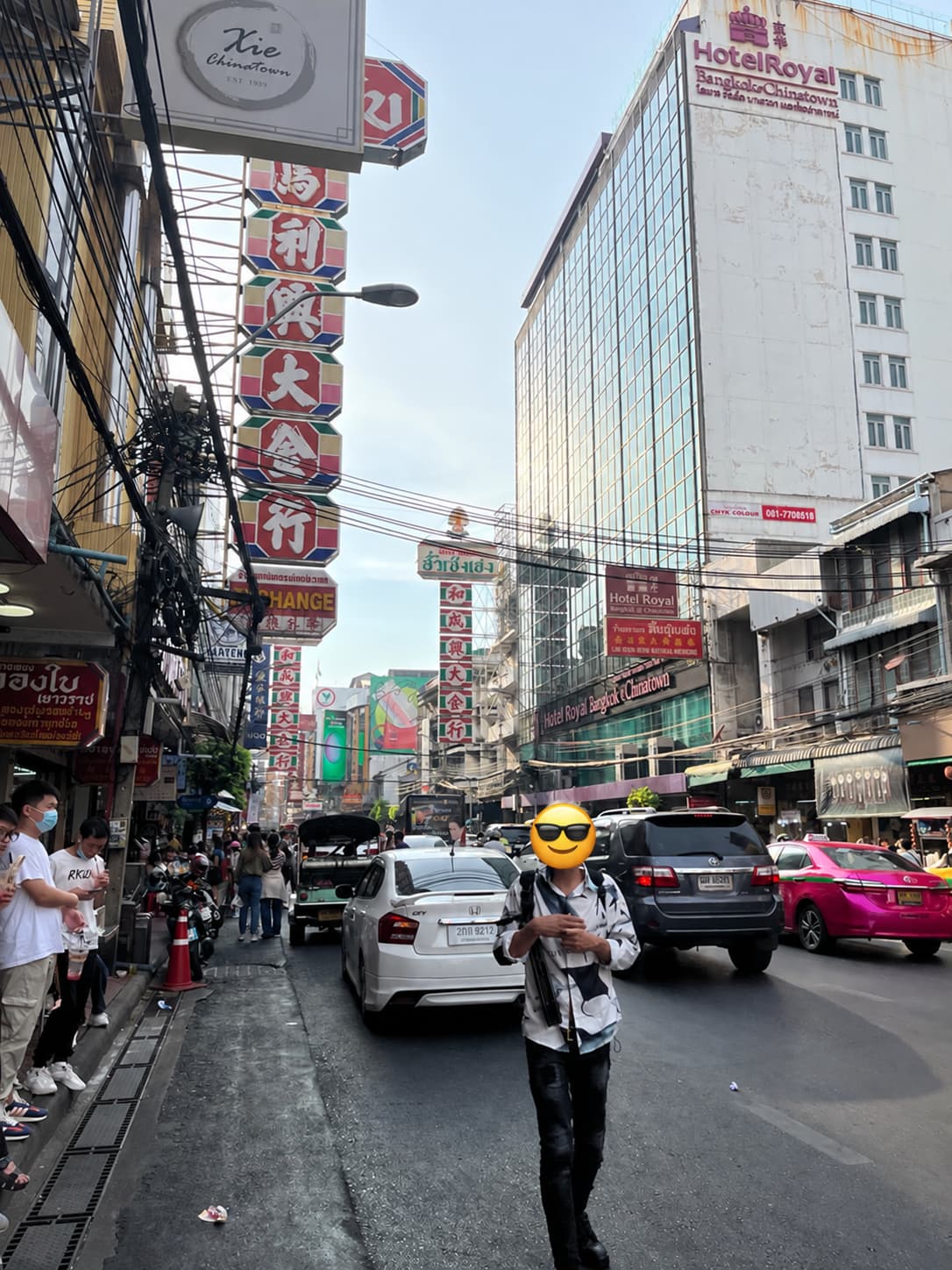
The densest area for street food and the loudest visually. Chinese neon signs everywhere, gold shops, and an evening food court with colorful Asian food. The BTS and MRT do not reach the heart of the district; the nearest MRT station is Wat Mangkon, and from there you walk through narrow alleys. It is almost the only major tourist area in the city with hardly any international chain restaurants: it is local Chinese-Thai food or nothing.
Who it is for: foodies ready to sacrifice convenience for authenticity, and people who want a louder, wilder atmosphere than in Sukhumvit. It is excellent for photographers, because the evening neon of Yaowarat Road is very photogenic. It is not for those who need quiet at night or for families with small children.
A detailed breakdown of all Bangkok neighborhoods is in a separate article.
Bangkok neighborhoods: where to live long term
For those staying a month or longer, the priorities in choosing an area are different: not closeness to the sights, but transport access, everyday infrastructure and value for money.
Sukhumvit: Thonglor, Ekkamai, Phrom Phong
The classic choice for long-term expats, but also the most expensive. Thonglor and Ekkamai are trendy areas with coffee shops, bars, coworking spaces and a strong digital nomad community. We ourselves lived in Thonglor for most of our time. Phrom Phong is closer to a family format, with international schools and hospitals nearby. Renting a studio or a one-bedroom apartment will cost from 20,000 to 40,000 baht a month depending on the building and its distance from the BTS.
For those ready to pay for convenience and location, young professionals, and families with children in international schools.
Ari
A quiet, green area with independent coffee shops and a local atmosphere. It is not touristy, but has decent infrastructure for remote work: coworking spaces and cafes with fast internet. The good BTS Ari station is right in the middle of the district. Rent is 15,000-28,000 baht.
Who it is for: digital nomads and creative professionals who want to live quietly without losing convenience.
Sathorn
A business and residential area near Lumphini Park, combining office infrastructure, luxury condominiums and proximity to the city's main hospitals, such as Bangkok Hospital and BNH. It is pricier than average, but convenient for those who work in local offices or value a central location.
Suits those for whom closeness to clinics and the park is important.
On Nut and Phra Khanong
The outer stations of the Sukhumvit BTS line, but that is exactly why they are noticeably cheaper than central Sukhumvit while keeping a direct connection to it. In recent years the area has improved markedly, with modern cafes and coworking spaces, while rent is about half of what it is in Thonglor. Rent is from 12,000 to 20,000 baht.
Who it is for: people who count their budget but do not want to lose transport links with the center.
Bang Na
Even further along the same line, but with big shopping malls and noticeably more living space for the same money, often with a pool and security in the complex itself. Not for those who want to walk to everything they need.
Who it is for: families who value space over proximity to nightlife, and retirees looking for peace and quiet.
Ratchada and Huai Khwang
An area along the MRT with a dense network of Thai and Korean night markets, affordable rent and a noticeable Asian expat community, especially Chinese and Korean. Less touristy, with more real Thai life at a reasonable price.
Who it is for: young expats on a limited budget and anyone who wants to live among locals.
Rama 9 and Lat Phrao
Fast-growing business zones along the MRT with new construction and a growing concentration of tech offices, which means growing interest from digital nomads and young professionals. For now they are cheaper than the established Sukhumvit areas, but the gap is narrowing as development continues.
Who it is for: people betting on a growing area who are ready to be a bit further from the familiar tourist center.
What to see in Bangkok
People rarely come to Bangkok for the architecture of a single building. It is a wonderful mix of things that should not go together: the golden spires of temples a couple of blocks from neon markets and rooftop bars on the seventieth floor. I put together thirteen places worth seeing at least once, from the main temples of the Old Town to Jodd Fairs and the Muay Thai stadium.
The Grand Palace and Wat Phra Kaew
The country's main attraction, a former royal residence with the Temple of the Emerald Buddha on its grounds. A ticket costs 500 baht and also includes the Queen Sirikit Museum of Textiles and the Royal Regalia pavilion. It is open daily from 8:30 to 15:30; the ticket office closes strictly on schedule, while the complex itself stays open until 16:30, except on days of royal ceremonies, which are announced in advance. The dress code is strict: covered shoulders, long trousers or a skirt below the knee, and closed shoes. Violators are either refused entry or given a sarong at the entrance for an extra fee.
Wat Pho
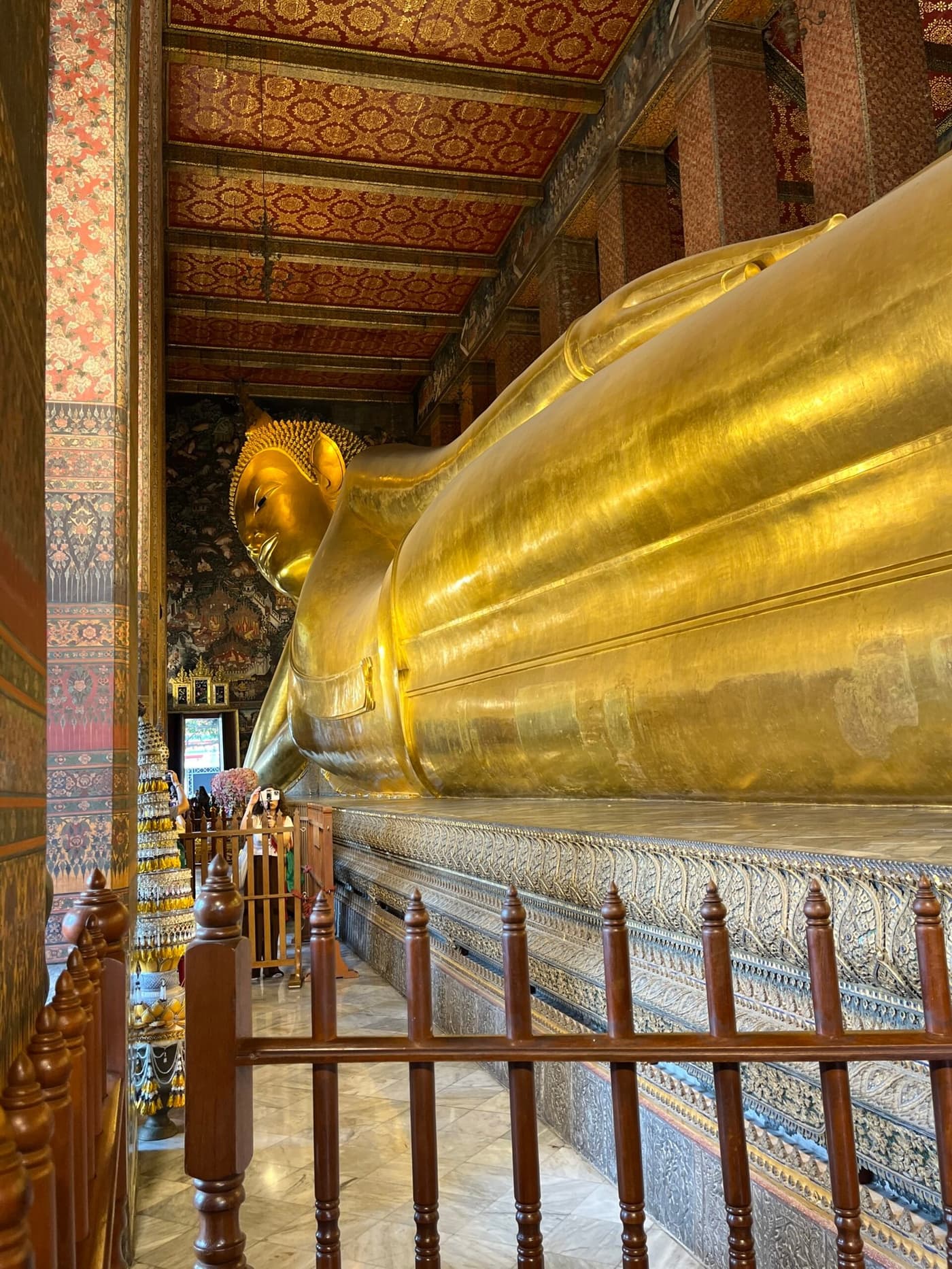
A three-minute walk from the Grand Palace is the temple of the 46-meter Reclining Buddha, one of the oldest and largest temple complexes in the city. A ticket costs 300 baht, separate from the Grand Palace. One of the country's first schools of traditional Thai massage is here too, so you can combine sightseeing with a massage session.
Wat Arun
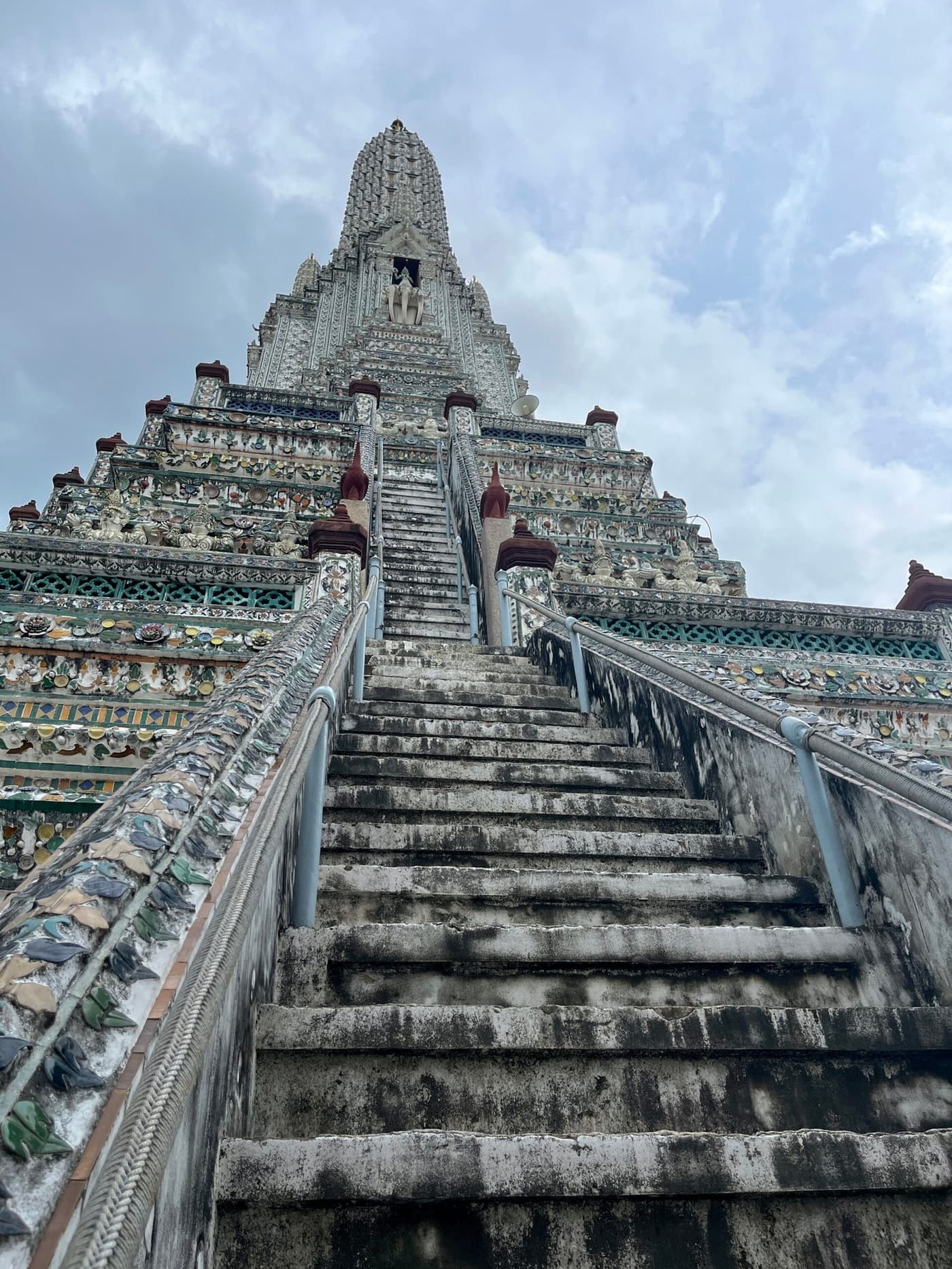
The Temple of Dawn on the western bank of the river, with a central prang tower decorated with fragments of porcelain. A ticket costs 200 baht, opening hours are 8:00 to 18:00, and the last entry is around 17:30. The most convenient way to get there is by ferry from Tha Tien pier, and the view of the temple from the water, especially at sunset, is worth it.
Jim Thompson House
A museum-estate of the American architect who revived the Thai silk industry in the 1950s and vanished without a trace in the Malaysian jungle in 1967. The story of his disappearance has still never been solved. Six teak houses assembled from different parts of Thailand, with a collection of Buddhist sculpture and Benjarong porcelain, stand in a tropical garden by a canal. A ticket costs 250 baht, and it is open from 10:00 to 17:00. You can only visit with a guide; the tour lasts 35-40 minutes and is offered in several languages.
Chinatown (Yaowarat) and its markets
A separate world within the bounds of a single street. By day they trade in gold and spices, and deep in the district stands Wat Mangkon Kamalawat, the largest and most significant Chinese Buddhist temple in Thailand: curved roofs with dragons, red lanterns, free entry. It is open from about 8:00 to 16:00-17:00, and the MRT station Wat Mangkon is next to it.
In the evening, Yaowarat Road, from the Chinatown Gate arch at Odeon Circle to Ratchawong, with a branch onto Soi Phadung Dao, turns into one continuous street food court under neon signs. Tried-and-true places include the Lim Lao Ngow noodles (Michelin Guide recognized) and the grilled seafood at T&K Seafood on the corner. At Chinese New Year, Yaowarat is closed for a few hours for the dragon and lion parade, and on those days it is genuinely packed.
Wat Traimit (Temple of the Golden Buddha)
On the edge of Chinatown stands a three-meter Buddha statue of solid gold weighing more than five tons, discovered by accident under a layer of plaster in the 1950s while the statue was being moved from its former location. A ticket for the statue itself costs 100 baht, and another 100 baht for the museum about the discovery on the upper floors. Opening hours are 8:00 to 17:00, and the museum is closed on Mondays.
Chatuchak Weekend Market
One of the largest markets in the world, with about 15,000 stalls on almost 14 hectares. It runs on Saturdays and Sundays, roughly 9:00 to 18:00, plus a separate wholesale session on Friday evenings and a plant section on Wednesdays and Thursdays. The easiest way to get there is by MRT to Kamphaeng Phet station or by BTS to Mo Chit. It is best to arrive at opening time, since by noon both the heat and the crowds get noticeably heavier. Cash is a must, and for most goods you need to bargain.
Jodd Fairs
A modern night market by MRT Phra Ram 9 station, less about shopping than a food show: giant seafood grills, "fiery" wok stations with dramatic flames, Korean hot dogs and dozens of experimental fusion stalls. It runs daily from about 17:00 to 1 a.m., although it is worth checking the schedule on social media. A food budget is 100-300 baht per person.
Asiatique The Riverfront
An evening shopping and entertainment complex on the waterfront: more than 1,500 shops, about 40 restaurants, a Ferris wheel (about 400-550 baht per ride) and the Calypso cabaret show. It runs daily from about 16:00 to midnight, and gets going properly from 17:00. The easiest way to get there is the free shuttle ferry from Sathorn Pier (BTS Saphan Taksin); boats run every 15-20 minutes.
Lumphini Park
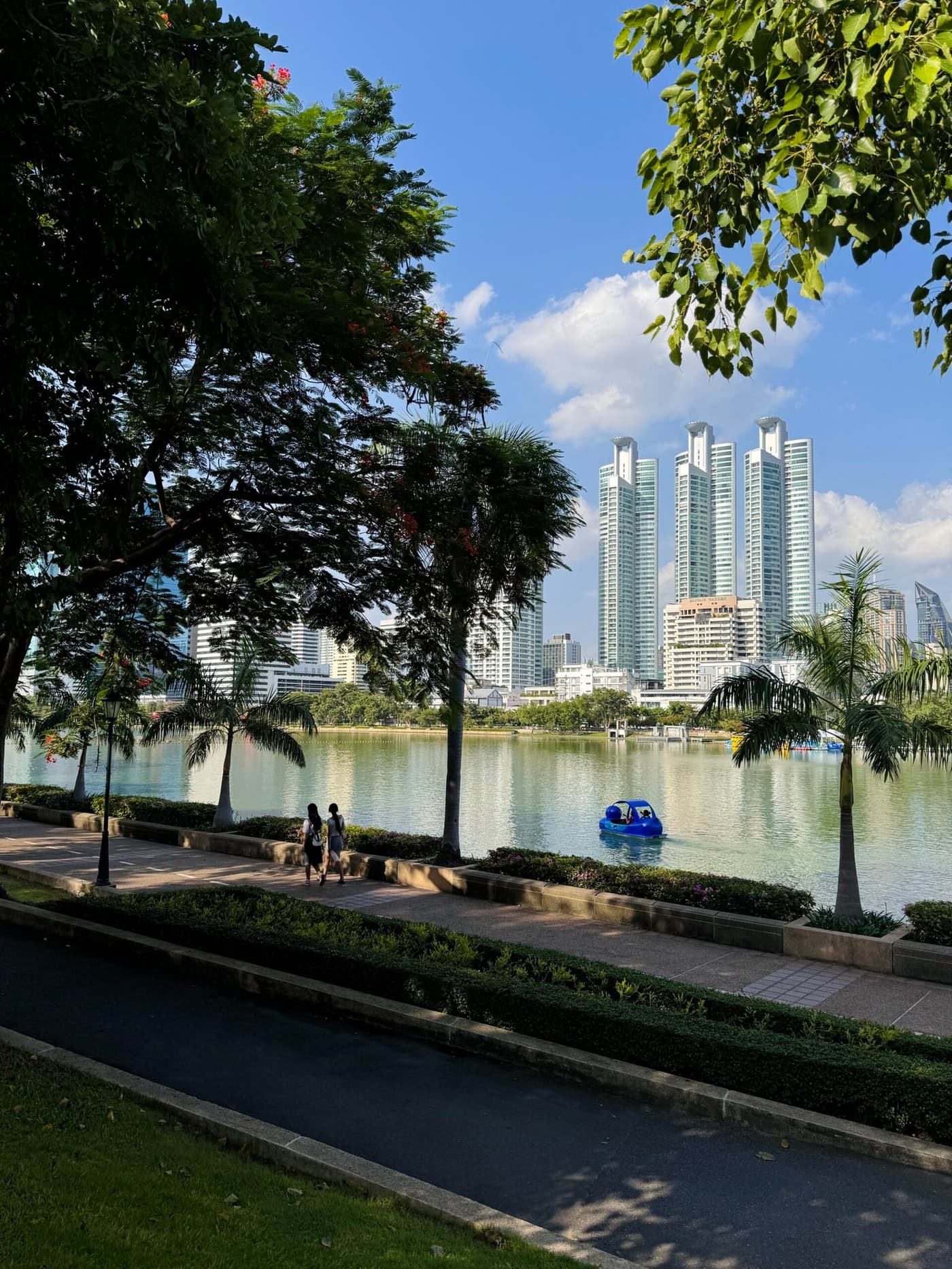
The largest green island in the business part of the city. It covers 57.6 hectares with an artificial lake, a 2.5 km running track around it and a statue of King Rama VI, who gave the park this land. Entry is free, and the park is open from about 4:30 a.m. to 21:00-22:00. The nearest transport is MRT Lumphini or Si Lom, or BTS Sala Daeng, five minutes' walk away. Since 2024 the park has been connected to neighboring Benjakitti Park by the 1.6 km pedestrian and bike "Green Bridge". In the mornings and evenings there are free group sessions of tai chi at sunrise and aerobics after work.
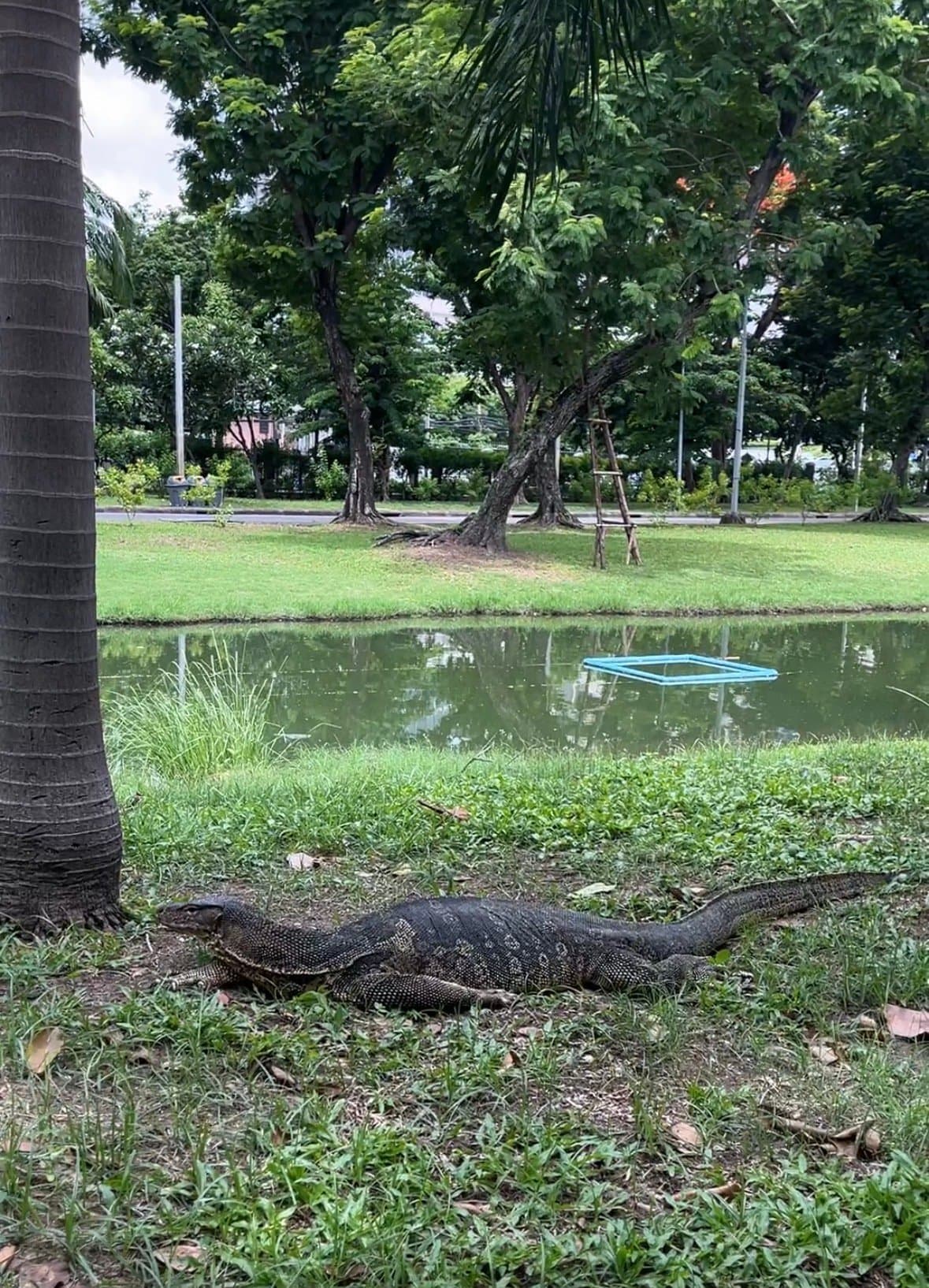
But the main attraction is the monitor lizards living calmly along the lake shores: hundreds of them, although even the city authorities do not give an exact figure, and at the last official count estimates ranged from 160 to 400. They do not attack people, they feed on carrion and fish, and they bite only if frightened or if you try to feed them by hand, which you should not do. Keep a distance of a meter or two and just watch.
Wat Saket (Golden Mount)
A man-made hill with a golden stupa on top, one of the few views over old Bangkok that does not require climbing a skyscraper. A spiral staircase of 300+ steps leads up among hanging bells. A ticket is 100 baht, and opening hours are 7:30 to 19:00.
Muay Thai stadium
Rajadamnern is the oldest Thai boxing stadium in the world, with fights every evening of the week according to the schedule on the official website, and the best evenings are Thursday and Saturday. Tickets run from 1,000 baht for third-class seats to 9,000-10,500 baht for premium boxes. The atmosphere, with a live orchestra and betting from the stands, is worth going for even if you have no interest in martial arts as such.
Rooftop bars
Bangkok is one of the world centers of rooftop culture.
- Sky Bar at the Lebua at State Tower hotel (location) — the very bar from "The Hangover Part II" and the best known in the city.
- Octave at the Marriott Sukhumvit, 49th floor, Thonglor area (location) — one of the most striking views, spread over four floors at once.
- Sky Beach at The Standard hotel in Bangkok Mahanakhon, 78th floor, the highest in the city, near BTS Chong Nonsi (location) — entry is 1,000 baht with one drink.
- Tichuca in the T-One building on Sukhumvit, floors 42-46, near BTS Thonglor (location) — a jungle concept with an illuminated tree in the middle of the room, and there is usually a line before opening.
- Tulum Skybar in the Ekkamai area, 29th floor, near BTS Ekkamai (location) — a Mexican beach club in Tulum style: rattan furniture, lots of greenery, agave cocktails, and happy hour "two drinks for the price of one" until 19:00.
Every one of them has a smart-casual dress code: no shorts, flip-flops or tank tops.
Where to eat in Bangkok
Bangkok is one of the few cities in the world where street food is in the Michelin Guide: several stalls and noodle shops in the city have held stars and recommendations for years from a brand that usually writes about restaurants with white tablecloths.
Chinatown (Yaowarat) is the epicenter of this culture.
Here you should try fish maw soup, a thick broth with fish swim bladder, valued in Chinese medicine for its collagen. Try kway chap, a peppery pork soup with rolled rice noodles; during the day it is cooked on carts, and in the evening at places like Nai Ek Roll Noodle. The best time to visit Chinatown is after 17:00, when most of the stalls open.
Food courts in shopping malls
These are not a "boring alternative" to street food but a distinct kind of Bangkok fast food. Clean, air-conditioned and inexpensive.
The most iconic is Pier 21 on the fifth floor of Terminal 21, styled like an airport: at the entrance you take a card with a deposit, top it up with cash, pay at any counter, and the balance is returned on exit. A portion here averages 60-120 baht, which is cheaper than at Food Loft in CentralWorld or Quartier Food Hall in EmQuartier, where the same plate costs 100-300 baht.
Gourmet Market in the basement of Siam Paragon is a level up: more of a gourmet supermarket with takeaway counters than a classic food court.
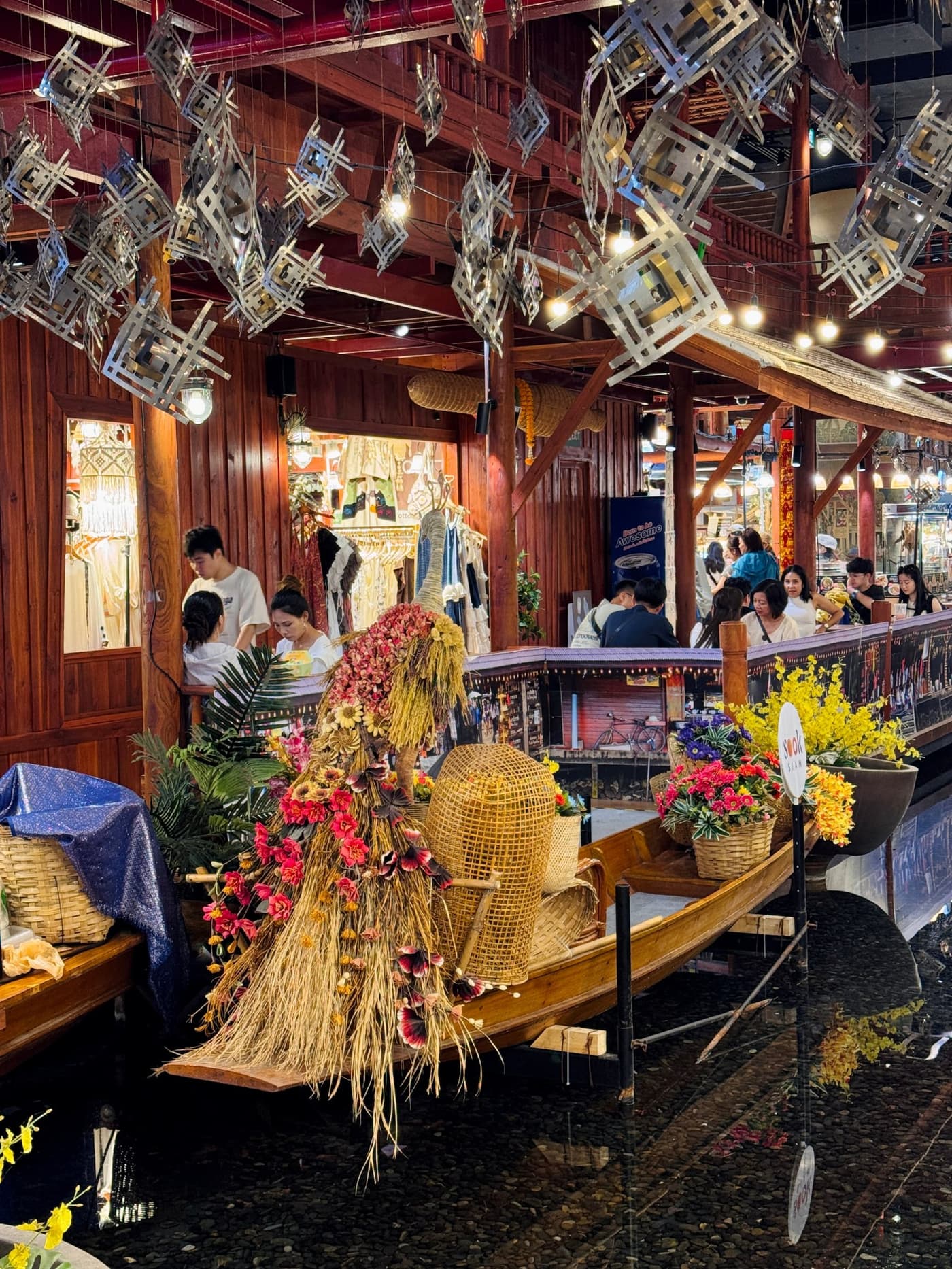
And SookSiam at ICONSIAM is my favorite food court: an indoor copy of a Thai market with food from all 77 provinces of the country and even an imitation floating market inside the shopping mall.
Restaurants and Michelin stars
Besides street stalls, Bangkok has plenty of high-end restaurants with Michelin stars. Raan Jay Fai is a legendary noodle shop with a Michelin star, held since 2018, and an owner in ski goggles standing at a blazing-hot wok. You can only get in through a live queue: it is open Wednesday to Saturday from 9:00 to 19:00, but allow plenty of time, because the line can stretch for several hours. The signature dish here is the crab omelet, although in 2025 the restaurant ended up in a scandal over a 4,000-baht bill against a stated price of 1,500: the final price depends on which crab you are served, so ask the price before you order. Gaggan serves progressive cuisine from the Indian chef Gaggan Anand, in a tasting menu format. The place regularly makes the top 10 of The World's 50 Best. Among three-star Michelin restaurants there are Sorn (southern Thai cuisine) and Sühring (German-Thai cuisine from twin brothers, which received its third star in 2026). Among two-star restaurants there is R-Haan with royal Thai cuisine, and among one-star ones Le Du by the modern chef Thitid "Ton" Tassanakajohn.
Night markets
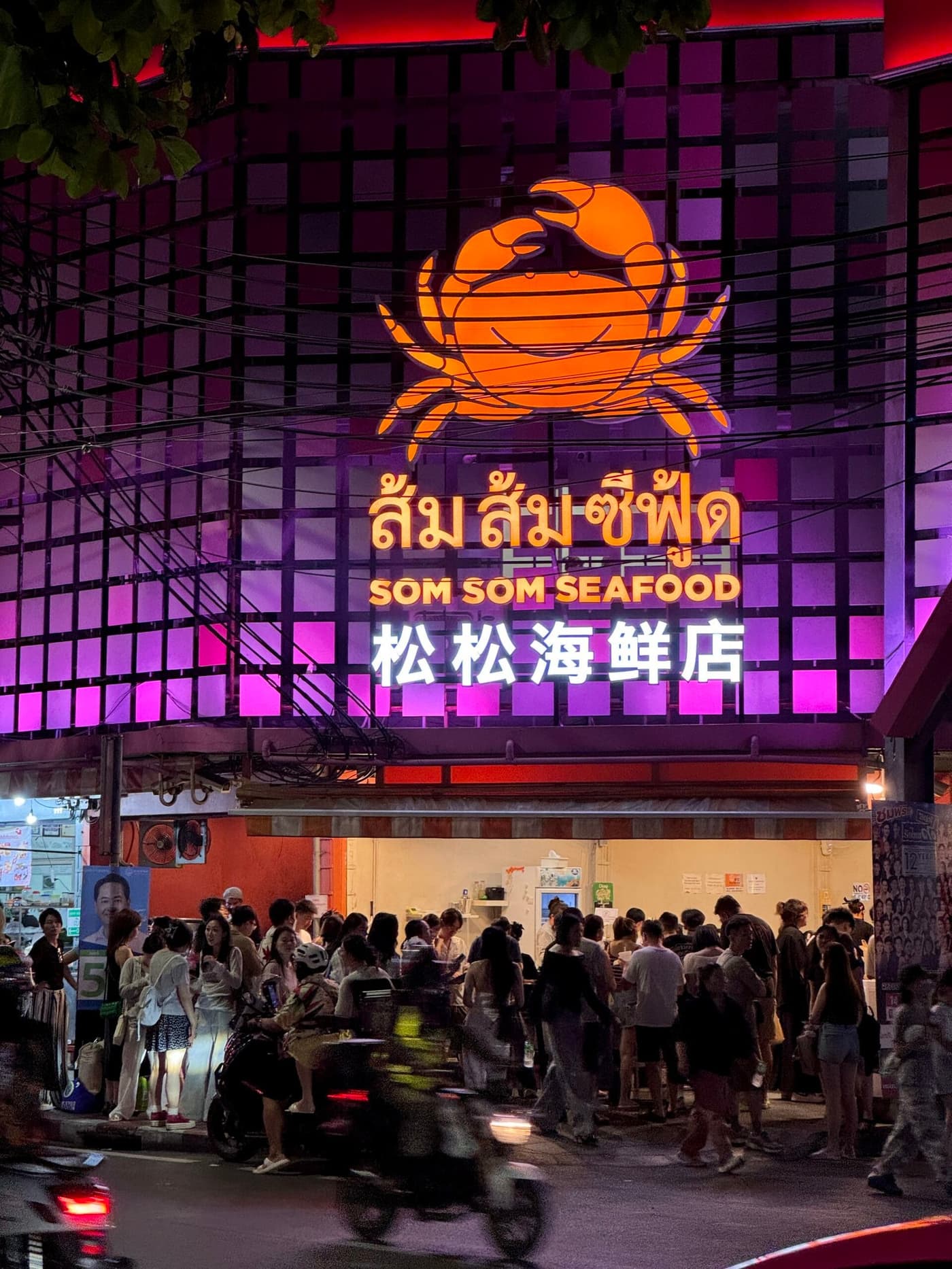
Besides Chinatown, evening street food is available in practically every district, so you will not need to look for it specially. But a couple of places are worth making a trip for. Banthat Thong Road, between Siam and Chulalongkorn University. A street of shophouses with moo kata, Thai grill-barbecue at the table, plus seafood and noodles. In the last couple of years it has turned from a secret local spot into a popular tourist destination. It gets crowded at peak dinner time, so it is better to come a bit earlier or later than the main wave. Jodd Fairs Ratchada is the city's all-round night market, open daily from about 17:00 to 1 a.m. Train Night Market Srinagarindra, behind Seacon Square, is a more niche option with vintage cars and antiques mixed in with food, open Thursday to Sunday from 17:00 to 1 a.m.
Coffee shops, brunch and rooftops
Specialty coffee and brunch are a separate kind of Bangkok hedonism, with two recognized centers of their own: the Ari area in the north of the city, and the Charoen Krung waterfront together with Talat Noi, where coffee shops and brunch cafes occupy restored early-twentieth-century houses and inner courtyards.
Day trips from Bangkok
Bangkok's logistics are such that you can leave the hotel in the morning and be back in the evening, having seen a completely different Thailand.
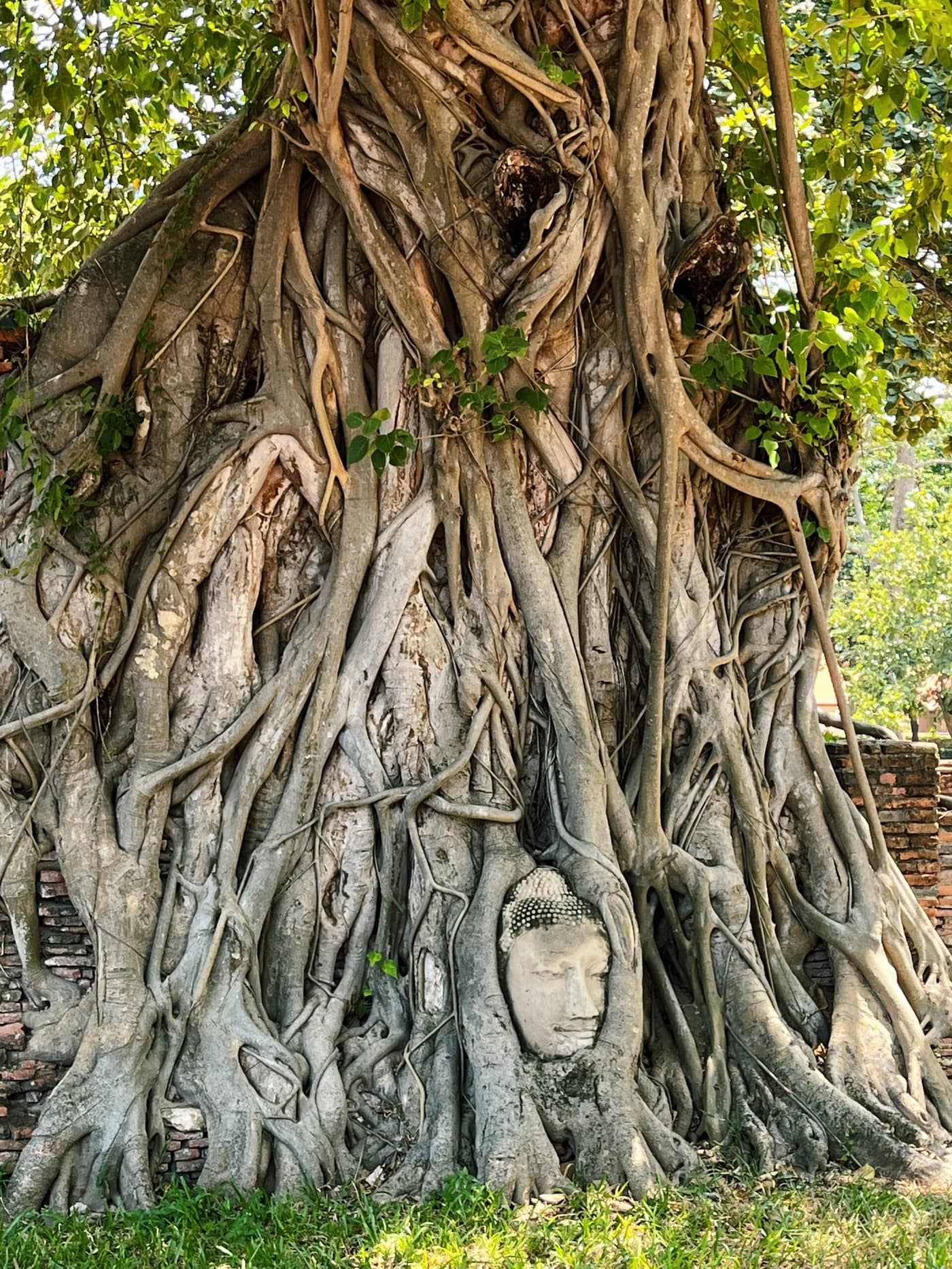
Ayutthaya is the ancient capital of the kingdom, a UNESCO site, about 80 km to the north. Temple ruins in the middle of grass, including the famous Buddha head entwined in tree roots at Wat Mahathat. The trip takes 1.5-2 hours by train or bus.
Damnoen Saduak Floating Market is the most touristy and popular, about 100 km southwest of Bangkok, 1.5-2 hours away. Boats, vendors in wide hats, food straight from the water: all the classics of floating markets in Thailand, but the crowd of tourists to match.
Maeklong Railway Market is a market right on the train tracks: several times a day vendors pull in their awnings and goods within seconds to let the train through, and then lay everything out again. Organized tours often combine a visit to the Maeklong market and the Damnoen Saduak Floating Market in one trip.
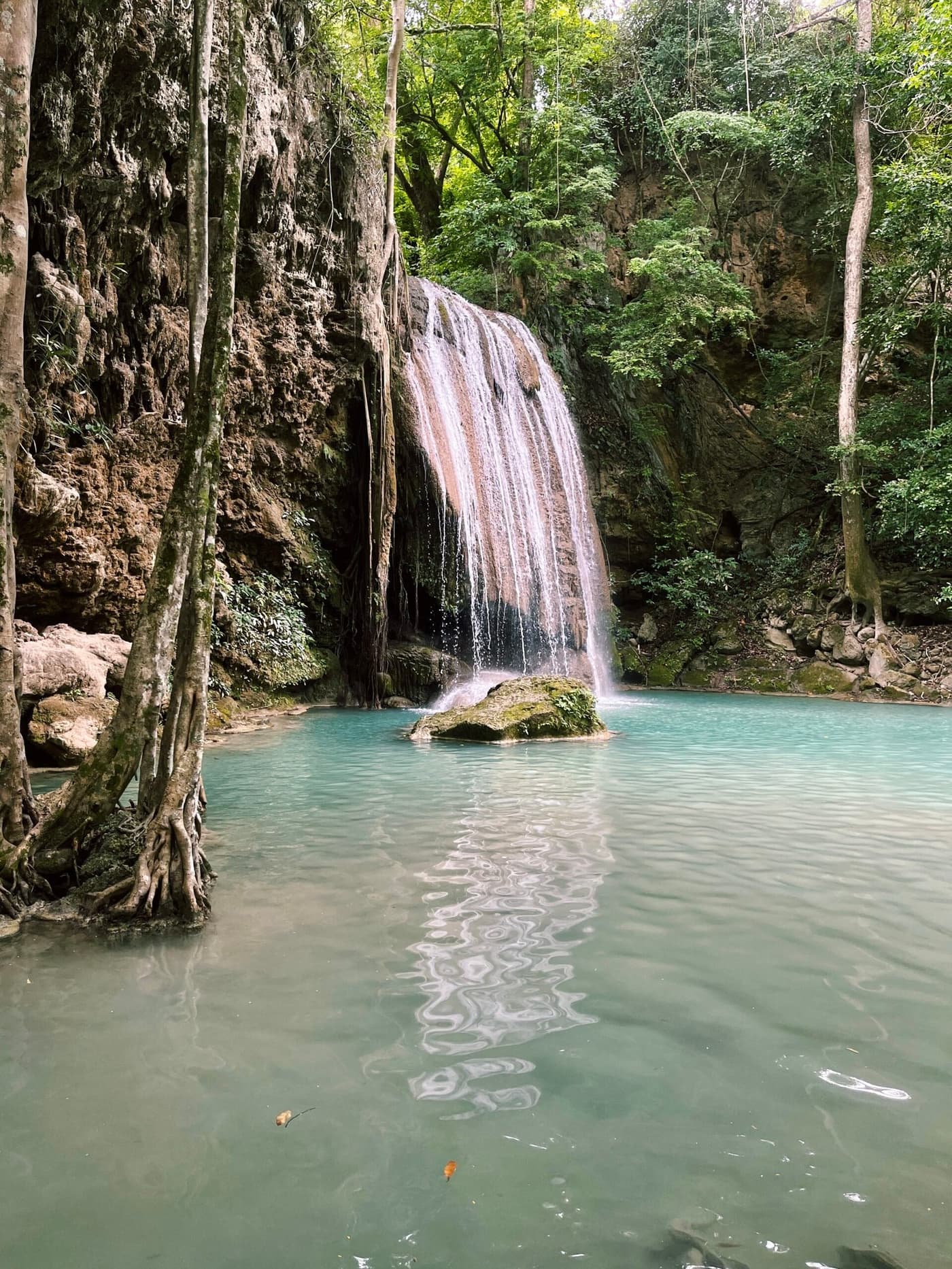
Kanchanaburi and the Bridge over the River Kwai is about 130 km to the west, 2.5-3 hours away. Museums and memorials from the Second World War, the historic bridge, and beyond that Erawan National Park with its seven-tier waterfall and emerald pools.
Pattaya is about 150 km to the southeast, 1.5-2 hours away. It is the closest sea to Bangkok, if after several days in the megacity you want a beach for at least a day.
I wrote about what to see and do in Pattaya in a separate article. I also covered how to get from Bangkok to Pattaya in detail.
Itineraries: how many days you need in Bangkok
How many days to plan depends on why you are coming. The city can be a transit stop before the islands, a destination in its own right or a trial month before a move.
Bangkok in 2-3 days (transit stop)
Bangkok is most often chosen at the start or end of a trip around Thailand, a few days between flights or before flying out to the islands.
Day 1 — the Old Town: the Grand Palace in the morning, before the crowds and the heat, then Wat Pho, and a ferry across the river to Wat Arun at sunset.
Day 2 — Chinatown by day (Wat Traimit, a stroll through the streets with gold shops) and in the evening in the same place, among the street food under the neon.
Day 3, if you have a third day to spare, visit Chatuchak market, especially if it falls on the weekend, or Jim Thompson House plus shopping in Siam, and a rooftop bar at sunset in the evening.
Bangkok for a week
Add one day for Ayutthaya or a combination of Damnoen Saduak plus Maeklong market, an evening at Asiatique or at a Muay Thai fight, and a separate day with no plan, just walking around Sukhumvit or Thonglor with stops at coffee shops. For those evaluating the city as a possible base for long-term living, a week is usually enough to see two or three areas from the long-term living section.
Bangkok for a month or longer
Here the logic of a tourist gives way to the logic of a resident: the area is chosen not by proximity to sights but by transport links and everyday infrastructure. It is worth setting aside time to compare at least 3-4 areas in person before signing a rental contract.
When to go to Bangkok: weather by month
The difference between seasons in Bangkok is not about temperature, which stays around 32-36°C all year, but about humidity and the amount of rain.
| Period | Daytime temperature | Rainfall | What it means |
|---|---|---|---|
| November-February (less hot) | 32-34°C | Minimal rain | The best time: drier and relatively more comfortable |
| March-May (hot season) | 34-36°C, peak in April | Rain builds up toward May | The hardest period to bear, especially April |
| June-October (rainy season) | 33-34°C | Peak in September (about 335 mm) | Rain is usually short and showery, in the second half of the day, and the morning is usually sunny |
April is also the time of Songkran (April 13-15), the Thai New Year with mass water fights all over the city. Being in Bangkok on exactly those days is a separate experience worth having at least once, but keep in mind that some services and offices switch to holiday mode, and anyone out on the street risks getting soaked, whether they want to take part or not.
Visa and entry to Bangkok in 2026
When I checked in October 2026, Thailand was open without a visa for eligible passports, but from September 15, 2026 the allowed stay was cut from 60 to 30 days. It can be extended by another 30 days (fee of 1,900 baht), but now only once a year. There is also a new limit on entry by land: no more than two times a year, so endless border runs across a land border are no longer an option. Please confirm the current rules for your own passport with Thai immigration or the nearest Thai embassy before you travel.
On entry you need to fill in the TDAC (Thailand Digital Arrival Card) online form in advance, which has been a mandatory requirement since 2025. How to fill in the Thailand arrival card.
For a longer stay there are several options.
- METV (Multiple Entry Tourist Visa) — a 6-month visa with multiple entries. But it can only be applied for in your country of citizenship or residence/permanent residence.
- DTV — a visa for remote workers and freelancers, valid for 5 years. BUT from August 31, 2026 the conditions tightened: you can now apply only in your country of citizenship or where you hold residence or permanent residence (previously you could apply at any convenient consulate: Vientiane, Penang, Kuala Lumpur), and a certificate of no criminal record is now mandatory too. For applicants without residency in another country, the DTV is currently almost unavailable.
- LTR — a 10-year visa for wealthy residents and remote employees with high incomes, with much higher capital and income requirements.
If your move to Bangkok is linked to working for a Thai company, you will need a Non-B visa and then a work permit. This is a separate and far more bureaucratic story: the employer must be registered with the Department of Business Development, keep a ratio of 4 Thai employees to 1 foreigner, and have registered capital of from 2 million baht for each foreign employee. The whole process, from pre-approval to the finished work permit, takes about 6-8 weeks, with quarterly residence reporting after receiving the visa.
Bangkok for digital nomads
For a long time Bangkok was in the shadow of Chiang Mai as the capital of Asian nomadism, but in recent years that has changed: fast internet, a wide choice of coworking spaces and a far richer business and social life, though at a higher price and with worse traffic.
Internet. The average speed of fixed home internet in Thailand is about 79 Mbps, and of mobile about 16 Mbps. For video calls and remote work that is more than enough practically anywhere in the city.
Coworking spaces. There is a big choice, for every budget:
| Coworking | Area | Day pass | Membership/month |
|---|---|---|---|
| Industrious Gaysorn Tower | Chit Lom (Gaysorn Tower) | ~950 ฿ | from ~8,000 ฿ |
| True Digital Park | Punnawithi | ~500 ฿ | from ~6,000 ฿ |
| JustCo | Samyan | ~750 ฿ | from ~5,000 ฿ |
| The Hive Thonglor | Thonglor | ~398 ฿ | from ~5,000 ฿ |
| Glowfish | Sathorn/Asok | ~400 ฿ | from ~4,500 ฿ |
| Common Ground | Siam/Chidlom | ~500 ฿ | from ~4,500 ฿ |
| The Work Loft | Silom | ~400 ฿ | from ~4,000 ฿ |
| WeWork | Thonglor, Ratchathewi | ~500-700 ฿ | from ~5,000 ฿ |
A monthly rental of a permanent desk is almost always better value than going for day passes four times a week or more. An alternative for those not ready to pay for a coworking space is specialty coffee shops: a cup of coffee for 120 baht often gives you access to a workspace and wi-fi for several hours.
Community. Bangkok does not have as compact and centralized a community as Chiang Mai; the city is too big for a single scene, but there are regular meetups and digital nomad groups in Thonglor, Ari and Sukhumvit. Plus there are international interest-based meetups, from startup networking to language exchange, and almost every evening of the week you will find something within reach of the BTS.
Visa. The DTV suits working for foreign clients without a Thai employer, but as I wrote earlier, since August 31 it has become difficult for many applicants.
Bangkok for expats
Moving with a family or for the long term rests on a different set of facts than a week's vacation: rent, schools, insurance, a work permit.
Renting a home in Bangkok
The standard scheme when renting a condominium is a deposit of two months' rent plus one month in advance, that is, three monthly amounts up front. For rent of 20,000 baht a month, that is 60,000 baht before you move in. In most cases the agent's commission is paid by the owner, not the tenant, and you can look at options through several agents at once.
Before signing the contract, check: the lease term and move-in date, the terms for returning the deposit, who is responsible for repairs and maintenance, the procedure and cost of utility payments (ideally confirm that electricity is billed at the state MEA tariff, not an inflated in-house rate), the rules on pets and the option of early termination. A passport and visa are the standard document package from the tenant. The TM30 report, an immigration notification about a foreigner's place of residence, is usually filed by the owner or the management company, but it is better to clarify this in advance. The obligation lies with the landlord, although in practice the tenant gets asked too.
International schools
Bangkok is one of the biggest centers of international education in Asia, with dozens of schools offering British, American and IB programs. The price range is wide:
| School | Curriculum | Annual cost (THB) |
|---|---|---|
| Wellington College | British | 615,000 – 1,240,000 |
| Shrewsbury | British | 700,000 – 1,260,000 |
| ISB (International School Bangkok) | American, IB | 680,000 – 1,220,000 |
| Harrow International | British | 600,000 – 1,100,000 |
| Bangkok Patana | British | 545,000 – 1,044,000 |
| RIS Ruamrudee | American, IB, AP | 560,000 – 850,000 |
| KIS International | IB | 585,000 – 1,040,000 |
| ASB Green Valley | American | 460,000 – 800,000 |
| Ascot International | IB, Cambridge | 331,900 – 595,000 |
A separate expense is the one-time fees on admission: registration and entrance fees and refundable deposits can add up to 200,000-455,000 baht depending on the school, and that is before the first school year even starts.
Healthcare and insurance
Private healthcare in Bangkok is on the level of the best clinics in the region, with English-speaking staff and international JCI accreditation.
- Bumrungrad International — the best-known hospital in the country, specializing in complex cases and medical tourism; a check-up costs from $200 to $1,000+ depending on the scope of the examination.
- Samitivej Sukhumvit — strongest in pediatrics, family medicine and maternity, with "Mother-and-Baby Friendly" status from WHO/UNICEF; a check-up costs $250-600.
- Bangkok Hospital — focused on emergency care, cardiology and neurology; a check-up costs $150-400.
- BNH Hospital in Sathorn — a more intimate, family-style setup with an individual approach.
Insurance is a must: without it even a simple doctor's visit at a private clinic costs several times more than a comparable appointment in Europe, and a serious case without insurance can add up to a very serious sum.
Work and visa
If your move is linked to a job with a Thai company, you will need a Non-B visa and a work permit, as I described above. Those who work for themselves or for foreign clients should follow how the situation around the DTV develops. The rules in Thailand, unfortunately, change faster than you can read about them.
Bangkok, Chiang Mai or Phuket
A frequent question from those who have not yet decided where to settle in Thailand for the long term. Bangkok wins on pure infrastructure: more flights from anywhere in the world, the strongest healthcare in the country, a big choice of international schools. It loses on pace, traffic and price: rent in a decent part of Sukhumvit easily comes to one and a half to two times more than a comparable apartment in Chiang Mai, and a trip across the city at rush hour can eat an hour where in Chiang Mai fifteen minutes on a bike would be enough.
Chiang Mai beats Bangkok on cost of living, speed and the density of the digital nomad community, but loses on healthcare for complex cases and on the choice of international education. Phuket is an option for those for whom having the sea near home is a must, but in terms of infrastructure for families and business life it is closer to Chiang Mai than to Bangkok.
In practice, many expats and nomads do not pick one place for good: part of the year in Bangkok for work, doctors and flights, and part in Chiang Mai or on the islands for the pace and the price.
More on Chiang Mai and the Phuket guide in separate articles.
How much it costs to live in Bangkok
Bangkok is more expensive than Chiang Mai and most regions of Thailand, but noticeably more affordable than Singapore or Hong Kong, neighboring megacities with a comparable level of infrastructure.
| Expense | Budget | Comfortable | Free-spending |
|---|---|---|---|
| Rent (studio/1-bedroom) | 12,000–20,000 ฿ (On Nut, Bang Na) | 20,000–35,000 ฿ (Sukhumvit, Ari) | 40,000–80,000+ ฿ (center, condo with a view) |
| Food, 3 meals a day | 4,500–7,000 ฿ (street food, food courts: 40–80 ฿ per dish) | 9,000–15,000 ฿ (local restaurants: 100–180 ฿ per dish) | 20,000–40,000+ ฿ (Western/premium cuisine: 250–500+ ฿ per dish) |
| Transport | 1,200–2,000 ฿ (BTS/MRT, single ride 15–60 ฿) | 2,000–3,000 ฿ (travel pass plus the occasional Grab) | 6,000–15,000+ ฿ (Grab/taxi daily) |
| Utilities and phone/internet | 1,600–2,900 ฿ (electricity 1,000–2,000 ฿, internet 600–900 ฿) | 2,500–4,000 ฿ | 4,000–7,000 ฿ |
| Total per month per person | 30,000–40,000 ฿ | 45,000–65,000 ฿ | 70,000–140,000+ ฿ |
For a short tourist trip, a comfortable budget per person without flights is 1,500-3,000 baht a day, including 3-4-star accommodation, meals in cafes and transport around the city.
Safety and common scams
Street crime in Bangkok is low, and physical danger to a tourist is rare. What is much more relevant are the many petty scams, honed over the years specifically on visitors.
"The temple is closed." A person in a uniform that looks official stops you at the entrance to the Grand Palace or another temple and says it is closed today, there is a ceremony, or it is a cleaning day, anything at all. Then they offer an alternative route and flag down a tuk-tuk. Temple opening hours are always posted at the gates, so check yourself and ignore strangers who tell you about it first.
A tuk-tuk for pennies. The driver offers a multi-hour tour for a laughable 20-40 baht, with compulsory stops at jewelry and tailor shops where he gets a commission on anything you buy. A one-hour ride stretches to three or four. If the price seems unrealistically low, that is the catch.
Jewelry at a "special price." A friendly stranger near the Grand Palace tells you in fluent English about a one-time government gem sale or a factory warehouse clearance, with resale at home for three times the price. He takes you to a shop where you buy stones for 20,000-100,000 baht that are actually worthless. There are no government jewelry sales at all; any such offer from a random passerby is a scam.
The taxi meter is "broken." The driver refuses to turn on the meter and names a fixed price 2-5 times higher than normal. The standard fare from Khao San to Siam is about 80-120 baht, not the 300-500 they may ask. Insist on the meter or find another car; there are enough free taxis in Bangkok that you do not have to agree to overpay.
The general rule is simple: if an offer comes from a stranger who approached you himself and sounds too good, that is a reason to walk past, not to think it over.
Practical information
SIM card — sold at the airport right after arrival or in any 7-Eleven, which are on every corner in Bangkok. True Move H and AIS are the operators with the best coverage in the city, and a monthly data package costs 200-400 baht. An alternative for those who do not want to sort it out on the spot is Airalo (an eSIM, bought online in advance).
Money — ATMs are everywhere, and the withdrawal fee on a foreign card is about 220 baht per transaction regardless of the amount. Kasikorn Bank (KBank) and Bangkok Bank usually give a better conversion rate. Cards are accepted in shopping malls, chain cafes and most restaurants. At markets, in songthaews and at street stalls it is cash only.
Temple dress code — covered shoulders and knees are required in any temple, not only in the Grand Palace. At the entrance to most complexes there is a rental of disposable capes and sarongs for those who arrived unprepared.
Health and pharmacies — the Boots and Watsons pharmacy chains are in every shopping mall and on most busy streets, and many medicines are sold without a prescription that would require a doctor's prescription in Europe. For serious cases the international hospitals also take tourists.
Women traveling solo — Bangkok is generally comfortable for solo trips, and the tourist areas are well lit and busy until late. Standard caution (a trusted taxi or Grab instead of a random tuk-tuk at night, not leaving a drink unattended in bars) removes practically all of the risk.
My latest vlog from Bangkok
Frequently asked questions about Bangkok
How many days do you need in Bangkok?
At least 2-3 days to see the essentials: the Grand Palace, Wat Pho, Wat Arun, one market and one walk around Chinatown. A week gives you time for museums, day trips to Ayutthaya or Kanchanaburi and a calmer pace without rushing between points.
Is Bangkok safe?
Yes, street crime is low, and a physical threat to a tourist is rare. The main risk is not crime but petty scams: supposedly closed temples, tuk-tuks with forced shopping stops, taxis without a meter. Basic caution with strangers who offer "great deals" themselves removes most of the risk.
How do you get from Suvarnabhumi Airport to central Bangkok?
The cheapest and clearest way is the Airport Rail Link to Phaya Thai station: a ticket is 45 baht, the ride takes about 26 minutes, and then you transfer to the BTS. A metered taxi to the center costs 300-500 baht including traffic and the airport fee.
How much does it cost to live in Bangkok for a month?
A modest but comfortable budget starts from 30,000-40,000 baht per person, not counting flights. A comfortable level with a decent area and regular restaurants is 45,000-65,000 baht. For a family with an international school and a condo in the center, the budget multiplies because of school fees.
Which area of Bangkok should a tourist choose?
For a first visit, Sukhumvit: maximum BTS connectivity and well-developed infrastructure. For those who come specifically for the temples and are ready to put up with awkward logistics, the Old Town near the Grand Palace is the fit. For comfortable living, Thonglor.
Do I need a visa for Thailand in 2026?
It depends on your passport. When we checked in October 2026, eligible passports could enter without a visa, but from September 15, 2026 the visa-free stay was cut from 60 to 30 days; it can be extended by another 30 days (1,900 baht), but only once a year. The electronic TDAC form is mandatory on entry. Please confirm the rules for your own passport with Thai immigration or the nearest Thai embassy.
Is Bangkok worth visiting for a beach holiday?
No, there is no sea in the city. The nearest beaches are in Pattaya, two to three hours away by car or bus. Bangkok is best thought of as a city of food, temples and logistics to the rest of the country, not as a resort.