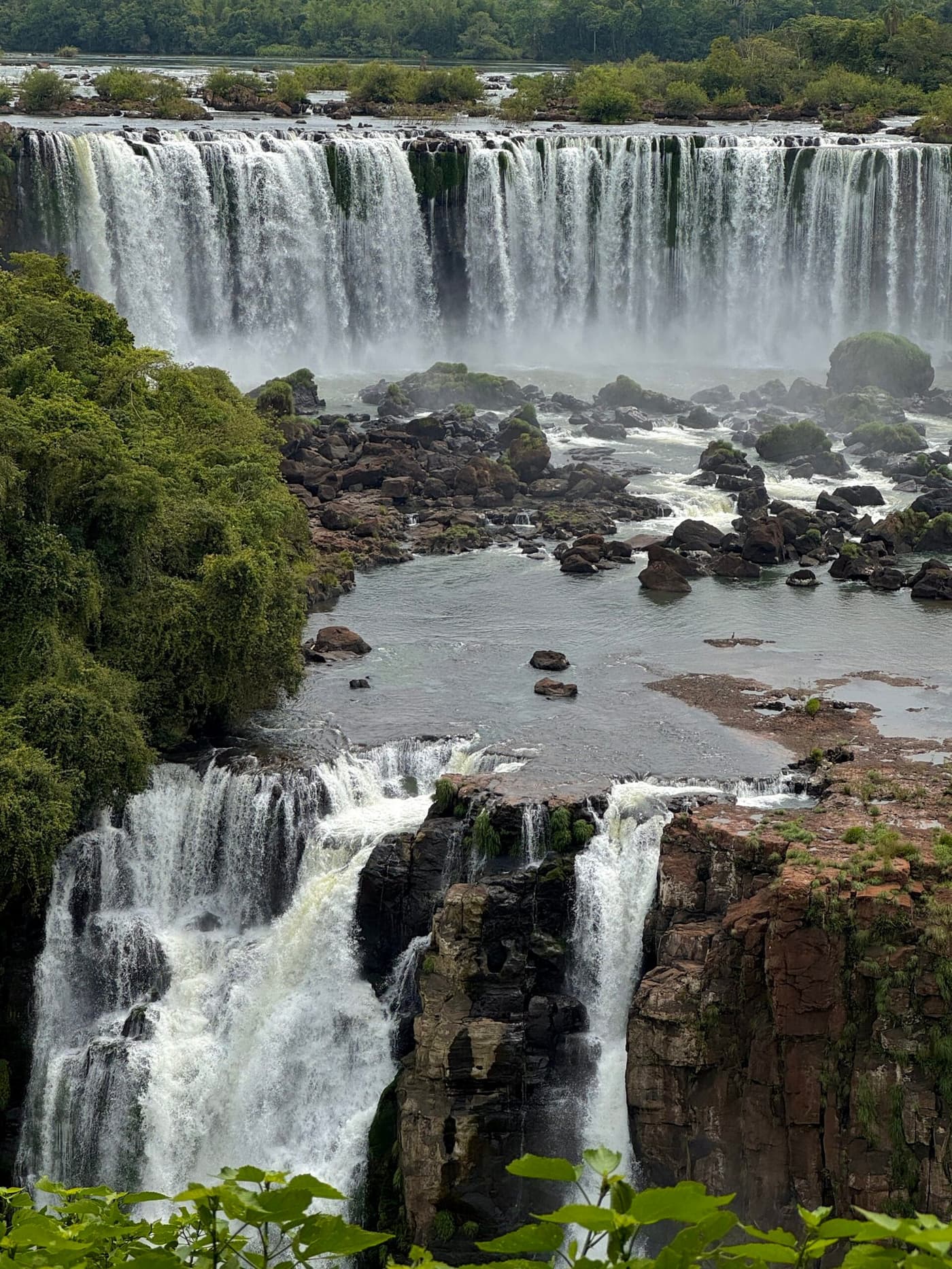
Iguazu Falls is in my personal top of the most impressive places on the planet. And it's not just a pretty waterfall: there are more than 270 separate cascades here, stretched over almost three kilometers (about 1.7 miles) right in the jungle of South America. No wonder Iguazu is on the list of the New 7 Wonders of Nature.
What makes this place special is that it belongs to two countries at once, Brazil and Argentina, and each side gives you completely different emotions.
In this article I'll tell you where Iguazu Falls is, how to get there, how much time to allow, which side to choose and what you shouldn't miss, based on my own experience.
Which Country Is Iguazu Falls In
Iguazu Falls is in South America, where three countries meet: Brazil, Argentina and Paraguay. The falls themselves sit on the border of the first two, and that makes the place unusual: one natural wonder, two countries, two completely different ways to see it.
About 80% of the cascades are on the Argentine side and 20% on the Brazilian side. On the Argentine side you end up right inside the falls, among the spray and the roar of the water, while the Brazilian side gives you a panoramic view of the whole complex at once.
The nearest cities are Foz do Iguacu (Brazil) and Puerto Iguazu (Argentina). The whole trip is built around them: flights, accommodation and logistics to the park.
What River Is Iguazu Falls On
The falls are formed by the Iguazu River, a large tributary of the Parana River. At some point the river drops sharply, breaking against rocks and islands, and that is how this giant cascade of hundreds of streams comes about.
The name of the river and the falls comes from the Guarani language and simply means "big water." It's hard to think of anything more accurate.
Iguazu Falls: Brazil or Argentina, Which to Choose
This is the first question that comes up when you plan the trip. Ideally you should visit both sides, because they don't duplicate each other and give you a fundamentally different experience. But if your time is limited, below I'll explain how to choose.
The Brazilian Side: For the Panorama
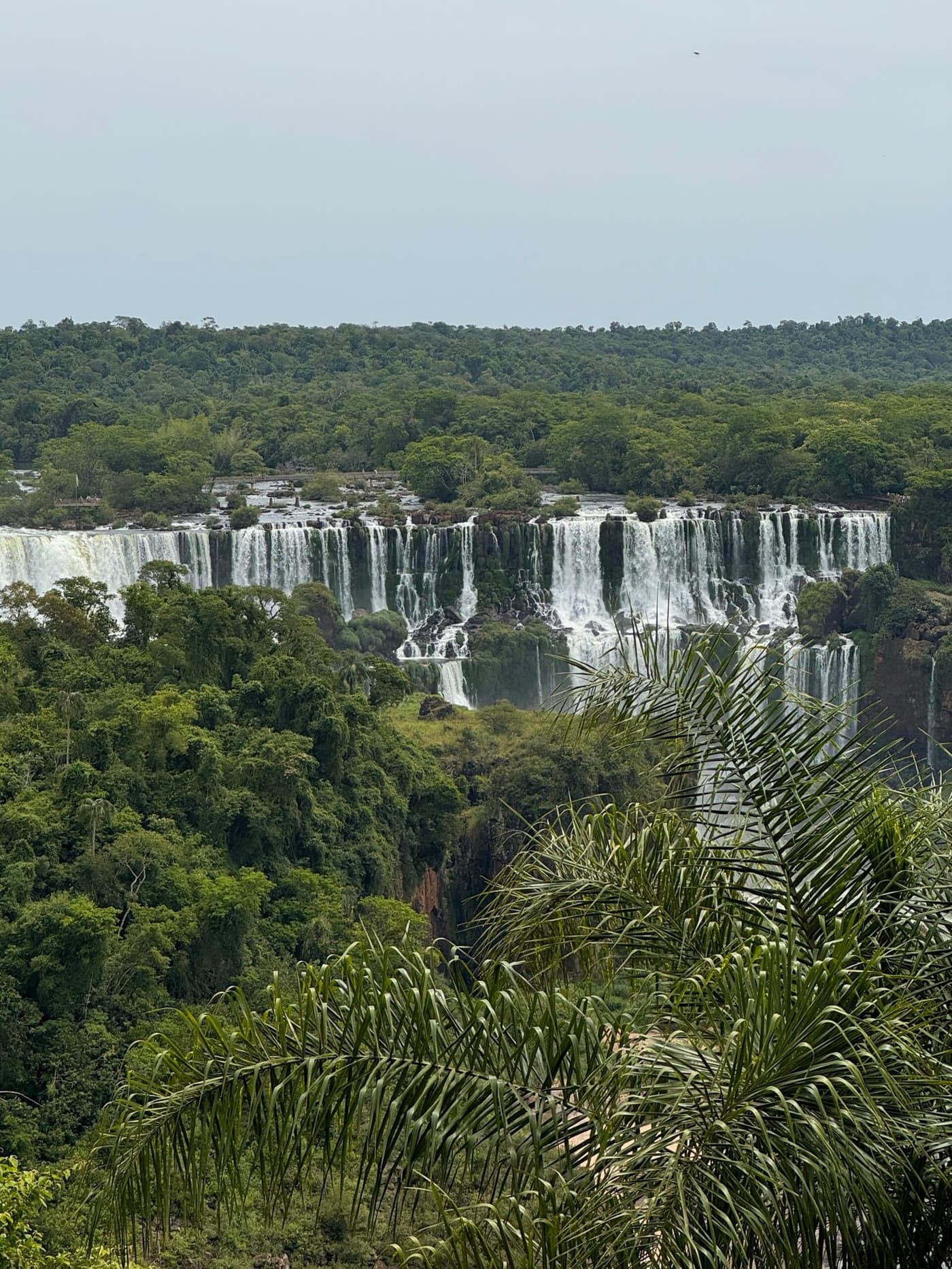
From here you get a view of most of the falls at once. This is where those postcard shots come from, when the whole cascade is laid out in front of you. The route is compact, and you can walk all of it in 3-4 hours. It's a good fit if you want to see the full scale of Iguazu without spending a whole day. The downside: you're an observer, not a participant. The falls are in the distance and the spray barely reaches you. I wrote about everything a tourist needs to know before a trip to Brazil in detail in another article.
The Argentine Side: For Immersion
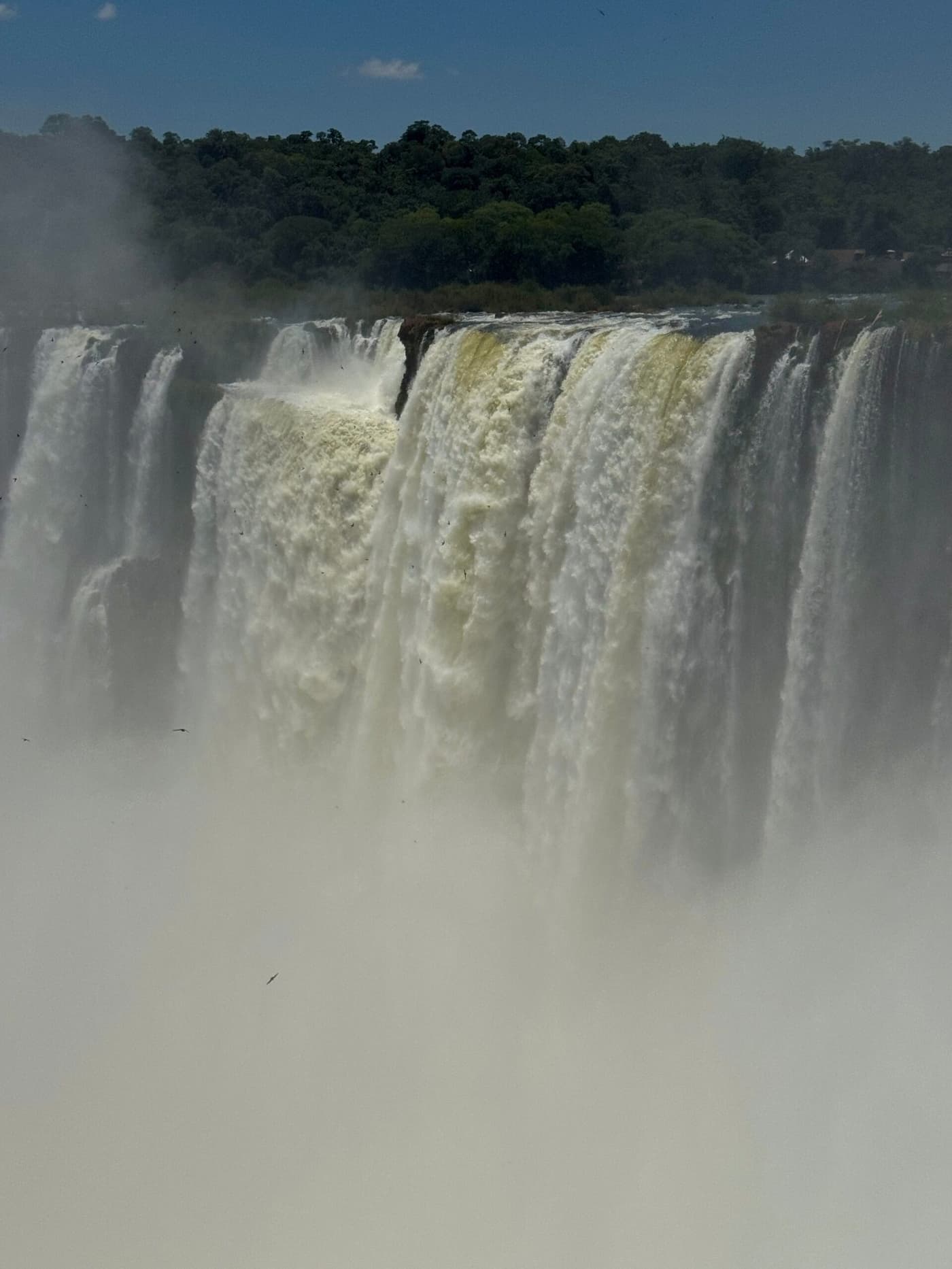
Here you find yourself literally inside the falls. There are lots of trails, the distances are long, and it's easy to spend a whole day and never get bored. The main highlight is access to the Devil's Throat, the most powerful part of the whole complex. The downside: you don't get the panorama that Brazil gives you. But you do get a feeling that's hard to put into words.
Two Days Is Ideal
Stay in Foz do Iguacu (Brazil): accommodation is cheaper and the infrastructure is better. Spend half a day on the Brazilian side and a full day on the Argentine side. That way you get the least logistics and the most impressions.
How to Get to Iguazu Falls
Despite how remote the region is, getting to Iguazu is easier than it seems. The basic scheme is the same everywhere: a flight to one of the two nearest cities, then a short transfer to the national park.
There are two key cities that all the logistics are built around:
- Foz do Iguacu (Brazil)
- Puerto Iguazu (Argentina)
How to Get to Iguazu from Rio de Janeiro
There are direct flights to Foz do Iguacu (IGU) every day. The flight takes about 2-2.5 hours. From the airport to the park entrance it's 15-20 minutes by taxi or bus. You can read more about the city of Rio de Janeiro, its history, climate, beaches, neighborhoods, safety and culture in another of my articles.
How to Get to Iguazu from Sao Paulo
The flight takes about 1.5-2 hours, and tickets are often cheaper than from Rio. You land at the same Foz do Iguacu airport. Sao Paulo is the country's main transport hub, so it's easier to find good deals from here.
How to Get to Iguazu from Buenos Aires
If you're in Argentina, it's more convenient to fly to Puerto Iguazu (IGR). The flight takes 1.5-2 hours, and it's about 20-30 minutes from the airport to the park.
The Nearest Airports to Iguazu Falls
There are two international airports near the falls:
- IGU — Foz do Iguacu, Brazil
- IGR — Cataratas del Iguazu, Argentina
Both are close to the falls. The choice depends only on which side you plan to start from.
Buses run to the national park from both cities, Foz do Iguacu and Puerto Iguazu. You can also call an Uber, book a transfer through your hotel or buy a tour. The ride takes about 15 minutes.
Iguazu Falls from Brazil to Argentina and Back
The simplest and cheapest way to get from the Brazilian side to the Argentine side is by bus. Buses to Argentina leave regularly from the city of Foz do Iguacu. The main companies are Rio Uruguay and EasyBus.
The buses leave from the central bus station and stop at several places in the city.
First you ride to the Brazilian border. In theory you're supposed to go through passport control, but we only got off at the Argentine border. They didn't stamp our passports, either when leaving Brazil or when entering Argentina. It was the same on the way back.
After that the bus goes toward the city of Puerto Iguazu, but not all the way to the national park. Most often it takes you to the city, and then you need to switch to a local bus to the park or take a taxi.
By distance:
- from Foz do Iguacu to the Argentine side: about 14 km (9 miles)
- from the border to the national park: another 10-15 km (6-9 miles)
By cost: a round-trip bus ticket is roughly 100-150 Brazilian reais for two, which is about $20-30, and it's best to check the current exchange rate in advance.
The route in the opposite direction works exactly the same way, with the same companies and the same border-crossing procedure.
Alternatives to the Bus:
- taxi or transfer: faster, but more expensive
- rental car: convenient, but you need permission to take it abroad, and that isn't cheap.
Either way, the trip takes about 40 minutes, not counting the border.
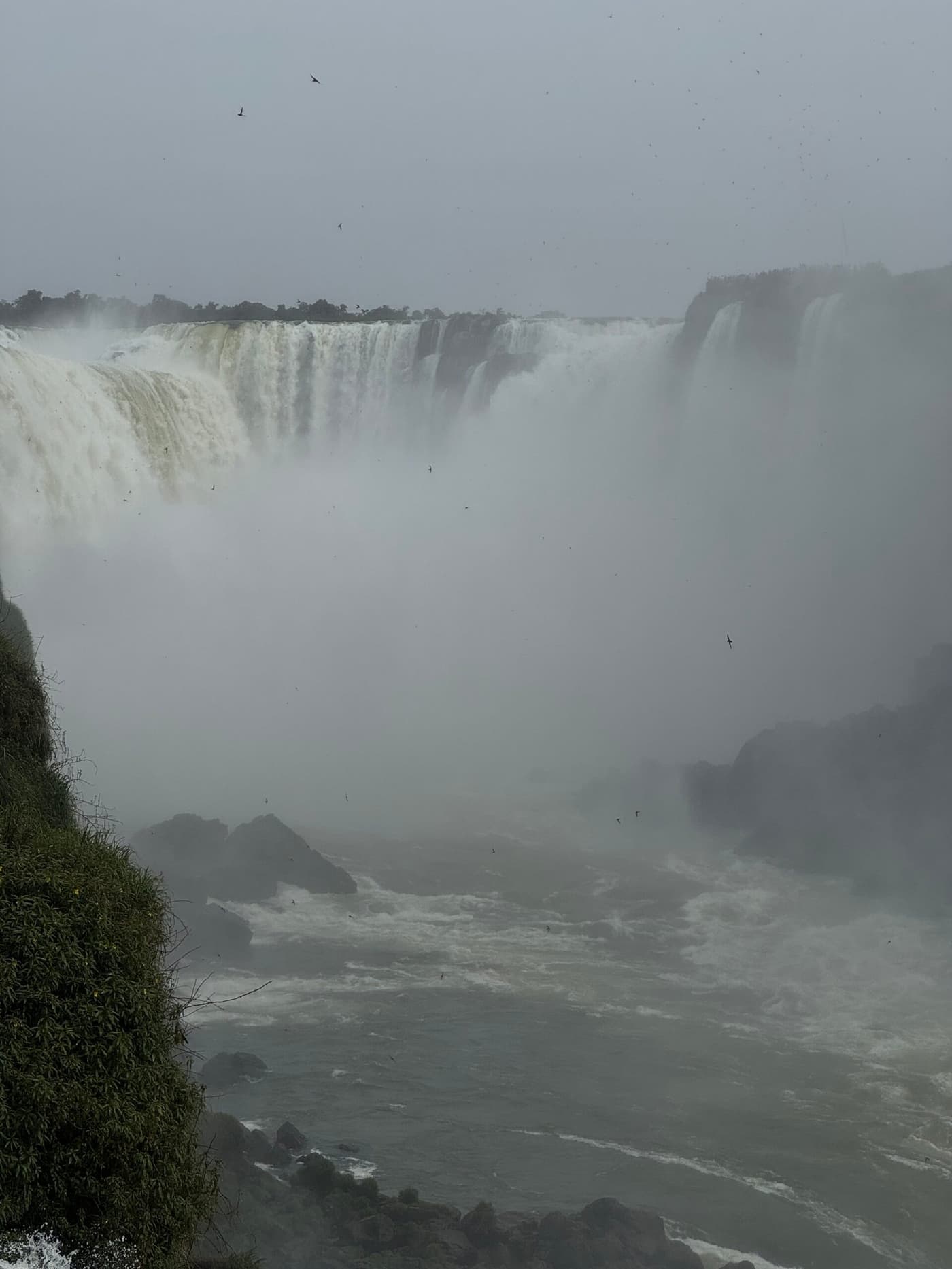
Iguazu Falls: Description, Height, Width and Number of Falls
Iguazu isn't a single waterfall but a whole system. It's the scale that makes this place so overwhelming: the water here doesn't fall as one wall but breaks up into hundreds of separate streams among rocks and islands.
This gives you a variety of viewpoints, a chance to see the falls from above, from the side and from below, and a feeling that you're inside this natural complex.
How Many Waterfalls Are in the Iguazu Complex
The complex has about 270-275 separate waterfalls, and the exact number changes with the water level. In the rainy season some new streams appear literally out of nowhere, and in the dry season some disappear.
Together they form a cascade almost 2.7 kilometers (1.7 miles) wide, which creates that effect of an endless "wall of water" that you can't capture in a photo or even a video.
Height of the Falls
The height of individual cascades varies from 60 to 82 meters (about 200 to 270 feet). For comparison, that's roughly the height of a 20-story building. When you stand next to them, you feel the scale physically.
Why Iguazu Is Considered One of the Most Powerful Waterfalls in the World
It's not only about size but also about the volume of water. The average flow is about 1,500-1,800 m³ per second, and in the rainy season that figure can grow several times over.
That's why there's always a thick mist of spray near the falls, you hear a powerful roar and feel the vibration, and all of it together creates the effect of a real force of nature, not just a pretty landscape.
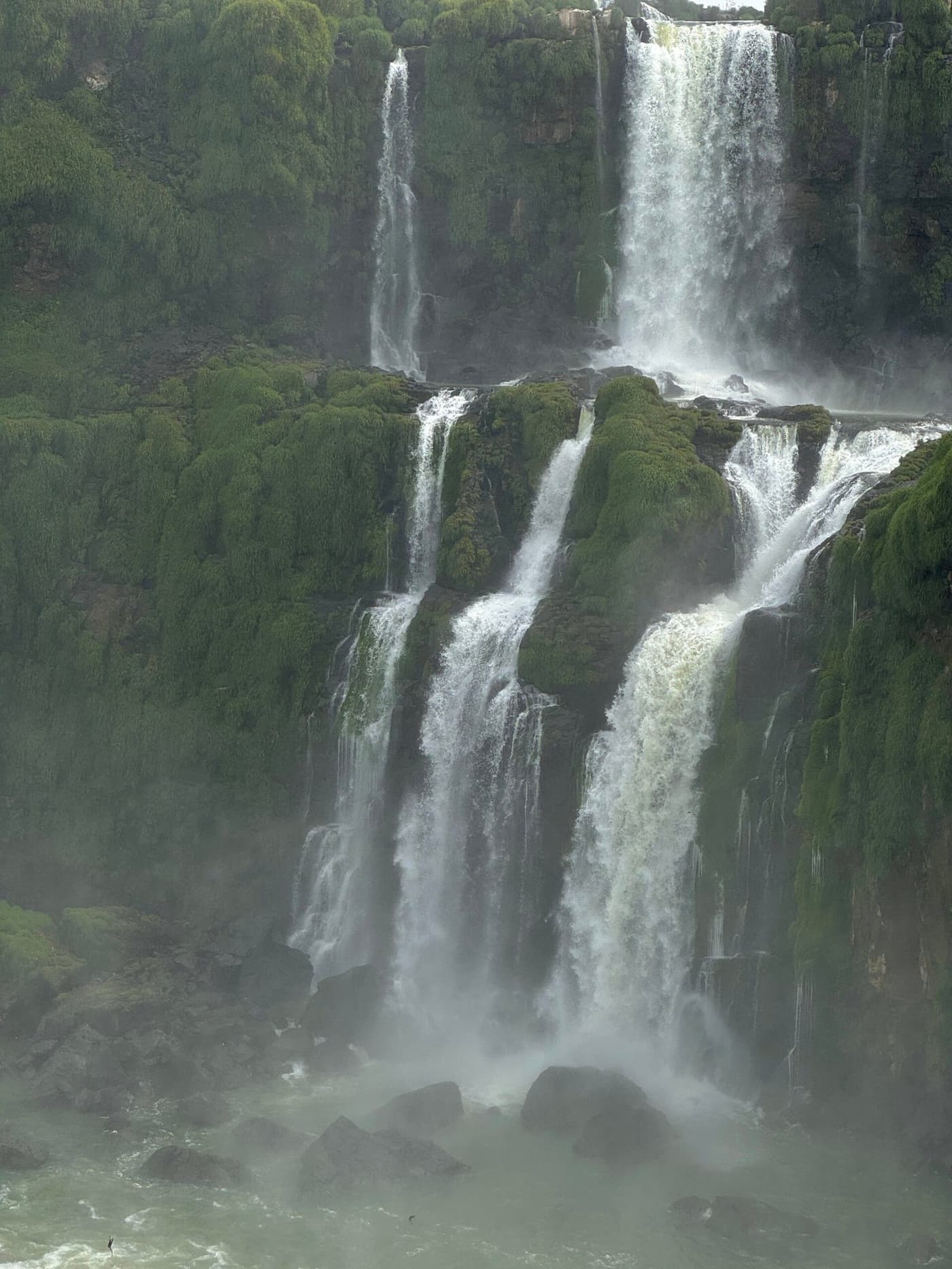
Iguazu Falls Tickets: Where to Buy and How Much They Cost
Tickets for each side are bought separately, because these are two different national parks with different entry systems. The main advice for both sides is the same: buy online in advance, especially in high season. That way you avoid the lines and are guaranteed entry on the date you want.
Tickets for the Brazilian Side
Official website: cataratasdoiguacu.com.br An adult ticket costs about 130 BRL (~$25). The price includes entry to the park and the bus inside, which takes you between the main points on the route. You can also buy at the ticket office at the entrance on the day of your visit, but there are sometimes lines in the morning. The best time to visit is in the morning: fewer people, softer light, a more comfortable temperature.
Tickets for the Argentine Side
Official website: iguazuargentina.com Entry here is noticeably more expensive, about $65 for foreigners (paid in pesos at the current exchange rate). The price is lower for Argentine residents. The ticket includes access to all the trails: the Upper Circuit, the Lower Circuit and the Devil's Throat. The train to the Devil's Throat is paid separately, but if you walk there, the return train ride is free. If you plan to stay for a second day, you can get a discount on re-entry. To do that, keep your ticket and have it validated at the ticket office on your next visit.
How Much Time to Allow
The Brazilian side is small, and you can easily manage it in 3-4 hours. The Argentine side will take a full day. The trails are long, and there's no reason to rush, because there's a lot to see there.
The Devil's Throat (Garganta del Diablo)
The most powerful and impressive place in the Iguazu Falls complex is the Devil's Throat (Spanish: Garganta del Diablo). Most of the water flows in here, and this is where you feel the force of Iguazu's water the most.
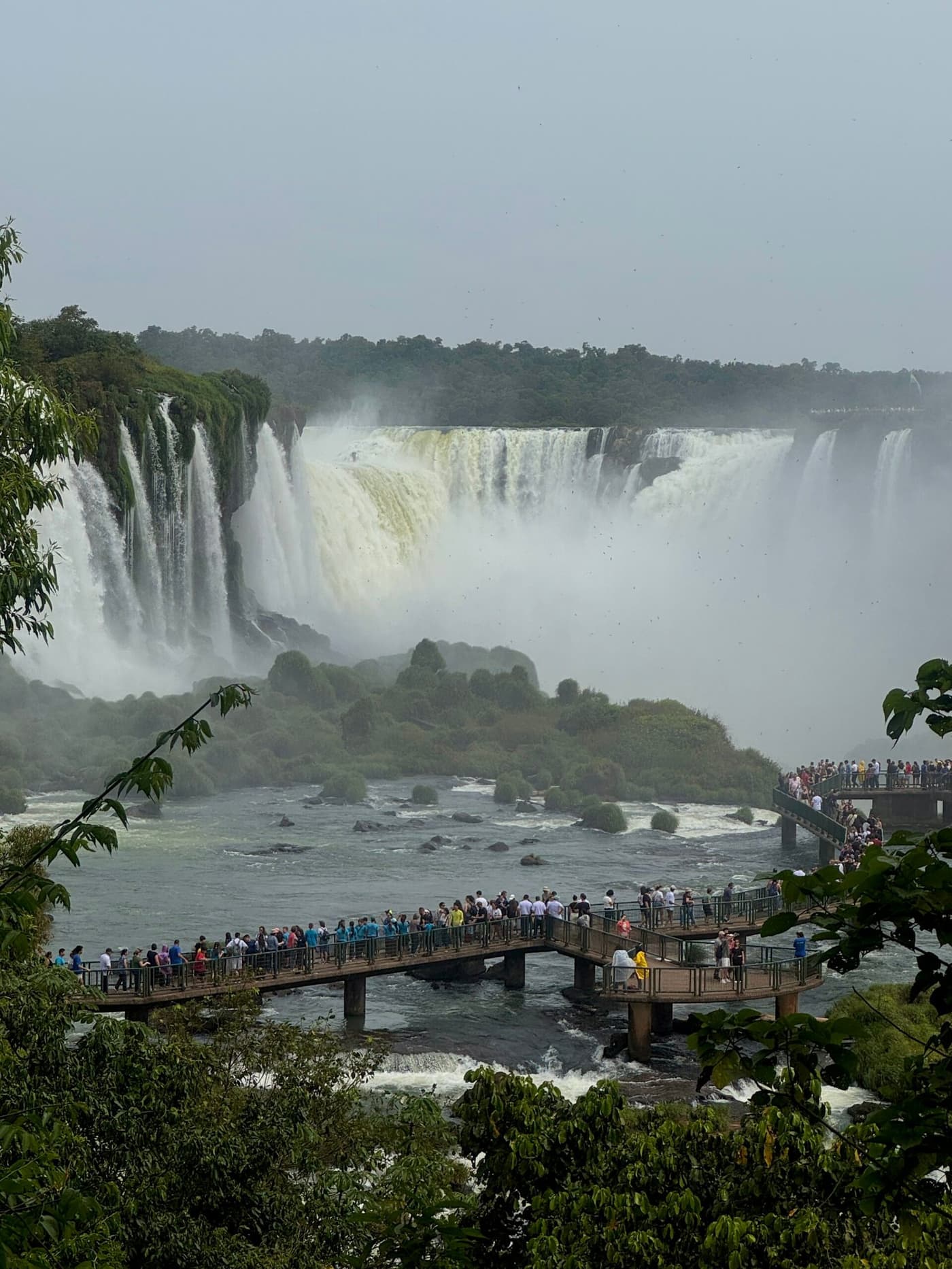
What the Devil's Throat Is
Garganta del Diablo is a huge U-shaped chasm on the border of Brazil and Argentina, where dozens of powerful streams crash down at once. It isn't a separate waterfall but a kind of final point of the whole system, where Iguazu's maximum power is concentrated. There is a constant deafening roar, a thick cloud of spray and mist, vibration under your feet and almost zero visibility up close. This is the place where you understand that no photo can convey the real scale.
How to Get to the Devil's Throat
You can only get there from the Argentine side, through Parque Nacional Iguazu. There are two ways: By the Ecological Train — Tren Ecologico de la Selva. You board at the station near the park entrance and ride to the last stop, Estacion Garganta del Diablo. From there a short walking section begins. This is the easiest option, but the train is paid separately. On foot — you can walk there via other trails in the park. It takes longer and requires more energy, but you'll see more along the way. Bonus: if you walked there, the return train ride is free.
What the Route to the Devil's Throat Looks Like
After the station there's a walkway about 1.1 km (0.7 miles) long one way, metal footbridges that run literally over the Iguazu River. All around there is only water, islands and jungle. The route is completely flat and suits any fitness level. There is no shelter from the sun along the way, so bring a hat and water. Along the path you'll often meet coatis and exotic birds. Don't feed them, no matter how much they beg. At the end there's a viewing platform right over the edge. This is where that "wow" moment happens, the one many people come to Iguazu for.
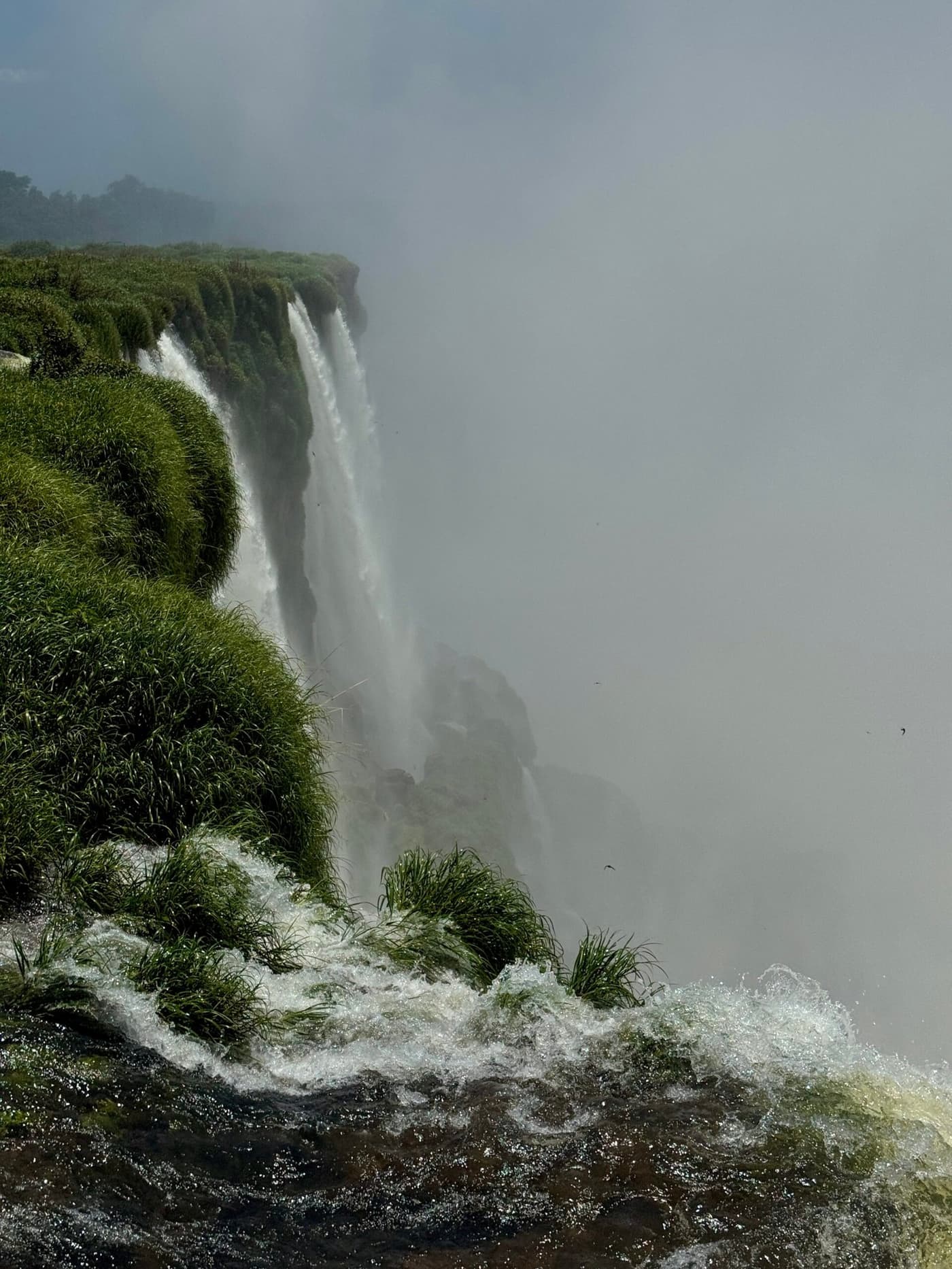
Interesting Facts About Iguazu Falls
Iguazu isn't just a beautiful place. Behind it stand millions of years of geological history, a unique ecosystem and titles that confirm it is one of the most outstanding natural sites on the planet.
A Wonder of the World and a UNESCO Site
The falls are on the list of the New 7 Wonders of Nature, and both national parks, the Argentine and the Brazilian, are on the UNESCO World Heritage List (Argentina since 1984, Brazil since 1986). Iguazu earned these titles: a waterfall that is wide, tall and incredibly powerful all at once is a rare combination even on a global scale.
How the Falls Were Formed
Iguazu formed about 120-140 million years ago as a result of volcanic activity. The river gradually eroded the hardened lava until a sharp drop in elevation appeared. This process continues to this day, and the line of the falls slowly changes shape.
Animals Along the Trails
On the trails of both parks you often see toucans, monkeys and rare birds. But the main local celebrities are coatis, relatives of the raccoon. They look cute but are completely fearless: don't leave food unattended, because they'll snatch it without a second thought.

When to Visit Iguazu Falls
Iguazu Falls is open year-round, and there's no single "best" month. It all depends on what matters more to you: maximum water power or a comfortable walk.
Rainy Season: December to March
At this time the falls are at their peak: the streams are at their fullest, the mist is dense and the roar can be heard from far away. Visually it's the most impressive period.
But: it's hot and very humid, with temperatures reaching 30-35°C (86-95°F). After heavy rain some trails may be temporarily closed, and access to the Devil's Throat is sometimes restricted. It's worth checking the current state of the park before you go.
Dry Season: May to September
There's less water, but the temperature is comfortable, around 15-25°C (59-77°F), with less humidity and more clear views without thick mist. It's a good choice if walking and photography are your priority.
Best Time: March to May and October to November
This is the golden mean: there's still plenty of water, the weather is milder, and there are noticeably fewer tourists than in the peak months. We went at the end of November, and it turned out to be the perfect time. Yes, it was hot and humid, but the falls were full and very beautiful. We didn't regret a thing.
Best Time of Day to Visit
Morning is the best option: fewer people, soft light and a comfortable temperature before the daytime heat starts.
Evening is good too: there are fewer tourists, the light is beautiful and the heat eases off.
Midday is the most crowded and hottest time, especially in high season. It's better to use it for lunch and rest rather than for walking the trails.
Iguazu Falls FAQ
Where Is Iguazu Falls?
In South America, on the border of Brazil and Argentina, near the cities of Foz do Iguacu and Puerto Iguazu.
Which Country Is Iguazu Falls In?
Two at once: Brazil and Argentina. About 80% of the cascades are on the Argentine side and the other 20% are on the Brazilian side.
How Many Waterfalls Are in Iguazu?
About 270-275. The exact number depends on the water level in the river.
How Do You Get to Iguazu Falls?
The most convenient way is to fly to Foz do Iguacu (Brazil) or Puerto Iguazu (Argentina), then take a 15-30 minute bus or taxi ride to the national park.
How Much Time Do You Need at Iguazu Falls?
Two full days is ideal: one for the Brazilian side and one for the Argentine side. If your time is limited, choose one side and don't rush.
When Is the Best Time to Visit Iguazu Falls?
The ideal time is March to May and October to November: there's enough water, the weather is comfortable and there are fewer tourists. In December to March the falls are at their fullest, but it's hot and humid. In May to September it's cooler and more comfortable for walking.
What River Is Iguazu Falls On?
On the Iguazu River, a large tributary of the Parana River.
What Is the Devil's Throat?
It's the most powerful part of the complex, a huge U-shaped chasm where dozens of streams of water crash down at once. It's on the border of Brazil and Argentina, and it's best reached from the Argentine side.
How Much Does It Cost to Visit Iguazu Falls?
The Brazilian side is about $25 and the Argentine side is about $65. Prices can change, so it's best to check current information on the parks' official websites before you go.
Where Is It Better to Stay: Brazil or Argentina?
Most travelers choose Foz do Iguacu (Brazil): there are more hotels, prices are lower and the logistics to both sides are convenient.
Here's how our trip to Iguazu Falls went, which I filmed for my YouTube episode