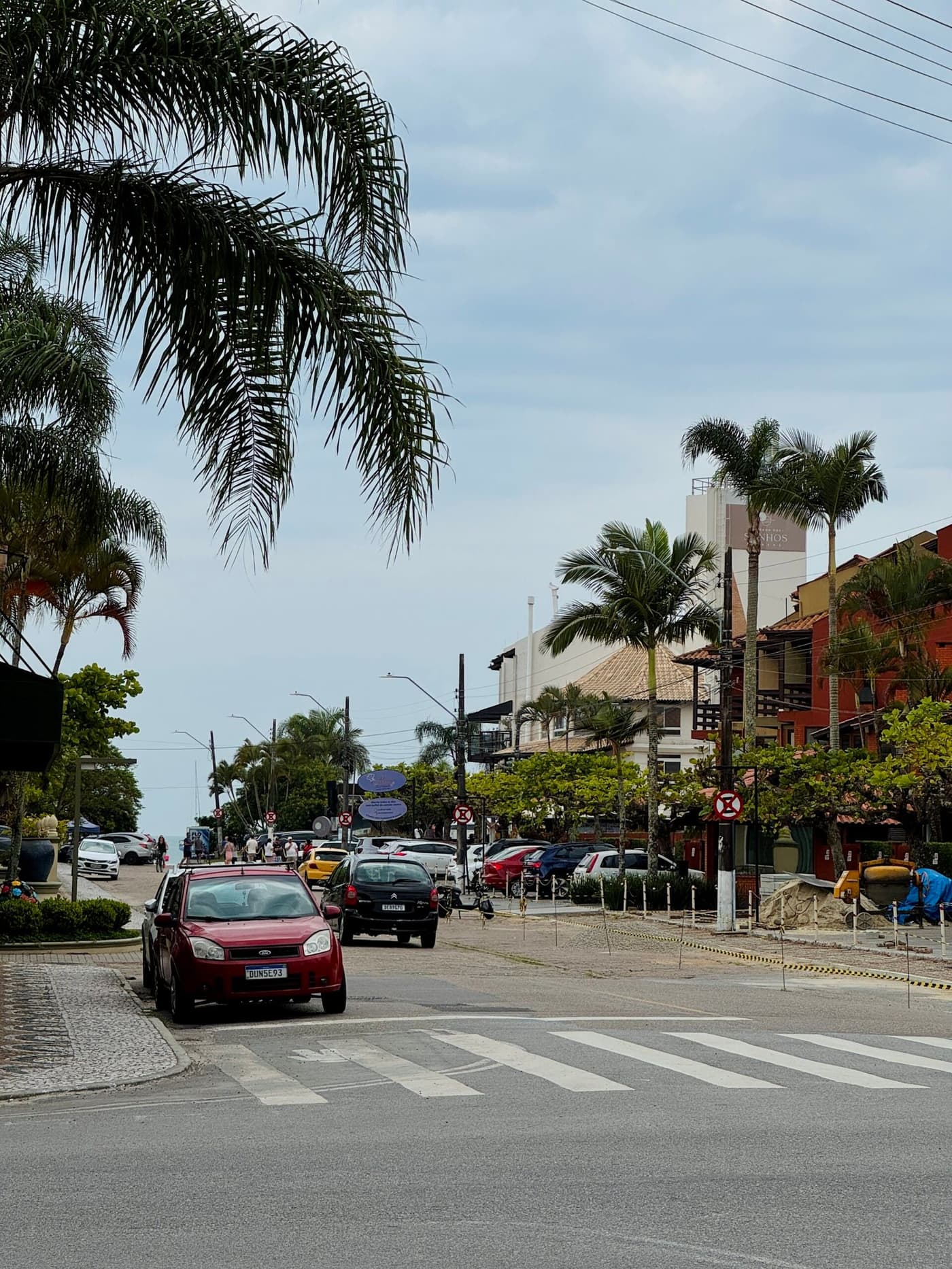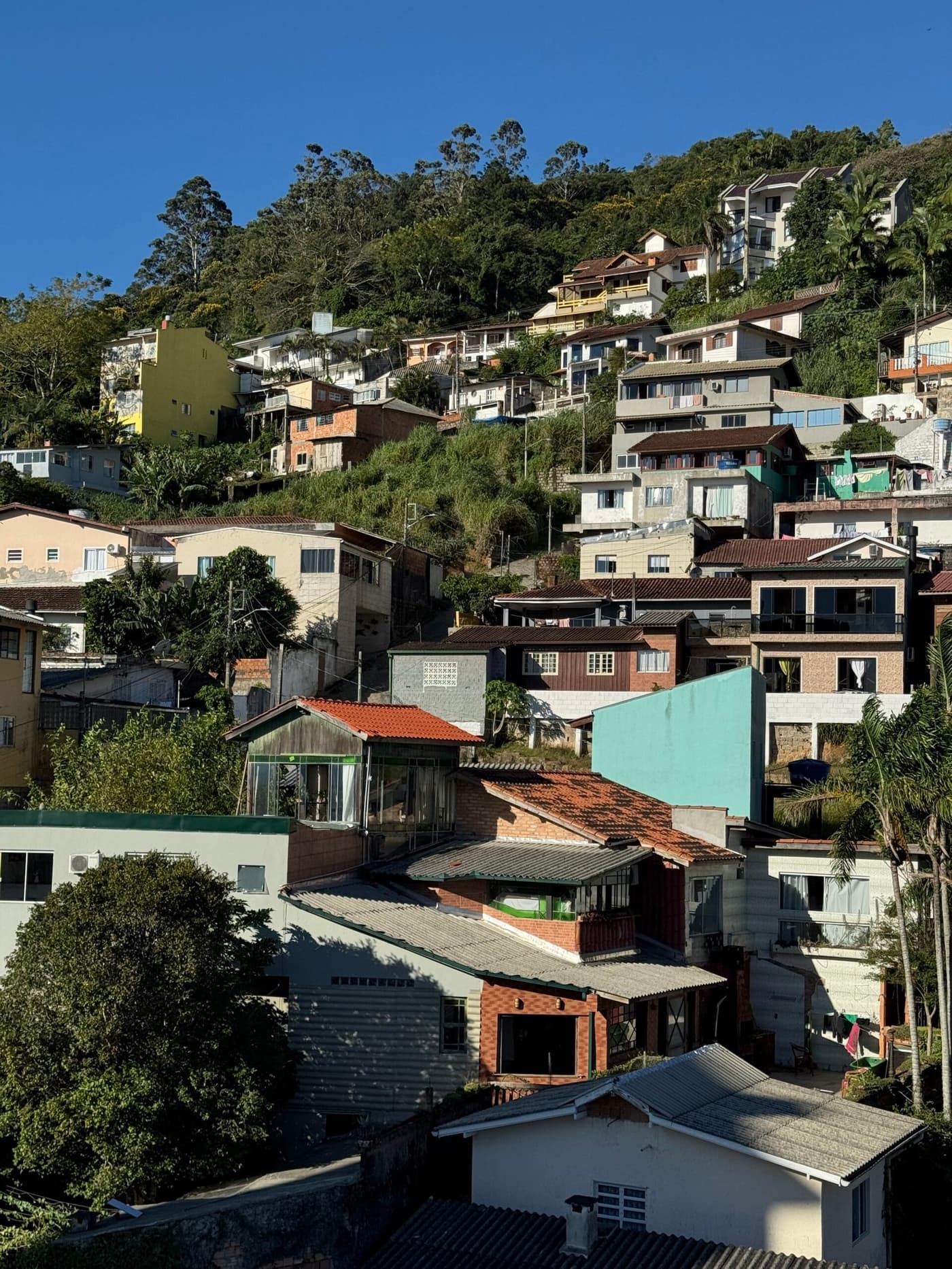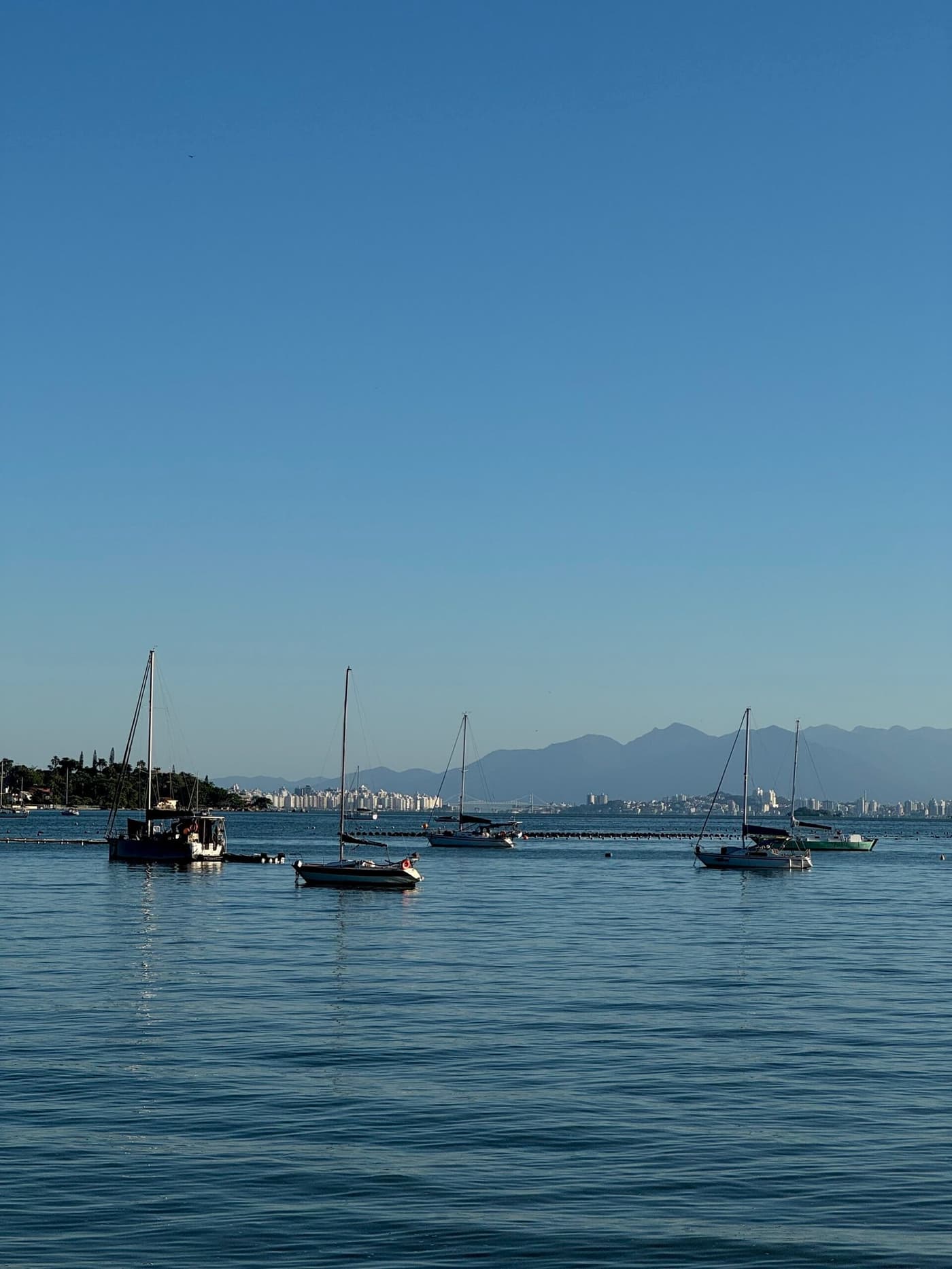
Florianopolis has a subtropical climate. That means no polar frosts and no real drought, but very different seasons: January, loud with tourists and overheated by the sun, and a quiet, cool July feel like two different islands.
Below is my breakdown of each season: temperature, water, crowds, prices and what actually happens. I wrote about the city and the island of Florianopolis in a separate article.
Summer: December to March
Air temperature: 27–30°C by day, 22–24°C at night Water temperature: 24–27°C Rain: frequent, but in short downpours Tourists: peak Prices: the highest of the year
Summer in Floripa is the peak of everything. It's hot, humid, crowded and loud. Brazilians from Sao Paulo and Rio, Argentines and Uruguayans: in January there can be more tourists on the island than permanent residents. Traffic jams on the main roads on a Friday evening can take two hours instead of forty minutes.
On the other hand, this is the most "alive" time of year. The beaches are in full swing, bars stay open until morning, and there are festivals, markets and surf schools with full groups.
Summer rain is no reason to cancel your trip. Usually these are short tropical downpours that start in the afternoon and end an hour later. After the rain the sun comes out. But there are also spells of several days with serious rain and wind, especially in March.
January is the busiest month. Everything is open, everything is expensive. Rental prices go up 2–3 times higher than in May. If you're going in January, book 2–3 months ahead.
February is Carnival. Floripa has one, though it's nowhere near as big as in Rio or Salvador. There are several blocos (street parties) in different neighborhoods, a great mood, drums and costumes. If you're traveling specifically for Carnival, Rio is more interesting. If you want to feel the atmosphere without a crowd of a million people, Floripa will do.
March is when summer gradually fades. There are fewer tourists and prices start to fall. The heat is still around and the water is warm. It's a good month if you want summer without the peak-season crush. I really liked March in Floripa.
Summer is worth it if you want maximum activity, aren't afraid of crowds and book your housing in advance. It's great for families with children. A couple looking for romance should pick April instead.
The golden shoulder season: April to May
Air temperature: 22–26°C by day, 17–20°C at night Water temperature: 21–24°C Rain: moderate Tourists: few Prices: 30–50% lower than in January
This is the best time on the island. The tourists have already left and the heat has eased, but it's still warm and the beaches are almost empty. Locals can finally go back to their favorite spots.
In April and May it's pleasant to walk, bike and eat fish at an open restaurant without waiting for a table. Surfing is also good at this time: the waves are steady and there are fewer people in the water.
Prices for housing and restaurants drop noticeably. For the same money that got you a small apartment a couple of blocks from the beach in January, in April you can rent a nice place by the water.
The only downside: some cafes and shops in purely tourist areas close or run on reduced hours in the shoulder season. In Lagoa, the city center and the island's residential neighborhoods, everything runs as usual.
Winter: June to August
Air temperature: 15–20°C by day (in August, up to 16°C), 10–14°C at night It can happen: cold snaps down to 5–8°C at night when fronts arrive from the south Water temperature: 17–19°C Rain: minimal (the driest time of year) Tourists: very few Prices: the lowest
Floripa isn't the tropics, and winter here is real, though mild by the standards of some European countries. Only hardy people or surfers (who are fine in a wetsuit) can swim in July. The beaches are empty and windy. Most tourist infrastructure is on pause and the island goes quiet.
One of the less obvious but most exhausting downsides of the low season in Floripa is the total dampness and cold inside housing. Ordinary heaters help very little: there is no central heating on the island at all, so as soon as it gets cool outside, the temperature in your apartment quickly drops to the same level. Because of the big temperature swings and the ocean humidity, walls, windows and furniture instantly get covered in condensation, and it happens constantly, whether it's raining or sunny outside. Without a powerful dehumidifier, an apartment gets overgrown with mold within weeks, and it gets into literally everything: from the bathroom curtains to clothes in closed wardrobes.
A few upsides that might make you like winter:
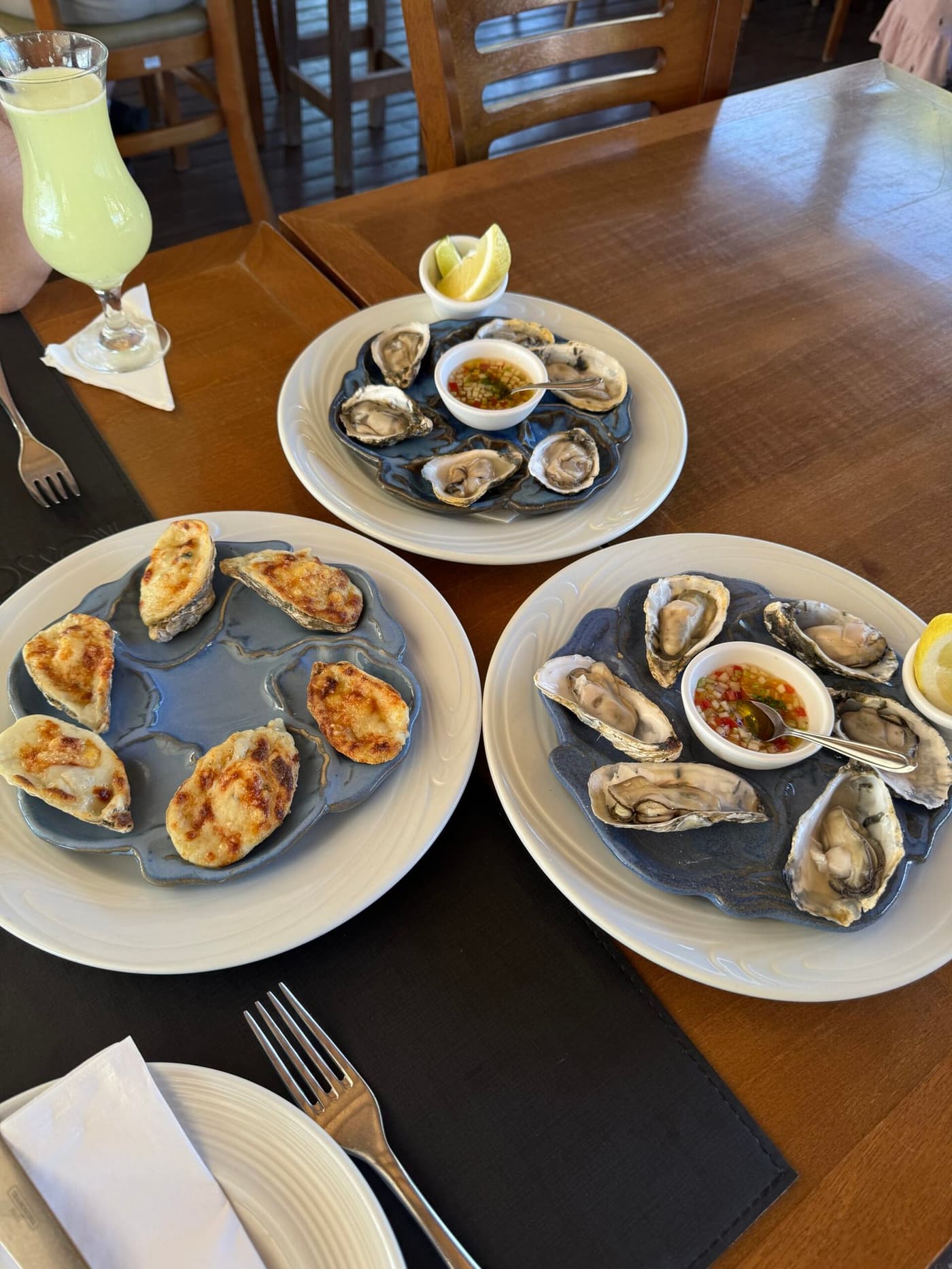
Tainha season (May to July). Mullet swim along the coast of Santa Catarina to spawn, fishermen go out with nets, and restaurants serve the freshest tainha. It's a cultural event that happens once a year.
In winter the eastern beaches of the island, Joaquina, Campeche and Praia Mole, get the best waves of the year. Professional surfers gather exactly in this period.
Winter is ideal if you want to work remotely and not feel like there's a constant festival going on around you. Renting a place for a month in July costs several times less than in January. But remember that it will be cold and moldy.
June is the first "quiet" month. Days are still sometimes warm and rain is rare. It's a good compromise between comfort and few tourists.
July and August are the coldest months. It can get seriously windy.
Spring: September to November
Air temperature: 16–26°C Water temperature: 19–22°C (by November it's already pleasant) Rain: moderate, increasing toward November Tourists: start to grow from October Prices: average, and by November high season is already starting
Spring is a transitional period.
September is still quiet and cool, but everything is open.
October and November: October is still cold, but closer to November life starts to speed up: the first tourists gradually arrive, prices rise and venues gradually come back to life.
It's a good time if you want "not peak season, but warm weather": November gives you that combination. The water has warmed to 21–22°C, there's plenty of sun and no frenzy yet.
November weekends can bring heavier traffic, as Brazilians from neighboring states arrive for long weekends. But that's nothing compared to January.
Holidays and events that affect your trip
January to February: Carnival, whose date changes from year to year. Housing is much more expensive and needs to be booked in advance.
May to July: Tainha season, a fishing tradition on the southern beaches.
October: Still cold, but the flow of tourists is gradually growing.
December: Christmas and New Year. Brazilians celebrate actively, and the island and coastal towns are packed between December 25 and 31. It's the most expensive time for housing.
Quick cheat sheet: when to go for your plans
| Goal | Best period |
|---|---|
| Beach vacation, warm sea | December to March |
| Surfing | May to August |
| Family with children | December to January or April |
| Quiet and cheap | April to May, June to July |
| Remote work, long stay | April to July |
| Food: tainha and winter fish | May to July |
| First time on the island | March to May or November |
Water temperature by month (approximate)
| Month | Air (°C) | Water (°C) |
|---|---|---|
| January | 28–30 | 26–27 |
| February | 28–30 | 26–27 |
| March | 26–28 | 25–26 |
| April | 23–26 | 23–24 |
| May | 20–23 | 21–22 |
| June | 18–21 | 18–20 |
| July | 15–20 | 16–18 |
| August | 10–16 | 16–18 |
| September | 18–22 | 18–20 |
| October | 17–24 | 20–22 |
| November | 25–27 | 22–23 |
| December | 26–29 | 24–26 |
Frequently asked questions about Florianopolis weather
When is Florianopolis the rainiest?
January is the rainiest month (up to 250 mm of rain), and June to August are the driest (75–80 mm). But even summer rain is usually short.
Is Florianopolis cold in winter?
Yes, it's cold and windy. There's no point in going for a beach vacation. For living in the city it's quite comfortable if you have warm clothes. Apartments have no heating, and there's a lot of condensation and mold. At night in July the temperature can drop to 5–8°C during a cold front from Argentina.
When are there the fewest tourists?
June to August. The next quietest is April to May.
Can you swim in May?
The water in May is around 20–22°C. Locals consider that "cold", but for some people it's a comfortable temperature. The waves for surfing are good at this time.
A super cool video from Florianopolis, which I shot for my YouTube channel