São Paulo is hands down Brazil's number one food city: by various counts it has anywhere from 30,000 to 156,000 bars and restaurants and 55 to 81 world cuisines on offer. No other city in Latin America has such a density of Michelin stars and genuine ethnic neighborhoods, Japanese, Italian and Lebanese, with real food rather than a version dressed up for tourists. This article is a food map of the city: how much eating costs at different budgets, where to look for starred cooking and where to find a simple boteco with a cold chope, and how to find your way around the ethnic neighborhoods without overpaying.
If you are only planning your trip, I recommend my other article, where I covered everything you need to know about São Paulo before you go.
Why São Paulo Is Brazil's Food Capital
Since the late 19th century, millions of Italians, Japanese, Lebanese, Syrians and people from other countries have settled here. In many other cities, immigrant food gradually adapts to local tastes, but in São Paulo whole neighborhoods have kept their cuisine almost in its original form. Italians settled in the historic Bixiga district. The Japanese built Liberdade, the oldest and largest Japanese community outside Japan. The Lebanese and Syrians did not create a single neighborhood, but their cooking is woven into everyday eating in the city: sfiha and kibbeh are sold on every corner right alongside the Brazilian pastel. Brazilian cuisine itself is not uniform in São Paulo either: regional cooking has gathered here from all over the country, including Northeastern food, the cuisine of Brazil's northeast, which is almost unknown in the rest of the world.
Brazilian Dishes You Have to Try
- Feijoada — a stew of black beans with pork, traditionally served on Wednesdays and Saturdays. On other days many restaurants simply do not make it, so check ahead by phone or on the restaurant's website.
- Pastel — a fried pastry with a filling. The iconic version with cod is sold at the Mercadão market in the city center.
- Coxinha — a deep-fried dough ball with chicken inside, the standard street snack.
- Pão de queijo — cheese rolls made with tapioca flour, available almost everywhere, including fast-food chains.
- Brigadeiro — a chocolate truffle-like dessert, a must at any Brazilian celebration and a good one-bite souvenir.
Michelin Restaurants in São Paulo
São Paulo has been in the Michelin Guide since 2015, one of the first two Brazilian cities to be included (together with Rio de Janeiro), and since then it has held the status of the country's undisputed food capital by number of recognized restaurants. In the 2026 edition São Paulo has two three-star restaurants (Evvai and Tuju), one two-star (D.O.M.), 13 one-star, plus about 35 places in the Bib Gourmand category (good food at a reasonable price), according to the guide's online directory as of October 2026. The guide's overall figures for Rio de Janeiro and São Paulo together are higher: 2 three-star, 3 two-star, 19 one-star and 44 Bib Gourmand. The list is updated every year, so for a specific restaurant check the current version on the guide's website and book a table in advance: tables at the top restaurants are snapped up weeks ahead, and in some cases the waiting list stretches for months.
- A Baianeira MASP (Avenida Paulista, 1510) — an affordable place to eat in the very heart of São Paulo. Chef Manuelle Ferraz comes from Almenara, in the Jequitinhonha Valley in Minas Gerais, and the menu is built on recipes from her childhood. The average check is about 110–180 reais per person, one of the most affordable in the Bib Gourmand category. The restaurant is open Tuesday to Sunday from 12:00 to 16:00, there is a separate coffee shop, and it is best to book a table in advance via WhatsApp.
- Fitó (Rua Cardeal Arcoverde, 2773) — Northeastern Brazilian cooking from chef Cafira Foz. Tasty, inexpensive food in one of the city's most touristy areas. Average check: 130–200 reais.
- Jiquitaia (Rua Coronel Oscar Porto, 808) — Regional Brazilian cuisine with an emphasis on Amazonian and Northeastern ingredients, plus a separate menu of craft cachaça. Average check: 130–200 reais.
- Tuju (Rua Frei Galvão, 135) — An extremely expensive restaurant, one of the first Brazilian restaurants to receive three Michelin stars, in 2026. The tasting menu without drinks costs around 1,500 reais per person. It is the benchmark for truly high-end cooking in the city, not a place for a casual visit.
Pizza in São Paulo
The first Brazilian pizzeria opened in São Paulo in 1910, in the Brás district. The city has been the country's pizza capital ever since. Today there are more than 4,400 pizzerias here, more than in any other Brazilian city. And the state of São Paulo as a whole eats more than half of all the pizza produced in the country. Pizza Day (July 10) is a national holiday, but it was invented in São Paulo, following a local competition for the best pizzerias in 1985. The tradition goes back to the Italian immigration of the late 19th century, and to this day a Sunday evening in a paulistano family often means one thing: pizza on the table. Below are the best pizzerias in the city.
- Speranza (Rua 13 de Maio, 1004) — the oldest of the city's iconic pizzerias, opened in 1958 in Bixiga and officially certified by the Associazione Verace Pizza Napoletana. In the year it opened, Speranza brought the recipe for the classic Margherita to Brazil. There is also a newer location in Moema (Av. Sabiá, 773).
- Bráz Pizzaria — another holder of the Neapolitan certification: the pizza is strictly 35 cm in diameter and 450 grams, baked in a wood-fired oven at 400°C, with Caputo flour and San Marzano tomatoes imported from Italy. There are several locations in the city.
- Famiglia Mancini (Rua Avanhandava) — the opposite, paulistano style: thick dough, generous toppings, live music and a noisy, family-style dining room. You come here not for authentic Neapolitan pizza but for the local interpretation, with the cheesy "Quatro Queijos".
Italian Food in the Bixiga District
Bixiga (officially Bela Vista) is the historic Italian neighborhood in the city center: Rua 13 de Maio is lined with family cantinas and pizzerias in their third or fourth generation, and the Festa de Achiropita is held every August.
- Cantina Roperto (Rua 13 de Maio) — the first cantina to open in the heart of Bixiga's Italian quarter, and today one of the oldest in the city.
- Cantina C Que Sabe (R. Rui Barbosa, 192) — open since 1931. A noisy, cramped, family-style dining room that is often called the most "authentic" in atmosphere in the whole neighborhood.
Japanese Food: Liberdade
The oldest and largest Japanese community outside Japan has built an entire food district in Liberdade: from simple noodle shops to sophisticated sushi bars.
- Lamen Kazu (Rua Thomaz Gonzaga, 87) — one of the oldest and best-known ramen places in the city: open since 2008 and consistently holding one of the highest ratings among Japanese restaurants in São Paulo.
- Sushi Kenzo (R. Thomaz Gonzaga, 45 — F) — Go here for authentic sushi. They deliberately do not use cream cheese in their rolls and temaki, which is a rarity in Brazil, where cream cheese in sushi has long been the norm.
- Sushi Isao (R. da Glória, 111 — 2º Andar) — open for more than 30 years and serving an all-you-can-eat format (rodízio). A generous buffet of sushi and hot Japanese dishes.
- Kintaro (R. Thomaz Gonzaga, 57) — a classic Japanese izakaya bar, the equivalent of the Brazilian boteco. Kintaro is the most "local" izakaya, famous for takoyaki made right on a griddle at the bar counter and for okonomiyaki.
- Izakaya Issa (Rua Barão de Iguape, 89) — a place that longtime residents of the neighborhood call one of the best, even though it is not the most hyped among foreign tourists.
I wrote more about the Japanese and Italian neighborhoods in the article "What to See in São Paulo".
Lebanese and Syrian Food
The city has no separate Lebanese neighborhood, but the presence of this cuisine in everyday paulistano eating is huge: sfiha and kibbeh are sold on the street alongside Brazilian baked goods. Specific places:
- Brasserie Victoria in Itaim Bibi (Av. Presidente Juscelino Kubitschek, 545), open since 1947 and listed in the Michelin Guide. An extensive menu of sfihas and Lebanese desserts in a modern presentation.
- Arabia in Jardins (Alameda Lorena, 1821), opened in 1988, a more traditional and elegant format.
- Almanara, a chain with 14 locations around the city and a history going back to 1950. The branch on República Square has a rodízio of Lebanese dishes, so you can try a lot of things at a fixed price.
Botecos: Bars with Snacks
A boteco is a simple bar with cold draft beer (chope) and snacks (petiscos), a format that is very important in São Paulo for getting to know the local food and culture.
- Bar Posto 6 (Rua Aspicuelta 644) — the atmosphere of a Brazilian beach bar tucked deep in the neighborhood. Grilled seafood, escondidinho with shrimp, lulinha à dorê to share among several people, and feijoada on weekends.
- Veloso Bar (R. Conceição Veloso, 54) — the coxinhas with catupiry cheese (a soft Brazilian cream cheese) are called the best in the city here, and many people come specially for them.
- Bar Espírito Santo (Av. Horácio Lafer, 634) — not a cheap tavern in the style of Lisbon's tascas (small, traditional family taverns), with an impressive wine list of 160 labels, mostly from Portugal.
- Bar Brahma on the corner (Av. Ipiranga and São João) by República Square — a place with a 75-year history right in the center.
The boteco format is almost always affordable: a portion of snacks costs 30–60 reais, and the atmosphere is simple tables on the sidewalk, loud conversation and inexpensive beer.
Churrascarias and Rodízio: How It Works
Rodízio is a format where waiters bring different cuts of meat on skewers straight from the grill to your table, and you eat until you are full. There is usually a two-sided token on the table: the green side means "bring more," the red side means "pause." The price of a rodízio in the city varies several times over depending on the level of the place, from budget chains to premium churrascarias with an exclusive wine list.
- Fogo de Chão — one of the best-known international churrasco chains, with several branches in different parts of São Paulo. A rodízio here costs about 210 reais per person without drinks, which is noticeably more than the city average, but the quality of the meat, including New Zealand lamb and Argentine picanha, matches the price. Open Monday to Saturday from 12:00 to 23:30, and on Sundays and holidays until 21:30.
- Barbacoa (R. Dr. Renato Paes de Barros, 65) — one of the most decorated rodízios in the city, with more than 1,600 reviews on Tripadvisor and a consistently high rating. A rodízio costs around 263 reais per person. It is expensive, but this is the place most often named the best in the city. Open daily, with a break between lunch and dinner on weekdays.
- NB Steak (Av. Presidente Juscelino Kubitschek, 816) — a Michelin Guide recommended restaurant and a six-time winner of the title of the city's best rodízio according to Veja Comer & Beber. A simple, no-frills format: a salad bar plus constant service of meat on skewers, including picanha and vazio.
- Rubaiyat (Av. Brigadeiro Faria Lima, 2954) — a menu a bit broader than a classic rodízio: a buffet and a large choice of cuts grilled over coals, and it ranks in the city's top 250 restaurants out of more than 12,000. The interior is memorable too: a real tree grows in the middle of the dining room.
Coffee Shops and Brunch
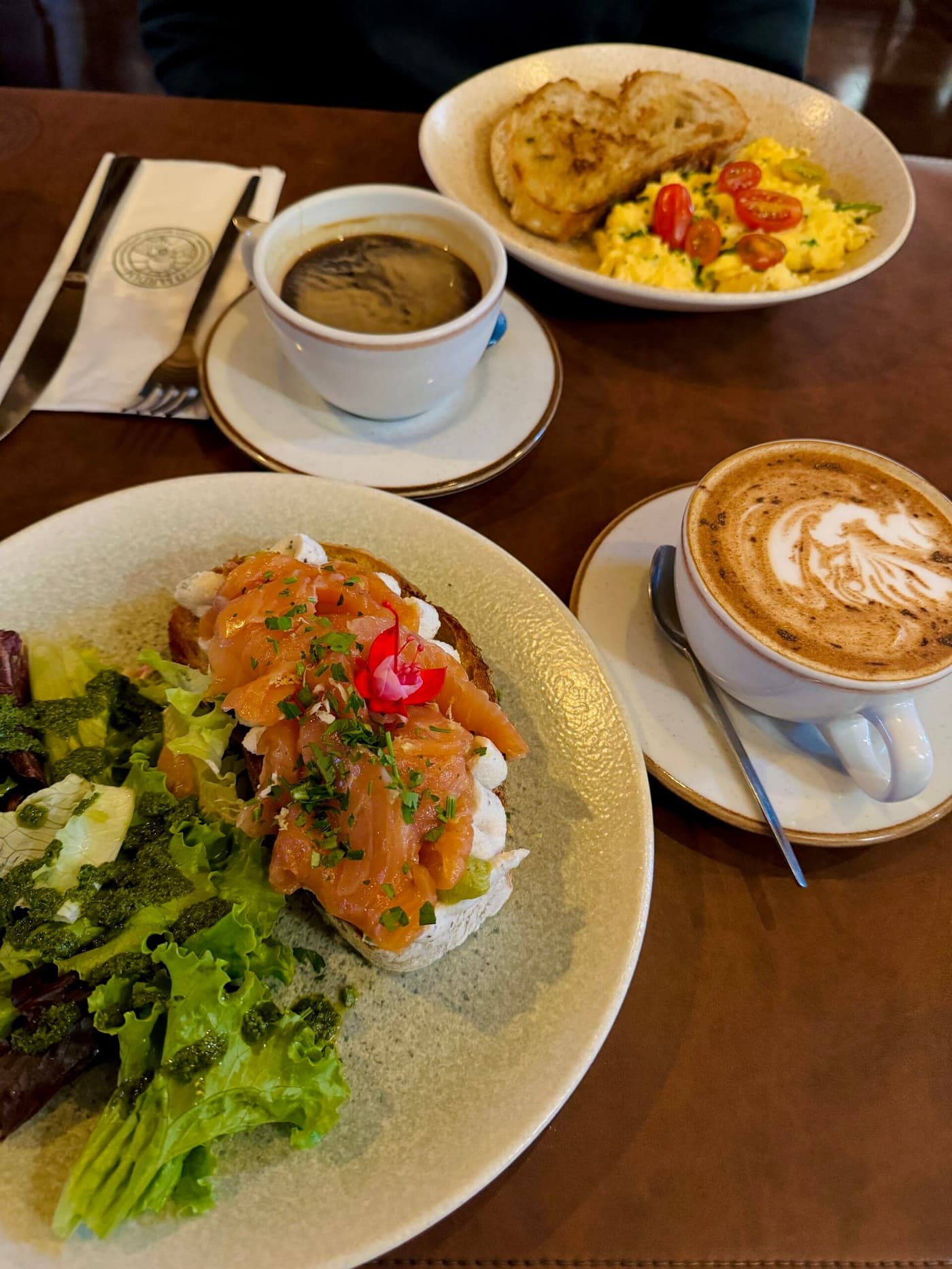
Brunch culture in São Paulo is a little less developed than in big European and Asian cities, but I have still put together a few places for you:
- Santo Grão (Rua Oscar Freire, 413) — a showcase of the city's coffee culture since 2003: this is the first and main location of the chain, with its own mini roastery, and over more than twenty years it has grown into a chain of seven locations around the city. The format is not just a coffee shop but a restaurant-lounge with a terrace, where you can spend a whole brunch rather than dash in for five minutes.
- Coffee Lab (R. Aspicuelta, 227) — Brazil's most decorated coffee shop, with more professional awards than any other. They buy beans in micro-lots directly from farms and roast them in-house, so the story of each coffee can be traced from a specific plot of land to the cup. A good choice if you want not just tasty coffee but a conversation with the barista about the origin of the beans and the roast profile.
- Botanikafé Jardins (Alameda Lorena, 1765) — all-day brunch, not just until noon: avocado toast, eggs Benedict, and fruit and granola bowls in an interior full of live plants.
- O Jardim — Café e Brunch (Rua Princesa Isabel, 1372) — one of the best brunches in the city outside São Paulo's usual tourist triangle.
- Locale Caffè and its neighbor Casa Hario in the upscale Itaim Bibi district — two independent coffee projects a few steps from each other, both focused on specialty coffee and good for brunch or a snack with a cup of coffee.
- Futuro Refeitório (Rua Cônego Eugênio Leite, 808) — one of the most atmospheric brunches in the city. It occupies a converted parking garage, mixing garage and café aesthetics, and the kitchen runs from breakfast to evening with no split by time of day.
Healthy Food: Bowls and Light Dishes
- Bom Bowls Moema (Av. Jandira, 549) — poke, bowls and salads, with vegetarian, vegan and gluten-free options. A good choice if after several days of meat and pastries you want to get back to lighter food.
- Let's Poke — a poke bowl chain that started with a location in Itaim Bibi. The base of the bowl is not limited to rice: you can choose mixed greens, quinoa or zucchini noodles.
- HiPokee (R. Augusta, 2068) — another tasty option in the same format, regularly included in local roundups of the city's best poke.
Markets and Street Food
- Mercadão (Mercado Municipal) in the center. Here you must try the famous mortadella sandwich and the cod pastel. But the market is very touristy, and often everything there is much more expensive than elsewhere. It is also in the city center. The market itself is safe, but you should be careful in this area.
- Pinheiros Market (Mercado Municipal de Pinheiros) — a less touristy alternative where locals shop. It is still crowded, but less so than at the Mercadão, and the prices are more reasonable.
- The fair in the Japanese quarter — held on Saturdays and Sundays, and the best place for Asian street food: yakisoba, temaki and mochi right on the square.
Per-Kilo Buffets
The por kilo format is a typically Brazilian find for a weekday lunch: you help yourself from an open buffet, your plate is weighed at the register and you pay by weight. It is faster and cheaper than ordering from a menu in a cafe or restaurant.
Buffets come in different kinds: fancy, mid-range and budget. I have put together simple buffets where you can eat inexpensively in São Paulo.
- Kilove Grill (Rua Peixoto Gomide, 700) — A couple of steps from Avenida Paulista. A very clean, spacious place popular with locals, with a big choice of fresh salads, hot Brazilian dishes and a grill section (churrasco) where they cook meat in front of you. An excellent balance of price and quality.
- Restaurante Gardens (Alameda Santos, 1482) — Located on a quiet street parallel to Paulista. A calm, cozy place with home-style Brazilian cooking: there is always feijoada, fish, grilled meats and plenty of vegetables.
- Bovinu'S Fast Grill (Av. Paulista, 735) — A chain restaurant on Avenida Paulista. It has several buffet lines with salads, hot dishes and grilled meat. Lively, but fast and with a good selection.
- Fradi Kilo (Rua Fradique Coutinho, 521) — Located on one of the most pleasant streets in Pinheiros. A straightforward, traditional por-kilo buffet with a good choice of salads, fresh fish, meat and side dishes.
- Kamki Restaurante Por Kilo (Rua Artur de Azevedo, 1912) — Simple, clean, no frills, but much loved by locals. Home cooking at very reasonable prices for this area.
Most inexpensive buffet restaurants focus on lunchtime and are usually open from 11:30 to 15:00–15:30 on weekdays. If you are walking down the street at lunchtime, look for signs saying "Restaurante Por Kilo," "Self-Service" or "Comida a kilo." At the entrance you are given a paper card (comanda). You go to the buffet and put food on your plate, weigh the plate on the scale at the end of the line, and a staff member records the amount on your card. Drinks and desserts are ordered or weighed separately. You pay on the way out at the register.
Where to Eat by Neighborhood
Jardins is the epicenter of stylish brunches and coffee shops, high-end Lebanese food and some of the starred restaurants, but also the most expensive option. Itaim Bibi is a business district with a strong concentration of restaurants. República and the adjacent center have a concentration of historic cafes, but keep in mind that this is an unsafe and not very pleasant area. Moema is a calmer, non-touristy district with more homey and inexpensive cafes. Pinheiros and Vila Madalena have the best concentration of specialty coffee shops and bars in the city. Liberdade and Bixiga are the ethnic neighborhoods with Japanese and Italian food.
How Much Does Eating in São Paulo Cost?
Prices in the city vary quite a lot, so I have split them into rough categories.
Street food, fast food and simple local cafes cost 20 to 40 reais per portion. Pastel, coxinha, sfiha and pão de queijo are found on every corner and in every shopping mall.
A simple "por kilo" buffet, where you serve yourself and pay by the weight of your plate: the average price in the city is about 87 reais per kilogram, and a typical portion for one person comes to 35–45 reais. This is the most practical option for a weekday lunch, quick and homey. Such buffets are found in every neighborhood of São Paulo.
Brunch in a cozy cafe costs 80–120 reais for a main dish with a drink.
A mid-range restaurant with full service costs 100–200 reais for a main dish.
A rodízio at a churrascaria costs from 40 to 263 reais per person depending on the place.
Bib Gourmand places from the Michelin Guide (good food at a reasonable price) will cost 150 to 300 reais per person, and top-level starred restaurants 800 to 1,500+ reais for a tasting menu per person, without drinks.
A separate detail is the 10% service charge (taxa de serviço), which is almost always included in the bill at cafes and restaurants. Under Brazilian law it is formally optional, and you can decline it if the service was unsatisfactory; the waiter has no right to insist. In practice almost everyone pays it.
Practical Tips
It is worth booking a table in advance at any place from the Michelin Guide and at popular brunch spots on weekends. Without a reservation you can wait an hour or more, and at top restaurants the waiting list stretches for months. Brunch cafes usually open at 8:00–9:00 and close early in the evening rather than late at night, so they are not evening venues. Cards are accepted almost everywhere, including street stalls, so cash is not essential. Vegetarian and vegan options are available at most mid-range and high-end places, but at budget eateries the choice may be limited to side dishes.
Where to Eat in São Paulo: FAQ
Why is São Paulo considered Brazil's food capital?
Because of its immigration history: the Italian, Japanese, Lebanese and other diasporas created whole ethnic neighborhoods with authentic cuisine, plus the city has the highest concentration of restaurants and Michelin stars in the country.
How much does a good meal cost in São Paulo?
Lunch at an ordinary cafe with a drink is 60–120 reais, dinner at a mid-range restaurant is 100–200 reais per person, and a rodízio at a churrascaria is from 40 to 263 reais depending on the place.
Which São Paulo restaurants have Michelin stars?
As of 2026, São Paulo has two three-star restaurants, one two-star and 13 one-star, plus about 35 places in the Bib Gourmand category (according to the guide's online directory as of October 2026). The guide's overall figures for Rio de Janeiro and São Paulo together are 2 three-star, 3 two-star, 19 one-star and 44 Bib Gourmand. The list is updated every year.
Do you have to tip 10% at a restaurant?
Formally no: the service charge on the bill is optional by law, but in practice almost everyone pays it, and declining is appropriate only when the service was truly bad.
What is a rodízio and how does it work?
It is a style of serving meat where waiters keep coming to the table with new cuts, and the guest controls the flow with a token on the table. The green side means "more," the red side means "pause." Budget rodízios are concentrated outside the golden triangle, in Mooca, Lapa and Barra Funda; inside the touristy golden triangle prices are noticeably higher.
Where can I try authentic Italian food in São Paulo?
In the Bixiga neighborhood in the center, or in the less touristy Mooca district in the east of the city. Both have been home to Italian immigrants since the late 19th century.
What is comida por kilo and where can I try it?
A buffet format where you serve yourself and pay by the weight of your plate, the most practical lunch option on weekdays. The average price in the city is about 87 reais per kilogram, but at some places the price will be lower or higher than the city average.
Where should I look for bars and restaurants so I don't waste time traveling between them?
In the golden triangle: Jardins, Itaim Bibi, Pinheiros and Vila Madalena. These have the highest concentration of proven botecos, coffee shops and rodízios within walking distance of each other.
Do I need to book a table at restaurants in São Paulo?
At places from the Michelin Guide and at popular brunch spots on weekends, yes. Without a reservation you may wait a long time for a free table, and at some iconic places the waiting list stretches for months.