Your first taste of Sri Lanka rarely goes by without a few culinary discoveries. Step outside and a wave of aromas hits you right away: curry, fresh coconut, fried onion, hot spices and the smoke drifting from street stalls.
Sri Lankan food is spicy, bright and rich: from street kottu made on a clattering griddle to home-style rice with dhal and coconut sambol.
In this article I'll tell you what to try first and how not to get lost among the many dishes of Sri Lankan cuisine.
If you're planning a trip to Sri Lanka, read this article to prepare before you go and to find your way around the local food.
What makes Sri Lankan food special?
Sri Lankan cuisine was shaped by many cultures: Indian, Arab, Malay and European. That comes down to the island's location, which for centuries was an important trading hub. Despite the borrowings, Sri Lankan food has kept its own character.
One of its distinguishing features is the generous use of spices. Chili, turmeric, mustard seeds, curry leaves and coriander often go into the same dish. At the same time, coconut milk, which is popular on the island, softens the flavor and creates balance. Hot and mellow notes come together in most traditional recipes.
Sri Lankan cooking is built around local ingredients. The base is rice, lentils, seasonal vegetables, seafood and fruit. Coconut goes into almost every dish, whether as milk, oil or grated flesh. The way food is served matters too: different components are placed on one plate, so you can combine flavors to your own taste.
This approach makes Sri Lankan food varied, practical and suited to both everyday meals and festive occasions.
Main ingredients and spices in Sri Lankan cooking
Sri Lankan cuisine rests on affordable, seasonal ingredients, many of which are used every day. Rice is the main element of most dishes: it is cooked on its own, served with curry, or used as the base for breakfasts and festive dishes.
Coconut is the second key ingredient. It is used as milk, oil or shavings. Coconut milk is often added to curries to balance the heat. Grated coconut goes into sauces, snacks and sambols.
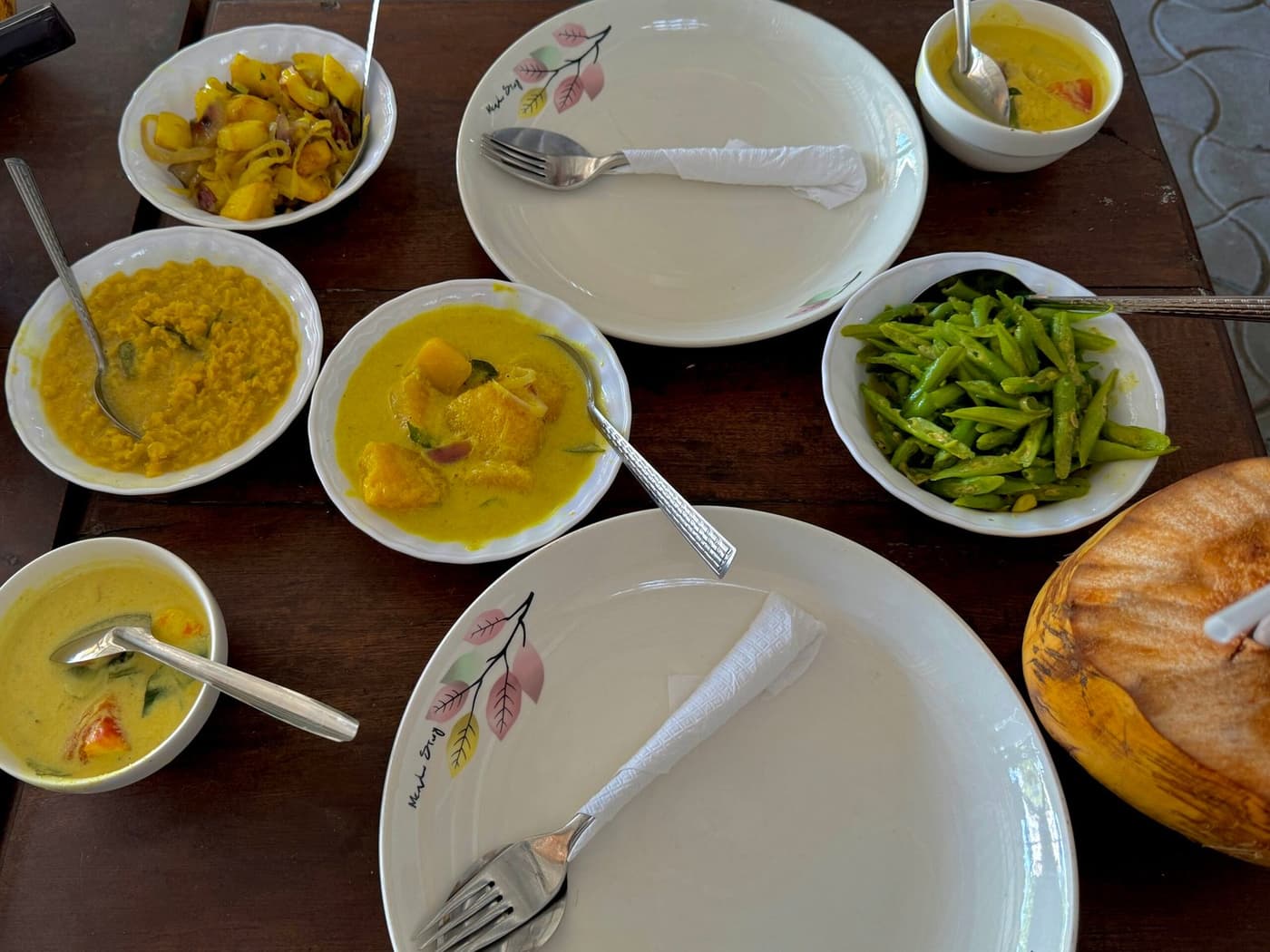
Lentils (especially red ones) are widely used in traditional dhal curry, which is served with rice and roti. Besides lentils, the everyday diet includes sweet potato, jackfruit, eggplant, pumpkin, beans and other local vegetables.
As for protein, fish and seafood dominate Sri Lankan cooking. Meat (most often chicken) is eaten less often, and beef only to a limited extent, for cultural and religious reasons.
A variety of spices and herbs give the dishes their flavor:
- dried chili and green chili
- mustard seeds
- turmeric
- cumin
- coriander
- cinnamon
- curry leaves
Spices are fried in oil at the start of cooking, which is a basic technique in many recipes. It helps release the aroma and deepen the flavor of the dishes.
These ingredients form the culinary foundation on which all of Sri Lankan cuisine is built.
Popular Sri Lankan dishes: what to try first
Traditional Sri Lankan dishes are varied, from everyday food to festive recipes. Many of them can be found both in street cafes and in home kitchens. Below are the main dishes that people usually start with when getting to know Sri Lankan food.
Rice and curry: the foundation of Sri Lankan food
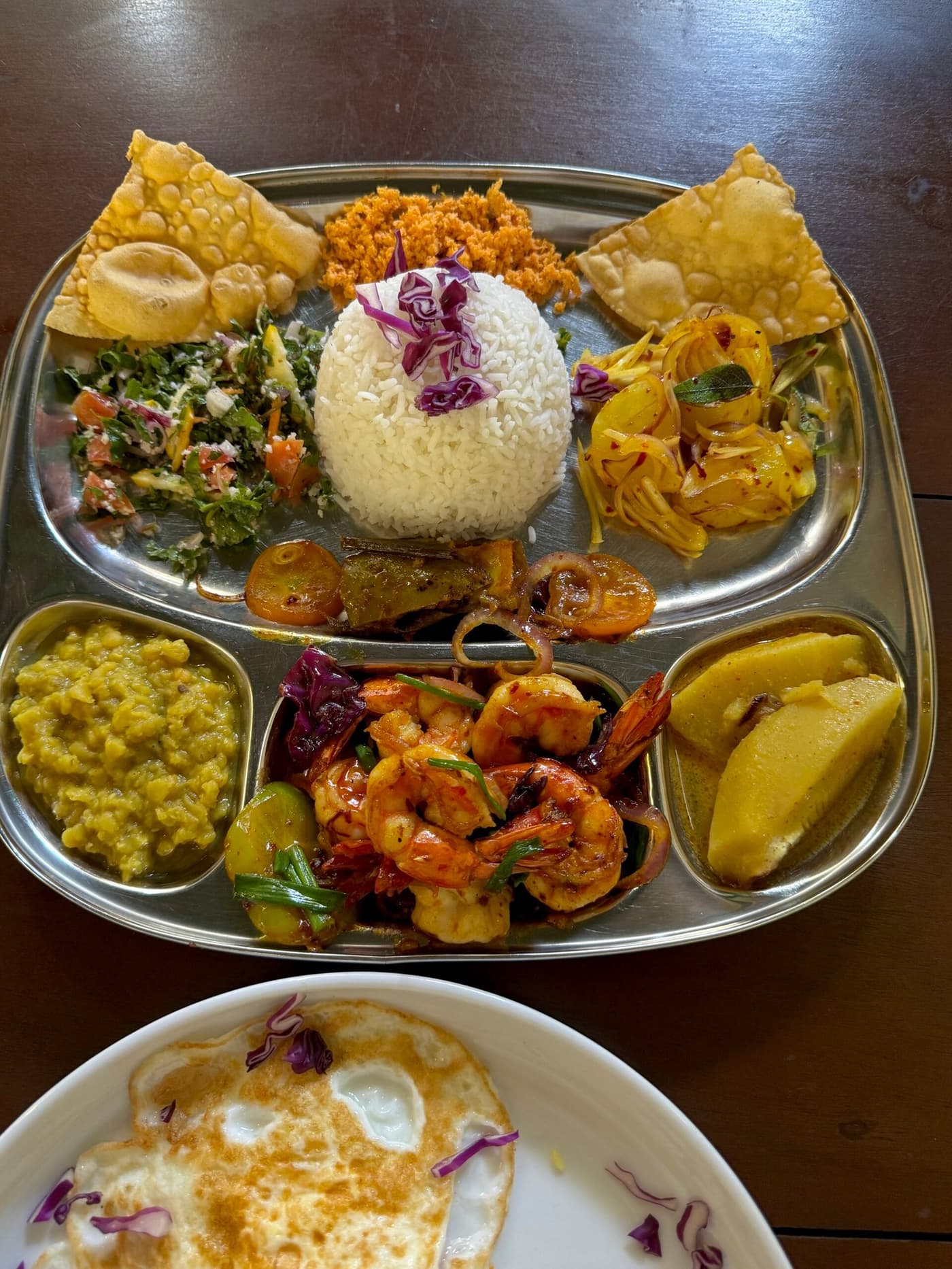
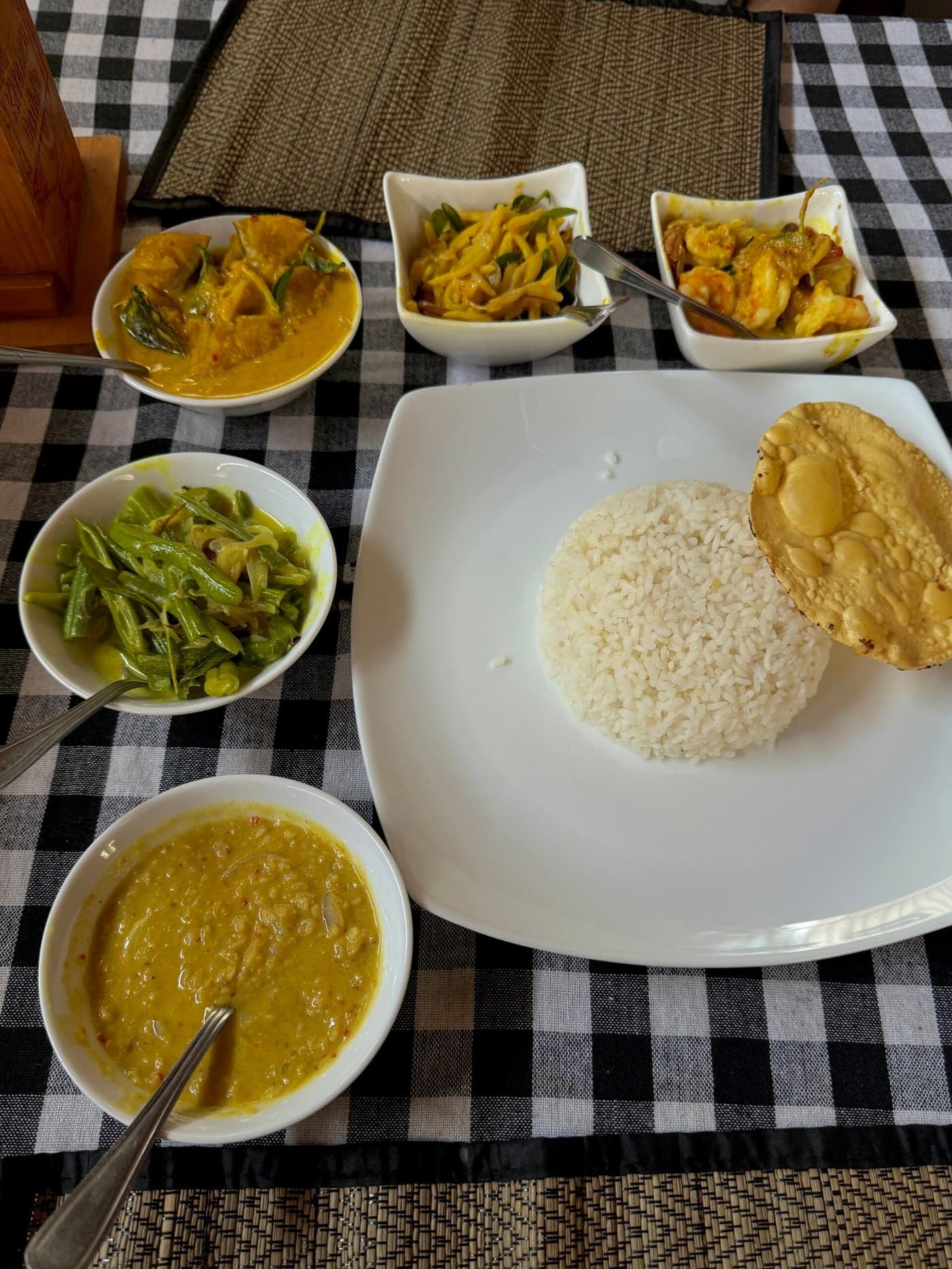
Boiled rice served with several kinds of curry is the central element of the Sri Lankan diet. Depending on the region, the curries may include vegetables, chicken, fish, dhal or eggs. The flavor ranges from moderately spicy to rich and fiery.
Dhal curry
A red lentil curry made with coconut milk, garlic, turmeric and curry leaves. It is considered the basic side dish and is served with almost every meal.
Wattalapam: traditional coconut pudding
A sweet dessert made from coconut milk, palm sugar and spices. It has a dense texture and a pronounced cardamom aroma. It is often served chilled.
Kottu: street food that became a favorite
Kottu is roti flatbread chopped into small pieces and stir-fried with vegetables, spices and add-ins such as meat, egg or cheese. It is one of the most common dishes sold on the street.
Samosas and vadai: popular street snacks
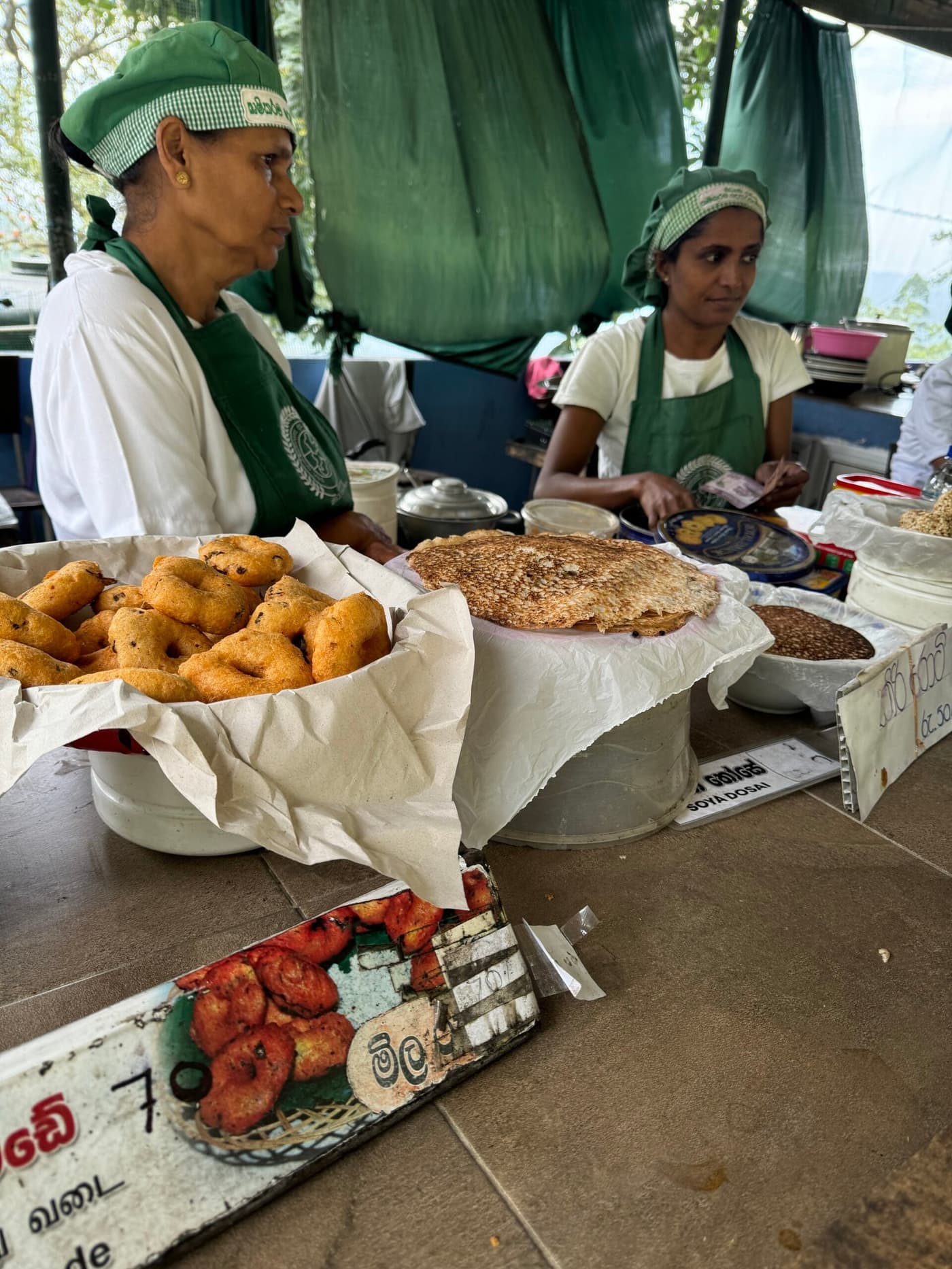
A samosa is a fried pastry with a vegetable or meat filling. Vadai are deep-fried patties or balls made from chickpeas or lentils and seasoned with spices. Both snacks are common at markets and street stalls.
Kiribath: rice with coconut milk
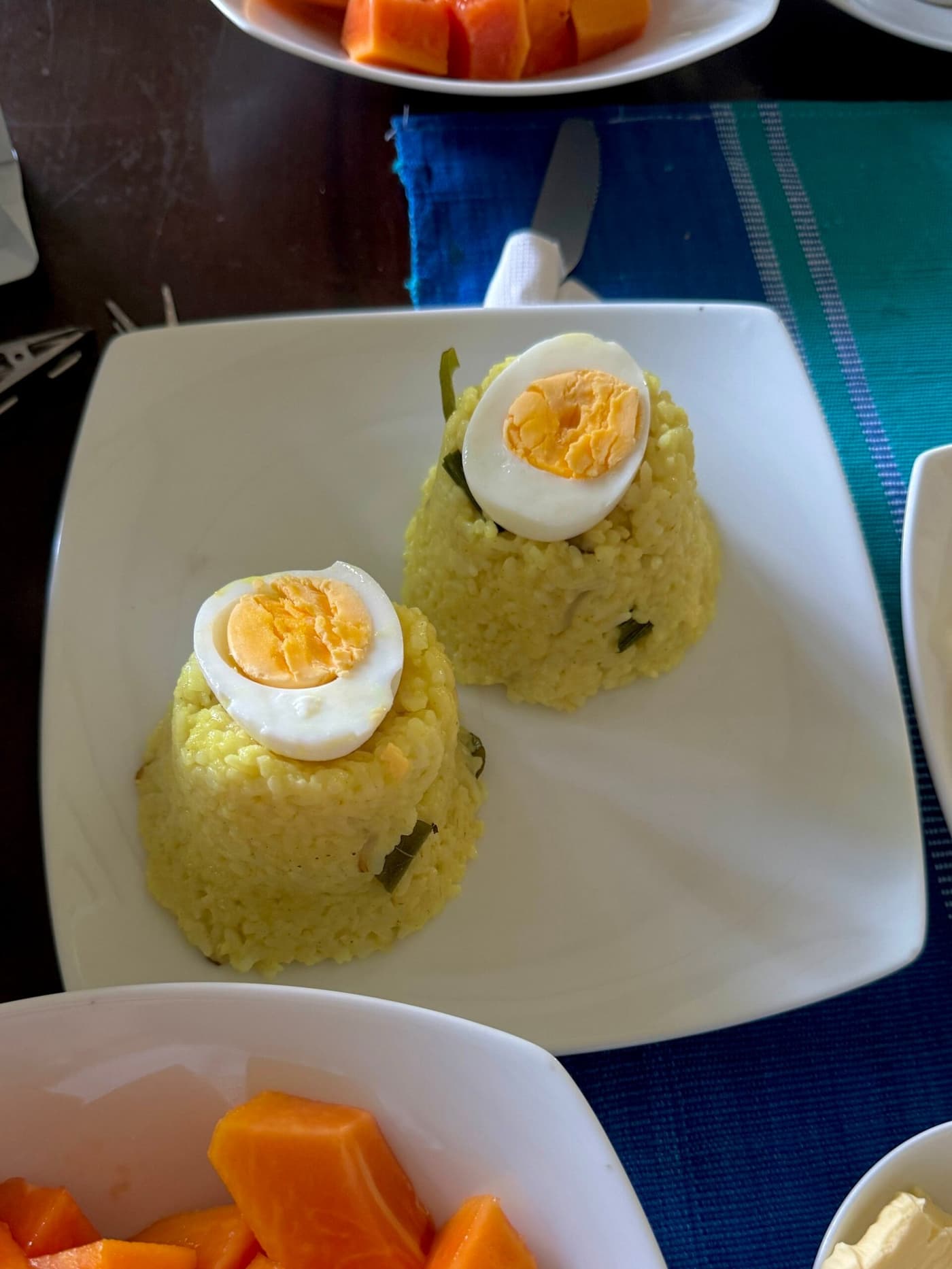
Kiribath is made from boiled rice and coconut milk. It is traditionally served for breakfast or at celebrations. The dish is cut into diamond-shaped pieces and served with spicy onion or sambol.
Papadam: a crunchy addition to lunch
A thin, crispy flatbread, usually made from lentil flour. It is deep-fried and served as a side with rice and curry, or on its own as a snack.
Roti: flatbread served with curry and sambols
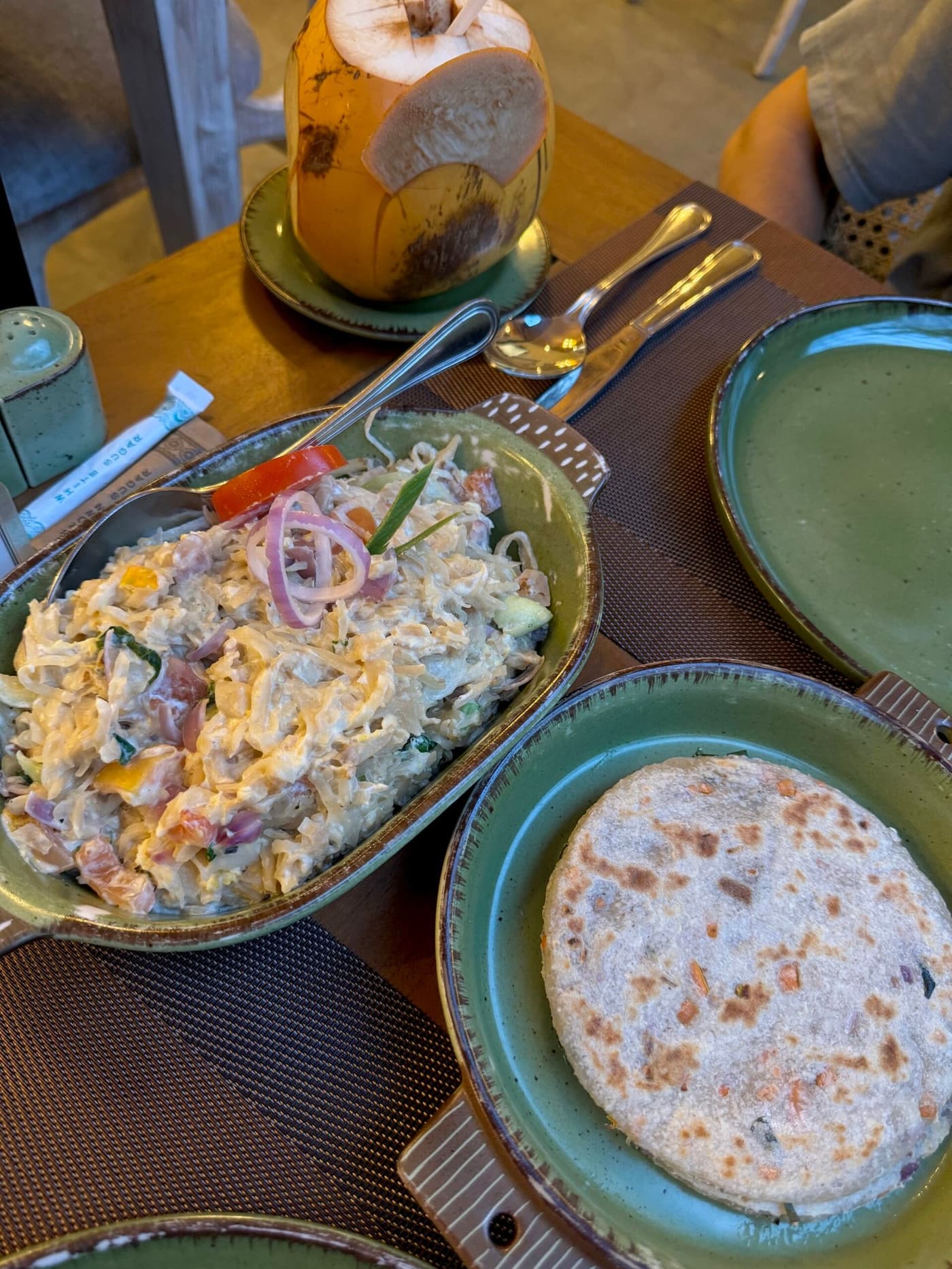
A flatbread made from flour and water, sometimes with coconut added. It can be plain or filled. It is cooked on a griddle and often accompanies main dishes.
Hoppers (appa): thin pancakes made from rice batter
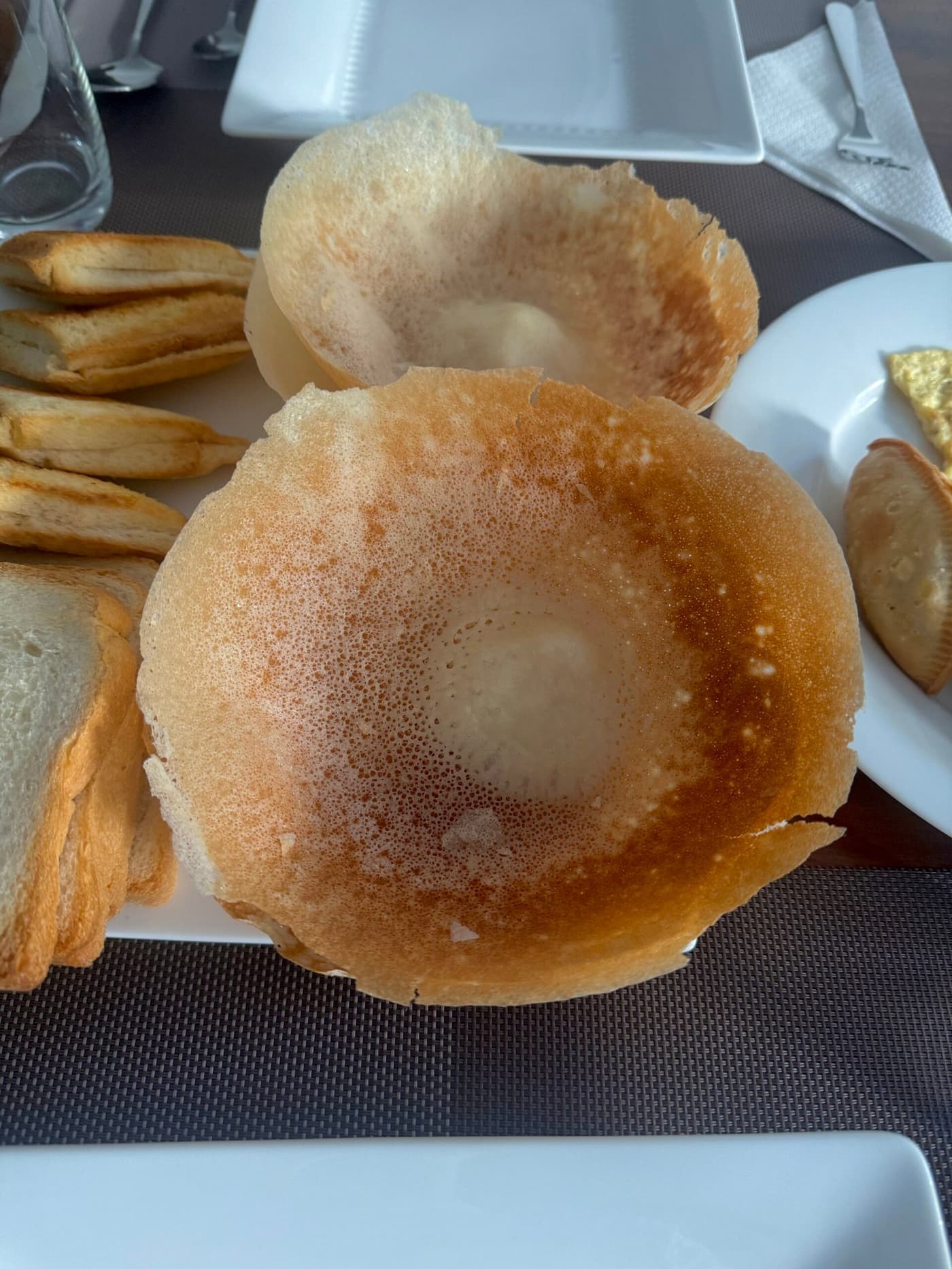
Appa are thin, bowl-shaped pancakes with crispy edges. They are made from fermented rice batter, sometimes with an egg added. They are served with sauces, curry or sambol.
What people eat in Sri Lanka for breakfast, lunch and dinner
Eating in Sri Lanka is built around three main meals. In most cases the base is rice, flatbreads and curry, but the format and makeup of the dishes can change depending on the time of day and the region.
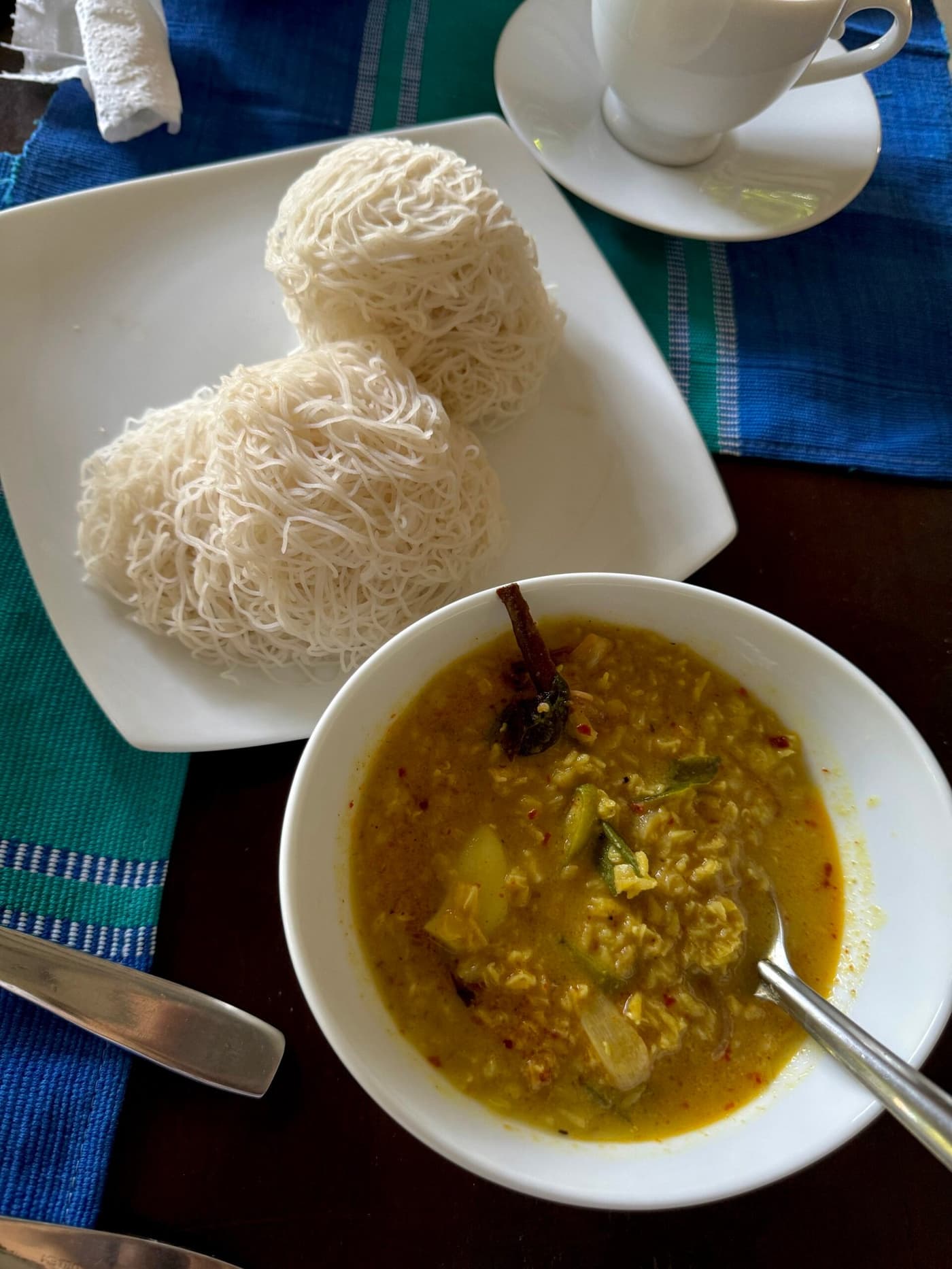
Breakfast in Sri Lanka is a hearty meal. Instead of the porridge or sandwiches tourists are used to, you'll be served rice and curry, dhal, roti flatbreads, coconut sambol and kiribath (rice with coconut milk). Hoppers are popular too, thin pancakes made from rice batter, sometimes with an egg, as is a Sri Lankan omelet with onion, herbs, chili and spices. In street cafes you can often find samosas or vadai as part of the morning menu.
Lunch is the heaviest and most varied meal. The center of the plate is almost always rice, served with different kinds of curry: vegetable, meat, fish and lentil. The dish often comes with papadam, hot sauces, chutney or fried eggplant. Drinks usually include water, tea or fresh juices.
Dinner can repeat lunch, only in smaller portions. Many people prefer lighter dishes, such as roti with vegetables, or the rice and curry left over from the morning. Street stalls often offer kottu or fried fish.
Sri Lankan food is adapted to local ingredients, the seasons and local preferences, in the cities and in the countryside alike.
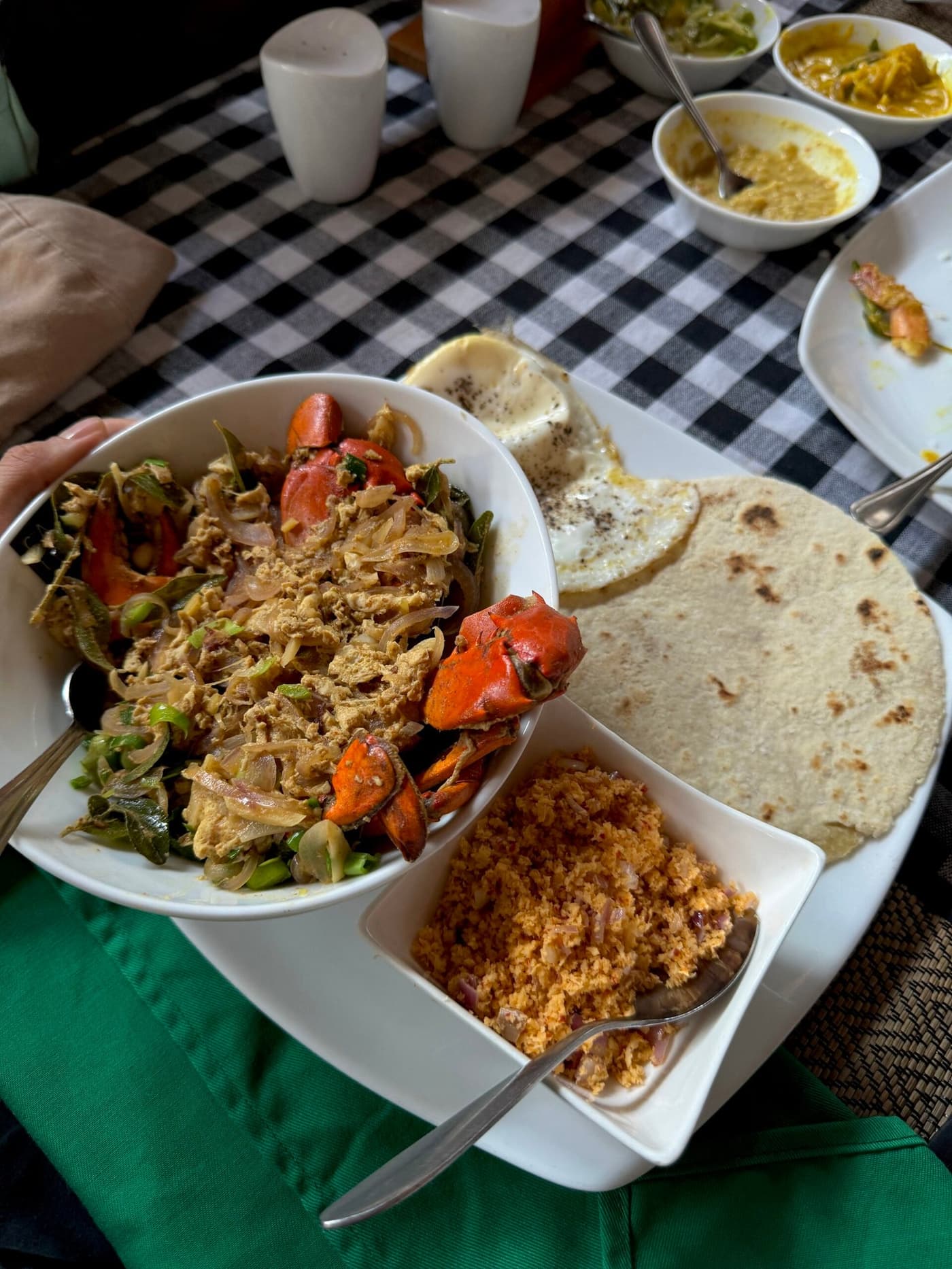
Desserts and drinks in Sri Lanka
Sweets and drinks hold a noticeable place in Sri Lankan food tradition, especially during holidays and at the end of a meal. Desserts are often made from coconut, palm sugar, rice and spices. Drinks range from strong tea to fresh juices and fermented dairy drinks.
Wattalapam
A well-known Sri Lankan dessert: a pudding made from coconut milk, eggs and palm sugar with cardamom added. It has a dense texture and a rich aroma. It is served chilled.
Coconut sweets and rice treats
Among everyday sweets you'll find coconut bars, condensed milk desserts and rice cakes filled with palm sugar and sesame.
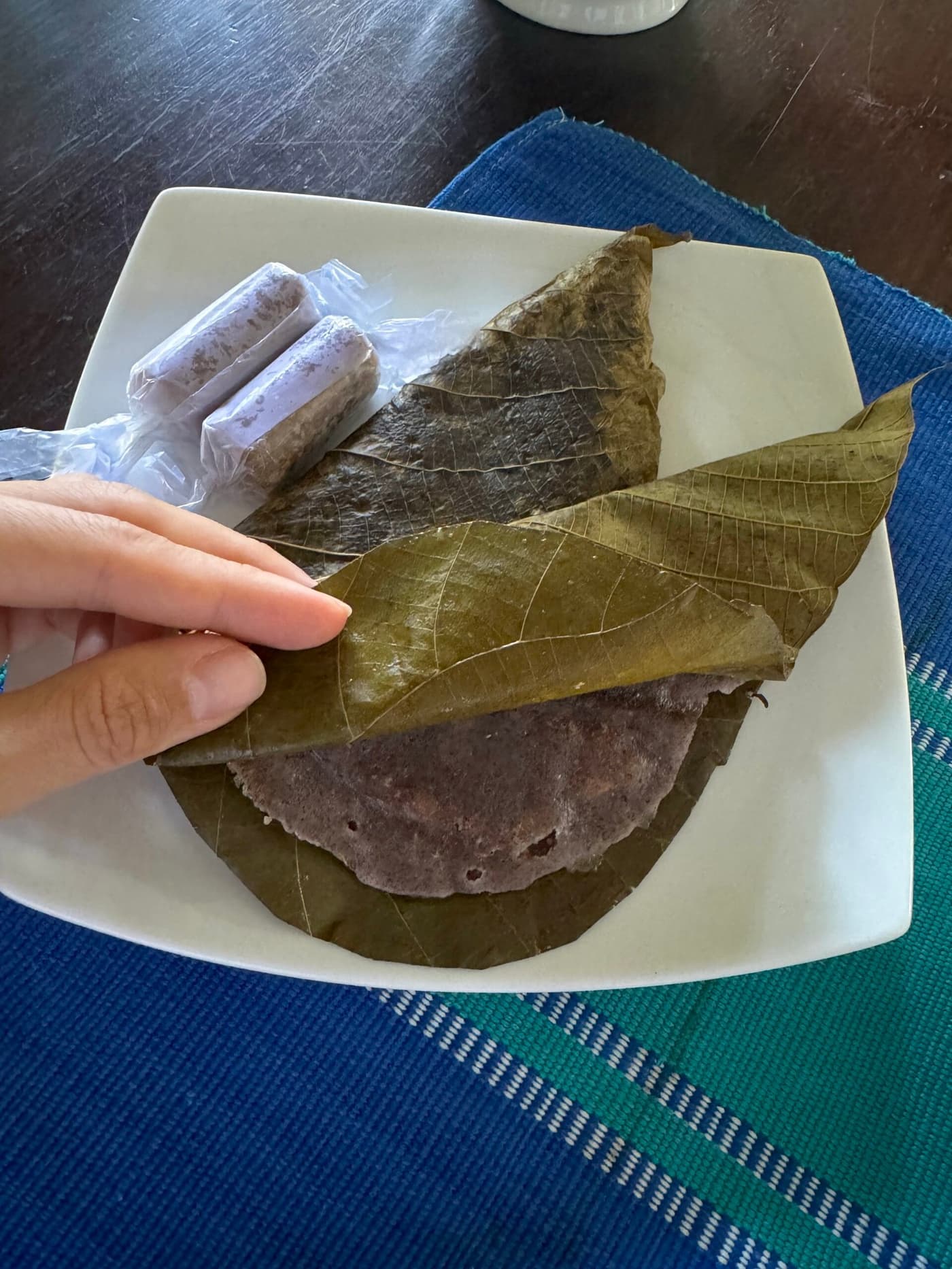
Kavum
A fried sweet cake made from rice flour and palm syrup. It is often prepared for the New Year and other festive dates.
Tea
Sri Lanka is one of the world's leading tea exporters, especially of Ceylon-type black tea. The best batches go for export, while inside the country the tea served is more often inexpensive and mostly in tea bags. In local cafes the tea is brewed strong, often with condensed or regular milk and sugar. This drink is popular in cities and villages alike, and people drink it at any time of day.
Coconut water and juices
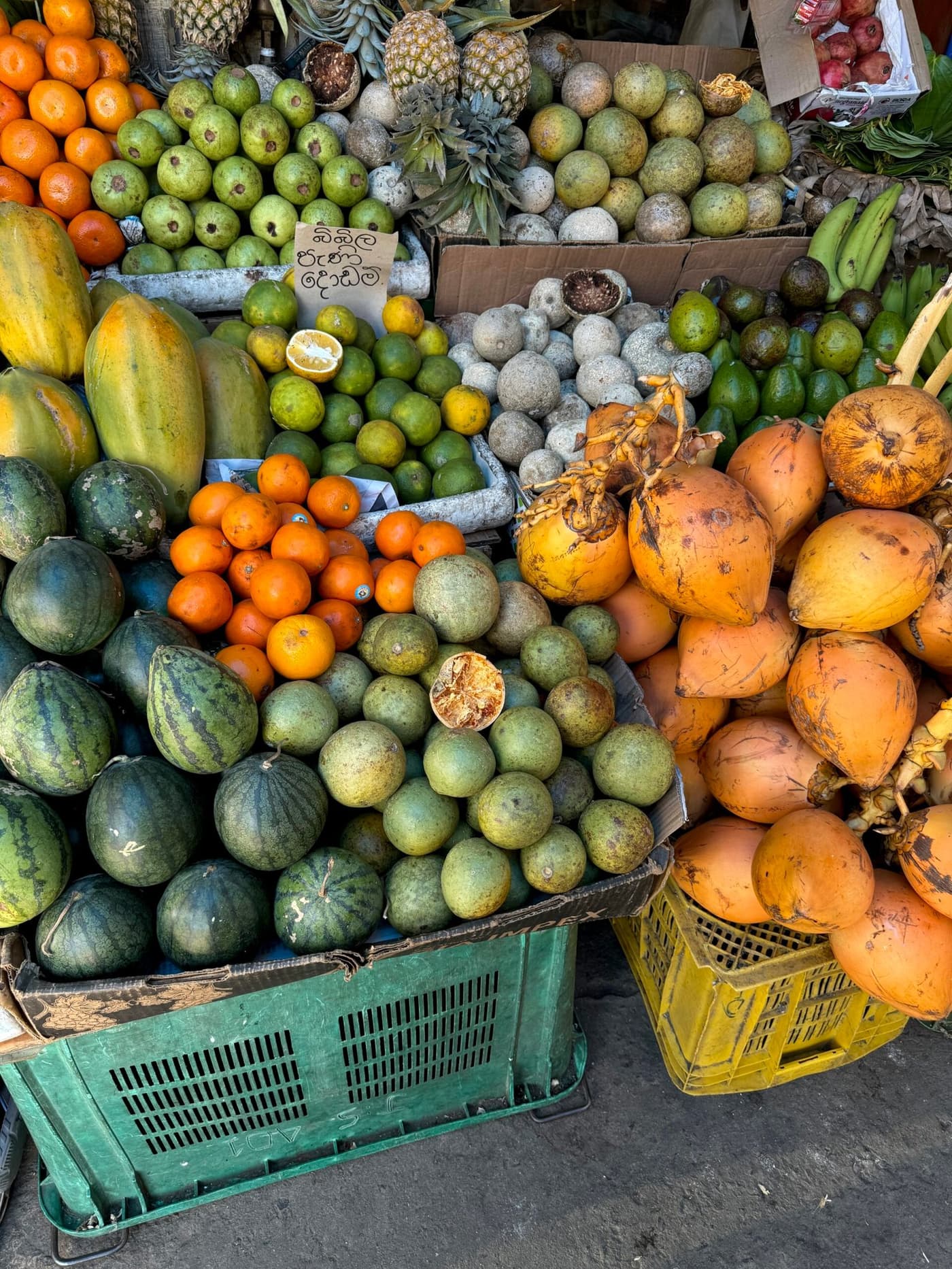
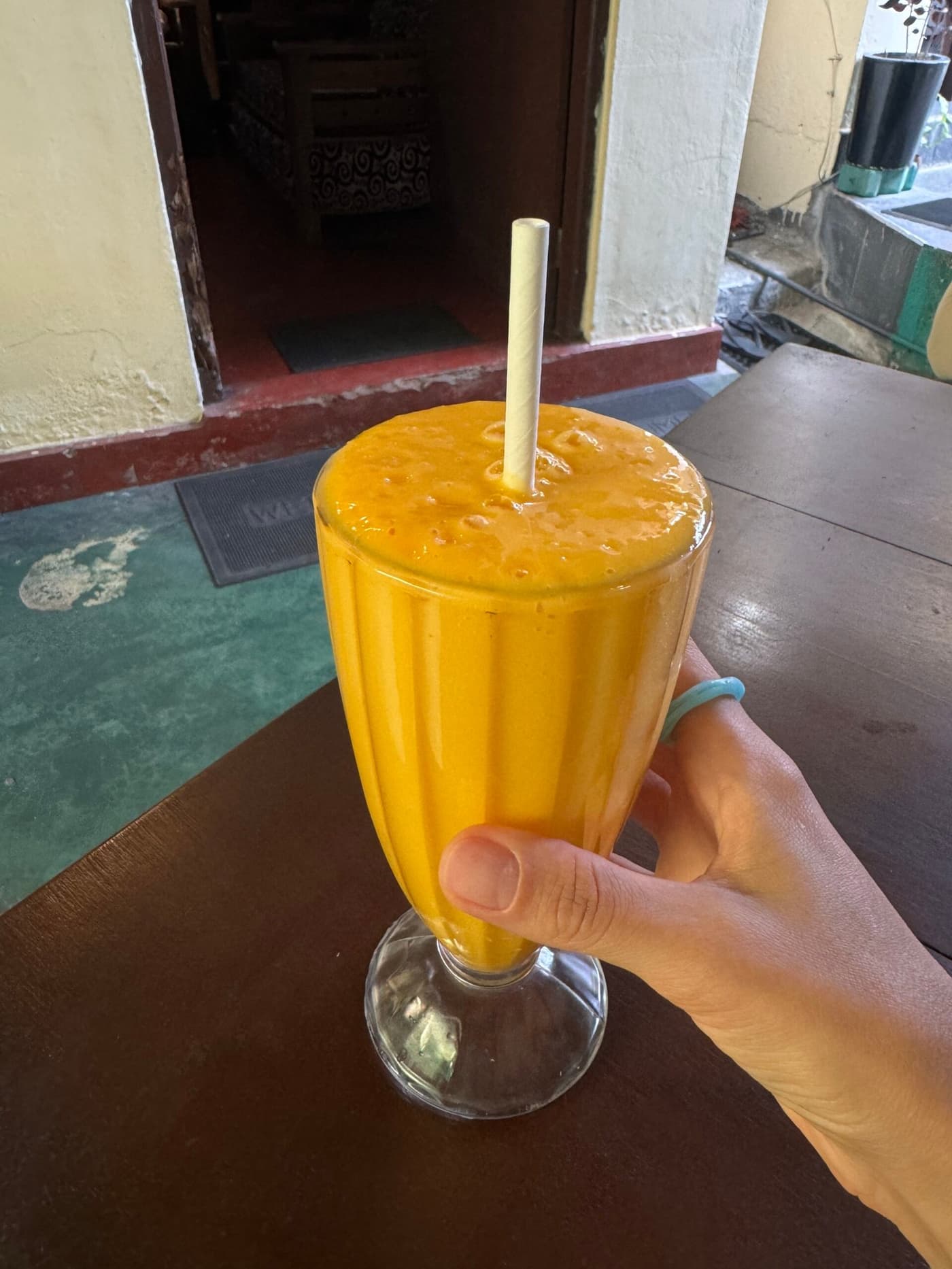
Fresh juices from tropical fruit (mango, pineapple, papaya, lime) are sold everywhere. The "king coconut" has a special place: it is served chilled right in the shell.
Lassi
Although lassi is originally from India, it has become part of the everyday menu in Sri Lanka too. It is a chilled yogurt drink that can be either sweet or salty. It is often served with fruit added, for example mango. It is especially popular with travelers and tourists, and it helps tame the heat of spicy dishes.
Sri Lankan food is available in every part of the island. From street stalls to small family cafes and restaurants, the choice depends on your budget, the region and how much comfort you prefer. The flavor and makeup of dishes can differ even within a single city.
I liked Sri Lankan food: there are plenty of dishes with seafood, legumes, vegetables and fiber. If you ask in advance for it to be made mild, you end up with a quite healthy and balanced diet.
But it's not always possible to find truly well-cooked dishes. Many dishes in Sri Lanka are often oversalted, made with too much oil, or fried until they lose their flavor. Adding a lot of chili makes the taste harsh rather than balanced.
Well-cooked food in Sri Lanka usually costs more: you have to pay for quality dishes and go to higher-end restaurants. I wouldn't recommend street food: first, because of unsanitary conditions, and second, because cheap dishes use low-quality ingredients, which affects the taste.
I filmed how we traveled around Sri Lanka in a full-length video on YouTube. Be sure to watch it, and don't forget to like it and subscribe to the channel!
Frequently asked questions about Sri Lankan food
How spicy is the food in Sri Lanka?
Traditional Sri Lankan dishes are spicy. Hot spices, especially chili, are widely used in curries and other dishes. In tourist areas, milder versions adapted to travelers' tastes are often on offer.
Which dishes should you try first?
- Rice and curry: the main dish, served with different kinds of curry.
- Kottu roti: roti flatbread chopped into small pieces and stir-fried with vegetables and spices.
- Hoppers (appa): thin pancakes made from rice batter.
- Kiribath: rice cooked in coconut milk, traditionally served for breakfast or on holidays.
- Wattalapam: a dessert made from coconut milk, eggs and palm sugar
Can you find vegetarian dishes?
Yes, vegetarian dishes are widespread in Sri Lanka. Many traditional dishes, such as dhal curry (lentil curry), vegetable curries and various salads, contain no meat and are suitable for vegetarians.
What do people drink in Sri Lanka?
- Tea: Sri Lanka is known for its tea, especially black Ceylon tea.
- Coconut water: a refreshing drink from the king coconut.
- Freshly squeezed juices: from mango, pineapple, papaya and other tropical fruit.
- Lassi: a chilled yogurt drink that came from Indian cuisine and is popular in tourist areas.
What are the table etiquette rules?
In traditional Sri Lankan culture it is customary to eat with your hands, especially the right hand. In tourist places, though, cutlery is usually provided. It is also important to respect local customs and traditions, especially when visiting family-run places.