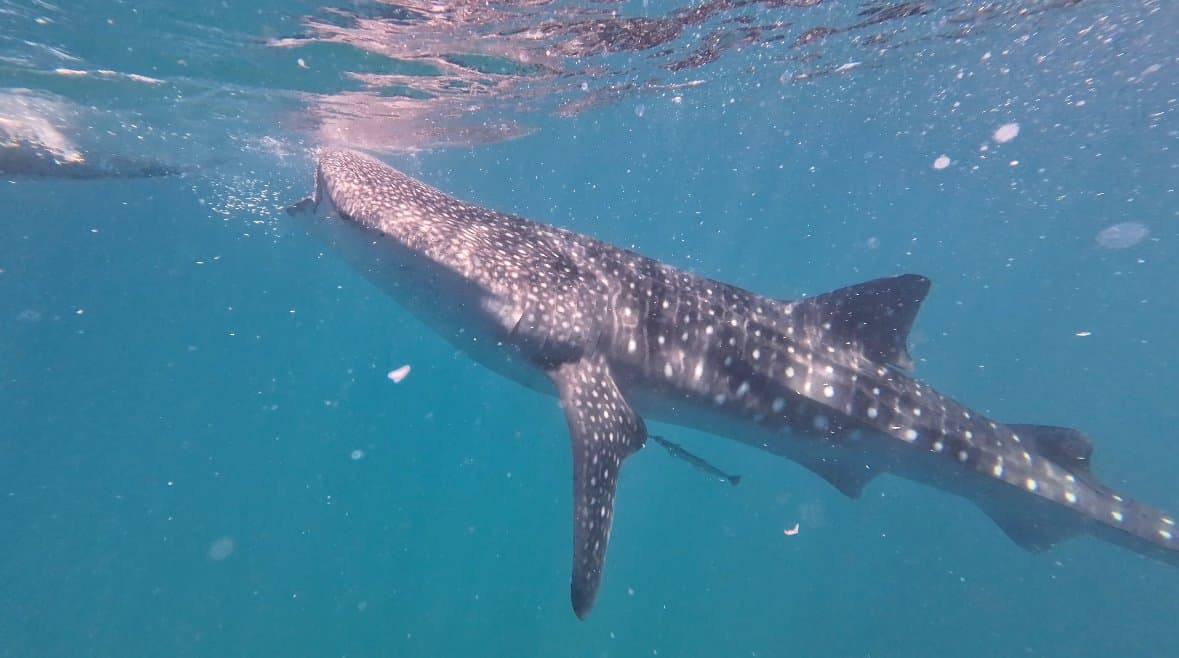
You can swim with whale sharks in the Philippines in three main places: the small town of Oslob on Cebu island, Donsol (Sorsogon province) and the coast of Southern Leyte. These are the best-known spots where you can see whale sharks in their natural environment or swimming up close to the shore.
The most popular and easiest place to reach is Oslob in Cebu, where whale sharks show up every day. That makes Oslob one of the best-known spots in the world for anyone who dreams of meeting these ocean giants.
Swimming with whale sharks is a vivid, unforgettable adventure. Despite the word "shark" in the name, they are completely safe for humans: whale sharks feed on plankton and are considered the gentle giants of the ocean.
In this article I'll tell you where in the Philippines you can swim with whale sharks, how much it costs, how to get to each location and what to know before you go, with my personal tips and experience.
Whale Sharks in Donsol (Sorsogon)
Donsol is the place in the Philippines where you can see whale sharks in conditions closest to the wild. Unlike in Oslob, the animals here are not fed or lured artificially. They come on their own in season, following the migration and the build-up of plankton.
Whale shark activity in Donsol peaks from December to May, and those are the months when visitors have a good chance of meeting them in open water. A sighting is not 100% guaranteed, but that is exactly what makes the experience more natural and ethical.
Snorkeling takes place on special boats with accredited guides, who strictly enforce the rules of interaction: don't touch the sharks, don't swim across their path and don't use sunscreens that harm the ecosystem.
Donsol suits anyone who wants to see whale sharks without feeding, in a calmer atmosphere and away from tourist crowds.
Whale Sharks in Southern Leyte
Southern Leyte is another place in the Philippines where you can meet whale sharks in the wild. Unlike in Oslob, there is no regular feeding here, so the encounters happen naturally and are considered more eco-friendly.
The sighting season in Southern Leyte usually runs from November to April, when the water gets clearer and the amount of plankton increases. There are far fewer tourists here than in Cebu, so the experience feels calm and intimate.
Local guides use small boats to look for whale sharks, and the search takes place in open water. Sometimes you have to wait or switch between several locations, but when a giant appears, the experience fully lives up to expectations.
This spot suits travelers who want a quiet, unobtrusive and as natural as possible experience with whale sharks.
The Town of Oslob, Cebu
The most popular and easily accessible spot is the town of Oslob on Cebu island. This is where the most famous whale sharks of Cebu are found, and Oslob is considered the place where your chances of seeing them are almost 100%.
Oslob is a small town in the south of Cebu island that became famous thanks to its whale sharks. Tourists come here from all over the world, because here you are practically guaranteed to swim next to these ocean giants.
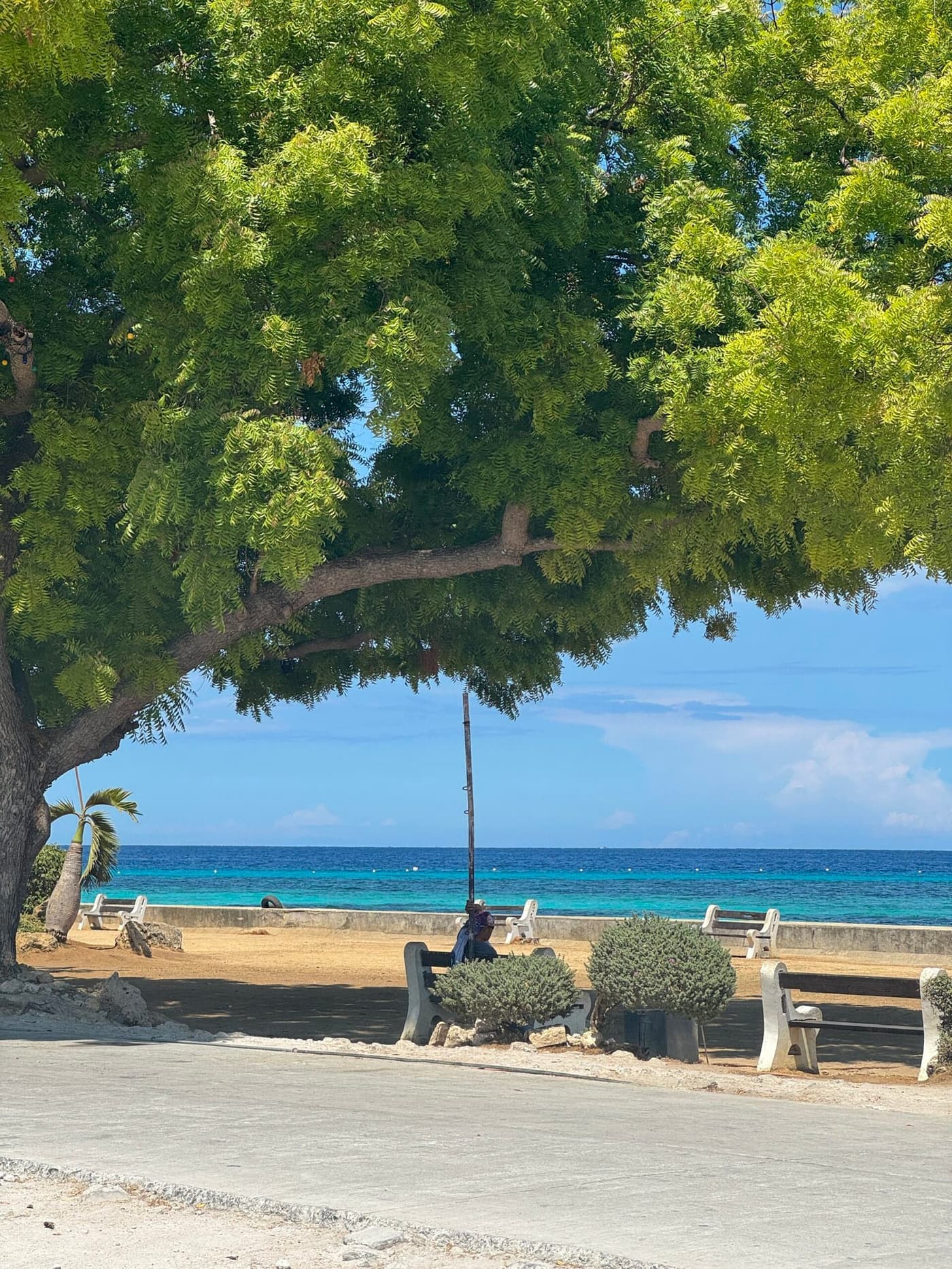
Most people come to Oslob for just one day, and only a few stay overnight. That is why the town has not turned into a resort or a tourist center in the usual sense. If you decide to stay, you can spend the evening on the waterfront, watch the sunset and stop by the old ruins of Cuartel Ruins (Museo Oslob), a former 19th-century Spanish barracks right by the sea.
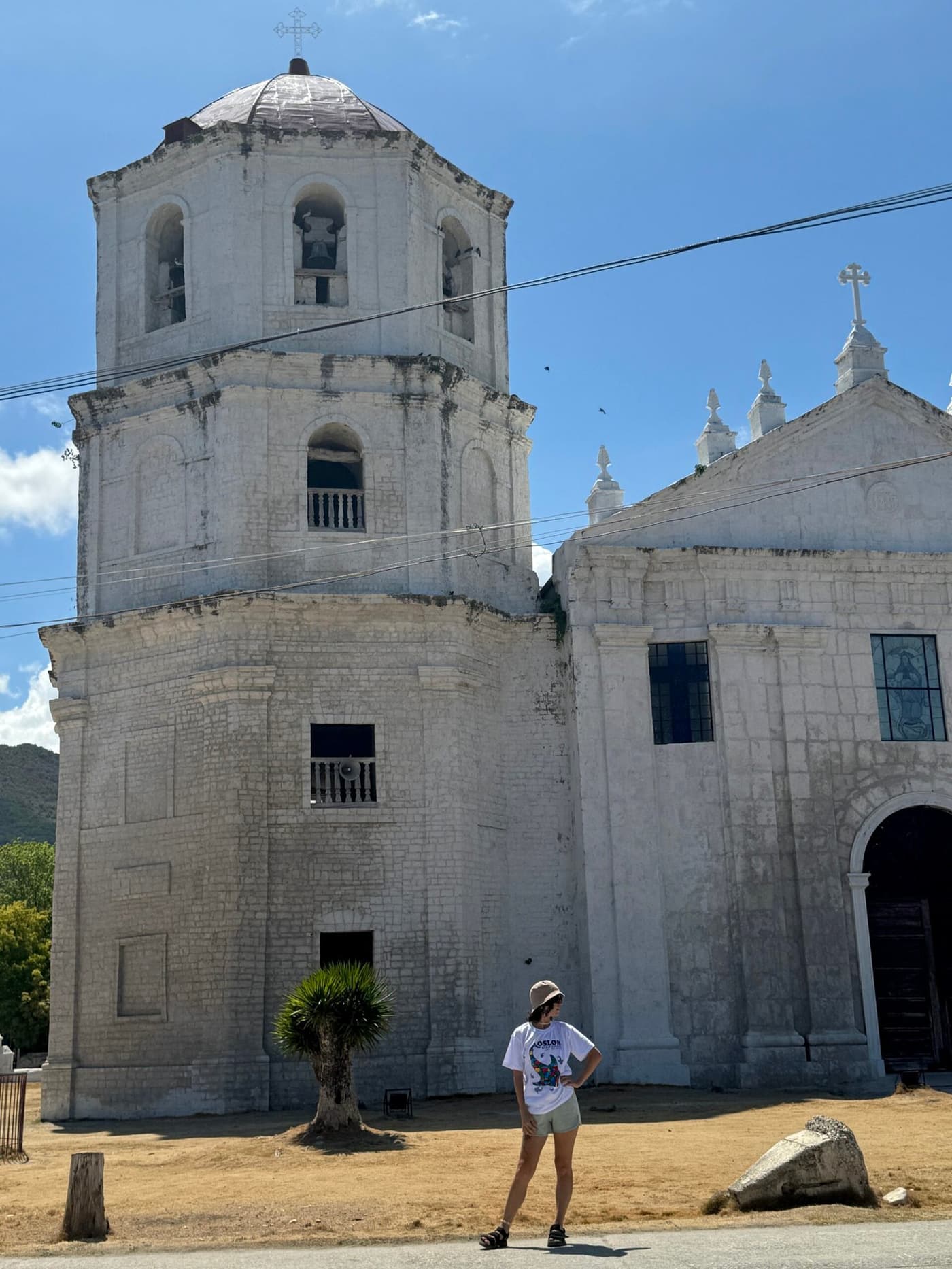
We were exactly the kind of odd tourists who decided to stay in Oslob for more than one night. We checked into a cozy family-run guesthouse, Oslob Malonzo Pension House, for $20 a night, with breakfast by arrangement for 100 pesos (~$2) per person. We asked for simple scrambled eggs with vegetables and got a great homemade breakfast.
In the evening the guesthouse turned into a small cafe with unlimited Korean barbecue for 350 pesos (~$6). The owners, who were the kindest people, marinated chicken especially for us because we, strange foreigners, didn't want pork. It was tasty, homey and very quiet.
How to Get to Oslob From Cebu City
Getting to Oslob is easy. It's the most popular whale shark snorkeling spot in the Philippines, so the transport routes are well established.
From Cebu City you can get to Oslob in several ways: by bus, by private transfer or in a rental car. All routes head south along the coast of Cebu island and take three to four hours.
Bus From Cebu City
The simplest and cheapest way is the bus from the South Bus Terminal. Buses run regularly, about every 30 minutes, starting early in the morning.
- Travel time: about 4–4.5 hours
- Cost: 140–170 pesos (~$3–4)
In high season and early in the morning there can be a queue to board, so it's best to arrive early.
Private Transfer
If you want more comfort and flexibility, you can book a transfer directly from your hotel or the airport. This option is handy if you're traveling with luggage or don't want to depend on a timetable.
- Travel time: about 3 hours
- Cost: from $60 to $130 per car
You can book a transfer through travel agencies, directly with drivers or online, for example on Klook, where there are often convenient, inexpensive packages that combine a transfer with a tour. Some companies let you make stops along the way, for example at waterfalls or viewpoints.
Car Rental
We chose to drive a rental car and never regretted it. We took a Toyota Vios in excellent condition for three days from Saferide Car for 6,000 pesos (~$105), plus a $150 deposit that was refunded to our card as soon as we returned the car.
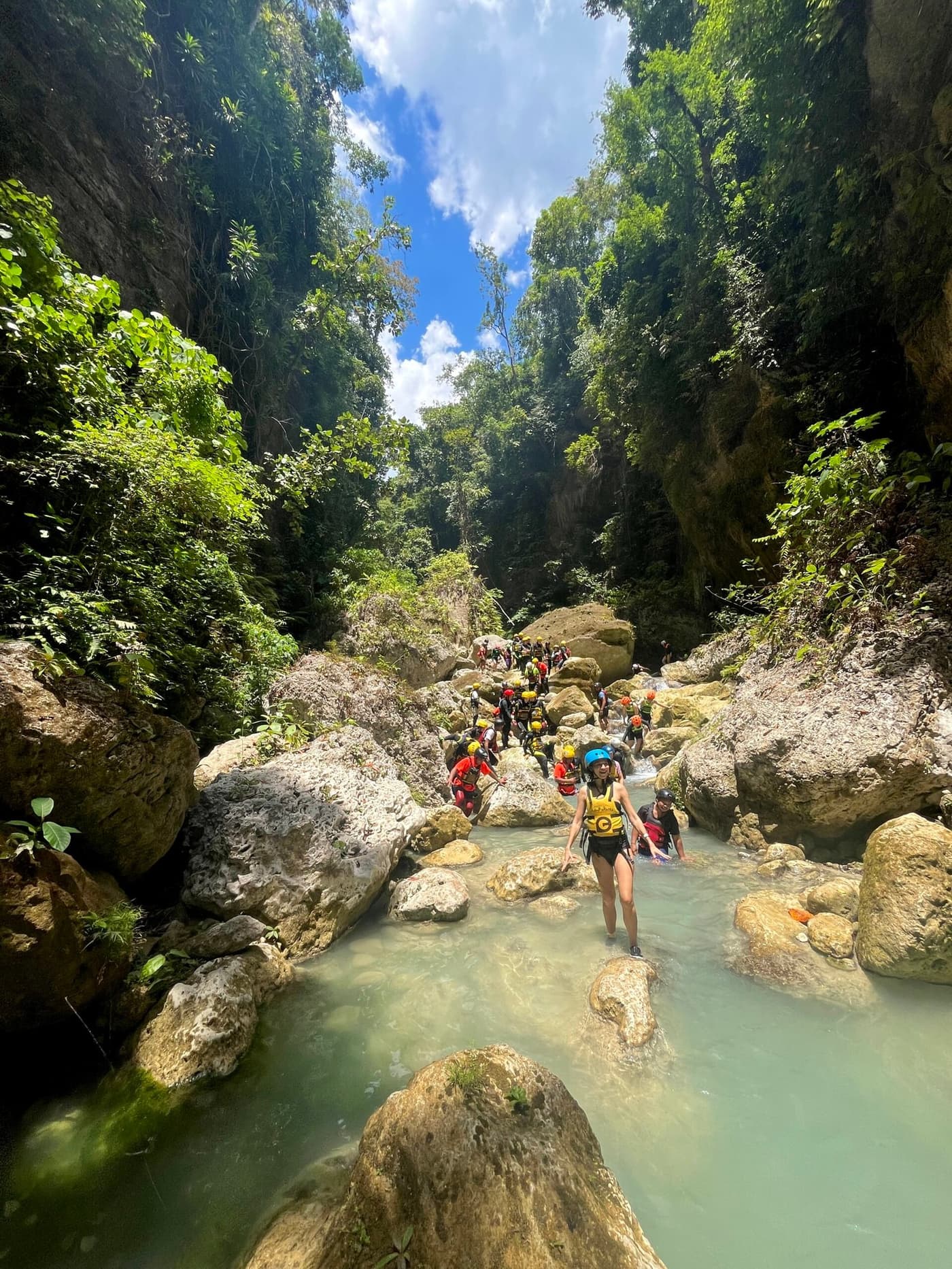
This gave us complete freedom: we set off in the morning without rushing, stopped along the way and picked up groceries. The trip became part of the experience instead of just a ride from point A to point B. Besides swimming with whale sharks, we also planned to do canyoneering at Kawasan Falls, and I wrote about how that went in another detailed article.
How Much Does Whale Shark Snorkeling in Oslob Cost?
If you plan to swim with whale sharks in Oslob on your own and want to avoid early wake-ups and long lines, I recommend booking ahead through the official organizers' Facebook group. This lets you choose a convenient time and secure your spot without the stress.
The fee is ₱500 (~$8.50) per person. That includes a life vest rental, a short briefing and about 30 minutes in the water near the whale sharks.
We booked the 9:30 a.m. slot. We arrived, paid, went through the briefing and took our seats in the boats. The boatmen took us a short distance from shore, everyone jumped into the sea, and the boldest and cheekiest of us got some great shots.
Alternative Options: Tours With Transfer
If you prefer organized tours with a transfer from Cebu City included, you can look at offers from local tour operators or online platforms such as Klook. The price of such tours varies depending on what's included:
- Basic tour with transfer: from ₱2,400 (~$42) per person
- Tour with extra stops (for example, Tumalog Falls or Sumilon Island): from ₱3,800 (~$66) per person
- Combo tours (for example, whale shark snorkeling + canyoneering at Kawasan Falls): from ₱6,300 (~$110) per person.
These tours usually include the transfer, equipment rental, a guide and sometimes meals.
What Whale Shark Snorkeling Is Like: My Experience
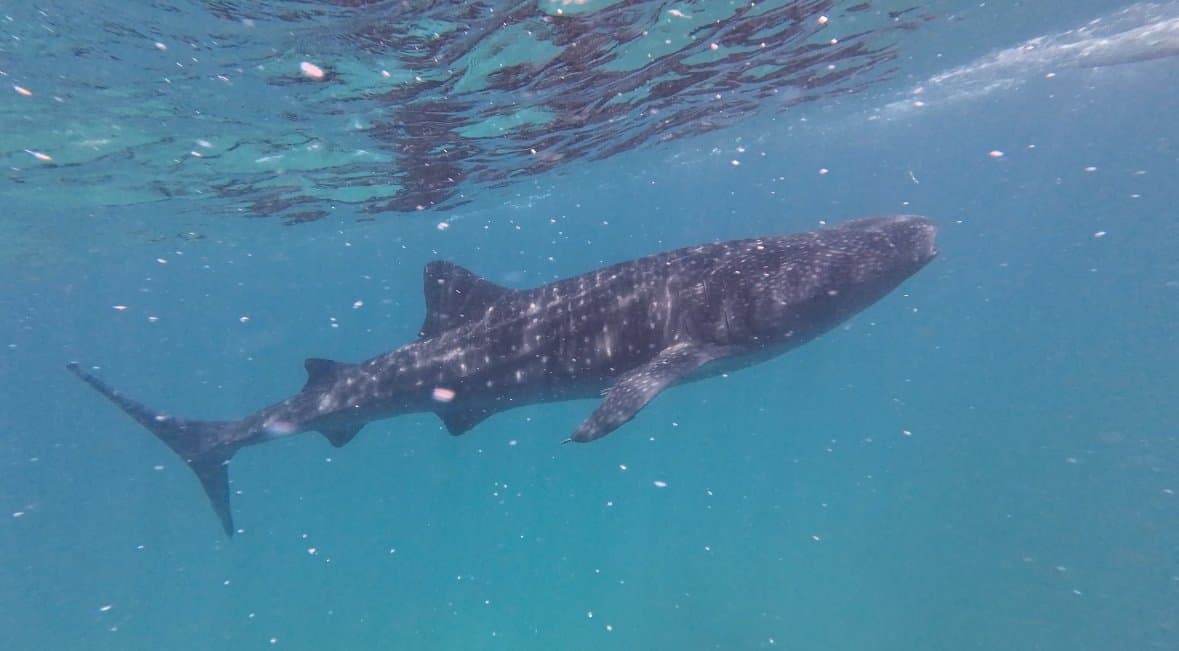
Swimming with whale sharks is a vivid adventure. For many travelers it is one of the most memorable experiences in the Philippines.
When we were in Oslob, the sea was rough. The waves were strong and so was the current. Water got into my nose and mouth, and I swallowed quite a bit. Every time I let go of the boat, I was swept away and had to grab the side again. All around there was a dense crowd of people, boats, paddles, commotion.
I wouldn't say I was scared, but it was definitely uncomfortable. I couldn't relax. The whale sharks really were swimming right next to us, huge, calm, almost under our feet. But in the moment I thought more about the waves than about the beauty of what was happening. Still, it was a memorable experience.
When to Go to Oslob to See Whale Sharks
Whale sharks show up in Oslob year-round. Thanks to the feeding they regularly come to the shore, so seasonality doesn't play a decisive role. Still, the best snorkeling conditions depend on the time of year.
The dry season on Cebu island runs from November to May. The sea is calmer then and underwater visibility is at its best. If you want the most comfortable period, choose March to May: the risk of rain is minimal, the water is warm and visibility is good.
From June to October the rainy season sets in across the Philippines. Snorkeling is possible then, but the weather can spoil the experience: the sea can be rough, big waves are common and visibility in the water drops.
As for the time of day, tours run daily, from early morning until about noon. If you haven't booked a slot in advance, it's better to arrive early. But if you've booked ahead, you can pick a convenient time without rushing.
What to Bring and How to Prepare
Swimming with sharks is easy snorkeling, and all the necessary equipment is provided on site. But a few things are worth bringing to make the day more comfortable.
- Rash guard or lycra. A great way to protect yourself from the sun without sunscreen, since sunscreen harms the marine ecosystem.
- Dry clothes and a towel. It's nice to change into dry clothes after snorkeling, especially if you plan to spend the day in the town.
- Action camera or waterproof phone case. If you want to capture a whale shark underwater, you can use an action camera or buy a waterproof case for your smartphone. These cases let you take photos and videos underwater while keeping your phone dry and protected.
- Waterproof bag. For storing personal items such as documents, money and electronics, I recommend a waterproof bag. It protects your belongings from moisture and gives you extra peace of mind during the tour.
- Water bottle, snacks. The waiting time can drag on, especially in high season, so water and a small snack will come in handy.
Comparing the Locations: Oslob, Donsol and Southern Leyte
| Location | Chance of a sighting | Ethics | Season | Best for | Features |
|---|---|---|---|---|---|
| Oslob (Cebu) | Almost 100% year-round | Low (feeding is used) | Always | Tourists, beginners, anyone who wants a guaranteed sighting | Most popular and accessible spot, large crowds |
| Donsol (Sorsogon) | Medium (depends on the season) | High (no feeding) | December–May | Eco-travelers, those who prefer natural encounters | Calm experience in open water, no crowds |
| Southern Leyte | Medium to high in season | High | November–April | Those looking for quiet and a rare destination | Fewer tourists, more intimate trips out to sea |
The Ethics of Swimming With Whale Sharks
Swimming with whale sharks is an impressive, emotional experience, but it's important to understand how these encounters are organized and what impact they can have on the animals. In the Philippines there are two fundamentally different approaches: natural observation (as in Donsol and Southern Leyte) and controlled encounters with feeding, as in Oslob.
In Oslob, whale sharks are given food so that they swim up to the boats. This makes their appearance almost guaranteed, but it is controversial: feeding can change the animals' natural migration, behavior and feeding habits.
In Donsol and Southern Leyte the sharks are not fed and are searched for in open water. A sighting is not guaranteed, but it is considered more natural and gentler on the ecosystem.
Wherever you go, it's important to follow the rules:
- don't touch whale sharks and don't swim too close;
- don't wear sunscreen before swimming, because it harms the marine environment;
- don't block the shark's path or swim in front of it;
- never feed the animals yourself.
The more carefully tourists treat these ocean giants, the better the chance that these encounters will remain possible and safe, for both people and whale sharks.
I filmed how we traveled around Cebu, Panglao and Bohol in a YouTube episode, with lots of emotion and useful information. Give it a like and subscribe!
Answers to Popular Questions About Whale Shark Snorkeling in Oslob
Where can you see whale sharks in the Philippines?
The most popular and accessible place is the town of Oslob on Cebu island. Whale sharks show up near the shore almost every day here, thanks to feeding. There are other locations too, such as Donsol, but a sighting there is not guaranteed.
Where can you swim with whale sharks?
Swimming with whale sharks is organized in Oslob, with a briefing, life vests and staff alongside you. You just need to book ahead and arrive on time, and everything else is already worked out down to the smallest detail.
Oslob or Donsol: Where Is It Better to Swim With Whale Sharks?
If a 100% guarantee of seeing whale sharks matters to you, choose Oslob in Cebu, where the animals are fed and swim up to the shore almost every day.
If you want an ethical and more natural experience, the best option is Donsol. The whale sharks here are not fed and are searched for in open water, so the encounter happens as naturally as possible.
Do you need to book the tour in advance?
You can book a convenient time ahead through the official organizers' Facebook group, which helps you avoid early wake-ups and long lines.
Is It Dangerous to Swim With Whale Sharks?
No, whale sharks are completely safe for humans: they feed on plankton and show no aggression. Danger can only come from big waves, currents or a large number of tourists in the water. The main thing is to follow the safety rules and listen to the briefing.
Is feeding whale sharks ethical?
The practice of feeding whale sharks in Oslob is controversial, because feeding can affect the animals' natural behavior and migration.
Are there alternatives to Oslob for seeing whale sharks?
Yes. In Donsol (Sorsogon province), for example, you can see whale sharks without feeding, which is considered a more ethical option. However, sightings there are not guaranteed.