On Bohol Island, in the heart of the Philippines, you'll find one of the country's most unusual natural sights: the Chocolate Hills. The place is often called the region's calling card, and for good reason. More than a thousand symmetrical hills rise out of the green plain, and the landscape feels almost otherworldly.
The Chocolate Hills have become a tourist attraction. People come for the photos, the panoramic views and the feeling of stepping into another world. But before you go, it helps to know what this place is, how to get there, when to visit and what to keep in mind as a tourist.
In this article I've gathered answers to common questions, a few interesting facts and tips that will help you plan a trip to the Chocolate Hills on Bohol.
What the Chocolate Hills are and why they have that name
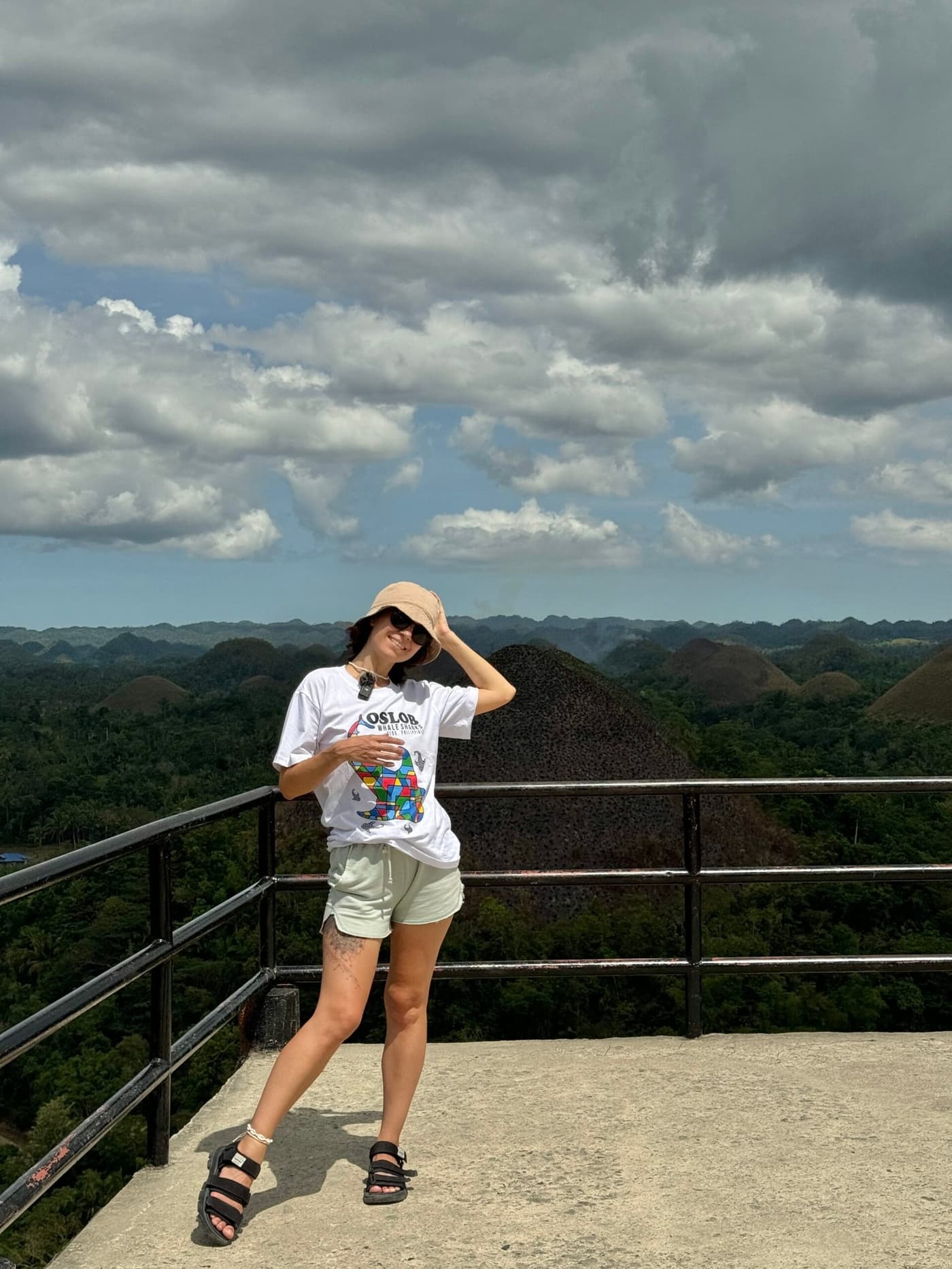
The Chocolate Hills are a geological formation in the central part of Bohol Island, in Bohol Province, Philippines. Over an area of about 50 square kilometers (roughly 19 square miles) there are more than 1,200 cone-shaped hills, and by some estimates as many as 1,776. Each one is 30 to 50 meters (about 100 to 165 feet) high, and some reach 120 meters (about 400 feet).
The hills got their name from the seasonal change in their color. In the dry season, especially from late February through May, the grass covering their slopes burns off in the sun and turns brown. At that time they really do look like drops of melted chocolate scattered across the landscape. That unusual visual effect is how the place got its name, Chocolate Hills.
Geologically, the hills are limestone formations covered with a thin layer of soil and grass. They formed through the erosion of marine deposits that once rose above sea level. Research shows that the rock is coral limestone laid down millions of years ago. Over time, rain, groundwater and natural erosion gave the hills their unique shape.
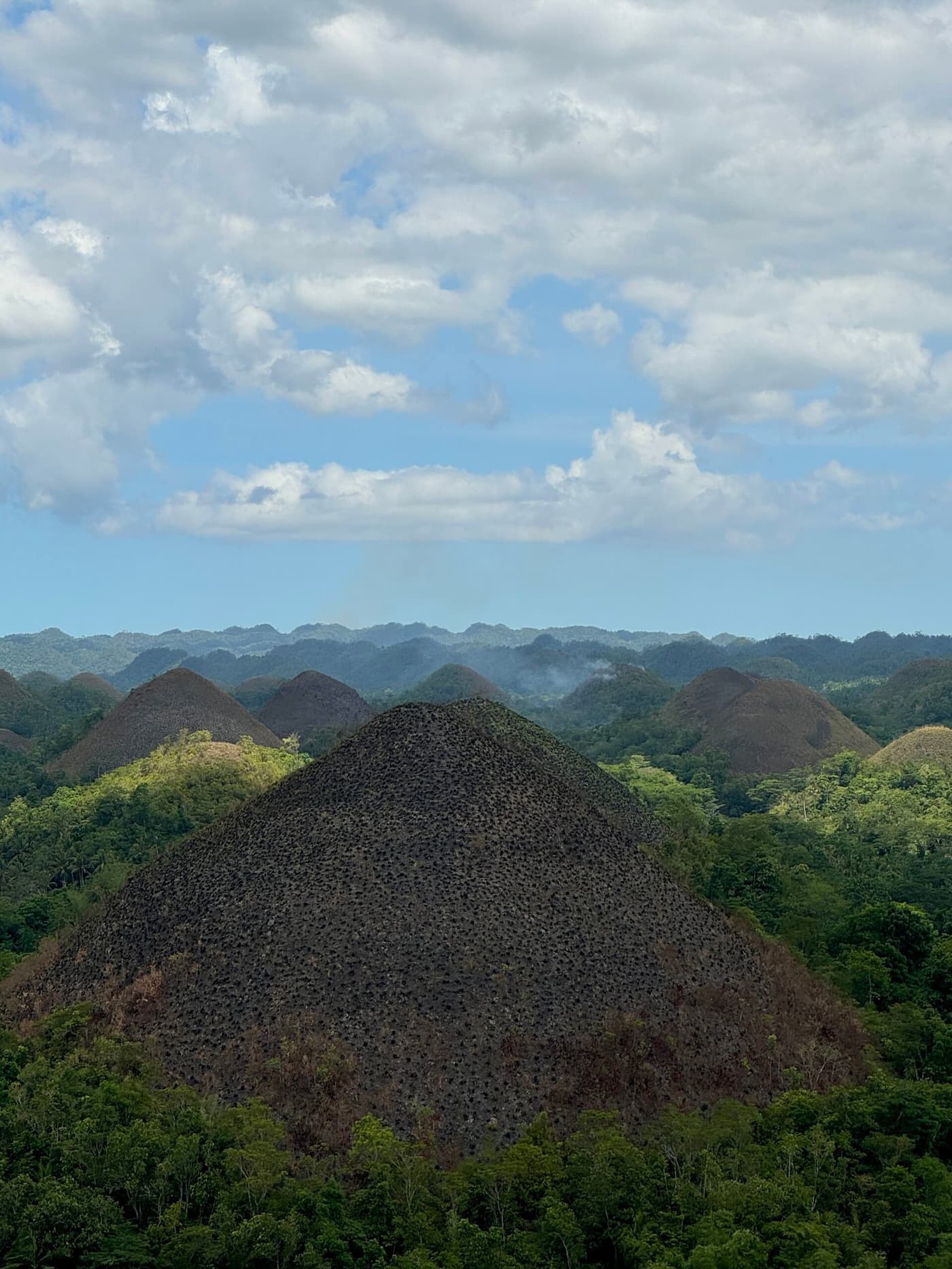
Interestingly, the Chocolate Hills are recognized as a National Geological Monument of the Philippines. They are protected by the state and are also on the tentative list of sites proposed for UNESCO World Heritage status.
Several local legends are tied to the hills. One says they appeared after a quarrel between two giants who threw rocks at each other. Another tells of a giant whose tears, after a tragic love, formed the hilly landscape. Science doesn't back these myths, but they are an important part of Bohol's cultural background and add extra interest to the place.
Where the Chocolate Hills are: map and location on Bohol
The Chocolate Hills are in the central part of Bohol Island, in the municipality of Carmen. That's about 55 kilometers (34 miles) northeast of the provincial capital, Tagbilaran City, and 75 kilometers (47 miles) from the Panglao tourist area, where the main beaches and hotels are.
The hills spread over about 50 km², covering parts of several municipalities, including Sagbayan, Batuan and Carmen, but most of the tourist infrastructure is in Carmen. This is where the official Chocolate Hills Complex is, the viewing deck where most tourists are taken.
The place is easy to find on a map of the Philippines: Bohol sits in the middle of the Visayas archipelago, between Cebu and Leyte. Bohol is well connected to neighboring islands, with ferries from Cebu and domestic flights from Manila.
Coordinates for your navigator (Google Maps): 📍 Chocolate Hills Complex — 9.8229° N, 124.1435° E
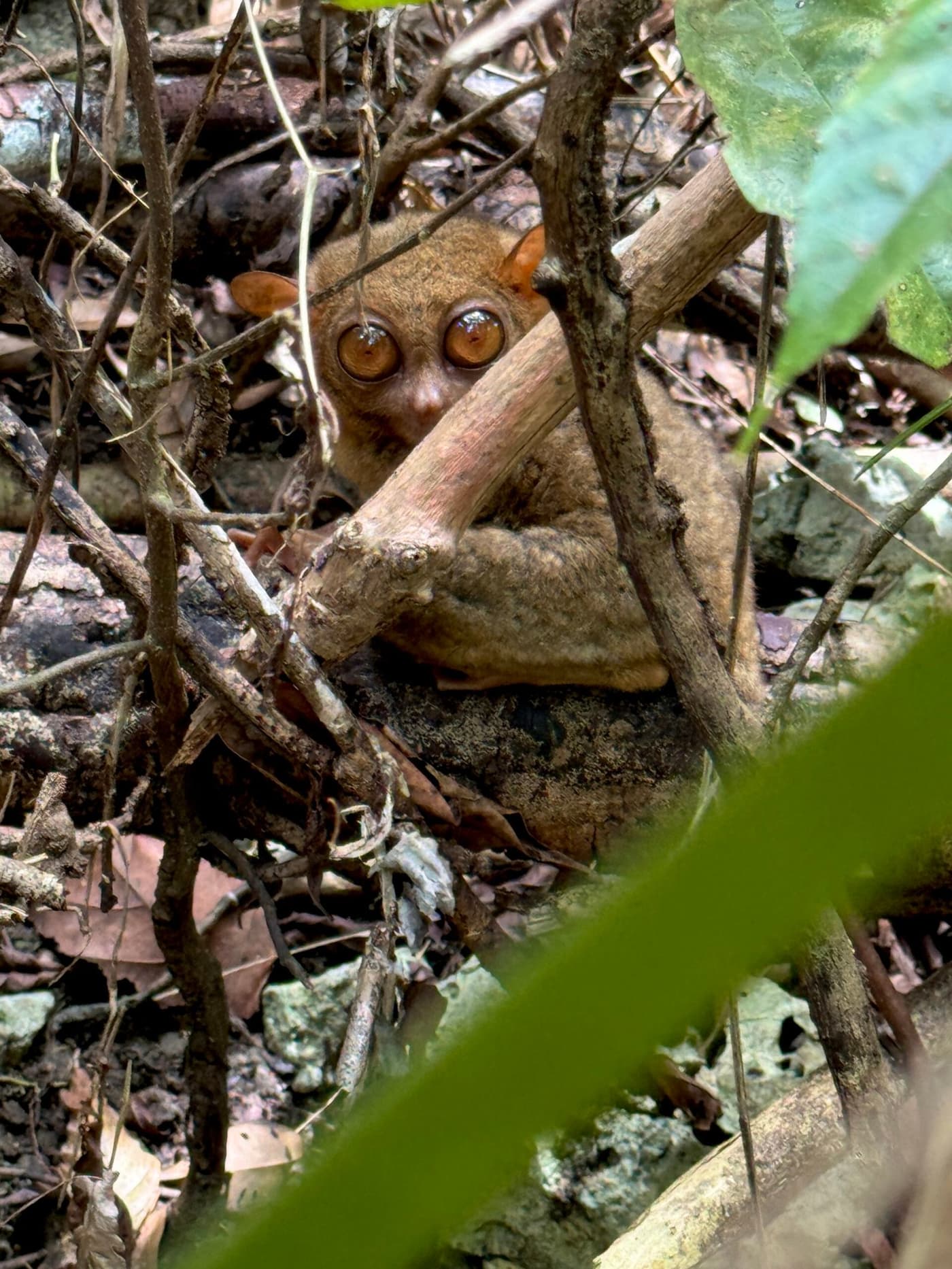
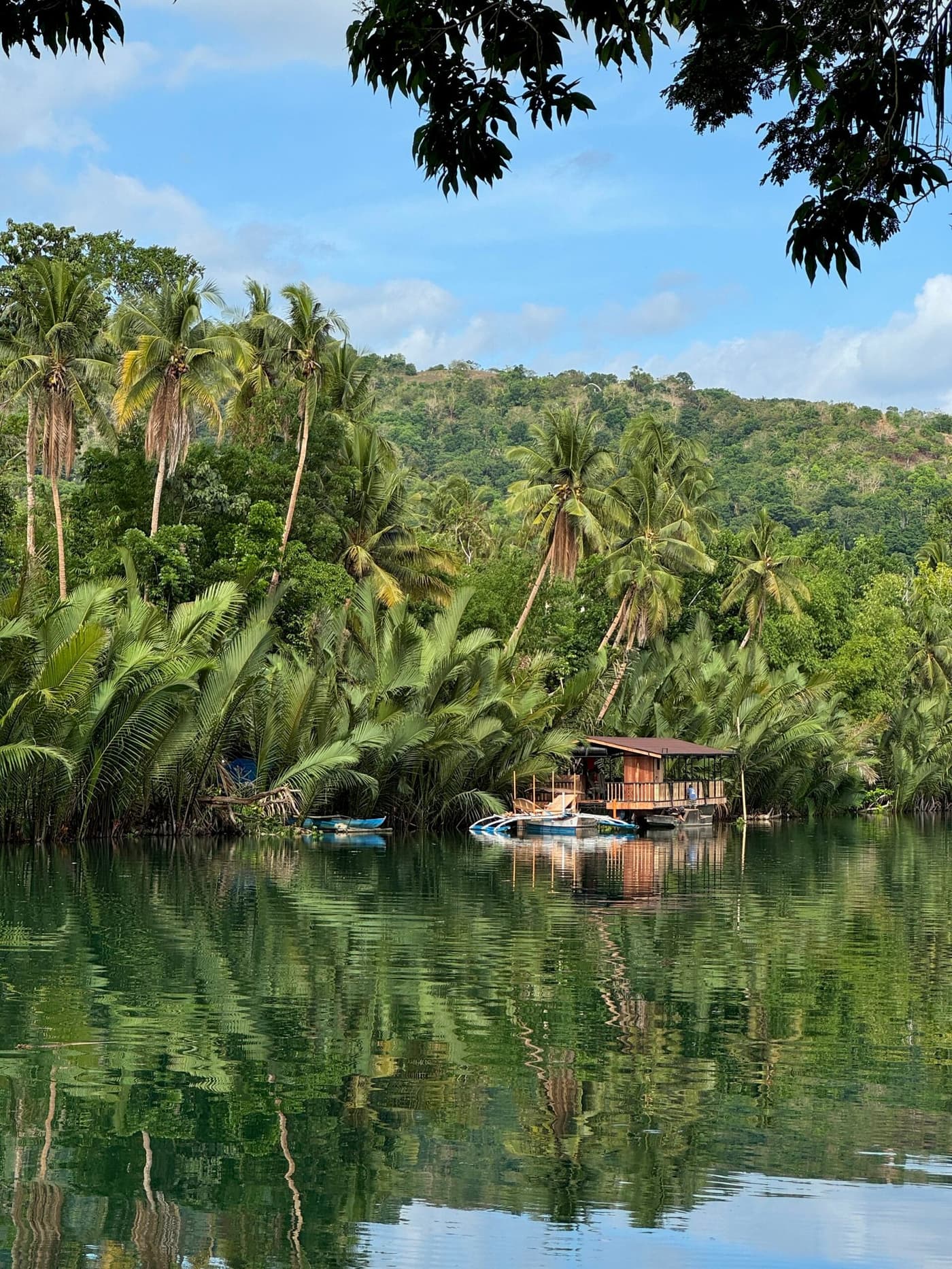
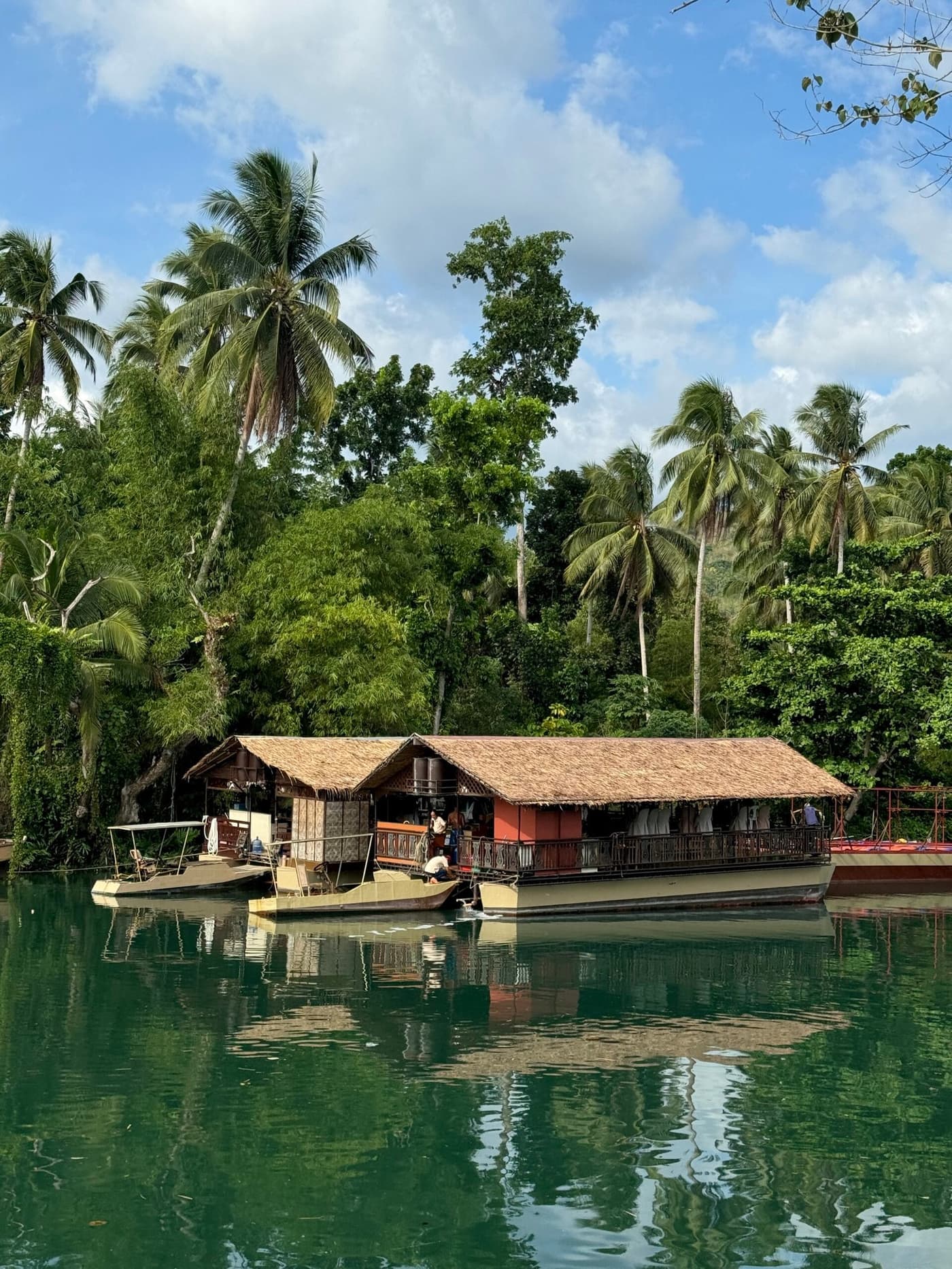
There are several other attractions near the hills, such as the Eco Park in Sagbayan, a butterfly park, the Loboc River and the Philippine tarsier sanctuary. I wrote about visiting the Philippine tarsier sanctuary in a separate article.
All of this makes the area a good fit for a full one-day or two-day excursion.
How to get to the Chocolate Hills
The Chocolate Hills are in the interior of Bohol, but thanks to good infrastructure there are several ways to reach them, either on your own or on a tour. Below are the main routes from the most popular starting points.
From Tagbilaran
Tagbilaran is the capital of Bohol Province and the island's main transport hub. From there you can get to the Chocolate Hills Complex in Carmen:
- By bus or van (v-hire) from the Dao Terminal. The trip takes 1.5 to 2 hours. Buses leave regularly, especially in the morning.
- By rented scooter or car, a popular choice among independent travelers. The ride takes about 1.5 hours one way, and the road is paved and scenic.
From Panglao
If you stayed on the beaches of Panglao Island, as we did, this is also a convenient starting point. The distance to the hills is about 75 km.
- Taxi or transfer is the most comfortable option, especially if you're traveling in a group or with luggage. The trip takes about 2 hours.
- Scooter or car rental is a convenient, budget-friendly option if you're a confident driver.
From Cebu
Cebu is a major tourist hub, and most visitors reach Bohol from there.
- Ferry to Tagbilaran (about 2 hours), then continue by the routes described above.
- Several operators (OceanJet, SuperCat) run from the Cebu port. It's best to book tickets in advance in high season.
Organized tours
Many hotels and agencies in Panglao and Tagbilaran sell one-day tours to the Chocolate Hills. They include the transfer, a guide, stops at the tarsiers, the Loboc River and the viewing deck. It's handy if you don't want to deal with the logistics. You can also book a tour on Klook, with departures from both Panglao and Cebu.
What to see near the Chocolate Hills
The hills themselves are the main reason to visit central Bohol, but the area has other interesting spots you can easily fit into a one- or two-day itinerary, especially if you rent your own transport or join a guided tour.
Adventure park in Sagbayan (Sagbayan Peak)
It's 18 km from the main complex. It has an alternative viewing deck that is less crowded, plus a small park with a children's area. It suits anyone who wants a calmer atmosphere and a bit of variety in their day.
ATV tours (off-road)
At the entrance to the Chocolate Hills Complex you'll be offered a quad bike or buggy rental. It's a popular activity: on an ATV you can drive along dirt roads at the foot of the hills and see them from different angles. There are different routes, from short 30-minute rides to 2-hour ones.
La Pernilla Temple and local villages
On the way you can stop in small Filipino villages, look into local churches or simply watch island life away from the tourist center. It adds cultural context to the trip and gives you a sense of everyday life in the region.
Best time to visit: seasons and climate
You can visit the Chocolate Hills all year round, but the visual effect that gave them their name doesn't always show. It all depends on the season and the weather.
When the hills turn "chocolate"
The hills look most like chocolate in the dry season, which runs roughly from late January through May. During this time the grass on their slopes burns off in the sun and turns brown. That's when the scenery looks like the classic postcards: hundreds of identical brown hills against a blue sky.
In the rainy season (June through November) the grass stays green and the landscape changes. The hills turn emerald, which is also beautiful, but you lose that "chocolate" effect. Rain can also affect visibility and access to some routes.
Regional climate
Bohol, like most of the central Philippines, has a tropical climate. The average annual temperature is about 27–30°C (81–86°F), and humidity is high. Rain most often falls in August through October, although the weather can shift in other months too, especially given the climate changes of recent years.
If you're traveling for the photo, or to catch that classic view, choose February or March, when dry weather is most likely and the grass has already started to turn brown.
Tips for tourists
If you're planning a trip to the Chocolate Hills, it pays to prepare ahead. Despite the good infrastructure, this is still a natural site, and a few things are worth planning for.
Cost of a visit
Entry to the Chocolate Hills Complex is paid:
- Adult ticket: about 50 Philippine pesos (less than 1 US dollar)
- Parking: about 20 pesos for a motorbike, 50–100 for a car
- Quad bike rental (optional): from 800 pesos for 30 minutes, depending on the route
Prices may vary slightly, but overall the trip doesn't cost much.
What to bring
- Water and a hat. There is no shade on the viewing deck, and the heat is strong
- Sunscreen, especially in the dry season
- Cash, because cards aren't always accepted on site
- A camera or a smartphone with good optics, since the panoramic views really are worth a shot
- Comfortable shoes. The staircase up the hill is fairly steep, but short
Can you fly a drone?
Drone use at the Chocolate Hills Complex is not officially banned, but it calls for caution:
- It's best to check at the entrance, because the rules can change
- Avoid flying at peak hours and over crowds
- In some cases you may need permission from the administration or security
Where to eat and stay
The viewing deck area has a simple café with drinks and light meals. You'll also find small eateries on the road to Carmen. If you want to stay overnight nearby, guesthouses and eco-lodges are available around the Chocolate Hills, but most tourists prefer to return to Tagbilaran or Panglao, where there is a wider choice of accommodation.
I filmed how we traveled around the Philippine islands in a YouTube episode. Watch, give it a like and subscribe!
Frequently asked questions about the Chocolate Hills
How many Chocolate Hills are there?
According to official data, the number of hills ranges from 1,260 to 1,776, spread over an area of more than 50 km². The exact number depends on the counting method, but most sources settle on around 1,268.
Why are they called "Chocolate" Hills?
In the dry season (roughly February through May) the grass covering the hills burns off in the sun and turns a rich brown that resembles chocolate. That's how they got their name.
Can you climb the hills?
Climbing is allowed only at specially equipped viewing decks, such as the Chocolate Hills Complex in Carmen. The other hills are protected and not meant for climbing, in order to preserve their natural shape.
How do you get to the Chocolate Hills?
From Tagbilaran or Panglao you can go by bus, van (v-hire) or rented transport. Organized tours that include the transfer and a guide are also available.
When is the best time to visit the Chocolate Hills?
The best time is the dry season, February through May, when the hills take on their characteristic brown color. In the rainy season (June through November), though, they turn bright green, which many tourists also find appealing.
Are there other attractions nearby?
Yes. Nearby you'll find Sagbayan Peak adventure park, the Loboc River, the Philippine tarsier sanctuary and the man-made forest in Bilar.
Can you use a drone for filming?
Drone use around the Chocolate Hills Complex is officially allowed, but with restrictions. Flights are permitted only in the early morning, before 8:00 a.m., so as not to disturb other visitors and to keep everyone safe. After that time, launching drones is prohibited.
Before filming, it's best to check the rules with the complex staff, because they may change. It's also important to follow the general drone requirements in the Philippines: don't come closer than 30 meters (about 100 feet) to people, don't fly higher than 120 meters (about 400 feet) above the ground and don't fly near airports.
The Chocolate Hills are one of those places worth seeing at least once. The scenery is unusual, the road is easy, and the trip takes just a day. If you're on Bohol or nearby, adding the hills to your itinerary is a good choice with no extra fuss.