You can see the Philippine tarsier on Bohol island, where the best-known sanctuaries are, including the Philippine Tarsier Sanctuary in Corella, where the primates can be watched in conditions as close to natural as possible.
We went there too, to see a tarsier on Bohol with our own eyes. But the more I read about their habits and sensitivity to stress, the clearer it became: this is not a tourist attraction, it is a meeting with a fragile creature whose life is already disturbed by our presence.
Whether to go is up to you. But if you do go, please follow the rules and treat the tarsiers as gently as you can.
Philippine Tarsier: Description, Appearance and Key Facts
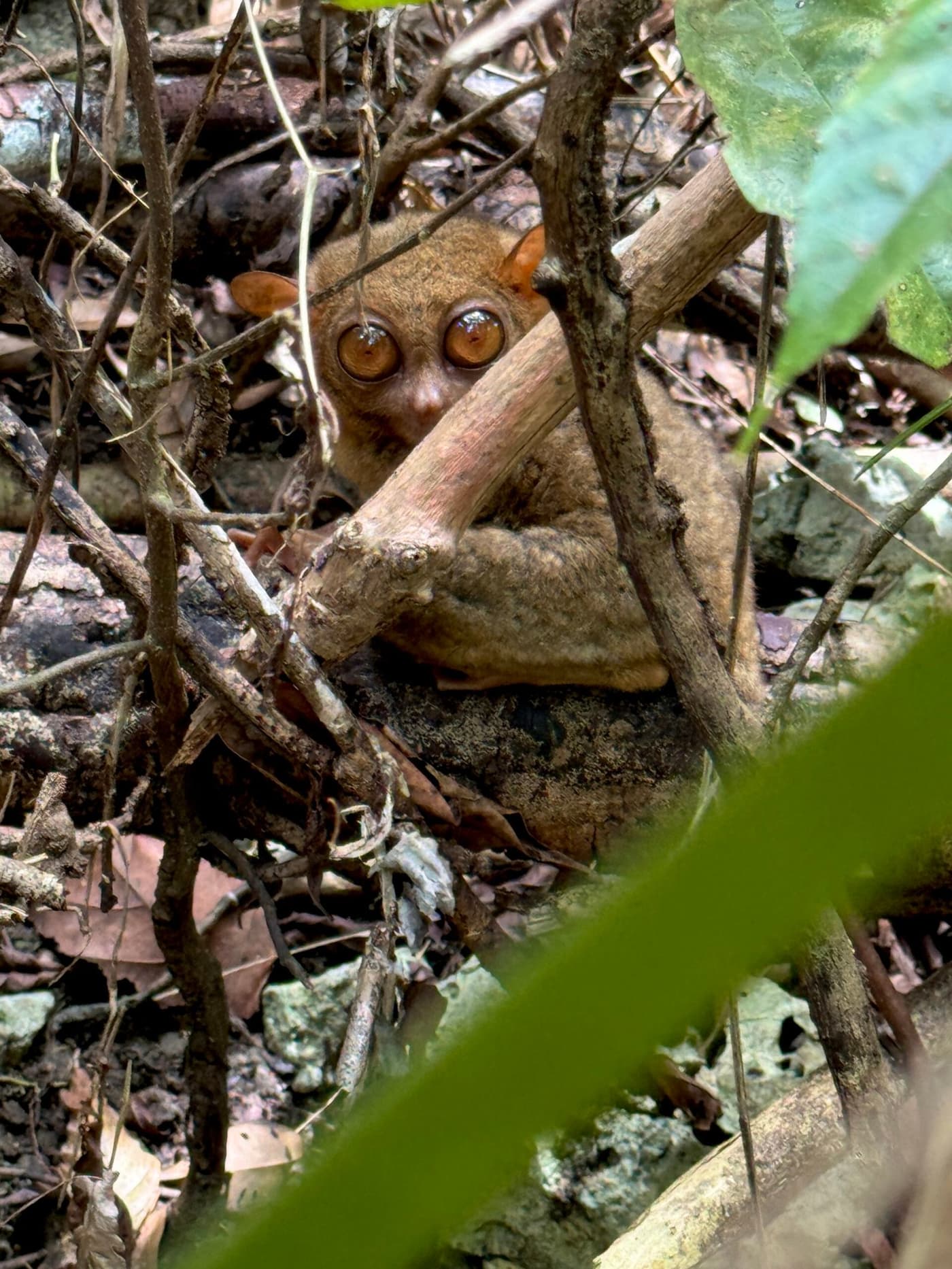
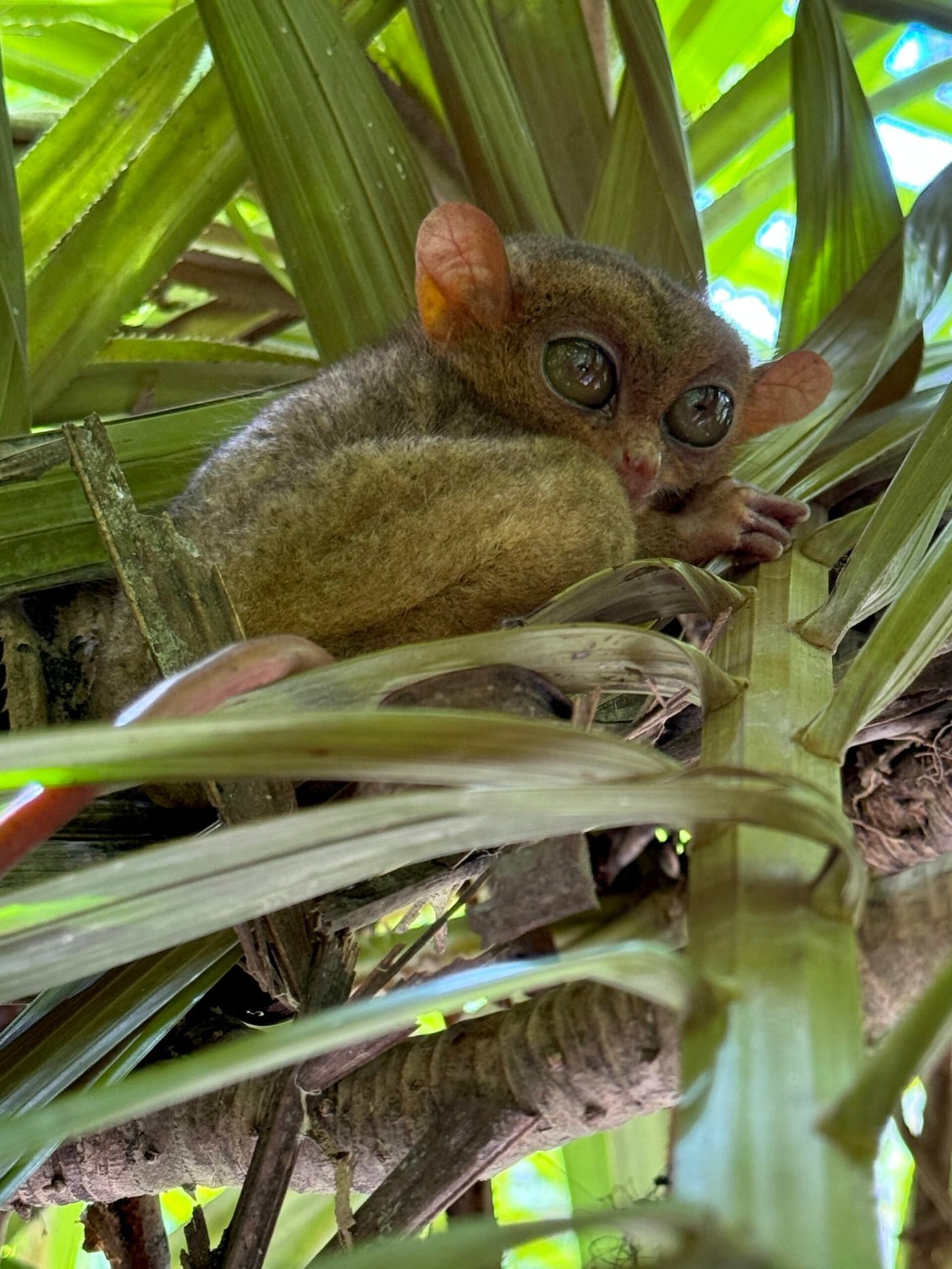
The Philippine tarsier is a tiny, almost alien creature. In the wild it lives only here in the Philippines, and it is especially famous thanks to Bohol island. If you look for a Philippine tarsier description, most sources mention its miniature size (4–6 in, or 10–15 cm), a weight of about 3.5–5 oz (100–150 grams) and its incredibly large eyes. Thanks to this look, its photos regularly go viral online.
Despite its endearing appearance, it is a nocturnal predator. The tarsier hunts insects, spiders, small birds, lizards and even small snakes. Its eyes cannot move, so the tarsier turns its head almost 180° to look around.
The Philippine tarsier (Carlito syrichta) is endemic. It is not found anywhere else in the wild. The IUCN rates the species Near Threatened, and its numbers are falling because of deforestation, tourism and human activity.
For Filipinos it is part of the local culture: it appears on souvenirs and in legends. But behind this folklore is a very sensitive creature that needs quiet, calm and a stable environment.
Where to See a Philippine Tarsier on Bohol
The main place where tourists can see Philippine tarsiers is Bohol island. There are several centers here that present themselves as sanctuaries or tarsier conservation stations. The best known and probably the most responsible is the Philippine Tarsier Sanctuary in the Corella area.
It is not a zoo: the animals are not kept in cages, they live in a patch of forest that is officially protected and monitored. There are rules here: no noise, no flash, no getting too close. All of this helps minimize stress for the animals, but it does not eliminate it completely.
Besides the Sanctuary, Bohol has other places with tarsiers, for example the Tarsier Conservation Area in Loboc. But despite the name, this place raises questions: the animals are kept in small open enclosures, and the feeling of an "exhibition" is stronger. You can take photos literally half a meter from them. From an ethical point of view it is far from the best choice.
How to Get to the Philippine Tarsiers on Bohol (Routes and Cost)
Bohol island is connected by many routes, so getting here is easy. Tourists most often come from Tagbilaran or from Panglao island.
To the Philippine Tarsier Sanctuary in Corella The sanctuary is about 14 km (9 mi) from Tagbilaran. The trip takes about 30–40 minutes by scooter or taxi. You can also take the buses and jeepneys heading toward Sevilla or Carmen. There is a stop near the Sanctuary, but it is better to check the route in advance.
To the Tarsier Conservation Area in Loboc This is a more touristy place, located on the main road between Tagbilaran and the Chocolate Hills. You can stop there on the way if you are exploring the island on a rented scooter or on a tour.
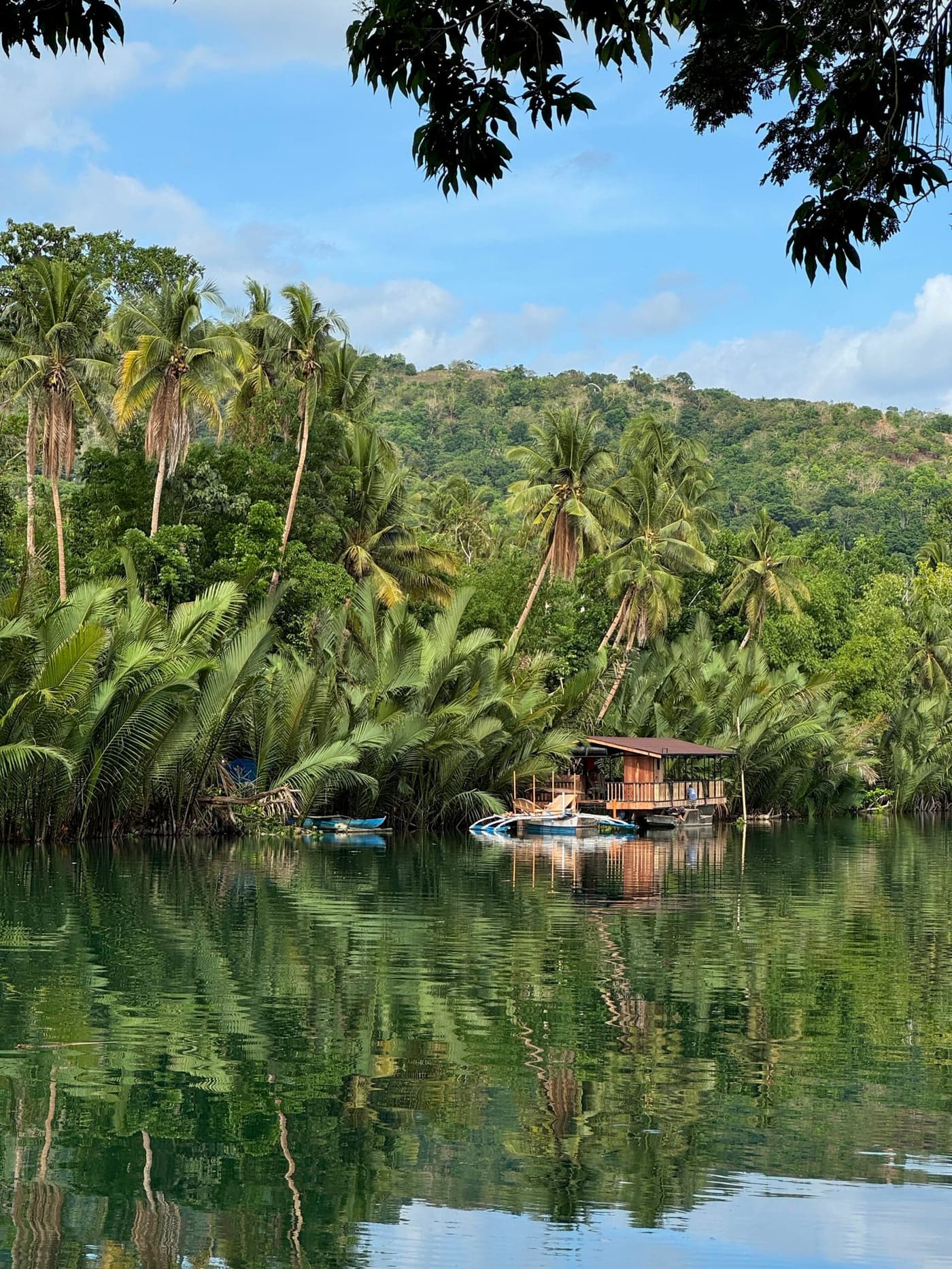
If you don't ride a motorbike, the easiest option is to book a taxi or a private driver for the day. Many drivers offer Bohol tours that include visiting the tarsiers, viewpoints, the hills and the Loboc River.
Visiting Rules: How to Behave Around a Philippine Tarsier
The Philippine tarsier is not only one of the smallest primates on the planet but also one of the most sensitive. Its nervous system is built so that even minimal stress can be dangerous for it. That is why tourists' behavior around tarsiers matters enormously.
- Be as quiet as possible. Tarsiers sleep during the day, and any sound can wake them. Don't talk loudly, don't laugh near them and try not to make noise. Even the sound of footsteps on dry leaves can sometimes be too much.
- No flash. Take photos without flash only. Light can blind the animal and disrupt its routine. Many cameras and phones turn the flash on automatically, so check this in advance.
- Don't get too close. Even if a tarsier looks completely calm, that doesn't mean it feels comfortable. Don't reach out, don't try to look at it from a few inches away, and don't set up your camera right in front of its face. This is a wild animal, not an exhibit.
- Don't use selfie sticks or drones. These devices are perceived as a threat. Even if you don't touch the animal, the closeness of the equipment and its sounds can frighten it.
- Just watch and observe. The best thing you can do near a tarsier is simply be there in silence. Don't interfere, just observe.
When Is the Best Time to See Tarsiers?
Philippine tarsiers are nocturnal, so there is no "perfect time of day" when they are awake and active for tourists. All visits happen during the day, when the tarsiers are asleep, hidden in the foliage. It is important to understand this before the trip: you will most likely see them half asleep or completely still.
If you still decide to go, it is better to choose the morning hours from 9 to 11. At that time there are no big tourist groups in the sanctuaries yet, and the air temperature is more comfortable. During the day it gets hot and the flow of visitors grows, which raises the level of noise and stress for the animals.
Seasonality on Bohol also plays a role. The dry season (December to May) is considered the best for travel: less rain, better road conditions and a higher chance of a calm walk around the Sanctuary grounds. In the rainy season (June to November) the forest can be wet and slippery, and the weather unpredictable.
Allow about 30–40 minutes to see the whole sanctuary in Corella. That is enough time to walk the route, calmly watch a few tarsiers and not rush.
I filmed how we traveled around the islands of the Philippines in a YouTube episode.
Philippine Tarsier FAQ
Can you see a Philippine tarsier in the wild?
In theory yes, but in practice it is extremely hard. Tarsiers are nocturnal and secretive, hide in thick foliage and make no sound. Even locals rarely come across them. That is why most tourists visit sanctuaries, where the animals can be watched in controlled conditions.
Why are tarsiers so sensitive to stress?
They have a very fragile nervous system. Severe stress from noise, bright light or touch can lead to self-destructive behavior, including banging their heads against hard objects. In captivity they often die for exactly this reason.
Can you keep a tarsier as a pet?
No. It is against the law and highly unethical. Tarsiers do not survive in captivity: they need a specific environment, diet and minimal contact with people. Attempts to keep them at home almost always end in the animal's death.
What do Philippine tarsiers eat?
They are the only fully carnivorous primates. They hunt insects, spiders, lizards, small birds and even snakes. In captivity they refuse dead food and need live prey.
Why does a tarsier have such big eyes?
Their eyes are the largest relative to body size of any mammal. This is an adaptation to a nocturnal lifestyle: the eyes provide excellent vision in the dark. However, they cannot move in the sockets, so the tarsier turns its head almost 180° to look around.
How long do tarsiers live?
In the wild, up to 16–20 years. In captivity much less, and they often don't survive even a year because of stress and unsuitable conditions.
What is their conservation status?
The Philippine tarsier is listed on the IUCN Red List as Near Threatened. The main threats are deforestation, tourism and illegal trade. The country has laws that ban capturing and keeping them.
Why do they make ultrasonic sounds?
Tarsiers can hear and produce sounds in the ultrasonic range, up to 91 kHz. This lets them communicate with each other without attracting predators' attention, and even "eavesdrop" on the sounds of their prey.