Canyoning at Kawasan Falls is one of the most popular and thrilling activities on the island of Cebu. You jump into turquoise water, slide down rocks and squeeze through narrow canyons right in the jungle. It's an action-packed adventure that works even for beginners, and it definitely won't leave you indifferent!
In this article, I'll tell you how we did canyoning at Kawasan Falls in Cebu.
What is canyoning
Canyoning is an active adventure along mountain rivers and canyons: you jump into the water from rocks, slide down natural water slides, make your way through narrow gorges and descend alongside waterfalls. It all happens in beautiful natural surroundings, with experienced guides and full gear: a helmet, a life jacket and sometimes a wetsuit.
In the Philippines, the island of Cebu is considered the main canyoning center. The best-known routes are in the south of the island, especially around Badian and Moalboal. But the most popular, of course, is canyoning to Kawasan Falls.
The route runs through rocks, jungle and turquoise lagoons. You jump from different heights (some rocks are up to 10 meters high), work your way down cascades and swim, and you come out feeling completely reset. No special training is needed, but it gives you a rush of emotions that lasts a long time.
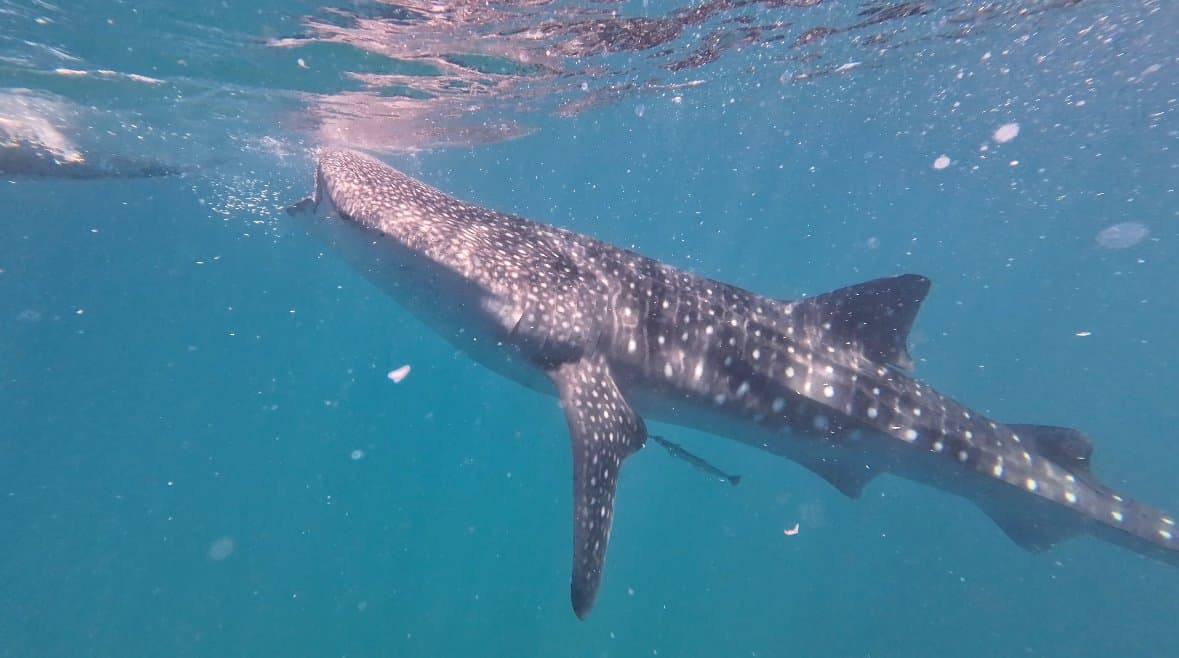
We couldn't skip this place or pass up the chance to try canyoning. I liked it even more than swimming with whale sharks in Oslob!
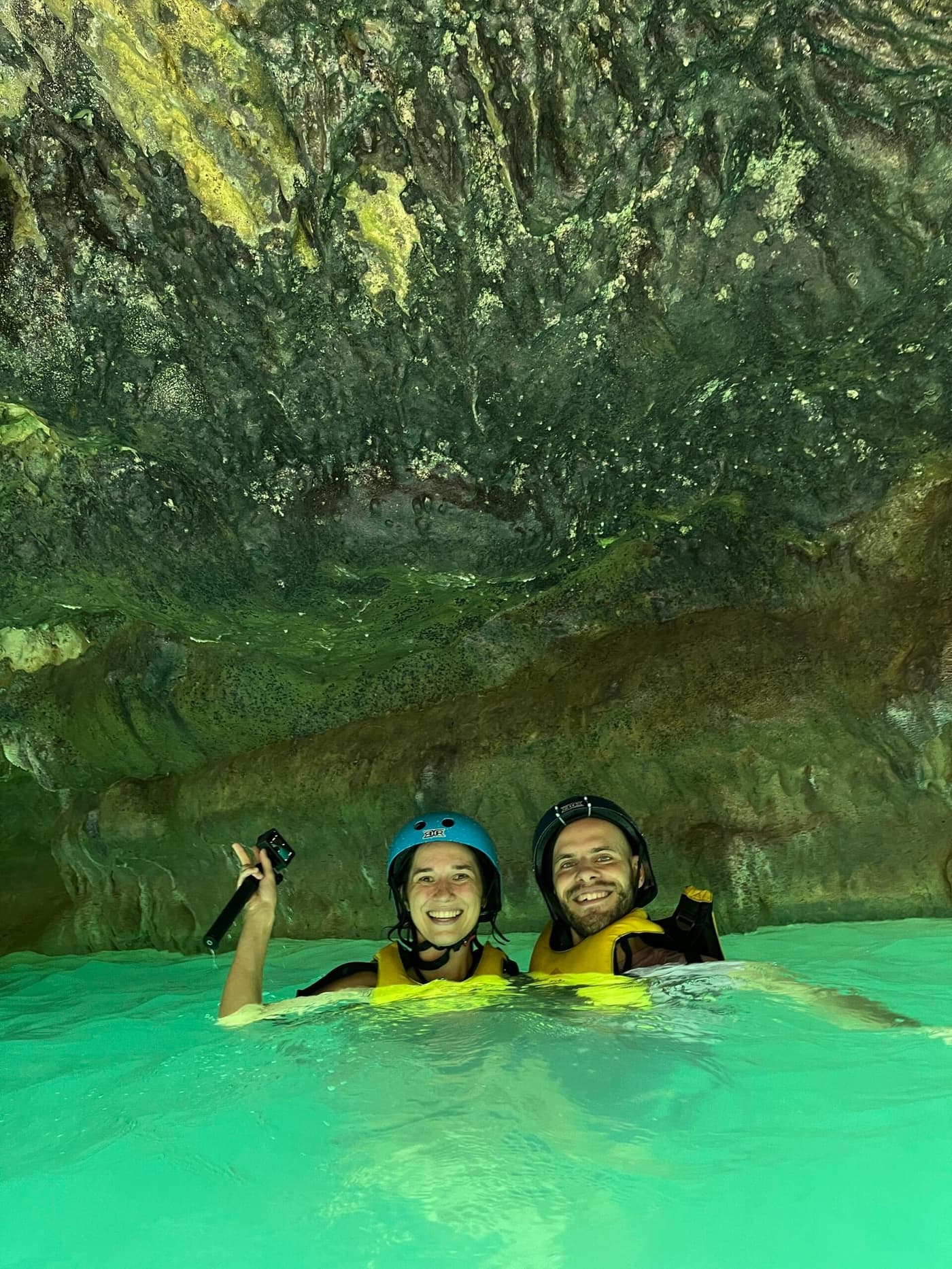
Kawasan Falls is the best place for canyoning
Kawasan Falls is in the southwest of Cebu island, in the Badian area. It's a well-known natural attraction in the Philippines, and thousands of travelers come here every year for canyoning and photos.
Kawasan is ideal both for beginners and for anyone who has already tried canyoning. The route is well designed, with several difficulty levels: there are sections with easy descents as well as spots for jumping from heights of 3 to 10 meters. Experienced guides are with you all the way.
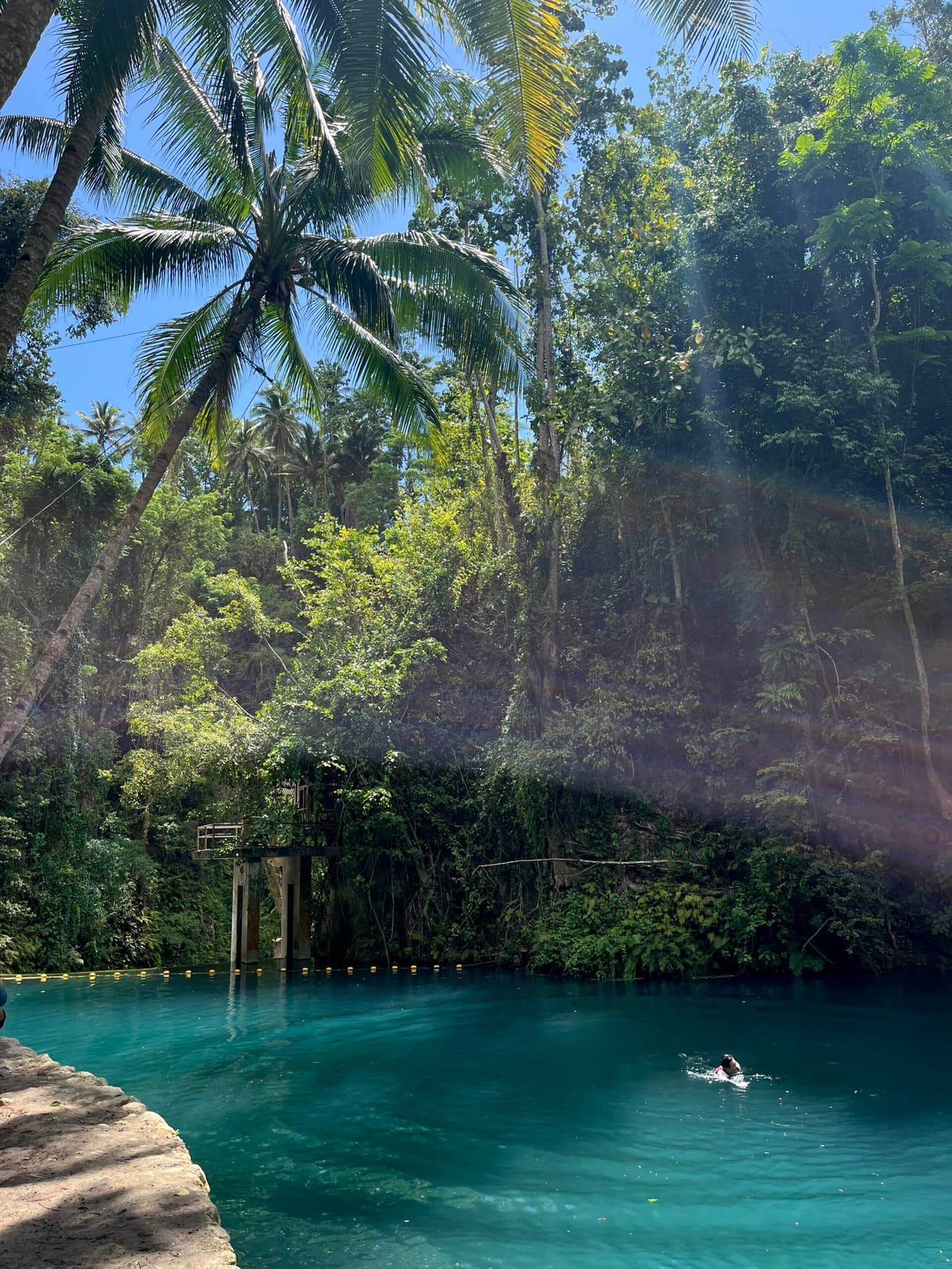
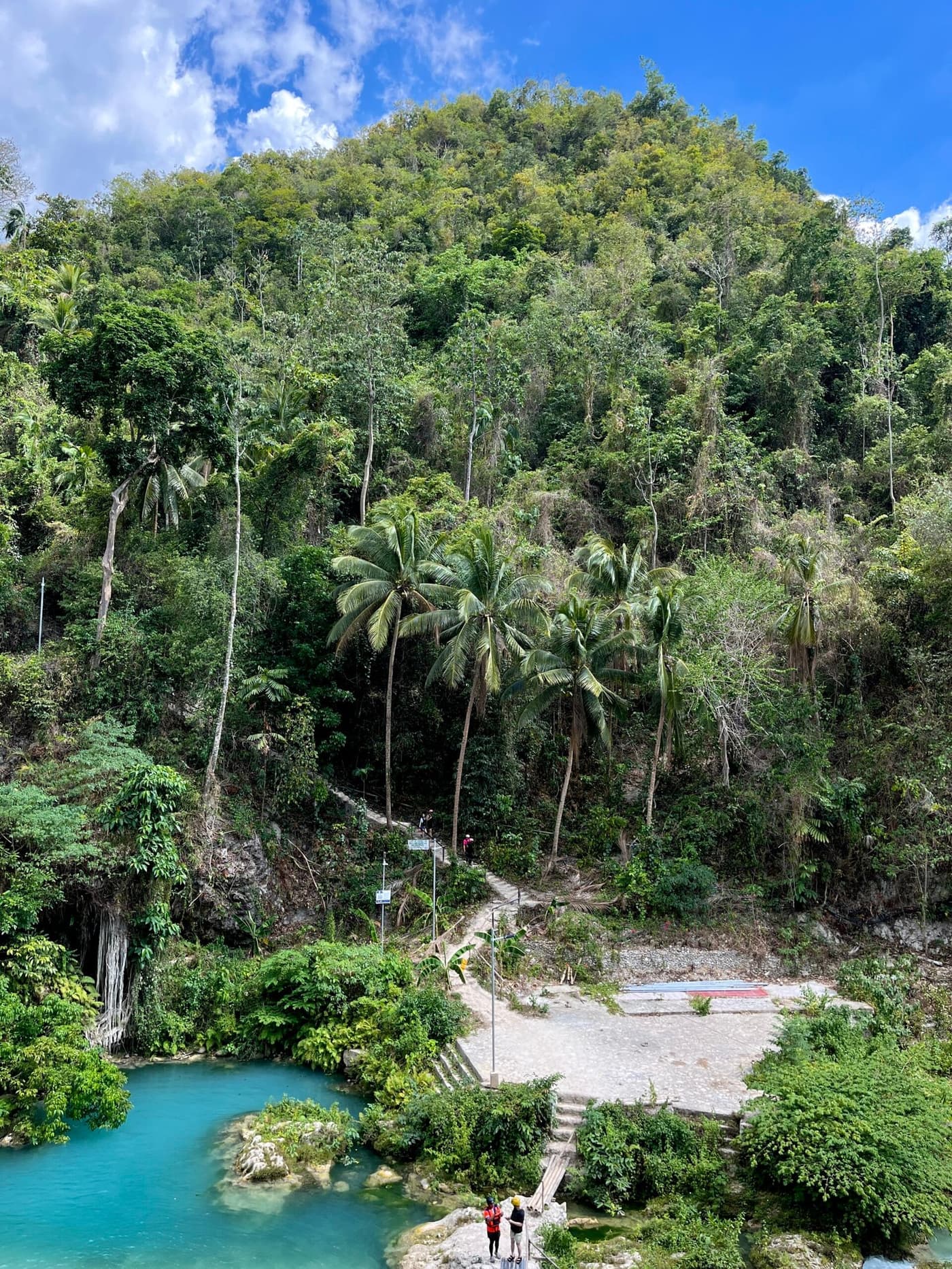
The route follows a mountain river surrounded by dense jungle and is about 2.5 kilometers long. Along the way you'll find water cascades, natural pools with crystal-clear water and plenty of photogenic stops. The main waterfall has three tiers, with a powerful flow and a turquoise lagoon at its base.
On sunny days the water looks almost unreally blue, thanks to the limestone rock and the purity of the springs. The water is refreshing but not cold, which is perfect for staying active.
What to bring and how to prepare
You don't need any special equipment for canyoning at Kawasan Falls. The essentials are a helmet, a life jacket, a waterproof bag and shoes suited to walking on slippery rocks. The organizers hand out a life jacket on site, and sometimes shoes too.
It's best to bring:
- a swimsuit or quick-dry clothes;
- a change of clothes for after the route;
- comfortable shoes that stay on your feet and suit the water (water shoes or sturdy sandals are best);
- a waterproof case for your phone or action camera (for example, a GoPro);
- a small dry bag or backpack;
- sunscreen and any medication if you have individual health needs;
- For filming video, it's best to use a helmet mount, and most guides will help you set it up.
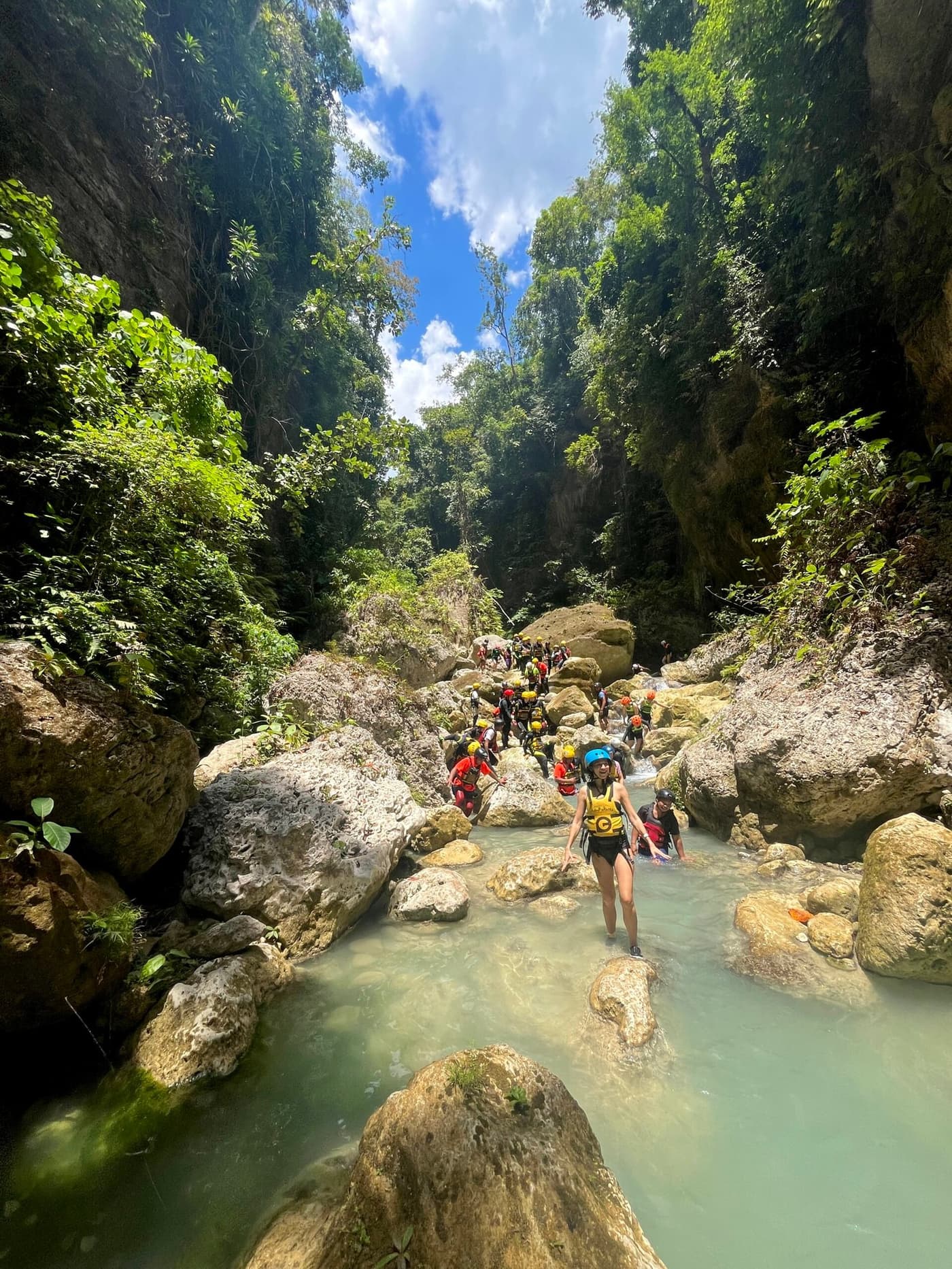
Canyoning suits people with basic fitness. You don't need to be in special athletic shape, but you should be ready for active movement over slippery surfaces, jumping into the water and some light climbing. Children under 12 and people with musculoskeletal problems should check with the organizers in advance.
How canyoning at Kawasan works
Canyoning at Kawasan Falls is an organized adventure led by professional guides. It starts with a safety briefing and gear fitting: every participant gets a helmet, a life jacket and special shoes (if needed).
A transfer takes you to the entrance, where you can choose between taking a zipline over the jungle or walking to the start of the route, a mountain river that flows through the canyon.
This is your first point of immersion in the route.
Then comes the best part: jumps into turquoise lagoons from 3 to 10 meters, swimming, and passing through stone cascades and narrow gorges. Some of the route is waded, some is swum, and in places natural water slides carved into the rock by the current are waiting for you.
The whole trip takes 2 to 4 hours, depending on the route and how active you are. At the end of the canyoning you come out right at the main cascade of Kawasan Falls, where you can rest, swim and take photos.
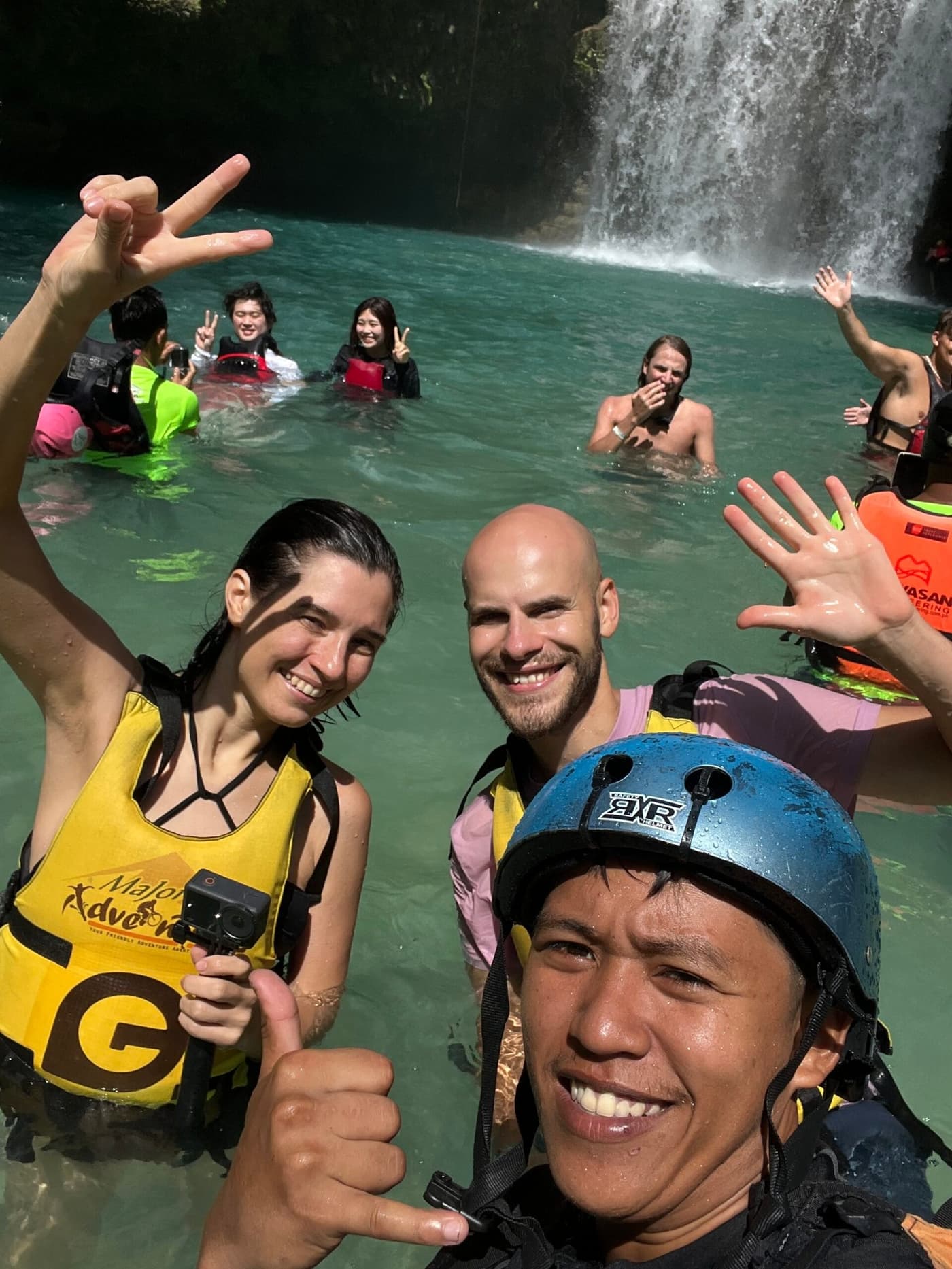
The guides keep you safe on the route: they show you the best places to jump, help on tricky sections and keep an eye on how the group is moving. No prior experience is required, but it's important to follow instructions and be ready for physical activity.
How much canyoning in Cebu costs
The price of canyoning at Kawasan Falls depends on the tour format and the options included. On average it ranges from 1500 to 2500 PHP per person (roughly $26–45). This usually includes equipment rental, a guide, a transfer and lunch.
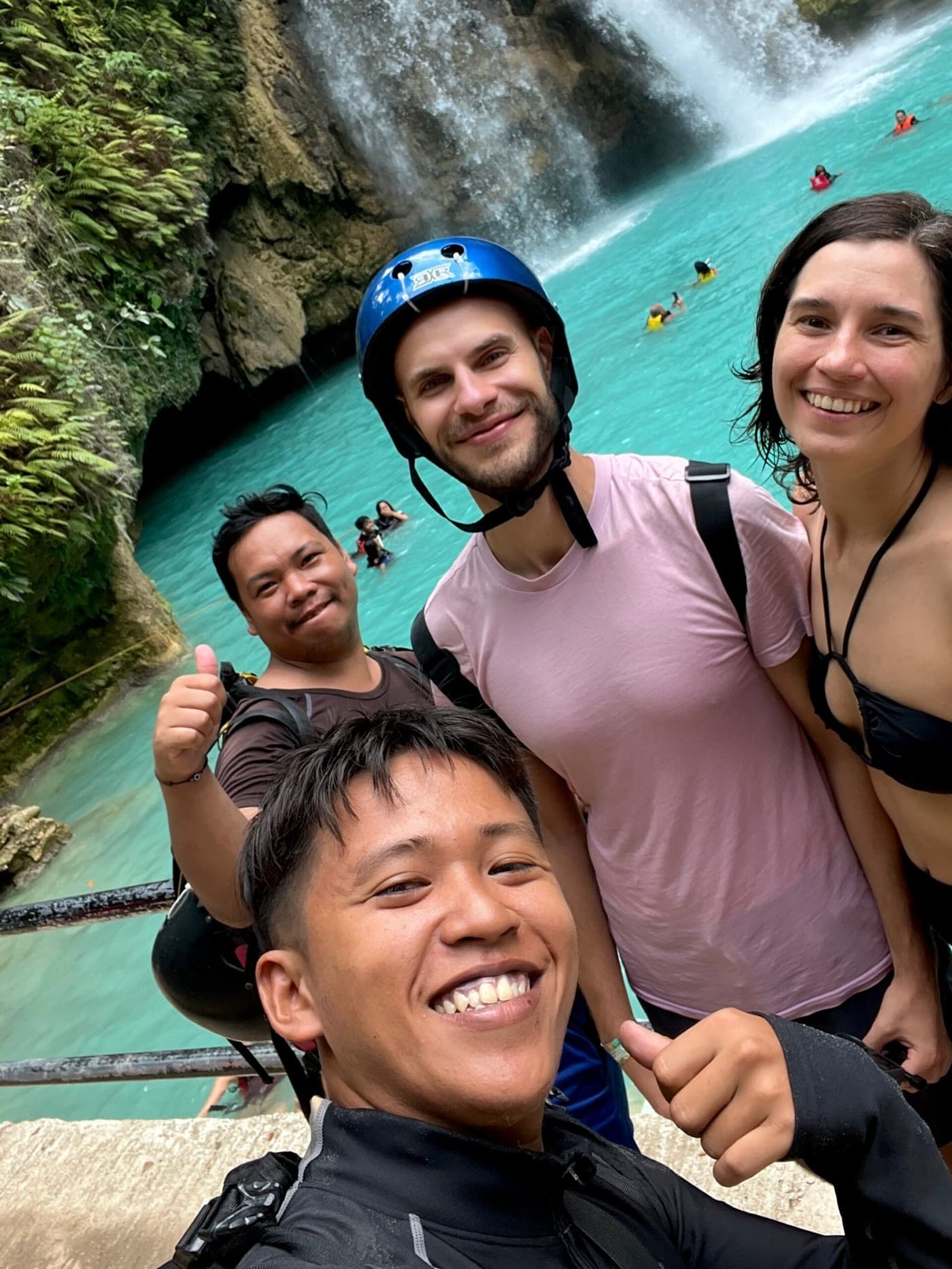
We chose a private tour with the full route and paid 2100 PHP (~$36) per person. It included lunch, a simple but filling Filipino dish: chicken grilled until charred, with rice. Two guides accompanied us along the route, and the transfer and all the gear were included.
How to get to Kawasan Falls
Kawasan Falls is in the municipality of Badian, on the southwest coast of Cebu island. If you're staying in Cebu City, the trip takes about 3–4 hours one way. You can get there in several ways: by bus, on a tour or in a rental car.
We chose to rent a car and didn't regret it. We took a Toyota Vios for three days from Saferide Car. The car was in excellent condition and cost 6000 PHP (~$105), plus a $150 deposit that was returned to our card instantly when we gave the car back. It gave us complete freedom: we drove around Cebu ourselves, with no guides and no time limits. We stayed overnight in Oslob: on the first day we swam with whale sharks, and the next day we went canyoning. This combination is a great idea if you want to fit in the two most popular adventures in southern Cebu without rushing or spending the whole day on the road.
You can also get there by bus from Cebu City's South Bus Terminal. It's the budget option, but it takes more time.
I filmed how we traveled around the Philippine islands in a YouTube episode. Enjoy watching, and I'd love a like and a subscribe 😉
Frequently asked questions
How much does canyoning in Cebu cost?
Prices vary. The average cost is 1500 to 2500 PHP (~$27–45) per person. That includes a guide, equipment, a transfer and often lunch. Private tours cost more, and group tours cost less.
How much is the entrance fee for Kawasan Falls?
Since the rules were updated in 2023, an entrance ticket without canyoning costs 200 PHP (~$3.50). For canyoning participants, entry is already included in the tour price.
How many hours does canyoning at Kawasan take?
The full route usually takes 3 to 5 hours. The duration depends on the program you choose, the participants' fitness and the number of stops for rest or photos.
Can you do the route without a guide?
No. Doing the route on your own is prohibited. Canyoning at Kawasan is allowed only with licensed guides. This is a mandatory requirement since the safety rules were updated.
Are the jumps from heights mandatory during canyoning?
No, all jumps are optional. The route has sections with heights from 3 to 10 meters, but each one can be bypassed. The guides always offer an alternative, and nobody makes you jump if you aren't sure.
Are there age or fitness restrictions?
Officially, participation is recommended from age 11 to 60. Participants need basic fitness: you'll be walking, swimming and jumping. Canyoning isn't suitable for pregnant women or people with serious injuries or limitations.
When is the best time to go canyoning?
The ideal period is December through June, the dry season. At that time there's less chance of a tour being canceled because of rain, the water level is stable and the route is safer. To avoid crowds, it's best to start the tour in the morning, before 9:00 a.m.