Trains in India are a convenient, affordable way to get around, and a big part of the local culture. Indian trains link the country's most popular regions and let travelers see everyday life up close. For a tourist, buying a ticket can feel like a tough task: there are different train classes, long lines and a generally confusing system.
In this article I'll explain how to buy a train ticket in India, what coach classes exist, what to keep in mind so your trip goes comfortably, and, of course, I'll share my own experience.
What makes Indian trains special
India has one of the largest railway networks in the world. According to Indian Railways, more than 13,000 passenger trains run across the country every day, and the total number of stations exceeds 7,000. The railways connect almost every region of the country, from the Himalayas to the southern states.
For locals, the train is still the most affordable way to travel: tickets cost far less than flights or even intercity buses. That is why the railway carries over 20 million passengers a day.
For a tourist, a ride on an Indian train is not just a way to get from point A to point B, but also a chance to soak up the atmosphere of the country. You can watch local life, try the food that vendors bring through the cars, and see an incredible variety of landscapes outside the window, from the deserts of Rajasthan to the tropical jungles of Kerala.
At the same time, keep in mind that trains in India vary hugely in comfort. It all depends on the class you choose, the route and the time of travel. So it is important to understand the train classes in advance and know how to pick the right ticket.
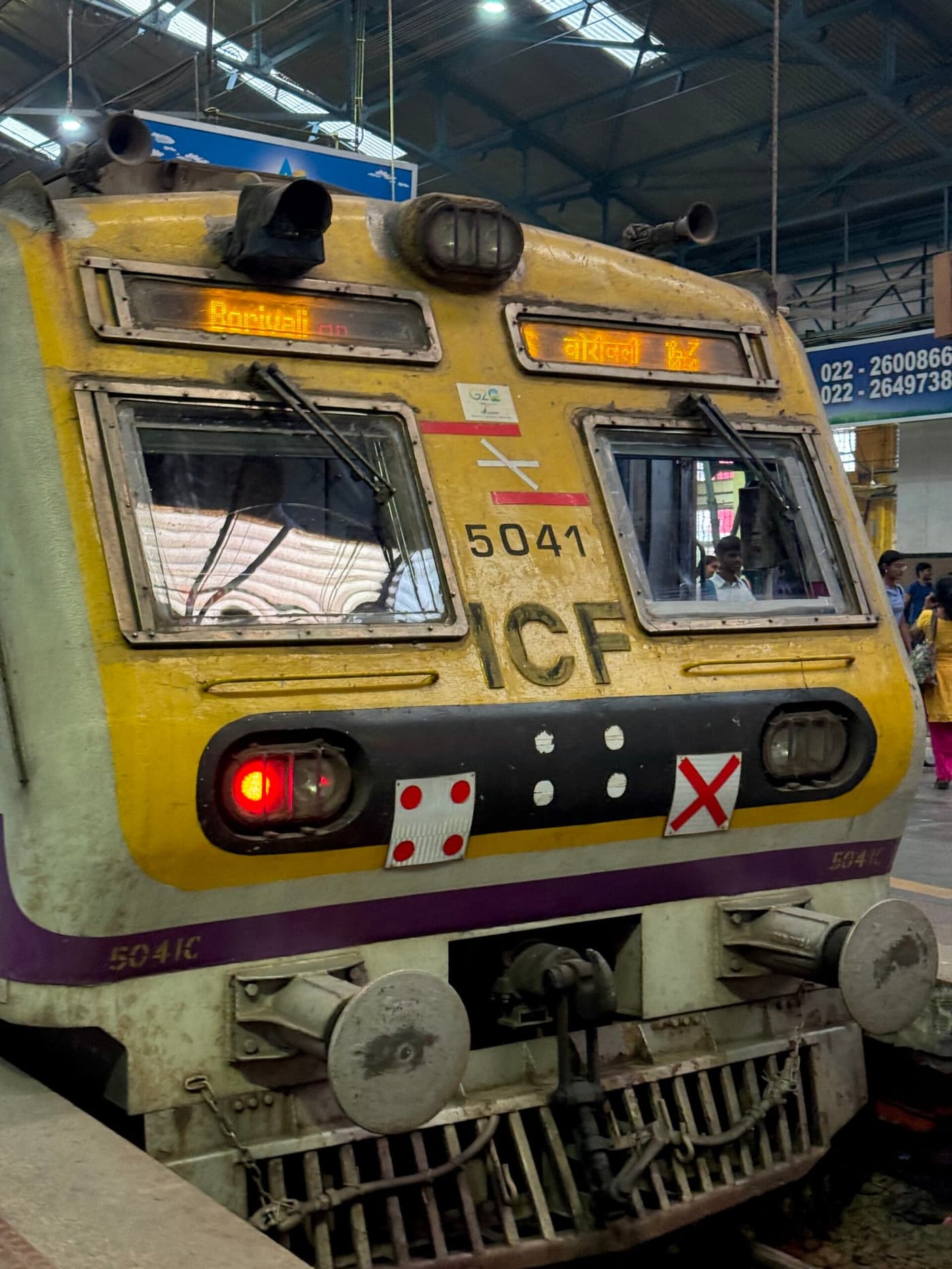
Train classes in India: a full overview
The Indian railway system has several coach classes. They differ a lot in comfort and price, so it is important to understand what to choose for your budget and travel style.
Executive Chair Car (EC)
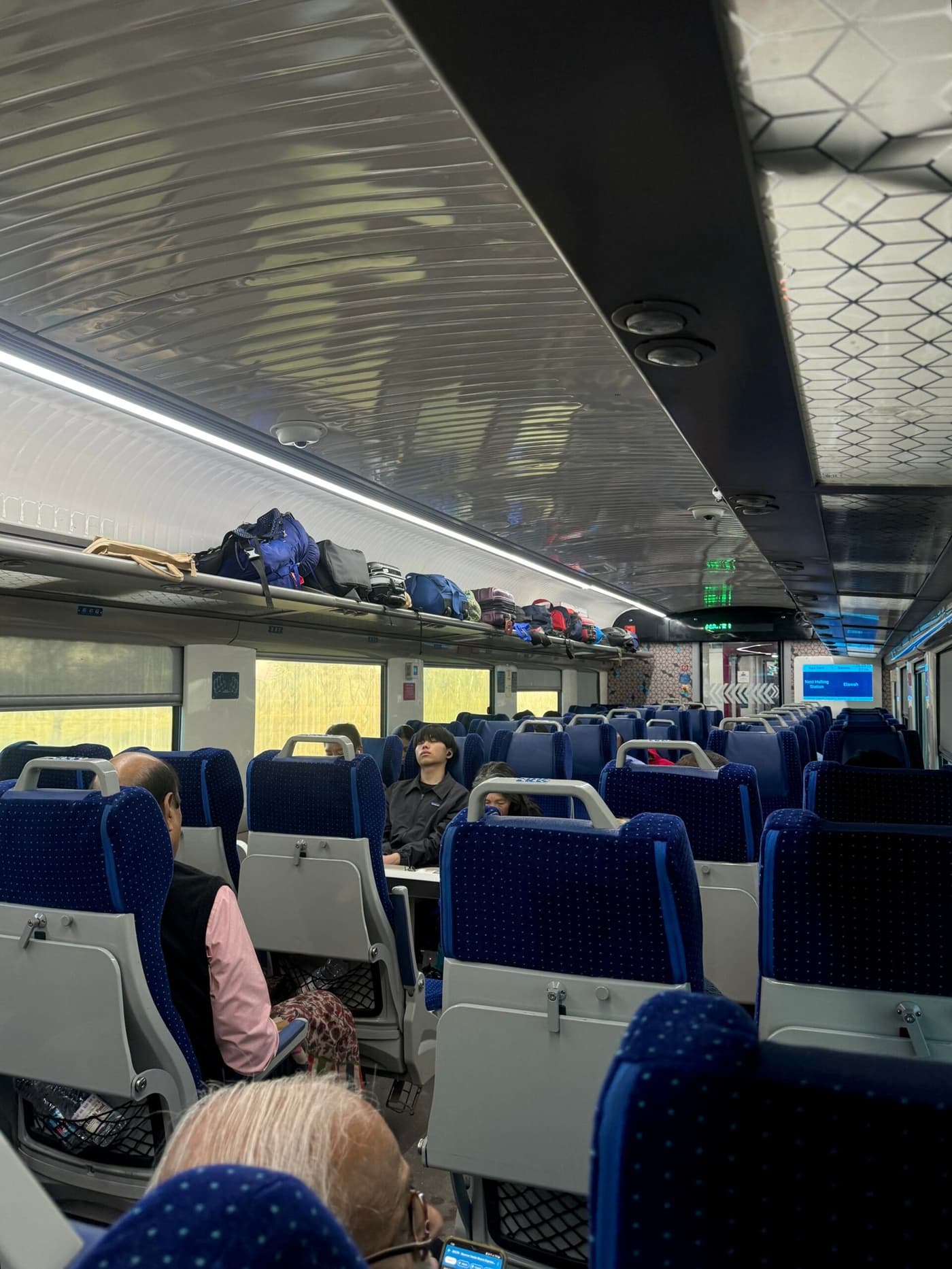
An air-conditioned seating class on Indian trains. You find it on fast daytime trains.
The seats are roomy, with plenty of space between rows, adjustable backs and armrests, and the toilets are clean and spacious. We rode this kind of train twice, it was very comfortable, and they even served food.
AC First Class (1A)
The most expensive and most comfortable option. The compartment has a door that closes, and there are compartments for two or four people. Bedding is provided, the berths are wider and there is more space between them. We took this kind of train from Delhi to Jaipur.
AC 2 Tier (2A)
An air-conditioned sleeper car with berths in two levels, upper and lower. Each section has four berths, plus two side berths. Because of this, it is roomier, quieter and more comfortable than 3A.
AC 3 Tier (3A)
An air-conditioned sleeper car with berths in three levels. Each section has six berths, three on each side, plus side berths along the aisle. Unlike Sleeper, it has air conditioning, closed windows and a calmer atmosphere.
Second Sitting (SS)
This is one of the cheapest classes on Indian trains. It is meant for short trips, like a low-class commuter train. There are only seats, no air conditioning, just ceiling fans and windows that open.
The car is built for a large number of passengers, so it is crowded, noisy and hot.
On the plus side: tickets are very cheap and available even in high season. It is a good way to meet locals and feel the authentic side of the country.
Sleeper Class (SL)
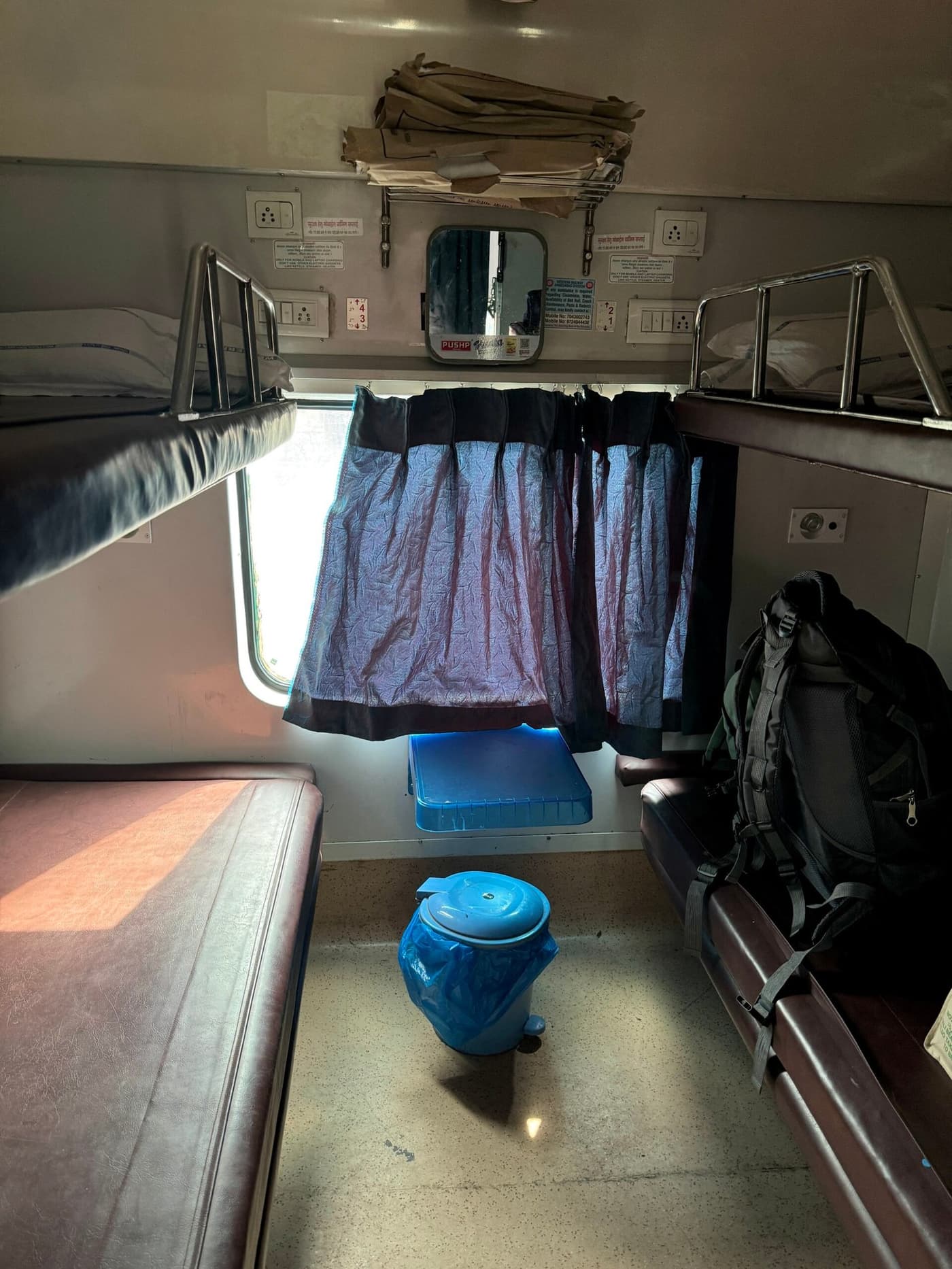
Sleeper is the most popular class on Indian trains, designed for overnight and long-distance trips. The car is laid out like this: on both sides of the aisle there are sections with six berths in three levels, plus extra side berths along the corridor. There are about 70–80 berths in a car in total.
Sleeper has no air conditioning, no bedding is provided, it is always very crowded and you can run into petty theft.
Tickets are cheap, always available, and you get to feel the local color.
General Class
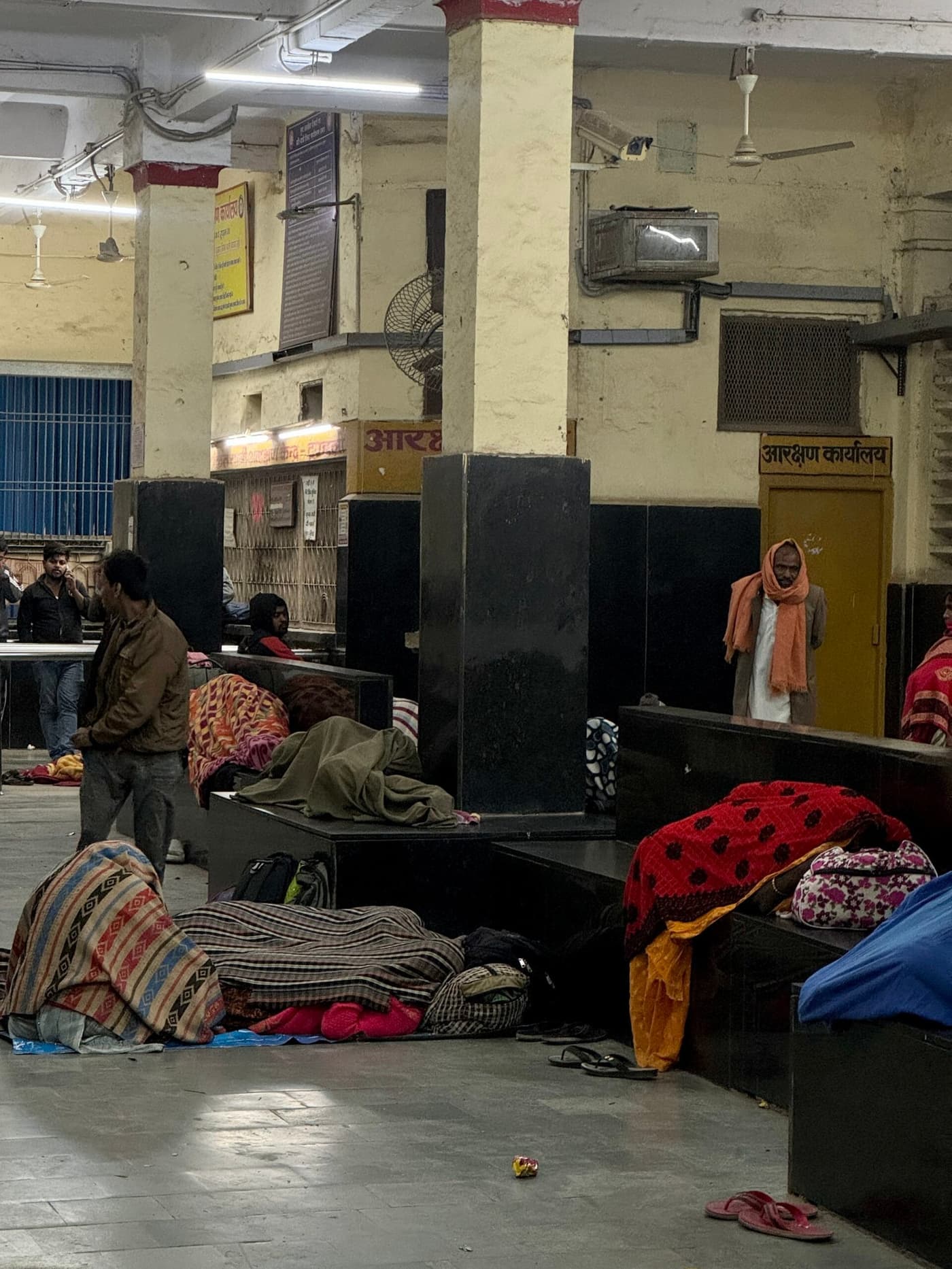
General Class is the cheapest and the roughest way to ride a train in India. These cars are found on almost every train and are meant mainly for locals who need to get somewhere as cheaply as possible, or even for free. The number of tickets is unlimited and the price is pennies, which is exactly why General Class cars are always packed.
In General Class there are no assigned seats: tickets are sold without a seat or berth number. Whoever manages to sit down gets a seat, and if there is no room, passengers have to stand or sleep on the floor.
If you want to try General Class for the experience, choose short daytime routes and keep your valuables on you. The conditions are tough, and it is more of a one-time adventure than a real way to get around.
How to buy a train ticket in India
Buying train tickets in India is not an easy task. Tickets for popular routes are often sold out a month or even two months ahead. So it is important to buy tickets in advance. Below I'll go through the main options.
Online through the official IRCTC website
IRCTC (Indian Railway Catering and Tourism Corporation) is the main portal for booking tickets. However, there are a few catches:
- Registration requires an Indian phone number
- The site is as glitchy as the one used to apply for an Indian tourist visa.
- It often gives an error when you pay with foreign cards.
- Sometimes it simply stops working for a while.
Third-party online services
If you don't want to deal with IRCTC, you can use third-party websites and apps:
-
12Go Asia — the most popular service, and I always buy my transport tickets there. It lets you buy a ticket online in advance, the interface is easy to use, and it accepts foreign cards.
-
MakeMyTrip — a large Indian service where you can book trains, buses, flights and hotels.
-
Ixigo — a popular app among Indians. It shows timetables and train classes and helps with booking.
-
EaseMyTrip — another well-known platform where railway tickets are available.
Mobile apps like Ixigo and MakeMyTrip are handy for finding routes, tracking ticket status and getting trip notifications.
Buying a ticket at the station ticket office
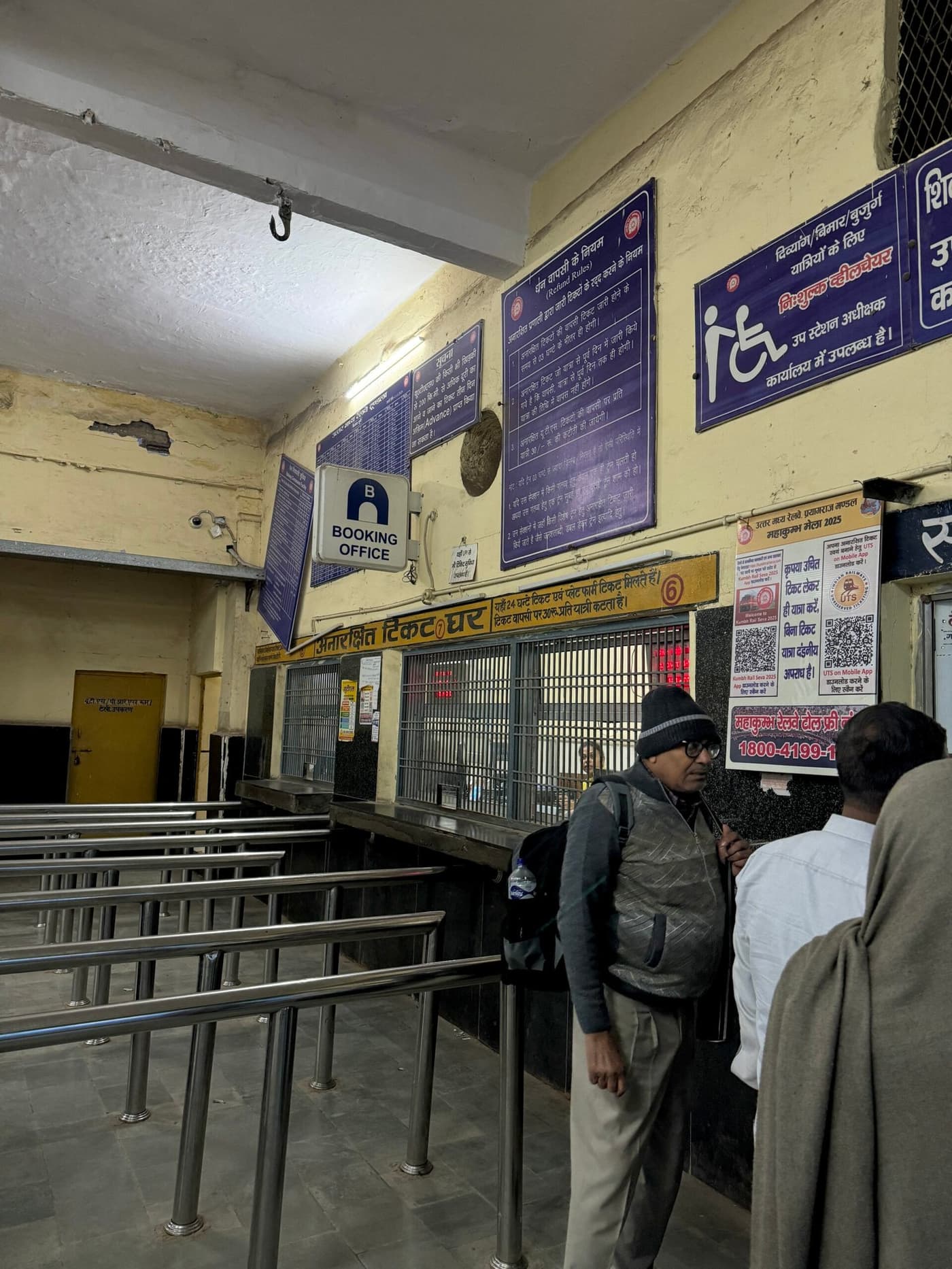
The classic option, which suits those who are already in India. Large stations have separate ticket windows for foreign tourists, where you can buy tickets under a special quota, which I'll explain in the next section. The downsides are huge lines and tickets that may be sold out.
Tickets for foreign tourists (Tourist Quota)
There is a separate tourist quota for travelers in India. It lets you buy a ticket even on popular routes that are already sold out for locals. You can buy these tickets at station ticket offices. Not every city and station has them, but they are definitely available in large cities such as Delhi and Mumbai.
What to know before your trip
A train trip in India can be one of the most vivid experiences of your journey, but it takes some preparation. Here are the key points to keep in mind:
WL and RAC: what they mean
When you buy a ticket in India, you may see these labels:
-
WL (Waitlist) — a ticket on the waiting list, which is not a confirmed ticket. It means there is no seat yet, but you join the queue. If someone cancels, your status moves up. You may not be allowed on the train with this ticket if it doesn't get confirmed.
-
RAC (Reservation Against Cancellation) — a ticket that entitles you to a place, but not a full one. Usually it is half a seat that you can use until your ticket is confirmed. With this ticket you will get on the train, but don't expect comfort.
Book in advance
Indian trains are hugely popular, so tickets for many routes sell out weeks, and sometimes months, ahead. This especially applies to popular routes: Delhi — Agra, Mumbai — Goa, Varanasi — Kolkata. If your dates are fixed, it is better to buy tickets in advance, at least 2–3 weeks ahead.
How to choose a train class
- For short daytime trips, seating classes will do. Don't struggle, and take Executive Chair Car (EC)
- For overnight trips 2A is the best option, but it's better to take AC First Class (1A)
- For budget trips, or to feel the local color, take Sleeper Class, but be ready for noise, crowds and no air conditioning.
- For the desperate there is General Class: it is unsafe, cheap, terribly uncomfortable, but very colorful.
What to bring
- A hoodie or at least a shirt, since air-conditioned trains can be chilly.
- Water and a snack. Food is sold at stations and on trains, but the quality is not great.
- Wet wipes and hand sanitizer.
How we traveled around India: I filmed it for YouTube. Enjoy watching!
Frequently asked questions about trains in India
What is the Foreign Tourist Quota and how do I use it?
The Foreign Tourist Quota is a quota set aside for foreign tourists that lets them buy train tickets even when none are left for citizens.
Can I buy a tourist quota ticket at the station?
Yes, but with limitations. A Foreign Tourist Quota ticket can only be obtained at the special International Tourist Bureaus at stations in large cities, for example in Delhi, Mumbai and Varanasi, by showing your passport and tourist visa.
What is Tatkal and what has already changed in the system?
Tatkal is a special last-minute booking system, usually opening a day before the trip, with a higher fare and no refund. Since 2025, mandatory Aadhaar verification and OTP authentication have been introduced for Tatkal bookings, to prevent abuse and make booking more transparent.
What are WL and RAC, and how safe is it to travel with them?
- WL (Waitlist): you are in the queue, and confirmation may not happen. There is a risk of losing your ticket.
- RAC (Reservation Against Cancellation): guarantees boarding, but may offer only half a berth or seat until your ticket is confirmed.