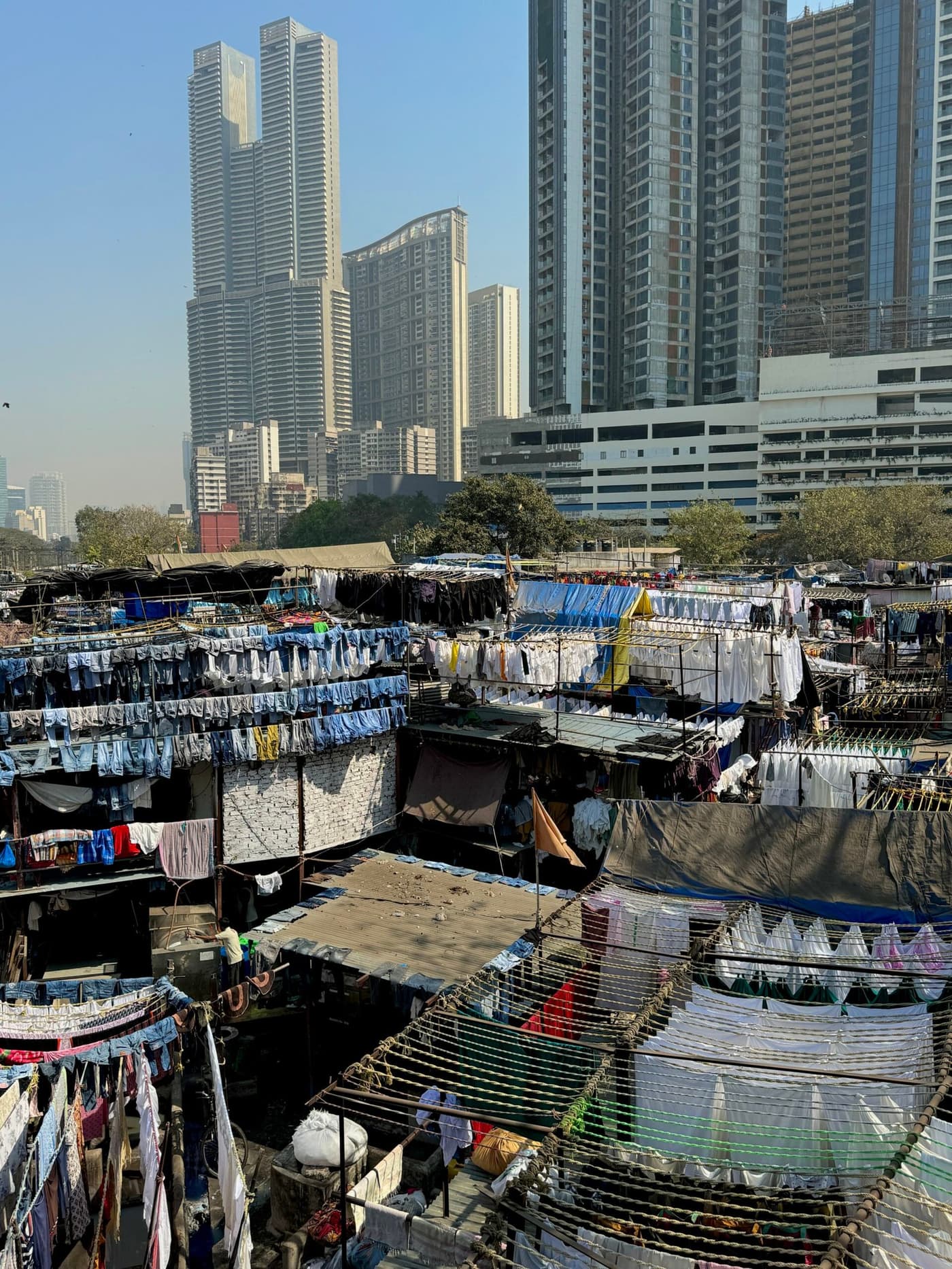
Dhobi Ghat in Mumbai is the largest open-air laundry not only in India but in the whole world. The word "dhobi" means "washerman" or "washerwoman," and "ghat" means "steps or a place by the water." The place really was built for washing: it has dozens of rows of concrete washing pens where thousands of people scrub mountains of laundry by hand every day.
In this article I'll tell you where the Dhobi Ghat laundry is, how to get there, and show you the photos I took while I was there.
What is the Dhobi Ghat laundry and why is it called the largest in the world
The Dhobi Ghat laundry has been running since the late 19th century and mostly serves hotels, restaurants, hospitals and private customers. Mumbai's Dhobi Ghat made it into the Guinness World Records as the place where the most people hand-wash clothes at once. The scale really is impressive. More than 100,000 items are washed here every day, and up to 7,000 dhobis work there. These are hereditary washerwomen and washermen who pass the craft down from generation to generation.
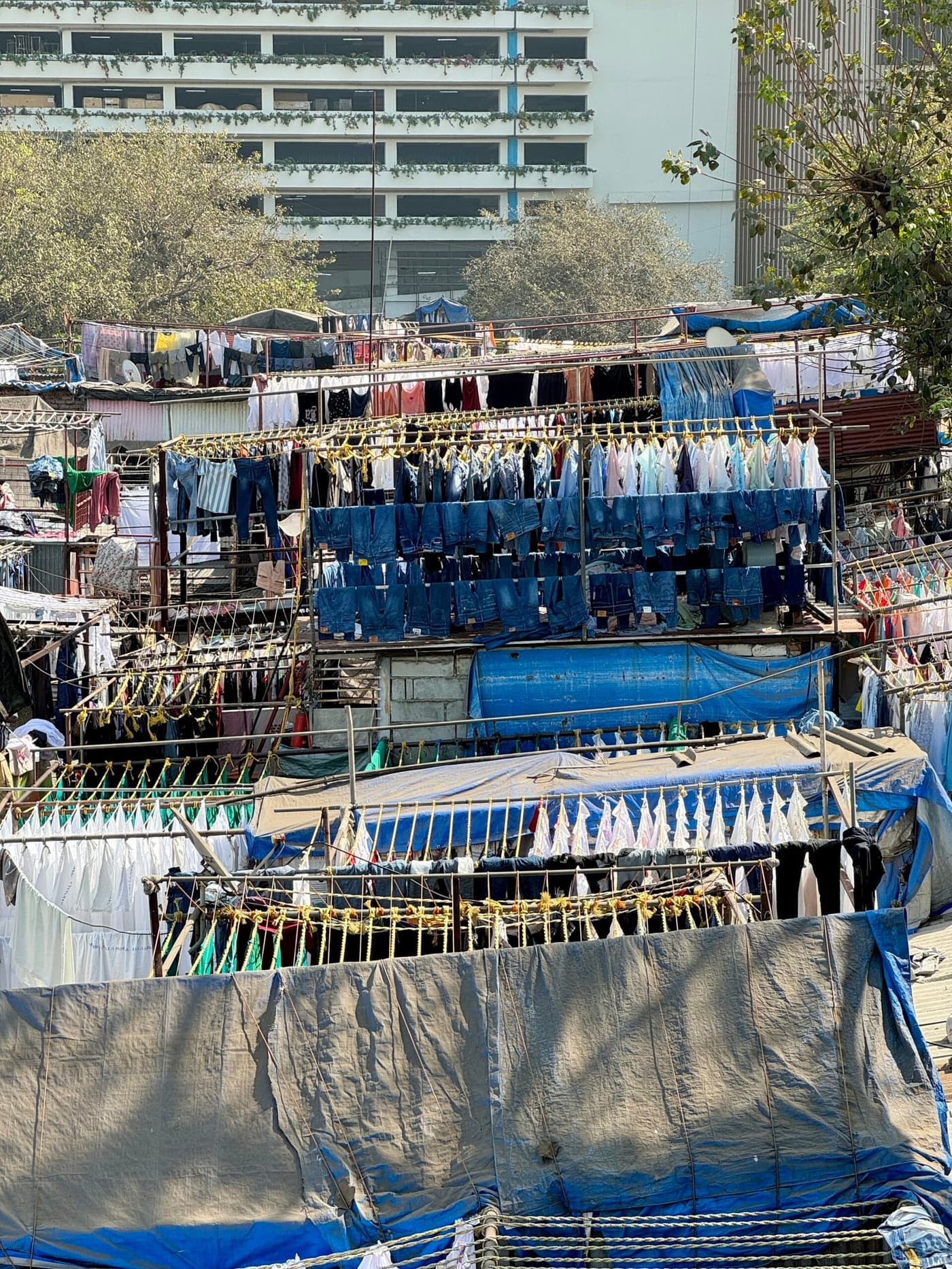
The complex has hundreds of concrete tanks in total, each meant for a particular stage of washing. After bleaching and rinsing, the laundry is dried on long lines right under the open sky. Despite all the advances in technology, traditional manual labor is still used here, which makes Dhobi Ghat a one-of-a-kind sight in Mumbai.
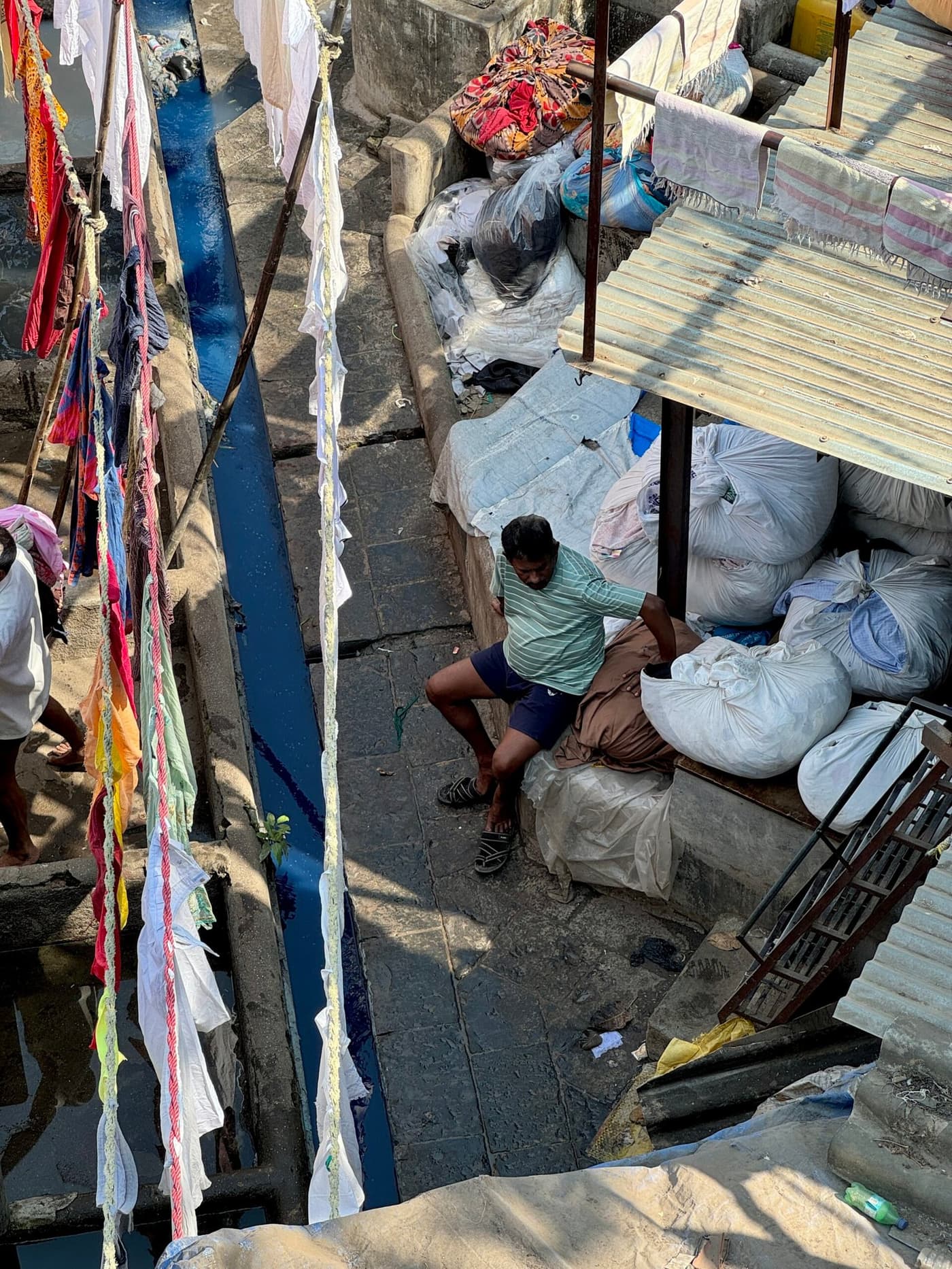
The history of Dhobi Ghat in Mumbai
The Dhobi Ghat laundry appeared in Mumbai when the city was still called Bombay and was under British colonial rule. At that time there was a need for centralized laundry for British officers, hotels and hospitals. That was when the washermen, members of the dhobi caste, began working in an organized way on a specially designated site near the Mahalaxmi area.
Over time, Dhobi Ghat in Mumbai turned into a real city within a city. The laundry became not only a workplace but also the center of life for a whole community. Permanent work areas, storerooms, drying yards and even its own laundry-sorting system appeared here. Special marking codes are still used today so that customers' items don't get mixed up.
In its more than a hundred years of existence, the Dhobi Ghat laundry has barely changed its traditional way of washing. Even though washing machines and automated processes have appeared, the main work is still done by hand.
Today the laundry is still in demand: it washes linens for hundreds of hotels and hospitals, as well as for local residents. At the same time, it has become a popular tourist attraction that has kept the atmosphere of old Mumbai.
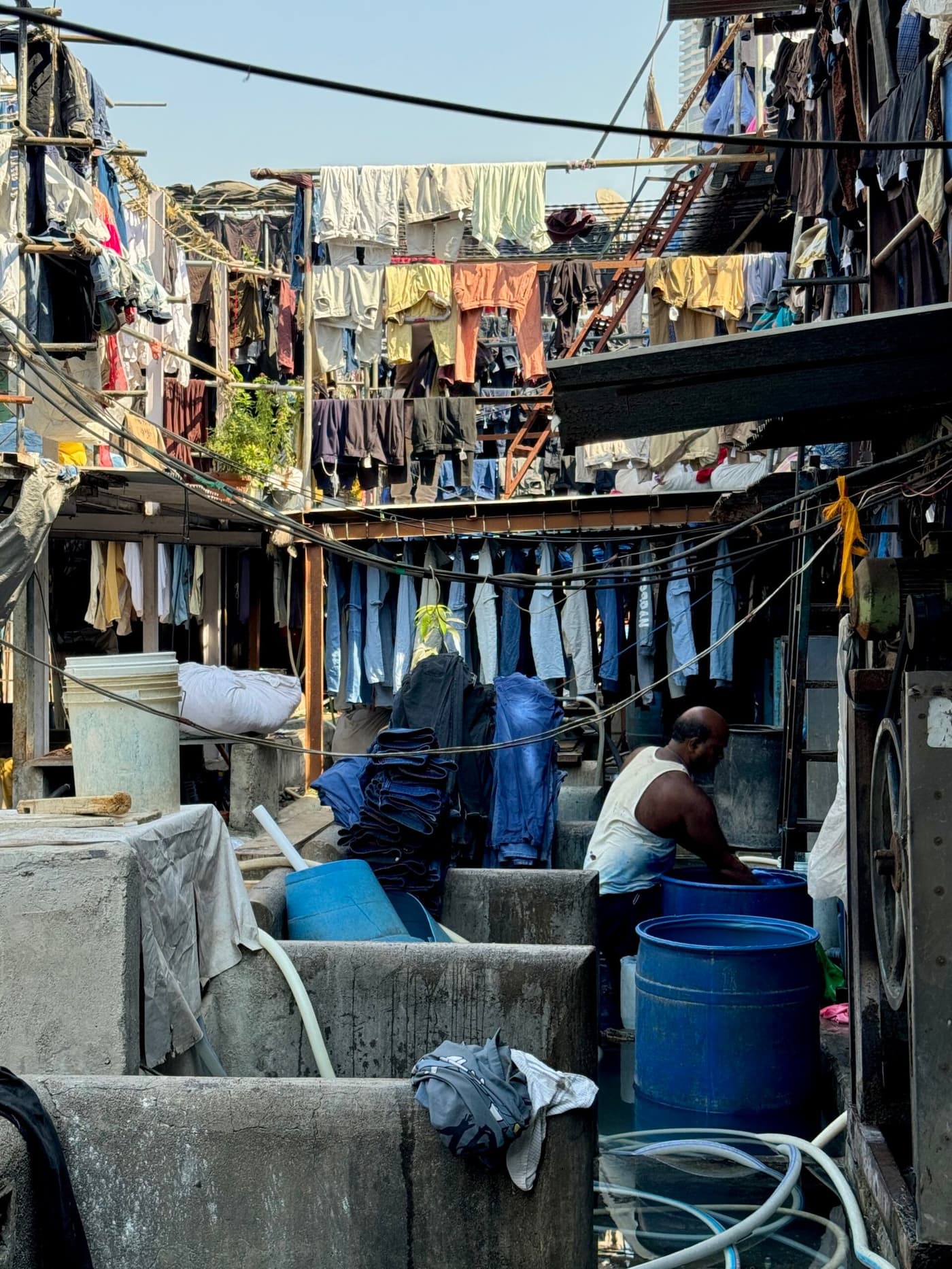
How the Dhobi Ghat laundry works
When you step onto the grounds of Dhobi Ghat in Mumbai, the first thing you notice is the rows of identical concrete tubs under the open sky. There are several hundred of them, and each is used for a particular stage of washing. In one tank the laundry is soaked in a soapy solution, in another it is bleached, and in a third it is rinsed thoroughly. All of this is done by hand, just as it was a hundred years ago.
Every morning thousands of dhobis start work by sorting the laundry. They use a system of marks so they don't mix up the clothes of different customers. After washing, the items are hung on long lines strung right across the open areas. They dry in the sun and are then ironed with heavy irons that are traditionally heated with coals.
Although a few modern washing and drying machines have appeared at the Dhobi Ghat laundry, most of the work is still done by hand. This helps preserve the quality and the traditions that local people are proud of.
Interestingly, the laundry is organized like a whole mini-industry: some people are in charge of receiving and delivering the laundry, others of washing and bleaching, and others of drying and ironing. This division of labor helps handle a huge volume of orders, on average up to 100,000 items a day.
Mumbai has modern dry cleaners and laundries with automated processes, yet Dhobi Ghat remains in demand. Its main customers are hotels, restaurants and hospitals, which need a large amount of fresh linen every day.
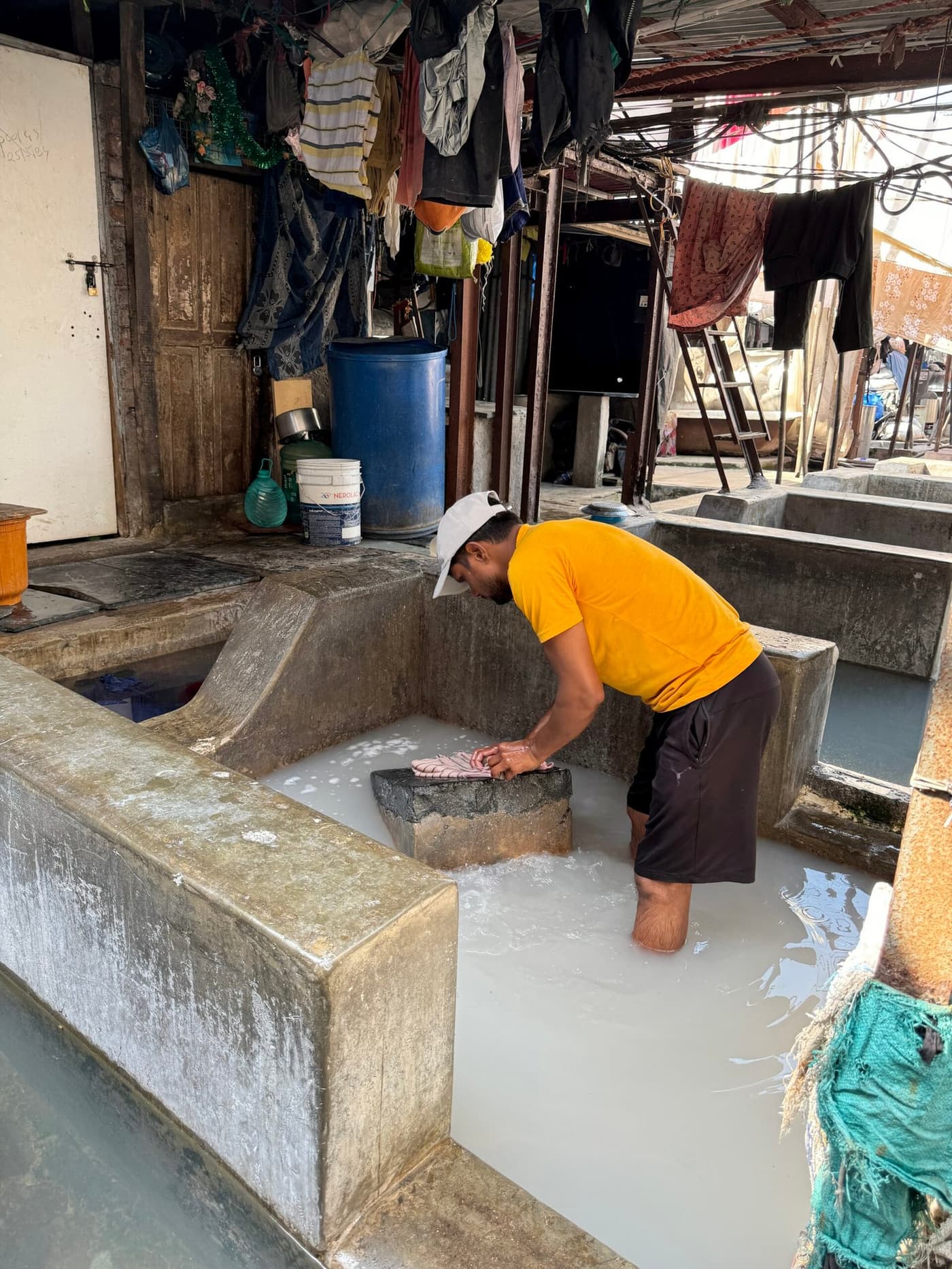
Dhobi Ghat through a tourist's eyes
For many travelers, Dhobi Ghat in Mumbai is an interesting sight. If you want to get to know the traditions of Mumbai that have barely changed in a hundred years, the Dhobi Ghat laundry is worth adding to your route.
How to get to Dhobi Ghat
The laundry is in the Mahalaxmi area, next to the railway station of the same name. You can get there by suburban train, bus or taxi. Tourists often choose a trip with a guide, who tells the history of the place and points out interesting details you might not notice at first glance. We went with a guide as part of a tour of the Dharavi slum. I wrote about how we visited the Dharavi slum in a separate article.
Dhobi Ghat is often used as a location for films and documentary projects. Scenes for the famous film "Slumdog Millionaire" and many Indian movies were shot here.
I filmed how we traveled around India and put it in a YouTube video. Enjoy watching!
Frequently asked questions about the Dhobi Ghat laundry
When is the best time to visit Dhobi Ghat
The best time to visit is early in the morning. Thousands of workers start washing, and you can see the whole process, from soaking and bleaching to hanging the laundry. During the day, when the heat gets stronger, activity slows down.
Can you take photos?
Yes, tourists are allowed to take photos, but it's best to do so from the viewing platform so you don't disturb the washers at work. If you want to take close-up shots, it's better to ask permission in advance or come with a guide.
How much does a tour cost?
Visiting the viewing platform is free, but you will have to pay for a private tour with a guide. The price varies depending on the agency; these are usually inexpensive tours that you can combine with visits to other Mumbai attractions.
What else is there to see near Dhobi Ghat?
The famous Mahalaxmi Temple is near Dhobi Ghat, along with old buildings from the British era. You can combine the walk with a visit to the well-known Dharavi slum.