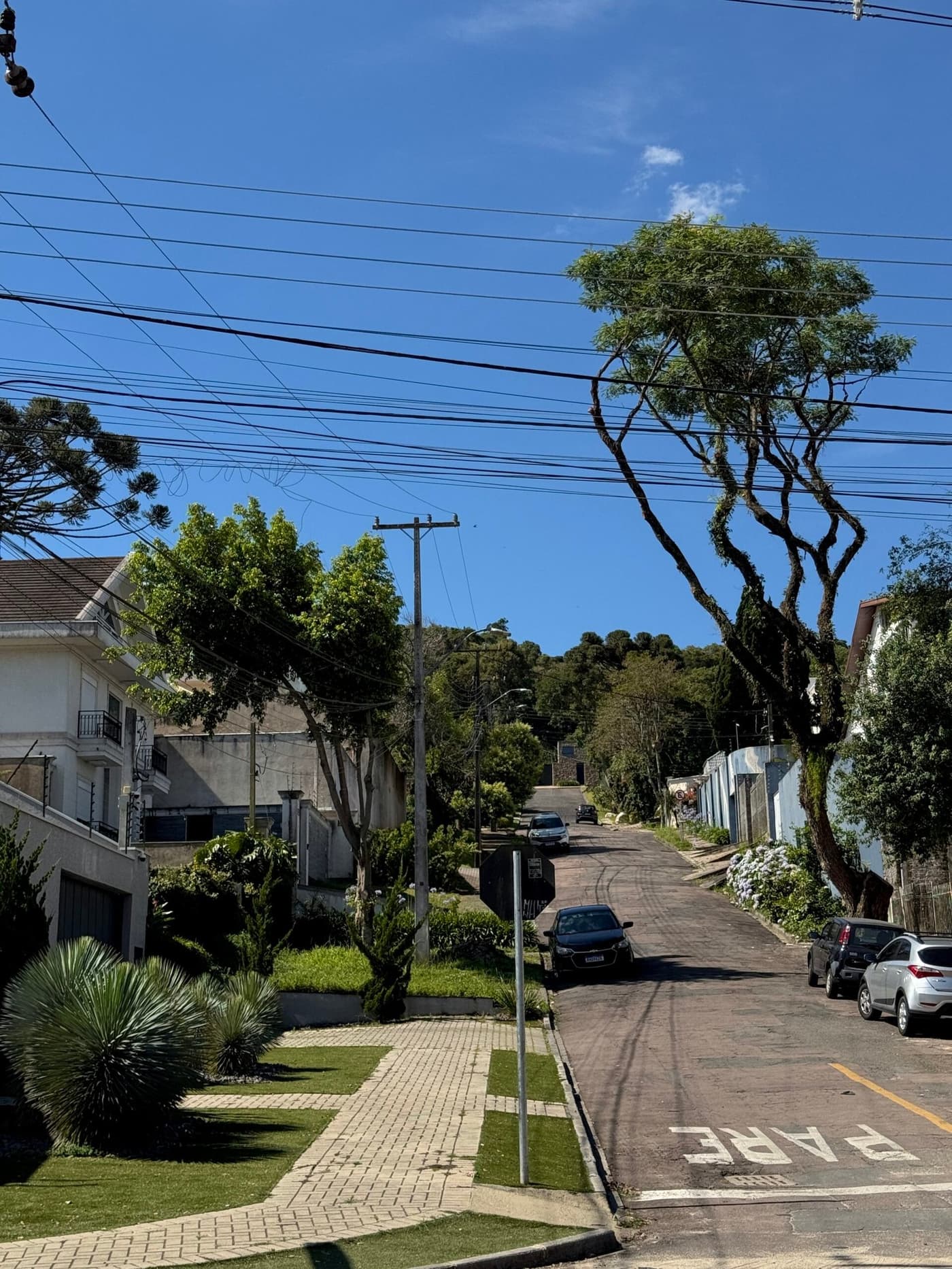
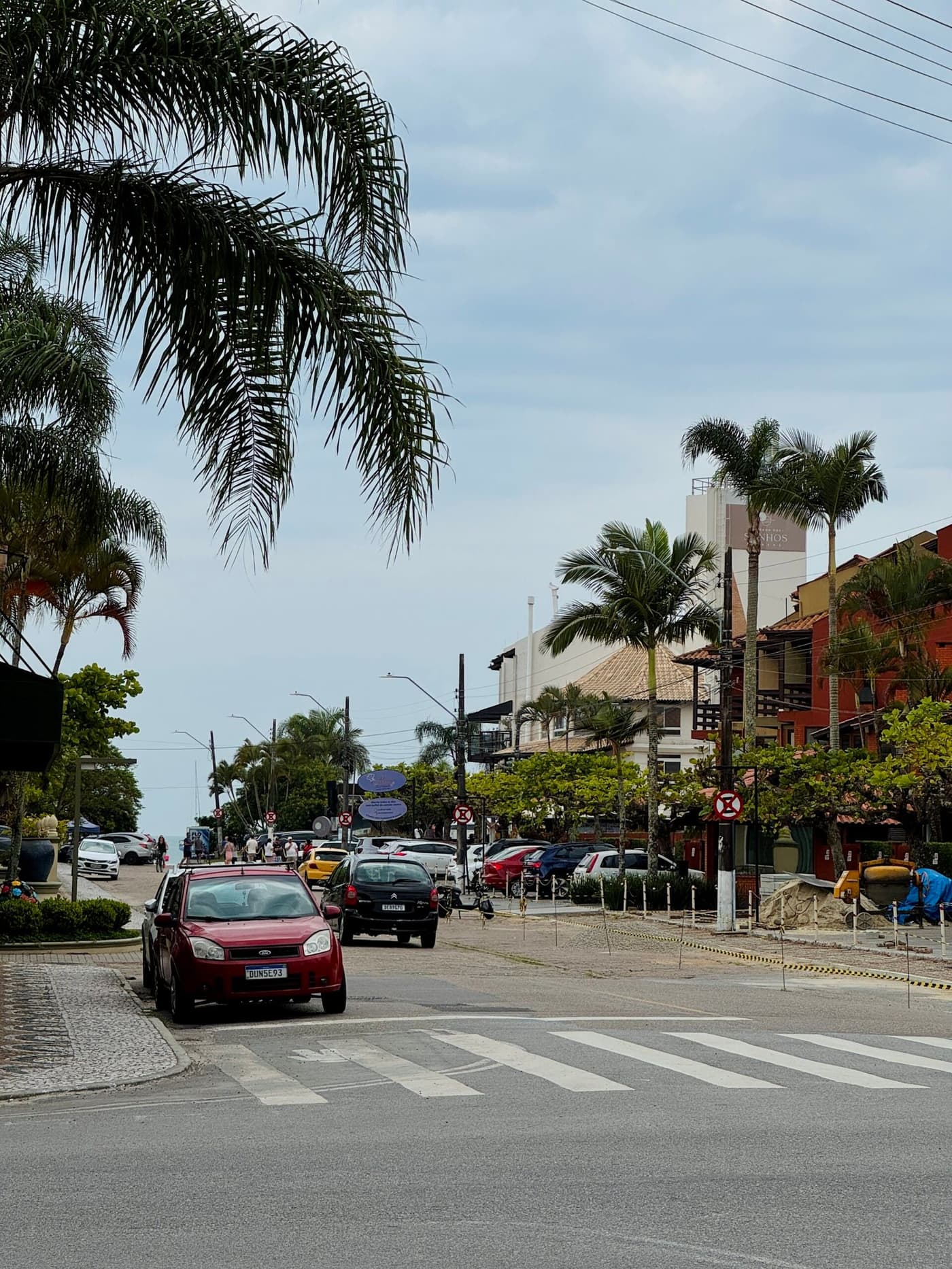
Brazil is not only Rio, samba and endless summer. There is a city that breaks every stereotype about the country: a cool climate, green parks instead of favelas, and a transit system that universities around the world study. That city is Curitiba.
The capital of Paraná state and the eighth most populous city in Brazil, with almost 1.83 million residents within city limits, Curitiba stopped being a city just for Brazilians a long time ago. Digital nomads come here for good quality of life at a reasonable price, expats come for safety and infrastructure, and tourists come for things you don't expect from Brazil: cozy cafés, cool evenings and parks with capybaras!
In this guide I've put together everything you need to know about Curitiba: from climate and sights to apartment rental prices and residence permits. I wrote about everything you need to know before a trip to Brazil in another detailed article.
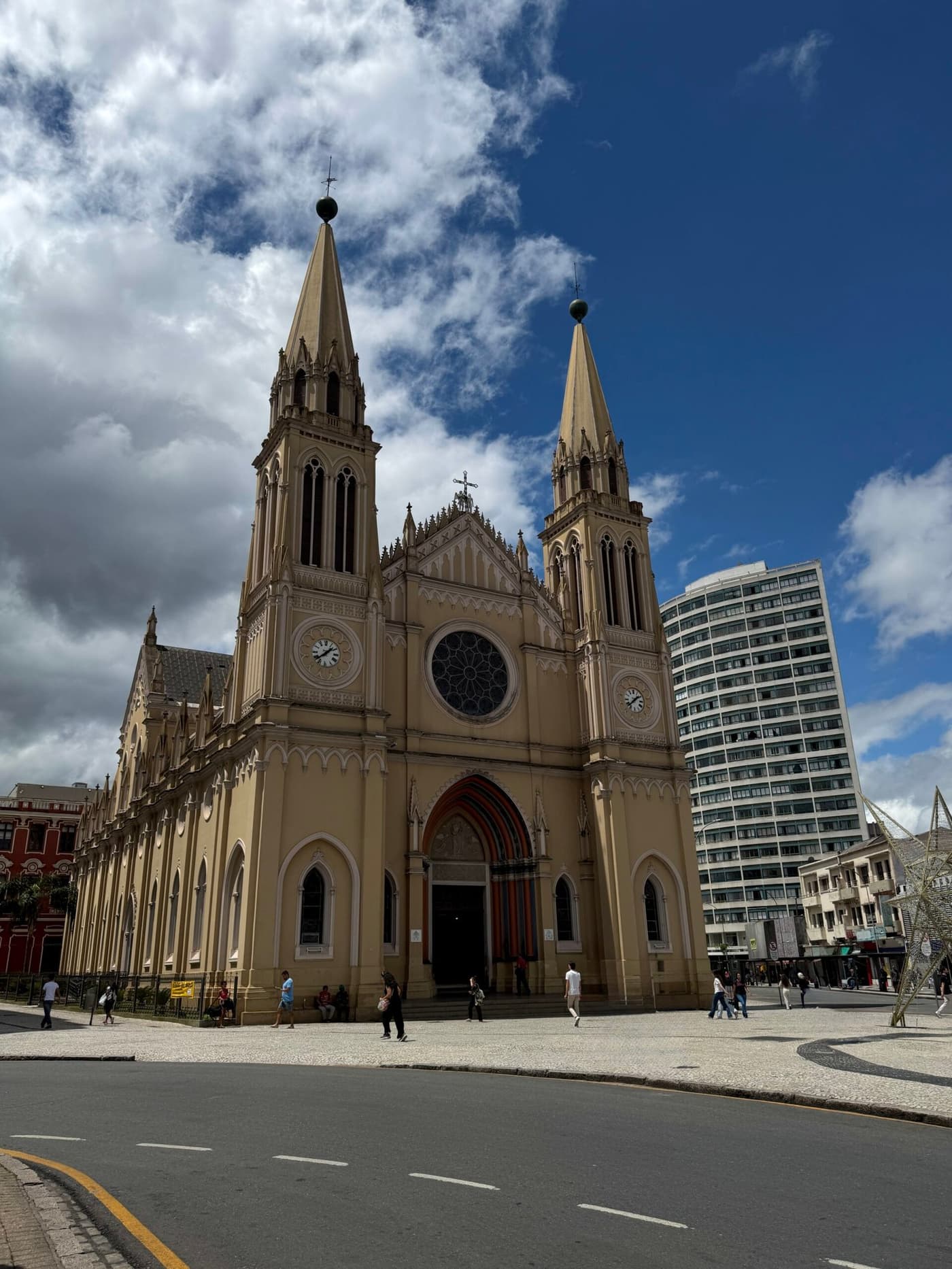
What Kind of City Is Curitiba, and Why Is It So Popular With Expats
Curitiba is not the city you dream about as a child. It isn't shot in Hollywood movies, and it isn't on the first page of tourist guidebooks to Brazil. But this is exactly where people move to settle down, some for good, some as nomads for a while. I broke the city down from a digital nomad's point of view in another article: Curitiba for digital nomads.
There are several reasons, and we'll go through each of them in detail in this article. But first, a few basics about the city itself.
Curitiba on the Map of Brazil: Where It Is and How to Get There
Curitiba is in the south of Brazil, in Paraná state, about 400 kilometers southwest of São Paulo. The city sits on a plateau at an elevation of about 934 meters above sea level, which largely explains its climate, unusual for Brazil.
Getting to Curitiba is easy. Afonso Pena International Airport (CWB) receives flights from major Brazilian cities and a number of international destinations. From São Paulo it's about an hour by plane or 6 hours by bus along an excellent federal highway. From Florianópolis it's five hours by car or bus, which makes Curitiba and Floripa a natural pair for anyone exploring southern Brazil.
5 Facts About Curitiba That Surprise Even Experienced Travelers
Before getting into the details, here are a few numbers and facts that show right away what kind of city we're dealing with.
- Curitiba is one of the few big Brazilian cities where frosts happen and snow has even been recorded. It sounds odd for a country associated with the tropics, but for people from temperate climates it's more of a plus.
- The settlement is more than 370 years old. A gold prospectors' camp appeared here around 1654, the official founding date of the city is 29 March 1693, and in 1854 Curitiba became the state capital. European settlers played a big role in shaping it: in the 19th century waves of immigrants arrived from Germany, Italy, Poland and Ukraine, which you can still feel in the architecture, the food and the mindset of the locals.
- Its Human Development Index is one of the highest in the country. Curitiba is among the few Brazilian cities with a very high HDI, at 0.856, noticeably above the national average.
- Unemployment is one of the lowest in Brazil. In 2025 the unemployment rate in Curitiba was only 4.3%, the third best in the country after Palmas and Florianópolis.
- According to surveys, 99% of Curitiba residents are happy with their city. For a metropolis of almost two million people, that's a surprising number.
Curitiba Is Called the Greenest City in Brazil
The story began in the 1970s, when a young architect-mayor, Jaime Lerner, decided that the city should be built around people, not cars.
In 1974 Curitiba launched one of the world's first bus rapid transit systems, BRT. Today around 85% of the city's residents use it, and the BRT model itself has been copied in more than 150 cities worldwide, from Bogotá to Istanbul.
Green infrastructure developed alongside transport. Since the 1970s, 1.5 million trees have been planted in Curitiba and 28 public parks have been built. There are now more than 51 square meters of green space per resident, one of the best figures among large cities in the world.
The separate waste collection program deserves a special mention: Curitiba recycles about 70% of its waste, a fantastic figure for Latin America.
All of this has been recognized internationally: in 2010 Curitiba received the Global Sustainable City Award, and in 2012, at the UN Rio+20 conference, the Green City Award, becoming the only city in South America to receive it.
This is infrastructure that affects quality of life: clean air, convenient transport, parks within walking distance. That is why Curitiba consistently makes the top of "best Brazilian cities to live in" rankings and attracts people who are looking for a place where they want to stay.
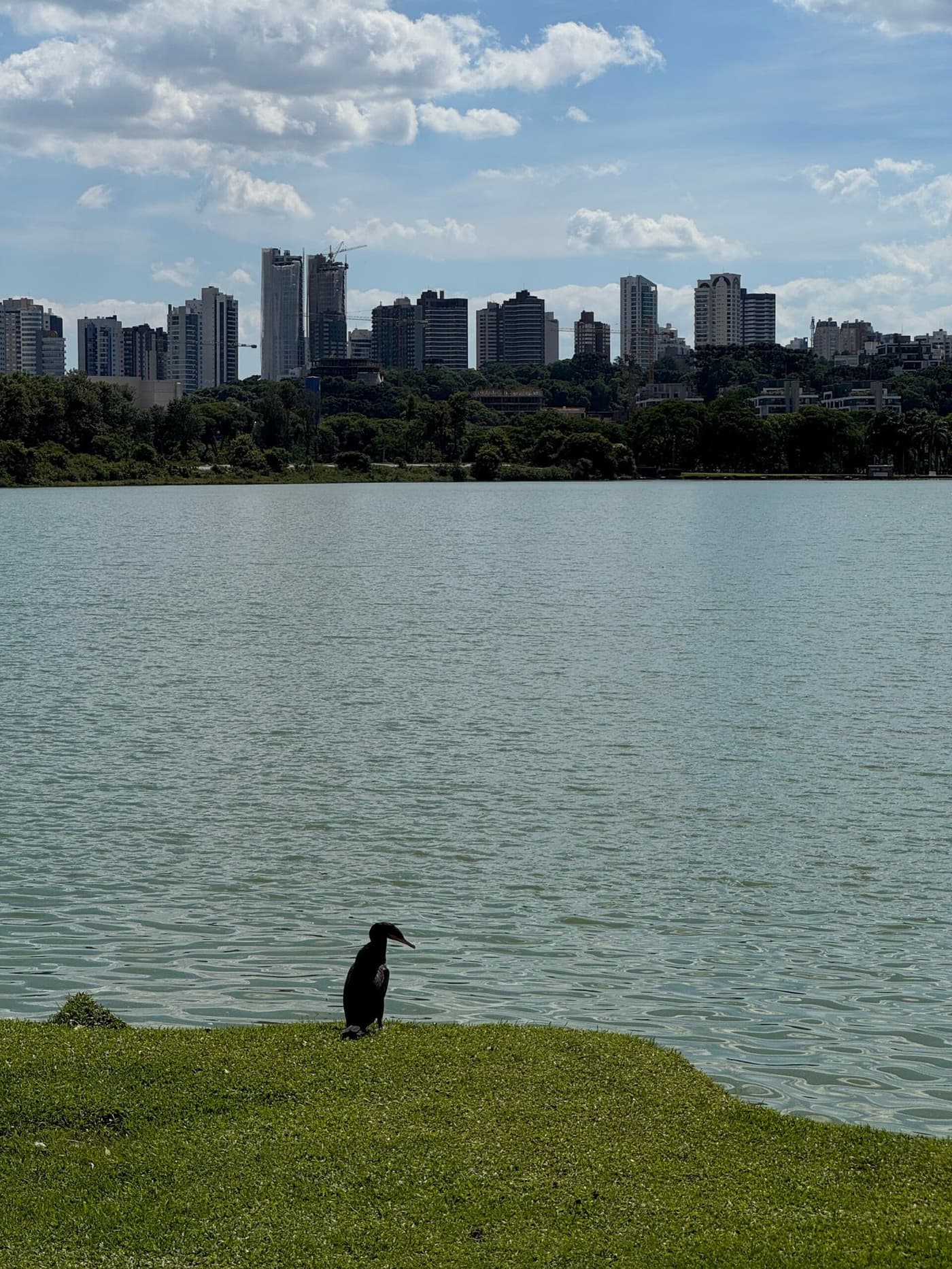
Curitiba Weather by Month and the Best Time to Visit
Everyone planning a trip to Curitiba wants to know about the climate. And the reaction is almost always the same: "Does it get cold in Brazil?" It does. And that's exactly what makes Curitiba special.
How Curitiba's Climate Differs From the Rest of Brazil
While Rio de Janeiro is at +35°C in January with humidity like a sauna, on the same day in Curitiba you might get a refreshing rain at +25°C. The city sits on a plateau about 934 meters above sea level, and that altitude changes everything.
Curitiba's climate is subtropical, with mild winters and warm summers. There is no true dry season here, although winter is noticeably drier than summer. By the Köppen classification it's an oceanic, temperate climate. No exhausting Brazilian heat, but no Siberian frosts either.
The average annual temperature in Curitiba is about 18°C. For comparison: in Rio it's about 24°C, in Manaus about 27°C. You can feel the difference, especially after a few weeks in other Brazilian cities.
The city has an unofficial nickname: "the city of eternal fog." Fog really does form here all year round, most often at night and in the early morning. Curitiba wakes up slowly, in a haze, and that's part of its character.
Curitiba Weather by Season: When It Rains and When It's Cold
Because Curitiba is in the Southern Hemisphere, the seasons here are "flipped" compared with what we're used to: summer is in December, winter in June.
Summer (December – March)
The warmest month is February: the average daytime temperature is about 27°C, and about 16°C at night. The summer months are the rainiest, with an average of 150 to 200 mm of rain a month. The rain usually comes in the afternoon, short but intense, tropical. By evening the sky clears.
Autumn (March – May)
One of the best times to visit. The average daytime temperature doesn't exceed 20-24°C, and rainfall drops to 90-140 mm a month. The air is fresh, there are fewer tourists, and the city lives at a calm pace.
Winter (June – August)
The coldest month is July: about 16°C during the day and about 5°C at night. On the coldest nights the temperature can drop below zero. Winter is the driest period: noticeably less rain and more sunny days. For tourists it's the golden time: less rain, pleasant cool air, and you can finally put on a sweater.
Snowfalls were recorded in Curitiba in 1975, 1988, 2013 and 2020. It's rare, but entirely real. If you're lucky enough to be in Curitiba on one of those days, the whole city instantly turns into a celebration: Brazilians take photos, kids run outside, and for a few hours the city stops looking like Brazil at all.
Spring (September – November)
A transitional season with gradual warming up to 24°C and moderate rainfall. The city turns green, and the ipê trees bloom, the yellow and purple trees that have become a symbol of Curitiba.
When Is the Best Time to Visit Curitiba?
The best time to visit is from April to August, the driest period of the year. April is good if you want warmth without rain. June and July suit you if you like cool weather and don't mind a jacket. Summer (December-February) is for those who aren't afraid of downpours and want to see the city at its wildest and greenest.
What to See in Curitiba
Curitiba is not a city where you have to hunt down sights from tourist lists. Here they are literally built into the fabric of the city: a park across the street, an art object around the corner, an unusual theater on the site of a former quarry.
Top 5 Places in Curitiba Everyone Should Visit
Botanical Garden (Jardim Botânico)
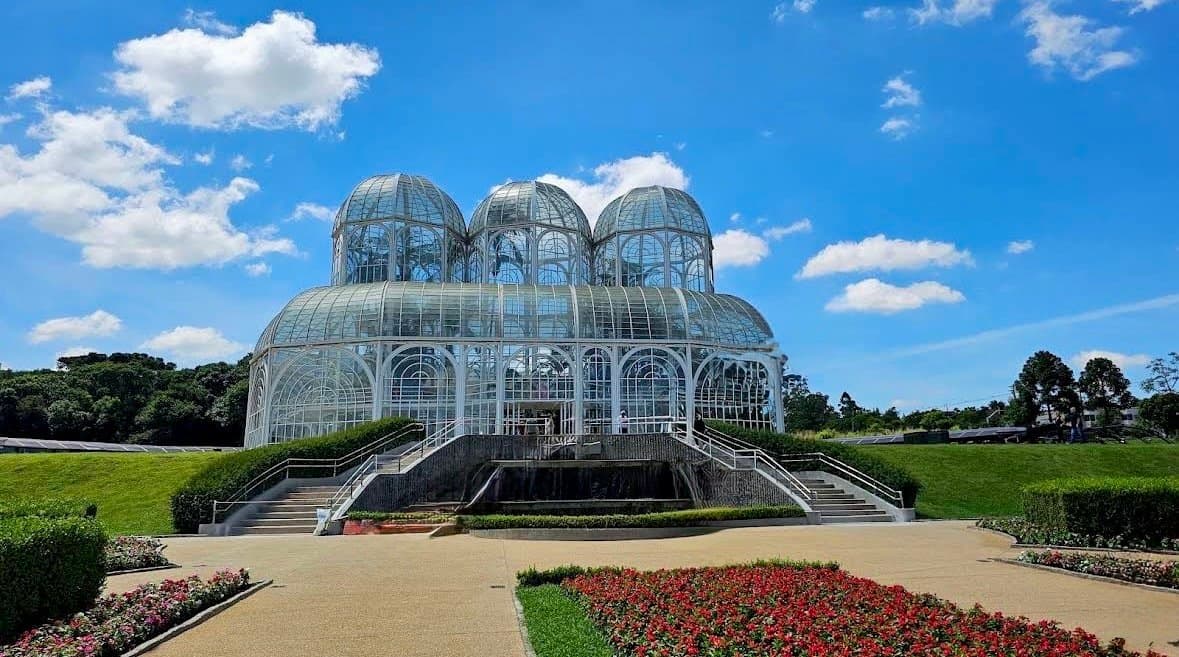
The symbol of the city and the most photographed place in Curitiba. The garden is designed in the style of French royal parks, and its main feature is a 458-square-meter Art Nouveau greenhouse of metal and glass against the city skyline. Inside are tropical plants, outside are well-kept lawns, fountains and paths where locals stroll. Entry is free. The best time for photos is early morning, before the crowds arrive.
- 🕒 Opening hours: daily from 06:00 to 19:30
- 📍 Location of the Botanical Garden (Jardim Botânico).
Ópera de Arame (Wire Opera House)
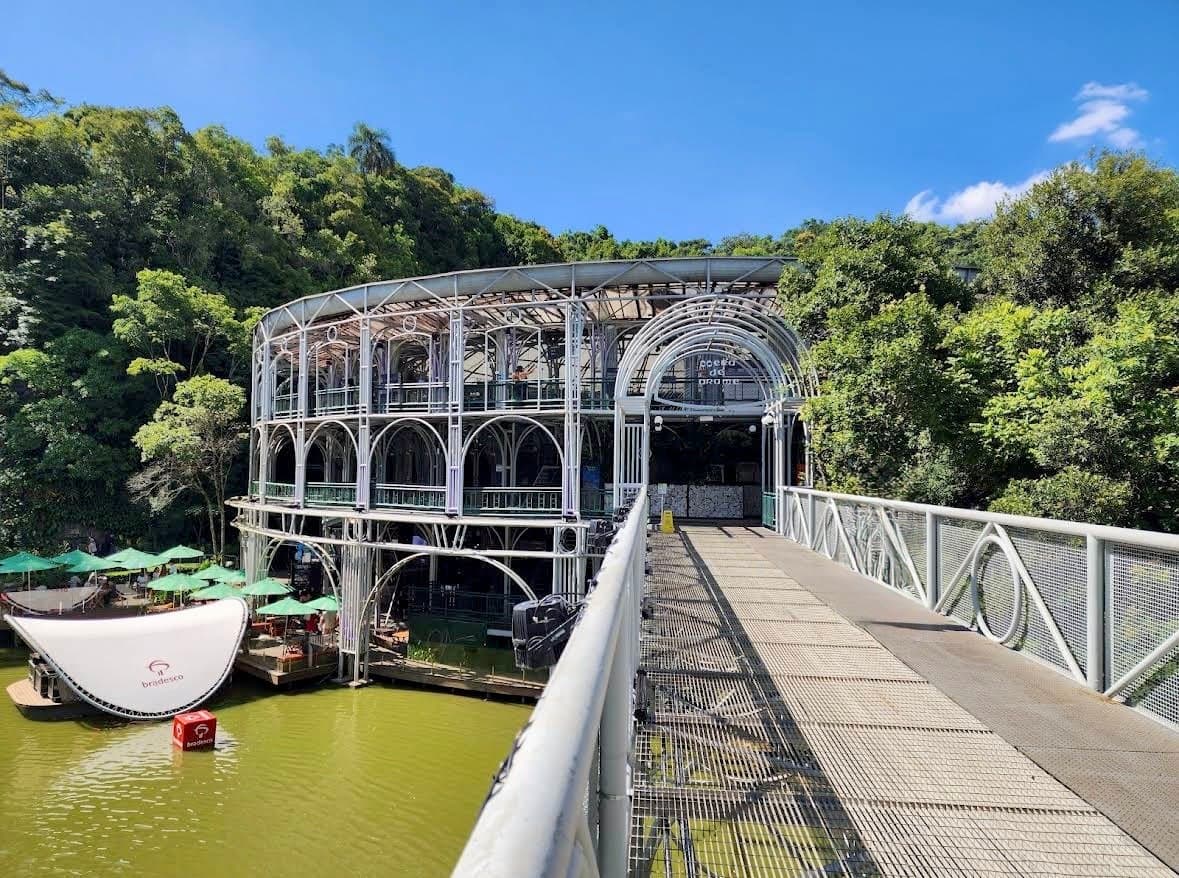
The theater was built on the site of a former stone quarry from steel pipes and transparent polycarbonate. The 360-ton structure was put up in just 75 days and first opened on March 18, 1992. Surrounded by an artificial lake and the greenery of Pedreira Park, it looks like a set from a sci-fi movie. A ticket costs 30 reais for adults and 15 for reduced-fare visitors (according to the official website in October 2026), and entry is free on weekdays, except holidays, for residents of Curitiba and its metropolitan area.
- 🕒 Opening hours: Tuesday to Sunday from 10:00 to 17:50.
- 📍 Location of Ópera de Arame
Oscar Niemeyer Museum (Museu Oscar Niemeyer)
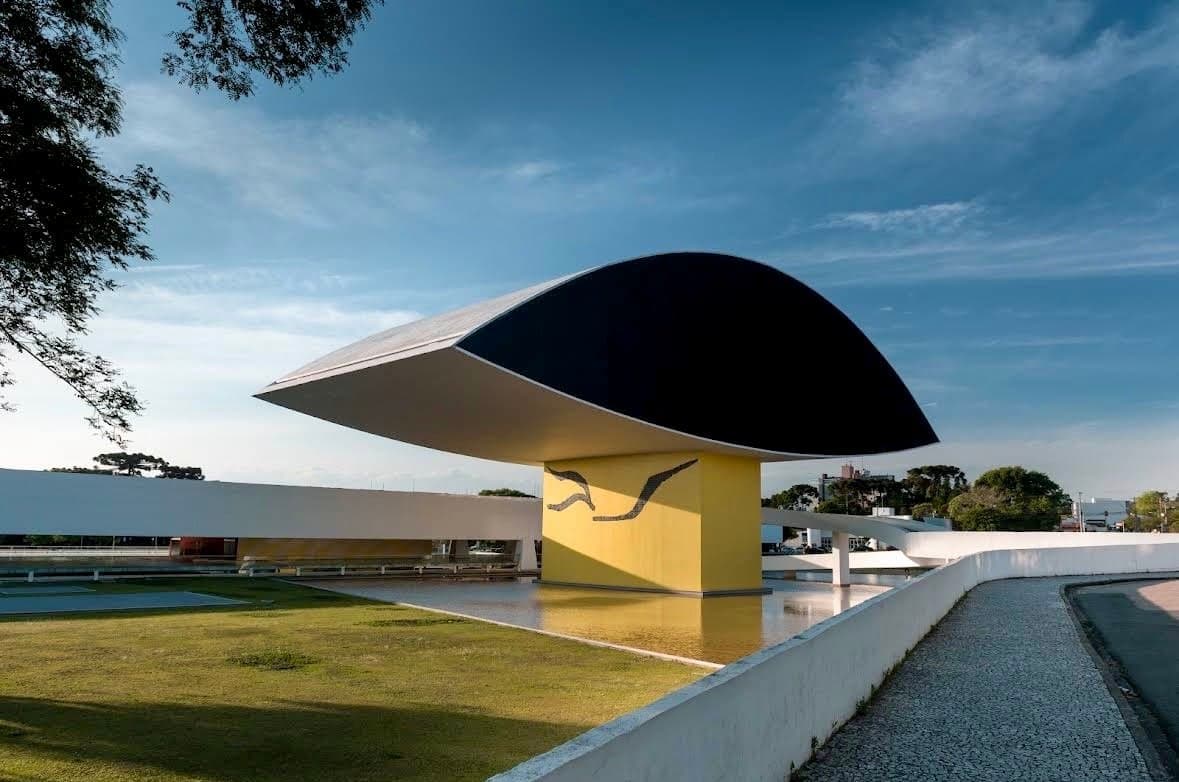
Designed by the legendary architect himself, who was 95 when it opened in 2002, the museum, nicknamed "the Eye," is a huge space split into two buildings and devoted to architecture, design and contemporary art. A ticket costs 20 reais (full) and 10 reais (reduced), and entry is free on Wednesdays.
- 🕒 Opening hours: Tuesday to Sunday from 10:00 to 18:00.
- 📍 Location of the Oscar Niemeyer Museum (Museu Oscar Niemeyer)
Tanguá Park (Parque Tanguá)
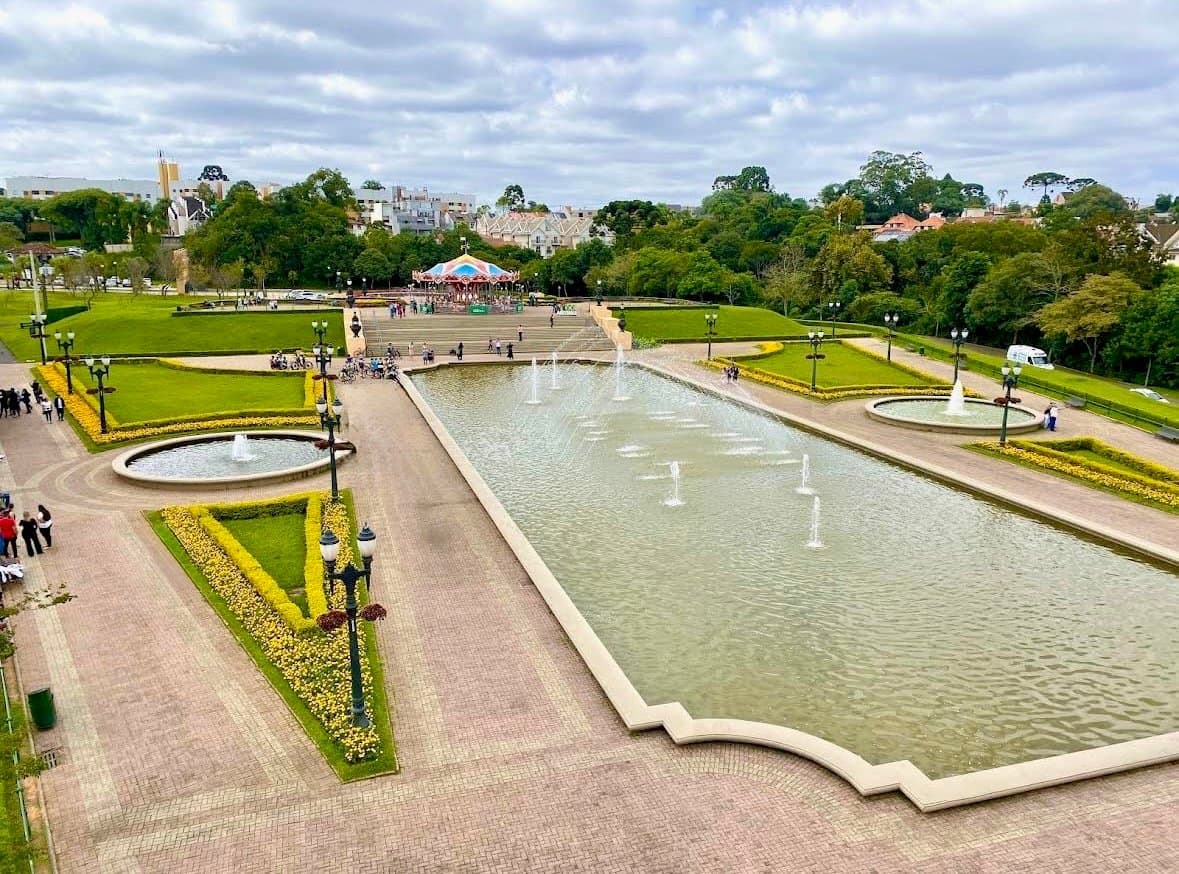
In the middle of the city lies the spacious, green Tanguá, laid out around two stone quarries connected by a tunnel about 45 meters long, with lakes and an artificial waterfall. You can walk here for hours, ride a bike, or just sit and watch the water. One of the best sunsets in the city is right here.
- 🕒 Opening hours: daily from 06:00 to 20:00
- 📍 Location of Tanguá Park (Parque Tanguá)
Barigui Park (Parque Barigui) and the Capybaras
Curitiba's largest and most beloved park, with a lake, bike paths and some quite unexpected neighbors: a whole population of capybaras lives here, calmly strolling and swimming near the visitors. For most newcomers it's their first live encounter with these South American giants, and ours stayed with us for a long time! Entry is free.
- 🕒 Opening hours: open 24 hours
- 📍 Location of Barigui Park (Parque Barigui)

Parks and Green Spaces in Curitiba
The parks get their own section because they deserve one. Since the 1970s, 28 public parks have been built in Curitiba. Each has its own story and character.
German Woods (Bosque Alemão) is a free park honoring German immigrants, with a Hansel and Gretel trail, a real gingerbread house in the middle and colorful flower beds.
The Pope's Woods (Bosque do Papa) is a memorial to Polish immigration, opened in 1980. A quiet and very atmospheric place.
**Curitiba's oldest park ** (Passeio Público) was founded in 1886: compact, cozy, with birds and history.
These parks aren't merely decorative. Most of them also hold back water and protect against floods: the artificial lakes absorb rainfall and lower flood levels. The beauty here is a side effect of an engineering solution. That's exactly how a good city works.
Where to Eat in Curitiba: Restaurants, Markets and Street Food
Curitiba has no single food symbol like pizza in Naples or tacos in Mexico City. But it has something more valuable: the layered cuisine of a city of immigrants, Italians, Poles, Ukrainians, Germans and Japanese, which over a hundred years has fused into something unique and entirely its own.
Santa Felicidade (Santa Felicidade) is the city's Italian quarter, home to dozens of restaurants with traditional pasta, pizza and Chianti. The main format is rodízio: waiters walk around the dining room with huge bowls of pasta, risotto and meat, serving as much as you can eat. The quarter's most famous restaurant is Família Madalosso, one of the largest restaurants in Brazil by capacity. It's a touristy place, but with good food and atmosphere.
Feira do Largo da Ordem (Feira do Largo da Ordem) is a Sunday fair in the historic center that you can't miss. Every Sunday more than a thousand vendors with food, crafts, antiques and live music gather here, and the fair draws about 25,000 visitors. Come in the morning: by noon it gets crowded, and the most interesting street food sells out fast. Try the pastel (fried pastries with filling), considered the best in the city here.
Mercado Municipal (Mercado Municipal) is an indoor market in the city center with local products, cheeses, sausages, spices and small cafés. Here you can get a feel for the local food culture and try fresh regional products. Perfect for breakfast or a light snack.
Batel district (Batel) is the place for a restaurant evening with a nice interior and a wine list. Curitiba's best restaurant scene is concentrated here: Italian, Japanese, Indian and Argentinian cuisine, all in one district. Prices are above the city average, but the quality matches.
Kilo restaurants (restaurantes por kilo) are what no weekday lunch in Curitiba is complete without. The system is simple: you load your plate with whatever you like from hot dishes, salads and sides, weigh it at the register and pay by weight. A full lunch costs 30-40 reais. This isn't fast food, it's the local food culture, where the cooking is fresh and varied.
I put together a detailed guide with addresses, prices and my personal recommendations for each place in a separate article, Where to eat in Curitiba.

Living in Curitiba: Best Neighborhoods and Infrastructure
You won't regret choosing Curitiba to live in, but only if you figure out which neighborhood to head to. The city is big, and its neighborhoods differ in character, price and atmosphere. Choosing the right one for you is half the success of a move.
Batel: For Those Who Want Everything at Once
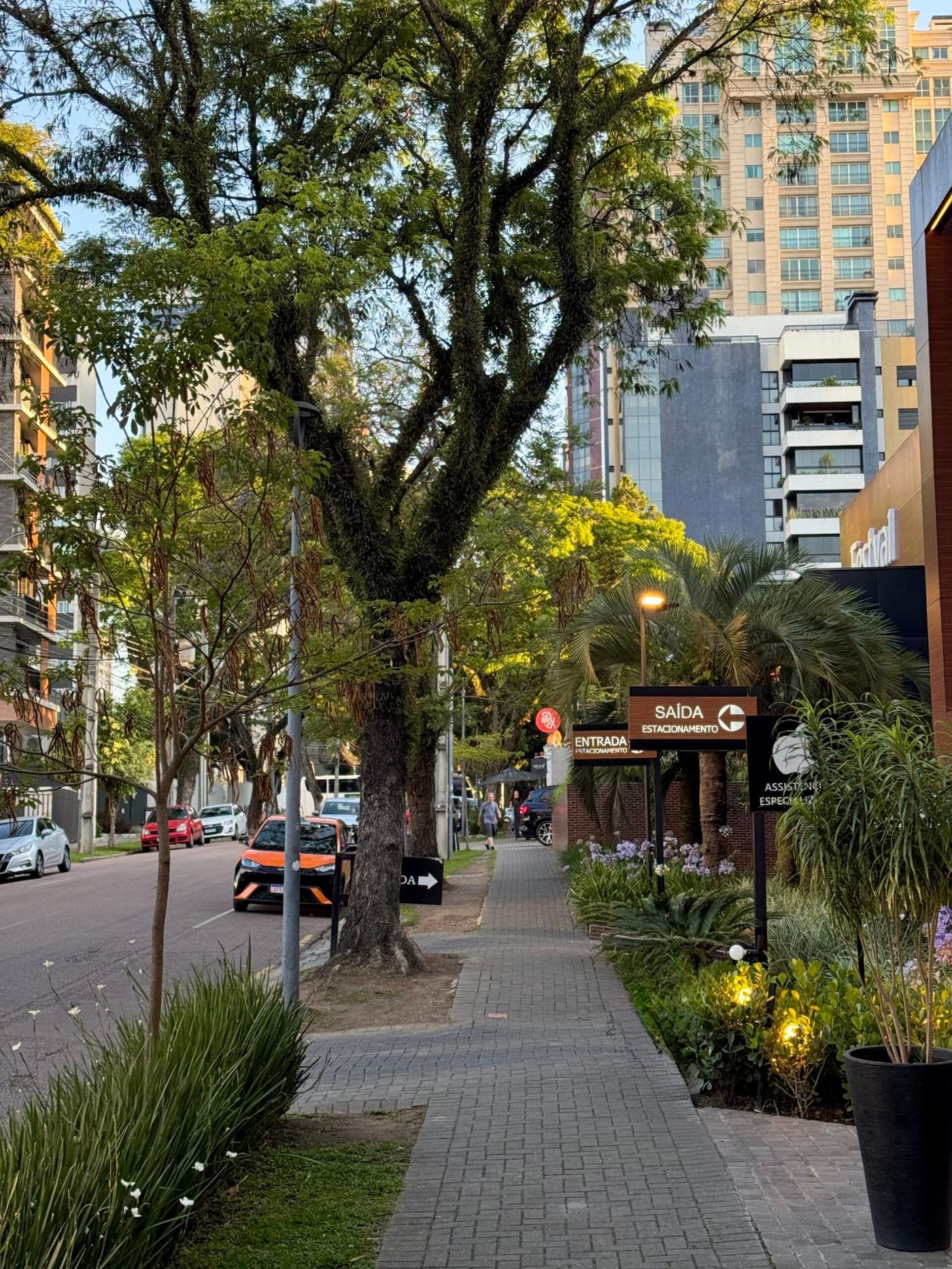
Batel is Curitiba's most upscale and best-known district: most of the city's nightlife is concentrated right here, with restaurants, bars, clubs and international brands. Batel's streets are decorated with examples of modern architecture and green spaces, and there are coworking spaces and cafés with fast internet everywhere. It has the highest concentration of expats in the city, so if you're looking for an English-speaking circle, this is where to go.
Água Verde: The Best Choice for Long-Term Living
Água Verde is the district with the highest human development index in the city: green spaces, good transport links, a shopping mall, cinemas and the Japanese square Praça do Japão. It's quieter than Batel, but no less fun. Several parks, sports clubs, cozy cafés and bakeries create the atmosphere of a lively neighborhood where people know their neighbors by sight.
Alto da XV: Quiet, Safe, With Character
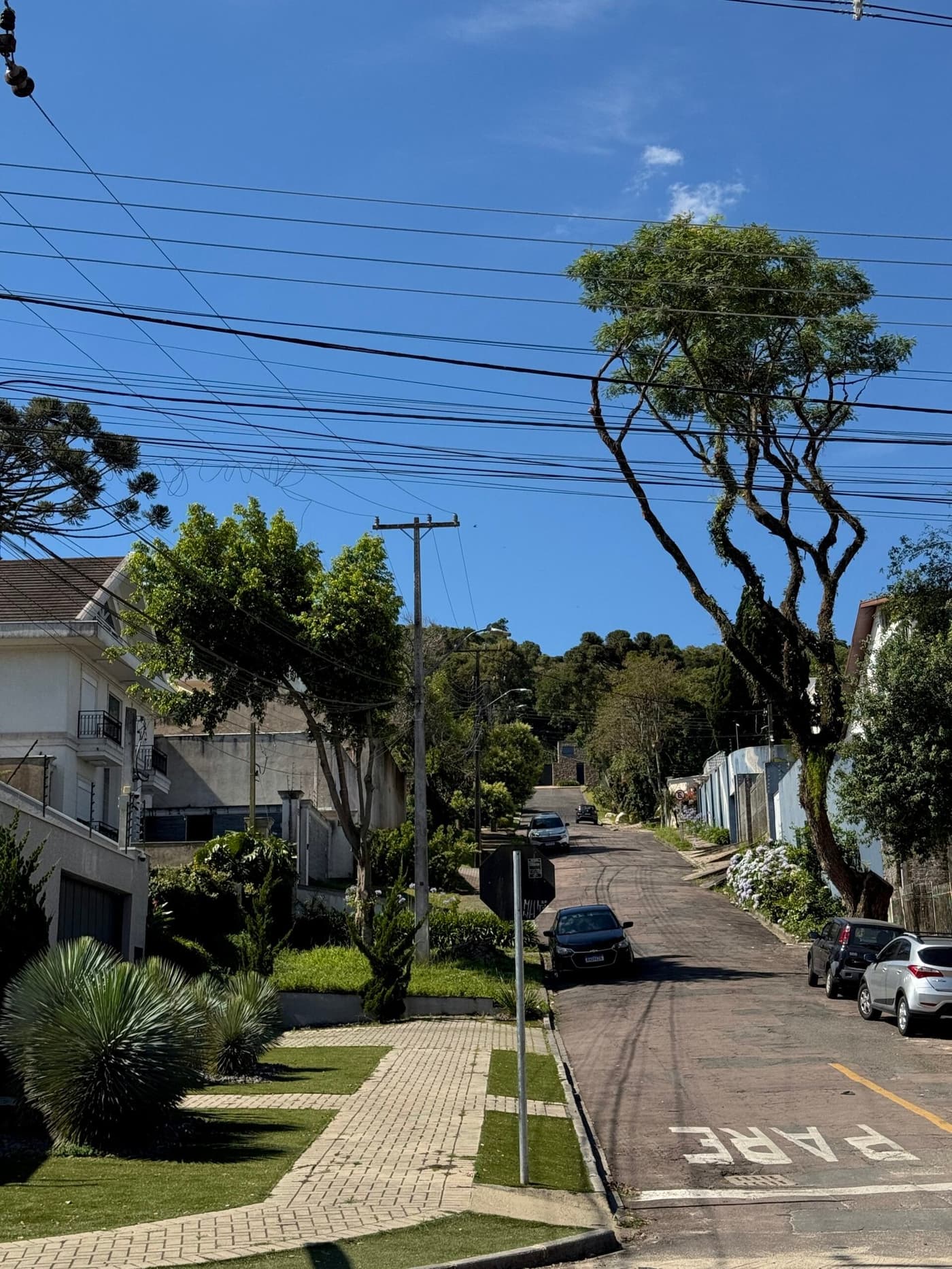
A very safe, mostly residential district, yet Rua Itupava has turned into an important hub of city life, where restaurants and bars attract people of all ages. It suits young professionals and couples well. On the downside, the district is on a hill, so if you like walking, keep that in mind.
Bigorrilho / Champagnat
Bigorrilho has the highest concentration of apartment buildings in the city. The district is safe and well connected to the rest of Curitiba by bus. It is home to the famous Praça da Espanha, a square the locals love, with bars and restaurants around it, where families, dog walkers and yoga class participants gather, and where an antiques market is held on Sundays. Good for those who value city life within walking distance.
Mercês: For Families With Children
A calm, traditional district that began to form back in the 1920s with the arrival of Italian immigrants. It has good schools, supermarkets, hospitals and pharmacies, and the proximity to ParkShopping Barigui and the park of the same name offers varied leisure for the whole family. The balance of price and quality of life is one of the best in the city.
Getting Around Curitiba: How the Famous BRT System Works
Curitiba's transport deserves its own discussion, because it isn't just a way to get from point A to point B. It's an urban legend.
In 1974 Curitiba launched one of the world's first bus rapid transit (BRT) systems. Since then it has grown into an extensive network: about 80 kilometers of dedicated lanes, 22 integration terminals and about 350 tube stations.
The main "trick" that surprises every newcomer is the tube stations (estações-tubo). These are cylindrical glass pavilions with turnstiles, platforms and ramps for people with limited mobility. You pay the fare before boarding the bus, just like in the metro, and you step onto the bus directly from the platform, with no steps. The buses are three-section articulated vehicles that stop exactly opposite the station doors, and a small bridge lowers from the bus floor for a smooth transition.
The routes are color-coded: red are express BRT lines, orange are feeder lines, green are interdistrict lines, and yellow are regular city lines. The system has 22 integration terminals where you can transfer between routes for free.
Another plus for those planning to live here without a car: the city has more than 260 km of bike lanes connecting different districts.
Healthcare, Schools and Everyday Infrastructure for Newcomers
Curitiba is one of the few Brazilian cities where infrastructure really works the way it should.
Healthcare. The healthcare and education systems in Curitiba are among the best in Brazil: numerous private hospitals offer international-level medical care. Foreigners are advised to get private health insurance.
Schools. The city has both Brazilian private schools (bilingual programs with English) and international schools teaching in English. This matters for families with children who plan to move while keeping up their education level.
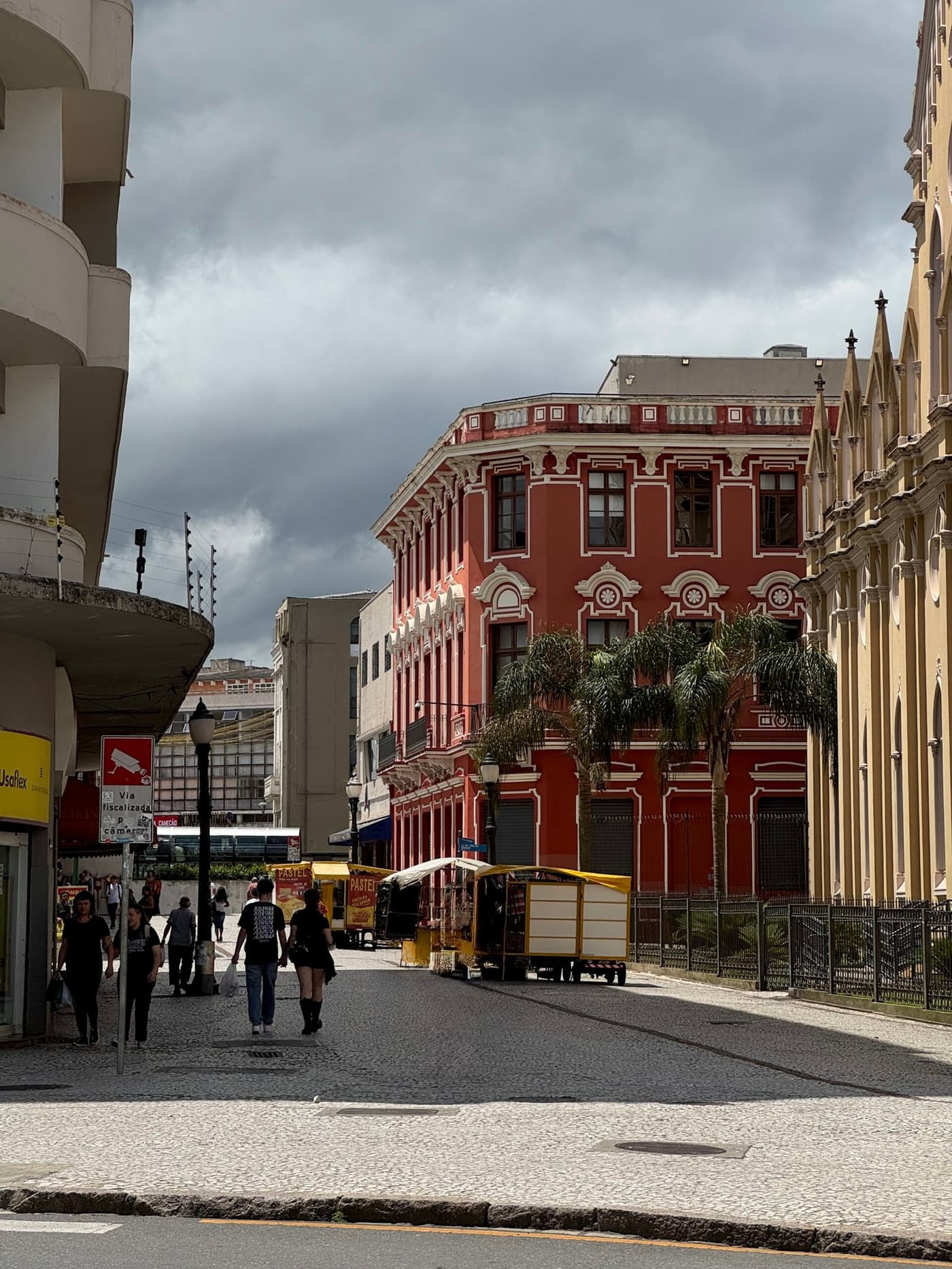
Daily life. Large supermarket chains (Festval, Condor, Carrefour), shopping malls in every major district, restaurants for every taste and budget. The city feels clean and affordable, with a European character, modern, well planned, with efficient transport.
Cost of Living in Curitiba: How Much Money You Need Per Month
Curitiba remains one of the most affordable big cities in Brazil with a fairly high quality of life. The bad news: rental rates have gone up over the last few years.
Renting an Apartment in Curitiba: What You Can Find and What It Costs
Rent is the main expense when moving to Curitiba. According to data from early 2026, the average rent for a one-bedroom apartment in the city is about 2,500 reais a month (roughly $500).
The most affordable one-bedrooms are usually in older buildings in the Center or Rebouças, without luxury amenities but with good transport connections. Good apartments in Batel or Água Verde with a concierge and a gym will cost 2,700-3,500 reais ($550-700).
The average rent for a two-bedroom apartment is about 3,000 reais ($600). In residential districts it's cheaper, but in Batel and Bigorrilho it will start at 4,500 reais ($900) and up.
An important nuance: most apartments in Brazil are rented unfurnished. So budget for the initial setup of your home. Furnished options exist, but they average 15-25% more than unfurnished ones.
Another line in the budget that's easy to underestimate is the building maintenance fee (condominium fee). In Batel and Bigorrilho it often exceeds 500 reais a month. Ask about it before signing the contract: it isn't included in the advertised rent, but it effectively raises your monthly payment.
Groceries, Food and Everyday Expenses
Curitiba is not Rio with its tourist price markup. Everything here is fairly predictable.
Utility bills for an average apartment (electricity, water, garbage collection) average about $70 a month. High-speed 200 Mbps internet costs about $22 a month, and a mobile plan with a good data package is $9 to $15.
Curitiba has a great culture of inexpensive lunch places, the "kilo" restaurants, where you pay for the weight of what you put on your plate. A full hot lunch costs 30-40 reais. Coffee with a pastry at a café is 8-15 reais. Dinner for two at a mid-range restaurant is 150-200 reais.
In supermarkets, basic groceries are reasonably priced: meat, legumes, vegetables and fruit at prices that will pleasantly surprise you. Imported and "European" goods are another story: everything brought from abroad is expensive in Brazil because of high import duties.
Approximate monthly budget for a single person:
Total living expenses for a single expat (not counting rent) run from $700 to $1,400 a month, depending on lifestyle and the district you choose. Add the rent of a mid-range studio and you get $1,200-1,900 a month, a perfectly comfortable life in a large, well-equipped city.
Curitiba vs. São Paulo and Florianópolis: Which Is More Expensive?
For those choosing between cities, here are concrete figures from current databases.
According to Numbeo, to maintain the same standard of living as on a 17,000 reais budget in São Paulo, about 13,000 reais is enough in Curitiba. That means Curitiba is roughly 23% cheaper than São Paulo, housing included.
Compared with Florianópolis the picture is more interesting: to maintain the standard of living of 16,000 reais in Floripa, you'd need about 13,700 reais in Curitiba. Curitiba is about 14% cheaper.
This is an important argument for anyone looking at the south of Brazil and comparing options. Floripa is more beautiful in terms of nature and ocean, but noticeably more expensive, especially considering that rent there is higher. Curitiba wins on the "infrastructure + price + quality of life" ratio.
Cities like Curitiba offer that rare combination: good infrastructure, quality healthcare and a cost of living significantly lower than in São Paulo or Rio.
I made a detailed overview of the city and island of Florianópolis in a separate article.
Safety in Curitiba
Safety in Brazil is the first question everyone asks, without exception. And rightly so.
Which Areas of Curitiba Are Safe and Which to Avoid
Let's start with the main point: the crime level in Curitiba is considered low by Brazilian standards, and the city is among the safest for young people. This is the official position, backed by statistics and by residents' own sense of things. Curitiba regularly appears in national surveys as one of the cities where residents have the highest confidence in their own safety.
Safe Areas for Living and Walking
Água Verde, Batel, Alto da XV and Rebouças are considered very safe during the day. This is where most expats live, and these are the districts recommended for settling in at first. Good lighting, active street life and gated residential complexes are standard for these neighborhoods.
Where to Be Extra Careful
In the Centro and Centro Cívico areas, a high level of pickpocketing is recorded during the day and armed robberies at night. That doesn't mean you can't go there: the historic center is beautiful and worth visiting. But after 21:00 there's no reason to be there without a specific purpose, and you should walk with awareness, not with headphones on and your phone in your hand.
Outlying Districts
The farther you get from the center and the popular residential areas, the higher the chance of unpleasant situations. This is universal logic for any large Brazilian city. Newcomers are better off exploring the outskirts gradually, once they've settled into the city.
Practical Rules That Work
After dark, take an Uber instead of walking unfamiliar streets. In busy places: keep your bag zipped, your phone put away and leave expensive jewelry at home.
Curitiba Compared With Other Brazilian Cities
Comparison is the most honest way to assess a city's safety. Cities in southern Brazil, such as Florianópolis and Curitiba, are among the safest large cities in the country. This is a fundamental difference from Rio de Janeiro, Salvador, Fortaleza or Recife, cities with objectively higher levels of violent crime.
According to Numbeo, Curitiba's crime index is 59.77, while São Paulo's is 69.76. Safety index: Curitiba is 40.23, São Paulo is 30.24. The difference is noticeable.
The main risks are the same as in most large cities around the world: pickpocketing, phone theft, and occasional robberies in poorly lit places or at moments of distraction. It's unpleasant, but it's not the level of threat that should stop you from moving or traveling.
In short: Curitiba is one of the best options for living in southern Brazil precisely because you can feel normal here.
Curitiba and Other Brazilian Cities
This section is for those looking for the best Brazilian city to move to and choosing among several options.
Curitiba vs. Florianópolis
This is the most common comparison among people considering southern Brazil. And it has no clear winner, only different priorities.
Florianópolis is an island with 60+ beaches, surfing, seafood and an ocean-oriented lifestyle. The city is small (~500,000 residents), the atmosphere is relaxed, and the international nomad community is one of the most active in Brazil. Floripa attracts digital nomads and expats looking for a balance between work and leisure, and its lower crime rate and slow pace of life especially appeal to families.
Curitiba is a big urban center (1.8 million residents) with no beaches, but with developed infrastructure, cheaper housing, better transport and a higher quality-of-life index than Floripa on a number of measures.
In money terms the difference is noticeable. According to Numbeo, Florianópolis is 9% more expensive than Curitiba in everyday expenses and 16.7% more expensive once rent is included. To maintain a standard of living equal to 16,000 reais in Floripa, about 13,700 reais is enough in Curitiba.
As for quality of life, both cities consistently rank near the top. In a 2024 study by the consulting firm Macroplan of Brazil's 100 largest cities, Curitiba came in 5th, the best among state capitals.
Who will choose Floripa: someone for whom the ocean is a necessity. Surfers, beach-lifestyle lovers, and those who want a more international and intimate atmosphere.
Who will choose Curitiba: families with children, people who value urban infrastructure and don't want to overpay, and people with a European mindset who care about parks, cultural life and the feeling of an ordinary city.
Curitiba or São Paulo
São Paulo is unquestionably Brazil's business capital. 22 million residents, multinational headquarters, the country's best restaurants and museums, and international airports with direct flights anywhere in the world. If you're after career growth and work in an office, São Paulo offers opportunities that exist nowhere else in the country.
But you pay for it, and not only with money.
On cost of living the gap is significant. To maintain the same standard of living as on a 17,000 reais budget in São Paulo, about 13,000 reais is enough in Curitiba, roughly 23% less.
On quality of life the gap is even more noticeable. On the Numbeo quality of life index Curitiba scores 140.53 points versus 92.44 for São Paulo. Safety index: Curitiba 40.23 versus 30.24 for São Paulo.
São Paulo's traffic became a meme long ago. Curitiba has traffic jams too, but on a completely different scale.
Who will choose São Paulo: those who need a career at a big company, who work in finance or tech and want maximum professional opportunities, or for whom access to a broad international community matters.
Who will choose Curitiba: digital nomads and remote workers, families moving for the long term, people who value parks and calm, and everyone who wants a quality life without overpaying.
Pros and Cons of Curitiba
No city is perfect. Curitiba is no exception.
What's really good:
Well-developed roads, modern amenities, reliable healthcare and internet. Green spaces within walking distance. A temperate climate without exhausting tropical heat. Relatively safe. Rent is cheaper than in São Paulo or Floripa.
What you have to accept:
There are no beaches. The nearest sea is about an hour's drive away. If the ocean is essential for you, that's a limitation you can't get around. A climate with frequent rain and fog doesn't suit everyone, especially in winter. English is hardly used in everyday life, even in the center, so Portuguese is a must. There are fewer direct international flights than from São Paulo.
Curitiba is the best choice among Brazilian cities for those who put infrastructure, safety and the "price / quality of life" ratio above being close to the beach and an international career.
If you're going to Brazil for beaches, carnival and eternal summer, Curitiba is not your city. For that there are Rio, Floripa and Fortaleza. If you're looking for a place with parks, safe neighborhoods, reliable transport and prices that don't eat up your whole budget in the first three months, then Curitiba fits that request perfectly.
I filmed how we spent our time in Curitiba in my YouTube video
Frequently Asked Questions About Curitiba
Does Curitiba have a beach?
No. Curitiba sits on a plateau about 934 meters above sea level, 80 kilometers from the coast. The nearest beaches in Paraná state (Guaratuba, Pontal do Sul) are about an hour away by car.
Is it true that it snows in Curitiba?
It is. Snowfalls in the city were recorded in 1975, 1988, 2013 and 2020. It's not an annual occurrence, but it's entirely real. On cold winter nights the temperature can drop below zero. For Brazil it's total exotica, while for people from temperate climates it's something familiar.
Do you have to know Portuguese to live in Curitiba?
At the beginning, no: you can get through the first weeks with a translator on your phone and basic phrases. But for a normal life, yes, you need Portuguese. The language barrier is one of the main difficulties expats face: English is hardly used in everyday life in Curitiba. The good news: Portuguese is one of the easiest languages for those who know Spanish. Three months of intensive study gives a perfectly workable level.
Why Is Curitiba Called the "Ecological Capital" of Brazil?
Since the 1970s, 1.5 million trees have been planted in the city and 28 public parks have been built. The BRT transit system, in place since 1974, has reduced car traffic and emissions. Curitiba recycles about 70% of its waste, one of the best figures in Latin America.
How much does it cost to rent an apartment in Curitiba?
According to data from early 2026, the average rent for a one-bedroom apartment is about 2,500 reais a month. A two-bedroom is about 3,000 reais. Budget options are in the Center or Rebouças, and the premium segment is in Batel. Most apartments are rented unfurnished.
Is Curitiba safe for tourists and people moving there?
The crime level in Curitiba is considered low by Brazilian standards, and the city is among the safest for young people. Among the country's large cities, Curitiba and Florianópolis are consistently named the safest. Standard city precautions: keep your phone put away, don't walk unfamiliar streets at night, and use Uber after dark.
When is the best time to go to Curitiba?
The best time to visit is from April to August, the driest period of the year. April is good for warm weather without rain, and June-July for coolness and minimal rainfall. Summer (December-February) is the rainiest, but the city is incredibly green then. There's no beach season as such, and Curitiba is good all year round.
What to see in Curitiba in 1 day if time is short?
Morning: the Botanical Garden (arrive at opening time). Afternoon: the historic center and a walk along Rua das Flores. Ópera de Arame and Tanguá Park: one route, taking 2-3 hours. Evening: Barigui Park and the capybaras at sunset. The Linha Turismo tourist bus stops at 26 attractions, and a ticket costs 50 reais and is valid for 24 hours. It's a good fit if you want to cover as much as possible without navigation stress.
Do I need a visa to enter Brazil?
It depends on your citizenship. When I checked in October 2026, tourists with eligible passports could enter Brazil without a visa for up to 90 days within any 180-day period (a visa is still required for work, study and volunteering). Confirm the entry rules for your own passport with the Brazilian immigration authorities before you travel.
How do I get to Curitiba from São Paulo or Florianópolis?
From São Paulo: about 1 hour by plane, 6 hours by bus along the BR-116 highway. From Florianópolis: about 5 hours by car or bus along the BR-101. Afonso Pena International Airport serves regular domestic flights and a number of international destinations.