For your first morning in Curitiba, I recommend skipping the hotel coffee and heading to the padaria (bakery) around the corner instead. Walk into any of them and you will come out with a warm cheese bread (pão de queijo) in your hand and a cup of strong Brazilian coffee.
Curitiba knows how to surprise you, and its food scene is a story of its own: Italian neighborhoods with family-run cantinas, a surprising number of Japanese restaurants that are genuinely good, churrascarias at every price level and quiet cafés where you can sit half the day with a laptop.
In this guide I have collected everything I know about eating in Curitiba: where to eat cheaply, where to go for dinner, which neighborhoods are worth exploring and how much it all costs. You can read my detailed Curitiba city guide in another article.
What to Eat in Curitiba: Local Food and Specialties
Curitiba's cuisine was shaped by several waves of immigration: Italians, Germans, Ukrainians, Poles and Japanese all left their mark not only on the architecture but on the menu too.
Churrasco and Brazil's Meat Traditions
Churrasco is a whole philosophy of meat, and in the state of Paraná it has a special history: the tradition goes back to the tropeiros, the cattle drovers who spent centuries driving herds across these lands and cooked meat right over a campfire.
In Curitiba, churrascarias come in two types. The first is the rodízio: you pay a fixed price and waiters walk around the dining room with huge skewers, offering one cut after another, such as picanha, maminha and fraldinha, until you ask them to stop. The second is à la carte, where you choose a specific cut. For a first introduction to Brazilian meat, rodízio works better because you can try everything at once.
Barreado deserves special attention. It is a dish often called the symbol of the state of Paraná. Beef is stewed in a clay pot for more than 12 hours until it literally falls apart into fibers, and the lid of the pot is traditionally "sealed" with a dough of ash and cassava flour so the steam can't escape. It is served with rice, farofa and banana.
Another local dish is carne de onça, literally "jaguar meat." There is no jaguar in it: it is a raw beef tartare with onion, garlic and mustard. Since 2016 the dish has been officially recognized as part of Curitiba's cultural heritage.
Feijoada, Açaí and Other Dishes Worth Trying
Feijoada is Brazil's national dish, and in Curitiba it is traditionally eaten on Saturdays. Black beans are stewed with several kinds of meat and smoked sausage and served with rice, fried collard greens (couve) and farofa. After feijoada, it is customary to rest.
Pinhão is a pine nut that grows on the Araucaria trees, the symbol of the state of Paraná. From April to July it is roasted on every corner and sold right in paper cups. Locals eat it like sunflower seeds. It is a seasonal treat worth trying if you visit at that time of year.
Açaí in Curitiba is nothing like açaí in Europe. Here it is a thick, dark purple paste made from Amazonian berries, served cold with granola and fruit. The city has a huge number of açaí shops. In Brazil it is a snack, a breakfast and a dessert all at once.
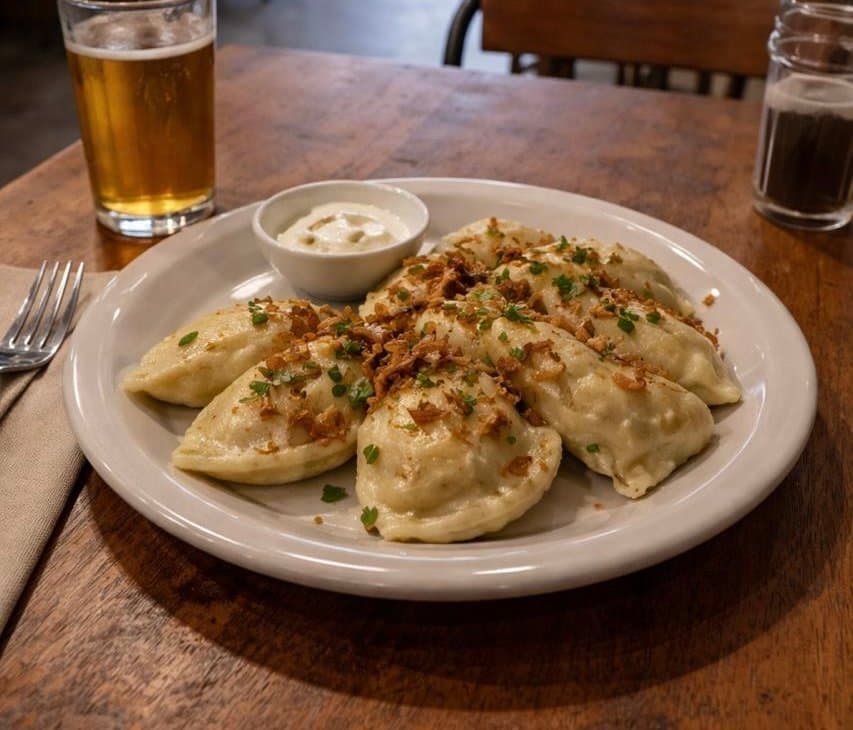
Pierogi — Polish and Ukrainian immigration left such a mark that dumplings with potato and meat (pierogi) are considered local food here. At the Sunday market at Largo da Ordem they are sold from early morning.
Japanese Food in Curitiba: Why There Is So Much of It
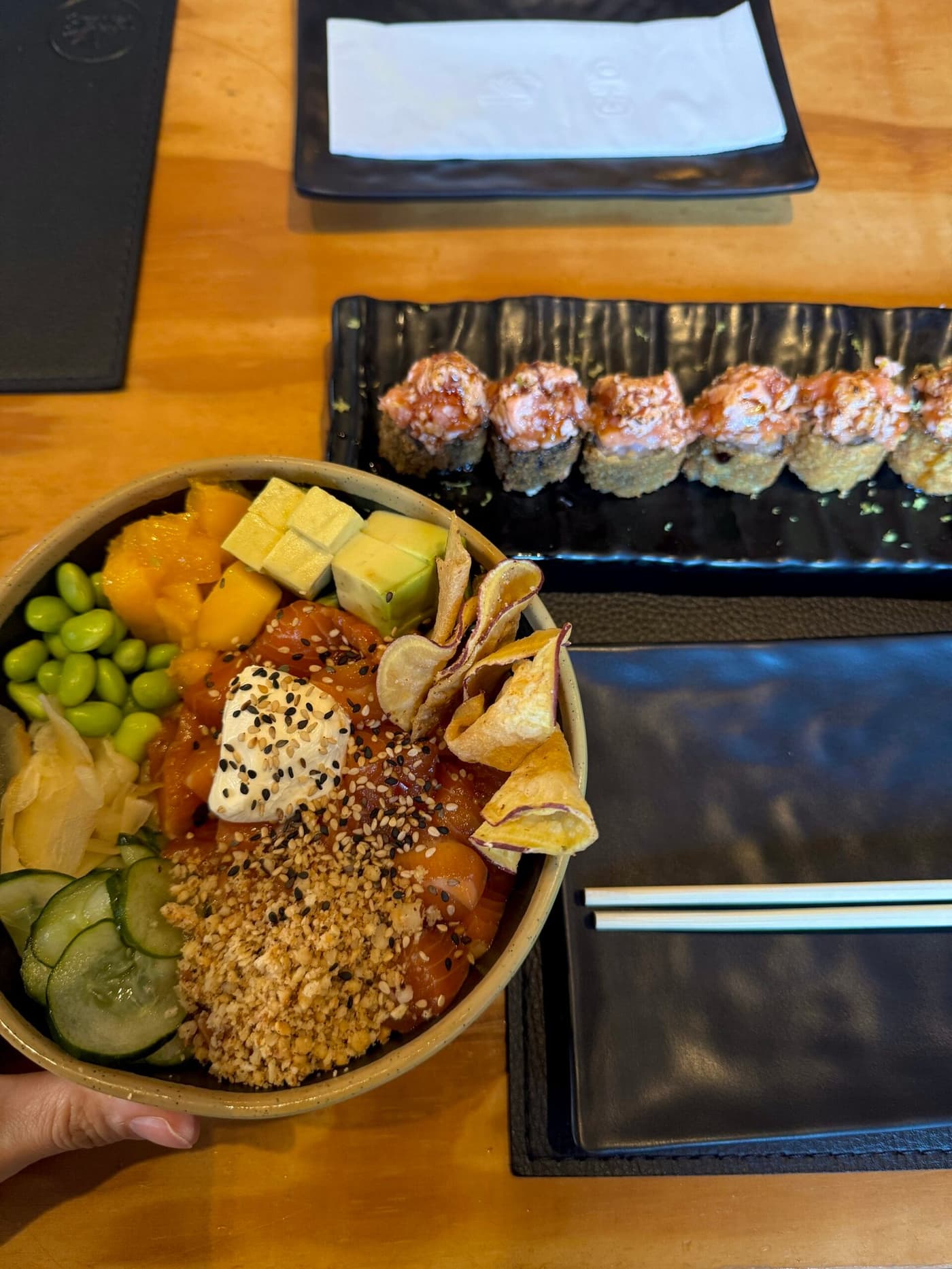
The first Japanese immigrants began arriving in Curitiba in 1912, settling in places including the Uberaba neighborhood. Today more than 40,000 descendants of Japanese settlers live in the city, and the state of Paraná is considered one of the main centers of the Japanese community in Brazil. You can taste it in the food: there are a lot of Japanese restaurants here, and the quality is high.
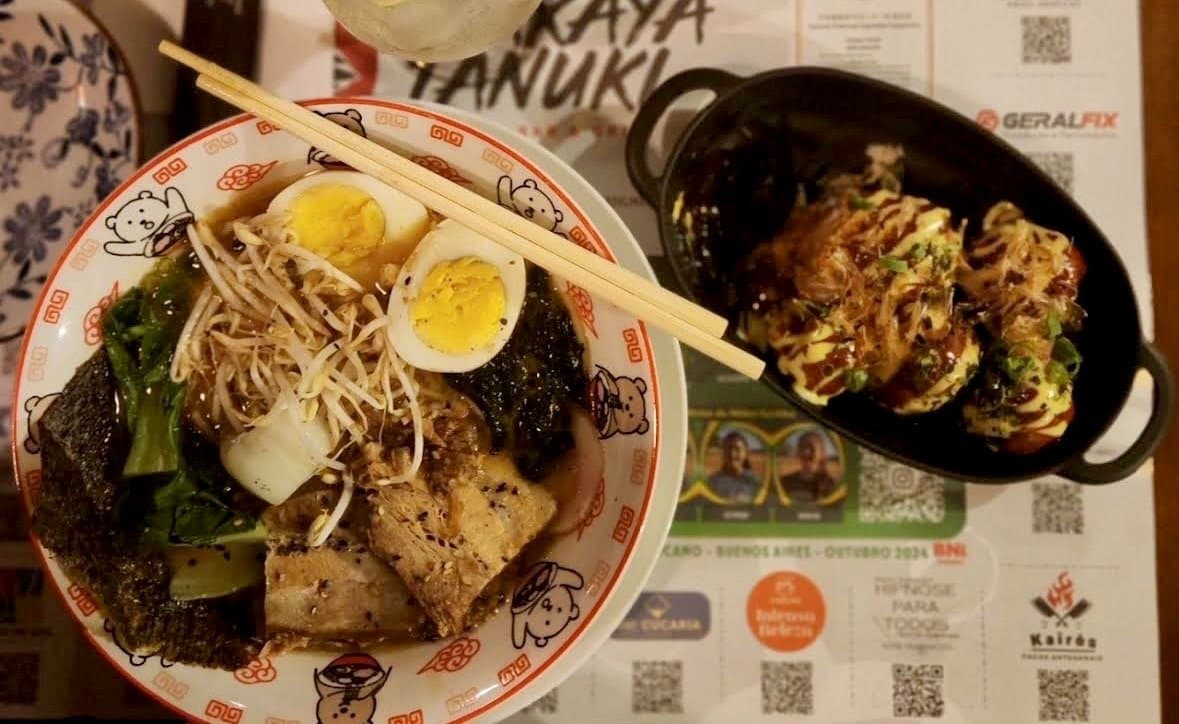
The formats vary for every taste and budget. A Japanese rodízio is the equivalent of the Brazilian one, only with sushi and sashimi instead of meat. Omakase is a chef's menu with no choice of dishes, which is fine dining. An izakaya is a Japanese pub where people drink sake and eat yakitori and gyoza. One of the best known in the city is Izakaya Tanuki.
The Best Neighborhoods in Curitiba for Restaurants
Curitiba is set up so that you can eat well in any corner of the city. But there are three neighborhoods worth going to on purpose, each with its own history and a different atmosphere.
Batel: The City's Dining Hub
Batel is Curitiba's most upscale neighborhood. Wealthy residents live here, expensive restaurants open here, and this is where locals go for a special dinner. Batel is often called the "second city center," and its commercial importance is so great that it rivals the historic center.
The food here is varied, from a classic Italian trattoria to a meat rodízio and a Japanese omakase. Here are a few places worth visiting if you end up in the neighborhood:
Batel Grill (Av. N. Sra. Aparecida, 78) — one of the best-known churrascarias in the city, with a meat rodízio, seafood and a sushi bar under one roof.
Poco Tapas (Av. Vicente Machado, 2855) — a molecular cuisine restaurant, one of the few of its kind in Brazil. It serves only a 12-course tasting menu. It suits anyone who wants something completely out of the ordinary.
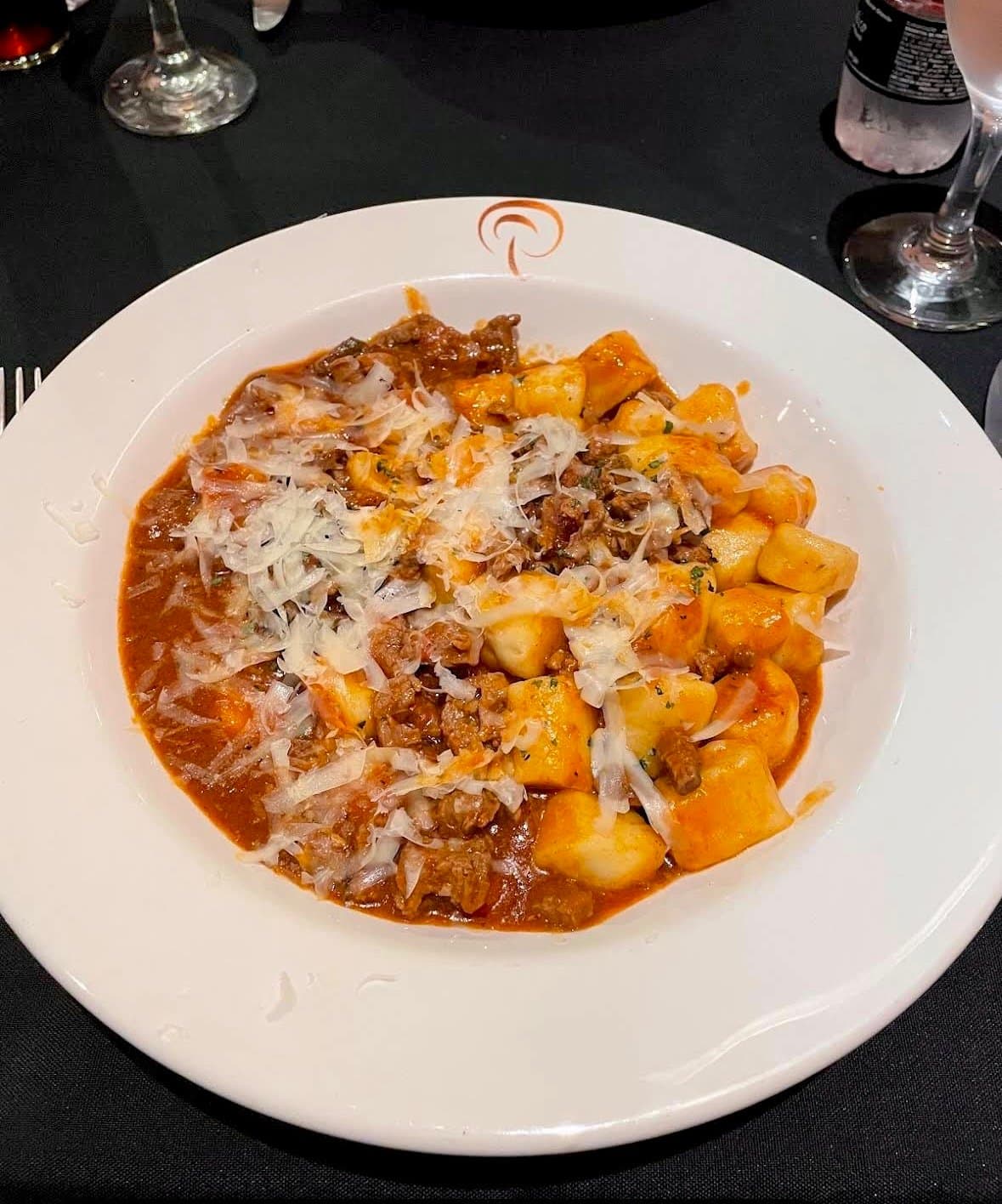
Porcini Trattoria (Al. Dr. Carlos de Carvalho, 1066) — an Italian trattoria with fresh pasta and one of the best wine cellars in the city: more than 600 labels, with the cellar built right under the restaurant beneath a glass ceiling.
Batel is also convenient because everything is compact: most places are within walking distance of each other along Avenida do Batel and Alameda Carlos de Carvalho.
Santa Felicidade: Italian Food and Wine
If Batel is about the modern side of the city, Santa Felicidade is about its roots. The neighborhood is 7 kilometers from the center and is the culinary soul of Curitiba, and you can't understand it without its history.
In 1878 the first Italian families, who came from northern Italy (the Veneto and Trentino regions), began settling these lands. They brought their recipes, their table traditions and their talent for hosting guests. Over time, home kitchens turned into restaurants and the neighborhood became the city's culinary symbol.
Today Santa Felicidade has about 30 restaurants, some seating more than a thousand people, plus wineries, cantinas with local wines and craft shops.
The main street is Avenida Manoel Ribas, lined with the best-known places.
Família Madalosso (Av. Manoel Ribas, 5875) — the most famous restaurant in the neighborhood and one of the largest Italian restaurants in Latin America. Opened in 1963, it has become a symbol of the history of Italian immigrants in the city and works as an endless Italian rodízio: fried polenta, chicken, risotto and pastas. It is loud, crowded and family-style.
Besides the food, it is worth stopping at one of the local wineries in Santa Felicidade to try colonial wine, which has been made here from family recipes since the end of the 19th century.
Largo da Ordem and the Historic Center: Atmosphere and Street Food
Largo da Ordem is the heart of Curitiba's historic center. Every Sunday morning the historic center transforms and the Feirinha do Largo da Ordem opens, a fair founded in the early 1970s that has run ever since.
The fair runs from 9 am to 2 pm every Sunday and spreads over several streets around the square. You can find almost everything Curitiba has to offer here: pierogi from Polish and Ukrainian vendors, pastel (fried pastries), carne de onça, Arabic snacks, açaí, coffee, fresh-squeezed juices and Brazilian sweets.
This is the best place to feel the multicultural character of the city and to try Italian, Japanese, Polish, Ukrainian and truly Brazilian food in a single walk. Everything is cheap and eaten on the go, and the atmosphere is such that you stay longer than you planned.
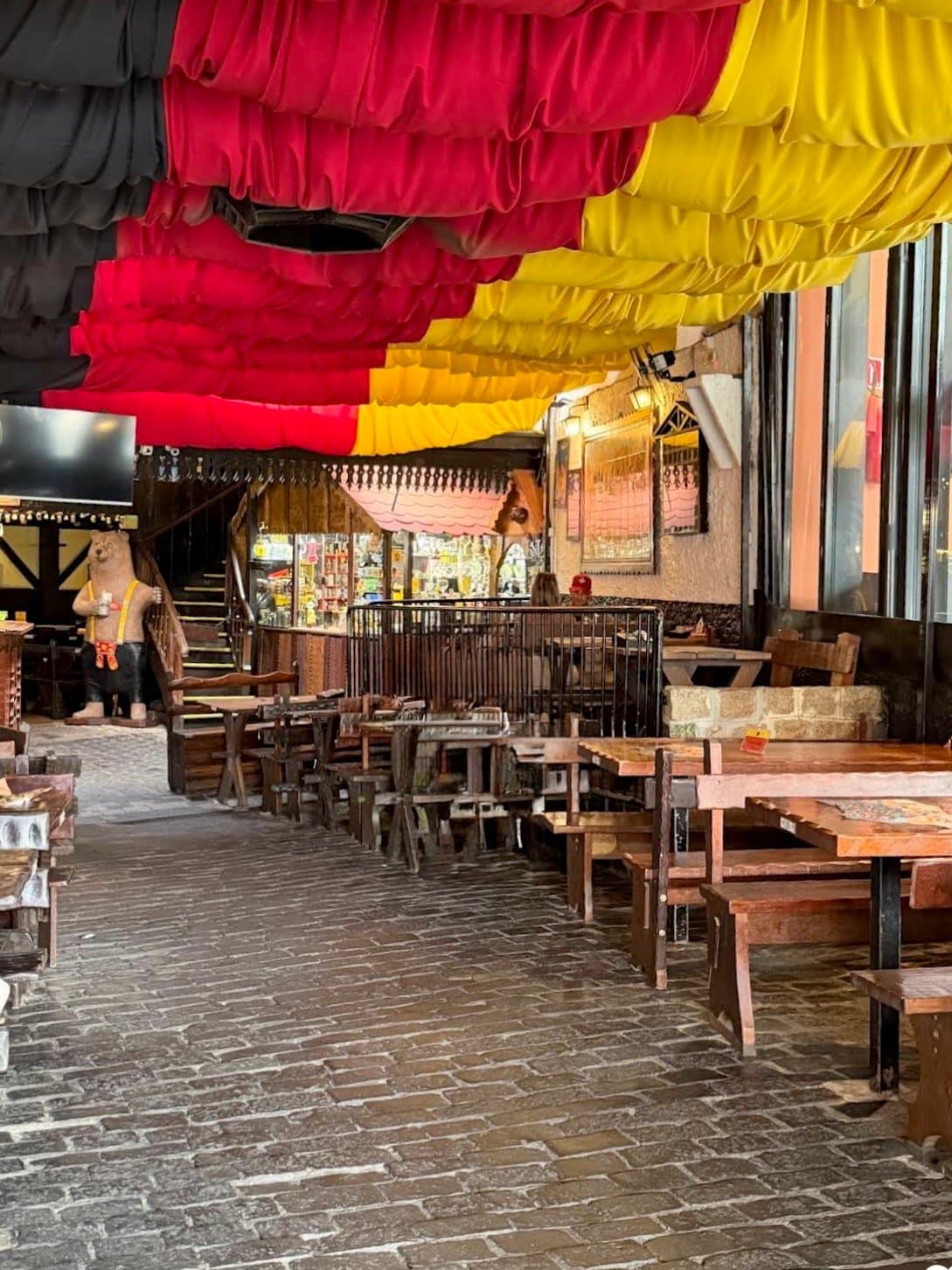
Besides the fair, it is worth noting Bar do Alemão in this area, one of the best-known bars in Curitiba, with German food and the legendary "submarino," a local cocktail.
How and Where to Eat Cheaply in Curitiba
Curitiba is not Brazil's most expensive city, and if you want to, you can eat very decently here on a small budget. There are three options for a budget lunch: per-kilo restaurants, padarias and the prato feito (prato feito) format. Let's go through each.
Per-Kilo Restaurants: How Food by Weight Works
One of the biggest culture shocks for anyone arriving in Brazil for the first time is a restaurant where you pay not for a dish but for grams. This is the por quilo or "per kilo" format (por kilo, "by the kilogram"), and in Curitiba it is on every corner.
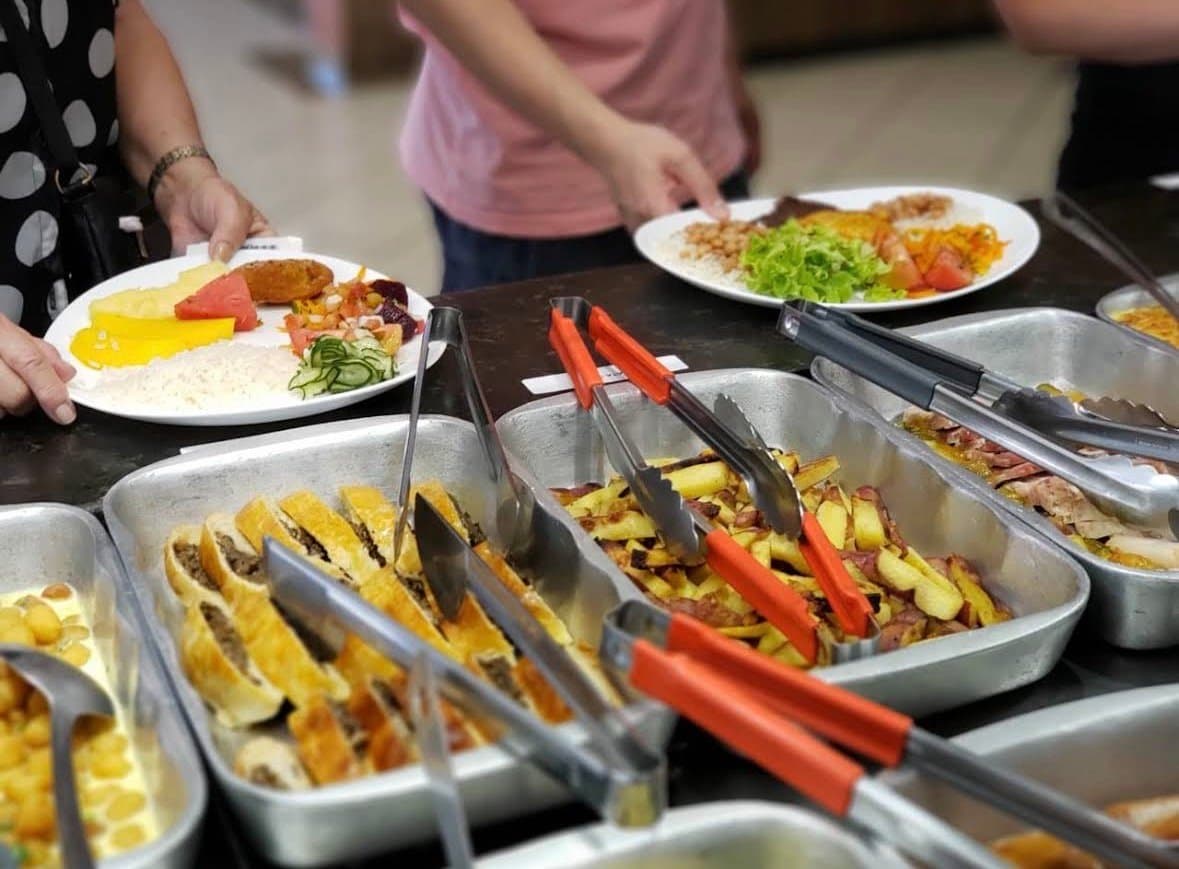
The principle is simple: in front of you is a big buffet with hot dishes, salads, side dishes and, as a rule, something sweet. You take a plate, load it with whatever you like, then weigh it at the register and pay by weight.
The average price in Curitiba is about R$ 80–100 per kilogram at lunchtime on weekdays. An ordinary plate weighs about 450 grams, so lunch comes to roughly R$ 35–45 (~$7–9), with drinks paid separately.
This is convenient because you can try a lot of things at once, there are options for vegetarians, the portion is always exactly what you need, and the food is usually fresh since the restaurants change the dishes throughout the day.
The best per-kilo buffet in Curitiba is Kurytyba Gastronomia. This restaurant was named the best by-weight buffet in Curitiba and Paraná three years in a row by the Bom Gourmet awards (2023, 2024 and 2025), and in 2023 it was named the best in Brazil. It is open for lunch only, from 11:15 am to 2:30 pm on weekdays and until 3:00 pm on weekends. For a more budget-friendly option, I liked Restaurante Seven.
Padaria: The Brazilian Bakery
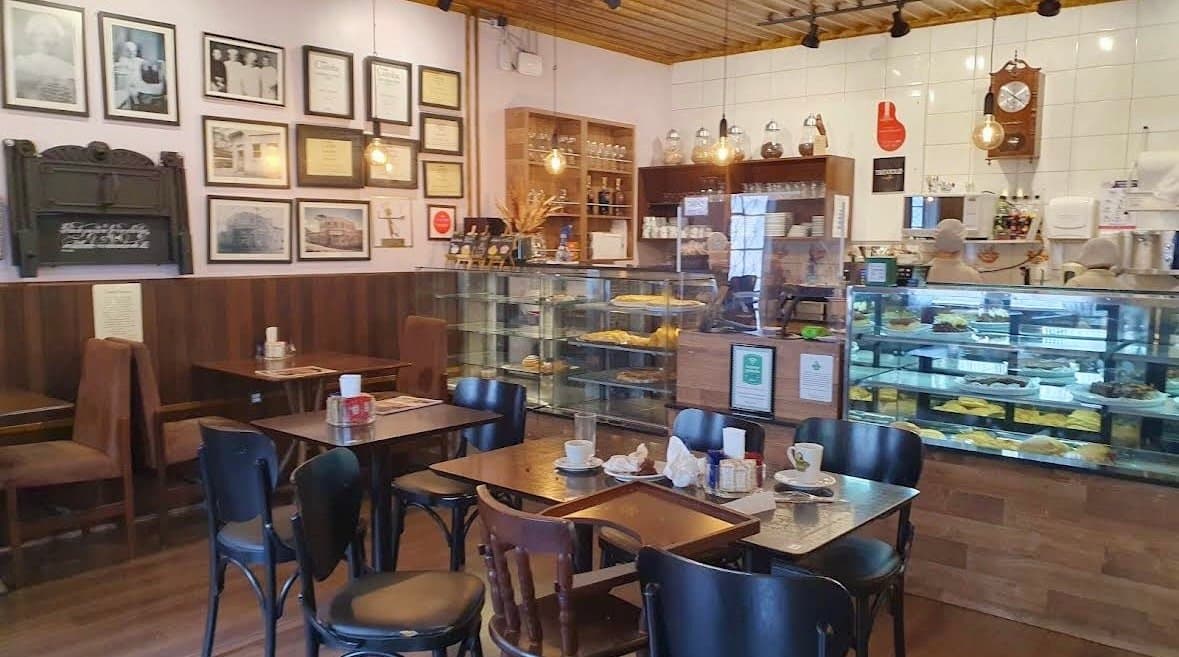
A padaria is a place people go to every morning the same way they go to work. Curitiba has thousands of them, every neighborhood has its own, and each has its regulars.
A standard breakfast at a padaria looks like this: pão de queijo, a warm cheese ball made with cassava flour, plus a cafezinho, a strong small coffee with sugar. Sometimes a misto quente is added, a toasted ham and cheese sandwich. All of this costs R$ 20–30 depending on the place and the neighborhood. That is less than six dollars.
A padaria is not fast food, it is a ritual. Brazilians stand at the counter, drink coffee and talk. Nobody is in a hurry.
Among Curitiba's padarias, a few names stand out. Padaria América has been open since 1945 and is considered a classic Curitiba padaria, with a wide selection and a warm family atmosphere. Saint Germain is a chain with several locations around the city.
One more local item I want to mention, which is best tried in a padaria, is pão na chapa: a French baguette toasted in a pan with butter.
How Much Does It Cost to Eat in Curitiba
I put together an up-to-date price table for 2026. The real's exchange rate changes, so go by the amounts in BRL (Brazilian reais) and check the current rate.
| Format | What's included | Price (BRL) |
|---|---|---|
| Breakfast at a padaria | Coffee + pão de queijo + misto | R$ 20–30 |
| Per-kilo lunch (weekdays) | Plate of ~450 g | R$ 35–45 |
| Prato feito (PF) | Rice, beans, meat, salad | R$ 25–40 |
| Italian rodízio (Santa Felicidade, weekdays) | Unlimited: pastas, chicken, polenta | from R$ 80/person |
| Churrasco rodízio (mid-range) | Meat, salad bar, side dishes | R$ 100–170/person |
| Dinner at a Batel restaurant | À la carte, one dish | R$ 80–150 |
| Street food (fair, pastel, juice) | Snack | R$ 8–20 |
Prato feito is a story of its own, so let me explain. In Brazilian cafés and simple eateries you will see the label "PF," a fixed daily menu that is most often rice, beans, a piece of meat or chicken and a little salad. It is the basis of everyday Brazilian eating: cheap, filling and usually tasty, although Brazilians often oversalt for my taste. Look for the word "PF" or "prato executivo" on the boards at the entrance and you can have lunch comfortably for 25–40 reais.
Where to Eat in Curitiba: My Recommendations
Below are places that did not make it into the previous lists, but that I liked and kept coming back to while I was in Curitiba.
King Temaki (R. Gutemberg, 17 – Batel) — Curitiba's first temakeria, which over time grew into a full Japanese restaurant with three locations in the city. The menu has temaki, sushi, sashimi, poke, gyoza and hot dishes. The format is casual, prices are reasonable, and it is very conveniently located in the center of Batel. Good for lunch or an early dinner.
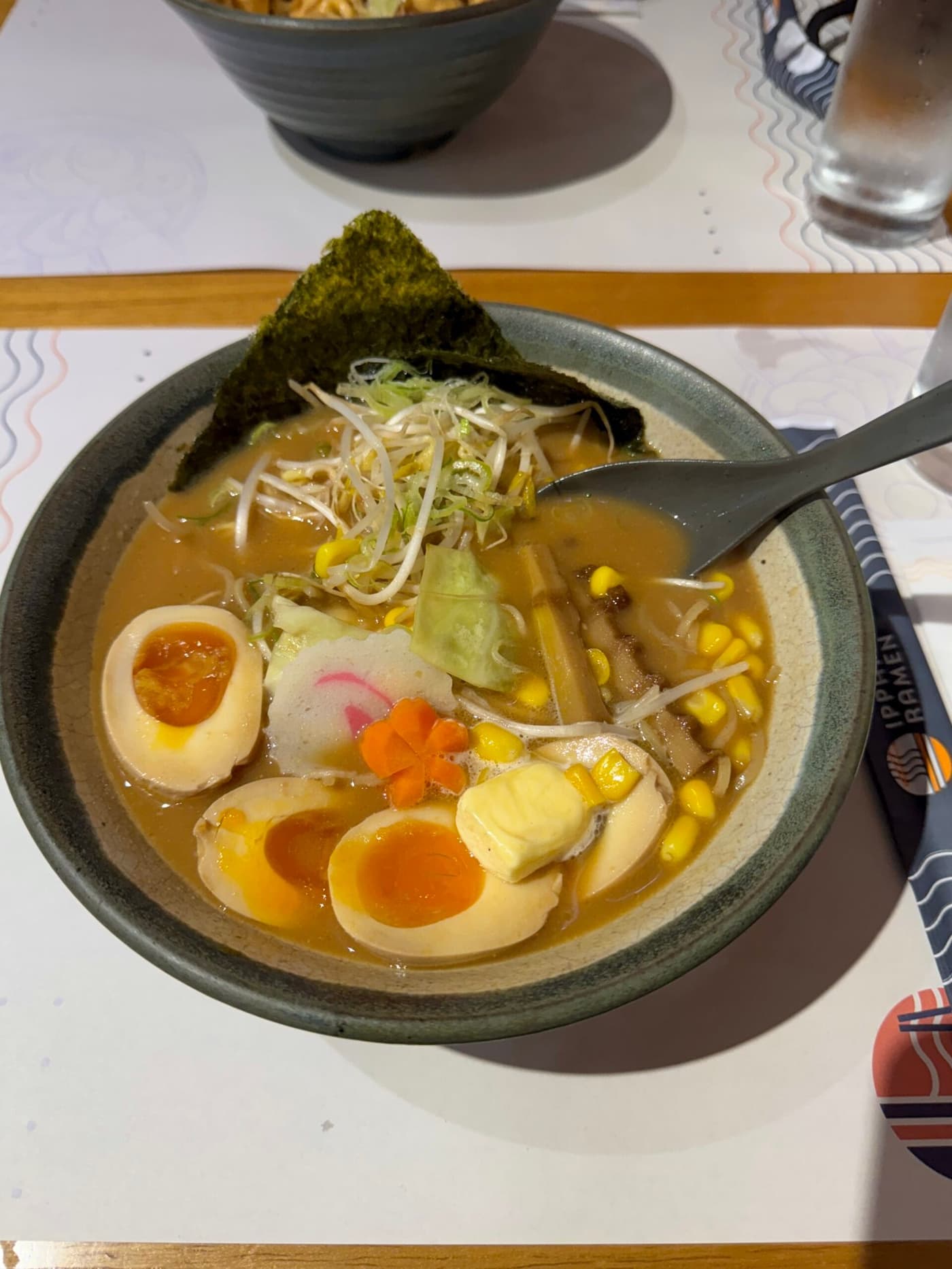
Ippai Ramen (Al. Dr. Carlos de Carvalho, 1011 – Batel) — a specialized ramen bar, one of the best in the city, with very tasty ramen. It is open Tuesday through Sunday from 6:00 pm to 10:00 pm, with no reservations, first come, first served. The menu has tonkotsu, miso and soy ramen and donburi. A bowl costs R$ 40–80 depending on what you choose. Rating 4.6, with more than a thousand reviews. One downside: on weekends you will have to wait at the entrance or arrive right at opening.
Breakfit Sugar Free (R. Brigadeiro Franco, 2063 – Batel) — Curitiba's first completely sugar-free breakfast and brunch buffet: bread, fruit, tapenades, eggs, tapioca, juices, yogurts, all sold by weight. It suits anyone watching their diet or who just wants a proper breakfast without a sugar crash.
Avenida Paulista — Pizza, Pasta e Vino (R. Emiliano Perneta, 680 – Centro) — the restaurant turned 20 in 2023. In that time it has built a special relationship with wood-fired ovens: long-fermentation pizzas, gratin pastas and slow-cooked meat. Everything is made in a wood-fired oven. There are lines in the evenings, especially on weekends, so it is best to arrive at opening or book ahead.
Mealtimes in Brazil: When Restaurants Are Open
Brazilians eat lunch later than most Europeans. Restaurant kitchens usually open around 11:30 am–12:00 pm and run until 2:30–3:00 pm. If you show up at 3:30 pm, the kitchen is most likely already closed, even if people are still sitting in the dining room. Per-kilo restaurants are especially sensitive to timing: after 2:00 pm the selection gets noticeably thinner.
Dinner starts no earlier than 7:00 pm, and in most places 7:30 pm.
Many restaurants are closed on Mondays, which is the standard day off in Brazilian dining. Before you go, check the opening hours on Google Maps, but the data is sometimes out of date.
Padarias and coffee shops work differently: they open early, often at 6:30–7:00 am, and are geared to the whole day. They are the main lifeline if you get hungry outside the lunch or dinner window.
Sundays in Curitiba go differently: the fair at Largo da Ordem runs in the morning (9:00 am–2:00 pm), and some restaurants are closed or open only for lunch. Santa Felicidade, however, comes fully alive on Sundays, and family lunches there are the main event of the week.
I told the story of how we spent our time in Curitiba in my YouTube episode.
FAQ About Food in Curitiba
Are there vegetarian restaurants in Curitiba?
Yes, and more than you might expect. Curitiba is one of Brazil's progressive cities when it comes to mindful consumption, so vegetarian and vegan places stopped being exotic here a long time ago.
The per-kilo format is especially convenient for people who don't eat meat: a good by-weight buffet always has several hot dishes without animal protein, a rich salad bar and a variety of sides. You can easily put together a full plate without thinking about a special menu.
There are also dedicated vegan restaurants. In the menu of regular restaurants it is always worth asking "tem opção sem carne?" (is there anything without meat?). In most cases they will have something.
What is the most popular cuisine in Curitiba?
Put briefly, Italian and Japanese. This is a direct result of the history of immigration: Italians settled in Santa Felicidade starting in 1878, and the Japanese diaspora began to form in 1912 and today numbers more than 40,000 people.
But it is more accurate to say that Curitiba is a city without a single dominant cuisine. German, Polish and Ukrainian influences are clearly felt in the snacks and bread. The Brazilian cuisine of the state of Paraná, with its barreado, pinhão and carne de onça, is a separate layer of its own.
Can you get food delivery in Curitiba?
No problem. The main platform in Brazil is iFood. It works through an app, covers almost the whole city, and has a card payment option. Most decent restaurants in Curitiba are listed there, including Ippai Ramen, Avenida Paulista and the per-kilo chains.
The second platform is Rappi, which also works in Curitiba and has a wider range of categories, including groceries.
One thing to note: many small places take orders directly through WhatsApp or Instagram, bypassing the aggregators. If a restaurant has an Instagram account, it usually says there how to order.