In this article I share my personal experience of flying to Brazil with a cat. I put together a full guide: how to prepare your pet's documents in Georgia and Spain, which airlines take pets in the cabin, what it costs, plus the details and tips that matter.

Why we decided to fly to Latin America
For more than two years we traveled around Asia, visited the most accessible countries and covered the region from Japan to India. It was time to explore new places, change continents and discover new countries. That is how our journey through South and Central America began, and maybe, in time, North America too.
The first thing we had to figure out was the main question: how to get to Latin America with a pet.
Which Latin American country to choose as a starting point
We looked at different options, thinking about where to start, from Panama to Brazil. Since we travel with a cat, we wanted to find a direct flight and an airline that takes animals in the cabin.
Direct flights from the European continent go only to Brazil, Mexico and Panama. The simplest and shortest routes are to Brazil, and I had dreamed of visiting Rio de Janeiro for a long time. So we decided to fly to Brazil.
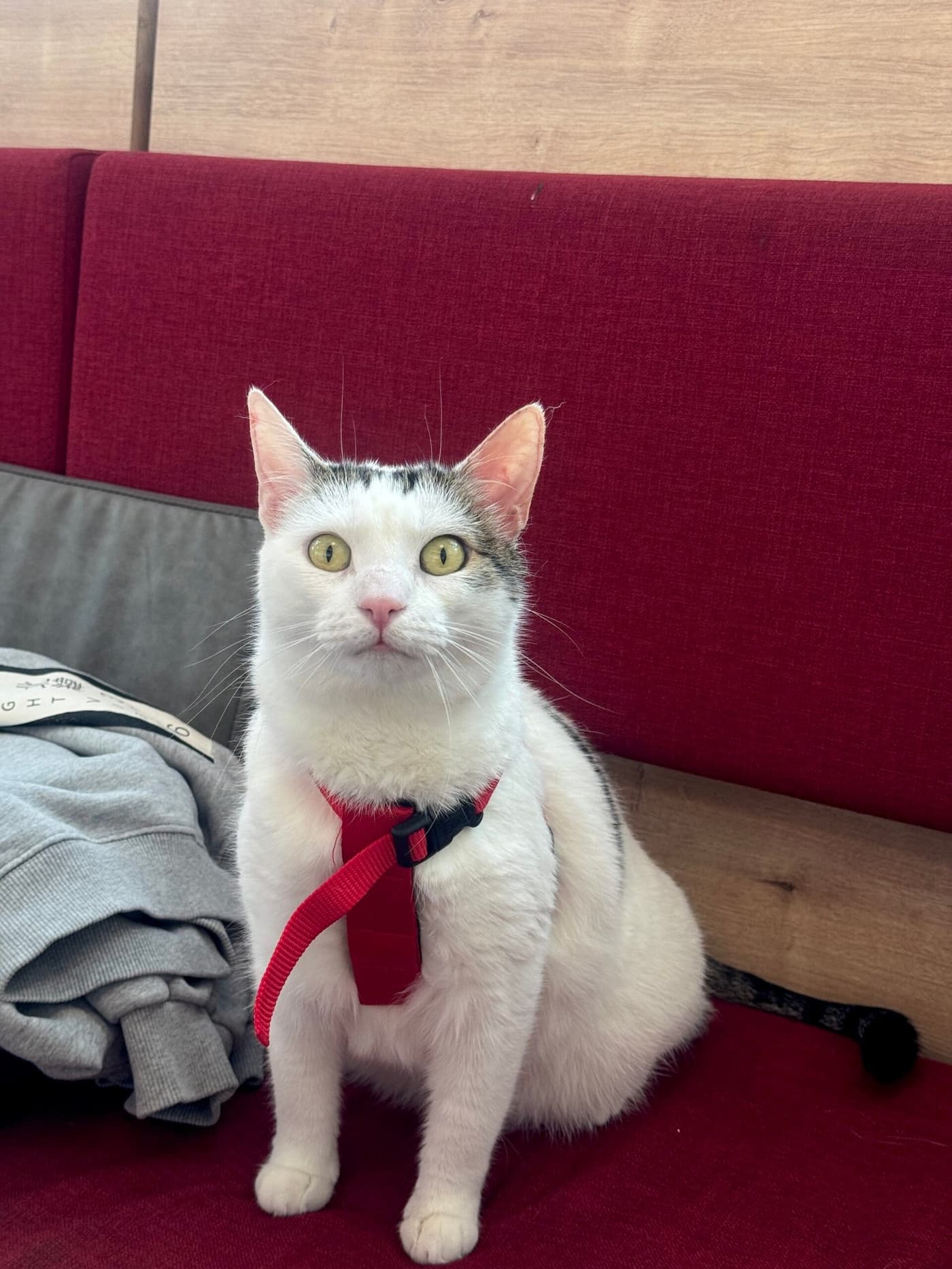
The best airlines for flying with a pet to Latin America
If you don't have a Schengen visa, your choice is limited. Here is an overview of the popular airlines that travelers use to fly with pets to Brazil, Argentina, Mexico and other Latin American countries:
Turkish Airlines
Turkish Airlines takes pets in the cabin, and we fly with them regularly ourselves, for example from Istanbul to Bangkok and back. The biggest downside of Turkish is its strict requirements. For example, a return ticket bought through them. Turkish Airlines often wants round-trip tickets bought in a single booking, or onward tickets to your country of citizenship. Other travelers say that after buying a round-trip ticket it is almost impossible to get a refund for the second segment.
That is why flying Turkish Airlines is expensive and uncomfortable for travelers who plan to visit several Latin American countries and not return to their country of citizenship. We ruled this option out right away, because we didn't want to add stress to an already stressful trip.
Ethiopian Airlines
Travelers with pets often fly Ethiopian Airlines. I am afraid of flying and, to be honest, I don't fully trust Ethiopia as a carrier, and for me this flight is also too long and complicated. But you can consider this option. According to people who have flown with them, it is the most lenient airline for flying to the Southern Hemisphere.
Royal Air Maroc
Royal Air Maroc is another airline that takes pets in the cabin and hasn't been reported to deny boarding. But again, it means long layovers, and the price was steep.
Qatar Airways
If you have a large dog, or if you are flying without an animal, consider Qatar Airways, which has some of the most comfortable and safest flights. I would gladly have flown with them, but they accept pets only in the cargo hold, and that option doesn't work for us.
After studying all the options, we decided to fly from Europe, but we didn't have a Schengen visa, and we didn't want to travel to our country of citizenship to get one. Armenia came to our rescue. When we checked in October 2026, a Schengen visa could be obtained there by applicants with eligible passports, so be sure to confirm the rules for your own passport with the relevant consulate or immigration authority.

International passport, microchip and vaccinations for your pet
Before any international flight, your pet must have:
- An international veterinary passport listing the owner's details, the microchip number and vaccinations;
- A microchip registered under the international ISO standard (it is always checked when leaving the country);
- A rabies vaccination given at least 21 days before departure;
- A rabies antibody titer certificate (an antibody level test). It isn't needed for every country, but it is definitely needed for Europe. We did the titer test three years ago in Turkey, and the result is valid for the rest of the pet's life as long as vaccinations are kept up to date.
These documents are the basics and you will need them in any country, whatever your route.
Rules for taking a cat from Georgia to Europe
Before flying from Georgia to Europe with a cat, it is important to prepare your pet properly and complete all the paperwork. This is a mandatory requirement of both the Georgian and European veterinary services.
How we prepared for the flight from Tbilisi to Spain:
- Treatment for external and internal parasitesA few days before departure you need to visit a veterinary clinic. There the cat is treated for fleas, ticks and worms. We used Stronghold, and the vet noted it in the veterinary passport with the date and dosage.
- Veterinary health certificateAfter treating the animal, the vet issues a certificate confirming that the cat is healthy and fit to fly. This document is valid for a short time (usually 3–5 days).
- International export certificate for the animalWith the clinic's certificate you need to go to the Ministry of Environmental Protection and Agriculture of Georgia (MEPA), where it is exchanged for an international veterinary certificate (Health Certificate).
The certificate is issued for a specific country, in our case Spain. It allows you to stay in Spain for up to 100 days and to return back with the same certificate. The fee was 304 lari.
Ministry address: 6 Marshal Gelovani Avenue, Tbilisi, 0159, Georgia. Official MEPA website.
Once you have the certificate, you can fly out of Tbilisi by presenting the veterinary documents and proof of your pet's health.
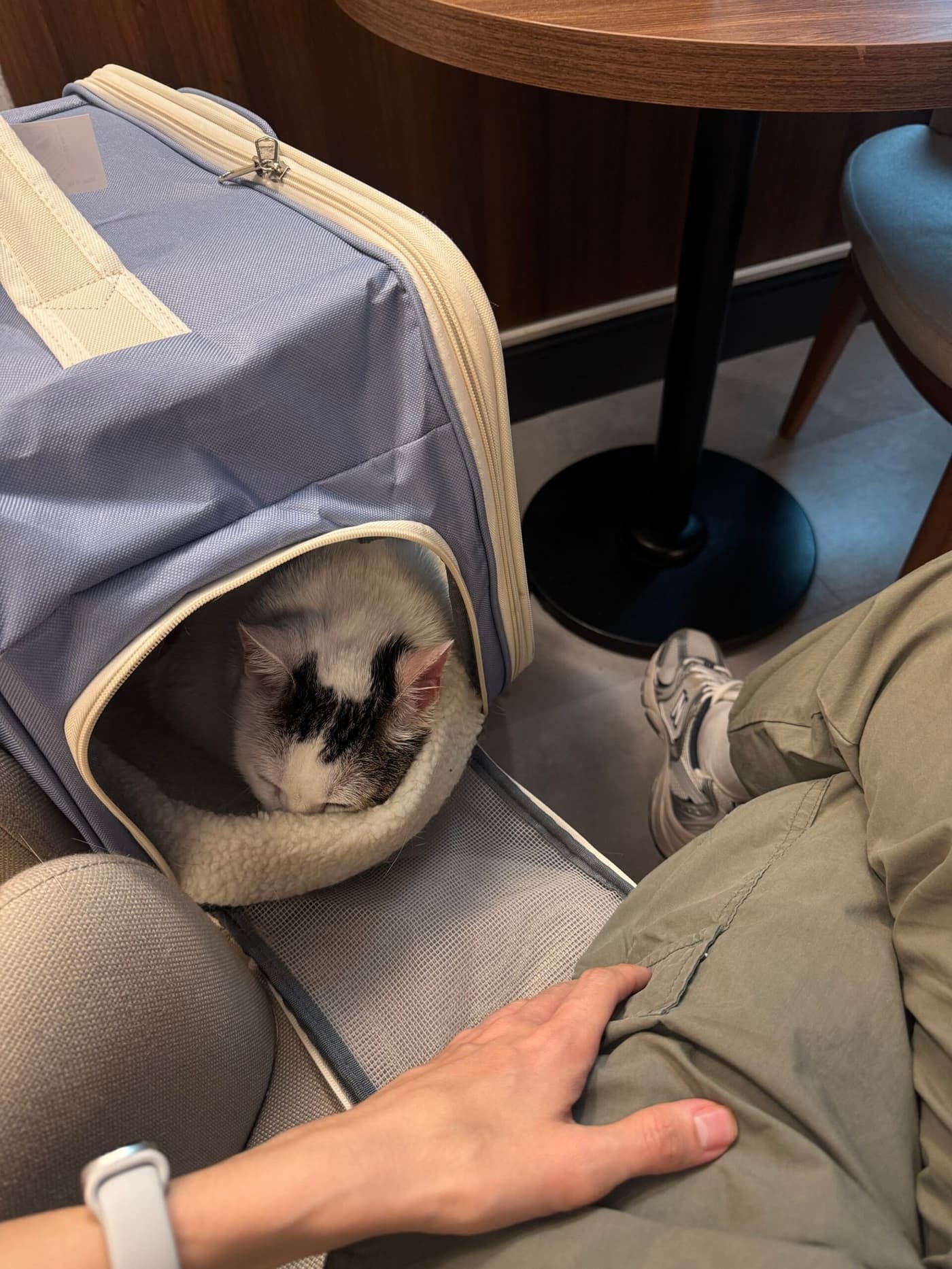
The flight from Georgia to Spain
From Georgia to Spain we flew with Turkish Airlines, which is the only option on this route with a pet in the cabin. We bought the ticket in advance on Trip.com. After buying the ticket, we added the cat to it on the Turkish Airlines website.
The ticket from Tbilisi to Barcelona with a layover in Istanbul cost $360 for the two of us, plus $247 separately for the cat.
At the check-in desk in Tbilisi, nobody asked us a single question and nobody asked for onward tickets from Spain. They glanced through the cat's documents and quickly issued our boarding passes. The flight went without any problems.
In Istanbul we had a layover of almost a full day, so we spent the night at a hotel near the airport, Elite Hotel İstanbul. It is a very good transit hotel: clean, quiet, with blackout curtains.
When we arrived in Spain, nobody asked us anything and we simply walked out into the city.
We spent 20 days in Spain.

From Spain to Brazil with Iberia
The next stage was the flight from Madrid to Rio de Janeiro. We were choosing an airline that allows pets in the cabin and settled on Iberia. I'll explain why we chose the Spanish airline and which options we considered from Europe.
Airlines that fly to Brazil with animals from Europe:
- ITA Airways is an Italian airline with direct flights. We dropped it right away because it had the most expensive tickets for our dates.
- TAP Portugal and the Brazilian airline Azul fly from Lisbon, but they didn't answer calls or emails. I never figured out how to contact them to add an animal to a ticket. Like with Turkish Airlines, you can't do it on the airline's website.
- Iberia has the best service, responsive support and easy booking. They even called us back themselves when we ran out of balance on our phone. That is why we chose them.
We bought fully refundable tickets (just in case). The direct Madrid to Rio flight cost $985 per person. The cheapest non-refundable fare was about $150 less.
Rules for taking a cat from Europe to Brazil
If you are planning to fly with a pet from Europe to Brazil, prepare all the veterinary documents in advance. The process is similar to the European one, but there are a few important details.
Naturally, you need an international veterinary passport, a microchip registered in the ISO database, standard vaccinations and, optionally, a rabies titer test confirming immunity. We have one, but I'm not sure it is definitely required.
How the process went for us in Spain (Madrid):
-
Treatment for external and internal parasitesBefore the veterinary documents are issued, the animal must be treated for parasites: fleas, ticks and worms. The vet records the date and the product in the veterinary passport.
-
**Medical certificate (Health Certificate)**In Spain, only accredited veterinary clinics can issue a medical certificate for exporting an animal. The certificate confirms that the pet is healthy and can be brought into Brazil. You can get the certificate 10 days before departure. It cost 170 euros. You can also get an EU pet passport there for 25 euros, but Brazil doesn't accept it anyway, so we haven't made one yet.
-
Exchanging the certificate at the airport before departureAfter getting the medical certificate at the clinic, you need to go to the airport (in Madrid, to the Ministerio de Agricultura, Pesca y Alimentación office). There veterinary inspectors exchange the clinic certificate for an official export document allowing the animal to leave the EU. The office checks the documents, the pet's passport and the chip. It is important to come in advance (1–2 days before departure). The procedure is free.
After that your pet is ready to fly.
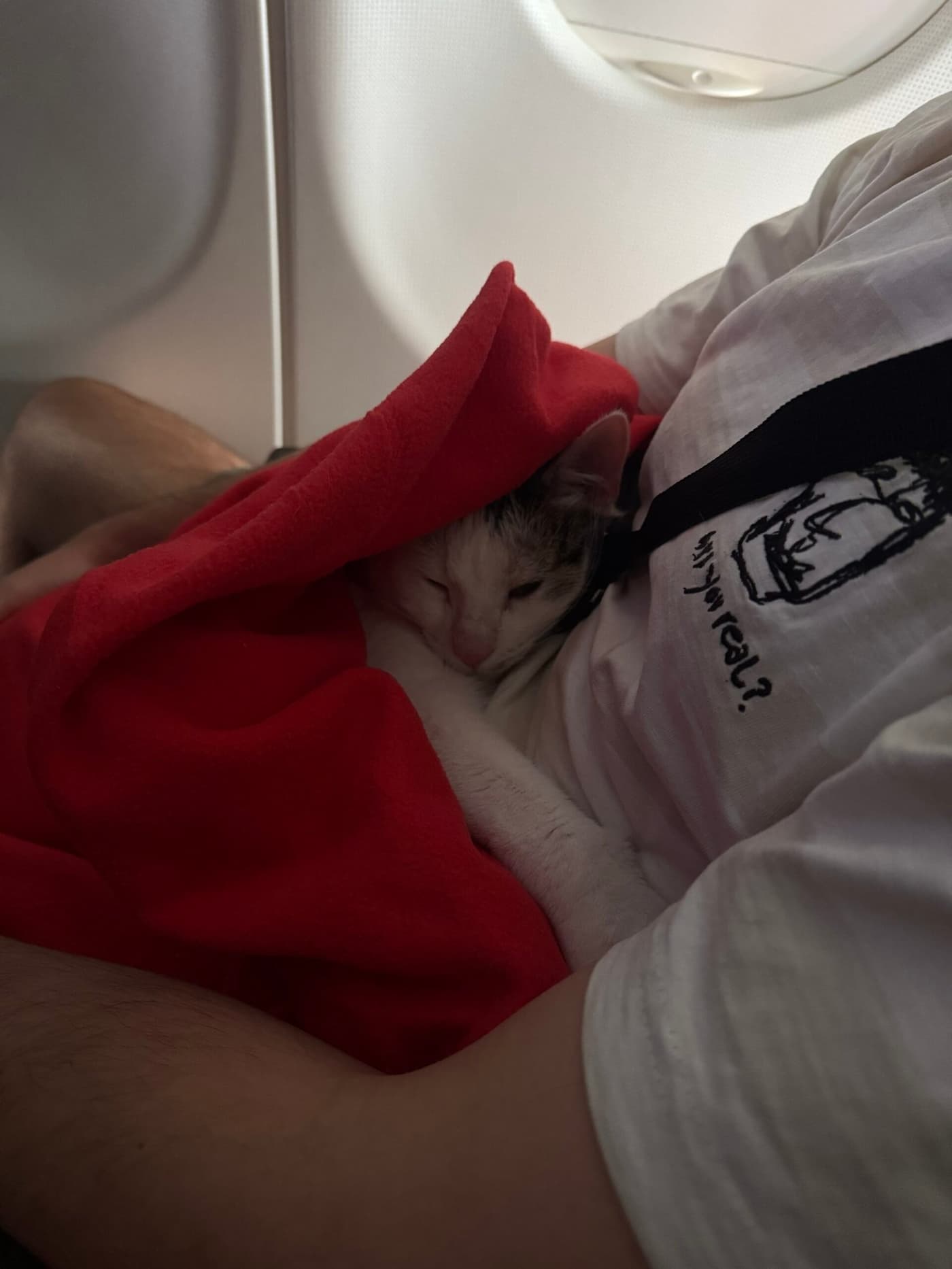
Flying with a cat: conditions and impressions
At check-in in Madrid, they asked us for a ticket out of Brazil. I had anticipated this and bought a fully refundable ticket to Uruguay on Trip.com, and that is what I showed. They only looked at the ticket and didn't check whether it was real. They checked the cat's documents, registered us and gave us boarding passes.
There were no extra checks at the gate, which always happens with Turkish Airlines.
By the way, we have a well-traveled passport: lots of stamps from visa-free countries, a recently issued Japan visa and a Schengen visa.
The flight went fine. For almost all of the 11 hours, apart from takeoff and landing, the cat sat in Kirill's arms. The food wasn't tasty: the first meal was a standard lunch served right at the start, in the middle of the flight they handed out crackers and offered drinks, and just before landing they gave out sandwiches. In the end it was one bread with bread. Throughout the flight you could ask for crackers and drinks without limit.
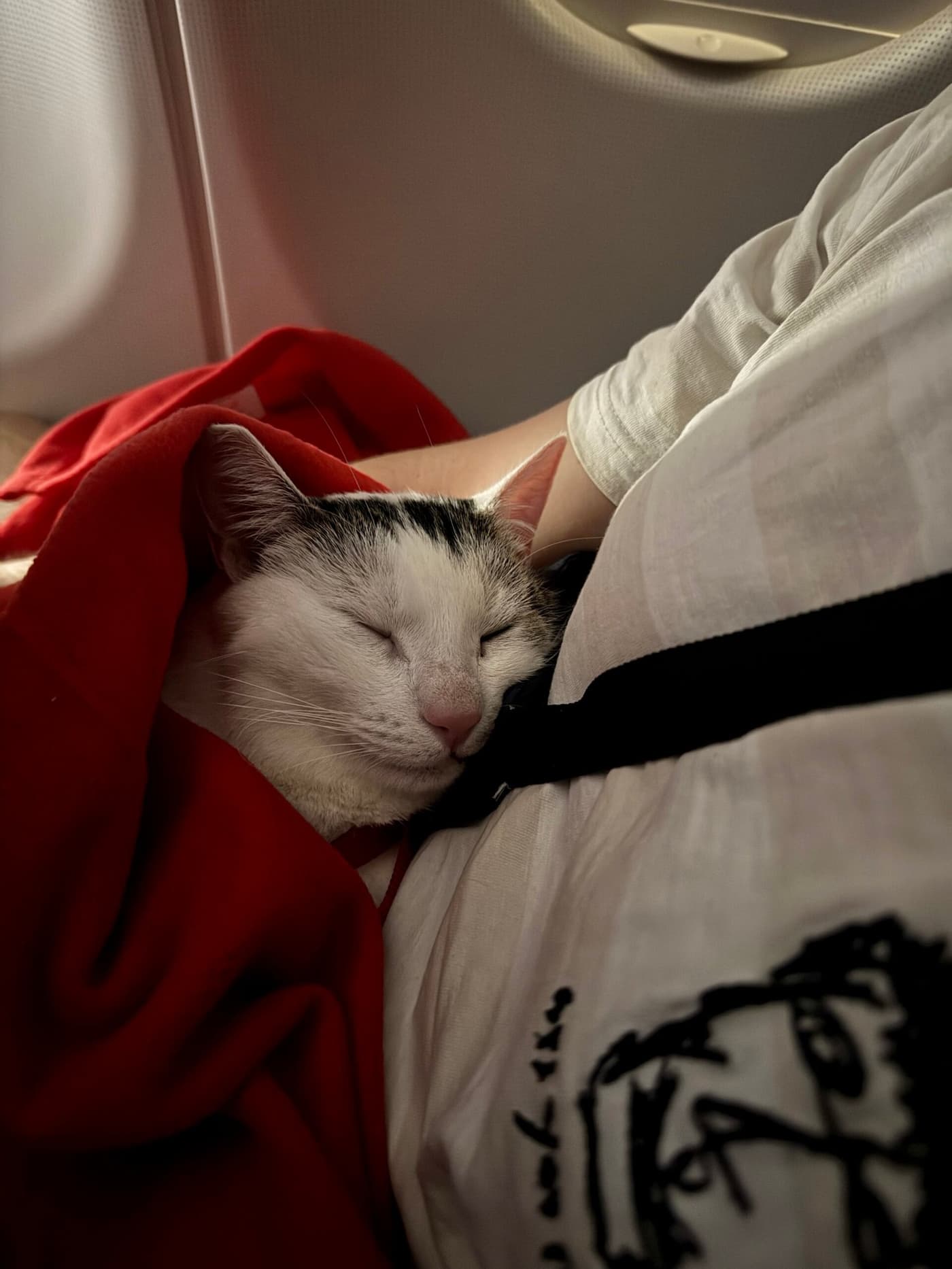
Arriving in Brazil: pet control and inspection
Arriving in Rio, we were lucky and there were no lines. We went quickly through passport control, where the border officers didn't ask a single question. At the exit they spotted the cat and sent us to the red channel. A woman sitting there was very kind, petted Ivy, took the documents we had prepared in Spain, typed something into her computer and let us go.
Flying to Latin America with a pet is possible if you prepare in advance. The main points:
- choose an airline that takes animals in the cabin;
- have an onward ticket out of the country of arrival;
- prepare the veterinary documents and certificates;
- do all the treatments and vaccinations in advance;
- stay calm, because everything goes much more smoothly than it seems.