Toledo is one of the oldest and most atmospheric cities in Spain, just a few dozen kilometers from Madrid. It is often called an open-air museum and the city of three cultures: Christian, Muslim and Jewish.
Today Toledo is a UNESCO World Heritage Site and one of the most popular day-trip destinations from the Spanish capital. People come to see the majestic cathedral, the Alcázar fortress, the old bridges and the narrow streets of the historic center.
While we were in Madrid, we couldn't skip this place, so we made a day trip from Madrid.
In this article I'll explain where Toledo is, what the city's history looks like and whether it really was the capital of the country. I'll also share how to get from Madrid to Toledo, what to see in Toledo in one day and which sights are considered must-sees.
Where Toledo Is
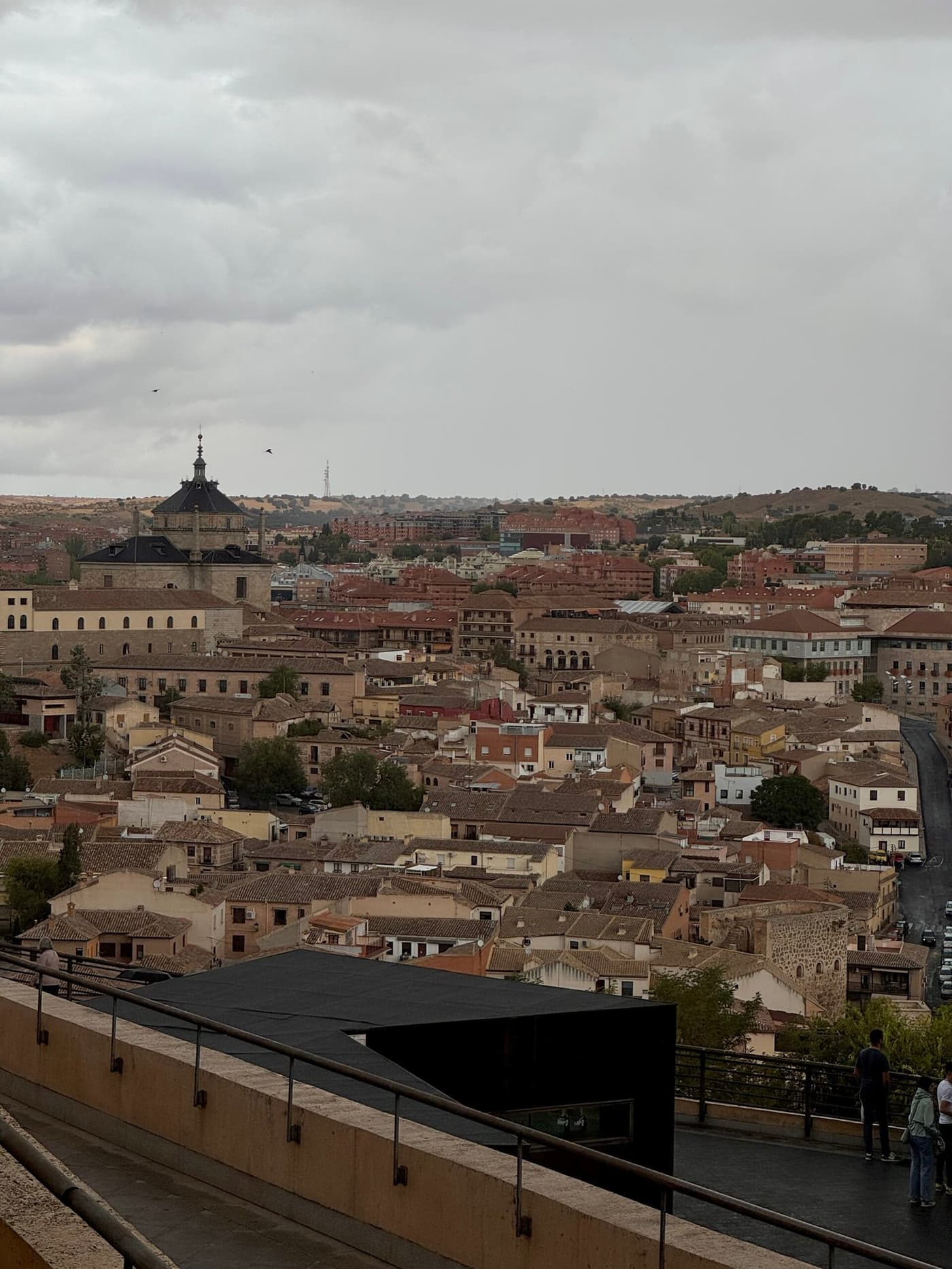
Toledo sits in central Spain, in the autonomous community of Castilla-La Mancha, on a rocky hill above the Tagus River. Thanks to this location, the city played a key role in Spanish history for a long time, both politically and religiously.
Toledo on the Map of Spain
On the map of Spain, Toledo lies southwest of Madrid. The distance between the two cities is short, so Toledo is often included in an itinerary through central Spain or visited as a day trip.
Distance Between Madrid and Toledo
The distance from Madrid to Toledo is about 70 kilometers. Depending on the transport you choose, the trip takes from 30 minutes to 1.5 hours, which makes Toledo one of the most convenient destinations for a short trip from the capital.
History of Toledo
Toledo's history goes back more than two thousand years. Thanks to its strategic position, the city was an important political, religious and cultural center of the Iberian Peninsula for centuries. This is where the unique atmosphere that travelers from all over the world value today took shape.
Ancient Toledo and the "City of Three Cultures"
The first settlements on the site of modern Toledo existed as far back as Roman times. Later the city came under Visigothic rule and became one of the key capitals of their kingdom.
From the 8th century Toledo was controlled by Muslims, and after the Reconquista it passed to the Christians. For a long time, three cultures coexisted peacefully in the city: Christian, Muslim and Jewish. That is why Toledo is often called the "city of three cultures."
This heritage is still easy to see today:
- Christian cathedrals and monasteries,
- Muslim architectural elements,
- Jewish quarters and synagogues.
Thanks to how well it has been preserved, Toledo's historic center is a UNESCO World Heritage Site.
Was Toledo the Capital of Spain?
One of the questions tourists ask most often is whether Toledo was the capital of Spain. The answer: yes, but not in the modern sense of a state.
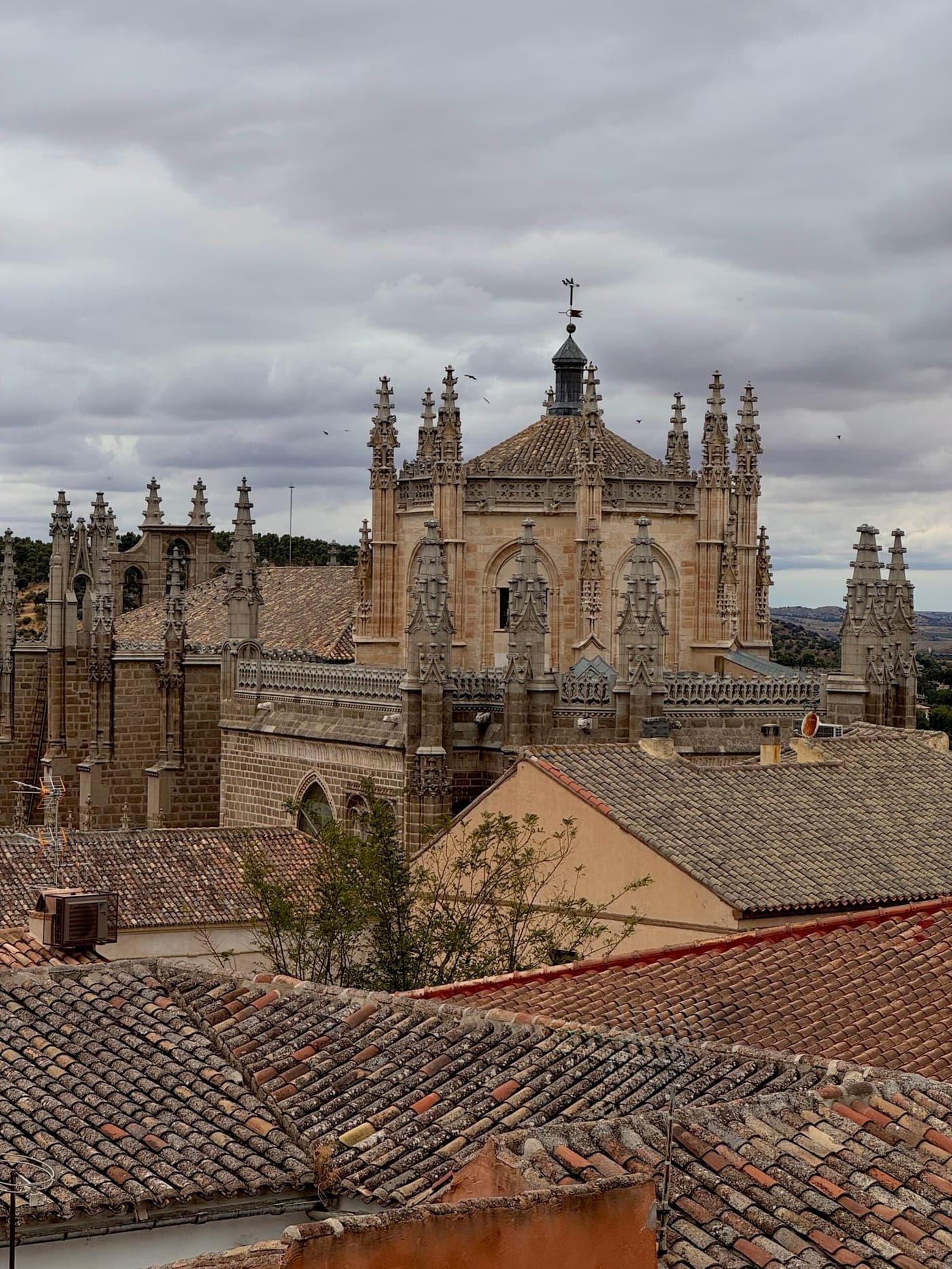
In the Middle Ages Toledo effectively served as the political and religious center of the Kingdom of Castile. In the 16th century, however, the royal court was moved to Madrid, which became the country's new capital. From then on Toledo's importance as a political center declined, but its historical and cultural role remained enormous.
It is this rich past that makes walking around the city so interesting: almost every street and building here is tied to important events in Spanish history.
How to Get from Madrid to Toledo
The Madrid–Toledo route is one of the most popular in central Spain. Because the distance is short, you can get from the capital to Toledo quickly and in several ways.
Madrid to Toledo on Your Own
Going from Madrid to Toledo independently is simple and convenient, even if it's your first time traveling in Spain. The main options are:
- high-speed train,
- intercity bus,
- car.
The best choice depends on your budget, your time and the format of your trip.
Train from Madrid to Toledo
This is the fastest and most popular way to get to the city. High-speed trains leave from Puerta de Atocha station in Madrid and arrive at Toledo station.
The journey takes about 30 minutes and trains run regularly, but it's best to buy tickets in advance, especially in high season.
Cost
- Cheap tickets when booked early: about €7-12 one way.
- Average price when booked closer to the trip: about €13-23 one way.
- Train travel time: about 30-35 minutes.
Bus from Madrid to Toledo
A budget alternative to the train. Buses leave from the Plaza Elíptica bus station. The journey takes 1 to 1.5 hours, depending on traffic.
Pros: lower ticket prices and more frequent departures during the day.
Cons: the trip takes longer than the train.
Cost
- Lowest bus fares: €6-7.
- Average ticket price: about €7-10 one way.
Madrid to Toledo by Car
The distance between Madrid and Toledo is about 70 km. Driving takes about 1 hour on both toll and free roads.
Keep in mind that traffic is restricted in Toledo's historic center. There is parking at the entrance to the city and near the tourist areas. You'll still have to walk around the old town anyway.
If you decide to drive, your costs will be fuel and possible tolls, roughly €12-17 per trip one way, depending on your car and current fuel prices.
| Transport | One-way price | Travel time |
|---|---|---|
| Train | €7 to €23 | ~30-35 min |
| Bus | €6 to €10 | ~60-90 min |
Toledo Sights: What You Must See
Toledo's historic center is compact but incredibly rich. Most of the main sights are inside the old town, so it's easy to see them on foot. Below are the places you definitely shouldn't miss in Toledo.
Toledo Cathedral
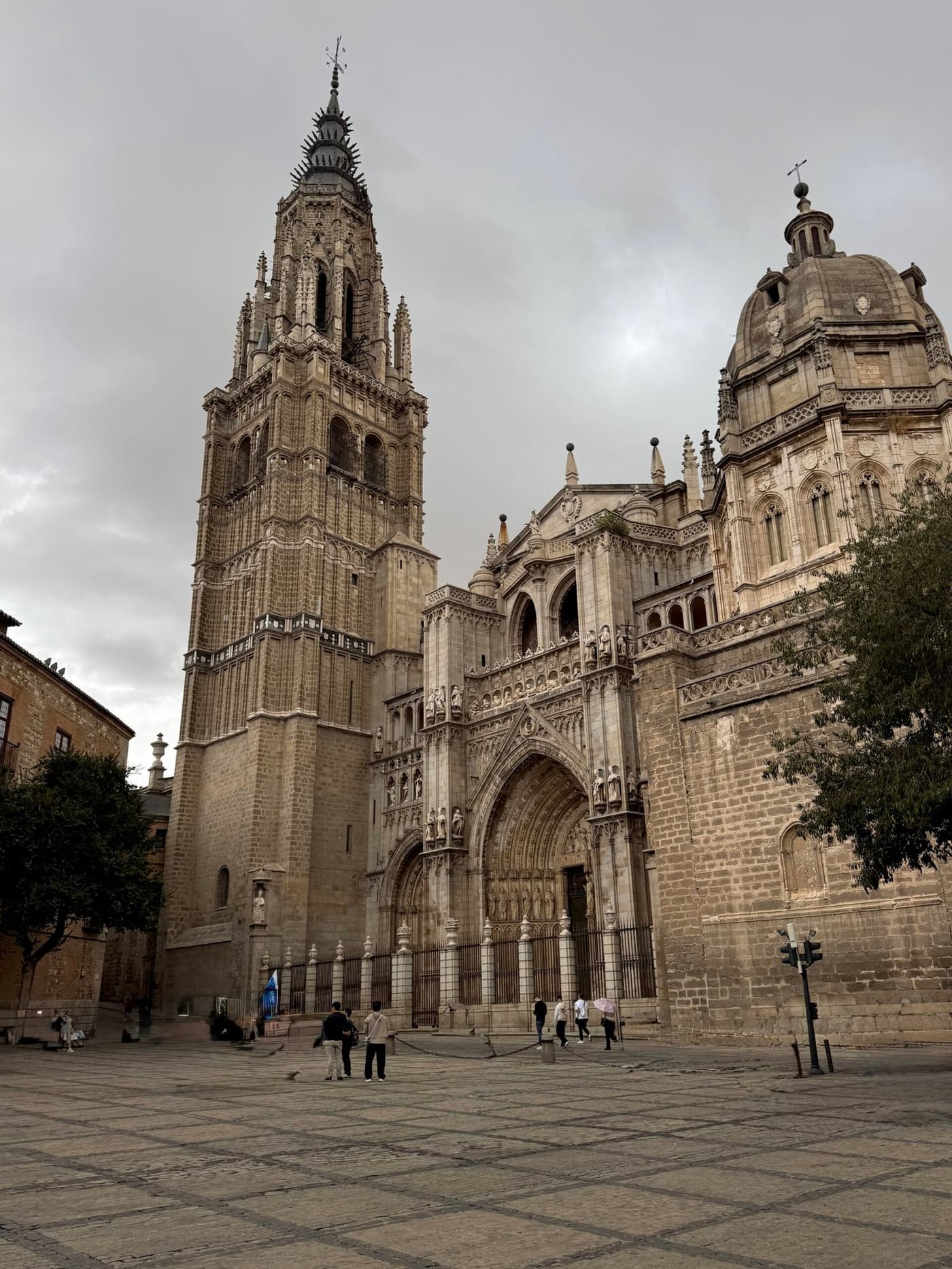
Toledo Cathedral is one of the great architectural gems of Spain and the city's key attraction.
The cathedral was built in the Gothic style and is considered one of the richest Catholic churches in Europe. Inside you can see:
- a monumental altarpiece,
- stained-glass windows from the 14th–16th centuries,
- works by El Greco, Goya and other masters.
Alcázar of Toledo
The Alcázar of Toledo towers over the city and is visible from almost anywhere in the historic center. Over its history the Alcázar has been a Roman fortress, a royal residence and a military academy.
Today it houses a museum, and the fortress itself is one of the best viewpoints, with a panoramic view of Toledo and its surroundings.
Toledo's Old Town
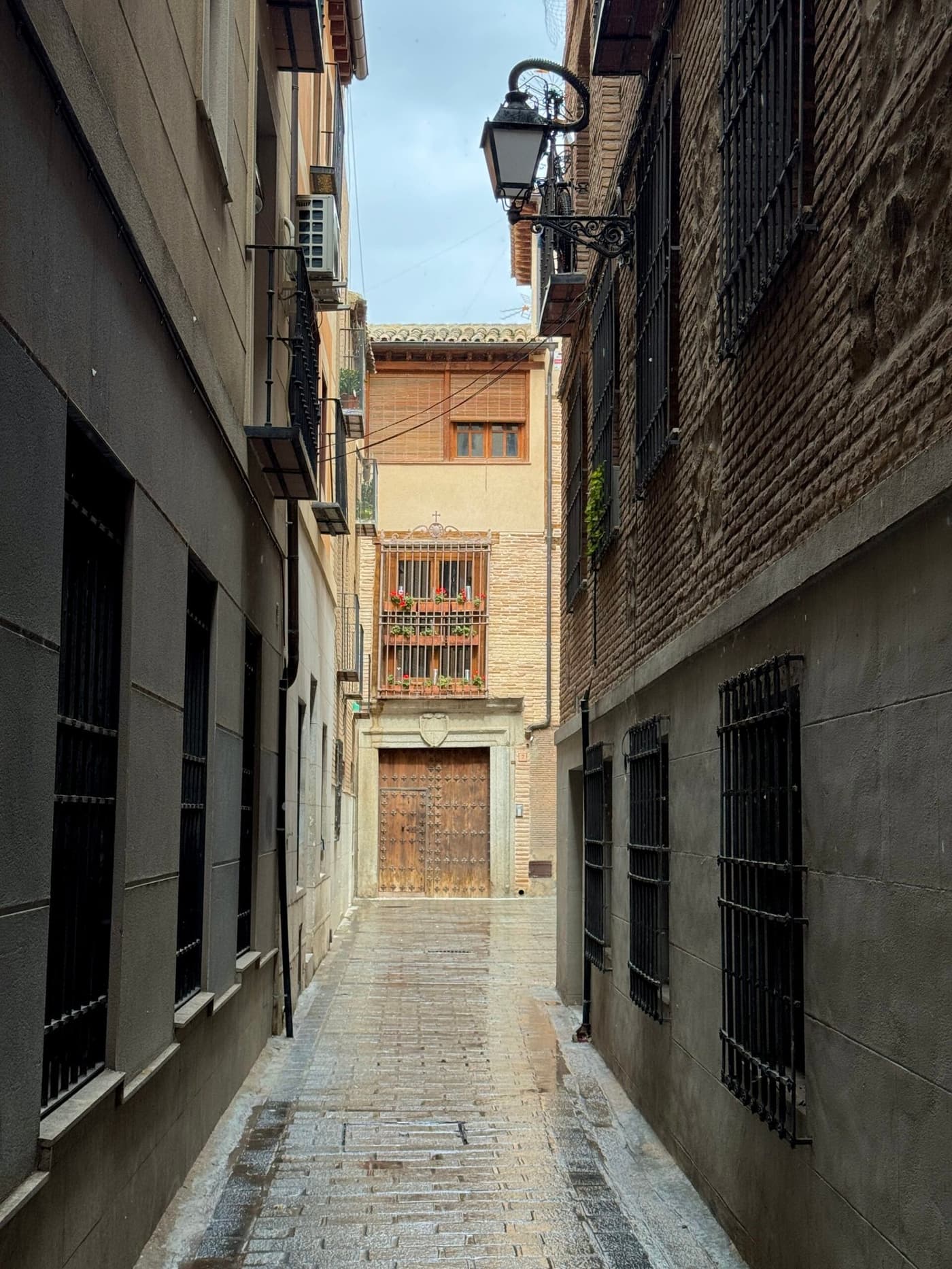
The old town is the heart of Toledo and the main reason tourists come here. Narrow stone streets, medieval houses and small squares make you feel as if you've traveled back in time.
As you wander through the historic center, you'll inevitably come across small churches, old gates and viewpoints over the Tagus River.
It was the old town that earned Toledo its place on the UNESCO World Heritage list.
Toledo's Jewish Quarter
The Jewish Quarter is one of the most atmospheric parts of the city. Old synagogues, museums and residential houses survive here, recalling the time when the Jewish community played an important role in Toledo's life.
Toledo's Bridges and Panoramic Views
Toledo is surrounded by the Tagus River, so the bridges here play not only a practical but also an aesthetic role. The best known are:
- the Alcántara Bridge,
- the San Martín Bridge.
These spots offer some of the best panoramic views of the old town, especially at sunset. Views like these are the ones that most often show up in collections of Toledo, Spain photos.
What to See in Toledo in 1 Day
Toledo is ideal for a day trip from Madrid. The historic center is compact, and the main sights are within a short distance of each other. Below is a sample itinerary that lets you see the city without rushing while still covering the most important places.
One-Day Toledo Itinerary
The easiest way to start is at the entrance to the old town, then gradually work your way up to the center:
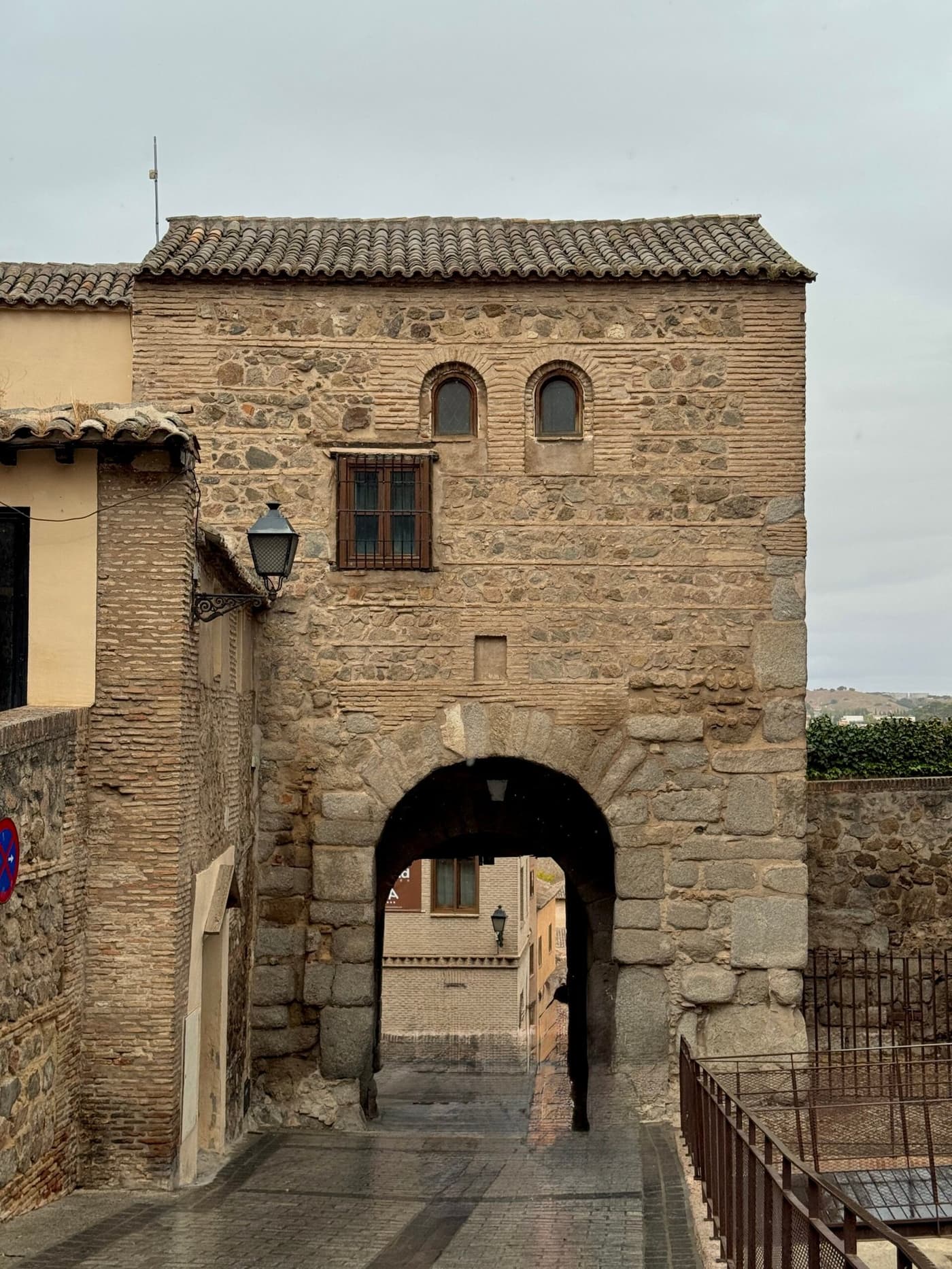
- enter through the historic gates,
- walk along the old streets,
- visit Toledo Cathedral; it's best to come here in the morning, while there are fewer tourists.
After the cathedral, continue like this:
- walk through the old town,
- see the Alcázar of Toledo,
- have lunch at a restaurant serving traditional Castilian cuisine.
Spend the second half of the day in the less touristy areas:
- the Jewish Quarter,
- small museums and churches,
- a walk to the bridges over the Tagus River.
It's best to finish the day at a viewpoint:
- Mirador del Valle, one of the most popular spots for photos of Toledo,
- the panorama of the old town at sunset.
For most tourists, a day trip is enough to see the main sights, soak up the atmosphere of the city and take panoramic photos.
If you want to dive deeper into the history, visit museums and wander without watching the clock, you can stay overnight in Toledo. Still, Toledo in one day remains the most popular and convenient format.
Toledo, Spain: Photos of the City and Its Sights
Toledo is considered one of the most photogenic cities in Spain. Even without special viewpoints, the city offers picturesque angles at literally every step, thanks to its changes in elevation, its medieval buildings and its position above the Tagus River.
The things tourists most often look for and photograph are:
- panoramas of the old town from the viewpoints;
- the historic center with its narrow stone streets;
- Toledo Cathedral and the Alcázar fortress;
- the bridges over the Tagus River and views of the city from the opposite bank.
Even a short walk around the city gives you an impressive collection of shots without having to go to special tourist spots.
Useful Tips for Tourists
When planning a trip to Toledo, keep a few things in mind. They will make your visit more comfortable and help you avoid typical tourist mistakes.
When Is the Best Time to Visit Toledo?
The best time to visit Toledo is spring and fall. The weather is comfortable for walking then, and there are noticeably fewer tourists than in summer.
Summer in Toledo can be very hot, especially during the day, because the city is far from the coast. In winter there are fewer tourists, but the weather can be cool and windy.
How Much Time to Plan for the Trip
If your goal is to see the main sights, one full day is enough. A day trip from Madrid suits most travelers. If you want to visit museums, walk without rushing and see Toledo in the evening, it makes sense to stay for 1 night.
Clothing and Shoes
Toledo's historic center sits on a hill, and the streets are paved with stone. So:
- comfortable shoes are a must;
- in summer, bring a hat and water;
- in winter, bring a warm jacket, especially for evening walks.
Visiting the Sights
For popular places such as the cathedral or the museums, it's best to come in the morning or closer to closing time, when the lines are shorter.
We recommend buying transport tickets from Madrid in advance, especially in high tourist season and on weekends.
I filmed how we traveled around Spain in a YouTube video
Frequently Asked Questions About Toledo
Where Is Toledo?
Toledo is in central Spain, in the autonomous community of Castilla-La Mancha, about 70 kilometers southwest of Madrid. The city stands on a hill above the Tagus River and is easy to reach for a day trip from the capital.
How Do You Get from Madrid to Toledo?
The fastest way is the high-speed train, which takes about 30 minutes. You can also take a bus or drive. All of these options work for independent travel, and the choice depends on your budget and time.
How Much Time Do You Need in Toledo?
One day is enough for a first look at the city. In that time you can see the main sights, stroll through the old town and take panoramic photos. If you plan to visit museums and take relaxed walks, allow 1-2 days.
Is It Worth Going to Toledo on Your Own?
Yes, Toledo is a great place to visit independently. The city is compact and easy to explore on foot, and the connection with Madrid is convenient and straightforward, even for tourists with no experience of traveling in Spain.
What Should You Definitely See in Toledo?
First of all, look at the cathedral, the Alcázar, the old town and the Jewish Quarter. These places best convey the atmosphere of Toledo and its historical heritage.