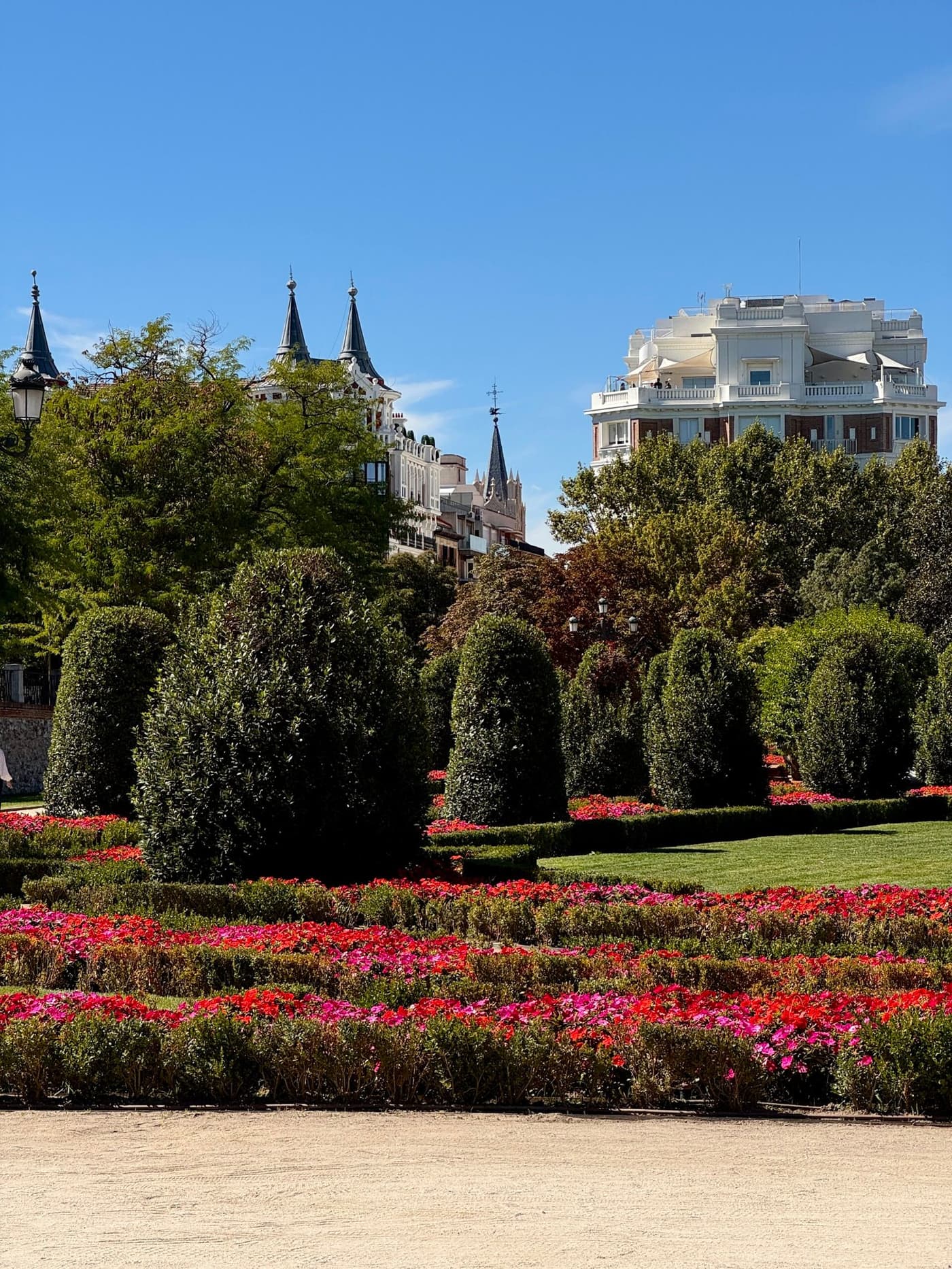
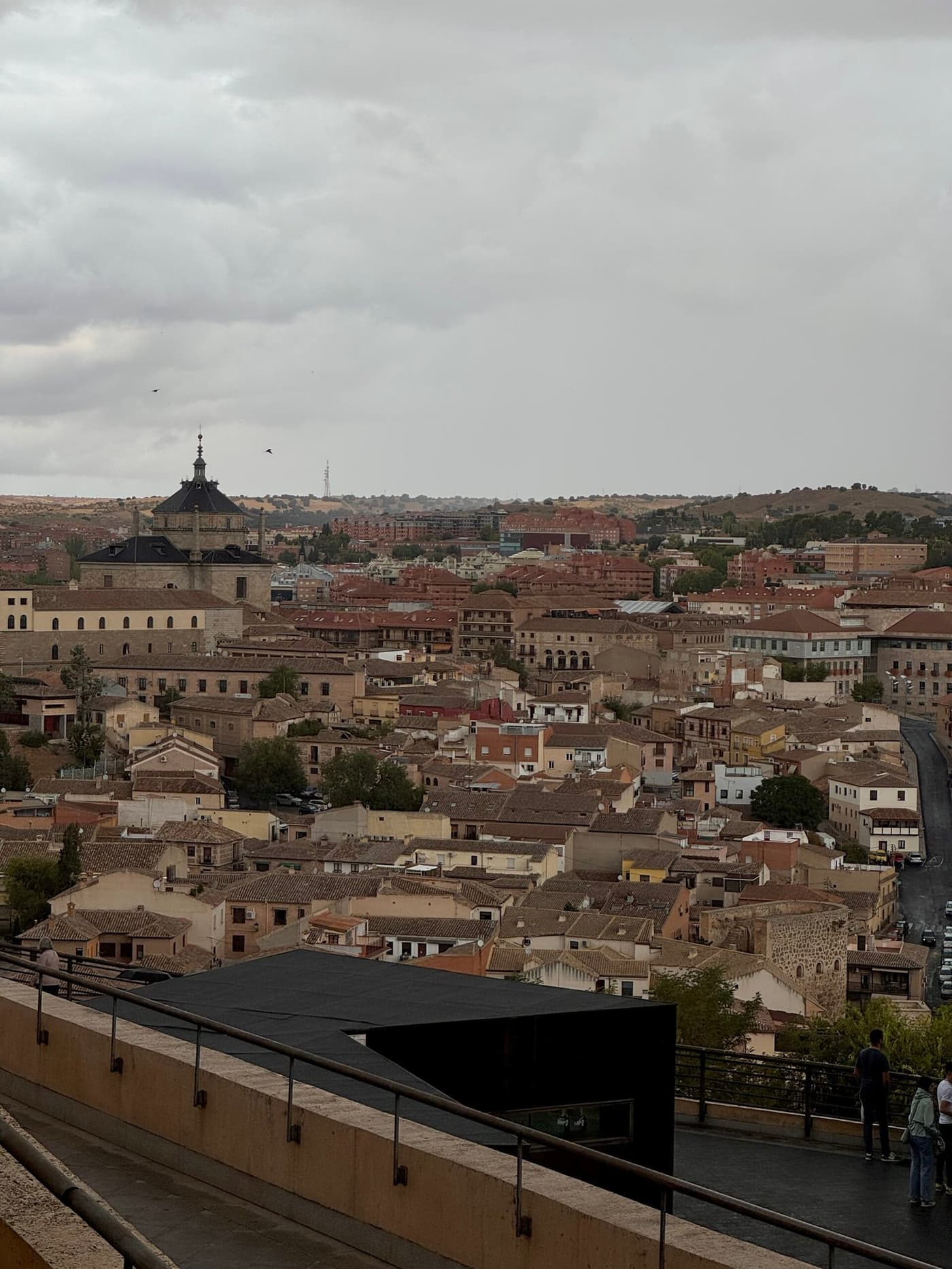
The city center is where most people start getting to know Madrid. It holds the main squares, historic streets, markets, palaces and the landmarks around which Madrid grew over the centuries.
This is where you'll find the best-known symbols of Spain's capital, from Plaza Mayor to Puerta del Sol, from old narrow streets to busy tourist routes.
In this article I'll explain where the center of Madrid is and what it includes, what the center looks like on a map, what to see around Plaza Mayor, and which streets and markets are worth adding to your walk.
Where Is the Center of Madrid and What Counts as the City Center
Unlike many European cities, Madrid has no officially designated "old town" in the usual sense. Instead, people use the idea of the city center, and that is the term you'll see most often in guidebooks, on maps and in search queries.
Historically, the central part of Madrid is the area known as Madrid de los Austrias. It was built up heavily in the 16th and 17th centuries, when Madrid became the capital of Spain.
Today, when people talk about the center of Madrid, they usually mean:
- the area around Plaza Mayor
- the Sol district
- some of the streets leading to the Royal Palace
This is where the main sights, tourist routes and pedestrian zones are concentrated. For travelers it is the most convenient part of the city: everything is within walking distance, and public transport links the center with the rest of Madrid.
Madrid City Center on the Map: Districts, Squares and Streets
Look at a map of central Madrid and it's easy to see why this part of town is the natural choice for a first walk. The center is compact, well connected by transport and almost entirely suited to exploring on foot.
For tourists and in search results, the center of Madrid usually means the area around these key points:
- Plaza Mayor
- Puerta del Sol
- Madrid de los Austrias
Administratively, most of the center belongs to the Centro district, which includes several neighborhoods with historic buildings, pedestrian streets and the city's main sights.
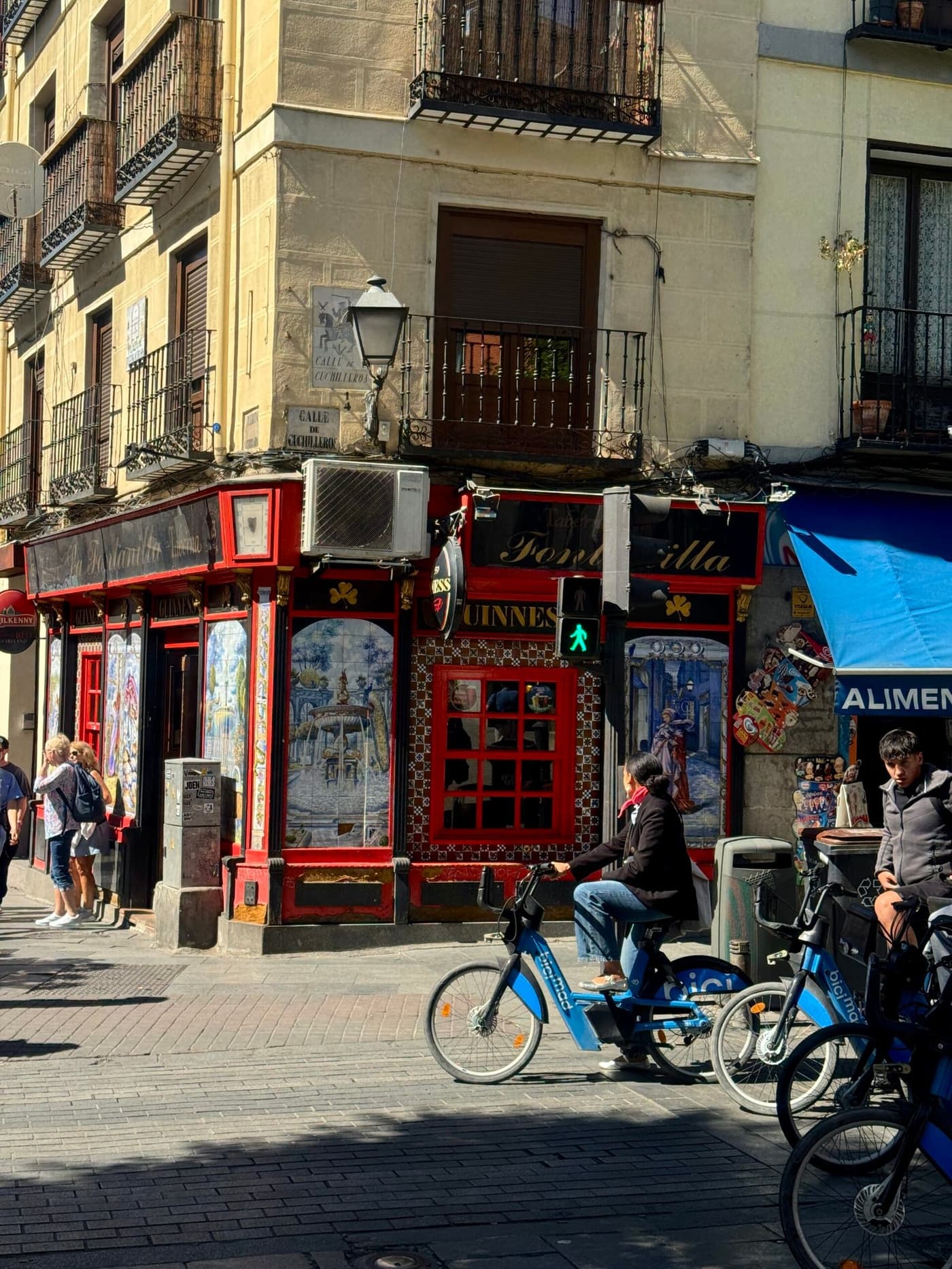
What Is Included in the Center of Madrid
In practice, when people say "the center of Madrid," they mean:
- Plaza Mayor and the streets around it
- the Sol district as a transport and tourist hub
- the streets leading to the Royal Palace
- historic squares and markets within walking distance
This area is considered the heart of the city: Madrid's history began here, city life took shape here, and the key places for tourists are still concentrated here.
Why the Center Works Well for Tourists
The center of Madrid is best explored on foot. Distances between the sights are short, most streets are made for walking, and cafés, markets and shops are literally everywhere.
So if your goal is to understand the city, see its main symbols and feel the atmosphere of the capital, the center of Madrid on the map is the best place to start.
Plaza Mayor: The Heart of Madrid's Historic Center
Plaza Mayor is rightly considered the main symbol of Madrid's historic center. City life has revolved around this square for several centuries, and today it remains one of the most visited spots in the capital.
Plaza Mayor was built in the 17th century and originally hosted markets, festivals, coronations and city events. Over time the square became an architectural ensemble with a uniform style of buildings, arcades and distinctive facades.
What to See on Plaza Mayor
On the square itself, look out for:
- the Casa de la Panadería building with its decorative frescoes
- the statue of King Philip III in the middle of the square
- the archways that connect Plaza Mayor with the streets of the center
The square is a good place for a short stop, some photos and the start of a walk through the city center. People often arrange to meet here and build walking routes through the historic part of Madrid from here.
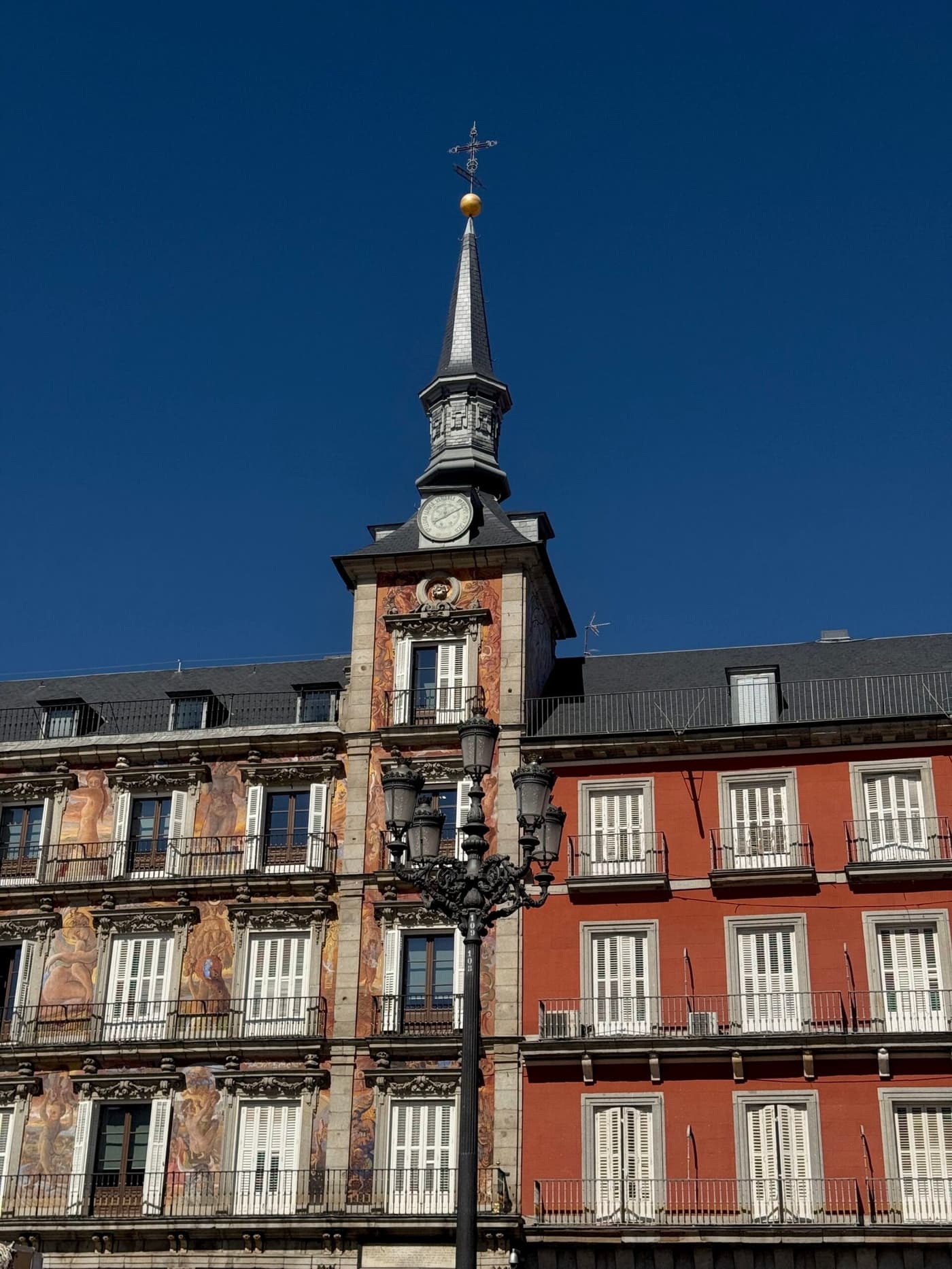
How Much Time to Plan for Plaza Mayor
15–30 minutes is usually enough to see the square itself. Add a coffee at one of the cafés under the arcades or a stroll along the neighboring streets, and it easily stretches to an hour.
Plaza Mayor also works well as the starting point of a route: from here it's an easy walk to the markets, other squares and the key sights of central Madrid.
What to See Around Plaza Mayor: Main Sights
The area around Plaza Mayor packs in landmark places that are easy to combine in one walk. All the main sights are within walking distance, which is why this route is popular with anyone who wants to see the center of Madrid in a single day.
Puerta del Sol
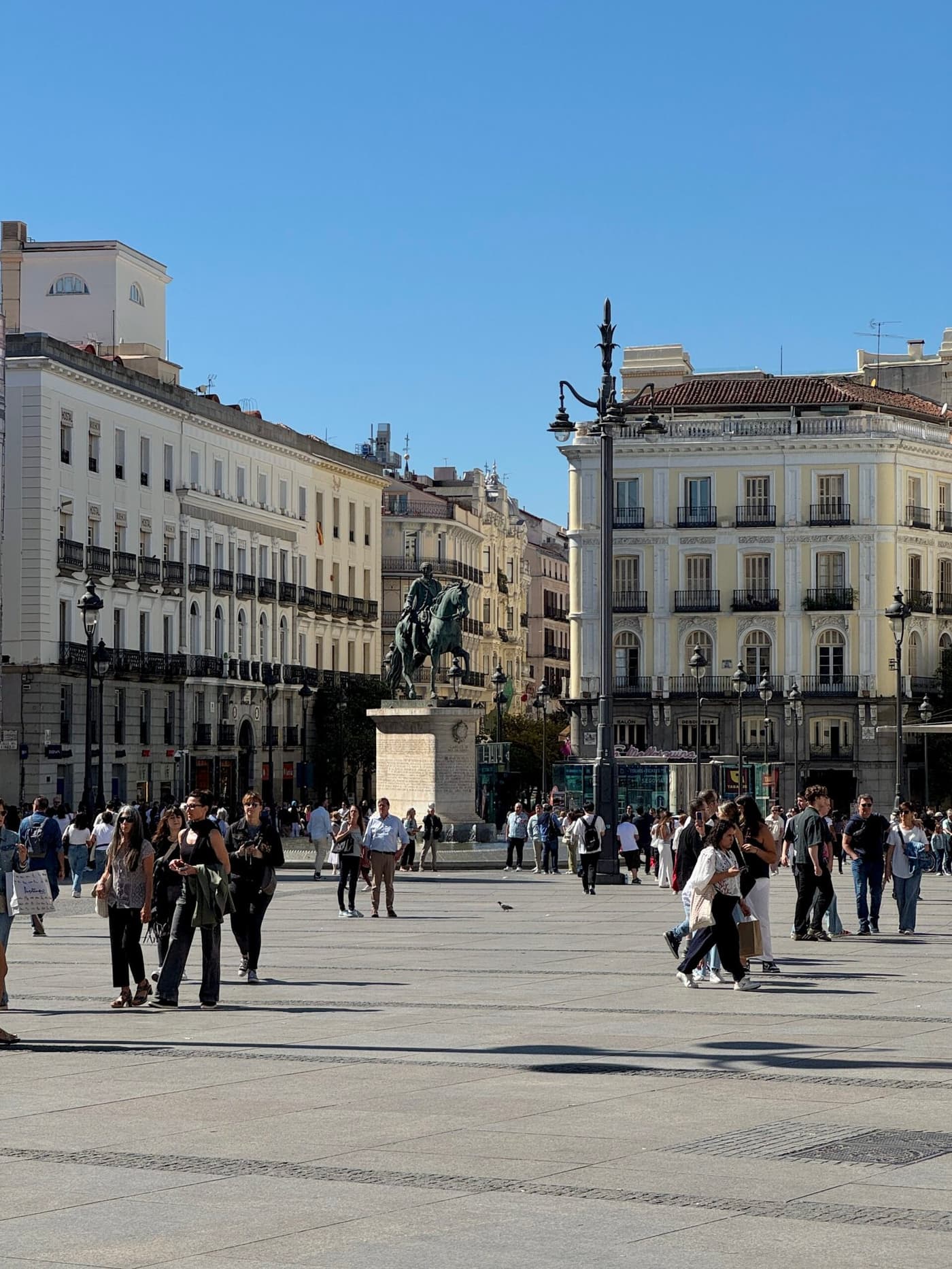
One of Madrid's best-known squares and the most important landmark of the city center. This is where you'll find the symbol of the capital, the statue of the bear and the strawberry tree, as well as Spain's Kilometer Zero, the point from which all the country's roads are measured.
Puerta del Sol is the main transport hub of central Madrid.
Mercado de San Miguel
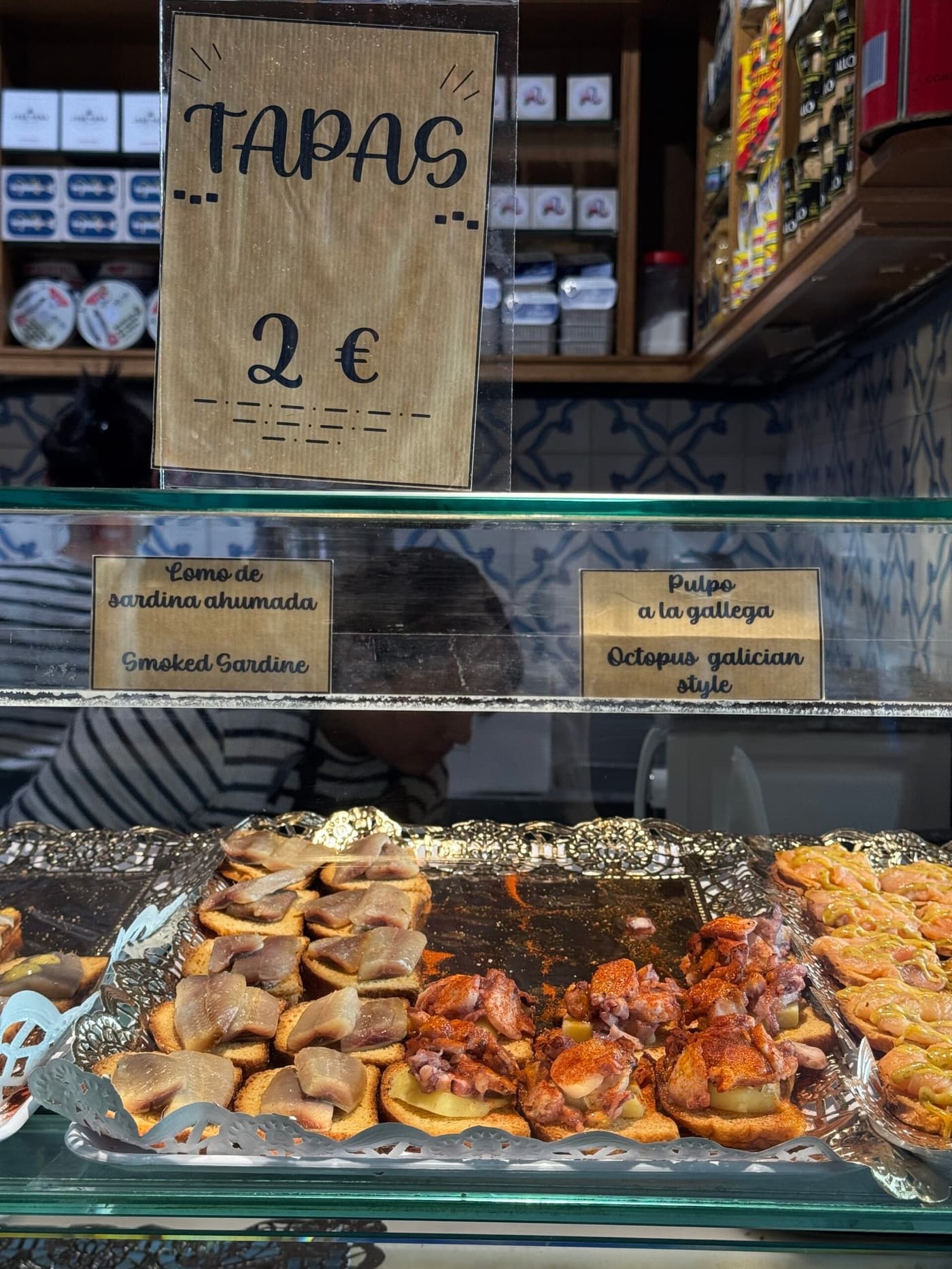
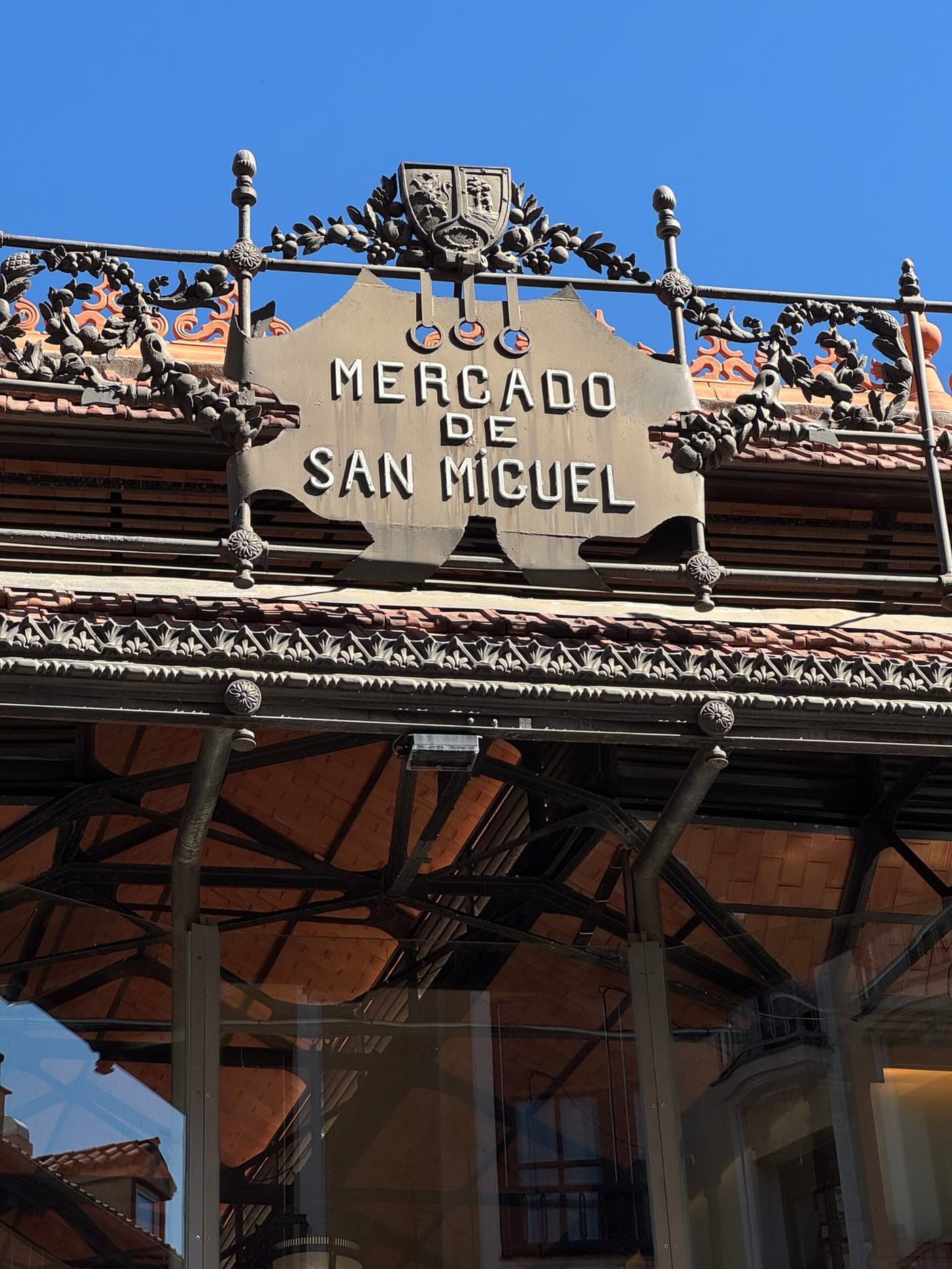
The most popular market in central Madrid, a few minutes' walk from Plaza Mayor. San Miguel Market is a covered space with food stalls where you can try tapas, seafood, cheeses and desserts.
It's a convenient place for a short break during your walk around the center.
Plaza de la Villa
One of the oldest squares in Madrid, it has kept the atmosphere of a medieval city. The historic buildings here once served as administrative buildings and homes of the city's nobility.
The square is less touristy than Plaza Mayor and is great for a quiet stroll.
Royal Palace of Madrid
The Royal Palace of Madrid stands just west of Plaza Mayor and is one of the capital's main attractions. Even if you don't go inside, it's worth seeing the palace from the outside and walking around the surrounding grounds.
It makes sense to include it in your route through the center of Madrid as the final stop of the walk.
Almudena Cathedral
Almudena Cathedral stands opposite the Royal Palace and is the city's main cathedral. It stands out from other European cathedrals with its more modern look and unusual interior.
It's easy to combine the cathedral with a visit to the palace in a single walk.
Streets in the Center of Madrid Worth Walking
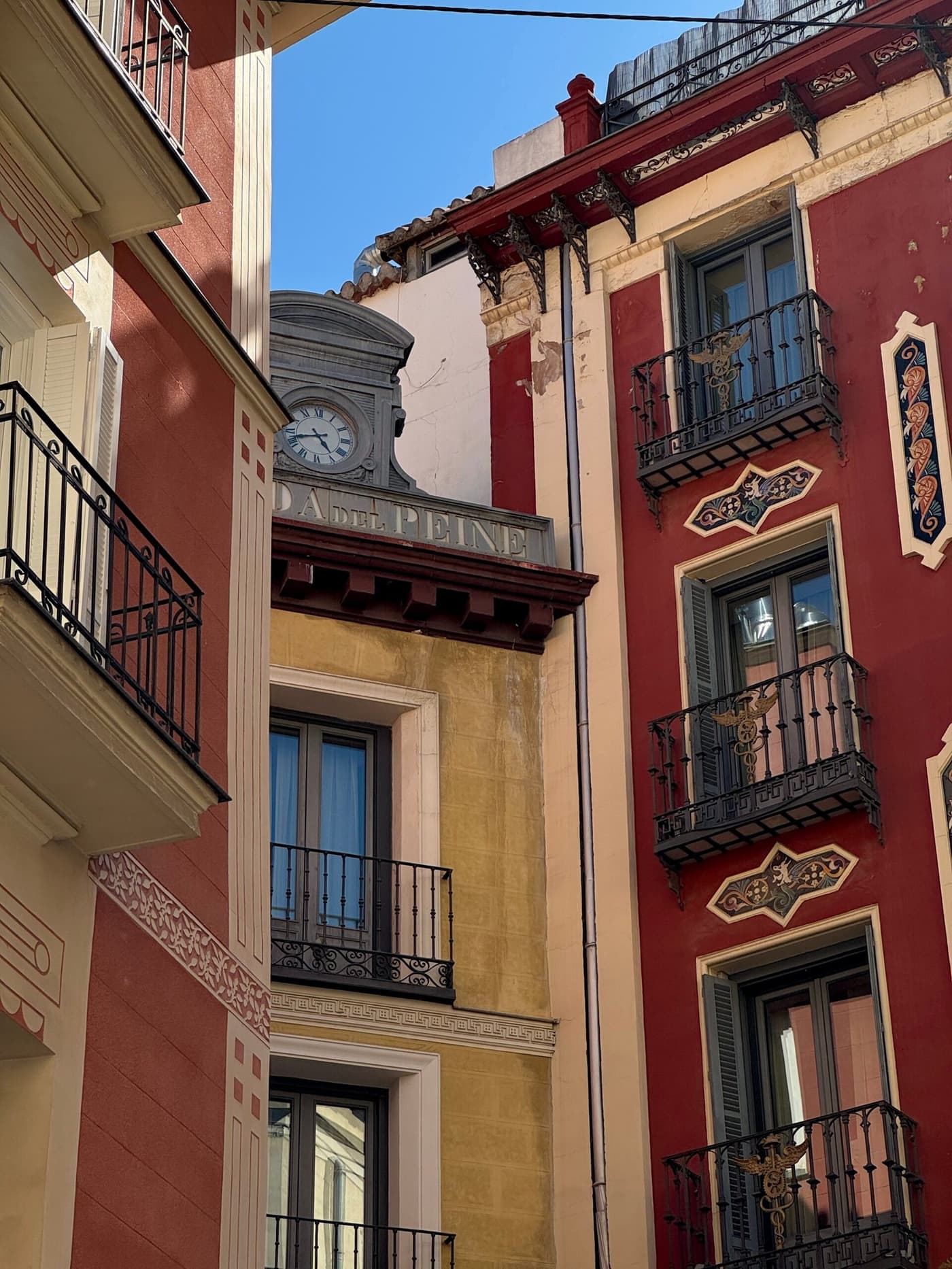
A walk through the center of Madrid is not only about squares and sights but also about the streets themselves. They create the atmosphere of a historic city and connect the key points of the route around Plaza Mayor.
Calle Mayor
One of the main historic streets of the center, linking the Sol district with the Royal Palace. Calle Mayor runs through the heart of Madrid de los Austrias and is considered one of the most significant streets of old Madrid.
Along the way you'll pass churches, old buildings and small squares that are easy to miss if you don't go on foot.
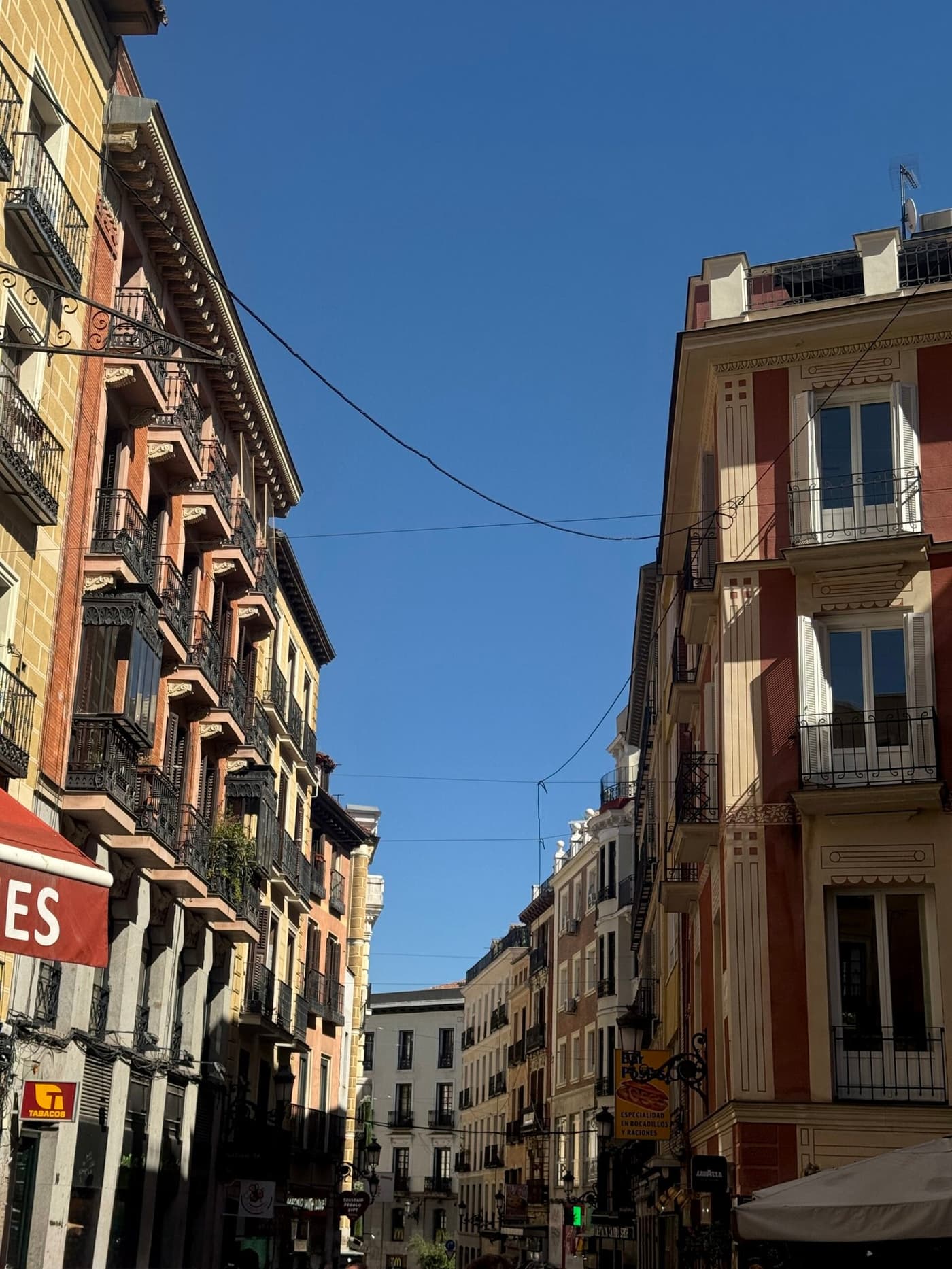
Calle de Toledo
This street starts not far from Plaza Mayor and leads toward the La Latina district. Calle de Toledo is less touristy, but this is exactly where you can feel the everyday life of central Madrid.
It's a good street for an unhurried walk and a look at a more authentic side of the city center.
Calle Arenal
A pedestrian street running from Puerta del Sol toward Plaza de Isabel II and the Teatro Real. Calle Arenal is lively and pleasant to walk, with shops, cafés and historic buildings on both sides.
It's one of the simplest and most logical streets for a route through the center of Madrid, especially if you're short on time.
The streets combine easily into one walk and let you see the center of Madrid without rushing, moving from square to square.
Markets and Food in the Center of Madrid
The center of Madrid is one of the best places in the city to get to know local cuisine. It's easy to mix sightseeing with stops for tapas, coffee or a quick snack at a market.
The Market in Central Madrid
The best-known market in the central part of the city is Mercado de San Miguel. It's a few minutes' walk from Plaza Mayor and often appears on tourist routes through the center of Madrid.
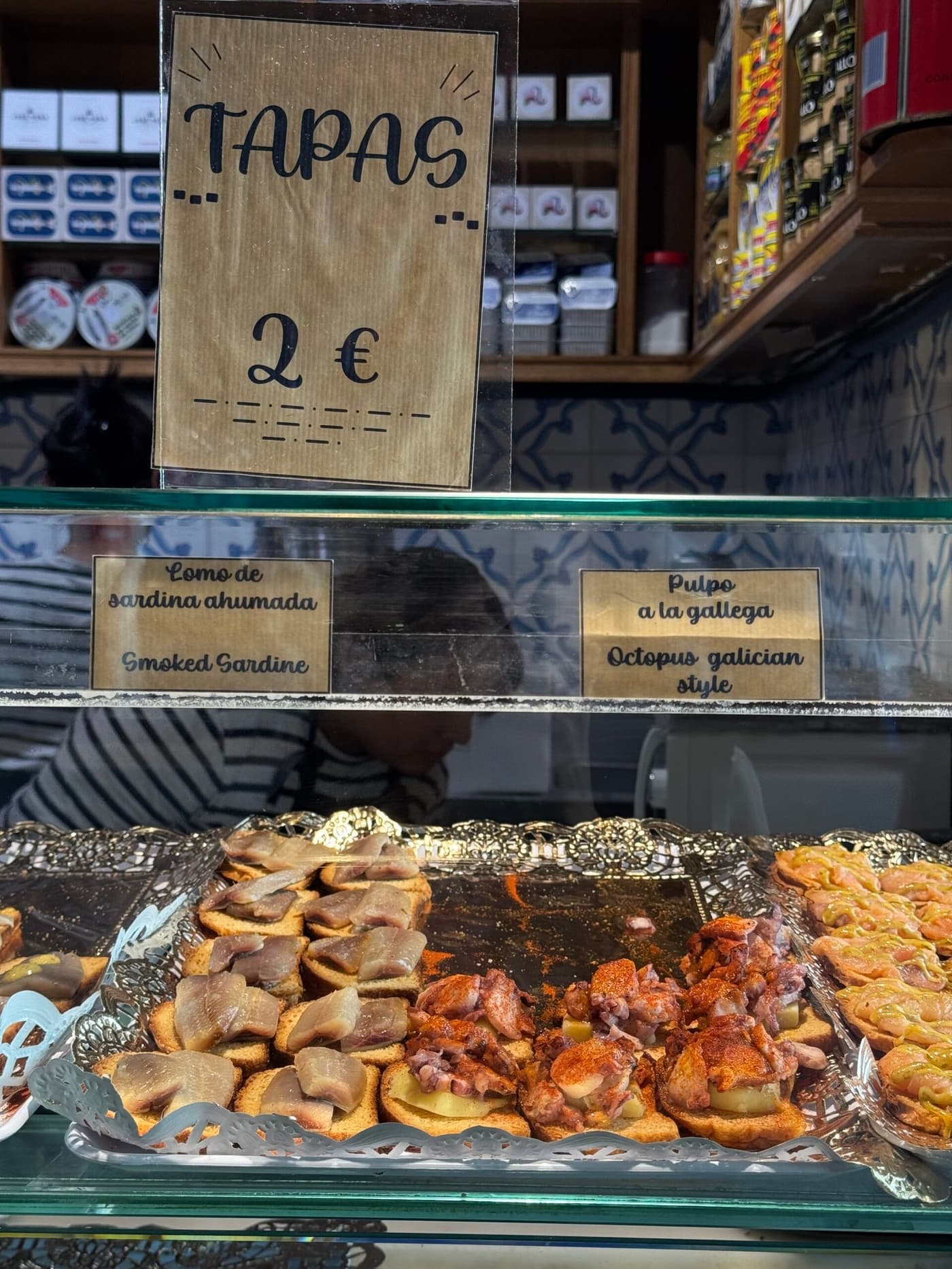
The market isn't a traditional row of produce stalls but a food hall where you can try:
- traditional Spanish tapas
- seafood and jamón
- cheeses, olives, desserts
- wine and sangria
The market doesn't take much time: people stop by for 20–40 minutes during a walk around the center.
Where to Eat in the Center of Madrid
Besides the markets, the center of Madrid has plenty of:
- tapas bars
- cafés serving breakfast
- small restaurants with traditional cuisine
Most places cluster on the streets near Plaza Mayor and in the Sol area. That makes it easy to pick a spot without planning ahead and to fit lunch or dinner right into your route through the city center.
For tourists, the center of Madrid is convenient because you can eat at any time of day, from an early breakfast to a late dinner after your walk.
Walking Through the Center of Madrid: A 2–3 Hour Route
The center of Madrid is ideal for a walk: distances between the key points are short, and the route runs along historic streets and pedestrian zones.
Start: Puerta del Sol It's a good place to begin the walk, since it's a transport hub and one of the city's main squares.
From there you can build the route like this:
- Puerta del Sol → Calle Arenal
- Arrive at Plaza Mayor
- Stroll under the arcades and along the neighboring streets
- Short stop at San Miguel Market
- Plaza de la Villa
- Walk along Calle Mayor
- Finish at the Royal Palace and Almudena Cathedral
How much time you need
- without museums and interiors: 2–3 hours
- with stops for coffee and food: half a day
This route suits anyone who wants to see the main sights of central Madrid without rushing or an overloaded plan.
Is There an Old Town in Madrid, or Just the City Center?
Many tourists ask "where is the old town of Madrid?", but formally the city has no such district. Unlike Barcelona or Rome, Madrid has no officially designated old town.
In practice:
- the "old town" usually means the historic part of the center
- this is the area around Plaza Mayor and the oldest streets
- this is where Madrid took shape as a capital
That's why guidebooks and search engines more often use the phrases "center of Madrid" or "historic center of Madrid." Both names are correct and clear, for tourists and for getting around the city.
Useful Tips for Walking Through the Center of Madrid
Before you set out, keep a few practical things in mind:
- Best time for a walk: morning or late afternoon, especially in the warm season
- Shoes: comfortable ones, since the route runs over cobblestones
- Safety: the center of Madrid is considered safe, but watch your belongings in crowded places
- Planning: the main points are easy to link into one route without using transport
These simple tips will make your walk through the center of Madrid more comfortable.
Here is how we traveled around Spain, in a YouTube episode I filmed
Frequently Asked Questions About the Center of Madrid (FAQ)
Where is the center of Madrid
The center of Madrid is located around Puerta del Sol and Plaza Mayor and belongs to the district of the same name, Centro.
How much time do you need to see the center of Madrid
2–4 hours is enough for a first look at the center. If you plan to eat and make stops, set aside half a day.
Is it safe to walk in the center of Madrid in the evening
Yes, the center is considered safe, especially on the main streets and squares. As in any tourist area, stay alert in crowds.
Can you see the center of Madrid in one day
Yes, the center of Madrid is easy to see in one day, especially if you focus on the area around Plaza Mayor.