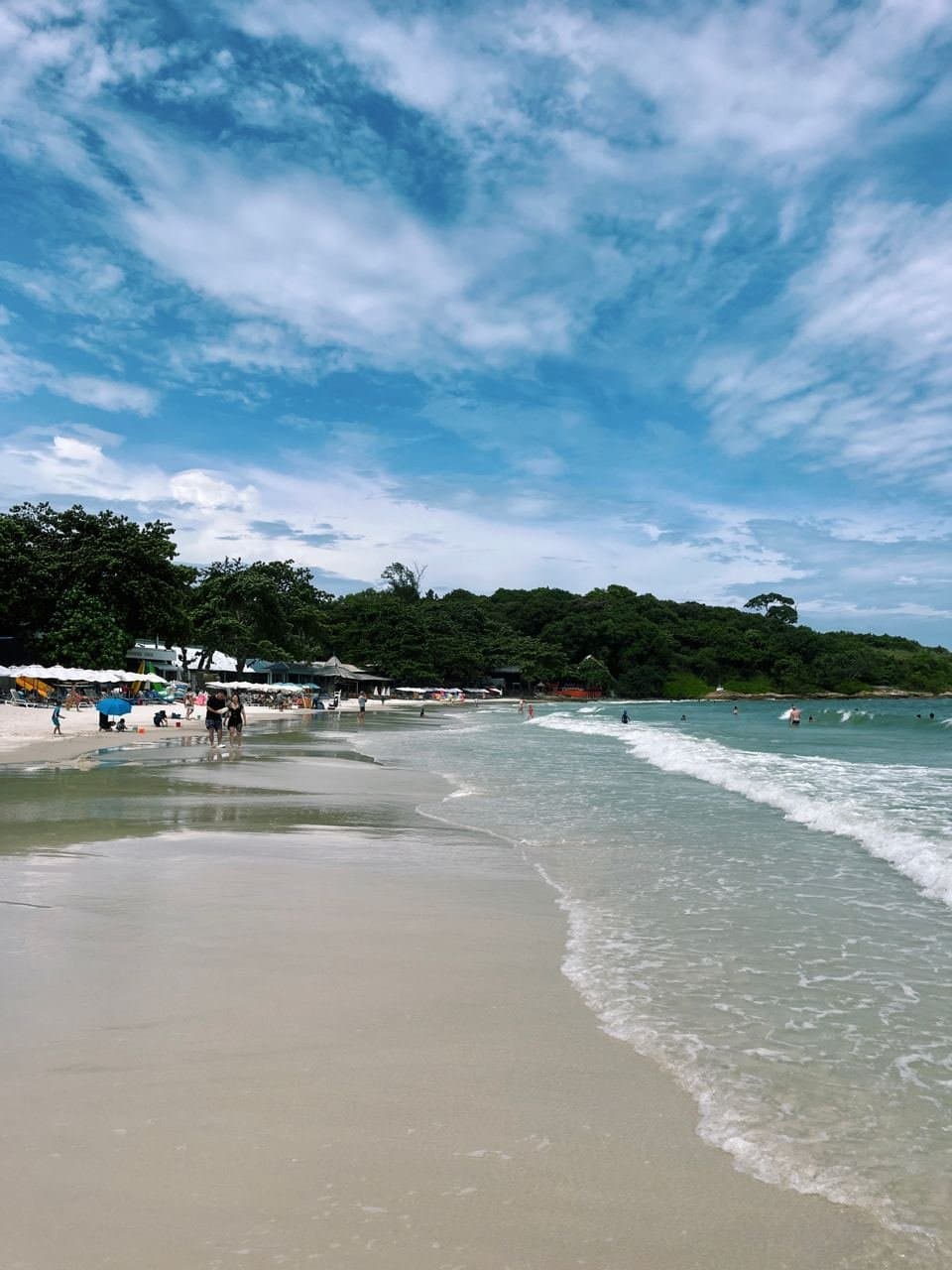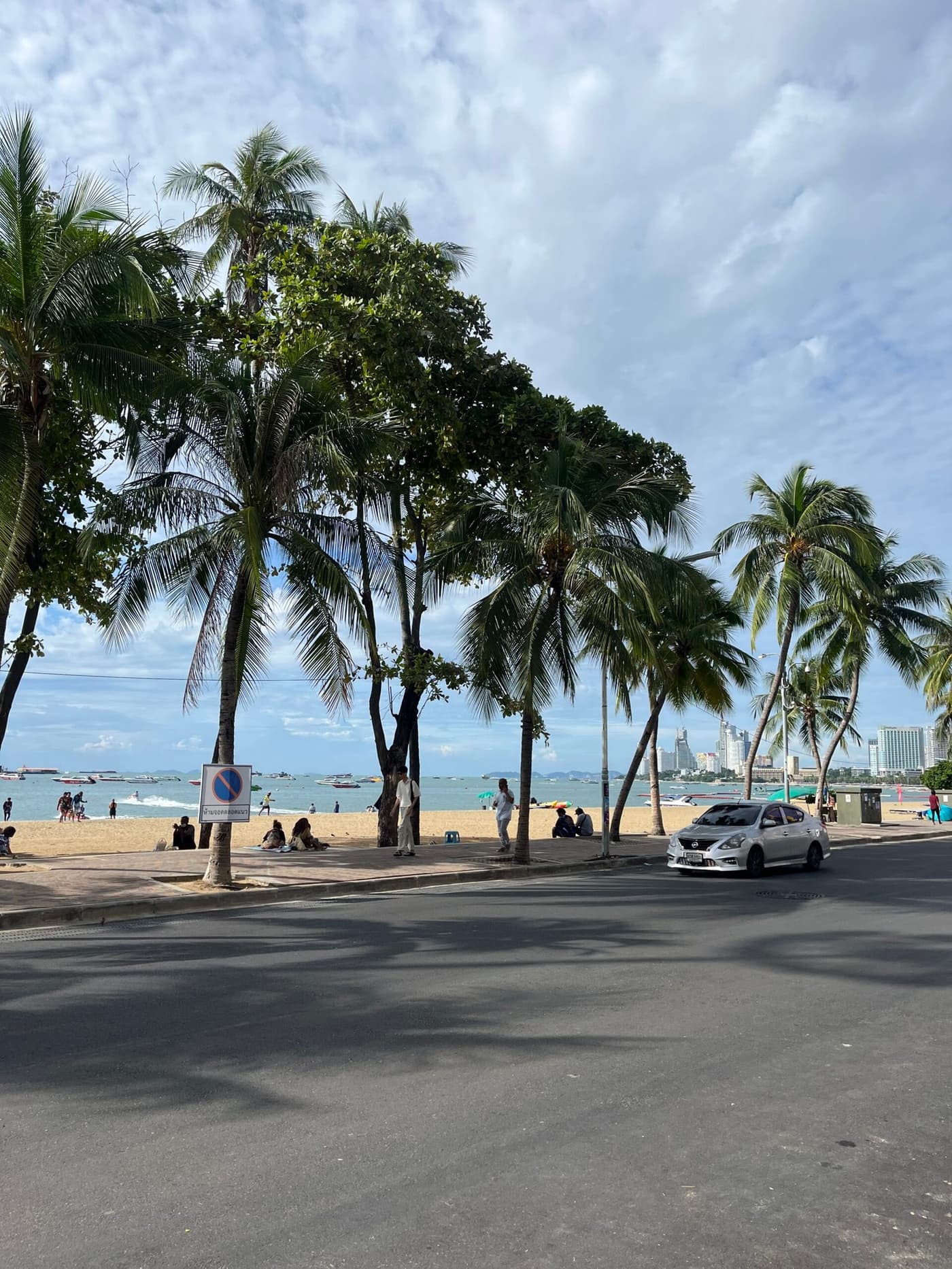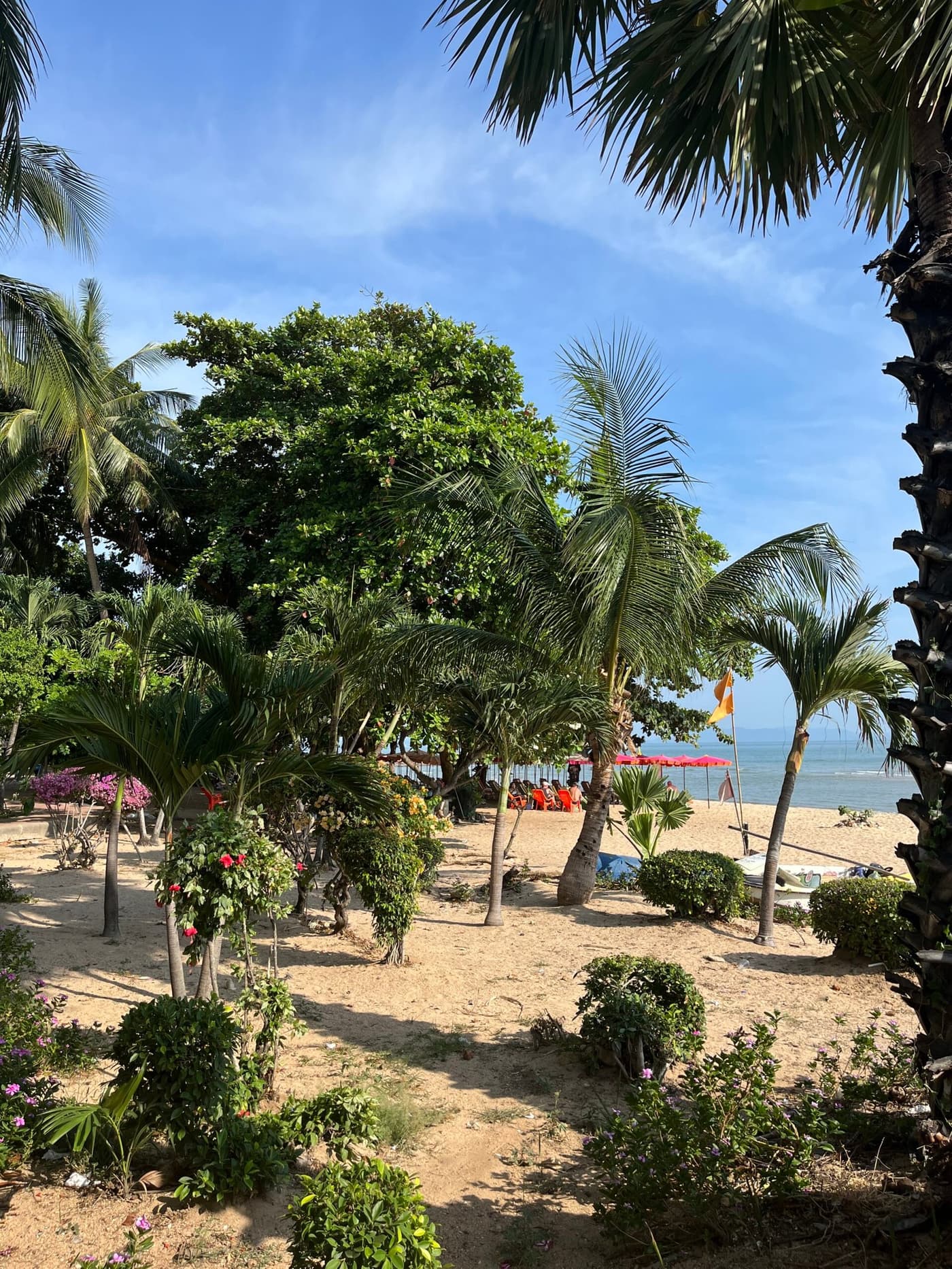
The sea in Pattaya is one of those topics where expectations and reality often don't match. Some people arrive hoping for postcard-perfect turquoise water and come away disappointed; others are pleasantly surprised to find that you can swim here, and in some places it is even quite pleasant. I have lived in Southeast Asia for years and I know Pattaya from the inside. In this article I'll be honest about which sea Pattaya sits on geographically, how clean the water really is, which beaches are actually worth swimming at and which ones to skip. I'll also cover when the water is clearest, what hazards you may run into and where to escape if you want truly clean sea.
What you need to know about the sea in Pattaya
Pattaya sits on the Gulf of Thailand (also called the Gulf of Siam), which is part of the South China Sea in the Pacific Ocean basin. The sea is warm all year: the water never drops below +26 °C, even in the "coolest" month. You can swim all year round, and it is best from December to March. For clean water it is better not to stay in the city itself but to head to Koh Lan island, a little farther to Koh Samet island or to the northern Wong Amat beach.
Now the details, because the nuances are what matter here.
What sea is Pattaya on?
When I first planned a trip to Thailand, I felt the same way most tourists do: "it's some sea, some ocean, what's the difference?" As it turns out, there is a difference. It directly affects whether you can swim, snorkel and get those postcard views.
The Gulf of Thailand: what it is and where it connects
Pattaya is on the eastern coast of Thailand, about 150 km from Bangkok. The shore here is washed by the Gulf of Thailand (historically the Gulf of Siam), a body of water of about 320,000 km² that touches the coasts of Thailand, Cambodia, Vietnam and Malaysia.
In geographic terms the chain is: Gulf of Thailand → South China Sea → Pacific Ocean. So formally Pattaya is a Pacific Ocean resort, although you would have to sail a very long way from here to reach the open ocean.
The name "Gulf of Siam" comes from the country's historical name, Siam, and was widely used in Western geographic reference books until the mid-20th century. Today Thais call it Ao Thai (อ่าวไทย), the "Thai Gulf", and both names are equally correct.
Water depth and temperature
The Gulf of Thailand is relatively shallow: the average depth is about 45–58 meters (sources differ) and the maximum is about 80–85 meters. Off Pattaya, 10–20 meters from the water's edge, the depth is usually no more than 1–2 meters, which makes for a gentle, comfortable entry for families with children.
Because of the shallow depth, the water in the Gulf warms up more than in the open ocean, usually 1–2 °C warmer than the Andaman Sea on Thailand's west coast. Here is the water temperature by month:
| Month | Water temperature | Notes |
|---|---|---|
| January | +27 °C | High season, dry, calm |
| February | +28 °C | Best month for the beach |
| March | +28 °C | The heat begins |
| April | +29–30 °C | Very hot, but the water is perfect |
| May | +30 °C | Start of the rainy season |
| June | +29 °C | Short downpours |
| July | +28 °C | Humid, rain more often at night |
| August | +28 °C | One of the rainiest months |
| September | +28–29 °C | Peak rains, murky sea |
| October | +27 °C | Rains are tapering off |
| November | +28 °C | Start of the high season |
| December | +27 °C | The "coolest" month |
So technically you can swim in Pattaya all year round; the water doesn't drop below +26 °C even in December. But that doesn't mean every time of year is equally good for a beach holiday.
How the Gulf of Thailand differs from the Andaman Sea
This is the question that torments everyone choosing between Pattaya and Phuket. In short:
The Gulf of Thailand (eastern Thailand) covers Pattaya, Koh Samui, Koh Chang, Koh Samet, Hua Hin and Rayong. The water is warmer and calmer, with almost no waves. The underwater world is poorer and visibility is worse. But it is safer for children and older travelers.
The Andaman Sea (western Thailand) covers Phuket, Krabi, Phi Phi and Khao Lak. The water is clearer, with underwater visibility that can reach 50 meters. The corals and fish are far more varied. But the currents are stronger, there are big waves, and in the rainy season swimming can be genuinely dangerous.
So the "azure turquoise water from the postcards" is more the Andaman Sea. The Gulf of Thailand is about calm, warm, shallow sea without surprises. In Pattaya you get the second option.
Is the sea in Pattaya really clean?
Now to the main question, the one that worries everyone most. I'll be honest: the sea in Pattaya itself is far from the best in Thailand. You need to understand this before you buy tickets, so you aren't disappointed.
Why the water in central Pattaya is murky
There are three reasons, and all of them are fairly mundane:
1. Human impact. Pattaya is one of the most heavily developed resorts in Southeast Asia. About 115,000 people live here permanently, and in high season, with tourists, the population reaches half a million. The city's sewage system and infrastructure don't cope brilliantly with that load, and some of the runoff ends up in the Gulf.
2. Silty bottom. The central bay is essentially shallow water with a silty bottom. Any swell, or just the movement of boats, stirs up sediment from the bottom and the water turns opaque. It isn't "dirt" in the strict sense; it is natural sediment, but visually the picture is one that makes you not want to take photos.
3. Lots of motorboats and speedboats. Hundreds of boats run along the central Pattaya Beach around the clock: they take tourists out to the islands, jet skis race around, and banana boats and parasails get towed. Fuel slicks, noise and murk don't do much for crystal-clear water.
Because of this, the central Pattaya Beach is objectively considered one of the dirtiest in the city. You can swim there, but there is little pleasure in it: silt, litter, crowds and a constant risk of finding something unpleasant on the shore. Most experienced tourists and long-term residents don't swim in the center at all, and go either to Jomtien or to the islands.
Where in Pattaya the water is cleanest
Good news: there are places in Pattaya itself where the water is perfectly decent. The rule is simple: the farther from the center, the cleaner. The cleanest beaches in the city are Wong Amat in the north and the southern part of Jomtien closer to Dongtan. More about each below.
The best beaches in Pattaya for swimming
When people say "Pattaya beaches", they actually mean 5–6 different beaches, each with its own character and reputation. Here are the ones where swimming is really worth it.
Wong Amat: the cleanest beach within the city
It is in the northern part of Pattaya, in the Naklua area. This is the cleanest and best-kept stretch of Pattaya's coast: the sand is almost white, there is practically no litter in the water, and the shore is regularly cleaned by staff from nearby hotels and condominiums.
The beach is about a kilometer long. From Wong Amat there is a beautiful view of Koh Lan and the other islands of the Gulf of Thailand. Access is partly restricted: you can reach the beach either through hotel grounds or via a few small side streets (sois).
Who it suits: couples, families, and anyone looking for quiet and decent water within easy reach of infrastructure.
Jomtien: the longest and most convenient
It stretches 5–6 kilometers south of the center. It is the most popular beach among tourists and long-term expats. The infrastructure is good: dozens of cafes, restaurants and massage parlors, plus water activities.
The water in Jomtien is cleaner than in the center, but not perfect, especially in the northern part of the beach closer to the city. The farther south you go, the cleaner it gets. The entry is gentle and the depth increases slowly, which is great for children.
The downside: in the off season (May to October) Jomtien can get sizable waves, and after rain a lot of seaweed is washed ashore.
Dongtan: a quiet alternative to Jomtien
A small beach between Pratamnak Hill and the start of Jomtien. The water here is noticeably cleaner than on the main stretch of Jomtien because there is no road right next to the beach. The sand is coarse, the entry is gentle, and there are shady palms.
One thing worth knowing: historically Dongtan is considered Pattaya's "gay beach". It has minimal effect on the atmosphere, but if that matters to you, keep it in mind.
Pratamnak Beach: a quiet cove at the foot of the hill
A small beach at the foot of Pratamnak Hill, in the neighboring cove next to Cosy Beach (it is sometimes called Asia Beach or Paradise Beach). The water here is usually clean and calm, and there are few people. There is almost no infrastructure: no sunbeds, umbrellas or toilets, so bring water and whatever else you need. Crossing to it over the rocks from Cosy Beach at low tide is unsafe, so it is safer to go around by road. At low tide, as on the neighboring beaches, the water recedes and rocks are exposed, so it is better to swim closer to high tide.
Cosy Beach: for seclusion
A small beach at the foot of Pratamnak Hill. It is surrounded by greenery and access is restricted (the gates close in the evening). Water quality varies depending on the currents, and sometimes litter washes in. But there is practically no crowd, and it is good for a couple of hours of contemplating the sea.
Sai Kaew military beach: the best water nearby
It is on the grounds of the Sattahip naval base, about 20–30 km south of Pattaya. It is a closed area, so order is maintained: clean water (some call this beach the "Blue Lagoon"), fine white sand and a gentle entry. Entry is paid, about 100 baht per person.
You can get there by taxi (from 400 baht one way) or on an excursion from street agencies, usually with lunch and a sun lounger for 400–500 baht.
Where near Pattaya the sea is really clean
And here is the main hack: if you came to Pattaya for the sea, the main thing is not to swim in Pattaya itself. Take a ferry and sail to an island. It takes 15–40 minutes, costs next to nothing and solves all the water-clarity problems.
Koh Lan island: a must-do for every visitor
Koh Lan translates from Thai as "coral island", and the name isn't lying. It is only 7–8 km from Pattaya, and you can get there in 40 minutes by ferry (30 baht) or in 15 minutes by speedboat (from 200 baht).
The water here is incomparably cleaner than at the mainland beaches: azure, transparent, with ivory-colored sand. There are 6–7 beaches on the island, and each has its own atmosphere:
- Tawaen is the most developed one, where the ferries arrive. There are lots of Chinese tourists, it's noisy, but the water is clean, the infrastructure is well developed and there is everything you need.
- Samae is the second most popular, with lots of cafes.
- Tonglang is quieter and calmer than Tawaen; the entry into the water is slightly less gentle.
- Tien and Ta Yai are for those who want seclusion.
- Nual (Monkey Beach) is the farthest and the calmest.
If it's your first time in Pattaya, a day on Koh Lan is a must. I wrote about the island and how to get there in detail in a separate Koh Lan guide, covering the ferries, the beaches and where to stay if you decide to spend the night.
Farther from Pattaya: Na Jomtien and the southern coast
If you keep going south from Jomtien (the Na Jomtien area, 10–15 km from the center), the water gets cleaner and cleaner. Large hotel complexes such as Ambassador City Jomtien have their own fenced beaches, which also admit people who aren't hotel guests. There are noticeably fewer people than in Pattaya itself.
When to go to Pattaya for the sea
Pattaya has a subequatorial climate, and the year divides into three seasons:
High season (November to February). Dry, sunny and not too hot. Daytime temperature is +30–32 °C and the water is +27–28 °C. This is the ideal time for the beach: the sea is calm and clear, and there is almost no rain (January usually has 1–2 rainy days in the whole month). The downside is that this is peak tourist time and the highest prices.
Hot season (March to May). Daytime temperatures climb to +34 °C, humidity rises and the coast feels stuffy. The water warms up to +30 °C. April brings the Thai New Year, Songkran, the country's main holiday, with mass water fights in the streets. Families with small children and older travelers find Pattaya in April difficult.
Rainy season (June to October). Pattaya is luckier here than the southern resorts of Thailand: the rains are usually short and often fall at night. I lived in Pattaya during the rainy season myself, and there were practically no heavy downpours. But be more careful in September: it is the peak of the monsoon, the sea gets murky, the currents become more active, and litter and seaweed wash ashore more often.
If the sea and swimming are your priority, the best window is December to March (March is a transitional month: still good, but noticeably hotter and more humid). At that time the Gulf of Thailand is at its clearest, there is no wind, and the water and air temperatures are comfortable.
Hazards in the sea off Pattaya: what to know
The Gulf of Thailand is much safer than the Andaman Sea: there are no big waves, no dangerous currents and no real tsunami threat. But there are still a few things to know.
Jellyfish
There are noticeably fewer jellyfish in the Gulf of Thailand than on the west coast. Thanks to the lower salinity of the water and weak currents, dangerous species (sea wasps, Portuguese man o' war) are very rare here. However, outbreaks of Portuguese man o' war on the east coast did happen in 2010 and 2017, when hundreds were washed ashore around Pattaya and Rayong.
Most often you will meet harmless comb jellies and small jellyfish, contact with which causes at most mild irritation. Jellyfish activity in Pattaya peaks from July to November, especially after storms. If you see a red flag or a warning sign on the beach, don't swim.
Sea urchins
There are urchins in Pattaya, but mostly around Cosy Beach, on rocky stretches and on the islands (especially Monkey Beach on Koh Lan). The spines of most local urchins aren't venomous, but a prick is very painful. Protection is simple: wear reef shoes if you're walking over a rocky area, and don't put your hands under rocks.
Sea plankton
In summer and early autumn there is often a lot of plankton in Pattaya, tiny transparent creatures that tourists mistake for "invisible fleas". They aren't dangerous but can cause a slight stinging on the skin. If you feel something "biting" in the water, it is most likely plankton rather than anything scary.
Tides
The Gulf of Thailand has one tidal cycle a day (the Andaman has two). The difference in water level can be significant, and at low tide getting into the water at some beaches becomes a long, rocky walk. It doesn't get in the way much, but if you want to arrive and swim right away, it is better to download an app with the tide schedule.
Is it worth going to Pattaya just for the sea?
The honest answer is no, if the sea is your only goal. If you dream of white sand, turquoise water and Instagram views, fly to Phuket, Krabi or Phi Phi. There the Gulf of Thailand loses to the Andaman Sea by a landslide.
But Pattaya is not really about the sea. It is about city life by the sea: noisy nightlife streets, thousands of cafes and restaurants, shopping, massage parlors, shows, a convenient base for trips around eastern Thailand and a party in any form you can imagine. The sea here is a pleasant bonus that you can "upgrade" by taking a trip to Koh Lan.
If you come with that understanding, Pattaya can be a great place. If you come for "paradise beaches", you will be disappointed.
I wrote more about the city itself, what to see, what to do and where to go, in the Pattaya guide and in the roundup of the main sights. And for planning the whole trip, including the journey from the capital, see the article "How to get from Bangkok to Pattaya".
Frequently asked questions about the sea in Pattaya
What sea is Pattaya on?
The South China Sea. More precisely, Pattaya sits on the Gulf of Thailand, which is part of the South China Sea. The Andaman Sea is in the west of Thailand: Phuket, Krabi, Phi Phi.
Which ocean is the sea in Pattaya part of?
The Pacific. The chain is: Gulf of Thailand → South China Sea → Pacific Ocean.
Is the sea in Pattaya clean?
Not in the city itself. It is especially murky in the center, on Pattaya Beach. It is cleanest at Wong Amat beach (north Pattaya), in the southern part of Jomtien and at Dongtan. Truly clean water is found on Koh Lan, 15–40 minutes from shore, and at Sai Kaew military beach, 20 km from the city.
Can you swim in Pattaya?
Yes, you can. You just need to choose your beaches: Wong Amat, Jomtien (the southern part), Dongtan, Pratamnak. It is better to stay away from the central Pattaya Beach, which has a silty bottom and murky water.
What is the water temperature in Pattaya?
From +26 to +30 °C all year round. The coolest water is in December and January (+26–27 °C), and the warmest is in April and May (+29–30 °C).
When is the best time for a beach holiday in Pattaya?
December to March (March is a transitional month, already noticeably hotter). It is dry, not too hot, and the sea is calm and at its clearest. The worst months for the beach are September (peak rains) and April (exhausting heat).
How deep is the sea in Pattaya?
About 1–2 meters near the shoreline, which is comfortable for swimming with children. Farther out the depth increases gradually. In the open part of the Gulf of Thailand the average depth is about 45–58 meters (sources differ) and the maximum is about 80–85 meters.
Are there jellyfish and dangerous marine animals in Pattaya?
There are jellyfish, but mostly harmless ones. Dangerous species (sea wasps, Portuguese man o' war) are very rare; the Gulf of Thailand is not a comfortable habitat for them. Jellyfish activity peaks from July to November. There are also sea urchins (especially near rocky areas) and plankton, which can sting the skin slightly.
How is the sea in Pattaya different from the sea in Phuket?
Pattaya is on the Gulf of Thailand (Pacific Ocean): a warm, shallow, calm but somewhat murky sea with a poor underwater world. Phuket is on the Andaman Sea (Indian Ocean): clear water with visibility of up to 50 meters, rich corals and fish, but strong currents and waves. Phuket is prettier; Pattaya is safer for families with small children.
Where in Pattaya can you snorkel?
There is practically nowhere within the city; visibility won't allow it. Snorkeling and diving are done around the nearby islands: Koh Lan, Koh Sak, Koh Krok and beyond. Most "3 islands" excursions are about exactly this.
Where should you go from Pattaya for truly clean sea?
The most accessible option is Koh Lan island (40 minutes by ferry). If you have a day, Sai Kaew military beach (20 km south). If you have 2–3 days, Koh Samet (Rayong) or Koh Chang closer to the Cambodian border. The water there is of a completely different quality.
If this article was useful, subscribe to my YouTube channel, where I share my personal experience of living in Thailand and other countries in Asia.