Ijen volcano is an unusual and impressive place in Indonesia. It is famous not only for its active crater and the largest acidic sulfur lake in the world, but also for a rare natural phenomenon, the blue flame (Blue Fire), which can be seen in only a few places on the planet.
In this article I will tell you in detail about Ijen volcano, where it is, how the hike works, and share my personal experience of the night climb to the crater.
This article will be useful if you are planning a trip to Ijen volcano, and also for travelers who want to know what to expect from this demanding but incredibly spectacular route.
Where Ijen Volcano Is Located
Ijen volcano is in the eastern part of the island of Java, in Indonesia, within the volcanic complex of the same name, the Ijen Plateau. Administratively it belongs to the Banyuwangi regency, which is the main starting point for a trip to and climb of Ijen volcano.
Although many tourists search for Ijen volcano as an attraction in Bali, the volcano is actually on Java, not on the island of Bali. Travelers often combine the two: first they relax in Bali, then cross to Java to set off on a night hike to the Ijen crater.
Ijen volcano is popular for several reasons at once:
- a unique crater with a bright turquoise, acidic sulfur lake;
- the chance to see a rare phenomenon, the blue flame;
- active sulfur mining, which is still done by hand;
- a route that is accessible even to people without serious mountaineering experience.
It is this combination of incredible scenery and relative accessibility that has made Ijen volcano one of the most visited natural attractions on the island of Java.
Ijen Volcano at a Glance
Ijen is an active stratovolcano, part of a large volcanic complex in the east of Java. Despite its fairly calm appearance, Ijen remains active, and its crater is a constant source of volcanic gases and sulfur emissions.
Height and Features of Ijen Volcano
Ijen volcano is about 2,386 meters (about 7,830 feet) above sea level. The climb itself is not technically difficult: the route is a well-trodden trail with a gradual gain in altitude. However, because of the length of the ascent, the night format of the hike and the thin air, you need a reasonable level of fitness.
Ijen is known for its high volcanic activity. Even in quiet periods you can smell sulfur, and gas regularly rises from the crater. For this reason access to the crater can be closed temporarily, and tourist safety always comes first here.
The Ijen Crater and the Sulfur Lake
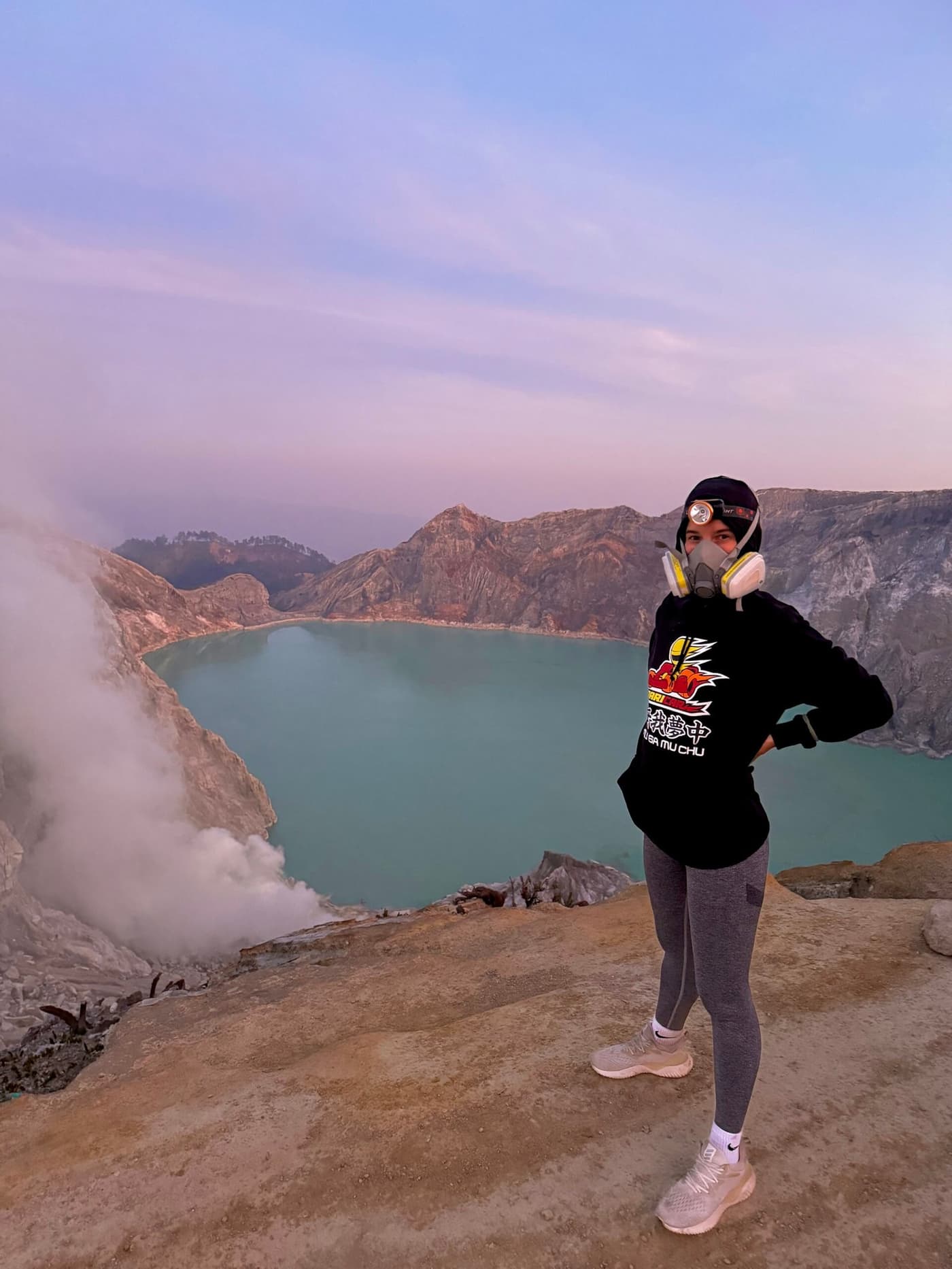
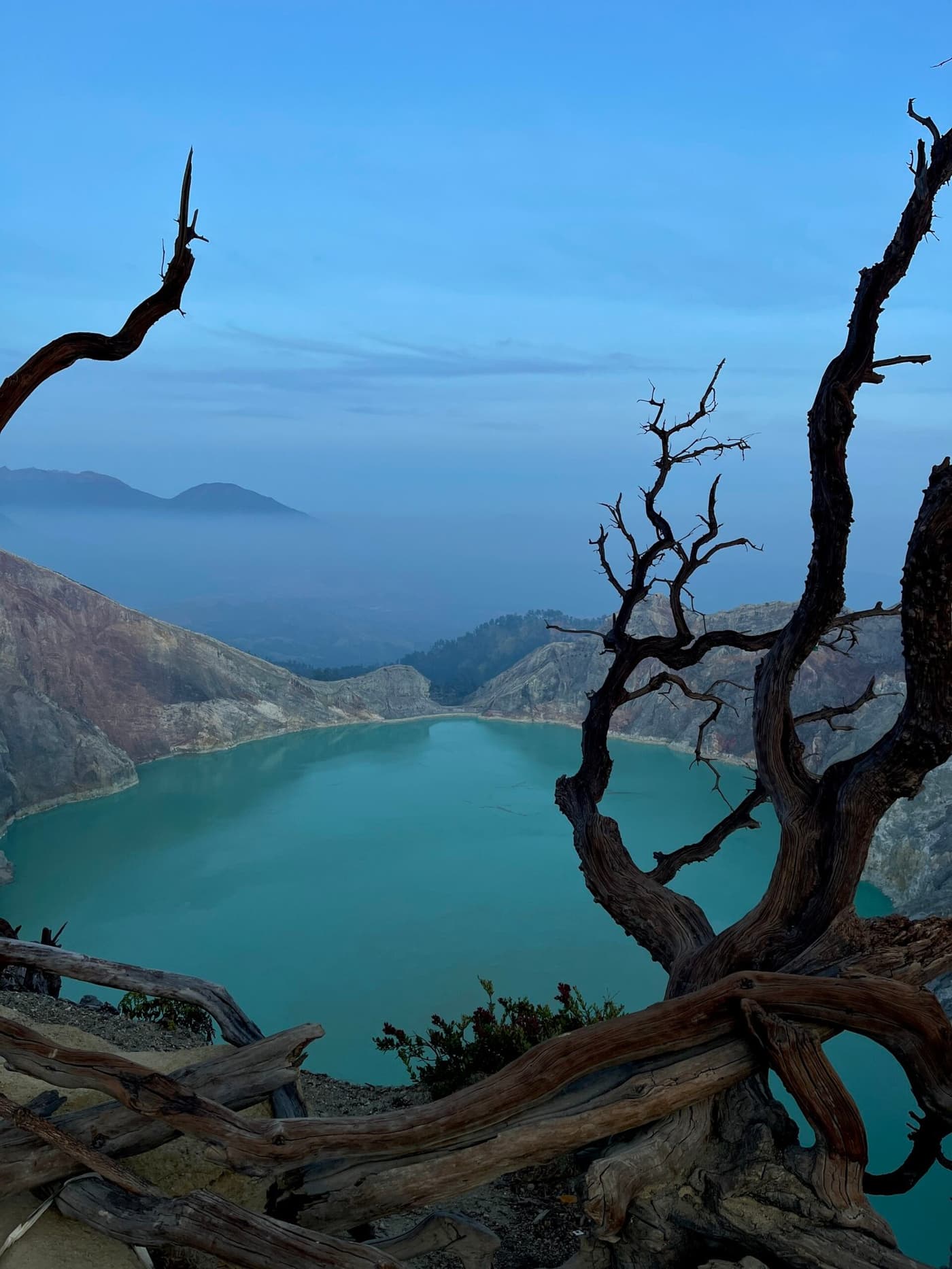
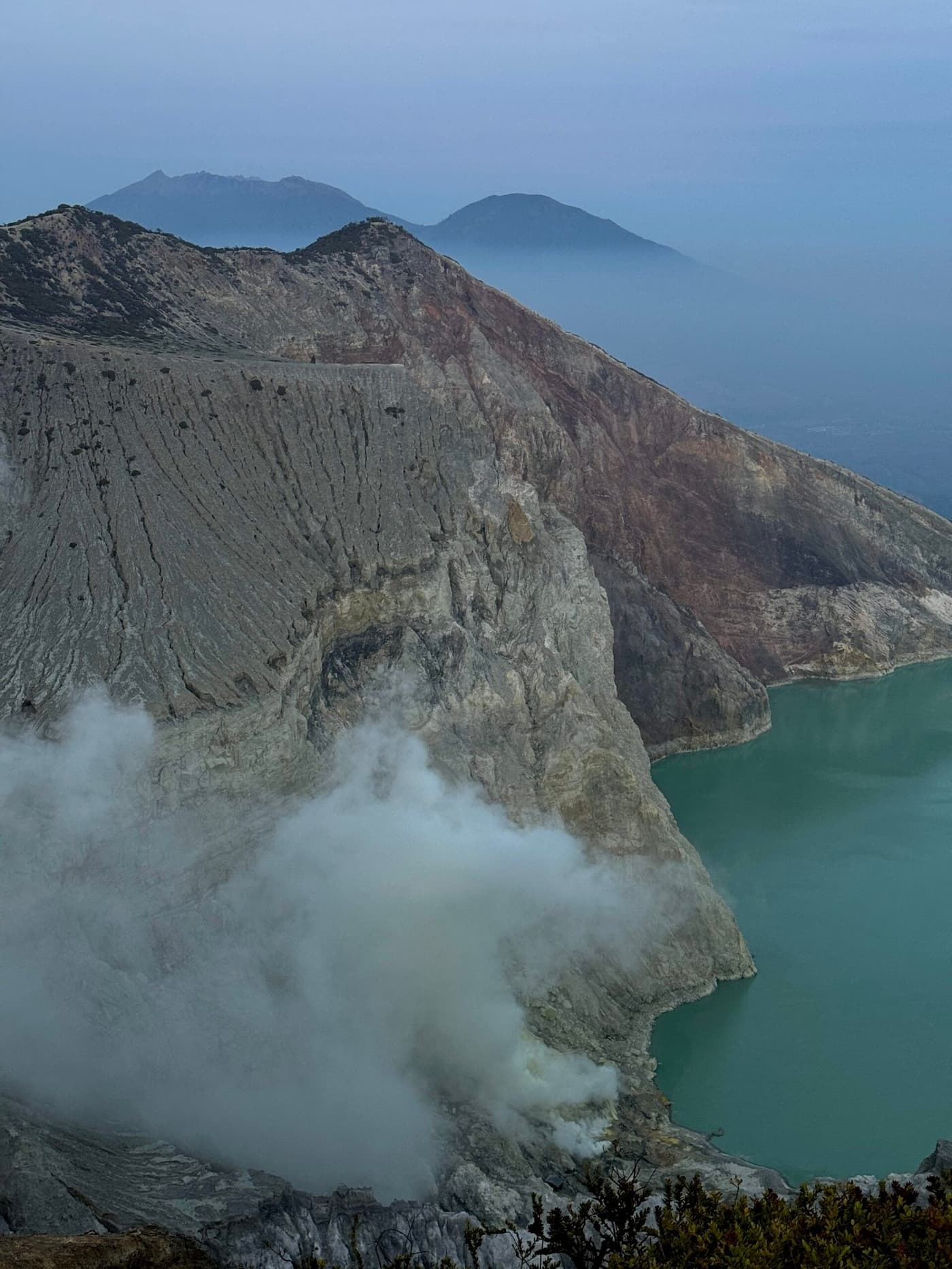
The main natural feature of Ijen is its huge crater with a sulfur lake inside. The lake is considered one of the most acidic in the world: its water has a rich turquoise-blue color because of the high content of sulfuric acid and dissolved minerals.
Along the edges of the crater and on its slopes there are fumaroles, vents from which hot sulfur gases escape. This is where sulfur is actively mined, and in this zone tourists can watch the miners carrying heavy baskets of sulfur up by hand.
The Ijen crater looks especially impressive at dawn, when the first rays of the sun light up the lake and the rocks around it. But because of the gases and the weather, visibility in the crater can change within minutes.
How to Get to Ijen Volcano
When planning a trip to Ijen volcano, it helps to know that it is in a fairly remote part of Java. Still, the route is well established, and you can get there on your own or as part of a tour.
Getting to Ijen Volcano from Java
The main starting point for the climb is the town of Banyuwangi, in the east of Java. Most travelers set off from here toward the foot of the volcano.
If you are already on Java, the easiest options are:
- take a train to Banyuwangi from the large cities of the island (Surabaya, Yogyakarta);
- or fly into the small Banyuwangi International Airport, which has domestic flights.
From Banyuwangi to the starting point of the hike, Paltuding, people usually go by car or motorbike. The drive takes about 1.5 hours and passes through mountain areas. This is where tourists pay the entrance fee and start the climb.
Ijen and Bali: How the Two Are Connected
Despite the popular search "Ijen volcano Bali", the volcano is not in Bali. Still, many travelers visit Ijen during a holiday on that island.
The most common route looks like this:
- from Bali (usually from the Ubud or Canggu areas) tourists head to the port of Gilimanuk;
- then take a ferry to the port of Ketapang on Java;
- after that comes the drive to Banyuwangi and the overnight departure for Ijen volcano.
Because of this logistics, the trip to Ijen takes a whole day, especially if you plan a night climb. That is why many people choose an Ijen volcano tour from Bali, where the transfer and timing are already worked out, although some people go on their own. We booked a private tour with a full transfer and a guesthouse.
Climbing Ijen Volcano: My Personal Experience
Our trip to Ijen volcano began back in Bali. First we were picked up and taken to the ferry terminal, Pelabuhan Gilimanuk Bali, where the ferry to Java departs. The drive to the crossing took about four hours. The route turned out to be quite tiring: a narrow, winding road ran through Balinese villages, and along the way we constantly came across slow, bulky trucks that often held up traffic.
The ferry crossing took about an hour. Once in Java, a car met us again and took us to a local hospital. To climb Ijen volcano you must have a medical certificate about your state of health, and it is important to factor this in when planning your trip.
At the hospital:
- they measured our blood pressure;
- they asked about any chronic conditions;
- after the check-up they issued a medical certificate allowing us to make the climb.
Only after that did they drive us on. At around seven in the evening we arrived at the guesthouse, where we had dinner and a chance to rest a little before the night climb.
The Start of the Hike: Gear and the First Kilometers
Late at night we were taken to the starting point of the hike, Paltuding. Before setting off we were:
- offered hot coffee;
- given respirators;
- given headlamps;
- given a short briefing on the route and safety.
- you can also rent jackets, hats and gloves there
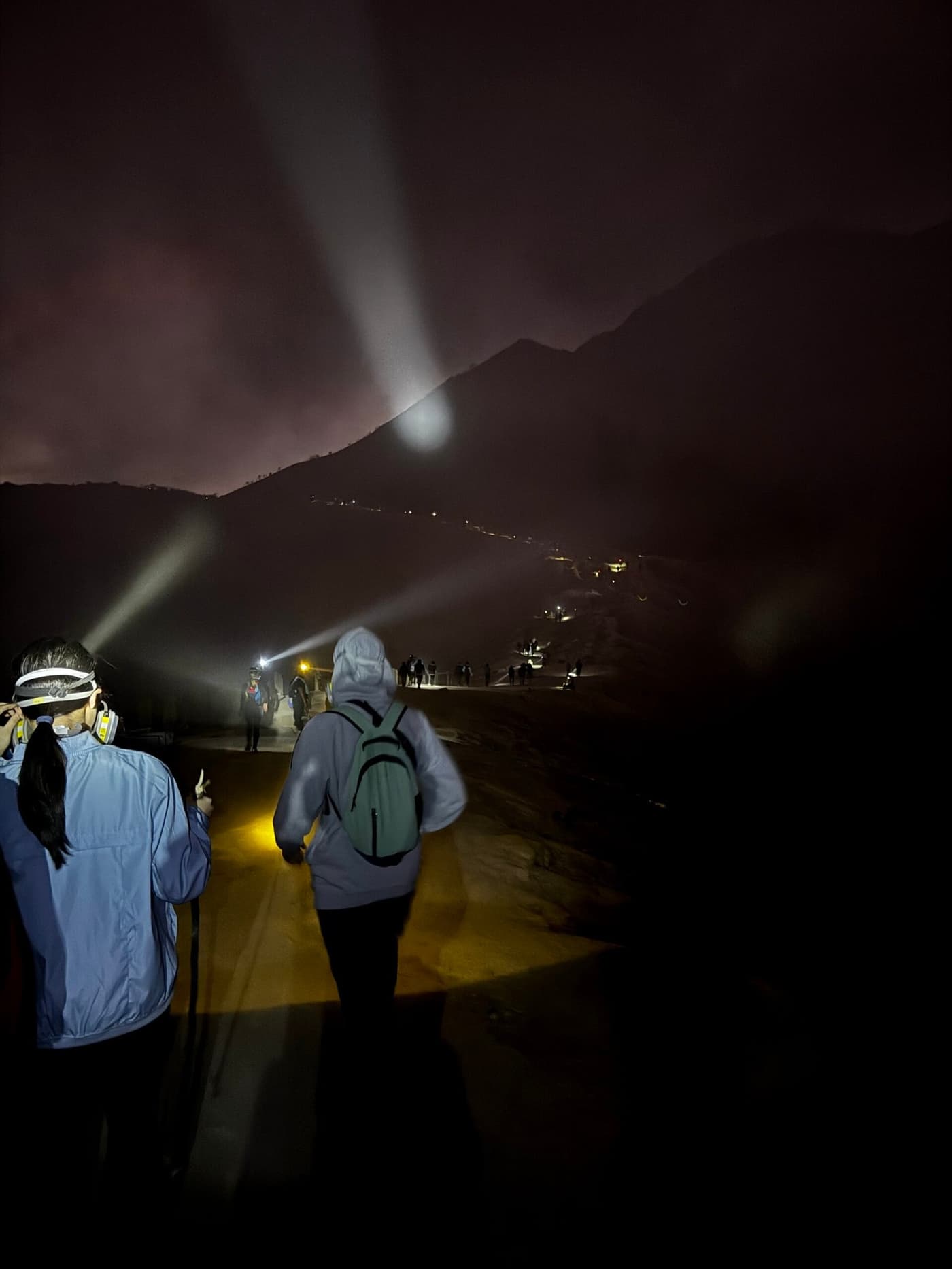
After that the group set off. From the very first meters it was clear that the road ahead would not be easy. We were tired from lack of sleep, it was pitch dark, and the trail kept climbing. The path is dusty, and at night you barely notice it; the dust only becomes visible later.
On the way down, when it got light, we could clearly see that the dust was hanging in the air like a pillar. That was when I realized we should have worn the respirators from the very beginning; when you climb in the dark, you greatly underestimate this.
The night climb is done in complete darkness, and your main sources of light are flashlights and headlamps. The air temperature at the start is noticeably lower than on the coast, so warm clothing is a must.
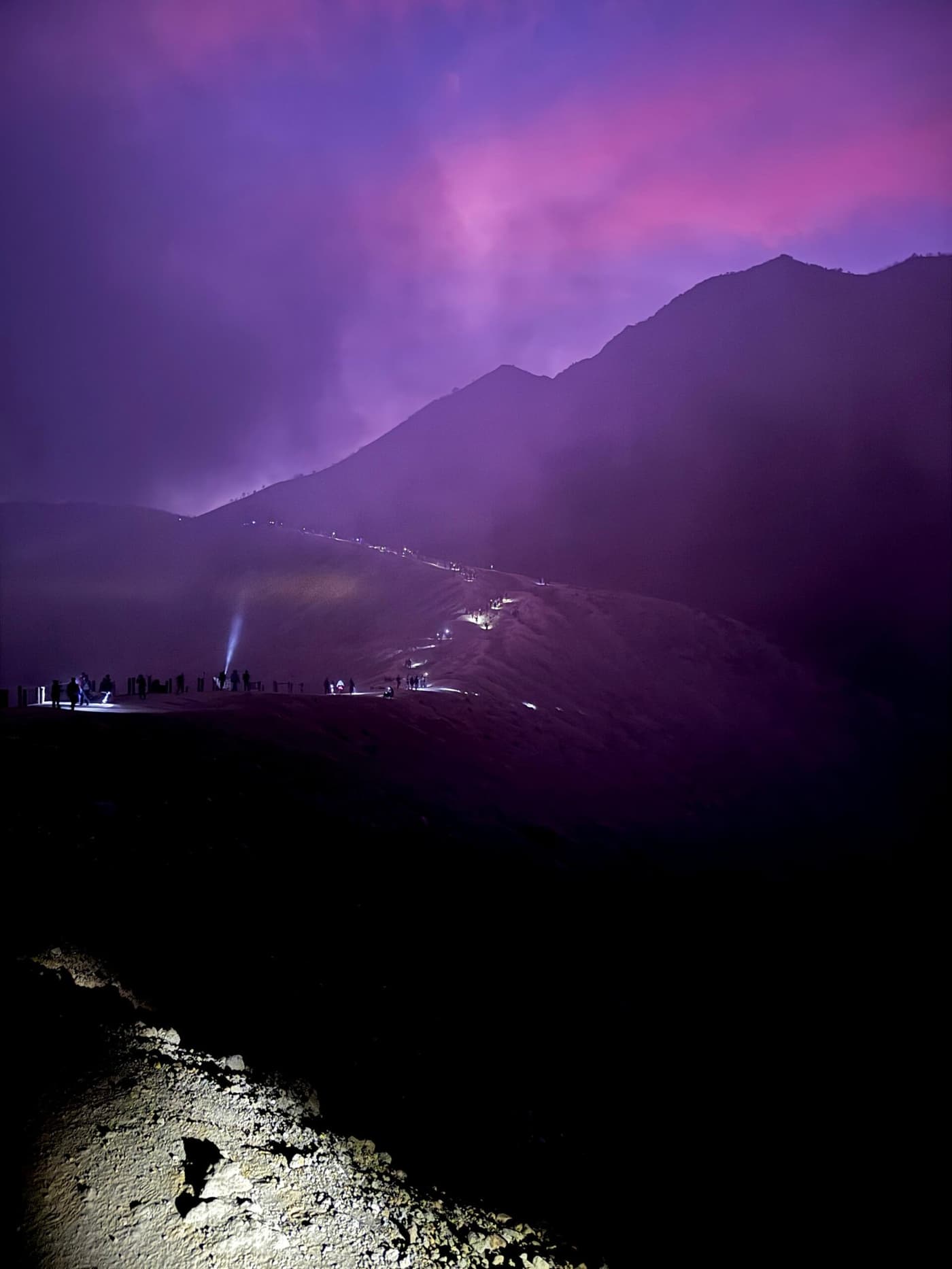
The night climb is no accident: tourists go up to the crater at night to reach it by sunrise and, with luck, see the famous blue flame.
The Route and How Long It Takes to Reach the Crater
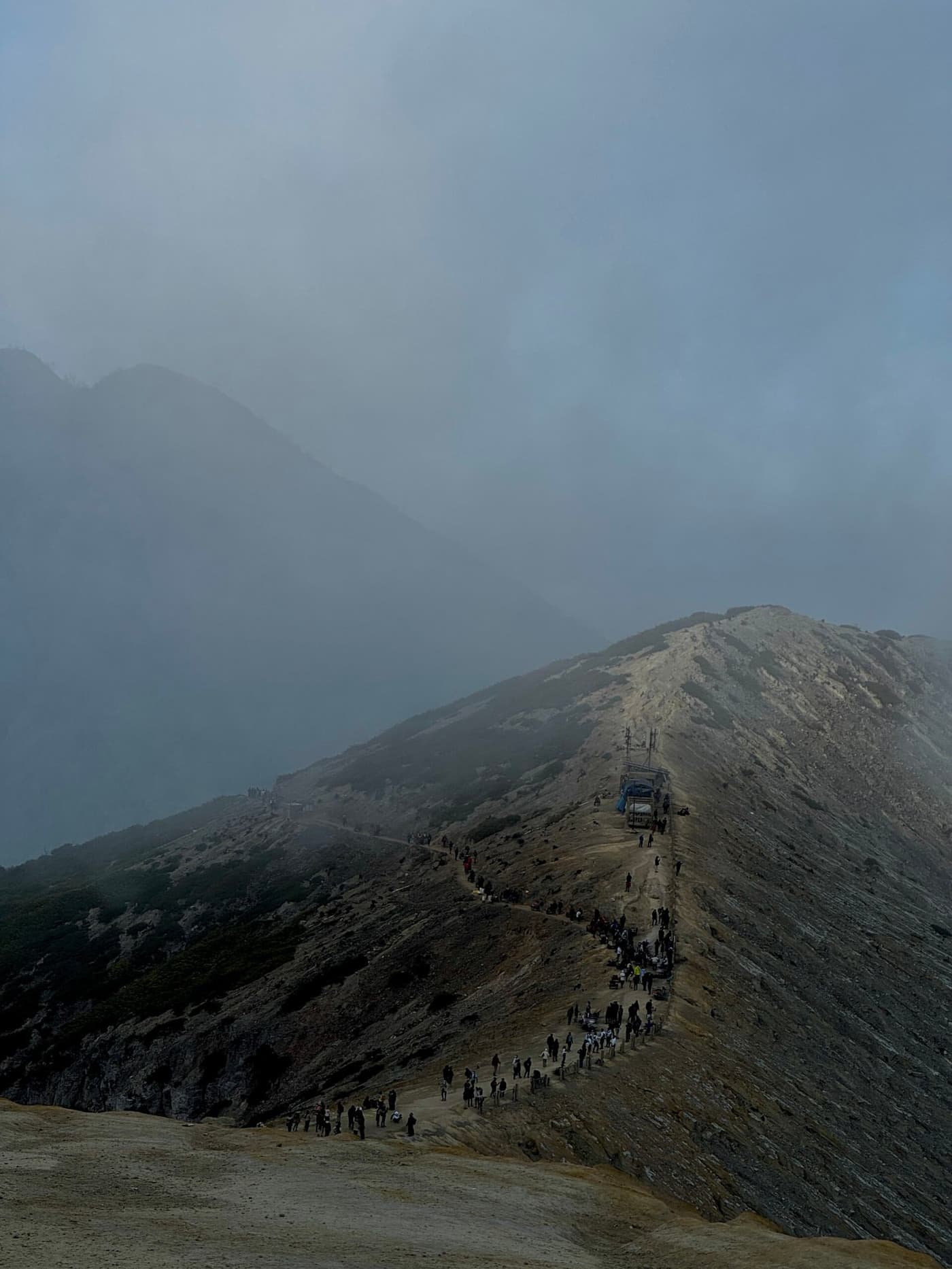
The route up Ijen volcano is a wide, well-marked trail with no technically difficult sections. But the length of the path and the constant gain in altitude make the climb physically noticeable.
On average:
- the climb takes from 1.5 to 2.5 hours, depending on your pace;
- the distance to the crater rim is about 3 kilometers (about 1.9 miles);
- for most of the way you walk uphill on a gentle but continuous slope.
Along the trail there are benches and small areas for resting. Here you can catch your breath and recover a little before continuing. Closer to the top the smell of sulfur becomes stronger, especially when the wind changes direction.
How We Felt During the Climb and at the Top
Physically, the climb up Ijen volcano turned out to be moderately difficult. The main challenges were not the terrain but the night format of the hike, the cold and the occasional sulfur fumes.
When we reached the crater rim, the impression was very powerful. Even in the dark you feel the scale of the crater and the depth of the lake right away. With the first rays of the sun, the landscape changes before your eyes: the turquoise shades of the sulfur lake and the harsh volcanic slopes around it come into view.
One thing I want to say honestly: we did not manage to see the blue flame (Blue Fire). The conditions were not right while we were there; volcanic activity, the weather and the wind direction may all have played a part. Even so, the climb itself and the sunrise in the Ijen crater left a very strong impression and fully justified the effort we put into the ascent.
The Blue Flame (Blue Fire) and Sunrise in the Ijen Crater
One of the main reasons tourists make the night climb up Ijen volcano is a rare natural phenomenon, the blue flame, also known as Blue Fire. It is the reason the climb most often starts deep in the night.
What Is the Blue Flame on Ijen Volcano
The blue flame on Ijen volcano is not lava, as people sometimes wrongly think, but the result of burning sulfur gases that escape from fumaroles at high temperature. On contact with oxygen these gases ignite and create a bright blue glow that is especially visible in the dark.
You can see Blue Fire:
- only at night or in the early morning, before dawn;
- in favorable weather conditions;
- when sulfur emissions are strong enough.
There are only a few places in the world where this phenomenon can be observed, and Ijen volcano is the best known of them.
Why You Don't Always Get to See the Blue Flame
It is important to understand that the blue flame is not guaranteed. Even on a night climb you may not see it. Several factors affect this:
- the direction and strength of the wind;
- the intensity of the sulfur emissions;
- the weather conditions;
- current volcanic activity.
That is why, even if you follow all the recommendations, not every traveler gets to see Blue Fire.
In our case we did not see the blue flame. Despite the night climb and reaching the crater before dawn, the conditions were not right. The weather and the particular volcanic activity at that time probably played a role.
Still, the sunrise in the Ijen crater was a strong experience in its own right. As the darkness gradually gives way to soft morning light, you see the sulfur lake, the slopes of the crater and the clouds of gas rising from the depths. Even without Blue Fire, this sight fully justifies the night climb.
Sulfur Mining on Ijen Volcano and the Work of the Miners
Ijen volcano is known not only for its crater and sulfur lake, but also for the fact that sulfur is still mined here by hand. It is one of the hardest and most dangerous jobs in the region, and seeing it with your own eyes is a distinct and very powerful experience for travelers.
What Is Mined on Ijen Volcano
In the Ijen crater people mine elemental sulfur, which forms as the sulfur gases escaping from the fumaroles cool and crystallize. The hot gases are channeled through pipes into special conduits, where they gradually cool and turn into bright yellow sulfur deposits.
This sulfur is used in industry:
- to make fertilizers;
- in the chemical industry;
- in pharmaceuticals and sugar processing.
The mining process looks vivid and even striking, but behind the spectacle lies hard and dangerous labor.
The Miners of Ijen Volcano: The Reality Without Sugarcoating
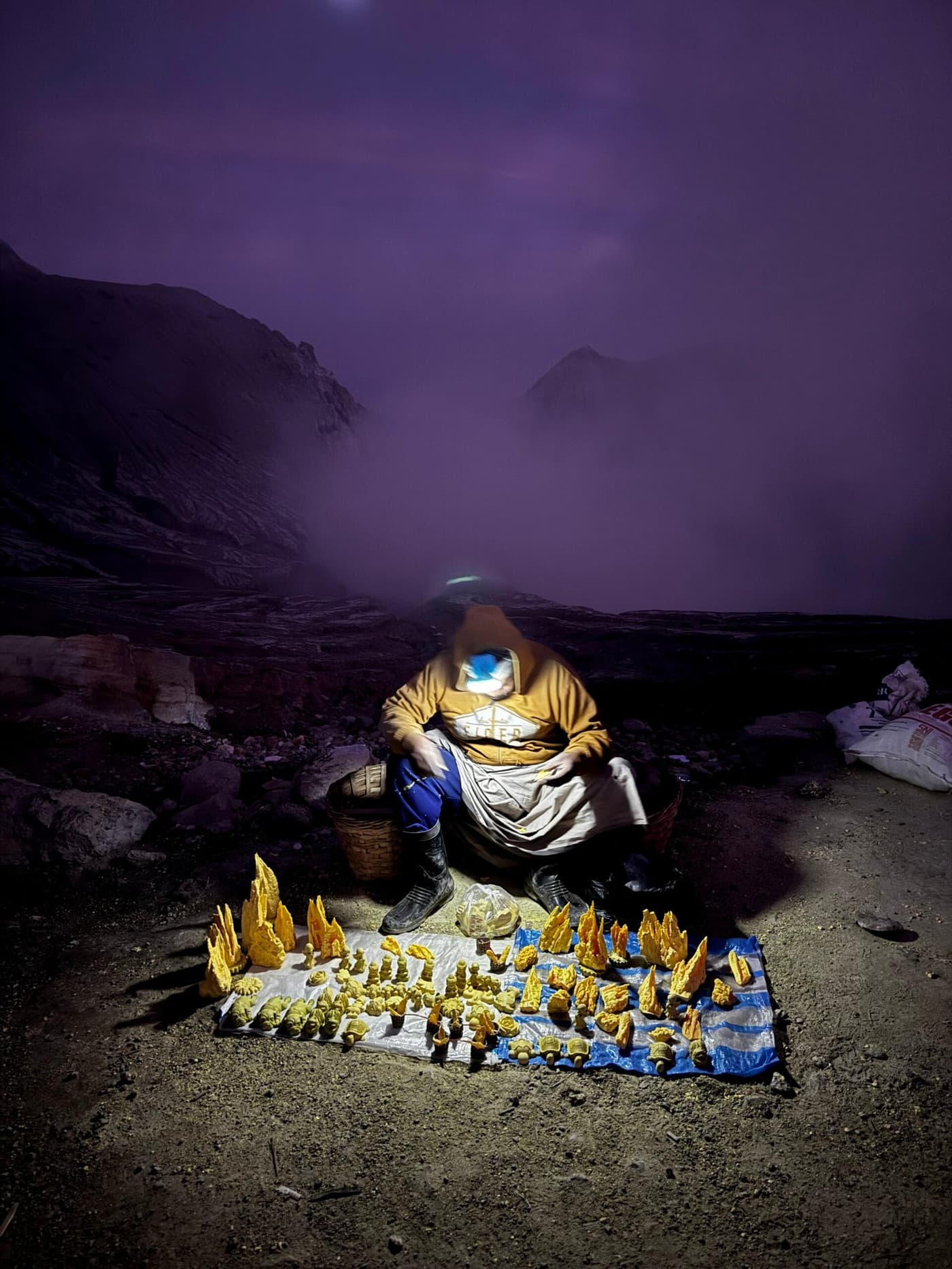
The miners of Ijen work in extreme conditions. They break off the sulfur by hand and load it into baskets, which they then carry on their shoulders up a narrow path out of the crater. A single load can weigh 60-80 kilograms (about 130-175 pounds).
At the same time:
- protection from the sulfur gases is minimal or absent;
- they go up and down along the same route as the tourists;
- the work goes on every day, whatever the weather.
During the climb and our time at the crater we met miners many times, and it makes a strong impression. Against the background of your own physical tiredness from the climb, you understand especially sharply how hard their everyday work is.
An Ijen Volcano Tour or a Self-Guided Climb
When planning a trip to Ijen volcano, travelers usually choose between a group tour and climbing on their own. Both options have their own features, but in reality most tourists go with a tour, and there are good reasons for that.
Group Tour to Ijen Volcano: Pros and Cons
The main advantage of a tour to Ijen volcano is a fully organized route. In our case this turned out to be especially important, given the logistics and the new requirements for medical clearance.
The main pluses of a tour are:
- you don't have to work out where and how to get the medical certificate for the climb; the organizers take care of it;
- you don't need to plan the route, timing and transfers;
- the transfer picks you up right from your hotel or villa in Bali and goes with you the whole way;
- the ferry crossing, the drives across Java and the delivery to the starting point are already included;
- before the climb you are given respirators and headlamps and a briefing.
This format is especially convenient if you are going to Ijen from Bali for the first time and don't want to spend time and energy on organizational details.
The downsides of a tour are a rigid schedule and limited freedom with your time on the route. But for most travelers these nuances are outweighed by comfort and safety.
As for where to buy an Ijen volcano tour, there are plenty of options:
- local travel agencies in Bali, of which there are many, especially in tourist areas;
- large online tour platforms such as Klook, GetYourGuide and Viator, where it is easy to compare programs and read reviews.
Climbing Ijen Volcano on Your Own
A self-guided climb of Ijen volcano suits those who are already in Java and ready to take on all the organization of the trip themselves. In that case you need to:
- get to Banyuwangi on your own;
- arrange a transfer to Paltuding;
- find out the current requirements for the medical check in advance and get the certificate;
- plan your gear and the timing of the night climb.
This option gives you more freedom, but it takes good preparation and an understanding of local conditions.
What to Bring for the Ijen Volcano Hike
Even though the route is relatively accessible, climbing Ijen volcano calls for proper preparation. The night format, the cool weather and the dusty trail make your gear especially important.
First of all, keep in mind that Ijen is cold at night, especially near the crater. The temperature can drop well below what you are used to in the tropics, so warm clothing is a must.
Clothing and Footwear for the Climb
For the climb it is best to choose:
- comfortable sneakers or trekking shoes with good support;
- a warm jacket or windbreaker;
- long pants and a long-sleeved layer.
Keep in mind that the road up Ijen volcano is very dusty. The dust is fine and clingy, and after the hike your clothes and shoes are almost completely coated in a layer that is hard to wash out and cannot be brushed off. So it is better to wear old clothes and shoes that you don't mind getting dirty.
What You Can Bring or Buy on Site
If you don't have warm things with you, some of the gear can be rented or bought right at the base camp before the climb starts. They usually offer:
- rental of warm jackets;
- warm gloves;
- hats;
- buffs and scarves.
Before the climb, tourists are also given respirators or masks and headlamps, but you can bring your own if you like, which is especially useful for people who are sensitive to dust and the smell of sulfur.
Best Time to Climb Ijen Volcano
The time you choose for your trip to Ijen volcano directly affects your impressions of the climb. The weather, visibility in the crater and even the chance of seeing the blue flame depend a lot on the season.
In general, you can visit Ijen volcano all year round, but the most comfortable time is considered to be the dry season, which lasts roughly from April to October. During this period there is less rain, the trail is drier and the climb is easier.
The Rainy Season and Weather Conditions
The rainy season in Java runs from November to March. During this time:
- the trail can be slippery and muddy;
- humidity rises;
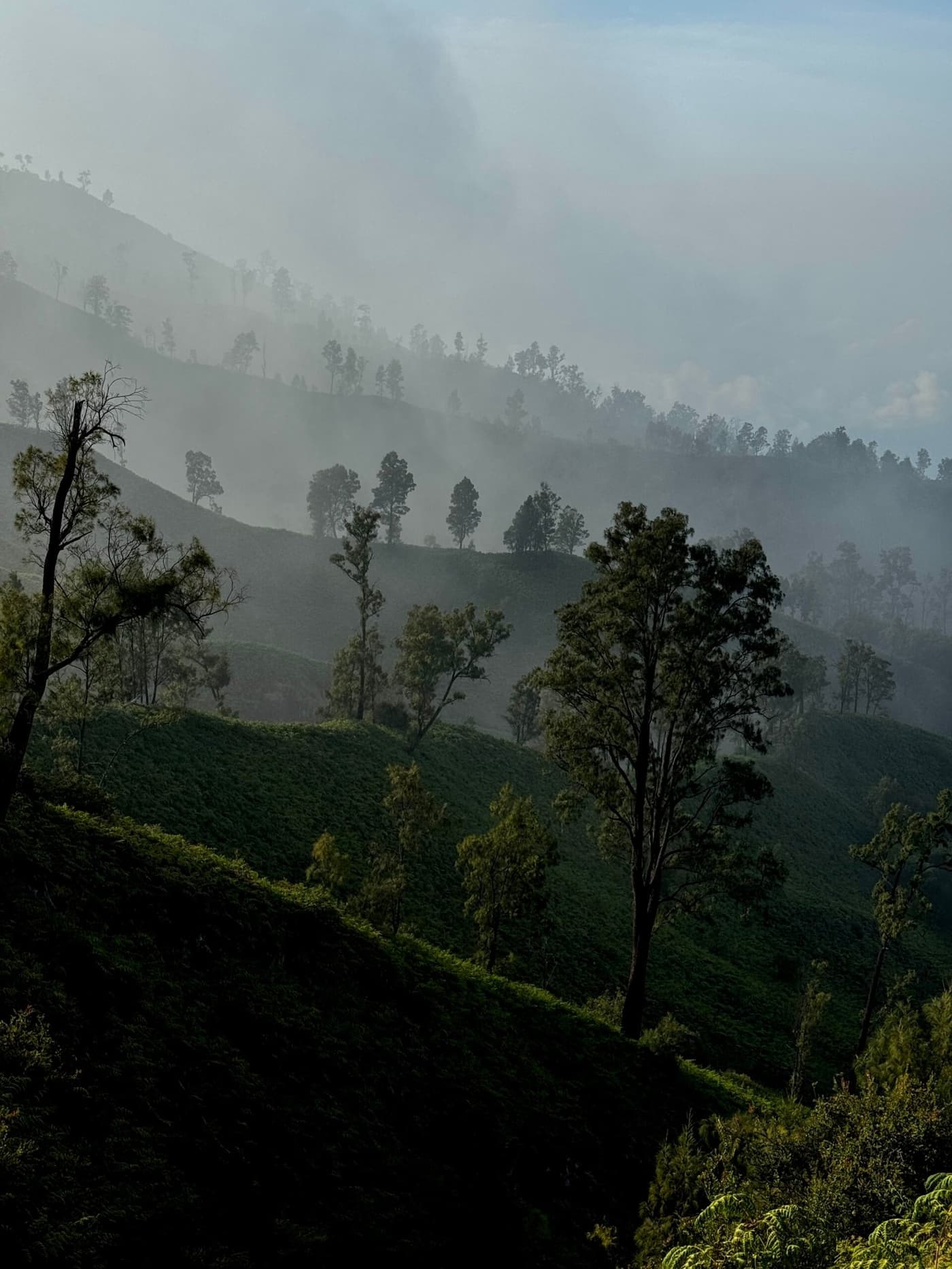
- visibility in the crater sometimes gets worse because of clouds and fog.
Even so, climbs still take place in the rainy season if the weather and the level of volcanic activity allow it. It is important to remember that access to the volcano can be closed temporarily for safety reasons.
When to Go and What to Pay Attention To
Whatever the time of year, it is worth checking:
- the weather forecast for your specific date;
- up-to-date information on the state of the volcano;
- the wind, which affects how the sulfur gases spread.
Most tourists choose the night climb in order to see the sunrise in the crater and, with luck, the blue flame. Even if Blue Fire doesn't appear, the sunrise over the sulfur lake remains one of the most impressive moments of the trip.
Ijen Volcano: Photos and Impressions
Ijen volcano makes a strong impression even without rare natural phenomena like the blue flame. The route itself, the night climb and the sunrise in the crater make this trip truly memorable.
With the first rays of the sun the crater gradually reveals itself in all its beauty: you can clearly see the sulfur lake of an unusual turquoise color, the steep volcanic slopes and the clouds of gas rising from the fumaroles. The contrast between the harsh landscape, the smell of sulfur and the absolute silence creates the feeling of being in a completely different world.
I filmed how we climbed Ijen volcano and spent a month in Bali in my YouTube episode. Enjoy watching!
Frequently Asked Questions About Ijen Volcano (FAQ)
Is the Ijen Volcano Hike Dangerous
The hiking route itself is not technically difficult, but there are certain risks. The main danger comes from the sulfur gases, so it is important to follow your guides' advice, wear a respirator and monitor how you feel. When volcanic activity rises, access to the crater may be closed.
How Much Does an Ijen Volcano Tour Cost
The cost of an Ijen volcano tour depends on the format, the starting point and the services included. The price usually covers the transfer, the ferry, a guide, gear and arranging the medical check. The easiest way to compare current offers is through local travel agencies or large tour platforms.
How Long Does the Ijen Climb Take
The climb to the crater itself takes 1.5 to 2.5 hours on average. You should also allow extra time for the drive, the ferry crossing and rest before and after the climb.
Can You Hike Ijen Volcano Without a Mask
Wearing a mask or respirator is strongly recommended, especially around the crater. Sulfur gases can be dangerous for the airways even when their concentration seems low.