Santiago de Chile is the capital and main city of Chile, set in a central valley between the high Andes and the Pacific Ocean, roughly equidistant from the country's southern and northern borders. About a third of all Chileans live here, more than 6.5 million people, and it is the easiest base for exploring the country: the coast is a little over a hundred kilometers away, and the ski slopes are even closer. In this guide I've put together everything you need to know before your trip: climate, neighborhoods, transport, food, safety and day trips from the city.
Getting to know Santiago, Chile
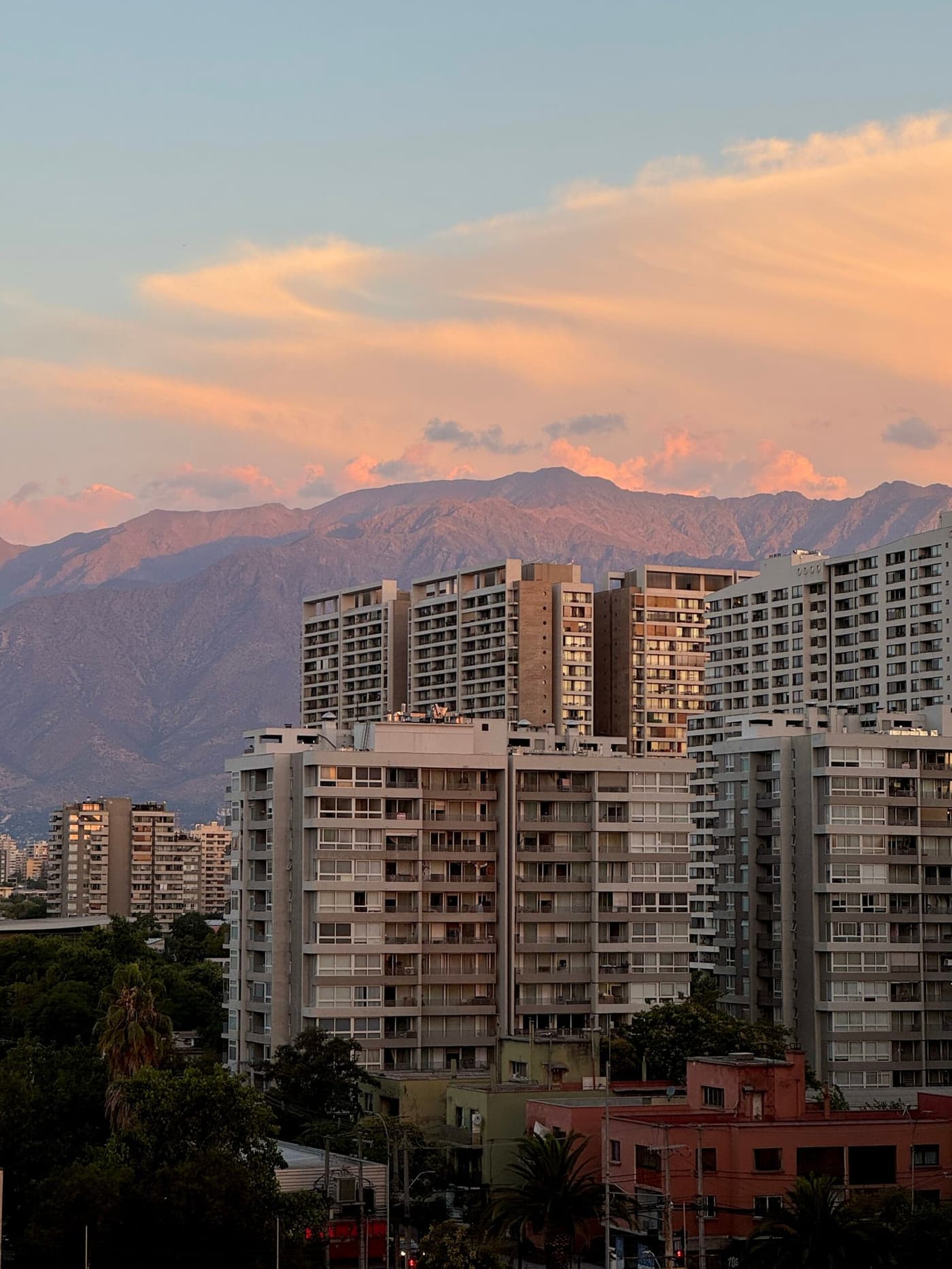
Santiago was founded in 1541 by Spanish conquistadors, and the spot was no accident. The city sits in the wide valley of the Mapocho River, squeezed between the Andes ranges and the coastal mountains. From most points in the city you can see snow-capped peaks, an everyday view from an office or cafe window.
By Latin American standards, Santiago feels quite European. There is a modern metro, working traffic lights, coffee shops serving flat whites and restaurants with tasting menus. Right next to them are noisy markets, street food and neighborhoods where time seems to have stopped in the 1980s.
Between the Andes and the Pacific: geography and scale
Santiago is about 100 kilometers from the Pacific Ocean and 70 kilometers from the ski resorts in the Andes. That means you can ski in the morning and be on the beach in the evening, and nobody here finds that route surprising. The city covers a huge area and stretches from north to south: without the metro or a taxi, getting between neighborhoods is inconvenient.
The metropolitan area has around 7 million people, roughly a third of all Chile. The country's main universities, business, culture and politics are concentrated here.
Santiago is not just a layover: why it's worth staying
Many people fly through Santiago on the way elsewhere and lose at least two days in a city that deserves them. The Bellavista neighborhood with its graffiti and bars, San Cristobal Hill with a panorama of the whole city, the presidential palace La Moneda, Gran Torre, the tallest skyscraper in South America: it all adds up to two or three full days without rushing.
Food is a story of its own. Chilean cuisine is seriously underrated: fresh seafood, the best wines on the continent and street food that is hard to stop eating.
Santiago climate: the best time to visit
Santiago has a Mediterranean climate: hot, dry summers and mild, rainy winters. The best time to visit is spring (September to November) or fall (March to May): it's warm without being exhausting, there are fewer tourists, and the mountains are clearly visible.
Spring and fall: the ideal season
September and October are perhaps the best months of the year in Santiago. Temperatures hover around 18-23°C (64-73°F), the air is clear, the Andes are in full view, and the vineyards around the city are already turning green after winter. October to November is blossom season: the valley literally changes color.
Fall (March to May) is great for the harvest: this is grape-picking time, and wine festivals take place in the surrounding valleys. It's still warm during the day, but you'll want a light jacket in the evening.
Summer and winter: what to expect
Summer in Santiago (December to February) is hot and smoggy. Temperatures easily top 30°C (86°F), and because of the mountain terrain the valley doesn't ventilate well: on hot days a haze hangs over the city. If you visit in summer, plan your activities for the morning.
Winter (June to August) is mild by European standards: around 12-16°C (54-61°F) during the day, with rain and occasional fog. But winter is exactly when the ski resorts in the Andes are open: Valle Nevado and El Colorado, about an hour's drive from the city, and Portillo, 2.5 to 3 hours away. For skiers, winter is the best season.
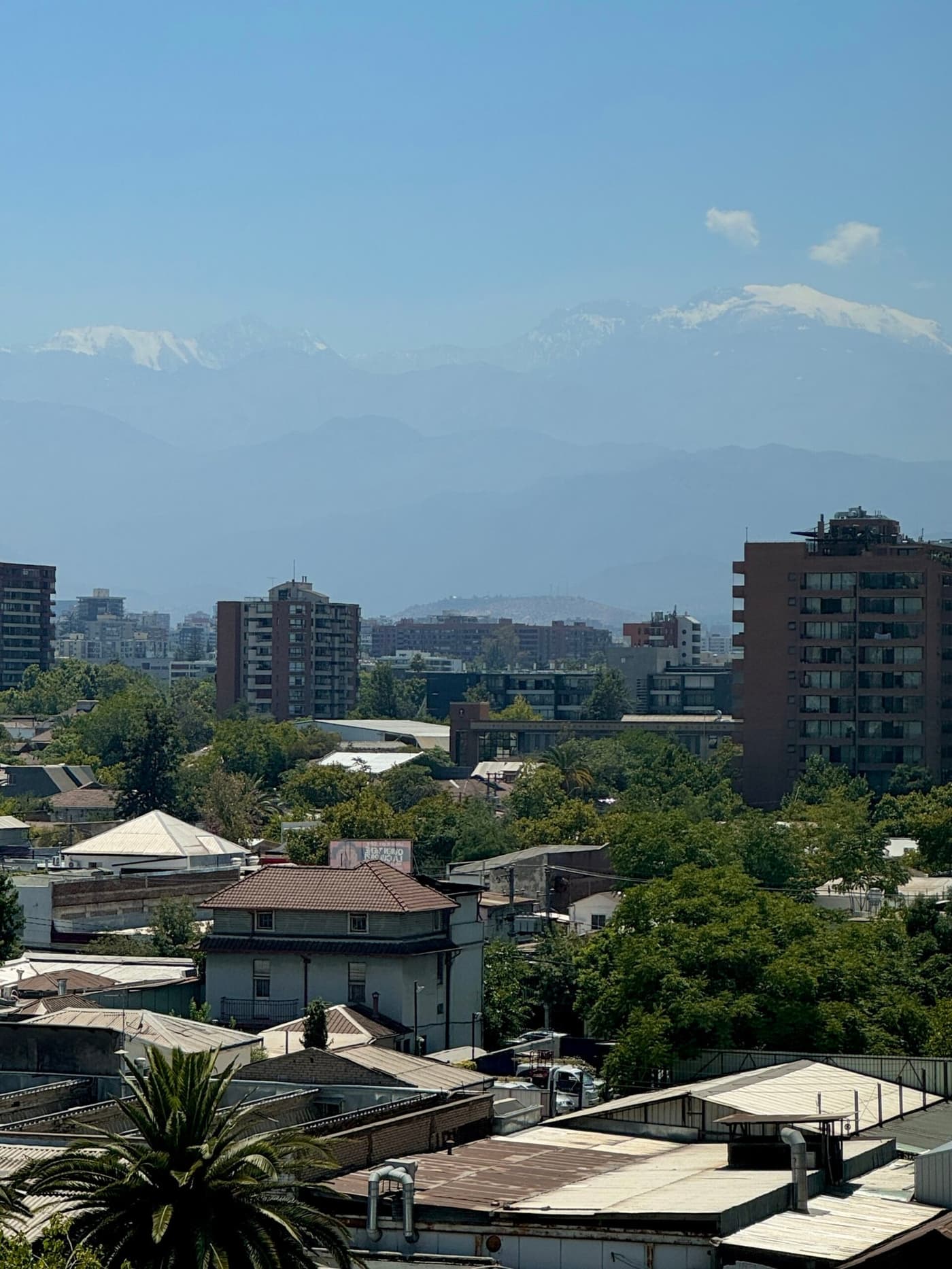
We were there at the start of summer. Smog covered the whole city and the mountains were barely visible, but the heat didn't feel as intense, especially if you're lucky enough to find an apartment or hotel with air conditioning.
Safety in Santiago
Santiago is one of the safest big cities in Latin America, but that doesn't mean you can switch off your vigilance. You won't feel the tension you do in Bogota or Lima, but pickpockets, phone theft and petty scams are a reality anyone can run into.
Santiago compared with other cities in the region
By South American standards, Chile is a country with a low level of violence. Santiago regularly ranks among the safest capitals on the continent. People walk calmly in the evening, tourists go on foot between neighborhoods, and nobody looks at you as potential prey.
The main risk is theft, not physical violence. A phone in your hand on the street, an open backpack on the metro, an expensive camera around your neck in a busy spot: these are classic situations best avoided. That goes especially for rush hour in the city center and at markets.
Which neighborhoods are safe and which to avoid
Tourist routes mostly run through safe areas. Providencia, Vitacura, Las Condes and Nunoa are calm neighborhoods with good infrastructure where you can walk in the evening without worry. Bellavista is bohemian and lively, but at night it's best to stick to busy streets.
The areas south and west of the center, Estacion Central and Santiago Centro near the bus terminal, are not the most pleasant, and you should be more careful there, especially after dark.
Simple rules that work everywhere: don't flash your phone on the street unless you need to, keep your bag in front of you on the metro, leave jewelry at the hotel, and in an unfamiliar neighborhood in the evening take a taxi instead of walking.
Getting to Santiago: flights, connections, airport
Depending on where you start, you will most likely need one or two connections to reach Santiago. It's a long trip, but the routes are well established and the connections are convenient.
Routes: which connecting cities are most common
The most popular connection points are Dubai, Doha, Istanbul, Madrid, Addis Ababa and Casablanca. From these cities, Emirates, Iberia, Turkish Airlines, Royal Air Maroc and Ethiopian Airlines fly to Santiago. Total travel time is from 20 to 30 hours, depending on the route and the length of the layover.
The best option for the balance of time and price is a connection in Madrid: Iberia flies nonstop from Europe to Santiago in about 13 hours, but depending on your passport you may need a Schengen visa. Without a Schengen visa, the most convenient options are via Istanbul (Turkish Airlines) or Dubai (Emirates). Whether you need a transit visa depends on your passport, so check the rules for your own before booking, and expect to be asked for a return ticket at boarding.
When we checked in October 2026, Chile allowed visa-free entry for eligible passports, with a tourist stamp for 90 days and no visa to arrange in advance. Rules differ by nationality, so confirm the requirements for your own passport with Chile's immigration authority before you travel.
From SCL airport to the city center
Santiago's international airport is named after Arturo Merino Benitez, code SCL. It is about 17 kilometers from the city center, and the trip takes 30-50 minutes depending on traffic.
Ways to get into town:
Metro is the cheapest option, but it does not go to the airport itself: take a Centropuerto or Turbus airport bus to Pajaritos station (line 1) and continue by metro, where a ticket costs less than a dollar.
Centropuerto and Turbus are the official airport buses to the center. They run regularly, are inexpensive and drop you at several points in the city. They're convenient with suitcases.
Taxi and Uber cost from 15,000 to 25,000 pesos depending on the neighborhood. Uber works reliably, prices are fixed in the app, and there are no unpleasant surprises.
Transport in Santiago: metro, taxis and how not to get confused
Santiago is one of the few cities in Latin America with convenient public transport. The metro here is clean, punctual and covers most tourist routes.
Santiago metro: map, Bip! card and fares
The metro has seven lines, marked by colors and numbers. For tourists, the most important are line 1 (red, runs through the center and Providencia), line 5 (green, leads to Bellavista and Nunoa) and line 3 (brown, runs through the center).
To pay, you need a Bip! transit card. You can buy it at any metro ticket office for 1,500 pesos and top it up there or in shops. A ride costs about 800-950 pesos depending on the time of day: it's slightly more expensive at rush hour.
The metro runs from 6:00 to 23:00 on weekdays and a bit shorter on weekends. At rush hour, from 7:30 to 9:00 and from 18:00 to 20:00, the cars get packed, so keep your bag in front of you.
Taxis and apps: Uber, InDriver and Chilean services
Uber works great in Santiago, and it is the main way to get around when the metro is inconvenient or already closed. Prices are reasonable: a ride across the center costs 3,000-6,000 pesos, and across the whole city about 10,000-15,000.
The local alternative is the Cabify app, which works on the same principle. Street taxis officially exist in Santiago: black cars with a yellow roof, but it's best to agree on the price in advance or ask the driver to turn on the meter.
There's no car sharing in the European sense, but car rental is available, which is especially relevant if you plan to head out of town to the vineyards or the mountains. We rented a car in Santiago ourselves to explore the south of the country.
Santiago neighborhoods: where tourists should stay
Santiago is a huge city, and the neighborhood you stay in greatly affects how you'll remember the trip. There is no single tourist spot here: the interesting places are scattered across different districts, and the choice of base determines how much time and money you'll spend getting around.
Providencia is the best choice for most tourists. A calm, well-kept neighborhood with good metro access, cafes, restaurants and parks. Not the cheapest, but comfortable and safe.
Bellavista is for those who want atmosphere. Graffiti on every corner, bars, galleries and Pablo Neruda's house museum. By day it's bohemian and pleasant, in the evening loud and lively. At night it's best to stick to the central streets.
Las Condes and Vitacura are business-oriented and expensive neighborhoods in the east, closer to the Andes. Lots of shopping malls, international hotels and corporate offices. Convenient if you're here on business; for tourism, a bit sterile.
Nunoa is a quiet neighborhood with local character, popular with young people and expats. Good restaurants, fewer tourists and cozy streets. It's a little farther from the main sights, but the metro helps.
A detailed breakdown of each neighborhood, with a map, accommodation prices and specific recommendations, is in a separate article about Santiago neighborhoods.
What to see in Santiago: top places and a 1-3 day itinerary
Santiago doesn't overload you with sights: there are no dozens of world-class museums or sacred sites worth flying to the other side of the world for. But there are views and a few places that stay with you.
San Cristobal Hill is the first stop on any itinerary. You go up by funicular or on foot, and the whole city opens up in front of you against the backdrop of the Andes. On a clear day the view is absolutely cinematic. At the top there is a viewing platform, a small zoo and a statue of the Virgin Mary.
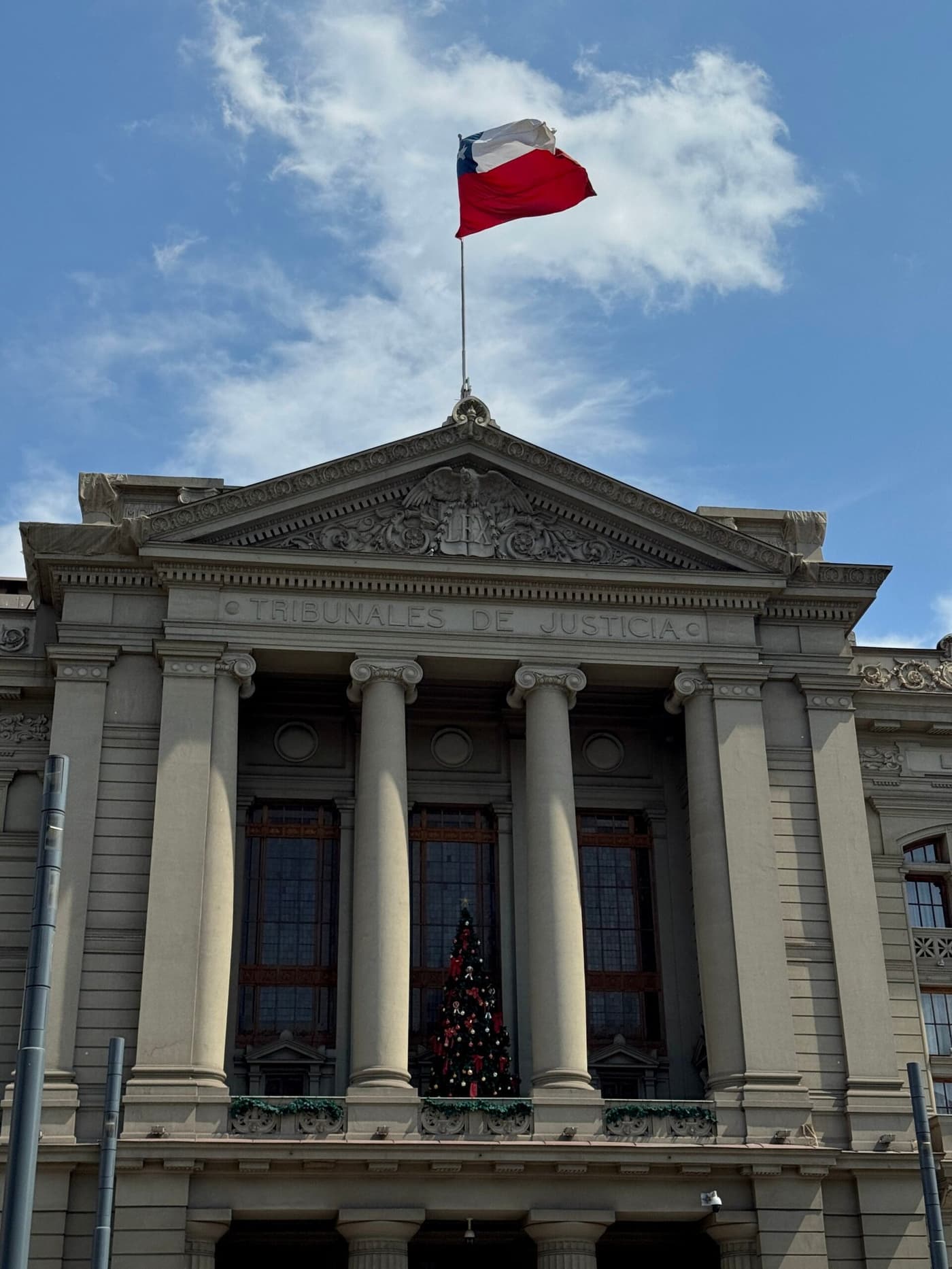
La Moneda Palace is the presidential residence in the very center of the city. A strict colonial building, in front of which the changing of the honor guard takes place every day. You can go inside for free, through the underground cultural center beneath the square.
Bellavista and Neruda's house is a neighborhood you simply have to walk through. The street art here isn't background decoration but the real thing: big murals with stories, unexpected details in the alleys. Pablo Neruda's house museum, "La Chascona", is small but full of character, like all three of the poet's houses in Chile.
Gran Torre Santiago is the tallest skyscraper in Latin America. The Sky Costanera observation deck on the 62nd floor gives a 360-degree panorama. It isn't cheap, but if the weather is good, it's worth it.
Mercado Central is the central seafood market. It's a touristy place, prices are higher than at ordinary markets, but the atmosphere and the freshness of the food are worth it. It's best to come at lunchtime and sit down to eat right away.
The full day-by-day itinerary, opening hours and entrance prices are in a separate article about Santiago's sights.
Where to eat in Santiago: Chilean cuisine and markets
Chilean cuisine unfairly stays in the shadow of Peruvian or Argentine food, and that's a pity. In Santiago you can eat very well: fresh seafood, hearty street food and decent wines in any mid-priced restaurant.
The first thing to try is empanadas. These are baked or fried pastries with a filling: the classic is beef with onion, olives and egg (pino), and there are versions with cheese and seafood. They're eaten everywhere, from street kiosks to restaurants.
Completo is the Chilean hot dog, which looks modest but disappears instantly. A sausage in a bun with avocado, tomatoes and mayonnaise. It sounds strange, but it tastes surprisingly good.
Seafood in Santiago is fresh: the ocean is close and the logistics work. Ceviche, octopus and sea urchins (erizo) are all available at Mercado Central and in fish restaurants across the city.
Pisco sour is the national cocktail, made from pisco grape brandy with lemon juice and egg white. You have to try it, preferably more than once.
As for specific places: Mercado Central for seafood and atmosphere, Persa Bio-Bio flea market for food and local color, and the Providencia district along Suecia Street for bars and restaurants of every kind.
A detailed guide to Santiago restaurants with specific addresses and prices is in a separate article.
How much a trip to Santiago costs: daily budget
Chile is not the cheapest country in Latin America. In terms of prices, Santiago is closer to Buenos Aires, Montevideo and some European capitals than to Lima or Bogota.
The main expense is accommodation. A budget hostel in the center starts from 20,000 pesos per night (about $22), and Airbnb apartments fall somewhere in the middle.
Food depends heavily on the format. A business lunch at a local restaurant (the so-called menu del dia) costs 7,000-10,000 pesos and includes soup, a main course and a drink. A meal at a decent restaurant in the evening runs from 15,000 to 25,000 pesos per person without wine. Street food and markets are cheaper.
Transport is inexpensive: a metro ride is less than a dollar, and an Uber across the whole city is about $10-15.
Approximate daily budgets per person:
Budget: about $45-55. A hostel, meals at local cafes and markets, the metro, and free sights like La Moneda and strolls through Bellavista.
Mid-range: about $100-120. An inexpensive hotel or apartment, lunches and dinners at decent cafes, and a couple of paid activities such as Sky Costanera or a wine tasting.
Comfort: $200 and up. A good hotel in Providencia or Las Condes, restaurants with tasting menus, taxis instead of the metro, and tours.
Detailed prices for accommodation, groceries and services are in a separate article about the cost of living in Santiago.
Day trips from Santiago: Valparaiso and the vineyards
Santiago's convenient location is one of the main arguments for using the city as a base for traveling around Chile. In a single day you can reach the ocean, the mountains or one of the continent's best wine regions.
Valparaiso: a bohemian port city 1.5 hours from the capital
Valparaiso is the complete opposite of Santiago. A chaotic, colorful, lively port city on hills above the Pacific Ocean. If Santiago is a business suit, Valparaiso is a well-worn denim jacket covered in patches, but that's a compliment.
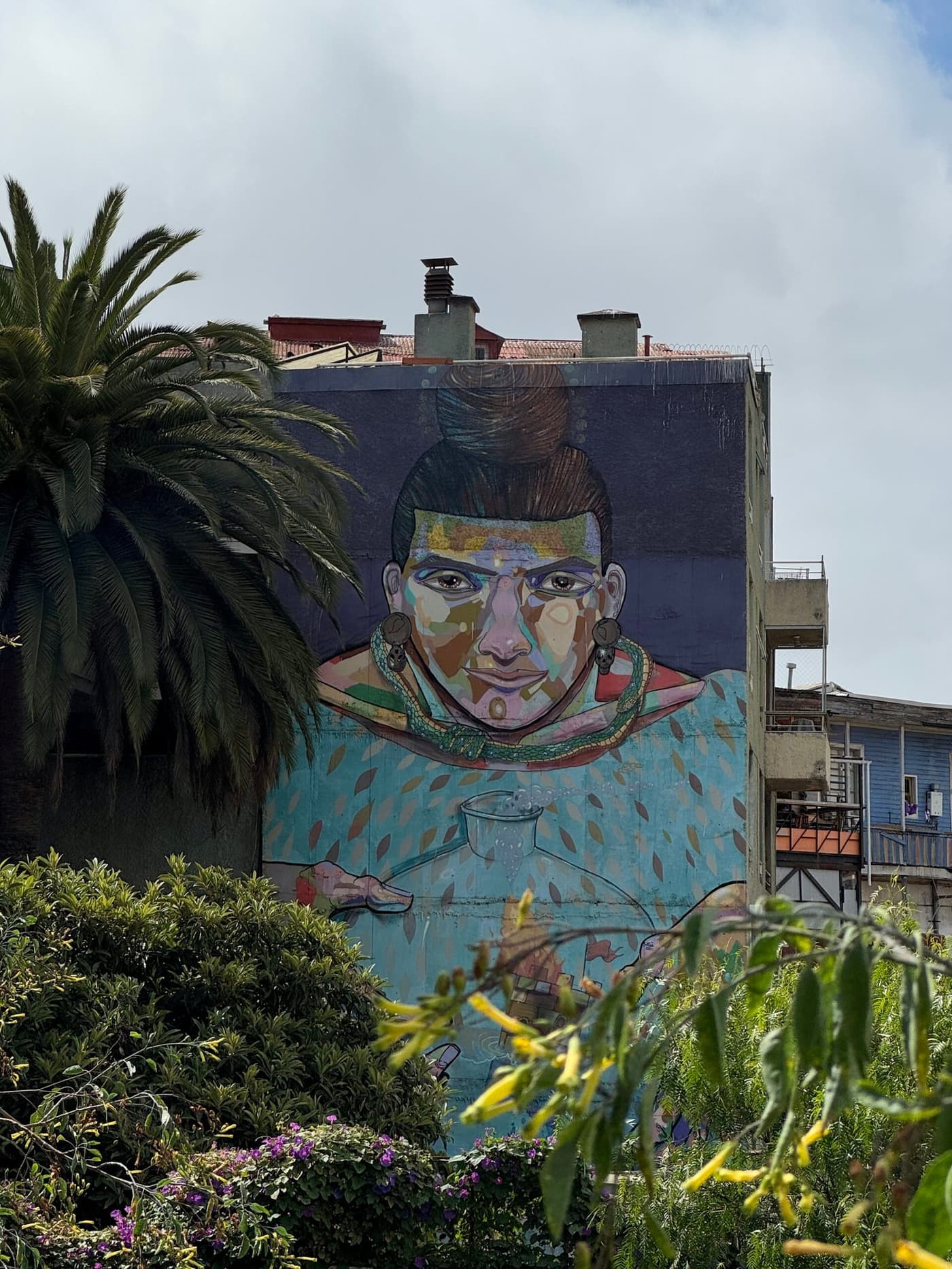
The whole city is one big art object. Street art here isn't decoration but a way of life: every wall, every staircase, every funicular (ascensor) is covered in murals. UNESCO has put the city's historic center on the World Heritage list, and when you wander the alleys of Cerro Concepcion or Cerro Alegre, you understand why.
Getting there from Santiago is easy: Turbus and Pullman Bus coaches leave the Alameda terminal every 15-20 minutes, the trip takes about an hour and a half, and a ticket costs 4,000-6,000 pesos. By car it takes about the same.
Chilean wines: the Maipo and Casablanca valleys, tastings near the city
Chile is among the ten largest wine producers in the world, and the country's best vineyards are literally on Santiago's doorstep. The Maipo Valley is 30-40 minutes' drive south of the city, and the Casablanca Valley is on the way to Valparaiso.
Maipo is known above all for red wines: cabernet sauvignon and carmenere are the region's calling card. This is where Concha y Toro is located, the country's largest winery, with tours and tastings. Casablanca is about white wines: sauvignon blanc and chardonnay, which benefit from the cool ocean air nearby.
The day-trip format is simple: you set out in the morning, visit one or two wineries with a tour and tasting, have lunch right there (most wineries have a restaurant on site), and return to the city by evening.
Practical tips: money, connectivity and Spanish in Chile
Three things to sort out before or right after you land: where to get cash and how to pay, how to stay connected, and how to communicate with people who speak a Spanish quite unlike the textbook version.
Chilean Spanish: quirks and a few phrases that will help
Chilean Spanish is one of the hardest dialects for anyone who learned the language from textbooks. Locals speak fast, swallow word endings and use a lot of slang, chilenismos, that you won't find in any dictionary. Even native Spanish speakers from other countries ask people to repeat themselves at first.
The good news: in tourist areas, hotels and restaurants, English is understood reasonably well. In the metro, at markets and in ordinary shops it's worse, but basic Spanish phrases solve most situations.
A few words that will really come in handy: ¿Cuánto cuesta? means "how much does it cost", La cuenta, por favor means "the check, please", ¿Dónde está el metro? means "where is the metro", and Po is a universal Chilean particle added to the end of almost any phrase.
Money in Santiago: where to exchange, how to pay and whether you need cash
Chile's currency is the peso (CLP). The exchange rate changes, so check the current one on Google or xe.com.
Cards are accepted everywhere, in restaurants, shops and taxis. Visa and Mastercard work without problems. Cash is needed for markets, small street cafes and some buses.
It's best to exchange currency at official exchange offices: casas de cambio, of which there are many in the center on Agustinas Street. The rate there is noticeably better than at the airport or in banks. You can also withdraw pesos from an ATM, but fees can be high, so check your bank's terms in advance.
Connectivity and internet: how to choose a SIM card at the airport
At the airport after landing there are Entel, Claro and Movistar sales points. Foreigners without a Chilean RUT can get only prepaid SIM cards (prepago): contract plans require a local tax number, which isn't issued to tourists. Entel is considered the best for coverage, especially if you plan to travel outside the city.
A prepaid 30-day package with internet costs 10,000-15,000 pesos, which is usually more than enough. You need your passport. You can top up at supermarkets, pharmacies and through the app.
Wi-Fi in Santiago's hotels, cafes and restaurants is reliable, so there are no problems in the center and tourist areas.
Frequently asked questions about Santiago
Do I need a visa for Chile?
It depends on your passport. When we checked in October 2026, travelers with eligible passports could stay in Chile without a visa for up to 90 days, and the stay could be extended for another 90 days if needed. Confirm the rules for your own passport with Chile's immigration authority. At the border you'll be asked to fill out an arrival card, which you need to keep until you leave.
How long is the flight to Santiago?
Plan on at least one connection. Travel time including a connection is about 20 hours. Depending on the route and the length of the layover, the total can reach 24-26 hours. Popular connection points: Istanbul, Madrid, Dubai, Addis Ababa.
What currency does Chile use, and can I pay by card?
The national currency is the Chilean peso (CLP). Visa and Mastercard cards are accepted everywhere: in restaurants, shops and hotels. Cash comes in handy at markets and small cafes. It's best to exchange money at exchange offices: casas de cambio in the city center, where the rate is noticeably better than at the airport.
What is the time difference in Santiago?
Be aware that Chile changes its clocks twice a year, so the difference between Santiago and your home time zone can shift by an hour depending on the season. Check the current difference on a world clock before you book calls or connecting flights.
Is Santiago dangerous for tourists?
By Latin American standards, no. The main risk is petty theft: pickpockets on the metro and in crowded places, and phone snatching. It's best not to wear gold jewelry. The tourist neighborhoods of Providencia, Bellavista and Las Condes are safe both day and evening. The areas near the bus terminal and the southern outskirts call for more caution.
When is the best time to go to Santiago?
The best time is September to November (spring) or March to May (fall): the weather is most comfortable and there are fewer tourists. In summer the city is hot and crowded, and in winter it's cool with possible rain.
What language do they speak in Santiago?
The official language is Spanish. The Chilean dialect is considered one of the hardest to understand: locals speak fast and use a lot of slang. In tourist areas and hotels, English is understood fairly well, while in ordinary shops and at markets less so. A couple of basic Spanish phrases will make life much easier.
Does Santiago have a metro?
Yes, and a very decent one. Seven lines cover most tourist routes. To pay you need a Bip! card, sold at any station. The metro is clean, safe and runs on schedule.
Can I visit Valparaiso from Santiago in one day?
Yes, it's one of the most popular day trips. Buses from Santiago to Valparaiso leave every 15-20 minutes from the Alameda terminal, and the trip takes about an hour and a half. It's easy to fit into one day: head out in the morning and come back in the evening.