Armenia is rarely the first stop on a Caucasus itinerary; it usually comes second, after Georgia. And almost every time, the country turns out to be calmer, simpler and easier to understand than people expect. From Yerevan you can reach almost any point in three to four hours by car, from a 1st-century pagan temple to a ski resort. Since 2022, Armenia has also become one of the main destinations for relocation, thanks to its visa-free entry for many nationalities and a clear procedure for registering a business.
In this Armenia travel guide I cover the country both as a short-trip destination and as a place to move to. You'll find legalization, residence permits, prices, regions, climate, transport, food and everything else a traveler or expat needs to know about Armenia.
Armenia: Facts and Figures
| Parameter | Data |
|---|---|
| Capital | Yerevan |
| Area | 29,743 km² |
| Population | about 2.97 million people |
| Language | Armenian (official) |
| Currency | Armenian dram (AMD) |
| Exchange rate | 1 USD ≈ 360–365 AMD (floating) |
| Time zone | UTC+4, all year round with no clock changes |
| Visa | not required for citizens of eligible countries; check your own passport |
| Visa-free stay | up to 180 days within a year (for eligible passports) |
| Religion | Christianity, Armenian Apostolic Church |
| Neighbors | Georgia, Iran, Turkey, Azerbaijan |
| Airports | Zvartnots (Yerevan, international), Shirak (Gyumri, regional) |
Armenia is one of the oldest Christian states in the world: Christianity became the official religion here almost 80 years earlier than in the Roman Empire (301 and 380).
The country is mountainous: almost 90% of its territory lies above 1,000 meters, and the average elevation is about 1,800 m. The climate is sharply continental, with hot, dry summers and cold, snowy winters, except perhaps in the Ararat Valley.
Visa and Entry Rules for Armenia
When we checked in October 2026, citizens of a number of countries, including several CIS countries, could enter Armenia without a visa. The visa-free period was up to 180 days within a year. These rules apply to eligible passports only, so confirm the conditions for your own passport with the Armenian immigration authorities before you travel.
If you enter by land, for example from Georgia, a passport is required.
If you plan to stay longer, it is best to enter on your passport right away: it gives access to the social card, a bank account and a residence permit application.
If your stay exceeds 30 days, you need to register at your place of residence. A hotel registers a guest automatically; if you rent an apartment, you have to go to the migration department of the police yourself with your passport and the rental contract. The fine for not registering is about 50,000 AMD (roughly $140).
Overstaying the 180-day visa-free period without a residence permit means a fine and problems on your next entry to the country, up to a temporary ban.
Medical insurance is not required to enter, but since healthcare is paid, it is still worth getting.
Legalization: Residence Permit, Sole Proprietorship and Opening an Account
Armenia is a rare case where legalization requires no sponsor, no investment and no diploma. Almost the entire process hinges on one document: your passport. On November 1, a new law on foreigners comes into force that will significantly change the rules. I'll first go through how things work now, and then what changes on November 1.
How Long You Can Live Without Documents
Up to 180 days a year without any status at all, with registration only after day 30. That is enough for most tourists and for some remote workers who don't plan to stay permanently.
The Social Card Is the Very First Document
The Armenian social card is the local equivalent of a personal ID number in the state records system. Without it you can't open an account at most banks, file papers with the tax office, or apply for a Schengen visa through the visa center in Yerevan.
The card is free. You book an appointment through the migration.e-gov.am portal, in the "Social card" section, and bring the original passport, a copy of the photo page and a copy of the page with the entry stamp. If you entered on a passport, the card is made in 1-2 business days. If the entry was on a different document, the system requires additional verification through the Ministry of Internal Affairs, and the process stretches to two weeks.
Types of Residence Permit
A residence permit is for those who want to stay longer than 180 days, work officially or run a business legally. There are several grounds for getting one:
Business or sole proprietorship is the most common route among people who have moved. Right now, until November 1, 2026, registering a sole proprietorship in Armenia takes one day and in itself becomes grounds for a residence permit, but this loophole is closing; details below.
Employment with an Armenian company, in which case the employer arranges the invitation.
Study at an accredited Armenian university; the permit is issued for the length of the program.
Family circumstances, if your spouse, parents or children hold Armenian citizenship, a residence permit or permanent residency. In this case no state fee is charged.
Armenian descent: a separate simplified program for ethnic Armenians still exists, but it is also being abolished from November.
The document package is the same in most cases: a passport with a notarized translation into Armenian, an application form, a medical certificate confirming the absence of serious infectious diseases, a supporting document (sole proprietor certificate, employment contract, certificate from a university), a receipt for the fee and three photos. Everything is submitted to the passport and visa department of the police at your place of residence or to the migration service.
State fees and terms (per Armenia's Ministry of Foreign Affairs and Migration and Citizenship Service, October 2026):
| Type of residence permit | Validity | State fee |
|---|---|---|
| Temporary | 1 year | 105,000 AMD (≈ $290) |
| Permanent | 5 years | 140,000 AMD (≈ $385) |
| Special | 10 years | 150,000 AMD (≈ $415) |
| Family-based | 1 or 5 years | free |
The official processing time is up to 30 days (it can be extended by another 30); in practice it is usually 2-3 weeks, and up to two months in complicated cases. According to law-firm reports, the fees are due to rise to 150,000 AMD (temporary) and 250,000 AMD (permanent) once the new electronic system goes live, no later than November 1, 2026; the official pages still show the amounts in the table.
What Changes in Immigration Law From November 1, 2026
On November 1, 2026, a new law on foreigners comes into force in Armenia. The reform is driven by EU requirements in negotiations on easing the visa regime for Armenian citizens, and Brussels insisted specifically on tighter control of residency.
What changes in practice:
Registering a sole proprietorship "on paper" no longer gives the right to a residence permit. The scheme where a person opened a sole proprietorship and applied for residency the same day stops working: from November you have to prove real activity, either a balance of at least 1,000,000 AMD in your account or a turnover of 1,000,000 AMD or more over the last 60 days.
Annual quotas appear for each type of residence permit; the government gets the right to set a maximum number of permits per year, and the quotas are subject to periodic review. The exact figures for 2026-2027 had not been officially published at the time of writing.
Filing moves online: the application for most types of residence permits and residence cards can be submitted without a personal visit to the migration service, along with the move to a new standard of biometric documents.
Permanent residency now requires three years of residence on a residence permit within the last five years. This is about the fact of living in the country, not the validity period of the card. The scheme that let people reach permanent status within a few months through a sole proprietorship is closing. According to legal reviews (EY Armenia and others), other grounds for permanent residency are also being introduced: investment in Armenia (the thresholds and eligible assets are left to a separate government decree that had not been published as of October 2026) and a family ground (spouse, parent or child of an Armenian citizen; the same three years on a temporary permit within the last five apply). The frequently quoted 2,000,000 AMD relates not to permanent residency but to the temporary permit for a business shareholder: a contribution to a company's share capital (the status is annulled if the investment falls below 1,000,000 AMD).
A separate 120-day entry work visa appears, with no option to extend, issued no more than once a year. According to legal reviews, it will only start working once the new electronic visa system launches, and no launch date has been announced. This is an option for those who work in Armenia occasionally and don't plan to get a full residence permit.
The preferential residence permit program for people of Armenian descent, mentioned above, is abolished.
Anyone who already holds a residence permit should keep one more point of the new law in mind: if you change or lose your job, your resident status is annulled unless the new employment contract is registered within 15 business days.
As of mid-September 2026, sources differ on the details of the quotas and the online filing forms, which are being published gradually through secondary legislation. Before submitting documents, check the current conditions at migration.e-gov.am: fees and the filing format can change faster than articles on the internet are updated.
Sole Proprietorship in Armenia: Registration and Taxes
You can open a sole proprietorship in Armenia without citizenship or a residence permit, with just a passport and a notarized translation. Registration takes place at the State Register Agency (ularge.am) or through a one-stop service center and, with documents ready, takes one business day. Law firms handle everything turnkey for 50,000-100,000 AMD ($140-275). After registration you are assigned an HSNN number, the Armenian equivalent of a taxpayer ID for entrepreneurs.
The tax system for sole proprietors with a turnover of up to 115 million AMD a year (about $300,000) is simplified, with a turnover tax instead of VAT:
| Type of activity | Turnover tax rate |
|---|---|
| IT activity (90% or more of revenue) | 1% |
| Trade and non-IT services | 10% |
| Manufacturing | 3.5-5% |
The preferential rate for IT is in effect until 2032, which makes Armenia one of the most attractive jurisdictions for developers, designers and analysts. Income tax on the salaries of IT specialists is reduced to 10% against the standard 20%.
Reports are filed quarterly online through taxservice.am. An accountant for simple activity costs 15,000-30,000 AMD ($40-80) a month; for most freelancers that is cheaper and less stressful than sorting it out on your own.
If you are a tax resident of another country, you may still have to declare your worldwide income there, and many countries have a double taxation treaty with Armenia, under which tax paid in Armenia is credited. Check the rules of your home country and how long residence abroad affects your tax residency there.
Banks and Cards
The best option is to open an account at an Armenian bank. Most large banks open accounts without problems.
Ameriabank is the most popular choice among people who have moved: Visa Classic Digital, support for AMD, USD and EUR accounts, opening costs about 20,000 AMD (~ $55), and there is a servicing fee.
Ardshinbank has cheaper opening, about 15,000 AMD (~ $40), free servicing and a wide choice of cards.
Armeconombank and Byblos Bank Armenia also open accounts on similar terms.
HSBC Armenia and AEB do not open them.
To open an account you need a passport, a social card and proof of address, usually a rental contract, and sometimes proof of income. You can't open an account remotely; a personal visit to a branch is required.
Idram is a local payment system with QR payment that is accepted almost everywhere: in cafés, taxis and stores. It is opened through IDBank with a passport and makes everyday payments easier.
If part of your money is still abroad, there are several working ways to move it to Armenia: specialized online exchange services that pay out in drams to an Armenian account; cash dollars or euros exchanged in Yerevan at the market rate without commission; cryptocurrency through P2P exchanges with a later cash-out at an exchange office; and transfers through banks in Georgia or Kazakhstan as an intermediate step.
Regions of Armenia: Where to Go
The country is small, about the size of Belgium, and that is its main tourist advantage. Based in Yerevan, you can see almost the entire country without overnight stays in other cities, except perhaps in the south.
Yerevan and the Ararat Valley
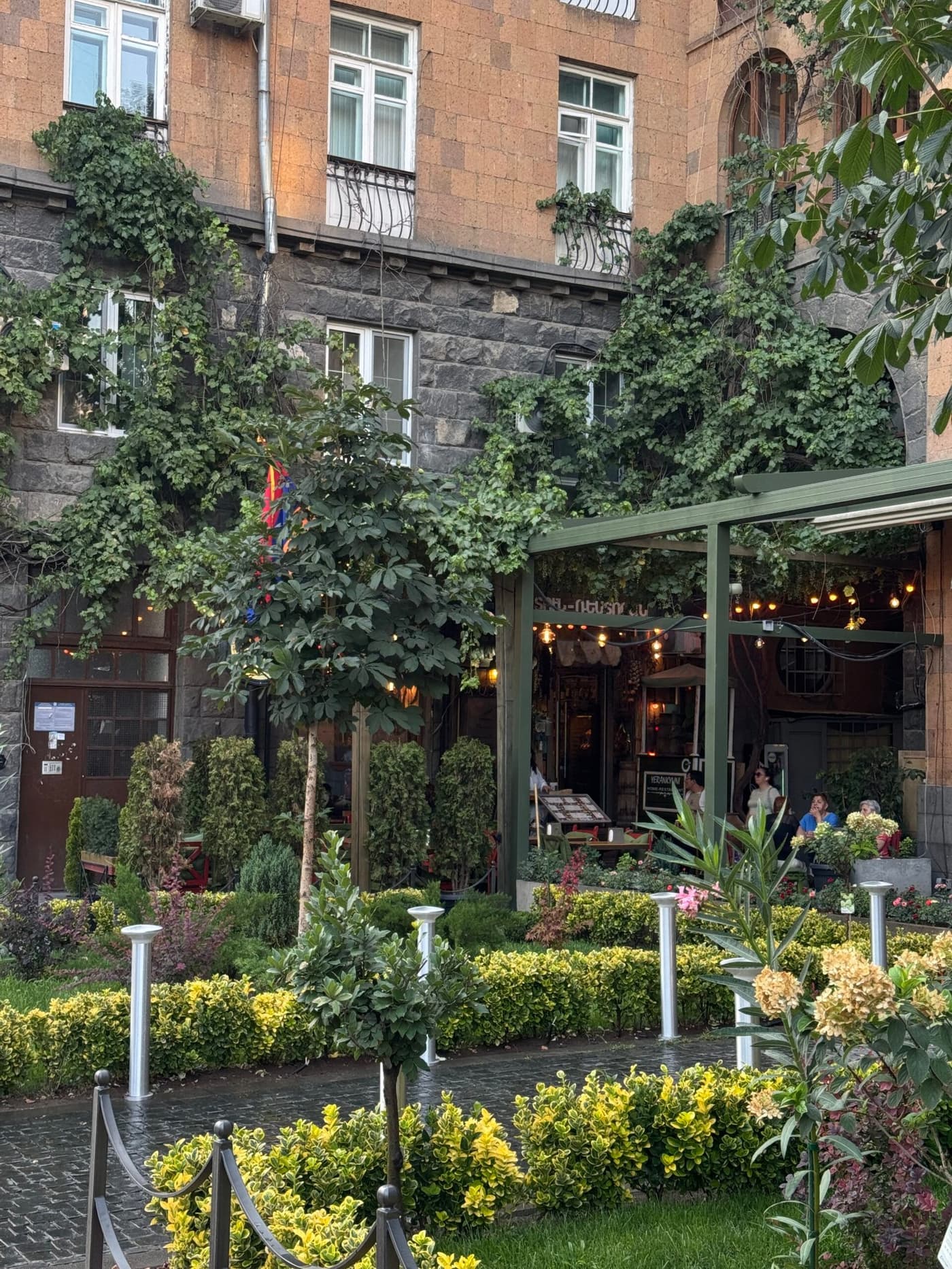
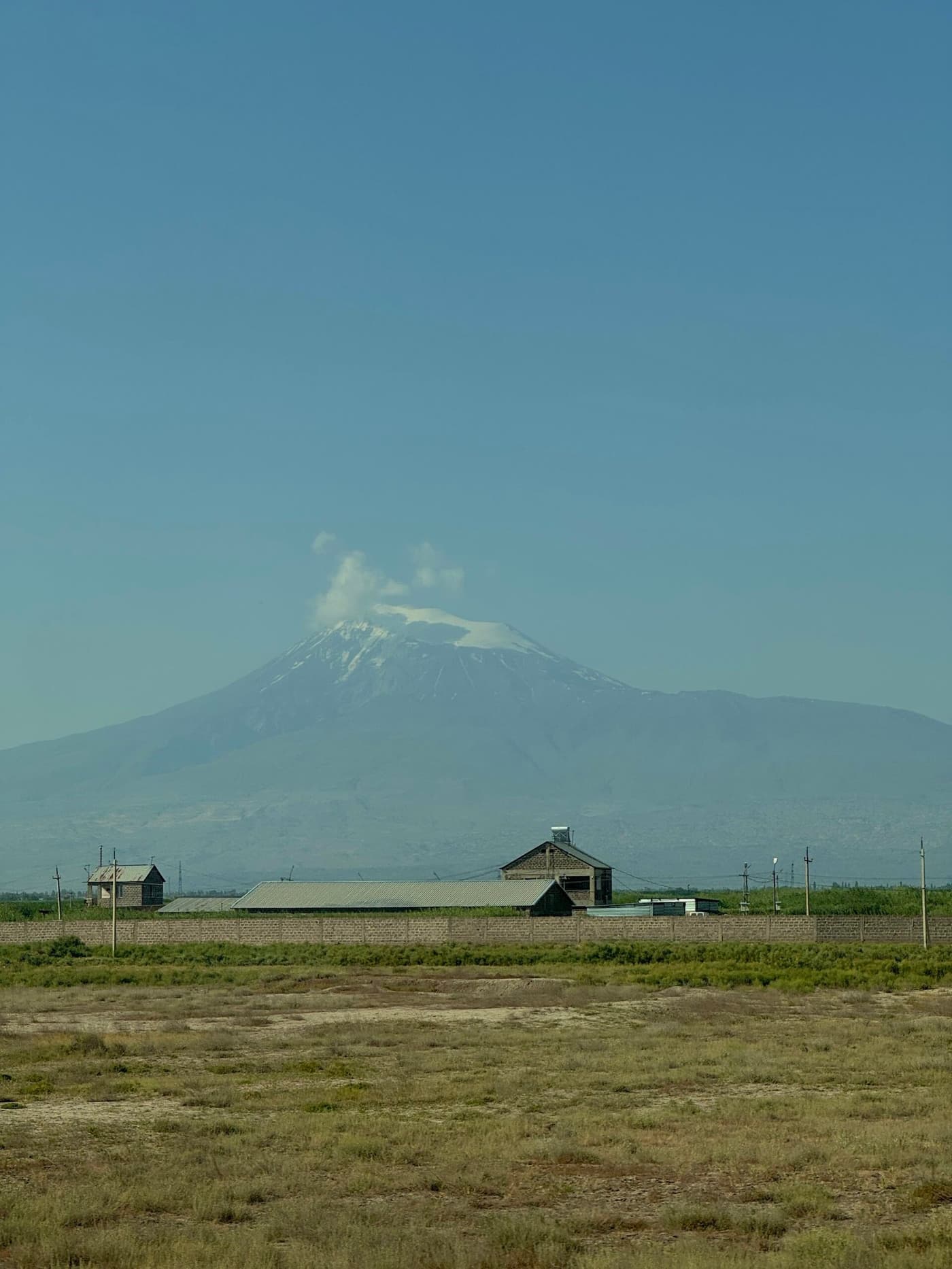
The capital and its surroundings are the main base for the whole trip. The pink volcanic tuff the center is built from changes shade through the day, and in clear weather Mount Ararat is visible from several points in the city, although the mountain formally lies in Turkey. Plan at least three to four days for Yerevan: the districts, specific routes around the city and the question of where it is best to stay are covered in detail in my separate guide to Yerevan and the guide to the city's districts.
Half an hour from the city is Echmiadzin, the religious capital of Armenia, with the residence of the head of the Armenian Apostolic Church and a cathedral on the UNESCO list. Forty minutes away is Khor Virap Monastery at the very foot of Ararat, with perhaps the most widely photographed view in the country.
Garni and Geghard
The classic one-day route east of Yerevan. Garni, the only surviving pagan temple in Armenia, built in the 1st century AD, stands on the edge of the Azat River gorge. Nearby is the natural attraction "Symphony of the Stones," a gorge with regular hexagonal basalt columns. Ten minutes by car away is Geghard Monastery, a UNESCO site partly carved right into the rock. You'll find more routes to monasteries and sights in the separate guide to attractions in Armenia.
Lake Sevan
The largest lake in the Caucasus, at an altitude of almost 1,900 meters, which locals call the sea without any irony. The swimming season is short: July and August, when the water warms up to 19-20°C. Sevanavank Monastery stands on the peninsula, and the region's main culinary symbol is ishkhan trout, which is best tried fresh here rather than in a Yerevan restaurant.
Dilijan and the Lori Region
Dilijan is called the Armenian Switzerland for its beech forests and carved wooden architecture, a tourist comparison, but not an empty one. It is a good base for hiking: the trails to Lake Parz and Goshavank Monastery are marked and doable even without special preparation. Farther north, in the Lori region, are Vanadzor and the picturesque Haghpat Monastery, also protected by UNESCO.
The South: Vayots Dzor and Syunik
The hardest-to-reach and most impressive part of the country. The main stop is the 9th-century Tatev Monastery on the edge of a gorge, reached by the "Wings of Tatev," the longest reversible aerial tramway in the world, officially listed in the Guinness World Records. The drive from Yerevan takes more than four hours one way, so it makes sense either to take an organized tour or to stay overnight in Goris.
It is through the Syunik region that the building of a transport corridor between the main territory of Azerbaijan and Nakhchivan has been actively discussed in 2025-2026.
Gyumri
The second-largest city in the country, badly hit by the 1988 earthquake but still preserving some of its 19th-century historic buildings: black and red tuff and the carved wooden balconies of the old quarter. People from Gyumri keep up the reputation of the capital of Armenian humor: local wit is as much a part of the city's identity as its architecture.
When to Go to Armenia
April to June and September to October are the best months: warm but not oppressively hot, nature at its best, and fewer tourists than at the peak.
July and August are the height of both the season and the heat. In Yerevan the temperature regularly climbs to +35…+38°C, while in mountain areas such as Dilijan, Jermuk and at Sevan the heat is noticeably easier to bear.
Winter, from December to February, suits those who come for the Tsaghkadzor ski resort or simply want to see the monasteries in the snow. Yerevan in winter is cool but without extreme frosts, whereas the mountain regions get substantially more snow. I covered the month-by-month weather, exact temperature benchmarks and what dates to plan the trip for in more detail in a separate article on seasons and weather in Yerevan.
How Much Armenia Costs
Armenia remains an affordable destination by Caucasus and European standards, although since 2022 prices, especially for rental housing in Yerevan, have risen amid the influx of people relocating.
Approximate daily budget for a tourist, not including accommodation:
| Level | Budget per day |
|---|---|
| Budget | $20-30 |
| Comfort | $40-60 |
| Comfort+ | $70-100 and up |
Lunch in a local café: 800-1,500 AMD ($2-4); dinner for two in a good restaurant: 12,000-15,000 AMD ($33–41); a cup of coffee will run 1,200-1,500 AMD ($3-4); a taxi ride around central Yerevan costs 500-1,000 AMD.
Renting a studio in central Yerevan will cost no less than 170,000-250,000 AMD ($470-690); outside the center you can find one for 150,000-200,000 AMD ($415-550). Not counting rent, a comfortable monthly budget for one person comes to around $650-700: that covers groceries, some restaurants, transport, mobile service and a coworking space if needed. For details on prices in Yerevan for groceries, cafés, transport, rent and utilities, see the separate article.
Entry to most natural attractions, Garni, Khor Virap and Sevanavank, is either free or symbolic (1,000-2,000 AMD). A noticeable expense is the Tatev cable car: from 4,000 AMD in winter to 9,000 AMD round trip in summer.
Transport: Getting There and Getting Around
The main airport is Zvartnots (EVN), 12 km from Yerevan.
The overland route from Tbilisi is a popular option for those traveling around the region: minibuses and shuttles from the Didube bus station take 5-6 hours, and a ticket starts at $20-25. I described how to get from Yerevan to Tbilisi in detail in a separate guide.
From the airport into the city you can take a taxi through GG or Yandex Go for 4,000-5,000 AMD ($10-13), or bus No. 201 for 100 AMD, which runs at irregular intervals during rush hour.
Getting Around the Country
Minibuses (marshrutkas) are the main way to travel between cities and depart from different bus stations in Yerevan depending on the direction: the Northern station for Dilijan and Sevan, the Southern one for Goris and Jermuk, the Western one for Gyumri and Echmiadzin. Prices range from 500 to 3,000 AMD.
Taxis through the GG and Yandex Go apps work both within Yerevan and for trips out of town; in the second case the price is agreed in advance.
Renting a car is the best option for an independent route around the country: the roads are generally in decent condition, although mountain serpentines demand attention. An economy-class car costs from 12,000 AMD (~ $33) a day, and booking is convenient through Localrent or Getrentacar.
The Yerevan metro has one line and 10 stations; a ride costs 100 AMD, and it runs from 06:30 to 23:00.
Armenian Food: What to Try
Armenian cuisine is built on meat, herbs, fermented dairy and bread, and the portions are huge.
Khash is a rich soup made from beef feet with garlic and hot lavash, traditionally eaten in the morning. For many it is a whole weekend ritual rather than just a dish.
Kufta is large balls of long-pounded veal, with nothing in common in texture with ordinary meat patties.
Dolma is made here with grape leaves, small and dense, with a characteristic light tang.
Matnakash is a flat yeast bread, crispy outside and soft inside, served with almost any dish.
Gata is a layered pastry with a nut filling, and be sure to try the ice cream from the local brand Grand Candy, which has near-cult status in the country.
A separate topic is, of course, Armenian brandy. The Ararat and Noy factories stand in Yerevan literally opposite each other across the Victory Bridge, and both offer tours with tastings: Noy is cheaper, from 3,000 AMD, while Ararat is more expensive but with older, more aged samples.
Armenia for Digital Nomads
Armenia has no separate visa for remote workers; the country bets on simplified sole proprietorship registration, which in effect serves the same function: it gives a legal basis to be in the country and work officially.
Home internet in Yerevan is fast and stable: the largest providers are Ucom, Viva-MTS and Rostelecom Armenia, with plans from 5,000 AMD ($14) a month for 25 Mbps and from 12,000 AMD ($33) for speeds above 100 Mbps. Mobile service for new arrivals? The TOURIST UNLIM plan from Viva-MTS: unlimited internet and 300 call minutes for 30 days for 2,500 AMD (~$7); the operator's counters at the airport work around the clock.
There are very few coworking spaces in Yerevan, but most coffee shops in the center de facto play the same role. They have outlets, stable Wi-Fi and no time limit at your table.
The community of remote workers and people who have moved to Yerevan is large: Telegram chats, regular offline meetups and weekend trips around the country together, so finding company is not a problem even in the first week.
One more argument for Armenia for those eyeing Europe: while you are here, you can apply for a Schengen visa through the BLS Spain International visa center. When we checked in October 2026, this was practically the only option in Armenia for applicants without a residence permit from another country, but whether it applies to you depends on your passport, so confirm it with the relevant consulate. You need the Armenian social card to apply.
Safety: No Sugarcoating
In terms of everyday crime, Armenia is one of the calmest countries in the region. Street crime is low, the attitude toward visitors is even or friendly, and there are noticeably fewer of the serious tourist scams typical of more heavily promoted destinations.
A separate and more complicated question is the geopolitical situation. The conflict with Azerbaijan over Nagorno-Karabakh is moving toward settlement.
There is currently no direct military threat to tourists and people who have moved to the central and tourist regions: Yerevan, Dilijan, Lake Sevan.
Frequently Asked Questions About Armenia
Do I need a visa for Armenia?
It depends on your passport. When we checked in October 2026, citizens of eligible countries could enter without a visa and stay in the country for up to 180 days within a year. Confirm the rules for your own passport with the Armenian immigration authorities.
Which documents do I need to enter Armenia?
A valid passport is required, in particular when entering by land, for example from Georgia. For a social card, a residence permit and a bank account, a passport is needed in any case.
How do I get a residence permit in Armenia?
On one of several grounds: sole proprietorship registration, official employment, study or family circumstances. The state fee for a temporary residence permit (1 year) is 105,000 AMD, and for a permanent one (5 years) 140,000 AMD (official figures as of October 2026; an increase to 150,000 and 250,000 AMD is expected with the new law). Processing takes from two weeks to two months.
What changes in getting an Armenian residence permit from November 2026?
From November 1, 2026, a new law on foreigners comes into force: registering a sole proprietorship will require a confirmed turnover or an account balance of 1,000,000 AMD or more, annual quotas are introduced for each type of residence permit, filing moves online, and the preferential residence permit program for people of Armenian descent is abolished.
Can I open a sole proprietorship without a residence permit?
Yes. To register a sole proprietorship in Armenia, a passport with a notarized translation is enough; neither citizenship nor a residence permit is required. But from November 1, 2026, registration alone will not be enough to get a residence permit on this basis; confirmed financial activity will be required.
Can I use my bank card in Armenia?
The most reliable solution is to open an account at an Armenian bank, for example Ardshinbank or Ameriabank. You need a personal visit with your passport, a social card and proof of address.
How much does life in Armenia cost?
A comfortable monthly budget for one person, not counting rent, is about $700–800. With the rent of a studio in central Yerevan, the total comes to no less than $1,200-1,400.
When is the best time to go to Armenia?
April to June and September to October are the best months for weather and the number of tourists. July and August are very hot in the valleys but comfortable in the mountains. Winter suits the Tsaghkadzor ski resort.
Is Armenia safe right now?
For everyday life and tourism, yes, the country is calm. The geopolitical situation with Azerbaijan is formally moving toward a peaceful settlement, but the agreement has not yet been finally signed, so it is worth checking current news before a trip to the border regions in the south.
Can I get a Schengen visa while in Armenia?
Yes, through the BLS Spain International visa center in Yerevan. When we checked in October 2026, this was practically the only option for applicants without a residence permit from another country; confirm whether it applies to your passport with the relevant consulate. A mandatory condition is an Armenian social card.
What languages are spoken in Armenia?
Armenian is the official language of Armenia.